Necrophilia EVIL Will Love You Beyond Death! “Nekromantik” and “Nekromantik 2” reviewed!


Husband and wife, Rob and Betty, enjoy the company of other people in their bedroom. Those other people are corpses. With Rob’s profession being a street cleaner after grisly accidents, he’s able to bring home bits and pieces of deceased individuals: eyeballs, hearts, hand, etc. When Rob is left in charge to dispose of half decomposed corpse fished out of a lake, the necrophiliac husband brings home a third party to his necrophiliac wife for play time, but when tensions between them rise with the loss of Rob’s position, Betty doesn’t want to waste her life with a deadbeat husband when she can have a dead man give her all the pleasures she desires. Feeling lost without the company of the corpse, Rob struggles to find his place in life and resorts to murdering animals and prostitutes to get his rocks off, leading to an extraordinary life alternating conclusion.

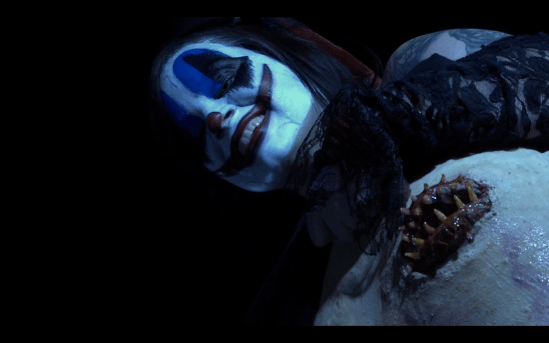
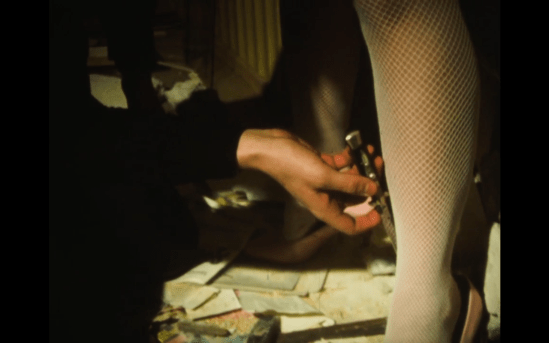
Necrophilia. Necrophilism. Necrolagnia. Necrocoitus. Necrochlesis. Thanatophilia. The act goes by many terms and divides into many segments, but the end result concludes to the same sexual attraction and acts, involving intercourse, with a lifeless corpse and writer-director, Jörg Buttgereit, aimed to exploit the exploits of grave robbers and murderers to stand against the strict censorship that was presently structured around German cinema in 1987. As Buttgereit’s first full length directorial filmed in West Germany and co-written by Franz Rodenkirchen, their censorship battling film, “Nekromantik,” is tinged heavily in necrophilia that, while obviously gross and illegal in the conventions of society, intertwines with the unwavering romantic gesture; a sensual disposition of tenderness and love for the other whether or not their eyeball is hanging out of a decaying socket or their covered in a think layer of body purging mucus. “Nekromantik’s” tragedy isn’t so much in the appalling acts, but in the defining human directions of grief and destruction that ultimately still make us human even if our acts are inhumanity.

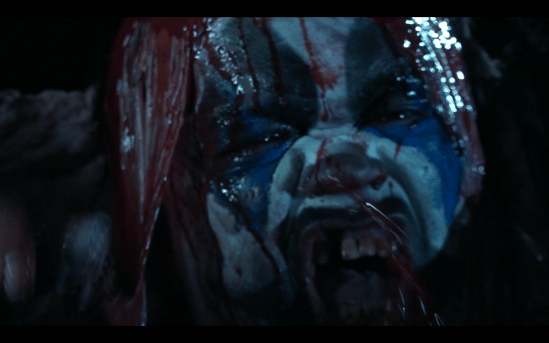
In “Nekromantik 2,” a female nurse named Monika digs up a freshly buried male corpse to be her sexual play thing, but as she questions her feelings for necrophilia, Monika tries to suppress those deviant desires by befriending-to-date a young man, Mark, whole also keeping limited parts of the body while cutting up and disposing the remaining pieces. Seemingly going well with her boyfriend, Monika’s relationship resembles a stint of normalcy, but her desires bubble to the surface as she fantasizes about the corpse and goes to great lengths to keep Mark lifeless as possible during their lovemaking. Mark’s suspicions about her girlfriend does deter him from beauty or his desires for her, but how long can Monika go without her beloved bloated and discolored carcass? What lengths will show go to secure her happiness while taking advantage of Mark warm body?

As an extension of Buttgereit’s “Nekromantik,” “Nekromantik 2,” also known subtitled as “The Return of the Loving Dead,” is a direct sequel in limited fashion with only the corpse being the connecting factor. However, the 1991, East Germany filmed “Nekromantik 2” aggregates and compounds the unsavory lust for the dead that depicts a stronger sense of violence at an explosive carnality in the final act. Along with Franz Rodenkirchen as co-writing, Buttgereit returns to co-write and direct the sequel of considerable unlawful content, according to German authorities that arrested and trialed Buttgereit for poisonous material that could affect the youth of Germany. However, Buttgereit comes unscathed by the tribunal in a justified win against censorship. “Nekromantik” and the sequel aren’t necessarily set in a platonically set society, but held within the confines of an invented world chockfull of ignorance and drenched in biodegradable bliss.

Daktari Lorenz stars as the hopeless romantic for putrid partners. Lorenz is a good look for the Joe’s Street Cleaning Agency employed Rob as Lorenz is a scrappy man with thinning wild hair set on top of a receding hair line and has a feral soul behind his wide eyes, fitting for a fellow who did a short stint in porn in later years, but starring as Rob, however inglorious he might portray the role, wasn’t Lorenz only contribution to Buttgereit’s “Nekromantic” as he became the special effects guru behind the corpse’s fruition – the corpse that would be Rob’s character’s rotten rival. Rob’s tragedy situation is a plight of villainy against villainy, leaving the role unsympathetic to audiences but still leaving a residue impression of sordid anxiety. Rob’s only rival to necrophilia is within Monika, played by Monika M., from “Nekromantic 2” who goes through a different kind of internal struggle. Whereas Rob struggles with loss of two companions, one living and one dead, Monika struggles oppositely with one living and one dead and the choice she must make between the two. Monika doesn’t long for a cold, slimy, dead body and she choices to dispose the one that was held firm in her embracing grasp; yet she has an inkling for normalcy, a urge to undercut her deviancy, and acts upon the reformation despite the addictive callings for necrophilism. There’s not much in terms of a supporting cast in his low-budget shock horror, but the few co-stars include Beatrice Manowski, Harald Lundt, and Mark Reeder.

Overall, the “Nekromantik” films can still produce shock systemically despite being antiqued from the ye ole days of Video Nasties from the 80’s. Director Jörg Buttgereit might be thought perverse or mental to pinch body parts or dead bodies for tales of romance, but no matter his intentions to bring to the cinematic table, Buttgereit could be considered a far-fetched genius delivering the very definition of necrophilia to the screen and hoisting up a narrative around a taboo and illegal stricken act in the name of anti-censorship. Both films are nearly dialogue-less and, perhaps, wouldn’t have been highly accepted in the cult world if the score wasn’t as poignant or powerful as it was. Composed by Hermann Kopp, John Boy Walton, and, again another hat, Dakari Lorenz, as well as Monika M. in the sequel, they compose a classical and new age soundtrack that’s neither obtrusive to the ears nor not necessarily out of bounds of being parallel with the explicit material, marking the tracks as much as a character and being the quintessential dialogue much needed for a virtual silent, and extremely graphic, social commentary piece.

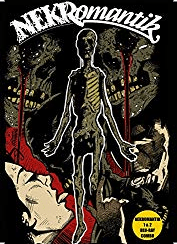
Cult Epics has really outdone themselves with a fantastic re-release of their previous issues of the “Nekromantik” films, releasing a limited edition, only 500 copies, Blu-ray release of both films, sheathed not only in their individual slipcase with original artwork, but also housed fully in a larger, double-sided slipcase bundle with artwork by Martin Trafford whose been a long time collaborator with director Jörg Buttgereit. The two films are presented in their original aspect ratio, 1:33:1, with two cuts available of “Nekromantik”: a director approved, super 8mm restored transfer, blown up to 35mm, that’s of a relatively washed image, but is vastly superior and clean look with hardly any blemishes upon the reconstructed coloring, which looks great considering. The second cut, a 35mm “Grindhouse version,” is a HD untouched version that keeps in the burns and blemishes and emits a warmer image in comparison. The 16mm, director approved transfer of “Nekromantik 2” is also neat, clean, and infraction free with a more natural color scheme overlaying and not as stylized as Buttgereit’s first film. The German language Dolby Digital 5.1 surround sound with re-transcribed English subtitles puts the vigorous soundtrack on a pedestal in the midst of previous releases that saw lossy audio compositions. With hardly any dialogue and next to none excitable action in both films, the burden lies truly on the back of the score that’s riveting and powerful and the right call to improve amongst the options for tinkering. There are also German language 2.0 stereo mixes available. A wealth of new and old bonus material includes the new transfers mentioned above, plus introductions by director Jörg Buttgereit, Q and A with the director at the American Cinematheque, audio commentary on both films by Buttergereit and co-author Franz Rodenkirchen with Monika M. and Mark Reeder included in “Nerkomantik 2,” the making-of for both films, “Nekromantik” featurette, still galleries of both features, two isolated versions the films’ soundtracks plus a live version of “Nekromantik 2,” “Nekromantik 2” post cards, and a couple of Buttgereit short films entitled “Hot Love” and “A Moment of Silence at the Grave of Ed Gein,” plus music videos and live concerts from the director, Monika M., more. Cult Epics’ wrote the definition on the definitive release for “Nekromantik” and “Nekromantik 2” and if you thought the content couldn’t get any gooier, grosser, dissident, and vile, Cult Epics said hold my beer and went to grave and back with a phenomenal package bundle that’ll be a necrophiliac’s delight as well as a gory gem in the collection of any horror film enthusiast.

Visit Cult Epics for your copy!


Plus, the holidays are right around the corner and at http://www.cultepics.com you can gift yourself or gift to others their very own Messed Up Puzzles’ 1000 piece jigsaw set inspired by both “Nekromantik” and “Nekromantik 2!”  These NSFW puzzles are a limited run, with 50 out of the 300 signed by director, Jörg Buttgereit!  (Selected randomly through distribution).


When the EVIL in Your Dreams Terrorizes You…”Nightwish” Reviewed!


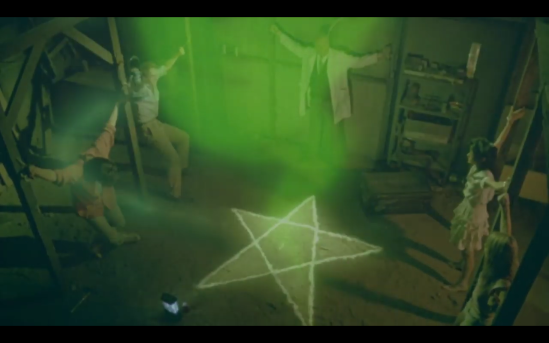
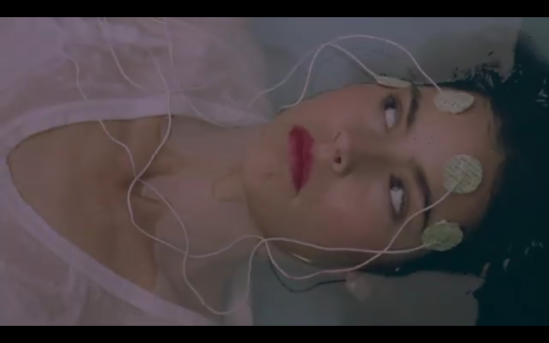
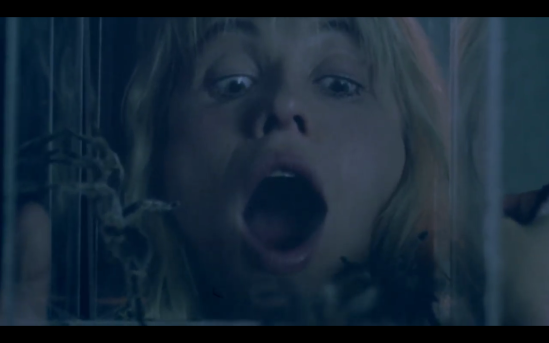
A graduate dream research group experiment on paranormal and sensory deprivation sleep patterns involving controlling their own dreams, even if their terrifying, and examining their own deaths but when they pivot to investigate supernatural activity inside an isolated compound mansion in the midst of an arid desert, the four students and their eccentric teacher conjure malevolencies that include satanic rituals and alien encounters. With their professor spearheading an underlying motive to use them for his diabolical plans, the hesitant and scared group must decide to either force their participation or try and escape their instructors madness, but when the lines of reality blur, friend becomes foe and foe becomes friend with casualties in the middle on all sides as grisly depictions of death and suffering question whether their nightmares are spilling into reality.

Subconscious surrealism on an ultimate terror coaster from writer-director Bruce R. Cook with an unspeakable horror in every corner, from flesh eating extraterrestrials to disillusioned Mad Doctors, in the nightmare-inducing “Nightwish!” The 1989 made and 1990 released “Nightwish” is produced by Paul White and Keith Walley, both of whom collaboratively funded through their Wild Street Pictures production company the early 1990s horror which included another Unearthed Classics release, spine #2, “The Dark Side of the Moon” and, also, put a little cash into the Jeffrey Combs cult favorite, the Brian Yuzna sequel of “Re-Animator,” “Bride of Re-Animator.” However, the real star of the filming crew is none other than Sean McLin. Before going full fledge into being a camera operator, especially around the early days of Power Rangers’ television series, McLin had a short stint as director of photography and his cinematography beyond divine that engrossed to draw audiences into odd angles, mind-boggling depth play, and just colors after colors of spectre ghoulishness. McLin provided a pure motley of mental macabre of the Gregory Nicotero (“Day of the Dead”), Robert Kurtzman (“Lord of Illusions”), and Howard Berger (“In The Mouth of Madness”) powerhouse effects team.

The central characters essentially encompass four graduate students – Bill (Artur Cybulski), Jack (“April Fools’s Day’s” Clayton Rohner), Donna (“Friday the 13th Part VII: The New Blood’s” Elizabeth Kaitan), and Kim (Alisha Das) – along with their stern professor played by the solemn faced Jack Starrett (“Grizzly II: The Concert”). Relatively low on the totem poll names when considering a main cast; hell, I only know Clayton Rohner from his role in the mid-80’s teen transgender appropriation film, “Just One of the Guys” as well as being Admiral Jameson on one episode of Star Trek: TNG. Yet, the combination of crew talent along with the chiseled define facial features of a one Brian Thompson (“Cobra”), the meshed cast suffer no visible calamities or outright fumbles of performance as they each carrier about equal weight into a floating, weightless, construct of boiling human antagonizing fear. The cast rounds out with colorful supporting performances of a muscle head henchmen by Robert Tessier (“The Sword and the Sorcerer”) and the nitwit gate keeper, also animal feeder, Wendall played by Tom Dugan. Yet, Thompson tops the more colorful performances as Dean whose Kim’s ruggedly, manly boyfriend that’s more confident jock without the loss of brain cells. Thompson’s at the height of career, sporing a tank top for most of the film that puts his muscular form on display, but he isn’t the only actor to bare skin as Elizabeth Kaitan and, especially, Alisha Das bare a bit of flesh for the sake of providing a sexual desire to story.

“Nightwish” understandably has a hard chronicle to follow because any film, regardless of genre, incorporating dreams or delving into the state of madness is definitively ambiguous at best, hard to follow, and puts minds into high gear to either understand the just what the hell is going on or to make sense of the chain of events to deduct a reasonable explanation. Sure, over thinking “Nightwish” as a complex construct can be dead wrong. There could be simplicity strewn about and, maybe, we’re too dense or too complicated ourself be aware of the obvious, but Cook certainly knew how to piece together a disjointed storyline that distinctly defines part A of the plot, but parts B and C are so well blend together that the clarity of part A starts to disintegrate and more questions than answers starting whizzing through our think box. “Nightwish” epitomizes the resemblance of nightmare residue and is best left open for personal interpretation.

Spine #3 from Unearthed Films Classics label comes “Nightwish” onto Blu-ray distributed by MVD Visual. The Blu-ray is presented 1080p in a widescreen 1.85:1 aspect ratio through a newly restored 4k transfer, but the transfer, perhaps from the best negative possible, has some minuscule wear with faint scratches and dirt impressions; however, the definition and the color palette ultimately overrun the set hard grain with the minor damage also being an after thought. The uncompressed English 2.0 PCM has a better grade in comparison to the video with clear dialogue and a robust soundtrack throughout to which the ambience is nearly overshadows by but does present itself despite the lack of inertia to progress. Special features include a commentary track with Wild Street Pictures producer Paul White and the president and founder of Unearthed Films Stephen Biro. Also available is a photo gallery, trailers, and an extensive cast and crew bio booklet filled also with production notes and a slew of high resolution stills that’s great to flip through. As another judiciously placed classic for Unearthed Films, “Nightwish” is a dream come true for viewers that combines the effects talents of Nicotero, Kurtzman, and Berger with the terrifying ferocity of facing death through in the dark subconsciousness.

Nightwish available on Blu-ray!

Evil Turns Frat Boys into Bloody Greek Yogurt! “Dude Bro Party Massacre III” reviewed!


Brock Chirino, a survivor after tragedy strikes twice by a serial killer named Motherface who stalked and killed his campus fraternity brothers of DELTA BI THETA, is found gruesomely hung from a flagpole with his guts strewn tightly around his neck. Brock’s twin brother, Brent, wants answers and begins pledging with the troublemaking and cursed fraternity that is on the verge of having another Motherface encounter, beginning with the death of his popular twin. Sinister powers to be send the remaining DELTA BI THETA brothers to an isolated and notorious lake house where one-by-one, beer-by-beer, each brother is hunted down with their own personal fears invoked by the serial killer and lethally weaponized against them.

More enjoyable than a cheap case of beer pong beer is the trope-after-trope satirical genre upheaval in “Dude Bro Party Massacre III” from first time feature film directors Tomm Jacobson, Michael Rouusselet, and Jon Salmon with a screenplay penned by lead actor Alec Owen along with contributions from the directors and Ben Gigli, Brian Firenzi, Joey Scoma, Michael Peter, Mike James, and Timothy Ciancio. Usually with a conglomerate of writers and directors attached to a single project, the resulting work lacks coherency as a mesh of styles create a havoc bearing exhibition for the viewer whose head is about to explode and ready to give up on trying to make sense of disastrous, multi-motivational storyline, but these particular guys are a part of an internet comedy troupe the under 5-Second Films production company, established in their good ole college days circa 2005 to 2008, and have long list of meaningless, yet funny, credits in sketch comedy that include Uproxx Video and Funsploitation. The filmmakers’ “Dude Bro Party Massacre III” is the supposed third film in a trilogy of unspeakable comedic terror without really having a first film or its sequel as the gag, but rather recap, ingeniously and in a squeamishly gory fashion, a fast-paced and well thought out montage of series of events from the “first two” Dude Bro Party Massacres.

The 5-Second Film troupe can be synonymous with the guys of Broken Lizard, but in a slightly tweaked version that’s sure to be piss your pants funny and keep eyeballs glued to their 103 minutes of beer, hazing, and blood. Kicking it off in a dual role is Alec Owen as Brock and Brent Chirino; one super cool bro and the other just a regular cool bro, share a meaningful twin experience that keeps both characters in the mix. Owen dons daft well, but do so the slew of other in his close knit entourage of Paul Prado, Ben Gigli, Joey Scoma, Brian Firenzi, Michael Rousselet, Jon Salmon, and Kelsey Gunn. Their well-oiled machine of timing, exuberance, and expressions, from years of collaboration, make them a juggernaut in their field, leveling with, or even just beating out, the Broken Lizard team for best satire horror film. To top things off, the eclectic special guest stars add that little something, a little spiked cream in the dark, bold, Columbian coffee if you will, of unprofessionalism that just makes “Dude Bro Party Massacre III” a go to rental (or purchase) on a movie and chill night. Did you ever think you’d see Larry King in a horror movie? Yeah, that Larry King who made millions as a late night talk radio host said, “Star in a horror movie? Sure, why the hell not?” Though brief, King’s appearance is welcoming gory garnish and other guest stars whoopee in the same fate, including esteemed porn actress, the queen of sex, Nina Hartley, in an unusual non-sexual role, rock performer and producer Andrew W.K., Tommy Wiseau collaborator Greg Sestero, and my fellow Portsmouth, Virginian native, Mr. Patton Oswalt in another brilliant comedic performance. Yes, I’m dead serious, bro. Plus, Olivia Taylor Dudley as Motherface equals a repeat performance; perhaps for “Dude Bro Party Massacre IV???”

“Dude Bro Massacre III” is a 100% intentional caricature of the 1980s slasher genre, going against the well established and solid bedrock that’s bred horror fans for generations, and rocking the sacred structure to the core that not only will be admired by hardcore horror fans, but also not objectionable in its goofiness those said fans and will sufficiently gaudy for the causal popcorn moviegoer. Those in the former will recognize that tropes vitalize without tiring out the dude bro party, such as with a snarky, masked killer returning from the grave, twice, whose a bit of a mash up of Jason Voorhees and Freddy Krueger, the Final Girl notion is reversed to a Final Boy left to tell the ostentatious tale, and extravagant and elaborate deaths ultimately become a living, breathing entity to inspirit. Plus, backstories and character tangents diversify the story perpetuation enough to not over-saturated solely on DELTA BI THETA reckoning. In all honesty, the gore is the star and if gore was the object of wealth, “Dude Bro Massacre III” would be an affluent God with blood splatter on a divinity level.

5-Second Films and Snoot Entertainment release the Not Rated, 2015 satirical horror, “Dude Bro Party Massacre III” onto DVD home video distributed by MVDVisual. Presented as the only surviving VHS copy of a dismissed and banned film by some guy recording a television airing over his childhood memories, a 4:3 aspect ratio continues to sell the artificial, retrograded video nasty of obscurity. Even the mock cut in faux commercials are a nice touch that reminded me a little bit of John Ritter’s “Stay Tuned.” One thing that’s missing was the presence of digital noise as the image was really too vibrant and clean to be a super VHS or any other kind of SOV. The English language 2.0 audio track is clean with prominent dialogue and hefty amount of ambient blood gushing, splashing, exploding, etc. Bonus features aren’t impressive with only audio commentary available through the static menu, but Devon Whitehead, whose cover arts with Scream Factory releases are beyond ridiculous, lends his talents here with another intrinsic, manic storytelling work of art. A little late to the game with this review for a film from 2015, but “Dude Bro Party Massacre III” is getting a re-release and is worth the time pledging oneself to again and again with a high level rewind satisfaction rate.

Don’t Let A Bro See It Alone! Available at Amazon.com

Insemination EVILS in “Bigfoot: Blood Trap” reviewed!


The folkloric Bigfoot goes bananas on one man’s family, killing his wife and young daughter before leaving him crippled. Years later, the same beast rips the guts out of two tattooed women filming a girl-on-girl romp in the middle of the woods after mistakingly gunning down Littlefoot with their accompanying high powered rifles. Meanwhile, gun store owner, Shannon, receives news that’s she’s inherited land from her estranged, molesting grandfather that could be worth a small fortune. Before opting to sell the land, Shannon, her brother Billy, and her two uncles, Bob and Chester, aim to have a good old fashion hunt, but are viciously attacked by the monster. Barely surviving the ordeal, they managed to capture the creature with a tranquilizer gun and phone in an eccentric cryptozoologist, Dr. Corman, who presents a radical proposition: To prove his missing link genome theory, he wants to conclude that Bigfoot can, in fact, inseminate a human female to produce an offspring. Though crazed and inhumane, the wild idea could bring in loads of capital from all sorts of scientific angles, but the greedy captors soon learn that’ll it’ll take more than a pretty face to get the legendary and mysterious Bigfoot into the proper mood for lovemaking!

With the exception of a few films, the lesser known Sasquatchsploitation genre has been more schlocky exploitation than of Bigfoot doing some serious rampaging. Critics from around all outlets, small and big, have mercilessly dumped upon the hairy big fella, calling the flicks stinky as much as reeking Bigfoot in it’s natural habitat. Unfortunately, “Bigfoot: Blood Trap” sustains the same fodder and, perhaps, evens lowers the bar even further. Despite claims of the satirical motivations and plenty passion for the project, the John Orrichio directed film released in 2017 is a bit of giant mess. The New Jersey based Orrichio (“Paranormal Captivity”) collaborates with Edward X. Young, who was thrusted into scandalous controversy with this film as he was then an active candidate for a member on the New Township Board of Education. Safe to say, a storyline involving young women being kidnapped for rape and insemination didn’t go over well with parents, but Young and Orrichio sallied-forth to bring us a plot about an abomination from the abominable.

As aforementioned, Edward X. Young steps into the role of a creepy cryptologist named Dr. Corman whose obsessed with impregnating an abducted, innocent young women. With extensive credits in no-budget horror, including “Mold!” and themed holiday slasher “Easter Sunday,” Young is highly enthusiastic about his part, being one of the main fixtures of the overhauled production, evening tackling the special effects rich with blood soaked intestines. Another lasting cast member is “The Soulless” actor John McCormack as uncle Chester. Rustic as as he is rusty, McCormack bulldozers through his lines, never letting emotions and inflections carry his performance to fruition. Playing Chester’s nephew, Billy, is “Bloody Christmas’s” Dennis Carter Jr. With turbo energy and a high, if not zany, voice, Carter blossoms more of the satire from hiding, especially when contrasted against his sister, a gun-toting, possessive, money grubber named Shannon played by Chrissy Laboy (“Long Island Serial Killer”). Young, McCormack, Laboy, and Carter are the staple four that have the most scenes, but since the production spanned over the course of years, main characters came and went like yesterday’s bagel, introducing other characters into the fold from a supporting cast that included K.J. Hopkins (“Witches Blood”), Richard Szulborski (“Paranormal Captivity”), Gregory Stokes, and John D. Harris Jr.

As much as one can open their mind to all types of movies, across a vast spectrum of genres, sitting through “Bigfoot: Blood Trap” tested patience, will, and interests. The over-the-top gore, with strewn organs being, sometimes awfully blatantly, ripped from the bellies of Bigfoot victims did not turn heads away in disgust. The problem is more insidious with sloppy, shoddy technical gaffes with a brain seizing storyboard and choppy editing topping the lineup. Performances eek by without much scathing and one could even look past the joker in the “Trading Spaces” monkey suit passing as a vicious Bigfoot, but the lack post-production effort, especially with such a lengthy shoot, kinda says, “Hey! Let’s wrap this up! “Pronto!” and carry on with our lives without batting an eyelash in attempting at beautifying a hunk of ho-hum creature feature, but there is one positive thing about “Bigfoot: Blood Trap,” Orrichio manages to pull off 95 minutes in a sex with Bigfoot bonanza and I’m sure nobody else can claim that title.

“Bigfoot: Blood Trap” is released onto DVD home video courteous of Wild Eye Releasing on their Raw & Extreme label. The DVD is presented in a widescreen, 1.78:1 aspect ratio, that often looks stretched over a canvas with plenty of digital noise and low lighting woes. Colors look okay and same can be said for skin tones. There’s hardly any tinting so all, if not most, scenes are in natural lighting. Some lens cleaning wouldn’t hurt either on the drone for ariel shots. The English language stereo 2.0 lossy mix has hard stops when regarding quality. Swelling vocal tracks lack fidelity gusto and wander into the crackling territories often associated with poor mic placement or an unfinished track mix. Dialogue also comes and go from the forefront to the background. Bonus features include a production interviews, which are basically actors introducing themselves and being advocates for their characters. Also included is a segment entitled “Andy Girffith,” where little foot and Bigfoot reenact that rememberable son and father walk with a fishing rod with whistling that recognizable and catchy thematic tune. “Killing the Girls” is a true behind-the-scenes look into two of Bigfoot’s potential unwilling mates meeting their ends at the monstrous hands of the hairy beast; it’s a glimpse of Edward X. Young, wearing his special effects technician hat, gooey up the gore on the girls as the act out their best scream queen impersonations. Rounding out the extras is a music video and trailers. From the Wild Eye Raw & Extreme’s snarling, bloodied-teeth, Bigfoot faced DVD cover, high hopes created a false foundation leading into a John Orrichio’s Sasquatch breeding farm film! Yet, no matter how enthusiastic the cast, “Bigfoot: Blood Trap” unsavory independent charisma snared time that we’ll never get back into our precious lives ever again.

Own this Raw & Extreme film today!

EVIL Wants to Feed Off Your Pain & Suffering in “Hotel Inferno” Reviewed!


Gulf War decorated soldier Frank Zimosa uses his particular set of skills as a professional contracted hitman. Frank’s current assign takes him oversees to a luxurious hotel to eliminate a couple of marks, a man and a woman, who are itemized as atrocious serial killers who’ve murdered over 150 people and Frank’s employer seeks to provide the same gruesome retribution in a certain kind of way – remove the brain the skull and the guts from the body. The relatively simple task for Frank turns into a fight for his life and his very soul as he finds himself trapped inside the hotel, owned by a secret organization swarming with putrefying acolytes of an ancient, fire breathing demon known as The Plague Spreader. Frank was ordered to kill to satisfy her pain and suffering hunger pangs, but his tenacious refusal awakens the demon who now hunts him, craving his pain, his suffering, his eternal soul for her own sated gratification and disrupts the organization’s creed to keep her dormant for the sake of humanity.

More, more, more! My internal fireworks outpouring and wanting more from a fire and brimstone gore forged finale from the action-packed first person view feature length horror film, “Hotel Inferno,” could not quell the embodied explosiveness wanting more from writer-director Giulio De Santi! Hailing from Italy, “Hotel Inferno” pulls little-to-no punches when dishing out uber-violence and non-stop carnage that invigorates the sensory and corporeal experience in the first installment of what’s called the Epic Splatter Saga that will total over six films. Two have already been produced with the third in production! De Santi, who is no stranger to the fervid gore film, teams his visual effects knowledge with long time, special effects collaborator, David Borg Lopez (“The Mildew from Plant Xonader”), and makes something shockingly beautiful that’s only been wrongfully teased in predecessors.

What’s also unique about “Hotel Inferno,” other than its first person perspective, is nearly the entire dialogue is layered with a voice over track. Unique as well as cleverly cool, we’ll touch on why later, faces with distinctive dialogue pinpoint main characters, but their faces are either shrouded by some sort of horror-esque mask, turned away toward another direction, or fed through a communication conduit, such as a portable television-radio device. Same goes with lead character Frank Zimosa whose vision never goes eye line with a mirror, never gaining a glimpse see his frantic mug, though Zimosa sounds like a chisel chin, hard-nose, angry-looking ass kicker, especially when voiced vehemently by Rayner Bourton. Playing the arch nemesis that’s quickly established and continuously prominent through duration is not the all-powerful Plague Spreader, but, in fact, the faceless Jorge Mistrandia. Donning the voice is English born actor Micahel Howe (“Solo”) who has one of the more sinister intonations amongst the few; an attribute that can be cool, calm, and inviting and can suddenly transform into a treacherous, malevolent, and vile performance that amplifies the intensity tenfold. Bourton and Howe are essentially the sole two main characters inside a melee of supernatural goons and goblins, amongst them in the cast is the introduction of Jessica Carroll who went on to do more voice work in video games and actors from De Santi’s inner film circle with Christian Riva and Wilmar Zimosa, who without a doubt was the moniker inspiration for Frank.

What sets “Hotel Inferno” apart from other splatter films? The first person shooter style, or FPS, video game structure is it! In literally the first of it’s cinematic kind, “Hotel Inferno” looks, sounds, and feels like a FPS from start to finish, a blended progeny from the ultra-violent horror survival games like DOOM or BLOOD; honestly, everything about De Santi’s film feels like a BLOOD rendition minus the shirtless, axe-wielding zombies and the robe hooded, tommy gun shooting cultists, though the rotting henchmen due speak in a high pitch dialect. Think about it. In BLOOD, a game built on a foundation of iconic horror, the anti-hero, Caleb, is a gunslinger against a unholy cult he once was a part of and then becomes his opposition. Same goes with “Hotel Inferno’s” own anti-hero Frank Zimosa, a hitman hired by an organization who then deceives him for nefarious reasons and then Frank has to blast his way out to save his soul. The story goes right for the throat, throwing Frank almost immediately into peril, and from room to room, layout to layout, the anti-hero has to slice through henchmen and ghastly demons in a very HOUSE OF THE DEAD kind of face-off, weaponizing everything against foes with armaments in the anterior of a cultish backdrop. Super. Fucking. Cool.

MVDVisual distributes Giulio De Santi’s “Hotel Inferno” onto DVD from the Wild Eye Releasing’s Raw and Extreme label. Presented in a widescreen, 16:9 aspect ratio, the Necrostorm produced “Hotel Inferno” engages the viewer into battle, but also invokes slight vertigo and turbid at times, especially the cave-like dungeon that’s almost absolute pitch-black. Again, atmospheric video games are much of the same regard for instant jump-scares and De Santi pulls that off here by not illuminating much of the scenes. The English language Dolby Digital 2.0 stereo audio track is in an opposing stratum to how the film plays out; doesn’t quite sync with the action as the audio track is an obvious track laid on top to emphasis how much “Hotel Inferno” is like a FPS storyline. There’s an array of depth and range from each tier Frank has to painfully endure and willfully live through. English and Italian subtitles are available. Bonus material includes a secret bonus film entitled “Hallucinations,” a rough cut SOV, direct-to-video supernatural gore feature from twin brothers John Polonia (“Feeders”) and Mark Polonia (“Sharkenstein”) and Todd Michael Smith (“Splatter Farm”). Giulio De Santi’s “Hotel Inferno” is only part one of the highly anticipated Epic Splatter Saga, with part 2 and 3 very high on my to-do list The blood splatter is in a doom of mayhem, will quench gore hounds from any walks of life, and reap the collective FPS gamer from their stationary consoles and blow their mind with the most seriously berserk action-horror of this decade. Crudux cruo!

Purchase Wild Eye Releasing’s “Hotel Inferno” today!