

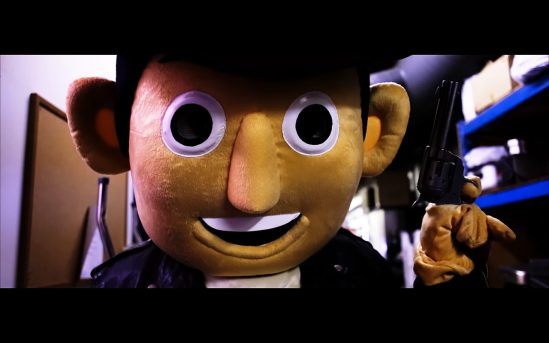
Extremely frustrated with the lack of respect from snot nose kids and the monotonous, round-the-loopy-loop that is his life existence, Duke, the carousel unicorn, has finally had enough the moment after a fat kid mounts him for a ride, smacks him like a giddy-up horse, and wiping his snot onto Duke’s glossy wooden eyeballs. The latter being the final straw that broke the unicorn’s back. Duke breaks free from the amusement park ride in search for a better quality of life when he happens to discover that killing makes him feel good, real good. With a newfound purpose, Duke vows to hunt down and end that fat brat, slaughtering anyone and everyone in his path of carnival-esque carnage that leads the unicorn not to water, but to a house party where the kid stuffs his chubby face full of cake and other goodies while his older sister and her friends order pizza and hit hard the alcohol as they discuss a love and hate for a popular kids show, My Tiny Unicorn. When Duke shows up at the front door, his statue-like presence is a big party hit amongst unicorn show fanatics who are unsuspecting of his murderous desires. The only person capable of stopping the mayhem is the amusement park mascot, a jovial warden cowboy named Cowboy Cool with his trusty, evil unicorn stopping six-shooter.
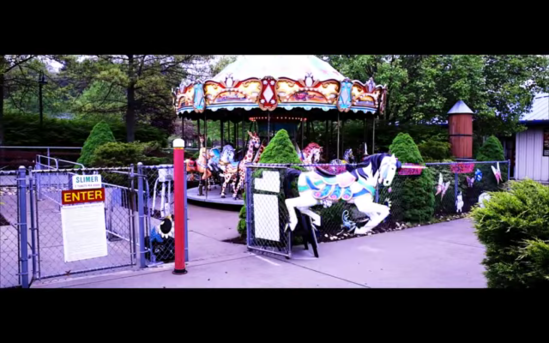
Step right up! Step right up! Behold and be amazed by the stupendous and the downright bonkers horror-comedy, “CarousHELL,” about a killer carousel unicorn from big top maestro, writer-director Steve Rudzinski. The “Everyone Must Die!” filmmaker helms a satirical slasher co-written by Aleen Isley in her first credited treatment. “CarousHELL,” a whimsical play on carousel and hell if you somehow couldn’t figure that out, inexplicably sprints with the inanimate killer concept that visually livens an old “Family Guy” wisecrack about the latest Stephen King novel being about a killer lamp! Instead of a bright bulb shining blood red and using the electrical cord as a noose, Rudzinski and Isley explore the macabre qualities of an inorganic unicorn by extending its cache of weapons beyond the obvious long, pointy horn to also being able to wield a machete without opposable thumbs, sharp shoot with a bow-and-arrow with hooves, and even have the capability to kill with ninja stars despite the sloping shoulder conformation. Impressive…
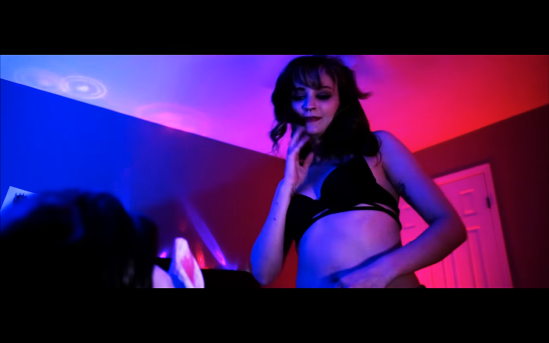
Rudzinski also co-stars as Joe, a diehard pizza delivery guy and passionate dog lover who is desperately trying to earn money for his ill-stricken four legged friend. Rudzinski, sustaining both roles as a director and a performer, solicitously molding Joe as an oblivious nice guy just looking to do his job and even though he’s a bit of an impatient spaz, Joe’s not the biggest spaz swimming in the character pool. Rudzinski could be considered the lead male in the one of many boisterous roles of “CarousHELL” who certainly manages to get the girl without having to lift an finger. That girl being the self-indulgent Laurie, big sister to the unicorn pissing off brother. With her face glued to her social media phone and being a spoiled brat herself, Laurie has little-to-no attachments to anything: she’s not tied down to one boy, weighs social media clicks heavily in life, and finds disrespect the choice of attitude even toward her pole–strapping stripper of a MILF mother. Pittsburgh, PA born Sé Marie (“Cryptids”) does bitchy well, finding a nice niche to nest in with this harebrained, but light-hearted slasher with bite. Joe and Laurie have excessive personalities, but nothing can top Preston who sets the field bar. The house party co-host starts off as a complete douchebag complete with popped collar and an unquenchable thirst for bare chests and the introduction of Chris Proud really makes a first impression in a truly unbearable, over-the-top role, but believe it or not, Preston is one of the few characters of the film to have what could be construed as an arch storyline. Preston, by the end, transforms into a likable character with penchant expertise for the My Tiny Unicorn universe (a spoof toward Hasboro’s “My Little Pony”) and is the only character to perceive the first hand danger from the infiltrating and evil unicorn from hell. Duke is hands down the best scribed character of the entire film. Voiced by veteran voice actor, Steve Rimpici, Duke can literally stand inanimate and still be a vital part of the story. The versatile Rimpici is like the movie trailer voiceover guy with an uncanny Duke Nukem-type voice who has movie credits including the Dustin Mills’ directed features, “The Puppet Monster Massacre” and “Easter Casket,” as well as stints in video games such as “Red Dead Redemption” and “Mafia III.” The cast rounds out with Sarah Brunner, P.J. Gaynard, Judy H.R. Kirby, Josh Miller (“Amityville” No Escape”), Teague Shaw, Haley Madison (“Haunted House on Sorority Row”), Cindy Fernandez-Nixon, Shawn Shelpman (“Red Christmas”), Corella Waring and Michael Mawhinney.
With a film like “CarousHELL,” killer special effects need to be a must as marketing an inanimate villain will be hard sell. Yeah, “CarousHELL” has catchy dialogue, witty enough banter, and gratuitous and non-gratuitous nudity. There’s even multi-positional sex with the unicorn. Thanks for that searing image Steve Rudzinski and Haley Madison! However, a slasher requires good kill moments and the special effects work by Cody Ruch meets the demand with a brutal that include a beautiful gored unicorn horn kill to the neck, a double impale followed by a goopy string entrails, and an Ronald Lacy melting scene with charring laser eyes! Even with a high body count and delectable moments of insanity at it’s peak, “CarousHELL” will undeniably find a general audience outside the scope of genre fans who will understand the context behind fashioning a unicorn slasher, those who are just easily entertained, and maybe a slither of fans of westerns.

MVDVisual and Wild Eye Releasing delivers the hell raising attraction, “CarousHELL,” onto DVD home video presented region free, unrated, and in widescreen format. The digitally shot video has a pleasing standard of quality. A few moments of brief aliasing but nothing to specifically note that matters. The dual-channel audio was the most disconcerting issue that’s affecting the release. More so with the exaggeration of performances with the screaming and the screeching, the feedback distortion is pesky and jarring. Dialogue is prevalent and forefront, but lacks range and depth and so the verbal tracks tend to blend together. The bonus features are a welcoming site with a commentary track, cast interviews that explain how the film came to fruition and that better explains what the “CarousHELL” they were thinking when creating this fun flick, a few deleted scenes that explain the disappearance of minor characters, bloopers, and Wild Eye Releasing trailers. Just like “JAWS” did with ocean, “CarousHELL” will cause hesitation when deliberating if riding a unicorn will endanger your mortality. “CarousHELL” is fun, campy, and a whole bunch of nonsense that has our full 100% support in the horror community.
Category Archives: gore


Finding Love in the Most Evilest Ways! “Brutal” review!

One man kidnaps women, gags and bounds them inside his bleak apartment, and unleashes a fury of hate and disgust whilst searching for one woman who will understand him and his relentless, and vehement, scouring. One woman lures highly aroused men back to their apartment for what they believe will be a night of passionate embrace or of simplistic carnalities of inhibition. While the guys are thinking with the wrong head, the woman slices and dices them to a pulverized pulp of death meat and repetitively fillets their manhood postmortem without guilt. She, too, also searches for something, but is more reserved about it as she allows men to verbalize their needs and desires to her. As the two killers go through the melee day-by-day, they eventually find each other, but before realizing their compatibility, the killer inside themselves square off against each other in a one-on-one bout of maniacal mayhem that must unravel in blood before unsheathing true love.

Who knew that love could hurt so badly? Director Takashi Hirose exhibits a painful peak into two desperate swains callously searching for some understanding, some deep rooted mutual pain that plagues their own embodiment, in “Brutal,” Hirose’s 2016 feature that packs a bloody brawling wallop of the human will toward punitive punishment and desperate determination. The Japanese filmmaker also wrote and co-produced the three part chapters that segments Man, Woman, and Man and Woman into a commingled three act narrative of utter chaos that glorifies finding a soulmate in the most insane circumstances. E-Harmony. OKCupid. OnlyFarmers.com. None of these so-called matchmaker websites have the formidable fortitude to remove all the political niceties and to dig into the human psyche the way that only Takashi Hirose can to lure out and strip one person’s entire vulnerability and, essentially, the parts that makes us ultimately human into a raging, yet emotionally unstable, hapless lover.

Butch, the one and only moniker for the actor, portrays the Man who is a very strong and determined man that brings to his apartment many nice, and sometimes unsavory, attractive ladies; however, he doesn’t whip them up an aphrodisiac dinner or sweep them off their feet with a romantic Rom-Com. He likes to move the relationship along, at a hare’s pace, with getting down and dirty and in certainly not in a sexualized manner. Butch pinpoints the man’s ambitions, machine-like in his will with a hint of softness behind the eyes when plucking through the headcount of numerous women for his match. Ayano is equally compelling as Woman and though Ayano has brawnier range of comedies and dramas under her belt, she notches gore and shock as if it’s simple to get stabbed 50 times and be completely nude with unpleasant prosthetics garnishing the naughty bits of your body. Butch and Ayano are quintessential to “Brutal’s” languishing love story and present themselves with such confidence, which is made key from their previous work with Takashi Hirose – Ayano worked with Hirose in his dramatic horror short, “Bandaged” in 2011 and then Hirose worked with Butch in a 2012 zombie short entitled “Moratorium” that starred Japanese cult and former pinku actress, Asami. The film also stars Katrina Grey (“Vampire Reborn”), Takashi Nishina (“Ringu 2”), Naho Nakashima, and Nanako Ohata.

Hirose doesn’t hold back the punches. In fact, he’s added one or two more for good measures. Helmed by a three person crew and one visual effects artist, the special effects department ramps up the rampage and carnage, making poetry out of ruthless romanticism. The end result is absolutely killer with stab after stab, gore galore, and post-mutilation prosthetics of the naughty bits. Hirose steps aside for fight sequence director Satoshi Hakuzen to exalt his gift for action sequences. Having previously worked on “Resident Evil: Degeneration” and “Dead Sushi,” Hakuzen showcases his mixture of gore and shock horror and hand-to-hand combat in the smallest of quarters while still seamlessly continuing Hirose’s narrative. Yet, “Brutal” doesn’t follow much of the laws of basic human biology as when people are knifed multiple times, whether spreading punctures along the various parts of the body or more precise slices into one focused area like the crotch, they keep breathing breath and they keep moving like their Arnold Schwarzeneggers covered T-800 endoskeletons in “The Terminator” and that unfaithfulness to realism inches “Brutal” more toward a fantastical flavor.

Unearthed Films and MVDVisual present Takashi Hirose’s “Brutal” onto Blu-ray for the first time and it’s brutally honest with a phenomenally fair picture engrained from a singer layer BD and presented in 1080p with a widescreen 1.85:1 aspect ratio. Colors really match the film’s coarse tone of a desaturated hue where the blood runs like caramel colored water. Textures look fine, especially around the natural looking skin toned bodies of each person, and the no noticeable issues with compression. The Japanese language Dolby Digital 2.0 audio track fairs equally well with a prominent dialogue track and a sickening range of lacerating thrust that make wet whiff sounds of cold steel that much painful. Tatsushiro Hirose’s rock score unfortunately wanes in soundtrack behind the intensity of Man and Woman’s blood thirst for love to the point of almost non-existent. Subtitles sync up nicely to the dialogue track. Bonus features a clipped production progression of behind-the-scenes, trailers, and music videos. “Brutal” and Unearthed Films found each other, just as Man and Woman in their twisted circumstances, and present an entertaining 67 minutes that solidifies Takashi Hirose one hell of a romanticist and absolutely, 100% bestow his film a true-to-form designation.
Political Extremist Molds An Evil Spawn! “Trauma” review!

In 1978 Chile, a powerful political extremist exploits the Chilean army to conduct and carrier out the physical and sexual abuse against the people of Chile, including forcing his own son, Juan, to have sex with his tortured mother and executing her right in front of him while in the fornicating act. Juan’s father continues to further the abuse with fear, terror, and misogynistic berates until he’s finally fatally coup. Fast forward to 2011, Juan’s an unstoppable madman as he terrorizes the locals over the years without authoritative regulation and also four female outsiders on holiday for a girls’ weekend. Juan and his son force their way into their residence, tyrannizing, raping, and even killing one of them before leaving his cruel mark in his wake, but with the help of a local officer, the remaining three survivors seeks to make sure Juan, and his equally screwed up family, never harm anyone again. However, Juan is prepared, held up inside a compound subterfuge, well-armed and well-unhinged.

Perhaps based loosely off the atrocities of of former Chilean President Augusto Pinochet in the 1970’s, Artsploitation Films’ distributed “Trauma” goes to the unapologetic extreme, building upon an already unsavory narrative into the bred morbid disposition of the human psyche. Written and directed by “Zombie Dawn’s” Lucio A. Rojas, “Trauma” is a cold, blunt object with a razor sharp bite and has a penchant for the twisted. The Chilean director’s film isn’t the only game in the market of extreme movies, but does manage to create a motive of separation between most with the offending character experiencing traumatic corruption by someone close; in this case, Juan’s father 40-years earlier by oppressing the boy through physical pain and scrambling his son’s mental state by removing any humility, compassion, and reasoning that manufactures the perfect ruthless butcher. Pinochet used his military power to be a lethal strong hand when desired; Rojas spices it up by adding forced incest, rape-after-rape, and implementing a subconscious malevolency.

“Trauma” stars “To Kill A Man’s” Daniel Antivilo as the despicable Juan. Antivilo is patient and soft in his approach to a deranged character that doesn’t display that wild abandonment in psychotics. Juan goes on to slowly terrorize four lovely outsiders from the city in Andrea (Catalina Martin), Camila (Macarena Carrere), Julia (Ximena del Solar of “Perfidy,” another Rojas film), and Magdalena (Dominga Bofill). The four actresses offer up different character perspectives and personality that should divide the dynamic or, at least, complicate it; there’s a strong sense of lesbianism between them, even exhibiting traits in those who don’t identify as such. Antivilo macho savagery pitted against the four stunning, but strong women does create a black and white, stark-producing character placement. Outside that dynamic, one character has no dialogue and, yet, manages to high level physical role that’s barbaric, humiliating, and spacey and that role is inside of Juan’s schizoid son, Mario, is donned by Felipe Rios who has the strung out appearance of a long, drawn out face and muscularly thin. Eduardo Paxeco, Claudio Riveros, and Florencia Heredia round out the cast.

Rojas does a beautiful job in the juxtaposition department, paralleling the bleak, grimy, and yet agreeable life of Juan and his equally as certifiable family next to the full of life and vigor in the unsuspecting women that Rojas’ introduces off with Camila and Julia engaging in a steamy girl-on-girl love making scene that doesn’t leave much to the imagination and, then, slides into their instant road trip the day after. Rojas had built up Juan’s pain and suffering toward being molded into a monster whereas the women fly by the seat of their pants, churning out memorable moments in a flash whereas Juan’s unfortunate course was a slow burn throughout his long, hard life. The parallelism flips from Juan to the women up until the moment their lives intertwine and this is where things get messy with Roja’s script. Between Julia, Camila, Magda, and Andre, three of whom are related, tension builds as Julia plays the flirtatious and brazen field between hooking up with the cousins as stroppy Andrea steams in a passive stew on the sideline. This subplot never goes explored, going uncooked right in the middle of a hot flame where passions and couples’ plights evolve the story. The abrupt presence of Juan puts a cease and desist on any other subplot that ultimate funnels “Trauma” to be a rape-revenge flick with a graphic content.

Artsploitation Films continues to distribute internationally provocative films that always delight as well as disgust (in a good way). With Lucio A. Roja’s 2017 film, “Trauma”, casualties pile high and damage control is non-existent, fitting the Philadelphian-based company’s axiom that presents the film onto a high-definition Blu-ray. With a widescreen, aspect ratio 2.35:1, the image quality is quite good. Details are very promising here and really need to be with the gore. The face explosion and the jaw unhinging deaths are certainly not stodgy as the scene on these moments linger more than most would, soaking up the full effect of the viscous covered chunks out from the face crater by a high caliber handgun is a thing of beauty. The Spanish 5.1 surround sound syncs up well in all aspects from dialogue to ambiance. English subtitles are available and line up well enough though speedy at times. Dialogue is clear and present, Ignacio Redard score is heard, and no signs of any kind of distortions or other issues. Bonus features are limited to just the theatrical trailer. “Trauma” might have vastly skewed the actual events the film is based off of to pen a story, but what a gorgeously gory-filled and exploitively-charged narrative that can be a tell all for the cause and effect of political extremism at it’s worse. Director Lucio A. Rojas puts Chile on the controversial and extreme horror map.
Evil That Shall Not Be Named! “The Unnamable” review!
Miskatonic University students Howard Damon and Randolph Carter investigate the disappearance of a missing friend last seen making good a dare to stay the night in a century-old, dilapidated house, right in the middle of a cemetery and with the caveat of a ghastly, creature legend. In the same instance, two colligate hunks try to fraternize with two freshman women within the dark and gloomy walls that seem to reposition themselves into an unescapable maze. Lurking through the inky corridors, an ancient and horrifying beast, thirsty for blood and hungry for flesh, continues to roam freely in the house, unleashed from it’s confined room a century ago, and hunting the students down one-by-one. Their only hope to get out alive is Howard’s haphazard bravery and Carter’s unrivaled intelligence that aim to rescue survivors and decipher the house’s resident Necronomicon to defeat an evil monster’s night of carnage.

Campy, brazen, and inspired, Jean-Paul Ouellette’s 1988 “The Unnamable” is every bit of an 80’s teen comedy rolled up into a bona fide ball of barbed madness shrouded with heaps of highly anticipated mystery. Unravels like a truly classic H.P Lovecraft story, Ouellette, who also penned the script, shows great patient to give the monster a grand finale revealing that leaves the characters left standing face-to-face with the fear that’s been stalking them. While “The Unnamable” strays away from more of Lovecraft’s prolific Cthulhu literary works, the story is drive by the theme of the unknown that partially, if not all, gives Ouellette motivation to not put the monster on full display. The fact that “The Unnamable” is also gory retells the tales of how horror used to be pure gold back in the Golden Age of the genre despite budget restraints and executive naivety in the audience ratings game.

“The Unnamable” finds their unlikely star for the unassertive character in Howard Damon. Soulcalibur series voice actor, Charles Klausmeyer, lands the role as his sophomore film about 8 years after Vanna White’s “Gypsy Angels.” Klausmeyer’s surefooted unsureness and comical desperation of Howard Damon makes him a likable character, likable enough to be opposite whatever has been locked away from over a century. Damn finds an arrogant cohort in Randolph Carter, a conceited fellow freshman whose a bit of a know-it-all, well versed by Mark Kinsey Stephenson. Stephenson, or rather his character, reminds me of a babyface John Glover (“Gremlins 2” and “Scrooged”). A pair of love switcheroo love interests in Alexandra Durrell, in her sole credited performance, and Laura Albert, who went from nude supporting roles to being one of the top stunt women in Hollywood, fair well as the standoffish and damsel-in-distress opposite the vibrant and lively Damon and Carter. Rounding out the remainder of the cast is Blane Wheatley, Eben Ham, Colin Cox, and Katrin Alexandre who did an impeccable gesticulation performance of the creature.

Ouellette story isn’t all that complex; a group of young students are trapped inside the black heart of a folklore notorious cemetery house. However, the breakneck narrative certainly needed something more extensive to the creature’s confinement and unholy backdrop, warranted to fulfill just what the hell these kids were getting into. The house has been doused with shielding dark magic, a fact barely mentioned until the final moments of the monster’s exposition, unveiled through the pages of the Necronomicon which becomes weaponized by quick study Carter. Spells and passages envelope the monster within the house’s old bones, like a prison cell constructed of two-by-fours, wood panelling, and asphalt shingles. While the story could have opened up more in that regard, the lack of dark mysticism doesn’t uproot an entertaining creature feature strongly braced with gory, character demising allegories, and peppered with misogynistic innuendos and campy skirmishes with the damned.
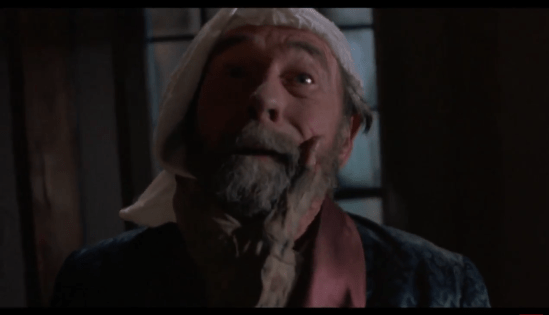
Unearthed Films and MVDVisual proudly present “The Unnamed” as part of their sub-label entitled Unearthed Classics and lands onto 1080p Blu-ray home video. Horror fans will thoroughly enjoy the newly restored 4k transfer presented in widescreen, 1.85:1 aspect ratio and the image quality is remarkably detailed with absent compression artifacts and edging enhancements. Skin tones look natural during outside shots while a blue tint, overlaying a dark backdrop, inside the rickety house isn’t overexposed and makes for quite the grim atmosphere. The English 5.1 Surround Sound DTS-HD, 2.0 PCM, audio track was resonating with a range of ambient sounds; however, an unfortunate mishap of ambient duplication followings about half a second from the initial sound. The dialogue track and soundtrack are no affected by this issue and the dialogue is clear in the forefront, not terrible interfered by the technical boo-boo. The extras are packed with audio commentary with Charles Klausmeyer, Mark Stephenson, Laura Albert, Eben Ham, Camille Calvet, and R. Christopher Biggs. There’s also a video interviews with actors Charles Klausmeyer, Mark Stephenson, Laura Albert, Mark Parra, R. Christopher Biggs, Camille Calvet, and Eben Ham, a vintage audio track, photo gallery, and trailers. The Blu-ray comes in a limited edition slip cover with the beautifully illustrated gothic-esque poster from Tongdee Panumas courtesy of the M. Wright Collection. “The Unnamable” was endangered; a potentially lost classic that quickly went to being out of print as soon as it was released onto DVD in Europe and never actually saw the digital upgrade light of day Stateside from it’s VHS predecessor. Luckily for us fans, Unearthed Films, living up to label moniker, unearths “The Unnamable” from the depths of obsolete format hell, revamping for a new generation of horror fans and re-transfixing fans who once thought Jean-Paul Ouellette’s film would never, ever see a glorious rebirth.
Evil’s Ultimate Climax. “Gorgasm” review!

A low on the totem poll detective receives the chance to get out from behind a paperwork overloaded desk to investigate the gruesome death of a seemingly BDS&M gone array. The case lures the investigator through the muck of the sleazy and sexy underground to where an independent zine lists GORGASM as the ultimate climax. With every lead, GORGASM connects them all and there’s one person, one suspect, on his radar and her name is Tara, the face of GORGASM. Tara’s a psychopathic call girl, aiming to dish out a finitely pleasurable zenith to those who want more than just sex, and the unlikely hero detective embraces the case personally to put a stop to Tara’s gruesome delusional calling before he’s sucked into an inescapable world blended with lustful carnalities and death.
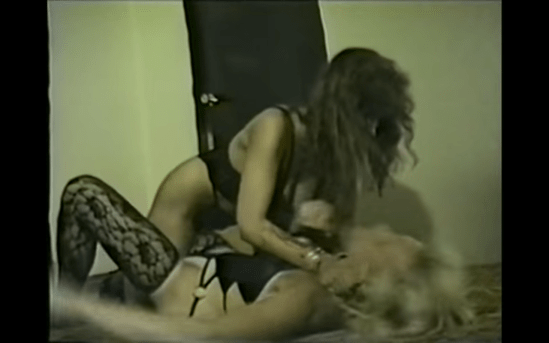
“Gorgasm.” By title alone, “Gorgasm” has already peaked interest and paved for a path of optimism and delight despite the inkling in the back of the mind about the film’s low-budget shlock. In any case, the title comes from the imagination of creator, writer, director of “Dead Silence,” a one Mr. Hugh Gallagher, and is his 1990 sophomore feature that showcase plenty of violence in an ostentatious psychosexual thriller. Gallagher, perhaps, isn’t the first to delve into porn’s mucky and sleazy underworld that’s universally stigma in many cultures, but, and again perhaps, is the first to explore the many facets that porn has to offer and highlights the habituating circumstances porn has to morph into to keep up with customer demand, whether it involves whips, clips, and chains or to be more specific in the realm of fetishes.

Gallagher didn’t manage to make any old, run-of-the-mill low-budget venture, but managed to do so with a professional lead in Rik Billock. The name might sound familiar to horror fanatics. Billock has been a stock regular in George Romero films: “Dawn of the Dead,” “Knightriders,” “Monkey Shines,” and in “The Dark Half.” He also had a small, yet door knocking down roll in Tom Savini’s “Night of the Living Dead.” Billock’s a bright star with an organic singularity amongst a mechanical lineup, popping out like a child’s pop-out book that solidifies his presence. Even his co-lead, introducing an actress only known as Gabriela, a former wrestling-affiliated performer in her first feature film. Gabriela is stunning, beautiful, and well-endowed, perfectly casted to be the personal-placing killer call girl with dark features and though her method is a bit monotoned and monologuing, Gabriela’s looks really do standalone. “Gorgasm” also co-stars Paula Hendricks who puts a real damper into the ebb and flow of being a strict and condescending sergeant to Billock’s character, but the silver lining is that this Hendrick’s sole credited role. Rounding out the cast includes Paula Gallagher, Kevin Patterson, Denis Hellrung, and co-producer Flint Mitchell in a show-stopping slimeball performance as a sleazy magazine owner.

With an extreme and inviting title like “Gorgasm,” there comes a usual, if not blatantly given, perception that blood will flow and guts will be strung and plastered on forefront of the featured scenes, but to an extent, the gore and the blood splatter were surprisingly granular results and doesn’t ultimately champion an autassassinophilia effect. However, don’t be scornfully turned away from Gallagher’s film if “Gorgasm” isn’t locked and loaded with blood drenching entrails and other body fluids and fleshy tissue. Gallagher executes tasty scenes of violence and mortality on a budget with examples being a garage door decapitation and a kill shot to the vagina. There’s also a weed whacker chewing through a pervs face. “Gorgasm,” perhaps, does find space in the gore and shock subgenre pie, even if only a sliver of a piece.

MVDVisual and SRS Cinema release the Draculina Productions film, “Gorgasm,” onto DVD home video and present the film on the original SOV, full-frame format that’s pleasantly held up over the last 28 years. Aliasing is quite common on shot-on-vide, even on Super VHS that director Hugh Gallagher shoots the film, and the coloring has a slight washed look, but considering the VHS monstrosities out in the world today on DVD, “Gorgasm” has no ill-will toward this release. The uncompressed PCM 1.0 mono track has limited depth and range with a consistent static hiss throughout, but generally adequate with clear dialogue upfront. The “bloody” bonus features include a commentary with Hugh Gallagher, behind-the-scenes footage, and trailers. Also, the grisly-gorgeous illustrated cover art by Mike Mez Phillips is exquisitely killer and on point. While director Hugh Gallagher mediocrely went through the nuts and bolts of vehement slasher violence without really thickening already deep pool of gore, the director did manage to fulfill a promising title with meshing sexual deviancy and blood in an entertainingly provocative feature. Rik Billock and Gabriela, whose half naked through more than half the 82 minute runtime, embraces their twisted characters that you’ll love to death!

