Prancing Forest EVIL Will Seduce You to Death! “Devil Times Two” reviewed! (SRS Cinema / DVD)

“Devil Times Two” on DVD from SRS Cinema

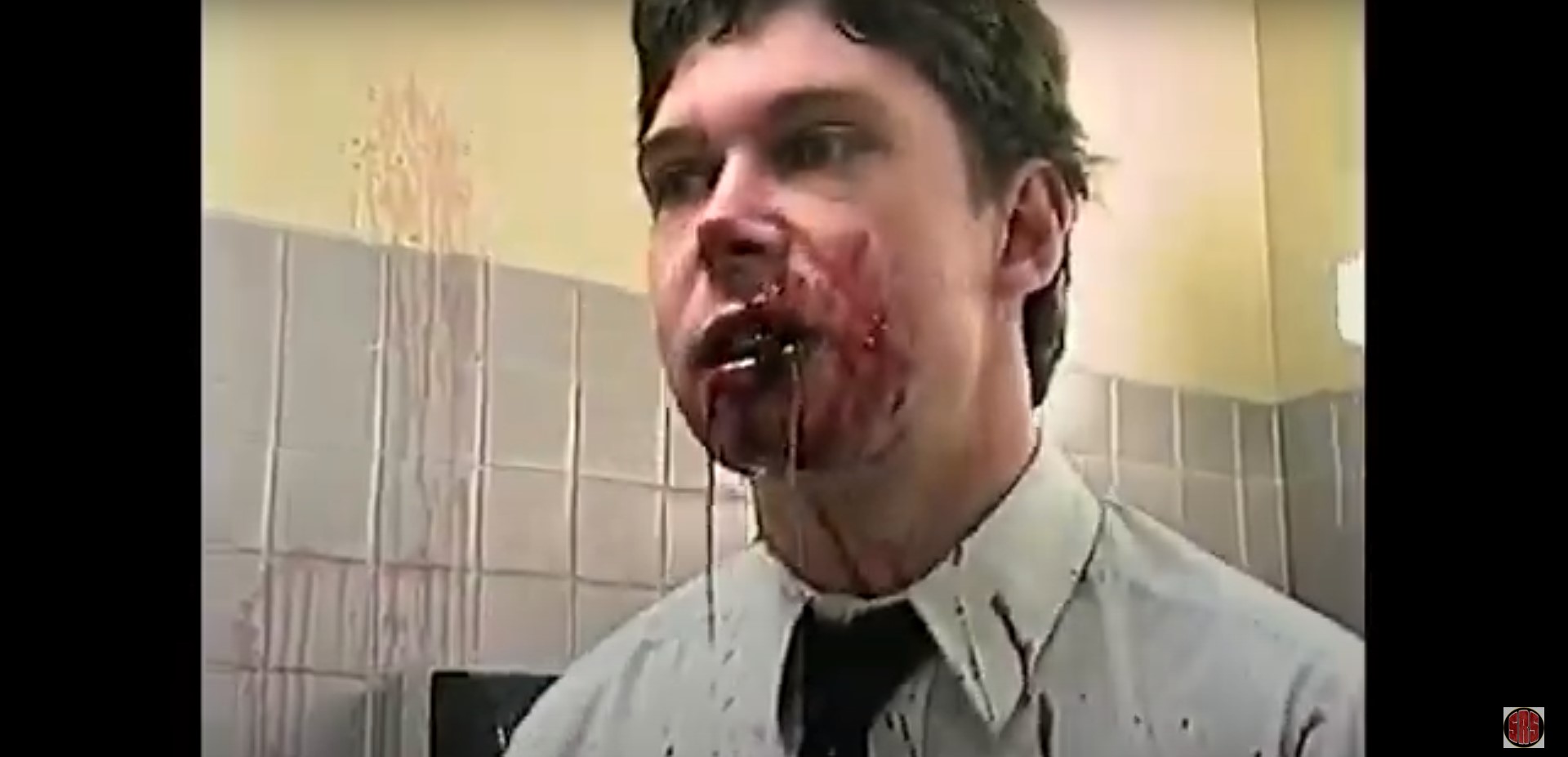
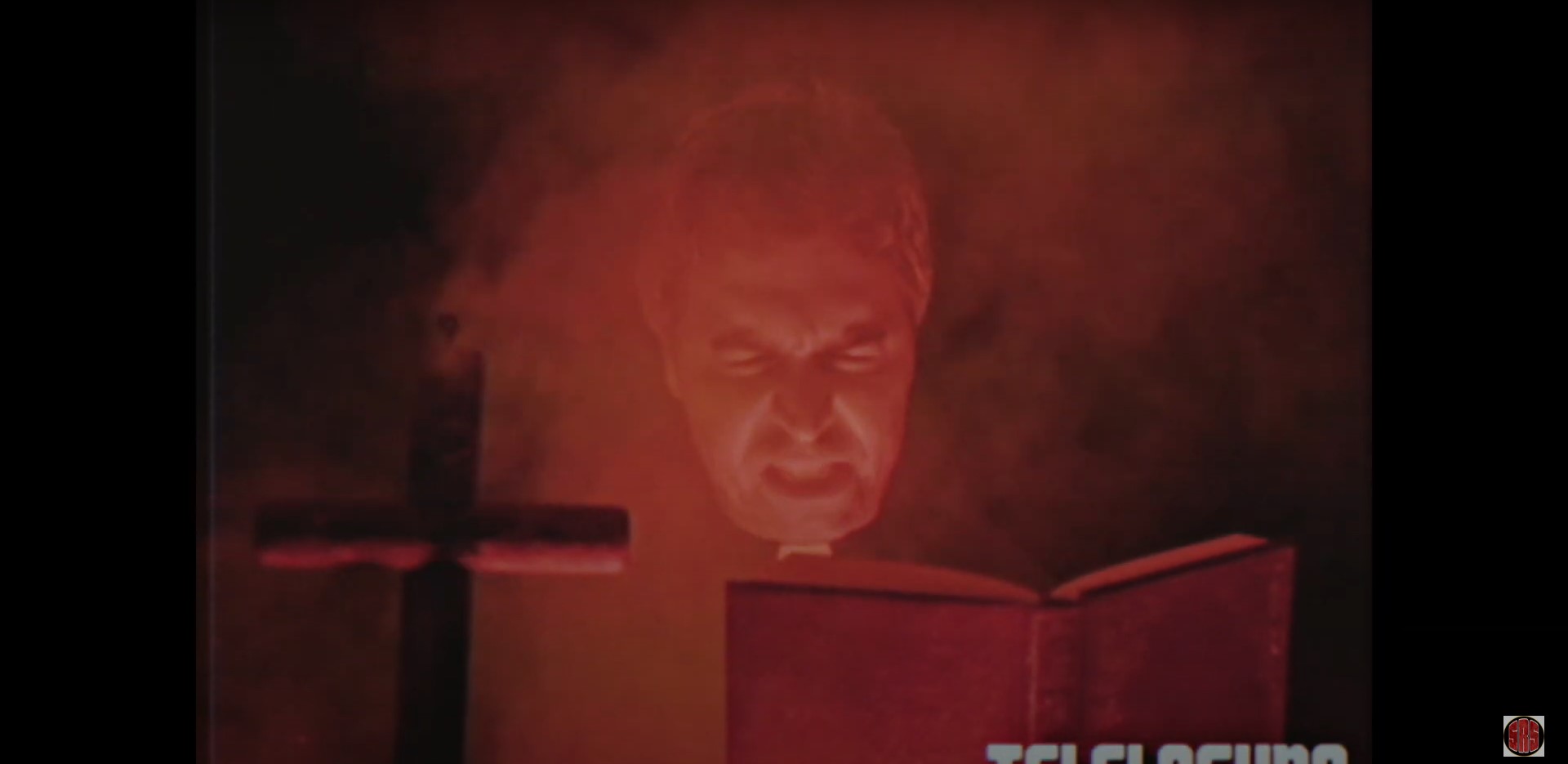
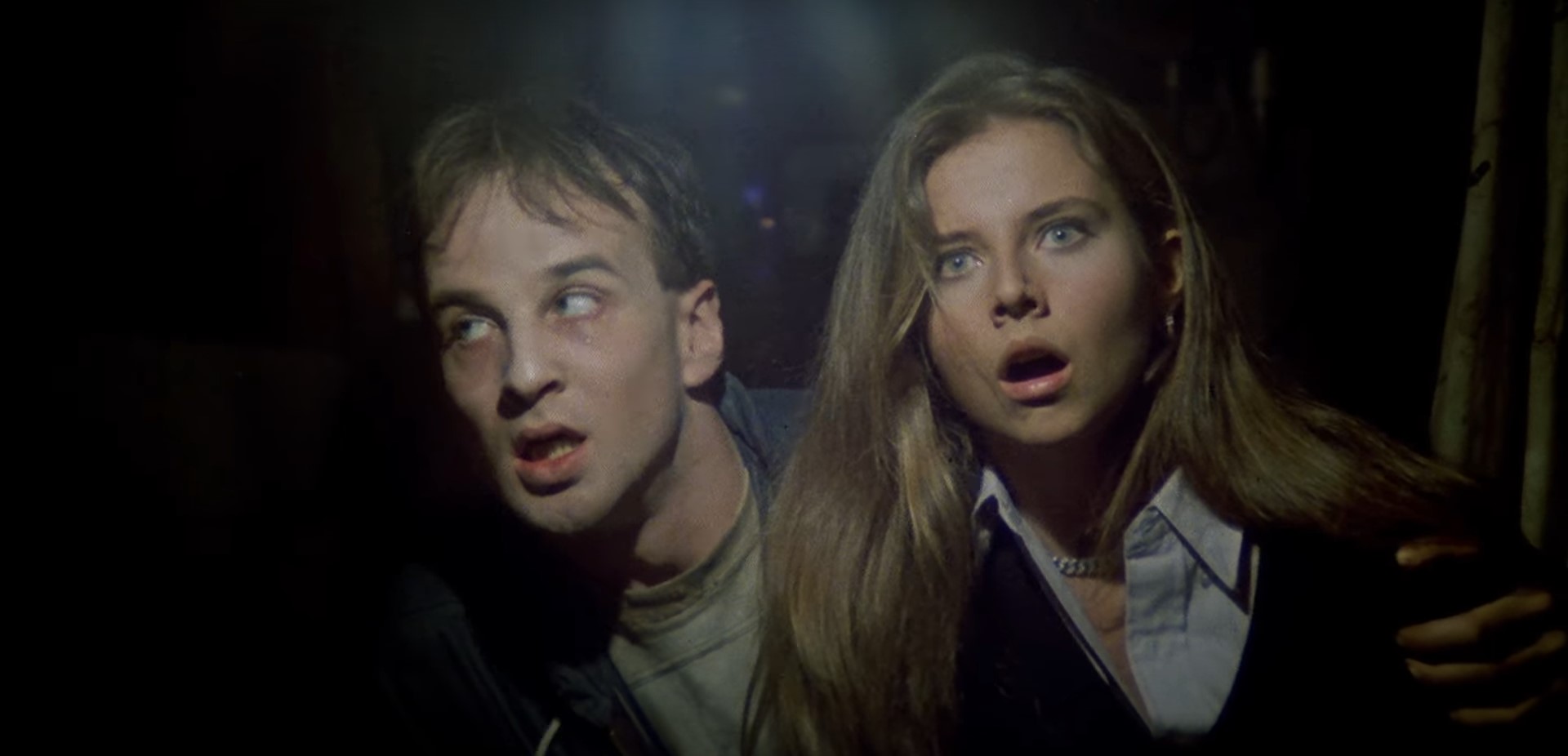
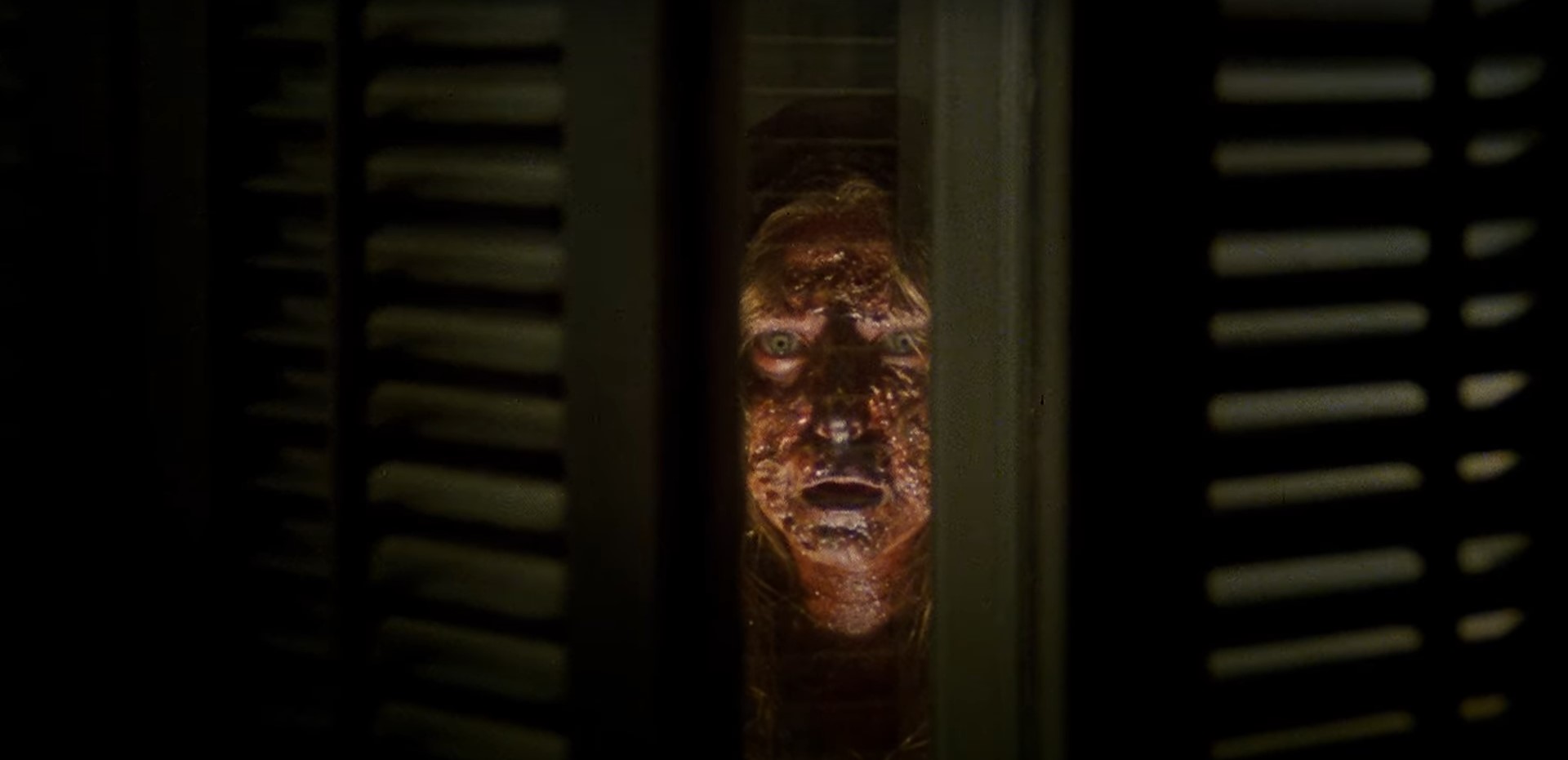
A forest encircled convent hidden away from the Milan population undertakes an occult responsibility to keep bloodthirsty and callous demons from entering the human world.  On the verge of retiring, Father Ernesto Taro, a once formidable force for good who exorcised a powerful demon decades ago that cost the lives of many in his fellow cohort except for Mother Dolores, takes on a younger understudy to be his replacement, the ambitious Father Chuck Bennet.  Father Taro and Bennet were summoned by Mother Dolores when grisly body of a young hiker is discovered.  A pair of former Nazi sadists turned Netherworld demons come to Father Bennet in a vision and are suspected to be the carnage culprits.  Souls are at stake and the world is on the brink of falling into darkness as the Returnees are only the right hand of a more profound evil itching for complete and utter omnipotence. 

“Devil Times Two” is an Italian-made, demonology-contextualized horror from Italy writer-director Paolo del Fiol.  Having purveyed grindhouse horror in anthological means with previous films “Connections” and “Sangue Misto,,” del Fiol branches out into his solo feature-length narrative set in the 1970s as a faux lost film recovered onto VHS from the only known syndicate televised program on Telelaguna to account the terrible tale full of profane hostilities, sexual stimulating supremacy, and, of course, gore in the interlacing recognition between the popular devil, demon, or hell on Earth inspired movies and the obscenities connected to eurotrash and sleaze movement of the 70s topped a hint of Japanese adulation, a motif heavily sprinkled into the film carried over from the director’s previous work as well.  Underscored by the tagline Quado le Tenebre escono al Bosco, or When Darkness comes out of the Woods, “Devil Time Two” once again pits religious good versus irreligious evil in this Himechan Movie Production self-produced by Paolo del Fiol.

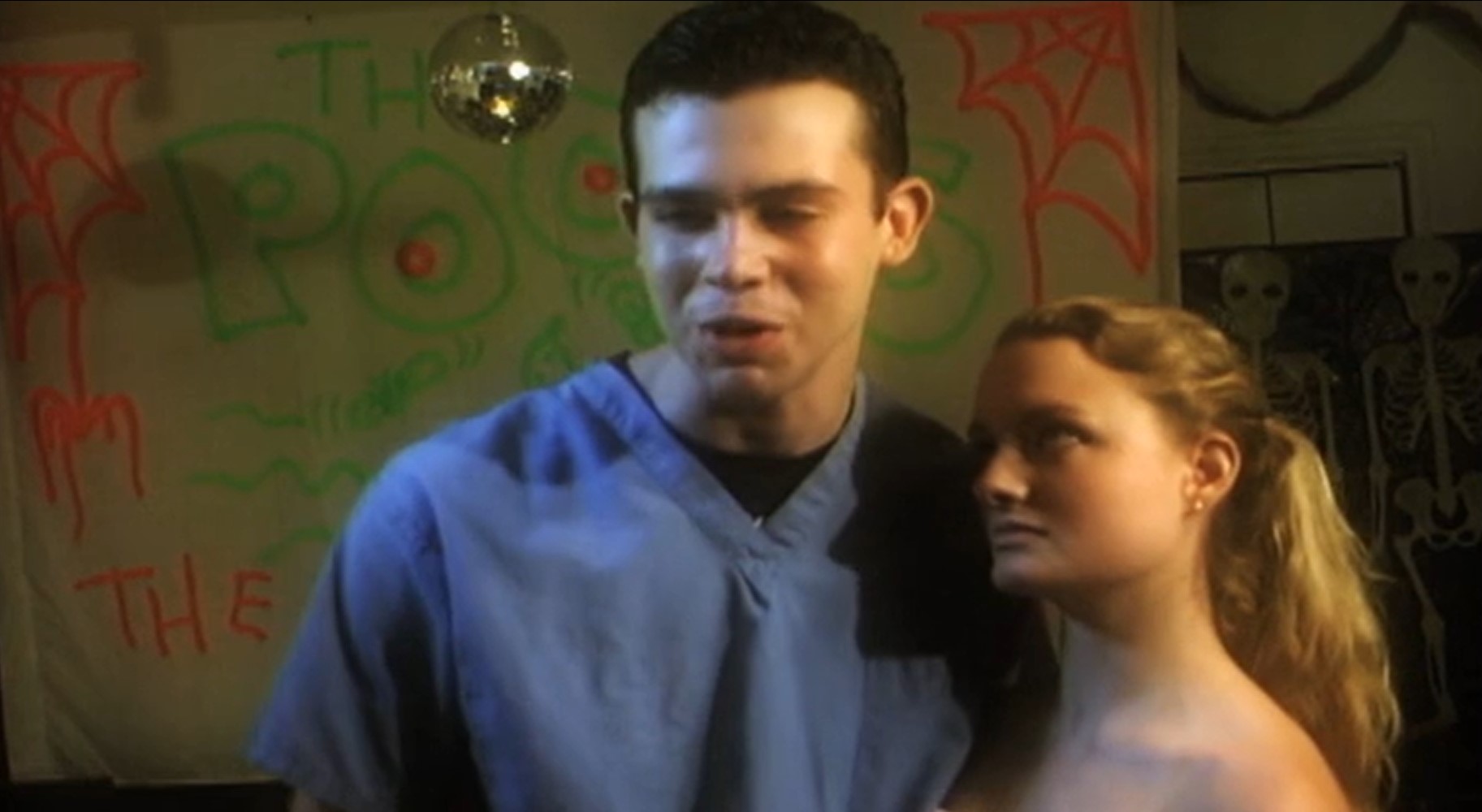
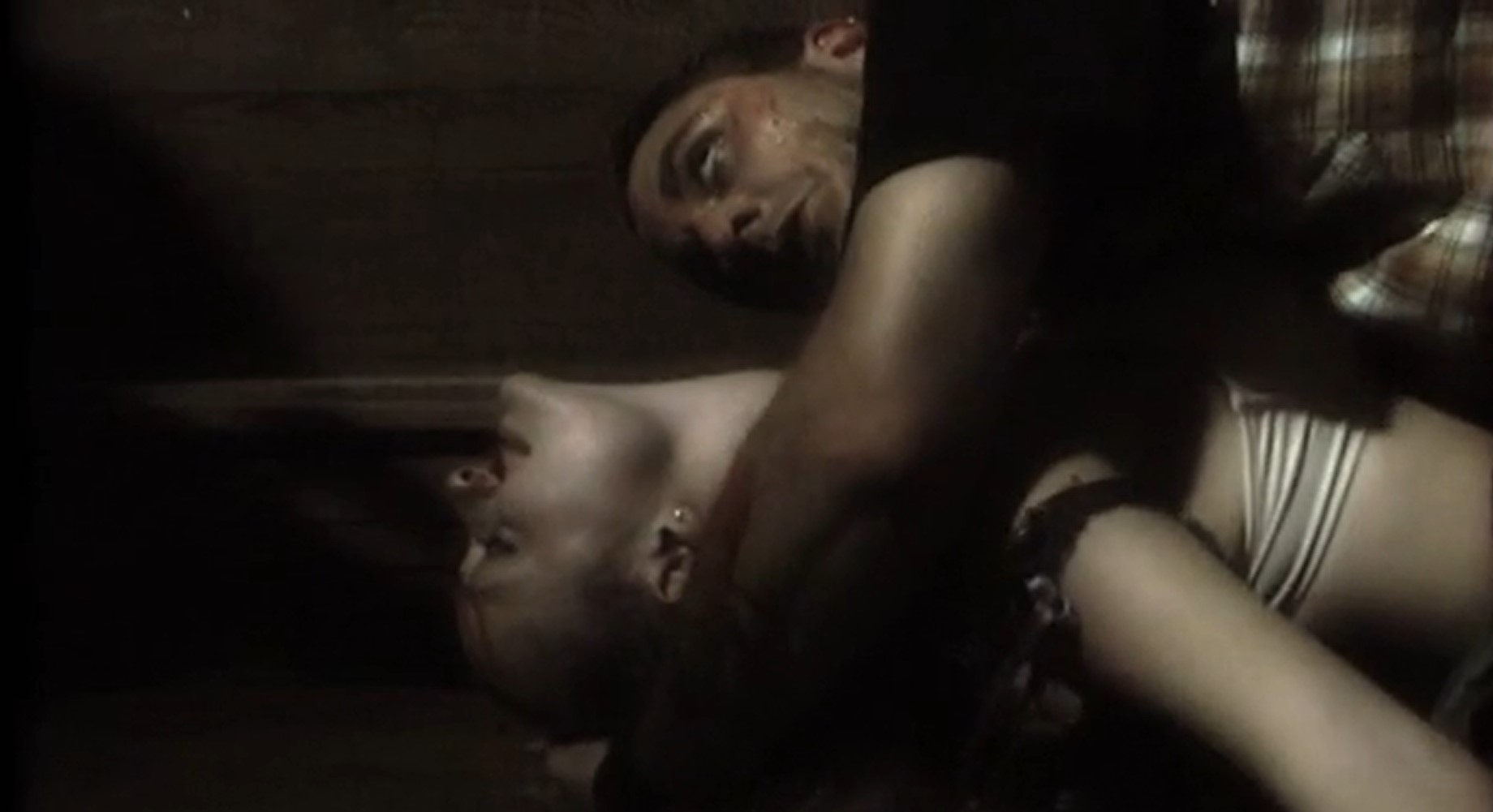
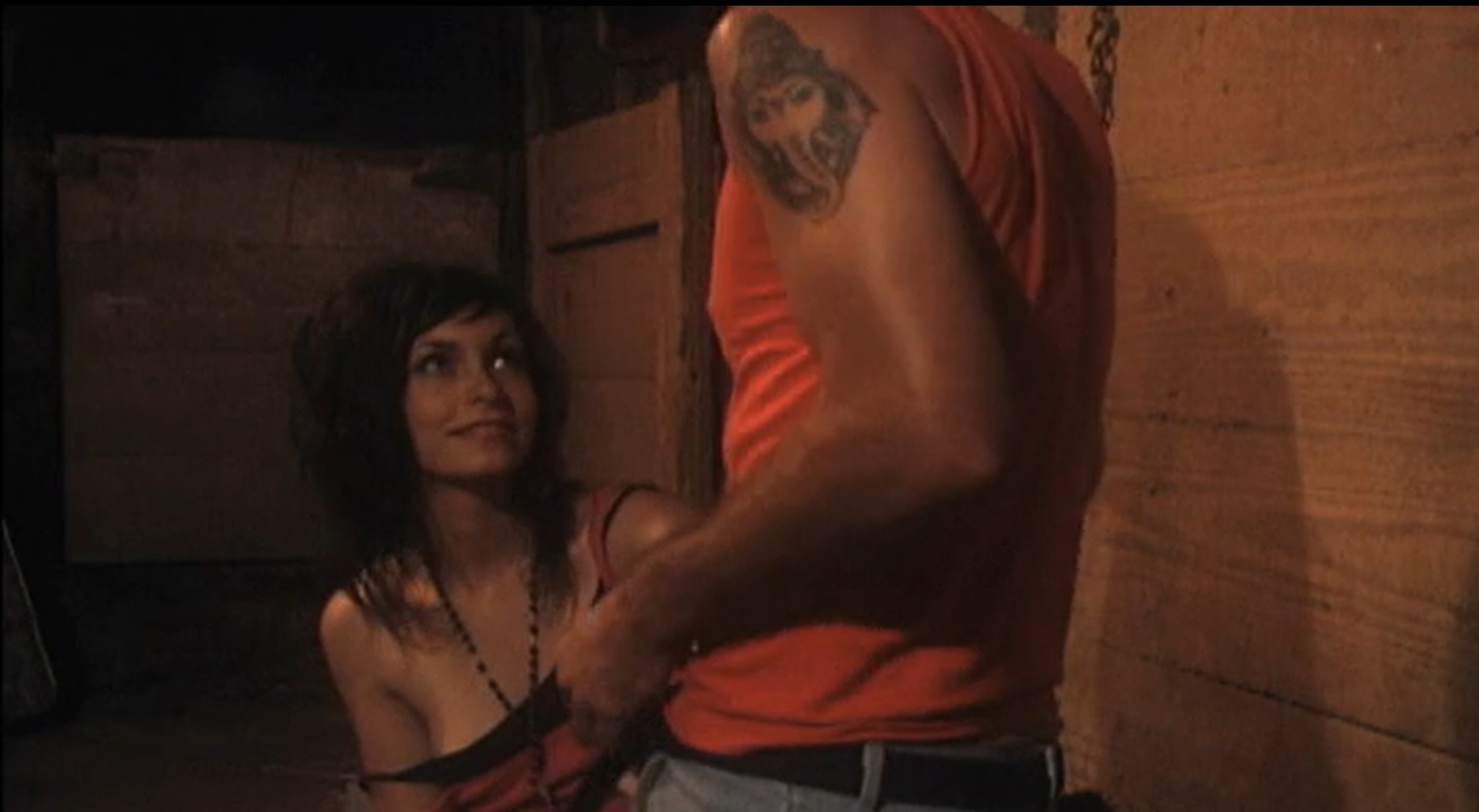
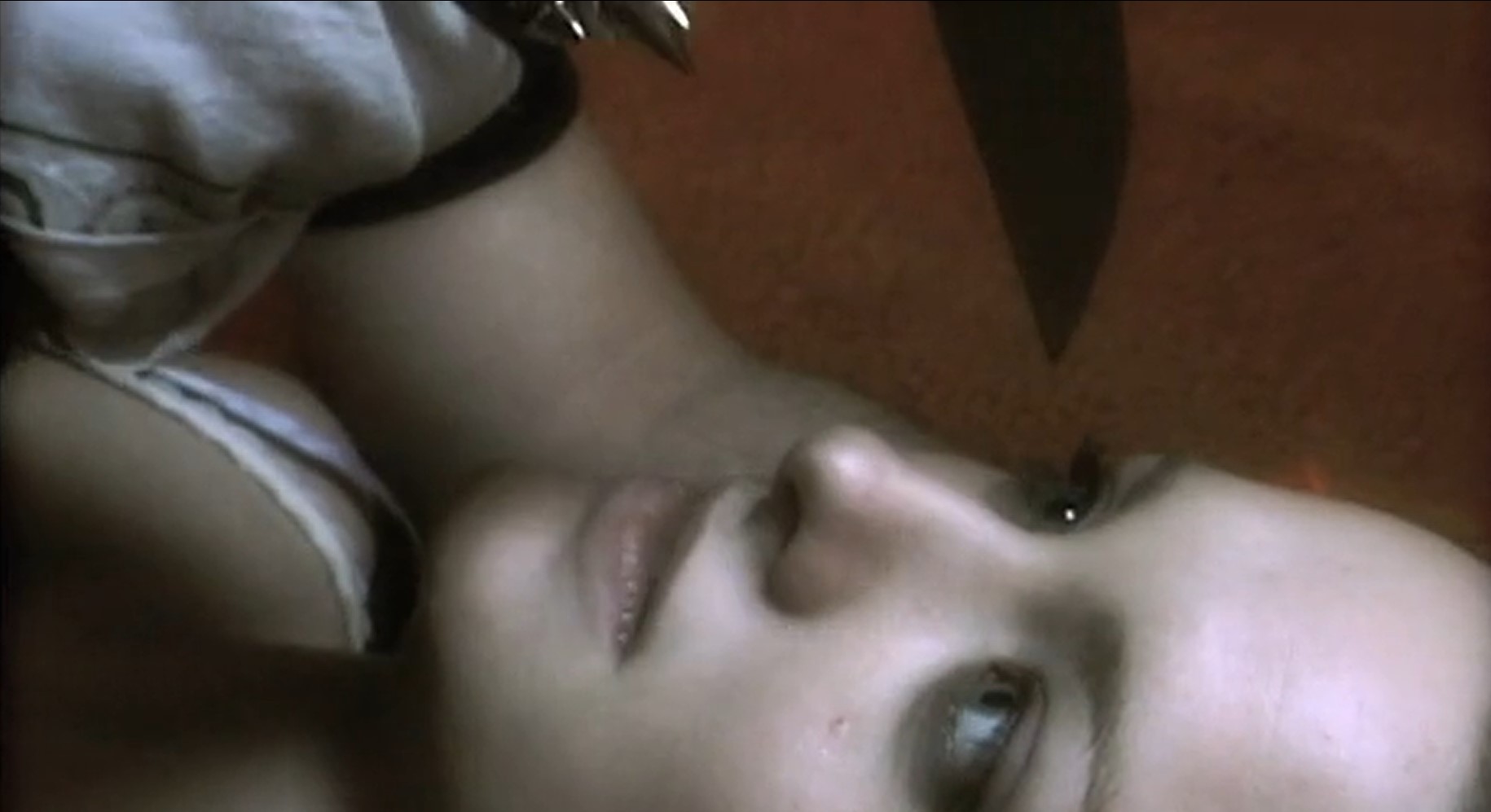
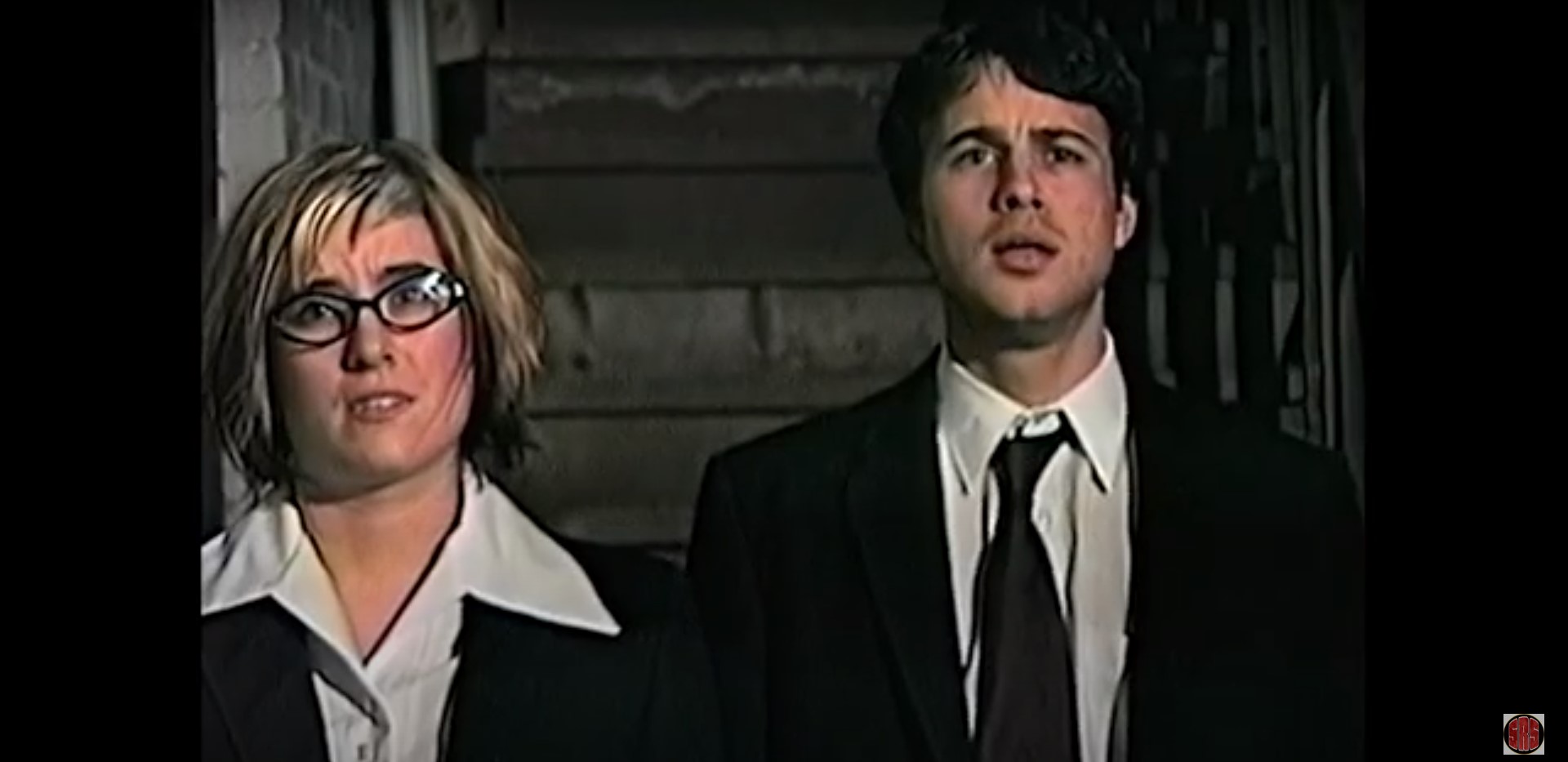
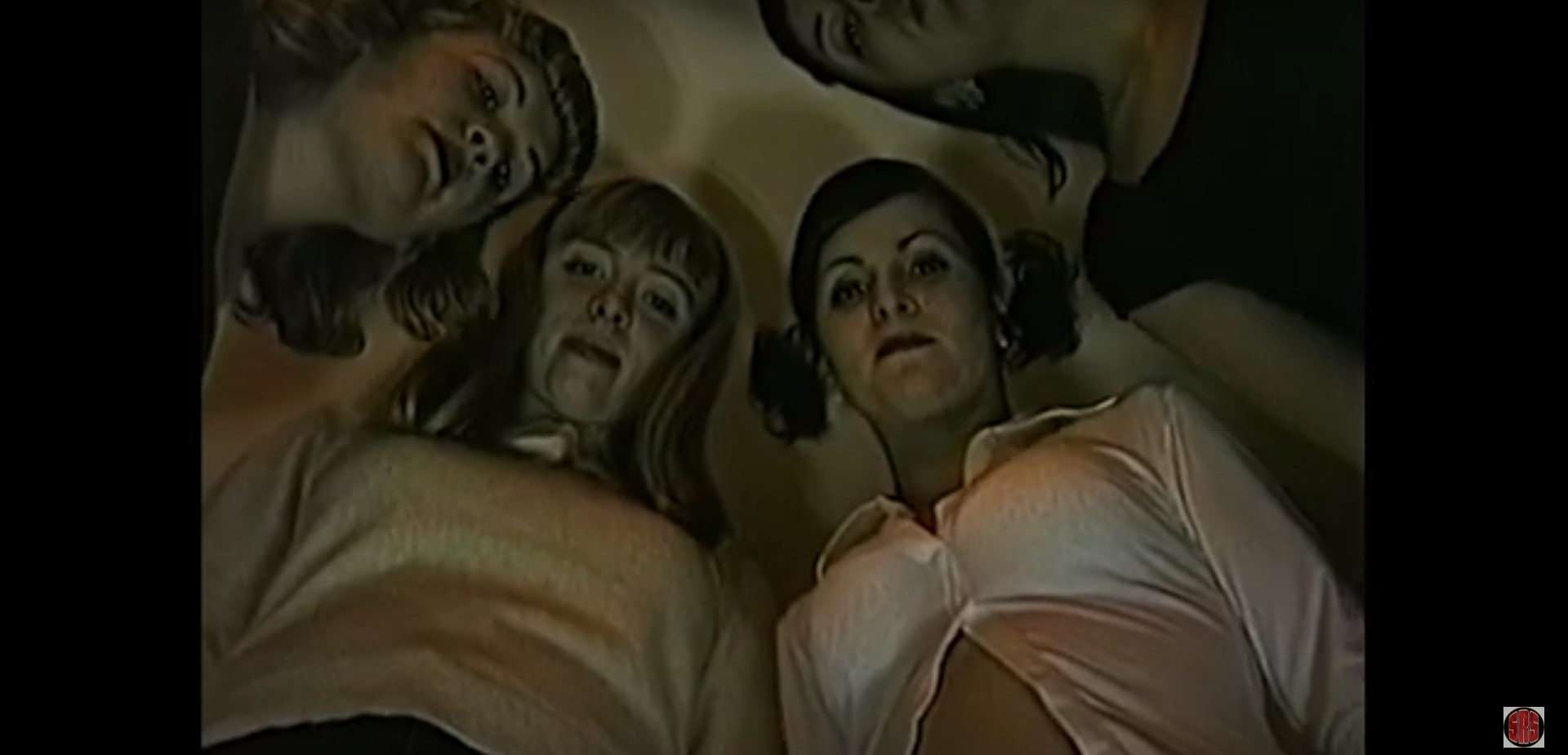
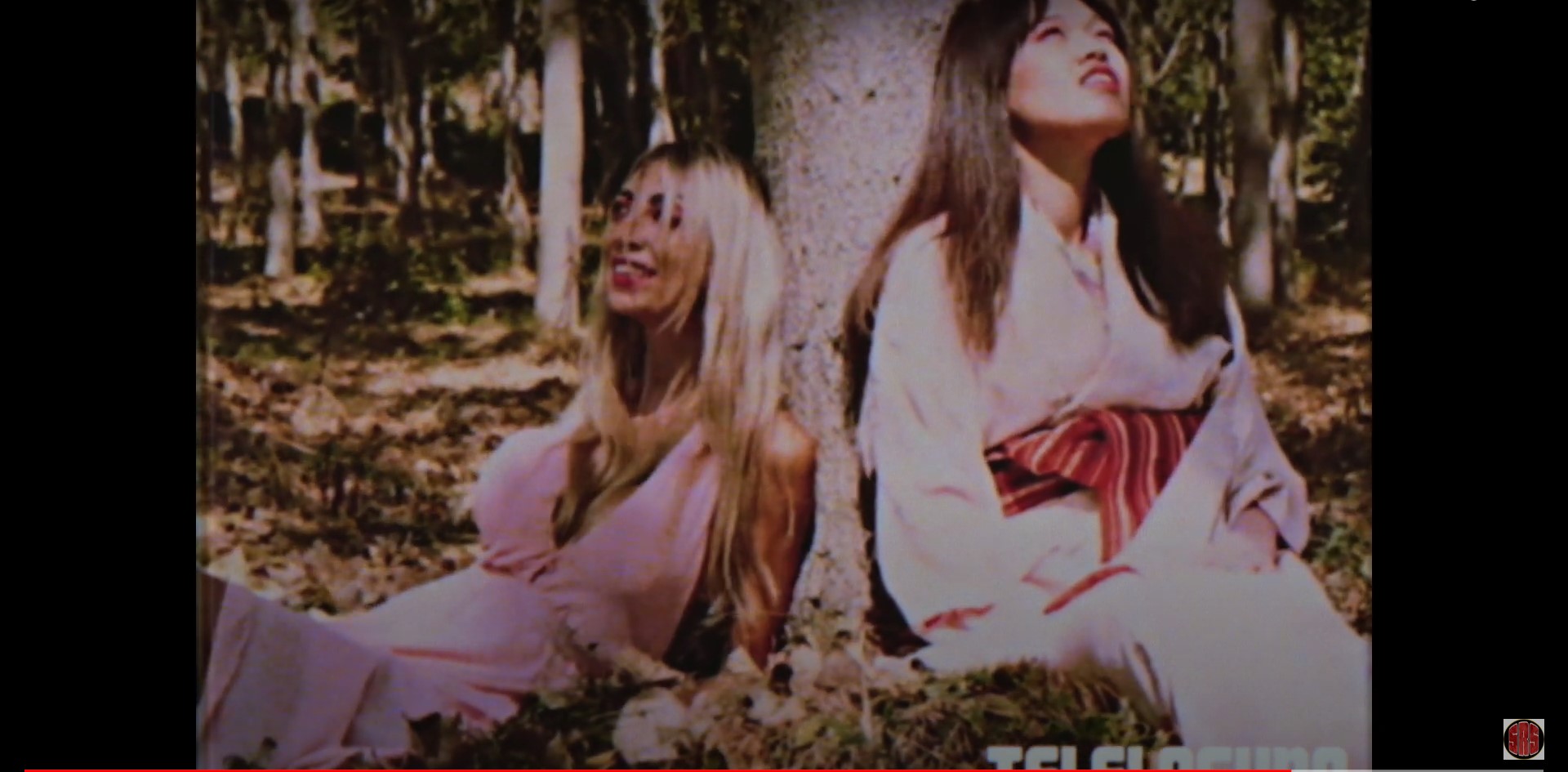
Characterized as the titular pair, Returnees Jasmine and Umeko are the ethereally evil duet of diabolical detriment who seemingly float in and out of the material world as alluring succubi, seducing prey into their web of demonic lust and languish.  Some turn up grotesquely inside out while some others disappear, saved for later for special ritualistic planning.  Erika Saccà, an Italian fitness instructor in her debut role, plays the blonde Returnee Jasmine in a sleeveless, lowcut gown and with nearly ever kill, exposes and massages her augmented bosom with underboob scarring in a change to showoff her toned physique, and Reiko Nagoshi (“Re-Flesh”) wears a kimono without any unveiling of skin but does a bit of thrust-damage on her quarry that initially and inexplicable appears to be a strange phenomena when everyone in the scene is a woman but becomes apparent there’s something unholy and very “War of the World’s” alien under that traditional Japanese garb.  Saccà and Nagoshi wear many hats in this product but also don’t have the dialogue to hoist their demonesses higher.  The dialogue is left with the trio of convent gatekeepers in Father Taro (Enrico Luly), Father Bennet (Paolo Salvadeo, “Occultus”), and Mother Dolores (Amira Lucrezia Lamour, “Re-Flesh”) in what becomes a deeper understanding of their backstories around Father Taro’s deadly bittersweet exorcism decades ago, his on the sly and subtle affection for Mother Dolores, and Father Bennet’s questionable rise to supersede Father Taro, laying a foundation of doubt within the current gatekeeper.  While I like the contrasting dynamics of the two factions within the cast, I found the discourse overly bulk and tedium between the trio of piety that strung on scenes way too long with way too much talk that it ultimately suppresses the pacing when every little detail has been uncovered and explained. All the casted bits in between are slaughter fodder with Denise Brambillasca, Alessandro Carnevale Pellino (“The Wicked Gift”), and Martina Vuotti in non-defying death roles.

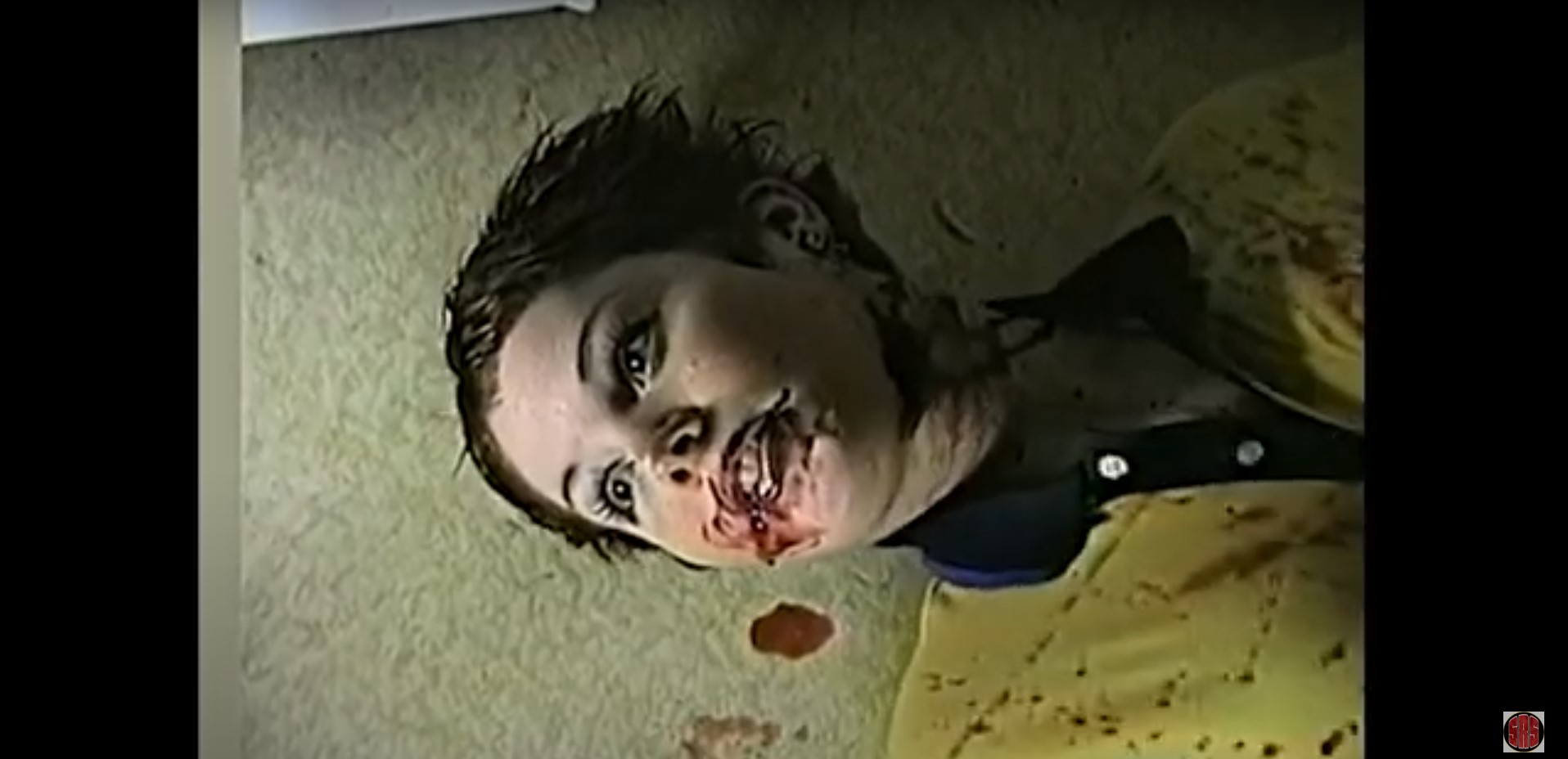
Paolo del Fiol’s unaccompanied and independent deluge of demonian debut has doses of phantasmagorical imagery sublet by its more shocking and odd immolation of incognizant individuals unlucky enough to cross paths with the Returnees. Likely to have never seen, Fiol’s film very similarly compares to James Sizemore’s “The Demon Rook” by creating unique mythos not reliant on a religious bedrock and use independency as an advantage for showcasing practical makeup and effects and while “The Demon Rook” would overwhelm with prosthetic made-up characters, “Demon Times Two” focuses attention more on the guts of the matter, the gore, but though not pernicious enough to the story, the eyeball sucking, throat lacerating, or intestine exposing bloodshed is prosaic panoply that won’t outshine in the sea of subgenre synonyms. Aforementioned dialogue scenes can be a slog to get through with many exchanges overstaying its course between the pious gatekeepers, especially between Father Taro and Dorlores, and that hurts the pacing to pick up the gore more frequently for more potency. Instead, exchanges are more elucidations that go around-and-around to where we’re lost on the mounting reveal of the Returnees’ mission and master which turns out to be visually more stimulating and visceral in the last ten minutes than in the first 100 minutes of runtime. The backlot lore is Fiol’s greatest achievement simulating a 70’s style grainy movie caveated as only broadcasted once on December 8th, 1983 (a few days before this reviewer’s birthday) and never seen again until it’s VHS recording is recovered.

Under a pretense of being a buried lost film, under the tribute of a grainy and scratched psychotronic celluloid, and under the falsity of genuine huge knockers, “Devil Times Two” is twice baked into a classic contemporary dish served by SRS Cinema on DVD. Arriving on the SRS Cinema: Extreme and Unrated Nightmare Fuel label, “Devil Times Two” is nothing short of being a modern-day emulator of once was with suitable grain overlay, a hazy, if not washed, overcast grading, and trope-laden atmospherics with dense fog, unnerving dissonances within earshot, and blood brilliantly cut with pseudo Telelagua commercial programming of brief adverts until returning to regular scheduled programed checked in and out by a gondola and it’s gondolier in dusk silhouette. Presented in a pillar box 1.33:1 aspect ratio, the fuzzy and non-delineated details are not a punch to the salient gut as the intent here is to be obscure, opaque, and ominous in nature and in technique bathed in 480p. The Italian PCM is the exact recreation of a time period post-dubbing with the actors re-dialoguing their performances as it was common practice in most motion picture industries, especially Europe, at the time. ADR is clear but not necessarily clean to recreate that shushing and crackling of an older recording. The subtitles are also forced or burned into the film with the sole Italian audio option. Bonus content includes what is called Backstage, a raw filming look into the production shoots and behind-the-scenes footage with no real direction or cosmetics, a photo gallery, a trailer with English subtitles, and other SRS Cinema released trailers. The SRS Cinema DVD front cover resembles mock-70’s, thick-red font with a bare woman’s back dressed in a painted Satanic symbol within the border of a VHS-esque rental casing with rental stickers. Inside the amaray case is a pressed disc with an extreme close up and crop of the same front cover with no insert in the adjacent slot. Pacing burdens this release, especially in its near 2-hour runtime with a clock-in at 114 minutes which is approx. 24-minutes too long in my opinion and the film comes not rated and has region free playback. No matter how much arcane the content is, or how grotesque the horror show, or how much perversity and skin can be unclothed, “Devil Times Two” has difficulty retaining a flow of fascination in a rather windbag approach to a rather devilishly good salvo construction.

“Devil Times Two” on DVD from SRS Cinema

The Gates Are Opening and The EVIL Wants to Squish Your Brains! “City of the Living Dead” reviewed! (Cauldron Films / 4K UHD – Blu-ray)

Cauldron Films’ “City of the Living Dead” on 4K and Blu-ray 3-disc Release!

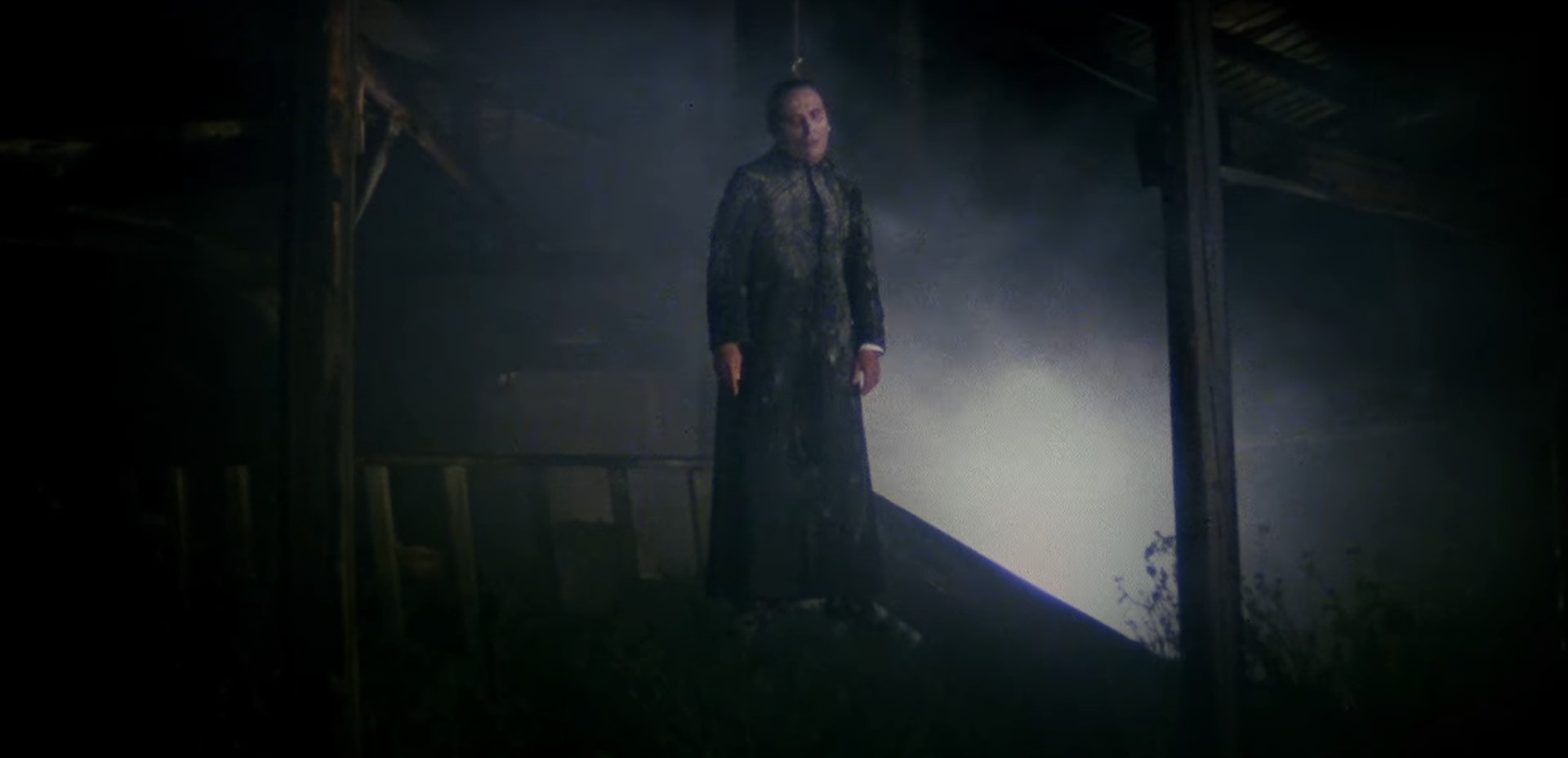
In the Dunwich, a priest commits suicide by hanging himself in the Church’s graveyard.  In the same instance, a psychic based in New York City holds a séance where she witnesses the beginning of the gates of hell opening.  The order sends the psychic into sheer fright that nearly kills her.  A reporter digging deep into the near death of the young woman also buried alive and befriends the psychic, following his nose for a good lead despite its absurd sounding hoodooism of death apocalypse in less than 72 hours.  The psychic and reporter travel to the hard-to-find Dunwich town where the residents have been mysteriously vanishing or discovered dead of curious causes.   Baffled by all the strange occurrences is the town psychiatrist who witnesses first hand the troubles that stir fear into those close to him.  When the psychiatrist teams up with psychic and reporter, they must venture to the very depths of crypt Hell to close the gates and stop the dead for rising before All Saints Day.

The Godfather of Gore Lucio Fulci undoubtedly lives up to his title, establishing himself as one of Italy’s more profound and substantial horror filmmakers before his death in 1996.  “City of the Living Dead” came at the height of Fulci’s success after his breakout into the American market with “Zombie” or “Zombi 2,” an unofficial sequel to George A. Romero’s superb “Dawn of the Dead.”  Yet, Fulci didn’t follow suit with “Dawn’s” social commentary and pale-faced flesh eaters; instead, the writer-director stemmed his undead creatures from black magic hoodooism set in the sunny and sandy Caribbean islands with just as much visceral violence as his inspiring mostly Pittsburgh-based counterpart.  Alternatively known as “The Gates of Hell,” the Italian production of “City of the Living Dead” remains set in the U.S., filmed in New York and the surrounding metropolitan northeast, as the first part of the Gates of Hell trilogy that coincided with “The Beyond” and “The House by the Cemetery,” both of which were released approx. a year later.  “City of the Living Dead” is a Dania Film, Medusa Distribuzione, and National Cinematografica production with Fulci producing as well as the American Robert E. Warner (“Return of the Swamp Thing”) as executive producer.

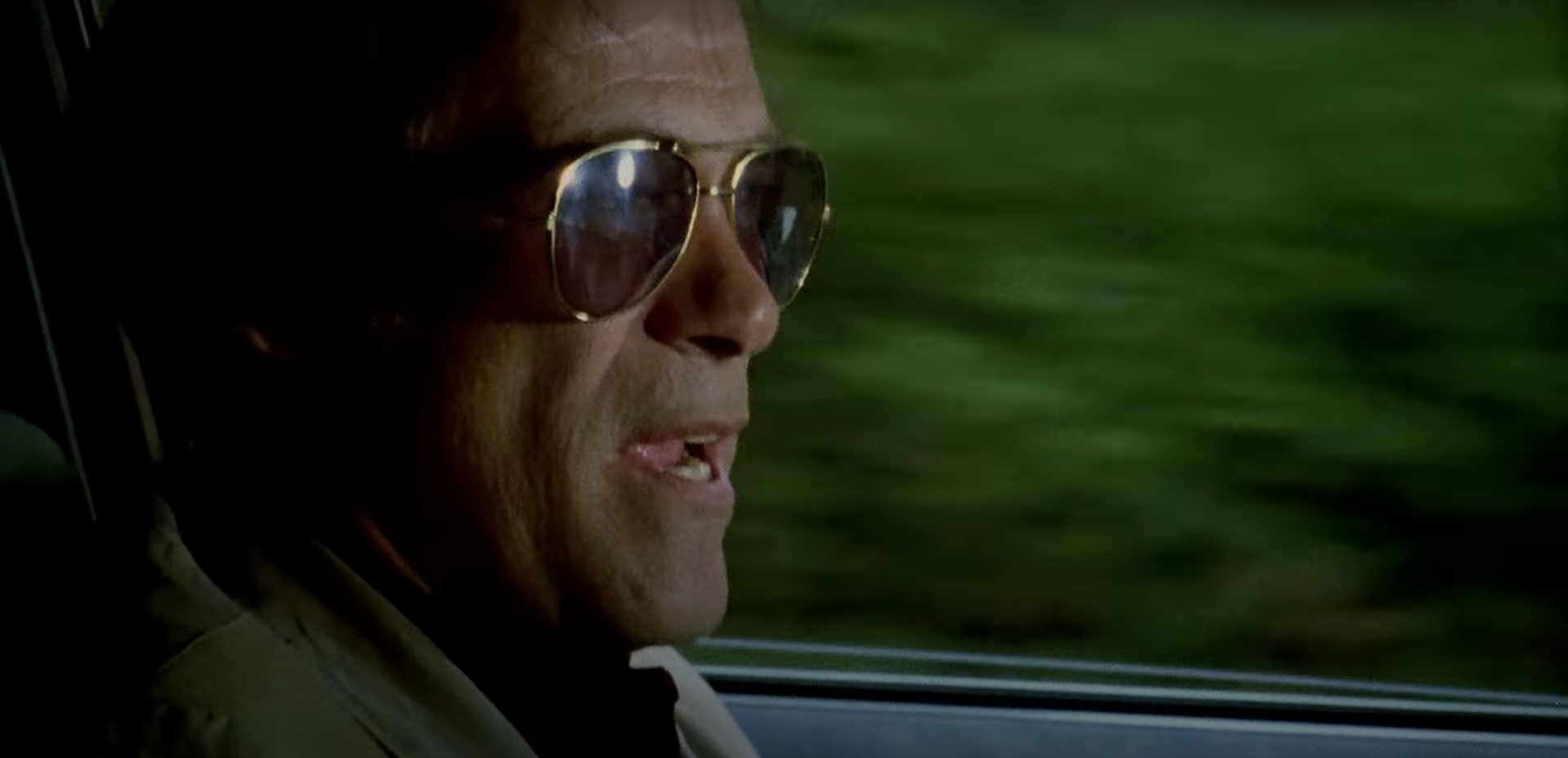
A medley of nationalities make up “City of the Living Dead’s” who either are or are playing American characters.  Comprised mostly of Italian actors Antonella Interlenghi (“Yeti: Giant of the 20th Century”) as one of the first doomed Dunwich victims, Michele Soavi (director of “The Church”) as a canoodler with his brains being squished, Daniela Doria (“New York Riper”) as the other canoodler having her innards become outers, Fabrizio Jovine (“The Psychic”) as the hung priest who started all this mess and as the harbinger of the living dead, and Carlo de Mejo (“Women’s Prison Massacre”) in the psychiatric lead.  There’s an abundancy of diverse Italian flavor that definitely grounds “City of the Living Dead” as an Italian production, but a minor chunk of the cast are Americans with co-principal Christopher George (“Graduation Day,” “Pieces”) as a rakish NYC reporter forcing his way into a minor lead turned major forthcoming day of reckoning and Robert Sampson (“Re-Animator”) in a minor law enforcement role that bears little significance.  Sprinkled in the cast is also the Swedish-born-turned-Italian actress Janet Argen (“Eaten Alive”) as the psychiatrist patient and UK actress Catriona MacColl rounding out the principal cohort as the psychic.  MacColl is the only actress to have a role in all three of Fulci’s Beyond the Gates films, playing different characters in each.  Between Christopher George’s skeptic playfulness, Janet Argen’s uncontrollable hysterics, and in the unmalleable wrought shock of fear, the sundry cast doesn’t hinder the performances that mesh well under the greater air of portent and the hours leading up to end of days.  Giovanni Lombardo Radice (“Cannibal Ferox”), Luca Venantini (“The Exterminators of the Year 3000”), Adelaide Aste, Venantino Venantini (“Cannibal Ferox”), Robert Spafford, James Edward Sampson (“StageFright”), Perry Pirkanen (“Cannibal Holocaust”), Michael Gaunt (“Forced Entry 2”), and filmmakers Robert E. Warner and Lucio Fulci costar.

Through an unexplained mysticism and preformed stipulations on why the priest was the be all end all gatekeeper to the dead’s awakening on Earth other than Dunwich was original built upon the ruins of a witch-burning Salem, Massachusetts or why the day after the unmentioned Halloween season (likely because Italians do not celebrate Halloween with an abundance of candy and custome), All Saints Day, becomes the zero hour date when clearly the dead are already fatally impacting lives in the corporeal realm, Lucio Fulci masterful magician qualities diverts attention away from seemingly crucial elements of the plot toward a complete and total elemental atmosphere of fear, using eerie fog, whipping wind, and phantasmagoria imagery of the macabre to implant chthonic horror slowly rising above ground.  Makeup artist Franco Rufini recesses the sight sockets with deep, infraorbital darkening under the eyes in stark contrast with the pale shade skin, creating that classic yet effective zombified corpse casing in conjunction with special effects artists Gino de Rossi (“Burial Ground:  The Nights of Terror,” “Cannibal Ferox”) use of ground raw meat or whatever the gushy material used to construct the cerebrum contents that just squishes to a pulp between the fingers of the undead when they grab a fist full of hair, skin, and brains from behind an unlucky left living.  There’s quite nothing like a Lucio Fulci film where the ghouls knock on the door from the other side, threatening the land of the living, the world even, with a sound and steady ghoulish malevolence and death in a well-lit and framed Fulci-scope to hammer down defined purpose that drives a penetrating stake through the chest bone and into a chilled soul.

“City of the Living Dead” goes beyond the format gates and arrives onto a 3-disc 4K/Blu-ray release from Cauldron Films.  2160p Dolby Vision 4K and a 1080p AVC encoded high-definition options really put this Fulci classic back on the map, unlike the small, forsaken city of Dunwich. The 4K UHD is an HEVC encoded, 2160p Dolby Vision ultra high-definition resolution while the AVC encoded Blu-ray sports 1080p high-definition, presented in a widescreen 1.85:1 aspect ratio. Through the translucent mist of natural, good-looking grain, Cauldron Films have hyper-accentuated the atmospherics with a clean rendering of the innate cooler-to-warner photography grades of blue-to-yellow with creating a harsh contrast transition. The encoding never shows an ounce of detail distress to keep textured and palpable image of the darkened crypt or the thick fog exteriors that often would degrade decoding with omitted data. The Cauldron Films release retains and sustains bitrate that fastens the dark levels to a robust and effective pitch black. What’s neat about this release is the ability to toggle between the English DTS-HD 2.0 Mono and the Italian DTS-HD 2.0 mono, both post-recorded in standard with Italian productions. Both tracks are comprehensibly sound with a clear and clean dubbing with the only detailed differences being one in English language and the other in Italian and the title card switched out for the each. Between the two, range is exact on both with not a lot of superfluous ambient sound and both tracks offer a near blemish free experience in a robust context of atmosphere. Disc 1 and 2, 4K UHD and Blu-ray respectively, come with new audio commentaries, including with cult film critic Samm Deighan, author of Italian horror cinema Troy Howarth and film critic Nathaniel Thompson, as well as individual archival commentaries with actors Catriona MacColl and Giovanni Lombardo Radice. Disc 3 includes an interview with production Massimo Antonello Geleng, actor Giovanni Lombardo Radice, and on-stage Q&A with Venantino Venantini and Ruggero Deodata (“Cannibal Holocaust”), a Q&A with Catriona MacColl, a Q&A with composer Fabio Frizzi, interviews with special effects artist Gino de Rossi and principal actor Carlo de Mejo, A Trip Through Bonaventure Cemetary – an explorational and historical account on the main cemetery where the priest in the film hangs himself, trailers, an image gallery, and other archival interviews in a near feature-length collection of conversations with cast and crew reminiscing about Lucio Fulci during filming. The 4K UHD and third disc packed with special features are region free while the Blu-ray remains region A locked in licensed playback on the format. Both features have a runtime of 93 minutes and the release is unrated. Emerging from the gates of standard definition hell, Cauldron Films tempers Lucio Fulci’s “City of the Living Dead” to a foreboding crust, burgeoning with ominous clout the undead’s underscoring resurrection.

Cauldron Films’ “City of the Living Dead” on 4K and Blu-ray 3-disc Release!

Your Test Will EVILLY Hunt You! “Prey” reviewed! (20th Century Studios / Blu-ray)

The Hunt is On.  “Prey” Available on Blu-ray from 20th Century Studios!

Set in the Northern Great Plains of 1791, a young and fierce Comanche woman, Naru, craves to break conventional gender barriers as a tracker and hunter, separating herself from the assumed woman’s place in her tribe as a gatherer of medicine and food.  Naru tirelessly trains herself in the ways of the warrior and has become better than her male counterparts who often look down on her as an inequal; yet, she continues her pursuit to prove her worth not only to men hunting parties but also her own brother who, with all the love in his heart for her, doubts her abilities to meet and become victor over her tribe’s warrior test of hunting a predator that can hunt you back.  A big-game hunting alien with high-tech arsenal invades the land, tracking down the area’s biggest predators, and conquering them essentially his bare hands.  Naru comes face-to-face with the extraterrestrial predator that threatens her people but her cries of wolf fall on deaf ears until the tribe’s bravest war party is defeated and the nearby shrewish French fur trappers are slaughtered despite their gunpowder weaponry, Naru is all that is left between her people and a high-powered killing machine.

From a year and half after the success of its premier release on Hulu, “Prey,” the prequel to the highly popular “Predator” franchise has finally berthed onto the home video market.  “10 Cloverfield Lane” director Dan Trachtenberg helms what is essentially a primal and back to roots prequel with a screenplay penned by television writer-producer Patrick Aison set nearly 200 years prior to John McTiernan’s 1987 action-packed, science-fictional horror “Predator” starring Arnold Schwarzenegger battling a skull-trophy hunting alien with advanced and otherworldly armaments.  Though included as canon, “Prey” separates itself from the pack, especially from the string of “Alien vs. Predator” crossover and the 2018 Shane Black director “The Predator,” and not just in title alone but the title is certainly very significant with a focus on the developing heroine to become respected and an equal amongst the men of her tribe whereas the rest of the franchise focuses on the rudimentary conflict between the very best-of-the-best of tough man and a highly skilled, kill-efficient creature from another planet.  Original “Predator” screenwriters and brothers Jim and John Thomas return as executive producers alongside Ben Rosenblatt, Marc Toberoff, and Lawrence Gordon (“Predator”) with John Davis (“Predators”), Marty Ewing (“It”), and Comanche-Blackfeet American Indian Jhane Myers producing for production companies Davis Entertainment and Lawrence Gordon Productions with 20th Century Studios continuing its long history of distribution presentation of the game hunter. 

Much of the cast, as well as the crew, consists of people of indigenous people heritage, honoring First Nations with representation and authenticity.  At the very heart of the story, as the face of the principal hero, and as a young woman who unfortunately in this industry is the atypical-appearing action star is Amber Midthunder (“14 Cameras”) as Naru, a skilled hunter-tracker disparaged and scoffed at by most of her tribe for not following traditional suit.  Naru is an outsider thinking outside the box while still maintaining the traditions of her people, such as wanting to participate in the Kuhtaamia, a hunting rite of passage that leads to being a warrior.  Midthunder executes the character free from vanity but maintaining strength, courage, and quick thinking despite some inexperience which is a greatly adorned flaw to have in a grounded main character battling against the odds.  Naru is at odds with her younger brother Taabe, an adored and venerated hunter who wants to believe in his sister but edges more toward conformity or conventional ways.  Dakota Beavers tackles Taabe’s athleticism, showing no hesitation in battling the predator on horseback, while also softening the eyes and feeling compassion for his onscreen sibling handled a raw deal.  While Dane DiLiegro (“Monsters of California”) is no Kevin Peter Hall, the original actor donning the Predator suit in the first two films, the 6’8” former oversees professional basketball player fit into the large shoes of a new kind of a predator, one we haven’t seen on screen before, and giving the powerful alien creature a fresh take without breaking off too much of the character’s franchise stride and still being a monolithic monster of formidability.  “Prey” rounds out the cast with Stormee Kipp, Bennett Taylor, Michelle Thrush (“Parallel Minds”), Nelson Leis (“The Curse of Willow Song”), Mike Paterson (“Crawler”), Tymon Carter, Skye Pelletier, Harlan Blayne Kytwayhat, and Samuel Marty (“Don’t Say Its Name”).

From the very title, “Prey” is the analogous prequel and follow-up “Predator” story that strays away from the rough-and-tough, highly trained killers in harsh combat terrains and settings with overkill tech and firepower that blasts everything to smithereens path.  Instead, Dan Trachtenberg travels back in time, back when more primal and essential courses of survival were relied upon by grit and skill.  Even the predator is not as technologically advanced as his descending successors. Trachtenberg mentions in one interview that this particular predator, with a vastly different shaped head and having more low-tech gear, and I use that in the loosest of terms considering the predator’s technological advancements compared to 18th century man, may be from another hemisphere of his world, but I’d like to think this earlier version is more like earlier man prior to evolution, or else how can we explain the flintlock pistol connection with “Predator 2.”  This canonical link plus Taabe’s bordering cheesy throwback line, if it bleeds, we can kill it, give tribute to the acclaimed two films that paved the path to setup “Prey’s” success to stand on its own two monstrous feet being set not in a hot jungle, an urban heatwave, or in the midst of an alien race’s civil war or long historical combat with another race, but in the serene, idyllically raw landscape of Northwest America and that is faced with a lead hero we’ve never seen before in a Predator film.  Character driven elements provide a substantial arc in Naru’s story, encrusted by challenges, failures, and successes that make the Comanche woman worthy of the hunt. 

From its Hulu premier on July 22nd, 2022 to its at home, physical media release a year and change later on October 3rd, 2023, “Prey” has come home on Blu-ray home video from 20th Century Studios home entertainment.  The AVC encoded, 1080p, BD50 presents the film in a widescreen 2.39:1 that captures the vista survey with breathtaking sharpness in detail in the 4K scanned print, adding that ever-so-delicate crispness to each foliage-laden and mountainous range landscape.  Even the visual effects, such as a plain rabbit running from a wolf, the bear versus predator, or the deadly rattlesnake, had Its near immaculate rendering show every texturized detail albeit very minor clunky movements.  Color and lighting result in natural tones and sources except for the ashen dead timber sequence that reduces the saturation to make the added fog denser and provide an area of casualty when the predator comes to call.  “Prey” has an outstanding five language audio tracks to choose from:  An English DTS-HD 7.1 master audio, an English Dolby digital 2.0 descriptive audio, a Spanish Dolby Digital 5.1, a French Dolby Digital 5.1, and, for the first time ever, a Comanche Dolby Digital 5.1.  From one of the bonus feature’s deleted scenes, Trachtenberg’s voiceover commentary suggests, at one point in time, the dialogue was going to be fully Comanche, and some scenes, such as the deleted one on the Blu-ray, was filmed in the native tongue.  However, English was decided upon for the final product, but the full-bodied English DTS-HD 7.1 track is masterclass with great attention to extracting those detail elements, such as the serrating gore moments, the whizzing and blips of the predator’s gadgets, and the action associated between minor and major scuffles that build to “Prey’s” one-on-one climax.  Depth elements has space between background and foregrounds, channeling nicely through side and back setups, and the range is extensive in those aforesaid moments of detailed instances plus a few LFE moments of explosions and a thunderous ship landing and takeoff.  Dialogue is clean, clear, and prominent between the audio’s varied language blend of mostly English sprinkled with Comanche and French.  What’s missing from “Prey” that’s a staple through all of the “Predator” films is a rendition of Alan Silvestri’s iconic score, but that omission will likely feel more heartfully loss with diehard fans of the franchise.  However, composer Sarah Schachner’s (“Remains”) orchestra composition is of epic storytelling that pulls similar grand dramatics from another similar time period, Native American film, “Last of the Mohicans.”  English SHD, Spanish, and French subtitles are available to the feature only.  Bonus extras include an audio commentary with director Dan Trachtenberg, actress Amber Midthunder, cinematographer Jeff Cutter, and film editor Angela M. Catanzaro, a Making of Prey behind-the-scenes with cast and crew clip interviews and action footage, Prey FYC Panel with cast and crew discussion, and deleted scenes and alternate openings with a Trachtenberg commentary that explains why the scene was shot and left cut on the editing room floor as well as a visual storyboard of Naru and the predator in a chase in the treetops.  20th Centry Studio’s Blu-ray comes in a conventional snapper amaray with a rigid O-slipcover of Naru’s warpainted eyes overtop one of the original first key arts released of the film – predator in the background of the decaying timber forest ready to strike with its large wristblades as a Comanche warrior, presumably Naru, in a defensive crouch with tomahawk in hand.  The amaray’s front cover sports the same image.  Inside there is a NECA advert for a 7” figure of the feral predator with a matte red disc print with the title and the three target dots reflected in mirror.  “Prey” is rated R for strong blood violence, has a runtime of 100 minutes, and is surprisingly region free, a solid additional to anyone’s Predator film collection. Dan Trachtenberg is on to something here, guiding the extolled Predator toward a new, yet familiar path in what has become an exciting new beginning or pivot for the trophy hunting alien race just begging for the big screen one more time.

The Hunt is On.  “Prey” Available on Blu-ray from 20th Century Studios!

The Home Recordings of a Pure EVIL! “August Underground: Mordum” reviewed! (Unearthed Films / Blu-ray/DVD combo)

“August Underground:  Mordum” Limited Collector’s Edition!

Uncompassionately deranged serial torture and murderer Peter Mountain is back.  Along with his maniacal partner Maggot and his depraved sister Crusty, whose also Peter Mountain’s girlfriend, the terrorizing trio videotape their exploits with no shame and with no end from no matter how mundane to no matter how gruesomely vile.  Rage and lust mix together with sociopathy and psychopathy, resulting in a dangerous combination for whomever crosses their path.  Shocking glimpses of their killing spree reflect through the lens of their camcorder, capturing every kidnap, imprisonment, confinement, rape, mutilation, torture, and eventually murder of their sadomasochistic onslaught onto every random, unlucky soul but with every moment of madness captured, their no so friendly friendship verges ever closer toward a volatile collapse when Maggot and his sister Crusty hook up from time-to-time and the perpetually aggressive juggernaut Peter Mountain is on the brink of breaking more beyond his broken mental state.

The return of Peter Mountain marks the return of shock and gore director Peter Vogel with “August Underground:  Mordum,” the 2003 sequel to Vogel’s unnervingly raw depiction of depravity and exploitation in “August Underground” released two years prior.  Not a traditionally subsequent sequel, “Mordum” is a standalone entry with only the presence return of Peter Mountain to connect the two stories together, but “Mordum” initially didn’t start out as a sequel and only morphed into a feature when Vogel was requested to shoot gruing material for the aptly named death/gore metal band Necrophagia and the band’s lead singer, Frank “Killjoy” Pucci, suggested to turn the material in a follow up film of “August Underground” with Killjoy co-wring alongside Toe Tag Picture’s Vogel, Christie Whiles, Michael Todd Schneider and Jerami Cruise.  What emerged felt like an organic chapter in Peter Mountain’s found footage mausoleum of bloodlust mayhem.  Shot in and around the Pittsburg, Pennsylvania area, “Mordum” is a production of Toe Tag Pictures under executive producer Jerami Cruise.

2001’s “August Underground” brought a terribly raw image to the independent cinema fold that house realistic depictions of the utmost evil and perversion.  So much so, a few of the cast members decided to not use their real names.  For Peter Vogel, a follow up film was like another day walking in the park as a proud papa of his villainous protagonist Peter Mountain, an eclipsingly large and laughing feverishly fiend of a man who preys on the cries and screams of his victims.  “Mordum” introduces us to two new actors into the fold with Christie Whiles, who would reprise Mountain’s girlfriend Crusty in the third Entry “Penance,” and Michael Todd Schneider (“I Never Left the White Room”) as Crusty’s brother Maggot.  It’s not exactly made clear if Maggot is a returning character, the hyena chuckling man behind the character played by pseudonym Allen Peters, or not.  In either way, Whiles and Schneider are equally as vicious on screen as Vogel but invite a whole of a hell a lot more nudity, non-simulated genitalia fondling, and induced vomiting to give “Mordum” that extra mile of stomach-churning, eye-adverting discomfort.  As the fluids deluge in scene-after-scene of massacre depictions, the triple threat come across a like-minded individual, played by the person who very much encourage and inspired for the sequel.  The late Frank Pucci, aka Killjoy, the front man for Necrophagia plays an equal with a slaughter shed full of rotting, putrid corpses, beheaded babies with maggots, and prime meat tied and lying in wait for him to butcher as his leisure.  “Mordum” offers up a slew of victims in different abattoir and snuff scenarios, casted with a rising makeup artist in a pre-crew acting role Midian Crosby (with makeup credits including “Halloween Ends,” “Cop Car,” and “Guardians of the Galaxy Vol. 3”) and Elmo Painter in the vomit and viscera evacuation scene, Rick Kundrach and Tim Grubjesik as unfortunate junkies, as well as Chris Shaw, Shelby Lyn Vogel, Allana Sleeth, Dave Brown, Erika Schultz a few pseudonyms in Daisy, M. Kadath, and E. Jay, and with Ultra Violent Magazine editor Art Ettinger.

Similar to the first film, “Mordum” has no plot in it’s a series of found footage flashes in the day in the life of a serial killer.  This approach makes what you’re having to behold for 70-minutes that much more plausible and realistic and what you’re seeing is quintessential gore porn.  “Saw” wasn’t the basis of the coined term.  No, my sanguine licking friends.  Fred Vogel pioneered that course three years earlier with his sick and twisted show of seminal underground.  The only reason why Vogel wasn’t at the top of the gore porn list was because none of his films had mainstream theatrical runs.  However, literally, “Mordum” contains that borderline porn element of exposed and molested nudity, the below the waste naughty parts that don’t see a tone of skin-to-skin action, and there’s certainly enough gore to go around and around and around and around again.  Some of those smaller gore elements were real, such as skin cutting.  Another element that makes “Mordum” effectively morbid is the special effects work by Vogel, Jerami Cruise (who has gone on to do major studio films from his extreme horror indies), and the late Ryan Nicholson (director of “Gutterballs” and who also was a special effects supervisor on a wide scope of studio and indie films) who provided many of the dismembered and grimed up dummy props framed through a standard definition, commercial camcorder for the Necrophagia music video.  If no story arises, one hell of a damn good show must come out of the horrific footage and Peter Vogel and the Toe Tag team achieve diabolical decadence with stomach content-emptying pizzazz.

Unearthed Films and Toe Tag Pictures have teamed up to release limited edition releases of Peter Vogel’s “August Underground” trilogy.  “Mordum” receives the royal physical release treatment with a 2-disc, Blu-ray/DVD, Limited Collector’s Edition.  The Blu-ray is an AVC encoded, 1080p high-definition, BD50 can only be so detailed with a shaky, consumer cam but the image could not look any better, or gruesome.  Presented in a pillarbox framed 1.33:1 aspect ratio, RGB color model leans more toward warmer reds, yellows, and greens so you don’t get an authentic color scheme on objects or skin tones.  Darker scenes render nicely enough despite the MiniDV magnetic tape’s e-interference compression artefacts and some tracking lines onto digital recording that makes the image jittery/jumpy, but all the in-your-face closeups, low-quality picture quality adds to “Mordum’s” rancid-sensing realism.  The English PCM 2.0 audio track has copious clarity for its unrefined, raw built-in mic recording that comes with some crackling and echoing if the decibels rise during screaming or shouting and the built-in can’t handle the received input. Depth is lossy with the range of the recording and range doesn’t factor into play as dialogue pushes through whereas the low-budget constraints leave the action audibility left to the imagination. Subtitles are not available on either format. The limited-edition regurgitation of the sequel warrants a ton of special features in its inauguration to the mainstream masses. Both formats share most of the extras but the Blu-ray features many more. Brief Dave Fogel touchpoints on certain aspects of “Mordum’s” obscure longevity Mordum Lives!, the climax’s most disturbing visuals The Most Disturbing Scene, and an ode to Necrophagia’s front man Remembering Killjoy dive into those specific nuts and bolts of involvement, a new interview with Michael “Maggot” Schneider A Family Affair of Love and Hate which also includes The Ravenous music video from Necrophagia, offering some more cut scene insight, a sit-down interview with between Unearthed Film’s Stephen Biro and Tog Tag’s Jerami Cruise on the gruesome special effects work on a budget of literally what was lying around, Necrophagia’s promotional video of Rue Morgue Disciple, a new Rue Morge Disciple Behind-the-Scenes gallery, deleted and extended scenes that prolong the violence of the most graphic, extreme scenes and add another level of behind-doors sexual deviation to near pornographic heights, the U.S. premiere from 2003, a brand new extensive photo gallery, original animation work, and trailers while the Blu-ray includes these features, also on the hi-def disc is a new interview with Ultra-Violent’s editor Art Ettinger and Allana Bleeth who both have small roles in the film, a new interview with Zobo With A Shotgun’s Zoë Rose Smith interview director Fred Vogel, filmmaker Dave Parker interviews Vogel as well, Severed Cinema interviews Vogel too in Snuff Purgatory, a new mockumentary and its trailer for Sickcess: A Necrophagia, and a Zombie Demo from Flashback Weekend circa 2004. On top of the special feature filth, the physical aspects of the release come in a clear and traditional Blu-ray snapper case housed inside a cardboard slipcover showcasing the infamously disturbing scene. The same scene is also illustrated on the Blu-rays cover art with reverse cover art providing a rough-and-ready composition alternative of the same scene. Both disc arts are pressed with camcorder blurry images of depicted carnage. The region A/Region 1 locked Unearthed Films combo set has a runtime 91 minutes and comes, obviously, not rated. If looking for the original 3 from Hell, Peter Vogel’s “August Underground: Mordum” assembles three monsters to ever savage the screen with their horrible, unspeakable acts of sadism. The unabashed Unearthed Films rightfully doesn’t lubricate our hole of curiosity, sodomizing our prurience with the metallic taste of blood and madness.

“August Underground:  Mordum” Limited Collector’s Edition!

The Body Must Go Through an EVILution to Survive! “Crimes of the Future” reviewed! (Second Sight / 4K-Blu-ray)

“Crimes of the Future” 4K UHD/Blu-ray Set is the New Sex!  

Physical pain no longer resides in the human body, infection has all but been inexplicably eradicated, and new organs spontaneously appear, mutating their bodies and humanity into grotesque performance artist and back alley surgical pleasure seekers.  Saul Tenser and his partner Caprice showcase the new organ oddities with surgical art of removing the organ in front of sensually aroused and curiously stimulated spectators.  When an admirer offers an idea for a show, an autopsy of his recently deceased son he promises will be full of surprises, the artists dig into what could be a spectacular operational observation for shocking advant-garde art, but the deeper they dig the more than realize their own bodies might be evolving to a synthetic-laden environment and there are those working in favor and against what it means to be considered human in the New Vice Unit, at the National Organ Registration Office, and clandestinely, behind-the-scenes of the corporation Lifeform. 

David Cronenberg is known for pushing provocation in style and in substance.  His latest dystopian picture “Crimes of the Future” continues the provoking, controversial trend in his verve of body horror that has collectively corroborated Cronenberg as the face of the biologically integrating subgenre.  Cronenberg writes and directs the quasi remake of his 1970 feature of the same title with modern day effects as well as providing new reconstructive surgery on the story surrounding the man who grows new organs just to have them cut out shortly after.  Cronenberg tackles themes of human physiological evolution in a plastic consumed and destroyed environment and the evolution of performance art as it relates to sex or stimulation while also dipping his toes into the darker side of control with organization entities that either become an obstacle or a complete antagonist of corruption within a commercial corporation sense or a threadbare government agency that attempts to control and police a person’s own body and life.  Shot entirely in Athens, Greece under local production company Argonauts Productions, as one of man of the companies backing the 2022 feature, “Crimes of the Future is also funded by the capital investment company Ingenious Media (“Guns Akimbo”) and the Canadian governmentally funded Téléfilm Canada (“Ginger Snaps”) with Serendipity Point Films, Crave, and Rocket Science to name a select few in the co-productions.

Marking his fourth collaboration with the director, Viggo Mortensen (“Eastern Promises,” “A Dangerous Method”) handles the fame of Saul Tenser, the subject of performance art with a knack for spontaneously growing new organs, or tumors, nearly at will and having them removed during surgical exposition at the hands of his intimate partner Caprice, quizzically seduced by the performance from “Blue is the Warmest Colour” and “Spectre’s” Léa Seydoux. Mortensen plays into Tenser’s will to remain what the institutes define has human only to become conflicted with the investigation into the prospect of rib-splitting a deceased young boy that sends Tenser into what-if territory. Scott Speedman (“The Strangers”) is the cause-driven father of the expired boy and Speedman sustains the character with his usual calm, soft-spoken demeanor which didn’t quite feel passionate enough for a neo-rebel against a society against what he stands for, what he is, and what he thinks everyone should relinquish to – to let the organs grow and flourish. Instead, the New Vice Unit Agent (Welket Bungué), the National Organ Registry’s bureaucrats, the excitable Whippet (Don McKellar, “eXistenZ”) and odd yet attractive Timlin (Kristen Stewart, ‘Underwater”), and an unscrupulous corporation looking to stop the spread of evolution insurgence for capital sustainability. Full of complex characters and neoteric performances, “Crimes of the Future” leaves a lasting impression, makes you stop and think, and indulges in the possibilities of the future with the help of a supporting cast that rounds out with Nadia Litz, Tanaya Beatty, Lihi Kornowski, and Yorgos Pirpassopoulos.

My official opinion about Cronenberg’s “Crimes of the Future” is that many viewers won’t see the multifaceted sides of what the writer-director is trying to convey.  What will be seen is the grunting organic bed that tilts back-and-forth, the fleshy and clunky moving digestive assistance chair that also has low guttural sounds, a dancing man sewn with many human ears, people being sliced open and enjoying it, and a dystopian future where suffering is not a main element.  People will see surface level abnormalities and gore and not understand the layers of a hard-pressed evolution in stagnation by unknown fear and extreme prejudice that runs rampant throughout Cronenberg’s underlying implication of an adaptation and updated normalcy inside a synthetic world.  “Crimes of the Future” is grotesquely beautiful in the depiction of not only how human culture and arts have morbidly progressed by the elimination of pain and by the advancement of technology only to be harshly juxtaposed against the grimy, gritty, and dilapidated habitation where infection feels high risk and imminent, but also in the corruptibility of the human condition that isn’t a naturally biological one like growing spontaneous organs.  Instead, the two bureaucrats of the National Organ Registry are supposed to be hardliners, rule followers, and thorough with their newfangled profession in the everchanging, unexplored future of the human physiology but are seduced by the intimacy of surgery, comparing it to sex with a high addiction rate.  The two agents are constantly breaking government policies and rules in order to be close to the dazzling aciurgy considered artful and alluring like a beauty pageant for the celebration of one’s innards.  Cronenberg also adds the caveat of corporate greed into the folds and flaps of “Crimes of the Future’s” dash of commercial retail that can be fleeting if not paying attention.  The threat of evolution aims to put body mechanism-correcting bed and chairs out of business and so a concealed aim to lobotomize that particular information permanently creeps up onto the narrative in some of the more frightening and gruesome scenes of smothering the risk it can spread like theater fire panic.  “Crimes of the Future” is an eye opening epiphany of everlasting ecological entrapment and the only way to survive is becoming accustomed to the taste of waste in order to be free of it.

If “Crimes of the Future” isn’t already remarkable enough in the wake of David Cronenberg returning to the body horror heir class, Second Sight stuns us with an impressive collector’s set from the UK. The 2-disc 4K UHD and Blu-ray set exhibits the film in a widescreen 1.85:1 with both formats decoding at an average bitrate of 23Mbps. The 4K UHD Dolby Vision comes in a HDR10 2160p while the High-Definition Blu-ray comes in a 1080p. Douglas Koch’s umbrageous urban bathed in greens and yellows and all the colors in between starkly hard lighting against softer details on the visual effects. Most details are lost in the tenebrous and decaying background of age worn and spartan warehouses with little-to-no wide longshots other than the opening of an overturned cruise ship in one of the very few daylight scenes, but the extreme contouring lucidly delineates the shapes around people and objects. Both formats include an English DTS-HD 5.1 Master Audio, providing a coherent and even robust dialogue through much of the Mortensen’s Tenser throaty rasp, Stewart’s Timlin robotic inflections, and Speedman’s Lang soft and breathy speech. “Crimes of the Future” is not volatile and full of action in what’s more a slow noir progression, focusing in on intimacy of dialogue, the proximate ambience, and Howard Shore’s (“Lord of the Rings”) neo-space opera and synth score. English subtitles are available for the hearing impaired. Second Sight puts heart and soul into every release when not only considering A/V but also special features and limited-edition contents. Special features include multiple succinct Second Sight produced interviews with director David Cronenberg and stars Viggo Mortensen, Léa Seydoux, and Kristen Stewart regarding “Crimes of the Future’s” broad vision. An extended interview with Don McKellar dives into his relationship with David Cronenberg from over the years plus his role as the National Organ Registry agent, plus additional crew interviews with producer Robert Lantos, cinematographer Douglas Koch, and editor Christopher Donaldson. Famed film journalist Leigh Singer provides a video essay New Flesh, Future Crimes: The Body and David Cronenberg, a making of featurette, production design materials that go deep into the austere and spartan look of Greece-turned-dystopian future, and a short film “The Death of David Cronenberg by Cronenberg and his daughter, Caitlyn. The physical features are a whole other beast within a rigid slipcase with new artwork by Marko Maney of a pitchy Saul Tenser relaxed in his orchid bed with tentacles while the back reads in stacked words, Body is Reality, glowing inside an old tube television. Both discs are held in an insert jewel amary case with its own Maney artwork of extracted organs in the same color scheme as the slipcase. Alongside the casing, there are 6 collectible art carts, a 120-page color book with production designs, location setups, and new essays by Reyna Cervantes, Tim Coleman, Joel Harley, Rich Johnson, Mikel J. Koven, Phil Nobile Jr., Ian Schultz, and Hannah Strong. “Crimes of the Future” is certified 18 for strong gory images and sex reference and runs 107 minutes on both formats with the Blu-ray locked in B region while the 4K UHD is listed as region free. Plausibly absurd, “Crimes of the Future” imparts far-fetched and dark humored science fiction, but if plants and animals biologically adapt to new or changing environments in order to survive, director David Cronenberg sees the future and renders a concept that, on a second sight thought, may be existentially key.

“Crimes of the Future” 4K UHD/Blu-ray Set is the New Sex!