This Little Pit Stop of EVIL Doesn’t Have Gumdrops and Lollipops. “Candy Land” reviewed! (MVD Visual / Blu-ray)

Visit “Candy Land” On Blu-ray. Purchase Here!

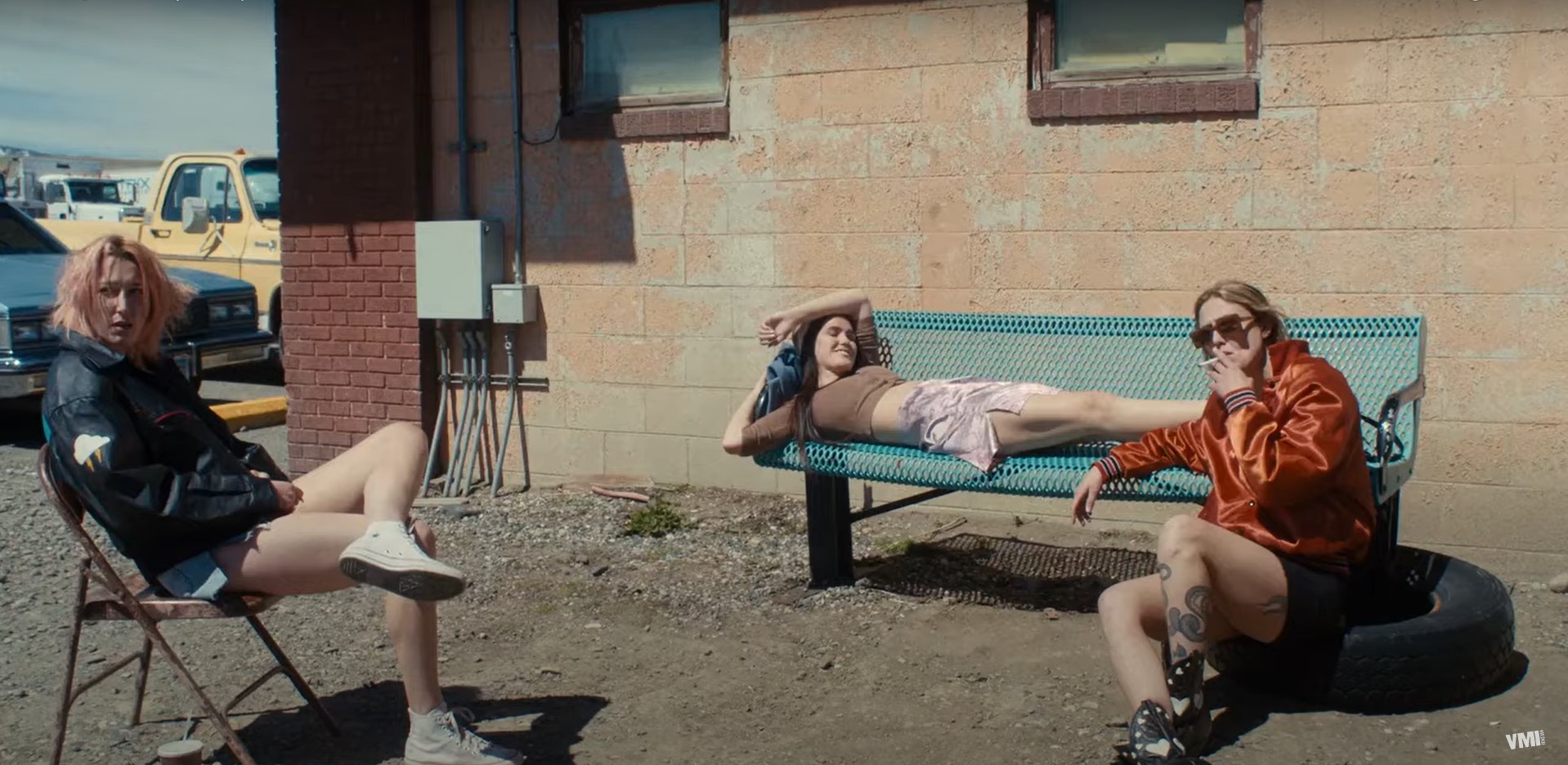
Candy Land is the bestowed designation of a truck stop at one of the last exits through Bible Belt country.  The monikered hotspot is home to four prostitutes, Sadie, Riley, Levi, and Liv, who work for ends meet, servicing all the needs of commercial truckers, those passing through, and even the local sheriff as long as they can cough up the cash.  The only ones not seeking pitstop sex worker services at Candy Land is a religious cult trying to spread the world of the lord around the same stretch of space.  When one of the members, a young and naïve Remy, shows up ostracized from the zealot sect, the sex workers take her in, treat her with kindness, and convince her to be worked into their profession.  Shortly after, gruesomely murdered bodies are found in and around the truck stop turning the once desired Candy Land into a life-threatening place to work, and enlightening the lot lizards that Candy Land is more seedy than once believed.
Shot in the foreground of the scenic Montana mountains, John Swab’s “Candy Land” is a lewd offering that screams the ugly part of something beautiful.  The 2022 USA horror-thriller is a written-and-directed by the “Run with the Hunted” and “Body Brokers” filmmaker Swab in the director’s first go at fringe horror that involves sex work, crazy cults, and hidden knife sheathed inside a large wooden cross.  Swab’s script takes a path less trodden perspective to most similar narratives and pulls inspiration heavily from the 70’s grindhouse era with lots of skin and lots of blood.  Swab produces his own film alongside fellow “Run with the Hunted” and “Body Brokers” producer Jeremy Rosen (“I Am Fear”), with Robert Ogden Barnum (“31”) and Michael Reiser (“Abandoned”) as executive producers, under the production banner of Roxwell Films.
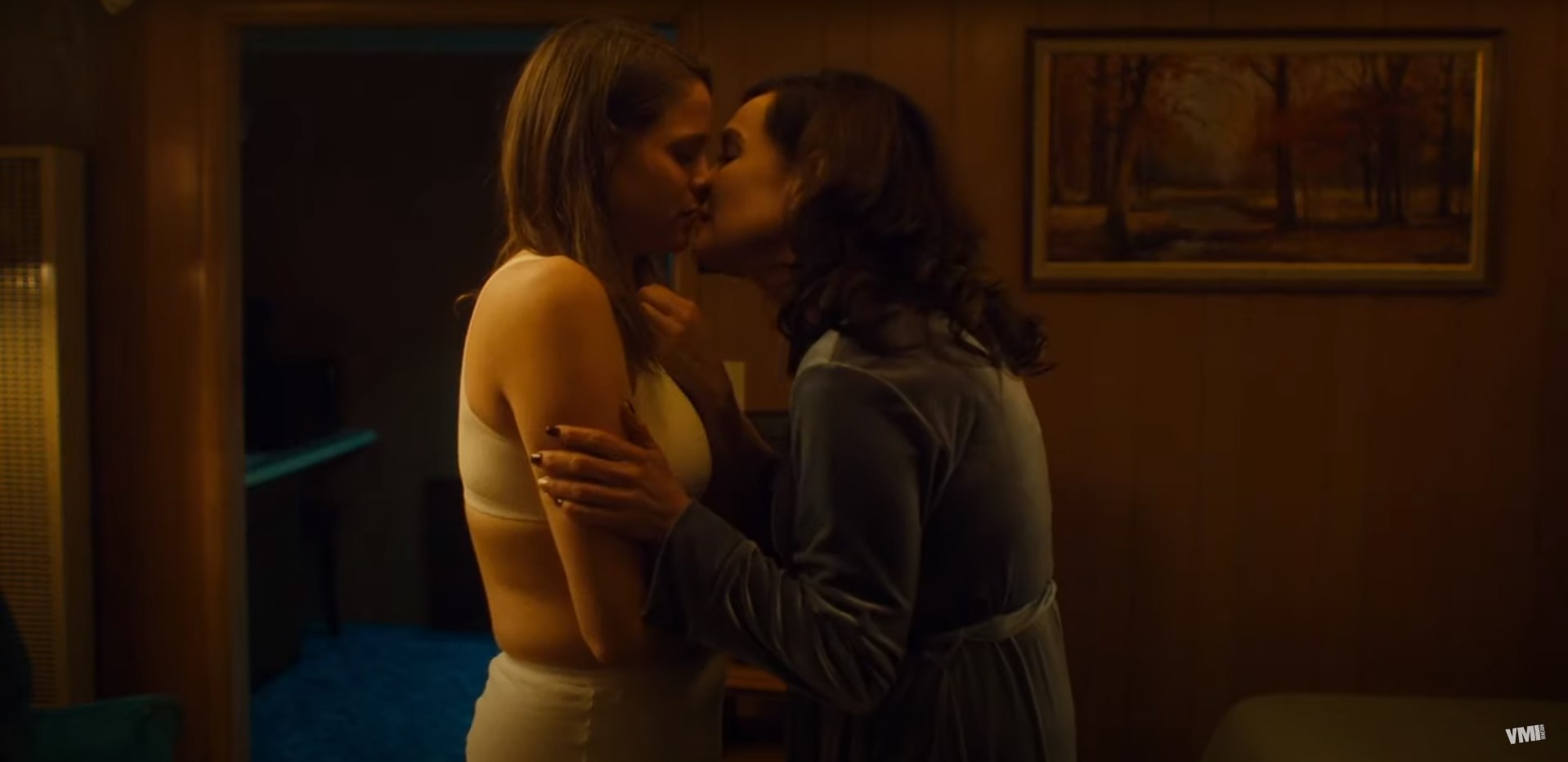
The ensemble cast is comprised of Hollywood veterans, up-and-coming actors, and even a famous last name.  The latter would be then 29-year-old Eden Brolin, daughter of Josh Brolin (“No Country for Old Men”) and granddaughter of James Brolin (“The Amityville Horror”), who is quickly paving her own path having landed as a season regular on the widely popular modern western series “Yellowstone.”  The “Blood Bound” actress is joined by equally young and hungry talent of Sam Quartin, a multi-time John Swab collaborator with roles in “Run with the Hunted” and “Body Brokers,” Virginia Rand (“I Am Fear”), and Owen Campbell (“X”) who are definitely not shy showing of their bodies, simulating explicit sex acts, and step into a compromising prostitute’s shoes as “Candy Land’s” unashamed lot lizards, or that’s what they portray for their characters on screen.  Together, a bond is formed between the working stiffs of sex workers, leaning on each other for support while seemingly living a free and uninhibited life with a good chunk of change in their pocket, but their profession is no walk in the truck lot as taxing moments in sidestepped affairs of the main plot show the darker side of prostitution, mostly involving Owen Campbell’s Levi as a straight man willing to anything for cash in a male dominated over-the-road trucking industry.  Their chimera’s end of the beginning is when Remy strolls into their lives like a lost puppy.  “It Follows’” Olivia Luccardi plays the meek and underestimated cult girl turning tricks as a way get a foot-in the door to cleanse damned souls to send to Gods’ pearly gates in Heaven and while Luccardi has the substantial feign madness well set in her eyes and actions, her story slips below that of the original four truck stop hookers as much of Luccardi’s backstory or even her perpetual motion through her perspective loses to the arbitrary wanes of killing for the sake of killing when the chance is at hand.  Cast rounds out with Guinevere Turner (“American Psycho”), Brad Carter (“The Devil to Pay”), Bruce Davis (“Agnes”), Billy Blair (“What Josiah Saw”), Mark Ward, and another famous last name from William Baldwin (“Flatliners”) as the daunting, downlow Sheriff Rex who has a strong, affectionate thing for Levi. 

The very first opening scene and montage of a sandy-blond Sadie going truck-to-school bus-to-bathroom stall to give a sense of what to expect and the down-and-dirty daily workload for our principal prostitutes sets the tone of Swab’s lickerish thriller with grindhouse endowments.  “Candy Land” is more than just a nutso cult film with all the hallmarks of sordidness as the interpretation received from the story is this temporariness in these characters’ lives.  From the transient paying clients of a truck stop, to living in the impermanence of a hotel room, to even the things they ingest, such as the smoke of incessant drags of cigarettes as a brief coping mechanism and the food they eat with the Hostess Snowballs that have fleeting substance in them to stave off hunger for a little while and only provide negligible nutrition, the temporarily speaks volumes toward the plot of a killer under the influence of a radicalized cleansed ideology wasting away those in provisional moments.  Swab finely sets up character quirks, an unsavory, realistic world, and distinct dynamics to enmesh the characters in a life they attempt to put a pretty face on only that pretty face is a pig wearing lipstick, forcing them into uncertainty and wearing them down to a point they can’t face what’s important and dangerous right in front of them – a young, confused girl led astray and looking for answers.  Instead, that girl, teetering on the edge of purity and dissolution having nowhere to call home, is not safeguarded and is folded into their own licentious lives and, like a Trojan horse, she ultimately become their downfall. 
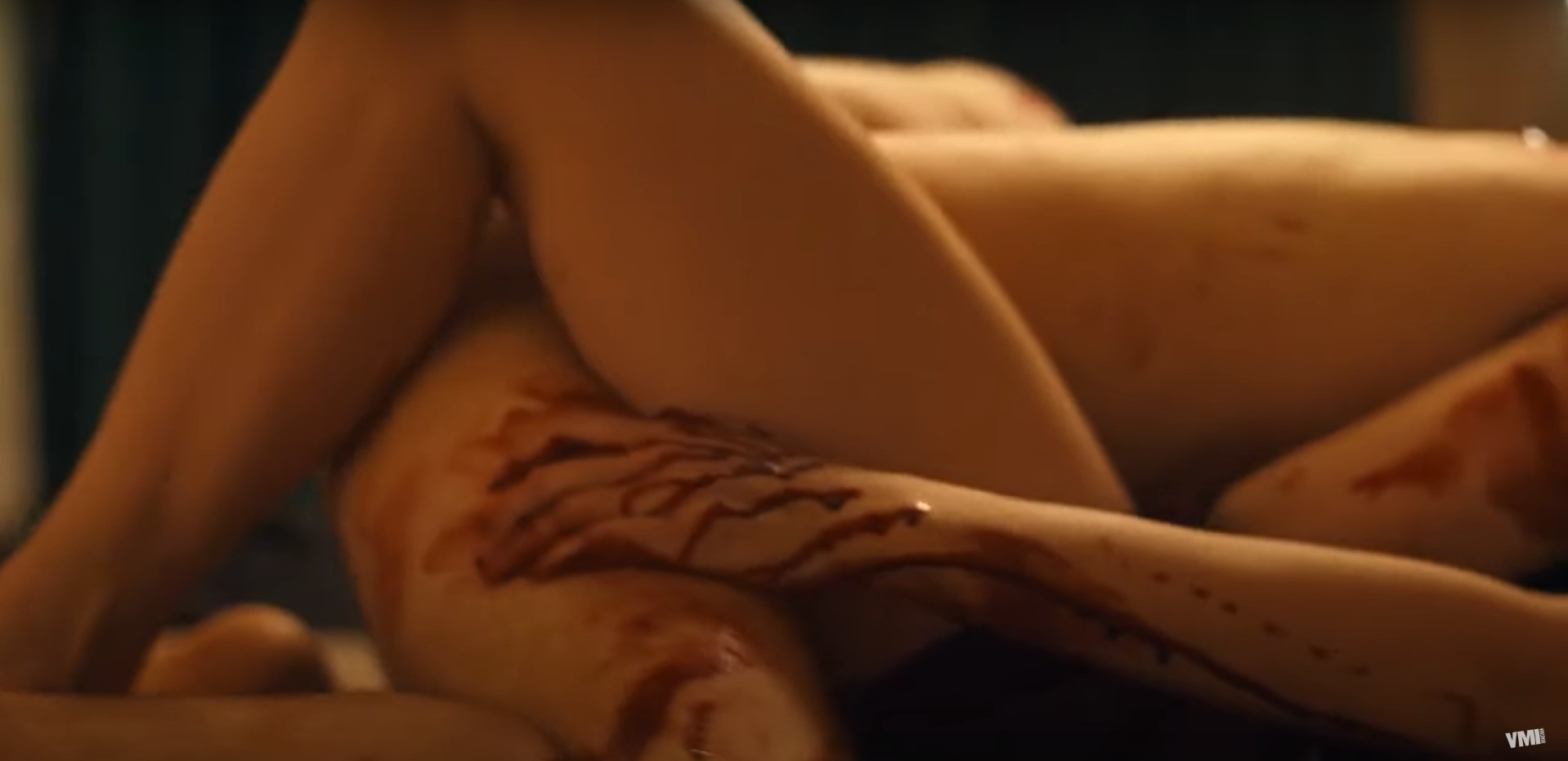
For “Candy Land’s” inaugural home video release, VMI Distribution and MVD Visual releases the John Swab horror onto Blu-ray.  The AVC encoded, high definition 1080p, BD25 conscripts not a single compression issue in the breathtaking, mountainous landscapes of Montana, affixing great distance between Candy Land and the rest of the world to describe the troubled brief getaway from reality without actually saying it. Presented in a widescreen 1.78:1 aspect ratio, details are greatly appreciated here with the graphic and vulgar markings inside the restrooms, skin tones fair a natural coloring, and a good amount of the whole film is lit naturally with the occasional greenish-yellow gel work to enhance the dinginess of a seedy truck stop. The English language, lossy Dolby Digital 5.1 surround track settles the best fidelity that it can muster, reining in unbridled tracks for a more subdued approach that befits more the lowkey motel suspenser than a fueled high-rise stimulator. Dialogue is clean and clear enough; a few instances cause for mumbling concern but quickly pass and that link is quickly made in the off word that’s missed. Soundtrack contains well-blended, well-intermingled snippets of classic rock, alternative and R&B from the 90s, and a quaint Christmas selection. Yes, “Candy Land” could be considered a Christmas movie! English subtitles are optionally available. Special features are limited by the disc capacity that houses only John Swab’s commentary track and retroesque, in-character stills of a digital zine. The standard Blu-ray Amaray snapper case for this limited-edition release is nothing short of pedestrian with a homage cover art that, I must admit, made me suspect Candy Land” was more a vampire film than a cultist’ coup of truck stop sex workers because of my lack of doing any kind of film prep for any of the screeners I receive – keeps me objectively aligned. You’ll find the same image pressed on the disc itself with no insert accompanying. Not rated and locked on a region A playback, this release has the film clocked in at 93 minutes.

Last Rites: “Candy Land’s” sweetness derives from its in-your-face sexual audacity that rings a certain truth inside the unsavory cash-making aspects of the oldest profession and Swab takes us out from the game’s usual vivarium of the darkened streets and the dingy underpasses into the brightly lit and very populated desert with a different breed of the species. The instilled cult angle feels more slapdash in comparison that sunders the acts more acutely and without a clear reason, leaving the finale unsatisfactory like a $20 handy.
Visit “Candy Land” On Blu-ray. Purchase Here!

EVIL Has Now Been Digitized. “August Underground’s Penance” reviewed! (Unearthed Films / Blu-ray)

“August Underground’s Penance” on Blu-ray/DVD Combo Set. Purchase Here!

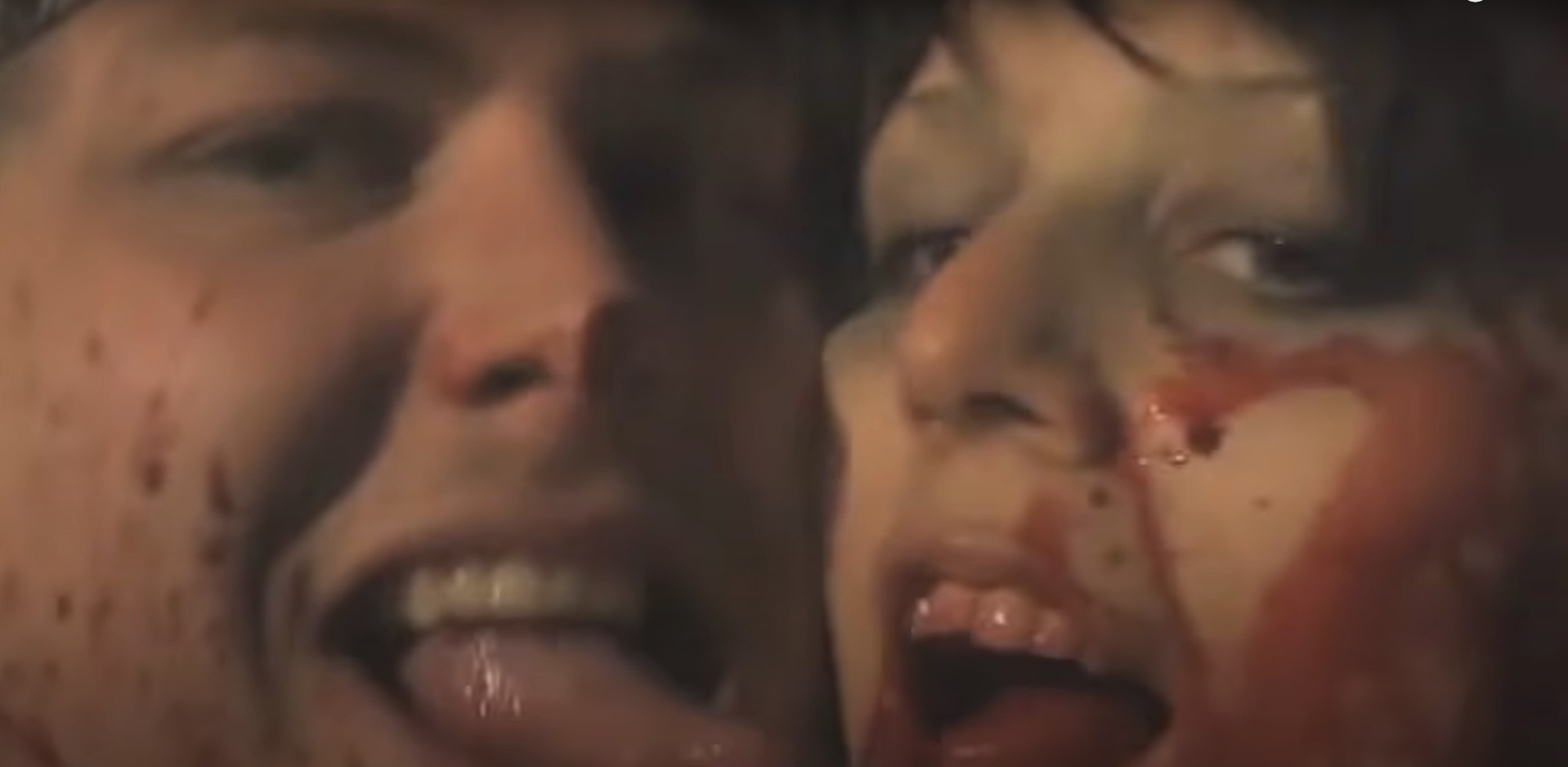
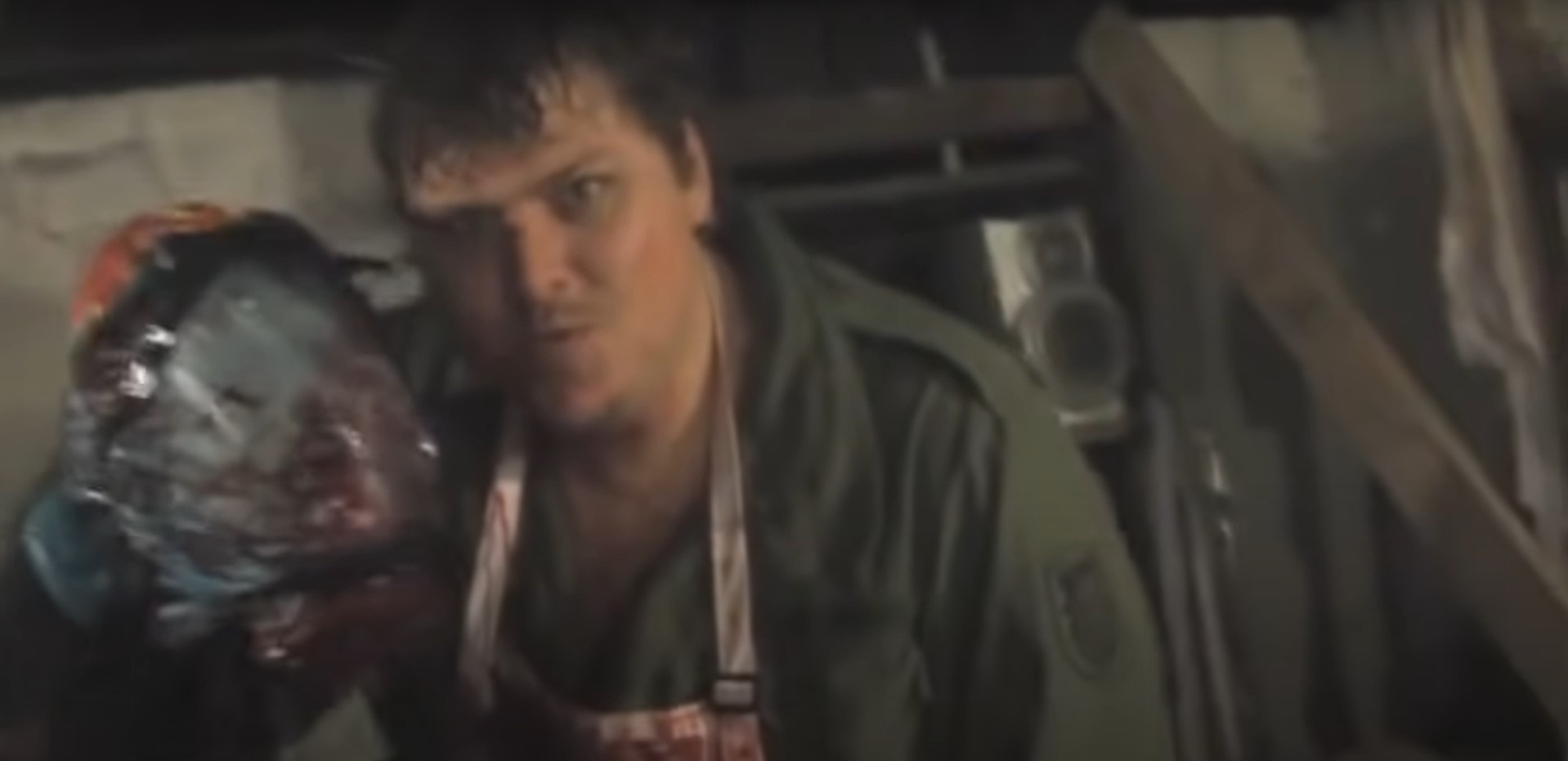
Armed with a digital camcorder and a dark desire to kidnap and brutally torture, rape, and murder random people, deranged serial killers Peter Mountain and his girlfriend Crusty are now a gruesome twosome after the demise of Crusty’s brother Maggot.  The couple’s documentarized carnage continues forward near Pittsburgh where fooling around in metal clubs and on the isolated outskirts of city is balanced out with a healthy dose of basement snuff as body after body after body begins to strain their warped relationship.  What unveils is a descent of their paired destruction as Peter’s rage and undying fascination with female flesh, and internal organs, gaslights Crusty’s simmering and unhinged toxicity.  During the stretch of the Christmas holiday season, the gift of gory packages will be unwrapped and sexualized cookies will be enjoyed before the festive filleting of body parts and December dismemberments trail off into a tale of grim totality. 

Fred Vogel’s third and final film to shut the book on the story around the atrocious Peter Mountain and his extreme exploitation and degrading of people is back on limited-edition physical media for snuff salivating audiences as “August Underground’s Penance.”  Nothing short of gratuitous ultraviolence, the final chapter of “August Underground” marks another successful viscerally visual installment in a clearly digitized effort, elevating the graphic nature with ooey-gooey detail in a vividly discernible image resolution.  A reuniting four years later between Fred Vogel and his cowriter/costar Cristie Whiles after their collaboration on “August Underground’s Mordum,” the second sequel provides a level of continuity, a very low level at that, not seen between the 2001 series starter and “Mordum.”  Under Vogel’s Toe Tag Pictures banner, the company behind the trilogy, the shock realism filmmaker co-produces the film with wife, Shelby Lyn, and Cristie “Crusty” Whiles and special effects artist Jerami Cruise servce as associate producers. 

Aforementioned, Peter Vogel and Cristie Whiles lace up yet again for the Peter Mountain and Crusty show of sadism.  Vogel returns as the mania screaming and overall brute Peter Mountain, a juggernauting maverick amongst murderers with no moral principles, a cynical constitution, and a weak-ish stomach that can’t handle his own gutting of bodies as Mountain, like in the first two features, wretches and coughs and nearly loses his lunch in most graphically intense scenes of spilled blood and guts and other appalling perversities.  Whiles’s Crusty is a carbon copy counterpart, a demented love interest under a loveless veneer, but the Crusty character certainly has evolved between “Mordum” and “Penance” as the coquettish amoralities at the beginning devolve shown in an unconventional narrative way with rough-hewn rough cuts that avoid structuring time and guiding in segues.  It also doesn’t help that the two often have screaming matches or are yelling at their lifeless victims to get a better understanding of melting down mutual relationship based on common callousness and, probably, rough sex, just the way they individually like it.  This is how Peter Vogel circumvents a “Mordum” repeat; not that “Mordum” was terrible as it did convey a Mountain, Crusty, and Crusty’s on the suicidal brink brother Maggot breaking down whatever threadbare bond that kept them for killing each other, but “Mordum” departs with uncertainties surrounding the characters in that memorably haunting final sequence.  “Penance” then takes the two remaining nihilists out in the backyard to basically shoots them, figuratively speaking, to put them out of their misery in an artistic way, as if to say, “that’s it.  I’m done.”  Like previous “August Underground” films, killers are centrically focused with not a lot of repeat characters popping in and out (because they’re all being snuffed out by the killers)  but those played victims round with Selby Lyn Vogel, Jeremi Cruise, Anthony Matthews, Rob Steinbruegge, Ed Laughlin, Matt Rizzutto, Autumn Smith, and Trevor Collins.

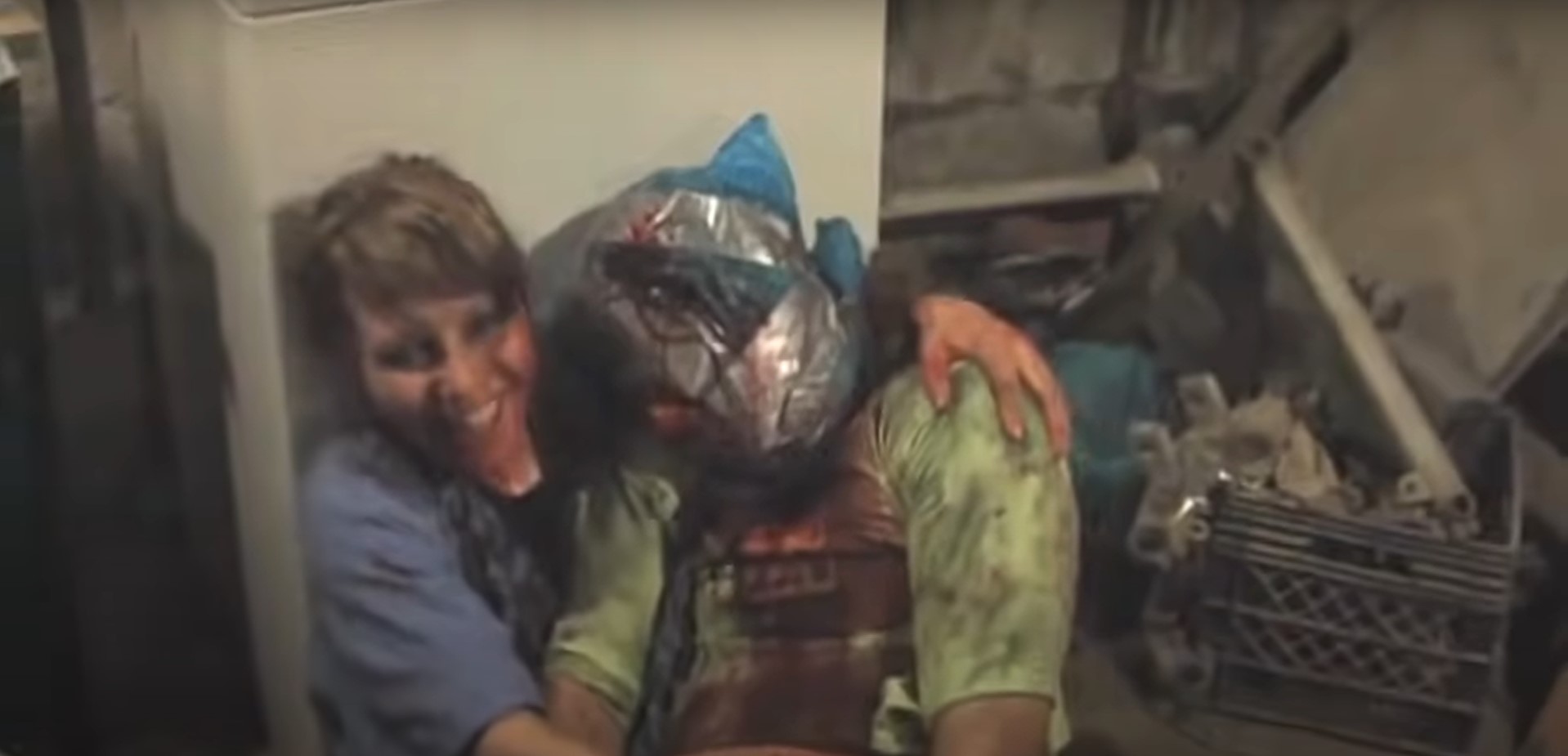
While Vogel and Whiles psychopathic performances will make your skin crawl, the real star of “Penance” spurts onto the floor, oozes from the entrails, and has a nasty crunch sound when being sawed into.  I’m speaking of none other than Jerami Cruise’s nauseating blood, guts, and all the colorful viscera in between practical effects that extinguish any kind of comfortability you might have had going into the scene.  Animal intestines are once again used to for seamless builds.  The lines between what’s real and what’s not has no definition, is smoothed over well into the folds, or is vaguely blurry at worst that when the cutting, gouging, severing, perforating, slicing, or whatever other harmfully human puncturing wound words come into the scene, your mind is your greatest enemy unable to tell the differences in the gruesomeness acts all of which are accentuated by Vogel’s dry heaves.  While the story itself begins to shutdown “August Underground’s” pseudo snuff run, the third entry is as much as a regurgitation of the previous two installments peppered with noticeable yet minor differences that less often than more separate themselves from each other.  One of the biggest, advantageous differences in “Penance” is the move away from the fuzzy standard definition analog tape and into the digital world with a widescreen ratio camcorder that details more of the ghastly dissections and without any modifications to the camera, a cleaner sense of raw realism is better conveyed. 

I remember a time, not too long ago, when the “August Underground” films were nothing more than rumor, urban legends of the physical media world, lost archetypes of extreme horror seemingly nonexistent to the everyday joe, like me, and only those who are close to Vogel and his Toe Tag family or willing to fork over large amount of money for a long out of print and rate copy were the lucky ones to ever experience the trilogy. Yet, now, we’re living in the golden age of physical media, paradoxically smackdab at the height of new age and ever-growing streaming platforms, and Unearthed Films has released all three films onto a 2-disc Blu-ray and DVD limited collector’s set. The Blu-ray is an AVC encoded, 1080p high-definition, 2K scan on a BD50 while the DVD is a MPEG2 encoded, dual-layered, DVD9. Obviously, switch from tape to digital video makes is a tremendous step for image processing and clarity as “Penance” tops the trilogy with a better pixel resolution, a wider angle (1.78:1 aspect ratio), and much less quality degradation than analog. All the nasty bits and pieces are visual described in great realistic detail in what is an ungraded showing of a full-on display not for the weak of stomach. The raw image, even with all it segued pauses in between scenes, punctuates practicality over the conceptual nihilistic serial killer construct. Unearthed Films preserves that through the looking glass, unfiltered video with more than sufficient capacity. The English language uncompressed PCM 2.0 stereo mirrors the same caliber with a home video disharmony of an onboard camera mic that manages well to create distance where needed also while capturing every innate surrounding sound element, such as the whooshing of passing cars, Mountain’s echoed screams in a confined basement, or the overburdening decibels of daunting death metal. There’s a steady amount of low-level interference too that doesn’t hurt the variable levels of dialogue depending on where the principals are and what they’re doing. Between the Blu-ray and DVD, the hi-def format has more capacity for bonus features with most of the new bonus material on the Blu-ray. What’s on both formats are a new audio commentary by special effects artist Jerami Cruise, producer Shelby Lyn Vogel, director Fred Vogel, and Ultra Violent Magazine editor Art Ettinger, a second commentary with Vogel and editor Logan Tallman, a third commentary with the Toe Tag Team, and a fourth commentary with just Fred Vogel. Also included of both formats are a behind-the-scenes documentary Disemboweled and the feature’s very own commentary track, deleted and extended scenes, music video Poppa Pill – “The Murderer is Back,” music video Rue – “The Locust,” original trailer, and new extended photo gallery and teaser outtakes. Exclusively to the Blu-ray is a conversational interview with editor Logan Tallman, going through the nuts and bolts of the most disturbing scene with Peter Vogel, superfan Rob Steinbruegge’s experience and bit role in “Penance,” a new Zoë Rose Smith, creator of “Zobo with a Shotgun” and editor-in-chief of Ghouls Magazine, interview with Peter Vogel, a second new interview with Peter Vogel Voyage to Perdition with Severed Cinema’s Chris Mayo, a discussion roundtable with Peter Vogel, wife Shelby, Logan Tallman, and Ryan Logsdon moderated by Dave Parker, and Unearthed Films’ Stephen Biro’s new interview with Peter Vogel to wrap it up. The physical presence of the release clearly states its homicidal intentions with the thin cardboard O-slipover of Peter Mountain caressing power of his bound and bloodied victim. The clear Blu-ray Amary case displays new, religious art spoofed cover illustration by San Diego artist Paul Naylor; the religious art also continues on the reverse side of the cover with a marred icon of the Virgin Mary being engulfed by the darkness. With the DVD punch-locked at the right and Blu-ray at the left, there’s really no room for an insert to be crammed in but the silver lining there is the pseudo data-cast captures of notable scenes that are the disc pressed art. Unearthed Films’ release is region A locked (region for the DVD is not listed but assumed to be region 1), is not rated, and has a runtime of 81 minutes.

Last Rites: While ever so slightly different from the previous films, “Penance” is more of the same snuff but in its truest, purest form legally allowed on video. Unearthed Films are match made in a human abattoir, like the tacky peanut butter and bloodred jelly. Their collaborated, limited collector’s set release of “August Underground Penance” is nothing short of phenomenal and, if you’re lucky and quick enough, grab all three before they disappear back into obscurity.

“August Underground’s Penance” on Blu-ray/DVD Combo Set. Purchase Here!

‘Twas the Night Before Christmas, When All Through the EVIL “A Creature Was Stirring” reviewed! (Well Go USA Entertainment / Blu-ray)

Purchase “A Creature Was Stirring” Here at Amazon.com

During the height of a 6-day Christmas blizzard, nurse Faith remains home to care for her mysteriously afflicted daughter Charm.   Faith diligently stays vigilant over her daughter’s inexplicable condition with test after test and maintaining Charm’s constant body temperature between 102 to 104.4 degrees, seemingly stabilizing Charm’s condition.  If the temperature exceeds beyond, Charm transmogrifies into a barbed humanoid creature.  While Faith works on a compound cure, Liz and Kory, a sibling pair of Jesus zealots, break into the house seeking shelter out of the deadly snowstorm.  Faith has no other choice but to let them stay the night until the storm subsides but the appearance of Charm’s at-home care and the young girl’s sudden seizures and erratic behavior sends Liz into savior mode, meddling into more than she can comprehend.  Yet, something else lurks inside the house, between the shadows, and beneath the veil of reality that is way more terrifying. 

Even though Christmas might be long over and all the gaudy and brilliantly lit decorates are stowed away back into Grandma’s attic that doesn’t mean the holiday horror train has to depart the station.  And I’m not talking about no Polar Express with the edging on creepy motion capture animation.  I’m talking about “The Cleansing Hour’s” Damien LeVeck’s Twas the Night Before Christmas-inspired titled “A Creature Was Stirring.”  The equivocal creature feature set in the throes of a raging blizzard and inside a very decked the halls house is penned by debut screenwriter Shannon Wells under the original title of “Good Luck, Nightingale.”   Aimed to be more than what meets the eye, “A Creature Was Stirring” blends the involuntary struggles of drug addiction with potent secretions of supernaturalism.  The U.S. production was shot in Louisville, Kentucky, produced by LeVeck, wife Natalie, as well as “Scare Package” producers Aaron B. Koontz and Cameron Burns with Vladislav Severtsev (“The Bride”) under the production companies Skubalon, 10/09 Films, and Paper Street Pictures. 

Topping the bill as Faith is “This Is Us” star Chrissy Metz, portraying a nurse practitioner and mother desperate on concocting a cure to her daughter’s strange, monstrous manifesting condition.  Metz brings the multifaceted mania between being rock solid and stringent with medical checks and procedures and being able to turn aggressive when the moment calls for it, especially swinging a screwed-spiked baseball bat.  This underlines an underlying secret or hidden predicament viewers will be dipped into and begin processing all the little traces of one-offs that don’t necessary make sense to an already peculiar narrative.  Then, there’s Charm, played by Annalise Basso (“Oculus”), in constant oversight, constantly mutable, and urging to constantly be free from her mother’s impervious iron grip to lighten up.   Basso retains angsty opposition while tossing moments of reflective consideration for her mother and for herself, disquieting the teetering tranquility when Liz and Kory come into play.  Respectively played by “Halloween” ‘07’s Scout Taylor-Compton and “Stake Land’s” Connor Paolo, siblings Liz and Kory stir the pot that’s slowly simmering to a boil as one religious dogmatist and one eager to break the constraints of his sister’s purity with sex and drugs complicate the strained mother-daughter relationship with their intrinsic quirks that expose a deeper, rooted-to-reality problem.  The now generational scream queen Compton dons colorful dreads and a large Messiah back tattoo amongst a high and mighty attitude while Paolo can be praised for the sarcasm brought out from the scripted dialogue.  Each of the four principals are inherently different and clash, in a good way, to provoke complications. 

Drug addiction has infiltrated horror years ago and have been the basis of many notable films such as Abel Ferrara’s “The Addiction,” Larry Fessenden’s “Habit,” and Frank Henelotter’s “Brain Damage” to name a few from the massive lot.  “A Creature Was Stirring” taps into that same vein as LeVeck’s injects and shoots up his own interpretation of horrors with withdrawals.  Long time addicts suffer through agonizing, powerful withdrawals that screenwriter Shannon Wells incorporates symptomatically with a figurative approach and while Wells’ story invokes colorfully rich characters and enigmatic tale of terror, brought to life by LeVeck’s vibrantly warm and glow Christmas adorned and atmospheric house, the finished feature, that really has nothing to do with Christmas oddly enough, feels uneven when revealing the irony of surprise doesn’t become catchall illumination.   The most ambiguous part about the tale is the spiny-signified creature, a mutated, zoomorphic porcupine of sorts, to represent ferocity of the withdrawn drug with its hypodermic needle-like defense mechanism and malevolence nature.  The shadowy man-thing is given such a threadbare association between Charm’s anecdotal encounter with large rodent and its manifestation metamorphosis into the fold that the hostile has hardly any staying power as a villain and, like a rodent, really does feel just like a mouse was stirring as it scurries arbitrarily throughout the house but not all is negative as there are scenes that make you go holy crap when recollecting character and creature interactive moments that suddenly click and make sense, often coinciding and juxtaposed against really neat interior cinematography bathed in mixture of hard light and soft glows. 

Well Go USA Entertainment presents “A Creature Was Stirring” on a high-definition Blu-ray home video.  The AVC encoded, 1080p, BD25 has soft illumination but a grading design that’s befits the ’tis the season paradigm with the primary color warmth radiating out from Christmas lights strung up around the house and the beaming brilliance of white battery-operated light-up decorations. Between the crude adornment lighting, some lighter translucent gels, and with a splash of black-and-white, Alexander Chinnic cinematography, presented in an anamorphic widescreen 1.78:1, resembles a rave clad fitting into the drug theme as an echo of the one character’s pill-popping, molly-dropping past. Details become diffused by the varying, indiscriminate incandescence and shadowy fields that play into the creature’s tenebrific threat, but those same shadows are often deep without posterization. The English 5.1 DTS-HD master audio achieves the goal of the very title of something stirring inside creating rustling movements and spiny-shifting clacking, coursing through the back and side channels and maintaining an even keeled LFE. Space awareness is key for close quartered tension and that’s rendered well in the design. Dialogue comes off without a hitch and is elevated above the rest of the tracks with no issues with compression faults or a fractured recording. English SDH subtitles are available. Like most Well Go USA releases, “A Creature Was Stirring” shoulders only Well Go USA preview trailers with no real bonus features of its own in the semi-static main menu but what we do get is a better than modest laid out standard Amaray Blu-ray package with a lightly titled embossed cardboard O-slipcover and on the back two different texture types, a polaroid slick abutted against the smooth cardboard. Image design is a greatly detailed silhouette of the porcupine creature looming over the house. The same image is also on the Blu-ray cover with a simple red-beaded or red-string light encircling the title on the disc. There is no insert inside. Rated R for violence, bloody images, drug context, language, and some sexual suggestion, the 96-minute Blu-ray comes region A locked. 

Last Rites: Chrissy Metz battling a deformative disease, drug addiction, an angsty teen, two home invasive siblings, and a large porcupine monstrosity all in the name of “A Creature Was Stirring” is the prickly cold turkey suspenser this side of the New Year.  

Purchase “A Creature Was Stirring” Here at Amazon.com

EVIL Knocks, A Child Listens. “Cobweb” reviewed! (Lionsgate / Blu-ray)

“Cobweb” on Blu-ray at Amazon.com!

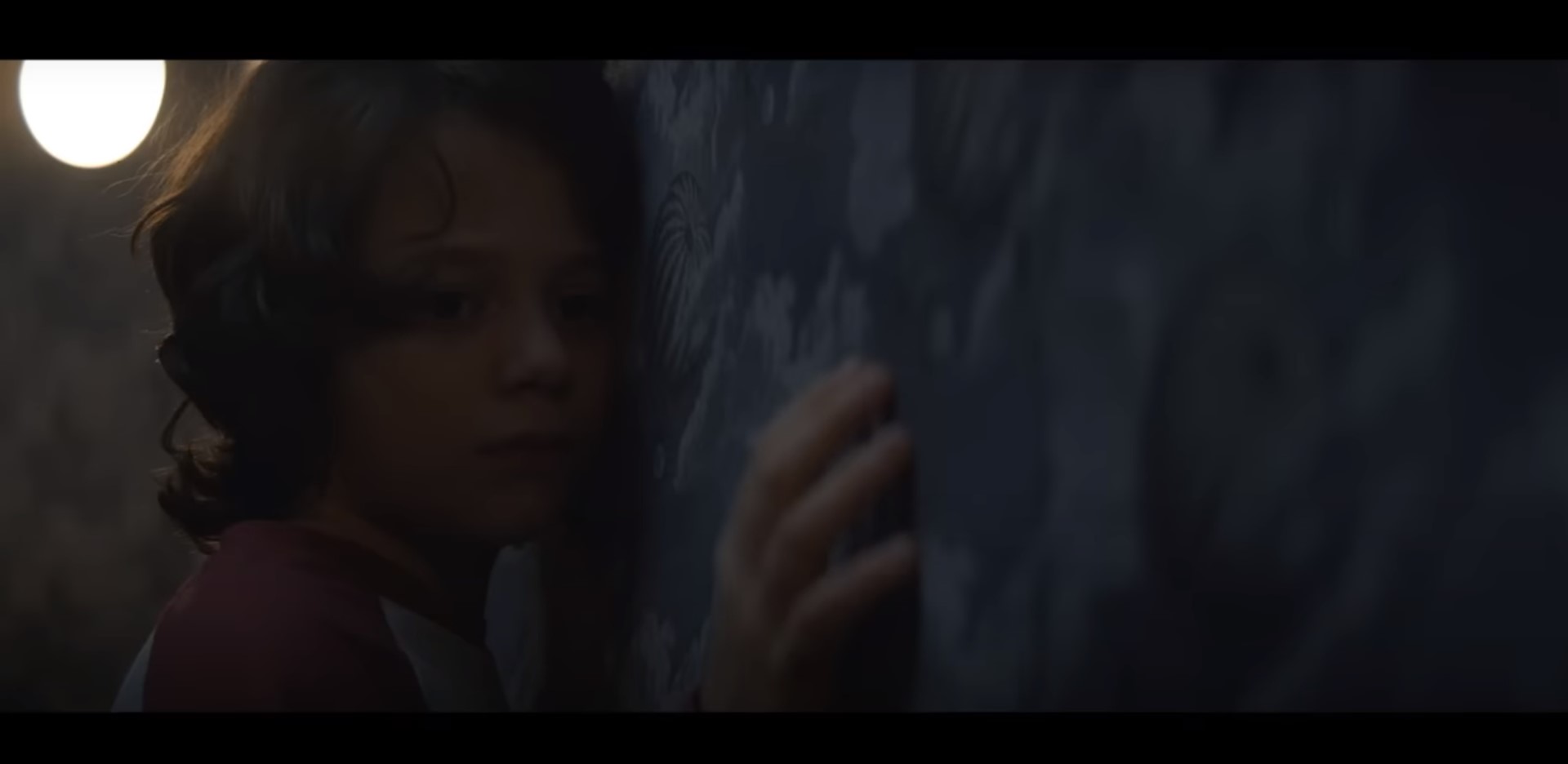
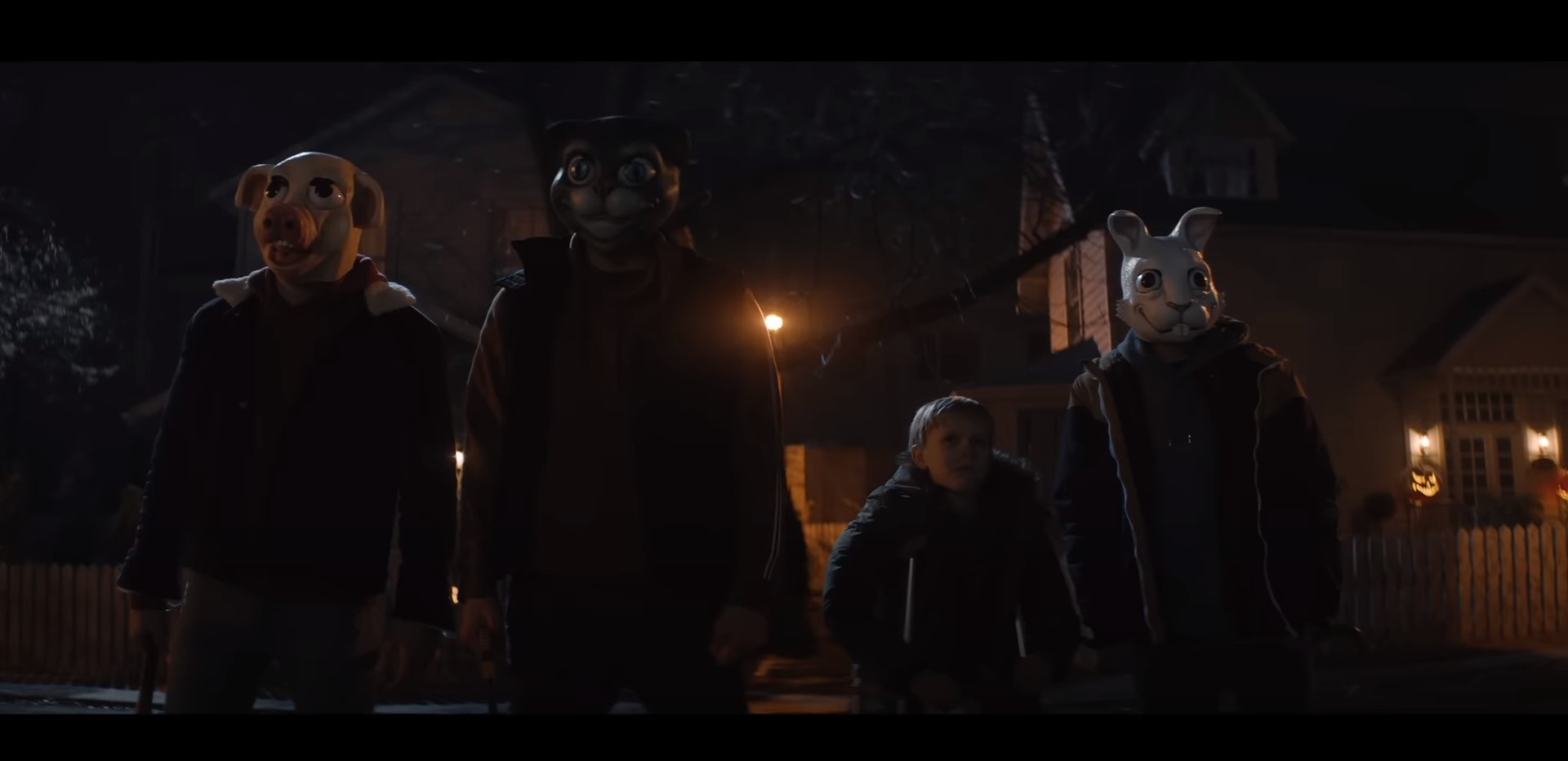
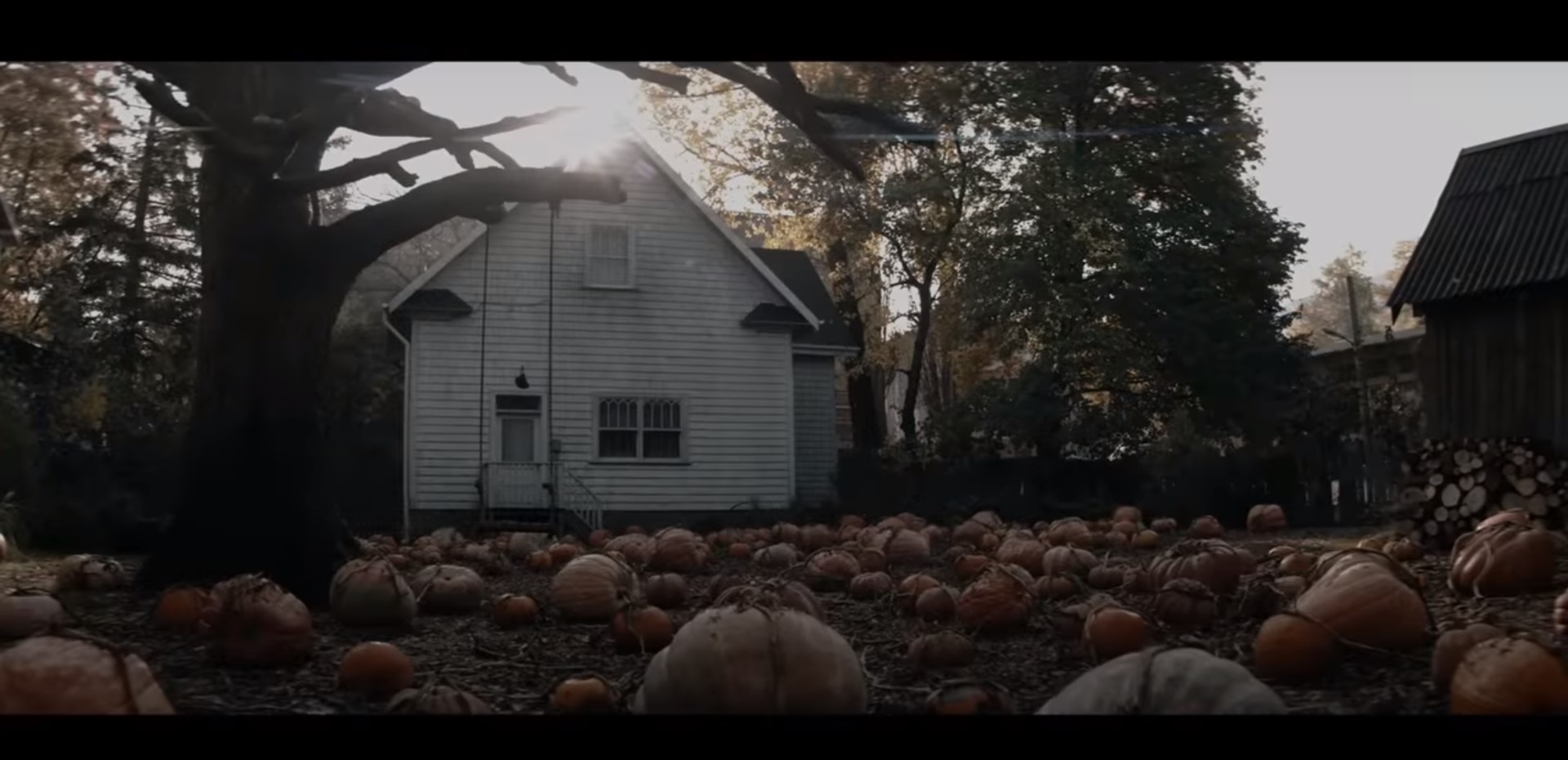
Eight-year-old Peter isn’t allowed out on the forthcoming Halloween night.  Frightened by a neighborhood girl who went missing years ago, his strict parents keep a very close eye on their only son who’s social life has been squashed like one of the rotten pumpkins growing in his family’s backyard patch.  Relentlessly bullied and severely sheltered at home, Peter spends most of his time isolated from others until he hears knocking from the inside of his wall in the middle of the night.  Frightened at first in hearing the ensuing young girl’s whispering voice behind the wall, Peter’s loneliness entices a friendly, conversational voice after his parents dismiss the occurrence as Peter’s overactive imagination.  As the two talk through the nights, Peter learns the mysterious voice behind the wall is a terrible secret his parents have been hiding since before Peter was born, but the truth is much more darker and scarier than Peter could ever over imagine.  

Following the success of his written-and-directed 2019 French horror series “Marianne” on Netflix, surrounding the manifesting nightmares of a young writer who returns to her home town, director Samuel Bodin dives right into the spooky season with a Halloween-themed dysfunctional family horror feature that metaphors helicopter parenting as a harmful detriment that eats itself from within the nuclear structure.  The French director builds his vision off the back of the creepy children subgenre and off of the script by Chris Thomas Devlin, an American screenwriter behind the 2022 direct from the original sequel, “Texas Chainsaw Massacre,” that happens to be another Netflix debut release.  Devlin trades in rip-roaring chainsaws for rickety old houses lined with gaudy, antiquated-pattern wallpaper in this what’s-behind-the-walls thriller, produced by the Seth Rogen and Evan Goldberg company Point Grey Pictures (Amazon’s “The Boy’s” and “Invincible”) with Josh Fagen alongside producers Roy Lee (“Barbarian,” “It”) and Andrew Childs of Nu Boyana Productions and Vertigo Entertainment with Lionsgate distributing. 

Ironically at the center of attention is the loneliest boy Peter casted with UK child actor Woody Norman (“The Small Hand,” “The Last Voyage of the Demeter”) to ensure Peter’s anemic spirit with a head full of shoulder length brown hair, downcast eyes, and melancholic demeanor. Yet, like most child dependent horror schemes, Normal can thrust out a gutsy sprint to survive and save the day against not only his oddly adjusted parents who quarterly channel the onscreen unionization of Wendy Robie and Evertt McGill in fiercely fearful “The People Under the Stair’s,” but also something far more secretive and far more sinister.  Anthony Starr, who has worked with Seth Rogen’s Point Grey Productions in “The Boy’s,” is aptly a father suppressing to fold and diminuendo his son’s curiosity and venture with scary stories of disappearing children and a stern childrearing with a sinister smile only Anthony Starr can produce.  Then, there’s Lizzy Caplan as the austere-dressed matron with a retractable badge for her small set of keys, which are an underemphasized plot device for all the doors in the house, both unconcealed and concealed.  I struggled with Caplan’s mother that borders being simplistically prose, like speaking in a fairytale without the elegance of being a dainty princess or the maniacal barbs of an evil sorceress.  The “Cloverfield” actress’s take on how a reticent mother is overly proper and out of place even in this tale that stretches the imagination and even beyond the film’s other flawed portions, which lead me into Cleopatra Coleman’s benignant substitute teacher Ms. Divine, a name not abashed in its metaphorical properties.  Ms. Divine overreaches herself secondary educational authority by interjecting her nosiness into what she mistakenly thinks is Peter’s subconscious cry for help.  The “Infinity Pool” actress goes unnecessarily lone wolf into the lion’s den that would make any parent understandably concerned and angry whether hiding something or not.  “Cobweb’s” cast fills out with Jay Rincon and Gary Busey (“Predator 2”) and Stephanie Sampson’s (“Sharknado 4:  The 4th Awakens”) preteen son Luke Busey who I must say is the spitting image of his father. 

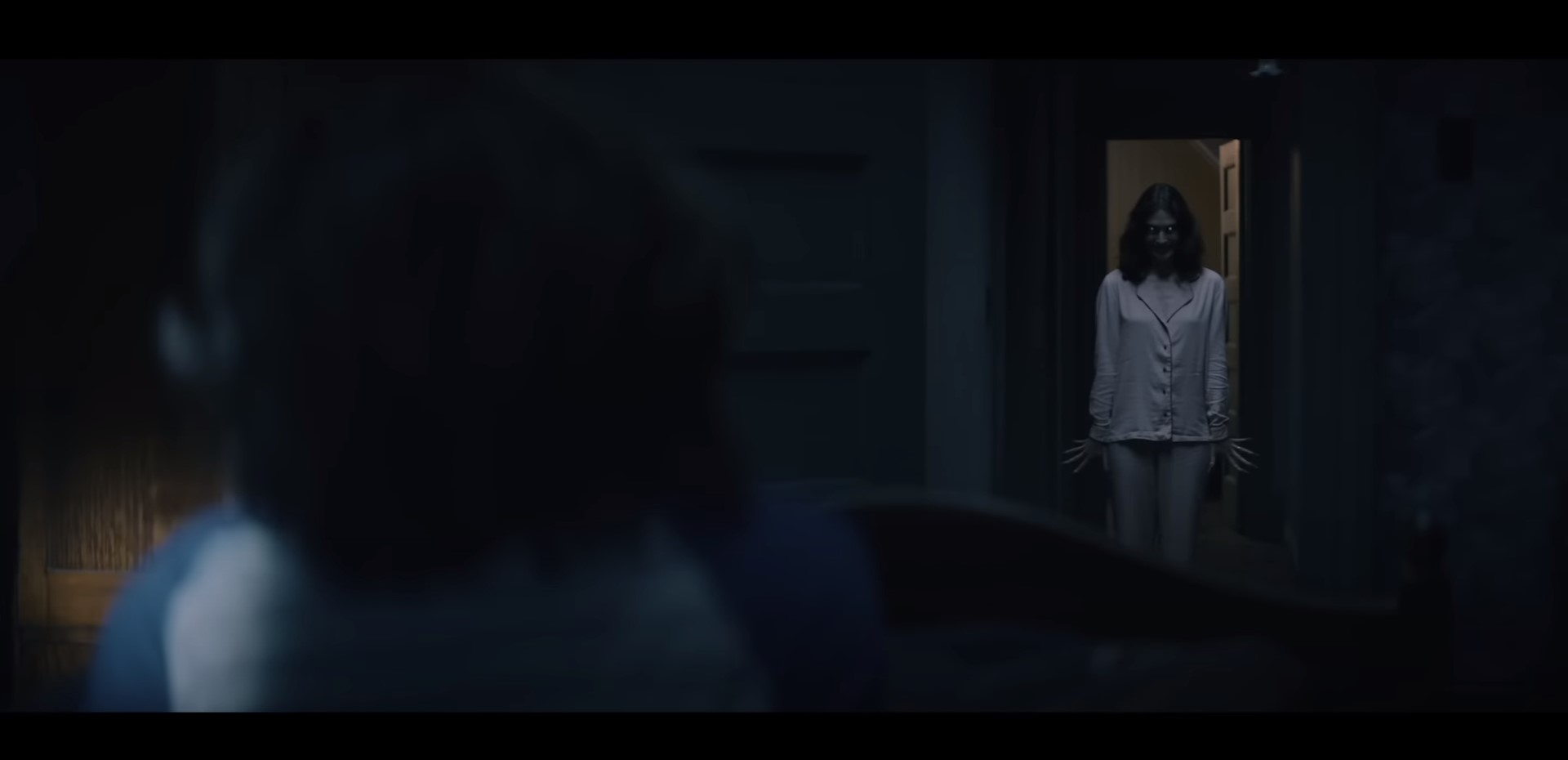
Funny and coincidently enough, this is my second Grey Point Production film watched back-to-back with “Teenage Mutant Ninja Turtles: Mutant Mayhem,” “Cobweb” is not children’s film but resembles more like a Grimm fairytale with elements pulled from various volumes, some from more popular stories such as the long locks of Rapunzel or the pretense of a wolf in planned deceit of the eager youth, and the film certainly embodies the charmingly dark and rustic patina of such tales.  From the words on a page to the visual effects of the screen, “Cobweb” introduces us to a new kind of terror co-bred out of bigotry and fear of a polar difference so severe, so monstrous, that it warrants a shameful imprisonment and a simultaneous misappropriation of tutelage of starkly unalike children because, as parents, we can have this innate fear for ourselves being replaced with the creation transcending the creator threat.  Pour these twisted tales and themes together into a cauldron of storytelling and we can easily overlook how flawed “Cobweb” can appear on the surface, as if to say the story’s phantasmal qualities exempt narrative structural norms.  “Cobweb” has repetitive use of the imagination as an excuse for Peter’s hearing something, someone beyond walls or could even stretch to the parent’s feigning ignorance or diverting tactics as part of making believe whatever they’re secretly hiding doesn’t exist.  Aside from the title, other allusions to an arachnid theme suggests Peter might have an overactive power of invention, integrating his already schoolyard bullied mind and body to form an embodiment of fear. His rigid parents mixed with an overwhelming fear of spiders creates, or wills, a person or creature of shared relations, someone he can converse with quietly and share his concerns but, in the same breath, be frightened of when out from the wall.  Peter has the same reaction between the spider that crawls on his desk in the class and see the wall dweller’s floating out from a hole in a wall, signifying a one-in-the-same fear.  When inevitably revealed, the creature skulks with the movement of an eight-legged arthropod, has hair like a large, draping web, a face with bulging eyes and fangs, lives within and between walls, and has tiny spiders crawling through its hair.  Intense and portentous, “Cobweb’s” creepy-crawlies are sure to be hair-raising with a shocking turn of events.

Become caught up in Lionsgate’s release of “Cobweb” on the Blu-ray + Digital release. The AVC encoded, high-definition 1080p, BD50 has a Mbps decode rate of low 30s and presented in a 2.39:1 widescreen aspect ratio. Centered around the Fall season, “The Transporter’s” Philip Lazano’s cinematography lives in the dichotomy of shadows and a cool blue-green grading. Exteriors look potently seasonal in a dreary-overcast kind of way that fits “Cobweb’s” austere approach to an atypical straightforwardness in such a dark fairytale theme. Unostentatious, Lazano does a remarkable job with shadows, and dim lighting in general, to convey just enough to make the creature’s skuttling a double dose of undetectable dread before you know what hits you. The main audio option is an English DTS-DS 5.1 master audio with Spanish and French Dolby Digital 5.1 alternatives. Again, the skuttling around the house, the faint scraping of dry, old hair on the wood floors, the creaks, oh the creaks, of every inch of that house make “Cobweb” cue every traditional trope of audible terror right to your sensory receptors. Dialogue is clean, clear, and prominent with the only issue being the behind the wall speak that renders more like whispering in the same room than a muffled subdued voice as the layered dialogue overlap in volume. English subtitles are optionally available. Special features are not in-depth with a to the point featurettes with Becoming the Girl that express Bodin’s vision of the person behind the wall and contortionist Aleksandra Dragova’s efforts to bring that vision to life, Through the Eyes of a Child focuses on a small child in a bigger, uglier world through one-sided interviews with the cast and director and how those differences translates an uneasiness not only with the child but also the viewers who are engrossed by the contras, and A Primal Fear rounds out the specials with underlining fears of creaky house sounds, amongst other combined sounds, and how they’re arranged into a design that innate scare us. Physical aspects of the release come in a traditional Blu-ray amaray case housed with a beautifully composition shot that immediately grabs the eyes on a sturdy O-slipcover laced with a slight embossed spine title. Disc art goes for the less is more visage of a blueberry blue background with white font “Cobweb” at the top. In the insert slot is the digital copy waiting for you to either download and discard the physical release (which I hope you don’t) or neglect for way longer than the expired date allows. “Cobweb” is rated R for horror violence and some language, has a runtime of 88 minutes, and is region locked on A. Lionsgate has distributed the boogeyman, or in this case, the boogeywoman in the fretfully concentrated “Cobweb” that turns every scurry or scratch behind your own walls worth your undivided attention.

“Cobweb” on Blu-ray at Amazon.com!

Not All Zombies are EVIL. Some Zombies Save Lives. “The Loneliest Boy in the World” reviewed (Well Go USA Entertainment/ Blu-ray)

“The Loneliest Boy in the World” on Sale Now at Amazon.com!

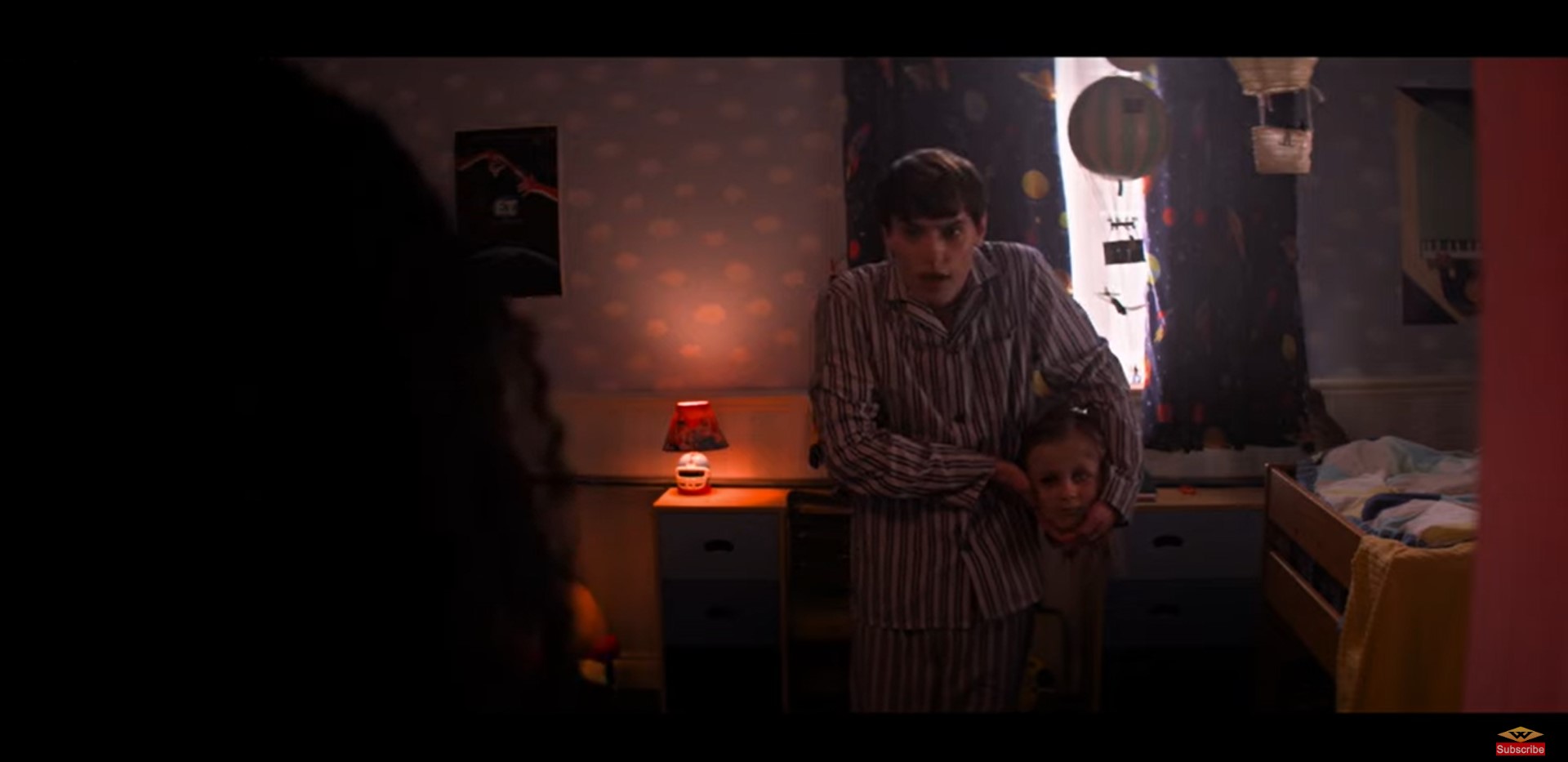
The unexpected tragic death of Oliver’s mother, involving a pool, a television, and a garden gnome, places the now aged-out and deinstitutionalized Oliver into a difficult position. The sheltered, socially awkward young man, living by himself in his mother’s home and still makes like his mother is still with him, is given a last chance ultimatum from his supportive social worker and a pessimistic psychologist to make friends, to lead a normal life, and to sustain impendence or else he’ll have to return to being institutionalized as an adult. Local contemporaries single out Oliver for being weird, unusual, and a loner to the point that his childlike and naive mind turns him desperate enough for a friend to dig up corpses, those who used to be well-liked in the community, but when one morning the exhumed bodies come to life as a nuclear family that eats, breathes, and is sort of living. Though rotting from the outside, the undead family encourage and advise Oliver through his toughest life challenge yet – to be normal.

Described as a modern fairytale with zombies, “The Loneliest Boy in the World” is a satirical comedy horror about the rite of passage into adulthood from the screenwriting team of John Landis’ “Burke & Hare” writer Piers Ashworth, producer of “Director’s Cut” Brad Wyman, and “Maximum Overdrive” star and “Rated X” director Emilio Estevez. Director Martin Owen (“L.A. Slasher”, “Let’s Be Evil”) helms the late 80’s deco piece with a Halloween backdrop, fitting for any undead family to suddenly animate into an eclectic and eccentric fashion that encircles what it means to understand family values in a very trendy niche specific of the late 80’s style. The feature is produced by Piers Ashworth, Ryan Hamilton (“Possessor”), Matt Williams (“Let’s Be Evil”), Pat Wintersgill (“Amulet”) and a conglomeration of executive producers including Emilio Estevez and is a production of the London, UK-based Lip Sync in association with Future Artists Entertainment and presented by Great Point Media and Well Go Entertainment.

Max Harwood gives a peculiar performance as a soft-spoken, sheltered-to-a-fault mother’s boy, Oliver, with a delusional depiction of reality. Though Harwood’s performance pairs well enough with Martin Owen’s rocky shore small town of equally asymmetrical corporeality, the titular Oliver comes off derivative of done before loners and Harwood provides little range to fully arc with the character’s transition from a naive young adult on the fringe of losing everything to the compendious hero of his own story by unearthing not only dead bodies that come to life but learning from their advice, truth, and experience to flesh out his own path of courage and confidence. A part of the LGBTQ community, Harwood is joined by fellow community comrade Tallulah Haddon in a strange turn of casting as Oliver’s love interest, Chloe. Queers play straight in the innate course of acting that, as of late, has often been called out for its hypocrisy of an actor portraying something their actually not. The “Black Mirror: Bandersnatch” Haddon is an outsider to Oliver’s surroundings as isn’t influenced by those who have labeled Oliver weird or strange. Instead, Oliver and Chloe spark interest out of hate for being different, a relatable scenario for someone in the gay community. Oliver’s undead family is undoubtedly the best lot with a wide range of happy homemaker personalities and a decaying best friend that supports Oliver’s wings to fly from the next. Susan Wokoma is the stay-at-home mother with a knack for reading the room while her skin peels off and falls to the floor. Ben Miller is the red-blooded Frank that displays glimpses of being a renaissance man at times and Miller plays the beer drinking, jack-of-all-trades father figure aptly. “Harry Potter and the Half Blood Prince’s” Hero Fiennes Tiffin comes on the scene cool and suave in a skin that’s literally drooping off his bones and his eyes have disintegrated from his sockets; Tiffin’s charming, lively, and a source of verbal wit that would be missing from the film. Lastly, Zenobia Williams rounds out the family as Mel, the little sister who is frankly underused and is quiet and subservient to being nice to her living older brother. “The Loneliest Boy in the World’s” cast rounds out with Jacob Sartorious, Hammed Animashaun, Alex Murphy, Sam Coleman, Mitchell Zhangazha, and “The Curse of Buckout Road’s” Evan Ross and “Alone at Night’s” Ashley Benson as the two sole American actors in a contending professionals betting on Oliver’s outcome in friend making.

The casting is interesting as a melting pot of nationalities and cultures intertwined into an alternate reality where the dead can be willed alive. Again, “The Loneliest Boy in the World” is marketed as a modern fairytale and it’s comparable to the likes of if Andrew Currie’s 2006 “Fido,” where in a managed post-apocalyptic world the zombies are kept on as servants for the living in a 1950’s backdrop, was under the Peter Jackson landscape lens of hilltops, seasides, and graveyards. The obvious farce in the late 1980’s pattern aims to set the bar for a number of themes, including growing up into adulthood, to bring back traditional family values in order to push out and correct absent parent trauma, and to embrace the family as nurturing guidance. Oliver’s struggles are frugally displayed but that doesn’t mean the first act misses the mark on plotting the dots of his lonesomeness with being the target of bully teasing, the subject of an insensitive bet of established adults, and being in a position of having no living family or friends to slake his dependence. The one thing to note about Oliver’s sudden lifeline cut is that he doesn’t appear to bothered or frantic about the death of his mother or the prospect of being alone and possibly end up institutionalized. Instead, the unsocialized introvert falls into a semi-chimera state where he’s still tethered to his mother as he watches her favorite television shows and recalls their play-by-play during his graveside visits with mom. The whole concept of death is seemingly foreign to Oliver as he never calls the demise of his mother her death but rather an accident and he finds exhuming recently dead corpses to be his friends normal though he obviously knows it’s illegal and unacceptable normal behavior as he quickly hides or disguises the pre-animated bodies when visitors show up at his doorstep. There’s never an explanation why the dead come to life, but one thing is for sure is that the expired exhumed did a Frosty the Snowman just for the sake of Oliver’s desperation for companionship and, perhaps, that’s the entire reason why. The need for family was granted to the nice, dissociated boy in a lightning bolt of unexplainable supernatural serendipity to right all the bad things that are happening and will happen to him. Zombies are typically resurrected to take life and eat away at the living while Oliver’s zombies are atypical, restoring life and providing hope in an optimistic paradoxical universe.

Dark and quirky, “The Loneliness Boy in the World” is heartwarming with cold bodies. Well Go USA Entertainment releases the AVC Encoded, 1080p high-definition Blu-ray with a widescreen 1.78:1 aspect ratio. The presentation is quite colorful with a vast palette of foundational primary colors sprinkled with retro-vision, such as tape camcorder view, that splits the difference in extracting the vivid pink-laden house interior as well as the spot colors on the characters with stark contrast against the lush greenery background or the rocky, wave crashing shoreline. Night sequences are often blue tinted but not overly saturating. I didn’t note any issues with compression as blacks are generally deep without splotchiness or banding. Details are mostly fine with intricacies more expressive on the decomposing bodies that give off great muscle, skin, and organ decay. The Blu-ray comes with a single audio option, an English DTS-HD 5.1 Master Audio track. Dialogue never has to outbattle the ambient tracks or The Invisible Men pop score. The ambient range really comes through the auxiliary channels well with the central element focusing on the dialogue. English subtitles are optional. Bonus features include a short behind-the-scenes with more fluff from the cast who seemingly can’t get enough of this project and the theatrical trailer is also included. The physical release comes in a standard Blu-ray snapper with an illustrated mesh artwork of essentially every character in the film, even the dead Dachshund. “The Loneliest Boy in the World” has a runtime of 90 minutes, is regionally hard coded A, and is rated R for language and violent content. Enjoyable yet explainable, “The Loneliest Boy in the World” is more defined by its cadaverous twist of fate than the theme it attempts to convey; nonetheless, the Martin Owen film has heart, soul, and the living dead.

“The Loneliest Boy in the World” on Sale Now at Amazon.com!