Dolly Deadlies Exact an EVIL Revenge! “Doll Graveyard” reviewed! (Full Moon Features / Blu-ray)

“Doll Graveyard” Available for Purchase Here!

In 1911, little Sophia is accidently killed by her verbally abusive stepfather.  He buries her lifeless body in the backyard dirt along with her favorite toy dolls that were the subject of his current tirade.  Nearly a century later and in the same house, Deedee, a teenage high school girl, throws a small party with friends while her father is out for the night.  Her action figure-enthusiastic little brother Guy discovers one of buried dolls in the backyard.  When a couple of older high school boys bully Guy, the spirit of Sophia emerges and pendulates possession of Guy’s mind and body, resulting in the turning of inanimate dolls into killers come alive to protect a hurt Sophia.  Drugs, alcohol, and teen sex quickly come to an end by a seize of small, dangerously armed toys hellbent on spilling blood just to protect a hurt little girl.  Those left still standing must find a way to reverse Sophia’s revenge.

Charles Band’s obsession with toys, dolls, dwarfs, goblins, or a sundry of the mix has yet to slow down his 50-year-career in making independent movies.  The now 72-year-old Band can sit on top of his Full Moon empire and enjoy his repertoire of ravenous rascal horror, including “Doll Graveyard,” the 2005 standalone doll slasher that’s not too dissimilar from the likes of Band’s foremost and unremitting doll franchise, “Puppet Master.”  Band directs the film based off his story and a screenplay treatment by the late director Domonic Muir, credited under the pen name of August White, in what would be one of his first few films with Full Moon in the first decade.  Muir also wrote “Critters,” “Evil Bong,” and venture into the “Puppet Master” series before his untimely death with pneumonia.  Band would produce the feature alongside Jeremy Gordon and Jethro Rothe-Kushel, filmed in Hollywood, California.

A small cast is all that’s required when the dolls resurrect and begin their assault on the youth with their individual ability.  At the story’s core is Guy, an action-figure enthusiast played by Jared Kusnitz (“Dance of the Dead,” “Otis”), and his older sister Deedee, an angsty, boy-hungry, rule-breaker played by Gabrielle Lynn.  Guy and Deedee play the trope fatigued dynamic of a feuding brother and sister complete with blackmail attempts and lots of name calling, opening the door of opportunity to connect in a time of great adversity – in this case, a living doll assault.  Then, of course, no slasher can go without the kill fodder and “Doll Graveyard” has a group of partying teens who come over after Guy and Deedee’s single parenting father, played by Ken Lyle (“Foreseen”), goes off on a date.  Their sneaky, adolescent transgressional gathering of beer drinking, pot smoking, and foreplay into possible copulation is driven by Deedee’s promiscuous best friend Olive (Kristyn Green, “Evil Bong”), a tagalong, morally incorruptible Terri (Anna Alicia Brock), and party-crashing jocks with the insatiable horny Rich (Brian Lloyd, “Candy Stripers”) and Deedee’s lover boy Tom (Scott Seymour, “Garden Party”).  Muir’s story does attempt to branch out from the conventionally themed pathway of authorized partygoers meet their doomed fate with sidebar weaving of past, present, and future relation connections.  Olivia and Rich once had a casual romp that has faded and Rich seeks more difficult challenges with the more prudent Terri while Terri has puppy dog interests into the younger Guy as they share some similar interests.  Meanwhile, Deedee and Tom take their relationship to the next level with precuring steps toward the bedroom that signals the beginning of he end, as the old recurrent theme goes.  The “Punk’s Dead: SLC Punk 2” and “The Amazing Spider-Man” actress Hannah Marks, who makes her film debut in the Charles Band’s film, rounds out the cast as young and unfortunate Sophia.

Eventually, one must ask themselves how many times can someone reinvent the wheel and still think it’s new, innovative, and fresh?  With Charles Band’s proclivity for small malevolence, especially in dolls or puppets, the one of the faces in venerable horror filmmaking has, in a broader sense, regurgitated the same movie over the decades now, tweaking bits and pieces here and there to make it ever so delicately unique.  Yet, “Doll Graveyard” feels very much like an extension of “Puppet Master” without bringing new elements to the table or even really linking “Doll Graveyard” to Full Moon’s more popular, longstanding franchise “Puppet Master,” which is essentially the face of the Band’s company.  We see Blade, we think Full Moon.  We see Six-Shooter, we think Full Moon.  We see Tunnler, we think Full Moon.  But if you show me “Doll Graveyard’s” rustic Samurai or The German with spear tipped helmet, coming around to Full Moon may not be the first to pop into the old thinker.  The story also feels a bit half-baked with the dolls coming to life by unexplained means and audiences would really need to put effort into surmising a reason, such as my own theory that Sophia’s departing soul, trapped beneath the dirt, absorbs into the dolls, giving them animated life and loyalty to Sophia.  None of that hypothesis is authenticated and we’re stuck with little-to-no answers in a film created for the sake of creepy dolls doing creepy things to creep out some cretin kids.

Those suffering from pediophobia probably should stay far away from “Doll Graveyard.” For everyone else, “Doll Graveyard” is now available on Blu-ray home video from Full Moon Features with AVC encoded, 1080p high-definition, single-layered BD25. Presented in a 1.78:1 widescreen aspect ratio, back cover states transfer elements were remastered from the original 35mm negative. The original negative print has withstood the test of time with no visually acute damage, granted the print is less than 20-years-old; however, there is noticeable dust and dirt speckles, some of which measure more toward a vertical tilde. Textures are softer than expected for a rather young film in the grand scheme of cinema with rounded and smoothed over contours, especially around defining facial features, that create more of a splotch than an edge. A bright spot is the palette with a diffusion and delineation balance around stock lighting. The lossy English Dolby Digital 5.1 mix is difficult to distinguish between the other audio option available, a Dolby Digital 2.0, as there’s not enough atmospheric or ambient rampage in the side and rear channels when dolls go deadly, which is mostly in the medium closeup to extreme closeup range. Taking hold of the audio reigns, mostly, is the District 78 soundtrack. Likely where the remastered elements come into play with its gothic rock opening credits score, this Charles Band production trades the jaunty carnivalesque for reinforced horror theme elements of isolated piano and electronic notes the musical production has accolades for and this translates throughout when presenting the dolls ominously and when they strike and into the coda credits with a full-on instrumental rock and wordless vocal background piece that’s very circa 2000s. English subtitles are available to select. Special features include a making-of featurette with snippet interviews from the cast with an introduction from Charles Band, a blooper reel, and the trailer amongst other Full Moon prevuews. There are no after or during credit scenes. The traditional blue Amaray goes along with the current Full Moon remastered trend of their horror catalogue with yellow-green primary art, no inserts or tangible features, and a disc press cropped of the focal primary cover art. The region free release has a brisk runtime of 73 minutes and is not rated.

Last Rites: A pedestrian, pale comparison to Full Moon’s maniacal line of moppets, “Doll Graveyard” stands far too short being the lower rung runt among giants in the company’s lineup.

“Doll Graveyard” Available for Purchase Here!

An EVIL Cult Summons Back “The Hangman” reviewed! (Dread / Blu-ray)

“The Hangman” Now Available on Blu-ray!

Turbulent connecting father and teenage son, Leon and Jesse, retreat to the West Virginia wilderness for a little rekindling before Jesse goes off to college.  Still reeling after his mother’s death five years ago, Jesse blames his father’s inactivity and his rebuff mismanagement of their family’s pain.  The next morning, Jesse has disappeared, the car has been sabotaged, and Leon fears his son might be in the hands of a pair of racist rednecks encountered the day before.  However, what Leon finds himself in the middle of is much worse when a demon summoning cult retrieves The Hangman from the depths of one of Earth’s seven gates of hell and needs a fresh, young, and angst-riddled body to continue his unharnessed hell on Earth.  Jesse becomes the unfortunate soul at stake and it’s up to his father, and a few local God-fearing allies, to try and stop The Hangman’s noose from gripping tighter.

New York City-based director Bruce Wemple has teamed up again with Dread Production to bring another terrifying tale.  The “Monstrous” and “Island Escape” director cowrites the script with frequently collaborator, actor LeJon Woods (“Baby Oopsie:  The Series,” “Island Escape,” to deliver “The Hangman,” a demonic horror thriller that catapults a father and son’s dysfunctionality into the throes of Hell.  Filmed in the rural regions of upstate New York, doubling as the rural Appalachian wilderness of West Virginia, which makes filming having occurred likely around the Adirondack Mountains instead, “The Hangman” carries with it a longstanding racial infamy attached to a father’s supernatural pickle, being the middle of a demon conjuring cult and the lynching-loving demon itself.  Traverse Terror productions, a division of executive producers Cole Payne Traverse Media, in association with Dread Presents sees executive producer Patrick Ewald from the Epic Pictures Group back “The Hangman” feature while Daniel Booker and Vincent Conroy coproduce.

LeJon Woods not only cowrites the script but the actor for Cleveland, Ohio essentially customizes the role of the father, Leon.  What starts as a man looking to just escape into the great outdoors quickly closes in around him as he feels the pressures of latent hostility when son Jesse (Mar Cellus, making his feature film debut) accuses him of running from his past after the death of his mother, Leon’s wife.  What exactly happens to her is not yet apparent other than an offscreen gunshot but the palpable tension between Woods and Cellus is worth noting in a handwringing moment of enmity around the first night’s campfire; a good tall tale sign that this camping trip is going to be doomed from the start.  This tension sets the stage for what’s to come, a missing son, aggressive bigots, murderous cultists, and a Netherworld lyncher, showcased with an awfully underutilized purpose and screentime appeal, especially being the titular villain.  “An Angry Boy’s” Scott Callenberg gets his chance to shine as an inhuman character, prosthetically made-up with burn scars, greasy strands of hair, and cladded darkly in country chic, but doesn’t have the room to spread havoc or really build the character who’s mostly reduced to lurking the background and letting the telekinesis-driven rope to asphyxiate those not in the know of cult activity.  There’s also a slew of throwaway characters that either are too short-lived to really flesh out their role, such as the eye-gouged, bedridden clairvoyant and the tied-up local Leon saves and becomes a flirtatious love interest/gun-toting assassin (see what I mean by not really understanding the character?) in Lindsay Dresbach (“Pitchfork”).  Except for LeJon Woods, the rest of the cast is comprised of mostly short film or background actors and actresses given the opportunity for an expanded principal performance, including Kaitlyn Lunardi, Rob Cardazone, Jefferson Cox, Daniel Martin Berkley, William Shuman, Ameerah Briggs, Jessy Holtermann, and Richard Lounello.

Riding parallel to “The Hangman’s” resurrected demon on Earth, a father and son’s struggle to grow in postmortem of the only woman in their lives, and the fact that there is one of the gates of Hell located in the West Virginia’s Appalachians premise, the story entails a rather barefaced, as well as slightly overtone, racism theme coursing through its veins.  The Confederate flag sporting rednecks and the all-white, Southern accent contingent of white people against a black man and his son shout bigotry as louds as possible through your personal media setup.  Yet, the Hangman himself is the very representation of lynching, a heinously taboo act that has become a stain on America history, typically executed by racially prejudice Southerners on black people when that simmering, seething hate turns red and vigilante justice rears its ugly head.   Though the villain doesn’t don a white hood and gown or perform any gesture of white power, to say Leon, a black man, who must stop the evilly monikered hangman from taking his son’s soul to Hell, is too big a coincidence to not call a spade a spade.  Wemple and Woods make it clear that Leon’s calling is to be a savior, the chosen heroic that can destroy the Hangman, but while the first two acts climb the ladder of an naïve hero, all the indicating signs point to arbitrary means met with arbitrary characters for Leon with no concrete reasoning why his being deceived into the gateway to Hell area is more than just serendipitous destiny, turning the last act of “The Hangman” into just a one man wrecking ball of hillbilly hell spawn that loses that fate-driven connotation.

“The Hangman” nooses a high-definition, 1080p Blu-ray from Epic Picture Group, the at-home distribution label of Dread Presents.  The AVC encoded, single-layered, BD25 has good curb appeal with negligible compression issues in the feature’s 2.00:1 widescreen aspect ratio, so we get a deeper, broader picture with less resolution flaws.  While the certain background or tree-top scenes present a good visual intake of a bird’s eye views, the grading resides to just above a flat overlay, likely within the 10th percentile of grading possibilities, resulting in a more natural tone.  Details are generally fine when in focus or out of the shadows, which is where the Hangman lurks most of his screentime.  The presented audio options are a lossy English Dolby Digital 5.1 and a Dolby Stereo 2.0.  Dialogue has clear and prominent staying power throughout the stock soundtrack that slightly chintzy the ambience audio works of self-acting rope and other mystical milestones whenever the hangman comes calling.  There’s not a ton of spatial volume to diffuse the audio with balance, leaving a lot of the milieu and action resonances as lopsided near the foreground.  English and Spanish subtitles are optionally available.  The Blu-rays special features include a Bruce Wemple commentary track, a making of featurette with interview snippets with LeJon Woods, a lengthier interview with writer-star LeJon Woods, and a deleted scene.  Physically, the deep scar recesses of “The Hangman”s” white-eyed face and long, unkempt hair becomes the front cover face of Dread’s conventional Blu-ray with a disc pressed with more fascination of a coiled hangman’s noose working down the center ring.  There are no tangible bonus materials included. The region free release comes not rated and has a runtime of 90 minutes. 

Last Rites: “The Hangman” won’t snap the neck of novelty and wanders off the path of the tangent, but does instill a strength of cause, a father-son bond that’s being challenged and motivated when threatened, backdropped by systemic racism.

“The Hangman” Now Available on Blu-ray!

One Out of 7 Most Freaky, if not EVIL, Places on the Planet! “Gonjiam: Haunted Asylum” reviewed! (Second Sight / Limited Edition Blu-ray)

Become Engulfed by the “Gonjiam: Haunted Asylum” on Second Sight’s LE Blu-ray!

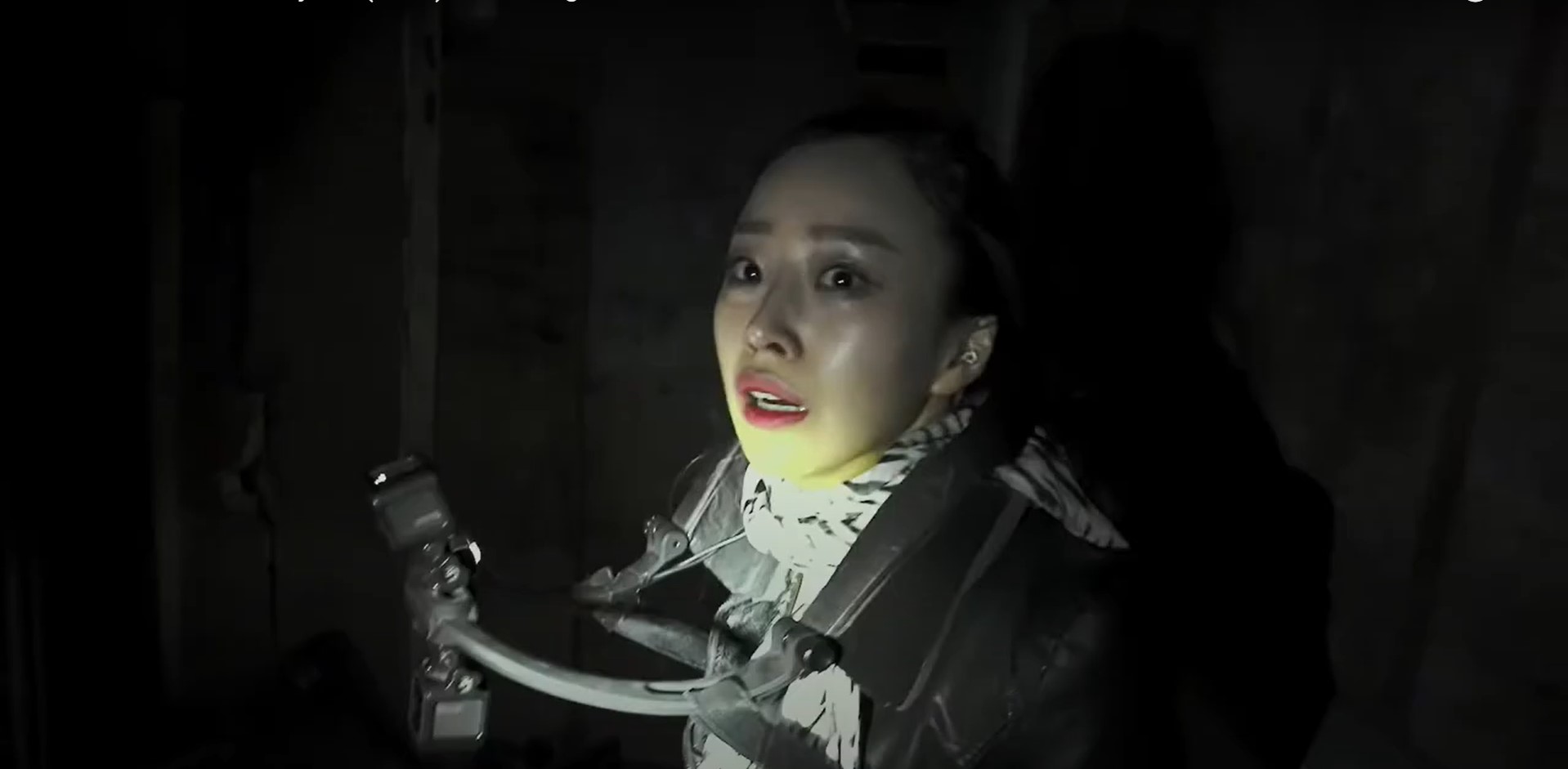
Horror Times, a web series dedicated to horror and hits, travels to the Gwangju providence for their next big event, a special episode aimed to rake in 1 million views worldwide as they explore the supposedly haunted, deserted, and derelict Gonjiam psychiatric asylum after midnight on its anniversary date of its closing.  Already buzzing with historical disappearances of those curious and brave enough to investigate the dilapidated corridors and rooms, Horror Times brings in four guests to join his three-man crew to record every second of what CNN labels one of the seven freakiest places on the planet.  Setup with wall-mounted motion activated cameras, harnessed with individual GoPros, and given a multi-layered script to follow on each of Gonjiam’s four floors, all is going as planned broadcasting live the strange atmospherics that slowly see climbing views from the director’s camped base outside the structure, pulling some fabricated strings to not only heighten his viewer pool but also get genuine frightened reactions from his guest team, but when the team and the cameras unexplainable paranormal occurrences, how far will a director go to reach his milestone goal.

Based off the actual CNN listicle of the top 7 freakiest places on the planet, “Gonjiam:  Haunted Asylum” was a real brick-and-mortar edifice committed to the committedly insane and one of the most suspected haunted places in South Korea until it’s demolishment shortly after the 2018 film’s release.  “Epitaph” writer-director Jung Bum-shik joins the ranks of the South Korean supernatural spookies, accompanying notable entries such as “The Tale of Two Sisters,” “Phone,” and “Cinderella.”  Cowritten by Sang-min Park, Gonjiam:  Haunted Asylum” refreshens the ramshackle mental institutionalized horror subgenre with a dash of social media influence and found footage that entangles grudging ghosts with cyber terror.  Historical thriller and drama producer Won-guk Kim spearheads the project under Hive Media productions and distributed globally by Showbox Films. 

Like a cable-aired, modern-day version of “Ghost Hunters” or “Kindred Spirits,” the vessel Horror Times exploits people’s spirituality beliefs by mingling the exploration of urban legends with gimmicky ploys to keep eyes glued to the show, run up viewership, and earn the root of all evil, money.  The Mystery Incorporated meddling kids might not have a talking Great Dane, but the Gonjiam ghost hunters are a dynamically doomed blend of greed and curiosity, helmed by their captain Ha-joon (Wi Ha-joon, Squid Game) and his on-the-ground, string-pulling marionettes Seung-wook (Lee Seung-wook) and Je-yoon (Yoo Je-Yoon) to conjure up not spirits but pranks under the guise of Gonjiam ghosts.  The unsuspecting portion of the team react as expected, believing the unexplainable as genuine articles of a haunted asylum, until the jokes bleed into the reality of the structure’s incensed force.  Other than Charlotte (Mun Ye-won), a Korean American who travels to Gonjiam to add the location to her lists of CNN’s freakiest places on the planet, there isn’t another mise-en-place character.  Perhaps the others’ backstories are lost in translation but Sung-hoon (Park Sung-hoon, “Hail to Hell”), Ji-hyun (Park Ji-hyun, “The Divine Fury”), and Ah-yeon (Oh Ah-yeon) lose sympathy points for just being there for the sake of being there.  If you haven’t caught on already, the characters and actors name match to add to the faux realism of found footage. 

Veritably surrounded by the actual notoriety of the former Gonjiam psychiatric hospital, the story adds to the established frightening folklore of the rundown building and though the filmmakers were not allowed to shoot inside or on the grounds of the restricted abandoned building, Gonjiam blueprints were used to reconstruction the grimy, trash-laden hallways and various rooms inside a high school.  The effect works like charm used to teleport audiences, along with the help of social media GoPros, selfie sticks, and the like, right into the crumbling ruins; you can almost smell the mold and stank of beyond putrid chemicals and filth.  Yoon Byung-Ho’s cinematography plays with the signal disruption touch, often deploying randomized and intentional interference to convey signal disruptions or, perhaps even, the foreshadowing with the wraithy wrath of spirits; yet “Gonjiam” never truly feels like a found footage film due to its radical differences in video media being implemented and there’s often the unexplainable, no camera-in-use angle that dilutes the subgenre medium.  “Gonjiam” falls into this unquantifiable realm of storytelling that’s hard to digest.  The chaos that ensures in the third act is more palpable, geared toward developing a heavily reliant, hard and fast tension and trembling fear without needing bloodshed for the crowd-pleasing shock factor.

Second Sight sees through the dense barrage of found footage films and spots the pearl amongst the muck with “Gonjiam:  Haunted Asylum,” curating a limited edition, big box, Blu-ray release.  The AVC encoded, 1080p high-definition, BD50, presented in a widescreen 1.85:1 aspect ratio, nears 24 FPS and has flawless technical recording in its digital capturing.  Blacks are dense and rich to create that unknown void apprehension, the neglected belongings of a forlorn hospital have palpable consistency that’s grimy and rusty, and skin textures appropriate lose definition but maintain quality to the extent of equipment limits with GoPros, cell phones, and camcorders in low and hazy key lighting, onboard camera lighting, and some night vision for authentic found footage grip.  There’s not much in the way of diverse color for what is a graded tone of tenebrous obscurity throughout.  I’ve already touched upon Byung-Ho’s purposeful transmissive trouble that impresses more of an annoyance than an integrated factor of fear.  The Korean DTS-HD Master Audio 5.1 delivers on the need-to-hear atmospherics that shudders in echoes and the frantic churn of survival.  What there is not a ton of, and gratefully kept to a minimum, was the eerie wails of the dead as their moments are kept mostly visual in a virtually scoreless runtime that focuses on the surrounding milieu rather than building tension artificially through minor key notes.  Dialogue comes through clearly and clean, especially when muzzled by video camera audio band transmissions.  English subtitles are translated well and synch fine enough with the rapid procession.  Special features include an feature-length audio commentary by Mary Beth McAndrews (Dread Central editor-in-chief) and Terry Mesnard (Gayly Dreadful editor-in-chief), UK’s Zoë Rose Smith’s Fear the Unknown visual-essay on the Gonjiam’s origin, history, and what makes the Korean film scary, and archived featurettes with interviews, including with director Jung Bum-shik amongst various crew, that explore the rumored beginnings of Gonjiam’s notoriety that fuels the production into recreating Gonjiam nearly identically, live recordings of the film’s sheer eeriness told through the images captured by the camera harnesses and phone footage, the new faces of fear that circles around the cast and behind-the-scenes table reads, The Sanctum of Horror that aims to explore the connection between the actual freaky locations and their cinematized yarn to create a legacy of folklore for the now demolished Gonjiam hospital, The Truth of the Ghostlore explores Gonjiam’s history and urban myth and how that forms the ghosts in the film, Korean press conference film launch, and the film’s trailers.  As much as we love Second Sight’s authored special features, which from films of the East are rarely produce, there also plenty to be excited about with the physical attributes of the limited edition set, including a rigid and thick sleeve box with a Luke Headland designed Gonjiam building in red and black.  The inside contents include a 6 collector’s art cards in the same red and black color scheme, a 70-page book with new essays from Sarah Appleton (“The J-Horror Virus”), James Marsh (“Wisconsin Death Trip”), film critic Meagan Navarro, and horror content creator Amber T, and finished off with the film itself, encased in a green-colored Amaray with the same front cover artwork as the rigid slip box.  There are no inserts, and the disc is pressed simply with the title, English and Korean, splashed in red on a black background.  The LE set is hardcoded with a region B playback, has a runtime of 94 minutes, and is UK certified 15 for Strong Supernatural Threat and Language.

Last Rites: “Gonjiam: Haunted Asylum” is not just another shaky cam of paranormal activity. The film incorporates a component of reality, embellishing more on top an already suspected haunted building by giving the story teeth, and released with cultural purpose that binds fact and fiction with a terrorizing outcome of some really pissed off spirits.

Become Engulfed by the “Gonjiam: Haunted Asylum” on Second Sight’s LE Blu-ray!

Your Mother Sucks EVIL in Hell! “The Exorcist: Believer” reviewed! (Universal Studios / 4K-Blu-ray)

Let the Power of 4K Compel You!  “The Exorcist Believer” from Universal Home Video!

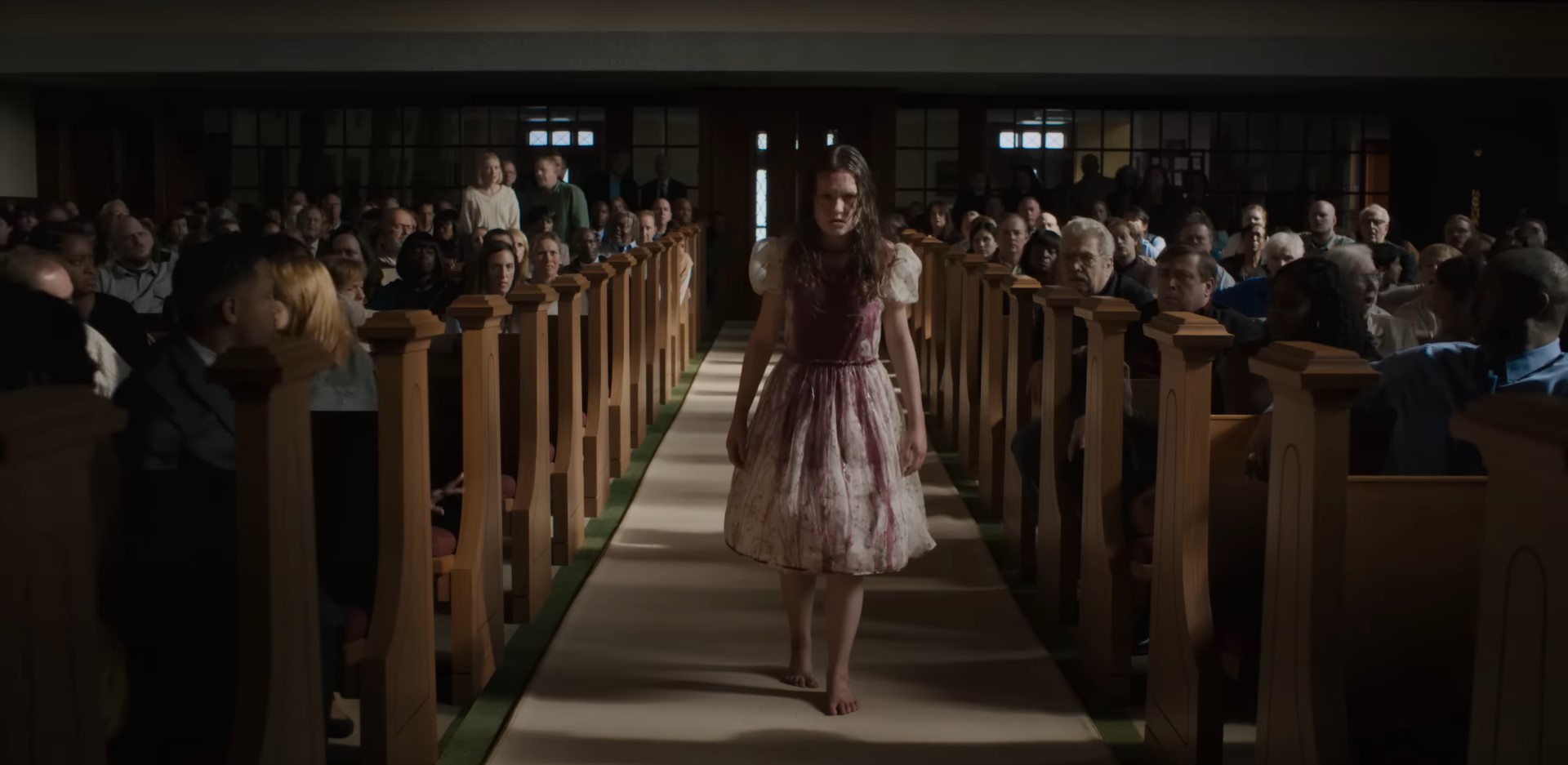
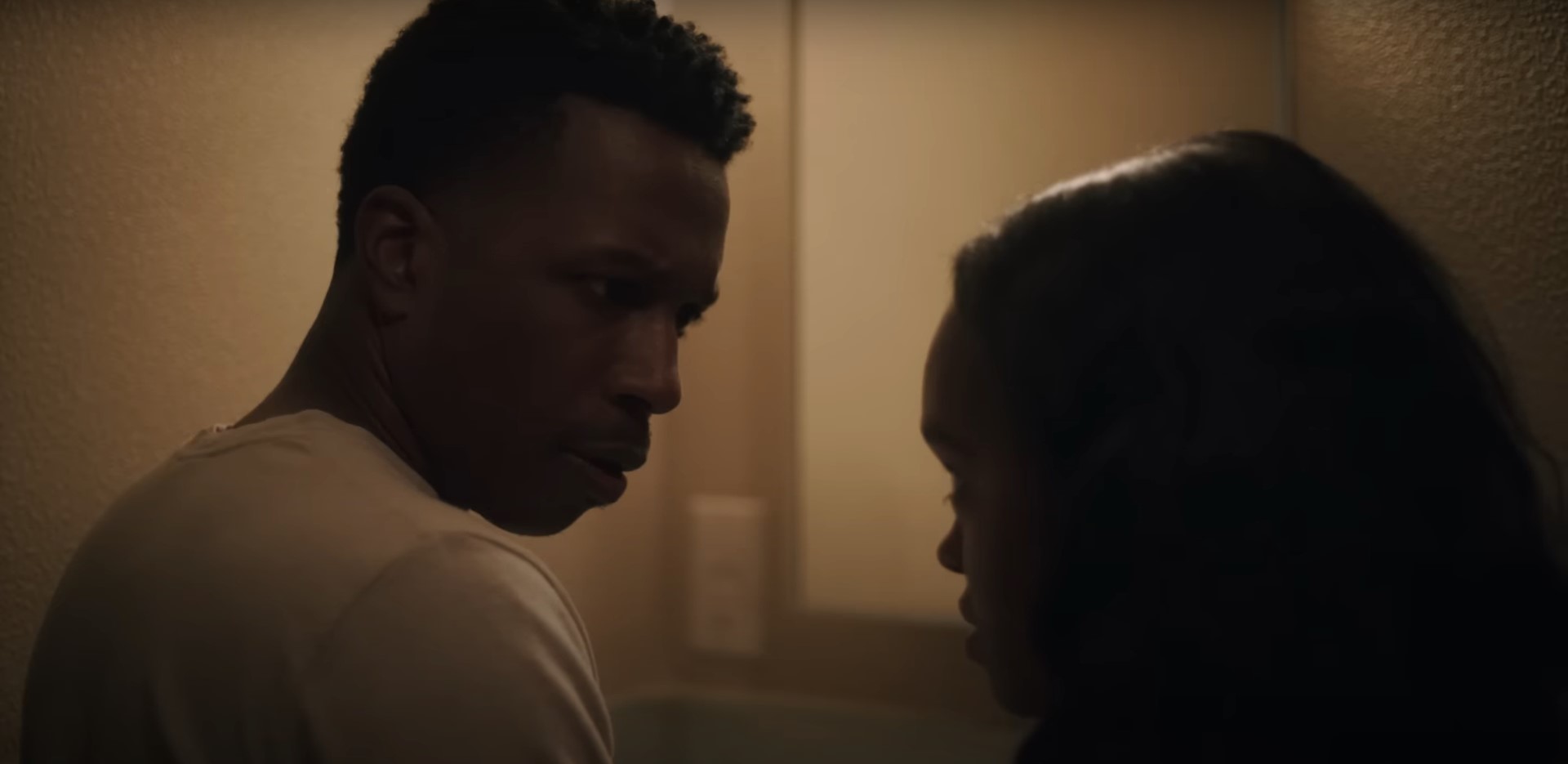
Thirteen years after having to make the tough life-and-death choice between his wife and unborn child, Victor Fielding strives to protect his daughter now teenage daughter Angela, even if that means being a little overprotective.  When Angela persuades her father for an afterschool study date with a friend, Angela’s seizes his moment of letting down his guard with real intentions to sneak into the woods with a different friend, Katherine.  Eager to connect with the late mother she never knew, Angela evokes a simple rite to call upon her mother’s spirit.  Three days later, Angela and Katherine are found in a barn, with no memory of days passed, and returned to their worried parents only to deteriorate with violent behavior, self-abuse, and an altered appearance that can’t be explained by science.  Desperate, Victor is turned toward Chris MacNeil, author of similar experiences that happened to her daughter Regan 50-years ago, to help exorcise an entity that has taken residence in the girls. 

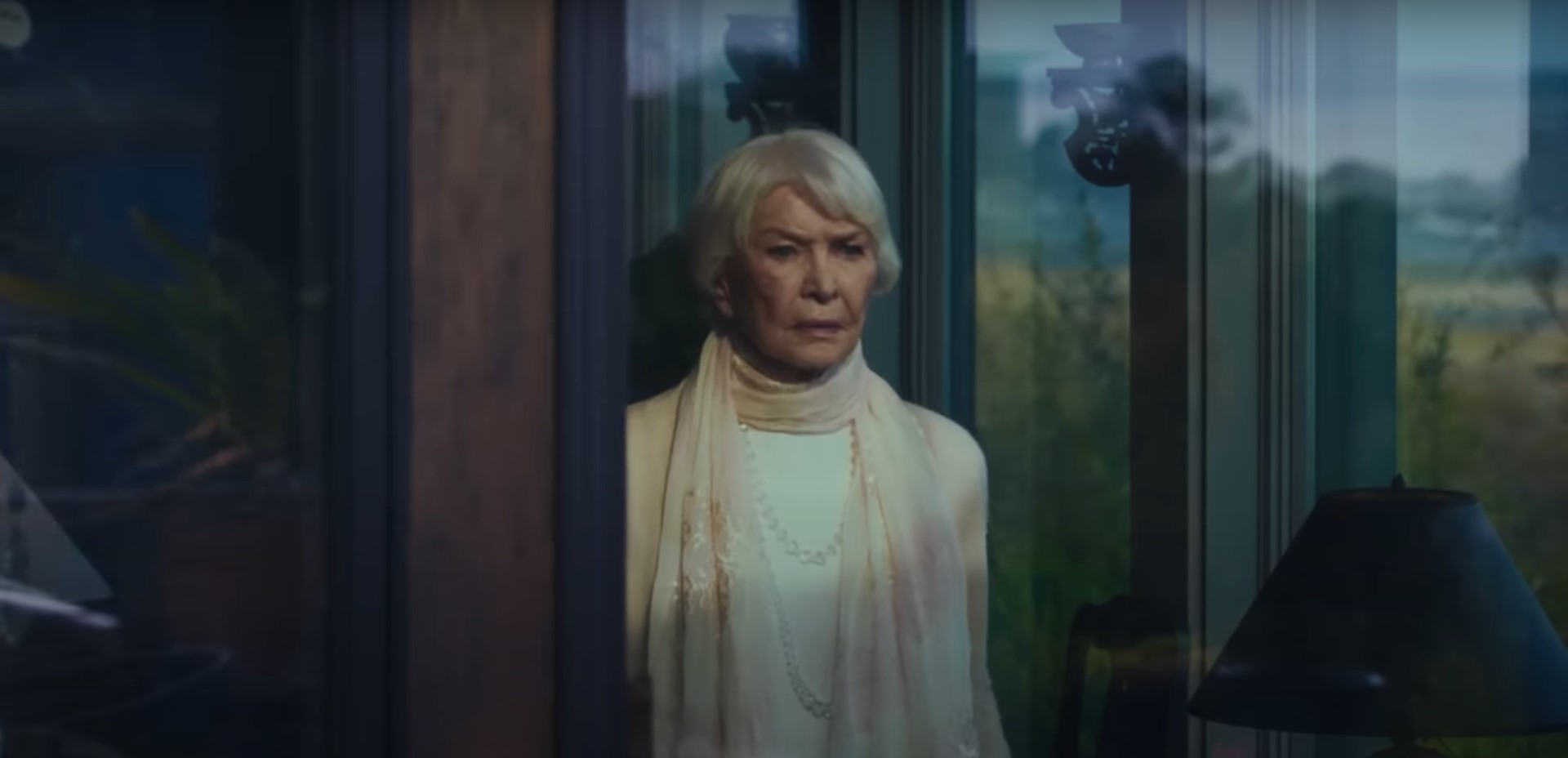
William Friedkin’s “The Exorcist” has been labeled one of if not the scariest movies of all time, according to sources like Rotten Tomatoes, Rolling Stone Magazine, and countless other outlets who run a top-rated lists.  Usually in pensile at the top seed spot, “The Exorcist” has become a terrifying beloved and timeless horror classic amongst genre crossing fans who hide in horror behind a blanket as priests do battle in good versus evil while others may revel in and gawk at the profane possession of a young girl turned into a head-spinning, vomit spewing demon host.  No matter which category fans find themselves in, there’s one singular, common impression, “The Exorcist” could never be dethroned as the scariest movie of all time, even if direct sequel “The Exorcist:  Believer,” helmed by the latest “Halloween” trilogy director David Gordon Green, and marks the return of Ellen Burstyn as Chris MacNeil, contemporarily challenges the 1973 demonic suspenser.  The sequel would be doomed in an instant of it’s trailer, and know what?  It was for the fans had immediately forsaken it, prejudging it without a second thought and a holy exorcism prayer.  Fortunately, prejudging is not in my lexicon database until the credits role.  “The Exorcist:  Believer” is written and executive produced by David Gordon Green, cowritten by “Camp X-Ray” writer-director Peter Sattler, and executive produced Danny McBride (actor of “Pineapple Express” and producer of the latest “Halloween” trilogy), Atilla Salih Yücer, and “M3GAN” producer Mark David Katchur with James G. Robinson and Blum House’s Jason Blum producing.

Much like Linda Blair stepping into Regan’s white gown before becoming vilely sullied by a demon, “Believer” hosts two up-and-coming actresses fresh for being Hell’s marionettes in Lidya Jewett and Olivia O’Neill.  Jewett, with more acting chops experience having had roles in kid friendly and feel good stories of “Wonder” and “Nightbooks,” plays daughter Angela to “Murder on the Orient Express’s” Leslie Odom Jr.’s widowed father Victor, a photographer who had to make a difficult decision after a massive Earthquake on their babymoon trip to ancestral Haiti cost wife Sorenne (Tracey Graves, “Sebastian”) her life but not their child.  The father-daughter combination becomes center story as a daughter trying to understand and know the woman who bore her despite living in reason to her death and a guilt-ridden father serving his existence by helicopter protection of his miracle child.  Angela and Victor’s story becomes intertwined between the past and the upcoming events, shedding light on circumstance that hinges on the subtle cracks of their relationship.  Meanwhile, the whole second possessed, Katherine, is essentially collateral damage.  Played as her debut role, Olivia O’Neill awfully resembles Linda Blair, recreating a Regan anti-transfiguration that has two purposes into the tale – 1) being a second difficult choice for Victor Fielding and 2) a bridging support to connect to Friedkin’s film in it’s 50-year gap alongside the more prominent connection in Ellen Burstyn returning as Regan’s mother Chris MacNeil.  MacNeil’s return gives “Believer” a boost in legitimacy and the potential to put die hard “The Exorcist” fans’ butts back into theatrical seats for the sequel, but the then now 91-year-old actress, who was likely in her late 80s or 90 at the time of principal photography, seemed relatively uninterested.  Now whether that was age related weariness or not is undeterminable, I’m sure it was a factor, but there is no pop in the actress’s step as a mother who previously fought the devil for her daughter’s soul and won.  “Believer” rounds the cast with some throwaway characters who come into the picture offering slim worth despite being pivotal to the story’s universal belief theme with performances from Danny McCarthy, Sugarland country singer Jennifer Nettles (“The Amityville Horror” ’05), Norbert Leo Butz (“New World Order”), E.J. Bonilla (“The House That Jack Built”), Okwui Okpokwasili (“Master”), Rapheal Sbarge (“There’s No Such Things as Vampires”), and “Handmaid Tale’s” Ann Dowd as the former nun-turned-nurse neighbor of the Fielding’s. 

Much of “Believer’s” message is to separate the Catholicism answer in order to separate the sequel as a duplicate of the 1973 production where Catholic priests dig in deep to expel the demon from within.  Writers nix the Catholics by making them not only unwilling participants, afraid of the damage that might incur from an exorcism, but also immediately removing the only willing Catholic to go against the Church in order to do the right thing.  Damned if you do, damned if you don’t.  Instead, “Believer” marks an era of new faith or, rather, new faiths with a sundry of religious convictions unifying to bring the girls back beyond Hell’s reach and dominion.  Pastor of a Georgia Baptist church, excommunicated nun, Earth-centric religious beliefs, and skeptics formulate a bond to save loved ones, creating the perfect bedrock for taut tension with colliding beliefs and, yet there’s none of that disagreement as much of the dissent is turned toward from within the individual who challenges their own convictions in what they see, hear, and experience.  For the most part, the farrago works against the grain of dichotomies who are usually at each other’s throats to one up their own beliefs, Gods, or what have you.  The incongruous mix of faiths easily falls into rough-and-ready kumbaya in what assumed scared beyond the point of a reality-smacking wakeup call that announces the confirmation of Heaven and Hell.  Netherworld hellion can very much be felt akin to Regan, though I believe Pazuzu’s possession of Regan was more violent and obscene in comparison to the diluted Lamashtu having been split into two bodies.  Lidya Jewett and Olivia O’Neill rocked the Christopher Nelson (“Fear Street” trilogy) makeup artistry to distinguish and differentiate themselves from each other but still stay in line with the Regan model and like the Pozuzu demon, we don’t get to see or experience much of Lamashtu other than phasing briefly into that plane of existence within the soul to see the winged, horned, and deformed body cast of the demon through the distorted, blurry sight of a viewing glass.  While practical effects shine with the makeup, prosthetics, cable work, and so forth, praise for the entire body of work is containment by the use of poor, poxy visual effects in an attempt to be bigger than its much older predecessor.

For double the demon, you can get 4-times the sharper image with the new Collector’s Edition of “The Exorcist: Believer” on a Universal Studios 4K UltraHD, Blu-ray, and Digital Code set. The 2-disc set presents the feature in a widescreen 1.85:1 aspect ratio. The 4K UHD is stored on an HEVC encoded BD100 with a HD10/Dolby Vision resolution while the Blu-ray comes AVC encoded, BD50 stored with a 1080p resolution. There’s nothing really to fault with the presentation that sets crystalized moods and tones without a hint of compression complications on either format. Through the lens of Michael Simmonds, the tenebrous tone of the new Halloween trilogy, variegated briefly only by surround bursts of the environment elements, is transplanted to “Believer’s” as in equal in less light austerity. UHD pixels offers slightly contouring and detail but not much to make a tremendous different between image presentation, which both really do the job pulling every surface attribute from the possessed girls’ abraded faces and a mounting demon taking shape. Both formats contain an English Dolby Atmos and Digital Plus 7.1 surround with the Blu-ray also sporting a DVS 2.0 stereo mix. Again, not much to express negatively here with a multifaceted and versatile output that creates the tension but lacks the palpable finesses of the original film by adding more score to the production with a sample nod of Mike Oldfield’s iconic tubular bell theme integrated into a less iconic composition by Amman Abbasi and David Wingo. Sound design ushers in a nice ambience and spatial rhythm while also inducing a couple of sudden low-frequency jump scares. Dialogue is clean and clear with the appropriate intensities in due part. Other non-English options include Spanish and French on the UHD and Blu-ray. English, Spanish, and French subtitles are included and optional. Bonus features, in 1080 HD, includes Making a Believer a behind-scenes-look with cast and crew interviews and raw principal photography footage, Ellen and Linda:Reunited sits down briefly with director David Gordon Green, Ellen Burstyn, and Linda Blair on reuniting the actresses after many years for the first time in scene, Stages of Possession goes through the makeup process and the Lydia Jewett and Olivia O’Neill’s impressions on the possessed makeup and prosthetics, The Opening shot in the Dominican Republic to recreate Haiti where the story begins, Editing an Exorcism has editor Timothy Alverson (“Sinister 2”) speak toward editing the chaos and creating scares in a new “Exorcist” installment, Matters of Faith explores theologies via consulting experts to recreate accurate depiction of different beliefs, and feature-length parallel commentary with co-writer/director David Gordon Green, executive producer Ryan Turek, co-writer Peter Sattler, and special makeup FX designer Christopher Nelson. Stylistically, I really like this sleek multi-format package design of the two deeply possessed girls, sideways on a black and silver and monochrome kissed cover as you don’t get too lost in the coloring and focus on just what we’re all here to see, the demonic destruction, right on the rigid O-slipcover with embossed title in the middle. The 4K Amary case holds the same image arrangement back and front compared to the slipcover. Inside, each format resides on its own side of case real estate with the Blu-ray pressed with simplistic CD-like art while the UDH goes with the same front cover image. In the insert slip is a digital code for your downloading pleasure. With a near 2-hour runtime at one hour and 51-minutes, the release doesn’t list region playback, but I would suspect region one and is rated R for some violent content, disturbing images, language, and sexual references. With the exception of a few moderately eye-twitching jump scares, “The Exorcist: Believer” has been exorcised of the breath-holding terror that exalted William Friedkin’s film. However, what David Gordon Green produces is a different breed of religious cultivating inclusiveness inclined to be more so about the social commentary than being about the rite of excruciating deliverance. 

Let the Power of 4K Compel You!  “The Exorcist Believer” from Universal Home Video!

EVIL Says Talk to the Hand. “Talk to Me” reviewed! (Lionsgate / Blu-ray)

“Talk to Me” on Blu-ray/DVD/Digital!

The two-year anniversary of the death is a solemn time for Mia to mourn the hard loss of her beloved mother who took her own life, or at least that is what her father tells her.  Feeling uneasy by her father’s account that circulates doubt uncontrollably, Mia pries her way into her best friend Jade’s family for comfort and becomes equally amiably with Jade’s younger brother, Riley, as like another sister.  When social acquaintances post viral videos of peers supposedly being possessed by an embalmed hand of a psychic for party games, Mia is eager to participate.  All is fun and games with the dead inhabiting and speaking through the hand holder for a limited time until Riley’s spirt takes a violent turn, leaving the boy severely injured and in a comatose state after exhibiting Mia’s mother possessing him.  Obsessed to speak again with late mother, Mia uses the hand to talk to the dead and learns Riley’s soul is stuck on the other side and being tortured by the countless, malign spirits. 

Grief can be so powerfully self-destructive that holding an embalmed hand, becoming connected with the grotesque spirit, and letting the shadow world possess you can be addictive and even as far as a parlor game to pursue answers or a desperate release from suffering.  The 2022, breakout Australian production “Talk to Me” explores that forced hand of grief, literally, with a socially pressuring aspect that can be contagiously engrossing and collaterally harmful if unchecked.  The Southern Australian-born brothers Danny and Michael Philippou come out swinging on their debut feature-length film penned by Danny alongside Bill Hinzman based on a concept by “Bluey” executive producer of all people, Daley Pearson.  “Talk to Me” is a coproduction between The South Australian Corporation, Screen Australia, Head Gear Films, and Causeway Films with Christopher Seeto (“The Flood”), Samantha Jennings (“Cargo”), and Kristina Ceyton (“The Babadook”) producing.  The film is released theatrically by A24.

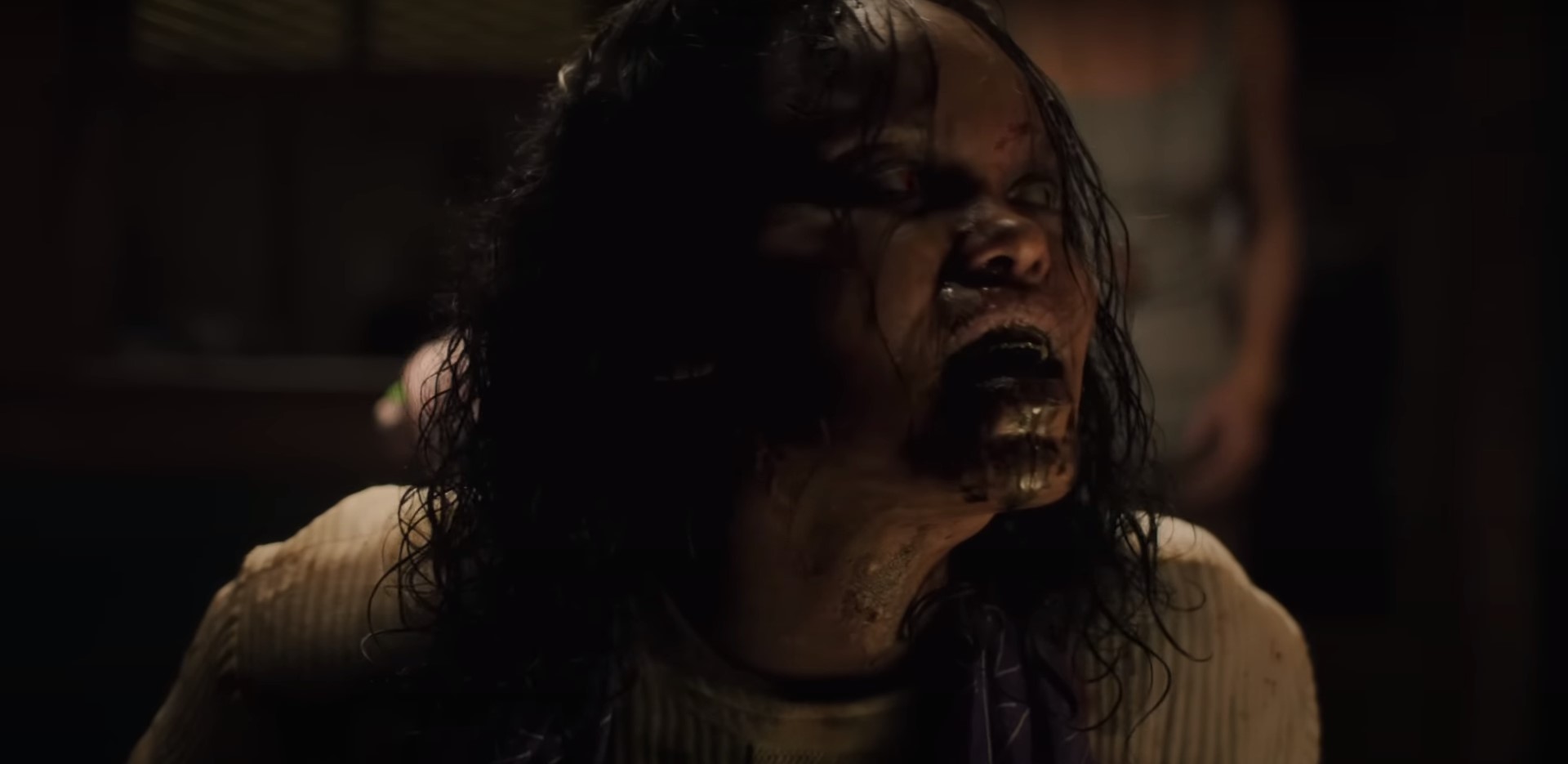
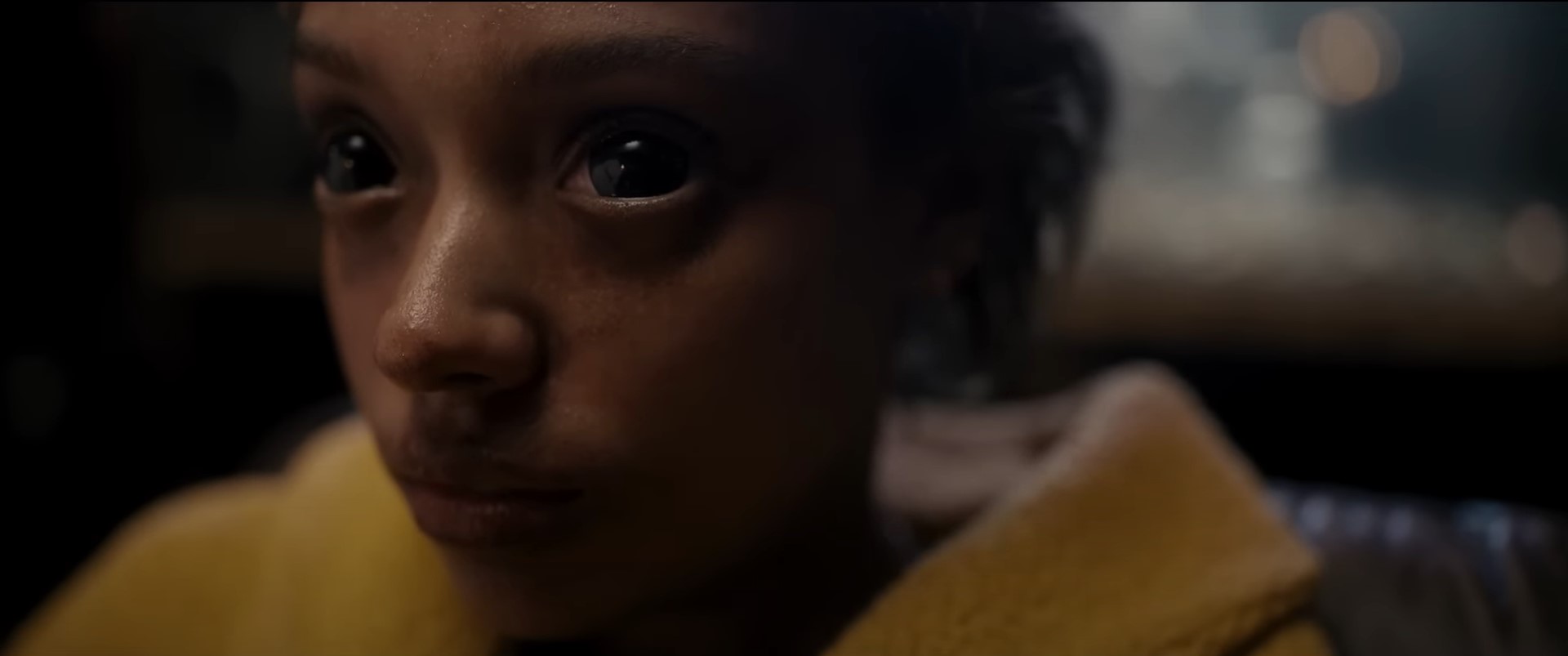
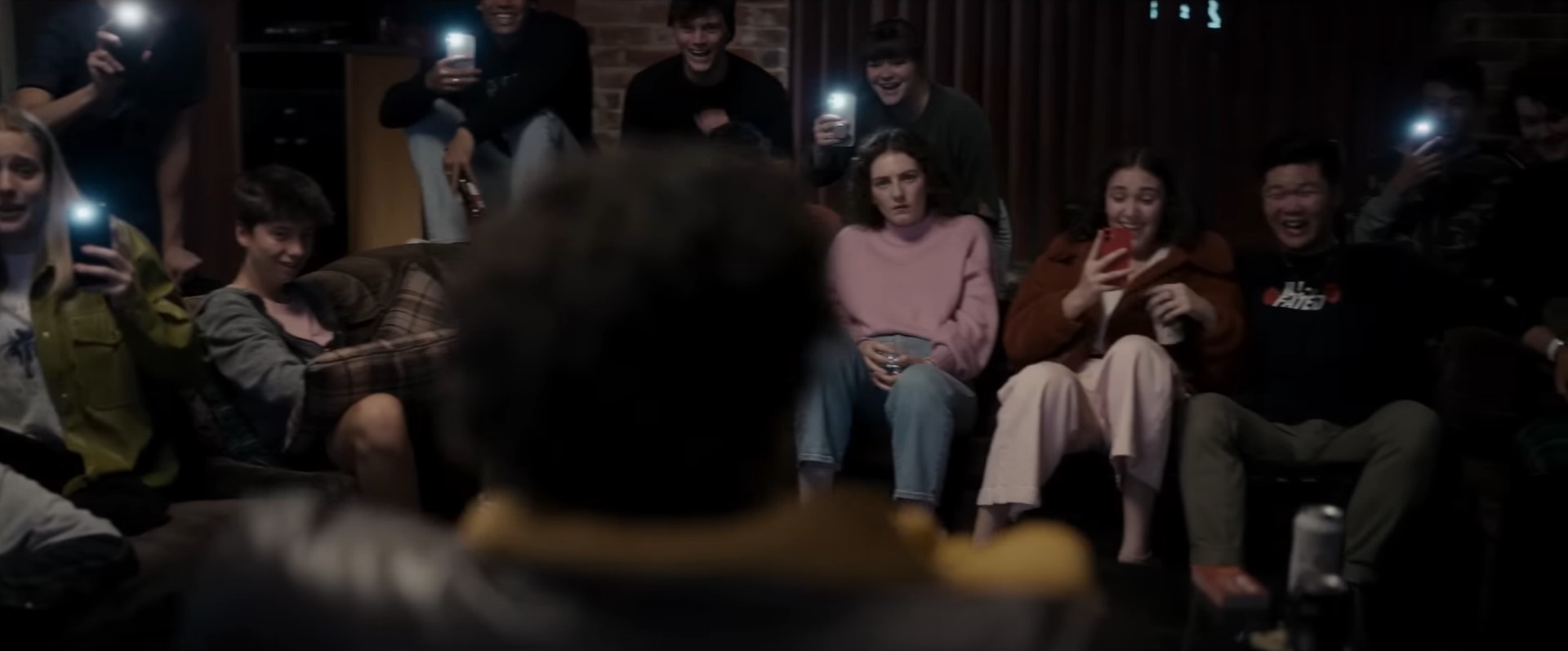
“Talk to Me” opening with a young, shoulder length haired man desperately searching for his younger brother through a sea of people at a house party.  The scene sets the film’s take-no-prisoners tone with begins with compassion as the older brother comes to the rescue of his disturbed, shirtless kin, trying to display the flashlight gleaming phone camera sharks who smell viral video blood in the water, when in a surprising turn of events the younger brother stabs his sibling before ramming the chef knife into his own skull.  “Talk to Me” segues into the cast of teenage characters, spanning the age spectrum of 14 to 20, letting us know right off the bat that youths are on the chopping block and no one will be safe.  The mostly untried cast pulls through with a trypanosome performance that gets under your skin, festering in its linger.  Sophie Wilde helms being the principal lead Mia still shell shocked by the sudden death of her twinning mother two years after later.  Suspicious of her father’s role in the death, Mia escapes and integrates herself into best friend Jade’s family, a role resting in between two uncomfortable rocks of being the new girl beside Mia’s onetime ex.  Alexandra Jensen as Jade floats carefully portraying Mia’s friend and a pursuant tiptoe toward the relationship with Daniel (Otis Dhanji) that passively irks Mia in the form of playful jokes, side glares, and inner demons becoming fruition ones expressing desires.  Sophie Wilde, on the other hand, spans the gamut with a flip of a switch soul spectrum polarized by spirit madness, grief over loss, and a fallback friendship.  When Wilde turns on the darkest light of possession, when her character lets the spirit into her body, the disheveled whole of Mia lives up to the actress’s surname becoming an uninhibited periapt for the spirit within that lusts over the youngest in the room, Riley (Joe Bird), for his childlike purity and when the spirits have control of over his soul in what is an orgasmic suffering that neither is parlous fun or exciting.  “Talk to Me’s” cast rounds out with Zoe Terakes, Chris Alosio, Marcus Johnson, Alexandria Steffensen, Ari McCarthy, and “Homeland’s” Miranda Otto. 

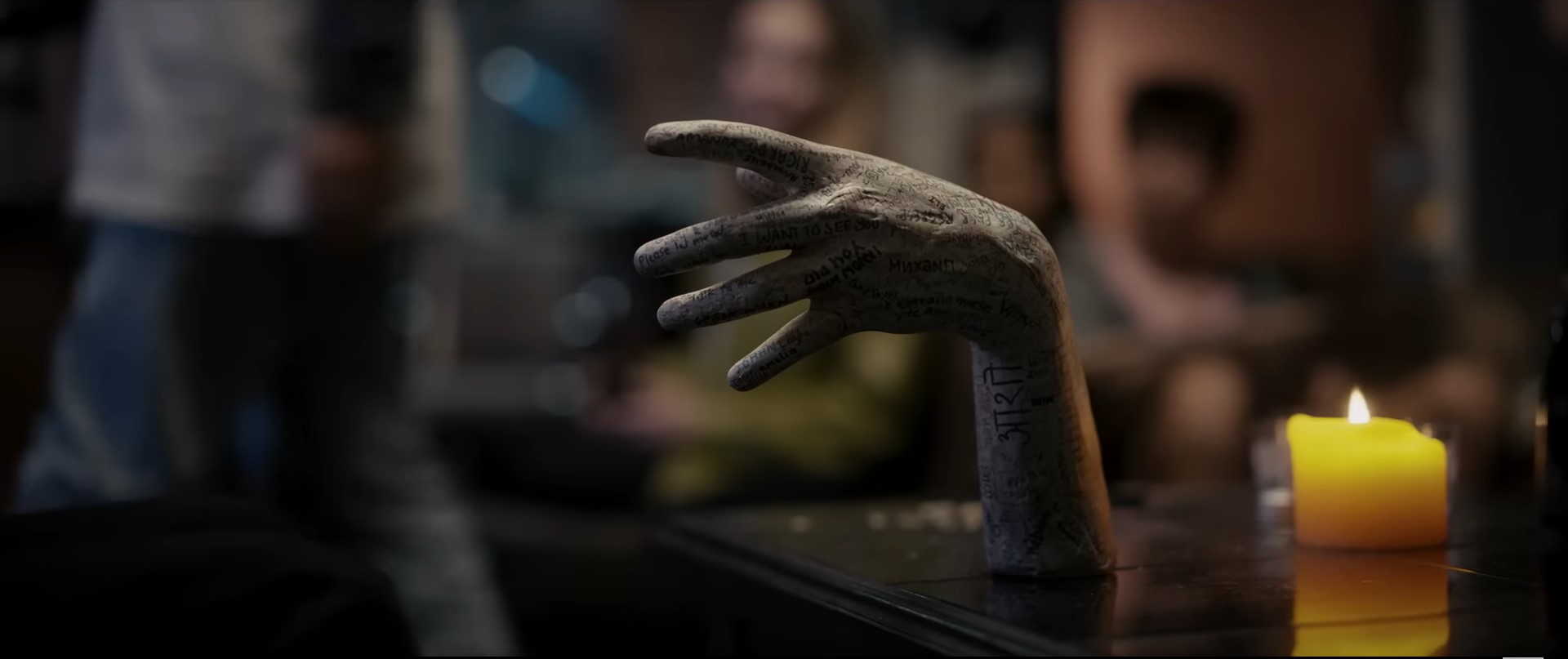
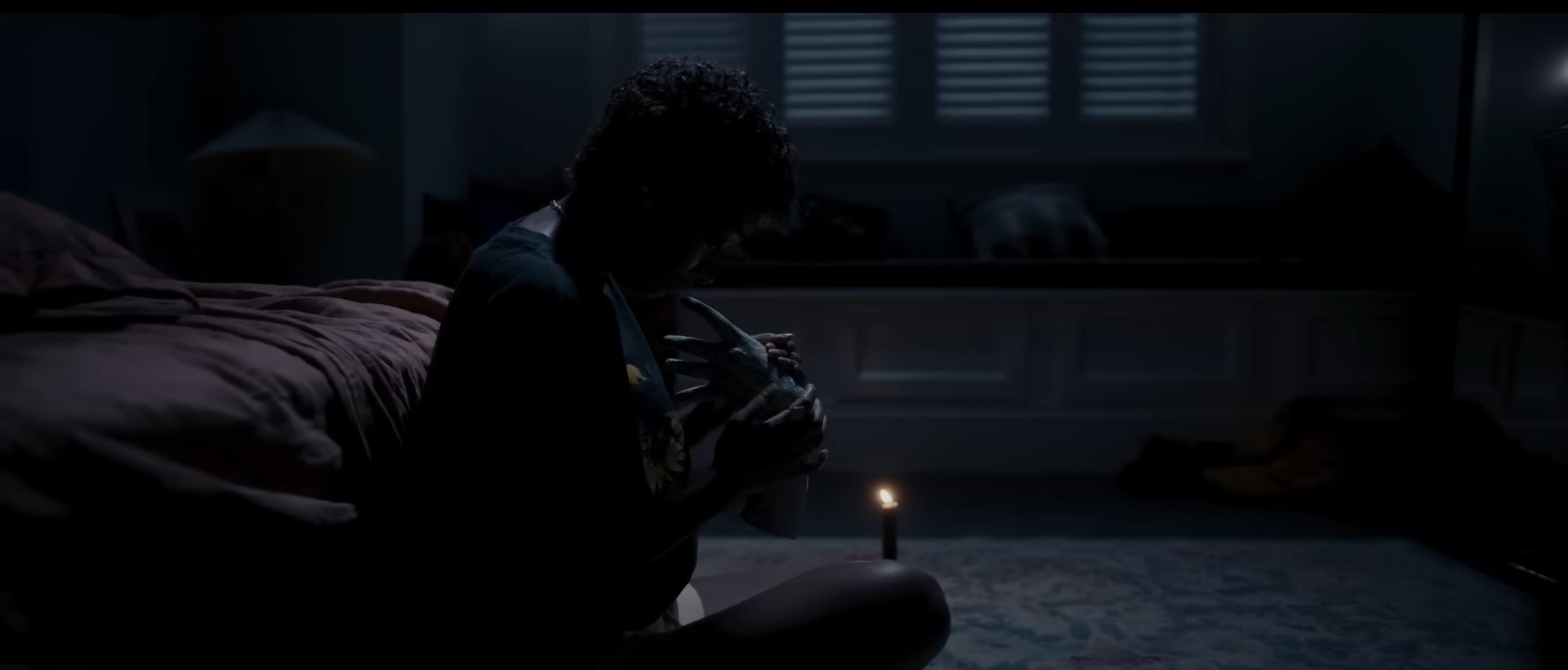
“Talk to Me” is an original byproduct stemmed from the cursed fetish genre.  The inexplicable mummified hand with unknown origins, thought to be once the hand of a medium, falls into the hands of a difference kind of representation.  Not to be bestowed conventional tropes like an inanimate object to be feared, the mirror in “Oculus” comes to mind or the cenobite unleashing puzzle box of “Hellraiser,” the persevered curled open hand doesn’t hold that sort of malevolent power, at first.  Despite its powerful connection to the purgatorial other side with frightening results of classic possession cases – levitation, catatonia, dissociative profanity and behavior, etc. –  these more-or-less new generational children treat something they don’t completely understand, such as ancient, mystical artifacts and in this case, human remains to be exact, without respect and humility, using the hand as if an additive drug, parlor game, or write to go viral amongst peers.  Directors Danny and Michael Philippou use the peer-pressuring viral video social commentary of their film as a sensationalized stern warning that has equal cause-and-effect results.  Ostentatiously showcasing more of the adolescent revelry spree rather than the mangled, decaying, and water-bloated entities in front of them or recklessly inhabiting their bodies once let corporeally inside.  For someone like the character Mia who continues to process close loss and has troubling thoughts, or maybe even delusions, regarding her father’s role in her mother’s untimely demise, she yearns for answers and when Mia receives a glimpse into what she believes is her kindred spirit mother through the vessel that is her friend Riely, aching impulses take over already crumbling judgements and she goes down the rabbit hole despite the consequences to herself, to her father, and to her adopted family.

Get a grip and take “Talk to Me’s” hand to experience the possessively powerful Philippou brothers’ debut film on a Lionsgate 2-disc Blu-ray/DVD/Digital release.  The AVC encoded, 1080p high-definition, BD50 and the MPEG-2 encoded, upscaled standard definition, DVD are presented in a 2.39:1 widescreen aspect ratio.  What’s achieved out of the Aaron McLisky’s through-the-looking-glass visual vignette is focus driven, claustrophobic, and engaging to be present of a reality teetering the line between two worlds.  Details inarguably shine, casting a great deal of deep shadows within the hard lighting to set the ominous tone.  Skin textures gleam within the light as well as coarse change with the vapid and pale makeup adjustments of the dead-entered body or even when we do brief see a condemned soul, the greatly applied contusions, decay, or bloating is reflected with great care from the infinite image detail.  The release has an English Dolby Atomos output reaching the difficult crevices of the inaudible dark holes and exposing them to immense carousal and haunting zeal that makes the experience more palpable. Dialogue renders nicely through albeit a heavy-handed score that relentlessly attempts to knock down the channel-leveled door and a strong Australian accent on most of the cast may sway those who don’t have a keen and distinct diverse ear away from the film or may find discerning a challenge to channel from beginning-to-end. While most of the camera’s frame stays in medium closeup to closeup, McLisky’s able to find depth where advantageous to bring a creep building dark cloud after Mia’s one minute over willing but felt forced possession participation. English SDH and Spanish subtitles are optionally available. Special features include an audio commentary with brothers Philippou, a featurette with the cast and crew in their experience and thoughts on the film, entitled In the Grip of Terror, deleted scenes, and theatrical trailer. Behind a rigid O-slipcover imaged with the centerpiece un-ensepulchered, plaster anoint, and sanskrit-esque-ladened hand upright and in the forefront with phone flashlights dully lit in the background. The typical Blu-ray snapper houses the same slipcover image slipped in between the plastic sheeting whilst the two discs are held on snapper locks on each side of the interior accompanied by an insert for the digital download. Both discs are pressed with the same font and coloring on in reverse with a baby blue stark against white. The 95-minute minute feature is region A locked and is rated R for strong bloody violence, some sexual material, and language. “Talk to Me” is utterly and terrifyingly fresh and freakish in more so with the naturality toward the touching and the facetious ways with an embalmed hand that’s a one-way personal radio to the dead as a means to be engaged in popular, peer-pressuring social activity and as something to prove with reckless naivety.

“Talk to Me” on Blu-ray/DVD/Digital!