EVIL, Over a Decade in the Making! “Profane Exhibit” reviewed! (Unearthed Films / Blu-ray)

“The Profane Exhibit” is Finally Here! Come And Get It!

Forged, smelted, and baked from the fiery grounds of hell, 10 stories of bleak and utter horror crimson the soul with blood and pale it with terror.  Ten directors, ten stories, ten obscure unfathomable depictions tell of a draconian religious sister matron with a despotic rule over a child orphanage, a daughter held prisoner by her parents in her own home basement, a cult willing to sacrifice newborns for the sake of their demonic tribute, the Third Reich submitting to extreme measures to keep their ranks pure, a reenactment of a father and son’s unnatural skin-to-skin bonding, a nightclub’s underground bloodletting witchery, and more unnervingly bizarre ballads.  These tales of torment tatter the life force piece-by-piece until there’s nothing left to exhibit, nothing left of one’s humanity, nothing left of being human.  A cruel anthology awaits just beyond the play button, ready to shock, appeal, and maybe even stimulate the perverse, primal nature in us all.   

An anthology a decade in the making or, to be more specific, a decade plus one year in the making in the long awaited “The Profane Exhibit.”  The 10-short film anthology is the brainchild of Amanda Manuel that began principal production in 2013 and finally saw completion and release in 2024 after a slow slog of shoots, edits, and post-production this-and-thats to finally crossover the finish line.  Varying from micro shorts and to average length short films, the anthology employed 10 different in degree genre directors from all over the world to make the mark in what would become a manic syndrome of monsters, mayhem, and molestation.  Yes, we’re talking about some really gross things, some terrifying things, and some other abnormal, abstract, and abysmal things that could be happening right now in your nightmares, or under your nose.  Anthony DiBlasi (“Malum”), Yoshihiro Nishimura (“Tokyo Gore Police”), Uwe Boll (“Bloodrayne”), Marian Dora (“Cannibal”), Ryan Nicholson (“Gutterballs”), Ruggero Deodato (“Cannibal Holocaust”), Michael Todd Schneider (“August Underground’s Mordum”), Nacho Vigalondo (“Timecrimes”), Sergio Stivaletti (“The Wax Mask,”) and Jeremy Kasten (“Attic Expeditions”) helm shorts they’ve either written themselves or by contributing screenwriters Carol Baldacci Carli (“The Evil Inside”) and Paolo Zelati (“Twilight of the Dead,”).  Harbinger Pictures and Unearthed Films, who also premiered it’s at-home release, co-produced the anthology.

Much like the diversity of directors, the cast is also an assortment of aggregated talent that stretches the global gamut.  Popular and classic horror figures like Caroline Williams (“The Texas Chainsaw Massacre 2”) and Clint Howard (“Ice Scream Man”) play the normal couple next door conversating about politics, date night, and work while all the while they’ve locked their daughter away from the world and use her as daddy’s little sex slave in Uwe Boll’s “Basement,” depicting the normal and safe is actually abnormal and danger right in the middle of suburbia.  Others such as the underrated scream queens Monique Parent (“The Witches of Breastwick”) as a fully naked and willing “Goodwife” to her sadistic husband, Mel Heflin (“Queen Dracula Sucks Again”) donning a pig mask, naked by the way, in a rave club along with Tina Krause (“Bloodletting”), Elhi Shiina (“Audition”) and Maki Mizui (“Mutant Girl Squad”) finding happiness amongst death, and notable global genre actors Thomas Goersch (“Voyage to Agatis”) as the German father crippled by his son’s retardation, Dan Ellis (“Gutterballs”) as the hardworking husband who has everything but it all means nihilistically nothing, and Art Ettinger, the editor name and face of Ultra Violent Magazine doing his part with a bit patron part in the nightclub.  Mostly all listed have previously worked with their short film directors previously that denotes a sense of ease and expectation from their performances but that still makes their acts nonetheless shocking.  “The Profane Exhibit” also sees a few newer faces in the conglomerated cast with Christine Ahanotu, Tayler Robinson, Tara Cardinal, Mario Dominick, Witallj Kühne, Valentina Lainati, Josep Seguí Pujol, Dídac Alcaraz, and Stephanie Bertoni showing us what they can dish out disgustingly. 

Was the 11-year wait worth it?  Over the last months years, “The Profane Exhibit” received substantial hype when Unearthed Films announced its home video release, pelting social media with here it comes, get ready for it posts, tweets, and emails and for fans who’ve been following the decade long progress, director Amanda Manuel’s “The Profane Exhibit” does not disappoint as the content storyline harks back to the lump-in-your-throat, gulp-swallowing roots of general discomfort from an Unearthed Films release.  While it may not “Slaughter Vomit Dolls” level gross of upheaved bile and whatever was ingested moments before shooting, the filmmakers go deeper into the viscerally ignorant, ugly truths.  We’re not talking monsters or supernatural entities tearing Hell a new rectum, but “The Profane Exhibit” delineates the sordid nature of the human condition in an egregiously behavioral way that some of these ideas are not so farfetched.  A select few of the filmmakers incorporate surrealism into their shorts, such as with Yoshihiro Nishimura’s aberrant Mary Poppins, known as Hell Chef, replaces a spoon full of sugar with a bowl full of cooked human when turning a frown upside down of a young girl who just killed a man who she suspected tried to rape her.  The Geisha-garbed Hell Chef flies through the air holding up her Wagasa, Japanese umbrella, when her job is done.  Most others are grounded by realism with sadism being the primary culprit – “Basement,” “Goodwife,” and, to an extent, “Sins of the Father” and “Mors of Tabula.”  And then, there are shorts like the late, and great, Ruggaro Deodato’s “The Good Kid’s” that feels hackneyed and unimpressive coming up short amongst the others and makes one think if his name alone awarded the short a spot in Manuel’s lineup. 

In all, “The Profane Exhibit” delicately caters to the indelicate and is a visual instrument of visceral imagery curated for pure shock value. Unearthed Films’ Blu-ray release has finally arrived and is now in our bone-exposed and gory fingertips. The AVC encoded, 1080p high-definition, BD50 allows for dual-layer capacity for not only to squeeze in the 108-minutes’ worth of micro shorts, but allow for extended extras, deserving to fans who’ve waited years for this production to see the light of day.  Like any other anthology, a mishmash of styles but up against each other with the assemblage of different stroke directors and cinematographers but there seems to be no issues with compression, such as banding, blocking, aliasing, or any abundance of blurry noise, in the flexing widescreens aspect ratios of 2.35:1 and 1.78:1.  A good example of Unearthed Films’ codec processing is Deodato’s bridge scene; while I don’t care for the short all that much, the long shots of the bridge are nicely detailed in the nighttime, lit only be the bridge’s powered light poles, creating a downcast of warm yellow along a solid shadow-spotty bridge.  You can see and realize the stoned texture without even using your imagination on how it should look and that tell me there’s not a ton of lossy codec at work here.  An English, Spanish, Italian, and German mix of uncompress PCM 2.0 audio serves as the common output to be as collective and unified as possible.  No issues with hampered dialogue with a clear and focused track.  There dual channel quality is robust and vibrant, living up to Yoshihiro Nishimura’s surreal energy and a commanding Japanese tone while still finding voice prominence in other shorts, if dialogue exist.  Depth is fleeting without the use of a surround mix with an anthology that’s centered around the human condition rather than atmospherics, but I do believe Jeremy Kasten’s Amuse Bouche would have greatly benefited from the distinct gnashing, squirting, and smacking sound elements of a pig being processed to consumption in his wraparound.  English and Spanish subtitles are optionally available. Years of bonus content has been produced and collected for this special release which includes an audio commentary Director Michael Todd Schneider, Producer Amanda Manuel and Ultra Violent Magazine’s Art Ettinger, a world premiere interview with creator Amanda Manuel and short director Michael Todd Schneider at the Buffalo Dreams Fantastic Film Festival, a world premiere Q&A, a 15-minute mini documentary Ten Years Later with “Mors in Tabula” director Marian Dora, an extended short entitled “Awaken Manna” with introduction and discourse, PopHorror’s Tiffany Blem Zoom interviews select directors with Michael Todd Schneider, Uwe Boll, Jeremy Kasten, and showrunner Amanda Manuel, image gallery, and trailer. The 2024 release has a runtime of 110 minutes, is not rated, and is region free.

Last Rites: Worth it. That’s the bottom line for this long-awaited film imbuing with bottom-feeders. Unearthed Films returns to roots with rancidity and fans will find their bloodlust satisfied.

“The Profane Exhibit” is Finally Here! Come And Get It!

God Works in Miracles, Man Works in EVILs. “Immaculate” reviewed! (Neon / Blu-ray)

Mary Didn’t Have This Much Trouble. “Immaculate” on Blu-ray!

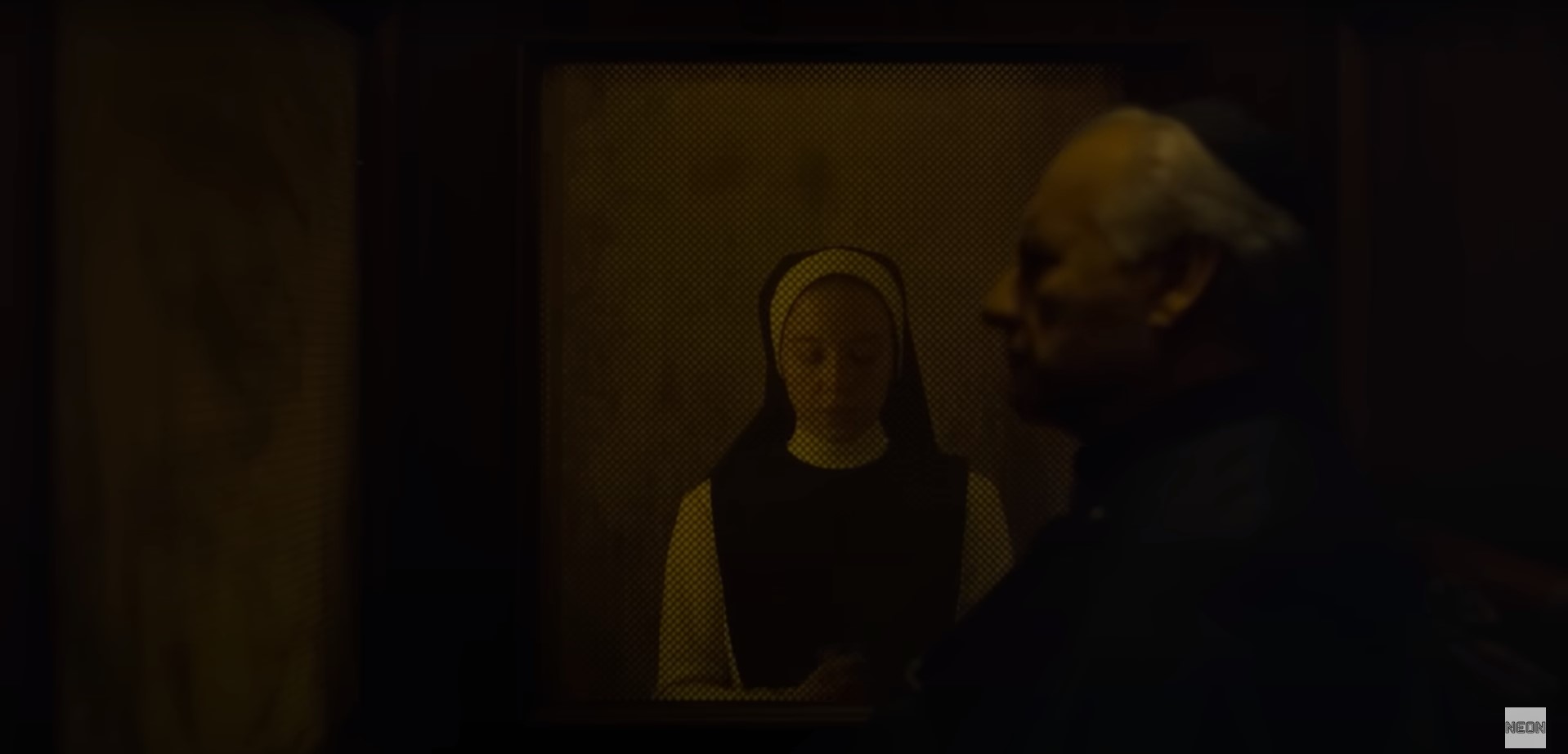
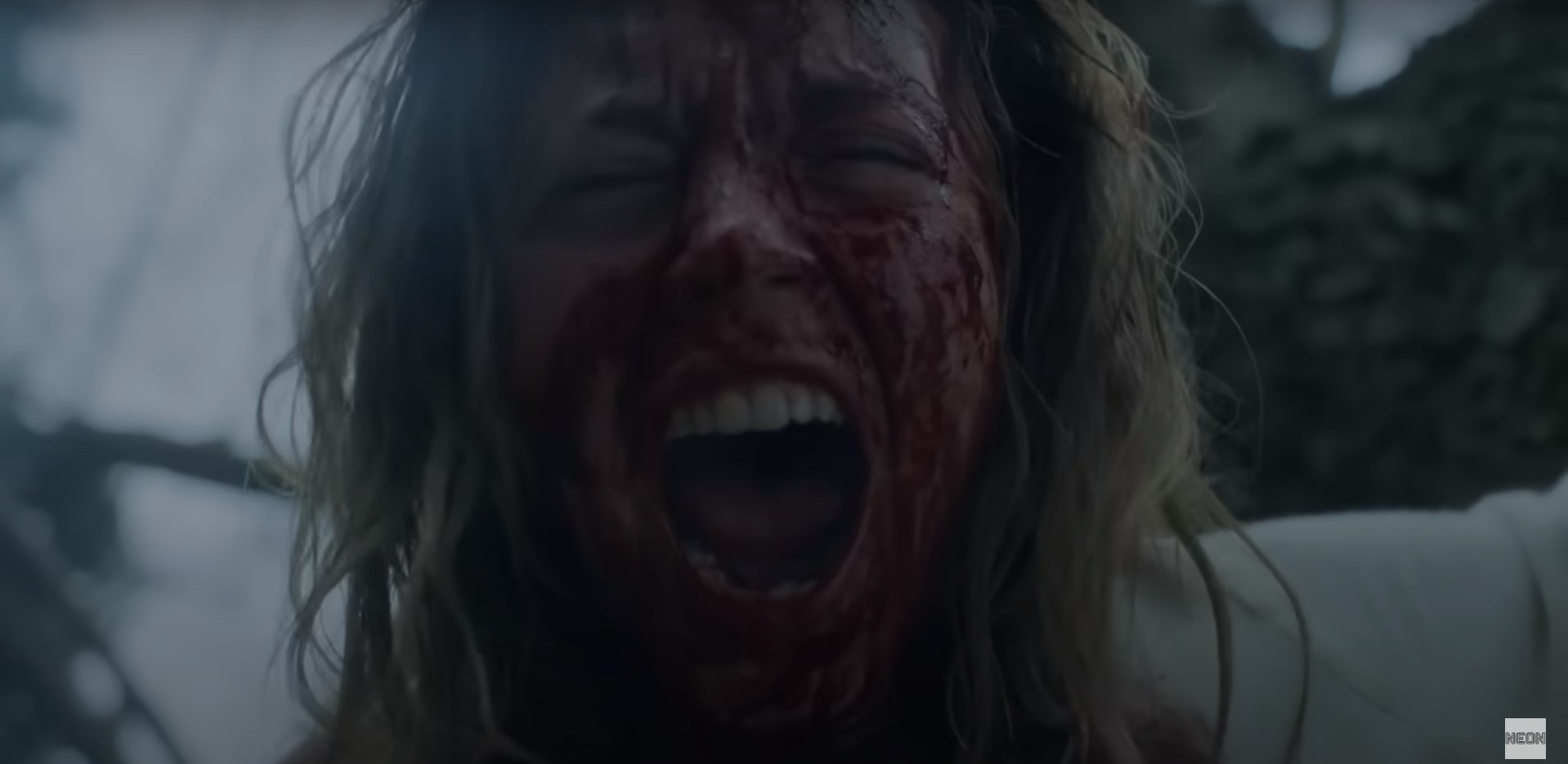
Devout American nun, Sister Cecilia, has been appointed a position in the Italian countryside, a historical convent where terminally ill nuns live in the sisterly comfort of hospice.  Feeling blessed for the opportunity to serve and her faith remaining second to none, the young nun believes she found her true calling and takes her devotional vows in the eyes of God and Jesus Christ, amongst other young nuns in confirmation.   During her training of changing out bedpans and beheading chickens for meals, an uneasiness washes over Cecilia ever since the night of her confirmation reception and being granted to behold one of the stakes that was impaled through the hand of Christ.  As if by miracle, an explanation suddenly and terrifyingly reveals itself not only to her complete shock but the entire convent when she’s discovered to be pregnant through immaculate conception.  As weeks turns to months, Cecilia is forced to focus on baby instead of chores but there’s something dark and malevolent happening behind the convent doors that result in her unable to leave the convent grounds, fellow outspoken nuns disappear, and one sister commits suicide.  The once blessed opportunity has turned into unimaginable terror with no way out. 

Sydney Sweeney is so hot right now.  With her provocative success on HBO’s take of youth and vices in “Euphoria” and a nihilistic teenage daughter in the same premium channel’s series, “The White Lotus, the now 26-year-old Washington state-born actress has also peppered her career with horror films, even at a childish age with her first appearance, a minor role, in a comedy-horror “ZMD:  Zombies of Mass Destruction” and continuing her fresh and new vocation with notable parts directed by notable directors, such as John Carpenter’s “The Ward” and Tibor Takács “Spiders,” that would subsequently offshoot into principal leads of less heeded, moderately successful thrillers when in adulthood with “Along Came the Devil,” “Dead Ant,” and “Nocturne.”  Her latest venture is one she became personally invested in, a modern-day nunsploitation titled “Immaculate,” reteaming Sweeney with her 2021 “The Voyeurs’” writer-director Michael Mohan at the helm of their latest collaborative effort.  Mohan, however, did not write the film with feature film newcomer Andrew Lobel taking the job that would take a decade to fruition once Sweeney, who auditioned for the role when she was 17 years old, made it her passion project to see it come to life  Alongside Sweeney producing is Ben Shafer, Riccardo Neri, Michael Heimler, David Bernard, Jonathan Davino, and Teddy Schwarzman with Neon distributing the Black Bear presentation of the Fifty-Fifty Films and Middle Child Films coproduction. 

Sweeney exacts the very definition of virginal innocence, a small-town girl with a miraculous backstory that nearly cost her her life.  As a sincerely devout Catholic in Sister Cecelia, Sweeney must shape up an intake of naivety that blinds her to the subtle sinisterism amassing around her.  To do that, a medley of personalities must dupe her, sway her, disparage her, and comfort her to keep the character balanced before the blindsiding shock that surprises her with a twisted misconception and exploitation of God theme. Heading up the mix of madness is the convent’s resident priest, Father Sal Tedeschi, played by Spanish actor Álvaro Morte, indoctrinating a warm welcome as a guise for advantageous deceptiveness, but for what, we yet don’t yet know.  The alarming setup pins Cecelia to the convent grounds, surrounded by equally unconscionable characters in an insistent Cardinal Franco Meroa (Giorgio Colangeli), a benignly sweet Mother Superior (Dora Romano), and a disparaging Sister Isabelle (Giulia Heathfield Di Renzi”), and with little options of escape, or even allies within the walls, Cecelia is truly alone against a rogue Catholic sect that seeks to resurrect Christ in an unconventional and unnatural way against Canon law.  Cecelia’s arc fully embraces the change through Sweeney’s rather transfigured understanding of the religious institution Cecelia devotes her life to and, in the same breath, the nun keeps with the organization’s traditional principles of God’s will and not man’s interference and must be the righteous hand of wrath.  “Immaculate’s” cast rounds out with Benedetta Porcaroli, Giampiero Judica, Giuseppe Lo Piccolo, and Simona Tabasco, who has a “White Lotus” connection with Sydney Sweeney.

If you’re like me and avoid most trailers, reviews, or spoilers to try and keep an unbiased opinion, you may be taken aback by “Immaculate’s” gargantuan twist that goes against everything you may know and believe about the Catholic Church’s dogma and principles.  Granted, several non-Catholics likely believe the Church is corrupt and with recent years’ newsworthy scandals, those Church cynics’ fire has had a continuous stream of fueling fodder.  “Immaculate” plays into the fear, pessimism, and beyond reproach suspicion by subverting religion as a false façade and integrates unlikely, go-against-the-grain coupled themes of genetics tampering, bypassing God, murdering in His name, and even exploiting the Catholic hierarchy with slivers of patriarchal governance over a woman’s body.  We get the latter from the very first opening sequence of Cecelia having just arrived in Italy and is brought before two custom officials who remark, in Italian in order for her now to understand, that her religious vocation to be obedience, impoverished, and chaste wastes her youthful beauty. Then again, “Immaculate” is not beautiful; it’s grotesque, perverted, and shocking and at the core, a purity that’s being sullied by deranged power and evil enlightenments.  Cecelia represents a beacon of hope in a maelstrom of immorality. 

Shudderingly intense and sordidly messed up, “Immaculate” arrives onto a Neon Blu-ray home release.  Presented in a widescreen, Univisium aspect ratio of 2:00:1, the AVC encoded, 1080p high-definition, feature is housed on a single-layered 25 gigabyte disc.  Curious the reason why Neon would choose a lower capacity for such a purposefully soft and dark videographic image that creates a solemn tone inside a harsh appearance of an unpronounced period piece, perhaps set around the 1960s-1970s judging by the wardrobe, suitcases, and other set dressings.  Not also to exclude the premature notions of genetic manipulations that have made giant modernized leaps in the contemporary day-and-age.  Even with emaciated encoded, “Immaculate” looks pretty good around skin tones and textures and not a tone of compression follies to report.  With darker images on lower capacities banding and blocking rear their ugliness but there’s not a tone of that here. Saturation reduction plays into the time period and mood and the specified range of grading is kept to a modestly warm yellow, greens, and reds surfacing above ever so slightly through thick shadows of inkier, key-lit or candle-lit frames and even making a miniscule presence in daylit moments, boarding classical noir on some occasions.  The English-Italian DTS-HD 5.1 Master Audio has lossless appeal that wriggles out clean atmospheric genre cues through the multiple, surrounding channels.  Creaky doors and floors, deep footsteps, cavernous echoing, all play into the ambience track’s gothic timbres.  Conversating dialogue mounts a clear fixed positioning that sharp and clean through Sweeney’s character’s slight Midwestern intonation to the heavily and broad Italian accents from native vernacular to second language English speakers.  A descriptive English 2.0 audio track is also available as well as optional English and Spanish subtitles for the primary track.  One reason “Immaculate” is on a BD25 is because of the only bonus feature available is a feature length commentary track with director Michael Mohan.  The physical side of the Neon release includes a slipcover with the same tones mentioned above with a pious looking Sydney Sweeney in habit and also covered stoically in blood from the collar down.  The backside of the slipcover scarcely has technical information which is pleasant to see the limited real estate being used for something else other than the nuts and bolts that should remain on the Blu-ray’s Amaray case.  Its slightly reminiscent of the way certain boutique labels design their limited slips.  However, what’s not reminiscent of boutique design is the same slipcover front and back image is used for the Blu-ray case too.  Inside is sparse with only the disc with a simple yet effective black background, red titled pressing.  Rated R for Strong and Bloody Violent Content Grisly Images, Nudity, and Some Language, the Neon release has a runtime of 89 minutes and is encoded for region A playback.

Last Rites: “Immaculate” is blessed be the fruit of present-day Nunsploitation themed with power trips that attempt to bypass God and the laws of nature. The finale powerfully depicts and deciphers the principles of one’s firm held faith under God’s will, and perhaps wrath, in its ugliest form.

Mary Didn’t Have This Much Trouble. “Immaculate” on Blu-ray!

Underneath the Pulpit Waits an EVIL Difficult to Stomach! “The Borderlands” reviewed! (Second Sight Films / Limited Edition Blu-ray)

Order the Limited Edition Blu-ray of “The Borderlands” Here at Amazon.com

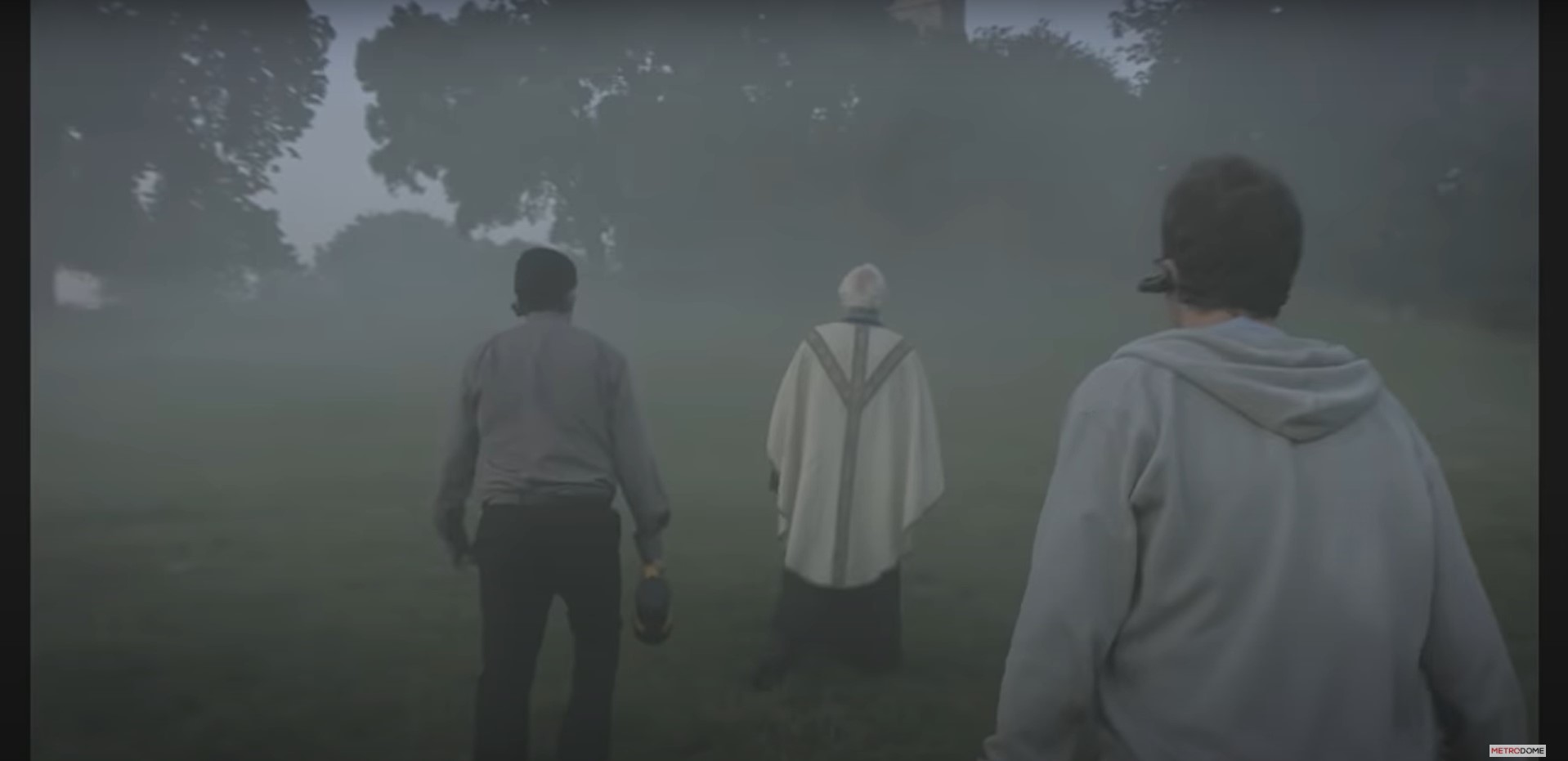
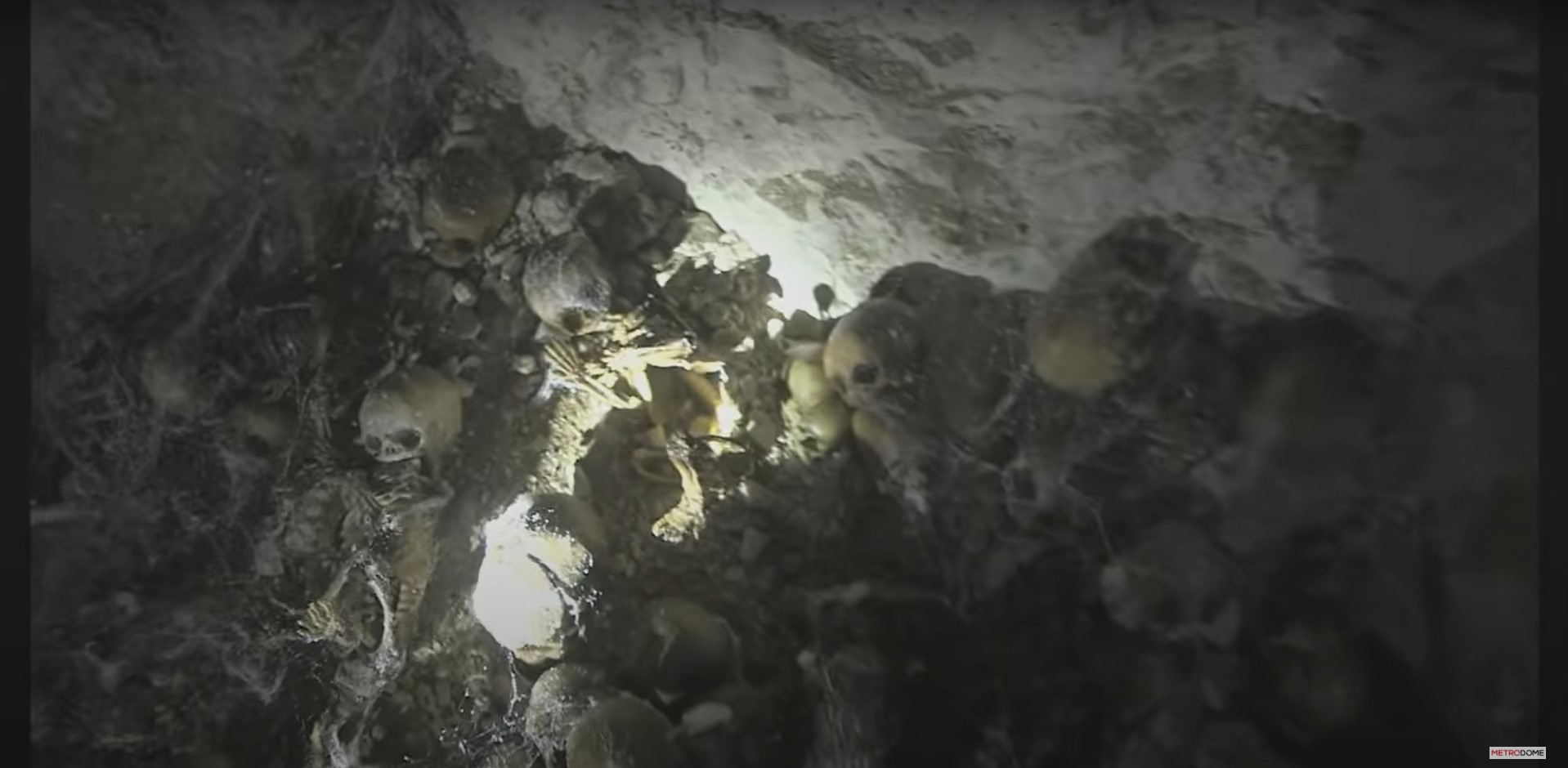
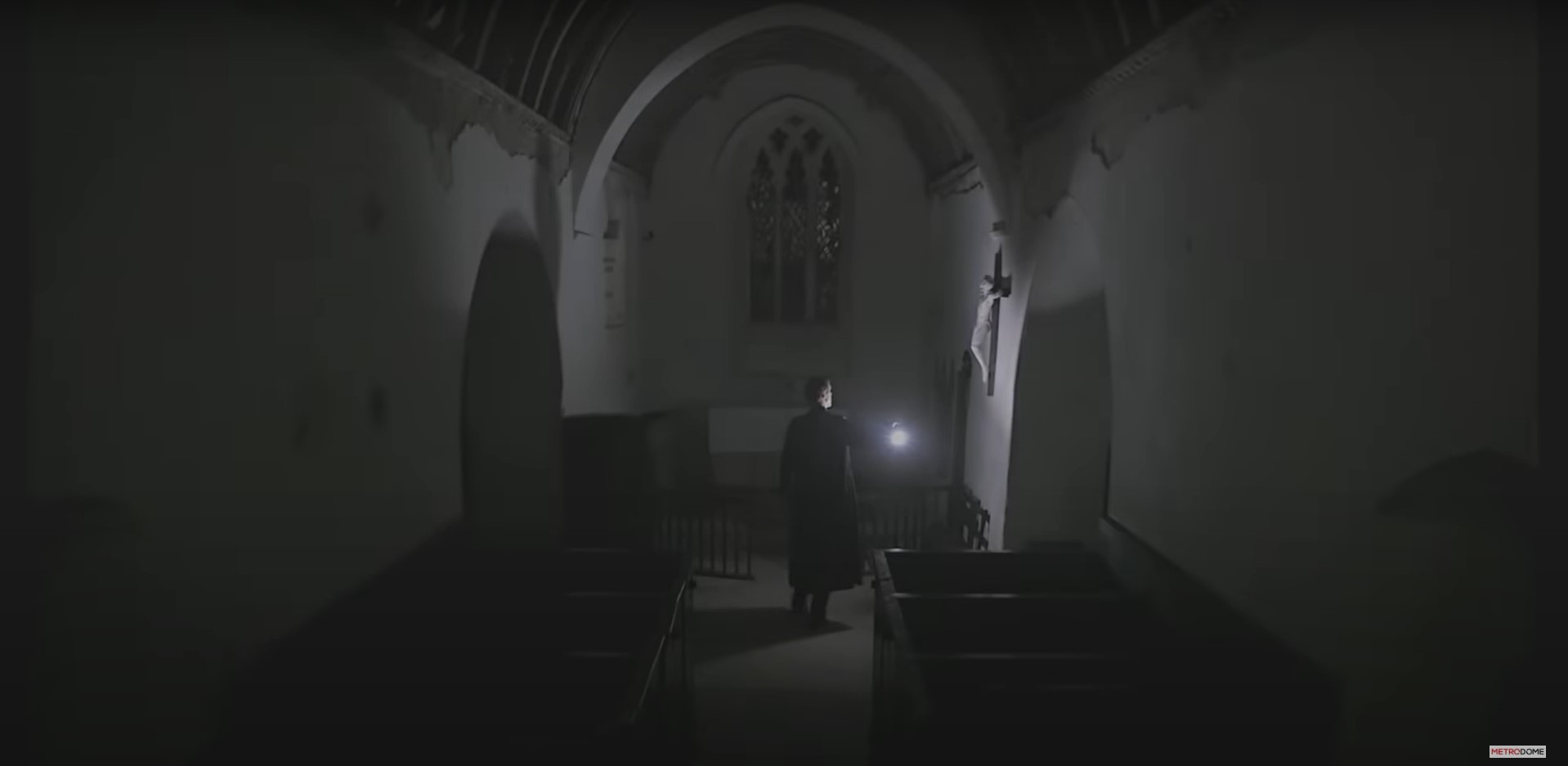
After exposing phony divine miracles at a Catholic Church in Brazil that resulted in the death of fellow Catholics, including a Cardinal, Vatican investigator and religious brother Deacon starts to lose faith with every fraud upon fraud case that points to the non-existence of a higher being.  Having fallen on the drink, the skeptical Deacon is dispatched to the English countryside of Devon where a Father Crellick had reopened a 13th century abandoned church and has been experiencing, in the Father’s words, miracles from God.  Joined by a Gray, a hired technology expert with agnostic beliefs, and a stern Father Mark, eager to disprove another false hope, the three men descend upon the Church with full, unequivocal examination to swiftly reveal the hoax and part ways.  Tensions rise between when logical explanation can’t be unearthed during Church rumblings, disembodied baby cries, and a behind-the-wall, shifting scratch sound that leads them to an underground labyrinth that will swallow them whole. 

Released in the U.S. under the title “Final Prayer,” Elliot Goldner’s 2013, found-footage UK horror “The Borderlands” is the director’s debut, and only, feature that places you right into the belly of the beast at POV level.  In a sea of found footage horror, “The Borderlands” seizes the opportunity to separate itself from the overwhelming portions of shaky camera, purposeful variable video and audio quality, and practical, obscured effects to put into question the strength of faith, specifically here in the Catholic setting, and what ultimately brings about the inevitable in that no matter what religious denomination or outlook you might have, no one is exempt from the grim reality that awaits.  Filmed mostly on location in Devon, UK, as well as West Ogwell and Chislehurst, London for many of the interior scenes, “The Borderlands” is a production of Metrodome Distribution and is produced by Jennifer Handorf (“Prevenge”) with Jezz Vernon (“They’re Outside”) serving as executive producer. 

Our team of Vatican investigators follows three men with starkly differing handles on religious faith.  Coinciding on their stance on the existence of a higher power, individualistically, they’re also incompatible to each other which makes for palpable tension and livens up the dynamic when predictability and patterns can be discerned with likeminded characters.  On the scale of human compositions, polar opposite of both spirituality and comportment is Father Mark (Aidan McArdle, “Metamorphosis”), a by-the-book priest unamused by the elaborate ruses created by those swimming in the same faith pool as himself, and Gray (Robin Hill, “Meg 2:  The Trench”), an untroubled, exuberant, hired techie eager to believe the face-value of the supposed miracles before him.  Aidan McArdle’s tenacity for dogma character comes through well enough to know that good Irish Catholic Father Mark is about as numb as the next investigating Catholic never on the verge of a true miracle as the frustration just oozes out him after one after another hoax divine ephiphany.  Robin Hill, on the other hand, could be the best John Oliver, of Max’s “Last Week Tonight,” impersonator I’ve ever seen and heard.  In all serious, Hill exacts a man looking for religion through the lens of paycheck and a fanboy of the supernatural, like as if the average horror movie enthusiastic came upon the real Freddy Kruger and just geeks the Hell out.  Then, there’s Deacon (Gordon Kennedy, (“T2 Trainspotting”) and like Father Mark, Deacon’s faith hangs in the balance after a botched investigator inadvertently sees the death of a Cardinal at the hands of pious locals.  Kennedy doubles down with Deacon’s wavering faith by drowning the character in alcohol and doubting every inexplicable Devon church oddity.  Yet, Deacon and Gray meld together to a near swap of credence, seesawing in their religious principles, when the things that go bump in the church can’t be explained.  Luke Neal (“Wilderness”) and Patrick Godfrey (“The Count of Monte Cristo”), who’s been practicing the acting craft for over half a century, play a couple of dissimilar priests lured by the Church’s mysterious forces.

What’s noticeably different about this particular bleak found footage nailbiter is the audience is integrated into story by the investigator’s strapped-on headcam, not just some schmo glued to a handheld camcorder running, yelling, and hiding for his life while still depressing the record button.  There’s also the element of a shrouded backstory that becomes unraveled overtime and speaks volumes to a couple of the character’s colorful conducts.  Those elements are then intensified by the cinematic crux, an archaic, resurrected small church’s unexplainable, mostly terrifying, daily disturbances the local priest indiscriminately deems miracles.  Not a single character has arbitrary or useless purpose for the sake of being an in-frame victim of circumstance as each exhibit a radical change over the course of investigation, adding copious ground to the big question, the question that’s on every character’s mind, is there an almighty presence beyond our corporeal plane and cerebral understanding really exist?  Come to find out, the characters are not asking the right question and get sucked into a terror on the terra the more curious they become in finding God amongst them.  Often times, found footage doesn’t fit into the storyline, whether be the aforesaid necessarily handling of the camera through the an insane ordeal or just doesn’t work with a regularly structured narrative, but “The Borderlands” couldn’t be received with success without the stunt of seeing through the eyes of the characters that subsequently emits a trick of light or an overactive imagination that smooths out solid jump scares when needed in what is a definitely watch in the dark type diabolical goosebumper. 

Second Sight Films takes charge with curating a definitive, all-expense paid trip to Elliot Goldner’s “The Borderlands” on Blu-ray home video.  The AVC encoded, high definition 1080p, BD50, hovering around 24 FPS and presented in an anamorphc widescreen 1.78:1 aspect ratio, leverages the capacity and the encoding to sharpen a relatively dark picture with more clarity without losing the unsettling spookiness with overreaching contrast.  Image presentation resembles closer to an upscaled 720p because of the found footage piece, and so we experience patchy spots, static ripples, and other miscellaneous plays into the supernatural sarcophagus that is the Devon church.  Skin tones and grading stays in tune with a brightly lit infusion of handheld torches as well as delineating the necessary with night vision cameras.  Goldner does a fine job with depth with the viewers being the foreground and using a lot of the peripheral and background to keep things hair-raising and interesting.  The English DTS-HD 5.1 audio track has lossless compression and really does throb with a wallop of balanced LFE and to-scaled dialogue.  What throws me off about this particular found footage, as well as some select others, that I find more a bothersome nuisance than a technical gaffe is an inlaid soundtrack.  A slow burn industrial score is used for “The Borderlands” to promote a greater sense of ominous omniety, like a background, repetitive, and sometimes swelling drone you might hear in certain first-person shooters from 20 to 30 years back. Dialogue tops the audio layers without being diluted by poor onboard cameras or having to contend with too much with the score, suggesting well-placed mics and sound design to achieve appropriate range and depth inside the frame configuration or even off-frame, behind or to the side of camera. Optional English subtitles are available. Like most Second Sight Films limited editions, “The Borderlands'” set packs a punch with encoded special features, such as a new audio commentary with actors Robin Hill and Gordon Kennedy, producers Jennifer Handorf, and special effects designer Dan Martin, a new interview that brings Robin Hill and Gordon Kennedy recollecting the behind-the-scenes and their characters in Dressed the Part, a new interview with producer Jennifer Handorf in Losing Faith, a new interview with special effects artist Dan Martin in Monster Goo, and a behind-the-scenes archival featurette. The limited-edition portion of this set includes a rigid slipcase with gorgeously bleak and grim illustrated artwork by Christopher Shy, a thick, 70-page color and black and white book with pictorials and new perspective and analytical essays from Tim Coleman, Martyn Conterio, Shellie McMurdo, and Johnny Walker, and 6 collector’s art cards, mostly resembling a distorted interlaced video and in an imperial purple-ish appearance from haunting scenes of the film. The artwork sheathed inside the translucent green Amaray case is the same as slipcase with no reverse cover work; it’s also pressed on the disc art. This release came with no inserts. One of the few Second Sight limited edition pieces to be licensed with a region free playback and the film itself has a runtime of 89 minutes and is UK certified 15 for strong language and threat.

Last Rites: Second Sight’s filmic selection pool for major league limited editions has been nothing short of stellar with “The Borderlands” being their latest, but definitely not their last, to be knighted worthy of physical media acclaim. Yet, it’s not like “The Borderlands” needed the boost as the film itself has a cult following for its shuddering tale and its monstrous ending that will have you reeling, maybe even screaming, in horror.

Order the Limited Edition Blu-ray of “The Borderlands” Here at Amazon.com

This Little Pit Stop of EVIL Doesn’t Have Gumdrops and Lollipops. “Candy Land” reviewed! (MVD Visual / Blu-ray)

Visit “Candy Land” On Blu-ray. Purchase Here!

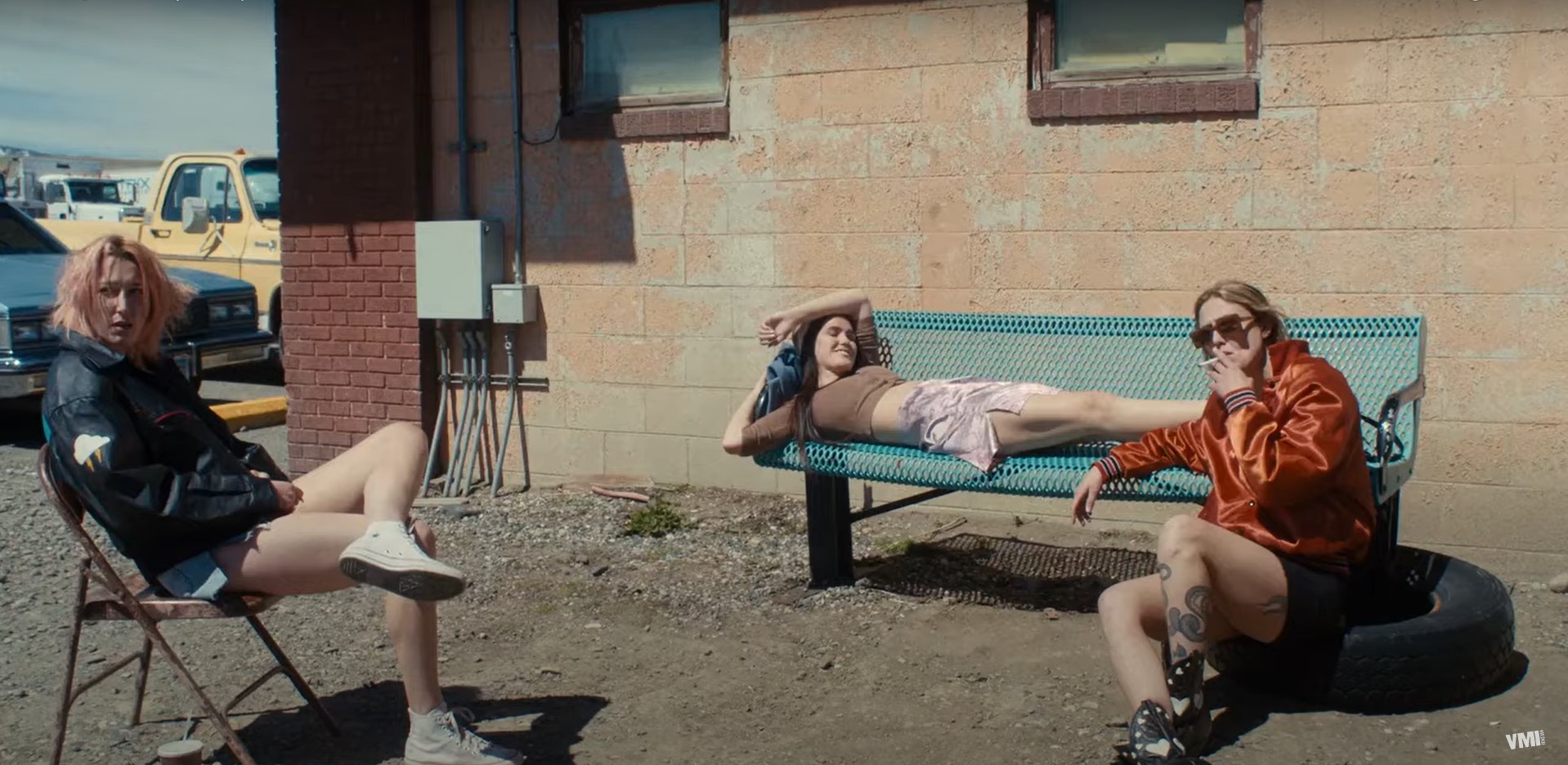
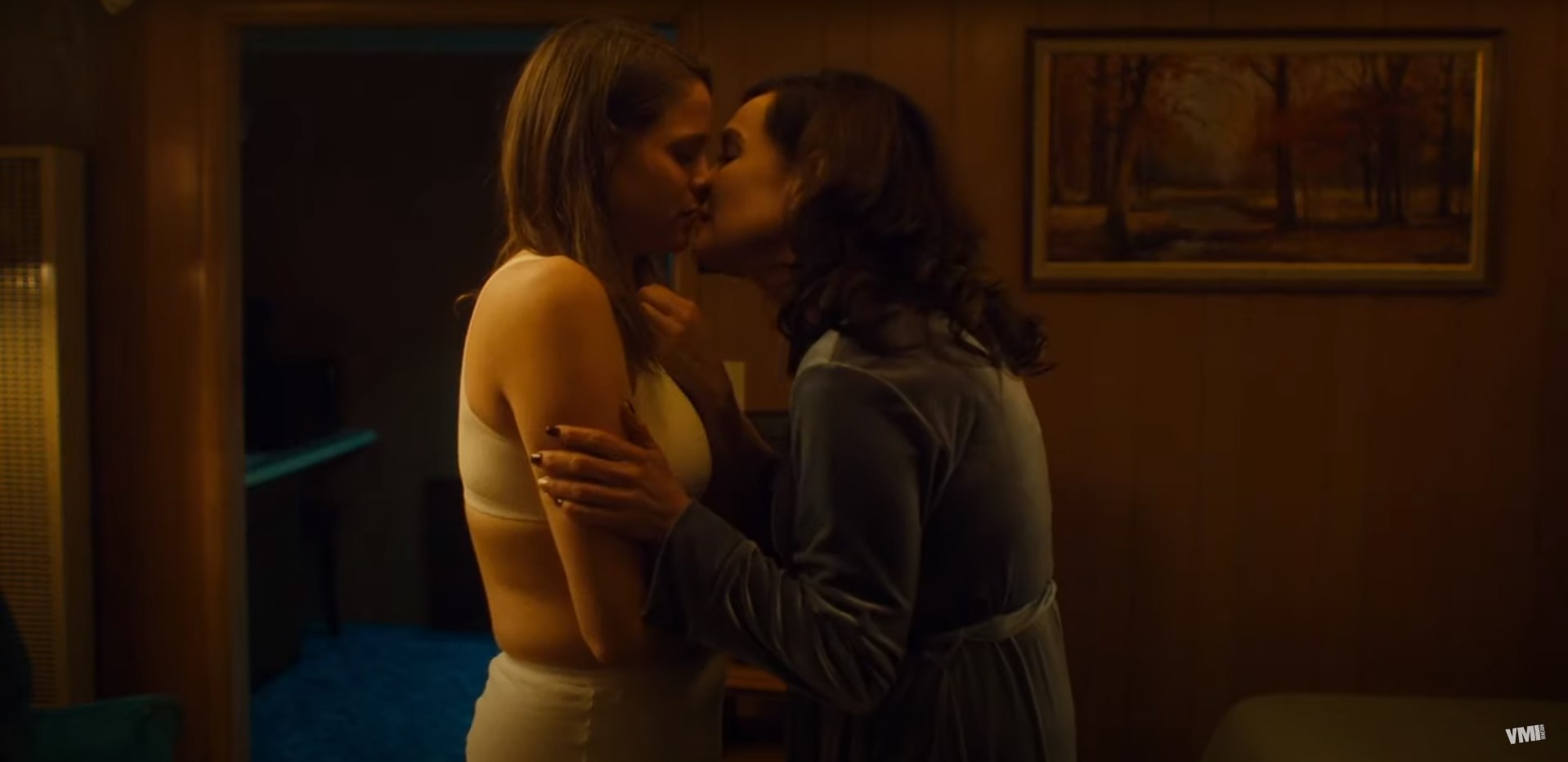
Candy Land is the bestowed designation of a truck stop at one of the last exits through Bible Belt country.  The monikered hotspot is home to four prostitutes, Sadie, Riley, Levi, and Liv, who work for ends meet, servicing all the needs of commercial truckers, those passing through, and even the local sheriff as long as they can cough up the cash.  The only ones not seeking pitstop sex worker services at Candy Land is a religious cult trying to spread the world of the lord around the same stretch of space.  When one of the members, a young and naïve Remy, shows up ostracized from the zealot sect, the sex workers take her in, treat her with kindness, and convince her to be worked into their profession.  Shortly after, gruesomely murdered bodies are found in and around the truck stop turning the once desired Candy Land into a life-threatening place to work, and enlightening the lot lizards that Candy Land is more seedy than once believed.

Shot in the foreground of the scenic Montana mountains, John Swab’s “Candy Land” is a lewd offering that screams the ugly part of something beautiful.  The 2022 USA horror-thriller is a written-and-directed by the “Run with the Hunted” and “Body Brokers” filmmaker Swab in the director’s first go at fringe horror that involves sex work, crazy cults, and hidden knife sheathed inside a large wooden cross.  Swab’s script takes a path less trodden perspective to most similar narratives and pulls inspiration heavily from the 70’s grindhouse era with lots of skin and lots of blood.  Swab produces his own film alongside fellow “Run with the Hunted” and “Body Brokers” producer Jeremy Rosen (“I Am Fear”), with Robert Ogden Barnum (“31”) and Michael Reiser (“Abandoned”) as executive producers, under the production banner of Roxwell Films.

The ensemble cast is comprised of Hollywood veterans, up-and-coming actors, and even a famous last name.  The latter would be then 29-year-old Eden Brolin, daughter of Josh Brolin (“No Country for Old Men”) and granddaughter of James Brolin (“The Amityville Horror”), who is quickly paving her own path having landed as a season regular on the widely popular modern western series “Yellowstone.”  The “Blood Bound” actress is joined by equally young and hungry talent of Sam Quartin, a multi-time John Swab collaborator with roles in “Run with the Hunted” and “Body Brokers,” Virginia Rand (“I Am Fear”), and Owen Campbell (“X”) who are definitely not shy showing of their bodies, simulating explicit sex acts, and step into a compromising prostitute’s shoes as “Candy Land’s” unashamed lot lizards, or that’s what they portray for their characters on screen.  Together, a bond is formed between the working stiffs of sex workers, leaning on each other for support while seemingly living a free and uninhibited life with a good chunk of change in their pocket, but their profession is no walk in the truck lot as taxing moments in sidestepped affairs of the main plot show the darker side of prostitution, mostly involving Owen Campbell’s Levi as a straight man willing to anything for cash in a male dominated over-the-road trucking industry.  Their chimera’s end of the beginning is when Remy strolls into their lives like a lost puppy.  “It Follows’” Olivia Luccardi plays the meek and underestimated cult girl turning tricks as a way get a foot-in the door to cleanse damned souls to send to Gods’ pearly gates in Heaven and while Luccardi has the substantial feign madness well set in her eyes and actions, her story slips below that of the original four truck stop hookers as much of Luccardi’s backstory or even her perpetual motion through her perspective loses to the arbitrary wanes of killing for the sake of killing when the chance is at hand.  Cast rounds out with Guinevere Turner (“American Psycho”), Brad Carter (“The Devil to Pay”), Bruce Davis (“Agnes”), Billy Blair (“What Josiah Saw”), Mark Ward, and another famous last name from William Baldwin (“Flatliners”) as the daunting, downlow Sheriff Rex who has a strong, affectionate thing for Levi. 

The very first opening scene and montage of a sandy-blond Sadie going truck-to-school bus-to-bathroom stall to give a sense of what to expect and the down-and-dirty daily workload for our principal prostitutes sets the tone of Swab’s lickerish thriller with grindhouse endowments.  “Candy Land” is more than just a nutso cult film with all the hallmarks of sordidness as the interpretation received from the story is this temporariness in these characters’ lives.  From the transient paying clients of a truck stop, to living in the impermanence of a hotel room, to even the things they ingest, such as the smoke of incessant drags of cigarettes as a brief coping mechanism and the food they eat with the Hostess Snowballs that have fleeting substance in them to stave off hunger for a little while and only provide negligible nutrition, the temporarily speaks volumes toward the plot of a killer under the influence of a radicalized cleansed ideology wasting away those in provisional moments.  Swab finely sets up character quirks, an unsavory, realistic world, and distinct dynamics to enmesh the characters in a life they attempt to put a pretty face on only that pretty face is a pig wearing lipstick, forcing them into uncertainty and wearing them down to a point they can’t face what’s important and dangerous right in front of them – a young, confused girl led astray and looking for answers.  Instead, that girl, teetering on the edge of purity and dissolution having nowhere to call home, is not safeguarded and is folded into their own licentious lives and, like a Trojan horse, she ultimately become their downfall. 

For “Candy Land’s” inaugural home video release, VMI Distribution and MVD Visual releases the John Swab horror onto Blu-ray.  The AVC encoded, high definition 1080p, BD25 conscripts not a single compression issue in the breathtaking, mountainous landscapes of Montana, affixing great distance between Candy Land and the rest of the world to describe the troubled brief getaway from reality without actually saying it. Presented in a widescreen 1.78:1 aspect ratio, details are greatly appreciated here with the graphic and vulgar markings inside the restrooms, skin tones fair a natural coloring, and a good amount of the whole film is lit naturally with the occasional greenish-yellow gel work to enhance the dinginess of a seedy truck stop. The English language, lossy Dolby Digital 5.1 surround track settles the best fidelity that it can muster, reining in unbridled tracks for a more subdued approach that befits more the lowkey motel suspenser than a fueled high-rise stimulator. Dialogue is clean and clear enough; a few instances cause for mumbling concern but quickly pass and that link is quickly made in the off word that’s missed. Soundtrack contains well-blended, well-intermingled snippets of classic rock, alternative and R&B from the 90s, and a quaint Christmas selection. Yes, “Candy Land” could be considered a Christmas movie! English subtitles are optionally available. Special features are limited by the disc capacity that houses only John Swab’s commentary track and retroesque, in-character stills of a digital zine. The standard Blu-ray Amaray snapper case for this limited-edition release is nothing short of pedestrian with a homage cover art that, I must admit, made me suspect Candy Land” was more a vampire film than a cultist’ coup of truck stop sex workers because of my lack of doing any kind of film prep for any of the screeners I receive – keeps me objectively aligned. You’ll find the same image pressed on the disc itself with no insert accompanying. Not rated and locked on a region A playback, this release has the film clocked in at 93 minutes.

Last Rites: “Candy Land’s” sweetness derives from its in-your-face sexual audacity that rings a certain truth inside the unsavory cash-making aspects of the oldest profession and Swab takes us out from the game’s usual vivarium of the darkened streets and the dingy underpasses into the brightly lit and very populated desert with a different breed of the species. The instilled cult angle feels more slapdash in comparison that sunders the acts more acutely and without a clear reason, leaving the finale unsatisfactory like a $20 handy.

Visit “Candy Land” On Blu-ray. Purchase Here!

Prancing Forest EVIL Will Seduce You to Death! “Devil Times Two” reviewed! (SRS Cinema / DVD)

“Devil Times Two” on DVD from SRS Cinema

A forest encircled convent hidden away from the Milan population undertakes an occult responsibility to keep bloodthirsty and callous demons from entering the human world.  On the verge of retiring, Father Ernesto Taro, a once formidable force for good who exorcised a powerful demon decades ago that cost the lives of many in his fellow cohort except for Mother Dolores, takes on a younger understudy to be his replacement, the ambitious Father Chuck Bennet.  Father Taro and Bennet were summoned by Mother Dolores when grisly body of a young hiker is discovered.  A pair of former Nazi sadists turned Netherworld demons come to Father Bennet in a vision and are suspected to be the carnage culprits.  Souls are at stake and the world is on the brink of falling into darkness as the Returnees are only the right hand of a more profound evil itching for complete and utter omnipotence. 

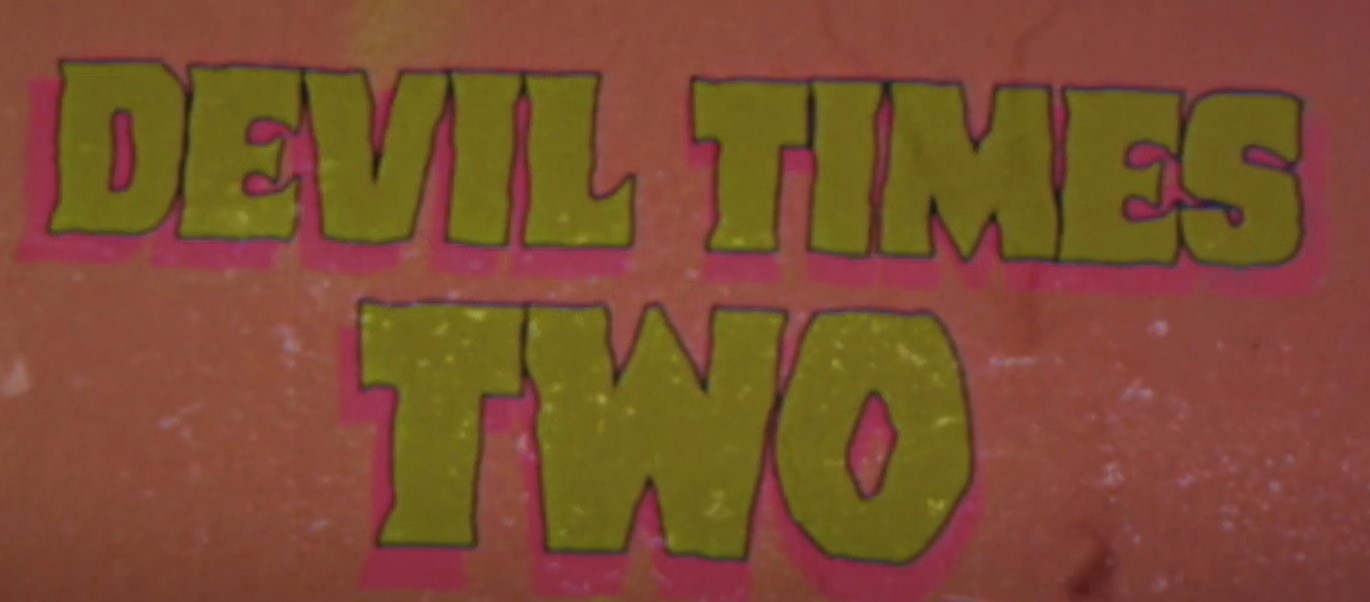
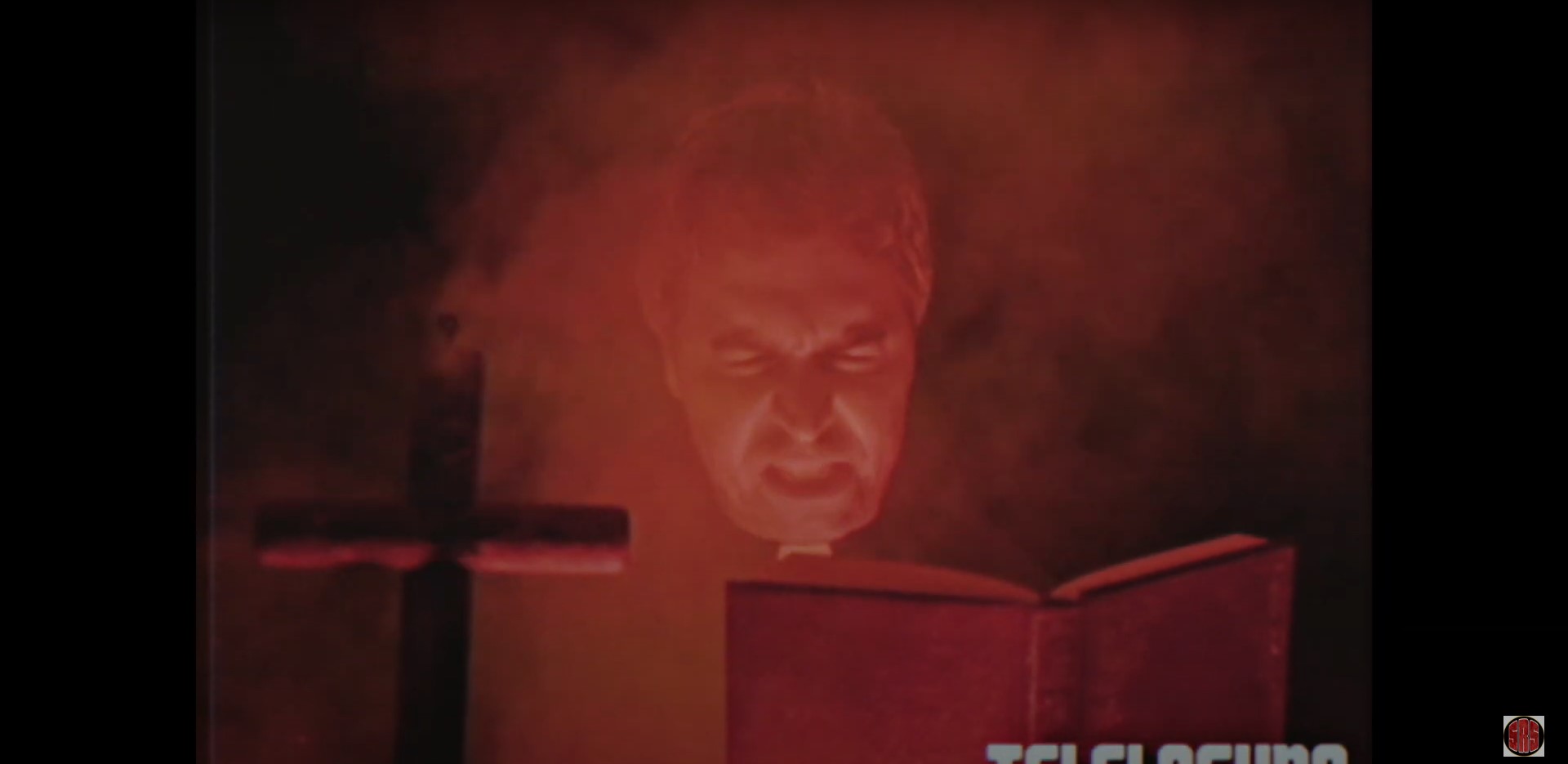
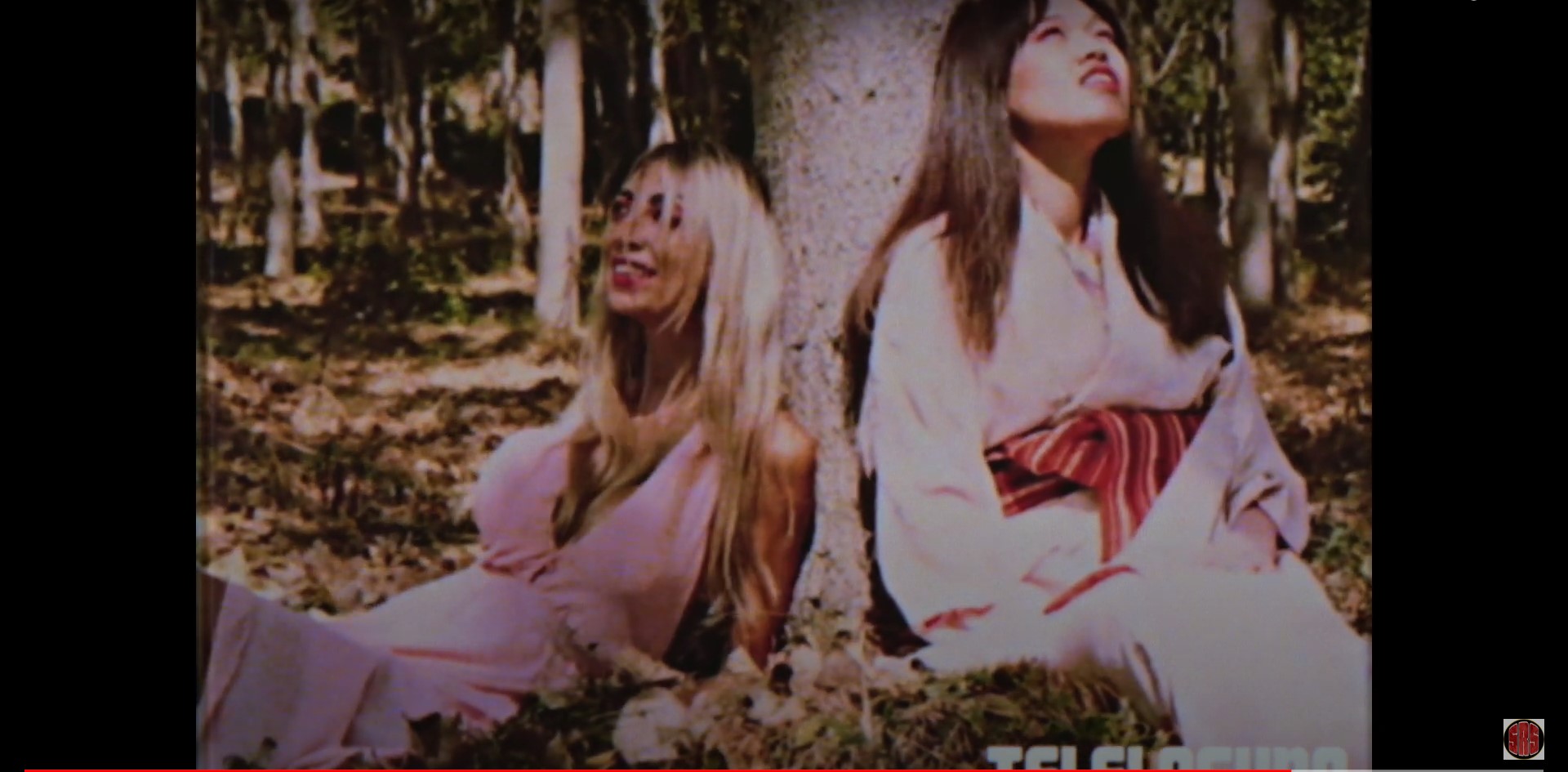
“Devil Times Two” is an Italian-made, demonology-contextualized horror from Italy writer-director Paolo del Fiol.  Having purveyed grindhouse horror in anthological means with previous films “Connections” and “Sangue Misto,,” del Fiol branches out into his solo feature-length narrative set in the 1970s as a faux lost film recovered onto VHS from the only known syndicate televised program on Telelaguna to account the terrible tale full of profane hostilities, sexual stimulating supremacy, and, of course, gore in the interlacing recognition between the popular devil, demon, or hell on Earth inspired movies and the obscenities connected to eurotrash and sleaze movement of the 70s topped a hint of Japanese adulation, a motif heavily sprinkled into the film carried over from the director’s previous work as well.  Underscored by the tagline Quado le Tenebre escono al Bosco, or When Darkness comes out of the Woods, “Devil Time Two” once again pits religious good versus irreligious evil in this Himechan Movie Production self-produced by Paolo del Fiol.

Characterized as the titular pair, Returnees Jasmine and Umeko are the ethereally evil duet of diabolical detriment who seemingly float in and out of the material world as alluring succubi, seducing prey into their web of demonic lust and languish.  Some turn up grotesquely inside out while some others disappear, saved for later for special ritualistic planning.  Erika Saccà, an Italian fitness instructor in her debut role, plays the blonde Returnee Jasmine in a sleeveless, lowcut gown and with nearly ever kill, exposes and massages her augmented bosom with underboob scarring in a change to showoff her toned physique, and Reiko Nagoshi (“Re-Flesh”) wears a kimono without any unveiling of skin but does a bit of thrust-damage on her quarry that initially and inexplicable appears to be a strange phenomena when everyone in the scene is a woman but becomes apparent there’s something unholy and very “War of the World’s” alien under that traditional Japanese garb.  Saccà and Nagoshi wear many hats in this product but also don’t have the dialogue to hoist their demonesses higher.  The dialogue is left with the trio of convent gatekeepers in Father Taro (Enrico Luly), Father Bennet (Paolo Salvadeo, “Occultus”), and Mother Dolores (Amira Lucrezia Lamour, “Re-Flesh”) in what becomes a deeper understanding of their backstories around Father Taro’s deadly bittersweet exorcism decades ago, his on the sly and subtle affection for Mother Dolores, and Father Bennet’s questionable rise to supersede Father Taro, laying a foundation of doubt within the current gatekeeper.  While I like the contrasting dynamics of the two factions within the cast, I found the discourse overly bulk and tedium between the trio of piety that strung on scenes way too long with way too much talk that it ultimately suppresses the pacing when every little detail has been uncovered and explained. All the casted bits in between are slaughter fodder with Denise Brambillasca, Alessandro Carnevale Pellino (“The Wicked Gift”), and Martina Vuotti in non-defying death roles.

Paolo del Fiol’s unaccompanied and independent deluge of demonian debut has doses of phantasmagorical imagery sublet by its more shocking and odd immolation of incognizant individuals unlucky enough to cross paths with the Returnees. Likely to have never seen, Fiol’s film very similarly compares to James Sizemore’s “The Demon Rook” by creating unique mythos not reliant on a religious bedrock and use independency as an advantage for showcasing practical makeup and effects and while “The Demon Rook” would overwhelm with prosthetic made-up characters, “Demon Times Two” focuses attention more on the guts of the matter, the gore, but though not pernicious enough to the story, the eyeball sucking, throat lacerating, or intestine exposing bloodshed is prosaic panoply that won’t outshine in the sea of subgenre synonyms. Aforementioned dialogue scenes can be a slog to get through with many exchanges overstaying its course between the pious gatekeepers, especially between Father Taro and Dorlores, and that hurts the pacing to pick up the gore more frequently for more potency. Instead, exchanges are more elucidations that go around-and-around to where we’re lost on the mounting reveal of the Returnees’ mission and master which turns out to be visually more stimulating and visceral in the last ten minutes than in the first 100 minutes of runtime. The backlot lore is Fiol’s greatest achievement simulating a 70’s style grainy movie caveated as only broadcasted once on December 8th, 1983 (a few days before this reviewer’s birthday) and never seen again until it’s VHS recording is recovered.

Under a pretense of being a buried lost film, under the tribute of a grainy and scratched psychotronic celluloid, and under the falsity of genuine huge knockers, “Devil Times Two” is twice baked into a classic contemporary dish served by SRS Cinema on DVD. Arriving on the SRS Cinema: Extreme and Unrated Nightmare Fuel label, “Devil Times Two” is nothing short of being a modern-day emulator of once was with suitable grain overlay, a hazy, if not washed, overcast grading, and trope-laden atmospherics with dense fog, unnerving dissonances within earshot, and blood brilliantly cut with pseudo Telelagua commercial programming of brief adverts until returning to regular scheduled programed checked in and out by a gondola and it’s gondolier in dusk silhouette. Presented in a pillar box 1.33:1 aspect ratio, the fuzzy and non-delineated details are not a punch to the salient gut as the intent here is to be obscure, opaque, and ominous in nature and in technique bathed in 480p. The Italian PCM is the exact recreation of a time period post-dubbing with the actors re-dialoguing their performances as it was common practice in most motion picture industries, especially Europe, at the time. ADR is clear but not necessarily clean to recreate that shushing and crackling of an older recording. The subtitles are also forced or burned into the film with the sole Italian audio option. Bonus content includes what is called Backstage, a raw filming look into the production shoots and behind-the-scenes footage with no real direction or cosmetics, a photo gallery, a trailer with English subtitles, and other SRS Cinema released trailers. The SRS Cinema DVD front cover resembles mock-70’s, thick-red font with a bare woman’s back dressed in a painted Satanic symbol within the border of a VHS-esque rental casing with rental stickers. Inside the amaray case is a pressed disc with an extreme close up and crop of the same front cover with no insert in the adjacent slot. Pacing burdens this release, especially in its near 2-hour runtime with a clock-in at 114 minutes which is approx. 24-minutes too long in my opinion and the film comes not rated and has region free playback. No matter how much arcane the content is, or how grotesque the horror show, or how much perversity and skin can be unclothed, “Devil Times Two” has difficulty retaining a flow of fascination in a rather windbag approach to a rather devilishly good salvo construction.

“Devil Times Two” on DVD from SRS Cinema