Bend a Knee to the EVIL “Alien Goddess” reviewed! (Darkside Releasing / Blu-ray)

“Alien Goddess” available on Blu-ray on Amazon.com!

After school hours is more than just detention, it can be paranormal purgatory when a class reviewing an education course about death, a saucy night photoshoot with a camera man and two models, and two lovers rendezvousing in the hallways are trapped inside the confines of the school building, unable to leave to exit the structure that is seemingly protecting them from an excruciatingly painful force that rings their ears and causes nose bleeds.  Cell phones cease to work and those outside the building inexplicably can’t see or hear their pleas for help.  Without much choice, they roam the hallways in search for answers, but something sinister is behind the walls, a force of evil that manifests out of a formless haze and towers over them.  The alien presence is a wonder to behold and is just as deadly when collecting the hapless souls stuck inside the building with the life-taking lifeform.

Unless you’re a whizz kid and enjoy academia like I enjoy horror movies, most people don’t want to be in school.  If you’re at school during the night and trapped with an amorphous alien with long, sharp talons, then you definitely relish in the terrors of school a lot less!  That’s the surreal sensation of Andreas Marawell’s 2022 cosmic horror “Alien Goddess.”  Marawell, who also penned the film, directs his fourth feature length production, following up from another supernatural hellbound-ish picture, “Black Ghosts,” from 2015.  Marawell trades damned deadly spirits for a more unearthly malaise with many of the interior shoots of inside the Östra Real, one of Sweden’s oldest schools, along with the other shooting locations around the country, such as Matteusskolan and Solna.  The indie sci-fi horror is the filmic production of the audio editing and record studio, Swesound Studios, and is self-produced by Andreas Marawell as well as George Beckman (“Flame Beings,” “Black Ghosts”) and Vassllis Maravelias.

The Swedish produced film comes with a lineup of indie Swedish or other European and Asian-born actors that roam the halls filled with dread and a presence that has selected them for the seizing.  “Alien Goddess” has no real principal lead but an ensemble principal cast to shadow through the dark corridors.  The ensemble is separated into three groups:  Group 1 – an intimate night class with the subject on death taught by instructor Lori (Birgitta Rudklint, “Black Ghosts”) with very knowledge and interested in death students in Alice (Gloria Ormandlaky), “A.Z.A.B”), Phillip (Sebastian From), and the most peculiar, perhaps slightly autistic Max, played by Johan Sjöberg wearing a bad wig.  Group 2 – a suggestive bad schoolgirl shoot with models Julie (played by the real-life fetish model and professional dominatrix by the name of Luna Dvil) and Dorothy (Johanna De Vera) in front of Paul Ray’s (Okan Akdag, “Control the Hunt”) photo lens. Group 3 – a lovers’ tryst between Wendy (Karin Engman) and Miranda (Julija Green) that goes deep into an existentialism and identity conversation that alludes to what’s to come. After a few fall into the Alien Goddess’s daggerish claws, the groups merge together, coming and going, becoming lost in the tenebrous tomb that was once a place for learning (and apparently naked photoshoots). Most of the story progression is pretty straight forward, people become trapped and die off one-by-one for the most part, but there’s a bit of sleight of hand with Miranda, one of the two lovers, who morphs into another person (Chantel Gluic) that is reticently connected to the extraterrestrial presence in a way that’s about as clear as mud. Every other character’s is fairly straight forward under the power of their will until faced against their maker as they try to escape the imprisoning school.

If the abstract of cosmic horror isn’t already opaque enough, “Alien Goddess” is no different with a roundtable approach to introducing cast without actually introducing the cast. Instead, Marawell dives right into their realm of happenings with discussions about the various stages and processes of death decay, an intense and provocative classroom photoshoot that whitewashes men’s sexual misconceptions of women, and nightmarish dreams of depersonalization that Wendy has of girlfriend Miranda changing into someone else and that someone’s dreams are Mirandas. I believe much of “Alien Goddess’s” themes revolve around identity and fear of death that shapes into a Carl Jung smorgasbord of psychotropic maladies that consists of disconnection of self through past dreams that aspire to an unfit future, compounded by the conscious notion of human mortality, and spliced with a sexual awkwardness that all factors into their common predicament that is very much a nightmare where the trapped groups are in an arcane space between reality and subconsciousness. Marawell also creates a colorful, strobing ambience for the groups that differ from outside the school or from those unaffected and view the school from the outside in. The combination of deep lighting gels and tints, mostly in a blue hue, flickered by the white orb light of a dancing flashlight and the flipping on-and-off of the overhead room lighting sends viewers into the portal of purgatory, so if intense strobing negatively effects your senses or triggers your known epilepsy, you’ve been warned as there is no caution before the film itself. “Alien Goddess” pays homage to the select sci-fi horror works of the late English filmmaker Norman J. Warren (“Inseminoid”) and also pulls heavy inspiration from H.P. Lovecraft’s cosmicism and the fear of the unknown as well as delivering the dialogue in prose akin to the Edgar Allen Poe’s Gothicism and macabre, as adverted to with a complete collection book of Poe’s being read and referenced to indirectly by a couple of characters. “Alien Goddess’s” hodgepodge of literary and psychological inspirations often feels jumbled, clunky, and dissonant when clashing with the amorphic idol storyline of a beautiful, awe-inspiring, ethereal evil with eye plucking and chest puncturing bestowments.

“Alien Goddess” is perfectly bizarre and unsettling to fit into the Darkside Collection catalogue of uncanny esoteric obscurities. The distributor’s high definition, 1080p, Blu-ray release is presented in a widescreen 1.85:1 aspect ratio on an AVC encoded BD25 and, unfortunately it shows the inferiority of the low storage capacity against compressing the high-density array of colors and luminance during confined and compacted night shoots. Banding and posterization plague an already heavily digital noise image, leading to no details to be delineated and leaving a contour-less and smoothed over appearance on all focal objects. The result is not terribly unforsaken as far as quality goes and the Marawell effect establishes an eldritch presence despite the lossy definition on a high-definition format at a decoding average of 20Mbps. “Alien Goddess” would have been just fine on DVD. Though a Swedish production, the audio mix is half-English, half-dubbed English 5.1 surround with lossy compression. Consistent electrical interference just beneath a monotonous overlayer of electrical zaps and isolated character actions, lots of shuffling feet no matter the floor surface. Half the actors’ dialogue is in a not-so-terrible dub; the performers are dubbed include Luna Dvil, Sebastian Form, and Julija Green for a semi-seamless, second language experience. Bonus features include Darkside Releasing trailers and interviews with the “Alien Goddess” cast and crew, or so does the back cover states but in reality, it’s all cast with response-portioned interviews from Okan Akdag, Birgitta Rudklint, and Johan Sjöberg. The physical Blu-ray comes in a traditional blue snapper keep case with Lovecraftian inspired, mustard-colored composite art of Octopus tentacles protruding out of a woman’s mouth with the school’s silhouette in the background. “Alien Goddess” has a runtime of 107 minutes and is unrated. Andreas Marawell directs theories and contexts of psychological art and science into an untapped nerve too hard to reach that “Alien Goddess” will simply fall short of being absorbed as full-blown cosmic terror.

“Alien Goddess” available on Blu-ray on Amazon.com!

Back to the Past to Hunt Down EVIL! “Trancers” reviewed! (Full Moon / 4K Ultra HD and Blu-ray)

Become a Slave to “Trancers” on 4K Ultra HD and Blu-ray!

In the post-apocalyptic ravaged 23rd century, Jack Deth, a brusque and hardened trooper, hunts down Trancers, a group of easily influenced and entranced people turned zombified slaves by a power-hungry hypnotizer named Whistler.  With Whistler killed, Deth lives out his raged-filled days vindictively bounty hunting Trancers still beckoning to Whistler’s lingering snake charming after one of Trancers kills his wife, but when Whistler appears to have cheated death and sent his conscious mind to the year 1985 into a Police detective relative to assassinate ancestors of the Trooper council and gain control of what’s left of the future world, Deth gives chase, sending his consciousness into a journalist predecessor with a fast car, a relaxed lifestyle, and in the arms of a beautiful young woman who Deth must recruit and rely on if he wants to survive the past.

Charles Band’s Homeric Sci-fi opus “Trancers” is time-travelling neo-noir at its boldest.  With a limited budget and loads of talent, the 1984 future bounty hunter with a grudge actioner, the first of a franchise that spawned five sequels stretching over two decades, was penned by then Band hired screenwriters Danny Bilson and Paul De Meo, whose careers have run the variety spectrum of treatments from the Empire days of WWII soldiers battling aliens in a UFO in “Zone Troopers” in the mid-80s to finding themselves on the same credits screen as Spike Lee in the filmmaker’s post-war Vietnam drama ‘Da 5 Bloods.”  “Trancers” has nothing to do with war but has everything to do with a crumbling society, a hardnosed cop, and acrid acolytes with purple chapped lips and a yellowish green tinted complexion.  Also known as “Future Cop” in other parts of the world, the Los Angeles-shot “Trancers” is produced by the “Puppet Master” Charles Band and Debra Dion under Band’s Empire Pictures.

One of the aspects I adore most of the early Full Moon productions, before Charles Band even dubbed his Empire Pictures as Full Moon, was the star power behind the pictures.  Tim Thomerson is a versatile actor who can star in just about anything from microbudget indie productions (“Dollman,” “Left in Darkness”) to big Hollywood celluloids (“Air America,” “Iron Eagle”) as one of the most recognizable faces amongst viewers.  In “Trancers,” Thomerson relishes playing the 5 O’clock shadowed, brooding in a long trench coat, Sam Spade-type detective, Jack Deth, with skin in the game and a gruff attitude to take him to the edge.  Thomerson makes for a good grouchy gumshoe as Deth goes plays the cat-and-mouse game with his onscreen nemesis Whistler, played by Michael Stefani in his one and only feature film credit and also marks his last acting appearance.  Stefani has the long-ominous stare of a conventional villain, but I yearned for more toe-to-toe action between Thomerson and Stafani that what appears on screen in what was only a brief less than handful of moments that weren’t edge of your seat encounters, even the finale was underwhelmingly brisk.  More of the penetrating thrills were held in the future when Jack Deth is ambushed by an old Diner lady wielding a clever or when Deth laser blasts Whistler’s unconscious body to explosive smithereens.   What’s nurtured more in the past is the relationship between Deth and the half-his-age Leena, a role donned by a young Helen Hunt (“Twister,” “As Good as It Gets”) as the L.A. 80’s pop-goth girl with a thing for older men.  Thomerson and Hunt have chemistry that would turn heads clouded with ageism but they’re cute enough to work, especially when they ride matching mopeds around the city to either thwart Whistler’s plans or escape the police under Whistler’s control. The rest of cast that rounds out “Trancers” is just as inundated with individualism as the principal leads with Anne Seymour (“Big Top Pee-Wee”), Biff Manard (“Blankman”), Richard Herd (“Get Out”), and legendary supporting actor, Art LeFleur (“The Blob”).

With any story dealing with time traveler, undoubtedly, plot holes will exist and will stick out like a 23rd century cop time-hopping to 1985. “Trancers” is no different. When Whistler eventually assassinates an ancestor of one of the future council members, the memory of the slain still exists to those in the future. Though the council member never existed in the 23rd because his ancestor was wasted by a mind-melding maniac, their energy and presence is remembered and so that would suggest the 23rd century and the 20th century timelines coexist and move at the same time rate and once the future is written, the memory of can’t be undone? This transtemporal travel stymie comes early into the story and leaves me to chew on this paradoxical gobstopper for the rest of the film, but my advice to other views is to manage it just like I did with forcing that problematic plot hole into the backseat recesses of your mind and focus more on enjoying the nonstop clash and laughs high of a “Trancers” sci-fi speedball. Production value and location security is key to “Trancers” success and Band and his filmmaking team score multiple locations around Los Angeles that are often small but are neon lit or are crazed dress to reflect an era that offer relatability and style. Composited laser beams and vaporized dead bodies effects are an effulgence of neon layered with digitized 8-bit audio bytes for that futuristics flair. The matte work landscapes and set interiors of a crumbling Los Angeles with a blend of new styles are a thing of beauty. Iconic buildings engulfed by the ocean’s rising tides that never ebbed, the neo-totalitarian architecture, and the retrofuturism of a classic interior diner with a newfangled facade borders a dystopian metropolis on the brink of collapse and only held together by the glue of the council and the troopers who enforce the law.

“Trancers” receives the 4K Ultra HD treatment with a 2-disc release from Full Moon Features with the second disc a high-definition, 1080p Blu-ray, distributed MVD Visual. The 4K comes from a scan of the original camera negative; however, the Blu-ray and the 4K are fairly even in detail and clarity. Each format, presented in a widescreen 16:9 aspect ratio, decodes at a disconcerting average of 25Mbps and maintain the luminescence, detail repressive glow which tells me a regrading wasn’t completed to counter the intense neon on darker scenes. The glow shouldn’t be emanating half a foot off of characters. Despite a couple of minimally invasive spotty print damage, details are better in the natural lit and gaffer lit scenes though still quite soft around skin textures. Two English audio are available – a DTS-HD 5.1 surround sound and a Stereo 2.0. As soon as the Empire Pictures logo seizes the screen and the soundtrack begins, I knew the 5.1 was going to be worthwhile with a robust multi-channel output that leverages the Phil Davies (“Society”) synth-beat, adrenaline-producing score while still maintaining an even-keeled and appropriately layered ambient and dialogue track. Dialogue remains clear and clean throughout that compliment a range of action track like an exploding body with a short burst LFE explosion, the pew-pew-esque laser shots as discussed earlier, and the scattering of shattered glass when a moped goes through a sugar glass window. Bonus features are identical on each formatted disc with a commentary from Charles Band and Tim Thomerson, a 2013 documentary of the making of “Trancers,” the complete short film “Trancers: City of Lost Angels, Trancers: A Video Essay, the official trailer, archival interviews, and a still gallery. The physical attributes include a blacked-out Blu-ray snapper case with a cardboard slipcover, both the snapper and the slipcover have the same front artwork of Jack Deth pointing a gun out of a floating open door in space. The region free release has a runtime of 76 minutes and is rated PG-13. With a name like Jack Deth, you can’t go wrong with the science fictional film noir that is “Trancers,” a rustling time-travel good versus evil showdown with the future hanging in the balance.

Become a Slave to “Trancers” on 4K Ultra HD and Blu-ray!

A Stop-Motion EVILscape of Totalitarian Hell! “Mad God” reviewed! (Acorn Media International / Blu-ray)

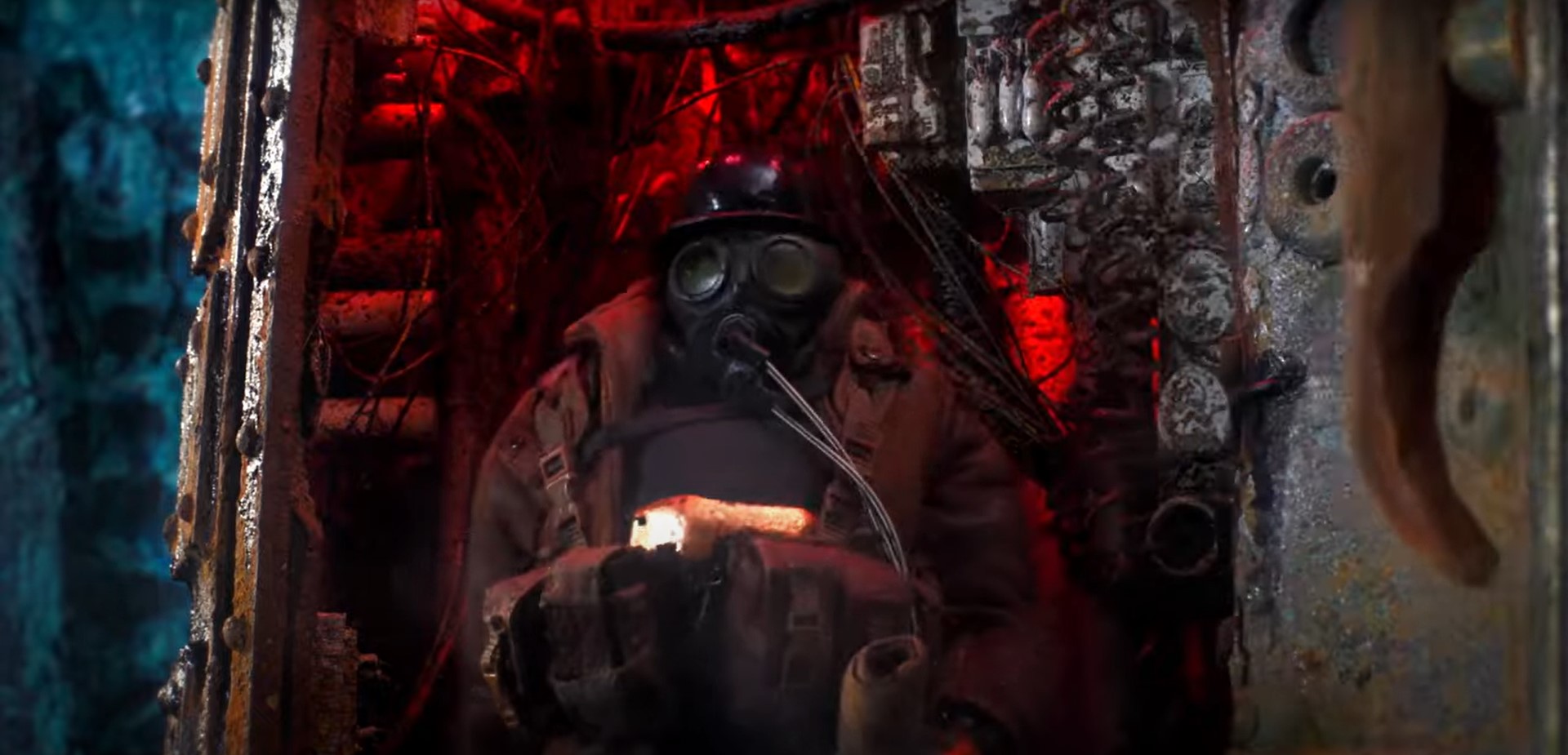
Descending from above into the depths of grotesque terror and suffering, The Assassin steps out of the drop pod with a gas mask, industrial armor, a suitcase, and a crumbling map.  Bearing witness to the surrounding horrors – cruel experimentations, enslaved beasts, tortured manufactured slave laborers, dog-eat-dog atrocities – The Assassin sallies forth, descending deeper into the primordial pit.  The missioned at hand is to set an explosive charge that will eradicate out the ruinous, oppressive filth that aims to corrupt the everything, but there the darkness won’t be so easily wiped away and The Assassin must stay in the shadows and out of sight or else become a tortured fixture in the fray. 

“Mad God?”  More like mad genius!  Phil Tippett’s 34-year, stop-motion, pet-project “Mad God” is the purest Hell I’ve ever seen.  Tippet, famed stop-motion and puppeteer effects artist responsible for the iconic visual effects and stop motion work in fan films such as the original “Star Wars” saga and the “Robocop” franchise as well as cult favorites “Howard the Duck,” “Piranha” and “House II:  The Second Story,” started “Mad God” in 1987 that become more of an ambitious project than originally thought and once the 1993 saw a computer generated effects revolution with a little prehistoric dino-disaster film called “Jurassic Park”, a film Tippett also did work on as dinosaur movement consulting supervisor because of his expertise on the short “Prehistoric Beasts,” the gifted animator had shelved “Mad God” for about 20 years with the though a newer, shiner, computer-driven animation would be the next best thing studios would ardently desire. This two-decade span gave Tippett time to outline objectives and really expand upon ideas of how “Mad God” should look and feel when conveyed. Tippett co-produces the film with Jack Morrissey under Tippett Studios and presented by IFC Midnight and AMC’s Shudder.

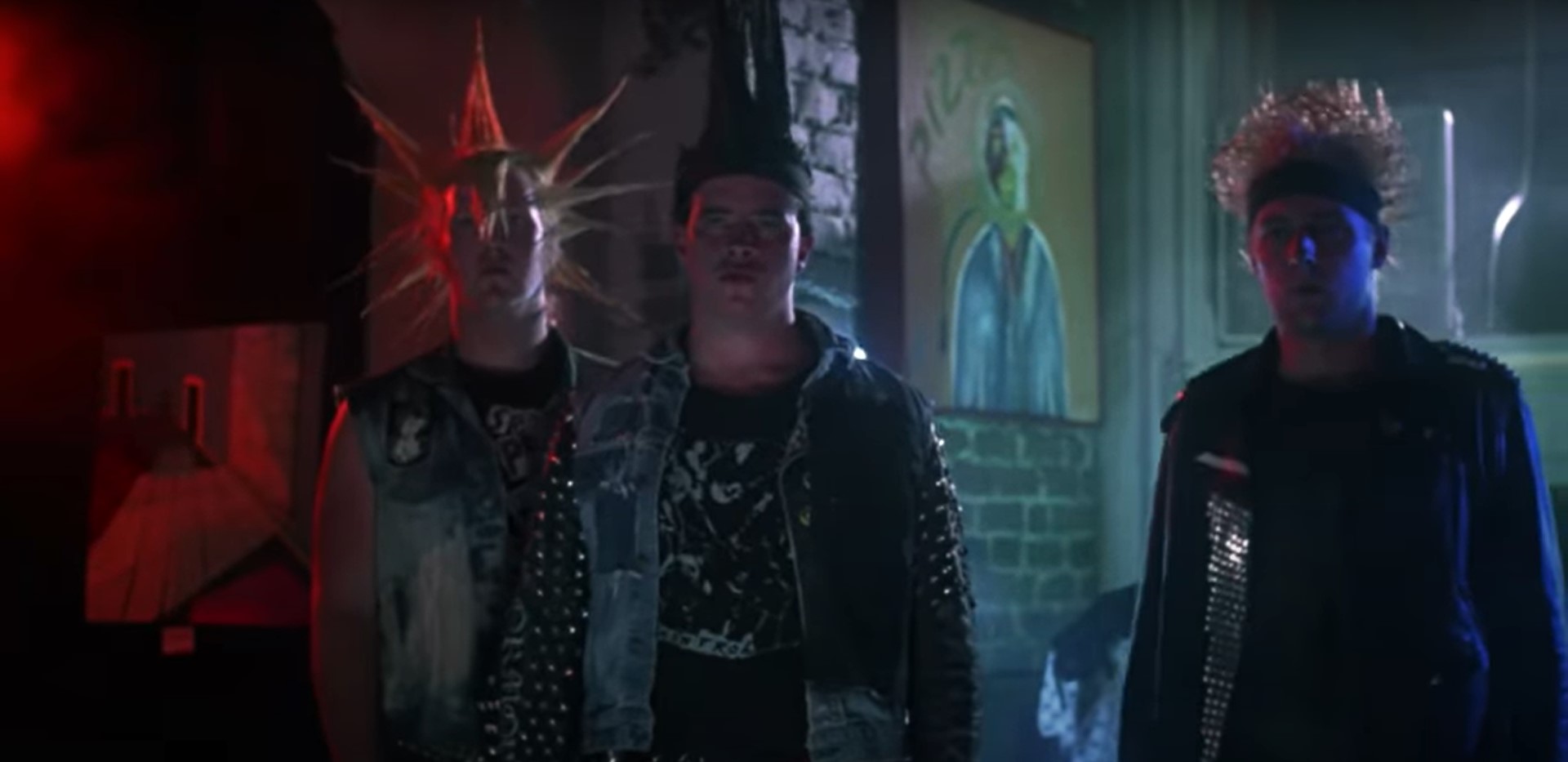
Just because “Mad God” is dialogue-less doesn’t make the “Mad God” voiceless. All around, in every scene, is a disturbing commentary or an unhinged metaphor bred mostly out of the animatable inanimate, but there are some live action performances weaved into the mad tapestry of monstrous titans and despot of cruelty. The most clearly discernible face of the lot comes from a director, “Repo Man” and “Sid and Nancy” director Alex Cox to be more exact. Cox plays the long nailed and regime-driven “Last Man,” representing divine leadership of a modest, dieselpunk heaven above a more organic and grotesque hell-type world. Only on screen for perhaps a total of 5-to-10 minutes, Cox grunts and gestures with precision articulation to give off a fair and just ruler impression. Niketa Roman plays the next real person to have some substantial screen time. Less of an actress and more of an animator by trade, with credits including “Blade II,” “Jurassic World,” and “Star Wars: Episode IX – The Rise of Skywalker,” Roman finds an expressive talent in her striking, heavily made-up eyes overtop a surgical mask and gown when whisking away one of the Assassin’s souls to be studied and experimented on by a broodingly ethereal entity. Other micro-performances include minor roles of tortured monkeys, various iron-cladded Assassins, witches, and gnomes from Satish Ratakonda, Harper Gibbons, Arnie Hain, David Laur, Chris Morley, Anthony Ruivivar, Tucker Gibbons, Tom Gibbons, Hans Brekke, and Jake Freytag.

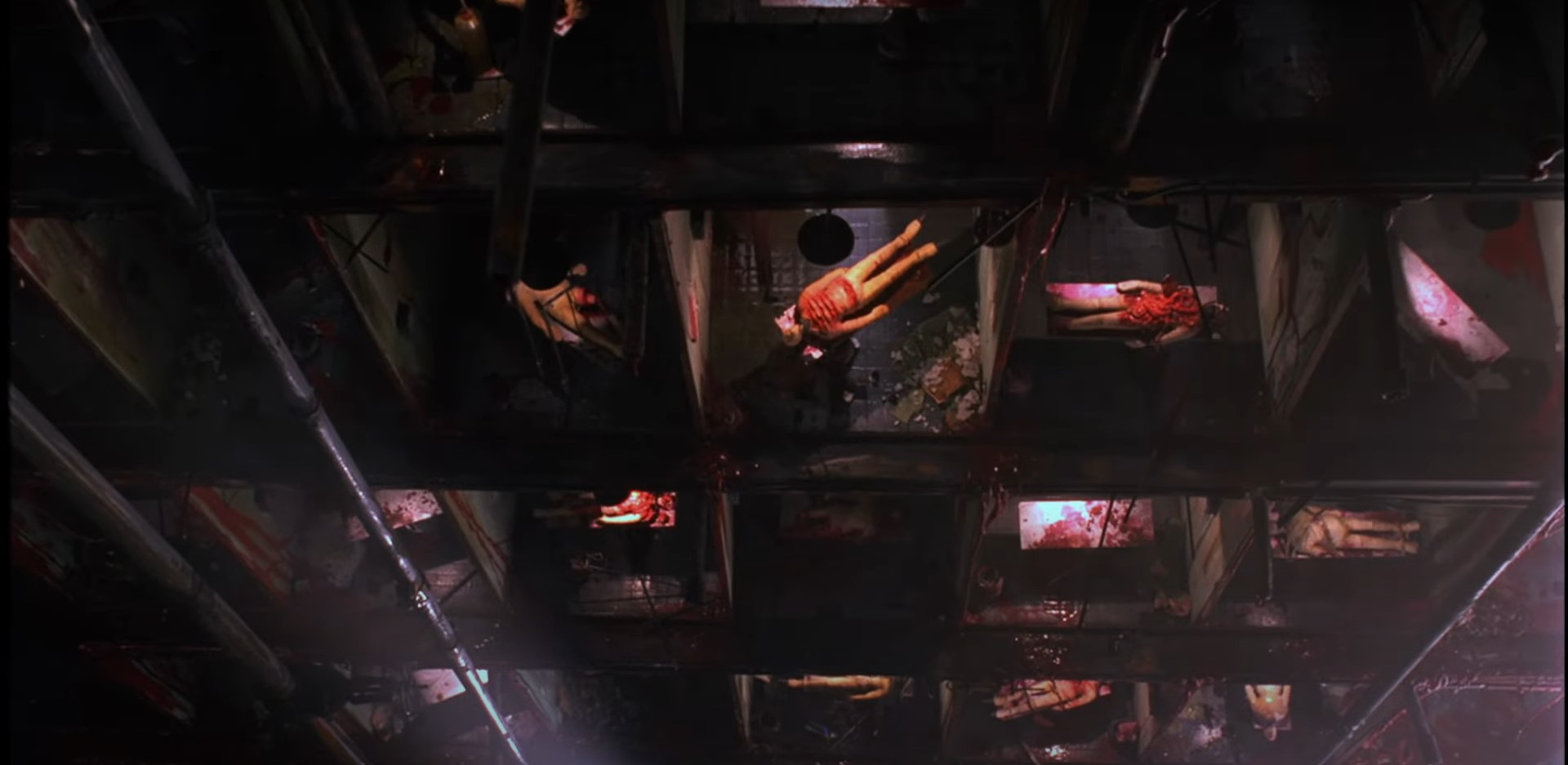
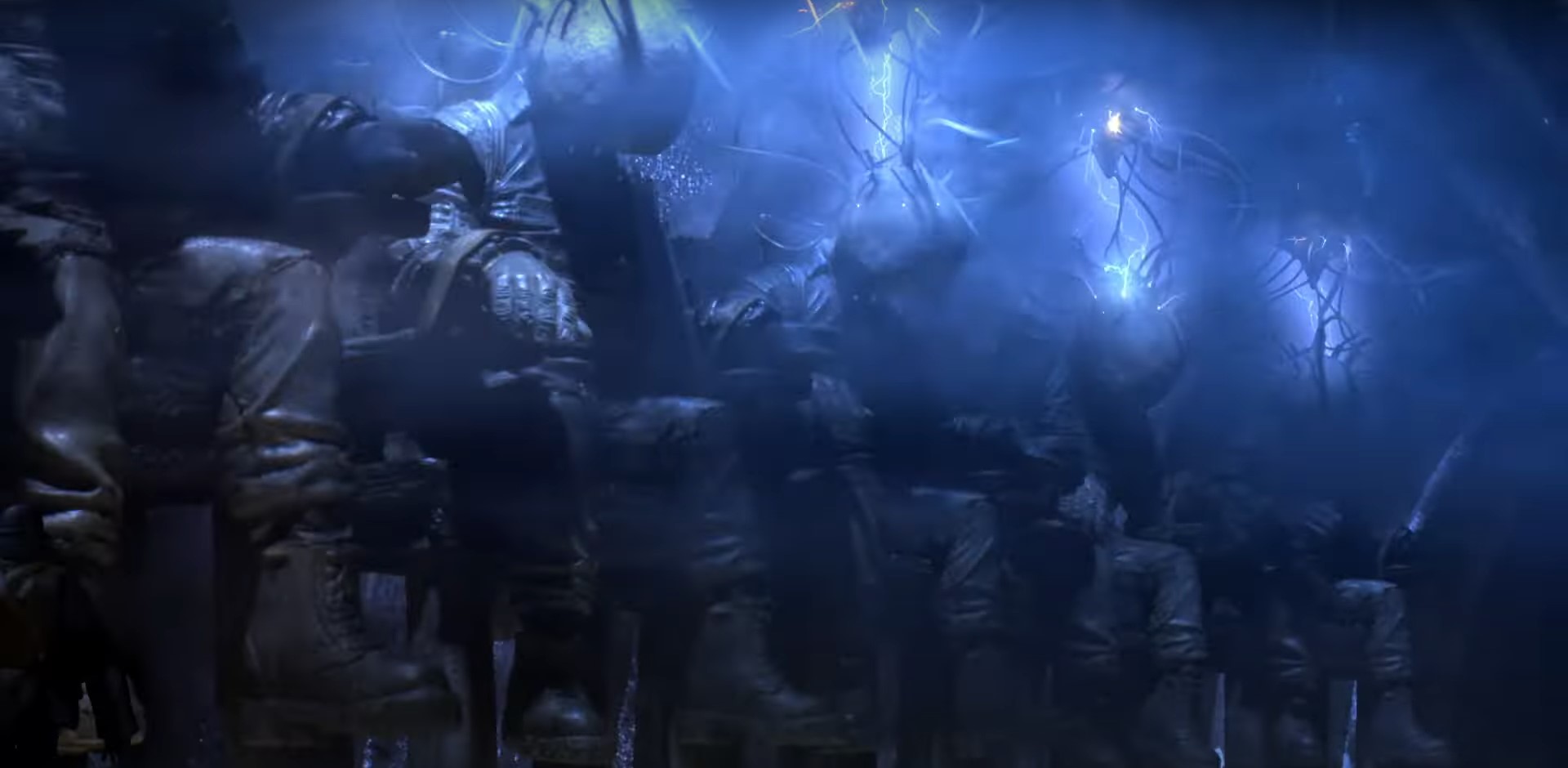
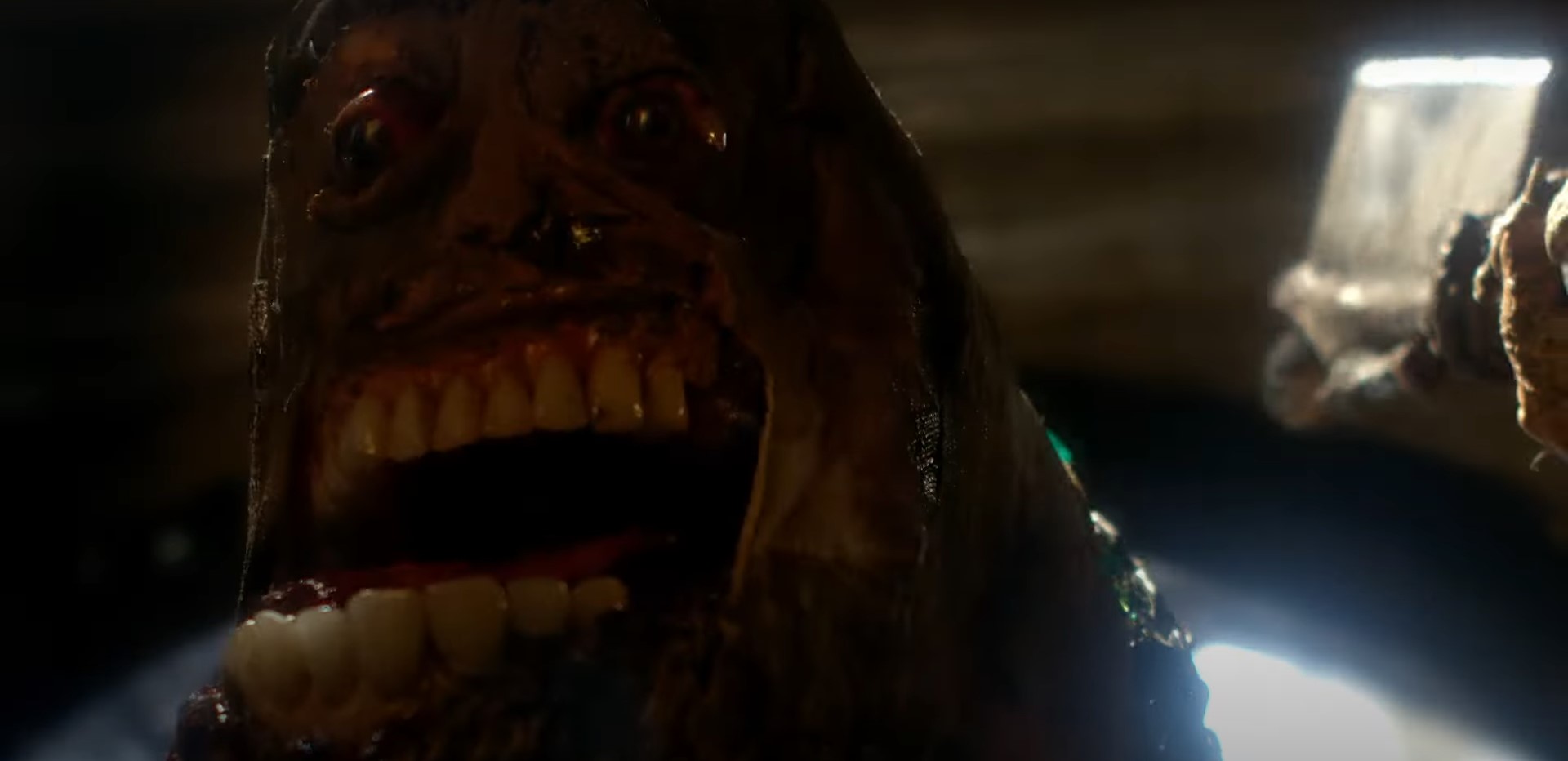
“Mad God’s” possibilities and interpretations are endless. Phil Tippett pulls from a motley of inspiration that includes, but is not limited to the fantastical, sometimes hellish, paintings of Hieronymus Bosch, the wacky, often gonzo animation of Tex Avery, the stop-motion titans of Nathan Juran’s “The 7 Voyages of Sinbad, and Dante’s Inferno. The mind is a deranged and wonderful creator of the macabre and of the aberrant and as a receiving device, the mind can also, if opened up enough, accept such visceral visuals of bowel fluids being jettisoned out by electric shock and into the mouth of an organic machine that manufactures fibrous, lumbering humanoids for slave labor. Like lemmings in a way, these exploited shadows of human beings will succumb under their own demise or at the gnarled and unforgiving hands of their master’s gargoyleish work-whippers. “Mad God’s” eye for detail is greatly disturbing to see cities in monolithic cities and cultures in ruins, the composite depth between foreground and background action in one scene reminds me a lot of older works like “The Neverending Story” or “Clash of the Titans” that create a vast scale with smaller objects, and the playful irony of a nightmare netherworld being commanded over by a baby’s babble doesn’t nearly seem to a stretch from the truth. As the multiple Assassins trek through the chaos and the insanity, an overwhelming sense of life is meaningless scores the landscape as there isn’t an ounce of compassion or empathy to be had or displayed for any of the malformed creatures and wretched humans. A laborer is crushed by a stone – no biggie. A cute and cuddle animal is attacked and whisked away for food storage – all in the day of cruelty. A man is stripped of his armored gear, injected with a mysterious substance, and prepped for exploratory surgery – all for show in front of a live clapping and cheering audience. The only compassion I can make sense is the Assassin’s mission to blow up this God-forsaken world of eternal suffering to restart the heart. Madness grinds bones, fillets spirits, and crushes souls in Phil Tippet’s Godless underworld and can haunt you even while you’re awake.

A surreal stop-motion wonder and excruciation, “Mad God” brings all the horrors of the subconscious mind to the surface with a high-definition, 1080p Blu-ray. The region 2, PAL encoded release from UK distributor Acorn Media International presents Tippet’s tour de force in a widescreen 1.78:1 aspect ratio and the image is purposefully varied to exhibit different strokes of craft as students would assist Tippet with contrastive topographies to carve out an apocalypse-riddled world that’s in a state of a violet retrogression. Tippet and Tippet Studio visual effects artist, Chris Morley, pivot to “Mad God’s” cinematography appearance with brooding, darker tones that illuminate and are erratically sparked with warm neon glows or brilliant voltage streaming through highly conductive bodies. Some earlier scenes from the late 80’s have natural grain from the 35mm stock and then later, more recent scenes have a cleaner, sleeker look with the digital recording. The Dolby Digital 5.1 surround sound mix has an all-embracing range, mostly with sudden and alarming blazons of guttural roars, unnerving baby babble, elongated zaps and shocks, and the indistinct yips and yaps of a mad world, that sustains on a line of being lesser than crisp, which might be contributed to the inexact capture of depth as sometimes all sounds casts like from inside the reverberations of a fishbowl. Descriptive SDH subtitles are available. Bonus features include audio commentary with Phil Tippett and “Pan’s Labyrinth’s” Guillermo del Toro, cast & crew commentary, an interview with Phil Tippett, “Mad God’s” various painter, cartoonist, animator, and psychology inspirations, the making-of “Mad God,” Maya Tippett’s Worse than the Demon – Phil Tippet’s daughter’s 12-minute thesis documentary of her father’s 34-year passion project journey, Academy of Art & “Mad God,” a behind-the-scenes montage, and a behind-the-scenes photo gallery. “Mad God” has a runtime of 84 minutes and is UK certified 18 for strong violence and gore. A motion picture diorama of Phil Tippett’s neoteric psyche, “Mad God” is wrath wrapped in heart and soul, two descriptors not topmost on the surface but are meticulously integrated into every frame of pain, suffering, and despair.

An Experiment Backfiring with EVIL Payback. “Moonchild” reviewed! (Visual Vengeance / Blu-ray)

“Moonchild” now on Blu-ray from Visual Vengeance!

An Inhuman government body of a dystopian future experiments with genetic splicing to create the ultimate weapon, known as Project Moonchild, against the human rebellion. That weapon, Jacob Stryker, is unaware of his newly encoded abilities when he escapes one of their holding labs to rescue his captive son from the very same apathetic regime. Stryker teams up with a group of human rebels and uncover by mistake Stryker’s hidden super solider talent of turning into an unstoppable beast – a werewolf. Hellbent on taking down his son’s brainwashing captives by any means necessary and to do it before an intestinal bomb explodes within 72 hours, Stryker convinces the rebels to assist him and now they have an ace in the pocket as they traverse in search for Stryker’s boy, encountering android and mutant bounty hunters, cannibalistic human survivors, and a surfeit of governmental soldiers hot on his tail, but when the werewolf comes out, Project Moonchild is out to seek and destroy those son-stealing son-a-of-bitches by ripping them to shreds.

Director Todd Sheets has long been considered one of the kings of SOV. The “Zombie Rampage” and “Clownado” Kansas City filmmaker writes and directs “Moonchild,” the 1994 direct-to-video, post-societal, lycanthropy actioner is Sheets’ attempt in splintering himself away from the gore. The American Prince of Gore and the Master of Splatter accomplishes the lessened bloodletting and liquid innards coming outwards werewolf feature with a dystopian rescuer that pits what remains of a separatist human society on a verge of collapse to go on a quest to cure a dividing mutation affliction and to go up against the malign immortals of killers and assassins constructed with nuts and bolts and sawblades on a super independent budget. The ambitious project comes with car chases, a large cast, and a hairy beast that fights for family! Executive producer Greg Petrak returns to Todd Sheets’ side after “Bloodthirsty Cannibal Demons” and is a production of Sheets’ very own Extreme Entertainment, a now 34-year standing product company based out of Kansas City, Missouri. Feel old yet?

Playing the lab rat, the werewolf, and the integral hero, Jacob Stryker, to the story is Auggi Alvarez (“Zombie Bloodbath”) as a widowed father who will stop at nothing to save his son Caleb (Stefan Hilt) in the hands of iron-hearted inhuman leader, Lothos (Harry Rose). Alvarez, like much of the rest of the cast, fall into a monotonal expositional black hole that can make “Moonchild” a slog between the excitement. While fleeing captivity, Stryker runs into Rocky (Julie King, “Zombie Bloodbath 2”), Talon (Dave Miller, “Violent New Breed”), and Athena (Kathleen McSweeney, “Violent New Breed), a band of underground resistant fighters who are desperate enough to overthrow the authoritarian ruling class that’s comprised of henchmen with duct tape masks and are skippered by a mustache wearing an unadorned samurai kabuto helmet – catching a tad resemblance to Mel Brooks’ Lord Helmet of “Space Balls.” If you have noticed already, the cast is an entourage of Todd Sheets regulars, a small niche of actors and actress with close ties to the Master of Splatter and have reoccurring roles in most the director’s early 90s indie gems. That trend continues with Carol Barta (“Prehistoric Bimbos in Armeggedon City”) as the bounty hunter, Medusa. Looking more like your next-door neighbor grandmother, Medusa is viper-tongued assassin with an unforgettable cackle and a throaty super ability that’ll inject nightmares for nights to come. Barta’s performance is one of those cliched it’s so bad, its good acts that you have to see to believe. Cathy Metz, Kyrie King, Rebecca Rose, Jody Rovick, and Mike Hellman round out the cast.

Character names drenched with Greek mythology inspiration and a contemporary take on the werewolf canon, “Moonchild” is an interesting and unorthodox story to say at least. Todd Sheets had obviously perfected the limited capabilities of S-VHS shooting or was confident enough to build in a lengthy car chase into a project that didn’t rely on disgusting audiences with blood and guts, but rather actionable thrills and singular characters of the post-apocalypse with only a smidgen of horror. You see, the werewolf doesn’t make too many appearances on screen, only surfacing from beneath Jacob Stryker’s human skin twice in total. The wolfish transformation is shoddy but for the budget, there is an appreciation for the amazing looking effect as well as the other practical effects throughout the feature. “Moonchild’s” pacing can be concernedly plodding to make sure the exposition covers aspect of Stryker’s intentions, slowing down the film to the point sluggishness. It doesn’t help that the scripted word-for-word, automaton performances are not tonally textured with droning dialogue that can’t captivate and contributes to the fatigue at times. Though “Moonchild” is an evolving project for Sheets with conviction in his ability to produce, there are still some editing continuity blunders that downgrade the overall result. Upward closeup shots of Julie King as she looks down when supposedly holding a rifle on Auggi Alvarez show her hand mock holding a rifle as it comes into the frame and then the next cut is the actress actually holding a rifle. Another scene involving King has her smash in the head of a traitor on a concrete floor and the next shot is of her running down the hallway away from where the body should be but wasn’t. The corpse had vanished. Howlers, pun intended, like these conspicuous examples are what depreciate an already discounted movie, curbing any kind of recognition for Todd Sheets going outside his blood and guts comfort zone.

As one of Visual Vengeance’s SOV cult-horror titles, we come to expect temperamental image and sound quality from the Wild Eye Releasing banner due to the consumer grade S-VHS equipment and the novicey of the filmmakers as, and mostly related to the former, Visual Vengeance warns of prior to the start of every feature so thus far, but the 50GB, MPEG-4 encoded, 2-disc Blu-ray set, that presents the feature in 1080p of the 1.33:1 aspect ratio, is the best technical-looking SOV to date for the company. Hardly any tracking issues, artefact issues, and any tape distortion of any kind and while still lacking premium quality as we all expect today, nothing is taken away from “Moonchild’s” original SD master transfer that is a director supervised. The single soundtrack audio option is an English analogue 1.0 mono mix and the dialogue as well as the score come over nicely despite a less punchy channel output. There’s a steady, feature length electrical interference from start-to-finish that is no surprise and is not terribly audio intrusive. Depth suffers mostly with the type of equipment that doesn’t filter and level out ambient noise, but the range of sound is pleasant with the added clip tracks. English subtitles are option. The bonus features include two new audio commentaries – director Todd Sheets and star Auggi Alverz and Todd Shoots and Visual Vengeance. Other bonus features include the alternate VHS cut, Wolf Moon Rising documentary, archival behind-the-scenes cast and crew interviews featurette, the original VHS trailer, deleted ending, the Todd Sheets’ directed music video Burn the Church by the now defunct Kansas City-based, goth metal band Descension, short film “Sanguinary Desires,” trailer for Todd Sheets “Bonehill Road,” and other Visual Vengeance trailers.” The phyical release comes with a 2nd disc, a bonus audio CD of the movie soundtrack, reversible cover art featuring original VHS cover on the inside, new art on the clear cased Blu-ray snapper, and original art on the cardboard slipcover by The Dude Designs aka Thomas Hodge. Inside the snapper lining are four-page liner notes by Matt Desiderio, folded mini poster of the snapper front cover, and the standard VHS throwback sticker sheet. “Moonchild” on a Visual Vengeance Blu-ray comes unrated, region free, and with a runtime of 87-minutes. Todd Sheets is a maniacal moviemaking machine with “Moonchild” being released a decade after the gorehound began and there’s plenty of admirable spirit and effects in the Kansas City werewolf in dystopia tale, but one can’t shrug off the oversights and the exasperating exposition that goes way off trail the turbulent path of indie filmmaking.

“Moonchild” now on Blu-ray from Visual Vengeance!

The Dark One’s EVIL Sucks the Air Out of You! “Robot Holocaust” reviewed! (Ronin Flix / Blu-ray)

“Robot Holocaust” enslaves Humanity on Blu-ray!

Year 2033 – a robot rebellion turned the once convenient machines into man’s most deadly adversary.  The aftershock of war has left mankind almost extinct and most of the atmosphere uninhabitable with radiation.  The last standing metropolis on what is now known as New Terra has the only breathable environment monopolized by the tyrannical Dark One, a disembodied machine that uses human slave labor to fuel the air producing contraption for the entire city.  A motley band of heroes, led by an outsider from a wasteland tribe who can breathe the toxic air, embark on a perilous journey to the Dark One’s factory lair, evading deadly flesh-eating worms, wasteland mutants, and a ruthless robot subordinates under the command of the Dark One.   Their mission is to rescue a purloined scientist after developing a device that lets people breathe outside the Dark One’s grip of a controlled environment.

The 1980s is a goldmine for post-apocalyptic cinema that has virtually no ambit.  Whether a big Hollywood studio or a rinky-dink production, inhospitable badlands filled with cutthroat survivors and malformed beings unfortunate enough to be left alive to battle it out to the death over the Earth’s last remaining precious resources was (and to an extent, still is) a salivating story prospect with vast barren landscapes, dangers around every corner, an untamed primal violence, and a BDSM-like wardrobe that hits the suppressed kink nerve in all of us.  Tim Kincaid’s “Robot Holocaust” is right smack dab in the middle of the subgenre and plays tune to every crowd-pleasing characteristic.  The 1987 post-apocalypse actioner is written-and-directed by Kincaid who cut his teeth on gay adult films in the late 1970’s and has maintained a healthy dose of homosexual erotic and adult films throughout his career until 2017 under his pseudonym of Joe Gaga.  After complete stag only cheapies “Cellblock #9” and “…in the Name of Leather,” Kincaid received a hankering to dip his directorial toes into sci-fi and horror, beginning with the sexual assaulting alien flick “Breeders” in 1986.  “Robot Holocaust” became the filmmaker’s subsequent feature one year later, shot mostly in the abandoned Brooklyn Navy Yard buildings as well as the undeveloped then Roosevelt Island in New York City.  Presented by Wizard Video (“I Spit on Your Grave”), Tycan Entertaiment and Taryn Productions are the companies behind the film. Taryn Productions is a subsidiary created by Charles Band (“Puppet Master’) and named after his daughter Taryn. Cynthia De Paula produces the film, who she almost exclusively produces every Kincaid sci-fi horror fixation, and the film likely supported by Charles Band in an executive producer role.

“Robot Holocaust” follows the narrative of a ragtag bunch of good-guy survivors journeying to rescue a friend and take down a tyrannical overlord.  While not one role stands as a principal lead, the band of heroes is led by Neo, played by Norris Culf.  Starring in his first lead role following a couple of smalltime gigs in supporting roles in another Taryn Production, “Necropolis,” and in Tim Kincaid’s “Breeders,” Culf receives his big break as a wasteland conqueror able to breathe outside in the radioactive atmosphere.   As a leader, Culf isn’t as charismatic as Keanu Reeves’ Neo nor is he fierce enough to be intimidating; instead, Culf is quite reserved, unpowerful, and lacks coordination to pull off choreographed fight sequences with a believable plausibility.  Nyla, on the hand, is played Jennifer Delora of “Frankenhooker” and “Fright House.”  Delora, an martial arts blackbelt, brought the proper attitude to her fiercely feministic leader of the She Zone women tribe by adding the mean to Nyla’s demeanor.  The other woman of the group is Deeja, Jorn the Scientist’s daughter who terribly reliant on her father, sparking major contrast between her delicacy in daddy issues and Nyla’s hardnosed, man-hating feminism.  Nadine Hartstein and Michael Downend reconnect from their minor roles in “Necropolis” to be the daughter and father team at the core of suicide mission. More ceremonious than being an emotional wreck of being separated during the middle of a robot run world, Harstein and Downend bring little flair as they themselves often are more automaton than the automatons. Joel Von Ornsteiner (“Zombie Death House,” “Slash Dance”) had the most flair as Klyton, a pickpocketing free-thinking droid that looks like a cross between Star Wars’ C3PO and MAC from “Mac and Me.” Ornsteiner never let up or broke the eccentric droid’s light-hearted Robin to Neo’s Batman antics complete with rigid, robotic movements and a ray gun that never seems to work. One of the more painfully pressed roles is Valaria, the Dark One’s flamboyantly dressed second in command. Think “Forbidden Zone”-esque. Angelika Jager performance in cahoots with the Dark One is about as dry as toast and at odds with her own vestigial accent. Jager’s the congenial visual to her counterpart Torque’s effectual exoskeletal mechanical cover who could pass for a T-800 with the teeth replaced by dangling like Lobster antennae. Rick Gianasi, who went on to be Troma’s Sgt. Kabukiman, plays the underestimated and underrated villain, leading the way for other sidelines roles with a cast that rounds out with George Grey, Michael Azzolina, John Blaylock, and Nicholas Reiner.

As mentioned earlier, “Robot Holocaust’s” acting isn’t good.  It borders old-timey melodramatic in a proclamation sense.  There are no in-depth discussions, debates, conversing naturally, or any aspect of the dialogue having a normalcy about it as everything is vigorously proclaimed or is awkward narrated for exposition.  The other half of the problems is in direct result of Kincaid’s poorly written script that can’t capture ordinary conversation, much like those of his pornographic films, I would think. Nor could Kincaid write himself out of the erratic flippancy of some principal characters who woujld go from bad to good then from good to bad in a blink of an eye.  While the communication is about a dull as a butter knife, the costuming is where “Robot Holocaust” balances the scales with 80’s ridiculously appropriate garb of what the ruined future would sport.  A metrosexual mixture of v-neck pelt shirts of mystery animal origin and early WWF professional wrestler spandex turn the men into “Conan the Barbarian” types, to which a few other influencing aspects are pulled from the Schwarzenegger epic fantasy.  The women are equally suited but with more finesse in the way of warrior princess as well as a goddess. With a title like “Robot Holocaust,” the android designs better be spectacular and in all for its time period, Ed Fench’s designs and Valarie McNeill’s fabrications are a mixed bag of good and bad. Klyton derives too heavily from “Star Wars'” inspiration without wowing into something of the tiny production’s own while Torque radiates power and fear with a complete head-to-toe body suit of an acolyte with attitude. Both designs don’t compartmentalize by operating individual body parts, such as moving mouths or even hands for that matter, which would have nailed the robots down for a film called “Robot Holocaust.”

Ronin Flix, under the re-distribution of Scorpion Releasing and MGM, release “Robot Holocaust” on a 1080p high-definition AVC encoded Blu-ray. The hard coded region A North American release is presented in an anamorphic widescreen 1.85:1 aspect ratio from the original 35mm negative. Natural grain, a palatable and diverse color palette, and swelling textures, such as fine details in the skin, scuffed up droids, and a grimy industrial complex provides a zestier interest that parallels the languishing storyline. The English language 5.1 DTS-HD Master Audio is remarkably clean, much like the transfer, with a coextending presence of robust range, depth, and quality. The proclaiming dialogue is crystal clear, hanging on every syllable and syntax, with no issues with hissing, popping, or other flaws. Jager’s accented monologues and conversations are kitsch guilty pleasures to hear her laissez faire style and delivery. Special features include a new interview with Nyla actress Jennifer Delora touching upon little-by-little her experience with cast, crew, and overall project. There’s also the official trailer included. The physical release comes in a regular blue snapper case with one-sided grindhouse artwork of a looming Torque, an explicitly worn skull, and Angelika Jager’s Valaria with her eyes closed and slight smirk. The unrated film runs a brisk 79 minutes. The “Robot Holocaust” is only 11 years away according to the film’s timeline, but director Tim Kincaid’s future can’t help but feel like a vintage hunk of junk by the stale performances and skimpy Tarzan-like duds and getting through the brief runtime proved unfortunately challenging.

“Robot Holocaust” enslaves Humanity on Blu-ray!