Press Start to Play EVIL. “First Person Shooter” reviewed!


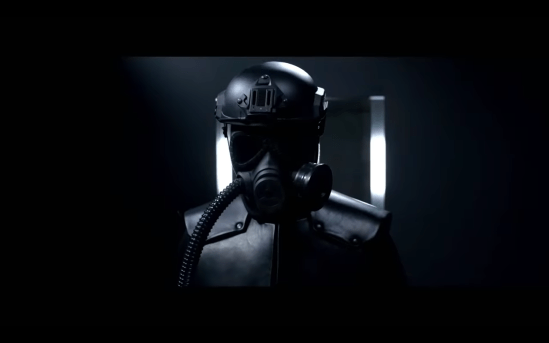
A nasty viral plague eats and decays victims from the inside out, blood oozes from every poor in the skin and boils fester, and can be transmitted through the saliva and blood. The hot zone spreads fast among the nation’s crumbling society, but one isolated clinic, the also epicenter of the disease, experiments with a cure, testing the trials on the infected. Young, wife Linda, a nurse at the clinic, goes suddenly missing and her husband gears up to search for her at the clinic to only find out that his wife has fell into the grasps of a maniacal scientist exploiting the cure as a baleful booster to create the already plagued-ridden with another side effect – extreme violence. The playing level turns increasingly difficult with maximum carnage when finding himself trapped deep inside the callous clinic straight from hell and must use any melee weapon to his advantage in each ghastly stage if he wants to save his wife from the deranged creatures and the complete governmental noxious gas eradication of the disease in the next 24 hours.

For those of us who’ve fired up a DELL computer with Radeon gaming hardware installed, sat large noise-reduction earphones over our ears, and ran a CD-ROM through the disc drive to start up a MS-DOS video game, a bit of nostalgia will revert the senses back to a more primordial time of a young gaming culture and evoke the obsessive behaviors of our adolescent selves. A game that will inherently put you into the player’s shoes with a weapon at hand and many antagonists to cut down at the whim of a mouse click as the priding first person shooter. That’s what one German filmmaker, Andreas Luetzelschwab, who goes by the credit Andreas Tom, titled his script now film project, “FPS: First Person Shooter,” that harks back to the good, yet not so old days of 8-bit blood, command cheat codes, and with a hero bestowing a snarky, snide tongue. The 2014 action-horror recalls the disk operating system gaming graphics of the early 1990s that’s been long lost and seemingly forever forgotten for nearly 20 years.

Now, since Andreas Tom’s “First Person Shooter” puts the viewer in place as the player, a BDSM gimp dressed hero ready to face the mutated virus head on. No real character takes the stage with only the voice of the iconic voice actor, Stephan Weyte, resurrecting his distinctive and black vocal quips for the player hammering away at the ghoulish zombies. Weyte’s a famous name in the world of first person shooter games being the voice of the antihero Caleb in the excessively violent and demonic “Blood” and “Blood II: The Chosen” horror inspired FPS PC games from the late 90s. Weyte’s deep, sometimes raspy, tone suits the film’s temperament much the same of those gloriously carnage cult classic PC games and he’s essentially doing all the dialogue for the film, with the exception of some in and out characters. The genetic makeup of the remaining cast are relatives of Andreas Tom, including co-producer Atlanta Lützelschwab as the attic’s nurse zombie complete with barbed wire around the eyes, Hans Lützelschwab as a boss-level surgeon zombie, and assistant director Achim Lützelschwab as the cook who whips vats of stew made of human chunks. Obviously, these are German actors being voiced with an overlay language from English speaking actors, such as Stephen Weyte, and so other vocal and action performances come from Tobias Winkler as a tall clown zombie, Sebastian Kettner, Ines Klein, Rick Whelan, Rob Banks, Jürgen Sütterlin, and Sascha Strack.

This past August, another first person shooter was reviewed, Giulio De Santi’s “Hotel Inferno,” which delivered an energetic and chaotic run amuck bloodbath that really sold the experience of playing a FPS and though “First Person Shooter” was released after, the film still provides the same kind of gun-toting, ass-kicking euphoria while on a smaller scale and focusing more on making that connection to the audience that you’re the gamer playing the game. For example, the movie begins with the DOS game’s screen of a static menu and once all your difficult settings are set and in place and the press start button is pressed, a virtual newscaster delivers the backstory of the viral outbreak and dons a principal figure, in the form of a 8-bit man, going to the clinic to search for his missing wife. The, the video game seamlessly transitions into live action, but the attributes of the game are still abound with a life bar, the gaining of objects, autosave, and disappearing bodies (that are a symptom of the virus). At the surface level comparison of “First Person Shooter” and “Hotel Inferno,” both films are akin to characterization, but differ in executions with “Hotel Inferno” just outright more violent without referring to itself outside the context of just another movie whereas the focus here is centered on video game idiosyncrasies inside that very context. The patients in developing scenes out of the virtual combat simulation ethos exhibits remarkable talent to fathom-to-fruition all the nuances like weapon caching, ominous camera angles and interpersonal communications to push the story along menacingly, and splicing the recording of level playing video with the composition of a pair of gesturing and weaponized hands to simulate that type of game play. For a loyal gamer, “First Person Shooter” bares the berserk survival horror instincts while for the loyal cinema goer, the ostentatious design is unique and graphic, even for the casual horror fan.

For the first time on US DVD home video, “First Person Shooter” is distributed by Wild Eye under the Raw & Extreme banner, the same as “Hotel Inferno,” with a widescreen, 16:9 aspect ratio, presentation that’s clean and composed of a double recording, along with an 8-bit Wolfenstein or Doom gameplay edited in for some extracurricular slaughter activity. The colors reduced some, I’d say by 20-30%, to exact a bit of bleakness atmospherics and some details are smoothed over due exact a true video game effect, like in muzzle flashes. The English language stereo dialogue track is an obvious dub on the German made film and another good dead giveaway is that all actors have their mouths covered by surgical masks, gas masks, hockey masks, etc., but Stephen Weyte’s crystal clear derogatory comments show no sign of being muddled. The ambient track’s a little soft at times, especially with the gatling gun, that should be ripping bullets and fling casings with puncturing hundreds of holes into zombie girth. Bonus features include behind-the-scenes outtakes, a walkthrough examination of the set, composing the looming score, and trailers. Wild Eye’s illustrated DVD front cover also pays homage to Duke Nukem with a tall standing and beefy dark hero blasting holes through zombies at his feet. “First Person Shooter” markets goods sold as advertised of intense game play without the need for a single controller and without omitting one single ounce of blood to shed in this mercurial fascination of when gory cinema magic meets gory computer gaming.

Come Get Some!!! Available on DVD today!

EVIL Suplexes A Group of Campers on the “100 Acres of Hell” reviewed!


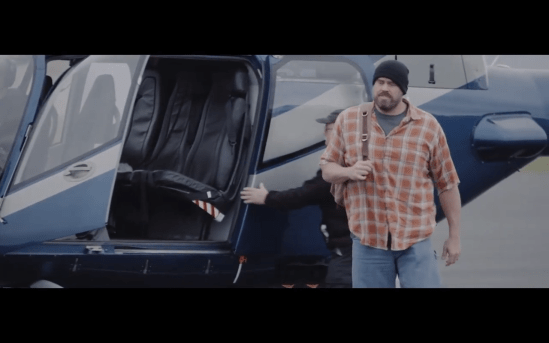
Former high profile wrestler Buck Sever finds himself in a world of personal hurt. After a family tragedy and a derailing injury, Sever’s stuck in what’s left of his life with not much reason or motivation to pick himself back up. High school friend Trent Masters organizes a bros weekend on an urban legend infamous game preserve called Foggy Creek for some drinking and hunting, but even his so-called friends exploit his celebrity status to attract women and gain personal benefit. They spot themselves right in the heart of the game preserve said to be notorious for backwoods murders committed in the 1960’s at the hands of local legend Jeb Tucker. Blowing off the mystery shrouding Foggy Creek, the four friends soon find themselves face-to-face with a mask killer with immense strength that equals Sever’s and there’s no stopping his onslaught of spilling weekend warrior blood.

Wrestling is a multi-billion dollar global juggernaut with a fan base like no other and as an industry has seen a steady increase in popularity that spans over decades. The sports iconic wrestlers are idolized by many adoring fans who hold up supportive signage at matches, imitate their trademark finishing moves with friends on makeshift rings, and even sport their merchandise while throwing out their favorite wrestlers’ memorable gestures. The sport has been become so engrained into our culture, movies like Mickey Rourke’s “The Wrestler,” that show the downtrodden life of a has-been wrestler, can be nominated and win major studio awards, such as an Oscar or a Golden Globe, and wrestlers have been seeping into the film industry that’s now at a raging pace where the professional body slammers are some of the highest paid actors, such as the established Dwayne “The Rock” Johnson and John Cena. However, not every wrestler can be a glamourous super-stud in the cinematic universe. That’s the case with “100 Acres of Hell” directed by Hank Leigh Hump and starring 6’8″ Gene Snitsky and Samula “Samu” Anoa’i. Produced and penned by Snitsky, co-written alongside with Ed McKeever (“Bikini Girls Vs.The Surf Wolf”) and Jason Koerner (“Zombie Death Camp”) to enthrall a survival, campsite horror set and shot in the rural backyards of Pennsylvania.

Snitsky, retired from professional wrestling in 2018, turns to acting late in his career with his entry into the indie circuit. He portrays Buck Severs, a gargantuan man in a tragic life slump, whose seems like a harmless, gentle giant with a group of eccentric and callous group of friends that treat him poorly despite their best intentions. Snitsky’s has moments of genuine truth in delivery and body language, especially for crowd performer. Jim Roof plays one of his friends, Bo McKeever, a sordid white liar of a car salesman always looking to score between two legs. I remember Roof from his role as a snuff filmmaker in another film with “100” in the title – “House with 100 Eyes.” Roof’s funny and likable alongside Snitsky, but the other half of the “Bros” weekend pack droll with weak characterizations despite decent performances from Jeff Swanton and Ernest O’Donnell (“Jay and Silent Bob Reboot”). Both their roles fall flat by running out of steam when the potential is at the peak of flowing through their veins and unfortunately fizzle before they can be an pivotal means to an end. Catherine Corcoran (“Terrifier”), Meg Carriero (“Return to Return to Nuke ‘Em High Aka Vol. 2”), Bob Cleary (“Shadows of the Forest”) and Eileen Dietz (“Halloween II” remake) round out of the cast.

“100 Acres of Hell” sounds like a tour de force of forestry fury coupled with two ex-wrestlers and a backwards, backwoods, hillbilly killer without a cause, but that is where the pipe dream ends and an enigmatic reality sets in. The banter between the friends is palatable and, dare I say it, amusing at times and the camping setup, though trope-conventional, is braced with a solid foundation and a good catalytic promise of beer and urban legend to get things moving toward Foggy Creek. Where “100 Acres of Hell” ultimately falters, in a pair of places, is around the second into the third act as characters are quickly whacked from the story like the combat denizens of the second Mortal Kombat film – “Annihilation.” Jeb Tucker literally wipes the floor with the unlucky campers and their guests like an inbred super Shredder. Secondly, Hank Leigh Hump’s directorial debut is coherently challenging, an unbalanced execution, and a character imploding mishap that shapes “100 Acres of Hell’s” latter half into a struggle to comprehension. Hump’s film feels and looks incomplete from this perspective as if the post-production quickly finalize the project with blind haste and willy-nilly attitude.

“100 Acres of Hell” is a Jersey Lights and Screenshot Entertainment production paying homage to the Golden Age of slashers in the 1980’s with a masked killer and a high body count. The home video distributor, Indican Pictures, released the DVD and the digital streaming services this past October. Unfortunately, a screener copy was provided from this review and a full critique of the image and audio quality will not be covered. As far as bonus material, the screener contained a static menu with Indican Pictures’ preview trailers and a chaptered scene selection. Two former WWE wresters battle out of the ring and onto the screen with a retrograde slasher, “100 Acres of Hell,” but can’t pin down a 1-2-3 count for a win. Alternatively, if looking for the summit version of Jeb Tucker’s personal hunting reserve, a digital “100 Acres of Hell” comic from Swampline Comics offers a colorfully pulpy rendition of Tucker’s brutal adventures in slaying and enslaving campers…something the movie could not provide.

Dare to tread of “100 Acres of Hell!”

High School Musical Meets EVIL in “Anna and the Apocalypse” reviewed!


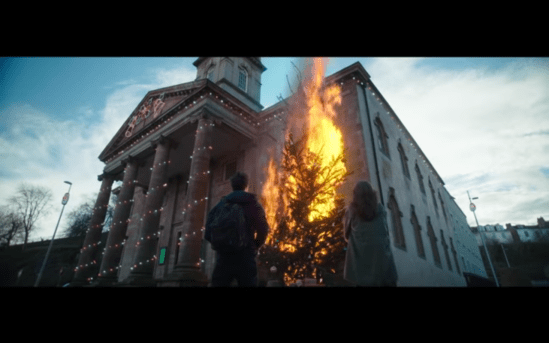
Anna’s a senior at Little Haven high school whose not thinking about what University to attend after she graduates. Instead, Anna focuses on working all the time as a shoe counter girl at the local bowling alley to pay off a year’s worth of traveling despite her father’s wishes, even working through Christmas, but when a sudden zombie apocalypse derails her and the worlds’ plans, Anna’s friends and father are her first priority. With her father trapped at the high school, Anna and her closest friends must trek and battle through a horde of the undead from the bowling alley before striking out dead themselves. Despite social differences and teenage angst, they must dance and sing to put now frivolous juvenile issues aside and work together if to not become one of the living dead.

Timed just right from 2019’s Christmas holiday season is Second Sight Films’s two-disc set of “Anna and the Apocalypse,” a contagiously fun, well performed, and cheekily gory musical comedy-horror by the United Kingdom’s John McPhail directing a script written by Alan McDonald and the late Ryan McHnery, based off McHenry’s short student film “Zombie Musical.” As true to the marketing behind the film, “Anna and the Apocalypse” is certainly the “High School Musical” with teeth-gnashing, putrid-walking, and flesh hungry zombies. The Scottish bred production comes from Blazing Griffin Films, Parkhouse Productions, Constellation Creatives and Creative Scotland to flash mob dance and sing in chorus through the apocalyptic melee while figuring out their complicated adolescent troubles, such as what to do after graduation, turbulent romantic emotions, and being different and alone.

The ensemble cast is heftily made up of unknown talent beginning with, then 17 year old, Ella Hunt in her debut lead performance as the titular character. Hunt’s a fresh, young face with an astonishing amount of acting range with Anna whose defiant against the wishes of her father, but, deep down inside, still wholeheartedly cares for him as he’s her only parent left alive, and Hunt has natural poppin’ dance moves and pop-star vocals. In Anna’s core group of friends, Sarah Swire’s Steph North stands amongst them as the LGBTQ representative whose strongly portrayed as courageous, caring, and independent while her characterization at the beginning of the films focuses on downing her life to the pit of despair with parents, who Steph claims wants nothing to do with her, are on holiday in Mexico and her romantic partner won’t be spending the holiday with her. Swire’s choreographic and musician background, along with an edgy look, make her a perfect fit for Steph. There’s also Anna’s best friend, a boy named John, played by Malcolm Cummings in his first feature film. Cummings has to be the hapless friend zone boy that remains sidelined when trying to find the opportune time in expressing his true feelings for Anna, but finds himself the third wheel in a high school love triangle conscripted with Nick, a hot-to-trot prick and bully colorfully depicted by Ben Wiggins. Christopher Leveaux and Marli Siu are the gang’s love birds, Mark Benton is Anna’s custodian father, and “Game of Thrones'” Paul Kaye antagonizes with a power hungry assistant headmaster gone crazy!

Honesty, I wasn’t sure how “Anna and the Apocalypse” was going to work, or be successful, or be entertaining at all as a horror movie. Horror-musicals are a rare breed that come with a mind-boggling quantitative algorithm to make them truly work wonders and, somehow, John McPhail dusted off his abacus, powered up his TI calculator, and put note to pen to paper and delivered a holiday spectacular on a horror scale stage. The horror, though very prominent and unmistakable, takes a backseat to the powerful soundtrack by the ensemble cast, ranging from caricatured with Fish Wrap to the desolation of personal connectivity with Human Voice to a couple of Christmas satires to bring a little joy with the merry mayhem. The mayhem is absolute with all the trimmings of a zombie apocalypse, even right down to the military being the butt of a joke when they’re overrun by a slow-moving force, but while there’s some gore early on with a dead head decapitated by a see-saw and a pair of bowling balls pop the top of one alleyway corpse, the blood flows downward to a little more than a dribble and “Anna and the Apocalypse” cobbles together a mere mediocre zombie film from then on out.

Already seen a couple of standard releases from other distributors, Second Sight Films reserved “Anna and the Apocalypse” to the royal treatment with a special features heavy region B, two-disc Blu-ray set containing two versions of the film – the theatrical release cut and the extended version which will include a musical number that didn’t make the theatrical cut. The Arri Alexa SXT shot film is presented in 1080p and in the film’s original aspect ratio, a widescreen 2.37:1, with a featured ProRes 3.2k format that allows upscaling to UHD quality providing a high resolution output that’s clean and bright. The color palate has real vibrancy under the director of photography’s, Sara Deane, direction to use colorful outfits and neoned and darkened sets. Some scenes become a little choppy with some sloppy editing work, but as a whole, the story remains coherent. The English language DTS-HD Master Audio 5.1 vivaciously energizes the soundtrack with alternative pop numbers, harmonious melodies, and a synchronized chorus, but there are times the dialogue falls into a lossy grey area. A stereo 2.0 track is also available as well as optional English SDH subtitles. The Second Sights Films’ release is chock full of extras with disc one including an audio commentary with director John McPhail, writer Alan McDonald, composers Roddy Hart and Tommy Reilly, a behind-the-scenes featurette, an alternate opening scene, a deleted song “What Side Are You On?”, a deleted bathroom scene, the Hollywood Ending cast and crew lip dub, footage from the EdinBurgh Film Festival, and, of course outtakes. Disc two includes a brand new feature-length documentary with new interviews by the actors and filmmakers. Plus, the original short film – “Zombie Musical.” A definite definitive two-disc set from Second Sight Films goes hand-in-hand with “Anna and the Apocalypse’s” feel good charm and unruly undead charisma complete with catchy tunes and bloody zombie goons in a modern day holiday cult classic.

Two-Disc Blu-ray Set of “Anna and the Apocalypse!” The perfect Christmas Gift!

No More EVIL Circling the Cage in “47 Meters Down: Uncaged” reviewed!


Mia and her family have moved from Chicago to Mexico’s Yucatan. As she struggles to acclimate into her surroundings and survives being the school’s most unpopular student, her father flourishes with his archeological findings of an ancient Mayan burial temple hidden under rising waters just off the coast. Mia and stepsister Sasha skip an unflattering weekend boat trip to join friends Alexa and Nicole who are privy to the underwater entrance of the remote ruin. The four use Mia’s father’s scuba gear to go exploring through the numerous narrow passageways and shrined openings of the burial temple, but their innocent adventure turns deadly when the sudden collapse of the entrance traps them inside. As they save every last breathe running dangerously low on oxygen, they come face-to-face with blind, monstrous Great White sharks with heightened senses of smell and hearing to track them down.

Terror has defined new depths with Johannes Roberts’ sequel to his critically praised and genre fan pleasing 2017 shark-horror “47 Meters Down.” Along with the return of screenwriter Ernest Riera and The Fyzz Facility team providing production and financials, Roberts once again dives into the murky waters of deep sea productions with “47 Meters Down: Uncaged,” working mainly underwater once more to capture weightless fear in the eyes of the actors to perform in a tough environment and perform against, what will be, computer generated adversaries. The success of “47 Meters Down” helped stem a sudden revival that swam from being a dwindling and cheap demonizing of sharks that have plagued the direct-to-video market for over a decade to bestowing the respect the man-eating fish rightfully deserve, showcasing that man does not rule the water. “47 Meters Down: Uncaged” continues the trend by chomping serrated jaws through the chummed waters of the great white shark schlock and crest with a heart pounding suspense and scares.

A couple of big names star in the sequel and by big, I don’t mean actresses who are mega superstars in their own rite. What I mean are the well-established and globally recognizable last names of Corinne Foxx and Sistine Stallone, the respective daughters of Academy Award winning actor and singer Jamie Foxx (“Ray”) and of one of the world’s biggest action stars of our lives, Sylvester Stallone (“Rambo”), debuting into the big time as one-half of the group of girls exploring the underwater temple. Across the aisle, the other two actresses that take a joy swim are Brianne Tju (“The Crooked Man”) and Sophie Nélisse, the latter being the high school oppressed and timid Mia who battles through her adolescent problems by being a leader in the shark infested tunnels. As four girls looking for a good time on the Yucatan, they’re tediously whimsical without the virtue of substance behind them aside from Mia’s brief bullying encounter and heart-to-heart moment with step mom. Joh Corbett is the most recognizable face sans just having a famous name. The “Sex in the City” actor – don’t ask me how I know that – has fatherly intentions in the role of Mia’s dad, the archeologist who discovers the flooded temple. Rounding out the cast is Khylin Rhambo (“Teen Wolf” television series) and Davi Santos (“Polaroid”).

All that is right with “47 Meters Down: Uncaged” is the isolating suspense and lurking terror that carries over seamlessly from the first film, despite both films’ pre-judging killjoy that is a PG-13 rating, and with the return of Mark Silk’s beautifully murky cinematography and Roberts’ choice of focal direction that engulfs the actors, the story sharpens to completely detach the real world from this shark threatening one. “47 Meters Down” had an equally beautiful, haunting, and industrially trance score, pitched perfect for the lethal space-like expanse, from Tomandandy and the musical duo return for another round with a broody audio vision that can be taken with you long after the credits roll. However, Roberts’ second installment has some issues. For instance, why keep the initial title? The 47 meters doesn’t exist as the protagonists go up and down through burial shafts without the utilization of a depth meter and could have benefited better with a standalone title. Not even a wet suit is worn so the hunt is not too deep where the frigid waters rules. The trend of those scenes that make you go huh? continue in a form of a plot hole of exactly where did those ghostly Great White sharks come from? There isn’t enough food down in the tight confines to sustain such eating machines, but they don’t seem to be crippled by the fact as they appear from out of nowhere after one of the characters makes their presence noisily known.

Like a persevering slasher, the jaws of death just keep on coming for you in “47 Meters Down” Uncaged” onto a 2-disc Blu-ray and DVD home video, with a digital download available, distributed by Lionsgate. Presented in a widescreen, 2.40:1 aspect ratio, with the Blu-ray BD-50 in 1080p High Definition, the digitally recorded, shot on an Arri Alexa according to IMDB, image captures, through the some fields of darker tints, the warranted definition and enough softness to maximize the aqua effect of a hazy and shadowy sunken ruin with silhouette inducing dark spots, corners, and passageways. Moments of vibrancy pop, especially with emergency beacons, to dazzle like a neon marquee in the pitch-black night sky. The ruin’s sharks themselves, though ghostly depicted and riddled with scaring, appeared too soft, an inescapable side effect from the visual FX team, and the same can be said with the sharks out in the open ocean that have unnatural movements along with their too clean look as if the light above surface wasn’t bouncing off them correctly. The English language 5.1 DTE-HD Master Audio mix has power and girth in an environment where sound is virtually stiffened. The Tomandandy score is absolute and denotes what it means to have an eloquently disruptive soundtrack to peak fear in conjunction with looming, flesh-ripping presences inside a dooming labyrinth. And what impeccable timing to have one of the recently passed Marie Fredriksson’s Roxette tracks showcased as the main song. #RIP Marie. Dialogue is clean and clear in the depthless communications of opened face scuba masks. Audio accessories include an English descriptive audio option, English SDH subtitles, and Spanish subtitles. Par for the course in the Lionsgate special features department with an audio commentary from writer-director Johannes Roberts, co-writer Ernest Riera, and producer James Harris. Plus, interviews with the cast in the making-of featurette entitled “Diving Deeper: Uncaging 47 Meters Down.” “47 Meters Down: Uncaged” is far from perfect and nearly drowns with an uncouth story that doesn’t represent Johannes Roberts first film’s good name, but the frenzy-laden successor has high energy, an olfactory for good PG-13 scares, and monstrous sharks that makes for an entertaining and terrifying swim.

Add “47 Meters Down: Uncaged” to your horror collection!

EVIL Must Be Broken In Before Being Used. “The Wheel” reviewed!


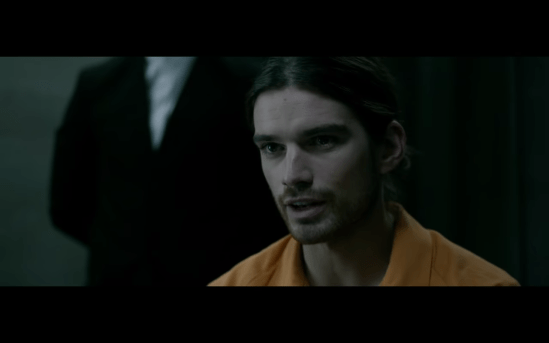
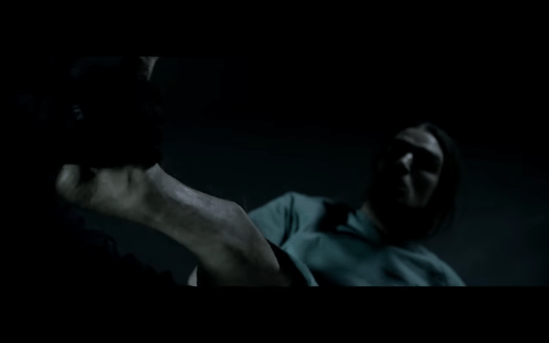
In the near future, paraplegic inmate Matthew Mills volunteers under pressure to join a Satoshi-Telefair Industries experimental treatment program that not only promises to reduce his sentence, but to also to regain mobility in his legs. With nothing more than the hope to return to his daughter, Mills is enticed by the agreement and gives himself to a shadow company who regularly contracts with the military, facilitating deep underground at an isolated site. Shortly after signing the release form, he awakes in a dark, steel cell known as The Wheel and is able to move his legs again, but the jubilation quickly subsides as armored men with batons visit his cell to beat and break his body in order for the nano technology, injected amongst his anatomy, to rebuild damaged tissue and make him stronger. The ordeal torments him, but to the researchers observing every detail of his recovery and behavior, Mills is just subject 2-1, another potential subject destined for the Future Soldier Initiative where the unethical testing must continue.

Shady shadow corporations, experimental nano-material rehabilitation and enhancement, and high level science fiction noir from writer James S. Abrams and director Dee McLachlan with 2019’s “The Wheel.” As if not already obvious from filmmaker’s nationalities, “The Wheel” is produced by and shot by Australian production companies SunJive Studios and Film Victoria, a state government agency that advocates funding and other filming assistances for shooting films in sectors of Victoria, Australia. “The Wheel’s” steely posture mirrors the frigid winter snow of Melbourne, Victoria’s covered forests that’s beautiful, yet deadly in the conventional beauty of nature. Yet, “The Wheel” delves into the meddling of what makes man and what also drives man as the story persists on the subject of redesigning the human body, but what that notion doesn’t take into account is what if the human body’s reactions doesn’t go as planed and a clapback ensues with all the synthetic re-wiring behind it? This is what Abrams and McLachlan intended to explore.

Australian actor Jackson Gallagher stars as Matthew Mills, a cripple with a purpose. The “Patrick” actor has been adrift from the darker roles since 2013 until up now with his main role in “The Wheel” that demanded a certain physicality that involved fight sequences with one, or two, or even three opponents and some ariel ropes work. The physically fit Gallagher not only survives the daunting workload, but hastily pulls Mills through his character’s tough transition from hopeful paraplegic to overly confident ultimate fighting weapon without an earnest core of struggle. The same can be said with Dr. Allison Turner played by Kendal Rae (“Out of the Shadows”). Turner’s a rogue researcher who had her practicing credentials revoked after the mistreatment of lab monkeys and was sought after by the Satoshi-Telefair for her detachment qualities, but her Turner’s character also didn’t quite arc properly and resembled a midway plateau from the moment Mills became her research subject. The only character that stayed the course was Dr. Emmett Snyder, a loyal Sataoshi-Telefair researcher to the bone. When he’s not suplexing or drop kicking in a championship wrestling match, David Arquette does dabble in acting. The “Scream” veteran actor fills in a rather unlikely antagonistic role, but the wild eye Arquette remains taut in his performance. “The Wheel” also costars Belinda McClory (“Matrix”). Christopher Kirby (“Daybreakers”), Victoria Liu, and Ben Still.

The spoke of the “The Wheel” rotates on a monotonic and frosty shoulder axle colored in gun metal and iced with dystopian immoralities. Every breathing element and inanimate objects is in a state of distant identity being bestowed labels in a combination of letters and numbers. The utilitarian wheel, an underground experiment facility that shifts rooms up and down and can be rotated to the other side, has no windows or any kind of necessary function other than to test subjects. Where “The Wheel” goes full “Equilibrium” by lacking emotional depth and substance without a coup d’état of the bleak authority, “The Wheel” also lacks vigor to break the blank uniformity and tries to speed through Mills patriarchal fluff to provide reason for his endurance and to provide reason for audiences to care. The epicenter theme to Mills motivation and escape is the thought of getting back to his daughter by any means necessary and was deemed fit to lay by the waist side to rely more on the hand-to-hand fighting like an overly glorified 70’s martial arts film.

Umbrella Entertainment distributes the sci-fi, action film, “The Wheel,” produced by SunJive Studios and Film Victoria onto a region free DVD home video. The clean digital picture in a widescreen, 2.35:1 aspect ratio, has a crisp demeanor that exact a bunch of natural lighting outside with a bit of a lower contrast inside dark “The Wheel” itself. What I found more appealing the anti-aliasing of the drone footage over the snowy covered Victoria forest, suggesting a higher bitrate compression that offers a seamless and smooth recording. The 5.1 English language Dolby audio is offered up with no whiff of an Australian accent in a lossless track that sounds good on the surround channels during action scenes. Dialogue is clear amongst the ample range and depth of ambient layers of researches watching and speaking through comms from inside a box watching another guy inside a box. Like other Umbrella releases, “The Wheel” has no special features nor a static menu. “The Wheel” has ice in the veins, but no warmth in it’s heart that seems vertically challenged on a horizontal slope of dystopian disorder.

The Wheel on DVD