Daughters Don’t Cause This Much EVIL! “Son” reviewed! (Acorn Media International / Blu-ray)


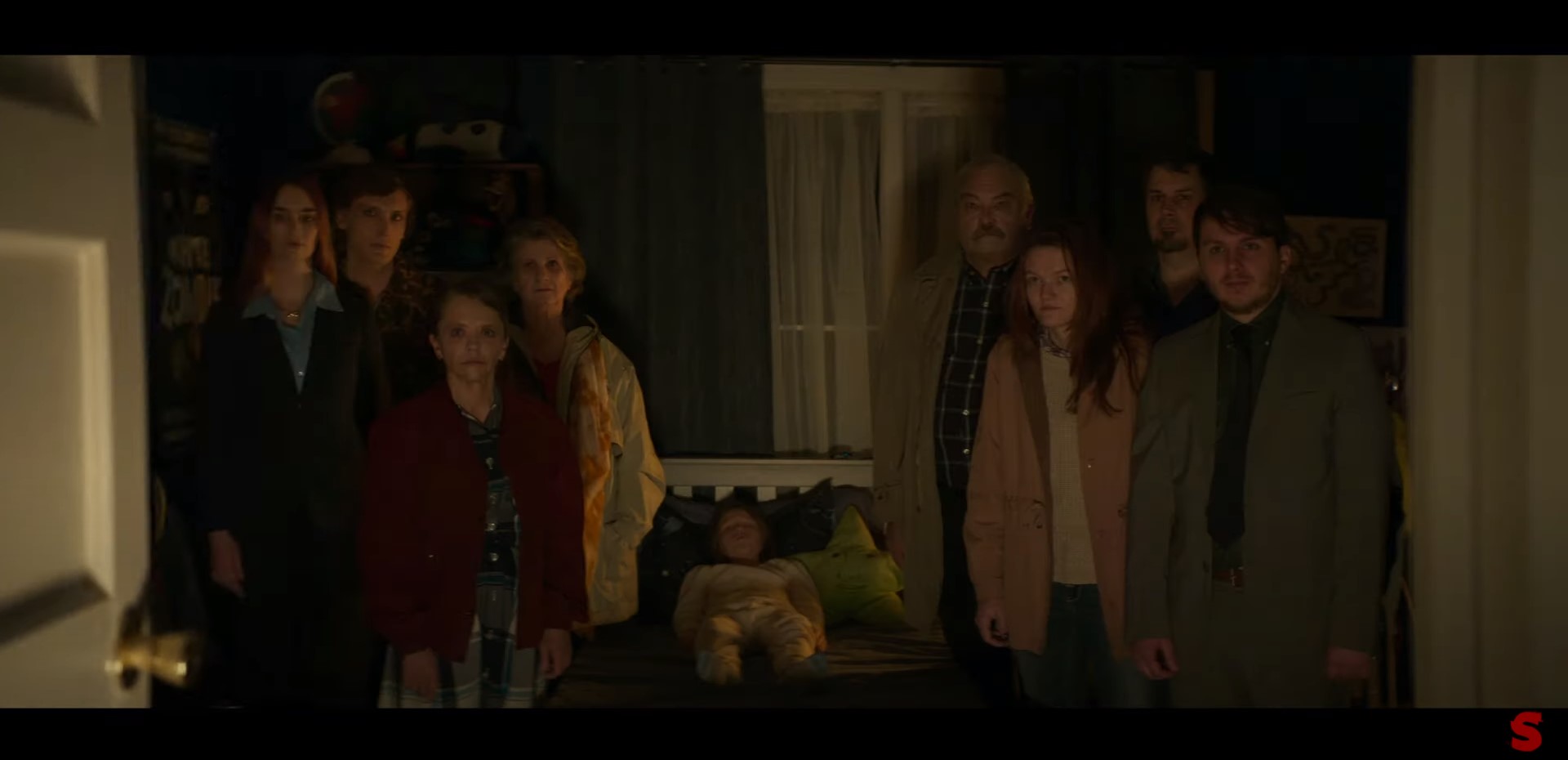
After escaping the imprisonment of an abusive ordeal with her father’s cult, the next eight years have been easy for Laurel living with the joy of her son who was born as a result of her abuse.  When her son contracts a mystery ailment that causes open sore rashes and bloody vomit, the doctors are baffled when the surely fatal, undetermined disease makes a rapid retreat and the boy recovers seemingly miraculously.  Days later, the boy again falls more ill and, this time, Laura suspects her previous life in the cult to be behind his suffering.  With clandestine acolytes making the presence known, Laura flees with her son as the two motel jump across the Midwest with no only two detectives on her tail but also the cult looking to reclaim her son with a terrifying and gruesome new gift. 

Back into the creepy kid subgenre field we go with another multiplex single mother and son relationship American-thriller, simply titled “Son,” from Irish-American writer and director of “The Canal,” Ivan Kavanagh.  Spun from the yarn of familiarities that are stitched together with the overprotective mother trope battling the forces of beleaguering evil reigning down on her child, as seen in such films with Jacob Chase’s “Come Play” and Jennifer Kent’s “The Babadook,” Kavanagh deviates from the abstract lines of the mental illness undercurrent that reshapes and plagues centric characters into horrific, supernatural episodes of isolation, grief, and loneliness personified by often terrorizing entities lurking in the dark.  “Son” is an American production formed by intercontinental production companies with the UK’s Elastic Films (“Cub,” “What We Become”) spearheaded by producer Louis Tisné, Dublin based Park Films co-operated by Kavanagh along with AnneMarie Naughton and Ana Habajec, and René Bastian and Linda Moran’s Belladonna Productions (“Funny Games,” “Stake Land”). “Son” is an exclusive release of Shudder and RLJE International.
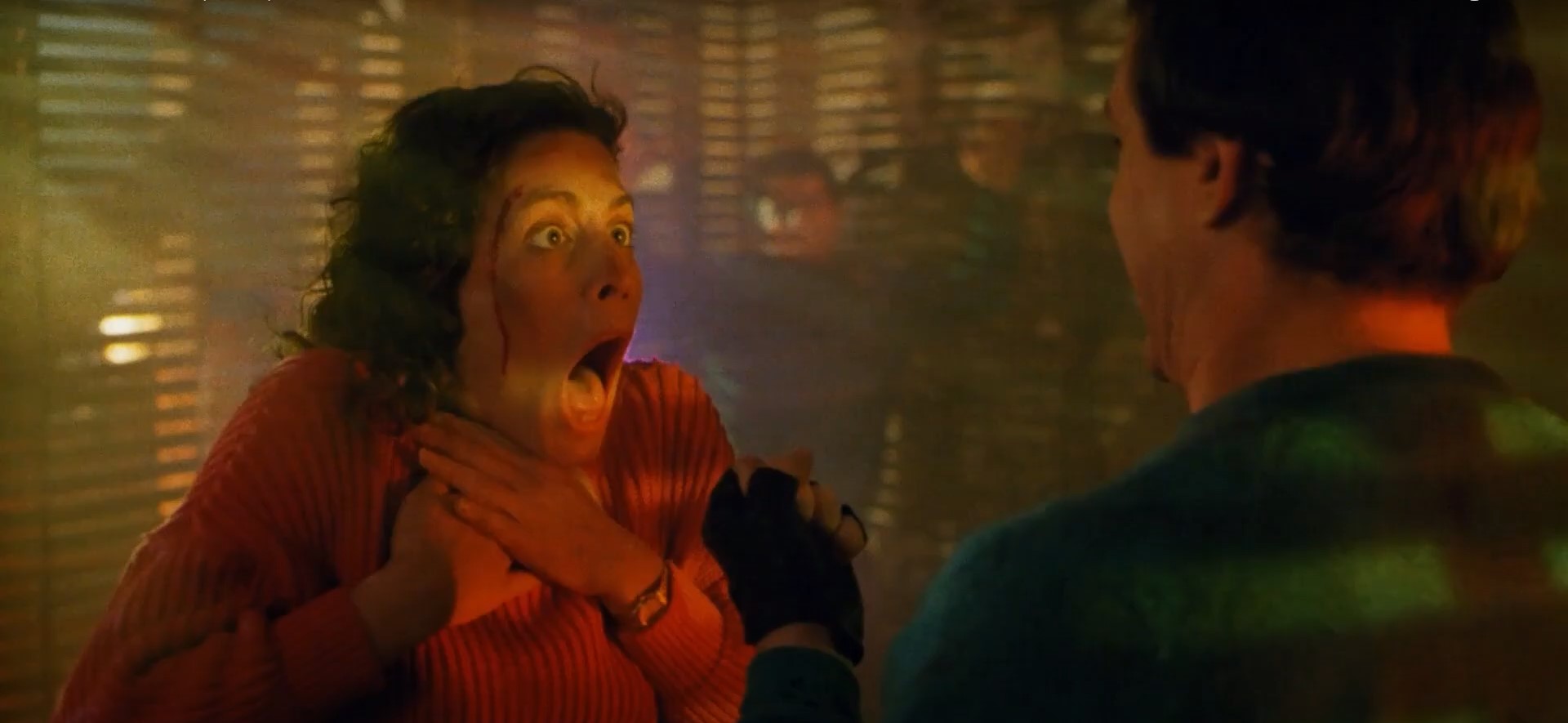
Added to the long history of assorted turmoiled single mothers versus the things that go bump in the night is currently a big name in horror at the moment with being principally casted in the latest three recognized sequels of the “Halloween” franchise.  Andi Matichak steps into the wretched past but ever so optimistic shoes of Kindergarten teacher Laura whose introduced in a prologue of heavy rain and the blood pumping cacophony of an intense chase.  Pregnant and haggardly dirty and barefooted, Laura is being followed by menacing, unknown men before she pulls off to safety just in time to give birth to a child she verbally proclaims no desire for but reluctantly accepts as her own after a bloody, front seat natural delivery, a moment that not only conveys Laura’s compassion but also her strength. Fast forward, Laura and son David (Luke David Blumm, “The King of Staten Island”) living daily normal lives with school, neighbors, and the ins and outs of parenting.  Blumm gives a good run on distress and duress as the titular character that has contracted an illness rapidly reconstructing his mortal soul.  “Killer Joe” and “The Autopsy of Jane Doe’s” Emil Hirsch enacts a sympathetic detective taking an interest in Laura’s case, but Hirsch is mostly silent and stiff, almost like he’s part of the background furniture, for the entirety of the character arc, bringing down, as a counteractive device, much of “Son’s” speedball narrative.  Rounding out “Son’s” cast is Blaine Maye, Cranston Johnson, Kristine Nielsen, Erin Bradley Danger, Adam Stephenson, and David Kallaway.
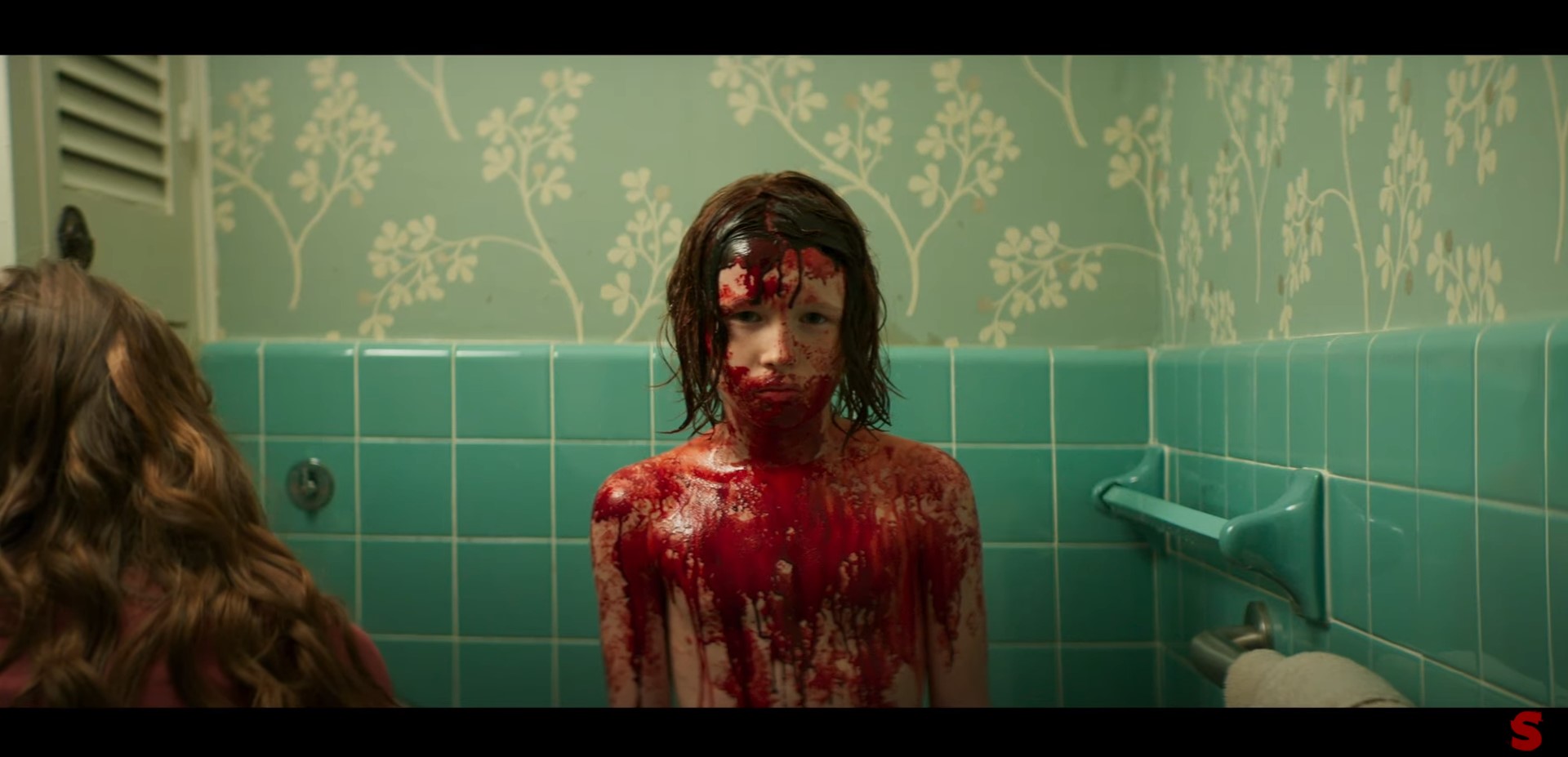
“Son” is surprisingly gory involving intestinal viscera and severed body parts with child actor Luke David Blumm at the center of all the carnage and the story is heartbreakingly sober when a mother, a rape victim, has to make the ultimate sacrifice for the greater good.  Kavanagh subtly massages the thematic quandary of how a rape resulted child can be a perspective schism.  On one hand, the born without sin child stems the mother’s womb, ready to be loved and cared for by instinct to protect our own, whereas the other side, of that coin, more ingrained into the human psyche than we like to admit, is the child is a constant reminder of the past, a figurative reincarnation of a hurtful monster who the victim has to lay eyes on every day for the rest of their life.  Kavanagh instills into Laura that blurred line of trauma while imprisoned by the cult and she couldn’t clearly recollect whether her father or someone, or something, else is David’s biological father.  However, Kavanagh’s script houses too many illogical potholes to warrant foolproof approval, some more egregious than others.  For example, at one point Laura removes her severely ill son from the hospital without authorization because she believes cult members are after him to at which then she arrives back home to gather clothes and supplies to skedaddle out of town.  Yet, there were no police officers or cult members in route or staged at the home which should have been the first place anyone looking for Laura, as Emil Hirsch’s character states over the phone to Laura, would be staked out.  Secondly, the local detectives are able to cross state lines into Mississippi, Kansas, and Alabama without so much as batting an eye lash, presumably stepping over local authority.  Lastly, If evidence of a cult, especially a pedophile cult as one of the detectives suggests, is rearing its ugly head again and coming after a previous victim and her son, the federal government would be much more involved than local PD.  “Son” holds fast in keeping it’s cast close to the chest albeit some severe logical issues.  With that being said, Kavanagh knows how invoke dread and horror with his bleak narrative and stylistic techniques.  Good at horror, poor at story is what Ivan Kavanagh’s “Son” boils down to, leaving behind a lingering middle of the road afterthought in it’s wanton wake.
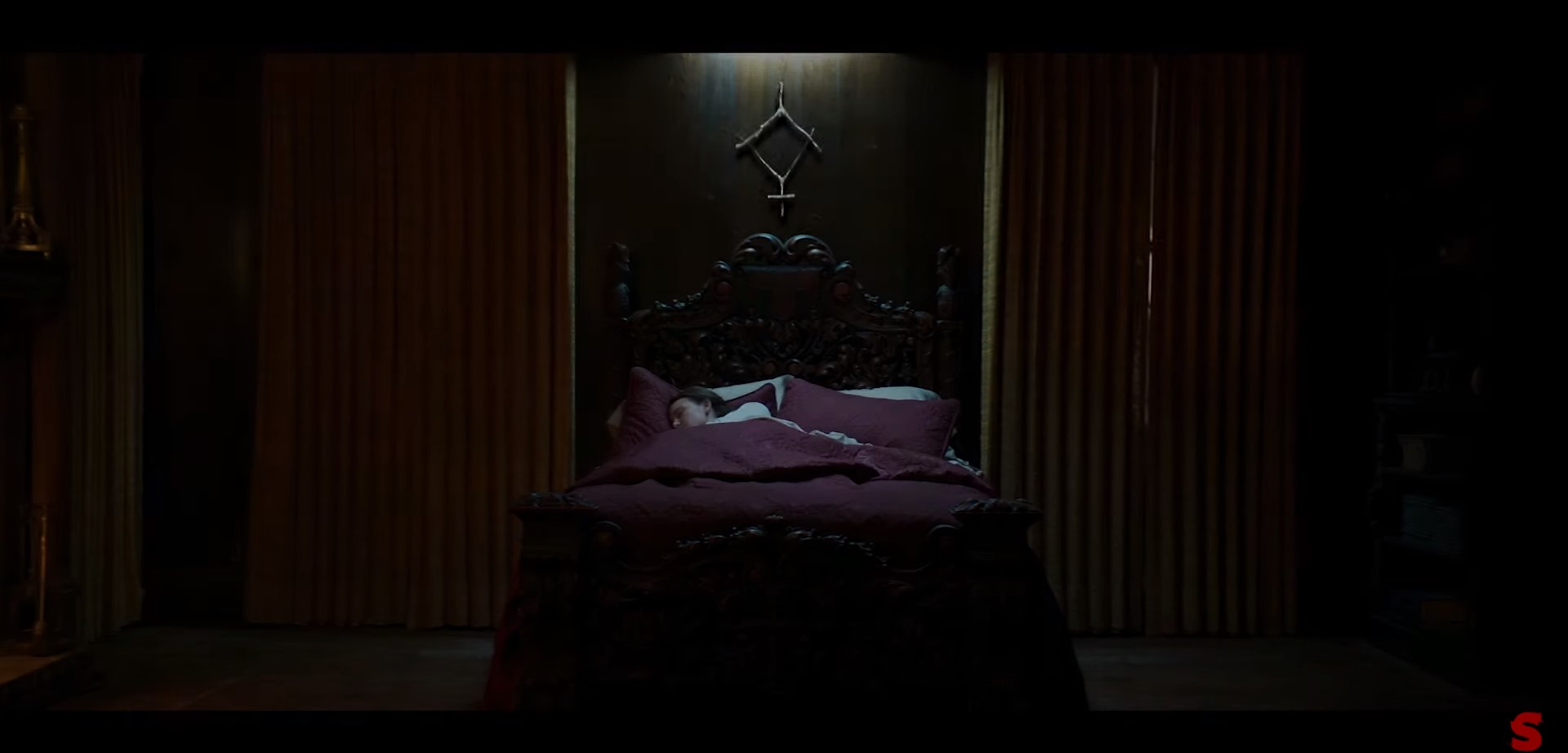
“Son’s” the past catches up with us all story perpetually never becomes tiresome, hitting every stage precisely with intention and full of scares to garner big, soul-freezing reactions. The iciness of “Son” will leave goosebumps, raise hairs, and shiver spines and you can watch it all now on a UK Blu-ray from Acorn Media International. Presented fully hi-def in a widescreen 2.39:1 aspect ratio, the region 2 Blu-ray is PAL encoded and has a runtime of 98 minutes with UK rating for strong gore, violence, language, sexual threat, and child abuse references. When looking over the picture quality, there’s not much to note other than some scenes appear softer than others in a more a director’s style approach to the content of the scene. Much of the blood is inky black with a nice mirror glaze shine, as Paul Hollywood would say, inside from the solemn color-toned to the natural lighting of daytime scenes. The English language Dolby Digital 5.1 surround mix has a robust and fiery soundtrack in Aza Hand’s quite aggressive sophomore composing score. Dialogue is clean and clear without any break in the chain or obstruction as the audio tracks are balanced appropriately through all five channels. Special features include a spliced together snippets from interviews with the cast and crew along with deleted scenes more directly involved exploring Laura’s cult-captive background. To say you would do anything for your child is a complete understatement in Ivan Kavanagh’s “Son,” a top shelf singer full of venom , but as a whole, better stories are out there.

Take a Dekko at this EVIL! “The Collingswood Story” reviewed! (Cauldron Films / Blu-ray)


Rebecca moves from her small town of Bedford, Virginia to Collingswood, New Jersey to attend college.  Her small town boyfriend, Johnny, buys her a webcam to keep in touch with long distant video chatting, or to more so keep tabs on the sanctity of their fraying relationship.  For her birthday, Johnny provides her an entertaining list of audiovisual phone numbers to call, one such number belonging to an enigmatic online psychic Vera Madeline who is compelled to reveal Collingswood’s gruesome, satanic ritualistic history with one of the town’s most horrific mass murders having occurred at the very house Rebecca currently resides.  As Rebecca and Johnny investigate deeper, the webcam keeps rolling as their curiosity leads them into a dark and deadly supernatural mystery that will engulf them both. 

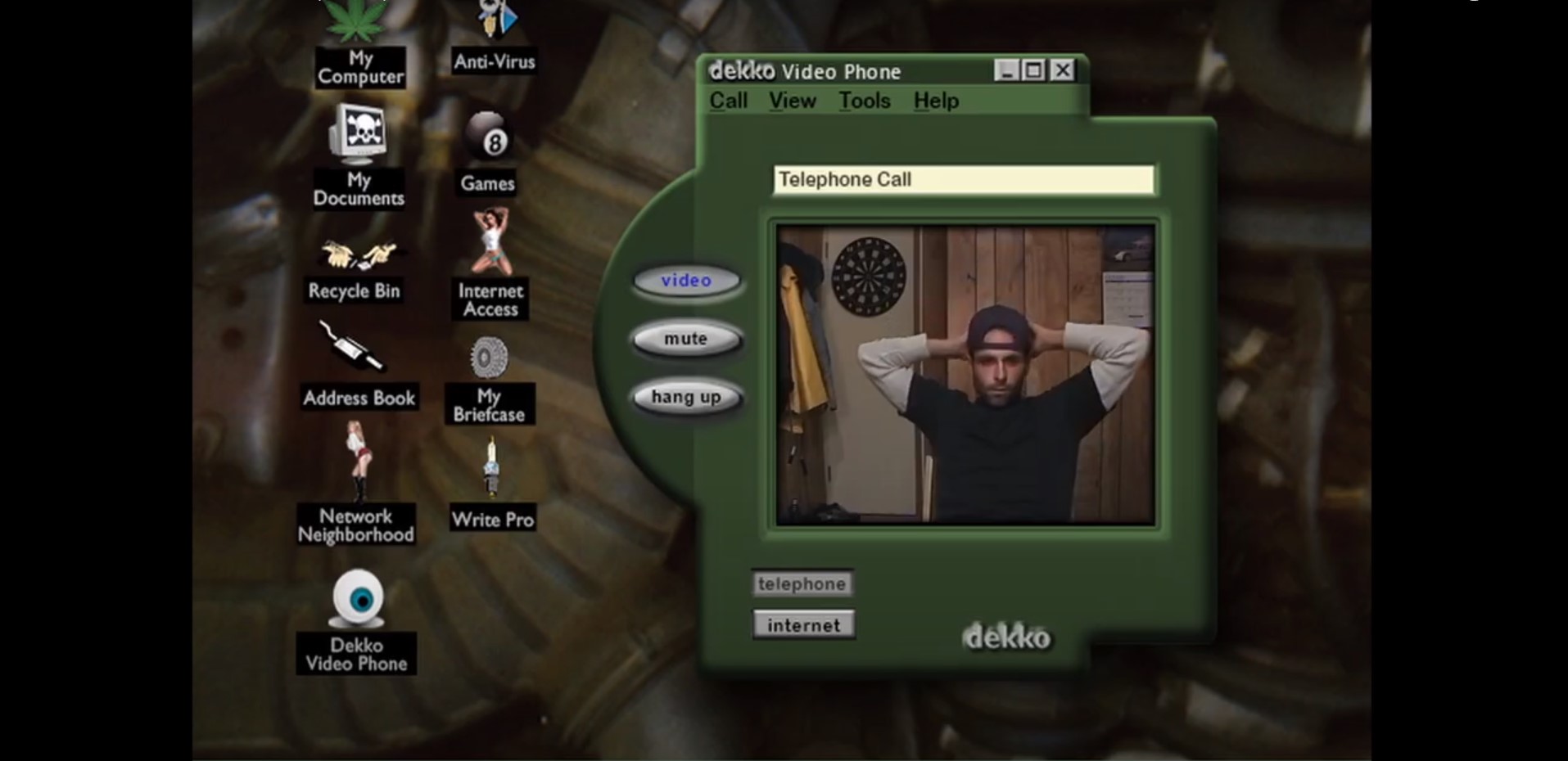
Talk about dated content!  “The Collingswood Story” is the 2002 trailblazer for the paranormal webcam subgenre that has ballooned over the last decade with the success of “Host,” “Followed,” and even the “Paranormal Activity” mega-franchise.  Writer-director Mike Costanza’s early 2000s film starkly contrasts how internet communication technology has changed over the last two decades with the ridiculous long corded phone jack plugins, time consuming uploading of camera footage before the invention of social media live platforms, and the lack of a pre-multiple participant teleconference with a limited single caller-to-caller video application. Once under the working title of “Mischief Night” as the story is set around Halloween night, “The Collingswood Story” is one of Constanza’s first feature films after branching out from the Paramount Pictures’ art department and right into the low-budget horror constraints, but the novel stylistic idea, based off real reports of a mass murder in a New Jersey town and saw little-to-no post-completion success traction back in the early 2000s, was a sell-produced production by Constanza’s Cinerebel Media along with associate producer Beverly Burton.

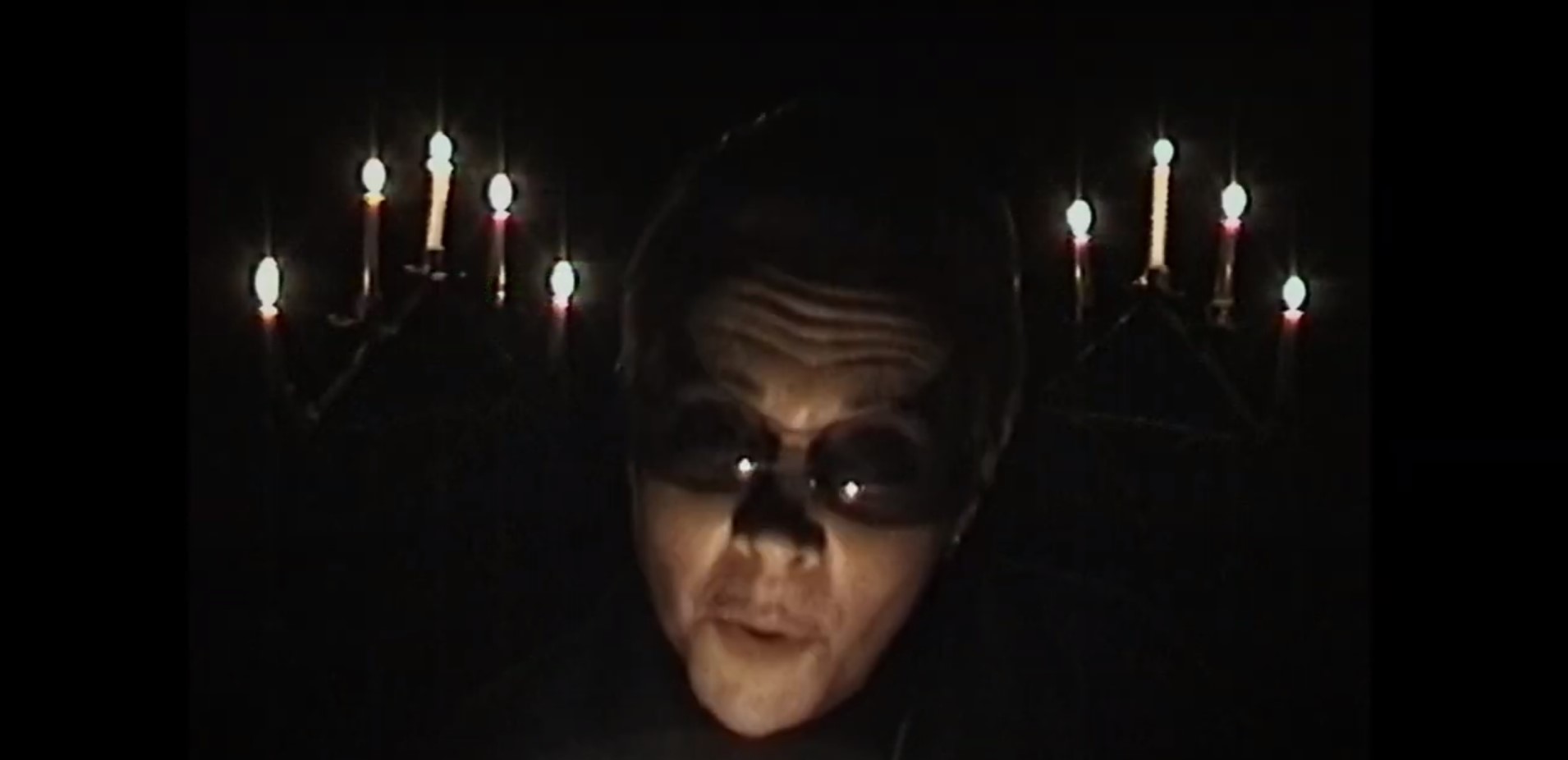
An interesting tidbit about “The Collingwood Story’s” shooting with the cast is that all the actors were shot individually since everything was done on essentially a webcam. Constaza would be in the room and read opposite the actor in performance. What’s spliced together makes good on delivering reasonable and believable menace, but without talent performances, there would not have been a revisiting home video release of this title. Stephanie Dees got her start in a major horror franchise by playing a minor role in “Halloween 4: The Return of Michael Myers” and 13 years later, Dees finds herself in the lead role of pioneering computer horror as birthday Rebecca. Opposite Rebecca is the lovesick paranoid puppy Johnny, played by Johnny Burton in his only credited role. Rebecca and Johnny go through the song and dance of his skirting around his relationship controlling paranoia as he bounces from Rebecca to his crass friend Bill (Grant Edmonds) while Rebecca is the picture of studious student, ignorant to the self-imposed friction in Johnny’s head. Burton’s a little stiff around the gills in his one-note and uninspired blue collar rendition of a longing, small town boyfriend whose personality matches his small bedroom as a background that never changes with the character unlike Rebecca who seems to grow into her environment with ever frame. In what’s probably her biggest identified role in a feature film, television actress Diane Behrens lurks in the shadows as the enigmatic psychic Vera Madeline wresting the story away from the slow burn of a dissolving relationship of young lovers and diverting into what we all came here for – a thrilling ghost story. Behrens plays the part with showmanship and a subtle inking that anything itching to come off her of mouth will be infomercial and portentous.

What Costanza has accomplished technically with “The Collingswood Story” is nothing short of amazing in his ability to seamlessly film and edit not only the scenes together coherently but also fabricate a meaningful connection between the two actors, shooting separately without a breath of another’s creativity to pull from, over still rather new and evolving technology to which some opposing critics would consider the technology to be disassociating the social standards.  “The Collingswood Story” is not a point and click monotony of talking head syndrome one might expect as Costanza, despite the gratuitous B-roll footage recorded by Rebecca as she drives around Collingwood searching specific locations, adds enough main footage filler of Johnny’s suspicions of a secret boyfriend, Johnny’s lowlife, yet witty, friend Billy giving him bad advice, and of psychic Vera Madeline’s mystifying mysticisms to keep viewers engaged while looking through the garbled eyeglass of lower compression bitrate quality of webcam footage shot on a Hi-8 camcorder that truly gives Costanza’s film that 90’s SOV feel at times.  There’s also the age-old theme of helplessness associated with webcam horror where those characters watching, just like us viewers, can only watch in an eye-widening terror unable to be a lifesaving branch of help when the supernatural stuff goes down.  Costanza also conveys the sense that the paranormal has zero limitations on a medium, in either a soothsayer or an internet conduit facet, to extend evil from the beyond, but the limitations on sensibility can extend only to a certain point in a culminating of Rebecca’s foreboding curiosity as her expedition into her lodging’s attic behooves her to take her laptop, along with its super long extension jack plugin cord, in order for her boyfriend, who lives a good 600 miles South, to accompany her into the darkness.  At this point, technology has yet to catch up with “The Collingswood Story” need and that’s where plausibility of the characters logic fumbles coinciding with an open for interpretation ending that wraps too quickly and asks more questions than provide answers.

For the first time, “The Collingswood Story” receives a proper North American release where technology has finally caught up to Mike Costanza’s vision! Cauldron Films presents the worldwide debut of a high definition, unrated, and region free Blu-ray release, remastered from the original source tapes by Costanza himself. Filmed on a Super Hi-8 camcorder, with Costanza undoubtedly the DP, “The Collingswood Story” remains presented in it’s original 1.33:1 aspect ratio and what also remains is the compression artefacts associated with transferring the source tapes. Certainly nothing devastating beyond a handful of B-roll scenes as much of the webcam shots look neat and tidy, but I’m surprised the reversal, aka webcam perspective of the person talking, scenes still shows a fair amount of blocky noise. The English language 2.0 stereo mix emits noticeable background static from, more than likely the culprit, the digital interference. The faint hum of dialogue track feedback hum is annoyingly choppy and it’s not just the play on the webcam mic of come-and-go vocals and background noise; however, the dialogue is clean and clear. The choice of soundtrack, a sundry of late 90’s-early 2000s placid rock, is audibly limp even for the dual channel output. The release comes with option English SDH subtitles and has a runtime of 82 minutes. Special features includes a behind the story with Mike Costanza looking back at the genesis of the idea as well as noting his inspiration for the idea, an interview with Stephanie Dees, an interview with Johnny Burton and Grant Edmonds, a director commentary, image gallery, and trailer. Despite it’s antiquated flaws, the crossbreeding of tech and terror in “The Collingswood Story” should have lifted the film into the cult status rafters of found footage films with the likes of “The Blair Witch Project,” but in lieu of the world’s massive oversight, Cauldron Film’s release is a big leap forward that looks back to the past.

Own the Limited Edition “The Collingswood Story” on Blu-ray Today!

The Earth is Healing with EVIL Intentions. “The Feast” reviewed (IFC Midnight / Digital Screener)

Glenda is frantically planning a dinner party for seven people at her newly constructed, modern rural home in the Welsh countryside. In order to quickly prepare, Glenda hires a young waitress, Cadi, from the local pub-restaurant as a pair of extra hands, but becomes intertwined with Glenda’s eccentric and dysfunctional family and friends who are drug addicts, sexual deviants, narcissists, and greedily apathetic in respecting local Welsh traditions and lands. However, Cadi keeps her own secret, one that’ll will transform the joyous dinner party into a night of deadly retribution for all their sins upon Earth.

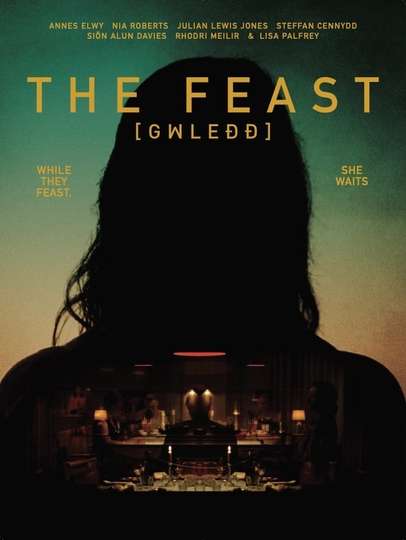
For a language once on the brink of extinction and only spoken by less than a million people, probably even more less than that estimate, director Lee Haven Jones’ debut feature film, “The Feast,” reintroduces the language to many of us with revitalizing the Celtic-tradition Welsh tongue by implementing it as the entire dialect for his introductory from the United Kingdom. Jones’ eco-horror clashes archaic Welsh lore and traditions with the newfangled inattentive and neglectful modernism from a script by Roger Williams, a frequent collaborator with Jones on previous credits such as the split-heritage documentary “Galesa” and the short-lived drama series drama series, “Tir,” about foreign invaders intrusively adding financial hardships Welsh landowners. Also known as “Gwledd” on script in Wales, “The Feast” is executively produced by Jones and Williams as well as Gwenllian Gravelle, and Paul Higgins under an amass of production companies in the British Film Institute (with funds stemming from the national lottery), Ffilm Cymru Wales, S4C, Fields Park and, in association with, Great Point Media and Melville Media Limited.

THE FEAST Still 1

A dinner party fit for the scum of society comes to mind as Jones rounds the horn introducing Glenda’s passively confrontational family whom all are on display for having vices unsuitable for polite society. Beginning with her sons, two brothers shamed by their parents into hiding from out of the public eye by whisking them away to their rural abode, are portrayed by actors Steffan Cennydd as the drug addicted and party loafer Guto and Sion Alun Davies as the an intelligent and sterile sociopath with a sordid past involving accusing women. There’s also her husband Gwyn (Julian Lewis Jones, “Elfie Hopkins: Cannibal Hunter”) with a sleazy demeanor and an quenchable thirst for money. The family friend Euros (Rhodri Meilir) lives and breathes squeezing every ouch of worth from the dollar signs he envisions plastered on everything to the point that his pigheadedness will eventually get the better of him. Lastly, there is Glenda (Nia Roberts) herself who is a pursuer of the finer, material things eager to display them proudly no matter the cost of bloodshed. Roger Williams’ characters are written absolutely lush with cancerous class and a vague sense of their surroundings as they stew proudly being one boldly intense personality to the next; however, they become becomes cleaved by the house party help, Cadi, with a shark-circling simplicity by Annes Elwy. Elwy barely has any dialogue as she submerses Cadi, quietly like a submarine silently churning the waters, into the family’s eclectic affairs and studying their every movement with a naïve gaze, but there is nothing naïve about Cadi’s uncomfortable silence that becomes heedlessly unnoticed by, no surprise here, the group of narcissists. “The Feast” rounds out the cast with Lisa Palfrey, the only rational head with surprising little screen time after briefly unveiling a shocking revelation about just exactly who Glenda let in her home.

THE FEAST Still 2

2021 has been the year for under-the-radar, but oh so good, eco-horror.  Among the ranks following this years Ben Wheatley’s “In the Earth” and Jaco Bouwer’s “Gaia” comes the all-things-Welsh cautionary outlier that when pushed too far, when disturbed too much, and when reeking virally infused putrid, a vindictive reaper will come calling.  In this case, that harbinger of death takes the form of a landbound spirit rooted in lore with an insidiously coy wolf in sheep’s clothing mounting a strike with subtle, rancorous fangs by smothering them with their own debaucheries and vices.  “The Feast” will take a couple of viewings to fully digest the complete airy extent of Jones’ lax editing, under the cut and paste thumb of Kevin Jones, that can infrequently blur character timelines and presence in the story, as if plot points were forced into an unsure elucidation to connect the dots.  With a simmering horror on a spoke of unsettling imagery, the editing should have slightly been more binding to tighten gray areas; instead, “The Feast” has an abstract quality third act that not only chops up scenes, but also chops up bodies influentially consumed by the already self-destructing aspects. Some time must pass, a few days maybe, to let “The Feast” penetrate an understanding as it’s one of those flicks, wrapped loosely in cultural folklore or maybe told with the assumption non-Welsh viewers will grasp, the more thought about or written about, the more appreciation the film will disclose way after the credits roll.

THE FEAST Still 3

Funny how gravitating cultural folklore and nature grow an impeccable theme of doom as if shaping mythologies and a life-growing ecosystem equate to nothing more than a foreboding sense that one day mankind will become extinct at their own hand. “The Feast” portions a slice of that ominous pie, topped with Welsh lore and gore, coming to North America theaters and digital on-demand this November 19th, just in time for America’s feasting activities of Thanksgiving. The 93 minute, unrated film will be distributed by IFC Midnight, the sister label to IFC Films, owned and operated by AMC Networks Inc. Bjørn Ståle Bratberg serves as cinematographer who options to start with the fresh-air, blue-sky landscape of the Welsh countryside than slowly guide us, step-by-step into the character delinking from the natural, beautiful world into a more menacing night of harsh darkness and fervent flame to reveal true identities. Bratberg’s dim lighting seemingly imprisons the sordid family in the new and modern home that’s like a prison with a gray brick interior and has a room of relaxation for Glenda that is noted by a guest in resembling a prison cell. The message of revenge resounded loud and clear; “The Feast” lays down coruscating repercussions in reaping the land for one’s own benefit and Lee Haven Jones’ wayward timebomb evokes an upsetting fear and tension for a dinner party finale that is surely to go way-wrong in this different kind of revenge thriller.

A Concentration Camp of Desecrated Flesh and Pure EVIL. “The Gestapo’s Last Orgy” reviewed (Blu-ray / 88 Films)

After nearly escaping war criminal charges for his role as Commander of a bordello operated Nazi concentration camp that mistreated and murdered multiple thousands of Jewish women, former office Conrad Starker meets his lover Lise Cohen, a former Jewish prisoner of his he fell fond of during their time of occupation, at the same barbaric camp now in vacant ruin. Alone together and wandering the grounds, Lise recalls her first arrival at the camp and how the then ruthless Starker made it his mission to break Lise of her guilt-based nihilism by exacting cruel torture upon her and those close to her in camp. Commander Starker’s direct reports, a dominatrix SS officer named Alma and a sordid Lt. Weissman, serve as his deviant and sadistic right arm, assisting him in striking fear into his new pet project. While troves of Jewish women are being raped by a slew of German soldiers on leave, as well as being tortured and even tested as a source of delicacy, Lise’s alleviated guilt turns her to play Starker’s game, making her become his own mistress, but Lise will never forget the camp atrocities at the hands of the Gestapo.

Never in my life would there be the time I salivated over the thought – dang, what a poignantly awesome title. Far from a generic, uninspired appellation that has completely captured my attention, lured me in like a fish by a dangling sex and exploitation worm, is the 1977 Italian-made Naziploitation “The Gestapo’s Last Orgy.” Understanding that the Cesare Canevari written-and-directed exploitation extravaganza is fabricated fiction from the mind of the Italian filmmaker sexploitation films such as “The Nude Princess” and “A Man for Emmanuelle,” and amongst other popular genres of that particular Italian era, there still lies a contrite underlayer deep inside my bowels for knowing “The Gestapo’s Last Orgy” is inspired by a baseline of truths – aka – the rounding up of Jewish people, forcing them into work and slavery in some sort of servitude compacity, and ending their lives as many were murdered in concentration or extermination camps by incinerations while still alive; all of which are displayed in graphic detail by Canevari in his film. Also known as the “Last Orgy of the Third Reich” and co-written with fellow “The Nude Princess” collaborator, Antonio Lucarella, no words can describe the depictions of Aryan abomination better than Canevari with a display of a wide-range of depravities from the master race in this shocking Cine Lu.Ce. production that Canevari produces.

Only two main characters span the narrative’s timeline between the active war and in the post-war clampdown of former Nazi officers.  We’re first introduced to Commander Conrad Starker (Andriano Micantoni aka Marc Loud, “LSD Flesh of Devil”) in an unofficial capacity as a voice over of a heated war crime trial rages over his driving around a small village before arriving at a dilapidated camp to meet with his beautiful lover, Lise Cohen, an introductory feature film role for then model, and presently a UNICEF Goodwill Ambassador, Daniela Poggi (aka Daniela Levy, “Olga O’s Strange Story”).  From then on, the story goes back-and-forth between the camp horrors from most of Lise’s perspective and her present day melancholy strolling through the now empty camp.  Just between these two, a burdensome and destructive self-contained bubble ignites a prudent connection for a means to an end, whether be Commander Starker’s from merciless lust to love or Lise’s reversal of her exploitation to gain a survivalist’s upper hand by playing right into Micantoni’s sadistic impulses.  Micantoni and Poggi, despite their vast difference in age with Micantoni in his mid-50’s and Poggi in her early 20’s, have shuddering, knee-buckling chemistry in the more abhorrent scenes, one particular involving the fellatio act on a German Lugar.  There are other various scummy characters and if you like girls in uniform, the Doberman-loving Alma (“The Stepdaughter’s” Maristella Greco) is as beautiful as she is a gestapo femme fatale.  Greco’s domineering performance matches her male counterparts in enthusiasm but with a bonus side dish of sultry sadomasochism that can’t be forgotten as Alma whispers her viperous tongue into the camp Commander’s ear (while also sticking the blunt side of her whip into his rectum – ooph!).  “The Gestapo’s Last Orgy” is a perverse party with respectable size cast, including roles played by Fulvio Ricciardi (“Killing of the Flesh”), Vittorio Jorderi (“Gang War in Milan”), and Caterina Barbero (“Raptus”), enlarged by a grand amount of extras from German soldiers to the Jewish women creating the allusion of an inhuman love camp.

“Ilsa:  She Wolf of the SS,” “Love Camp 7,” “S.S. Experiment Camp,” “Nazi Love Camp 27,” “Achtung! The Desert Tigers,” S.S. Hell Camp.”   I’ve seen my fair share of Nazisploitation and, aside from Tinto Brass’s erotica-elegant “Salon Kitty,” Cesare Canevari’s wartime rape and ravager hails to be one of the more distressingly twisted and disturbingly beautiful entries in the exploitation subgenre.  For Canevari, every scene counts by not making every scene gratuitous.  Yes, “The Gestapo’s Last Orgy” has it’s preposterous moments where sex-crazed Nazis aggressively dominate unarmed, vulnerable women, especially when they decide to soak an unconscious naked woman in brandy and set her on fire to taste pork-like flesh; however, even in that instance of out of left field cannibalism, the atrocities are all in the name of progressing Germany in the wake of victory and to leave nothing to waste in Germany efficiency when utilizing inferior races, whether for labor or food, after Germany has conquered opposing forces.  Most of the second and third acts returns back to Earth with smaller scale plot devices surrounding Lise and Conrad locking horns in a battle of wills to extract fear from Lise’s, mostly nakeda nd suspended, fearless body.  “The Gestapo’s Last Orgy” can be said to be a film about challenging will power, enduring strength, and patience and for when the opportunity is right for the taking, strike while the iron is hot.  Or, for many, Canevari’s lopsided carnal lark can be viewed as a wicked sex fest reaped from the backs of other the people.   Canevari rides that thin line and never pushes the gratuitous full monty  down our throats.

For the first time on Blu-ray, anywhere, “The Gestapo’s Last Orgy” arrive onto a remastered in 2K transfer scan Blu-ray from UK distributor 88 Films who have crossed regions with one of their first North American releases!  Still currently banned in the UK, the stored film’s Blu-ray, remastered from the original print negatives, is region free and in full 1080 high definition, presented in a widescreen 1.85:1 aspect ratio.  The restoration is frankly flawless.  The composition of skin tones and textures and contrasting hue scheme offer a perceptible palate of every shadowy contrast and infinitesimal detail, especially in the impeccable facial diversities.  The release has offers two restored audio options:  An English dub 2.0 DTS-HD master audio and an Italian DTS-HD master audio with in-built English subtitles.  Both tracks share an ambient and soundtrack equality quality through the dual channel stereo; however the original Italian track is inherently smoother with the dialogue with accurately synched English subtitles. The Blu-ray snap case comes with reversible cover art, original poster art are in the inside along with a mini poster of the same art as one of two inserts. The other insert is a 21 page booklet brimming with stills, different country posters, and an essay from film historian Barry Foreshaw entitled Taking on the Censors: Italian Excess. All of this limited edition tangible goodness is housed under a limited edition cardboard slip cover with new art by illustrated Richard Davies. Inside the coding on the BD50 is also a work of art with audio commentaries by Italian film experts Tony Howarth and Nathaniel Thomason as well as a separate commentary with critic and author Samm Deighan. Special features also include an alternate Italian ending (rather an extension of the feature cut), an interview with Pierpaolo de Sanctis on Remembering Alberto Baldan Bembo the soundtrack composer, an interview with Luigi Cozzi in One Thing on His Mind in regards to director Cesare Canevari, and the English trailer. Movies like “The Gestapo’s Last Orgy” are completely in bad taste beyond a shadow of doubt. Luckily for me, and perhaps those reading this review, we’re a tasteless bunch of sleazy celluloid purveyors glad to see 88 Films praise Cesare Canevari’s most controversial and infamous film with a snazzy new Blu-ray treatment.

Don’t Miss Out on Owning 88 Films’ “The Gastapo’s Last Orgy” on Blu-ray!

EVIL is Only in Your Nightmares. Or is it? “Retribution” reviewed! (Severin / Blu-ray)

Severely depressed artist George Miller attempts suicide by jumping off from his apartment building.  During the exact same time, a low-end gangster is brutally killed by cruel loan sharks.  Being both born on Aril 1st and dying at the same time, the tortured spirit of the gangster possesses the meek artist’s body right before being resuscitated by EMTs.  After a long recovery filled with horrific nightmares, the affable artist returns to his apartment building where he’s welcomed by fellow tenants and an overly warm landlord.  Still plagued by nightmares that have seeped into his awake conscious state, George medicates himself to sleep but the nightmares continue as he sees himself using psychokinetic powers to kill random individuals with extreme malice.  The nightmares are so real he wakes up in a sweaty panic to find out that that exact person was killed the night before the very way it played in his dreams.  When George realizes the gangster has inhabited his body for revenge, he and his friends take measures to put an end to the vindictive carnage. 

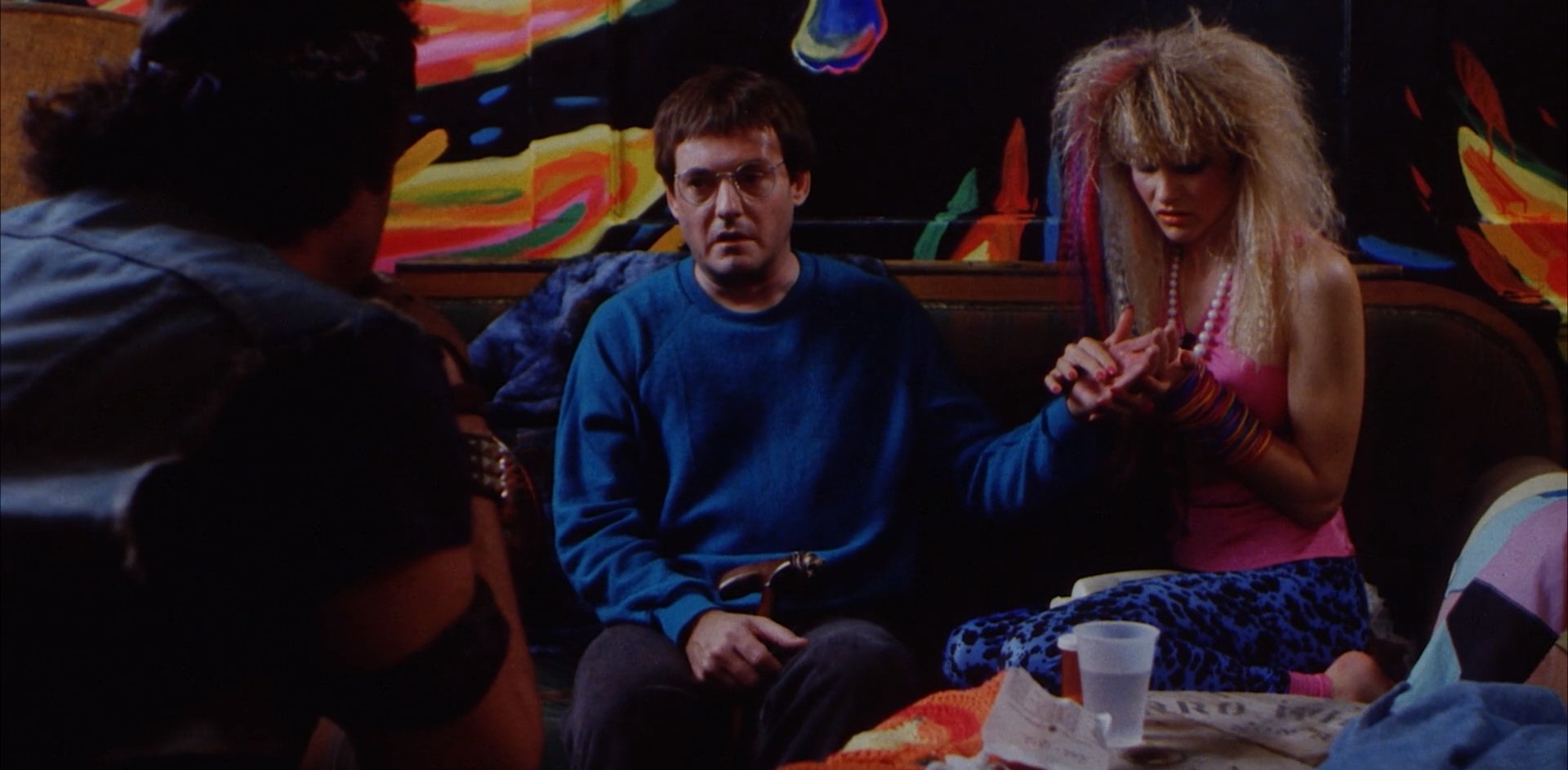
Santa Maria.  Mother of God.  Help me!!!  That phrase, attached to the very last seconds before a gruesome death and announced blankly from fiery, dagger eyes, has forever been seared into the recessed corners of my eardrums as the death cry that echoes throughout Guy Magar’s 1987 gory and visceral possession identity crisis, “Retribution.”  Magar’s ultra-violent and super-chromatic film is the filmmaker’s grand inaugural entrance as a full-length director following up behind a string of director chaired television episodes, including episodes from “The A-Team,” “Blue Thunder,” and “The Powers of Matthew Star” that regularly contained quickly charged, action packed sequences.  The Egyptian-born director translates those intense moments of frenzied disturbance into his mean-spirited and unforgiving vindicator of a script cowritten with then first time screenwriter, Lee Wasserman.  Shot in Los Angeles, “Retribution” is a virtual tour of the city, using the streets of L.A. and real locations, such as the Don Hotel for George’s residence and the nearby House of Neon Art, as a lively, eclectic, and wallet-saving convenient giftwrap for the film’s Dr. Jekyll and Mr. Hyde complexion that feels totally normal compared to L.A.’s divergent glamour.  Magar and Wasserman produce the film with Renegade and Unicorn Motion Pictures serving as the production companies and presented by Taurus Entertainment, formerly connected with United Artists. 

There are probably many actors that could been imagined for the role of George Miller, the suicidal artist plagued with visions of him committing murder, but it’s hard to imagine that venomous stare of complete satisfaction in madness spread across the face of anyone else other than Dennis Lipscomb.  No disrespect to the “Eyes of Fire” and “Wargames” actor but Lipscomb isn’t a chiseled-jawed and muscular leading man; in fact, Lipscomb is quite the opposite, but his range into mild-manner, all around nice guy George Miller into the lust for hatred and murderous revenge George Miller hangs on with complete chasmic permanence.  However, George’s love interest with the street working prostitute and fellow Don Hotel resident, Angel (Suzanne Snyder, “Return of the Living Dead II,” “Killer Klowns from Outer Space”), hardly ever seems natural in not only in the characters’ surreal age-yawning dalliance but also the chemistry looks and feels flat between Lipscomb and Snyder.  Magar and Wesserman neglect diving more into that bond between them but their enamored gleamy eyes for one another is apparent and strong without the context to back it up.  “The Dungeonmaster’s” Leslie Wing also is placed as a George Miller sympathetic advocate in her role as hospital psychologist Dr. Jennifer Curtis, but Dr. Curtis has more background to contend with in comparison to the suddenly conjured fondness from Angel as Curtis is a mental health professional caring for a suicidal patient from at his rock bottom worst to a complete positive turnaround in his mental transformation.  Curtis has more skin in the game with George’s supposed delusions of actually killing people in his nightmares as she defends not only George’s unique supernatural circumstances, but, in a way, herself as a licensed medical profession following HIPAA laws.  “Retribution” holds many dear and unforgettable characters that essentially captures the entire 1980’s spectrum of personalities and, even for a brief scene, the cast gives each role their all, including performances from Susan Peretz (“Dog Day Afternoon”), Clare Peck (“Teen Wolf”), Chris Caputo (“Ghost Warrior”), Danny Daniels (“Voodoo Blood Bath”), Ralph Manza (“Godzilla”), George Murdock (“The Sword and the Sorcerer”), Mike Muscat (“Hunter’s Blood”), and Hoyt Axton who doesn’t stray too far from his good intentions, but naïve, father role in “Gremlins” to being a detective tracking down suspect George Miller. 

I’m in total awe of Guy Magar’s “Retribution.” That opening scene of the suicide attempt with Alan Howarth’s building tension score drops not a single piece of dialogue yet opens with a gripping life and death situation, musically synced to progress toward a harrowing climax, and every frame is dripping with vintage 80’s appeal. Magar definitely knew what strings to pull to get the blood pumping, to get you excited, and to drop an excellent mystery right in the lap, or the middle of the street in this case with George Miller’s body after it flops off the car it just smashed onto. From that point on, “Retribution” peddles forward following the recovery, recouping, and ruination of George Miller’s life at the unseen hands of an exploiting, malevolent spirit that seeks to track down the top-tiered gangsters that shot and burned him alive and exact his own brand of harsh psychokinetic justice. Does it matter how George and this gangster, both born on the same day and both nearly died at the same time, came to fuse transcendently together? Don’t worry. Magar didn’t think it was important either and he’s right! “Retribution” snags all the attention for the sole purpose of the ride and that ride being a beautiful, color-coded daymare. The one aspect that ultimately retracts the buzzing high, stemmed from most 80’s films, is the sluggish love interest subplot between George and Angel stutter stepping into an awkward phase of interactions that hard stops much of core plot and though the plot is neurotically nonsensical to begin with, George and Angel’s desires for each other are about as cringeworthy as they come. Stick with the gore by honing in on Miller’s subconscious alter ego of a gangster serving his killers their just desserts via Kevin Yagher (“Nightmare on Elm Street 2: Freddy’s Revenge”) and his highly effective special effects on a low end budget that, along with a brilliant showing of cinematography by Gary Thieltges, tips into the categorical likes of “The Evil Dead” or “The Exorcist.”

“Retribution” delivers a fervency unlike ever seen in one of the utmost, must-see, shamefully overlooked horrors films of the 80’s.  Now, with a deserved boost and in style, “Retribution” gets the royal restoration treatment with a jammed-packed and sleek 3-disc Blu-ray set from Severin Films and distributed by MVD Visual.  Disc one’s theatrical cut, clocking in at 107 minutes, comes from the recently discovered 35mm pre-print elements, shot on an Arriflex 35 BL3 per IMDB, and has been digitally scanned in 2K, presenting the region free film in 1080p Full High Definition inside the original widescreen 1:85:1 aspect ratio.  “Retribution’s” image pleasingly pops with fine delineating attention to the details that reach out to the point where they’re nearly tactile textures.  Every single setup of Robb Wilson King’s production designs are rich to begin with but are even figuratively injected with a smoother compression growth enhancing hormone, adding more layers of surface level details that personify and personalize the space.  Magar’s chromatically fluorescent vision is a literal tilt-a-whirl palette blast of phantasmagoria.  Disc tow is the extended Dutch video version that adds back in the extended seconds on the longer, gorier kill scenes.  The English language DTS-HD Master Audio 2.0 is the sole mix on the release and, honestly, sates the need with the dual channels.  You obviously don’t get the surround sound, which considering this release would have been ideal, but the stereo mix, as well as the dialogue track, is still full-bodied, identifiable, and spotless of blemishes.  John Carpenter understudy Alan Howarth scores his solo synth-laden story on tenterhooks with a tinge of a Miami Vice theme as well as setting tonal moods that add depth to character layers.  If you want the entire OST, you’re in luck!  The third disc is a compact disc of the entire soundtrack.  Special features includes over two hours of content with Severin exclusive looking back at the experiences with the late director Guy Magar and the ins-and-outs of making “Retribution” interviews with co-writer Les Wasserman Writing Wrongs, actress Leslie Wing Shock Therapy, actress Suzanne Snyder Angel’s Heart, actor Mike Muscat Santa Maria, Mother of God, Help Me!, soundtrack composer Alan Howarth Settling the Score, special effects artist John Eggett Visions of Vengeance, artist Barry Fahr The Art of Getting Even, production designer Robb Wilson King Living in Oblivion.  Other special features include Guy Magar’s student film “Bingo,” stills and poster galley, and the theatrical trailer all packaged under a cardboard slipcover and a reversible snap case cover. Severin Film’s “Retribution” release is a triumph, a proper regenerarcy of revenge cinema, with all the gory details being the star of the show.

Own this Amazing 3-Disc set of “Retribution” from Severin Films!