Creepy. Kooky. Mysterious. Spooky. All Together EVIL! “The Addams Family 2” reviewed (MGM and United Artists Releasing / Digital Screener)

RENT “THE ADDAMS FAMILY 2” ON PRIME VIDEO

Morticia and Gomez Addams have lived dangerously head on for all their grotesque lives and loving every second to the fullest with their strange family.  Nothing scares the macabre mother and father of Wednesday and Pugsley until their children begin to display the adversarial and angsty signs of growing up, creating a distancing wedge between them.  As Morticia and Gomez are missing the hideous and fright-filled family time once shared morosely and adventurously between them and the children, a zany road trip is planned across the deepest, darkest parts of the country to rekindle again that kooky Addams family bond, but when the threat of possibility that Wednesday may not truly be an Addams comes to light, Morticia, Gomez, Uncle Fester, Lurch, Thing, and even hairy cousin IT, will do anything, kill anyone, to prove Wednesday is a full-blooded Addams.

For over 80 years, Charles Addams’ creepy-crawly and spookily quirky family has been entertaining the masses with their avidity for danger and the deranged.  Now, one of America’s favorite bizarre families is back on the big screen with the animated sequel, “The Addams Family 2.”  Returning directors Greg Tiernan and Conrad Vernon delivered an origin story in 2019 that developed the who and how the demented Addams came to be one as one of the most lavishly and lovable lamentable families we all grew up with in popular culture.  The Canadian-American filmmaking twosome take the Addams’s on a road trip into a whole new direction with a standalone story separate from the first’s that revolved around inclusion and not judging a book by its cover.  “The Addams Family 2” is a production of Metro-Goldwyn-Mayer (MGM) and Cinesite Animation and presented by BRON Creative, a Jackal Group/Glickmania production, with Conrad Vernon, Gail Berman, Jason Cloth, Aaron L. Gilbert, Kevin Miserocchi, Andrew Mittman, Alison O’Brien, and Danielle Sterling return as producers and executive producers. 

The sequel reteams the loaned voice talents of “Dune’s” Oscar Isaac as Gomez, “Prometheus’s” Charlize Theron as Morticia, “Suspiria’s” Chloë Grace Moretz as Wednesday, “Big Mouth’s” Nick Kroll as Uncle Fester, and “Hocus Pocus’s Bette Midler as Grandma, picking up almost entirely where they left from the first film, voicing the core characters with twisted, haphazardly happy soul that keeps aligned the original concept with room for originality.  Hip-Hop and gangsta rapper Snoop Dogg also returns as the manipulated high-pitched voice of Cousin IT and lending his more vocational vocals on a couple original songs for the soundtrack, including “It Ain’t Nothin’.”  However, one original film voice doesn’t make an encore.  “Stranger Things” and the upcoming “Ghostbusters: Afterlife” star Finn Wolfhard is replaced by feature film newcomer Javon “Wanna” Walton as Pugsley Addams due to, supposedly, Wolfhard’s pubescent changes in his voice.  To circumvent an obviously different sounding Pugsley, Tiernan and Vernon reduces Pugsley amount of dialogue to nearly zilch with only an exclamation or two as Pugsley becomes more of the running gag, punching bag trope for Wednesday’s diversely ingenious methods to off a die hard Pugsley.  Also new is Wallace Shawn (“The Princess Bride”), who always manages to be typecast in animation as a pygmy, shrewd character – see “Incredibles,” “Toy Story,” and “Happily N’Ever After” for reference – playing a hired hand to “It’s” Bill Hader, who comes aboard as chief antagonist, Cyrus, with a master plan to make a lot of money off Wednesday’s unmatched smarts. 

Cinesite’s animation continues to be a tribute to Charles Addams’s original comic strip characters in appearance and keeping the action cutting edge with a variety of textures and fluorescent lighting to sustain a tightly spooky, yet still toon like, veneer without being chunky or plastic in appearance.  Frequent collaborators Dan Hernandez and Benji Samit are joined by “Cars’” screenwriter Ben Queen and “The Spy Who Dumped Me’s” Susanna Fogel with a script that hones in on the mad dash, madcap hallmarks of sword fighting, axe-throwing, flame shooting, and monster brawling that makes the Addams family THE Addams family.  The script keeps the action moving as the family traverses across the nation, evading Cyrus’s dissimilar henchmen, while the two Addams children find their place in pre-adolescence with Wednesday battles alienation and Pugsley attempts at wooing the opposite sex, but absent from the script is landed comedy.  Chock-full with slapstick humor, many of the jokes will go over the head of PG youngsters who won’t understanding Pugsley wanting dating advise from a Cousin It’s pimp-like status or the overabundant morbid humor that crosses the line, even for the Addams, with a Donner Party joke and one of the characters actually being killed off by Wednesday.  Considering the PG rating, the two latter bits really stick in the mind of an adult with children.  Also, the script honestly lacks something else, an important staple in Addams grim culture that can be challenging to apprehend if not present, and that is the Addams’s house.  Family and house are separated for nearly the entire duration, leaving the diabolical funhouse as an omitted character lost to the whims of Grandma’s large house party which is scarcely and sorely revisited.  Instead, Thing, who has an eyeball on the wrist by the way (never knew Thing had any sort of optics), and Uncle Fester, with a side-story of him metamorphizing into an octopus as a result Wednesday’s story-opening grandiose (mad) science fair project, drive an ostentatious camper that pales in comparison as the house substitute.

Hitting U.S. theaters nationwide today, October 1st, “The Addams Family 2” is a solid kickstart to the beginning of the Halloween season as a United Artists and MGM distributed release.  The sequel will also be available to rent through the following platforms:  Amazon Prime Video, Apple TV, YouTube, Vudu, DirectTV, Spectrum, Xfinity, and among other digital outlets and pay TV operators.  Aforementioned, the 93 minute, animated feature is rated PG for macabre and rude humor, violence and language with much of the more grave content flying over children’s heads.  Trust me, my 7-year-old and 4-year-old either didn’t understand the references or didn’t catch the intent.   Seeing the kooky antics of the Addams family back in the spotlight keeps the lovable ghoulish characters alive for generations to come, but with “The Addams Family 2” borders being insipid with a trying-to-impress out of the box and unconventional Addams road trip narrative that nearly creates the unthinkable to happen – making the adventurous Addams family a dull bunch.
EVIL Says Lights Out! “The Power” reviewed (Acorn Media International / Blu-ray)


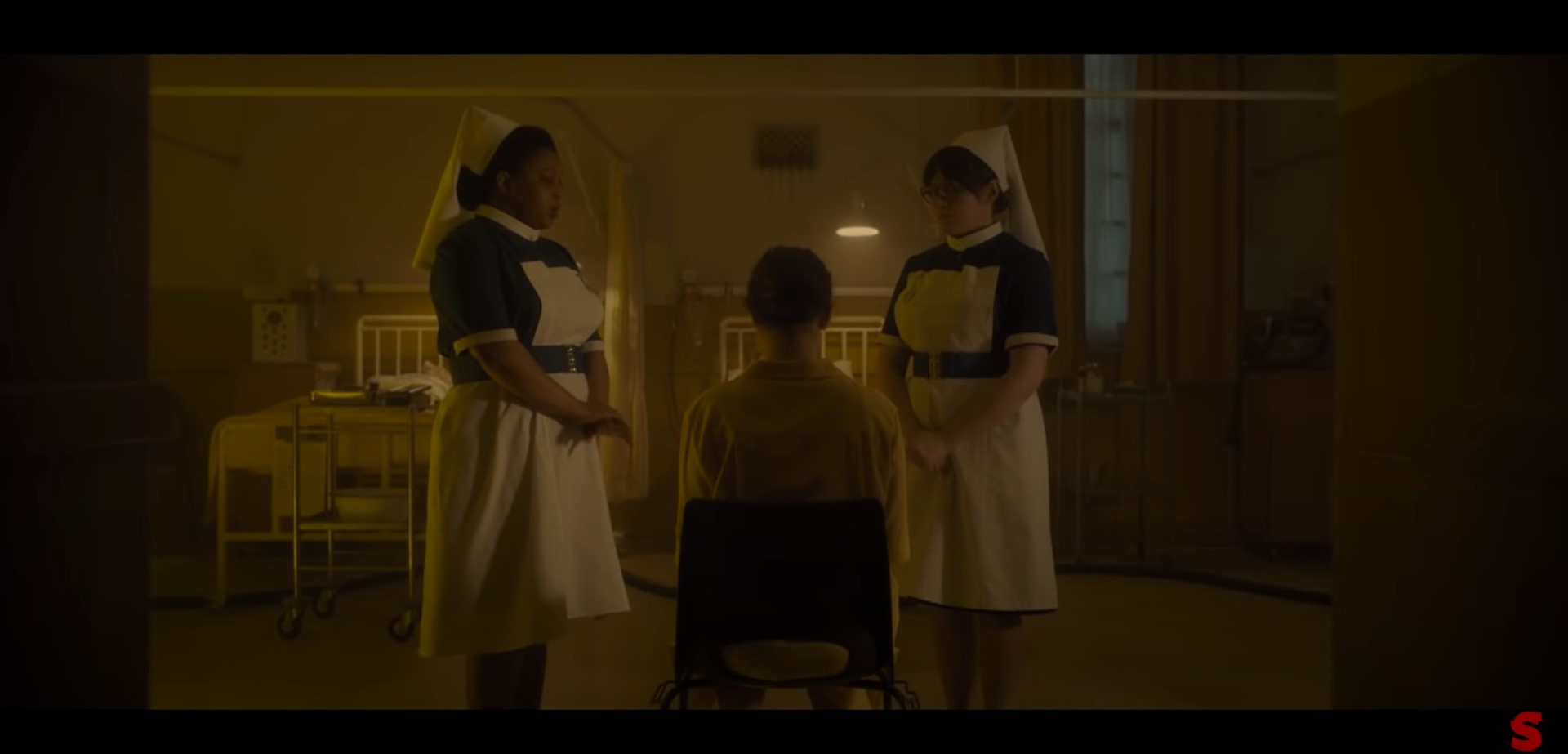
East London, January 1974 – a young nurse starts her first day at a stringent hospital during a political war between the government and mining union workers.  Resulting form the conflict is a nightly shutdown of electricity across the entire country.  As the hospital falls into darkness, the young nurse is forced to work the nightshift at the behest of the hospital’s stern matron, ordering her care for the unresponsive in the intensive care unit that’s receiving a limited feed of generator power.  Afraid of the dark, the nurse finds herself short of pleasant company who are knowledgeable of her sordid past, making her feel more alone in an already isolating and gloomy environment.  When she feels an aggressive presence surrounding her, watching her every movement, and even possessing her for short periods of time, dark hospital secrets come to light and her past connects her to be the key to it all.

Partially based off the 1974 Three-Day Week measure implemented on January 1st to battle inflation and avoid an economic collapse in the UK, Corinna Faith’s things that go bump in the dark ghostly feature, “The Power,” pulls inspiration from the government versus trade union war political contest as a backdrop set for the Shudder exclusive release.  To briefly catch inform you, part of the plan was to have Britain’s private sector pay was capped and bonuses eliminated to cutoff high rate inflation, infuriating much of the coal mining industry who were responsible for a good percentage of fueling much of Britain’s energy at that time.  During the month of January 1974, nightly blackouts were issued for all commercial use to conserve coal stocks.  Inspired by this short-lived UK struggle, the 2021 English film became the sophomore written and directed project for Faith, but is chiefly her breakout film following the over a decade and half, father and son Irish drama, “Ashes,” released in 2005.  “The Power” has topical supremacy with a strong parallel of, as the title suggests, power and a delicate allegorical presence of women taking back control of their lives after being suppressed by wicked and disregarding men and their collaborators.  Conglomerating production companies are behind Corinna Faith’s “The Power,” including “Cargo’s” Head Gear Films and Kreo Films, the prolific British Film Institute, Stigma Films (“Double Date”), and Air Street Films.

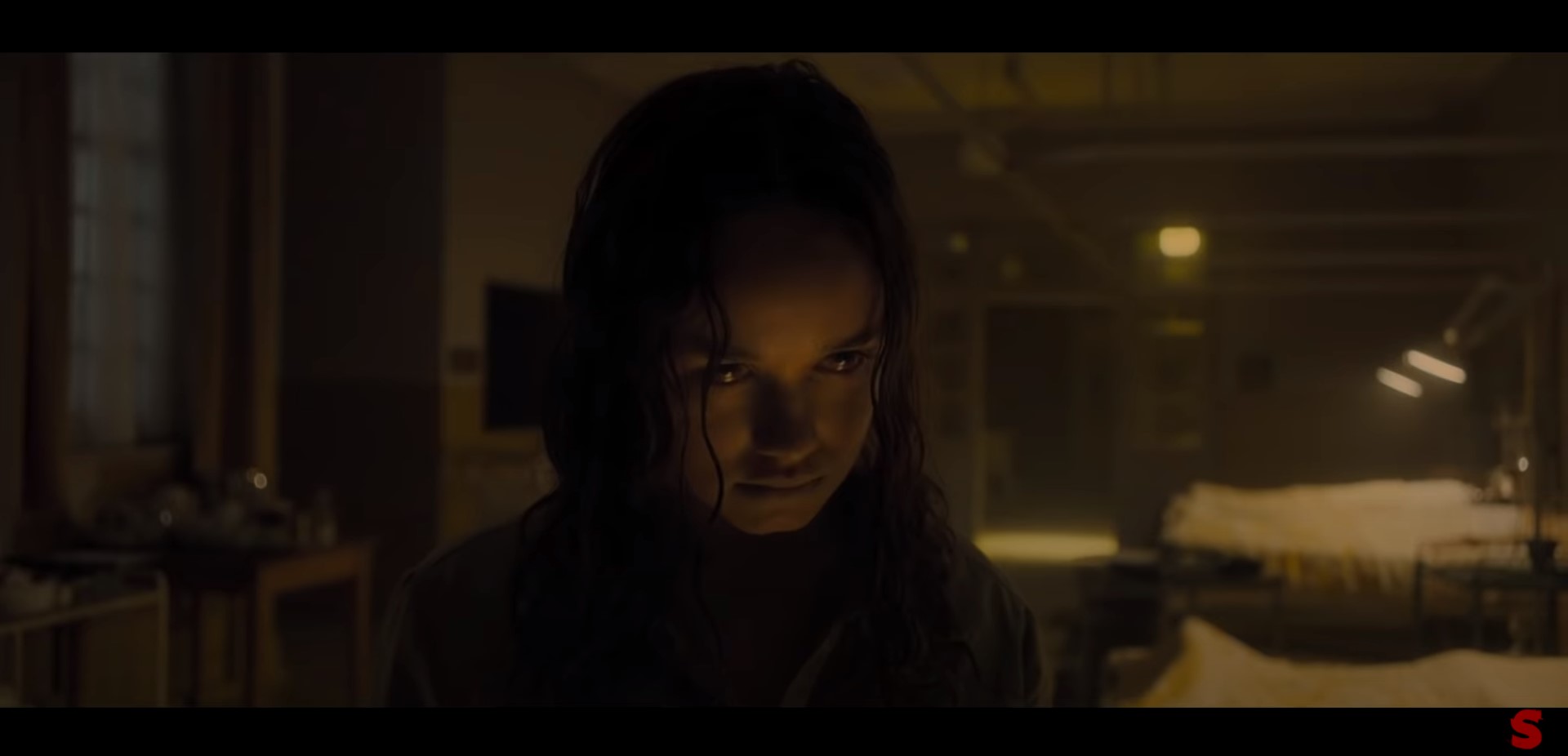
Starring in her first lead role, Rose Williams plays the mild-mannered and meek young nurse, Val, with an enigmatic and subversive past that has seemingly caused some controversary at a private school.  Williams turns on the docile humility, laying on thick Val’s readiness to submit to any command without contest despite the young nurses visible cues of uneasiness and bumbling hesitation.  Val’s qualities purposefully pose her mindset molded by a system she has shunned her for an unspeakable act that’s skirted around persistently throughout the story.  Faith really puts emphasis on having Val feeling extremely isolated and alone in the old, dark hospital with antagonist characters who some are familiar with Val and others who are new faces to the young nurse, but still exude an uncomfortable impression, such as the strict matron nurse (Diveen Henry, “Black Mirror”) and bizarrely skeevy maintenance man Neville (Theo Barklem-Biggs, “Make Up”).  Even a familiar face in fellow nurse Babs (Emma Rigby, “Demons Never Die”) strives to make her not forget about her unpleasant past.  Only in foreigner child, a patient named Saba, an introductory performance by Shakira Rahman, Val discovers a kindred spirit of an equally alone and frightened prisoner of the hospital.  For the two sole apprehensive souls, I really couldn’t pinpoint the trembling fear in their eyes or understand how they’re not crippled by the immense inky blackness that seems to engulf everything and everyone with an enshrouding sinister presence.  Gbemisola Ikumelo, Charlie Carrick, Sarah Hoare, and Clara Read make up the remaining cast.

The electricity backout is merely more for harrowing effect, creating lifeless atmospheres of bleak corridors and dank basements that swallow securities with meticulous ease, but “The Power” is more than just a lights out, afraid of the dark, paranormal picture as Faith pens a parallel theme that fashions the title in double entendre stitches.  Audiences are not immediately privy to the backstory that disturbs Val to the core as she finds consternation in the dark’s unknown possibilities.  This we can clearly see in her scattered imaged nightmares and her reluctance to forcibly work the night shift with little-to-no illumination.  As the story unravels, Faith drops breadcrumb hints and misdirection indicators that not only reveal more into Val’s background but also the background of Saba’s and the presence that is targeting them both in playful manner as if an invisible “Jaws” shark was tugging and pulling in all different directions in the tightly confined hospital setting, leading up to what and whose power truly presides over them.  Dark becomes light in the water shedding moment that defines Val’s lightning rod purpose in being a ragdoll puppet for a ghost’s whims and while the story successfully builds up to that climatic moment with blank eye possessions and unconscious grim mischief told in reverse order, “The Power” ultimately tapers off with a finale that falls apart on the precipice of something significantly special for the voices of traumatized women everywhere in recovering the power over themselves.  Though abundant with tension-filled jump scare frights during the puzzling mystery, the horror element also suffers a misaligning derailment in the end with a happy-go-lucky procession of no longer being afraid of the dark, dropping the bulk of scares like a sack of unwanted potatoes no longer ripe for a tasty reward.

Still, “The Power” is a single-setting period horror with potent scares along with an even more compelling subtext significance. The region 2, PAL encoded, 83 minute feature is presented in a widescreen 2.35:1 aspect ratio on a single disc BD25 with a 15 rating for strong supernatural threat, violence, child sexual abuse, and sexual threat. Perfectly capturing the precise black levels, the Blu-ray renders a nice clean and detailed image, leaving the negative space viscerally agitating while waiting for something to pop out of the dark. The color is reduced, and slightly flat, to de-age the filmic look for a 1970’s bleaker of cold, sterile atmospherics. The Dolby Digital 5.1 surround sound mix is a chocked full of robust fidelity. The jump scare ambience and short flash of up-tempo works along with the rest of the solemn score. Where “The Power” lacks is with the dialogue and not within the confines of prominence; instead, capturing the dialect cleanly was challenge to undertake as most of the cast mumbles through most of the Liverpool-esque dialect and dialogue. Special features on the release include an audio commentary with director Corinna Faith and Rose Williams and a behind-the-scenes still gallery. A feminist noteworthy horror, “The Power” connotes powerful and uncomfortable contexts that’ll surely make you squirm far more violently than being alone in the ill-boding dark.

One EVIL Deed Doesn’t Correct The First EVIL Deed! “Cannibal Man” reviewed (Severin / Blu-ray)

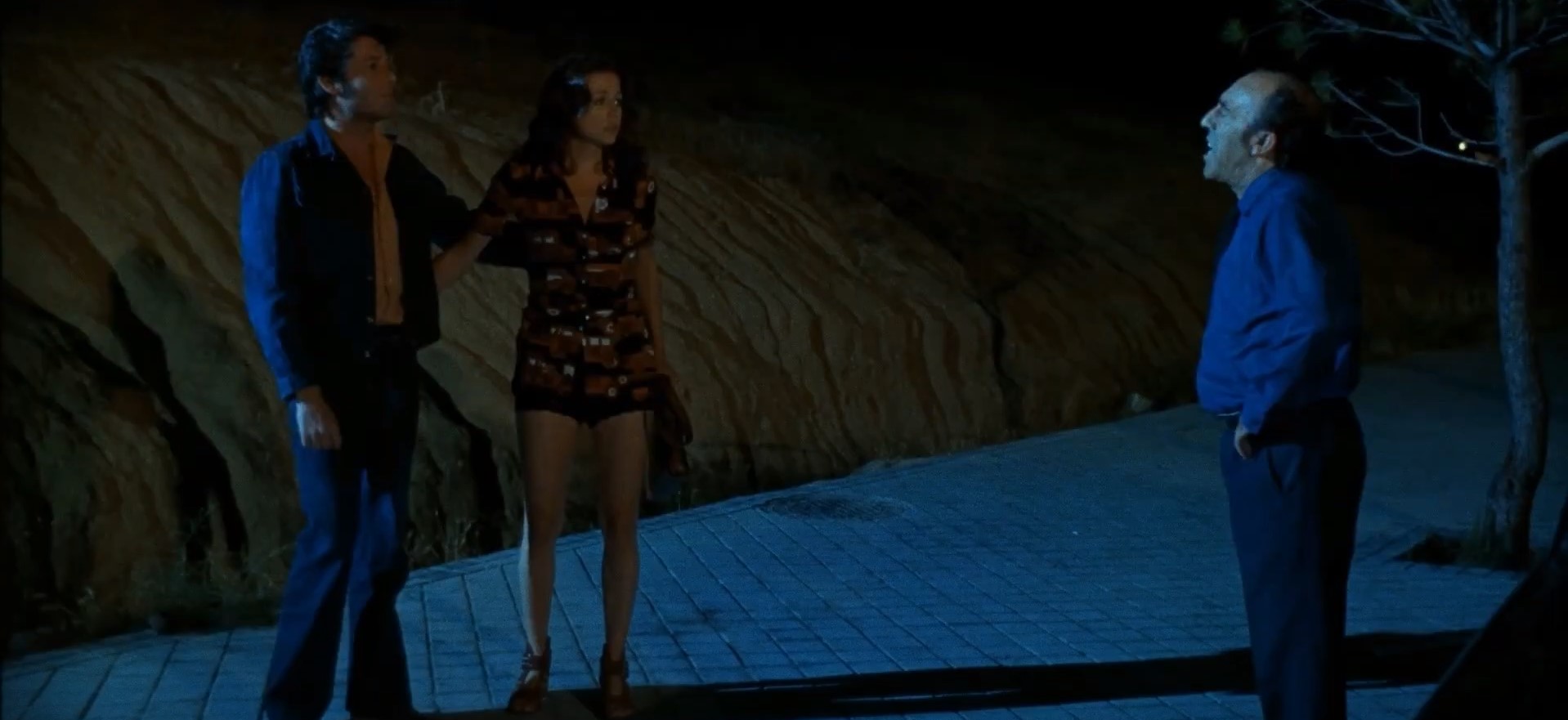
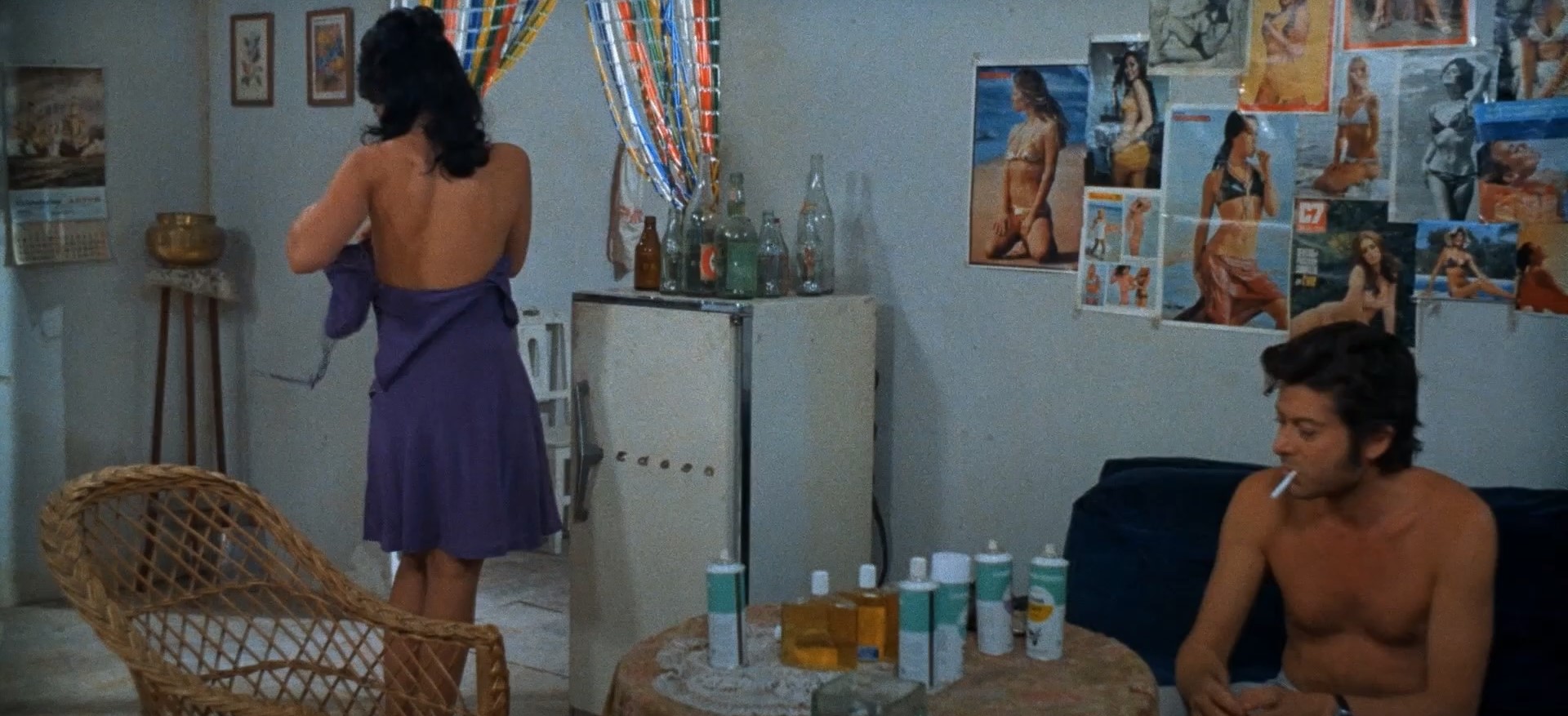
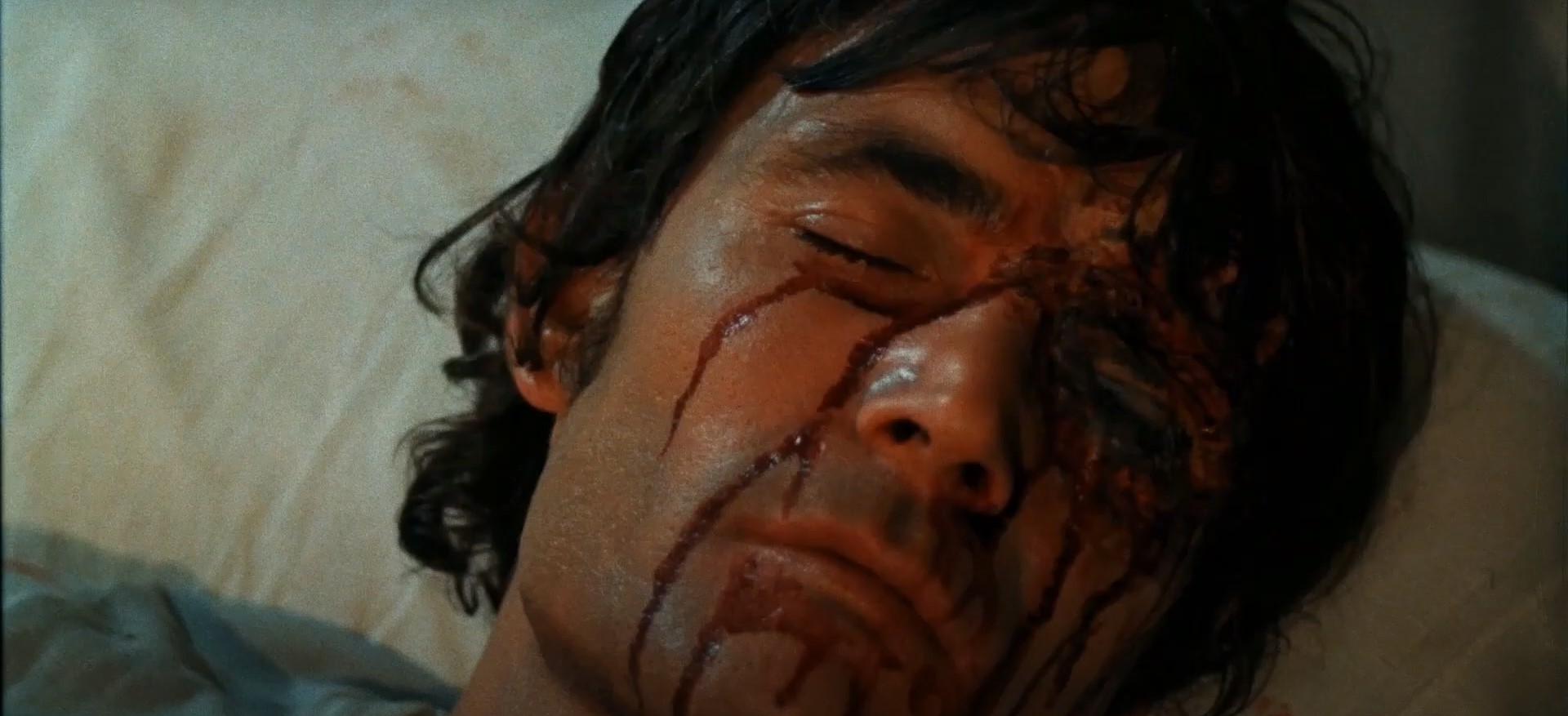
Marcos, a middle-aged abattoir worker, resists the pleas of Paula, his young girlfriend, to confess their self-defense killing of a taxi driver.  When Paula decides she’s inform the police without him, Marcos strangles her and stows her body in the bedroom of his outworn house.  The killing continues when loved ones come poking around to find answers about the disappearance or discover the macabre scene in Marcos bedroom.  Bodies pile up, the smell reaches decaying levels, and Marcos is plagued with nervous guilt.  Every day using his meat clever, he chops up bits and pieces of each victim and takes them to the slaughterhouse processing to rid the evidence and the smell, but no matter how many body parts he unburdens or how much fragrance he sprays, the sweet smell of death sticks with him. 

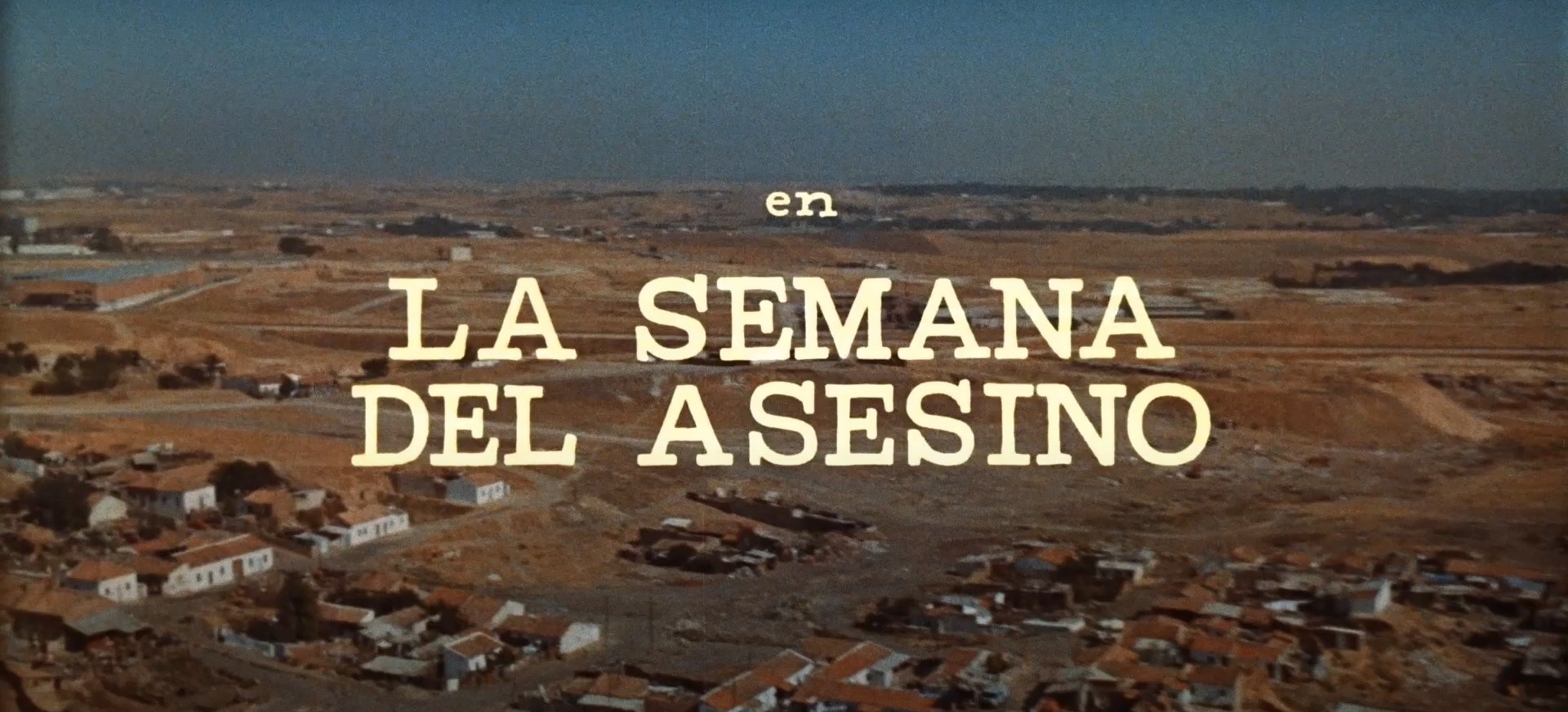
If someone would have said to me – you need to see a flick from Spanish director Eloy de la Iglesia – would you have ever guessed my first stop would be with his 1972 “The Cannibal Man” shocker?  To get to know a filmmaker’s directorial style and personal themes, the most gruesome horror can sometimes be a reflection into the soul of full disclosure because life, as most of us know from our own personal accounts, demons, and happenstances, can be ugly, nasty and unfair and can be cathartically expressed through film by a wretched shell navigating an undercurrent message to others.  That’s how Eloy de la Iglesia’s “The Cannibal Man” speaks to me.  Also known as “La semana del asesino,” or “The Week of the Killer,” as well as “The Apartment on the 13th Floor,” don’t expect an archetypical slasher and cannibal framework from this picture with many names.  “The Cannibal Man” is no “Texas Chainsaw Massacre” or similar to that of “Wrong Turn” as the film stands alone, conveyed as unsurmountable struggles of renewing oneself, a social commentary of class structures, and, also, dabbles in homosexuality suggestion.  Executive producer José Truchado, who also produced “Hundra” and had bit roles in Jesús Franco’s “The Mistress of Dr. Jykell” and “Killer Tongue,” finances the film under his self-titled production company and presented by Atlas International Film (“The Blind Dead Collection”).

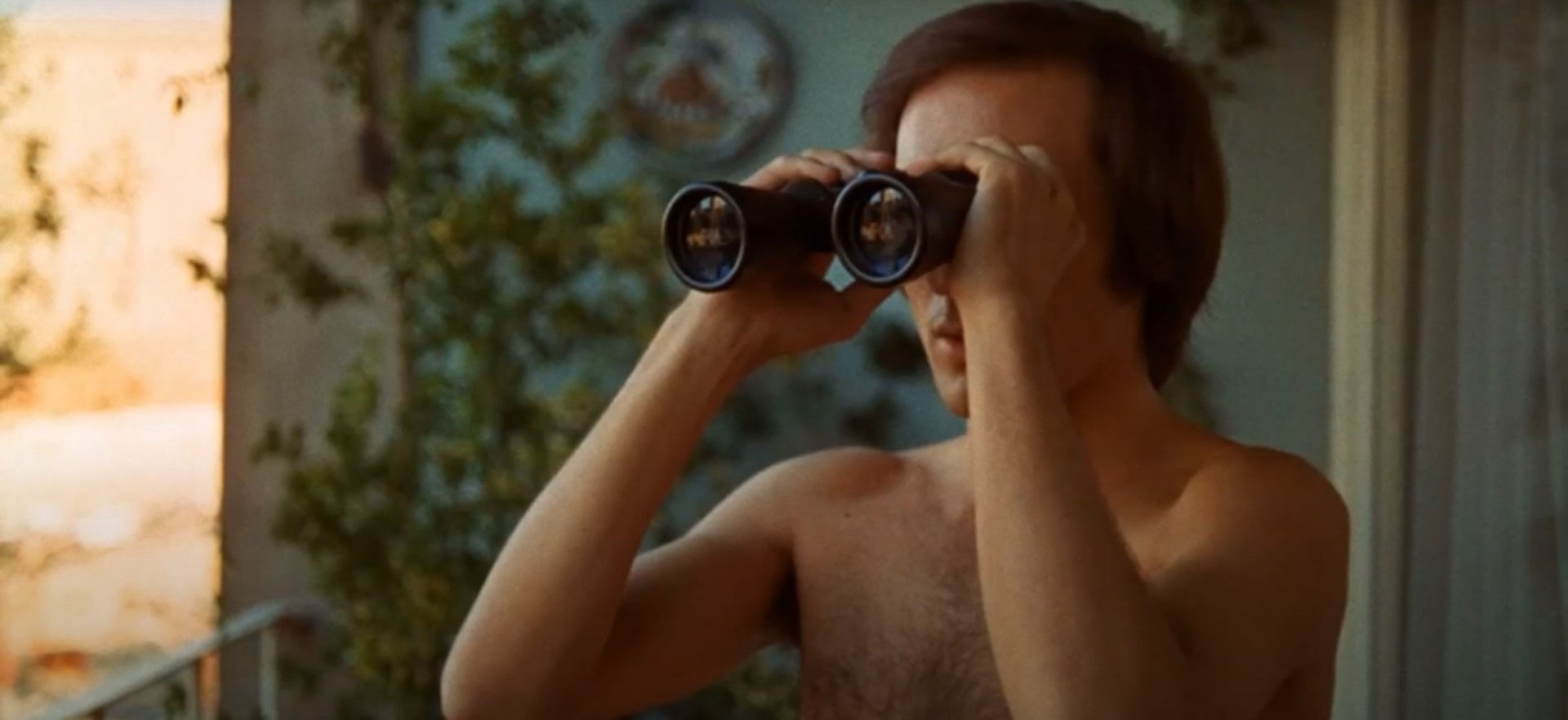
Looking to separate himself from strapping hunk typecasting and to show the world he can do more than just romantic comedies and action, the Madrid born Vincente Parra undertook a massive risk with the lead role Marcos, a meat processing factory worker in his, presumably, late 30’s to early 40’s with little education and social status who’s keeping company with a younger woman still living with and under the rules of her parents.  Let’s not to forget to mention Marcos’s grisly acts of murder and the homosexuality suggestions during his middle of the night rendezvouses with new best bud and neighbor Néstor (Eusebio Poncela, “The Death of the Scorpion).  Nothing sexual happens but the innuendo is there as, aside from his dog, the single bachelor Néstor often invites a tense Marcos out for a late night café visit, an afterhours swim at the local late night pool, and up to his swanky apartment where Néstor often watches Marcos from his high-rise balcony through Marcos’s makeshift skylight with binoculars.  Iglesia, who is gay, puts his own spin on the characters to allude to, and often over played as well, the two men as equally interested parties without ever having to speak a single word or make visible a single touch that would confirm otherwise.  Parra and Poncela couldn’t have acted better a disinterested-interested pair full of sexual tension and naïve foreplay.  Aside from the significant love interest characters from Vicky Lagos, who plays local waitress, Rosa, at the eatery Marcos patrons and “Night of the Walking Dead’s” Emma Cohen, Marcos’s girlfriend Paula, no other character have reoccurring scenes and are simply drafted as what should be major roles in the story to then be cut down by Marcos’s undervaluing psychopathy.  Charly Bravo, Fernando Sánchez Polack, Goyo Lebrero, and Lola Herrera fill in the rest of the cast list.

Strike out the slasher category for “The Cannibal Man” as Iglesia offers more than just a mindless, demented, hack’em up killer.  Behind Marcos brown eyes lies a reason of cold truth about his place in the world as a man who is ultimately and foremost stuck.  Stuck at a dead-end job.  Suck in his relationship with Paula.  Hell, Marco is even stuck living in a small bygone bungalow sticking out like a sore thumb right in the middle of new and wealthy high rise buildings.  He’s unskilled and uneducated, living in his brother’s house, and with no end to his personal wedging between his lackluster coursed life and his own short failings as a man until all that mediocre and mundane misery begins to ooze and shape into the one thing he tries to control – murder.  Even murder starts to spin out of control and heavy, burdensome guilt sets as seen in scenes with Néstor who’s choice of words perk up Marcos’s jumpy ears with fear of being caught.  Iglesia is a master at scene compositions that use audio cues, along with a jarring, tonal reversing soundtrack, to accentuate Marcos’s ascending paranoia as well as accentuating the scenes of the more period radical grasping social commentary on homosexuality and the unthinkable back-to-back-to-back-to-back murders.  Editor José Luis Matesanz also slyly cuts transitional scenes together in a stunningly seamless and crafty way that resemble close to Robert Wise (“Citizen Kane,” “The Andromeda Strain”) with harsh cuts that form a directional track and utilizes semi-abstract panning and reverse panning to fill in less significant gaps between the action.  Don’t expect a large amount of cannibalism in the story either.  Marcos isn’t gnawing on bones or baking a flesh brisket; instead, his act of cannibalism falls upon irony in that the bodies he tries to purge from his home ends up coming back to haunt him in more ways than one. 

If you love obscure, foreign horror that sustains a fresh packaged air about it, in story and in a remastered transfer, I highly recommend checking out Severin’s newly scanned, region free Blu-day distributed by MVD Visual.   The BD50 comes with two versions of the film, the 98-minute international cut and the 107-minute Spanish version extended cut, newly scanned from the original 35mm negatives for the first time.  Both transfers have excellent picture quality, some of the best I’ve ever seen come out of Severin, presented in 1080p in a widescreen 1:85:1 aspect ratio.  Not a lot of age wear and tear on the either transfer with each cut having only minor and light scratches scarcely throughout.  There’s sufficient, natural grain in both versions, but the extended cut’s grain flattens up, looking coarser, in the extra scenes.  Coloring grade is gorgeous with natural looking skin tones and you can see the details were refined and redefined.  Both versions come with an English dub and Spanish language DTS-HD Master Audio 2.0 track with some back-and-forth forced English dub in those coarser grained scenes that make the flow unsettling.  Both versions render hearty range and fidelity with a strong dialogue track that syncs well with the option English subtitles, but slightly off sync with image unity.  Underneath the double-sided cardboard sleeve, Severin’s special features include Cinema at the Margins – a Stephen Thrower (author of “Beyond Terror: The Films of Lucio Fulci”) and Dr. Shelagh Rowan-Legg (author of “The Spanish Fantastic: Contemporary Filmmaking in Horror, Fantasy and Sci-fi” on director Eloy de la Iglesia, The Sleazy and the Strange – interview with Spanish film scholar Carlos Aguilar on director Eloy del la Iglesia, deleted scenes, and trailer.  An engrossing bodega of vile Euro horror is what “The Cannibal Man” presents as a first-rate cutthroat thriller from the shamefully underrated filmmaker, Eloy de la Iglesia.

Own “The Cannibal Man” on Blu-ray!  Buy at Amazon.com

The EVIL Next Door Invites the Urban Decay. “Terrified” reviewed (Acorn Media International / Blu-ray)


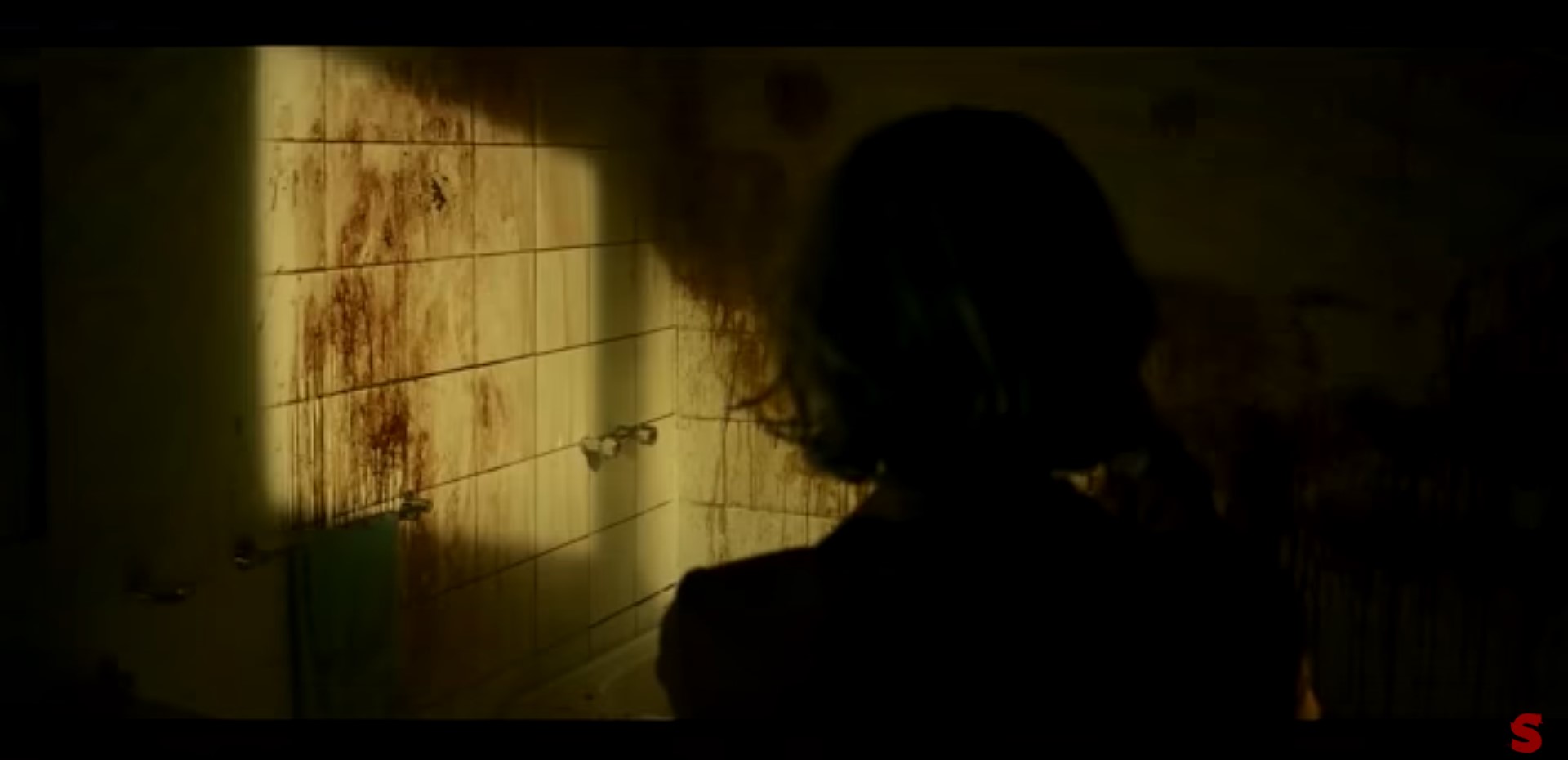
A young boy is hit and killed by a bus.  A housewife is found hung in her bathroom.  A man has disappeared in his home.  Three incidences, three houses, three souls have one thing in common.  They’re neighbors.  The unusualness surrounding each tragedy grabs the attention of former forensics investigator Jano who’s own experience with the paranormal thrusts an unquenchable desire to examine the supernatural.  In a matter of coincidence, Dr. Mora Albreck, a vocational psychokinetic researcher, follows up on the disappearance of the man who called her countless times for help, but then just vanishes.  Accompanied by Dr. Albreck’s assistant, Dr. Rosentock, and Detective Funes, a weary, on-the-edge officer with a bad heart, the divide themselves to stay the night in each house and experience the paranormal phenomena calling from the beyond, but the entities calling just might terrify them. 

Hailing from Argentina comes the shivering, cross dimensional unknown from writer-director Demián Rugna’s 2017 properly titled, “Terrified.”  Originally known as “Aterrados,” the Buenos Aires filmmaker, who’s helmed hell bound thresholds previously with his introductory feature film, “The Last Gateway,” remains inside the grindhouse and horror bubble with another slit between realities thriller.  This particular bubble bursts with a whirlwind of nebulous outbreak of terror while providing microbe commentary about the potential dangers of Latin America’s water system and a perspective theme that speaks volumes on the issues of duality in what really happened and what the general public is told. Don’t trust your eyes! Nothing is what it seems! That’s the whole premise of “Terrified’s” knee-quivering appall, produced by Fernando Díaz under Machaco Films and the Instituto Nacional de Cine y Artes Audiovisuales (INCAA).

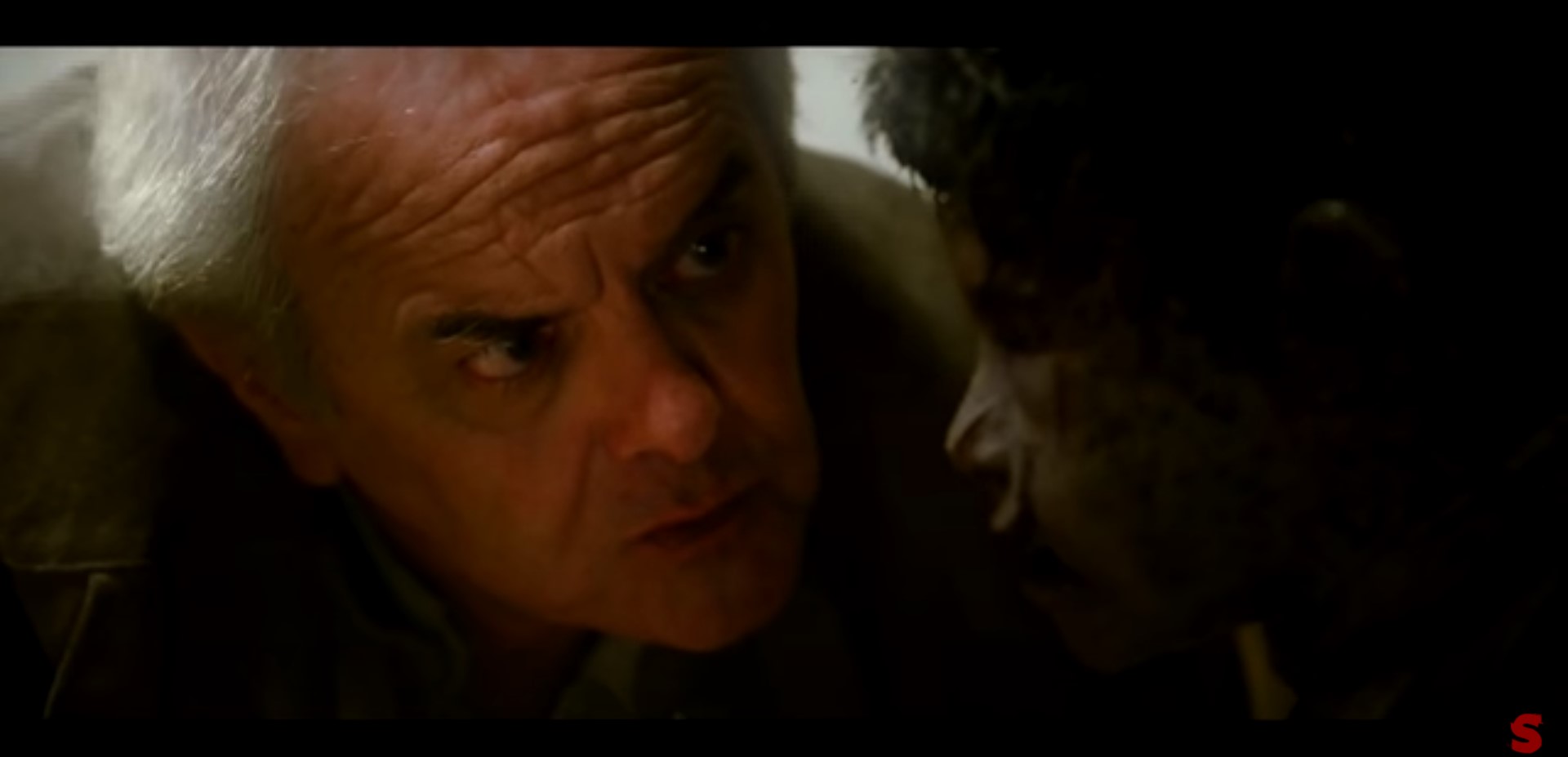
Rugna’s paces “Terrified’s” entropic buildout near the edge of an anthology, ghosting us the one reason for a neighbor’s supernatural experience for the next to eventually bring the heart of the cast together as a motley group of paranormal investigators. Starting with retired forensic specialist Jano who has a morbid curiosity for the unknown that fascinates him more than the abnormal mortifies him with fear. In his first feature length performance outside of television, Norberto Gonzalo understudies the very concept of the character Jano with objective eye for curiosity and knowledge much like any scientist. Jano is invited by Detective Funes, played by another television regular, Maximiliano Ghione, to the investigation of a recently deceased boy’s corpse having returned to his childhood home and is now a rigor mortis statue sitting upright at the dining room table. Though through exposition about their training and partnership over the years, Jano and Funes sit on the opposite sides of the fear spectrum with Funes’s engendered nervousness to the whole uncanny event and mentioning his bad ticker which comes into play later on in the story. Opposite side of the street, in walks into frame Elvira Onetto, an appropriate name for the film at hand. The “Jennifer’s Shadow” actress is Dr. Mora Albreck, renowned paranormal psychologist checking in on a manic patient who recently disappeared. Rugna really appreciates the mindset of the kindred spirits in Jane and Dr. Albreck with their sense of childlike giddiness toward the whole matter while those around them – like Funes or the boy’s mother – shiver with fear or break psychologically. While Jano and Dr. Albreck naturally work their way into the story, Dr. Rosentock is left with being the odd eccentric out. While just as enthusiastic about the phenomena that’s swallowed souls around the neighbor, Rosentock just appears as Dr. Albreck’s assistant who has traveled from a great distance to study…something like what’s happening…so is said in the film. Played by George L. Lewis in his only credited role, Rosentock is as much as self-assured, unafraid, and matter-of-fact as he is a caricature of old Hammer Horror style scientists when dealing with otherworldly entities, imposing a need for a little weight to his story, but, unfortunately, his participation lives and breathes only as participate to Albreck’s project. There are many fine performances around with the ebb and flow of minor characters, played by a talented cast that includes Julieta Vallina, Demián Salomón, Agustín Rittano, and Natalia Señorales.

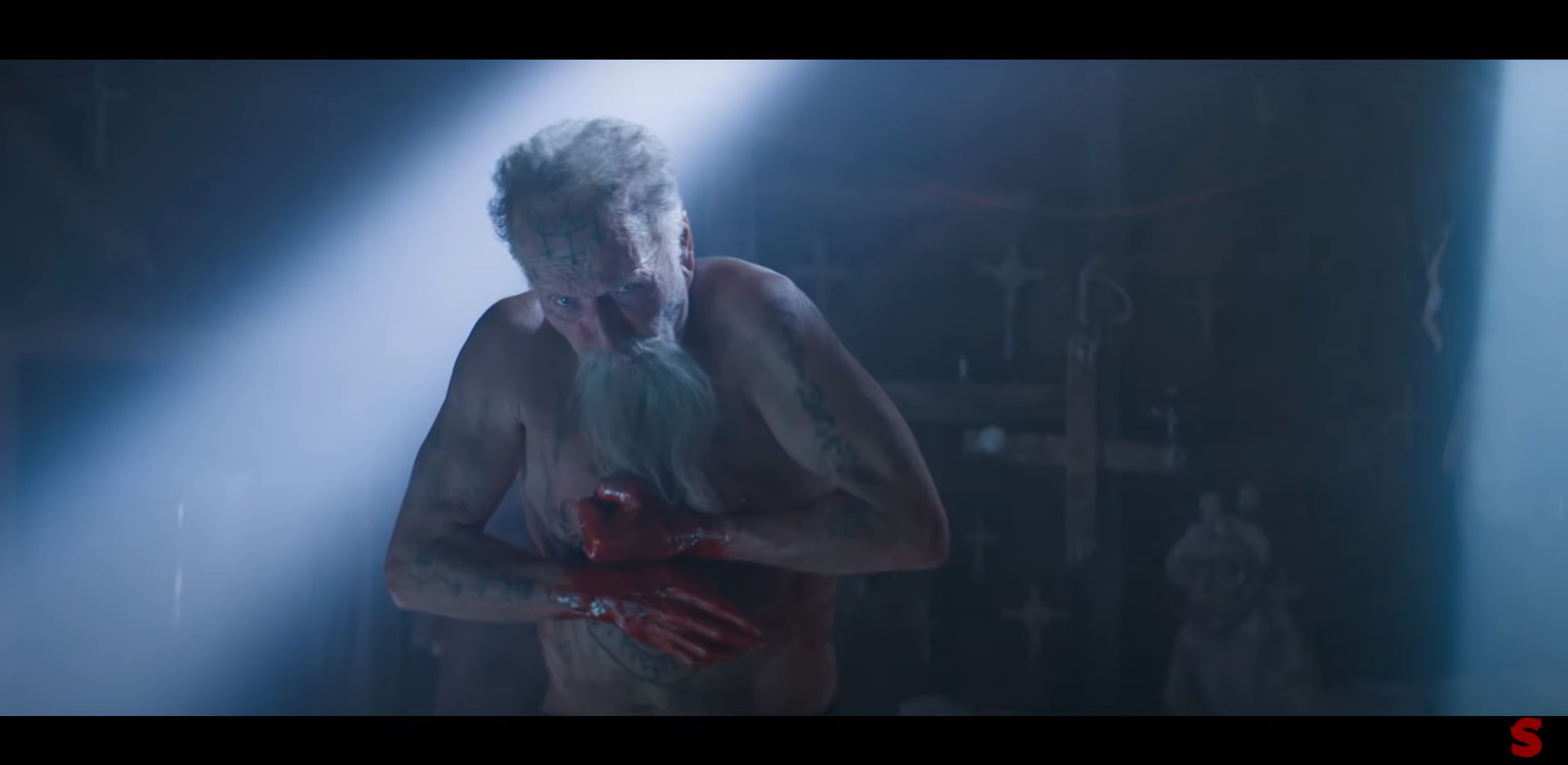
“Terrified” is one of those movies where the silence and the stillness can have a higher affect on the spine-prickles.  Rugna’s gold standard patience establishes a tense tone without the supplementary tumultuous, ear-splitting chaos that usually grinds teeth and curls toes as the sediment of panic begins to settle at the pit of the stomach.  Marcus Berta and Lionel Cornistein’s blend of practical and visual effect are near seamless, but ultimately land the one-two knockout punch of anxiety-riddled scares with tall, crumpled monsters skulking under the bed shadows, glowing eyes peering through wall cracks, and a the stiffly rotten decomposing boy popping into frame in a split second.  Cornistein’s composite designs are not too shabby for the editor and visual effects artist’s first feature rodeo let alone generated a complex olio of otherworld oddities.  In regards to “Terrified’s” themes, in my travels to Central and South America, I’ve been advised to be cautious in drinking the tap water that’s filtered differently compared to the U.S., leaving local microorganisms to swim in the guts of those unaccustomed to them, and Rugna points in that direction by consistently focusing on the water taps, drains, showers, the action of drinking water, and, also, literally spelling it out for us by Dr. Albreck to not drink the water in these spirit plagued houses due to microbes traversing from beyond through the water system.  Dual perspectives becomes important as well.  After the gruesome discovery of the boy corpse sitting at the dining table, Funes needs a rational explanation to report in contrast to the unexplained grisliness, something that makes sense and wouldn’t frighten the daylights out of him, his colleagues, or the general public.  Coincidingly, Rugna creatures also exist on two different planes, sliding between the panes, and not always visible; this is another verbally illustrated facet that unsuitably reaffirms the theme.

“Terrified” scales the expansion of dimensions with bottomless creepiness and shock value, rifting from Shudder’s streaming service and right onto a UK Blu-ray home disc distributed by Acorn Media International.  The region 2, PAL encoded, BD25 disc houses a presentation displayed in a widescreen, 2.35:1 aspect ratio, with a 15 rating for strong horror, bloody images, and language. The 1080p, HD resolution is an indifference concern with the already blemish free digitally shot film, but director of photography, Mariano Suárez, heeds every shot taking Rugna’s perspective theme to heart with lowlight and obscurities as fear-fodder. The Dolby Digital 5.1 surround sound mix flexes a full-bodied, channel defining muscle with clear, prominent dialogue, a diabolical range in sound design, good depth, and an off-key canorous soundtrack because every horror fan eats up an inharmonious and creep tunes. Unfortunately, much like the “Belzebuth” release, “Terrified” comes with no special features other than a menu with the animated trailer of the film. “Terrified” is the chef’s kiss of Latin American horror, an epitome of jaw-clenching terror that’ll have you sleeping with the lights on tonight.

Buy “Terrified” on Blu-ray (Region 2) from Acorn Media International!

A Cop, a Paranormal Investigator, and a Priest Walk Into an EVIL Extermination Plan! “Belzebuth” reviewed!


The joy of a new baby is cut short for Detective Ritter who bares the tragedy of his little boy viciously killed in a massacre of nursey infants by a psychotic nurse before taking her own life.  Five years later, and losing not only his child but also his wife to severe depression, a disheveled Ritter is called in to investigate a mass murder involving a 12 year old boy slaughtering young children in a preschool classroom.  To him, the two events don’t spark similarities, but to a paranormal investigating Catholic priest, Ritter’s tragedy and the events in the classroom are linked by the unorthodox priest’s examination.  All the evidence points to an excommunicated Catholic priest practicing demonology that sends the two men down a path of unholy darkness in a series of murderous catastrophes influenced by the rebirth of the Messiah.

When the first scenes from “Belzebuth” open with a maternity ward nurse stabbing with vigorous force every single infant child in their crib with a scalpel, you know nothing wholesome is sacred and everyone is fair game in what is to be a grim story of infinite barbarity and darkness.  “Belzebuth” falls in the line of fire of Mexico City born writer-director Emilio Portes with an augmented, dark humored social commentary loaded with evil entities and grimace-laden gore.  The “Meet the Head of Juan Pérez” filmmaker cowrites “Belzebuth’s” irrational rational for the unfortunate real world trend of mass murders and touches upon, sensationally, the evolution of Catholicism extremities to battle evil in the world with first time feature length film screenwriter Luis Carlos Fuentes.   The Mexico/American film is produced by Rodrigo Herranz, Michelle Couttolenc, and Jaime Basksht, with Ana Hernandez as executive producer and Pastorela Peliculas in cooperation with patriotic promotion from the Instituto Mexicano de Cinematografia, aka IMCINE, serving as the production companies.

If you Google Mexican actors, the power of artificial intelligence and ignorant manual input couldn’t separate Mexico form any other Latin American country as the powerhouse search engine provided me results like Danny Trejo, John Leguizamo, Jennifer Lopez, Javier Bardem, and Penélope Cruz.  Now, while I respect each and every one of these performers who provide a variety of lush character and emotional erudition to each of their roles, not one of them is born in Mexico.  Some that listed do not even share the same heritage.  But do you know what the most astonishing, most outrageous, and most shameful aspect of my search was this?  The Tepic, Nayarit, Mexico born Joaquín Cosio was not among the top 50 results.  From captivating television with Guillermo del Toro small screen adaptation of vampiric apocalypse of “The Strain” and the intense drug-fueled drama of “Narcos: Mexico” to his Hollywood presence in the star-studded, James Gunn directed “Suicide Squad” to his humbler beginnings that includes Bond, James Bond, in “Quantum of Solace,” Cosio’s a strong and versatile candidate for intense thrillers and “Belzebuth” is right in the actor’s wheelhouse as a downhearted Detective Rigger with a short fuse.  As a supernatural skeptic, Ritter’s forced into confronting his past demons with the demons of the present by tracking down rogue priest Vasilio Canetti (Tobin Bell, “Saw” franchise) with the help of Father Ivan Franco (Tate Ellington, “Sinister 2”) of the Paranormal Forensic Department, which sounds kind of silly because Franco’s squad is an extension of the Church.  Bell brings his delightful deadpan bedside manner as the excommunicated priest in guerilla warfare with a determined, demonic evil trying to massacre as many children as possible to find the reincarnated Messiah in what would be the Third Coming as the Second had come and failed during the Crusades.  Bell is the yin to Cosio’s yang until circumstances rear-end last ditch efforts and all Hell breaks loose in a drug smugglers’ tunnel.  Aida López, José Sefami, Yunuen Pardo, and Liam Villa round out the cast.

If possession-fueled carnage and the antiheroic archetype weaponizing demonology for good tickles all the right places, “Belzebuth” can be the feather tickler of dreams.  Fans of Clive Barker’s “Lord of Illusions,” Peter Hyams’ “End of Days,” and the graphic novel “Constantine” can indulge into Portes’ explicit nihilism and lack of public conviction in religion in the director’s allegoric telling of something really big and really satanical happening right under people’s noses while a small motely crew of conversant peons try to stop a wall of Deviltry.  Portes also consistently touches upon Mexico’s unsystematic corruption, even among Ritter and other protect and serve officers, and the once firm-handed political system of the Institute Revolutionary Party (PRI) as potential cause for all the suffering enacted demon-rooted abscessations.  The mentioning of drug cartels pop up frequently, too, symbolizing the seemingly random acts of violence are just never just random acts, but an perpetrated hit on a human target much like the cartels’ unsavory methods to either take out competition, eliminate obstacles, or to silence whistleblowers.  Portes does a phenomenal job using his film as an allegory in making a political statement but lacks balance in favoring gore over profile with some characters who rather feel written in just for the sake of a broader English audience.  Father Ivan Franco is such character with interesting combinational vocations as a paranormal investigator and a holy man of the cloth.  Yet Franco, who wields a gun and has supercool video and audio recording specs, spearheads a larger suborganization shielded away from the public eye and, unfortunately, the viewer eye that never feels like a cog in the entire “Belzebuth” machine.  Franco and his team of spook-sleuths, who, by the way, vanish completely from his side early into the investigation, supposedly follow and investigate peculiar tragedies connected to misaligned presences leaving spiritual residue on the real world plane, but how his team comes about connecting the dots exclusively to just the first two tragedies, five years separated, is a bit of stretch and a letdown in fabricated continuity and weight behind Franco’s existence to be involved.  Pockets of plot holes pop up here and there on other facets but generally speaking, “Belzebuth” works black magically as a spiritually and culturally vivisecting detective thriller.

The Shudder original 2017 release, “Belzebuth,” scares up onto an UK Blu-ray release from Acorn Media International. The region 2, PAL encoded, single layer BD25 presents the film in a widescreen, 2.35:1 aspect ratio, with a runtime of 109 minutes.  Ramon Orozco’s cinematography flashes with a gorgeous red and blue color palate that fits the iniquitous tone and adds an ethereal, hazy backlighting to only enhance the tone to more sinister levels.  Acorn’s Blu-ray sharpens Orozco’s already byzantine schemes that enriches the details in the skin as well as a the sacred relic artifact-cladded locations that become claustrophobic and entombing.  Even Juan Martínez Espín visual special effects casts a solid effort of barely a smooth surface computer generated phoniness, especially in one crucifying scene of psychological torment.  You’ll know it when you see it.  “Belzebuth’s” powerful Dolby Surround 7.1 audio track is an assault on the eardrums of the best kind with a husky, industrial melodic soundtrack and hefty sound design with accompanying diverse range and proper depth that could be described as literally placing every creak, stab, and cackling laugh sound right into the darkest corners of your ears.    An unfortunate surprise about the Acorn release is that there are no special features aside from the animated menu that is essentially chaotic “Belzebuth’s” trailer plastered with menu options.  Possession films tend to stale at a dime of dozen, but Emilio Portes’s freshly terrifying “Belzebuth” entertains and scares to the very last morsel.