Honey’s Sweet, But There’s EVIL in the “Royal Jelly” reviewed! (Uncork’d Entertainment / Digital Screener)


Bee careful what you wish for in this apiary tale that tells a story of high school misfit, Aster, an easy target for unsympathetic pubescent bullies, including the continuing at-home abuse from her half-sister, Drew, and pitiless stepmother.  With neither school or home being a safe retreat, Aster finds comfort in an unorthodox and brash substitute female teacher who has taken a shine to Aster and provides her shelter when she’s distraught after discovering her collection of apiary beehives was maliciously destroyed in an act of malice.  After living with her teacher and her son for some time, they exhibit strange behaviors, develop skin rashes, and Aster begins to notice that she doesn’t quite feel like herself either as her safe haven is unveiled as a façade for her grooming to become the next hive queen.   

“Royal Jelly” isn’t exactly the killer bee movie you’d be expecting.  Writer-director Sean Riley invites a new take of the Apiformes horror subgenre outside the beehive of being per se a creature feature with his new film, “Royal Jelly.”  And, yes, even though tiny in size, bees are still tiny creatures with mighty (painful) stingers.  Those not familiar with the term royal jelly, other than it being an unique title for Riley’s sophomore feature, royal jelly is the honey bee secretion from glands located in the hypopharynx and is the chief nourishment for colony’s larvae.  See!  Who says horror movies can’t be education?  Somehow, someway the Baton Rouge, Louisiana-born director found malefic inspiration secreting from his metaphorical hypopharynx domiciled glands and packages with it a paralleling an all too familiar fairy tale crowdfunded by Indiegogo backers, second feature funded this way behind his breakout directorial of the comedy “Fighting Belle,” and Riley’s Integral Motion Pictures.

Now, who is this leading lady willing to be misled into a turned-out humanoid life sized queen bee?  The University of Southern Mississippi Fine Arts graduate Elizabeth McCoy, of course.  The Greater New Orleans actress slips into an quasi-goth cladded outcast Aster sporting fishnet stockings and a black graphic t-shirt promoting the band Queen, a bit of fitting foreshadowing if I’ve ever come across one.  Before being bequeathed the hive throne, McCoy has to render Aster a meek existence made small by the death of her beekeeper mother backstory and surrounded by loneliness stemmed by an abusive sister and stepmother and a coward of a father.  The only joy made clear in Aster’s life is her bees.  When her apiaries are decimated, that is when high school sub Tresa (Sherry Lattanzi) flies in and shelters Aster under her wing that makes for an odd couple combination that’s one part predatory teacher fraternizing with a vulnerable student and one part comical motherhood to see McCoy tower over a short Lattanzi who is in this insect sovereign role. Doesn’t Darwin always say the strongest always survive? I guess there’s nothing in Darwinism about the tallest. Lattanzi expresses Tresa about as audaciously enigmatic as they come with little-to-no story arc to move in accord with as Tresa just shows up, out of the blue, and after a scene where Aster’s teacher has had his throat slit and I’m still trying to fathom the plot hole of how the hell Tresa entered the frame so quickly, as a substitute teacher, without ever laying eyes on Aster until stepping into her classroom. Sparse is the name of the game as Tresa, as well as Aster, are poorly written without much density and neither actress can pull off miracles adding layers to already rotten onion. The rest of the cast includes Raylan Ladner, Lucas T. Matchett, Fiona McQuinn, Jonas Chartock, and Jake McCoy.

Pulling inspiration from Roger Corman’s “The Wasp Woman,” Riley’s “Royal Jelly” ditches the experimental cosmetics for timeless folk lore while still vaunting a Corman class cinema gooey with bee secretion center. Instead of an enchanting tale of rags to riches, this loose Cinderella adaptation comes with all the classic hallmarks like an evil stepmother, a wicked stepsister, and a fairy godmother manifesting Aster’s dreams on the spot, but instead of a magical wand and a pointy hat, this fairy godmother comes in the form of a personified bee queen wearing a façade of a presumptuous substitute teacher. Riley’s openly emblematic killer bee story could go one or two ways. 1 – Aster is actually being groomed by a bee queen to take over her hive as a homolog event to Aster’s earlier class presentation on the eusocial bee social organization or 2 – Aster has snapped due to bullying and she’s daydreaming, hallucination, or dead and the bee-havorial chaos she’s experiencing is either in her head or is sardonic Hell. I like the second theory better over the first as I don’t find Aster’s sprouting of inorganic and rigid Halloween costume bee wings and a makeshift stinger, that appears more phallic than necessary, to be enticing me with a freakish reality. I still can’t get over the possibility of a predator allegory as a big truck cruising Tresa targets Aster to mate with her “sons” “Henry” or “David” to produce a heir of sorts. Either way you slice into Sean Riley’s “Royal Jelly,” little feels right story-wise with the delimited, bareboned farmhouse and apiary analogy and with the flighty characters leaving all their aces on the table which Riley scarcely goes back to address, such as with Aster’s family who just disappear from the story altogether though scenes of her snide stepsister showing slithers of guilt and sympathy go unfounded.

The bee invasion has landed with Uncork’d Entertainment’s release of Sean Riley’s “Royal Jelly” this September on all digital platforms From the unhinged “Homewrecker” to the love you to death “Cupid,” Uncork’d Entertainment distributes a wide berth of independent horror, stretching to all home entertainment platforms, and acquires the bee-horror “Royal Jelly” that fits into the company’s catalogue. Since released digital, the audio and visual aspects won’t be given the once over. Jonathan Hammond (“Attack of the Southern Friend Zombie”) serves as cinematographer who’s overexposed day scenes are starkly contrasted by the night scenes’ hard lighting slathered with an unforgiven blue tint. The inconsistent visual styles and slips, such as unfocused, blurry scenes at the dinner table near the beginning of the story, clash in the 94 minute runtime. Joe Hodges lays down a common brooding industrial score that’s not half-bad as the melodies change with the extent of the solid sound design. Stay tuned post credits scene for a millennial targeted public service announcement to protect and support the bee way of life by scanning a QR code to receive information on how to exactly do that. Pleasantly informative and certainly unusual, “Royal Jelly” evinces more the echelons of bee society and lot less the terror of horror and that takes a lot of the sting of Riley’s film, making this bee killer movie a total buzz kill.

Own or Rent “Royal Jelly” on Amazon Prime Video

The Crossover EVIL Has Been Fearing! “Straight Outta Nowhere: Scooby-Doo! Meets Courage the Cowardly Dog reviewed! (Warner Bros / DVD)


“Warner Bros. Home Entertainment provided me with a free copy of the DVD I reviewed in this Blog Post. The opinions I share are my own.”

A sub-frequency sound sends Scooby-Doo into a crazed and booty shaking fit.  So much so, Scooby runs away from the mystery solving gang and straight into the quaint, bizarre rural town of Nowhere, Kansas where he bumps into another canine, Courage, whose experiencing the same soundx and sensations.  When a plague of monstrous cicadas dig from out of the earth, Scooby and his friends, plus Courage and his lovable human Muriel and grouchy old farmer Eustace, must understand the copious amounts of the longstanding strange and unusual happenings in Nowhere to solve the mystery of the giant cicada attack that goes deeper into Nowhere’s roots…literally.  The two dogs have to peel off their scaredy cat shells and face fear head on while chowing down some of Nowhere’s delightful delicacies!

Finally!  The two most famous, fright-filled dogs make their cinematic crossover debut in “Straight Outta Nowhere:  Scooby-Doo!  Meets Courage the Cowardly Dog” that brings the terror tenfold to toon town!  Under the supervision of the serial animation director, Cecilia Aranovic, who helmed two previous Scooby-Doo installments, “Scooby-Doo! And the Curse of the 13th Ghost” and “Scooby-Doo:  Return to Zombie Island,” and tackled the action-packaged animation of “DC Super Hero Girls,” finds herself tackling a short-lived, Cartoon Network created cult fan favorite, “Courage the Cowardly Dog.”  Returning to the Scooby-Doo universe is the televised “Mystery Incorporated’s” writer and editor Michael Ryan penning a script with Courage the Cowardly Dog and creative mastermind of John Dilworth in mind to maximize all the grandstanding personalities faithfully.  Both lovable and yellow-bellied pooches are produced by Hanna-Barbera Productions, who do more crossovers of their cartoons characters than NBA’s Tim Hardaway, and are joined by Warner Bros. Animation and Cartoon Network studios. 

“Straight Outta Nowhere” reteams the “Mystery Incorporated” voice cast of Frank Welker as Fred Jones and Scooby-Doo, Grey Griffin as Daphne Blake, and “Scream’s” Matthew Lillard as Shaggy Rogers.  The revamped “Ducktales’” Kate Micucci replaces Mindy Cohn as the voice of Velma Dinkley with an apt Velma impression that easily transitions without discording the mystery solvers.  Courage voice actor Marty Grabstein reprises his quirky exclaiming hound whose full of heart and also returning Thea White stepping into the boots of Muriel, one-half of Courage’s owners.  Sadly, like original voice actor for Eustace, the late Lionel Wilson, who passed away shortly after the original show’s discontinuance, Thea White also passed away but the sting of her death was more poignant as White past July at the age of 81 and this crossover is presented in White’s memory.  Bugs Bunny and Daffy Duck funnyman Jeff Bergman voices the grouchy and sarcastic Eustace without missing a beat and with about as much cynicism as his predecessors even when unloading a boatload of scares with his giant and unsightly boogey-boogey mask!  A Eustace classic! To preface my character opinion, this movie is obvious about the Scooby and Courage spellbinding the little viewers about location gumption in themselves to face their fears when it matters, but Scooby and Courage’s friends and family provide pivotal, building black support that should render each mystery solver and podunk rural-ite as a mini-lead within the story. That’s not the case inside this crossover that lacks specifics with certain characters, such as the straightforward Fred, Daphne, and Velma who instantly fall way behind without much dialogue or screen time in favor of the more caricatured Muriel, Eustace, and Shaggy. Eustace even gets his own rap music video. Some minor characters from Courage’s past return to scheme and terrorize with the voice work rounded out by Jeff Bennett (“Friday the 13th Part VII: The New Blood”), Chuck Montgomery, and Paul Schoeffler.

Who would have thought it? Scooby-Doo has been a staple of Saturday morning cartoons, television specials, spinoff movies, holiday events, and has been reimagined animatedly and in live-action since 1969. And Courage the Cowardly Dog? Well, Courage ran on Cartoon Network from 1999 to 2002 with little specials here and there in between, but virtually radio silent when compared to his over 50 year-old co-star. Yet, did you know, the 2021 film isn’t the first time these two hounds crossed paths? That’s right, Scooby and Courage (along with Shaggy, Mureil, and Eustace) were first seen in a brief Cartoon Network promo together that you current see on Youtube – search “Scooby and Courage Cartoon Olio.” To be honest, I had assumed Scooby-Doo, who has spanned over multiple generations, is practically known worldwide in every household, and has been an invaluable money-making machine for Warner Bros., would tip the crossover screen time into the animated Great Dane’s favor, but in a pleasant surprise, a good chunk and crucial portions of the story revolves around Courage and his immediacy characters who are brought to the forefront with Scooby and the gang clearly taking a backseat to the smaller, lesser known pup.  Even the animation sides more with Courage, preserving within a smoother veneer the intrinsically warped details familiar to the show, as seen with Eustace’s Courage-scaring mask or Courage’s fluid scared reactions, and we can be honest with ourselves that although Scooby works in Courage’s surrealistic macabre world, the Dane and his gang have been rendered countless times in many different animation styles throughout the last five decades.  Enigmatically familiar to one of the mysteries Scooby and his gang dive right into, the tale fashions a composite of two different protagonist dynamics to expose who or whom are behind the giant cicada attack and the hypnosis causing ruckus; however, like the original episodes of the early 2000s, Muriel and Eustace are present just for the ride as Muriel stumps a self-frustrated Velma with elementary riddles and Eustace mouths off like an old kook without as much as a care in the world around them or what’s happened in their own backyard of Nowhere. 

Witty, zany, and all of the above with a nostalgia high, “Straight Outta Nowhere:  Scooby-Doo!  Meets Courage the Cowardly Dog” will delight fans of both series with the hope for more team-ups in the future.  Warner Bros. Animation will release the film on DVD come Tuesday, September 14th with a G rating approved for all audiences and with a runtime of 78 minutes. The disc’s animation picture quality is about as animated and as lively in it’s vibrancy as the characters with no real cause for format concern as aside from a cleaner, more robust color palette, the colors translate nearly indistinguishably from it’s 1080, HD counterpart as the colors do saturate nicely, leaving little room for a potential washed or dull veneer. The English (and dog gibberish) language Dolby digital 5.1 surround sound mix boosts an energetic and immersive output with nonstop creature effects, explosions, laser zaps, etc. All the creepy ambience and score that make “Courage the Cowardly Dog” spookily alluring is right here on this DVD, filling out the channels with dichotic range and space with the depth. Screams take centerstage as the keystones to ever scary flick to maximize the intended feeling of fear and, in this case, laughter. One of the more disappointing aspects of the release is the special features and while three episodes, seemingly randomized picks – Scooby-Doo! Where Are You!’s – “Decoy for a Dognapper” and The Scooby-Doo/Dynomutt Hour’s – “The Gruesome Game of the Gator Ghoul” and “Chiller Diller Movie Thriller,” is a blast from the past and a bit of nostalgia watching reruns as a kid, I really wished there were interviews with the voice cast, especially Marty Grabstein, Thea White, and Courage creator John Dilworth to laud the show and let the fans their appreciate for the little guy…meaning Courage. “Straight Outta Nowhere:  Scooby-Doo!  Meets Courage the Cowardly Dog” wins on many levels: Courage the Cowardly Dog is back, Matthew Lillard is Shaggy once again, and the most petrified pooches in all of animation land bring two generations of people together for the whole family to enjoy their staple idiosyncratic gags and colorful personalities.

A Must Own “Scooby-Doo Meets Courage the Cowardly Dog” on DVD!

No Sam Raimi. No Bruce Campbell. Just the EVIL! “Evil Dead Trap” reviewed (Unearthed Films / Blu-ray)


Nami, a Japanese late night show host, is seeing her ratings dipping.  Though not in danger of losing her all-female produced show, Nami decides take her team on an investigation of a mysterious snuff tape that was mailed to her specifically.  Left for her is a bread crumb trail of directions to an abandoned military base, Nami and her crew explore the campus’s rundown structure, searching for evidence, a body, a story that they can televise.  Ignoring the dangerous presence around them, they dig deeper into the dilapidating labyrinth where they horrifying discover something waiting for them laid out in a cruel plan of deadly traps with a maniac pulling at all the strings. 

Bred out of a pedigree of pinkusploitations and a nation’s crisis of identity after the Second Great War, “Evil Dead Trap” is a greatly symbolized Japanese machination tale helmed by pink film director Toshiharu Ikeda (“Sex Hunter,” “Angel Guts:  Red Porno”) and penned by an equally historical pink film screenwriter and “Angel Guts” manga series creator Takashi Ishii (“Girl and the Wooden Horse Torture,” “Angel Guts” series).  Also known under its original Japanese title, “Shiryô no wana,” as well as, and my personal favorite, “Tokyo Snuff,” in Spain, “Evil Dead Trap’s” smorgasbord of rape, torture, and gory death naturally shocked viewers upon release and continues to do so as one of J-Horror’s branched out films that segued out from the brutal and depraved pink film inspired context into the new longstanding ghost genre we’ve seen over the last few decades with “Ringu” (“The Ring”) or “Ju-on” (“The Grudge”).  The production company Joy Pack Films, behind the 1980’s obscure Japan films, such as Genji Nakamura’s “Go For Broke” and Banmel Takahashi’s “Wolf,” houses the “Evil Dead Trap” from executive producer Tadao Masumizu.

If you recognize a couple cast members, or maybe just their naked bodies, then there’s something depraved about you!  With all kidding aside, but no seriously, if Rei (Hitomi Kobayashi) or Kondo (Masahiko Abe) look familiar, then you my friend are pink film aficionados as Kobayashi has starred in “Hard Petting” and “Young Girl Story” and Abe was in these pink film hits the “Pink Curtain” trilogy and “Female College Dorm Vs Nursing School Dormitory.”  If these faces didn’t touch you in any kind of sensual way, no worries, leading lady Miyuki Ono brings the star power.  The “Black Rain’s” Ono plays Nami, a go-getter television host/personality with her sights set on ramping up her late night show’s ratings, but also sucked into the posted snuff film’s darkest allure that’s personally calling her into to a precarious story lead.   Nami could also be a homage to one of screenwriter Takashi Ishii’s manga-inspired pink films entitled “Angel Guts: Nami” and the title might not be the only aspect paid honor to with that particular Nami written with a journalistic vocation drawn into and obsessed with a serial rapist’s attacks, making a striking parallel between the two stories that are nearly a decade apart. Eriko Nakagawa and Aya Katsurgagi fill out Nami’s investigating team as Rei and Mako. As a whole, the characters lack personality; Rei and Kondo tickle with relationship woes that are snuffed out before fruition, Rie’s timid innocence barely peaks through, and Nami and Mako’s thicker bond compared to the rest of the team is squashed to smithereens way before being suckled into note worthy tragedy. This late night show team has been reduced to slasher fodder and, honestly, I’m okay with that as we’re only here for the deadly traps. Noboru Mitani, Shinsuke Shimada, and Yûji Honma, as the mystery man looking for his brother, complete “Evil Dead Traps” casting.

“Evil Dead Trap” boasts a melting pot of inspirations, a mishmash of genres, and spins a nation’s split identity variation crowned in aberration. Diversely colorful neon-hazy lighting complimented by a Goblin-esque synth-rock soundtrack from Tomohiko Kira (“Shadow of the Wraith”), Toshiharu Ikeda shadows early Dario Argento inside and outside the popularity of the Italian giallo genre as the “Evil Dead Trap” murder-mystery horrors resemble more of a westernized slasher with a killer concealed behind a mask stalking a fringed, neglected compound in a conspicuous outfit. While the killer dons no hockey mask or snug in a mechanic’s jumpsuit, an equally domicile, yet more calculated, antagonist taunts more brains than brawns, especially with the severity of traps that seemingly float from out of nowhere. The fun is chiefly in the imagination of how the trap designs operate in the void of physics of a slasher fodder film so wipe clean the Jigsaw and the “Saw” films from your mind completely and relax to enjoy the outlandish kill scenes. Some of the kills are imperialistically inspired by Imperial Japan, that is, to blend the wartime nation’s atrocities with how the proud country wants to distance itself from that old-fashion, war-criminal, stoically perverse superstratum layer, but that’s were “Evil Dead Trap” pulls for most of the juicy parts as well as supplementing with Argento lighting, some, believe it or not, “Evil Dead” elements of that menacing presence bulldozing through the spiritual world, and an divergent climatic finale stuck to the narrative body that’s akin to pulling off the head of a doll and replacing it with T-Rex head’s. The uniformity quells under the pressure of how to end Nami’s and her attacker’s coda with pageantry weirdness that’s typical status quo Japanese cinema. Lots of symbolism, little modest explanation.

Get caught in “Evil Dead Trap” now back in print and on Blu-ray courtesy of Unearthed Films, distributed by MVD Visual, as part of the extreme label’s Unearthed Classics spine #5. The Blu-ray is presented in a matted 1.66:1 aspect ratio, a format rarely used in the States but widely used in other countries. Reverting to the 1.66:1 from Synapse’s 1.85:1 crop, Unearthed Films showcases more of the European feel, heightening that colorful vibrancy of the Argento-like schemes. Image quality has peaked on this transfer with natural grain with the 35mm stock, but details are not granularly sharp in an innate flaw of the time’s equipment and lighting. Shinichi Wakasa’s unobscured practical effects heed to the details and don’t necessary suffer the wrath of miniscule soft picture qualities when you’re impaling someone or birthing a slimy evil twin…you’ll see. Add in Ikeda’s wide range of shooting techniques, you’d think you’re watching Hitchcock or Raimi and the focus really lands there with the differently camera movements and techniques. The Japanese language single channel PCM audio fastens against that robust, vigorous quality to make “Evil Dead Trap’s” diverse range and depth that much more audibly striking, but there’s a good amount of silver lining in there being no damage albeit discernable, but not intrusive static to the audio files, dialogue is unobstructed and prominent, and the stellar synth-rock soundtrack nostalgically takes you back to when you first watched “Suspiria” or “Dawn of the Dead.” English subtitles are available but display with a few second delay which can be cumbersome if trying to keep up. Special features includes three commentaries that include director Toshiharu Ikeda and special effects supervisor Shinichi Wakasa, filmmaker Kurando Mitsutake (“Gun Woman”), and James Mudge of easternKicks. Plus, a Trappings of the Dead: Reflecting on the Japanese Cult Classic retrospect analysis from a Japanese film expert, Storyboards, Behind the scenes stills, promotional artwork, trailers, and a cardboard slipcover with phenomenal artwork. Highly recommend this atypical Japanese slasher, “Evil Dead Trap,” now on Blu-ray home video!

Own “Evil Dead Trap” on Blu-ray!

The EVILs of Slasherman! “Random Acts of Violence” reviewed! (Acorn Media / Blu-ray)

Comic book writer Todd has hit a writer’s block wall on the last issue of his one-shot, popular and extremely graphic series Slasherman based off the gruesome string of I-90 murders of the late 1980s where the killer murdered and mutilated his victims without ever being caught.  Looking for inspiration to conclude his life’s work, Todd, his girlfriend, investing publisher, and assistant head out on a road trip from Toronto to America, specially through the small town of McBain where the murders took place, but when recent mutilated bodies resemble the grisly deaths inside the colorful pages of his comics, the semi-fictional Slasherman story becomes full blown reality that places him and his friends in a maniacal killer’s path whose flipping through the pages of Todd’s murder-glorifying comic for inspiration of his own. 

Like many opinionated reviews before mine, I never imagined Jay Baruchel directing a horror movie.  The long time comedic actor with solid relationships working with other high profile comedians, such as Seth Rogen, Jonah Hill, and Danny McBride in some of the best notable comedies on the side of the century, has stepped into the shadows and professing his admiration for the genre we all love – horror. Baruchel cowrites and directs his first horror film, the big screen adaptation of Justin Gray and Jimmy Palmiotti’s “Random Acts of Violence” graphic novel. Fellow collaborator on the “Goon” movies, Jesse Chabot, branches out with Baruchel on the script and the two Canadian filmmakers yield an intense meta-gore picture focusing toward themes of lopsided public perspective and the glorifying of violence on other less physical mediums. Published in 2010 under Image Comics, the Gray and Palmiotti publication supplied a wealth of visceral material that unfolded faithfully in Baruchel’s Shudder distributed film as a stylish comicbook-esque narrative under the Toronto based Elevation Pictures, Wicked Big, and Manis Film production in association with Kickstart Comics and JoBro Productions. Palmiotti and Gray also serve as executive producers.


Struggling in the search for his perfect ending to Slasherman, Todd immerses himself in a cerebral fixation that envelops him more so then he would like to think.  Todd’s played by social activist and “Cabin in the Woods” actor Jesse Williams whose character is thrust into essentially making a choice, entertain his profession that earns blood money off the backbones of the I-90’s victims or subside his eagerness to finish his graphic novel and be team victim alongside his girlfriend Kathy (“The Faculty” and 2006’s “The Texas Chainsaw Massacre: The Beginning’s” Jordana Brewster) researching a novel that gives the slain victims a voice over their killer.  Brewster hasn’t changed one bit in a role that resembles a mature version of her “The Faculty” Delilah Profitt character complete with glasses and a thirst for reporting.  As a couple, Williams and Brewster hit little on their unconditional love  that’s apparent in the film’s final scenes.  Aside from their opening segment in their Toronto flat, their road trip is filled with Kathy berates Todd at times or Todd never seeming interested in Kathy or her work that’s seen counteractive to his own.  Affection is thin between them and I’m wondering if that’s more of the script writing than a flaw on Williams and Brewster who are credibility solid in their roles.  Same can be said about Jay Baruchel’s Ezra, the indie publisher sponsoring Slasherman, as the writer-director plays little to a publisher’s position of pushing the sales and marketing envolope and appears more to just be a tagalong friend with moments of quietly hawking.  Without much competition surrounding him, Slasherman is the most interesting character of the bunch from prolific stuntman, Simon Northwood.  With a 1000 yard stare that’s more menacing inducing than stemmed by trauma, Northwood brings the graphic novel character to all his glory as an aspiring artist in a contemporary parallelism to Todd who both see one another as their muse.  Northwood’s Slasherman is silently frightening, even more scary when he has to psych himself up to kill, and brings the physical stature of an unstoppable slasher genre maniac.  No one is safe from the merciless Slasherman, including those rounding out the cast in Niamh Wilson (“Saw III”), Clark Backo, Eric Osborne (“Pyewacket”), Nia Roam (“Polar”), Aviva Mongillo, and Isaiah Rockcliffe.   

The hyper violence lands more with a firm hand making good on film title.  Baruchel doesn’t hold much, if anything, back when rectifying violence as the monolithic theme while hitting a few thought-provoking notes involving the public’s perspective on the infamous legacy of serial killers and the tragic, forgotten memory toward their victims.  Somewhere in the gutting-clutter is a message of meta-existentialism tearing between that thin line of a person’s cause and effect actions.  Without the I-90 killer, Todd would not been stimulated into creating the deeply grim anti-heroic antics of Slasherman and, visa-versa, Slasherman would not have returned, coming out from retirement, if it wasn’t for Todd’s life’s work and lack of series conclusion for the Slasherman character speaking to Slasherman’s sanguinary artistic side.  One aspect stiffly hard to place your finger on is Todd’s connection with the town of McBain.  Other than a brief voice over exchange with Ezra, who mentions Mcbain is Todd’s hometown area, not much more of that pivotal connective tissue seizes grounding Todd, but the graphic novelist experiences a multitude of images streaming through his far off gazes, thoughts, and dreams. A boy, the boy’s mother who we know to be one of Slasherman’s victims because of Kathy’s research book, and the collateral damage of some great magnitude of violence surrounding them carry little weight to Todd’s psyche when struggling to piece his visions and these people’s bloodshed moment together and one reasonable theory that might explain that disconnect on our part is partially racially motivated, a detail indicative of gross assumption but a detail that can easily deceive you if you’re not knowledgeable enough about the cast you’re watching. My two cents is not randomized at all on Jay Baruchel’s “Random Acts of Violence” as it’s a brazenly deep and vicious first attempt horror in his own manic words from the glossy, leafy pages of the same titular graphic novel to the tellies of terror now on home media release.

Classified 18 for strong bloody violence and gore, “Random Acts of Violence” hits Blu-ray media shelves courtesy of Acorn Media International. The region 2, PAL encoded single disc BD25 has a runtime of 81 minutes and is presented in a slightly cropped widescreen 2.38:1 aspect ratio. A diverse hue palette of neon extricates Baruchel’s off-brand, real-time comic layout, creating a gritty, yet vibrant world all his own in a near window-blinds noir fashion. The tinkering of tints reaches almost Italian giallo levels without playing much with lighting and fog, relying heavily on the different neon vibrancy as if a colorist was right there pigmenting each scene as it played out. The English language Dolby Digital 5.1 surround sound discerns very well across the board with robust dialogue that even with Williams’ slight lisp, every single word can be hung on. I didn’t think there was a ton of opportunity for depth and range as much of the action is in staged front side of the camera, but for what little there was, those areas saw solid, identifiable outputs. Bonus features include a zoom interview with a very animated Jay Baruchel providing the in depth inner works of the conception of his film while sporting a retro Montreal Expos ballcap, a showreel-esque promo entitled More Than Just A Scary Movie offers brief opinions, thoughts, and highlights on the film edited from longer, on-set interviews, and a look inside how to make an action scene. An on-your-toes, gut-wrenching slasher with a juicy slice of meta proves Jay Baruchel can wander into any genre and come out on top, but “Random Acts of Violence” has kinks to straighten out in this young director’s sophomore feature.

A Dilapidated Terminal Full of EVIL Spirits. What Could Go Wrong? “Prison of the Psychotic Damned” reviewed! (Wild Eye Releasing / DVD)

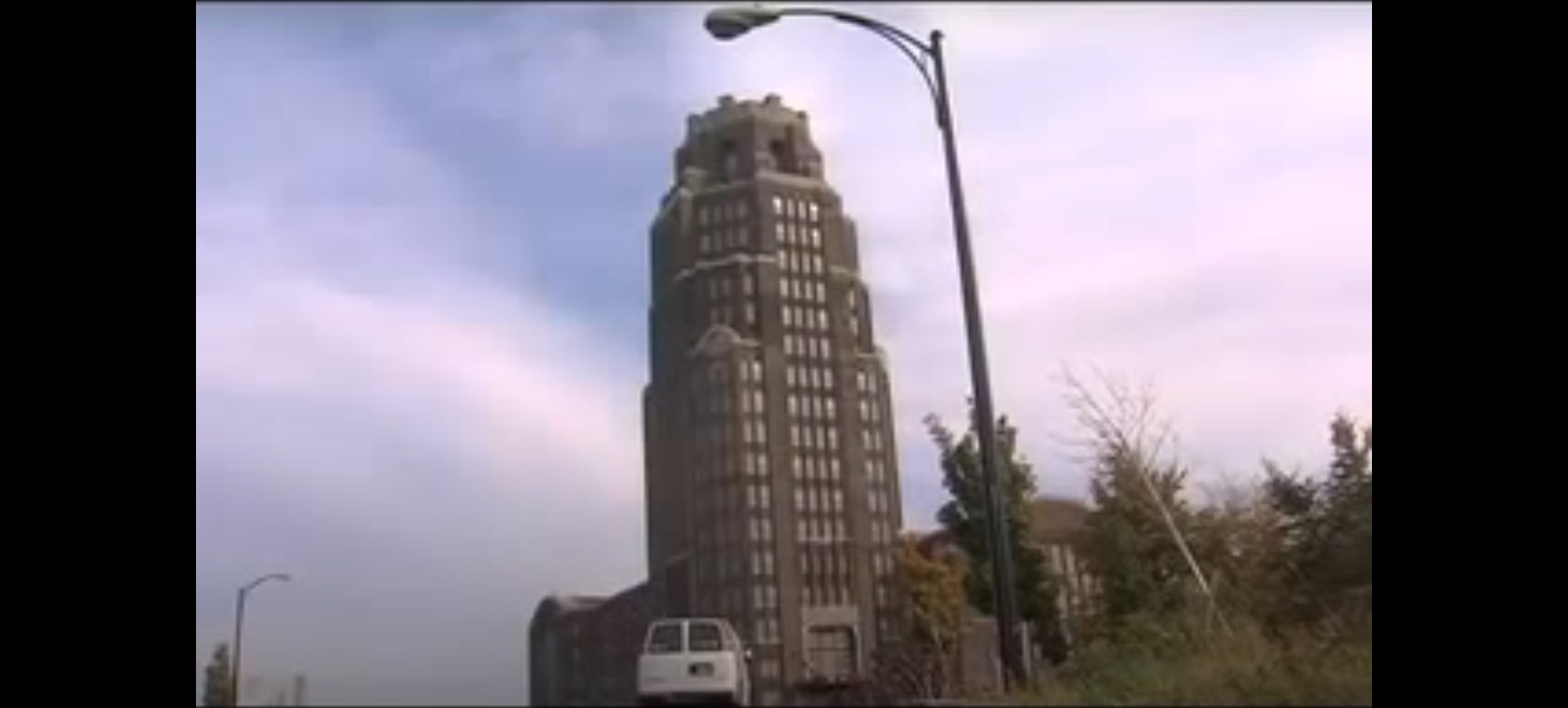
A pre-depression era railway terminal is now an aging and decrepit structure left to ruin in Buffalo, New York. It’s also the site where an experienced paranormal investigator, her ghost-tech guru, and three volunteers venture for exploration, hoping to uncover something spooky that goes bump in the dark because of the buildings long-marred and infamous history that includes an insane asylum, an unorthodox cattle abattoir, and many unexplained and terrible deaths throughout the decades. The deeper they dig down into the terminal’s underground corridors, the more they find themselves lost in a labyrinth amongst a taxonomic diversity of unhinged ghosts and ominous orbs. Lost and being hunted down, the ghost hunters fight for topside survival before absorbed by the terminal’s evil past.

Ghost hunters investigating the eerie ambience has been a source of easy pickings for producers and filmmakers from television’s “Ghost Adventures” to the popular James Wan phenomena that is “The Conjuring” franchise based off the Ed and Lorraine Warren investigations. The then mid-30s, New England filmmaker, David “D.W.” Kann hops aboard the investigator train with his own specter-sleuthing indie film, “Prison of the Psychotic Damned,” penned by producer David R. Williams (“Frightworld”) and released in 2006.  Also known as “Prison of the Psychotic Damned:  Terminal Remix,” the once puppetry and props master, who worked on such classics as “Carnosaur 2” and “Children of the Corn III:  Urban Harvest” as well as hitting the big time with Jim Carrey’s “The Mask” and the 1995 video game adaptation, “Mortal Kombat,” showcases the historic Fellheimer & Wagner Art Deco-architecture that once stood grand inside the Buffalo Central Terminal.   Built in 1929, the 15-story building has been abandoned since 1979 and left for the whim of vandals until its sloth restoration in the 2000’s that even saw paranormal activity themed reality shows take a crack of discovering spirits beyond the grave.  “Prison of the Psychotic Damned” also is an imprisonment of psychotic fraud as David R. Williams was arrested and convicted of embezzlement of his then employer’s capital back in 2010 to fund his schlock ventures under his production company, Red Scream Films, including this film but that didn’t stop Williams who went on to continue producing and directing long after his short stint in the slammer. 

About as volatile as Mount Vesuvius wiping out Pompeii in 79 A.D. are the five, dynamically counterpoised ghost hunters driving toward their insensible doom at the Central Terminal.  Spearheading the venture is the most experienced investigator Rayna (Susan Andriensen, “The Blood Shed”) with the intention of reviving her dwindling career before becoming defunded by the grant investors.  Rayna is joined by her longtime tech assistant Jason (James Vaughn) looking to capture something, anything, supernatural with his homemade psychokinetic-detecting gear as he innocently enough flirts with the snarky unwilling participant Kansas (Melantha Blackthorne, “Bloody Slumber Party”) who finds herself on the brink of losing her funded wayward lifestyle if she doesn’t join Rayna’s expedition per her moneybag father’s direction.  The relation between Rayna and Kansas is being step daughters, but that connection isn’t made entirely clear with only one brief exchange regarding Kansas’s forced attendance.  While Kansas disparages much of the investigation, and many of its participants, she’s joined by fellow volunteers Nessie (Noel Francomano, “Kottentail”) and Aurora (Nemesis 5:  The New Model’s Daiane Azura, credited as Demona Bast) in their respective roles of Rayna’s geeky fanatic and go-to psychic.  The one aspect that really kills these characters (pen intended) for me, and probably the audiences, is the consistent, continuous, ceaseless contentiousness between them with a slew of nitpicking, name-calling, and verbal and physical abuse that makes you wonder why should we even care for a bunch of people who can’t get along.  Brief moments of reasoning flash between them that could end up turning the dynamic around, but the fleeting qualities subside to blunt anger and hate to the point they’re bashing each other’s heads with bricks and leaving each other to fend for themselves against a horde of surgery-conducting ghost-zombies with revoked medical licenses, played by Kidtee Hello, Terry Kimmel, Michael Ciesla, Kelly Budniewski, and Jessica Grangler rounding out the remaining cast list. 

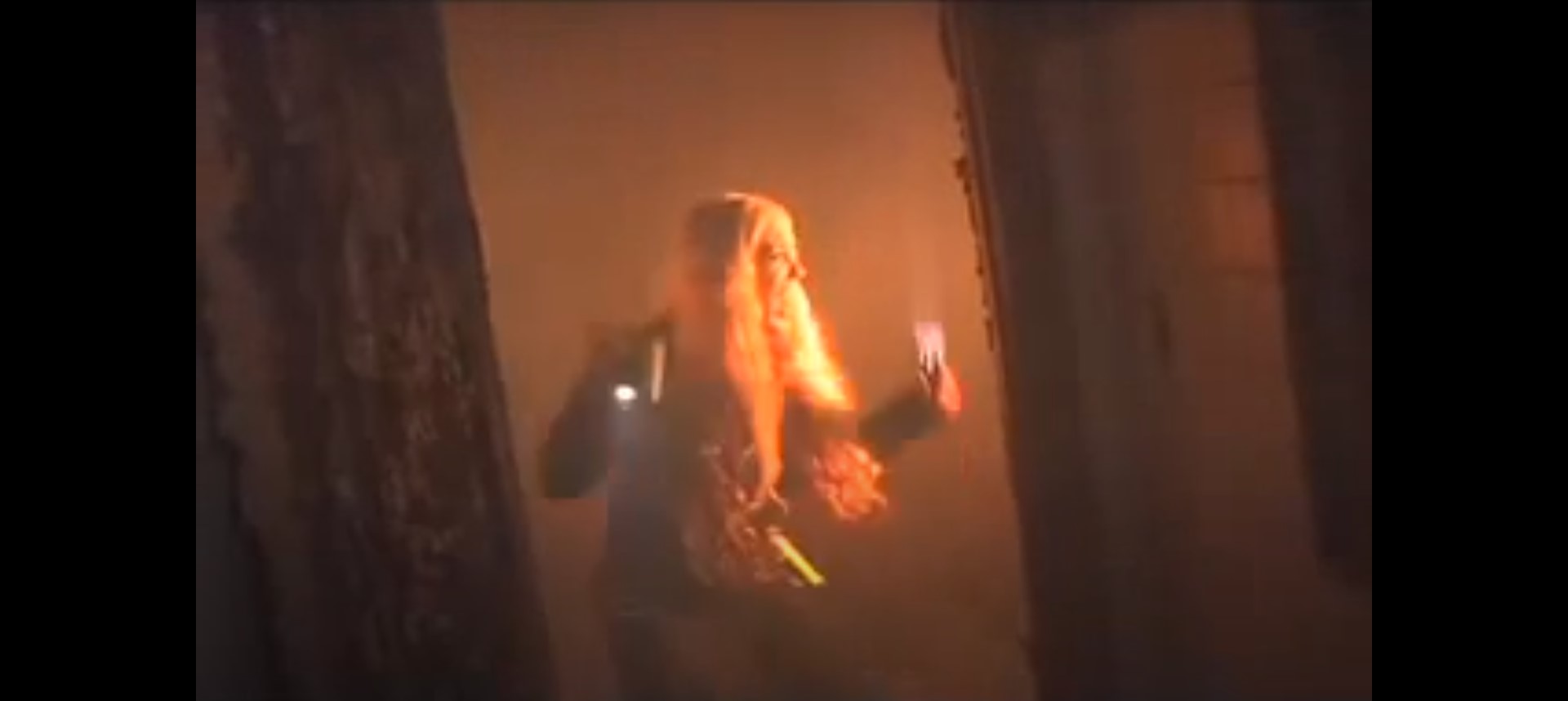
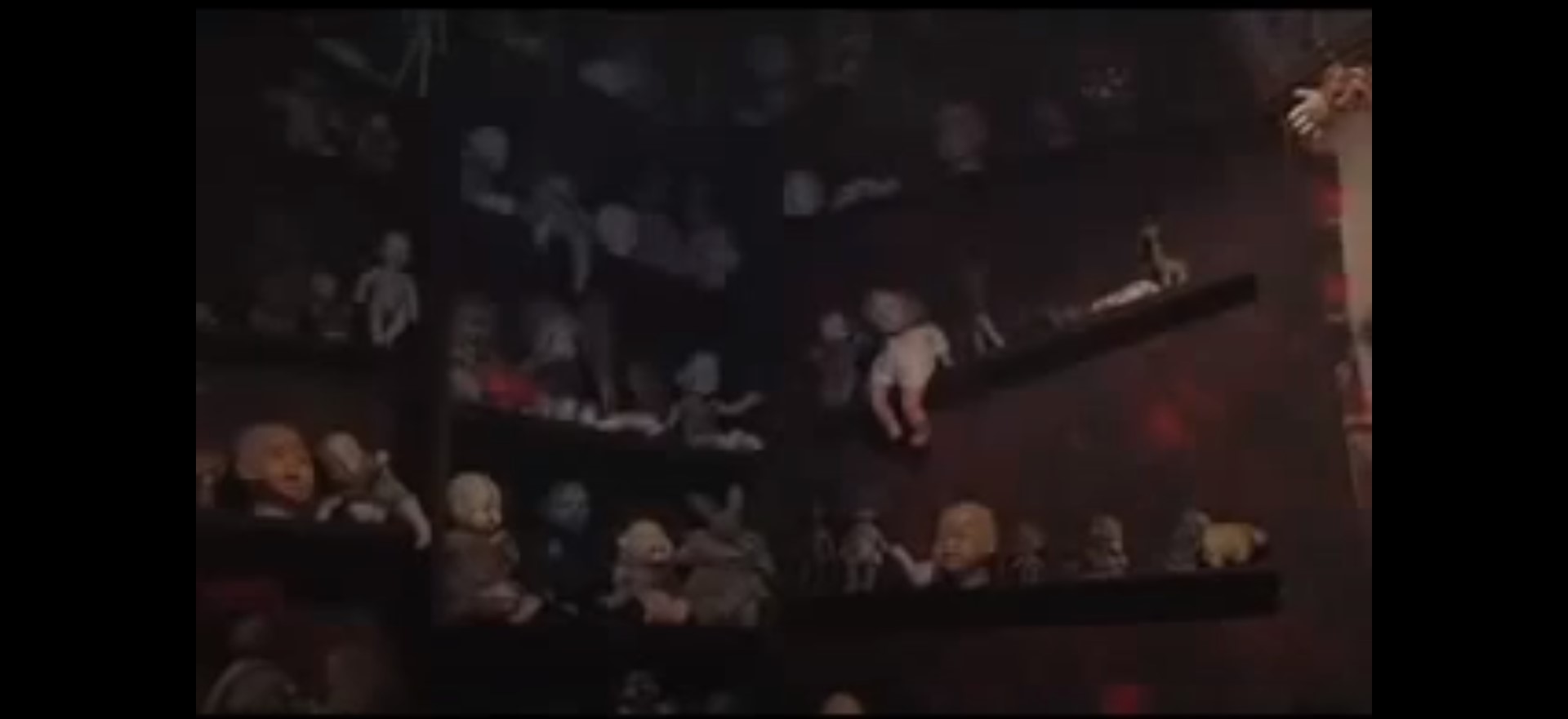
In what feels like the distant cousin, watered down version of “House on Haunted Hill” lite, Kann’s lowbrow, Digital8 shot film is a talkative spew of exposition that lends itself to pretentious prologue surrounding Kansas’s opening scenes of self-mutilation and prosaic nudity as if she’s on an unidentified narcotic.  What’s more confusing about the out of context opening scenes is we don’t really know it is Kansas alone in her apparent apartment.  The film begins with a woman slashing her wrist and licking the blood from her wound, before two medically masked men rush through apartment door and whisk her away.  Next scene, the same woman is back in perhaps her same dingy, dim lit apartment, but this time she’s spouting out philosophy and exposing her breasts by ripping her cheap cotton, tight white top before getting into a warm, steamy bath to stare at the candles at the other end of the tub.  Next thing we know post title creds, we’re riding in a van with the five paranormal investigators and Kansas, sitting in the back seat with Nessie and Aurora, doesn’t even look like the person we saw in the prologue as her hair is put up tight in a bun and she outfits more makeup and gothic drapery.  Once Rayna and Kansas have a sidebar chat and Kansas’s hair progressively loosens and falls, the pieces begin to fit together that Kansas’s disturbed impulses has forced her father’s hand to pair his errant daughter with Rayna for some extracurricular activities that maybe will do her some good…?  Ghost hunting must be the new vogue therapy the kids are into these days, or at least back in 2006.  Structurally, “Prison of the Psychotic Damned” runs faithfully the same obscured narrative course with Rayne expiating mouthfuls of the Terminal’s anecdotal infamy to build a dark dome above the longstanding history, but we rarely see any of the said mythos come for blood and get punted random glowing orbs, creepy doll room, and gloppy possession in return.  Along the way, Kann finds some ways to expose all but one of the actresses’ breasts in a gratuitous-laden attempt to advert our attention from the misaligned components like the story or the performances that just consist of ball-breaking personalities becoming trapped underground with killer spooks and have to duck and dodge the malevolent spirits to survive.  Though the gory bits sate nicely and David Williams erratic editing of eerie filler shots of the Terminal and surrounding area renders like a formidable damaged homemade movie on screen, “Prison of the Psychotic Damned” ultimately boils down to just more of the same rebranded indie slop we’ve all seen before.

Wild Eye’s DVD is released under the indie company’s Raw & Extreme sublabel and is the third physical release of “Prison of the Psychotic Damned” behind the cheap York Home Entertainment DVD and the SRS Cinema limited edition Blu-ray that was released approx. 2 years ago.  The DVD back cover lists the region free film as a widescreen presented transfer, unrated, and clocking in a 100 minutes.  Producer David R. Williams once noted that the surviving master transfer of a flood that destroyed nearly all material is the best there ever will be and with many dark areas shot on a Digital8 camcorder, the presentation is practically raw footage switching back and forth between digital third person and POV with ghosting and soft details amid the thick grain that collaborates the fact of a cruddy transfer. The lossy English 2.0 stereo sound mix toggles with the ears about as much as you have to toggle with the volume. From dialogue to score, insipid flat audio mix universally stiffens the Terminal urban legends Rayna rambles on about as well as extinguishing the score to a putter of insignificant industrial tones with a bookend and backup soundtrack by The Voodoo Dollies and actress Demona Bast serenating with the gothic-vamp vocals with Sonic 14 on an outro track. Among a static menu with scene selection, only Wild Eye trailers are included with the release. Buried beneath the torment of deranged souls, “Prison of the Psychotic Damned” sequesters itself from originality and from graspable, relatable, or even likeable characters in a vanilla story with decent gore effects.

Own “Prison of the Psychotic Damned” on DVD from Wild Eye!