Two College Girls Are Subjected to EVIL’s Violations Below Deck. “White Slaver” reviewed! (Impulse Pictures / DVD)

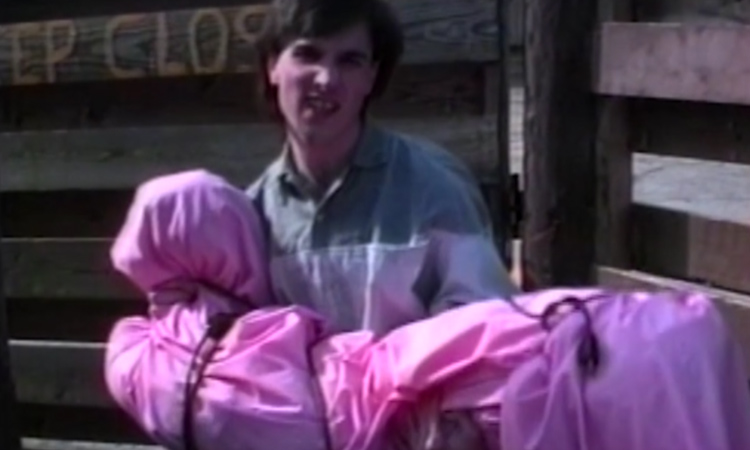
Two college girls are abducted and brought aboard a small yacht by a sex trafficking white slaver. Bound and covered, the young girls have no idea where they’re being taken or what’s in store for them by their three kidnappers, but the captors’ perversities are clear when the girls are forced to strip naked and submit to multiple sexual depravities against their will. When one abductor sympathizes with their ordeal, he attempts a dangerous escape plan to save the girls from a sex slave fate, but his degenerate cohorts have other plans.

If you have an unallocated 60 minutes of your life to spare for a below deck X-rated roughie, “White Slaver” would be all-aboard lecherous pleasure cruise to kill time. The anonymously directed “White Slaver” is the quintessential 42nd Street fare regularly spanked to on every other corner theater established with luminous marquees or neon signs lighting up salacious keywords and acronyms, like Sex or XXX, inside the once infamous The Deuce stretch of New York City. Also known as “White Slavers,” the pornographic roughies, like the 1974 released feature, are typically scarce in background and information due in part to the pocket change budget and low on the totem pole unknown sex studs and starlets engaging in mediocre debauchery in the single sticky setting of steerage, an appropriate term for cheap seat patrons. Bookend by the title and the end title, “White Slaver” is claimed by none, recognized by few, and holds no designation for a production company or even who produced the one-hour fornication of the seas.

So, who is the cast that comprises up the porn that makes a debasing mockery of the severity of sex trafficking? Well, who the hell knows? Only half the cast is credit on the back of the DVD cover and same credits are listed on IMDB.com and a deep rooting search, inserting every possible name combination one can think, through the search engines of the world wide web has come up with exactly diddly-squat. While in the early beginnings of the gilded age of porn, “White Slavery” doesn’t exactly have the cream of the crop of the then industries top shelf A-listers like Joey Silvera or Vanessa del Rio. Instead, we there’s a guy with two first names, Bill Scott, a white slaver in a sweater with an average porn-stache. In the most rigid, uninterested, lack of enthusiasm performance I’ve seen from a male performer in a long time, Scott’s blank expression sums up his own bag of tiresome tricks as he slums through his scenes with brunette #1 (uncredited first kidnapped college girl) and brunette #2 (uncredited Jim’s sleazy, tits-out, beer drinking, bi-sexual boss). Frankly, the female cast are appealing with a variety of taste to accommodate. Brunette #1 is a slim figured beauty, toned in all the right places, with an innocent face. Brunette # 2 contrasts #1 with a more butch approach and a thicker physique. The third woman, listed as Devon Mayer, is a blonde bombshell with a small waist and buxom chest and while Scott gets his licks in with both brunettes, Mayer is sexing only, who I assume is her husband, Jim Mayer as the two share a couple exclusive bowline knots, if you get my sailing terminology drift. Mayer on Mayer is a better, more enticing, combination in its well-rounded package. There’s also another unknown character with the sexless scene sex slave trader who purchases the girls at a staggeringly deal at $1000/each. In the 1970s, inflation was at an all-time low.
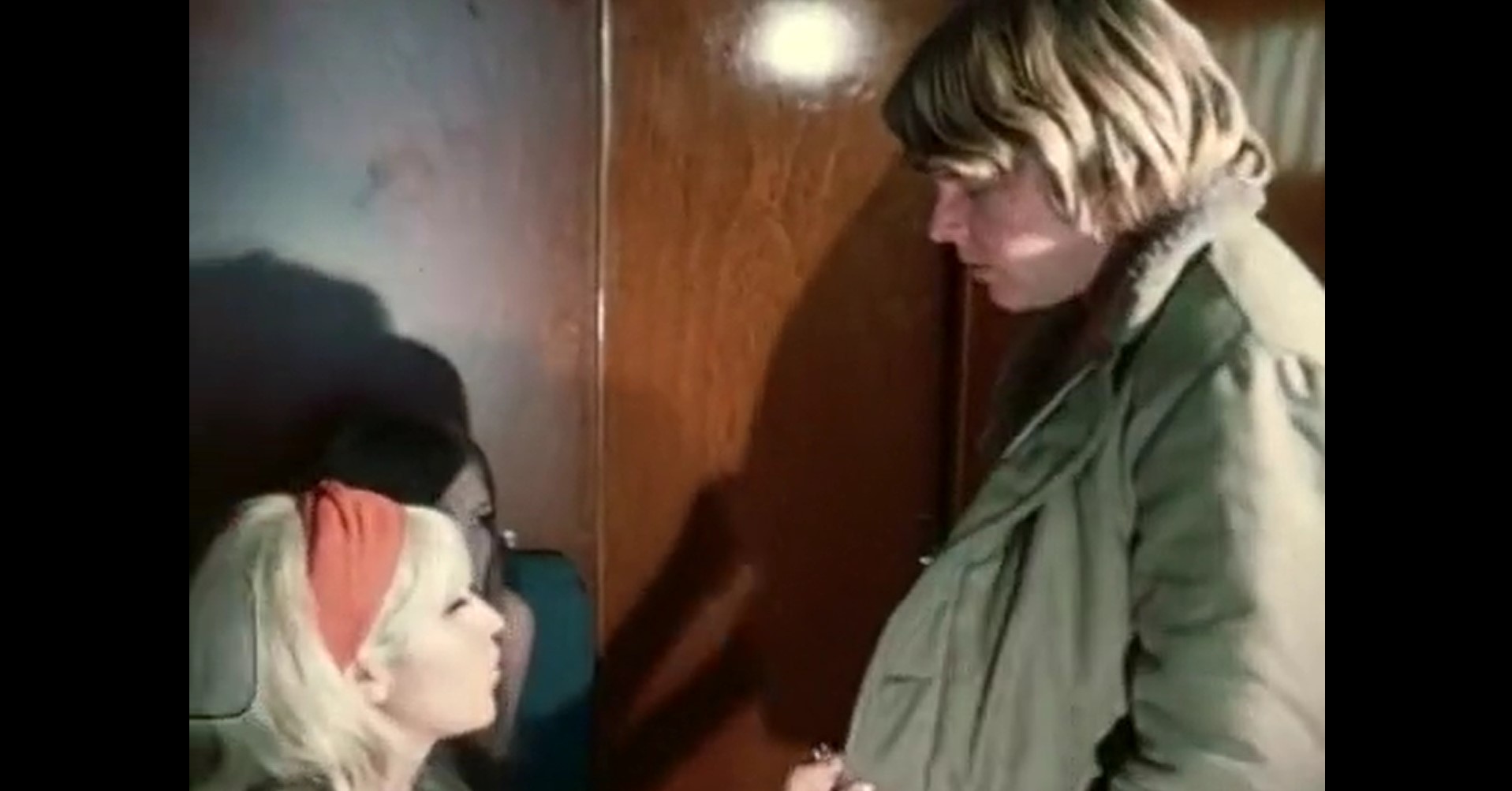
If you’re the average wanker looking to get off by any means possible, even on old JCPenney lingerie circulars, “White Slaver” will do the job. If you’re like me, someone who needs a little more substance and depth in their viewing pleasure coinciding with their kinky pleasure, “White Slaver” is a sinking blow to the stern with little diversity and a shell of a premise. All the skin-on-skin action happens inside the small yacht’s tight quarters that houses two segregated rooms, containing two beds, and a couch in one of them and all being used for carnal embarking. This makes for crammed cinematography to limit shots to only a few positions and severe closeups of the of the hairiest and dimple-laden hind parts and though those scenes are inherently a part of porn’s shooting culture, as they are indeed the money shots, not every damn scene has to be the width and height of my television. At least believe in the illicit sex trafficking premise, despite the morally insensitive nature of trading people for purpose of sex-lining one’s pockets. The hapless girls of “White Slaver” initially vocally counter their abductors with verbal threats and pleas for an unharmed release, but when the clothes come off and boat starts to rock, the two female sex slavery victims are all about it. When everyone’s sexed out, the girls go right back to playing pawns. While watching this wishy-washiness transpire, the lost appetite of a struggle against a mean brute before he has his way with her kills the enticing narrative that now lacks crucial roles for its very own, stay afloat, survival.

Amongst a sea of countless pornographic celluloids, “White Slaver” is definitely an interesting commodity of low-end rarity unearthed in modern times than it ever was inaugurally for the pleasures of jacks looking to unload in the middle of a theater. The provocative Synapse label off-shoot, Impulse Pictures, releases “White Slaver” onto a region free DVD home video, presented in the original 1.33:1 aspect ratio of its 35mm film. Though I’m sure Impulse Pictures presentation is the best we’ll ever see of “White Slaver,” the transfer suffered moderate trauma of wear and tear with evident film lacerations, blemishes, dirt, scratches, and even some light infiltration during processing. Also, an indication of the process mishandling is the exposure of the perforations. The sprocket holes of the 35mm stock swerve in and out of the picture due to either the introduction of light during the process or a sever misaligning of the stock in the camera reel but, either way, it’s annoying to see a rounded-rectangle box enter the frame at varied points. Not much to gain here with a flat color palette with lower deck love surrounded by nothing but awfully antiquated wood paneling and cupboards. The English language Dolby Digital single channel whispers the limp and zestless dialogue not because of the mono layer but because the amount of camera roll and static interference by shoddy recording equipment dampens the entire vocal spectrum. Special features include feature chapters and 42nd Street Forever: The Peep Show Collection with the flipping of projection audible only reels of similar, rare, era-related porn, included peep shows are “Vogue,” “Good Help Isn’t Hard to Find,” and “Liquid Plumber.” Obscurity and obscenity can’t always be a substitute for quality, but Impulse Pictures remains a steadfast platform for the little guy, even if that little guy is a forgotten morsel of American sleaze, with their newest rediscovered relic, “White Slaver.”

“White Slaver” on DVD courtesy of Impulse Pictures

Let the Heavens Fall to Cleanse the EVIL Away! “Undead” reviewed! (Umbrella Entertainment / Bluray)

The small finishing town of Berkley, Australia comes under siege by blazing meteoroids that turn the quaint residents into mindless flesh-hungry zombies. A small band of survivors led by the town’s dismayed local beauty queen and a fisherman turned doomsday prepper fight the undead hordes in order to escape the carnage by reaching the city limits, but when faced with an otherworldly monolithic barrier surrounding the town and blocking the exits, a hopeful way out becomes quickly fleeting. To make matters worse, unusual rainstorms drench them with fear of what’s really in the rainwater of the apparent alien attack. In a last-ditch effort, the remaining survivors board a personal prop plane to scale the great extraterrestrial wall that’s imprisoning them with the undead. An onslaught of end of days catastrophes drives their instinct to battle on, to push forth toward living, despite all the evidence of a contrary methodology to the misunderstood, overwhelming alien actions.

A 9-year marriage, three children, the death of my dog, two states, a new home, four jobs, four presidents, and a global pandemic in more than almost two decades’ passing has transpired since the first and last time I saw the Spierig brothers’ 2003 zombie-comedy “Undead” and, still, the 2003 Australian film impresses with a large-scale gore show on a small-scale budget. Before terraforming new vampire words with Ethan Hawke in “Daybreakers” and taking a stab at an entry in the “Saw” franchise with “Jigsaw,” the brothers Michael and Peter Spierig’s first full feature-length venture was an ambitious love letter to their’ most endeared cult films of their youth, more heavily influenced by Sam Raimi’s “The Evil Dead.” Blowing through the meager budget halfway into filming and shooting an insane 40 to 50 shots per day for the better part of two months, the completion of “Undead” was a must for the self-funding brothers under their production banner of Spierigfilm and the success of “Undead” also jumpstarted the careers of cinematographer Andrew Strahorn (“Hostel III,” “Lethal Weapon” television series), production designer Matthew Putland (“San Andreas”), and special effects artist Julian Summers (“Bait,” “Mortal Kombat” ’21).

“Undead” was the first film for Felicity Mason and Mungo McKay in a lead role as that dismayed local beauty queen, Rene, and that fisherman turned doomsday prepper, Marion, mentioned in the above synopsis. Rene seeks to leave the town of Berkley in the wake of the tragic death of her parents before becoming the burdened beholder of their debt; instead, she thrusted into a crisis that won’t allow her to escape so easily from a destiny laid out for her in hometown. Mason’s humble portrayal of Rene is nearly invisible compared to her more boisterous and gun-fu counterparts but grounds us to an agreeable realism of reactions whereas Marion’s limitless gun-toting out of his fishing overalls and Matrix-like gunplay moves adds that layer of voguish fun of the Chow Yun-fat variety. The other four survivors fall into the run-of-the-mill of yowlers and cutting personality types who throw around their weight and cowardly sarcasms in immediate show of unfounded animosity. Supposedly, a longer cut of “Undead” provides more backstory for father-to-be charter pilot Wayne (Rob Jenkins, “Australiens”) and the law enforcement neophyte Molly (Emma Randall, “Bullets for the Dead”) but the release copy which this review is based off was not of that longer cut. Dirk Hunter supplies a purge of negative comic relief as Harrison, the chief constable without a clue, and Lisa Cunningham’s Sallyanne is Wayne’s antagonizing pregnant lover of bitterness as she comes in second place next to Rene at the local beauty pageant and seizes moments, during all Hell breaking loose, to confront Rene’s rope-wrangling talent that won her the cast prize.

Over the past year, I watched and reviewed another Australian sci-fi horror “Dustwalker” from director Sandra Sciberras where crash landed space objects turned the local dustbowl residents into the resemblance of zombies and connected to the chaos is a not from this world creature. I likened “Dustwalker” to be a lesser, weaker, total rip-off of the Spierigs’ ozploitation rager and I still stand 100% behind my claim as I reaffirm “Undead” to be the reigning supreme champion, and “did it first” as far as story goes, between the two nearly identical narrative plots. There’s an uncrushable affinity for “Undead’s” bold risk of looking at the bigger picture head on and absolutely landing each scene whether in prosthetics or in post with better than your average computer rendered imagery. Are the effects the sleekest, most realistic, graphics you’ve ever seen? Absolutely not but what they are are ultra-rich in creative detail rather than quality detail and can give most substantial budgeted films a run for the money, especially in the closeup shots that can be an obvious slapdash, might as well be silicone, fake. The Spierig brothers also don’t overcomplicate the plot with survivors trying to simply quickly decamp the overran town madness with plot points sensible to character designs and not relying on gratuitous happenstance scenarios for the sake of gore alone. However, do believe me when I say that “Undead” will delight gore geeks with a gut-spilling, face-lifting, head-decapitating mixture of zany zombie knockoffs that are steady throughout. If you’re deciding between the more recent “Dustwalker” and the now almost considered antique 15+ year-old “Undead,” the choice is clear with “Undead’s” superior campy, shoot’em, blood-splattering zombie mayhem.

For U.S. horror viewers looking for something that borders obscurity and might be out of their comfort zone, “Undead” has yet to make an appearance on Blu-ray, surprisingly enough. Only the Lionsgate DVD version is the known, and authorized, copy to be released in America. For those searching high and low, the all-region Blu-ray from the Australian distributor, Umbrella Entertainment, offers a 2-disc alternative with a new 1080p, Full High-Definition, release as volume # 12 on the company’s World on Film: Beyond Genres banner. The Aussie cult modern classic is presented in a widescreen 1.77:1 aspect ratio and with a runtime of 97 minutes, mirroring the U.S. DVD length which is a bit disappointing as longer cuts of the film do exist on other European releases. Day scenes play into an agreeable enough flat, more natural, color scheme with some serious grain in the 16mm film stock use, moving the photography toward a retro de-aged semblance courtesy of Spierigs’ cult film homage, but the darker scenes, mostly through a moderately intense blue filter, sees the unstable pixelation flareups, especially in black blank spaces and I’m taken aback by the lack of touchup to clear up any stylized misgivings. Umbrella offers two audio options – an English 5.1 DTS-HD Master Audio and an English 2.0 DTS-HD Stereo. Paired with an excellent soundtrack, the audio tracks do “Undead” complete justice without a smidgen of lossy fidelity. With plenty of action to go around – firearm discharges, explosions, zombie grunts/groans/sneers, and sundry of miscellaneous and oddball effects – each elemental output is distinct and clear. The dialogue renders nicely as well. Umbrella holds a few exclusive and rehashed special features that include an audio commentary from Peter and Michael Spierig and cinematographer Andy Strahorn, a raw video behind-the-scenes look on the set of “Undead,” the more production quality making of “Undead,” “Attack of the Undead” short films from the Spierig brothers that inspired the feature, home-made Dolly Video, the camera and makeup tests, still gallery, and theatrical trailer. Plus, an exclusive Simon Sherry illustrated art on the front covers of the snap case and the cardboard slipcover along with reversal DVD cover art and a second disc containing the complete 17-track soundtrack from Cliff Bradley. The rating is listed as an Australian certified MA 15+ for horror theme, medium level violence. which sounds severely tamer than it is for the more recent video nasty with all its zombies punching holes through hapless skulls, bloody brain munching, gooey face ripping, and severed torsos with spine exposures.

EVIL Bottled Up is EVIL That’s Life Ruining. “Repossession” reviewed! (Gravitas Ventures / Digital Screener)

“Repossession” Available on Amazon Prime Video!

Jim Tan is a middle-aged engineer earning more than decent living for his luxurious lifestyle with a high-rise condo with private swimming pool, his daughter’s university tuition, and an insanely expensive car. When he is suddenly forced to leave his job after decades of service, Jim’s inability to face the truth and retain his pride results in not telling his family upfront. As his bank account dwindles but his family’s lavish spending continues, Jim’s drastic measures of gambling what he has left in the stock market trading goes against his best friend’s advice as he also submits to a meager income as a transportation driver, but as Jim sinks deeper into the red, the secret he keeps from his family eats more and more at psyche and his traumatic past, full of more secrets, leave the door open for a pernicious dark figure to infringe upon his crumbling reality.

Filmed and set in the multicultural, larger-than-life city of Singapore, “Repossession” is a transfixing cautionary tale of the grim side of pride, society’s devaluation of experience, and the return of past demons. Written and directed by the predominantly television producer, writer, and director, Goh Ming Siu, and Scott C. Hillyard, the 2019 thriller about the ugly failings of falling personal stature grace is the first feature length venture from Siu, a Northwestern University’s Communication’s graduate, and Hillyard, a Mass Media Management grad of Nanyang Polytechnic School of Business Management, that showcases not only his drive to create a structurally sound narrative, but also a vision of one man’s minimalistic mental terror backdropped inside a vibrant, heavily urban surrounding where madness can be lost and confused with the day-to-day hustle and bustle. Siu and Hillyard have tapped a handful of short comedy films over his career with “Repossession” being the directors’ first attempt at a fright film, even if it’s only a diluting portion of the considerable drama elements and is a production under their private limited company Monkey & Boar, operating out of Singapore.

“Repossession” revolves around the fall of a prideful patriarch performed by Gerald Chew (“The Tattooist”). Chew, who previously acted in one episode of Siu’s comedy series, “First Class,” has to enact a man torn from the breast of affluent society and forgo the weening process of learning how to manage life’s obstacles without a steady, lucrative income. As the corporate terminated Jim Tan, a middle-aged man forced back into the current job market after 20+ years at the same company, Chew reaches into our darkest corners for anxiety and panic when everything in Tan’s life that has felt secure and sustainable is now on the precipice of tumbling down into a heap of loss. Instead of coming forth with his mare’s nest of occupational troubles, Tan hides it away, keeps it a secret, and tries to maintain status quo from his wife, daughter, and friends, but the daily life of was once sustainable yesterday is not sustainable today and Chew does the immaculate reformulation of proud man who never needed to worry to now a man whose pride is getting in the way of his acceptance and progression. To add an extra little something to the narrative, Tan’s backstory creeps into the fold one flashback at a time to underline the bubbling trauma now aggravated by his newfound sense of desperation that leads him down a concealed path of disturbing distraught. The mostly all-Asian cast rounds out with principle actors in “Just Follow Law’s” Amy Cheng as Jim Tan’s wife Linda, Rachel Wan as his daughter, Jennifer Ebron as the condo-keeper, and Sivakumar Palakrishnan, as his confidant and common-sense life adviser he never thoughtfully considers, along with bit roles from Daniel Jenkins and Grace Chong.

Demonized as an inky black and towering dark figure with long, sharp hands is Jim Tan’s bottled-up trauma ready to pop like a screw loose on an airplane engine that’s flying 10,000 feet above a populated city. A catastrophe of psychological collapsing looms constantly around every corner when the figure first makes its presence known and only Jim experiences its menacing presence. Viewers won’t know if the glomming figure is a figment of Jim’s mounting pressure or a haunting dose of realism from his past. The otherworldly shadow is just that, a tenebrous shadow of Jim’s foreboding hesitancy in coming clean, and, just like most secrets some of which can be monstrous, harmful, and wicked, Jim’s withholding cleans house with his relationships, hurting everyone in his path from friends to family from his past and to his present. Siu and Hillyard offer a slow chug displeasure cruise of one man’s course through dormant madness, triggered after years of comfort and security, in repossessing a lifelong psychological issue thought long suppressed. The wordplay is clever in design with the character’s default on payments as well as defaulting on his own life and, thus, everything he ever owns falls onto the grounds repo-horror. What can be considered asymmetrical in Siu and Hillyard’s film is the concerting connection of the dots, through Jim’s sometimes off-topic flashbacks and startling visions of the dark figure, that lead up to, what I consider to be, one of the best simply shot and powerful climatic endings experienced to render a pitfall of rueful heartache with a gory final moment.

On December 21, “Repossession” came a-knockin’ on the North American market’s digital door with a multi-platform release from Gravitas Ventures in association with Kamikaze Dogfight. The film has a runtime of approx. 96 minutes and bares a not rated certification. Since “Repossession” is a digital release, the audio and video quality critiques will not be covered. However, I was impressed with cinematographer Chow Woon Seong’s wide lens celebration of Singapore by capture various sentimental landmarks in the area and establishing a contrasting space between the actors and the stunning visuals screen monolithic and serene, creating a conflicting blend between ominous and wonder that also translates into the film’s industrial-lite soundtrack by composer Teo Wei Yong with a brooding mechanical perfunctory to match Jim Tan’s hardly lifting a finger effort. There are no special features or bonus scenes included with the digital release. Powerfully relatable, the human condition for survival, despite the trivial circumstances surrounding one’s dignity, can turn deadly in the blink of an empty bank account.

“Repossession” Available on Amazon Prime Video!

EVIL Ditches Satan, Picks Up a Camcorder. “Midnight 2: Sex, Death, and Videotape” reviewed! (SRS Cinema / DVD)

“Midnight 2:  Sex, Death, and Videotape” now available on DVD!

The sole survivor of the murderous, devil-worshipping cult family, Abraham Barnes, continues to kill under a new outward show as amateur videophile recording everything and everyone to gain their trust.   Instead of harboring his mother’s dark intentions of eternal life, Abraham simply thirsts for killing, documenting his premeditated methods using a camcorder.  When his latest victim goes missing, her friend initiates an investigation with a police detective, but Abraham is always recording, always one step ahead of them both, always on the hunt.  With the trap set and the play button pressed, the blood-lusting survivor of the maniacal, serial killing Barnes family preserves a lineage legacy of death. 

Screenshot from AGFA

Ten years after releasing his moderately successful All-American shocker, “Midnight,” John Russo returns with the Barnes family.  Well, at least one of them in the 1993 release of “Midnight 2:  Sex, Death, and Videotape.”  Also known as simply just “Midnight 2,” the secondary title references the widely popular 1989 Steven Soderbergh film of sexual testimonial video-tales in “Sex, Lies, and Videotape,” starring James Spader and Andie MacDowell.  The sequel gives way to a new motive and theme that’s very different from the satanic panic aspect of the original.  “Midnight 2” enters the mind of a serial murderer with every calculated and cold thought and whim that crosses the killer’s mind laid out in detail to paint a compulsive picture. Behind the scenes, conjuring up resources to make the sequel exist as it stands today, is “Dead Next Door” and “Robot Ninja’s” J.R. Bookwalter, the head-honcho in production and distribution of his own created company banner, Tempe Entertainment. Bookwalter, who also wears the director of photography and editor hat on this film amongst others, produces the Russo sequel that was shot on location in Bookwalter’s home city of Akron, Ohio.

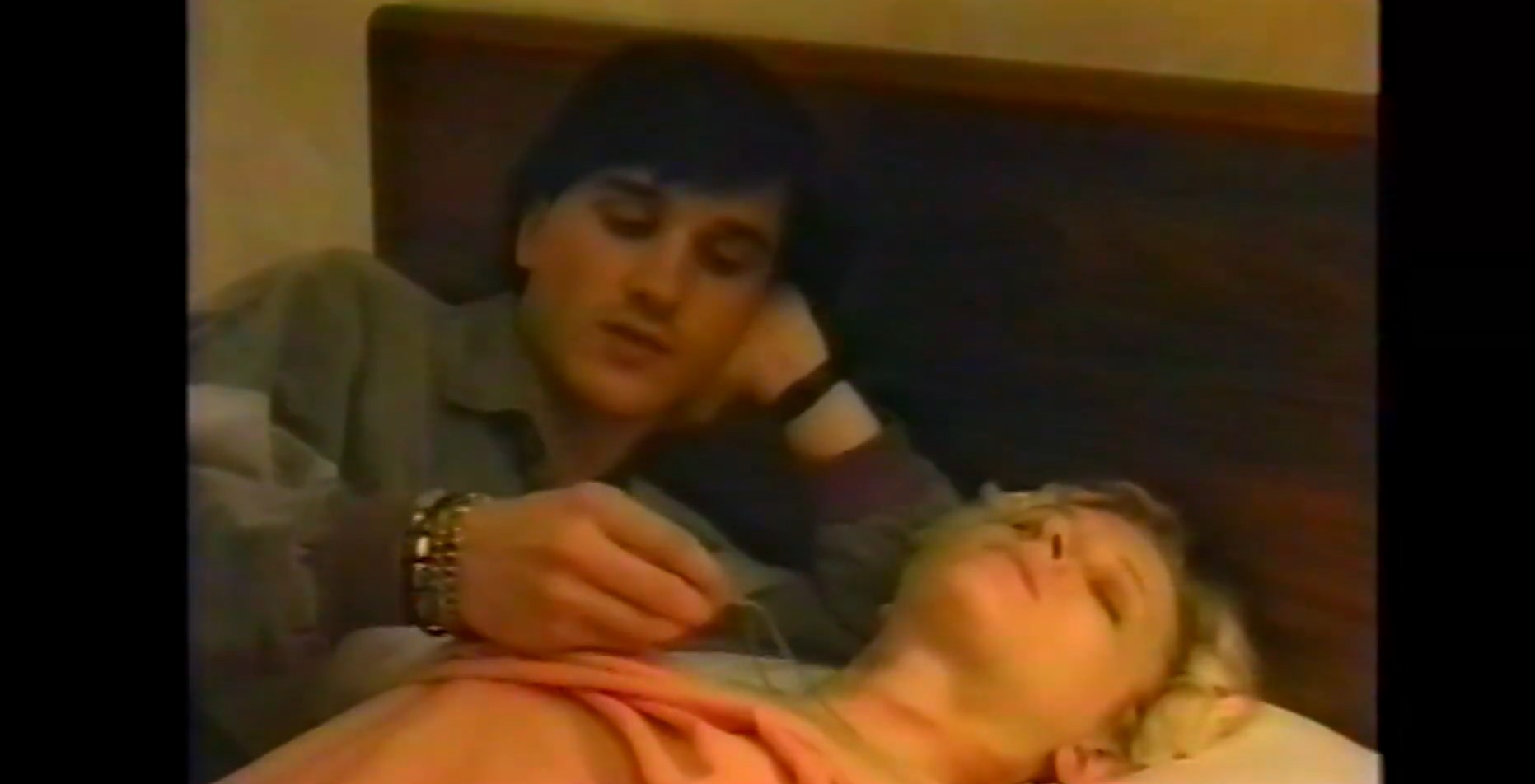
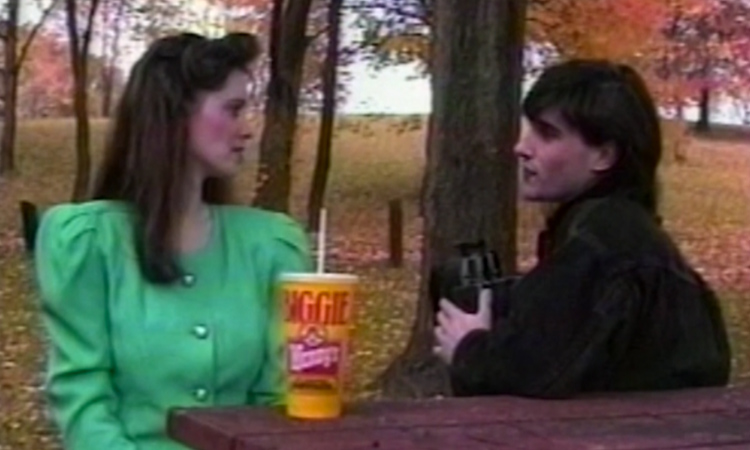
If you’re expecting or anticipating seeing John Amplas (“Martin,” “Day of the Dead”) return to the Abraham role 10 years later, be prepared to be severely let down as Amplas does not return for “Midnight 2.” Instead, profound schlock horror screenwriter and composer, Matthew Jason Walsh, brings a whole new peculiarity to Abraham Barnes and I’m not just talking about his face or mannerisms. Walsh, who penned such David DeCoteau C-list gems as “Witchouse,” “Young Blood, Fresh Meat,” and “The Killer Eye,” goes face-to-face with the camera in a hybrid performance as lead actor and lead narrator of his own exposition into his own executions. Being a sociopath is never fleeting from Walsh who can sink into the sardonicism of the Abraham character naturally as one of the two only traits to carryover from the original film with the other being a killer. Aside from a boat load of archival footage and a verbal recap of nearly the entire first film, the whole Devil-worshipping aspect of the Barness family is dropped in favor of a more undisclosed truth in the hidden agenda of a person who thrives off the hunt and the kill. Abraham goes through verbatim his daily, stalking routine in a publicized manner of videorecording everything and everyone to capture as much detail as possible as well as capture their last moments. Russo does throw in escape clause caveat for Abraham in that if he meets the right girl, the love for her will be strong enough to break him away from killing and possibly start a family and while Russo plays into that tangent a little with Jane (“Killer Nerd’s” Lori Scarlett), nothing much more materializes significantly as a romantic conflict that circles back to that subtheme. Russo ultimately gives in to a more cat-and-mouse game with Jane’s worried friend Rebecca (“Chickboxer’s” Jo Norcia) and the detective who rather slip into Rebecca’s pants than actually solve the case in a stiffer than roadkill performance by Chuck Pierce Jr. (“The Legend of Boggy Creek”).

Screencap from AGFA

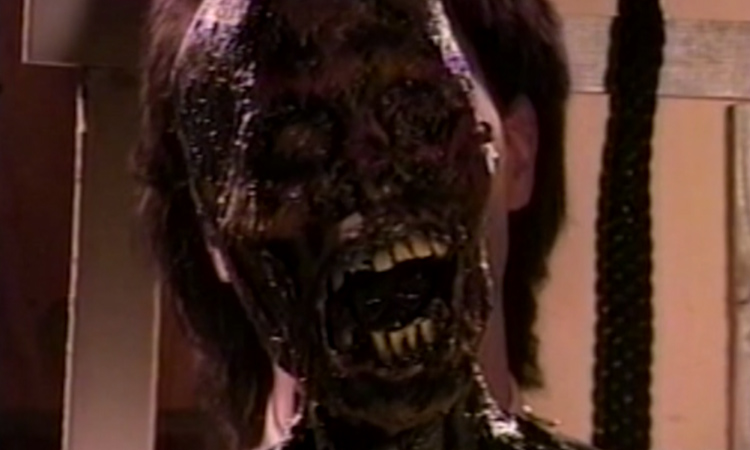
I wonder how much ‘Midnight 2″ is actually from the mind of John Russo or if it’s more of the J.R. Bookwalter show in calling the shots from the producer’s director’s chair as the film feels very much like Bookwalter’s usual fare, a SOV, DIY, home brew production of local Ohioan talent. “Midnight 2” also goes from the backwoods suburbia of Pittsburgh to the concrete structures of Akron, leaving behind any remnants of Abraham’s satanic past in the ground along with his dead siblings, but the sequel very dutifully leans into us with a heavy archival footage recap with Walsh narrating the entire damn thing. I kid you not, the recap is approx. a third of the runtime and so essentially, “Midnight 2” is a two for one straight-to-video special. Granted, the archival footage remains in its untouched up state so don’t expect the Severin grade video quality. In one way “Midnight 2” is discerned to be more of a Russo film is the very hesitancy of graphic, blood-shedding violence. Bookwalter’s a bit of gorehound in making some gruesome grisliness out of the singles from a Podunk stripper’s Kmart thong. There’s none of that imaginative ingenuity here with a surprising severe lack of that adored shot-on-video nastiness common of its era, especially from the likes of John Russo in filing a rated 13 release according to the DVD back cover, enervating “Midnight 2” as a inferior sequel that tries on a new pair of shoes but ends up limping with a lame gait.

Screencap from AGFA

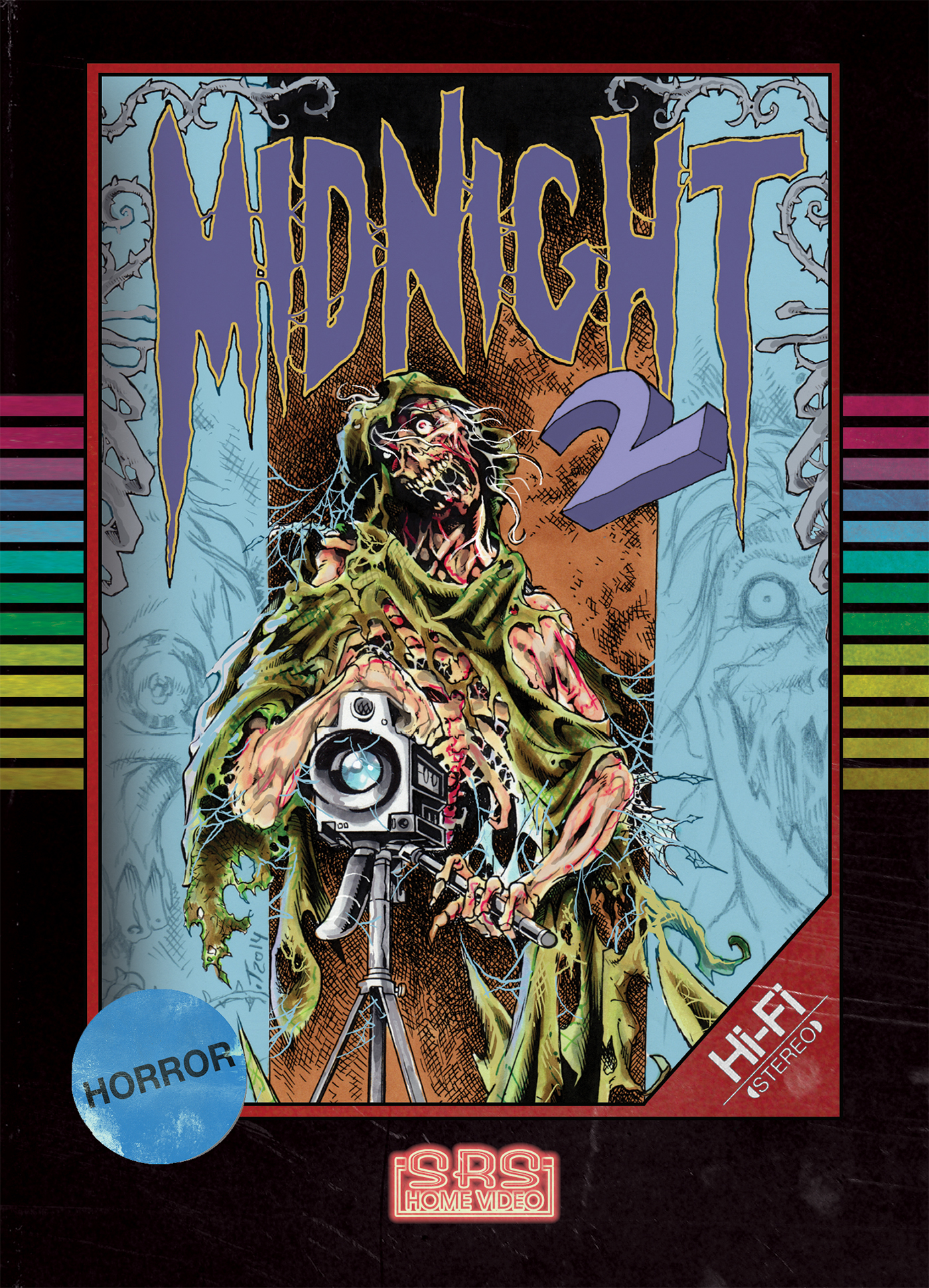
Russo might always be remembered for his contribution to the start of the “Living Dead” franchise. The cult legendary filmmaker surely found modest success with his first directorial run with “Midnight.” Yet, “Midnight 2” will have a tough time keeping out of the celebrated shadows of Russo’s credits, but the indie, underground horror label SRS Cinema pulls back the shrouding curtain with a newly released, MVD Visual distributed DVD featuring two cuts of the film. Fitted with a retro look and ghastly illustrated cover art, a superb upgrade from the VHS cover, the region free DVD is presented shot-on-video in a 4:3 aspect ratio on both cuts. Essentially, both cuts are the same with reworked scenes and narration with the except of the 90-minute rough cut having extended archival footage of the first film. The main version runs slimmer at 72-minutes. The lossy image quality abides within both versions with a flat color palette that, at times, had a singularity about its choice of unflattering hue, compression macroblocks consistently flare up, and dimly discernable innate tracking lines with video recording destabilize the image. The anemic English Language single channel mono mix is a bottom of the barrel budget sound design and that was to be expected. Dialogue does come over clear enough but lacks vigor and crispness as there is just too much electrical interference shushing in the background. Depth’s a bit awkward too with the actors conversing in the background but have foreground decibel levels. Aside from the two cuts of the feature, the only other bonus content is the theatrical trailer and other SRS home video trailers. “Midnight 2” works as a standalone in a different shot-on-video horror light but is crammed with unnecessary recapping on a story built around the destined, convoluted conjecture of a homicidal narcissist and his videotape addiction.

“Midnight 2:  Sex, Death, and Videotape” now available on DVD!

Let EVIL Free You! “Jakob’s Wife” reviewed! (Acorn Media International / Blu-ray)


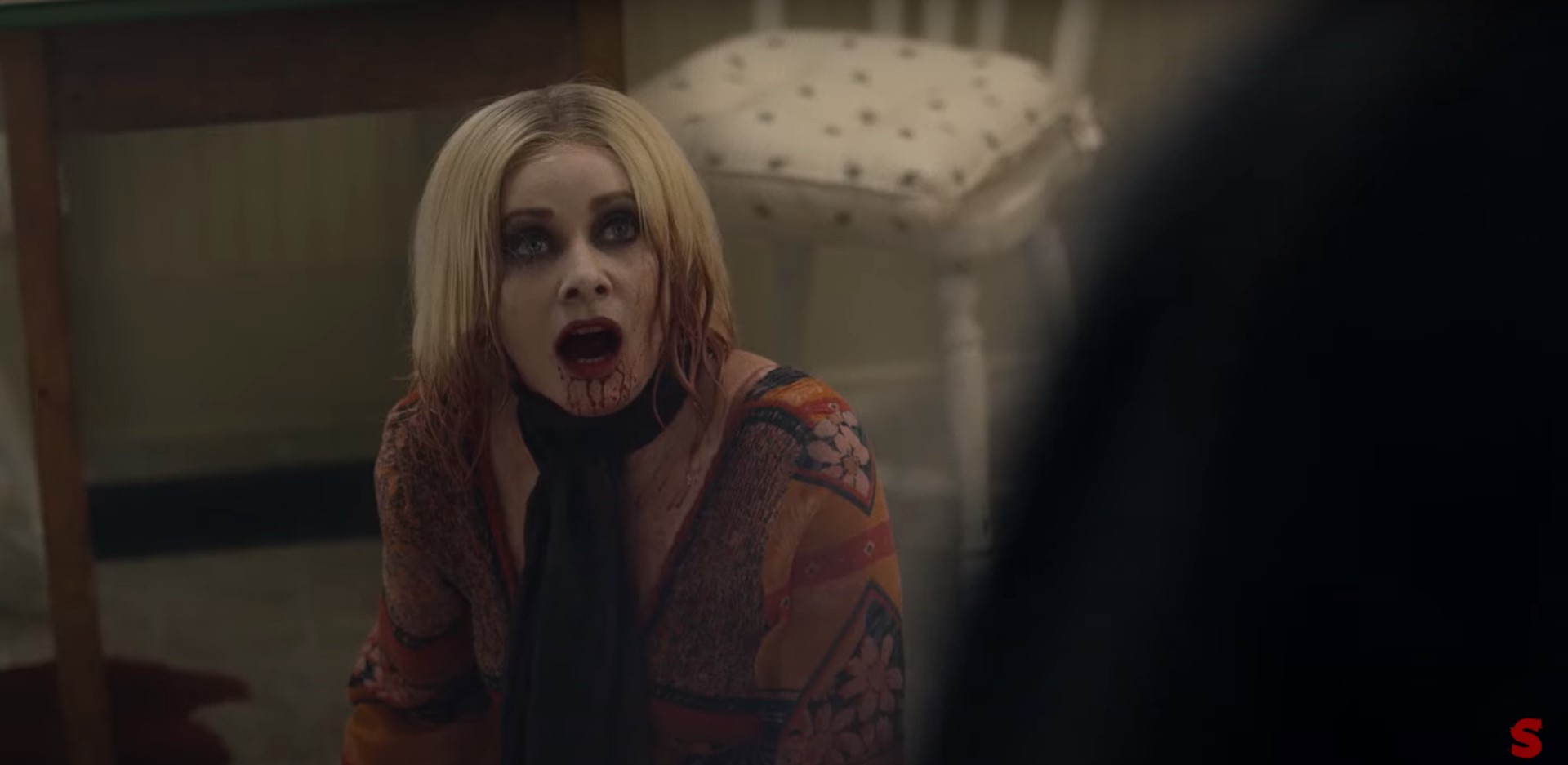
Anne is a minister’s wife living in a dying small town where the only thing left for the residents is their faith.  Once inspired to travel and do something meaningful with her life, Anne has found that the last 30 years of marriage to Jakob has robbed her of her self-empowerment, diminishing her as nothing more as than just Jakob’s wife.  When the opportunity to impress an old fling during a business trip turns into a nightmare with an attack by a shrouded figure in a rundown, vacant mill, the disorienting days after having provided Anne with a sense of expressive freedom, a chance to be bold, and to feel more alive than she has felt in years.  Her new lease on life comes with a ghastly cost, a severe hunger for blood.  With the help of Jakob, they realize the dark forces of a vampire has infected Anne and their road back to normal life, a life where Anne is dull and drab, will the paved in blood. 

Horror is such a versatile and malleable medium to convey allegorical messages, drawing audiences into the writer’s or director’s world of the fantastic and the horrific while laying down a subfloor of real world truth most passionate to them in a social, religious, or political context.  To point out a few examples (most of us already know), George Romero was renowned for his multiple social commentaries throughout his “Living Dead” series and a slew of vampire films construct the bloodsuckers as metaphors for an addict going through the ugly turmoil of addiction.  “Jakob’s Wife” is a different kind of vampiric allegory film that bites into feminism values.  The “Girl on the Third Floor” writer and director Travis Stevens follows up his introductory haunted house film with an inverted Nosferatu-esque dark comedy co-written alongside “The Special” screenwriter, Mark Steensland, and the “Castle Freak” remake’s Kathy Charles.  The Canton, Mississippi location evokes the dried up, small Southern town aimed to build a depression enclosure around the titular character.  Barbara Crampton’s Alliance Media Partners, whose spearheaded creative and imaginative films such as Justin Benson and Aaron Moorhead’s Sci-Fi cult looper, “The Endless,” and the Romola Garai demonizing guilt film, “Amulet,” presents “Jakob’s Wife” in association with executive producer Rick Moore’s Eyevox Entertainment (“Purgatory Road”) at one of the banner’s production studio locations in Canton, Mississippi.

In concurrence as a producer of “Jakob’s Wife,” scream queen of horror legend, Barbara Crampton (“Re-Animator,” “From Beyond,” and most recently, “Sacrifice”), steps into the torn role of the titular character.  In Stevens’ direction, as well as Crampton’s portrayal, Anne is so diminutively overlooked in the first act, you’ll hardly notice her even though Anne is practically in every scene.  Between Jakob’s interruptions, meek output, and overall quiet behavior, Crampton’s able to exact the very essence of the idiomatic phrase the calm before the storm.  Also, I must mention, just like I’m sure others have already pointed out, the early 60s Barbara Crampton looks smokin’.  She must have been bitten by an actual vampire in order to seemingly de-age right before our eyes.   Larry Fessenden, who does age accordingly but also very handsomely in his genre characters, is the God-fearing minister playing opposite Crampton.  The “Habit” and “Jug Face” actor has always been quite the character actor and as husband Jakob, that beneficial streak continues as an old ways man of God with an innately built-in chauvinistic ritual of keeping everything the same day in and day out.  Jakob’s absentminded blinders suppresses Anne into a depressive submissive state until she comes across The Master, the sorely underutilized and shamefully absent from more screen time chieftain vampire played superbly by Bonnie Aarons in an unexpected female version of Nosferatu.  Aarons gives her best Max Schreck performance while commanding a distinctive mentorship that’s unusual for the vampire race; The Master is greatly highlighted in the most subtle of ways as being a repressed liberator and Aarons understood that compulsion to educate, revitalize, and blossom others by offering a new kind of death, the burgeoning power and desires of a vampire, from their previous one, a rather dull life stuck in a no-win circumstance.  “Jakob’s Wife” rounds out the cast with Jay DeVon Johnson, Phillip “CM Punk” Brooks (“Girl on the Third Floor”), Robert Rusler (“A Nightmare on Elm Street 2:  Freddy’s Revenge”), Angelie Simone, Mark Kelly (“Dead & Breakfast”), Sarah Lind (“The Exorcism of Molly Hartley”), Omar Salazar, and Nyisha Bell.

“Jakob’s Wife” is a treasure trove of feminism and lesbianism undertones that stands on higher ground without pulverizing masculism to a pulp.  There’s seemingly little-to-no ill will against the minister Jakob Fredder previous inattentive and subservient expectations of his wife Anne.  Anne even becomes conflicted by her newfound self, a rebirth of life that sheds the shackles of monotony and, as it were, it’s overstepping masculinity, and she questions the power, she questions her choices, and she maintains the unity of marriage despite a little taste of tantalizing freedom from it all.  The Master becomes the allegorical test of faithfulness to another in a bored housewife scenario and I’m not talking about Anne’s old high school fling Tow Low, played by Robert Rusler.  I’m speaking of the lesbian undertones involving The Master, a female vampire who stood in Anne’s shoes and was turned, in more ways than one, toward a new path.   The Master sparks a long-lost fire in what is now only a shell of an unhappy woman and Travis’ scenes of Anne touching herself, mimicking The Master’s moves, plays into theme of fantasizing about that other woman and what secret they share, being perhaps symbolically the intimate nature of the attack that puts Anne into The Master’s craving sites.  The innuendo is rich and robust and coupled with fire hose sprays and gallons upon gallons of an unquantifiable amount of blood and gratuitous violence, “Jakob’s Wife” is the vital vampire film of 2021. 

Darker powers answered the call of Anne’s internalized prayers. I don’t even think Jakob’s God even picked up the receiver. In any case, pick up your copy of the RLJE Films and Shudder exclusive, “Jakob’s Wife,” on a full high-definition Blu-ray releasing next year, January 17th, 2022, courtesy of Acorn Media International. The PAL encoded, region 2 BD25 is presented in a widescreen 1.85:1 aspect ratio. Compression issues have never really been a problem for the Acorn Media releases that detail and texture greatly under “Jakob’s Wife’s” austere color palette that favors more of a nature fixture than a stylish one. Darker color tones, such as the blood, are viscosity rich looking and, perhaps, the most color the film plays to its strength. The English language DTS-HD 5.1 Master Audio track bares no complaints either in the distinctive and effective channels that isolate each output neatly, cleanly, and blemish free. Prominent is the discernible dialogue, that in due course becomes more pivotal to the story, while giving way to an original score from Tara Bush. Special features include the making of the film with clip interviews with the film’s stars – Barbara Crampton, Larry Fessenden, and Bonnie Aarons – and deleted scenes that provide more insight and background on the finished cut’s bit characters. The Blu-ray is rated UK 15 for strong bloody violence, sex, and language (there’s also brief nudity for all you puritans in the U.S.). With the duo of Crampton and Fessenden in the middle of matrimony-macabre, “Jakob’s Wife” is a no-brainer success.