You, Me, and EVIL Makes Three on “The Island” reviewed! (Eureka Entertainment / Special Edition Blu-ray)

“The Island” from Eureka Entertainment and MVD Visual! Order Here!

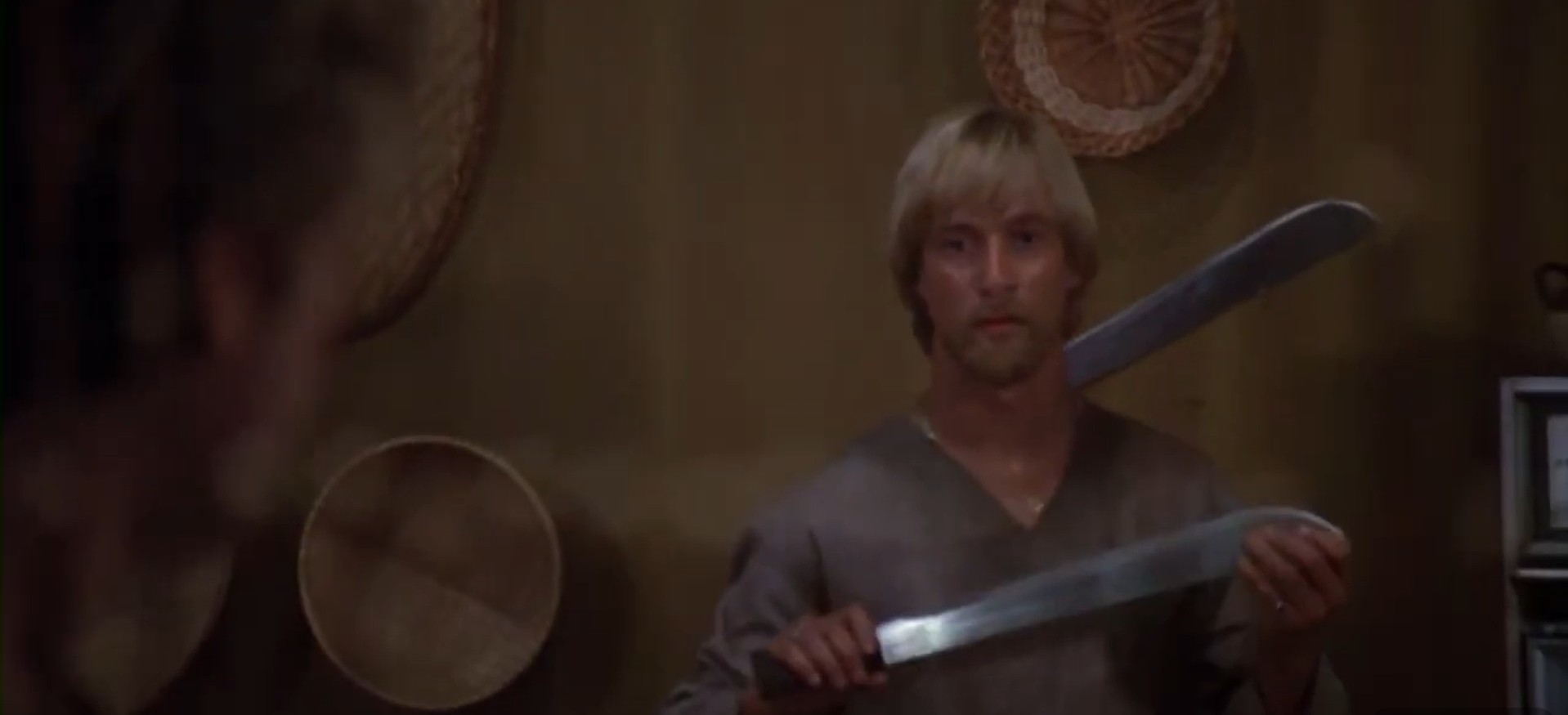
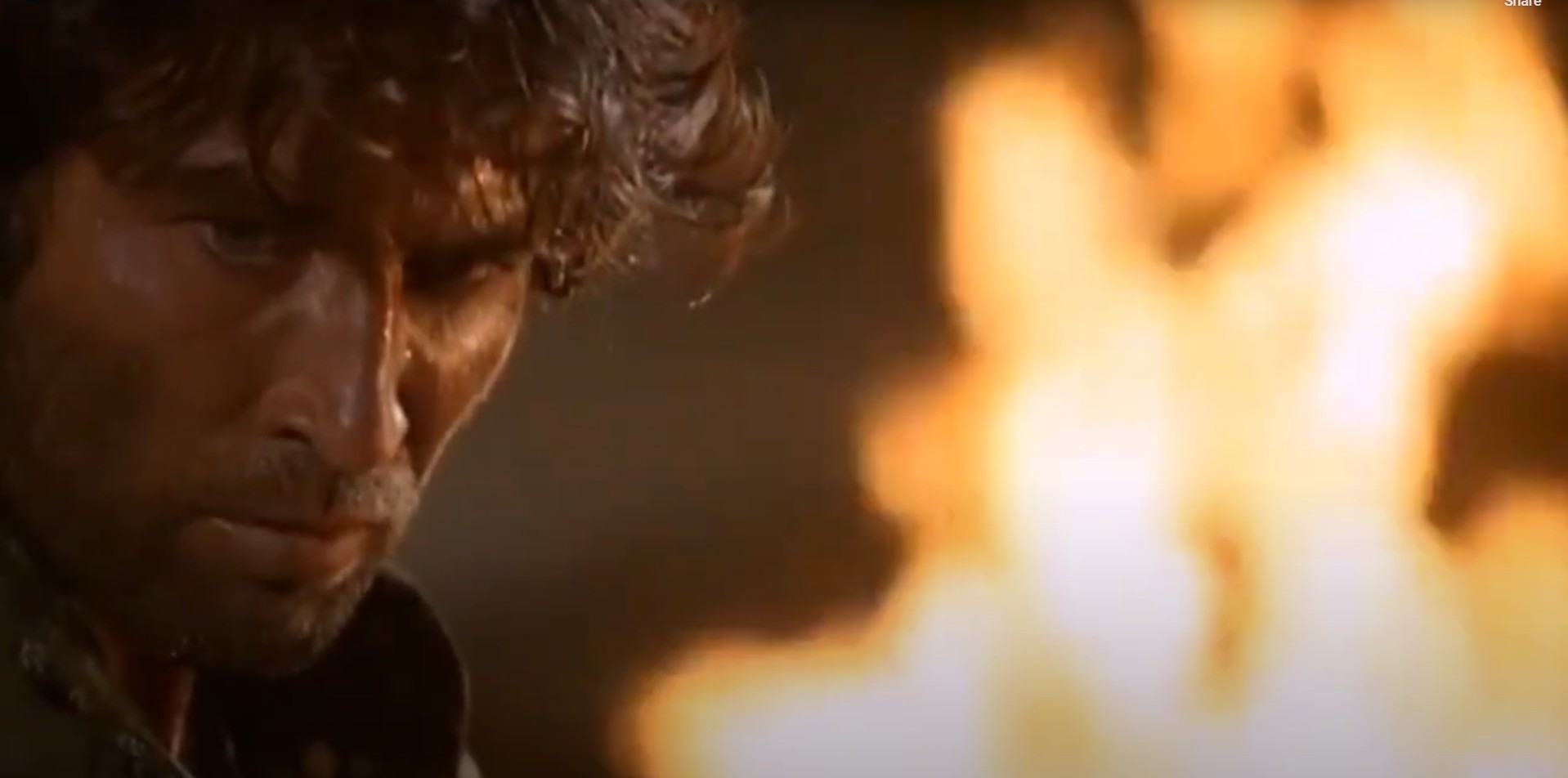
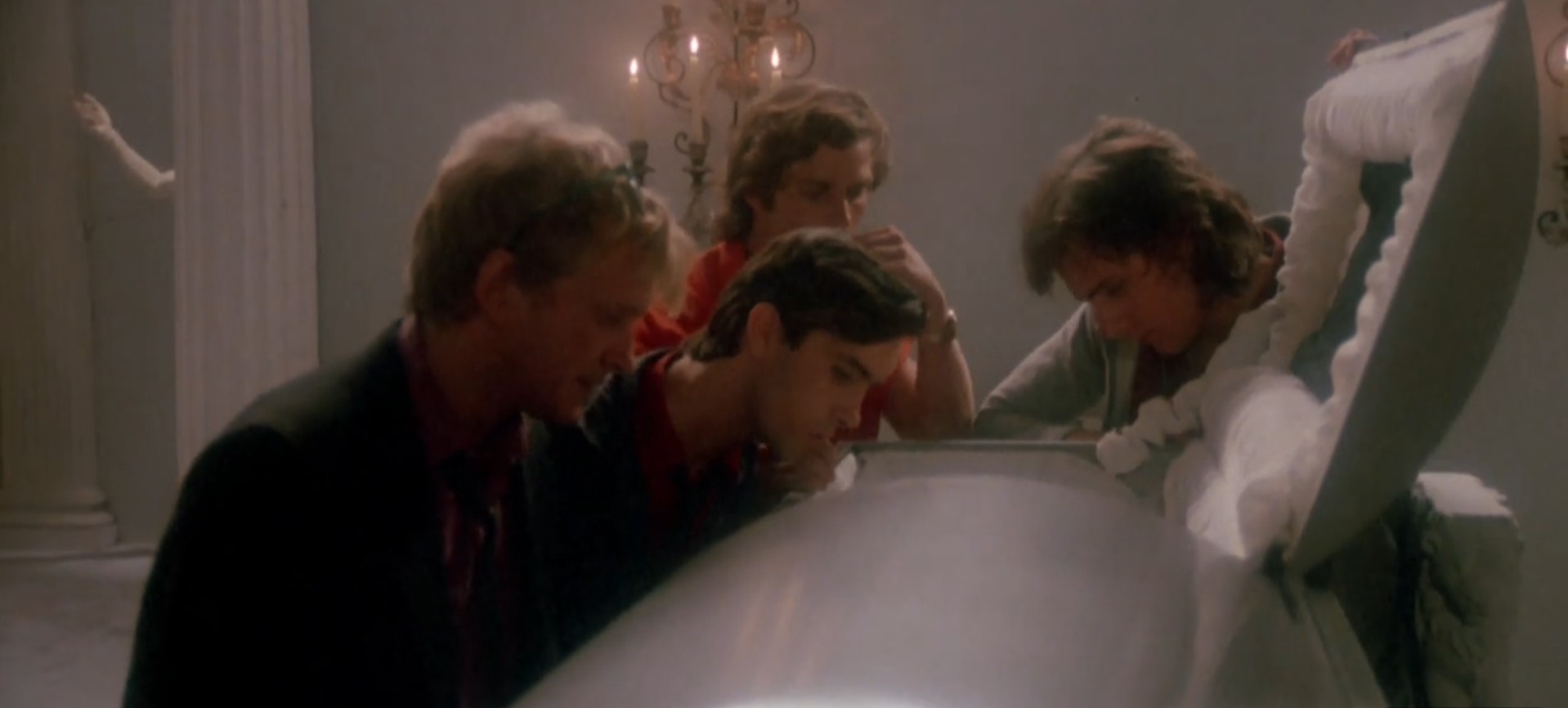
Geography teacher Mr. Cheung faith in his student’s studies lacks encourage and their grades likely won’t improve.  He decides to take his class on a field trip to an isolated island he once visited more than a decade ago as a young man.  With the intended purpose of relaxation, Mr. Cheung refuses his students of mentioning any schoolwork and studies to try and enjoy the coasting waters and the native nature the island has to offer.  However, there’s more than just animals and plants inhabiting the island as a family of three eccentric brothers welcome them with strange behavior and creepy vibes.  When the younger brother selects one of the student girls as his bride to carrier on their lineage, the once ideal getaway traps Mr. Cheung and his students without a way of escaping the irrational whims and delusions of the three brothers.  With a retrieval boat still a day out, the cornered teacher must keep his party alive at all costs. 

Considered Hong Kong’s answer or version of the backwoods pursuers of cutoff society people, 1985’s “The Island” secludes normal kids and their acquiescent teacher on an island where inbreeding has corrupted the copies of three brothers who’ve recently interred their adamant mother to rest and who’ve been searching for mainland women suitable to be the unsterile youngest’s wife.  Leung Po-Chi, or Po-Chih Leong, director behind “He Lives By Night” and “Hong Kong 1941,” produces a Jekyll-and-Hyde contrasting tale that’s sad and bleak to the core with a script not pinpointed to one particular writer but rather to a creative team within the production company D & B Films, aimed to capitalize on the western grim nature of the deranged and callous upon the unsuspecting and innocent seen in such exploitation and other B-pictures as Hong Kong shifts from the longstanding yet now waning Kung-Fu pictures.  Dickson Poon, Sammo Hung Kam-Bo, and John Sham, the founders of D & B Films, produce the film. 

John Sham may not be the ideal looking or sounding hero with a receiving hairline close to Three Stooges’ Larry Fine, thick, round spectacles, and about as average build of a middle-aged man as they come, but for “The Island” the ‘Yes! Madam” actor and D & B Films’s cofounder is suitable and ideal to be the pliantly, run-of-the-mill geography instructor looking to leave the woes of education behind him for a chance to revisit a place from his youth.  Unfortunately, Sham’s inadvertently the head of the snake as everyone remembers the exposed poisonous fangs threateningly elongated from with out the jowls underneath the reptilian beady and glowing eyes.  No one really remembers the slithering body unless there’s a warning rattle connected at the end.  That’s how the rest of the student body reproduces in trying to portray characters to care about but not really achieving the level of sympathy needed to rise about that film of understanding.  One of the more prominent kids is Phyllis, labeled the chunkier one by youngest aggressive, the snotty-simpleton Sam Fat (Billy Sau Yat Ching, “Scared Stiff”) and she’s targeted for Sam Fat’s procreation affections.  Played by Hoi-Lun Au, Phyllis has a working but tiffed relationship with Ronald (Ronald Young, “Sex and Zen III”) and see the untimely death of Ronald sends Phyllis into seeing red, being a formidable survival combatant against the remaining Fat brothers Tai (Lung Chan, “Encounter of the Spooky Kind”) and Yee (Jing Chen, “Riki-Oh:  The Story of Ricky”).  Billy Sau Yat Ching, Lung Chan, and Jing Chen are distinctly diverse to the best possible way, and each deliver their own dish of crazy that gives “The Island” an inescapable locked inside a padded cell substructure all too familiar on its base componentry but alien enough to master a new diverging kind of terror.  Che Ching-Yuen, Chan Lap-Ban (“Hex After Hex”), Kitty Ngan Bo-Yan, Lisa Yeun Lai-Seung, and Timothy Zao (“Diary of the Serial Killer”) costar in the relatively fresh faced and unknown at the time casted film. 

Leung Po-Chi wets our whistle with an opening of an intense forced marriage ceremony involving shuddering sexual exploitation and personal space invasive mistreatment of a mainland young woman, a swimmer who swam her way into trouble with the island’s inhabitants – an elderly mother and her three disturbed sons with the goal of using her for breeding a new bloodline.  This ultimately sets up the tone for a bleaker story that tells of nihilist cruelty with a thematic division between the urban educated and the unsophisticated rural folk, in this case the rural Bumpkins are isolated island inhabitants, but then Leung switches gears with a lighthearted introduction of frolic scurrying teacher and his students as they spread amongst the island’s sandy beaches wearing brilliantly colored skin tight swimsuits and bask in the island’s natural beauty with a couple of them going tangent into their own personal secondary storylines.   Those subplots never vine out and upward to flower fully but there’s enough stem and leafing groundwork between the good old gay times and a few individual internal affairs to setup sympathy for at least a select few as the relationship between visitors and residents quickly sours with Sam-Fat’s eyes growing bigger and bigger and his drool becoming slobbery and slobbery for Phyllis.  There’s not a ton of autonomy for the brothers who do their mother’s bidding long after she expires, committing themselves to the original plan of marrying off Sam-Fat in a show of take and force that robs Mr. Chueng’s dual purpose plan of a good time of fun and nostalgia.  Leung acutely abrupt faces again, back to the cruel inklings from the beginning, that displays unsettling camera shots, dark and low-warmth lighting, and a ferocity that’s always been with the brothers now more evident and growing inside the remaining survives who must fight for each other as well as themselves.  Leung’s style feels very much like a blend between the quick editing and fast action of a martial arts production but has the lighting and chaos-laden horror of an Italian video nasty that does see and lingers onto blood spilled. 

“The Island’s” a terror-riddled getaway that has arrived onto a new Blu-ray from UK label Eureka Entertainment routed through North American distributor MVD Visual.  For the first time on the format outside of Asia and as part of the company’s Masters of Cinema series (#324), Eureka’s Special Edition release is AVC encoded, 1080p high-definition resolution, BD50 and presented in the original widescreen aspect ratio 1.85:1.  With a brand new 2K restoration scan, “The Island” has impeccable quality measure that emerges the most minute details in every frame.  Skin tones have inarguable organic quality and a true-to-form reactionary sweat-gleam look induced when the chase is on.  The textures pop through in garb, foliage, and in dilapidated structure that gives certain discernibility and depth of object.  The original print has virtually no wear or tear as well as any aging problems, appearing to be a fresh off the reel transfer with natural appeasing grain.  The original Cantonese mono track is the only track available and is really the only mix we could expect and receive without a remastering, but, in all fairness, the mono works well enough to satisfy dialogue, ambient, and soundtrack integrity in its limited fidelity box  Dialogue is clean and clear on the encoding with no damage or other verbal obstructions but the modulation favors the antiquate characteristics of the era and the paralleling ADR offers little synchronous value, both to not fault of Eureka.  The optional, newly translated English subtitles by Ken Zhang pace well and are in flawless transcription.  The special edition is encoded with a new commentary with East Asian film expert Frank Djeng, a second new commentary by genre connoisseurs Mike Leeder and Arne Venema, a 2023 interview with the director Po-Chih Leong Surviving the Shoot, East Asian film expert Tony Rayns provides an appreciation video essay Tony Rayns on “The Island,” and the film’s trailer.  The limited-edition set comes with a red and yellow pastel colored O-card slipcover with new beaitfully illustrated artwork by horror graphic artist Ilan Sheady, whose supplied extreme and gory “Terrifier” franchise artwork to European media books, and delivers “The Island” a warm glaze of trouble-in-paradise, capturing the essence of what to expect from the story.  Original poster art graces the clear Amaray façade with a sepia image of John Sham from the opening scenes on the reverse side.  The limited set also includes a 19-page color booklet containing photos of “The Island” as well as other Leong productions, cast and crew credits, To Genre and Back:  The Cinema of Po-Chih Leong program notes by Roger Garcia for a strand celebrating Po-Chih Leong at the 2023 Far East Film Festival, an interview with the director conducted by Roger Garcia All Within the Same Film:  An Interview with Po-Chih Leong, and bring up the booklet’s rear are viewing notes and release credits.  The not rated feature has a runtime of 93 minutes and is region A/B locked for playback.

Last Rites: Director Po-Chih Leong’s trip to “The Island” is beyond bleak in social commentary and in of dire situation of nothing but pure innocence being destroyed by those left forgotten on the outskirts of mainlanders and of sanity. Eureka Entertainment’s Blu-ray honors “The Island” with praise upon praise for its slick high-definition picture, solid extras, and beautifully designed O-slipcase and design.

“The Island” from Eureka Entertainment and MVD Visual! Order Here!

This Casting Couch Has Something Far More EVIL Planned Than Some Sleazy Fetish Videos! “Maskhead” reviewed! (Unearthed Films /Blu-ray)

“Maskhead” on Blu-ray from Unearthed Films!

Syl and Maddie are lesbian lovers and producers of adult fetish films.  Always seeking new talent and models, they continuously invite potential performers to their casting couch for a little background interview and test the waters of their willingness to be humiliated or dominating on camera.  When the camera rolls, the plot is about as normal as any fetish produced adult feature can be to get a viewer’s rocks off but when the imposing, metal face gear-wearing Maskhead enters frame, the change of perversion goes from sexualized fetishes to snuff material as Maskhead torments, tortures, and kills the models as Syl and Maddie enthusiastically continue to capture it all on camera with great relish in their pain and suffering.  At the bidding of the sociopathic lesbians, their associate named Cowboy purveys potential performers with his southern charm and witty storytelling as well as supplying them with jet fuel-infused weed.  With shoots lined up, Syl and Maddie are extremely tickled for the soon-to-be tortured talent ahead of them. 

After his stint of SOV sickness and violence with the August Underground trilogy, writer-director Fred Vogel continues his expedition through videotape exploitation with a codirector effort in the 2009 extreme horror “Maskhead.”  Written-and-codirected with Scott Swan, who has since transitioned into a transgendered woman Rebecca Swan, the “Extremity” and “Big Junior” filmmaker Swan folds into Vogel’s guerilla-esque scripted joy for the juggler through a nihilistic lens.  “Maskhead” is hot-rodding sadism at its nastiest in the underground world of ultra-violent and extreme horror, produced by Vogel under his Toe Tag Pictures alongside wife and costar Shelby Lyn Vogel and once frequent collaborator and special effects guru Jerami Cruise whose gruesome squibs and bloody prosthetics of August Underground’s “Mordum” and “Penance” opened the door for specialty costuming for Hollywood blockbusters, especially in the MCU with “Avengers:  Infinity War,” “Captain Marvel” and “Black Panther.”  “Maskhead” might not be a morally just superhero but can be definitely feared as superhuman with his nail protruding through a plank strap-on! 

Maskhead is essentially the executioner you don’t want to meet on an isolated porn set, caught vulnerable in your unmentionables.  The titular character is played voicelessly Michael Witherel having just come off the set of Vogel’s “Murder Collection Volume 1” released the same year.  Wrapped in bloody bandages around his upper torso, chest and head, encased with a strapped metal mask with spikes around the mouth area, Maskhead is virtually a ghost without background, without a wound explanation, and we don’t know what makes the grunting brute tick to do the cruelties he does in the unexplained relationship with Syl and Maddie who rely on Maskhead to splatter their stars into full potential.  Syl and Maddie have a little more breadth:  they’re lovers, fetish smut producers, and total sociopaths.  The women speak romantically about their auditioners coupled with immense torture-kill innuendo as a preponderance of their relationship foreplay.  Shelby Lyn Vogel and Danielle Kings have certifiable chemistry between them as lovers and portray crisp killers of apathetic character as they lap up laughter, love, and the loose morals in the face of someone’s life in their hands or behind their camera.  Shelby Lyn Vogel has worked around Vogel’s catalogue for the most of his career with roles in “The Redsin Tower” and “The Final Interview” while Danielle Inks (“My Uncle John is a Zombie!”) inaugurates herself into extreme film, and film altogether in her debut, without missing beat being the dress-wearing famine next to Vogel’s more butch lesbian.  While Vogel and Inks make an interesting pair of murderers, the more fascinating character Daniel V. Klien’s Cowboy, a charming supplier of casting couch talent with the gift of gab and the occasional backdoor fisting.  Klein (“Murder Collection V.1,” “The Final Interview”) adds to Cowboy’s mysteriousness debonair with a great twang, bearish mustache, and slightly portly figure in cowboy boats, black vest, and tight underpants when getting his kink on.  Cowboy’s persuasive manner and false promises build the character who’s to meet Syl and Maddie’s wishes.  Now, whether the couple plays Cowboy or not is not elucidated, one thing is clear the character does the Cowboy way when it comes to fetish desires and traversal wandering.  “Maskhead” is fairly carte blanche in casting their onscreen kill list with actors John Ross, Chris Krzysik, Mary Shore, Nicole Divley, David P. Croushore, Janelle Marie Szczypinski, Donna MacDonald, Lacey Fleming, and Damien A. Maruscak breaking more than a leg in their character acts. 

Suitable for those with bloodlust eyes, “Maskhead” meets niche criteria as an extreme gore and shock feature that’s all exploitational style and no narrative substance.  This type of film is very much similar to Fred Vogel’s “August Underground” series of randomized bits and pieces of not only the poor unfortunate’s filleted flesh and exposed bones but also with the disconnected scenes compiled together to meet at most the full-length feature runtime requirements.  The bare plotline to “Maskhead” are lesbian lovers Syl and Maddie signing unsuspecting actors to their doom for the sake of their snuff movies, that’s the extent and stoppage point of “Maskhead” to move forward with any sort of three act narrative. The rest intends to shock with one-sided, visceral violence that is the epitome of torture porn with bound people being merciless put in the wrath of “Maskhead” and other extreme moments of provocativeness, including Syl and Maddie’s footsy foreplay under a public restaurant table or Cowboy’s elbow deep fisting of a local gay bar tweaker.  While ultra violence and deviancy doesn’t go without merit, everyone knows I enjoy a good uncensored bloodsplatter and sexpot debauchery scene, the film is just a continuous string of nothing but that can be utterly monotonous, especially in the length of 89-minutes as it is with “Maskhead.” 

“Maskhead” is a course in sexual deviancy, a killer perversion that’ll speak to few but be repugnant by many.  You can test your ethic caliber by owning a copy of “Maskhead” on the new Unearthed Films’ Blu-ray.  The AVC encoded, 1080p high-definition, BD50 is packed with extras and presents the feature in the original aspect ratio 1.77:1 widescreen.  Vogel and Swan use polar quality to convey their narrative with a downgraded resolution, around a true 480p, with Syl’s perspective, capturing every gruesome event on her camcorder, much the same as found footage, while the rest of the film is shot in a higher, digital resolution with a third person perspective.  There’s certainly no singular picture quality approach as even third picture rollercoasters with an inconsistent, and slightly unstable, look under low-lit scenes, such as with the Syl and Maddie restaurant scene, and this unfavored condition is not a compression issue but rather a result of equipment and poor lighting, hence gore-and-shock’s conventional bantam budget.  Depth is not really a thing with the quality and a maximization of extreme closeups to get all the uncomfortableness of personal bubble space and grisly slaughter into the frame.  Color grading is also pretty much nonexistent with a raw and natural flat aesthetic palette, adding to the strived realism aspect extreme horror usually attempts to achieve.  The only audio option available is an uncompressed English PCM 2.0 that services these types of films well enough as dialogue comes over cleanly and relatively clear when on-board and commercial on-board mics are placed appropriately.  No hissing, crackling, or popping to note.  If screaming bloody hell is a high-frequency vocal modulation that gets you off than, of course, there’s plenty from the “Maskhead” track to go around.  Again, not much depth or range because of the near proximity of most of the scenes.  English subtitles are optionally available.  Much like Unearth Films’  “August Underground”  release, “Maskhead” comes packed with plenty of new and a few returning special features.  There are two new feature length commentary tracks with 1) directors Fred Vogel and Scott Swan and 2) with Vogel again with wife Shelby Lyn Vogel, special effects artist Jerami Cruise, and Ultra Violent Magazine’s Art Ettinger.  A third 2009 commentary precedes and seeks to replace the first new commentary with Vogel and Swan.  An exclusive Unearthed Films introduction by Toe Tag’s Fred Vogel provides a little gratitude from Vogel about the new release.  Swan also has his own feature cut of the film which may be more favorable for those looking for a story as the codirector’s cut seeks to build more context through editing and pacing toward the story rather than Vogel’s emphasis on the torture/gore.  Interviews with Vogel Frankenstein’s Maskhead, the titular character himself Behind the Mask, and the Cowboy Below the Brim offers that slither of realism and behind-the-scenes bibelots that makes “Maskhead” tick.  There’s also a plethora of new featurettes of raw behind-the-scenes footage:  the first test footage for “Maskhead,” the creation of the titular character, an extended death scene of Food Girl (Janelle Marie Szczypinsk), as well as on set with Food Girl, fun with special effects at Toe Tag Studios, moments from the recording room to flesh out those sound details, such as Cowboy’s whistling and some growling, grunting, and groaning techniques, I Will Break Your Fucking Arm takes you behind the scenes of the arm rack’s special effects and setup, the infamous rape scene with a 2×4 is more raw footage of preparation with a little more skin time from both Mary Shore and Michael Witherel, The Room ganders the old hotel room where Cowboy gets fisty, the character elements – mask, gauze, and 2×4 – that make Maskhead Maskhead, and an extended photo gallery.  Archive extras round out the massive list with the Jerami Cruise commentated short “Dildo:  The Creation of Maskhead,” a blooper reel, Cowboy’s Whistling Clinic to be the best professional whistler as you can be, and the trailer.  Physical elements of Unearthed Films’ latest has a cardboard O-slip featuring green graded image composition of the primary cast of characters.  The same image is displayed on the one-sided cover art of the conventional Blu-ray Amaray case.  I’m curious about one thing though, did Unearthed Films get permission from Rebecca Swan to use her then biological male name Scott Swan for credit?  I assume so with the rational of that was who created the film back in 2009.  The region A locked release and is not listed as not rated but is not rated. 

Last Rites: Most will consider “Maskhead” senseless depiction of pseudo-torture but I’m glad Unearthed Films and Fred Vogel were able to supply and add supplemental raw footage on this upgraded release. Hours upon hours of reel that shows careful preparation and setup and the dedicated cast and crew examining every shot and listening to cast suggestions that humanizes the film a little more on a relatable level and demonize it less as just junk food for gorehounds.

“Maskhead” on Blu-ray from Unearthed Films!

The EVIL Clown Takeover is Has Begun! “Helloween” reviewed! (101 FIlms / Blu-ray)

Just in Time for the Season. “Helloween” on a 101 Films “Bluray!

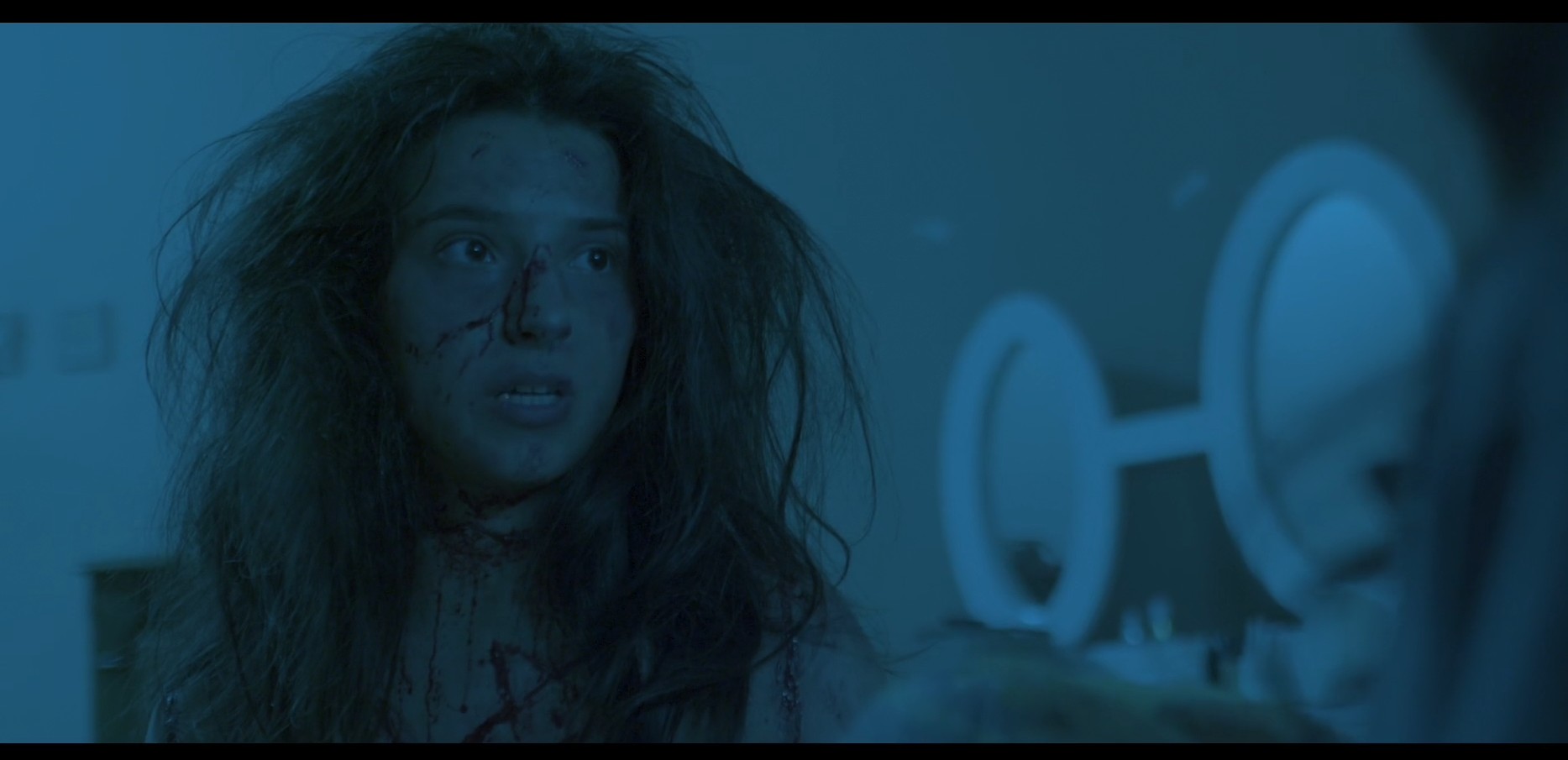
October 31, 1996 – A disturbed 10-year-old Carl Cane, donning red and white lashes and slashes clown makeup, slayed his fostered before brutally axing down a healthcare social worker assigned to his case. Twenty years later, Cane has been locked away at Morton Psychiatric Prison for most of his life but still manages to be a high-risk inmate wearing the same clown makeup.  In ward of his care is Dr. Ellen Marks who endorses stringent safety protocols and has a stern bedside care for her dangerously persuasive patient.  Flash forward 20 years later during the 2016 #clownpanic craze, the mass clown sightings provide cover for Cane to mastermind his escape and influence the disenfranchised to wear his lashes and slashes maquillage and rise against all of Britain, Dr. Marks must race home to protect her daughters as they become marked in Cane’s chaos scheme of nationwide epidemic violence.  This year, Halloween is more tricks than treats in a manipulative game of incited rise against authority with a murderous madman at the helm. 

Not to be confused with the German metal band of the same name, the 2025 film “Helloween” is a UK production that’s been compared to “The Purge” meets “The Joker” from writer-director Phil Claydon (“Vampire Killers,” “Within”).  “Helloween’s” story pans briefly from 1996 to primarily set in 2016, the year when clown panic was a national news item where mysteriously scary clowns would show up in random places and projecting a menacing way about them, enough so to cause public concern.  Claydon expands upon the year-specific-craze with a killer clown motif and a coordinated attack on a nation’s infrastructure, creating national havoc while the mastermind of ceremonies stays with his bubble of motive, to completely destroy his psych ward physician in charge of his austere care.  “Helloween” is a production of Shogun Films under the producing eye of Jonathan Sothcott with Lance Patrick co-producing. 

For “Helloween” to be centered around an incitive massive violent force, one that’s purely evil, demented, wicked, etc., that character is required to be bigger than life in a show of calculated malevolence and will be ultimately the driving juggernaut key to the film’s success.  Carl Cane is that described character, an educated mental case hellbent on being a reign of chaos from the very moment his 10-year-old self, fostered and abused through the social childcare system, chops up his foster parents and social worker without blinking an eye of hesitation.  However, the 1996 boy and the 2016 man of Carl Cane showcase two different genus of the same sociopathic species as adult Carl Cane has a knack for the flamboyant flair and is a talkative taskmaster whereas his younger version is about as quiet as a calculating church mouse.  Forever the bridesmaid and never the bride, Ronan Summers finally receives his time to shine and expel his talent to the world as a prominently gaudy villain donning edgy Joker-esque clown face makeup and sporting a dirty inmate jumpsuit.  There’s always the expectations Batman will be coming down from the rooftop or creeping from out of the shadows at any moment!  Summers, who did have a small role in “The Dark Knight” as well as be a supporting actor alongside Richard Brake in “The Dare” and had numerous voice acting roles in notable videogames, such as “Dead Island 2,” “Wolfenstein:  The Old Blood,” and “Cyberpunk 2077,” has tremendous presence with a spine-shattering laugh and creates a dark arura around Cane’s ambivalent supernatural abilities.  Jeanine Nerissa Sothcott, wife of Shogun Films producer Jonathan Sothcott, goes up against the antagonist playing Summers as Dr. Ellen Marks, head of Cane’s psychiatric ward.  The “Peter Rabid” actress finds herself on the precipice of a clown barrage against her family that has its own secrets and troubles teenagers (or adult?) as there is divisive tension between the planned daughter of Leah (Caroline Wilde, “Ghost”) and the unplanned and resentful daughter Alice (Megan Marszal).  Michael Paré (“Streets of Fire”) is perhaps the biggest name, an American name, attached to the project as an investigative reporter unearthing a theorized connection between Cane and the coordinated clownpanic sightings and Paré’s about as straightforward and conventional unimpactful in performance as they come.  The cast rounds out with Shanton Dixon, Samantha Loxley (“Hosts”), and Tamsin Dean (“Everyone is Going to Die”).

Though “Helloween” borrows pieces of “The Purge” and “The Joker,” another generous portion of the inspirational pie is “Halloween.”  Not only does “Halloween” and “Helloween” share similar titling but also certain “Helloween” plot points and framed shots that resemble a clown costumed Micheal Myers expressionlessly exiting his family home after murdering older sister Judith.  Claydon’s nods may dilute the original story some but the mashup manages to curate an interesting tale of a large scale terror on a small time budget by using televised media to indicate Cane’s grandiose scheme from the confines of his impenetrable holding cell and creation tension with good, old-fashioned editing and framed shots for those jump scare and distressing moments.  One thing is for sure that hinders the large-scale scenario but doesn’t obliterate the affect it has in its entirety is the small number of locations used.  Much of the story takes place between two locations:  the Morton Prison and Dr. Ellen Marks’s home.   These two primary locations service most of the story’s core elements and, perhaps, Claydon relied too heavily on news media to spread the clown carnage rather than have it unfold in frame with not only more locations of active aggressive assaults, like we see in “The Purge” series but also hire more extras as clown faced Cane acolytes and have a number of victims suffer at the hands of clownpanic.  Set designs, colorful lighting, stark contrasting features, the rapid pace storytelling, and the performances do pick up the slack and hold onto that collapsing of society sensation in more of a localized manner rather than widespread.  The twist ending pops disjointedly with a welcomed turn of events but isn’t setup with a crucial visual or expositional detail, leaving on the table the one important puzzle piece of the considerable why rather than focusing on the exposed when and how. 

101 Films isn’t clowning around with their new Blu-ray release of “Helloween.”  AVC encoded, 1080p high-definition resolution, and stored on a BD50, “Helloween” has plenty of picture quality positives going for albeit the film’s primary color spectrum, a Spirit Halloween store amount of haze and smoke machines, and plenty of negative area shadows all of which wreak havoc of the encoding of data.  One way to judge video compression is the ability to delineate every object in the feature from inanimate to animate and there’s no questioning in the presentation as all objects have an elucidation effect that doesn’t work the mind harder than it should.  Claydon works depth to create effective highly taut moments while staying in the purge of light and hope atmospherics of omnipresent darkness.  Curiously, the Blu-ray back cover mentions the feature containing an English uncompressed Stereo PCM and a compressed English DTS-HD MA 5.1 with the extras solely being a Stereo PCM.  However, the Dolby audio icon is stamped on both back cover and DVD art.  While there’s no menu option to toggle between either feature track, my play listed the encoded audio as the PCM Stereo and DTS-HD MA 5.1 which can be concurred with by the uninhibited punchiness that heightens the scares and the eerie hallmarks of lightning cracks, creaky floors, and other loud bang sounds.  Ronan Summers’s is a proper English speaker with great emphasis on his pronunciations, much like Paré’s classic westerner approach to any situation and role, but there are some UK dialects that skirt the cockney accents and though difficult to cling to, the mix greatly makes clear the intended word or sentence without any issues.  UK English subtitles are optionally available.  Special features include a commentary track with director Phil Claydon, a behind-the-scenes featurette with cast and crew interviews going through their experiences and roles, and the film’s theatrical trailer.  There is also listed deleted scenes but there’s an issue with the encoded playback as when pressed, the option glitches back to the bonus features scene, never moving forward into the deleted scenes.  The clear Amaray case with one-sided art has a less-is-more cover art with a face closeup of Summers in a sinister expressed Cane makeup with a blade silhouette just in front-right of him.  While we’ve seen a few inconsistencies with these release – the audio track conflicts and the deleted scenes bug on the encoding – there’s one more variance with the UK rating.  The case has a UK rating of 15 for Strong Violence, Bloody Images, Threat, and Language; however, the disc is pressed with a UK 18 classification.  “Helloween” clocks in at 93 minutes and is locked with a region B playback. 

Last Rites: The energy from Phil Claydon’s “Helloween” amps up and matches Ronan Summers’s intellectual madman persona with a smoke and mirrors widespread mayhem and reliable jump scares that breed infectious tension for clowns and the disenfranchised in this quaint and modern day clownsploitation.

Just in Time for the Season. “Helloween” on a 101 Films “Bluray!

EVIL’s the Bacon, the Pork Roll, and the Scrapple All Mixed and Slashed together! “Butcher’s Bluff” reviewed! (Breaking Glass Pictures / DVD)

“Butcher’s Bluff” on DVD from Breaking Glass Pictures!

Film students Rodger, Nicole, and Derrick decide to head to the rural Texas town of Emerald Falls and make their class project documentary around the 28 missing persons over the years and the Hogman, an urban legend of an escaped killer now roaming the woods of Butcher’s Bluff.  Bringing along their friends to make it concurring party getaway at Rodger’s family vacation cabin, the trio conduct interviews with the eccentric town locals to build a story around the Hogman myth, even ascertaining the original location for the mask Hogman wore during his first kills before escaping psychiatric prison.  The more they investigate into the Hogman, the more the locals warn them to stay away from Butcher’s Bluff but in a case of curiosity killed the cat, the documentary film students and their drug-fueled, sexed-up friends find themselves being hunted with no cell service, no help within miles, and no way out of the Hogman’s kill radius. 

Co-directors William Instone and Matt Rifley helm their first collaborative feature “Butcher’s Bluff,” a 2023 small town slasher reminiscent of the renaissance slasher movement of the 1980s, packed with practical gore effects, odd backwoods characters, a campy party of vice-riddled youth, and, moist importantly – excuse me – most importantly, T&A.  Instone, whose all-in director, writer, and producer debut horror “Jon” from 2012 brings one man’s delusions into horrifying reality, cowrites his latest grim story with writer, painter, and overall liberal arts connoisseur Renfield Rasputin.  Filmed in Texas with principal locations taking place in Bastrop, New Braunfels, and San Marcos to composition a story set in the fictional town of Emerald Falls and its rural woodland of Butcher’s Bluff.  The film is a crowdfunded venture that raised an approximate $60K to cover principal shooting and post-production costs with Instone and Rifley serving as primary producers amongst an amalgamation of crowdfunded producing backers   Instone’s Thunder Mountain Films, in association with Dull Knife Productions and Spicey Ramen Productions, go hog wild with their slasher horror. 

As if he doesn’t have enough on his plate writer, directing, and producing “Butcher’s Bluff,” Instone also portrays the main antagonist Hogman, masked with a stitched together pig head complete with cockeyed tusks and garbed with a dingy mechanic jumpsuit and tan jacket.  The Hogman is a walk-and-run chaser with a duel-sided axe and rusty, broad curved knife as main melee weapons though he’ll get his bare hands dirty from time-to-time.  Instone’s not flashy with the villain and doesn’t key-light any iconic poses, stances, or stares to incite a nerve coursing fear.  Hogman’s victims are anyone and everyone who enters the Butcher’s Bluff forest, from necking lovers (Jacqueline Hays and “Mallrats’s” Jeremy London), to lost pot farm thieves (“You’re Next’s” L.C. Holt, “Scare Package’s’” Christopher Winbush, “Girls Gone Dead’s” Shawn C. Phillips), to finally, but not limited to, the Rodger’s friends and classmates on their excursion investigation and party.  Fortunately, the group displays different caricature tropes without going full-blown cliché.  Between them you have the exuding sexy yet overly bitchy duo of Sam and Tina (a cut pixie cut but broodingly built Samantha Holland and a slender yet high-end platinum blonde Kayla Anderson), Rodger’s sex-driven, dweeb cousin Bobby (Dakota Millett) who Sam and Tina torment, the polar opposite to Bobby stud with Jake (Santiago Sky) and of course the three documentarians:  Rodger (Michael Fischer), Derrick (Johnny Huang), and Nicole (Paige Steakley), each reside in their own attribute world consistently, dying the way they live, that’s very telling of their moral fiber.  In additional to Jeremy London and Shawn C. Phillips, who have worked themselves into being staples of the indie genre films, other notable names to mention for their brief but key roles are Brinke Stevens (“Nightmare Sisters”), Paul T. Taylor (“Hellraiser:  Judgement”), Bill Oberst Jr. (“3 From Hell”), and Bill Johnson (“The Texas Chainsaw Massacre II”) peppered into the rest of the supporting cast to draw in fandom.

“Butcher’s Bluff” has the necessary bone structure to be a digestible slasher, checking all the elemental boxes, and Instone and Rifley manage to technically pull off a nearly 2-hour film on a crowdfunded budget.   The problem is “Butcher’s Bluff” has a hackneyed routine about it.  Instead of creating something new and wonderfully, gory and diabolical, under a distinct flag of novelly progressive storytelling, every scene feels all too familiar, a telltale sign to horror fans that we’ve seen this kind of story before.  From Hogman’s stony silence and indiscriminate aggression bores him as a Michael Myers carbon copy, a family in cahoots with a s flesh-stitched maniac plays the tune of “Texas Chainsaw Massacre,” and there’s even a character moment of yelling What Are You Waiting For? aimlessly into the dark forest while spinning around with arms wide apart that oozes Jennifer Love Hewitt vibes.  Add in some rather uninspiring frame, shot design, and editing and “Butcher’s Bluff” very much embodies the crowdfunded costs rather than the intended crowdfunded spirit.  Now while all of this portion of the review sounds grossly negative, don’t just run for the hills to the next slasher film in line just yet as Instone and Rifley still manage to keep an engagement lock on what makes the slasher film enjoyable to behold with some decently inlaid practical gore effects, including a pleading head being sliced horizontally through from mouth to hair or a posthumous, lawn chair display of one fine girl’s nipples and eyes plucked from her body and posed on her eye-gouged out person as if giving a blood offering to the audience Gods.  There’s also the inviting gratuitous T&A from Samantha Holland, Kayla Anderson, and Jacqueline Hays that keeps the old theme motif alive within the campy slasher genre as well as keeping young boys’ dreams from becoming dry.

Breaking Glass Pictures distributes the archetypical slasher “Butcher’s Bluff” onto DVD home video.  The MPEG2 encoded, 720p upscaled standard definition, DVD9 really has a tough go with the compression capabilities as there’s quite a bit of data to encode/decode within a near full-time night shoot picture and color accompaniments that blend right into the darkness, melding out of a clean definition.  Presented in a widescreen 1.78:1 aspect ratio, banding and splotching render a difficult deciphering of data in inkier fields.  When colors do contrast or arise into lighter hues, there’s a pop of demarcation with its full potential held back by an ungraded layer.  Textures are extremely fluid throughout with the prominent skin scenes offering a decent, natural look but most scenes are fuzzy as if the upscale fights the downscaling for supremacy.  The English Dolby Digital 5.1 surround sound offers an adequate compression for a routine slasher with mid-level range with clear and clean dialogue overtop eerie forest soundscape of breaking branches, tree knocks, and leave crunching footsteps.  The mix doesn’t convey much depth with dialogue and ambience hanging around the front channels while medium shots and some tree knocking flirt with the side channels.  A mainstay slasher should have a memorable, tense-riddles soundtrack for the chase or create omnipresence fear but “Scream, Queen!  My Nightmare on Elm Street” and “Dinner with Leatherface” composer’s Alexander Taylor’s insipid inspiration can’t be held in the memorable bank and fails to elevate the Hogman’s imposing sheer terror.  English closed captioning is available.  Special features include a proof on concept trailer for the crowdfunding campaign that stars a handful of the actors from the feature film, such as Michael Fischer and Paige Steakley, and a behind-the-scenes music video that contains behind-the-scenes footage.   The DVD presence is standard fair for Breaking Glass Pictures with a DVD Amaray and a one-sided front cover art, which subjectively pleasing in its retrograde mockup of an illustrated Hogman looming over a scared, running Steakley (supposedly) in her white tank top and high cut shorts.  There is at least one noticeable error on the back cover that spells Paige Steakley’s name incorrectly in the credits, listing her last name as Steakely.  The Not Rated release is hard encoded with region 1 and has a two-hour runtime which can appear quite long, but the pacing was not terrible and the long runtime for an indie slasher didn’t feel overly immeasurable. 

Last Rites: “Butcher’s Bluff’s” has little to offer as far as the next novel and generational slasher but scratches the genre itch with a large body count, solid kills, and campy campers looking to buy, sell, and trade their vices for being violated.

“Butcher’s Bluff” on DVD from Breaking Glass Pictures!

EVIL Minds the Door! “Raw Meat” reviewed! (Blue Underground /2-Disc 4K UHD Blu-ray and Standard Blu-ray)

“Raw Meat” Its What’s for 4K UHD and Standard Blu-ray Dinner!

Young lovers Alex Campbell, an American studying abroad, and Patricia Wilson discover an unconscious man on the steps of a London metro subway station.  When they alert a beat cop and make their way back to the spot, the man had vanished.  Assuming the well-dressed man an alcoholic sleeping off a bender, David and Patricia move on with their lives while the police report comes across the desk of Inspector Calhoun, an eccentric investigator who recalls a recent string of disappearances surrounding the same London station.  Over the next few days, several more station related disappearances occur, forcing Inspector Calhoun to dig deeper into the mysterious circumstances involving a missing Mi-5 agent and three subway employees with David and Patricia his only witness to at least one of them.  When Patricia suddenly goes missing with her last known siting at the subway station, a concerned David explores the train tunnels that connect the last known whereabouts of all whom have vanished, leading him to a tragic history of collateral damage survival, long forgotten generational lineage, and cannibalism. 

London, England was the first to introduce the metro subway station to the world in 1863 with the Metropolitan Railway.  It seems only fitting that London be the setting for “Raw Meat,” a subterrain horror that integrates London’s metro history with the consequential hazards of an early underground railway, the insufficient costs that prove to be costly, and the pitied blamelessness of unthinkable survival from neglectful businesses.  Originally entitled “Death Line,” rebranded to “Raw Meat” for American audiences, the 1972 film is actually directed by an American, Chicagoan Gary Sherman, in his debut and would go on to helm “Dead & Buried” and “Poltergeist III.”  Based off an original concept form Sherman, one that takes the plausibility and some fact of workers being buried under a collapsed railway project and survive generationally living off the nourishment of each other in more ways than one, the script is penned by Ceri Jones and is a production of Harbor Ventures and Kanter-Ladd Productions with the late “Police Academy” franchise’s Paul Maslansky producing

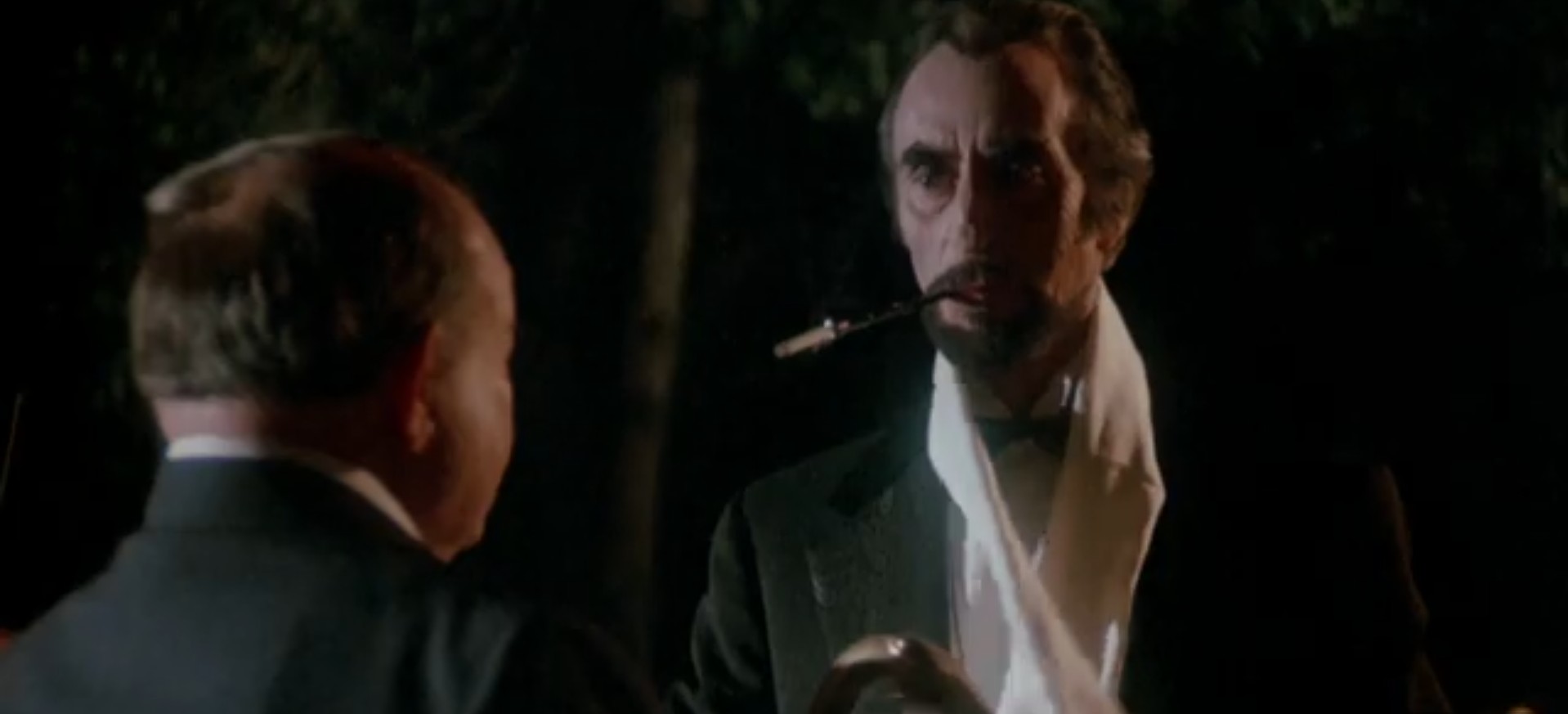
I’m going to preface this character introduction with “Raw Meat” would not have been as entertaining if it wasn’t for the peak performance by a more eccentric Donald Pleasance in a pre-“Halloween” performance.  As Inspector Calhoun, Pleasence is fully in charge as an intimidating case investigator with a snarky wit, or as Christopher Lee’s MI-5 character put it, what a droll fellow you are in a stiff yet jab remark exchange interaction between the two British icons of a bygone cinema industry.  Lee’s role is only a fraction in comparison to Pleasance and would have been two big personalties too big for the meager production to contain.  Another staggeringly highlighted performance comes from an unknown in Hugh Armstrong’s portrayal of the subhuman cannibal whose fellow inbred family members have all left by deceased means, leaving him alone and the last of his kind with mumbling tunnel vernacular and unkempt open sores all over his body and face in a state of unhealthy living conditions.  Armstrong’s acted ungainliness renders the man a monster amongst society standards but also sheds a softer, compassionate light upon reflection of his forced position into a world he knowns no better about having grown up completely in the railway tunnels all his life, living off what he can scramble up which included human flesh and organs.  In contrast to Pleasance and Armstrong, David Ladd (“The Klansman”) and Sharon Gurney (“Crucible of Horror”) impress as middle ground, plain as can be, characters being two lovers in the midst of mystery, almost becoming history themselves when the man targets her to amend his loneliness in a gibberish mind the door effort to show her affection.  Normal Rossington (“House of the Long Shadows”) and Heather Stoney are the only two understated completely overstated in the film as Inspector Calhoun’s constant whips demands for bolos and tea.  James Cossins, Hugh Dickson, Jack Woolgar, Clive Swift, Gerry Crampton, Terence Plummer, and Gordon Petrie pull into the station as the remaining cast.

Hovering between the horrifying truth of early construction, underground railway accidents and the urban legend of trapped workers under tunnel collapses, Gary Sherman unearths middle ground terror somewhere in between the two with a plausible terror line narrative that not only instills recognition of the past and those who gave the ultimate sacrifice but also invites the nonfictional hunting-cannibal rising to the surface in search for food and, to an extent, companionship.  The cast elevates “Raw Meat’s” character efflorescence but there’s also other areas to illuminate its noteworthiness that take the film from out of the tunnel shadows as cinematographer Alex Thomson’s bleak tunnel aesthetic rouses filth and a sense of hardcore survival over a century.  The 7-minute tracking shot near the beginning, at the introduction of the cannibal’s tunnel home depicted with a decorum of decaying and freshly strewn corpses salvaged for their organic parts, is an astonishing backwards tracking shot without a blip of hesitation and lingering just enough to seed an unsettling undergrowth of grisly ghastliness.  The only drawback from “Raw Meat,” if looking for one or perhaps it’s not even a big deal, lies with the young couple Alex and Patricia.  It’s possible to stumble into a situation, as they did after coming off the last train for the night and crossing paths with an unconscious man on the staircase up to the surface; however, Alex and Patricia were not exactly looking for trouble or pursuing a follow up on the man’s health-and-wellbeing, God knows they argued over about their stance on helping ailed strangers in public, but they wind up having this off topic tangent about said contentious topic and rebuild the tumbled down building blocks of their relationship for a stronger bond.  Yet, lightning strikes twice in the subway tunnel and Patricia is whisked away by the tunnel ghoul in a second pure coincidental interaction that ignites Alex to make good on that stronger bond with Patrica by investigating her last known whereabouts.

Be a cannibal and consume “Raw Meat” on a new 4K UHD and Standard Blu-ray 2-Dsic combo set from Blue Underground. Restored and scanned in 4K 16-bit from the original uncensored camera negative with Dolby Vision HDR and presented in a widescreen 1.85:1 aspect ratio, “Raw Meat” comes from out of the near total blackout of tunnelling darkness of standard definition and poorly contrasted previous Blu-ray editions with a precision of delineating crafting brilliance, adding depth of separation between object and background.  The HVC encoded,2160p ultra high-definition resolution, BD66 was well aimed to squash any compression issues, leaving blacks black and textures coarse that nearly lift off the screen.  You can actually try and count the whiskers on Christopher Lee’s caterpillar mustache.  Colors have also improved and enhanced in saturation without being overly intensifying; “Raw Meat” thrives on the dank, dark world of not only the abandoned tunnel line but also the cold and sleazed London streets.  Alex Thomson’s tunnel life aesthetic musters an earthy and dingy frontage and coupled with some hard glowing red, yellows, and the subsequently mix orange, there’s a real harrowing subterranean tone in the man’s macabre ossuary home.  The 2nd disc standard Blu-ray is AVC encoded, 1080p resolution, BD50.  Blue Underground’s release offers multiple audio options, including a new Dolby Atmos mix alongside the already established DTS-HD 5.1, both rendered in English.  Toggling between both surround sound mixes, there’s little-to-no difference in the immersive experience.  Atmos provides an echoier shaft experience that can be heard as directionless whereas the DTS specifies the reverberating soundwave direction based on channel markers.  Mind the Door is certainly more accentuated as it lingers through the chambers just a little more ubiquitous and chillingly underscored.  With no crackling or hissing, dialogue is clean, clear, and robust that solidifies Donald Pleasance as a master of quick wit and blunt investigation tactics as well as the track cherishing the quality of all other players involved.  Some instances of dialogue are ADR, likely due to poor record quality, resulting in an artificial separation between the action frame and the post-production recording.  Train sounds play a supporting factor and are acutely integrated into the design of a makeshift substation construction from an abandoned platform.  The other audio options include an English 1.0 DTS-HD and a dubbed French 1.0 DTS-HD.  English SDH are available.  Disc 1 – the 4K UHD Blu-ray – contains two commentaries a 1) archived writer-director Gary Sherman, producer Paul Maslansky, and assistant director Lewis More O’Farrell and 2) a new critique and analyst commentary discussion from film historians Nathaniel Thompson and Troy Howarth.  Bringing up the UHD rear are radio/TV spots and various trailer cuts.  Disc 2 – standard Blu-ray – has all of the above on disc one plus an interview with writer-director Gary Sherman and executive producers Jay Kanter and Alan Ladd Jr. Tales from the Tube, an interview with star David Ladd, producer Paul Maslansky, and assistant director Lewis More O’Ferrall From the Depths, and an interview with the now late Hugh Armstrong, the cannibal tunnel man, Mind the Doors.  An extended poster and still gallery flesh out the standard Blu-ray’s supplemental content.  The classic poster art has been upgraded to a textile vision of blood red and half-naked men and women with blank chromium eyes within the embossed image on the slipcover and that extends to the sides and back of the O-slip.  The same illustration also graces the black 4K UHD Amaray as primary cover art, but this different variation has more natural coloring on the hair, tattered clothes, and skin tones on the white-eyed ghoulish faces.  The reverse side of the cover is the original “Death Line” titled cover art as seen on the old MGM DVD with the bearded man walking on the railway with a lit-up train to his back and a woman lying seemingly dead on the rails in front of him.  The Blue Underground release is Not rated, clocks in at 87-minutes, and is encoded to play in all regions.

Last Rites: A classic of subterranean horror, “Raw Meat” is much more than a broad line of cannibalistic terror. The new Blue Underground Ultra Hi-Def release illuminates the wretched state of being and the ugly truth of generational survival that provides a strange brew of compassion for the forced feral human who feeds on human flesh.

“Raw Meat” Its What’s for 4K UHD and Standard Blu-ray Dinner!