

Recently engaged lovers Daniel and Mina take a trip to visit Daniel’s brother. When they stop to take in one of California’s breathtaking beaches, two vicious bikers, looking for kicks, intrude on the lovebird’s romantic getaway, looking to rape Mina but ending up mercilessly murdering Daniel. Mina’s grief turns the distraught lover into a vengeful bitch, taking the lives of all salacious and beastly men who wish to exploit Mina’s virginal beauty. Meanwhile, Daniel’s brother, a praised police detective, personally takes on the case despite his Captain’s insistence of not getting to close due to his personal connection. The detective tracks down the drug dealer Black Pepper, the head of a notorious biker gang connected to the slaying of his brother, that results in an all out war!

“Dangerous Men” is an action film you hate to love, being so bad it’s good. The film was the non-aborted child of Iranian born, U.S. bound director John Rad, a pseudo name, who had a life-long vision from way back in 1979 to put an eternal awesomeness on the big silver screen and, in one way or another, completed that feat no matter how long the creative process. Only 26 years stood in between John Rad and his masterpiece “Dangerous Men” from being completed and theatrically released to the public, but, low and behold, “Dangerous Men” didn’t succeed into billions or even millions of box office dollars; instead, Rad’s film gained popularity in its notoriety, gaining almost instantly cult status through a niche group of garbage cinema aficionados. By the grace of the provocative arthouse film brew masters at Drafthouse Films and their continuous begging toward Rad’s daughter, “Dangerous Men” redefines the term guilty pleasure.

But what makes “Dangerous Men” so irresistibly appealing? Is it that fact that Iranian born Peter Palian from “Samurai Cop” fame is the most experienced crew member on John Rad’s amateurish, if not solo performing, team? To properly answer that conundrum-filled riddle, looking at what makes “Dangerous Men” so standardly terrible would ultimately lead to the answer. For one, a prominent lead character doesn’t exist in a plot that can’t focus due in part of the two decades the film was shot that resulted in the actors or actresses not being available or unwilling to complete Rad’s work. Various characters, like Mina (Melody Wiggins) or the cop brother (Dutch Van Delsem), come and go in their respective, decade housed plot paths and like one of Drafthouse Films’s bonus features makes light, the film ends on a still frame of characters who have had less than half an hour of screen time. Secondly, the amateur acting in exposition, the cut and dry editing, and the cartoonish foley, by the also writer-director John Rad, hones straight toward gut-punching you to explode into outrageous, painful laughter. “Dangerous Men” is a serious film that’s full of wacky action and some great moments of exploitation, especially scenes involving women knees, but when all the punching and exasperating is of the identical sound bite, like in a “Street Fighter” video game, taking Rad’s film seriously is hard to fathom. Thirdly, the longevity of filming created many production goofs that mistakenly implied the decade. From props, to haircuts, and to clothes, hints of years were obvious to the naked eye. Lastly, a title like “Dangerous Men” should end on an detonative high note; instead, falls just short of a chuckle and a “WTF.”

“Dangerous Men” snuggly finds a spot within the realm of other bad movies not to be missed. “Troll 2,” “Silent Night, Deadly NIght 2” with the infamous garbage day line, “Leonard Part 6,” and “Jaws: The Revenge” would gladly welcome “Dangerous Men” with open arms as a peer in preposterousness. With a little over a measly $2,300 in ticket sales on opening weekend from a film that probably cost John Rad thousands upon thousands of dollars to produce and a whole hell of a lot of time to construct, “Dangerous Men” is most likely an action-packed feature you’ve never, ever heard of before. One positive remark is the soundtrack, which is also composed by John Rad, was, in my humble opinion, swanky and, well, rad – a true testament to the era and the best effort for such bad film. Unfortunately, John Rad never saw his film blossom as he died soon after the release of his masterpiece, sometime mysteriously between 2005 and 2007.

Drafthouse Films, in association with MVDVisual distribution, courteously releases “Dangerous Men” on a sleek not rated two-disc, 1080p 1.85:1 widescreen Blu-ray and DVD set which has a region free presentation that still manages to hold in the cigarette burns and the faded coloring in a sort of time capsule from the 80’s and 90’s. The original print looks to have been kept in good condition for an easy upgradeable and cleanable transfer. The Dolby Digital mono stereo mix is fairly clean aside from some misaligned dialogue tracks with the video and the prevalence of background noise in certain scenes of poor record quality such as the Daniel and Mina restaurant scene. Drafthouse Films doesn’t discriminate amongst the quality of their releases when considering the bonus features. A 16 page booklet featuring documented full-length interviews with director John Rad, audio commentary featuring “Destroy All Movies” authors Zack Carlson and Bryan Connolly, “That’s So Rad,” an epigram stemmed from this film, is an original documentary about the film and its initial 2005 release, an interview with cinematographer Peter Palian, Rare footage of John Rad’s appearance on local access television, and the original theatrical trailer. Quite the laundry list of extras! “Dangerous Men” is so spectacularly unspeakable and trashy it shouldn’t go unseen for absolutely anything, not even for the birth of your first born child!
EvilGamer Horror Game Pickups #2
Well I was in need of a bigger Playstation 2 memory card and while I was out, I found these games and had to buy them. Great find!
If You Don’t Know Who You Are? Then Evil Does. “The Ninth Configuration” review!

An insane asylum located in the North West region of the United States attempts an experimental test to root out Vietnam soldiers faking signs of psychosis. A new commanding officer, a military psychiatrist named Colonel Kane, will take the lead of the experiment. But Kane’s methods are unorthodox and Kane himself seems distant from what’s expected from him, leaving the military patients, and even some of the personnel, wondering about his state of mind. Kane lets the committed soldiers live out their most outrageous fantasies and the further his practice plays out, the more that there might actually be something terribly wrong with the new commanding colonel.

“The Ninth Configuration” is the big screen adapted version of William Peter Blatty’s novel entitled “Twinkle Twinkle Killer Kane.” Blatty, who wrote the screenplay and directed the film, dives back into motion pictures once again after the success of another previous adapted novel; a little piece of work you may be familiar with called “The Exorcist.” In the span of seven years, Blatty was able to cast again the versatile Jason Miller, who had portrayed a much more serious Father Karras in “The Exorcist,” as one of the leading asylum inmates in “The Night Configuration.” From then on, the hired case was forming into a formidable force of method actors including Stacy Keach (“Slave of the Cannibal God”), Scott Wilson (The Walking Dead), Ed Flanders (“The Exorcist III”), Robert Loggia (“Scarface”), Neville Brand (“Eaten Alive”), George DiCenzo (“The Exorcist III”), Moses Gunn (“Rollerball”), Joe Spinell (“Maniac”), Tom Atkins (“The Fog”), Richard Lynch (“Invasion U.S.A.”), and Steve Sander (“Stryker”). This cast is a wet dream of talent.

What’s unique about Blatty’s direction of this film is the non-displaying of action and dialogue off screen. Whether it’s character narration, dialogue track overlay, or slightly off camera view, the spectator, for more about half the film or perhaps even more, isn’t being directed to focus on the current action or dialogue and this creates the illusion of hearing bodiless voices or activities, as if you’re part of the ranks in the mentally insane roster. Only until the truth or catalyst is reveal is when more traditional means of camera focus is applied.
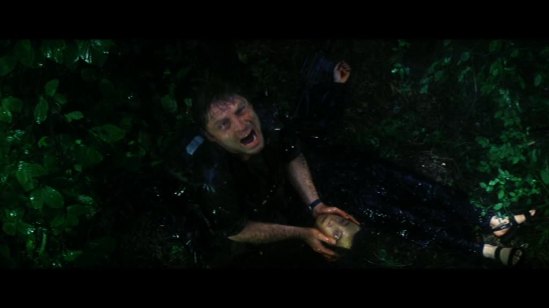
To make this technique work and to make it not become tiresome to the viewer, Blatty had to write some amazing dialogue and with him being a novelist and all, the dialogue was absolutely, 100 percent brilliant. Lets not also neglect to mention that with unrivaled dialogue, out of this world thespians must be accompanied to breathe life into the black printed words that are simply laying upon white pages. Scott Wilson’s and Jason Miller’s craziness is unparalleled while, on the other side of the spectrum, Stacy Keach delivers a melancholic performance that balances out the tone of the film from what could have been considered an anti-Vietnam war comedy at first glance that spun quickly with an unforeseen morph into a suspenseful thriller about the consequences of war PTSD and the affect it has on those surrounding.

Gerry Fisher’s cinematography encompasses the Gothicism of the remote Germanic castle to where every ghastly statue and crypt-like stone comes alive like in a horror movie. The setting couldn’t be any of an antonym for a loony-bin set. Even though the film is suppose to be set in North West America, the location used was actually in Wierschem, Rhineland-Palatinate, Germany at the medieval Castle Eltz and the story subtly explains how the castle came to be in “America.” To the opposition of such a barbarically beautiful castle, the score by Barry De Vorzon (The Warriors) in the first act into the second is playful, lighthearted, and childish in an appropriate story tone, but turns quickly sinister and angry during progression, building upon the revealing climax.
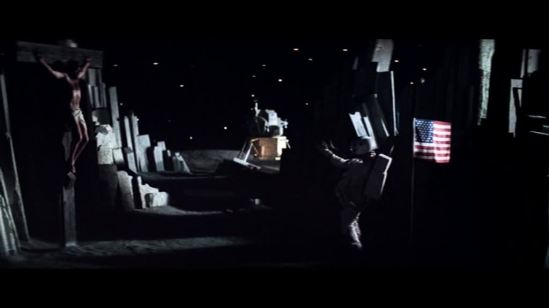
Classic film and TV distributor Second Sight brings this cult classic onto DVD and Blu-ray in the UK. Since this was a screener copy of the DVD, I’m unable to provide any audio or video technical comments, but the screener did include the generous amount of bonus material including interviews with writer-director William Peter Blatty, and individual interviews with Stacy Keach, Tom Atkins and Stephen Powers, composer Barry De Vorzon, production designer William Malley and art director J. Dennis Washington. There are also deleted scenes and outtakes and a Mark Kermode introduction. A substantial release for Second Sight and a fine film for any collection so make sure you pick up or order this Second Sight release today!
It’s Not Eezzee Being Evil! “The Hoarder” review!

Ella suspects her handsome fiance is having an affair and strongly insists on breaking into his outer city storage unit to find proof. Ella’s felonious friend Molly tags along to aid in the break-in, but deep down in the basement level of EEZZEE storage, Ella and Molly release a terrifying secret that’s now running loose and causing a murderous campaign in the maze-like structure of the storage facility. Along with a handful of other unfortunate storage unit renters, Ella finds herself trapped in the facility’s after hours lockdown and in the bloody nightmare path of the Hoarder, who won’t stop seeking to stock his very own unique “collection” back in the belly of the dark basement.

Writer-director Matt Winn’s sophomore feature film “The Hoarder” stars Mischa Barton of “The O.C.” fame and Barton portrays the seemingly suspicious and risk-taker Ella. Barton has been through a string of B-horror and other B-movie films that’s far from more of her previous popular works, yet seeing her name headline a film simply entitled “The Hoarder” feels unexplainably awkward. If you’re not familiar with Mischa Barton, Amy Smart (“Mirrors,” “The Butterfly Effect”) is another one of those relatively known actresses that hang onto the B-horror and Hollywood horror fringe line and not securely rooting a place amongst the two very different planes. But Barton is surrounded by a formidable B-movie cast or an ensemble of television actors to where they’ve received their popularity and recognition. “Prison Break’s” Robert Knepper, “The Tudors” Charlotte Salt, and “The Fall’s” Valene Kane co-star alongside Barton. However, Andrew Buckley, as the EEZZEE storage unit manager, is the most entertaining and interesting character with his non-threatening physique, his deadpan comedy, and sheer intensity when provoked. Even though they’re storage units of talent, collectively the actors don’t play well off each other and don’t share the situation as a whole. Rather, each character tries to go into their own personal demons and not into the evil their neck deep at the current moment.

The Matt Winn script, co-written by Chris Denne and James Handel, and direction are well-paced for timing, are attentively consuming from the beginning to end, and are structured soundly to withstand a pretty good and unexpected finale twist. However, the script doesn’t come without its flaws, developing plot holes through the duration that are not explained well enough to extinguish post-viewing questions. Also, a few of the minor characters needed their story to be explored more to give them more worth. I wanted to care more about the character Willow and her drug addiction and the character Vince and his undisclosed corrupt cop business, but couldn’t quite grasp their backstories and their motivations, leaving Willow and Vince as inessential dust particulars instead of full-bodied hair ball critters that one can’t help by notice. The finale successfully satisfies the B-Horror mold that puts that welcoming final stake into “The Hoarder” of ever being a thought of a Hollywood production. And that’s a solid quality to obtain.

I did expect more of a gory display from special effects supervisor Scott McIntyre. While whatever effects made the film’s final cut were well executed, such as mouths being sewn or stapled shut, much of McIntyre’s talent wasn’t exhibited or perhaps even used. With big time feature credits such as “Enemy at the Gates,” “Mindhunters,” and a more under the radar credit in the more recent “Cockneys Vs Zombies,” “The Hoarder” could have been far more gruesome and unpleasant in a tasteful expo. Aside from the squandering of McIntyre’s talents, the Eben Bolter’s dull cinematography on a well made storage unit set and the Andrew Pearce and Xavier Russell repetitive and cheap soundtrack score blandly conveys menacing “The Hoarder” rightfully deserves.

RLJ Entertainment adds to their collection with the not rated DVD release of “The Hoarder.” Beneath the embossed DVD sleeve and casing, the DVD video quality is comprised of a sleek 2.40:1 widescreen presentation with a Dolby Digital 5.1 track. No flaws detected in either audio or video during the 86 minute runtime. Dialogue, soundtrack, and ambient tracks were appropriately balanced and clear and the video quality is sharp with natural skin tones and prevalent ominous yellow and blue hues. The only bonus feature is “The Making of The Hoarder” which consists of the cast and crew reliving their experience on set and how the feature became to be developed. Overall, “The Hoarder” concept has a strong story attraction, but the resulting film can’t seem to fully shake the teeter-totting performances and the sizable plot holes that water down the finer portions of the film.
EvilGamer Horror Game Finds!
I know video game content on here has been lacking and I am sorry. So I am back and try to make more content and review more games.
Went game hunting today and found some cool horror games to add to my collection. So here is my first video game pickup video for our Youtube channel. If you haven’t subscribed yet, please feel free to do so, I will start doing more gameplay videos and reviews on there.
 It's Bloggin Evil!