Steamed Pork Buns Stuff With EVIL! “The Untold Story” reviewed (Unearthed Films/Blu-ray)

Wong Chi-hang brutally beats and sets fire to a fellow gambler who refuses to lend him money.  After destroying his identification card and creates a new look and identity, Wong flees Hong Kong before he can be hunted down for first degree murder and be served capital punishment for his crime.  For the last 8 years, Wong has lived and worked on the island village of Macau, running a small, but well-known, steamed bun restaurant, Eight Immortals Restaurant.  He receives inquisitive letters everyday asking about the whereabouts of the former owner, Cheng Lam, by Lam’s older brother on the mainland.  The letters force Wong to attempt manipulating lawyers into signing over the restaurant to him without Lam’s presence.  When the police discover dismembered limbs washed up on the beach, an investigation ensues that connects the body parts to a Chan Lai Chun, the mother-in-law to Cheng Lam, leading a small task force of blockheaded detectives to Wong’s restaurant where he becomes the prime suspect in the disappearances, but he won’t break so easily after being apprehended, unwilling to cooperate and confess to the whereabouts of the bodies of the vanished owner, his entire family, and a pair of workers.  Yet, what were exactly in those steam buns that made them so delicious?
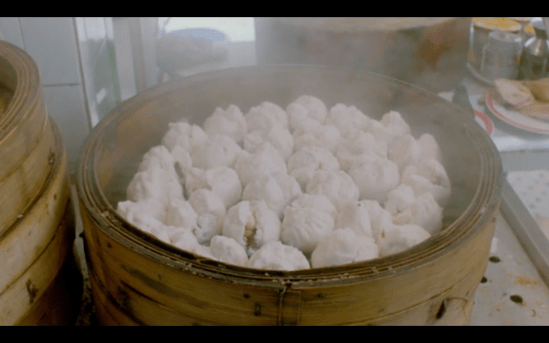
Full disclosure.  I’m not too terribly familiar with Hong Kong’s rating system of Category I, II, and III, but I’ve more-or-less dabbled in the Category III (Cat III) horror and exploitation cinematic market, owning only a handful of these gruesome-and-sexually gratifying guilty pleasure full of sex, violence, and taboo concepts of titles such as “Riki-Oh:  The Story of Ricky,”  “The Chinese Torture Chamber,” and “Three…Extremes” and only “The Story of Ricky” has ever been popped into my player for recreational viewing.  Also, in my collection, is a Tai Sing DVD copy of Herman Yau’s 1993 crime-and-cannibalism graphic thriller “The Untold Story” and, frankly, I never opened it either, but when Unearthed Films sent me their new Blu-ray release to review, I’ll never be able to see chop sticks the same way again!  The eye-opening experience also screamed that I should definitely rip open and see those other films to quench my thirst for Cat III’s offensive opulence.  Based off a true story of the Eight Immortals Restaurant murders in 1985 around the Macau area, the nearly unwavering from the truth storyline parallels the Kam-Fai Law (“Dr. Lamb”) and Wing-Kin Lau (“Taxi Hunter”) co-written story in which a madman slaughters an entire family over a gambling dispute and runs their family business, the Eight Immortals Restaurant, until the police capture him, but Yau sticks more sensationalism to the already brutal notoriety surrounding the actual case with ground human barbecue steamed buns to tease with abhorrent flavor under the Golden Sun Films Distribution distribution of the Uniden Investments and Kwan Hung Films production.

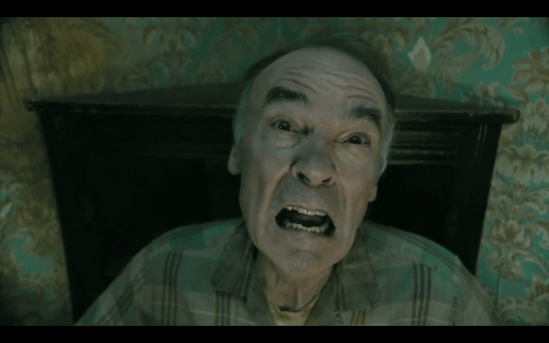
“The Untold Story’s” lead man in the shoes of the maniacal, rage-filled Wong Chi-Hang is “Ebola Syndrome’s” Anthony Wong who initially thought the script was greatly unattractive.  Little did he know that his performance would be so good, so osmosis with his wide-eyed lunatic stare through the luminating pixels of the television screen, that the role would honor him with a Hong Kong Film Award for best actor; Hong Kong’s equivalent to the best actor award for an Oscar in the States.   The “Hard Boiled” actor embodies a soul of frustration and anger to rise his character up to the demented level of nihilism and heartless exploitation that unforgettably scores being the face of “The Untold Story’s” cruelty.  Yet, there is a Jekyll and Hyde complex with Yau’s film that cuts the cynicism with a risible troupe of police officers supervised by Officer Lee (Danny Lee “The Killer”).  With a beautiful foreign woman, a blatantly announced hooker, always at his side and being the sharpest detective on the force, Lee’s a contradictory, authoritative commander meshing immoral principles and duty into one while leading a four-person squad of non-initiatives comprised of three rubbernecking men, craning their gulping jugulars toward Mr. Lee’s arm-candied gals, and one tomboy woman with an affinity for Mr. Lee who struggles with being taken seriously amongst her peers as an unenticing woman in cop’s clothing.  The officers’ western names are a slither of satire to poke fun at the nicknames of tough or macho cops go by in the States with Bo, King Kong, Robert, and Bull (respectively Emily Kwan, King-Kong Lam, Eric Kei, and Parkman Wong of “Dr. Lamb”).  The cast rounds out with Fui-On Shing and Julie Lee. 

“The Untold Story’s” embittered nihilistic violence, gratuitous rape and sodomy, and steamy, mouth-watering cannibalism leverages this Cat III film as tiptop horror exploitation from the far East.  If broken down more, director Herman Yau pins and sews together a liaising three act prong story of a horrid man’s attempt at deadly stability in society and a madcap group of officers, with a penchant for police brutality and coercing confessions, bumbling their way through clues that ultimately funnel into a blended third act of magnetizing the two sides together toward a satisfying, almost faithful, ending of “The Eight Immortals Restaurant:  The Untold Story’s” purloin and murder fiction and non-fiction exploit.  Yau spares no expense for gore, serving up a platter worth the splatter of some nifty chop’em up and grind their meat into the dough effects that’ll turn stomachs as well as heads and doesn’t exude as bargain basement quality; yet, just enough gore goes uncovered to tantalize without a full onslaught tarp covering the ground of disembodied limbs and floor-splattering entrails that boil down to an overshadowing character that detracts from the cast performances as such can accompany with the more extreme Asian horror catalogue.  There’s nothing gentle about the actions of Wong Chi-Hang, but the way he’s scribed to manifest spur of the moment carnage, stemmed by the most minute disputes, and the way Anthony Wong carries and maneuvers of a monstrous villain with ease takes an esthetical point to not stray away from his, or rather his victims’, story.  “The Untold Story” is, in fact, meta-exploitation fiction of non-fiction down to the very last tasty morsel. 
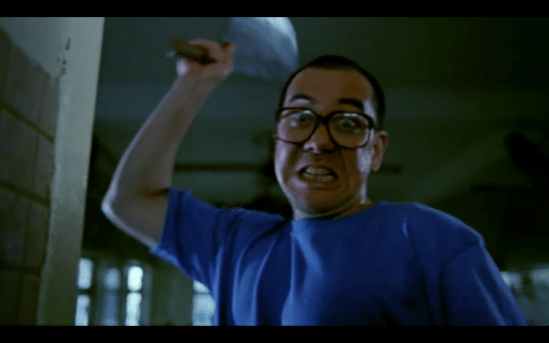
In what is perhaps the epitome of Hong Kong’s Category III film index, “The Untold Story” arrives onto high definition Blu-ray courtesy of the gore and shock genre label, Unearthed Films as part of the label’s Unearthed Classics line and distributed by MVDVisual. The well preserved, near flawless transfer is presented in a widescreen, 1.78:1 aspect ratio, and the picture is a vast improvement over the slightly washed previous DVD releases though favors a higher contrast resolution that ekes trading out the details for a brighter, softer film in an overall compliment of Cho Wai-Kee’s beaming cinematography. Whether in the police station or the restaurant, fluorescent lumens light up the scenes with a sterile-driven madness. The Cantonese, Mandarin, and some English 1.0 PCM audio track denotes, without surprise, the lossy quality doddering from age and antiquated equipment, but renders well enough without the imperfections of hisses, distortions, or any vocal impediments. The option English subtitles display without error with only the issue in their breakneck pacing when attempting to keep up with reading the subtitles and the rapidfire dialogue. You basically have to skim read. The special features include commentaries with star Anthony Wong and Herman Yau, the superbly dark and traditional film score isolated for audible pleasure, commentary with Art Ettinger from Ultra Violent magazine and Bruce Holecheck of Cinema Arcana, a Q&A with Herman Yau, a featurette of the history behind Category III films of Hong Kong Exploitation Cinema, a interview with Rick Baker entitled Cantonese Carnage, and Unearthed Film trailers. There’s also an two-page insert of Art Ettinger’s write up about Hong Kong cinema and “The Untold Story.” Resilient to the test of time, “The Untold Story” benchmarks a high point in High Kong exploitation cinema, recalls the tremendous feat of performance by Anthony Wong, and displays the sheer mastery of disciplined filmmaking from Herman Yau in this unforgettable gruesome black comedy.

Must Own Christmas Gift! “The Untold Story” on Blu-ray!

EVIL Trifles With a Vindictive Obsessed Cop in “Split Second” reviewed! (MVDVisual / Blu-ray)

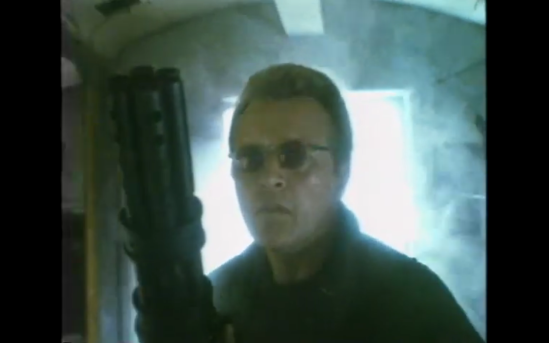
Global warming has taken a toll on the Earth’s polar ice caps in 2008 with cascading amounts of water flooding around the world bringing knee high waters to coastal cities.  London is hit hard with drenching sewer overflows and coastal run overs that result in an over infestation of rats to storm the streets, back alleys, and even resident homes, carrying a harmful disease in their occupation.  However, something else compounds the rat plague that slashes at random victims, tearing their hearts out violently from their chests without ever leaving a witness except for one, a rogue and paranoid detective Harley Stone whose partner was slain in one of the deadly attacks and himself marred by the killer. Partnered with a new hot shot know-it-all detective following the murders, an obsessed Stone confronts his haunting traumas as he continues to pursue the inhuman perpetrator who has a psychic connection to Stone, personally toying with the on-edge officer, and has kidnapped his girlfriend as bait.

Even though 2008 has come and gone now almost 12 years ago, Tony Maylam’s 1992 actionized-creature feature “Split Second” still holds water just like the rising tide pools on the streets of London.  “The Burning” director, Maylam, helms, with the finishing touches of the final sequences directed by Ian Sharp after Maylam’s sudden departure, a fast paced and snarky script penned by Gary Scott Thompson as one of the writer’s very first big budget outputs from nearly 30 years ago that was followed up with major studio films, including a little project you may or may not have heard of, “The Fast and The Furious” mega franchise.  Before nitrous suped-up cars hot-rodding on asphalt, jumping high speed trains, and flying off cliffs in a lap strap of criminal activity luxury, Thompson created a formidable, heart-devouring beast that became the trap-setting, trophy-hunting predator and the teeth-snapping, chest-bursting xenomorph all in one package to symbolize the irreversible and ignored effects of an overpopulated, warming planet.  “Split Second” is a production of Challenge Film Corporation and produced by Muse Productions with Chris Hanley, Laura Gregory, and Keith Cavele serving in a producer role.

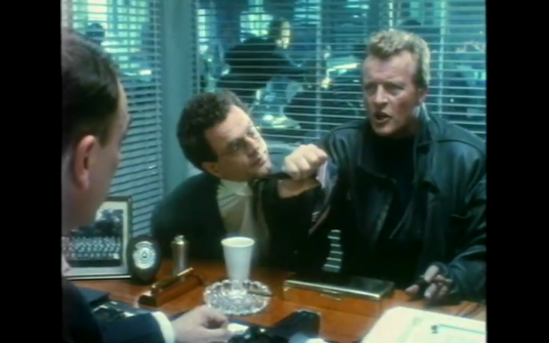
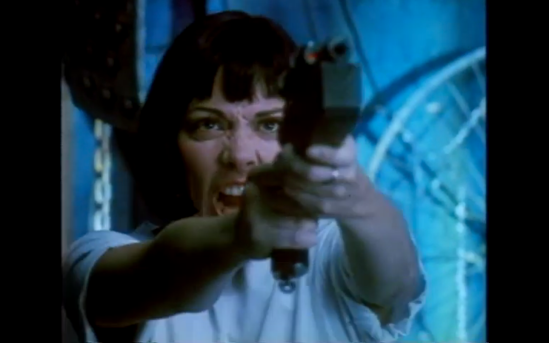
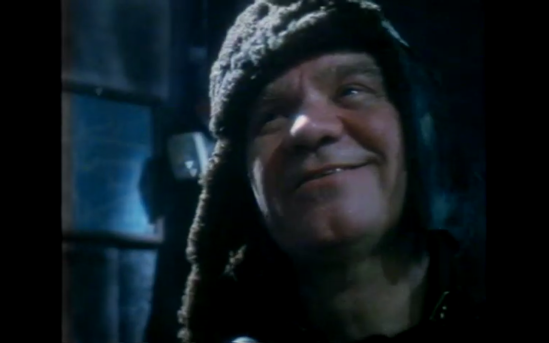
The Netherlands’ very own Rutger Hauer sheds his nice guy exterior for Harley Stone’s shell-shocked, rough and tough outer shell.  The late “Blade Runner” and “The Hitcher” actor brings a certain cinematic coolant to “Split Second’s” overheating fringe of disproportionate action and science fiction horror, a lop-sidedness typical of a Rutger Hauer production, by being larger than life in the little aspects that add to the dimensions of the scene, making every moment famished for Stone’s next eccentric and animated move.  Stone is partnered with an equally vigorous Detective Dick Durkin who starts out as a cultured drip of criminal activity and an astronomical proficient before quickly blooming into the same gritty mirror image of Stone.  Credited as Neil Duncan, the current vocational voice actor Alastair Duncan has a natural dynamic with Hauer despite their asymmetrical careers and endures an incredible character arc successfully turning Durkins’ relatively square image – though debatable with smart, good looking, and gets sex every day swagger – into a Stone acolyte after witnessing the human threatening existence of an unnatural ferocious monster.  The female love interest didn’t seem to fit the “Split Second’s” gentle steampunk lace and zany character scheme with Kim Cattrall as Stone’s estranged girlfriend, Michelle McLaine.  As much as love the “Big Trouble in Little China” actress’s late 80’s to early 90’s career, the girlfriend role feels sorely plopped into the film for the sake of having a love interest as much of the character is illuminated through exposition with McLaine being the wife of Stone’s former partner stemmed from her and Stone’s affair and then lingers her subsequent alienation from the rogue cop despite an inextinguishable flame between them. As Cattrall provides the sexiness in the city of London, McLanie iss aesthetically airy without tangible substance other than kick in the pants motivation for saving. “Split Second” rounds out with the late Pete Postlethwaite (“The Lost World: Jurassic Park”), Alun Armstrong (“Van Helsing”), Stewart Harvey-Wilson and “Scoorged’s” Michael J. Pollard as London’s the rat catcher.

“Split Second” is an early nineties junket spiraling with flashy facets of easily digestible, entertaining chewables that continuously hits all the right flavor sensations in terms of acting, dialogue, production design, creature design, and cinematography. The bonkers script and equally as bonkers visual concept inserts an extremely likable brazen world of the future in the form of a dank, or danker, London under one or two feet of water; in every moment Stone or Durkin hit the streets, they’re essentially swimming in brown street liquid and the overall effect places a blanket of filth glazing over my eyes and secreting out of my captivated body is a cold spine-shivering chill that’s immersive to Stone and Durkin’s slushing around. Stephen Norrington, who went on to direct “Death Machine” and “Blade,” slapped together a fairly effective creature design despite the creature rarely being in full exhibition and for very good reason. A brief flash of razor sharp fingers, a quick dash of unearthly skin, and the gruesome aftermath in it’s wake evolved a better rendition of the creature in our minds than perhaps the actual resulting appearance with result that tacked on one big mysterious allure that doubled down coinciding with the principle characters who also has never seen the killer before. “Split Second” is constantly suspended in action with little down time to reflect on the theme of global warming and it’s life-changing choking effects that not only rushes thousands of gallons of water onto the streets and increase the survivalist rat population up to nearly impossible control levels, but also tampers with the balance of astrometric forces, bringing evil to the world in the form of a heart-eating devil to the surface when astrology deemed the moon in position for such an event and that’s also perhaps the downside to Tony Maylam’s film. The monster bares little backstory to sink one’s teeth into and raises an immeasurable amount of unanswered questions relating to the fate that intertwined Stone into the creature’s inner sphere of extrasensory perception, the origins of the creature and it’s genetic makeup, and the relationship between it and the cult correlations.

A melting pot of feculent and bloodshed pother, “Split Second” arrives onto a high definition Blu-ray courtesy of 101 Films and on MVDVisual’s MVD Rewind Collection banner. The region free, R-rated feature is presented in 1080p with a widescreen, 1.85:1 aspect ratio with a newly 4K scan complete with restoration and coloring grading from the original 35mm negative. The inviting image, with adequate grain and a cigarette burn here and there, basks mainly in a steely blue among other primary colors rearing up while thick with a brightly contrasted neo-noir shadow wrung through. Skin textures are consistently and continuously glistening with sweat setting on top of the natural coloring and the facial follicules present a rather sharp image, making this release the best looking transfer to date. The English language 2.0 LPCM stereo mix doesn’t let up with a robust mix of forefront dialogue, a balance of range and depth, and a pulsating cheesy-action soundtrack Stephen Parsons and Francis Haines. English subtitles are optionally included. The heft bonus features package includes exclusive content such as an audio commentary by action film history Mike Leeder and filmmaker Arne Venerma, a new conversation entitled “Great Big Bloody Guns!” between actor Alastair Duncan and producer Laura Gregory, a “Call Me Mr. Snips!” interview with composer Stephen Parsons, a “Stay in Line!” interview with line producer Laura Borg, a “More Blood!” interview with creature effects designer Cliff Wallace, and a “Shoot Everything!” interview with cinematographer Clive Tickner. But, wait, there’s more! Also included is the original making of feature with stars Rutger Hauer, Kim Cattrall, Alastair Duncan, Michael J. Pollard, writer Gary Scott Thompson, original behind the scenes feature with effects creator Stephen Norrington and other cast and crew, the “Second Split” Japanese cut includes the deleted scenes and built in Japanese subtitles, 7 promotional TV clips, U.S. VHS home video promo, theatrical trailer, and a MVD exclusive reversible sleeve with artwork from The Dude Designs, cardboard slipcover, and mini-poster insert. The difficult decision to determine Rutger Hauer’s best work can be daunting as the man is King Midas with every project he touches, but “Split Second” reveals now more than just being pure gold with this MVD Rewind Collection Blu-ray release that’s a must own, must have, must see, and a must collect physical release of the rundown of a monster-run amok, neo-noir, steampunk, action-comedy-horror….in a nutshell.

Own this Rutger Hauer classic “Split Second” on Blu-ray!
A Major Book Deal Isn’t Worth This EVIL. “Writer’s Block” reviewed! (Gravitas Ventures / Digital Screener)

Skip Larson has become a one hit wonder in the literary field.  The aftermath of his initial work, a best seller success, has never again been duplicated as Larson’s wretched and dispassionate heart and mind hit an unscalable writer’s block that can’t afford to pay the ever mounting bills.  When a stranger approaches him at one of his dismal book signings, an opportunity presents itself to meet serial best-selling novelist, Chester Everett McGraw, at his private ranch where Larson has to decide whether to sign McGraw’s rigorously partisan and severe contract for wealth, prestige, and a chance to co-author McGraw’s next big novel after being cut off from the outside world for six months or walk away from everything without penalty and return to his mundane life struggle.  Larson agrees to McGraw’s extreme terms and begins working chapter after chapter on McGraw’s next literary masterpiece, but as the days turn to weeks and each draft is ridiculed and critically trashed, an irritated Larson itches to leave but the snake-tongued McGraw, his brutish bodyguard, and even the beautiful maid, who has suddenly taken a liken to him, keep tortuously motivating him back to novel drawing board whether he likes it or not. 

Putting pen to paperwork with a looming deadline on the horizon is already stressfully hair pulling, but when the cold steel of a gun muzzle is pressed against your sweaty temple, the pressure grows tenfold to get the creative juices flowing before the contract is up in Jeff Kerr and Ray Spivey’s co-written and directed 2019 exploitation thriller, “Writer’s Block.”  The independent feature is the second collaborated project between Kerr and Spivey following their 2016 documentary, “The Last of the Moonlight Towers,” about the obsolete street illumination system, the last of its kind, of electric light towers in Austin, Texas.  Continuing the trend of holding their filmmaking shop in their home state but not exploring non-fictional antiquated monolithic engineering marvels, the directing duo concentrate their Texas-based shot film toward being a cinematic turn-pager saturated with perfidious suspicion and crackpot characters that keep the road toward a clandestine endgame alluring and mysterious, unfolding in a similar regard to that of its general context of an exceedingly multifarious murder mystery novel.  Kerr and Spivey’s Sharp Town Productions serve as the attached production company.

Kerr and Spivey shop locally when choosing their downtrodden literary hero, Skip Larson, plagued with a wretched past and the desirable callings of the bottle.  The filmmakers settle on “Fear the Walking Dead’s” Craig Nigh who can sell smartass with the best of them and be as tough as nails when push comes to shove.  On paper, Larson’s a forlorn gambler risking his chance at life by accepting a seemingly glamorous, one-in-a-life, game-changing deal by a fellow writer he admires, but with a number of fishy, tall-tail signs of deception and corruption by McGraw and his goon, Digger, Larson can come off naïve, especially when he sticks around still after his free will fractures under physical violence and threatened to be shot.  The oppressive McGraw obviously has an ace up his sleeve in his proposed partnership with Larson and, never once, feels sincere in building Larson’s library with his dreams.  I found Mike Gassaway’s performance as McGraw to be one-note.  “The Next Kill” Gassaway tussles with sly intentions of a manipulative best-seller author, devolving into an unintentional weaker ranch obstacle that dwindles down McGraw to be more of a façade behind the true game being played against an unwary Larson.  Though McGraw as the brains, the cowboy hat wearing former oil rig worker, Digger, provided much of the muscle whose anxious temperament kept him from seeing the final stages of McGraw’s malevolent game.  Chris Warner finally lands a principle role that isn’t a short lived bit part that’s labeled Flatbed Driver or Prison Guard.  Instead, Digger Haskell seems like a teddy bear good old boy that Warner can inherently step into without having to get lost in a new persona and Warner fleshes out Digger’s hasty disdain in how the slow progression keeps him for enjoying what he loves to do best – being a hired goon – but the character rarely established a definitive connection of servitude toward McGraw other than the notable writer taking the oil rig injured man under his wing, causing some unresolved character development.  Cataline is perhaps the most underwhelming character as the immigrant house cleaner who falls in love with Skip Larson.  Played by Jeannie Carter-Cruz (“Sasquatch!  Curse of the Tree Guardian”), Catalina bashfully wills herself around the house, not really cleaning much in the audiences scope of her profession, and becomes discreetly entangled with the struggle writer for unknown reasons she herself couldn’t explain, leaving her, and Carter-Cruz, exposed in an under-seasoned character course. Katusha Robert, Avery Lewis, and Natasha Buffington rounds out of the cast.

“Writer’s Block” shoves an easily relatable theme of success never comes easy right into audiences’ laps as Skip Larson’s humiliation exhibits as much through literary famed Chester McGraw’s browbeating tactics ranging from verbal assaults to unwanted sexual persuasions. Not by McGraw. That would be gross. Yet, in essence, the actual frustration condition of writer’s block for an author in any facet is akin to the sensation of conquering in what seems the impossible. Once Skip Larson tips the odds into his favor, the woebegone writer’s line graph to success skyrockets off the chart after a bit of tough love motivation stemmed by McGraw and his boot camp, side-hustling ranch. However, “Writer’s Block” suffers from the titular misgiving in the form of pacing irregularities, a loitering third act, and a paper thin Skip Larson backstory that only dabbles into his post-family tragedy alcoholic stupors and his peradventure subversive dealings with his gangster cousin. The gangster cousin tangent is by far the most offshoot subplot underlined only in flashbacks and at the finale that introduces a character that has seemingly never been a functional part of the story but is pivotal in Skip Larson’s corner. The crux of the story’s issues is that it tries to incorporate too much whereas the basic building blocks, the pure premise, would have sufficed and have been modestly more successful if stuck to instead of throwing a curve ball of horror into the macabre construction of McGraw’s collective work of best sellers as trophies that becomes synonymous with his obsession for hunting, if not more so conquering, the wild game he annihilates.

When a wordsmith’s mental typewriter stalls and the hands hang still with fingers dangling above the alphanumeric keys, waiting for inspiration to flow through the very fingertips that provide financial stability and creative vigor, use the Gravitas Ventures released “Writer’s Block” as a tool to unstick the tacky words, pry open the oppressive blockade of the expression dam, and let the flood of literature be unbridled. Released earlier this month on November 3rd, “Writer’s Block” is now available on VOD and streaming platforms, such as Amazon Prime Video, Apple TV, Fandango Now, and Google Play as well as all major cable and satellite platforms. The 98 minute film is shot in the capable hands of Alex Walker who stays put mostly in natural lighting, swerving almost unnoticeably at times into various colored lighting (mostly blue or purple) and utilizes the story’s drone to capture effective aerial shots. There were no bonus features included with the screener nor were any bonus scenes during or after the credits. “Writer’s Block” is a tousle survival-thriller careening toward a grisly surprise that requires a little more spick and span shaping for a grittier exploitation.

Own “Writer’s Block” on Prime Video!


Never Poke Isolated EVIL. “Darkness in Tenement 45” reviewed! (Wood Entertainment / Digital Screener)

In an alternate reality of the 1950s, the Soviet Union has obtained components for long range biological weapons that threaten United States’ borders.  New York City has been declared as a tangible target and the city is evacuated of all residents, but one tenement, number 45, remains occupied, boarded up by the frightened tenants to shield themselves from the biological threat and from a possible USSR invasion.  Cut off from the outside world and running low on food and supplies, the building’s owner, Felix, ventures outdoors to forage what’s left on the streets of NYC, leaving Martha in charge of the dilapidated building, the anxious children and the terrified adults.  Martha’s adolescent niece, Joanna, arrived just before the evacuation; a measure taken by Joanna’s mother due to her daughter’s “darkness” of violent outbursts, but Joanna’s darkness conflicts with Martha’s authoritarian leadership leading up to a faceoff between children and adults in already tense surroundings.

In August 2017, production finished on “Darkness in Tenement 45.”  In 2019, a Kickstarter campaign was launched to complete the post-production of the Nicole Groton written and directed psychological thriller based off fear and intimidation in the context of a Red Scare backdrop.  As her breakthrough feature film, Groton probably couldn’t have imagined that the release of her quarantine isolating and germ warfare agog could have coincided right in the middle of a current pandemic climate of self-quarantining anxiety and globally enforced lockdowns.  Yet, “Darkness in Tenement 45” can be viewed a sentiment of triumph in a time of actual worldwide darkness for a film with a crew that is comprised of primarily women and with a cast that favors the majority of dialogue roles also for women.  Groton supports her own cause by contributing as producer under her production label, A Flying Woman Productions, a North Hollywood, California based indie picture production company.

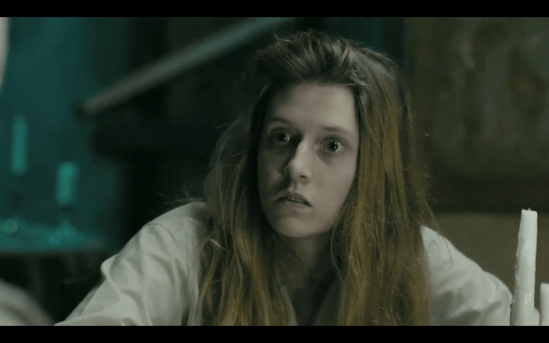
While there might be a contingent of characters that could easily be in the vying for lead, Nicole Tompkins is the discernible “darkness” descriptor in the “Darkness in Tenement 45” title.  The Texas-born actress has developed a little darkness of her own in her career corner being a principle lead in the 2018’s nightmares of the netherworld, “Antrum:  The Deadliest Film Ever Made” and also landing a voice role of one of survival horror’s most renowned heroines, Jill Valentine, in the remake of “Resident Evil 3” video game released this year.  Now, Tompkins scales the identity range as a damaged young woman sheltered in place from the elements of war only to be stuck as an afterthought amidst toxic authority that could endanger all tenants, creating a boiling tension culminating into a volatile climax with Martha, a role drenched with an unapathetic interest in children’s opinions, especially from the unstable ones.  Martha is played sardonically by “Blood of Drago’s” Casey Kramer with a seething disdain for anything that isn’t in her interest.  Overall, the performances and characters are grounded enough to development the story along it’s simple narrative lines, but not everything support character, who are supplemented with individual portions of the story pie, are well bloomed to sate their character.  For instance, Tomas, the youngest child of the building owner, Felix, has an undisclosed autistic side him and becomes obsessive with the breast of one of his older sisters, and while that plays out in Groton’s themes of partisan power when Tomas is given authority over his sisters from his venturing father, because of their innate Latina patriarchal culture, Tomas’s motivations fall short of really being dug out from the undercurrent context as an individual arc.  Same kind of broke off development can be said with Emmy Greene and Joseph Culliton’s characters as fellow adults who blindly follow Martha’s do-as-I-say mentality like lemmings toward their self-destructions.  The cast rounds out with a wide range assortment of children and adult actors that include David Labiosa (“The Entity”), Melissa Macedo (“Blood Heist”), Keyon Bowman, Marla Martinez (“Blood of Ballet”), and Anthony Marciona (“Invasion U.S.A.) who provides more of a 1950’s white man NYC accent true to the era.

Revolving around the theme of isolation, “Darkness in Tenement 45” operates under the similar structure of John Carpenter’s “The Thing” by establishing a group of people cutoff from the rest of the world trying to survive a different kind of infection and the antagonist alien, represented as the darkness in Groton’s film, is the villain that tears the remaining survivors apart from the inside, metaphorically in the house instead of their bodies in this case.  “Darkness in Tenement 45” is by no means on tenterhooks or as a molecularly gruesome as John Carpenter’s classic re-imagining of an actual 1950s film, but the basic principles of the story present plenty of suspicion, hegemony, and stir craziness to go around, fueling the dreams and anxiety to Joanna’s snowballing psychosis redlining toward critical.  While I feel that the performances and wardrobe are not the best representation of the 1950s time period, the Caitlin Nicole Williams’ production design shoulders much of that responsibility.  Williams, who worked as the second unit production designer on the satirical-slasher “Dude Bro Massacre III”, creates a delineable vividness out of a bare bone lined tenement setting, appropriate for the depicted social class and period, while exuding the crude shiplap finish that fits the narrative, adding confinement and angst to the space.  “Darkness in Tenement 45” is Groton’s groundbreaking effort that dishes out this disorder of a safe haven in dismay; yet, the story pulls plot point punches that should have landed to knockout a more effective thriller that touches importantly upon the very livelihood and fate of each individual tenant in an alternate universe wartime backdrop.

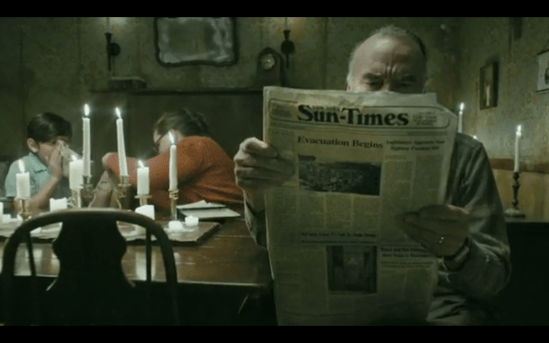
On the biggest day of every four years, as anxiety-riddled clouds loom over the entire nation as we all wait in the shadows with bated breath of who will be the next President of the United States of Election Day, Wood Entertainment has embraced another kind of tense darkness with their release of “Darkness in Tenement 45” onto various digital platforms, including iTunes; Amazon; Vimeo, Xbox, Google Play, iNDEMAND, FandangoNOW, and more. Continuing the praise of the female-led thriller is with the Carissa Dorson cinematography that deposits two shot styles of the conscious and subconscious. When awake, Joanna and the others are engulfed in a hefty, deep dark and light wood brown scheme that compliments the slummy environment of their tenement. When asleep, Joanna is rendered in a softer image to resemble the hazy or airy atmosphere of her dreams. This style is also complete with a medium scaled purple-pink tint often associated with the hallmark callings of a 1970s-1980’s foreign supernatural horror. Dorson never intertwines the two styles, giving clarity to Joanna’s conscious and subconscious state without going deeper into the character’s easily agitated and short fuse temperament, while also setting up some neatly framed shots that make things look bigger or more menacing than they appear, such as the overly boarded up entrance door or the candle lit supper table that becomes a point of contention. Flashes of incubus imagery and the dissonance of gearworks clanking around an unhinged mind give “Darkness in Tenement 45” a morsel of allure amongst the thematical discord of breaking the chains of restrained individualism and overprotecting those with a firm hand from self-harm and while the film might not be pitch perfect, the spirit is strong in the vanguard of female-driven filmmaking.

“Darkness in Tenement 45” now available for rent on Amazon Prime!

A Troubled Family’s EVIL Dynamic. “Kindred” reviewed! (IFC Midnight / Digital Screener)

When Ben and Charlotte declare a decision to move from the English countryside to Australia, Ben’s ardent mother, Margaret, refuses to let her son move away from his family and responsibility in overseeing the massive manor property that’s been in his family for generations.  Despite friction between mother and son, even after the unsuspected announcement of Charlotte with child, the young couple are eager to start their new lives abroad.  An accident causes the sudden death of Ben that takes a psychological toll on Charlotte.  Margaret, and Ben’s aim-to-please brother-in-law, abruptly move Charlotte into the grand manor home as she floats through grief, but their overwhelming generosity turns into obsession with her every move, corralling her to do what’s best for the unborn child with undue stress based off her own family’s mental history.  As Charlotte resists more against the family’s insistence she stay, the stronger their grip on her tightens. 

Sometimes, meeting your partner’s family can be uncomfortably standoffish.  In Joe Marcantonio’s psychological thriller “Kindred,” reticent of personal gain and admission of truth becomes a thick, abrasive wall of tension that crimps the fringes of family relations and mental instability.  The writer-director’s debut feature film hailing from the United Kingdom, releasing this November 6th, tampers with the control over one’s own body through the traumatized perception of a pregnant woman with predispositions on having children in the first place and on her dead boyfriend’s unusual family, coursing with unsettling mental and emotional warfare that’s already tipped in one side’s favor.  The 101 minute, English-made thriller is a co-production of Reiver Pictures and Serotonin Films in association with the makers of “Pride, Prejudice, and Zombies,” Phil Hunt and Tom Harberd of Head Gear Films and Compton and Elliot Ross of UK based Kreo Films.

The players in this tumbling mix of disturbing cat and mouse antics are more or less confined to a skewed variation of an immediate family though none of characters are exactly blood relatives.  Neither Charlotte, Margaret, or Thomas share an smidgen of the same DNA, but have become entangled, in one way or another, into Margaret’s hampering incubator that shelter’s their distinct and varied, sometimes uncooperative, personalities.  Margaret is beholden to memory to her late son, Ben, and exposing Margaret’s egotistic manipulations so wonderfully subtle and true is Fiona Shaw of the “Harry Potter” saga in a role that isn’t so dissimilar to the blunt nastiness of her Aunt Petunia character, but renders a more fierce, enshrouding malice that’s less caricature.  The Irish born Shaw and “DunKirk’s” Jack Lowdon dance a beguiling routine of mother and son as Lowdon plays Margaret’s step-son, Thomas.  Thomas tends to Margaret’s every snippy whim, being a charming and gleaming host, and an overall nice guy, but deep in the recesses of our minds we know something is just not right with Thomas’s polished veneer that soon will explode with true intentions out of dormancy.  Yet, things might not be okay with our seeming heroine either in Charlotte.  Charlotte is very weary of Margaret and Thomas who indirectly, through her eyes, hold hostage the mother-to-be from fleeing the family now that the connection is broken with Ben’s death.  In her debut principle feature film performance, Tamara Lawrance’s Charlotte scribbles outside the lines that smudges the contours of perception reality, adding a complexity component to her character that may or may not being suffering from parental depression commingled with external stress that treats Charlotte like a child in herself.  Chloe Pirrie, Anton Lesser (“Game of Thrones”), and Edward Holcroft (“Vampire Academy”) round out “Kindred’s” strong supporting cast.

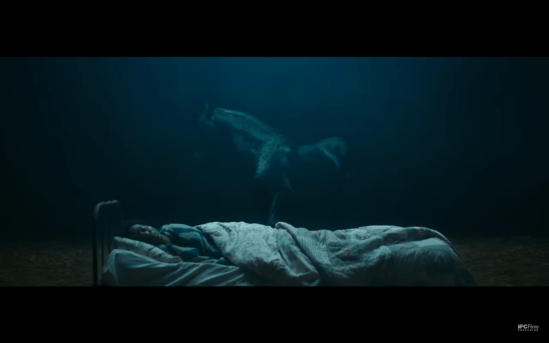
Marcantonio’s “Kindred” splits the focal point of isolating tension, dividing the source into two distinct paths from the point of a view of the self-protective besieged.  In one hand, the pregnant and mentally vulnerable Charlotte experiences apprehension of being forcibly, and manipulatively, instructed by Margaret and Thomas to do what’s best for the baby…Ben’s baby.  Having never seen eye-to-eye or felt comfortable around Ben’s instable mother and peculiar brother-in-law, Charlotte has no Ben as a buffer against their coarse personas, overpowering her as a tag-team of self-interest, but most of everything Charlotte experiences is filtered by past judgements about them.  Alternatively, Margaret, Thomas, and even her boyfriend Ben, note directly to Charlotte her mother’s history with postpartum depression.  The undercurrent theory that it produces brings an under the table perception of how audiences will then try to solve Charlotte’s predicamental puzzle.  On the surface level, Charlotte is being held captive and drugged by her late boyfriend’s estranged family; obscurely, Charlotte’s terror is manifested by a loathed family lineage of mental illness and when your observations goes in one direction per the mind’s pre-wired setup, but all the evidence points to the contradiction, audiences will begin to empathize more closely to the harrowing experiences, through childlike control, of an unstable mind on the brink of a break.  Marcantionio very clearly makes things unclear of an in-between reality that challenges not only audiences, but also Charlotte, on what’s real and not real of the mind’s emphasis.  However, not everything is teed up perfectly as some of the abstract visuals, i.e. Charlotte’s dreams of ravens and horses, fall more into the rigors of psychological concepts that become lost in the affect of either pathway toward what could be considered a Schrodinger’s Cat finale as Charlotte, stuck inside a manor house that’s symbolically a box, could be both sane and insane.


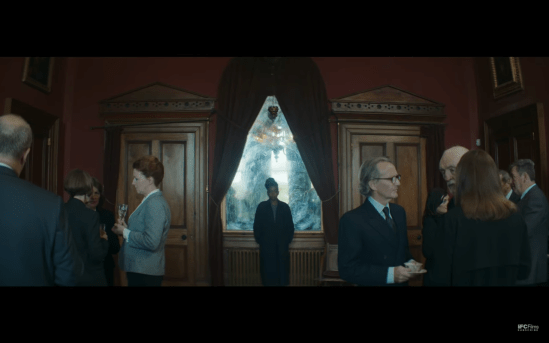
Family can be a finicky thing and “Kindred” is a fastidious look at the instability of family and mental illness which can be, in filmmaker Joe Marcantonio’s eye, interchangeable.  Setting up shop before families get together for the impending holiday season, IFC Midnight will release “Kindred” in select theaters, on digital platforms, and on VOD November 6th.  In regards to the look of the film, director of photography, Carlos Catalan, hones in on a series of medium to medium-closeup shots while grasping very little toward widescreen shots, especially being shot mostly in a grand manor house in Scotland.  When Catalan has symmetrical framing, the allusion is gesturing grand with loneliness, but the cinematographer rarely has the frame centered, often creating an unnerving amount of space in the depth when juxtaposed with an uncentered character in the closeup all the while in natural light to not feign cynicism through use of color or filter. The only time filters are used are in the purple hued airy dream sequences with the raven and horses that become a metaphorical motif of Charlotte’s embattled dreams. The score is composed by a UK collaboration of multi-instrumental composers in Natalie Holt and Jack Halama. Holt’s harsh violin chords with Halama’s drama-fueling classical style produced hints of Mark Korven’s “The Witch” in similar tones, but explode with targeted dissensions that spur equally emotional dissensions amongst the characters. There were no bonus features included with the digital screener nor were there any bonus scenes during or after the credits. “Kindred” is relationally disjointing, disturbingly psychological, and textbook taut with tension as one of the best familiar thrillers to come out of the United Kingdom in the last quarter of the year.