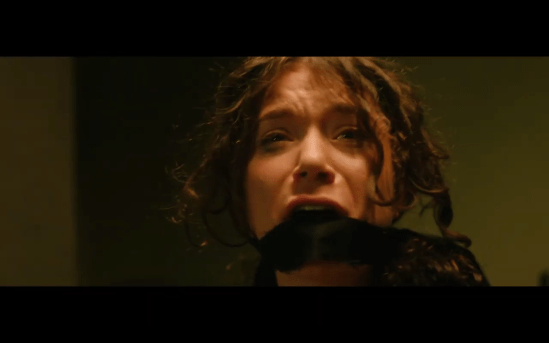
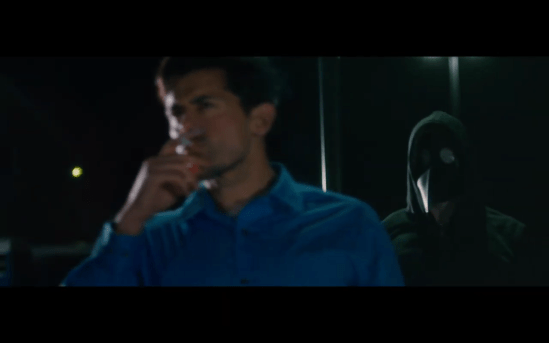
Set amongst the simple, yet sometimes divisively barbaric, culture of Eighteenth Century Spain, a beggar stumbles into the castle of a cruel king whose throwing a lavish wedding reception with his lords. The King’s young bride takes pity on the beggar as his force to be the occasion’s jester to obtain scraps of food and wine, but when the King retires with his new wife, he orders the beggar to be imprisoned. Forgotten to the point of insanity with his only visitor a lovely mute jailkeeper’s maid, the haggard and disheveled beggar goes mad with ravenous intentions and when the maid is punished for disobeying the now elderly, but still cruel, King, she is locked away with the beggar who rapes her. When the maid is released next morning, she kills the King and escapes into the woods to live like an animal until she’s barely found alive by a nobleman named Don Alfredo. Nursed back to health by Don Alfredo’s servant, Teresa, and discovering that the maid is pregnant, Don Alfredo and Teresa tend to the maid until the eventual birth on Christmas Day, an unholy time to give birth to a child according to superstition. The maid dies shortly after giving birth and the child, named Leon, is then raised by Don Alfredo and Teresa as their own, but carries with him a terrible curse stemmed from the maltreatment of his parents and being born on Christmas Day that transforms him into a bloodthirsty werewolf when the moon is full. When a priest advised that only love will restrain the beast from emerging, young Leon must be continuously shown affection, but when a young man, Leon leaves home to live his life, but the beast within him returns to ravage the village’s population.

Let’s travel back in time to the groovy year of 1961 when the renowned Hammer Horror direct, Terence Fisher (“Horror of Dracula”), was accelerating to the height of his career into what would be the United Kingdom’s very own colossally cult production studio, Hammer Horror, that economically constructed violent storied horror concepts splayed with a brilliant crimson blood inside an orgasmic gothic melodrama circulating around most of the classic monsters like Dracula, The Mummy, and Frankenstein, but, in this review of a new collector’s edition of Scream Factory’s Blu-ray release, Fisher wrestled with the hound from Hell, the werewolf, in “The Curse of the Werewolf” that was penned by Anthony Hinds, under the pseudonym of John Elder, as his sophomore credit behind “The Brides of Dracula.” English studio locations were transformed, not under the light of a full moon, to fabricate a mock village of Eighteenth Century Spain with the immaculate details to the sets and costumes, surely recycled from previous Hammer films, to offset the inherent English accents on a broken Spanglish vernacular. Fisher and Hinds upend common werewolf narratives, spinning a wildly tangent rendition of Guy Endore’s already highly taboo tricked out horror novel, “The Werewolf of Paris,” and drape it heavily with Gothicism.
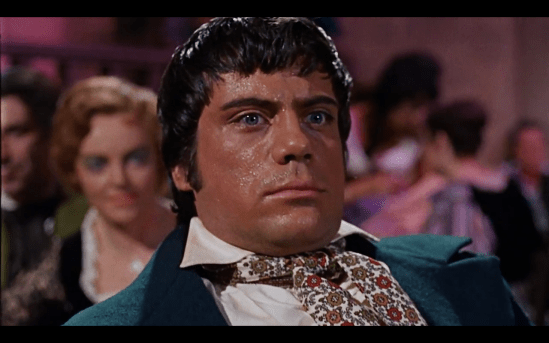
Playing the shapeshifter werewolf is Oliver Reed who at the time was relatively unknown, playing a few bit parts such Plaid Shirt (“Wild for Kicks”) or my personal favorite, Man With Bucket on Head (“No Love for Johnnie.”) Yet, Reed exuded animalistic qualities, such as his dark features and somber eyes, that made him ideal for the role by appearances alone. The thespian in him didn’t quite fit what I believe Fisher was trying to flush out for his beast as Reed held back with a stoic reserve rather than a man desperate for salvation or death, but no one could deny that Reed wore the werewolf makeup like no other, a fine tuned testament of makeup artist Roy Ashton’s creativity that intensified an already beastly framed actor. “The Kiss of the Vampire’s” Clifford Evans took the role of being the wealthy socialite and surrogate father, Don Alfredo, who took the responsibility of raising a cursed child as his own with much suppression love as he could muster to stave the beast from returning. The legendary actor who starred in countless crime-dramas step outside his niche and into horror, even if at the time horror was considered a schlocky exercise of distaste content for a cheap thrill. As Don Alfredo, Evans wages his worth solely on the prospect of being a gentled hearted father-figure doing the right thing even if it’s detrimental to himself and the veteran actor triumphs taking an aloof man with little responsibility to his village, let alone his home, and turning him into taking the matter of his adopted son’s affliction into his own hands when he fails to cobble another solution together. “The Curse of the Werewolf” holds many other fine support performances from “Circus of Horror’s” Yvonne Romain as the mute jailkeeper’s maid, Catherine Feller, Richard Wordsworth, Warren Mitchell, Anne Blake, and John Gabriel.

“The Curse of the Werewolf” is driven not by the snarling teeth action or the transformative body horror one expects of Lycanthropy features. Instead, Hammer’s film rides a story high without being arbitrary with nonsensical waning on the centerpiece of the story, the curse, coursing the path that led to Leon’s fate that was no fault of his own. Leon’s throat-ripping moonlight rendezvous was bred from cruelty and circumstance of severe class division that reaps the life from those in the same blue collar social class as Leon, leaving the higher, wealthy class virtually unscathed by the curse’s wrath in a cruel ironic twist of events. With the story leading the charge, special effects and makeup take a backseat without only some immature fangs and shadowy lurking to sate the need for creature presence. When Roy Ashton’s vision of the half-man half-beast does make a full presentation of Oliver Reed in the full hairy beast getup, complete with a furrowed brow, elongated lower canines, and large wolf ears that were connected with bristly, greyish brown hair down the side of his lower jaw, the werewolf is worth the wait for some of the best practical werewolf makeup from the mid-20th century and surely was the inspiration for future werewolf films, such as “Wolf” with Jack Nicholson. The novelty of “The Curse of the Werewolf” still remains ripe despite being nearly half a century young, giving the beast a meaningful, if not also pitiful, existence to empathize being damned on two fronts: a wretched, cursed soul and being the target of a village mob.

Can love soothe a killer heart? Find out in Scream Factory’s collector edition Blu-ray of “The Curse of the Werewolf” with a new 4K scan from the original 35mm negative and presented in a 1080p high-definition widescreen format of a 1.85:1 aspect ratio. Rendering with clean textures and superb details, the image has remarkable vibrancy and hue balance in it’s tinctured technicolor. The transfer is virtually blemish-free, suggesting that the original negative aged well, with agreeable natural grain to complement the film stock. Scream Factory has produced the best looking version of this classic Hammer release. The English language DTS-HD single channel Master Audio renders, again, scot-free of aged distortion with the high-definition eminent boost to providing even clearer dialogue and untarnished ambient clattering during more turbulent scenes of laughter or beastly disarray. English subtitles are optional. A collector’s edition wouldn’t be complete with a slew of bonus materials and, boy, does “The Curse of the Werewolf” have brand spanking new material for the special features that include a new Roy Ashton tribute piece by his friend and “Little Shoppe of Horrors'” writer Richard Klemensen and new audio commentary with film historians Steve Haberman and Constantine Nasr. Plus, interviews with actors Catherine Feller, Yvonne Romain, Mike Hill, art director Don Mingaye, art department member Margaret Robinson, and filmmaker Jimmy Sangster in “The Making of The Curse of the Werewolf” featurette, a look at Lycanthropy that discusses whether man’s inner wolf can be a transformative source of mental will, a still gallery, and the theatrical trailer. The package is illustrated with Oliver Reed’s snarling werewolf persona by Mark Maddox, who designed Scream Factory’s “The Thing” release, and comes in a nifty cardboard slip cover. All in all, Scream Factory brought new life into the re-originating and re-orientating “The Curse of the Werewolf” that is, perhaps inarguably, the best Hammer upgrade to date.
Father and Son Bring EVIL Down Upon a Tormented Detective in “Darkness Falls” reviewed! (Vertical Entertainment / Digital Screener)

Los Angeles detective Jeff Anderson has his perfect world turned upside down upon discovering his beloved wife dead of suicide in their apartment bathtub. Losing his bid for Captain and having his life be in utter shambles, Anderson becomes obsessed with lurking around incoming suicide calls on the CB radio, trying to make sense of his wife’s sudden reasoning to end it all. When a similar case produces a survivor from a familiar fate as his wife’s, Anderson learns two men are behind similar forged suicides stretched out over the past ten years against prominent women figures in and around the L.A. area. The detective spins a wild theory that has him following every lead to track down and stop the father and son serial killers without any backup from his local precinct, forcing his hand to choose whether to be a cop and uphold the law or seek lethal retribution for the woman he loved.

From French director Julien Seri comes “Darkness Falls,” a crime thriller released in 2020 that is entirely shot in English, a first for the French filmmaker who helms a script from the executive producer on “Starry Eyes” and “The Man Who Killed Hitler and Then the Bigfoot,” the Belgium native, Giles Daoust. Also produced by the Belgium, the film, that was formerly titled “Anderson Falls,” gorges on the detective exemplar of the prodigal crime fighter stripped down to next to nothing before regaining footing against the two experienced serial killers out to reduce the highly professional woman population with one bottle full of sleeping bills and one razorblade at a time. “Darkness Falls” is an exaggerated piece of nurture versus nature on systemic toxic masculinity seething under the guise of one man’s oppressed childhood from the abusive women in his life and then enlightening his son to his ways while the open minded, Renaissance man climbs back up the mountain toward redemption, not only for himself or his wife, but for all women being forced in a dual parental role. “Darkness Falls” is released under the production companies Koji Productions, Lone Suspect, and Giles Daoust’s Title Media.

Despite the international production and filmmakers, the solid cast is compromised of familiar faces from respectable actors, starting with not-the-Elsa-“Frozen’s” Shawn Ashmore. Ashmore, who I considered to a steady part of any project – he’s phenomenal in Fox’s “The Following” with co-star Kevin Bacon, – finds himself in the shoes of a L.A. detective who has fallen by no cause of his own, but as consumed as detective Jeff Anderson is with proving his wife’s murder, Ashmore doesn’t sell Anderson’s convictions and doesn’t properly apply Anderson’s super sleuth talents to wade through the sea of angst and torment. Anderson’s also written poorly as a man who consistently lingers around suicide call-ins and has constantly has numerous visions and memories of his wife that serve little to her importance to him, serving more toward just being story fillers instead of providing a little more value to Anderson’s character. What attracted me more to “Darkness Falls” was Gary Cole as one-half of the father-and-son serial killer team. Cole takes a break from the Mike Judge and Seth McFarland humor to stretch his legs amongst the thriller genre, playing an unnamed dark toned character derived from hate, abuse, and the thrill of seeing women die. Cole’s performance is a step above Ashmore’s lead role, but still flat, flat to the point of almost monotonic pointlessness that doesn’t exalt his need to kill high profile women. “Darkness Falls” rounds out the cast with Danielle Alonso (“The Hills Have Eyes 2”) as a Anderson’s former partner turned police captain, Richard Harmon (“Grave Encounters 2”) as Gary Cole’s accomplice son, and the legendary Lin Shaye (“Insidious”) as Anderson’s mother.

While “Darkness Falls” conveys a strong, if unintentional, message that grossly sheds light on the overstepping male view toward the idea of a successful woman, director Julien Seri missteps multiple times through the dramatics of a cop on the edge of the law and on the brink of despair while also not completely rigging out Gary Cole and Richard Harmon with more conniving wit, especially when their kindred reign of terror is well versed throughout the years. What fleshes out from Ashmore’s rolling on the floor and spitting shade performance at pictures of women on his crime wall trying to get into the head of the killers and Cole’s character who relinquishes freedom in sacrifice, even after a daring great escape from a botched crime scene that involved killing two cops in the process, is this weirdly uncharismatic collapse of a story from within the parameters of a well-established cast and premise. “Darkness Falls” barely pulls out a believable crime thriller that can only be described as vanilla, a term that stakes the heart terribly knowing that Shawn Ashmore and Gary Cole deserve so much better just from their lustrous careers and polar acting styles that don’t counterbalance the dynamics at all in this film. The original title, “Anderson Falls,” is fresher salt than the stale, rehashed title change of “Darkness Falls” to, perhaps, gain traction in a fruitless action of selling more tickets, adding even more vanilla flavor.

Releasing on VOD and Digital this month is “Darkness Falls,” an unrated release, courtesy of Vertical Entertainment. Streaming services such as iTunes, Amazon, Apple TV, Google Play, FandangoNow will carry Shawn Ashmore’s 84 minute sordid themed detective thriller as well as all major cable and satellite companies. Since this is a digital screener, the audio and video aspects will not be reviewed, but if running on digital and VOD, the presentation should be excellent provided that your internet’s not sluggish and a good connection is established. I will say that the score by Sacha Chaban is against the grain with a brawny anti-brooding soundtrack more suitable for intense action than stylish poignancy than ends in uninspired ca’canny. That’s also not to say it wasn’t a good score. There were no bonus material included with the digital screener and no bonus scenes during or after the credits. Sitting through “Darkness Falls” was tough to sit through as the anticipation for the morbidity level to increase with due pressure onto detective’s Anderson’s browbeaten shoulders for a hellish ride solving his wife’s untimely death was never sated, sputtering along as a halfcocked story with performances to match.
Subscribe to EVIL’s Vlog! “Followed” reviewed! (Global View Entertainment / Digital Screener)

Unable to entertain that ghosts actually exist and to be one of the best social media influencers he can be on the world wide web, influencer “DropTheMike” vlogs locations’ ghastly back stories that are now presumably haunted by the very souls the locations consumed. When offered a once in a lifetime opportunity, worth a small fortune in the sum of a quarter of a million dollars and set start up his family with his recently pregnant fiancé, “DropTheMike” quickly challenges his followers to scout out the next paranormal investigation on the cusp of Halloween in 2016. With the results in, an overwhelming number of responses held one of the most notoriously haunted hotels in America, The Lennox, as his and his video crew’s next targeted exploration from the tops of the roof to the dank, dark basement. Ecstatic and eager in a pool of mixed emotions amongst his crew, “DropTheMike” pushes forward despite the forewarning counsel from a hotel historian and his friends, booking rooms for a three day stay that turns horribly frightening when the social media influencer’s greed for followers and fortune provokes the damned souls and the spirit of an infamous serial killer who once hacked up his victims in the very same room “DropTheMike” is staying in.

Us bloggers always try to use our social media platform powers to not only gain internet popularity amongst the ever growing, or continuously exploding, tsunami of 24/7 news, reviews, and inspirational muses for instant, impactful transmission to billions of users, but also to express the things we, the bloggers/vloggers, express what we’re passionate about. Sometimes, what we’re blindly passionate about undertaking can haunt and consume our very being, and also destroy our souls and that’s the epitomic baseline for Antoine Le’s 2020 supernatural cyber-horror “Followed” that’ll feed into select drive-in theaters Friday the 19th. “Followed” is Le’s debut full-length feature film penned by the self-help screenwriting guru, Todd Klick. Shot on location in Los Angeles, Le and his crew use a number of different hotels give the illusion of being inside the fictitious Hotel Lennox, including Hayward Manor Hotel for the lobby scenes and Hotel Normandie for the interior rooms, re-working the rest digitally to effectively pull off the faux location without issue. Branded Pictures Entertainment and Le’s own co-founded Viscape Arts, along with co-producers Greg Berlant and Matthew Ryan Brewbaker, server as the production studios that pushes cyber-horror virtually toward to the forefront of found footage and dark web terror.

In front of the camera, the main attraction, the host with the most is “DropTheMike,” played enthusiastically by Matthew Solomon in his sophomore feature film and handling the pressures of a demanding social influencer position with pizazz to generate subscriptions with the utmost vigor. Personally, I’m familiar with too many influencers that cast a pendulum energy to the akin of a zany children’s educator personality known as Blippie. Google Blippie and have you’ll be able to paint a picture of a less morbid version of “DropTheMike” but with the same kind of body and facial expressions. Solomon’s counterpart is Tim Drier as Mike’s director of photography, Chris. Reversed within the confines of his Christian faith, Chris has serious reservations about The Lennox stunt, opposing Mike at every plea for him to shoot what could be the influencer’s biggest achievement and turning point of his mediocre career. If it wasn’t for being sweet on Danni, a fellow DP, Chris would snuff out any venture into the what Mike thinks is the one big publicity stunt. Played by “The Incantation’s” Sam Valentine, Danni’s a bit of an instigator or, perhaps, shares Mike’s agnostic views on the spirt world, but communes with the film crew in order to reach out to her former fling in Chris and see what materializes from the questions that have been plaguing her. The story primarily focuses on the trio and their friendship dynamics, but there are interesting key support roles that provide a well timed and deserving boost to keep “Followed” grippingly tense and violently rough-hewn toward the path of the malevolent specter plane, including performances by Caitlin Grace, Kelsey Griswold, Christopher Ross Martin (“American Horror Story: 1984), and veteran actor of “Deer Hunter” and “Carnisaur 2,” John Savage.

What makes “Followed” different from other cyber-horror genre films, such as “Unfriended,” “iLived,” or “Like.Share.Follow?” Cyber-horror looks a lot different now than 20 years ago when the genre viewed the mechanics of machine was bedeviling autonomy and people were slave to the machine in one way or another. “Death Machine,” “Lawnmower Man,” and “Evil Speak” are the quintessential ghost in the machine with each plot platters different variations of to subordinate mankind. Now, these films might seem low-tech and more tangible instead of the trying to grasp the idea of cyberspace. Aside from the dark web snuff premises, cyber-horror nowadays, such as “Followed,” is bound by the original influencer, the devil, who has strewn his watermark through the many conduits of streaming services, infecting at will the dark powers to beguile and besiege the barrier of rationality, and deconstruct human morality to the most primitive and primary sin. “Followed” doesn’t break the mold of cyber-horror, but exploits the mold to the max to deliver a terrifying hotel with a ghastly black past. Based perhaps on a number of personal grim accounts and then chained together like an all-in-one anthology, “Followed” jazzes up with the second act with myths, visions, and theories between the rather ordinary bookend beginning and end, always stepping up evil’s game to the point where you never know what to expect and that’s what’s enjoyable about the found footage aspect because nothing is certain, especially when each floor has a history of violence.

Book your reservation to hell and subscribe to the nerve-racking black magic of Antoine Le’s “Followed” hitting the drive-in theaters on June 19th, insidiously expanding into more drive-in theaters on June 26, and eventually landing onto VOD later summer 2020 courtesy of the new kid on the film distributor block, Global View Entertainment. Since “Followed” was viewed as a digital screener, the video and audio aspects will not be critiqued, but the official specs include a presentation in a widescreen format, aspect ratio 1.85:1 with an English language 5.1 surround sound audio mix inside a 96 minute runtime. “Followed” is a visual feast that apply a number of different kind of filming techniques from handheld, spy cams, and security footage and brush the hue spectrum from the ominously vibrant reds to the forlorn splay of sterile metal and steel. With tactics that include a pluralistic phantom ecosystem all living together at the Lennox Hotel, the varied soundscapes and ambient bytes spookily outfit the multi-headed apparition commune existing just on the threshold of the reality plane and seeping in when poked, like a sleeping bear with a stick. There were no bonus material included or any additional scenes during or after the credits. “Followed” is a cherub of the cyber-horror junkets before it’s time that indulges itself into the destructive and careless path of a social influencer, ignoring the sinister forces amongst the other things, like personal property, public safety, or personal safety, real influences tend to disregard when climbing the social media latter to the 15 minutes of fame of internet stardom.
Find a Drive-In near you by clicking on “Followed” official website : https://followedhorrormovie.com/
[youutube=https://www.youtube.com/watch?v=VduFOTzm8DI]
EVIL is a Slice of Deep Dish Hell in “Creepy Tales of Pizza and Gore” reviewed! (Bayview Entertainment / Screener)

Pizza, that delicious concoction of bread, marinara, cheese, and your topping of choice kneaded and pieced together in a gooey circular of staple culinary awesomeness, has somehow found its way baked into an Italian-sans-meatball horror anthology that promises an equally saucy taste of crusted blood red gore. Five varied, harried tales of horror molded into a gruesome and terrifying VHS-style that will send chills down your spine as you swallow your first piping hot bite of pizza will either have you hungry for more or hurling out your pepperonis. These tales of macabre include the cursed audio tracks of a deadly screaming ghost, the grisly torture and murder in the name of Satan, the tragic and supernatural deaths of two ill-fated lovers, a wooded creature stalking stranded motorists, and a VHS tape that seeks revenge on its former, ungrateful owner.

Let’s take our time traveling machine back to 2014 where Italian filmmaker, Lorenzo Fassina, releases his second feature directorial film behind the horror-comedy, “Anamnesi Mutante,” transmitting by way of a five tale anthology humorously entitled “Creepy Tales of Pizza and Gore;” the titles of the shorts are “Screaming Ghost,” “Devil of the Night,” “Alone in the House,” “Wood,” and “Killer Tape.” Co-directed with producer Marco Giangiarelli, The Milan born Fassina’s background also includes being a director of a collection of short films and music videos for bands that include Italian metal bands Cripple Bastards and Viscera///, similar music scores the anthology. The eclectic tales that greatly homage horror of the 80’s that include rich in color film titles and poignant atmosphere audio mixes, each have a runtime average of approx. 10 minutes long, and offer a mixed macabre of subgenre goodness from technological horror to inanimate object horror besieged with an interlacing host, a faceless, demon-like presenter with much to say, much like the Crypt Keeper. My apologies in advance as the screener that was provided didn’t have subtitles so the host’s soliloquy goes mostly misunderstood, but by the way of editing and how the syntax is structured, one would assume the ghoulish emcee sets up the pizza eaters with the next short video nasty. “Creepy Tales of Pizza and Gore” is produced by Fassina’s indie company, DirtyTape.

Most of us in the States more than likely won’t find any familiar faces inside the confines of these five tales and, know what? That’s okay! Aside from our hell bound host, there’s not a lick of dialogue spoken, but the capability to connect with the characters and the capacity to understand the story without words is as transparent as crystal clear waters of the Venice canals. An assemble of facial and eye expressions and a well edited together script and structure by Fassina for each short provides a sustainable and a sufficient menacing mixed bag of mouthwatering horror. The largely novice cast has either worked on previous projects with Fassina before or are an unknown delight to us viewers and cast list includes Sara Antonicelli, Beatrice Cartoni, Jonathan Farlotta, Jacopo Grandi, Francesco Marra, Tommaso Meledina, Alessandro Melito, Riccardo Tiberi, and Bunny Roberts with a cherry on top topless scene for good measure.

I’m not a terribly big fan of anthologies. Yes, I enjoy “Creepshow 2,” like every other horror fanatic smuck, and I do revel in the grave zest of the low-budget spectrum, especially with compilations from directors of the “HI-8”, aka “Horror Independent 8,” that featured the bloodbath films of some 80s/90’s SOV prodigies in Ron Bonk, Donald Farmer, Tim Ritter, and Marcus Koch, but most anthologies find their unsuccessful way right toward the trash bin, condensed to third-rate releases with little-to-no marketing and hardly any surplus material in the special feature department. “Creepy Tales of Pizza and Gore” may be a foreign anthology barely making an insignificant speck in the cinema market, but certainly shouldn’t be overlooked as the derived golden age of an immensely beloved straight-to-VHS horror courses through the veins of Fassina’s reverencing anthology. The stories garnish b-reel content, but not necessarily effortless or incompetent in substance and range from serious, to tongue-in-cheek, and out right absurdity, with the latter stories being the weaker links. In all, it’s a fun and entertainment horror show from our Italian friends.

“Creepy Tales of Pizza and Gore is delivered fresh and blood warm onto DVD home video courtesy of the New Jersey based distributor, Bayview Entertainment. As aforementioned, Bayview Entertainment publicity provided a streaming screening link so the audio and video aspects will not be critique for this review, but the DVD specs include a single disc, Anamorphic widescreen presentation, with an unrated rating on an Italian language anthology that, supposedly, has English subtitles – my screener did not have subtitles. Bayview Entertainment’s DVD casing resembles entirely like a VHS-cassette with faux movie rental stickers stuck on the outer plastic. The packaging is a nice and warranted touch to a VHS-homaging anthology. There were no special features included with the screener or released in the press release. Chow down on night with “Creepy Tales of Pizza and Gore;” a validating horror anthology worthy of time and effort and reaffirming the faith in anthologies once again with wild, imaginative macabre ambitions without the stiffening efforts of pushy financiers calling behind-the-wheel shots.
EVIL Watches from the Shadows. “The Lurker” reviewed! (Indican Pictures / Screener)

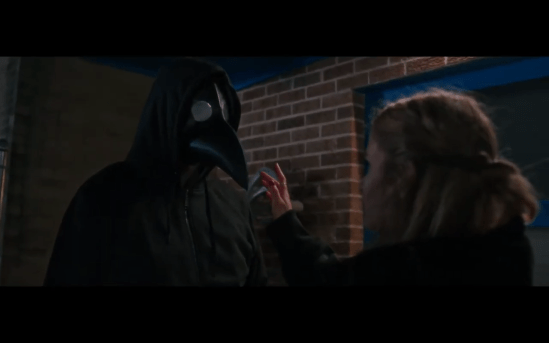
A gruesome murder has brought a looming shadow over a high school. However, the shadow is not great enough to thwart the spirits of a group of thespian high school seniors in the throes of their last Shakespearian performances of the year of Romeo and Juliet. Determined to excel, the peer admired Taylor Wilson keeps her college acceptance hopes high on her well-received nightly performances as Juliet, but when a terrible secret involving Taylor begins to circulate through the school body, friendship and enemy ties begin become taut with tension. Simultaneously, those with knowledge of Taylor’s secret are being killed off one-by-one by a deranged killer in a black, long nose masquerade mask.

“The Lurker” is a 2019 American slasher film from the first attempt at horror-director Eric Liberacki, whose legs have been grounded in short film cinematography work over the past 2010 decade with “The Pale Man” being his sole feature length credit. Liberacki’s sophomore directorial is written by the “The Pale Man” screenwriter and short film director, John Lerchen, who’s scribes the slasher version of HBO’s “Big Little Lies” starring hormone-driven and backstabbing high school seniors on a thespian high. “The Lurker” re-imagines the high school dramatics to further dig into taboo subtexts worthy of a Jerry Springer talk show episode and interweaves a non-linear narrative, filled with flashback mystery, due suspicion, and the utmost desire to know what secret Taylor Wilson is being exploited against her preservability. “The Lurker” is a joint venture between John Lerchen’s production company, Forever Safe Productions, and Silva Shots.

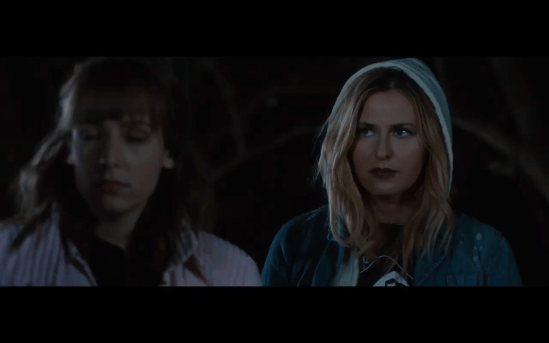
One thing, right off the bat, that heedlessly seems erroneous for the story is casting Scout Taylor-Compton in the lead role of Taylor Wilson. And here’s why. From 2007 to 2019, the now 30-year-old actress has played a high school student in Rob Zombie’s remake of “Halloween” and in “The Lurker.” While Taylor-Compton is a natural beauty who seemingly defies all physics of aging and her performance is solid, the once Laurie Strode portraying actress from Long Beach, California emits a now mature glow in life and rehashing another character in a high school slasher is ultimately beneath and behind her. Aside from her counterpart co-star Michael Emery being roughly the same age, the rest of Taylor Wilson’s entourage are in their internship-status, post-college years of the early 20s, including Kali Skatchke, Casey Tutton, Isabel Thompson, Emmaline Skillicorn, and Marissa Banker. Juxtaposing against a young cast, as a sort of out with the old and in with new or to brighten with short strands of genre highlights, is the minor roles and cameos of recognizable faces and film royalty, such as Ari Lehman (“Friday the 13th), Naomi Grossman (“American Horror Story: Asylum”), and, most surprisingly, Domenica Cameron-Scorsese, the daughter of Martin Scorsese, playing Taylor’s mother. The cast rounds out with Charles Johnston, Rikki Lee Travolta, Eddie Huchro, Bruce Spielbauer, Roy Rainey, Josh Morris, and Walter S. Bernard.

“The Lurker” has textbook aspects going for it in the case of an above par production value of fancy editing and set locations, a cache of young and seasoned talented actors, and a story with a twist ending, but that nagging itch gnawing from the back of my skull, slowly inching one molecule at a time, toward the core of my brain informs me that the Liberacki’s slasher misses the intended mark if only by a fingertip attached to a severed pinky. The story tries to sell an alternate version of itself that becomes inane from predictability at the very starting gate and continues trucking an exemplum despite giving away too much, too early. Surrounding the conundrum of calamity building to the potential proverb of shit hitting the fan is a paradigmatic slasher flick with a masked killer murdering toward the technique of a final girl narrative. Yet, “The Lurker’s” kills weren’t terribly flashy and were really met with an uninspired creativity to assist in drawing and sustaining captivation of a ruthless assailant over an abundance the teenage melodramatics, which essentially ran amok. We really shouldn’t have been surprised at the narrative’s untroubled tone because the first kill in the opening scene was inside the school and the school was open the very next day; in today’s day and age, school would have been closed for the rest of the week, if not the rest of the academic year, for bereavement and investigation.

Come down with a serious case of stage fright with “The Lurker” coming to DVD home video and now out on various digital platforms, including renting and buying options on Amazon, distributed by Indican Pictures. The visual and audio review portion for this release will not be covered since a screener copy was provided; however, the DVD will be presented in the original widescreen presentation of an aspect ratio of 2.39:1. With a check disc, there were also no bonus material to review as well as no bonus material before the credits and before or after the credits. John Lerchen and Eric Liberacki’s first crack at full length horror is a win in my book with a complex web streamed of lies, deceits, and snuff, but, with a little fine tuning, “The Lurker” could have sheered to a bigger, better 80 minutes.