Come With EVIL If You Want to Live. “The Zombinator” reviewed! (Bayview Entertainment/Screener)


In Youngstown, Ohio, a small documentary team follows popular fashion blogger JoAnne and while continuing to roll film during a friend’s wake, a fallen member of the military during combat, a horde of zombie horror storm the reception hall packed with celebratory mourners. JoAnne, the documentary crew, and a handful of JoAnne’s friends run for their lives through all of Youngstown only to be rescued by a former Afghanistan war solider, Atam, debriefing the situation of a powerful drug manufacturing corporation behind the localized crisis. The survivors soon realize that a band of greedy mercenaries, Atam’s ex-brothers in arms, are supervising the drug’s effects that will, in turn, create a money making, desperation cure in the weeks to come.

If you haven’t guessed, 2012’s “The Zombinator” is a zombie title melded with “The Terminator” franchise and helmed by documentarian and comedy writer-director Sergio Myers. “The Zombinator” is the first horror feature in the filmmaker’s videography repertoire that chips in comedic soundbites to fully absolve the zombie apocalypse film from being a strictly horror. The very reason the film’s called “The Zombinator” should have been a great comedy-horror indicator as well. Sergio Myers’ 7 Ponies Productions finances the micro-budget, semi-found footage feature that egregiously pollutes the very “Terminator” brand in a way that promotes “Lady Terminator” from being not only a grandly exploitation of Indonesian deference, but now an innate fragment of the renowned franchise. “The Zombinator” endoskeleton is not as indestructible with little-to-no homage connection other than a muscly actor donning his best Arnold Schwarzenegger lookalike getup, dressed a bastardized version of the T-800 infiltrator. No machines. No time travel. No anything that approximates the franchise that would have been a cool concept of a time traveling machine hellbent on blowing zombie scum away.

The cast is virtually made up of unknowns, faces who certainly received their career start with a foot inside the door of “The Zombinator.” The talent is young and unseasoned, but hungry to make a name for themselves with melodramatic performances despite a poorly written script that’s more stationary than progressive on the coattails of the last “Terminator” film “Salvation.” While the documentary team films fashion blogger JoAnne played by Joanne Tombo, Tombo isn’t the headliner. In fact, a lead is lost in the scuffling mist of the zombie outbreak, but the top bill is certainly given to an experienced acting vet in the hard-nosed form of Patrick Kilpatrick (“The Toxic Avenger,” “Eraser”) as a military colonel squaring up against the poster boy of “The Zombinator” and the film’s co-producer, Joseph Aviel in his debut feature film. Aviel, who has doubled as Arnold Schwarzenegger in the YouTube sci-fi comedy episodes of “Terminator: Genisys: The YouTube Chronicles,” is just as monstrous as Schwarzenegger was in his prime, garbed in a pitch black trench coat, wielding a shotgun, and sporting shades inside dark warehouse and nighttime scenes – keep in mind, Aviel is not playing a machine, but a ex-soldier so there’s really no need for the sunglasses. The rest of the cast, including Aviel, are quite rigid and lost, stuck in a loop of spewing much of the same peculiarities without every changing. “The Zombinator” rounds out with Lucia Brizzi, Justin Brown (“Early Grave”), Diana Sillaots, Jennifer Sulkowski, Scott Alin (“What’s Eating Todd?”), Travis Bratten, Melvin Breedlove, Maria Desimone, and Michael Angelletta.

Recently, I caught “Star Trek: Deep Space Nine” episode from “Star Trek: Deep Space Nine” with Patrick Kilpatrick as a hardnosed, war-torn Starfleet officer whose been part of a team holding a pivotal Jem’Hadar communications array in the Chin’toka system. The lean and towering Kilpatrick from 20 plus years ago is nearly unrecognizable as Father Time has been rather unforgiving to the actor’s midsection, but Kilpatrick still has that apathetic stare on top of a sternly contoured face graced now by an impressively horizontal and lengthy bushy mustache. Kilpatrick’s a brilliant highlight in a rather abysmal film of bleary lines on whether it’s supposed to be found footage or not horror-comedy; somehow the found footage crew are not a part of the surrounding action to the extend that zombies and the mercenaries are not aware of their presence despite standing merely a few feet away in plain view, but the survivors are clearly aware of them combatively noting to the crew to turn off their cameras …? Also, the comedic lines, such as, “getting popped by the grand fucking wizard of zombies,” seem sorely out of place, poorly timed between frantic moments of confusion, fear, and strife, and don’t really know if they’re actually intended to be funny…? Confusion doesn’t end there as Youngstown, Ohio is a hop, skip, and jump from rural, to urban, to a dam-side cabin in segued acts, scaling down to miniature and unrealistic grounds of time and space. Lastly, there’s an uneven ratio of zombie action and dialogue exposition that will bore audiences with locale-to-locate histrionics without the commingling remedy of undead mayhem equalization to lure back in the attention of wandering eyeballs and dissatisfied brains.

“The Zombinator” targets and destroys zombies with a brand new DVD home video, released this past March from New Jersey based distributed, Bayview Entertainment, with a slick looking front cover of a T-800 skull half dripping with zombie flesh surrounding a milky white eye. Unfortunately, I was provided with an online screener for review and can’t officially comment on the exact video and audio technical quality, but I will say that the found footage approach render very dark when only a couple of moving LED ring light accessories become the primary source of lighting. The underused original score provided by Todd Maki bests out much of everything else about the project with harrowing tracks baselined by zombie groans and the undetermined reverberations of distant ambience. There were no special features on the screener as well. Like a chunk of spoiled meat prime for tasteful critical fodder, there’s absolutely no wriggle room for positivity for the high concept, low output film, “The Zombinator.” Hasta la vista, baby.

Buy “The Zombinator” on DVD!

Watch “The Zombinator” on Prime Video

EVIL Can Never Replace Love in “After Midnight” reviewed! (Umbrella Entertainment / DVD)


Well known country boy Hank has everything he could ever need in the small, rural Florida town: having an establish family lineage, being the owner of a local bar hotspot, and obtaining the love of the beautiful Abby. Their gleaming happiness suddenly goes dim when Abby abruptly takes off, leaving a note with little information of her whereabouts or her plans. Fraught in her absence, Hank drinks himself into a stupor most nights of romantic nostalgia while also fending off his rustic home from a beast out of the surrounding woods that continuously scratches at his front door nightly. Hank’s friends believe he’s suffering a mild mental break as night-after-night, the snarling beast evades Hank every effort to capture and kill it.

“After Midnight” is a sheering melodious and delicately programed romance-horror from “The Battery” writer-director Jeremy Gardner allotting co-directorial duties again with continuous collaboration beside Christian Stella. As Gardner’s third film in the director’s chair, second inside the realm of horror, “After Midnight” brandishes more a sappy love story that sings the tune of a love lost warrior where the relationship woes lie within the deepest, darkest corners of himself rather than being a frontline horror sprinkled lightly with dusted coating of amorous renewal. “After Midnight” is a topsy-turvy monster movie not for an insouciant genre fan who rather skim the surface for blood on the topsoil than dig feverously for the originating root. If you’re also a fan of the mysteriously acclaimed, H.P. Lovecraft-inspired “The Endless,” the filmmakers behind that film – David Lawson, Aaron Moorhead, and Justin Benson – produce “After Midnight” under their Rustic Films label in association with Vested Interest, Cranked Up Films, and Kavya Films, casting that querying memento clinging like a foreboding, nagging scratch needing to be itched.

Not only is Gardner the director, he also stars as Hank, enduring the multi-hat involvement in his films in thematic fashion from his previous films, spearheading the roles in “The Battery” and “Tex Montana Will Survive!,” and Gardner has also branched out beyond his work, having roles in the visceral Joe Begos’ films “Bliss” and “The Mind’s Eye.” Gardner sports his common wear of a U-shaped V-neck t-shirt and bushy beard overtop his large frame and wields a sharp tongue, whiplashing small witticisms as he charms his serenading rustic charisma upon Brea Grant as Abby. The “Dead Night” actress enacts every man’s inherent fear of being lost without their better half when Abby hightails from Hank’s steadfast stance on life. Grant provides a flood of emotional drought through a series of Hanks’ melancholy, good times flashbacks that provide backstory fuel to Hanks’ quickly withering grounded state. Gardner and Grant’s chemistry eerily dons the routine life span of young love and weary complacency without so much showing the beat work argumentative discussions and differences of a diminishing relationship; their natural banter never derails even amongst a bedeviling beast with nightly visitations on a drained Hanks’ doorstep. “After Midnight” fleshes out with a cast of superb supporting roles with nearly Henry Zebrowski (“Cut Shoot Kill”) stealing the show as a half-wit yokel, Justin Benson (“The Endless”), Ashley Song, Nicola Masciotra, Taylor Zaudtke, and creature performer Keith Arbuthnot as the man in the monster suit.

Speaking of the monster suit, the unknown origin creature is very Guillermo del Toro-esque with a quasi-rubbery look, but still renders terribly real with the puppetry facial expressions and Keith Arbuthnot contorting his body to exuberate natural movements. However, don’t look to be thrilled by a ferocious beast as the constant the source of contention. It’s more of an afterthought, a pleasant afterthought, filling Hank’s Abby void or is it? It’s a question you’ll be contemplating when the credits role when a monkey wrench finale disrupts your premediated blue print scheme of a reason for the creature’s existence. Romance and melancholy cross paths in an overwhelming heap of love sickness, guilt, disappointment, and jealousy in a well thought out, smart dialogued version of a self-growth narrative.

There always seems to a malevolent monster behind the scenes, perpetrating the demise of a flourishing relationship exemplified by a beautifully wicked allegory in “After Midnight” distributed onto DVD home video by Umbrella Entertainment. The transfer is presented in the original widescreen, 2.35:1 aspect ratio, on a region 4, 83 minute runtime disc. The presentation is virtually flawless with palatable natural coloring, gleaming southern-sweat coated, natural looking skin tones, and overall details with Hank, and Hank’s house, looking specifically grimy and unkempt. Greenery is of a brown lush backdropped inside what could be anywhere small town America. The English language 5.1 Dolby Digital surround sound audio renders a nice range and depth with the monster’s muffled scratching and growling outside the door, the shotgun blasts are powerfully exalting, and the dialogue clearly couriers through all relationship qualms and Hanks droll dialogue. As of many Umbrella Entertainment standard feature releases, there are no bonus features nor a static menu. “After Midnight” is a contagious love story for not it’s mushy, heartfelt, weepie doting into the tears of self-pity, but for that lingering presence of sinister cynicism the monster epitomizes, a stark terror scratching every night under the skin until the unbearable hole in our hearts is finally sated by love’s return.

“After Midnight” available on DVD at Amazon

Mom Sees the EVIL in her Son in “M.O.M. Mothers of Monsters” reviewed! (Indie Rights Movies / Screener)


Abbey Bell is extremely worried about her teenage son, Jacob. Worried that Jacob, an intelligent boy with good grades and is a social magnet, is plotting a mass shooting at his school. After countless preemptive attempts to warn authorities and medical professionals of her suspicions of his psychopathic tendencies, Abbey begins recording a diary and setting up spy cameras inside the family home hoping to catch Jacob’s unpredictable and dangerous suggestions and threats on tape. The videos will also serve as blog fodder for other desperate mothers experiencing similar disturbing behavioral issues with their children. As the single mother and her son continue their at home war of bickering words and distraught suspicions, the maternal bond once shared between mother and son begins to deteriorate and evolve into unsurmountable distrust between each other; a distrust that has been simmering ever since Jacob was a toddler stemmed by Abbey’s dark family secret sheathed for many years until Jacob weaponizes it for his utmost survival against his concerned mother.

Before the coronavirus pandemic transformed powerful sovereign nations into panic-induced introverts wetting their pants at the first spray of a sneeze hitting their skin, news medias around the globe delectably ate up headlines of mass shootings as there would seem, at least for a good stretch, to be a sad and unfortunate mass shooting every single day. Tucia Lyman’s “M.O.M. Mother of Monsters” derives from that fearful climate while also purposing another sub-topical issue of a parent’s position in that circumstance. Lyman tackles one fictional woman’s tale of internal turmoil as her directorial debut and the sophomore script of a feature film not in a documentary format, pivoting away from the “Untold Stories of the ER” and “I Didn’t Know I was Pregnant” junk food that consumes about 2/3’s of television comatose Americans. The “found footage” 2020 released psychological thriller is produced by Elain White and Austin Porter whom both have collaborated with Lyman in the past.

While not as sexily depicted and as authoritative as Emilia Clarke is depicted to be the Mother of Dragons in HBO’s “Game of Thrones,” New York City born Melinda Page Hamilton can surely sell a mother of a monster as Abbey Bell, vending sharply laid out doubts and uncertainties with a mountain of convincing circumstantial evidence against her only child. The “Not Forgotten” actress quietly folds into herself as the submissively passive Abbey on a histrionics mission to out her son as a danger to society. Bailey Edwards commands a subversive and rebellious teenage Jacob Bell that can use his millennial powers to steamroll over his mother’s lack-of-assertive powers. This film will be Bailey’s first substantial co-staring venture, along with minor performances in “My Dead Boyfriend” starring Heather Graham and Netflix’s “Bright” with Will Smith, and who will subtly introduce Jacob as some white nationalist, gun enthusiasts who has a gas mask with a swastika insignia, first person shooter gear and video games, and scenes of him walking in front of gun shops. While Hamilton and Edwards dominate the majority of screen time, the short cast list rounds out with Janet Ulrich Brooks, Julian de la Celle, and a special appearance from “The Mary Tyler Moore Show’s” Ed Asner as a behavioral doctor Skyping perspective therapy with Abbey. Does anyone believe a 91-year-old knows how to use a video chat? It’s a bit of a stretch….

“M.O.M. Mother of Monsters” throws caution to the wind embarking on a viewpoint of how far a mother will go to expose her child’s dissident and, potentially, deadly behavior. Lyman also digs deeper into the psyche of the mother and the child, sticking them with a ticking time bomb that is the heredity factor. Mental illness is a huge underlined theme that Lyman slips into the fold as signs of one person’s erratic behavior can be stemmed from the secrets of little known relatives and their seemingly destined out of control path can no way be influenced externally without reserving counseling, extenuating the age-old debate of nurture versus nature. Lyman’s storytelling smartly preserves an obscured aspect, cloaked by selective denial and tremendous paranoia, that becomes a catalyzing game changer of disturbing consequences. The narrative isn’t at all flawless with weak spots in the character structure that pigeonhole the roles to be stuck inside this cat and mouse cycling mindset between Abbey and Jacob. For instance, Abbey’s an obsessive, 24-hour recording zealot whose documenting never reveals anything else happening in Abbeys life, like work, friends, etc., whereas Jacob’s intermixed recordings with a female friend outside the contentious home reveal a life beyond his skirmish with this mother and his videogame shut-in habitat, but these recordings stick out awkwardly as much of the story’s is from Abbey’s perspective so how did Jacob’s casual conversation videography become a part of Abbey’s cautionary tale for other distraught mothers? Whether intentional or not to exhibit the imbalanced social complexities between Jacob and Abbey’s personal lives or lack thereof, Jacob’s exterior scenes course out of bounds, penalizing portions of the plot.

Become submersed in dark thoughts and monomania with Tucia Lyman’s “M.O.M. Mothers of Monsters” hitting the digital HD VOD platforms soon after premiering at the Los Angeles Arena Cinelounge this past Friday the 13th through Indie Rights distribution. Since this is a theatrical and VOD title, there is no home video release to provide technical specs and assessments; this also includes no special features. “M.O.M. Mothers of Monsters” hammers down the sociopolitical hot topics of mental illness, gun violence, and presumptive fear teeming in America with a spitting image and climate aware psychological thriller bristled with family dysfunction.

Giving EVIL the Electric Chair Only Gives EVIL a Buzz! “Destroyer” reviewed! (Cheezy Movies/DVD)


The unspeakable 23 rape and murder crimes of psychopath Ivan Moser grant him a seat of honor at the electric chair. As soon as the switch is thrown, a massive prison riot ensues and what happens next becomes unexplainable, confusing, and indeterminable. One thing is clear, the prison’s Warden Kash loses his position as the trashed penitentiary is forced to shut down. Eighteen months later, a film crew acquire permits to shoot a women-in-prison exploitation film inside the prison with the help of it’s one time custodial employee, Russell, who is just as creepy as the abandoned maximum security penitentiary that housed the infamous Ivan Moser. As production grapples with townsfolk opposition, electrician’s timing miscues, and some seriously bad acting, there’s one unexpected obstacles not accounted for…a living, breathing Ivan Moser still living inside the iron cladded prison.

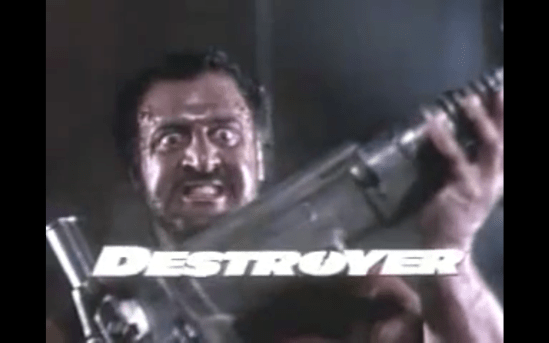
Horror fans from all walks of life to the age gaps of multiple generations can all agree on one thing, that the 1980’s is the gilded age of horror to which inspired and/or captivated us all. The decade was also an industrious change for political climates that saw the fall of the Berlin and saw musical artists like Michael Jackson break the conventional molds of how music was orchestrated, sung, and danced too. For movies, the change came with technical innovation in elaborate special effects, such as in John Carpenter’s “The Thing,” and undogmatic view of how we perceive plots which opened the flood gates to a slew of unexplored ideas no matter how far-fetched they may seems. One plot such as this would be from the 1988 prison massacre film, “Destroyer,” directed by Robert Kirk as is one and only non-fictional feature before an extreme career solidifying shift to historical movie and television documentaries. Written by Peter Garrity (“The Forgotten One”), Rex Hauck, and Mark W. Rosenbaum, “Destroyer’s” a gritty tale of endless, black obsession fueled by insanity, revved up with inexplicable half-alive malice, and juiced with strength of an indestructible force without being overtly supernatural.

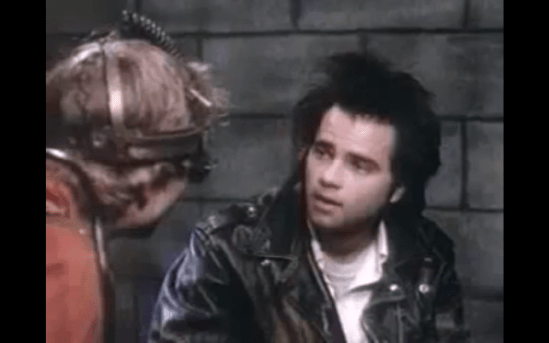
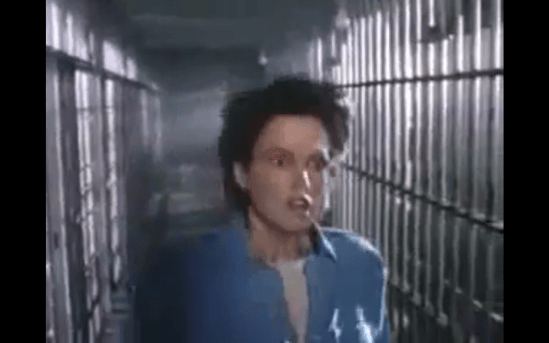
With an 80’s movie comes an 80’s cast and the popular reteaming of Clayton Rohner and Deborah Foreman from 1986’s holiday themed horror, “April Fool’s Day.” “Destroyer” isn’t based on a certain holiday, but converges more toward meta approach where Clayton Rohner and Deborah Foreman play the romantic couple, grindhouse screenwriter David Harris and stuntwoman Susan Malone, on film set of their women in prison movie – Death House Dollies. A typecast switcheroo is engaged as the physicality falls upon the female role while Rohner takes a reserved backseat as a writer and that entails Foreman to face off against Lyle Alzado as the unspoken titular character Ivan “Destroyer” Moser. Alazdo’s crazy eyes and muscular football build provides the suitable basic elements of a crazed killer; probably doesn’t hurt that Alzado was also juiced up on steroids throughout his career in the NFL and beyond his exit from sports entertainment. Alzado has been quoted in Sports Illustrated having uncontrollable anger from roid-rage and that pressurized anger seethed, one could assumed, in the eyes of Ivan Moser, forging a superhuman monster under the parental guardianship of Richard Brake lookalike, Tobias Anderson (“Harvest of Fear”). “Psycho’s” late Anthony Perkins co-stars a the director of the WIP film as an unusual placemat only to serve as a hot moniker in horror to be contextual candy for one big scene and not providing much else. Lannie Garrett, Jim Turner (“Pogrammed to Kill”), Pat Mahoney (“Strangeland”), and four Death House Dollies in a gratuitous shower fight scene co-star!

A purebred American slasher of eccentric electrifying devices, “Destroyer” chooses punitive measures against the concept of capital punishment, sending the cryptic message that the dead will haunt you and those that you touch forever in some warped guilt trip nexus. The message is only further hammered in by the embossed haunting atmosphere of Robert Kirk’s opening sequence of a priest walking down the hazy cellblocks toward Moser’s cell, sitting with twitchy Moser while he madly raves and rambles about the game show that plays on a television set in front of his cell, and going through the steps of a chaired electrocution echoes a utilitarian dystopia that fathers in the cold, ungenial tone of the prison and Moser’s psychotically feral thirst to kill. Ivan Moser’s vitality is infectious, a hail-mary shot you’ll be rooting toward the finale, as the serial killer undertakes undertaker duties with extreme perversity while chocking up his body count with unsystematic eliminations, such as with a conveniently placed jackhammer in the prison basement. The jackhammer’s scene is “Destroyer’s” bread and butter, the showpiece of the whole film, but Moser only snag a couple of some real good on screen kills. All the rest are off screen or channeled through another device, such as an electric chair, and that softens and stiffens Moser’s, if not also Alzado’s, ultimate larger-than-life presence. Still, “Destroyer” rocks Lyle Alzado’s short-lived indelible monster making movie talent and confines the space to a breathless solitary confinement death house ready to devour more victims.

“Destroyer” shocks onto DVD home video release distributed from Cheezy Movies, MVDVisual, and Trionic Entertainment, LLC. If you’re not willing to shell out big bucks for “Destroyer” on Blu-ray from Scream Factory, check out Cheezy Movies’ economy region free DVD presented in an academy ratio, full frame 4:3. A beginning title card mentions that Cheezy Movies attempts to find the best transfer available when searching out titles and I believe that was done here with this release, but unlike Scream Factory, funds were not poured into an expensive upscale as moments of banding start right at the title credits. The transfer instances of dirt and cigarette burns are immaterial enough to not falter viewing, but there’s a bit of hefty color posterization in the basement scene that nearly blends the entire white scheme together and causing difficulties defining individual objects. The English language single channel mono mix maintains a lossy connatural sell topping out at the it’s as good as it gets ceiling with an economy release, but the dialogue is surprising clear, soundtrack sounds good, and the ambience, though needing a fine tuning, shapes out depth and range nice enough. With this release, no special features are available. Much like “Destroyer’s” tagline, Robert Kirk’s feature won’t shock you, but will give a great buzz with a nightmare coiling around your brain performance from Lyle Alzado and a super 80’s execution-from-the-grave slasher that’s just a guilty pleasure to behold.

Buy “Destroyer” on DVD! Or Watch on PRIME VIDEO!

EVIL Knows No Off-Limits! “Restricted Area” reviewed! (ITN Distribution/DVD)


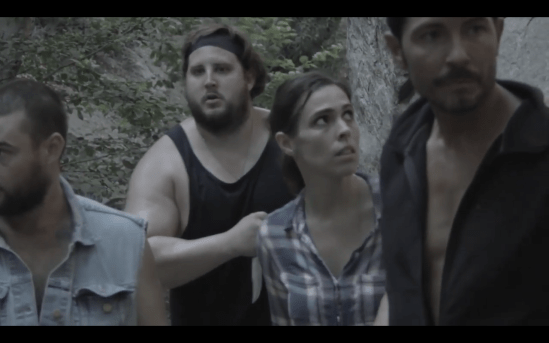
Four blue-collar friends are being laid off from their steel mill jobs; family generations are engrained with the blood and sweet of the mill, but the somber moment is humbling and harsh when responsibilities come to collect. They decided to throw one last hurrah, a boozy camping trip into the rocky wilderness, before life hits them hard. The calm and tranquil getaway turns deadly when acolytes of Unionology, a cult secluded to the restricted areas, sets sights on trespassing campers with the four friends right in the middle of the hunt. After teaming up with another hiker and the disappearance of one of the friends, a fight for survival ensues against armed masked men and an unhinged cult leader along the mountainside where it’s not only man versus nature, it’s also man versus man.

The great outdoors continues to be synonymous with a hot spot for murder, mayhem, and overall doom and gloom in Christopher M. Don’s debut backwoods cult thriller of survival entitled “Restricted Area.” Dons pens as his second script behind the savagery, snowy slopes of his ski-sploitation horror, “Minutes to Midnight,” where masked men with a cryptic agenda hunt down patrons of a ski lodge set upon a mountain. Don must have an fondness for producing screenplays where masked killers stalk in wilderness elements as “Minutes to Midnight” plot is essentially the same as “Restricted Area” without the sound-damping snow. Produced by Gear Up Productions, which I assume is Christopher Don’s company, climbs very little up to being a modest budget feature and retains around camping along the super low financial terrain based off the already exaggerated beliefs of Scientology that, if at all, lightly treads to more escalating and thrilling heights.

With being an indie feature on a microbudget, Don implements his cast to being his actors as well, including himself as Cody, the nearly silent onscreen brother to his real life brother, Robert Don, as the film’s lead, Tyler. Tyler’s a rough and tough steel mill worker with his biceps bulging from his sleeveless, black puffer jacket and hunting knife strapped to his waist side, but as far as depth goes, Tyler lacks significant worth from little backstory and no character arc. Whatever Tyler does isn’t exactly bursting with energy by Robert Don’s deadpan manner. Who recoils from inexpressiveness is West Murphy playing Axel, the goofy and boastful friend whose really blowhard, and though Murphy sprinkles flavoring upon and around most of the monotonically adrift slop, Axel’s one-trick pony can’t even offer much else to the story, not even a glorious death that would be redeeming for such droll stereotypes. “Restricted Area” houses random entries and exits of characters that can make viewers anxious, concerned, and down right frustrated with the arbitrary fates of Harold (“Big Bad Bugs’” Phillip Andrew Botello) who disappears with only a little sliver of where he might be in the closing scene and the blank white masked cultist with a machete who leaves more intrigue of a boss level villain than is actually divulged in the story. Paige Lindsay Betts, Ross Britz (“Ozark Sharks”), Emily Gardt (“Satan’s Seven”), Nicholas Cole (“Stripped”), Randy Wayne, Gus Moore, Wilmer Hernandez, and schlock horror internet pundits and, Shawn C. Phillips and Danny Filaccio fill out the cast list.

“Restricted Area” already has a zillion things going against the meek and humble feature albeit the aforesaid above from the mishandling of characters, but the bearings, picked from the litter of many categories, never comes into focal clarity and shimmy their way to eek by toward a rather enigmatic end. Out of the 112 minute runtime, Christopher Don’s screenplay couldn’t consists of more than 60 to 70 pages of dialogue and scenes with the remaining footage for the feature being supplemented with overkilled filler scenes of Tyler and his band of survivalists wandering around an idyllic traipse, dysfunctional and unnecessary segue edits repeat nearly themselves and just extend into filler scenes themselves, and the bombardment of landscapes – lots and lots of landscapes. There was even one faux pas of a wooded mountainside that was shamelessly shot straight from a magazine advertisement with the advertised site text very visible in the scene. There’s also a scene with a real rattlesnake that, by chance, wandered into production and Don decided misplace this miracle amongst inside another wandering group montage. To continue on the script, the convoluted nature of the cult wanted to kill a young boy becomes lost as this boy comes and goes as he pleases, pleading without any dire sense of urgency for Tyler to save his life. Yet, this dubious boy never seems to be frightened, frantic, or even in cahoots when considering the cult’s dastardly plan to end his time on this Earth.

ITN Distribution and Mill Creek Entertainment’s call to the wild is a survivalist nightmare in Christopher Don’s “Restricted Area,” pitching a tent into the DVD market with a home video release. The DVD is presented in a widescreen 1.78:1 aspect ratio on a single layer, region one disc. Perhaps one of the worst presentations I’ve seen lately with the low bit rate, big compression artifact issues that denounces detail clarity right from the get-go, settling into a fuzzy and blotchy 112 minute, from start-to-finish, runtime. The color palette doesn’t pop either inside the parameters of a faded natural scheme that bares no attempt to use any shade of tint to offer more than just the bare minimum to survive. The English language Dolby Digital stereo dual channel mix plays the same rugged tune with lossy quality in dialogue, ambience, and Michael Levinson’s synthy soundtrack, which is perhaps one of the film’s few highlights in lieu of his debut. Still, a harsh feedback echo on the dialogue dampens the authenticity of the ordeal and poor mic placement dilutes the fidelity even more. Optional English SDH is available. Bonus features includes an audio commentary, trailer, and a quaint blooper and outtake reel. “Restricted Area” doesn’t have the authority required to be a gouging survival horror as all sides of the cinematic terrain are too rough for an visual and audio trek and the script lays to waste with drone dispositions and careless considerations that needs to be post noted and restricted from itself.

“Restricted Area” on DVD