EVIL Minds the Door! “Raw Meat” reviewed! (Blue Underground /2-Disc 4K UHD Blu-ray and Standard Blu-ray)

“Raw Meat” Its What’s for 4K UHD and Standard Blu-ray Dinner!

Young lovers Alex Campbell, an American studying abroad, and Patricia Wilson discover an unconscious man on the steps of a London metro subway station.  When they alert a beat cop and make their way back to the spot, the man had vanished.  Assuming the well-dressed man an alcoholic sleeping off a bender, David and Patricia move on with their lives while the police report comes across the desk of Inspector Calhoun, an eccentric investigator who recalls a recent string of disappearances surrounding the same London station.  Over the next few days, several more station related disappearances occur, forcing Inspector Calhoun to dig deeper into the mysterious circumstances involving a missing Mi-5 agent and three subway employees with David and Patricia his only witness to at least one of them.  When Patricia suddenly goes missing with her last known siting at the subway station, a concerned David explores the train tunnels that connect the last known whereabouts of all whom have vanished, leading him to a tragic history of collateral damage survival, long forgotten generational lineage, and cannibalism. 

London, England was the first to introduce the metro subway station to the world in 1863 with the Metropolitan Railway.  It seems only fitting that London be the setting for “Raw Meat,” a subterrain horror that integrates London’s metro history with the consequential hazards of an early underground railway, the insufficient costs that prove to be costly, and the pitied blamelessness of unthinkable survival from neglectful businesses.  Originally entitled “Death Line,” rebranded to “Raw Meat” for American audiences, the 1972 film is actually directed by an American, Chicagoan Gary Sherman, in his debut and would go on to helm “Dead & Buried” and “Poltergeist III.”  Based off an original concept form Sherman, one that takes the plausibility and some fact of workers being buried under a collapsed railway project and survive generationally living off the nourishment of each other in more ways than one, the script is penned by Ceri Jones and is a production of Harbor Ventures and Kanter-Ladd Productions with the late “Police Academy” franchise’s Paul Maslansky producing

I’m going to preface this character introduction with “Raw Meat” would not have been as entertaining if it wasn’t for the peak performance by a more eccentric Donald Pleasance in a pre-“Halloween” performance.  As Inspector Calhoun, Pleasence is fully in charge as an intimidating case investigator with a snarky wit, or as Christopher Lee’s MI-5 character put it, what a droll fellow you are in a stiff yet jab remark exchange interaction between the two British icons of a bygone cinema industry.  Lee’s role is only a fraction in comparison to Pleasance and would have been two big personalties too big for the meager production to contain.  Another staggeringly highlighted performance comes from an unknown in Hugh Armstrong’s portrayal of the subhuman cannibal whose fellow inbred family members have all left by deceased means, leaving him alone and the last of his kind with mumbling tunnel vernacular and unkempt open sores all over his body and face in a state of unhealthy living conditions.  Armstrong’s acted ungainliness renders the man a monster amongst society standards but also sheds a softer, compassionate light upon reflection of his forced position into a world he knowns no better about having grown up completely in the railway tunnels all his life, living off what he can scramble up which included human flesh and organs.  In contrast to Pleasance and Armstrong, David Ladd (“The Klansman”) and Sharon Gurney (“Crucible of Horror”) impress as middle ground, plain as can be, characters being two lovers in the midst of mystery, almost becoming history themselves when the man targets her to amend his loneliness in a gibberish mind the door effort to show her affection.  Normal Rossington (“House of the Long Shadows”) and Heather Stoney are the only two understated completely overstated in the film as Inspector Calhoun’s constant whips demands for bolos and tea.  James Cossins, Hugh Dickson, Jack Woolgar, Clive Swift, Gerry Crampton, Terence Plummer, and Gordon Petrie pull into the station as the remaining cast.

Hovering between the horrifying truth of early construction, underground railway accidents and the urban legend of trapped workers under tunnel collapses, Gary Sherman unearths middle ground terror somewhere in between the two with a plausible terror line narrative that not only instills recognition of the past and those who gave the ultimate sacrifice but also invites the nonfictional hunting-cannibal rising to the surface in search for food and, to an extent, companionship.  The cast elevates “Raw Meat’s” character efflorescence but there’s also other areas to illuminate its noteworthiness that take the film from out of the tunnel shadows as cinematographer Alex Thomson’s bleak tunnel aesthetic rouses filth and a sense of hardcore survival over a century.  The 7-minute tracking shot near the beginning, at the introduction of the cannibal’s tunnel home depicted with a decorum of decaying and freshly strewn corpses salvaged for their organic parts, is an astonishing backwards tracking shot without a blip of hesitation and lingering just enough to seed an unsettling undergrowth of grisly ghastliness.  The only drawback from “Raw Meat,” if looking for one or perhaps it’s not even a big deal, lies with the young couple Alex and Patricia.  It’s possible to stumble into a situation, as they did after coming off the last train for the night and crossing paths with an unconscious man on the staircase up to the surface; however, Alex and Patricia were not exactly looking for trouble or pursuing a follow up on the man’s health-and-wellbeing, God knows they argued over about their stance on helping ailed strangers in public, but they wind up having this off topic tangent about said contentious topic and rebuild the tumbled down building blocks of their relationship for a stronger bond.  Yet, lightning strikes twice in the subway tunnel and Patricia is whisked away by the tunnel ghoul in a second pure coincidental interaction that ignites Alex to make good on that stronger bond with Patrica by investigating her last known whereabouts.

Be a cannibal and consume “Raw Meat” on a new 4K UHD and Standard Blu-ray 2-Dsic combo set from Blue Underground. Restored and scanned in 4K 16-bit from the original uncensored camera negative with Dolby Vision HDR and presented in a widescreen 1.85:1 aspect ratio, “Raw Meat” comes from out of the near total blackout of tunnelling darkness of standard definition and poorly contrasted previous Blu-ray editions with a precision of delineating crafting brilliance, adding depth of separation between object and background.  The HVC encoded,2160p ultra high-definition resolution, BD66 was well aimed to squash any compression issues, leaving blacks black and textures coarse that nearly lift off the screen.  You can actually try and count the whiskers on Christopher Lee’s caterpillar mustache.  Colors have also improved and enhanced in saturation without being overly intensifying; “Raw Meat” thrives on the dank, dark world of not only the abandoned tunnel line but also the cold and sleazed London streets.  Alex Thomson’s tunnel life aesthetic musters an earthy and dingy frontage and coupled with some hard glowing red, yellows, and the subsequently mix orange, there’s a real harrowing subterranean tone in the man’s macabre ossuary home.  The 2nd disc standard Blu-ray is AVC encoded, 1080p resolution, BD50.  Blue Underground’s release offers multiple audio options, including a new Dolby Atmos mix alongside the already established DTS-HD 5.1, both rendered in English.  Toggling between both surround sound mixes, there’s little-to-no difference in the immersive experience.  Atmos provides an echoier shaft experience that can be heard as directionless whereas the DTS specifies the reverberating soundwave direction based on channel markers.  Mind the Door is certainly more accentuated as it lingers through the chambers just a little more ubiquitous and chillingly underscored.  With no crackling or hissing, dialogue is clean, clear, and robust that solidifies Donald Pleasance as a master of quick wit and blunt investigation tactics as well as the track cherishing the quality of all other players involved.  Some instances of dialogue are ADR, likely due to poor record quality, resulting in an artificial separation between the action frame and the post-production recording.  Train sounds play a supporting factor and are acutely integrated into the design of a makeshift substation construction from an abandoned platform.  The other audio options include an English 1.0 DTS-HD and a dubbed French 1.0 DTS-HD.  English SDH are available.  Disc 1 – the 4K UHD Blu-ray – contains two commentaries a 1) archived writer-director Gary Sherman, producer Paul Maslansky, and assistant director Lewis More O’Farrell and 2) a new critique and analyst commentary discussion from film historians Nathaniel Thompson and Troy Howarth.  Bringing up the UHD rear are radio/TV spots and various trailer cuts.  Disc 2 – standard Blu-ray – has all of the above on disc one plus an interview with writer-director Gary Sherman and executive producers Jay Kanter and Alan Ladd Jr. Tales from the Tube, an interview with star David Ladd, producer Paul Maslansky, and assistant director Lewis More O’Ferrall From the Depths, and an interview with the now late Hugh Armstrong, the cannibal tunnel man, Mind the Doors.  An extended poster and still gallery flesh out the standard Blu-ray’s supplemental content.  The classic poster art has been upgraded to a textile vision of blood red and half-naked men and women with blank chromium eyes within the embossed image on the slipcover and that extends to the sides and back of the O-slip.  The same illustration also graces the black 4K UHD Amaray as primary cover art, but this different variation has more natural coloring on the hair, tattered clothes, and skin tones on the white-eyed ghoulish faces.  The reverse side of the cover is the original “Death Line” titled cover art as seen on the old MGM DVD with the bearded man walking on the railway with a lit-up train to his back and a woman lying seemingly dead on the rails in front of him.  The Blue Underground release is Not rated, clocks in at 87-minutes, and is encoded to play in all regions.

Last Rites: A classic of subterranean horror, “Raw Meat” is much more than a broad line of cannibalistic terror. The new Blue Underground Ultra Hi-Def release illuminates the wretched state of being and the ugly truth of generational survival that provides a strange brew of compassion for the forced feral human who feeds on human flesh.

“Raw Meat” Its What’s for 4K UHD and Standard Blu-ray Dinner!

If the Tenants Keep on Dying, Better Get Out of that EVIL High-Rise! “The Case of the Bloody Iris” reviewed! (Celluloid Dreams / 2-Disc Blu-ray and 4K UHD Set)

Own Your 4K and Blu-ray copy of “The Case of the Bloody Iris” today!

A pair of beautiful women are heinously murdered in a respectable high-rise apartment building.  As the case remains unsolved, a real estate architect, Andrea Antinon, is looking for models to market his new property, happening upon models Jennifer Langsburgy and Marilyn Ricci during his photographer friend’s photoshoot, and entices them by offering a sublet of the now vacant apartment in the building where one of the girls was murdered.  Jennifer, who finds herself slowly falling for the Andrea, is stalked by her polyamorous sect past and the group’s leader, her ex-husband, Adam who refuses to let her go and while he proves himself dangerous, attempting to kill Andrea after one of his dates with Jennifer, Adam is found dead in her new apartment.  The suspect pool grows as police are continuing to be baffled by an elusive killer remaining at large and set their sights on Andrea with his brief connections in two of the three victims.  Evidence against Andrea swells as those around Jennifer wind up dead and she’s next on the kill list. 

“The Case of the Bloody Iris,” the Iris represented as the delicately beautiful flower that symbolized the bound between Jennifer and her deranged, sex cult ex-husband Adam, is the 1972 giallo thriller from the prolific spaghetti western, Italian director Giuliano Carnimeo (from the previous “Sartana” series and would later helm “The Exterminators of the Year 3000″) and prolific giallo screenwriter Ernesto Gastaldi (“Your Vice is a Locked Room and Only I Have the Key,” “Torso,”) shot in the city of Genoa doubling as Milan.  Full of eccentric suspects, taboo desires, and handsome principals, “The Cast of the Bloody Iris” is a very attractive, violent, and superbly shot whodunit.  Under the original native title of “Perché quelle strane gocce di sangue sul corpo di Jennifer?” aka “What Are Those Strange Drops of Blood on the Body of Jennifer?” Galassia Films serves as the production company with Luciano Martino (“The Strange Vice of Mrs. Wardh”) having produced the giallo. 

The story floats back-and-forth between a pair of co-headlining stars, one of them being the retrospective cult and sex icon actress Edwige Fenech in one of her earlier performances, and who has starred in “Strip Nude for Your Killer” and “The Strange Vice of Mrs. Wardh.  Co-star George Hamilton also stars in that latter giallo, reteaming the handsome-faced “The Case of the Scorpion’s Tail” actor born in Uruguay, and whose birth name is Jorge Hill Acosta y Lara, with Fenech in their respective roles of model Jennifer and architect Andrea intertwined into what is a romantic tale of love at first sight that becomes mangled by a crazed killer on a murder spree and they’re at the heart of the matter.  If revisiting Giuliano Carnimeo, comedies and watching some of his interviews, you can see why he folds in subtle comedic elements that doesn’t allow “The Case of the Bloody Iris,” or a good chunk of his credits, to be a totally engaged, heart-racing murder mystery; those comedic elements come in the form of bumbling police, a too dead-set on commissioner (Giampiero Albertini, “Commandos”) and his more ungainly assistant (Franco Agostini, “The Sex Machine”), who are always one step behind and in the wrong direction.  The juxtaposition may be too evident yet it’s also welcoming, breaking up the forbidding business with a little levity, and creates a backend sense of assurance knowing police, just like today, can be human and clueless on serious natured instances.  The suspect pool and other salient supporting principals include Paola Quattrini as Jennifer’s roommate Marilyn (no doubt based loosely on Marilyn Monroe), Ben Carra as Jennifer’s sex cultist ex-husband, Jorge Rigaud as the professional violinist neighbor, Annabella Incontrera as the professor’s lesbian daughter, Oreste Lionello as a sleazy photographer, Carla Brait as a nightclub’s dominating femme, and Maria Tedeschi as the unfriendly neighbor.

Even though giallos did not appeal to him nor did they really become a staple of his oeuvre, director Giuliano Carmineo had a different perspective than most and that closely aligns with masterclass filmmakers like Dario Argento.  Carmineo and cinematographer, who’ve collaborated previously on a pair of Sartana westerns, had purpose in their odd and first person camera shots and movements, such as laying the camera down and sideways as characters perform routine events before being attacked or looking up and doing a 360-degree turn as if scanning a stairway, that coincided with the usual first person perspective of the conventionally masked and gloved killer wielding a deadly blade.  The technique engages the viewer, as in a sort of tell that something is about to happen or is amiss in a scene to create breath holding, heightened anxiety, but the multi-faceted narrative itself doesn’t need assistant in keeping viewers glued to the edge of their seats with the eclectic mix of sultry and taboo eroticism, lampooning the authority figures, designed seamless red herrings, unique characters, a variety in murder, and an elaborate, mysterious complexity that’s downright deviant. 

If you’re a distributor looking to shoot your shot on your first release, new boutique physical media label, Celluloid Dreams, hit the bullseye with a 2-disc 4K UHD and Standard Blu-ray release of “The Cast of the Bloody Iris” on a HVEC encoded, 2160p resolution, 100 gigabyte 4K UHD and on an AVC encoded, 1080p, 50 gigabyte Blu-ray, scanned and restored brand new in 4K on a pin-registered Arriscan from the film’s original 2-perf Techniscope camera negative, and presented in the original widescreen aspect ratio of 2.35:1.  Coloring grading and restoration is noted on the interior insert being entirely completed by Celluloid Dreams Studios to remove all the celluloid and age imperfections and stimulate a vivid, vibrant picture quality and, by the giallo-Gods, this has to be one of the more flawless image presentations I’ve seen on 4K and Blu-ray in a very long time, or ever!  Meticulous precision techniques reveal a straight from-farm-to-table quality, organic for its era with a balanced, natural grain and color saturation.   Details have delineated trim and higher contrast leveling where appropriate for darker scenes, such as an unilluminated bedroom or a basement boiler room, that retains the rich inkiness of the negative space.  No signs of compression issues in the negative spaces as well and no signs of unnecessary enhancing.  Two, lossless audio options are available for selection:  an Italian 1.0 DTS-HD and an English 1.0 DTS-HD.  Both remastered tracks from the optical sound negative provided full fidelity through the single channel.  Concise and crisp dialogue renders through in full, robust effect with ample detail in the ambience and depth to create a dynamic space.  No hissing, crackling, or popping in the ADR dialogue or ambient tracks and swanky tuned by Bruno Nicolai’s multi-instrumental base, drum, sintir-like guitar, and more score.  English subtitles are available on the Italian track.  With the larger capacity on the UHD, both formats are able to handle the included three featurettes with star George Hilton, principal actress Paola Quattrini, and director and writer, Guliano Carnimeo and Ernesto Gastaldi in Italian language.  Also included is a new commentary track from film critic and Celluloid Dreams co-founder Guido Henkel, an outtake reel that extend out certain scenes, photo gallery, the original Italian Opening Credits that beginning of the feature, and Italian and English theatrical trailers. Inside a dual-sided cardboard slipcover with both the feature’s baptized titles and illustrated cover art representation of Edwige Fenech, the black 4K UHD Amaray case possesses a second and more fleshy-erotic illustration of Fenech. The same art and arrangement are on the reverse side but with the Italian title. Each disc is housed on either side of the interior snapped firmly on a press-lock on with a release acknowledgements and an advert for their next physical feature, “La Tarantola Dal Ventre Nero” aka “Black Belly of the Tarantula.” The region A playback release has a runtime of 94 and is not rated.

Last Rites: Showing such diligence in the restoration efforts, Celluloid Dreams is the new kid on the block, the promising young boutique label with the Midas touch, with a killer first presentation in “The Case of the Bloody Iris.” We can’t wait to see more!

Own Your 4K and Blu-ray copy of “The Case of the Bloody Iris” today!

Congratulations! You Won an All-Inclusive EVIL Trip to “Terror at Red Wolf Inn” reviewed! (Cheezy Movies / DVD)

Come for the Dinner, Stay to be Eaten at the Red Wolf Inn on a Cheezy Movies’ DVD!

When riffling through her mail, Regina McKee opens a letter informing her she has won a marvelous prize, an all-expenses paid vacation at the quaint resort of Red Wolf Inn.  The young college student is escorted on a charter plane to a quiet town where the historic 1891 resort house resides and to greet her re hosts Evelyn and Henry Smith along with their grandson Baby John Smith.  Occupied with two other guests, Regina finds the old house luxuriously relaxing, her hosts cordially jovial, and the food as about as fantastically delicious as it is seeming endless when the Smiths introduce course-after-course of beautifully cut fillets and delectable desserts.  The Smiths don’t like to skip a meal.  When the other guests’ planned departure feels abrupt without them saying goodbye, Regina begins to suspect something isn’t quite right with The Smiths, something hidden behind the doors of the walk in refrigerator and is being incorporated into all those fatteningly delicious meals. 

Before Papa Jupitar and his children terrorize and cannibalize the Carter family on their way to Los Angeles through the rural, desert roads of Nevada in 1977 and even before a group of young friends stumble upon a demented family abiding by the slaughterhouse rules of people in the backwaters of Texas in 1974, there was the elderly couple and resort owners named The Smiths who entertained young women for dinner to wet their appetites by plumping those same young women into dinner in 1972.  The Late director Bud Townsend, who helmed a limited filmography in his short feature film tenure between 1970 and 1985 with such titles as “Nightmare in Wax” and “Alice in Wonderland:  An X-Rated Musical Fantasy,” took the only credited Allen Actor script and fashioned it into a dissembling macabre for the silverscreen.  Also known as “Secrets Beyond the Door,” “Club Dead,” “Terror on the Menu,” and “Terror House,” which the latter was likely the version experienced for this review due in part to cuts made, “Terror of Red Wolf Inn” is a production of Far West Films and Red Wolf Productions LLC with “Count Yorga, Vampire’s” Michael Macready producing and Allen Actor and Herb Ellis associate producing.

Would you ever answer the letter to a strange solicitation about winning an all-expenses paid vacation in a sleepy little town?  No, neither would I, but that’s what the heroine principal Regina McKee (Linda Gillen, “Black Rain”) did on a whirlwind, excited whim during a time when scammers had only the United States Post Office to importune their tricks upon the gullible.  The 1970s are obviously not as clued in or as technological savvy as the modern times of today with caller Ids, tall tell signs robo-recordings, and all the news stories and documentaries about telemarking boiler rooms; instead, we’re transported back in time where the gift of deceit can be achieved too terribly easy.  Linda Gillen, a freckled face, auburn-haired actress looks like the girl next door with a realness about her modest appearance as a leading lady and when compared to the likes and looks of Mary Jackson (“The Exorcist III,” “Skinned Alive”) and Arthur Space (“Mansion of the Doomed,” “The Swarm”), as innkeepers Evelyn and Henry Smith, the elderly couple reel in that realness even further by being not overly ruthless in their confidence game of cooking with cannibalism and instead bring warmth and hospitality that results in a slow burning dread that can be just as terrifying as an open cookbook cannibal.  The one character I struggle with is Baby John Smith played by John Neilson (“Honky”) and is method toward an unhinged grandson Regina recklessly falls for in record time of knowing him.  Baby John Smith very much plays into his moniker with childlike tantrums and glistening eye wonderment under a tall and chiseled frame of a man, but his infatuation with Regina, that ultimately plays deeper into the story and to foul up his family’s usual dinner plans, feels ingeniously forced as a device just deployed without justification as there is nothing inherently special about Regina compared to the two other lovely guests with more interesting backgrounds and appearances in characters played by Janet Wood (“Ice Cream Man”) and Margaret Avery (“Night Trap”). 

Allen Actor’s script is overall just plain ludicrous.  Who in their right mind would jet off to an unknown small town for a vacation getaway they won out of the blue from a resort that somehow, someway received their name and address?  Was it just a name randomly picked by pointing to that person in the national phonebook?  Who knows because the exact why and how doesn’t see light within the framework that has Regina be the crab who doesn’t know they’re boiling in a pot of hot water until it’s too late.  There are also two good-looking female guests who are also invited for a 2-week staycation until a party and celebration are given by the host for what is ultimately their guest’s last meal to become a meal for the remaining, unsuspecting guests and the devious entertainers.  Aside from a questionable story setup, I found “Terror at Red Wolf Inn” to be well-made and acted.  Townsend obviously knew what he wanted and how to do along with cinematographer John McNichol (“Private Duty Nurses”) to effectively turn around a fly-by-the-seams script into something far more polished on the surface and that adds that layer of suspense when our heroine discovers the truth about her hosts and her newfound love interest.  There’s also an interesting angle of letting Regine free range the house and grounds after the unveiling of anthropophagy because the whole town is essentially in own the caper or the town’s just  one big family, the character pilot who dropped off Regina and the police offer who turns out to be Baby John Smith’s brother or cousin.  Not a lot of detail explores this angle but enough is said and done to know that Regina is trapped without being shackled to her room in a pretty surreal and scary variable of the Inn’s history.

The USA thriller has many titles, been released on many formats, and now Cheezy Movies and Trionic Entertainment presents “Terror at Red Wolf Inn” on a standard definition DVD.  The 480p transfer print is an anemically graded rip from the VHS, digitized to DVD with all the excessive noise, speckled dropouts, mistracking, and blocking included and on top of the original 35 mm print that had typically celluloid grain and, perhaps, its own age and wear issues by the time this print made it to tape.  The print used for VHS appears visibly clean if removing the VHS defects but with the lower resolution, the Cheezy Movies DVD looks pale and dark with very little detail in what is basically slapping together a DVD without any augmentation and restoration to the print.  This is very conventional for this distributor so no I’m not surprised.  The English language mono mix has an enervated strength being ripped from the VHS audio track. Dialogue meets bare standard being out-front and intelligible and can be rambunctious at times with the unpropitious parties for every guest sendoff but doesn’t have space or depth around them under the brittle unbridled bitrate that offers crackling and some hissing throughout. There are no subtitles available with this release. With most of Cheezy Movies’ catalogue, only within the static menu is a chapter selection in its near-nude dressing. The region free release comes with a, supposed cut, R-rated print and has a runtime of 90 minutes. Behind the exemplar 1970’s color graded and arranged poster art for the front cover, one of Evelyn and Henry Smith looking stern over a girl laid out in bikini, inside the standard Amaray DVD case is a disc printed with the same artwork, but title and tagline cropped with just the elderly Smiths and the bikini-bottomed gal. There is not an insert included. “Terror at Red Wolf Inn” is the precursor to a family of cannibal crazies subgenre that has, for the better part of its existence, exploded rather than imploded all due in part to Bud Townsend and his modest directorial.

Come for the Dinner, Stay to be Eaten at the Red Wolf Inn on a Cheezy Movies’ DVD!

One EVIL Deed Doesn’t Correct The First EVIL Deed! “Cannibal Man” reviewed (Severin / Blu-ray)

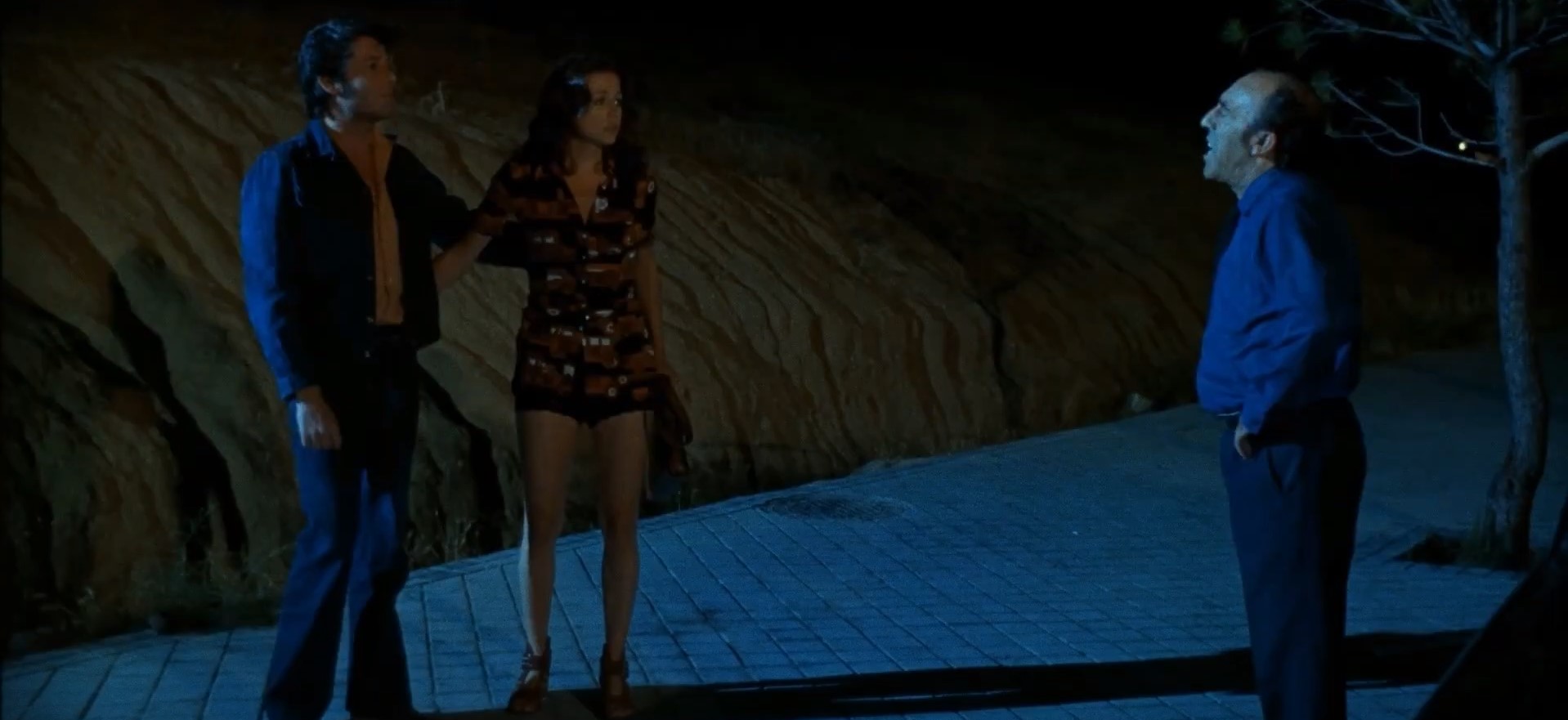
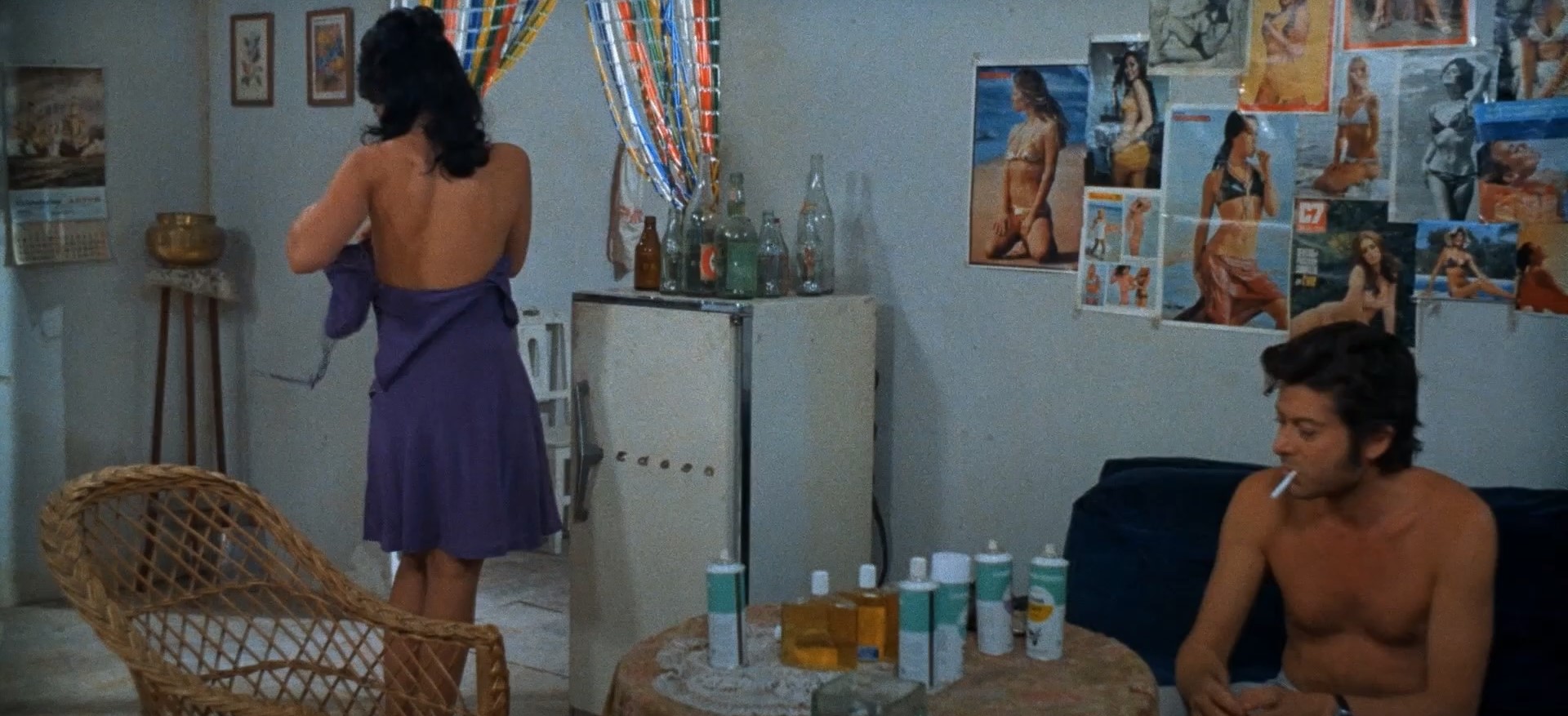
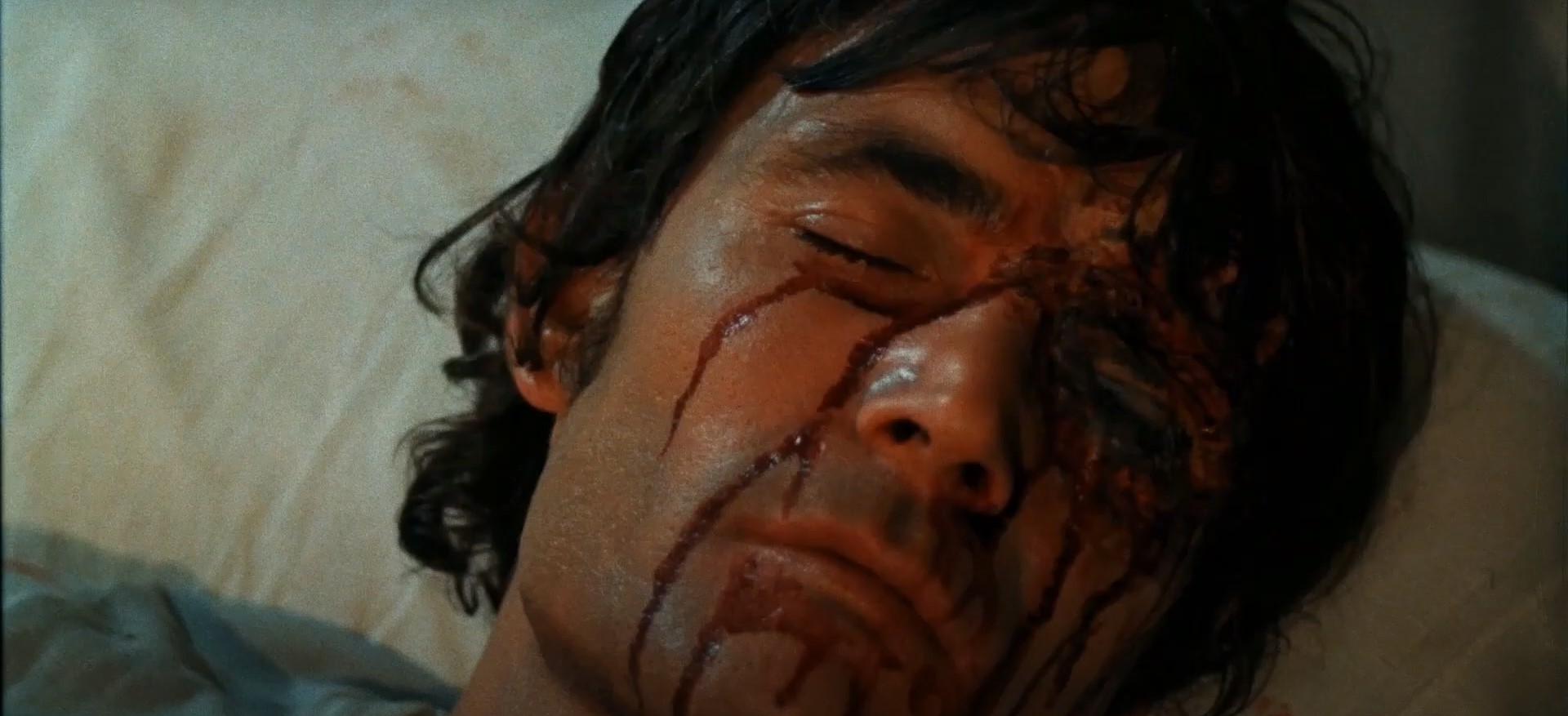
Marcos, a middle-aged abattoir worker, resists the pleas of Paula, his young girlfriend, to confess their self-defense killing of a taxi driver.  When Paula decides she’s inform the police without him, Marcos strangles her and stows her body in the bedroom of his outworn house.  The killing continues when loved ones come poking around to find answers about the disappearance or discover the macabre scene in Marcos bedroom.  Bodies pile up, the smell reaches decaying levels, and Marcos is plagued with nervous guilt.  Every day using his meat clever, he chops up bits and pieces of each victim and takes them to the slaughterhouse processing to rid the evidence and the smell, but no matter how many body parts he unburdens or how much fragrance he sprays, the sweet smell of death sticks with him. 

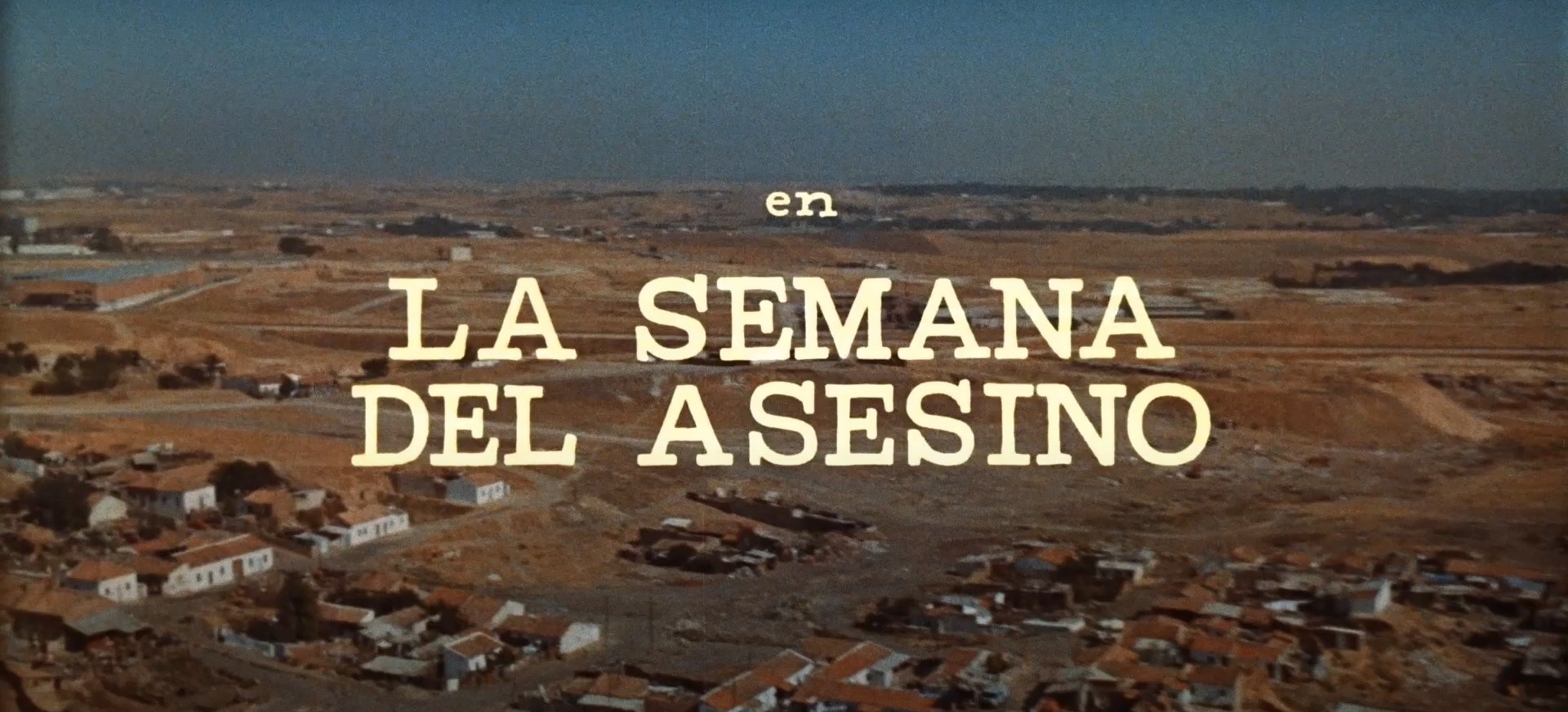
If someone would have said to me – you need to see a flick from Spanish director Eloy de la Iglesia – would you have ever guessed my first stop would be with his 1972 “The Cannibal Man” shocker?  To get to know a filmmaker’s directorial style and personal themes, the most gruesome horror can sometimes be a reflection into the soul of full disclosure because life, as most of us know from our own personal accounts, demons, and happenstances, can be ugly, nasty and unfair and can be cathartically expressed through film by a wretched shell navigating an undercurrent message to others.  That’s how Eloy de la Iglesia’s “The Cannibal Man” speaks to me.  Also known as “La semana del asesino,” or “The Week of the Killer,” as well as “The Apartment on the 13th Floor,” don’t expect an archetypical slasher and cannibal framework from this picture with many names.  “The Cannibal Man” is no “Texas Chainsaw Massacre” or similar to that of “Wrong Turn” as the film stands alone, conveyed as unsurmountable struggles of renewing oneself, a social commentary of class structures, and, also, dabbles in homosexuality suggestion.  Executive producer José Truchado, who also produced “Hundra” and had bit roles in Jesús Franco’s “The Mistress of Dr. Jykell” and “Killer Tongue,” finances the film under his self-titled production company and presented by Atlas International Film (“The Blind Dead Collection”).

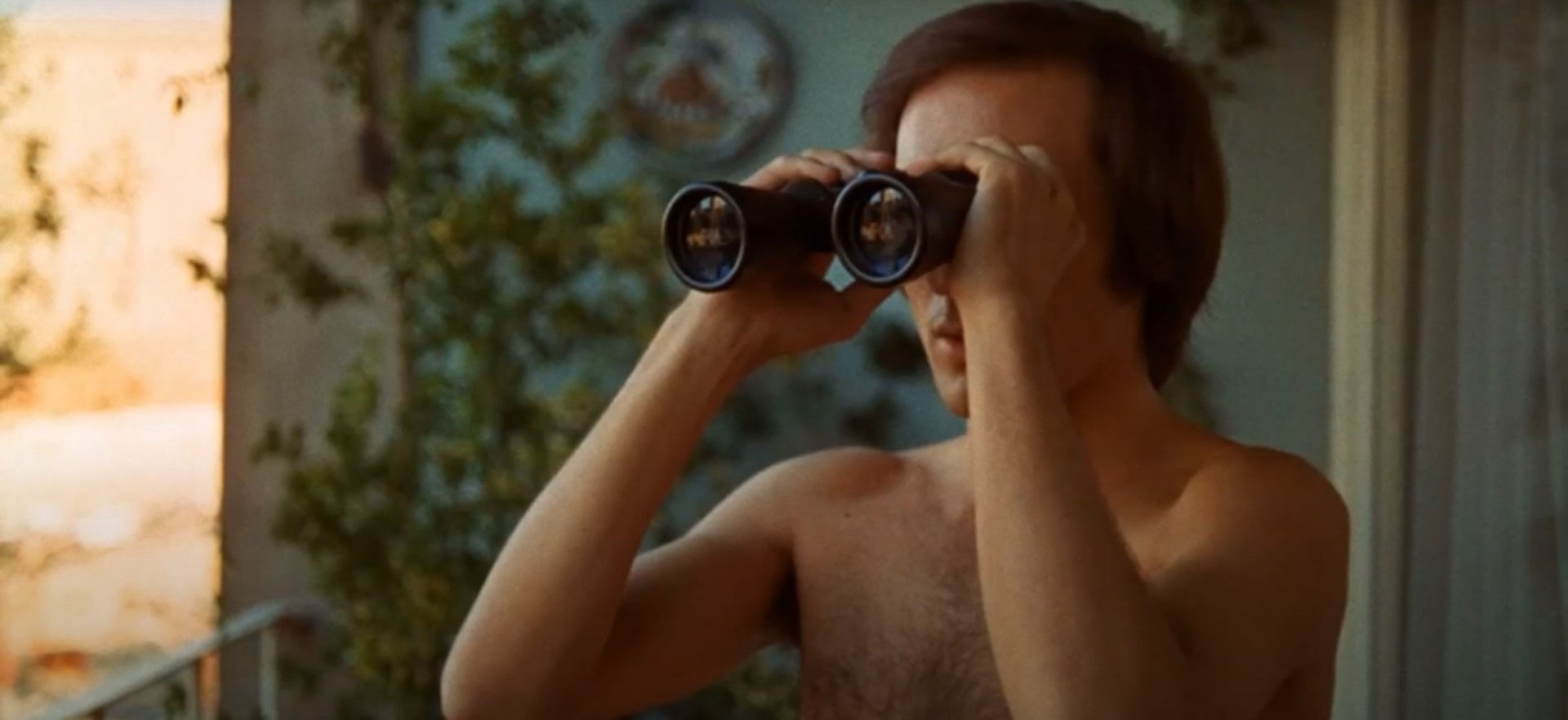
Looking to separate himself from strapping hunk typecasting and to show the world he can do more than just romantic comedies and action, the Madrid born Vincente Parra undertook a massive risk with the lead role Marcos, a meat processing factory worker in his, presumably, late 30’s to early 40’s with little education and social status who’s keeping company with a younger woman still living with and under the rules of her parents.  Let’s not to forget to mention Marcos’s grisly acts of murder and the homosexuality suggestions during his middle of the night rendezvouses with new best bud and neighbor Néstor (Eusebio Poncela, “The Death of the Scorpion).  Nothing sexual happens but the innuendo is there as, aside from his dog, the single bachelor Néstor often invites a tense Marcos out for a late night café visit, an afterhours swim at the local late night pool, and up to his swanky apartment where Néstor often watches Marcos from his high-rise balcony through Marcos’s makeshift skylight with binoculars.  Iglesia, who is gay, puts his own spin on the characters to allude to, and often over played as well, the two men as equally interested parties without ever having to speak a single word or make visible a single touch that would confirm otherwise.  Parra and Poncela couldn’t have acted better a disinterested-interested pair full of sexual tension and naïve foreplay.  Aside from the significant love interest characters from Vicky Lagos, who plays local waitress, Rosa, at the eatery Marcos patrons and “Night of the Walking Dead’s” Emma Cohen, Marcos’s girlfriend Paula, no other character have reoccurring scenes and are simply drafted as what should be major roles in the story to then be cut down by Marcos’s undervaluing psychopathy.  Charly Bravo, Fernando Sánchez Polack, Goyo Lebrero, and Lola Herrera fill in the rest of the cast list.

Strike out the slasher category for “The Cannibal Man” as Iglesia offers more than just a mindless, demented, hack’em up killer.  Behind Marcos brown eyes lies a reason of cold truth about his place in the world as a man who is ultimately and foremost stuck.  Stuck at a dead-end job.  Suck in his relationship with Paula.  Hell, Marco is even stuck living in a small bygone bungalow sticking out like a sore thumb right in the middle of new and wealthy high rise buildings.  He’s unskilled and uneducated, living in his brother’s house, and with no end to his personal wedging between his lackluster coursed life and his own short failings as a man until all that mediocre and mundane misery begins to ooze and shape into the one thing he tries to control – murder.  Even murder starts to spin out of control and heavy, burdensome guilt sets as seen in scenes with Néstor who’s choice of words perk up Marcos’s jumpy ears with fear of being caught.  Iglesia is a master at scene compositions that use audio cues, along with a jarring, tonal reversing soundtrack, to accentuate Marcos’s ascending paranoia as well as accentuating the scenes of the more period radical grasping social commentary on homosexuality and the unthinkable back-to-back-to-back-to-back murders.  Editor José Luis Matesanz also slyly cuts transitional scenes together in a stunningly seamless and crafty way that resemble close to Robert Wise (“Citizen Kane,” “The Andromeda Strain”) with harsh cuts that form a directional track and utilizes semi-abstract panning and reverse panning to fill in less significant gaps between the action.  Don’t expect a large amount of cannibalism in the story either.  Marcos isn’t gnawing on bones or baking a flesh brisket; instead, his act of cannibalism falls upon irony in that the bodies he tries to purge from his home ends up coming back to haunt him in more ways than one. 

If you love obscure, foreign horror that sustains a fresh packaged air about it, in story and in a remastered transfer, I highly recommend checking out Severin’s newly scanned, region free Blu-day distributed by MVD Visual.   The BD50 comes with two versions of the film, the 98-minute international cut and the 107-minute Spanish version extended cut, newly scanned from the original 35mm negatives for the first time.  Both transfers have excellent picture quality, some of the best I’ve ever seen come out of Severin, presented in 1080p in a widescreen 1:85:1 aspect ratio.  Not a lot of age wear and tear on the either transfer with each cut having only minor and light scratches scarcely throughout.  There’s sufficient, natural grain in both versions, but the extended cut’s grain flattens up, looking coarser, in the extra scenes.  Coloring grade is gorgeous with natural looking skin tones and you can see the details were refined and redefined.  Both versions come with an English dub and Spanish language DTS-HD Master Audio 2.0 track with some back-and-forth forced English dub in those coarser grained scenes that make the flow unsettling.  Both versions render hearty range and fidelity with a strong dialogue track that syncs well with the option English subtitles, but slightly off sync with image unity.  Underneath the double-sided cardboard sleeve, Severin’s special features include Cinema at the Margins – a Stephen Thrower (author of “Beyond Terror: The Films of Lucio Fulci”) and Dr. Shelagh Rowan-Legg (author of “The Spanish Fantastic: Contemporary Filmmaking in Horror, Fantasy and Sci-fi” on director Eloy de la Iglesia, The Sleazy and the Strange – interview with Spanish film scholar Carlos Aguilar on director Eloy del la Iglesia, deleted scenes, and trailer.  An engrossing bodega of vile Euro horror is what “The Cannibal Man” presents as a first-rate cutthroat thriller from the shamefully underrated filmmaker, Eloy de la Iglesia.

Own “The Cannibal Man” on Blu-ray!  Buy at Amazon.com

The Bromfield Family are Dysfunctionally Evil! “Night of the Scorpion” review!


Millionaire Oliver Bromfield’s drinking problem perhaps cost the life of his estranged wife Helen. Unable to bear the tremendous guilt, the now sober Oliver vacates his family’s mansion, leaving behind a widowed stepmother Sara who lusts after her step son Oliver and his lesbian sister Jenny whose love affair with Helen drove Oliver mad with jealously. Oliver returns with a newly eloped and young wife Ruth, immersing her into the peculiar and mischievous family who each carry a bulging enigmatic complexity about Oliver bringing home a new wife on the anniversary of Helen’s death and as Sara continues to seduce Oliver and Jenny still simmering over Helen’s untimely death, a sinister plot to murder Ruth emerges. The body count rises with a killer on the loose and everyone becomes a prime suspect inside the eerie Bromfield home that’s isolated from the rest of the neighboring village.

“Night of the Scorpion” aka “La casa de las muertas vivientes” is a 1972 Spanish Giallo film written and directed from long time spaghetti western filmmaker Alfonso Balcázar under the pseudo name of Al Bagram. The suspenseful mystery thriller was produced Balcázar own production company and collaboratively produced in conjunction with an Italian production compnay to give it that authentic Italian Giallo flare, but maintains a native Spanish cast and still maintains the element of the Spanish horror era of the 1970s. The simplicity of “Night of the Scorpion,” by not building too many suspect into the riddling web of suspicion, keeps a tight knit storyline and keeps focus on the characters confined to the Bromfield property and the casual pace of the story builds exposition, delving continuously into the background of Olive and Helen, Helen and Jenny, and Sara and Oliver, a love triangle built upon uncompromising guilt, lust, and desire.

José Antonio Amor stars in the biggest role of his career as the wealthy recovering alcoholic Oliver Bromfield and he’s paired with the lovely Daniela Giordano (“The Inquisition”) as his new wife. Together, Amor and the former Miss Italia winner are a night and day couple on screen with Oliver’s troubled grasp with reality as he’s plagued with visions of his late wife’s death and Giordano, as a Ruth on the verge of a nervous breakdown, offers a rational approach to in the midst of being introduced to new family members Sarah (Nuria Torray of the werewolf thriller “El bosque del lobo”) and Jenny (“The Feast of Satan’s” Teresa Gimpera). The tension fabricated by Amor, Torray, and Gimpera is inauspicious and thick with an uncomfortable dynamic between Sara and Oliver in a show of will power and determination that adds to the psychological terror on not only Oliver, but also on Ruth who witnesses first hands Sara’s desiring eyes for her stepson. Jenny’s attached attitude to her brother’s life provides a mysterious wonder about her; her year long depression bares an underlining grudge that Gimpera displays so very well with a blank, nihilistic facading expression.

As aforementioned, “Night of the Scorpion” is a simple Gothic tale of a puzzling murder mystery and with that as such, under the guise of a fair amount of good thespian performances, the weak point for Balcázar’s film is the effects. In true Giallo fashion, only the killer’s gloved hand and gleaming blade arise into frame to bring a razor sharp steel from ear-to-ear on flesh. The first kill was remarkable with a very believable thrust and penetrate into the neck followed with a right to left motion across the unsuspecting victim. Proceeding kills bore the obvious lack of effort with the flat side of the blade up and a blood emerging at more of a smear than a seep through the layers of open skin. However, that’s the extent of the effects on a very low body count due to the very limited character roster.

Dorado Films presents for the first time on full 1080p high definition, all-region Blu-ray of “Night of the Scorpion” fully uncut and uncensored, despite Nuria Torray’s noticeably catered body double intercuts into the romantic moments with Oliver. Gioia Desideri, as Helen in the flashbacks, make up for Torray’s lack of skin with her own topless scene. In cut Spanish version of the film, Desideri’s topless scene is completely cut along with Torray’s body double because of the nudity ban during the 1970s, making Dorado Films’ uncut “Night of the Scorpion” an automatic must own export version. The rare-euro film distributor scans the 35mm negative to 4k and exhibits in a widescreen 2.35:1 aspect ratio. The negative is relatively clean with minor grain and little-to-no damage, but the coloring offers more of a sepia tone and there’s some noticeable overexposure to perhaps lighten up darker scenes suggesting that touch ups were done at a minimum. The Blu-ray back cover notes, due to fan requests, no digital restorations were made. The dubbed English 2.0 track has a bit of hissing in the dialogue and the soundtrack lacks range, but still a pretty good mix for the transfer with optional English, Spanish, and Italian subtitles available. The bonus material includes an audio commentary with Giallo expert Troy Howarth, author of “So Deadly, So Perverse: 50 Years of Italian Giallo Films” and 53 minutes of Spanish film trailers. Overall, Dorado Films provided a faithful version of “Night of the Scorpion” which the Spaniards, to my knowledge, have not had the pleasure of viewing and in a modern time of plot twists and intricate premises, the Alfonso Balcázar written and directed Giallo is a refreshing blast from the past, embodying a rich palette of Gothicism and noir.

Purchase Dorado Films’ Night of the Scorpion here!