Fascist EVIL Takes on Freedom of Expression! “School in the Crosshairs” reviewed! (Cult Epics / Blu-ray)

“School in the Crosshairs” on a Cult Epics Blu-ray! Purcahse here at Amazon.

Yuka Mitamura is the smartest, most well-rounded student at her high school that’s embattled by a constant debate on whether physical edition and clubs are a necessary requisite for academic success, jeopardizing physical activities such has her best friend Koji’s Kendo club.  When Mitmura’s latent psychokinetic powers emerge, she struggles to cope with the change that’s out of her control and the new acquaintances with similar powers that show up in her life, such as with new female student Michiru Takamizawa whose sudden enrollment sees a quick rise in the ranks of school politics and sparks an insidious need for a totalitarian and fascist reign to control dissident and unapproved behavior within the school.  As an oppressive crack down on the total student body sparks a civil war amongst the students, Michiru and her mentoring demon Kyogoku aim to enslave the human race and it’s up to Mitamura, unknowingly Earth’s champion, to fight against the forces of evil. 

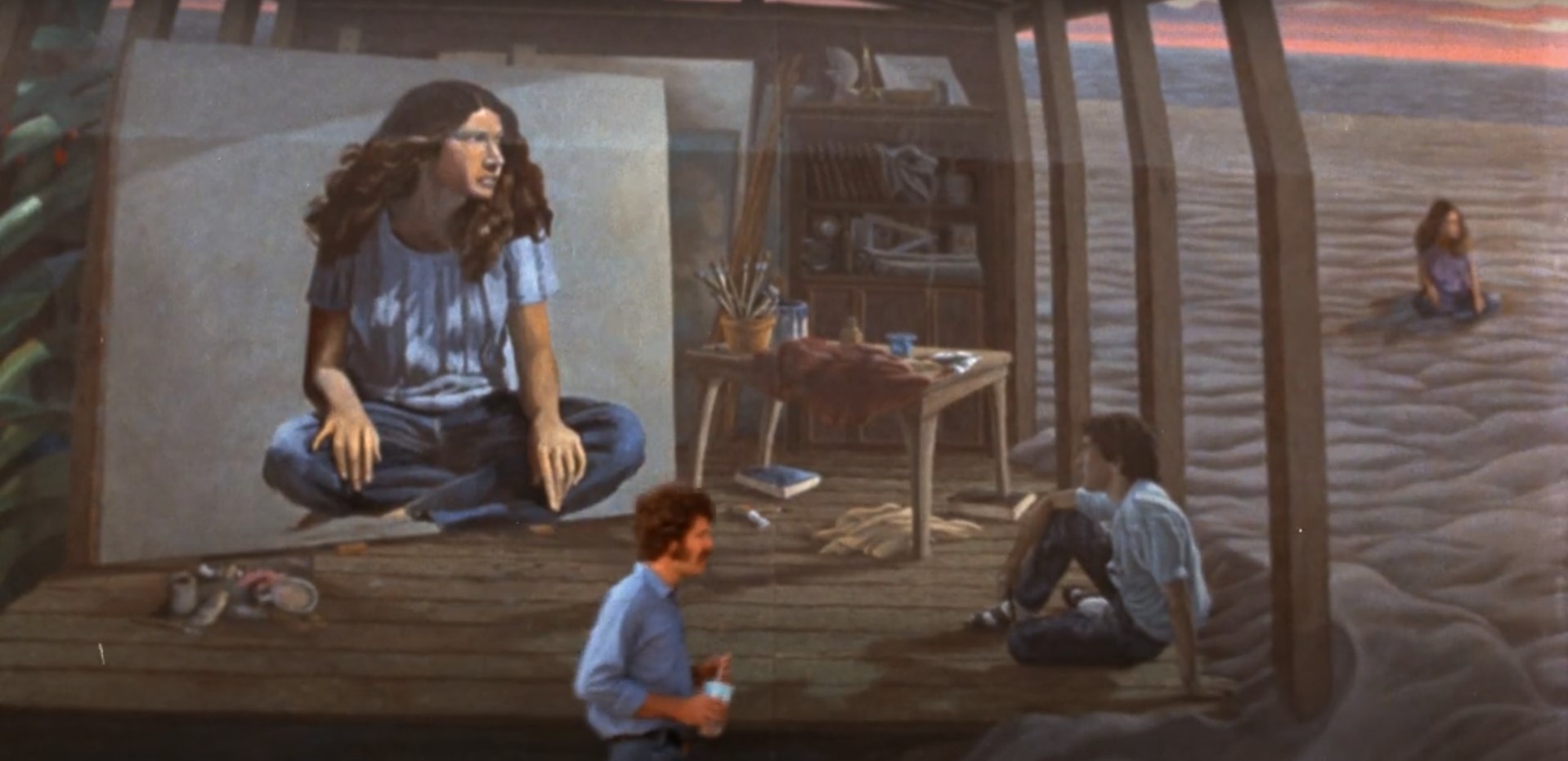
Adapted from the 1973 science fiction and fantasy novel “Psychic School Wars” by Taku Mayumura, “School in the Crosshairs” is every ounce those Japan famous hyper-intensity and colorfully assertive commercials with visual sparkle and great enthusiasm for their hawked products.  You know them well when they go internet viral.  The 1981 Japanese adaptation is helmed by Nobuhiko Ôbayashi, director of “Hausu” and “His Motorbike, Her island,” from no script but rather from Mayumura’s novel as script.  Keeping faithful to nearly the entire novel and adding Ôbayashi’s variegated touch, “School in the Crosshairs” is a flamboyant Earth invasion in its divisive influence of the study body, especially between the studious academics and physical clubs.  Also known as “The Aimed School” and “School Wars” elsewhere in the world, as well as titled “ねらわれた学園,” ”School in the Crosshairs” is produced by “Island of the Evil Spirits’” Haruki Kadokawa, who also produced our last Japanese reviewed title, the traumatically powerful and wonderfully performed “The Beast to Die,” under his company Kadokawa Haruki Jimusho.

“School in the Crosshairs” circles around principal character in film and in book Yuka Mitamura as she juggles her newfound powers.  Between feeling like a stranger in her body as well as the weird visitations of her powers and of the otherworldly figure with a cap and green skin and having to not only rebel against an authoritarian rule overtaking her high school but also to save all of the world from that said otherworldly and powerful figure, Mitamura’s plate is undoubtedly full for a teenage girl.  Hiroko Yakushimaru (“Sailor Suit and Machine Gun”) comes to the role as a teenage girl herself at the age of 16-17 years old by the time of principal photography and seizes the high school melodramatics with ease as the carefree smartest kid in school.  Yet, finding Yakushimaru a formidable character stemmed by her performance is not so easily rendered in an indifference projection toward her newfound abilities; Yakushimaru is unable to really compel audiences with body language or even in her dialogue on why the teen has to soul search cope when she discovers she’s different.  We get more out of Ryôichi Takayanagi (“His Motorbike, Her Island”) as the quasi love interest and Kendo club leader Koji as his kendo tournament matches and failings in academics that affect his beer story-owning family dynamics are heavily emphasized and given more weight against a floundering leading lady character with superpowers and uses those powers to put Koji in good standing amongst the Kendo culture with win-after-win.  Not until the world starts to unravel at the hands of fascist student leader and fellow telekinetic Michiru Takamizawa (Masami Hasegawa, “The Tragedy in the Devil-Mask Village”) and her despot leader, the manipulative demon Kyogoku (Tôru Minegishi, “Main Line to Terror”) in a technicolor brilliance of a cosmic showdown held within the interdimensional layers but even then the last gasp of defeat has lackluster strength after a mountainous buildup of dictatorship control and potential student civial war.  The cast fills out with Keiko Mitamura, Noriko Sengoku, Yûsuke Okada, Kôichi Miura, Hiromitsu Suzuki, Macoto Tezuka, and Kôichi Yamamoto.

Pushing a few of the acting and character flaws aside and off the table, “School in the Crosshairs” is essentially manga embodied by live-action film.  There’s stellar mass group choreography near the beginning when the clubs merge for a rush invite to encourage recruitment, there is an extravagantly caped character in green makeup and a white afro wig, and there’s the painted-on-cell colorization I’ve mentioned a few times already that really ups the fantastical sci-fi features of Mayumura’s novel with a director like Nobuhiko Ôbayashi unafraid to get deep with saturation and long in experimentation.  Themes on fear of individualism, forced conformity, friendship, and the rise up out from that powerlessness feeling for what’s right showcase through metaphorical fascism, akin to the likes of the evil Nazi Germany party with a fear mongering nationalist’s convincing motivational speeches and confidence commands that seduce the ears of the waning high school minority, the academic kids, seeking alternative solace and a way to regain control as they are not as popular in contrast to those in clubs.  The Nazi tropes don’t end there as rounding up nonconformists, Nazi-like uniforms, and even a modified heil make their way into the overall story and that’s the darkest part in “School in the Crosshairs” light and airy jeopardizing of innocence and individuality. 

Catching a glimpse of Nobuhiko Ôbayashi’s pre-“Hausu” filmmaking brilliancy is now as easy as catching “School in the Crosshairs” on a North American Blu-ray release from Cult Epics.  The dazzling high-definition and an equally impressive, supplemented release is AVC encoded onto a BD50 with a 2K transfer and restoration of the original 35mm print and presented in a widescreen 1.85:1 aspect ratio.  The “School in the Crosshairs” restoration visuals need to be seen to be believed in a newly graded touch up that offers a glassy darker side within the fascism themes and a richer color palette to make the hued pinwheel spectrum a living, breathing character between good versus evil.  The grain comes through naturally on nearly all scenes with some of the shadowy moments favoring less delineation through the consistent optical texture.  The composited effects are boldly vibrant inside a creative streak that’s idiosyncratic only to Ôbayashi and are implemented into the live scenes with precision that doesn’t make it awfully clumsy or clunky.  Cult Epics made sure to cover any and all viewer’s at-home audio setup with three Japanese language options:  an uncompressed LPCM 2.0 Stereo, a Dolby Digital 5.1 Surround Sound, and a DTS-HD MA 5.1 Surround Sound.  Each carry their own weight and attributes with the LPCM 2.0 and DTS-HD 5.1 similar in fidelity, but the DTS offers an expansive girth that fills in the left and right channels of interdimensional ambience with laser strikes and gameshow tonal keys.  Dialogue is constructed through ADR that carries a level and balanced layer field and holding its own against the fantasy ambient that sometimes rises to meet the dialogue decibel; however, dialogue is clean and clear without any issues in clairaudience.  Newly improved English subtitles are optionally availably.  The set is quite complete, and likely comprehensive, with the physical and encoded special features.  Film critic Max Robinson offers a feature parallel commentary track, Phillip Jefferies provides a video essay on Nobuhiko Ôbayashi’s body of work in Sailor Suits and Sound, an Ôbayashi film poster gallery, and the theatrical trailer.  Physically, the clear Blu-ray Amaray case keeps inside the reversible cover art with both sides featuring the Japanese poster arts and housing that package is the limited edition cardboard O-slip with a fantastic compositional design by Sam Smith.  Inserted inside is the back cover unlisted, 22-page booklet full of black and white as well as color adverts, feature stills, characters bios, and other writings but all in Japanese, no English.  The 90-mean feature comes no rated and is region free.

Last Rites: More so now than ever in the current political climate, freedom of expression endangerment is the critical theme for Ôbayashi’s “School in the Crosshairs,” a color melange of resistance against the forces of evil hard to differentiate looking like our friends, family, and the everyday student.
“School in the Crosshairs” on a Cult Epics Blu-ray! Purcahse here at Amazon.

Screenland’s Bright Lights Can Turn One Lonely Man EVIL! “Hollywood 90028” reviewed! (Grindhouse Releasing / 3-Disc Blu-ray and CD)

“Hollywood 90028” 3-Disc Collector’s Edition Can Be Preordered Here!

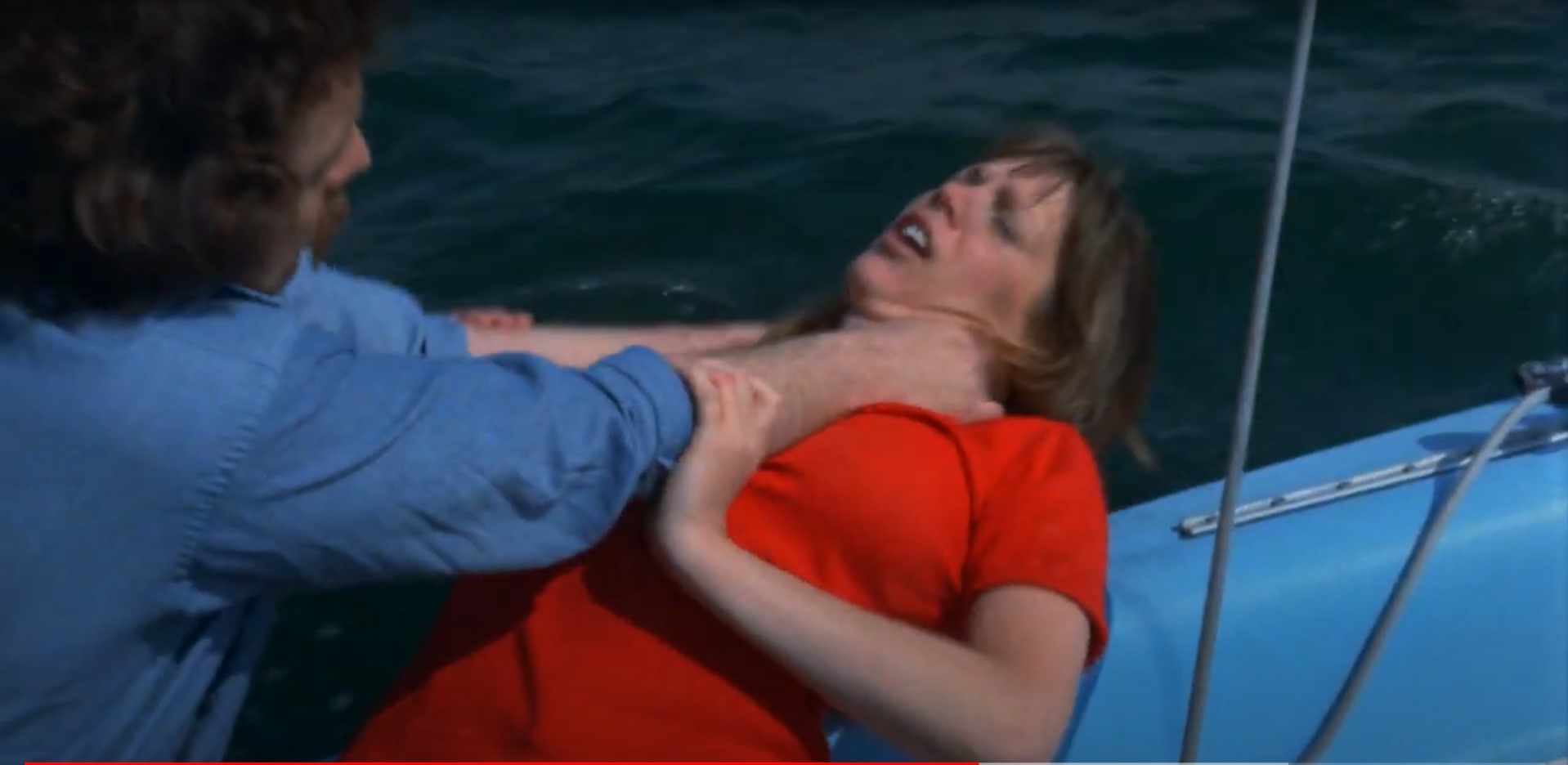
Having moved West from a small Ohio town a few years back, photographer and video cameraman Mark found himself stuck shooting nudie reels for a low-budget porn producer.   A solitary life lends Mark more freedom then most to wonder about and driver around on the streets of Hollywood with ambitions for a legit job of shooting regular material that doesn’t humiliate him.  Troubled about his childhood past involving the death of a younger brother and with his frustrations within his video film capturing vocation, Mark finds himself in the company of young, attractive women who find him easy to talk to and attractive as well, but when Mark reaches a limit, aberrant thoughts take over and he strangles them to death.  When he meets starlet Michele on one of his shoots, Mark believes he’s found the woman for him, one that can relieve the pressures of life and work with nothing more than her beauty.  For Mark’s abnormal mind, love at first sight might not be that easy.

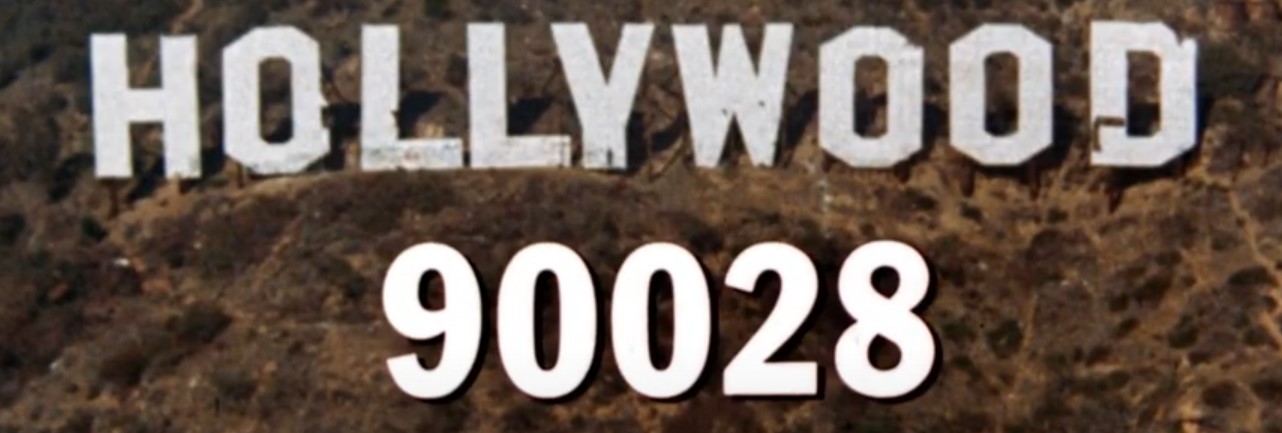
Writer-director Christina Hornisher tackles trauma induced behavior and the Hollywood pull of small-town aspirations chasing dreams in the drama-suspenser character piece of “Hollywood 90028.”  Hornisher’s debut feature film released in 1973 also became her only feature credit as a director who supplied arthouse substance but also embodied a different kind of substance, the grueling confiscation of hope for work, stardom, and love, perhaps even sliding into a bit of escapism, as the bright lights of Hollywood draw the flies to the flame.  Shot on location in and around the Hollywood, Los Angeles area that also had scenes fillmed directly at and underneath of the self-referential hillside Hollywood sign landmark before the iconic, globally recognized attraction had been fenced-off with visitation restrictions post-film in the 1980s and further protected with security systems in the mid-1990s.  Hornisher also self-produced the film which was also known under alternate titles as “The Hollywood Hillside Strangler,” “Twisted Throats,” and “Insanity.” 

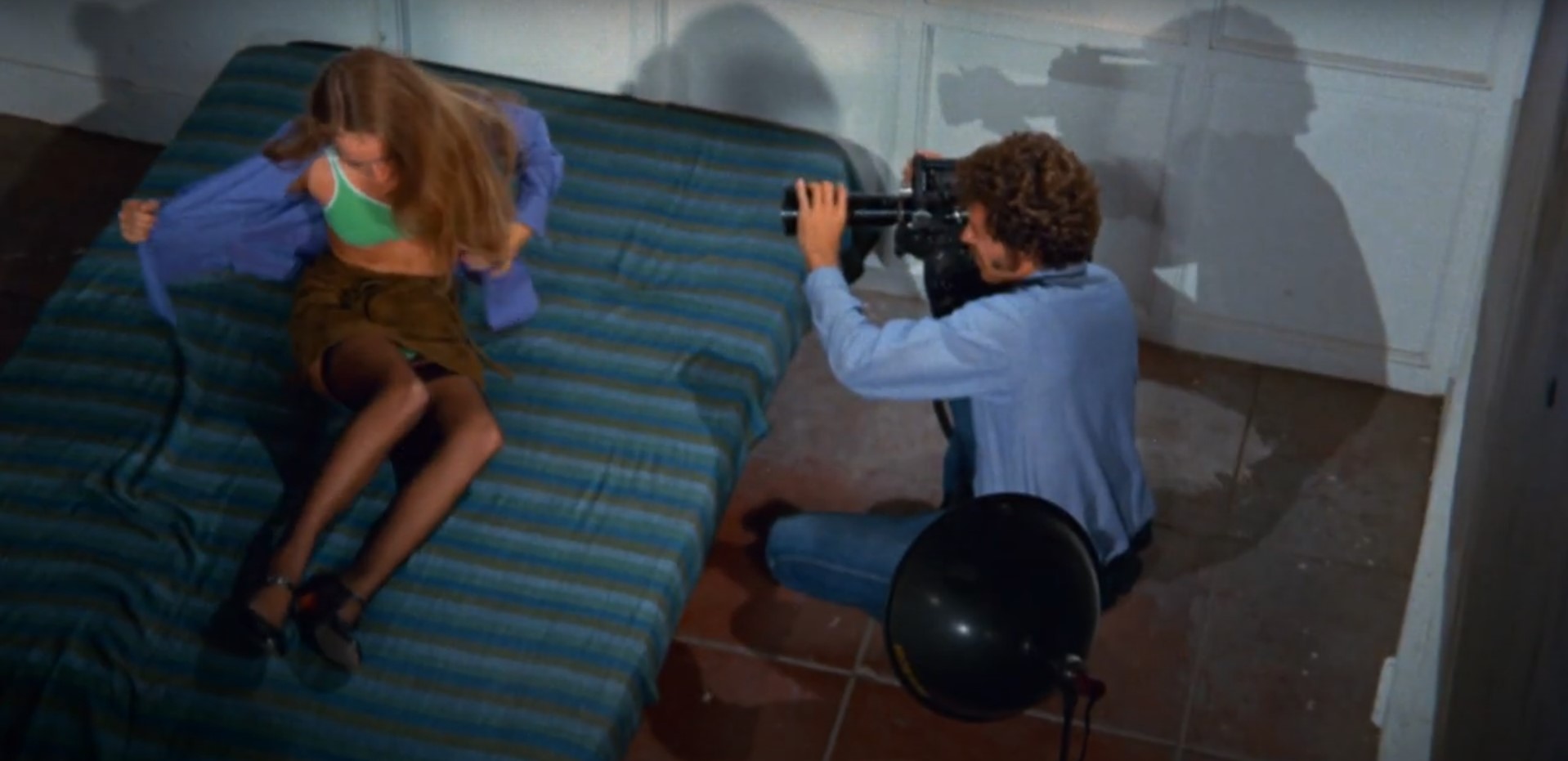
Christopher Augustine, who would also have a part in “The Doll Squad” of the same year, played Mark the calm and restrained pornography cinematographer and editor.  Not as sleazy as his title, Mark’s reserved nature doesn’t stop him from photographing and working diligently on splicing film without completely cutting off from the world but does make him quiet, observant, and intriguing, or so does Michelle thought.  Michelle’s a smalltown girl who moved West to work in the fame industry who soon finds herself being financially forced out of legit paying gigs for more sordid, sleazy work.  Played by Jeannette Dilger, who would actually have a role in the adult film “Young, Hot ‘n Nasty Teenage Cruisers” a few years later, she would spark chemistry with the mustached Augustine that allows their Mark and Michelle to fall in love that isn’t amorously glamorous but has innocent notes of flirtation and a lot of walk-and-talk realism onscreen relationships tend to omit.  Hornisher determines Mark to be the centerpiece of her character study.  Every scene caters to Mark’s interactions with Michelle, his professionalism with sleaze producer Jabol (Dick Glass), and the two other women he meets and eventually strangles.  Where Hornisher isn’t her best is in the building up of Mark’s suppressed sociopathic behavior, stemmed from a brief opening montage of a preteen Mark and his large family that implies his involvement in the accidental death of a younger brother, with ever delicate triggering that doesn’t solidify calling back to his aggressive-resulting trauma.  “Hollywood 90028” cast rounds out with Dianna Huntress, Beverly Walker, Kia Cameron, Ralph Campbell, Melonie Haller and Gayle Davis.

Though her first feature credit, Hornisher had the makings of a competent, auteur filmmaker.  “Hollywood 90028” evaded the conventional narrative structure and one-trick pony photography with more arthouse ambition that saw not only panning and tracking in her cinematic cache, but a stunning and incredibly quick finale zoom out from the Hollywood sign of smooth drone quality but completed in 1973 with a helicopter soaring over the Hollywood district.  Use of spliced-in cells of modeled sex representation as well as sign denotations of the character’s dialogue and thoughts, a kaleidoscope lens utilized during an intimate love scene, and the greater use of off-screen dialogue over on-screen conversating creates a thin layer of psychological realism in contrast to the actual realism between Mark and the rest of the characters.  Mark’s sullen display of emotions throughout the story culminates with his unconscious destructive demise after finally expressing a sliver of elation with Michelle but that’s also when he realizes that his tragic past and present psychosis will never let him go and will destroy anything that tries to replace it.  In one theory, Hornisher might have kept Mark in the same clothes throughout most of the picture to depict a deranged mental image; his constant choice of clothes is a hangup that can’t be let go for sharp-eyed viewers who wish he’d change out of his denim, long-sleeved shirt and denim jeans.  Unlike Mark’s unchanging denim statement, Hollywood in Hornisher’s film is a city captured in time; much like the Hollywood sign had gone from an area of loitering to now protected from the public, the fornicated fleapits and the colorful and character-building structures of Hollywood have long since been razed and rebuilt into the more glamourous, if not still snakebitten, Hollywood you see today. 

Grindhouse Releasing has gone the extra mile in not releasing a standard version of “Hollywood 90028” with standard fare and a rink-a-dink, barely passing muster transfer, but releasing a definitive chef-d’oeuvre of this lost Christina Hornisher film.  The new 4K restoration created from the original 35mm negative makes a statement that they underrated, underappreciated and the underbelly of indie cinema will not be ignored and, instead, be celebrated in retrospect, recoloring, and painstaking supervision in the efforts of all areas of rejuvenation.  The 3-disc, Blu-ray and CD set has an AVC encoded, 1080p high-defintion, 50 gigabyte capacity on the feature disc.  Presented in anamorphic widescreen 1.85:1, the Grindhouse Releasing restoration gives “Hollywood 90028” a fresh coat of paint on a precise saturation spectrum and illuminates details from the limitations of untouched, processed 35mm triacetate.  The original negative appears to have survived the test of time with barely perceptible, thin vertical scratches that were more sporadically sparse than a nagging nuisance.  Grain’s healthy and natural looking in the overlap and the contrasts levels clarify stark delineation and depth, attributing to finer details on textures and skin tones when mostly interior scenes.  Exteriors lose some definition because of the natural lighting and contrast levels typically lower to more create deeper shadows and amalgamation between object and background.  Video bitrate decodes a nice low 30s Mbps. The back cover does not provide explicit specs for the audio but my setup picks up the English language mix as a DTS-HD master audio stereo (the menu setup states mono) is the adequate acquaintance to the visual elements with an ADR dialogue recording, that to note has nothing to do with the release’s presentation, does feel detached in some regard to the visual character temperament despite its well-preserved clarity and projection, but the real star of the audio makeup is the Basil Poledouris (“RoboCop”, “Starship Troopers”), remastered by Jussi Tegelman soundtrack that is a delicate and absorbing mix of piano, wind-instrument, and percussive that reflects Mark’s wondering loneliness and reserved longing as well as introducing jazzier sax and guitar tracks for livelier montage moments.  Suddenly, we’re thrust into string-laden, semi-dark and low-tones for Mark’s buried spiraling. English subtitles are available.  Grindhouse Releasing had some so bonus content they added a second disc with the first containing audio commentaries with film enthusiast Marc E. Heuck, the film’s editor Leon Ortiz-Gil, and cult and porn director Tom DeSimone who attended UCLA with Hornisher, the original, unrestored, X-rated alternate scenes, Christina Hornisher’s experimental 16mm short films, cameraman outtakes, still galleries, radio spots and trailers under the “Hollywood Hillside Stranger,” the “Hollywood 90028” trailer, and the Grindhouse Releasing coming attractions.  The second disc contains retrospective interviews with stars Christopher Augustine, Jeannette Dilger, Gayle Davis, and editor Leon Ortiz-Gil in a near feature length making-of, a theater presentation discussion with Christopher Augustine, and a Tom DeSimone retrospect on Christina “Tina” Hornisher.  The third disc, a soundtrack CD of Basil Poledouris eclectic composition, is 17-tracks deep and comes in a customer sleeve inside the beautifully illustrated and tactile slipbox.  Instead, a slightly larger than normal Blu-ray Amaray case without the Blu-ray logo with the original poster art as primary cover with the new slipbox art on the reverse side.  The Blu-rays set on top of each other, staggered, on the right side while the left houses a 24-page booklet filled with color pictures, poster art, and historical, anecdotal, and analytic context essays from Marc E. Heuck, David Szulkin, Richard Kraft, and Jim VanBebber.  Grindhouse Releasing’s region free “Hollywood 20008” hits retail and online stores November 26th and has an 87-minute runtime under it’s not rated package

Last Rites: Grimy Tinsel Town sets the backdrop and insidiously swirls inside the mind of the forefront encased and bejeweled inside a Grindhouse Releasing special that’ll never have you look at Hollywood the same again.

“Hollywood 90028” 3-Disc Collector’s Edition Can Be Preordered Here!

Nothing Will Stop Detective Belli from Bringing Down EVIL Heroin Traffickers!

Perhaps the Best Itali-Crime Film Ever!

A hot-headed and determined police commissioner will not stop his pursuit until all the drug trafficking in Genoa is annihilated but the insidiousness of the crime’s reach within society is proving to be difficult to root out.  With the help of one of Genoa’s long-in-the-tooth drug kingpins, living out the last of days before terminal illness overcomes him, the commissioner is able to put a dent into a rival organization’s trafficking schemes.  When a case-building chief commissioner, aiming to get the very head of the organization’s snake, is brutally gunned down in the middle of the street and his evidence files stolen, more pressure is placed upon the criminal syndicate with more arrests, more drugs seized, and a bigger impact is made by one resolute cop while attempting to build a more damning case file his predecessor had worked on for years but the drug traffickers will not be deterred and mercilessly go after the commissioner’s loved ones.

Enzo G. Castellari’s “High Crime” is quintessential poliziotteschi.  “The Inglorious Bastards” and “Keoma” director’s 1973 Italo-crime feature is about as fast-paced as it’s energetically loose-cannon of a principal protagonist.  The screenplay, under the original Italian title of “La Polizia Incrimina, La Legge Assolve,” is treated by a conglomerate of Italian writers in Tito Carpi (“The Shark Hunter”), Leonard Martin (“Tragic Ceremony”), Gianfranco Clerici (“Off Balance”), and Castellari himself based off a story by producer Maurizio Amati (“The Eroticist”) and shot on and near the story locations of Genoa, Italy and the French city of Marseille.  “High Crime” is actually a sequel to Romolo Guerrieri’s 1969 “Detective Belli” in which that titular character reappears in “High Crime” but more righteous and justice-prone compared to the corrupt background of Belli in antecedent film.  Both movies star the same actor in the main role but have little connective elements.  The feature is a production of Star Films and Capitolina Produzioni Cinematografiche and is coproduced by Edmondo Amati, father of Maurizio. 

The blue-eyed “Django” actor Franco Nero is that actor portraying Commissioner Belli in both films.  In “High Crime,” Nero is an exuberantly moral cop to the point he looks to be almost throwing a temper tantrum when in the face of his superior Chief Commissioner Aldo Scavino, played by American actor James Whitmore of “Them!” and “The Shawshank Redemption.”  The two characters resemble night and day of how they handle crime; Scavino’s reserved nature evokes a cautionary tale to run down crime slowly but surely in building a case that would settle everything all at once whereas Belli’s take is to chase with wild abandonment that’ll risk all that he holds dear as he chips away toward a heavily fortified crime lord.  Nero and Whitmore exact the personas down to the letter, nailing in the thematic message from Scavino that that the chair he sits in is hot, heavy, and full of responsibility, much the way Uncle Ben tells Peter Parker about great power carries great responsibility.  In Belli’s ear, working his way into the mind of a gung-ho lawman, is drug kingpin is Cafiero by Fernando Rey, who two years prior played in a similar story of William Friedkin’s American, lone-wolf cop story “The French Connection.”  Rey adds sophisticated demure to his really bad guy character to appear like an ally in not only the eyes of Belli, who really puts his trust in Cafiero, but also the audiences who will forget he’s an equal in the drug game.  What’s interesting and dynamic about “High Crime” is the woven character arcs and fats that quickly develop and quickly diminish through Belli’s investigation.  In the mix of this unsafe space for any character is Della Boccardo (“Tentacles”), Silvano Tranquilli (“The Bloodstained Butterfly), Duilio Del Prete (“The Nun and the Devil”), Mario Erpichini (“Spasmo”), Ely Galleani (“A Lizard in a Woman’s Skin”), Stefania Castellari (“1990:  The Bronx Warriors”), Bruno Corazzari (“Necorpolis”), and Luigi Diberti (“The Stendhal Syndrome”).

“High Crime” deals in high impact.  Car chases, shoot outs, foot pursuits, murder hits, and more that genetically makeup Castellari’s film with a centralized hero destined for tragedy spurred by his own ambition, texturing the character with an anti-hero wallpaper as he can’t see past his own objective and the direct danger that blind ambition poses.  Kneaded into this notion is Caastellari’s fantastic use of editing and scene transition that provides a seamless continuity as also misleading truths.  Editor Vincenzo Tomassi (“Zombie”) cuts and splices with great continuity care to arrange multiple shoots of one scene, such as the opening car chase between Belli’s squad car pursing a Lebanese drug supplier, to match every angle without losing track or bewildering audiences with implausibility.  The transition scenes also stun with zoom-in and zoom-outs that segue different scenes, a previous moment may bleed into another with deceptive infiltration of the next scene, and Castellari uses sounds too to transition to the next shots.  These on-your-toes transitions commingling with the ever-dynamic, fast-paced crime story with a high mortality rate, high character development, and high emotional roller coaster loop-the-loops whirling around the abundant and impressively rounded characters solidify “High Crime” as the holy grail of highly valued and highly entertaining poliziotteschi!

If you’ve ever wanted more out of Enzo G. Castellari’s “High Crime,” Blue Underground has you covered with a limited edition 3-Disc, UHD HD Blu-ray, Standard Blu-ray, and soundtrack CD set packed with content in the HVEC and AVC encoded double layers of the 2160p 4K UHD BD66 and 1080p Blu-ray BD50.  The brand-new 2024 Dolby Vision HDR 4K master stuns.  Image resolution connected with balanced contrast results in a vibrant, crisp-sharp quality rendered from a stellar original 35mm print, presented in the original aspect ratio of a widescreen 1.85:1.  There’s not an arresting softness to be had as details emerge in the various Genoa and Marseilles ship ports, manufacturing parks, and concrete city landscapes bursting with infrastructural texture.  There’s also plenty of minute detail on skin textures with a touch of technicolor process for a dash of properly installed pigmentation.  This sort of scrutinizing care translates also to the post-ADR English 1.0 DTS-HD audio mix with an uncompressed, lossless fidelity.  Dialogue is post-recorded with the original actor’s voices providing better authenticity in comparison to other voice actors, especially over the gruff American voice of James Whitmore.  Environmental ambience doesn’t miss an action with a complete and broad line of virtual city sounds coupled with in-scene ambient sound, all converted and individualistic defined through the single channel, supported by Oliver Onions brothers Guido and Maurizio De Angelis providing a catchy copper beat whether be car chase or foot pursuit.  There also an Italian dub 1.0 DTS-HD.  English subtitles for the deaf and hard of hearing are optionally available as well as French, Spanish, and English for the Italian audio feature.  Hours of bonus materials lined the encoded BDs, more so on the second disc, the Standard Blu-ray, due to capacity.   Disc 1, the 4K UHD, houses an audio commentary with director Enzo G. Castellari, a second audio commentary with star Franco Nero, a third audio commentary with film history Troy Howarth, Nathaniel Thompson, and Eugenio Ercolani, an alternate ending that fades to black rather than the original freeze frame, and the theatrical trailer.  Disc 2, the standard Blu-ray,, has all of the above plus interviews with Castellari and Nero The Genoa Connection, an separate interview with Castellari From Dus to Asphalt, an interview with stuntman Massimo Vanni Hard Stunts for High Crimes, an interview with camera operator Roberto Girometti Framing Crime, an interview with soundtrack composers Guido and Maurizio De Angelis The Sound of Onions, a Mike Malley directed featurette The Connection Connection featured in EUROCRIME!, and a poster with still gallery.  The double wide Amaray case also comes with its own special attributes, such as a rigid O-slipcover with compositional illustration of pretty much all the action you’ll see in the film.  The slipcover also contains embossed textile elements for a junior-sized 3D effect.  The set has a reversible front cover with the primary art the same as the slipcover’s while the inside contains an original poster art replica.  The insert side contains a dual-sided cardboard track list and soundtrack info on top of the back and red original motion picture soundtrack CD.  The 4K UHD and Blu-ray on the opposite side are staggered in individual push locks where you have to remove the top disc in order to get the bottom disc and they’re too pressed with the same art from the reversible front cover.  Blue Underground outdid themselves with “High Crime’s” first Blu-ray release, curated to perfection, in the U.S.  The Not Rated Blue Underground set is playable on all regions and has an uncensored, uncut runtime of 103 minutes.

Last Rites: To simply write positively about “High Crime” and Blue Underground’s merit 3-disc set is simply not enough. Fans of William Friedkin’s “The French Connection” and other moviegoing fans can find this Eurocrime thriller to be captivating from start to finish.

Grab this Limited Edition Set of “High Crime” Before Its Gone!

Don’t Mess with Texas Unless You’re EVIL Going Up Against “Shanghai Joe” reviewed! (Cauldron Films / Blu-ray)

East Doesn’t Just Meet the West, It Kicks It’s Ass in “Shanghai Joe!”

A Chinese immigrant arrives into San Francisco looking to begin a life as an American cowboy.  Met with extreme prejudice, he pushes forward to avoid the Western stereotypes of his race by taking a stagecoach to anywhere Texas in order to become a true-to-form Cowboy.  Mocking monikered Shanghai Joe, even in Texas Joe is met with bigoted resistance in every way and in every exchange with the locals despite his uncanny fighting, intellect, and horse-riding skills that are far superior to his meanspirited rivals who think of him nothing more than a dumb foreigner.  When Joe become inadvertently involved with human traffickers and slave owners of downtrodden Mexicans, Joe aims to set things right against an oppressive and murderous rancher named Spencer who runs the entire region.  Spencer knows his usual hired posse can’t match the supernatural abilities of Joe and hires out the $5,000 bounty to the four most cunning and ruthless killers that will seek Joe’s head as well as possibly commit other atrocities to him for the sole joy of it.

The sun rises on the dawn of the East Meeting the West with “Shanghai Joe” at the center   of subgenre.  The Italian made spaghetti western helmed by “Nightmare Castle” and “Nazi Love Camp 27” director Mario Caiano who exhibits what happens when an unstoppable force hits an immovable object as quick hands and feet of the Asian East combat with the quick gunslinging showdowns of the American West.  Penned by Caiano alongside Carlo Albert Alfieri (“Sodoma’s Ghost”) and Fabrizio Trifone Trecca, credited as T.F. Karter, “Il mio nome è Shangai Joe” or “The Fighting Fists of Shanghai Joe,” as the film is originally entitled in Italian, keeps true to the graphic and vehement violence that ultimately lacked from the U.S. Western and sought to bring a martial arts foreigner into the fold of brute and barbarity as Kung-Fu flicks were up-and-coming with the rise of Bruce Lee and the Italian wanted a piece of that cinematic success without having to spend a fortune of turning sets appear oriental when already built saloons, corals, and spittoons were a plentifully available from previous films.  Producers Renato Angiolini and Robert Bessi serve under the production companies Compagnia Cinematografica Champion (“Torso”) and C.B.A. Produttori e Distributori Associati (“Emergency Squad”).

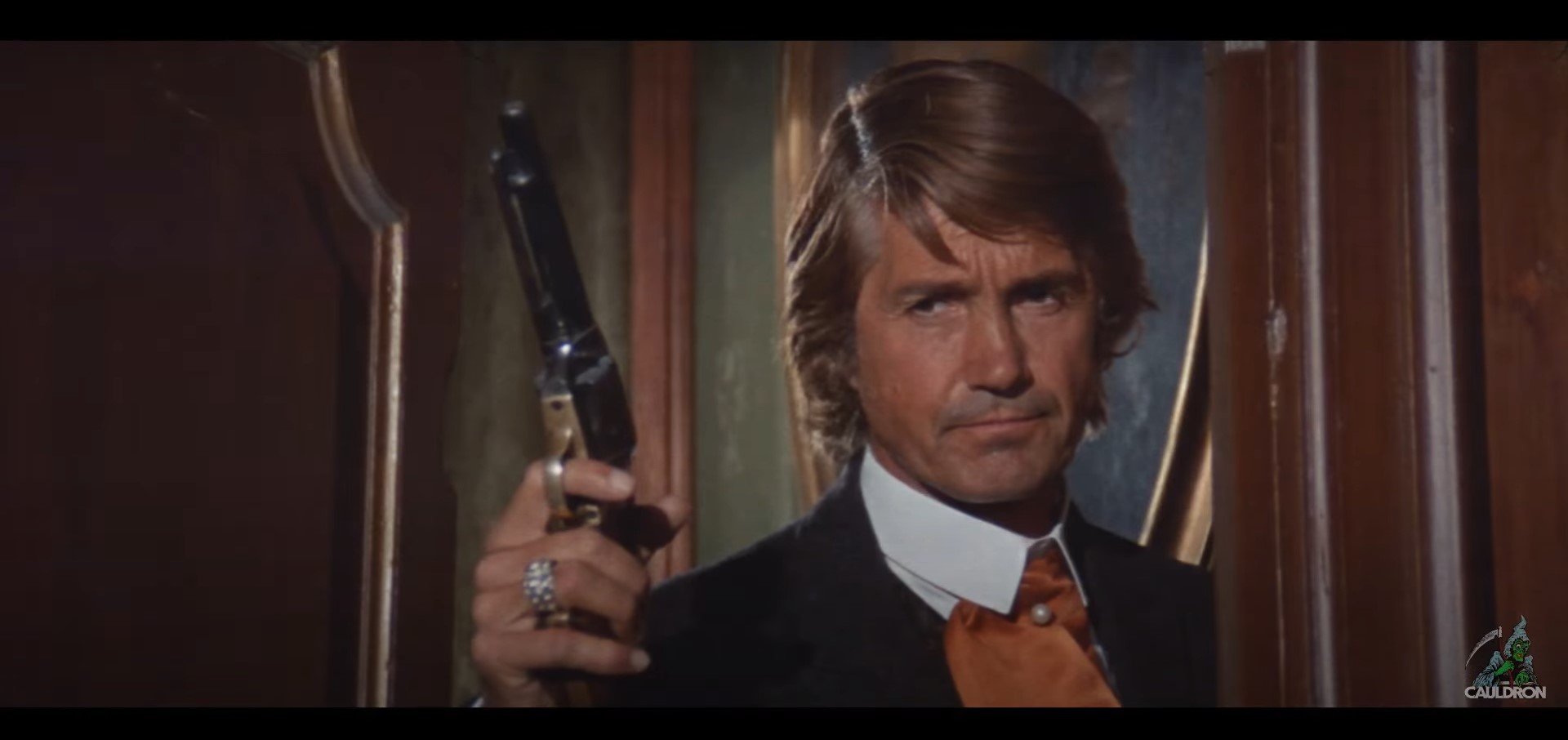
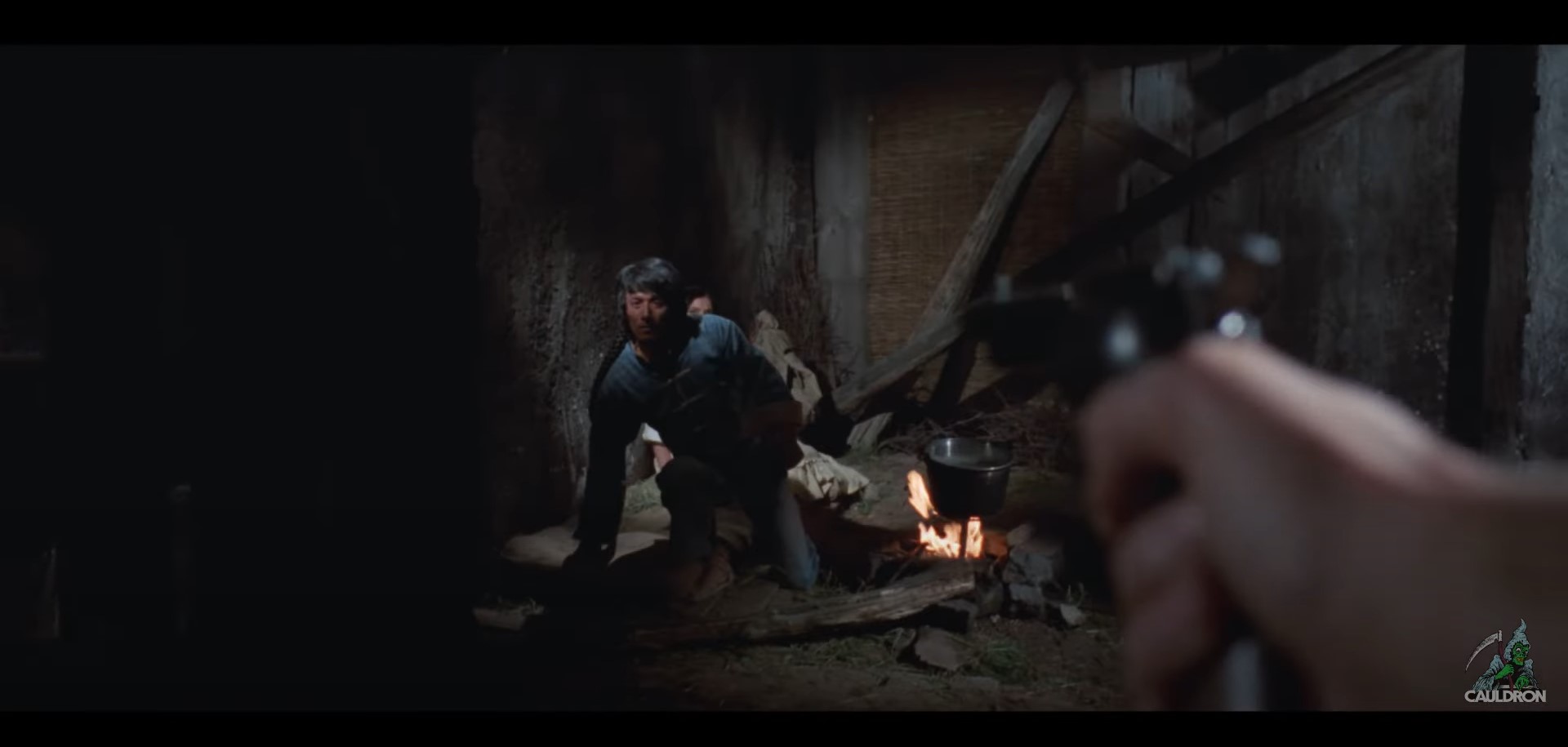
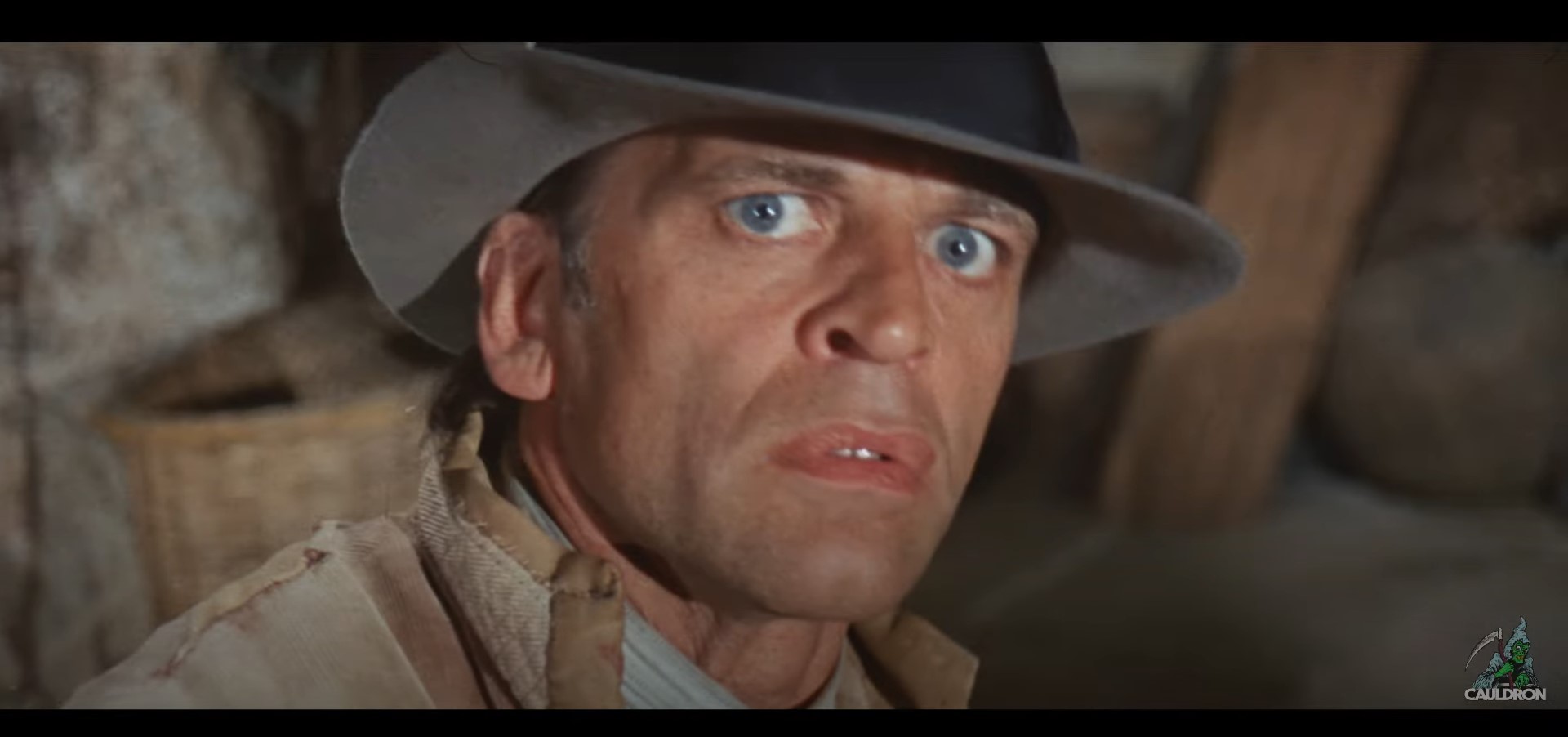
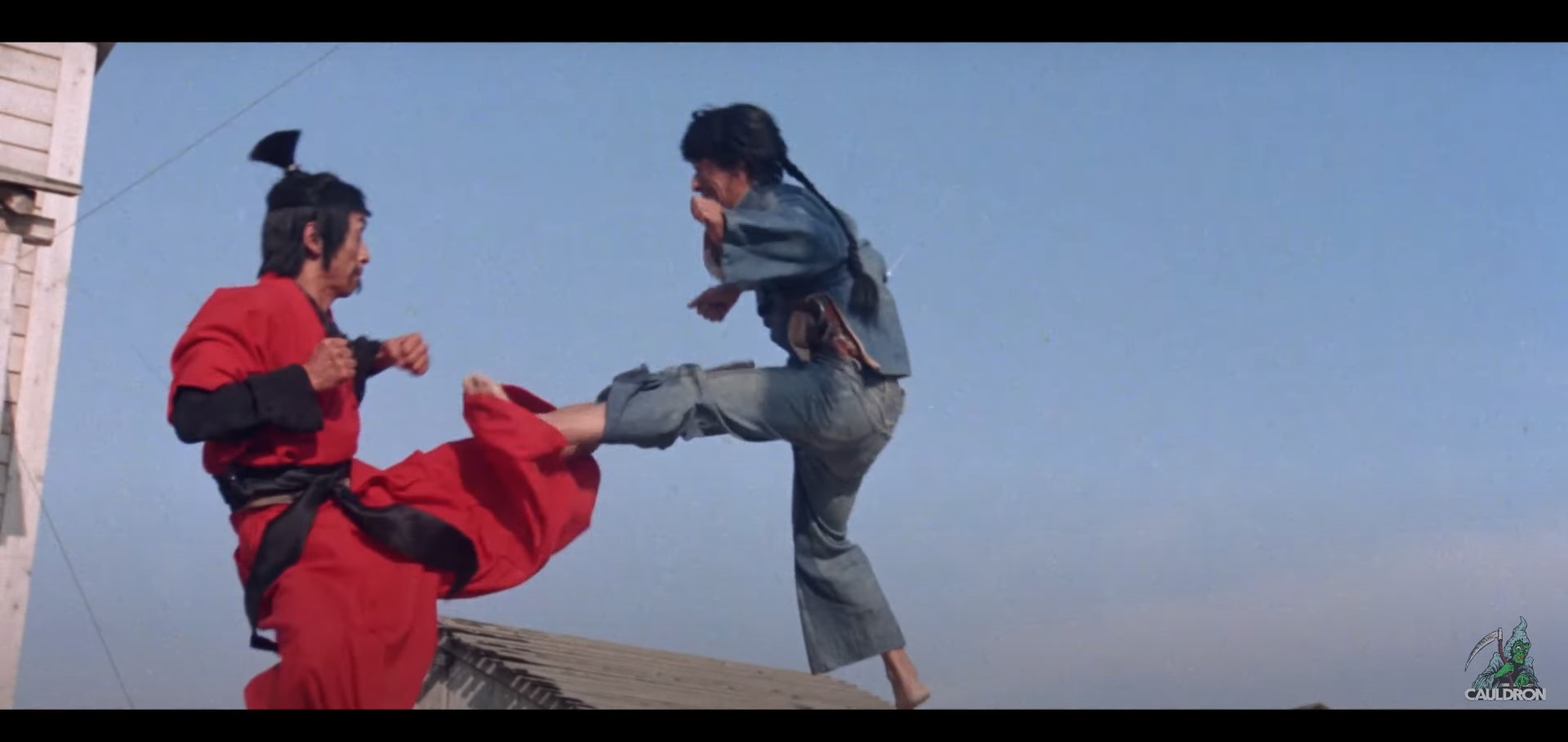
Leave it to the Italians to make a Western set in Texas and to have protagonist Chinese hero be played by a Japanese actor.  Performing under the stage name of Chen Lee, the Aichi, Japan born actor’s real name is Myoshin Hayakawa and he plays the role of Chin Hao, a nomadic Chinese immigrant, taught the rare fighting ways of an ancient martial arts, travels to America in hopes to reside in the American dream.  Lee’s certainly a presence on screen in his quiet and reserve composure but equally as self-assured and as competent to take on the worst-of-the-worst in the exploitative West where law has yet to reach it’s firm grasping hand.  Lee lands fight sequences with fierce finesse, though perhaps not on a Bruce Lee level, but does it so with his own distinct style of chopsocky flair with laws of physics breaking gliding through the air and tremendous accuracy in all areas of throwing weapons, even hyperbolizing his Yo-yo as a coconut splitting, head-cracking weapon.  When not wiggling his way out of impossible no-win situations with smarts and strength and when it comes to the interests of romantics, Chin comes to find solace being twisted into a paired fate with Mexican national Christina, played by Italian actress Carla Romanelli (“Lesbo”), after saving her father from being executed. As if destined to fall in love at first sight, the two outlanders are in each other’s embrace but before anything could be commutated by any sense of the term, head honcho rancher Mr. Spencer (Pierro Lulli, “Django Kill… If You Live, Shoot!”) hires out assassins to relieve him of a troublesome Shanghai Joe. The killers are just as colorful and individualizes as the titular character with quirky personalities and traits that make them indubitably daunting by their mere nicknames: Pedro, the Cannibal (Robert Hundar, “Cut-Throat Nine”), Burying Sam (Gordon Mitchell, “Evil Spawn”), Tricky the Gambler (Giacomo Rossi Stuart, “The Night Evelyn Came Out of Her Grave”), and Scalper Jack (Klaus Kinski, “Nosferatu the Vampyre). The eclectic bunch of Western-horror tropes level out Shanghai Joe’s uncanny abilities with their own big penchants for demise but the actors behind the characters also have bigger personalities, especially Kinski who is only in the film for a few scenes but is second billed in both before and after credits. “Shanghai Joe” fills out the cast with Dante Maggio, Andrea Aureli, George Wang, and another Japanese actor and martial arts master, Katsutoshi Mikuriya, as the showdown villain trained in the same ancient combat arts as Chin but turned his back against the teachings’ moral principles for his own greed.

Plot pointed by a series of bad case scenarios to showcase Shanghai Joe’s superior skillset as not only a fighter, but also an intelligent, almost con-like, mentalist as well as being good at just about everything else, the film is laced with repetitive derogatoriness from all races except white.  “Shanghai Joe’s” indelicacies, coupled with graphic, moderately bloodied violence, adds to the laundry list of idiosyncrasies of this unique old West spectacle.  The Caiano and team’s scripted narrative exacts the epitome of the label the Wild West where the unexplored, uncultured, and uncivilized country gives way to lawlessness and opportunity, especially the latter at the expense of others.  Joe becomes a beacon of moral hope, a foreigner who seeks, by way of a semi forced hand, to correct the system from within using his rare training only as a position of defensiveness or to right a terrible injustice.  Caiano has the eye to make a legitimate Italian spaghetti western that hits all the hallmarks and the director can also fashion a two-prong narrative with a unified purpose that builds up the hero first with a series of outlaw confrontations before immersing him into a rigorous roughhouse recruited by the rotten rancher.  While each face-off spars differently, Caiano letting the actors build upon and have fun in their villainy, the ultimately take the place of the tip of the spear antagonist, rancher Stanley Spencer, who doesn’t get what’s owed him by the roll of the end credits.  The high-flying combat wires, that you can plainly see during the air time fight sequences, and the personal and frame stylistic choices of the actors and Caiano tend to distract viewers from the unfinished business, concluding on a satisfactory note that what we just experienced was felicitously violent, engrossingly entertainable with appealing characters, and just waggish enough to provide levity amongst the harsh racism and the aforesaid brutality. 

“Shanghai Joe” is a must-have, must-see Italian Western for the subgenre aficionado and, luckily, Cauldron Films delivers the 1973 film onto Blu-ray for the first time ever in North America. The AVC encoded BD50 is presented in high definition, 1080p, with a widescreen aspect ratio of 2.35:1 of a 2K restoration scan from the original 35mm negative. Cauldron Films’ restoration is a labor of love for an atypical western of the obscure nature with a generous tactile intensification to bring the warm dust of the tumbleweed West down upon the anomalist Asian in a blue Tang suit and pants with a conical hat. A few and very faint scratches are the only issues observed that come and go as quickly as they came, but the there’s a nice richness to the coloring, a natural grain, and zero compression issues or unnecessary enhancements detected. The DTS-HD Master Audio 2.0 mono comes in two options – An English dub and an Italian dub. Preferably, I went with the English dub over the Italian despite “Shanghai Joe” being an Italian production. For one, Myoshin Hayakawa spoke English which you can tell by reading his lips so the English track paired better. Secondly, the Italian track is quite orotund to the point of losing some minor ambient detail as well as not feeling to be a part of the whole package team. Slight hissing at times during dialogued scenes but the clarity comes through with the decent dub pronunciations and the chopsocky ài yas are often repeated in the same audio tone and level in every evasive or attack flight by Joe but is not ostentatiously annoying. “Marquis de Sade Justine’s” Bruno Nicolai and his twangy score, channeling his best Ennio Morricone, has great purpose as “Shanghai Joe’s” main theme that rowels up and shapes Joe’s hero role. English and English SDH subtitles are available. The special features include an interview with Master Katsutoshi Mikuriya on how he was approached for the role and the martial artists also discusses the fight sequences in Samurai Spirit, film historian Eric Zaldivar puts together a visual essay with the topic East Meets West: Italian Style, an audio commentary by Mike Hauss from “The Spaghetti Western Digest,” the original trailer, and an image gallery. The physical portions of the release include a translucent Blu-ray snapper with a reversible cover art featuring two stylishly illustrative posters in contrast to the simple disc art of the red “Shanghai Joe” title set upon a black background. The early 70’s feature comes not rated, has a runtime of 98 minutes, and is region A locked. “Shanghai Joe’s” singularity scores high on the limited East meets West subgenre novelty but certainly aces as a versatile Kung-fu period piece with ridiculously good fight scenes, a handful of callously charming characters, and a disparaged hero, who embodies the good in all of us, you can gladly cheer for from beginning to end.

East Doesn’t Just Meet the West, It Kicks It’s Ass in “Shanghai Joe!”

Forcing Conformity on EVIL is a Violent Cause. “Murder in a Blue World” reviewed! (Cauldron Films / Blu-ray)

“Murder in a Blue World” now available on Blu-ray!  Purchase a Copy Here at Amazon.com!

Nurse Ana Vernia lives in an authoritarian, dystopian world where she just received a commendation for her work, but beneath the archetype of a scrutinizing society seeking to acculturate deviants by way of involuntary electroshock treatments, Ana moonlights in her own violent behavior as an act of mercy. Under the pretense of disguises, Ana seduces men aberrant to the social norms, returns them to her luxurious mansion, sleeps with them, and to then only murder them with precision before they can be subjected to imperious judgement for being different. All the while, societal dissentient David, an exiled member of a brutal gang, witnesses Ana’s exploits and infiltrates her home, her life, to garner incriminating evidence in order to blackmail her for money, but when David is tracked down for his former gang and beaten to near death, he comes ironically under the care of nurse Ana who plans to fix David before his fate before the electroshock treatments.

Get ready to dial high on voltage on the social commentary scale, “Murder in the Blue World” is a fascinating, dystopian look at social disorder. Heavily influenced in more ways than one by Stanley Kubrick’s “A Clockwork Orange,” the Eloy de la Iglesia 1973 picture was once entitled “Clockwork Terror” in the U.S. to ride the lucrative coattails of Kubrick’s symphony to violence. Also known in other parts of the world as “To Love, Perhaps to Die,” “Satansbrut” (“Satan’s Fiend”), and “La clinique des horreurs” (“The Clinic of Horrors”), Iglesia’s original penned script and title actually “Una gota de sangre para morir amando” (“A Drop of Blood to Die Loving”), co-written with José Luis Garci (“El Teroso”), Antonio Artero (“El tesoro del capitán Tornado”), George Lebourg, and Antonio Fos (“Panic Beats”). The Spanish film goes internationally by many monikers but has one objective and that is to counter the dictation of free-thinking individuals with violence. “Murder in a Blue World” is produced by José Frade under his self-titled production company, José Frade Producciones Cinematográficas S.A.

“Murder in a Blue World” is so much so in the Stanley Kubrick wake, the film stars Sue Lyon who played the titular character in Kubrick’s “Lolita.”  More than a decade later, the “End of the World” and “The Astral Factor” actress enters another emotionally lacerating role of a woman, a nurse, sworn to do no harm who sees that a quick euthanization is the only possible mercy she can offer to spare societal downcast souls from a fate far worse than death in a cold and cruel condemnatory world.  Lyon’s excellent in curating her different disguises and looks, taking on a variety of personas with subtle mannerisms despite how comical or implausible they may appear on screen, such as the idea of being an old, gray-haired woman.  Lyon is fair and small in stature compared to her male counterparts but commands the screen with her confident approach to Ana’s advantageous beauty and eroticism that can turn a gay man straight apparently.  Former gang member David shares her ideology to an extent, to the extent of capitalizing off her nightly murder for mercy escapades in order to survive on the street alone.  Christopher Mitchum, son of the late Golden Age of Cinema actor Robert Mitchum (“El Dorado,” “The Longest Day,” “Scrooged”), plays the nihilistic gangbanger with aversion to any or all rules that tell him how to think.  Mitchum’s impressive motorbike skills are utilized for an impressive chase sequence that incorporates ramp jumps and car crashes at a high speed velocity, a talent Mitchum and film producers utilized often in his other credits, such as “Sumertime Killer” and “Big Jake.”  Lyon and Mitchum don’t have much screen time until later in the story but their interactions are playful, flirtatious almost, but in a predator-prey kind of way and we’re not really sure which-is-which in that shifty relationship.   French actor Jean Sorel (“A Lizard in a Woman’s Skin”) rounds out the three-prong principal characters as a diehard representative of the authoritarian body and a potential love interest for Ana.  Playing Victor Sender, a neurologist experimenting on the criminally insane with electroshock therapy and working at the same hospital as nurse Ana, Sorel is the epitome of the calculating stability and clean-cut coldness of the ruling class that’s doesn’t see what they’re doing to be a unjust, cruel, or even a problem at all. “Murder in a Blue World” rounds out the cast with Ramón Pons (“Scarab”), Charly Bravo (“The Cannibal Man”), Alfredo Alba, Antonia del Rio, Domingo Codesido Ascanio, and Fernando Hilbeck (“The Living Dead at Manchester Morgue”).

On the surface, director Eloy de la Iglesia carves a rib right out of Stanley Kubrick’s “A Clockwork Orange” with themes of exquisite, unprovoked violence sparked by the very basis of rebellion against authority. Not to also forget to mention the elaborately dressed gang of four, the electroshock treatment that aims to cure the criminal cerebrum, and the dystopian, futuristic guild with hints of fascism. “Murder in a Blue World” is a mixture that’s two-third post-Kubrick and one-third part pre-Paul Verhoeven, the latter reaching into fascist imagery as well as extreme commercialism that has surely inspired the “Robocop” and “Starship Trooper” director. Blue wellness drinks and panther-primitive men’s underwear are just a few the commercials fabricated for Iglesia’s coloring of an influential culture as the filmmaker uses the motif to symbolize and parallel brainwashing that becomes more severe when the government attempts to force a cure for criminality down incarcerated individuals’ throats. Even David announces to the world in multiple scenes how he doesn’t care what others think and he’s a free thinker. Homosexuality, prostitution, and physical imperfections suggest master race ideology amongst the domineering class hierarchy. Those who Ana seduce, as well as David, struggle in poverty and are considered inferior though not explicitly mentioned in the story. Iglesia integrates his trademark graphic violence, closeups of stabbings and throat slitting, but only really visualizes post-third act climax to keep more of an implied violence, off screen, and quickly edited to maintain an unclear vagueness of what’s right and what’s wrong in what Ana’s accomplishing.

A phenomenal companion piece and second bill to Stanley Kubrick’s “A Clockwork Orange,” Eloy de la Iglesia’s “Murder in a Blue World” finds Blu-ray love with a high definition, 1080p release from the genre film eternizing Cauldron Films. The Blu-ray debut is a 2K restoration of the 35mm transfer that has held up fairly well over the decades to only show pockets of wear and tear. Presented in a widescreen 2.40:1 aspect ratio, there’s no edge enhancement or digital noise reduction to clear out the natural stock grain, leaving the picture quality with more texture. Skin tones are, for the most part, natural and popping color grade doesn’t stray too far from its integrity until one brief scene goes full Oompa-Loompa orange before reverting back to normal. Light scratching is common throughout but not obtrusive to the viewing. Two audio options come with the release, an English dub dual mono and a Spanish dub dual mono. Since the cast is comprised of American, French, and Spanish native actors, neither track appears attractive from a lip-reading and audio-hearing perspective. Preferably, I went English dub as Sue Lyons and Chris Mitchum monopolize the lion’s share of screen time. There’s quite a bit of hissing and popping on the single channel output that can render dialogue almost indistinct but passes with a D+. The English subtitles synch well and show no sign of inaccuracy or grammatical issues. English SDH captions are available as well. Special features include a 2008 archive interview with Chris Mitchum, an interview with dubbing guru Ben Tatar Dubbing in a Blue World, a video essay read by Spanish Gothic film and literature scholar Dr. Xavier Aldana Reyes who dives into the themes and constructs of Iglesia’s film, audio commentary by film historian Kat Ellinger, the VHS cut of “Clockwork Terror” in 720p standard definition, and image gallery. The physical release comes in a clear Blu-ray snapper with a colorfully illustrated cover art that is reversible with one of the more notable and beautifully shot scenes on the inside. With a runtime of 97 minutes, the release is region free and is unrated. “Murder in a Blue World” receives a gorgeous Blu-ray restoration and debut as it’s an eclectic work of inspired and pioneering visual art from one of Spain’s most individualist directors.

“Murder in a Blue World” now available on Blu-ray!  Purchase a Copy Here at Amazon.com!