This Spy’s Sex Serum Will Drive Men EVILLY Mad! “Blue Rita” reviewed! (Full Moon Features / Blu-ray – DVD)

Own “Blue Rita” on Blu-ray and DVD Combo Set Today!

Misandrist Blue Rita owns a high-end gentlemen’s cabaret.  Her renowned nightclub is also a front for espionage activities.  With the help of a Bergen, her handling, and her right-hand club manager Gina, she’s fed male targets that are affluent and powerful to kidnap and torture to extract sensitive intelligence information.  As a side hustle, a perk that comes with exploiting the naked and chained up men in her underground boxed cells, Blue Rita uses her chemical powers of seduction to sexually torture her captives into withdrawing their bank accounts dry.  When new girl Sun is hired in to not only titillate the nightclub client with her erotic Pippi Longstocking performances, the Blue Rita pledger works her first mission to reel in a wealthy, international boxer as the next target but Sun’s own conflictions collide with Rita’s sworn hate for all men, cracking the door open ajar just enough for Interpol and the Russian intelligence agencies to try and undermine Blue Rita’s confrontational spy operations. 
What’s renowned most about eurotrash filmmaker Jesus (Jess) Franco is his diverse contributions to the European and American movie-making markets.  Though most of his work is regarded as schlocky, beneath the sleaze and sordidness is a carefully calculating psychotronic director.  True, Franco may not be famously esteemed as, let’s say Martin Scorsese or Steven Spielberg, but his infamy should not be ignored amongst the present company of similar filmmakers like Tinto Brass or even Roman Polanski.  One of the late Franco’s few spy game theme films, “Blue Rita” is a hot house of sleaze and deceit, written by the director.  Filmed in Germany with German actors and actresses, the film went under the original title “Das Frauenhaus” translated as “The House of Women,” referring to the Blue Rita’s distaste for men and keeping an all-femme fatale, and mostly nude, workforce for her clandestine affairs.  Elite Film is the production company with Erwin C. Deitrich (“Love Letters of a Portuguese Nun,” “Swedish Nympho Slaves”) producing.

Much like Franco’s diverse dips into a variety of subgenres, “Blue Rita’s” cast is also quite an assorted lot in talent from sexploitation, horror, and the XXX industry.  The German production also garnered not just homefield advantage with German actors but also lured into the fold some of the French cast cuisine to spice up the affair.  Martine Fléty is one of those French foreigners, embodying the lead role of Blue Rita.  An adult actress of primarily the 70s, “Blue Rita” became Fléty only titular role but wasn’t her last Jess Franco feature, having continued her X-rated run with the director in “Elles Font Tout,” “I Burn All Over,” and “Claire.”  Either half or entirely naked for the entire narrative, Fléty’s comfortability bare-bottom relays power in her performance as an unwavering femme fatale agent that has men begging for sex and begging for their very lives.  Back then, the lines blurred between porn and sexploitation, often times melding into European coalescence hitting the same marquee theaters until it’s eventual separation.  Esther Moser (“Around the World in 80 Beds,” “Ilsa, The Wicked Warden”), Angela Ritschard (“Jack the Ripper,” “Bangkok Connection”), Vicky Mesmin (“Dancers for Tangier,” “Love Inferno”), Roman Huber (“Girls in the Night Traffic,” “Sex Swedish Girls in a Boarding School”), Olivier Mathot (“Diamonds of Kilimandjaro,” “French Erection”) and Pamela Stanford (“Sexy Sisters,” “Furies sexuelles”) rode, among other things, that fine line between grindhouse gauche and the taboo and certainly do well to incorporate both traits in Franco’s equally indeterminate genre film.  German actor and one of the principal leads Eric Falk (“Caged Women,” Secrets of a French Maid”) too dappled between crowds as a tall, dark, and chiseled chin but the actor chiefly sought limelight in sexploitation and as the haughty boxer Janosch Lassard, who karate chops at lightning speed, Falk adds to “Blue Rita’s” sexy-spy thriller.  Opposite the titular vixen is “Wicked Women’s” Dagmar Bürger who, like the rest of the cast, have crossed paths in a handful of exploitation exciters.  Bürger has perhaps the least built-up character Sun as she’s subtly folded into Blue Rite’s innermost circle without as much as a single ounce of doubt in her character, perhaps due in part to Bergen, Blue Rita’s handler, was once Sun’s direct-to, but Sun becomes the impetus key to everything falling apart at the seams and her role’s framework feels unsatisfactory just as her crumbling infatuation that’s more arbitrary than motivationally centric.
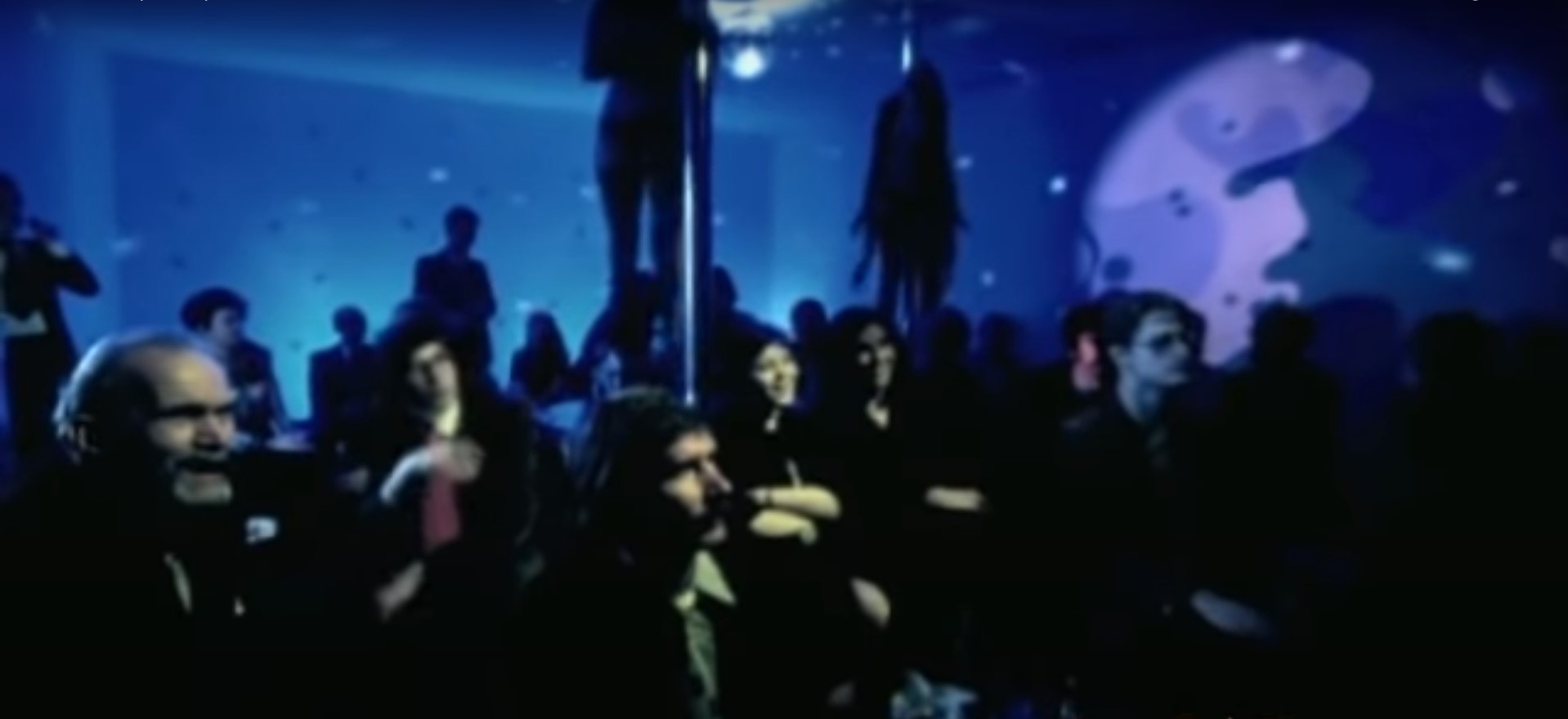
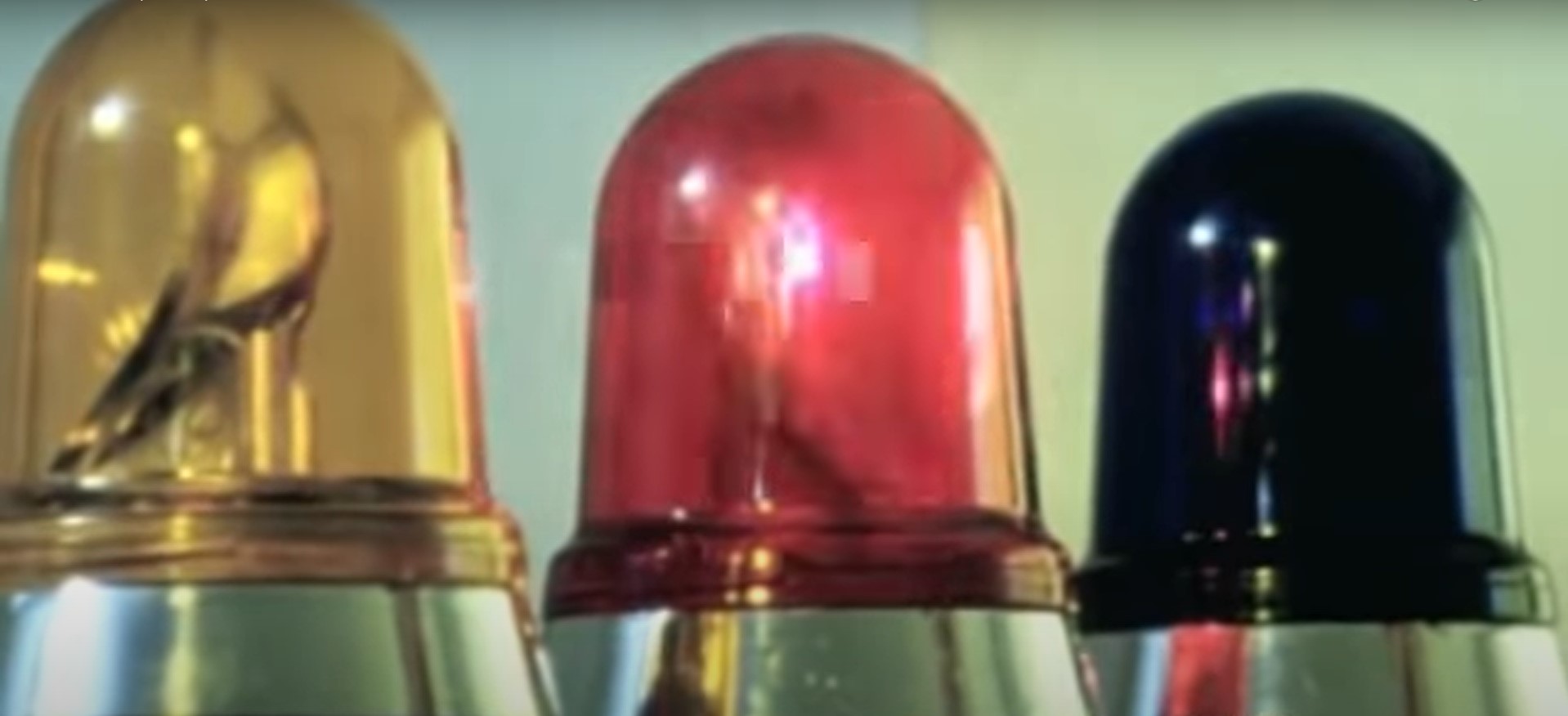
“Blue Rita” doesn’t necessarily broach as a film by Jess Franco whose typical undertakings are coated with sleazy gothic and historical context.  The 1979 feature, set around the extraction of international intelligence data by way of chemical approach, not terribly farfetched considering how the CIA once used LSD as a truth serum, is about as sordid and sexually graphic as any Jess Franco film gets but brings about a futuristic air laced with not just super cool spy gadgets and weaponry, to which there are really none to speak of as an example, there lies a more ultramodern verge upon unseen in much of the earlier, Spanish-born director’s work.  A futuristic holding pen with a capacity no bigger than an industrial-sized washing machine with a descending spiked barred ceiling, a hyper-aphrodisiac goo that makes men so horny it puts them on the edge of insanity and death, and the sleek, contemporary sex room with translucent furniture and stark white walls all in the routine hustle and bustle of Paris, France. “Blue Rita’s” contrarian patinas add to the film’s colorful charisma of avant-garde stripteases and a black operations nightclub, two of which combined play more into the “Austin Powers” funky 1970s ecosphere rather than in the high-powered espionage world of James Bond, the Roger Moore years.
For the first time on Blu-ray in the North American market, Full Moon Features puts out into the world a fully remastered, high-definition, 2-disc Blu-ray and DVD set. The AVC encoded, 1080p, BD25 entails picture perfect image quality that sharpen “Blue Rita” with greater resolution in comparison to previous DVD versions with full-bodied color, in setting tones and in body tones, and a contour-creating delineation that establishes depth and texture better, presented in a widescreen 1.85:1 aspect ratio. Not flawless mind you with soft spots rearing up every so often in the variety of interior and exterior, organically and inorganically lit scenes but there’s distinct contrast that delivers a recognizing lighting scheme that deepens the shadows in the right places without signs of an inadequate compression, especially on a single layer Blu-ray, and the Full Moon release retains natural grain with no DNR or other image enhancements. The release comes with two audio options, a lossy Dolby Digital 5.1 and a French Dolby Digital 2.0 Stereo, both of which have a horrendously acted burned-in English dub of not the original actors’ voices. Banal dub does take the quality of Franco’s dialogue down a good peg or two, which the original dub track was likely spoken in native German and some French judging by the cast list nationalities and where the bigger distribution market was for the planned; yet, though the dialogue is verbose and ploddingly straightforward to make do, losing some of the depth in the process, the quality is voluminous to ensure no mistake is made in underemphasizing the story’s outline when necessary. Ambience and other design markers hit more than well enough to sell the surroundings and the action to make those qualities palpable. English subtitles are option but not available on the setup; they will have to added in per your setup’s options. The Blu-ray extras come with a rare photo gallery, an archived interview with Chris Alexander with Peter Strickland discussing Franco circa 2013, and a vintage Jess Franco Trailer Reel. The DVD houses a different set of special features, separate from the Blu-ray’s, with Slave in the Women’s House interview with Eric’s Falk plus the DVD also offers Eurocine trailers. Those interested in supplementary content will be forced to pop in both discs to fully abreast of all bonus material. What’s eye-catching about the Full Moon Feature’s release is the erotic front cover on the cardboard O-slipcover, sleekly illustrated for your kink and perversive pleasure. The Blu-ray Amary inside has a NSFW story still of Dagmar Bürger walking down a spiral staircase in the buff. The same Dagmar Bürger image graces the DVD cover while a new illustrated luscious lips are pressed on the Blu-ray disc opposite side. There is no insert or booklet included. The region free release has a runtime of 78 minutes and is not rated.

Last Rites: The late Jess Franco may have a cache full of sleaze in his repertoire, but the director had a sense of panache and intensity that’s sorely underrated outside his fanbase. “Blue Rita” shows Franco’s range, stylistically and genre, and Full Moon’s sultry release is now high-definition gold in the color blue.

Own “Blue Rita” on Blu-ray and DVD Combo Set Today!

Conman Bites Off More EVIL Than He Can Chew. “Impulse” reviewed! (Grindhouse Releasing / Blu-ray)

Pre-Order “Impulse” Here at Amazon!

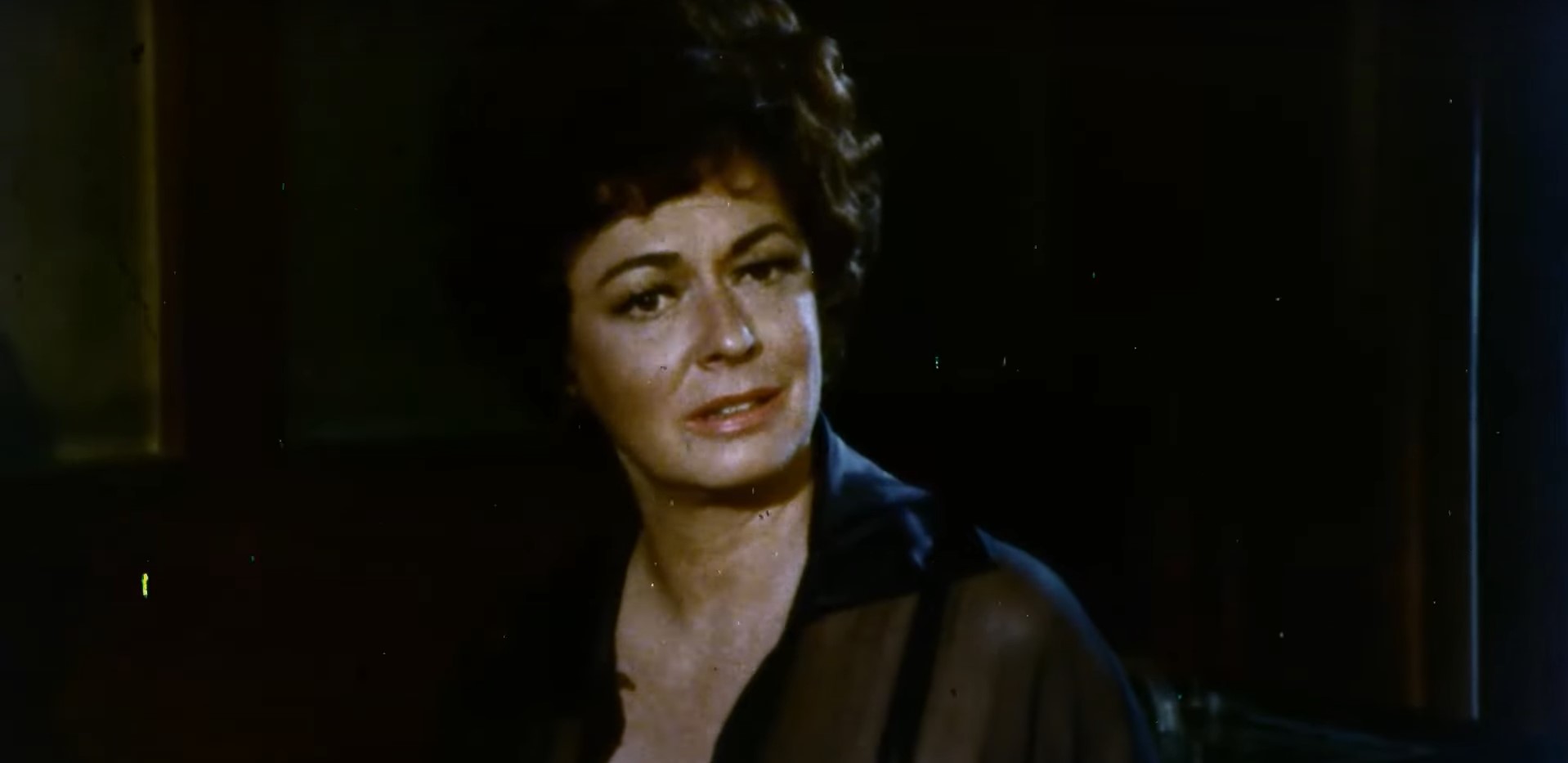
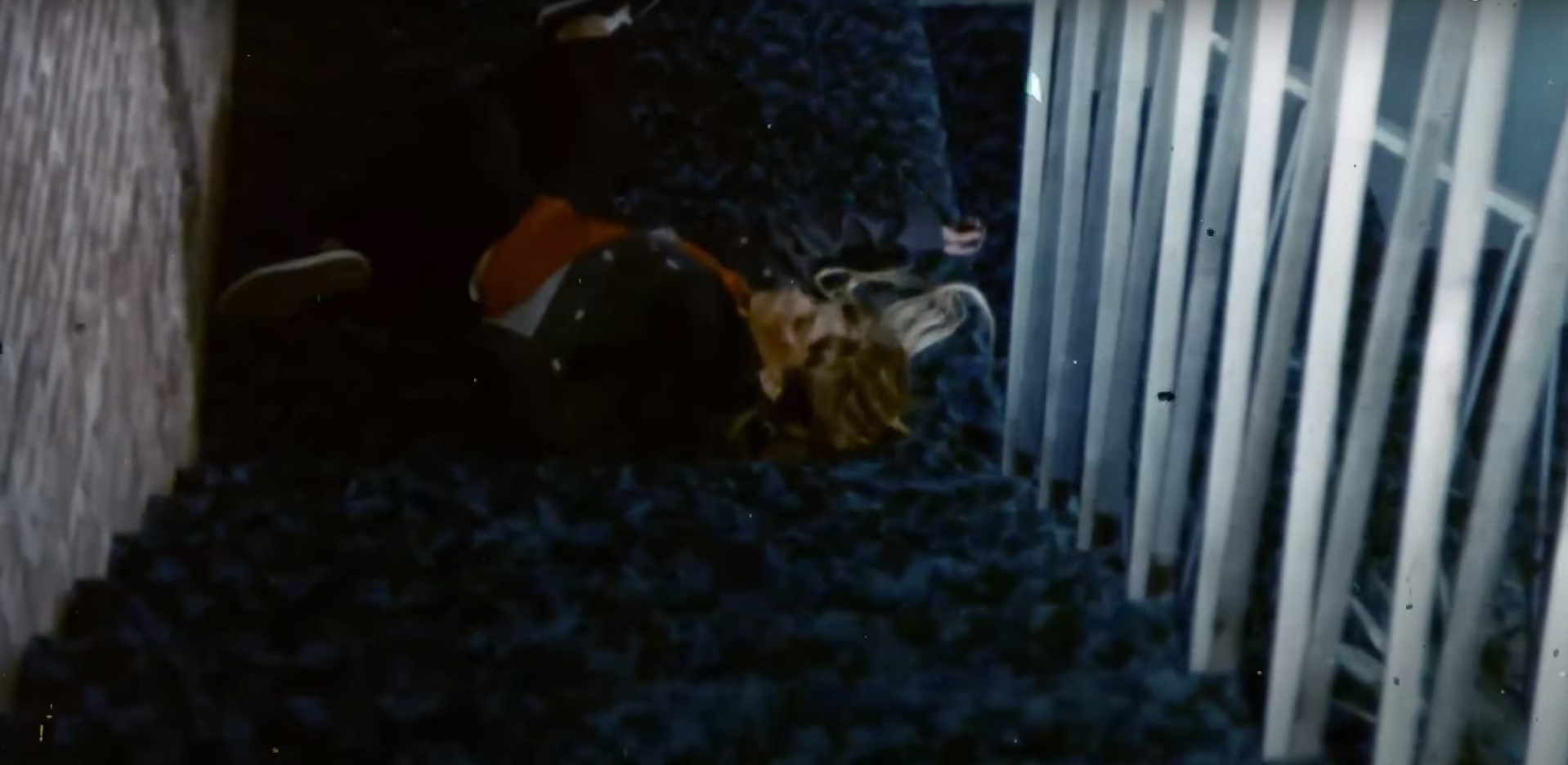
As a boy, Matt Stone had an altercation that resulted in the transfixing death of a man at his hands.  As an adult years later after a sanitarium stint, Stone seduces wealthy women as a sophisticated and well-off playboy, using the cultured guise as way to con women out of thousands of dollars, and then murders them when has milked them for all their worth or when their patience for his extravagant and philandering behavior has run it’s course.  When he meets widow Ann Moy, Stone begins his plan of deceit, eyeing not only the single mother for her riches but also Ann’s even more affluent and eccentric best friend Julia.   Stone’s scheme begins to unravel when a strong-arming ex-partner unexpected show up to force into his ploy, his mental instability flares into paranoia and near psychosis, and then there’s rambunctious Tina, Ann’s young daughter who even though doesn’t want Stone to replace her deceased father also witnesses firsthand Stone’s violent transgressions. 

Personally, when William Shatner comes into the conversation about anything, “Star Trek” inevitable pops into the mind first thing.  “Star Trek” and “Captain Kirk” have become not only a household name for Trekkies but also for the non-science fiction laymen who rather get lost in, dare I say, rom-coms.  Shudder.  Diehard horror fans know Shatner is more than just the charismatic space explorer seducing alien women, karate chopping the Gorn, and become inundated with the furry Tribble.  The now 92-year-old Canadian born Shatner has sporadically yet constantly been the star of thrillers for much of his career, such as 1966’s “Incubus,” 1975’s “The Devil’s Rain,” and even the more recent 2019’s “Devil’s Revenge” with fluctuating, polarizing success.  Yet, one of Shatner’s engrossingly more disturbing performances comes from director William Grefé’s (“Mako:  The Jaws of Death”) 1974 schizo-thriller “Impulse.”  Penned by “Blood Mania” and “The Killing Kind’s” Tony Crechales, “Impulse” was filmed in Tampa, Florida under Conquerer Films with Socrates Ballis in his first producing role.

What most don’t realize about William Shatner, from their limited scope of him inside just “Star Trek,” is the man has range and can accomplish more complexity than just being confident space captain.  “Impulse” really drives Shatner to split hairs and be a polygonal persona, one that goes into deep anxiety at the sight of blood or extreme violence, one that can polished and suave in charm and romance, and one that can be ruthless and cunning.  All these traits fit into Shatner’s performance bubble of Matt Stone, chiseling each angle of the traumatized encoded individual into a wolf in sheep’s clothing in constant conflict with himself and those around him.  With the exception of Tina, those around Stone are targets as he swoons Anne Moy (Jennifer Bishop, “Horror of the Blood Monster”) and Julia Marstow (Ruth Roman, “The Baby”) of their money.  Anne and Julie feed into Stone’s false promises and hidden agendas and, as characters, Bishop and Marstow play their diverse friendship with traditional flare that can be easily duped by a stranger from off the street and barely know.  Tina is the only wildcard.  With the look like Heather O’Rourke and a prickly preteen attitude, Kim Nicholas falls in tune with the boy who cried wolf but, in this instance, as the girl who cried wolf as she becomes the aware adolescent privy to a fault to Stone’s dangerous side.  Agitated by the loss of her father and her mother’s effortless slip into a physical relationship, not to forget to mention her impish naughtiness, turns Tina into an incredible source, labeled spiteful, and angry at the world despite her true knowledge of her own world burning down around her with Matt Stone at the wheel.  “Impulse” rounds out the cast with James Dobson (“The Search for the Evil One”), Marcia Knight (“Stanley”), Shatner’s then wife Marcy Lafferty (“Kingdom of the Spiders”), and James Bond’s Odd-Job himself, the former heavy weight wrestler Harold Sakata as the ex-partner Karate Pete crashing Stone’s scam.

William Grefé steers childhood trauma to be the root cause that shapes Matt Stone into a cold and calculating killer.  While not driven to be a rabid dog seeking to kill on sight, the sweet and innocent child only protecting his mother from the potentially rapist hand of a drunken brute had not only been scarred by the incident but also incited his mother to institutionally commit him as if assigning him blameful wrongdoing, extenuating his reality into a woman hating deviant.  And the worst part of it is, and the part that Grefé is able to define and make Stone be sympathetic to audiences, is Stone knows he shouldn’t have been deinstitutionalized, as he more than once referred to his situation as a puppy left out in the middle of the street.  Then, does “Impulse” become more of a tragedy for our principal villain as an unfortunate byproduct of a catastrophic situation, an ill fit mother, and a system that have all let him spiral down to this point in the story?  The only individual to see through his ruse, in fact, is another child, Tina, with a child’s sixth sense in their melting pot of developing emotions.  The social niceties and grown-up cognitive reasoning shield Anne Moy, Julia Marstow, and others, and even to an extent the unscrupulous brute Karate Pete, from Stone’s devious nature and his will to survive at any cost, no matter who he has to kill whether be a lover, former partner, or a little girl. 

The new Grindhouse Releasing, the first through the distribution firm MVD, is a 2-disc Blu-ray release restored from a rare archived, 35mm film elements.  The original negative was unfortunately destroyed and the restored, 4K scanned print comes with a prologue disclaimer that some elements may not be up to quality standards.  However, the print, on the March 12th Blu-ray release now available for pre-order, looks stellar, stored on an AVC encoded, 1080p High-Definition, BD50, and presented in a widescreen 1.85:1 aspect ratio, with only a few noticeable scratches, faint to the eye, in a few brief frames within the natural grain.  Grading can appear monochromatic gray in some exterior scenes but the overall grading pops and are distinct in natural-looking shading. We can also look at Grefé’s direction and Edmund Gibson’s cinematography as just as striking as the picture quality with brazen, worth-while shots that include an interior car shot aimed toward the windshield heading toward a watery grave. The English language original mono track, for a single channel output, clears the bar with room to spare with intelligible, comprehensive dialogue, capturing every word and sentence distinct and syllabized to great detail without too much interference, technically and from layering. Slight popping and background electronic interference never engulfs or take the reins over the layers. Decent spacing and a good range, supported by the Lewis Perles lingering unhinged musical composition, adds value to Shatner and the casts’ performances. Grindhouse Releasing Blu-ray also comes with the original mono French soundtrack. English subtitles are optionally available. Loaded with special features with a William Grefé audio commentary, Shatner Between the Treks a Ballyhoo produced documentary regarding Shatner’s various projects before, after, and in-between, Kingdom of the Shatner is a William Shatner live interview in Santa Monica in Oct. ’22 after a Shatner triple feature, Shatner promo shorts, William Grefé shorts “Thumbs,” “Iceman,” “The Cask of Amontillado,” and “Underwood,” a making-of “Impulse,” the 40th anniversary screening at the Tampa Theater with William Grefé post-film discussion, the raw footage of Shatner saving Harold Sakata from accidental lynching with two commentaries from Grefé and Shatner, still gallery, two theatrical trailers, and other trailers from Grindhouse Releasing titles. Also included are bonus Grefé features, including “The Devil’s Sisters that has its own special features with an introduction, Grefé audio commentary, radio spot, still gallery, and a revisiting of the film from the director, plus “The Godmothers” with only an intro by Grefé. Grindhouse Releasing’s “Impulse” is truly a lovefest of the two Bills, Grefé and Shatner, and the label really goes the extra mile with a deluxe edition and restored release with a character and title embossed, fully colorized, and rigid cardboard sleeve with a clear, dual disc push lock Amaray Blu-ray case sporting the originally illustrated, composition cover art that’s also reversible with the same sleave cover design that’s utter madness on printed cardboard. Inside, the discs are locked in on the right, one on top of the other with the top disc snuggly in behind the feature disc in a vertical layout, and both disc arts are rendered with pulpy aesthetics and primary colored, yet darkened feature stills for full fear effect. Opposite in the insert section, a 4×6 illustrated liner portrait of Matt Stone painted by artist Dave Lebow, and a 6-page linear note booklet with color pictures, grindhouse posters, and an essay by Jacques Boyreau. The 87-minute Blu-ray comes region free and is not rated.

Last Rites: The tale of two Bills, Shatner and Grefé, is a match made in heaven, or, better yet, a match made in demented evil with “Impulse” and Grindhouse Releasing stuns with a fully loaded, supersized, and Shatner-stuffed 2-Disc release that puts the film rightfully up on a grandstand pedestal.

Pre-Order “Impulse” Here at Amazon!

High School Musical Meets EVIL in “Anna and the Apocalypse” reviewed!


Anna’s a senior at Little Haven high school whose not thinking about what University to attend after she graduates. Instead, Anna focuses on working all the time as a shoe counter girl at the local bowling alley to pay off a year’s worth of traveling despite her father’s wishes, even working through Christmas, but when a sudden zombie apocalypse derails her and the worlds’ plans, Anna’s friends and father are her first priority. With her father trapped at the high school, Anna and her closest friends must trek and battle through a horde of the undead from the bowling alley before striking out dead themselves. Despite social differences and teenage angst, they must dance and sing to put now frivolous juvenile issues aside and work together if to not become one of the living dead.

Timed just right from 2019’s Christmas holiday season is Second Sight Films’s two-disc set of “Anna and the Apocalypse,” a contagiously fun, well performed, and cheekily gory musical comedy-horror by the United Kingdom’s John McPhail directing a script written by Alan McDonald and the late Ryan McHnery, based off McHenry’s short student film “Zombie Musical.” As true to the marketing behind the film, “Anna and the Apocalypse” is certainly the “High School Musical” with teeth-gnashing, putrid-walking, and flesh hungry zombies. The Scottish bred production comes from Blazing Griffin Films, Parkhouse Productions, Constellation Creatives and Creative Scotland to flash mob dance and sing in chorus through the apocalyptic melee while figuring out their complicated adolescent troubles, such as what to do after graduation, turbulent romantic emotions, and being different and alone.

The ensemble cast is heftily made up of unknown talent beginning with, then 17 year old, Ella Hunt in her debut lead performance as the titular character. Hunt’s a fresh, young face with an astonishing amount of acting range with Anna whose defiant against the wishes of her father, but, deep down inside, still wholeheartedly cares for him as he’s her only parent left alive, and Hunt has natural poppin’ dance moves and pop-star vocals. In Anna’s core group of friends, Sarah Swire’s Steph North stands amongst them as the LGBTQ representative whose strongly portrayed as courageous, caring, and independent while her characterization at the beginning of the films focuses on downing her life to the pit of despair with parents, who Steph claims wants nothing to do with her, are on holiday in Mexico and her romantic partner won’t be spending the holiday with her. Swire’s choreographic and musician background, along with an edgy look, make her a perfect fit for Steph. There’s also Anna’s best friend, a boy named John, played by Malcolm Cummings in his first feature film. Cummings has to be the hapless friend zone boy that remains sidelined when trying to find the opportune time in expressing his true feelings for Anna, but finds himself the third wheel in a high school love triangle conscripted with Nick, a hot-to-trot prick and bully colorfully depicted by Ben Wiggins. Christopher Leveaux and Marli Siu are the gang’s love birds, Mark Benton is Anna’s custodian father, and “Game of Thrones'” Paul Kaye antagonizes with a power hungry assistant headmaster gone crazy!

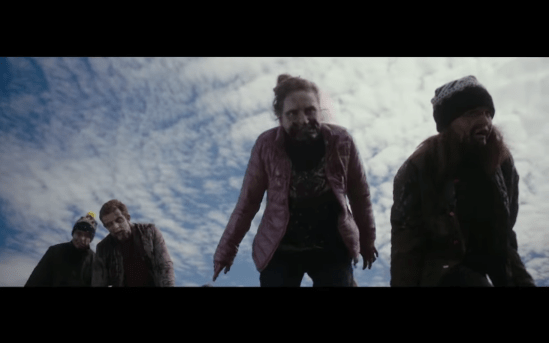
Honesty, I wasn’t sure how “Anna and the Apocalypse” was going to work, or be successful, or be entertaining at all as a horror movie. Horror-musicals are a rare breed that come with a mind-boggling quantitative algorithm to make them truly work wonders and, somehow, John McPhail dusted off his abacus, powered up his TI calculator, and put note to pen to paper and delivered a holiday spectacular on a horror scale stage. The horror, though very prominent and unmistakable, takes a backseat to the powerful soundtrack by the ensemble cast, ranging from caricatured with Fish Wrap to the desolation of personal connectivity with Human Voice to a couple of Christmas satires to bring a little joy with the merry mayhem. The mayhem is absolute with all the trimmings of a zombie apocalypse, even right down to the military being the butt of a joke when they’re overrun by a slow-moving force, but while there’s some gore early on with a dead head decapitated by a see-saw and a pair of bowling balls pop the top of one alleyway corpse, the blood flows downward to a little more than a dribble and “Anna and the Apocalypse” cobbles together a mere mediocre zombie film from then on out.

Already seen a couple of standard releases from other distributors, Second Sight Films reserved “Anna and the Apocalypse” to the royal treatment with a special features heavy region B, two-disc Blu-ray set containing two versions of the film – the theatrical release cut and the extended version which will include a musical number that didn’t make the theatrical cut. The Arri Alexa SXT shot film is presented in 1080p and in the film’s original aspect ratio, a widescreen 2.37:1, with a featured ProRes 3.2k format that allows upscaling to UHD quality providing a high resolution output that’s clean and bright. The color palate has real vibrancy under the director of photography’s, Sara Deane, direction to use colorful outfits and neoned and darkened sets. Some scenes become a little choppy with some sloppy editing work, but as a whole, the story remains coherent. The English language DTS-HD Master Audio 5.1 vivaciously energizes the soundtrack with alternative pop numbers, harmonious melodies, and a synchronized chorus, but there are times the dialogue falls into a lossy grey area. A stereo 2.0 track is also available as well as optional English SDH subtitles. The Second Sights Films’ release is chock full of extras with disc one including an audio commentary with director John McPhail, writer Alan McDonald, composers Roddy Hart and Tommy Reilly, a behind-the-scenes featurette, an alternate opening scene, a deleted song “What Side Are You On?”, a deleted bathroom scene, the Hollywood Ending cast and crew lip dub, footage from the EdinBurgh Film Festival, and, of course outtakes. Disc two includes a brand new feature-length documentary with new interviews by the actors and filmmakers. Plus, the original short film – “Zombie Musical.” A definite definitive two-disc set from Second Sight Films goes hand-in-hand with “Anna and the Apocalypse’s” feel good charm and unruly undead charisma complete with catchy tunes and bloody zombie goons in a modern day holiday cult classic.

Two-Disc Blu-ray Set of “Anna and the Apocalypse!” The perfect Christmas Gift!

Visions of Evil From a Disturbed Mind. “Lung” review!


An unidentified man, wearing medical scrubs and gloves, wanders through town, encountering hellishly gruesome scenes of death.  He wanders barefoot through a  ghastly journey that might figuratively expresses his back story of how he came to witness such visions and be relatively undisturbed by the horror they represent.  The filthy, gory, and ill-fated moments might also be hallucinations brought upon by a traumatic occurrence that wrenches him out of reality and into grisly purgatory.  Either way, the nameless man is a lost soul with no ambition, no emotion, and no direction to guide him through an inner conflict of blood-soaked entombment.

Unearthed Films’ 2-disc collector’s edition of “Lung I” and “Lung II” continues with the distribution company’s legacy of delivering the best underground cinema to the forefront of home entertainment.  Phil Stevens, director of positive-reviewed “Flowers,” writes, stars, and directs both feature films about the wandering man in a foggy, distorted haze, but “Lung II” is not a sequel to “Lung I.”  Instead, “Lung I” is the softcore version of events whereas “Lung II” is a hardcore redux – think along the lines of “The Evil Dead” and “Evil Dead II” – that’s much more detached from rationality and by collaborating with “American Guinea Pig: Bloodshock’s” Marcus Koch seizing upon the special effects, you can damn well count on “Lung II,” and certainly “Lung I” as well, being bare-faced dark, violent, and twisted. In more a sequential reality, “Lung” is part of the Phil Stevens’ proposed trilogy entitled the Violence of Dawn with “Flowers” leading the horrific charge. This review will focus more on “Lung II.”

Stevens stars as the unnamed lead, waking up lost under a creek bridge, dressed in medical scrubs, and haunted by unspeakable, bloody post-violence mayhem while continuously battling his evil doppelgänger self. Is this just a strange nightmare or a telltale sign of this man’s troubled past? Then, again, Stevens’ impassive take feels more like wandering through one hell of a dream, an endless journey into one’s post-traumatic warped mind rather than spelunking into one of a murderous soul’s, even if one of the moments of trauma could be his wife – or girlfriend – cheating on him and he catches her in the act with ill-fated consequences. Characters also related to the medical profession, such as a psychologist (David Copping) and quick flashes of a nurse (Angela Jane), are a part of this visceral vision quest. Finally, we come to The Exile character. The Exile might sound familiar if you’ve read my review on “Flowers” as he’s the only character, portrayed once again by Bryan W. Lohr Sr., that connects the two films. The Exile continues to mystify us about his presence, an extremely large and intimating brute with a deathly blank stare and a “don’t fuck with me” attitude.

Unlike “Flowers,” Stevens went the devoid of color route, constructing a black and white feature that, like “Flowers, goes without as much as a sentence of dialogue. Actions, expressions, and every sense of the word “art” tell the story. Non-linear editing and brutally realistic scenes of savagery in the confines of special effects exercise and sparks your brain’s neurons to try spitfire pieces together to cement a coherent narrative. Stevens is almost able to re-tap into and revitalize the silent film genre with “Flowers” and “Lung”, and with the help of a vehement brooding score by Mark Kueffner, I believe this type of experimental horror story telling can fascinate just about anyone without a weak stomach.

Unearthed Films and MVDVisual’s 2-disc DVD collector’s set a beautifully monochrome piece of art with roached infested severed heads, a halfway decomposed homeless man, and a pile of refrigerated sexual organs meshed together like something out of Brian Yuzna’s “Society,” but more gnarly. Im interested to see how Paradis, aka Paradis III, comes to conclude the trilogy and see how Unearthed FIlms releases Phil Stevens’ visionary tales. The Borderline Cinema and Extreme Horror Cinema “Lung” is comprised of two discs that entail “Lung I” Feature Film, “Lung II” Feature Film, Directors Commentary, Editors Commentary, Isolated Sound FX Track, Making of Lung 2 (which is very informative and fun to watch underground cinema come to the fold), Mark Kueffner: Lung Composer Featurette, Martin Trafford: Artwork Featurette, “Cats” Short Film, “Descent” Short Film, and Unearthed Trailers. “Lung” will not tickle everybody’s taste; surely sick and part of a niche network of darkly persuaded and humored people will most likely get it, but there’s still very much to appreciate here from director Phil Stevens and his eye for detail and disturbia. This gore and shock is worth a look and worth a chance.

Buy LUNG at Amazon!