Sooie EVIL Sooie! “Pig Killer” reviewed! (Breaking Glass Pictures & Darkstar Pictures / Blu-ray)

On This Farm There Was a “PIg Killer” now on Blu-ray!

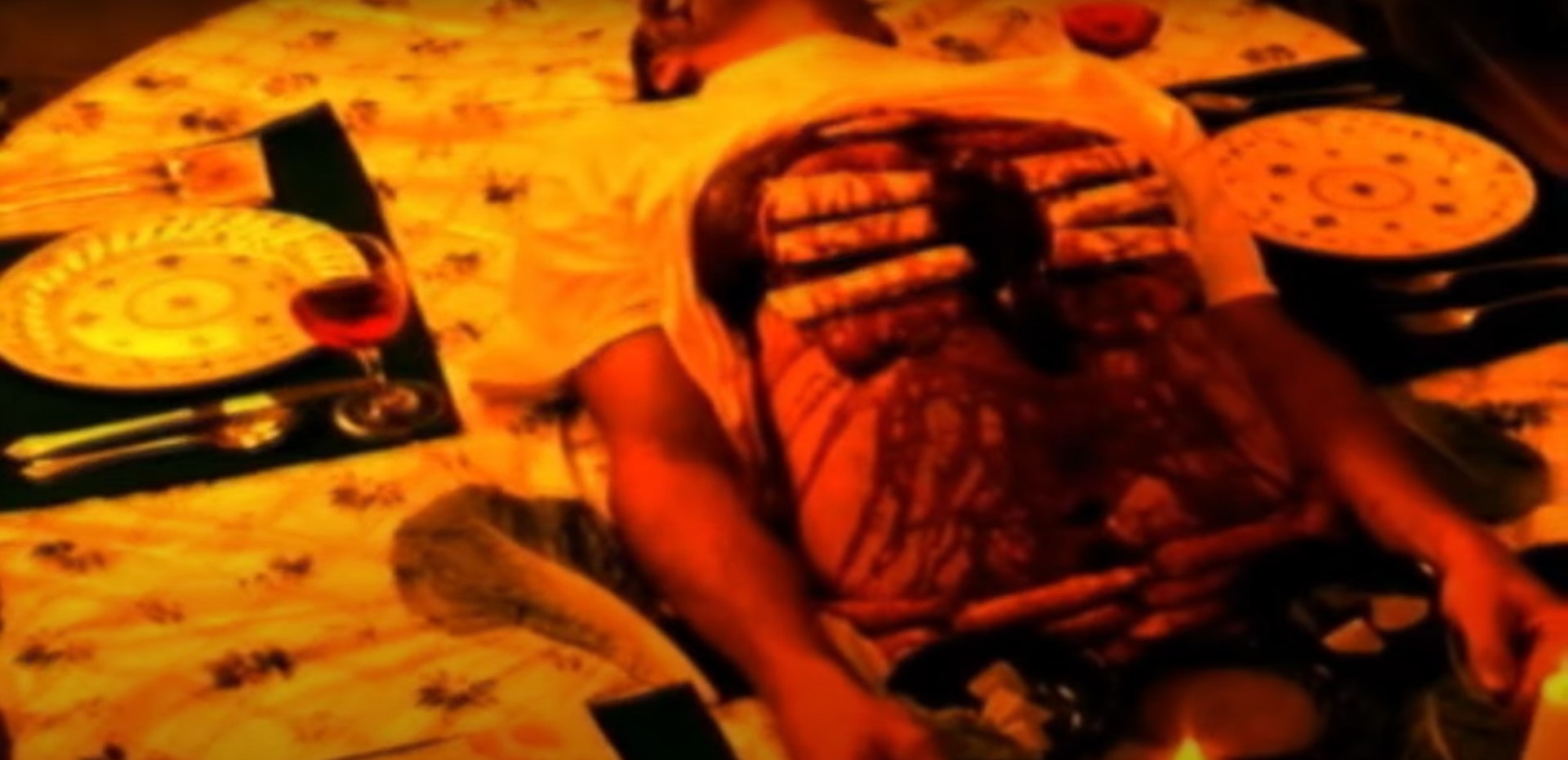
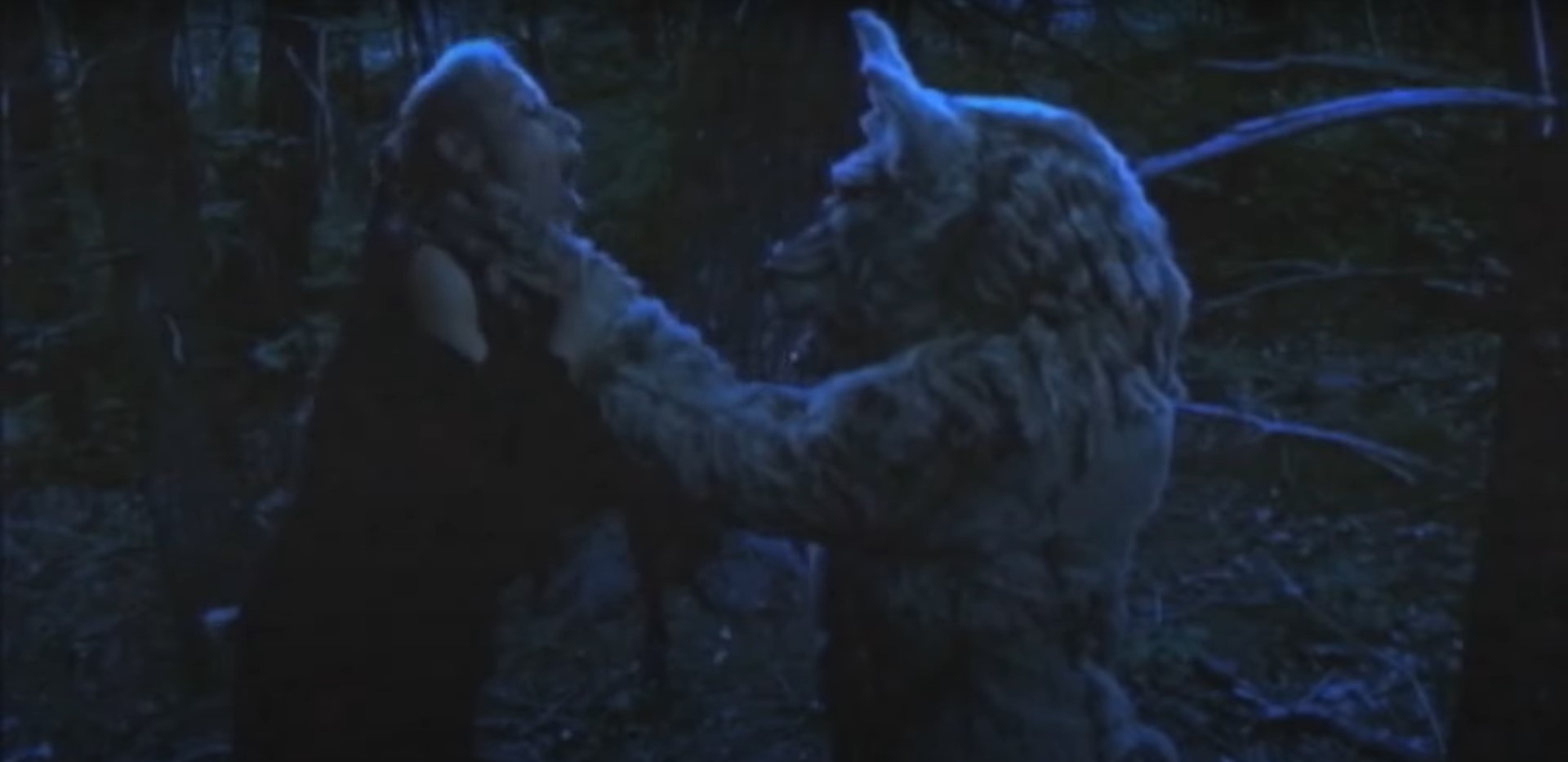
Pig ranching landowner Robert “Willy” Pickton’s compulsions to pick up unprincipled women involved in prostitution and drugs and horrifically rape and murder them in the name of salvation stems from a severely abusive childhood with the father’s physically and mentally tormenting as well as a scornful mother sexually assaulting him.  Willy’s fanatical obsession threatens his drug-fueled, orgy-laden, rock-n-rolling Piggy’s Powwow party, a regular throwdown held at his ranch that has elicited a cease and desist letter from the city, but Willy pushes the party forward despite his brother David and their lawyer’s stern opposition.  Paralleling Willy’s story is Wendy Eastman who almost dies of an accidental drug overdose.  The incident stirs more the already contentious bad blood between her uncompromising stepmother and insecure father that leads to storm out and bump into Willy at a bar with the feeling of destiny bringing them together only to horrifically discover Willy’s unsavory secret the hard way. 

Part one of my reviews on serial killer biopics, headfirst we go into the psychotic world of Robert “Willy” Pickton, a pig former turned one of Canada’s most notorious serial rapists and killers living in Port Coquitlam, British Columbia.  While the extent of his butchery is vague at best and even in some ways evolving over the course of the last two decades, Pickton was able to be the filmic inspiration for the Chad Ferrin brazen biopic “Pig Killer.”  The “Easter Bunny, Kill! Kill!” and “Someone’s Knocking at the Door” director wrote-and-helmed the interpretation of the egregiously presumed methods Pickton executed upon his female victims, mostly drug-addicted sex workers from the Eastside of Vancouver.  Once under the working ttile of “Pork Chop Rod,” Ferrin’s Crappy World Films, Girls and Corpses (of Robert Steven Rhine’s Girls and Corpses Magazine), and the post-production company Laurelwood Pictures served as co-productions with 50-year acting vet Robert Miano (“Malevolence,” “Giallo”) co-producing.

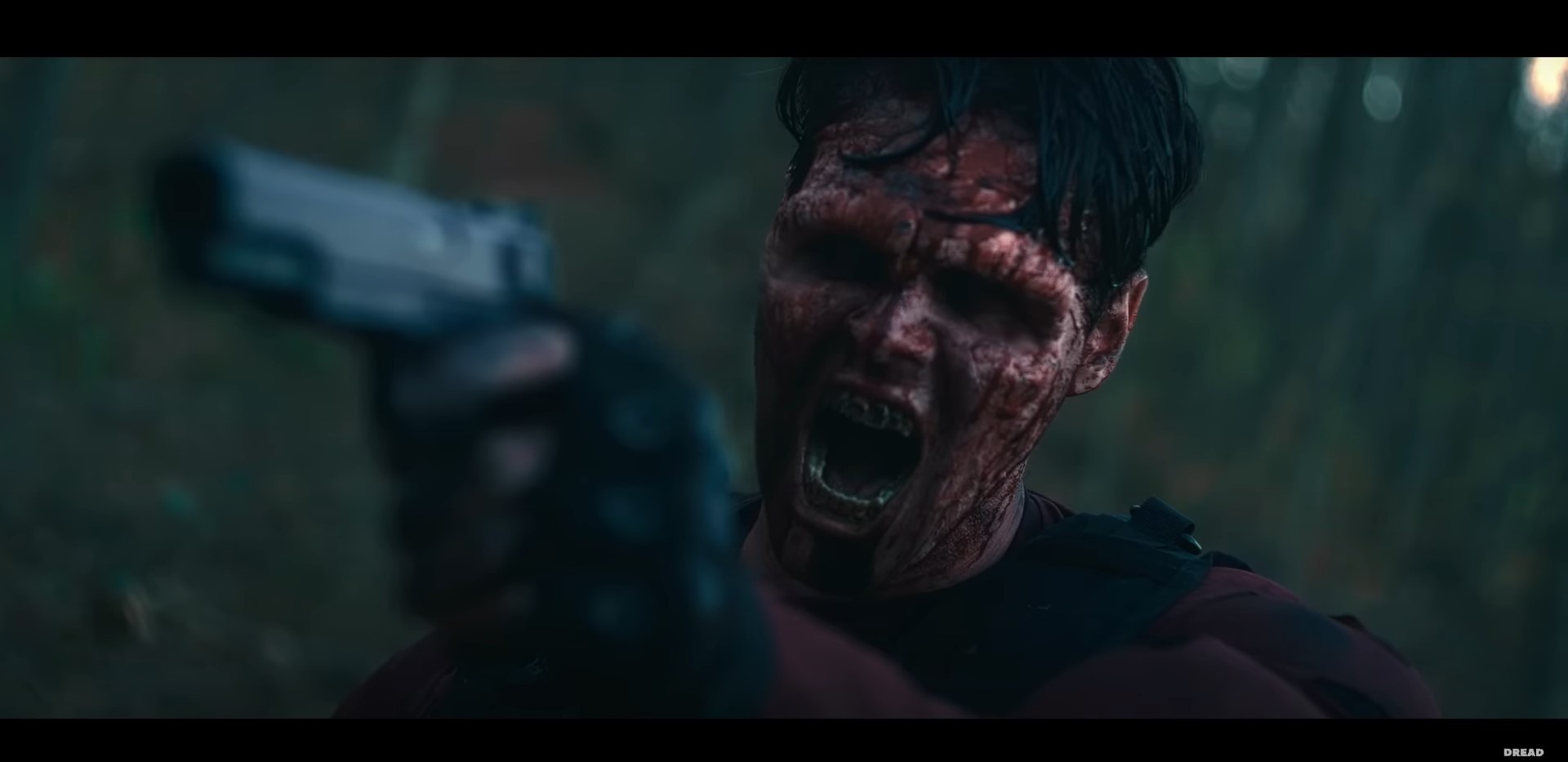
Even though this actor has portrayed serial killers in “Identity,” “The Hitcher II,” and “The Frighteners,” and even a deranged zealot in “Contact,” I would never have imagined in a million years “Starship Troopers” actor Jake Busey would have stepped into the sordid shoes of Willy Pickton in a Chad Ferrin production.  There’s something to be said for Jake Busey’s nerve in moving forward with eccentric and controversial and Willy Pickton is every fiber of those infamy traits and all that is in between.   Disheveled and dirty, maniacal and demented, prosthetic phalluses and dildo revolvers, pig masks and masturbation – Jake Busey doesn’t hold back on an exigent script important to Pickton’s state of mind.  Creepy and apathetic blanked by his deceased mother’s devout spitefulness and her incestuous sexual abuse, Busey secretes these irascible qualities held dormant in Pickton until the sleaze is sated and his patients runs out then it’s time to go hog wild, literally. Lew Temple (“Halloween,” “Devil’s Rejects”) plays Willy’s brother David who also has mother issues, but that avenue is not as profoundly travelled as Willy’s, both men see delusional visions of their mother’s tirades but definitely lopsided in disfavor of Willy and that leaves David left in the dust some to not have his mental faculties inspected.  Their flashback, foul-mouth, and Electral loving mother goes to an unabashed by former adult actress turned low-budget horror scream queen Ginger Lynn Allen (“Murdercise,” “31”) in what her scenes can only be described as uncut and uncomfortable lewdness as she bares it all at the ripe young age of 60 years old.  Another standout performance goes to Kate Patel as the debut actress, who in her own right is an Amazonian goodness buff beyond rebuff in black lace underwear, finds her voice as a young woman named Wendy Eastman in a complicated and dysfunctional household after the death of her mother, at odds with a wicked stepmother, and an insecure father with passive fortitude.  The only obstacle that can be rendered cleanly from her performance is how her character’s written to be drawn to Willy Pickton as because between age gaps and social differences, the two have nothing tangible to drawn them together mutually.  “Pig Killer” rounds out the cast with producer Robert Miano as Wendy Eastman’s father, Michael Paré (“Streets of Fire”) and producer Robert Rhine as Detectives Oppal and Schneer, Silvia Spross (“Parasites”) as Wendy’s disparaging stepmother, Jon Budinoff (“Someone’s Knocking at the Door”) as Wendy’s friend and drug source, Elina Madison (“Caged Lesbos A-Go-Go”) as a druggie sex worker, Bai Ling (“Exorcism at 60,000 Feet”) as also a druggie sex worker, and Kurt Bonzell (“Parasites”) as Willy’s disfigured and throat-cancer suffering friend Pat. 

Sensationalized for cinematic charm, the story behind the “Pig Killer” hits near the bullseye of all major bullet points from the escape of Wendy Eastman (actual person being Wendy Eistetter) and her coinciding her drug addiction to the wild gathers at the Pickton farm known as Piggy’s Powwow (actual title being Piggy Palace Good Times Society) where motorcycle gangs and prostitutes congregated for a drug-fueled good time.  If having viewed a few of Ferrin’s credits before, some of the unrestrained gore and shock will not come at a surprise.  The benumbing unconcern of misanthropy is poignant amongst Ferrin’s soft-pedaling of horror with a whimsical manner within a gritty film that doesn’t feel as gritty as it should be considering the subject and subject material.  Another mitigating moment, one that’s more counterproductive to the Pickton storyline, is the parallel melodramatics of Wendy Eastman that eventually rendezvous with the titular “Pig Killer” and become the rendition of Wendy Eistetter supposed personal backstory and escape from death.  Wendy’s overdose and family issues provide reason for her subsequent run away from home, but the extent of the backstory unnecessarily rivals Willy Pickton’s and the whole destiny meetup enlists some deeper rooted significance that isn’t neatly fleshed out, turning awkwardly impertinent that waters down their entanglement. 

Arriving onto a Breaking Glass Pictures and a Darkstar Pictures collab, “Pig Killer” oinks itself onto an AVC encoded, 1080p, High-definition Blu-ray.  Presented in an anamorphic widescreen 2.39:1 aspect ratio, “Pig Killer” under the warm glow and desert dry eye of cinematographer Jeff Billings (“The Deep Ones”) sundries the shot types in various techniques, such as closeup slow motion to be inside Willy’s moment of divination, to provide Ferrin’s feature with comely appeal even in the vilest of moments. Details are sharp and delineated nicely albeit the quick editing for intensity purposes and to float Willy in and out of psychosis. Coloring is more natural than anything else with a few gels scatter about to spruce up the vibrancy. The lossless English DTS-HD 5.1 master audio renders clear dialogue without any distortions or other audible disturbances; however, the strength of the dialogue favors an infirm conveyance to grasp a few exchanges, especially in the exterior. A maximal Gerard McMahon soundtrack scores the entire biopic from start to finish with a range of 80’s power ballads to 90’s pop rock; the 76-year-old not only scores the project but also has a concert performance role with his band G Tom Mac. Depth and range supplement greatly as sound design cater to the surrounding atmospheres, such as the echo vibrations under the Eastside bridge or the pig-pen oinks and frenzies when feeding bits and pieces of sex workers to his farmyard swine. English SDH is optionally available. Packed with extra content, supplements included are an interview intercut with scenes with Ginger Lynn as well as a few of her clothed adult industry spreads/modeling, a behind-the-scenes footage with Michael Paré, deleted and extended scenes, and Q&A from Cine Excess, the making-of the Pig Mask, a making-of the film entitled Canadian Bacon, an introduction to Spunky the Pig aka Willy’s pig, a screen test of Kate Patel in the role of Willy, which was considered before Jake Busey landed the role, “Pig Killer” auditions, and the trailer. The clear Blu-ray Amaray case sports a dark-and-dirty gilt image of a half-naked Kate Patel and a menacing pig-masked person holding a clever overhead. Reverse side contains a still image of the insides of Willy’s pigsty camper while the disc is pressed with the same menacing pig and clever but more prominent. The collab release has a region A playback, a runtime of 122 minutes, and is not rated. The back cover also lists a 2000 production date, conflicting with the 2023 release states elsewhere, but the 2000 date would be before Willy Pickton’s arrest and so that might be a misprint. Chad Ferrin and Jake Busey jointly tackling the monster that is brutal serial killer Willy Pickton with an inkling of lighter material coursing through its arteries, style secreting through the madness, and, of course, gore, the most important ingredient to the likes of a film entitled “Pig Killer.” 

On This Farm There Was a “PIg Killer” now on Blu-ray!

This EVIL, Straight-Razor Killer Has a Novel Idea! “Tenebrae” reviewed! (Synapse / 4K-Blu-ray Combo Set)

2-Disc 4K UHD and Blu-ray Set Now Available of Dario Argento’s “Tenebrae”

While on a media book tour for his latest popular crime thriller novel, “Tenebrae,” American novelist Peter Neal is swiftly entangled in a killer’s puritanical wrath shortly after landing in Rome.  Using Neal’s story as an inspirational guideline to rid the world of what the fictional book labels as depraved people, the killer brutally murders women closely resembling characters in Neal’s book with a straight razor and sends Neal a deranged poetic message shortly after each death.  Police are on the case but always once step behind, even when the murders have seemingly stop connecting to the pages of Neal’s novel.  When the writer investigates by running through the list of possible suspects, the writer in him goes rogue by setting off to solve the case himself that would sensationalize and authenticate him as a crime writer, but the deeper Neal directly involves himself, the more the grislier the murders become and they’re starting to come closer to home than before. 

Dario Argento is unequivocally one of the best masters of horror for half a century, writing and directing not only some of the best Italian crime-mystery Giallos, splashed with hue vibrancy and caked in gruesome blood splatter, but also writing and directing those same films with major success internationally as his films connect with a global audience.  “The Bird with the Crystal Plumage,” “Deep Red,” and “Suspiria” have skyrocketed the filmmaker within the first decade of movie-crafting and Argento would not have been who is now without the guidance and the financial foundation constructed by father, Salvatore Argento.  Before his death in 1987, Salvatore produced one more of his son’s ventures in 1982 with “Tenebrae,” an emblematic mystery that brings Italian and American actors into the fold of Argento’s violent pulp puzzler.  Argento’s younger brother, Claudio, co-produced the feature under the Sigma Cinematografica Roma production company.

The Italiano-Americano production casts a pair of native New Yorkers in Anthony Franciosa (“Death Wish II,” “Curse of the Black Widow”) and John Saxon (“A Nightmare on Elm Street,” “Black Christmas”) who regularly crossed over the Atlantic for roles in international pictures.  Franciosa plays the novelist Peter Neal with Saxon as Neal’s newly hired agent Bullmer.  Their portrayed amicable relationship succeeds expectations of client and manager professionalism, but a good publicity campaign can be torpedoed by a sadistic killer with a throat cutting fetish and Roma’s best officers on the case intruding into the Neal’s personal promotion with Detective Germani, played by spaghetti western regular Giuiliano Gemma (“Day of Anger”), and his partner, Inspector Altieri, played by Carola Stagnaro (“Phantom of Death”).  The third English speaker is John Steiner (“Caligula”), a proper Englishman setup as an Italian television host on the docket to interview Peter Neal’s latest release success.  Steiner becomes an early favorite as the suspected killer with his odd pre-show questioning that falls in line with the Killer’s motives, but he isn’t the only person of interest as Neal’s estranged lover Jane (Veronica Lario) holds a lover’s quarrel with the writer who has seemingly become intimately close with his personal assistant Anne (Daria Nicolodi, “Deep Red”).  A conglomerate of characters gyrate Argento’s maelstrom mystery, each exhibiting profound performances that make each rich in their own right, and fill out with an assemblage of robust supporting characters diffusing through the story with Ania Pieroni (“The House by the Cemetery”), Lara Wendel (“Ghosthouse”), Eva Robins (“Eva man”), and Mirella Banti (“Scandal in Black”), the model most infamously on the front cover of most home video releases and poster one sheets with the iconic neck-sliced open and dripping blood along with her wavy hair suspended in a pose of vivid void and color.

“Tenebrae,” in Latin translates to darkness, describes Argento’s post-“Suspiria” feature intently.  Giallo lives within this time capsulated enigmatic madness, color-coated and visually complex to become an easy pill to swallow amongst all others in the Italian-reared niche.  Accompanying all the hallmarks of a Giallo construct – the killer’s gloved hands in POV, psychosexual tropes, mental instability exposures, violent and gory – Argento also impresses us with baroque mise-en-scene of lavish houses, detailed interiors, and extremely broad, emotionally phrenic individuals.  We also receive technical style wonders like a long boom shot that cranes up a house exterior to follow the idiosyncratic and opposing activities of two presently quarrelling lesbian lovers on a dark, stormy night in a tensely presage moment mixed with the synth-rock sounds of the “Goblin” theme track.  “Tenebrae” is chic in its ugliness and the patience Argento shows is formidably impenetrable without being flawed with lingering stagnancy.  While wallowing into what we’re led to believe, red herrings and other subterfuges to throw off audiences’ keen-to-solve sniffers, the story stirs a cauldron of coherent progression that is, more often than desired, lost in most gialli trying to weave through an intelligible punchy crime-mystery without becoming disoriented by the twists, turns, and topsy-turvy outcomes.   

“Tenebrae” hits 4K onto a 2-Disc, UHD and Blu-ray combo set from the genre-leading distributor, Synapse Films. The HEVC, mastered in Dolby Vision, encoding 2180p UHD and the AVC encoded 1080p high-definition Blu-ray are presented in a widescreen 1.85:1 aspect ratio in both the English and Italian versions of the feature.  One of the more gorgeously restored versions ever to be presented, with sharp delineation and organic popping colors within the narrow margins of infrequent gel lighting, the near flawless original negative is greatly elevated by Synapse’s ultra high-def facelift that resound the lavish textures of various sets, the expressional details of the characters’ face, and the glistening shine of the spraying blood.  There’s real balance between the colors in this presentation, offering not only a wide variety of hues but a great display of the mix.  Gels are not overly used and are more key lighting spotlights to heighten tension or introduce moods on an almost subconscious level.  Both English and Italian versions score a lossless DTS-HD Master Audio 2.0 mono.  This release caters to the very suspense Argento acoustically and phonically propounds that, in the same regard to the eyes, places viewers’ ears right in the middle of the action.  Every sound is distinct and unassuming during the throes of violence, a cleanly serrating effect that compounds killer consternation of being everything, everywhere, all at once.  Typical of the time and cost-efficient ADR usually retains some dubbing disharmony, but “Tenebra’s” tracks are neatly synchronous with Anthony Franciosa and John Saxon’s recordings timed exact and as if captured in the scene.   Some of the dubbing isn’t as in the bag, such as with Giuliano Gemma’s recording that’s does denote that space in between intensified by likely another voice actor’s reading overtop Gemma’s actual dialogue.  UHD offers English SDH on the English version while the Italian version has just regular English subtitles; the Blu-ray disc has the same.  Hours of bonus content, identical on both formats, begin with an audio commentary by Dario Argento: the Man, the Myths, the Magic author Alan Jones and film critic/historian Kim Newman, a second audio commentary by Dario Argento expert Thomas Rostock, and a third audio commentary by Maitland McDonagh, author of Broken Mirrors/Broken Minds:  The Dark Dreams of Dario Argento.  The fun doesn’t end there with a 2016 feature-length documentary “Yellow Fever:  The Rise and Fall of the Giallo” with interviews from Dario Argento, Umberto Lenzi, Luigi Cozzi, and Ruggero Deodato amongst the biggest names in film critic authoritarians, a newly edited archival interview with actor John Steiner, a newly edited archival interview with Maitland McDonagh, an archival featurette Voices of the Unsane with “”Tenebrae’s” Dario Argento, Daria Nicolodi, Eva Robins, Luciano Tovoli, Claudio Simonetti, and Lamberto Bava interviews, an archival interview with actress Daria Nicolodi, an archival interview with writer-director Dario Argento, an archival interview with composer Claudio Simonetti, an archival introduction from Daria Nicolodi, an international theatrical trailer, the Japanese Shadow trailer, an alternate opening credits sequence, “Unsane” end credits sequence, and an image gallery to wrap things up.  Inside the rigid O-slipcover, graced with a high quality and beautifully macabre illustration rendered by Nick Charge, is a Synapse Films’ black, 4K UHD labeled Amaray case with a double side disc lock and a reversible cover art with the Nick Charge graphic as default underneath the slipcover with the reverse side the Synapse Films’ standard Blu-ray cover art pulped with a famous death scene in pop art color. The insert houses a Synapse Films’ catalogue, and the discs are pressed with two notable kill scene frozen moments pulled in still image form. Feature runs at 101-minutes with an uncut presentation of the feature with a region free playback on both formats. ”Tenebrae” is Dario Argento in a cracked-up nutshell, paradoxically beautiful and horrible and burgeoning with suspense and color. The restored and remastered Synapse Films’ UHD and Blu-ray set is equally as such in its gorgeously grotesque packaging of film, its director, and its legacy that will outlive us all.

2-Disc 4K UHD and Blu-ray Set Now Available of Dario Argento’s “Tenebrae”

EVIL Relaxes in the Serenity of a “Full Body Massage” reviewed! (Unearthed Films / Blu-ray)

Lube Up and Get Ready for “Full Body Massage” on Blu-ray!

Nina, a middle-aged affluent art dealer, has just returned from a long business trip.  Settling back down into her own nature morte decked home, Nina pampers herself with a hot shower, a glass of wine, elegant music, and a soak in her open aired, backyard hot tub as she relaxes before for her masseur, Doug, a handsome young man she finds herself comfortably attracted to outside their professional relationship, arrives to put his oiled up hands up and down her naked body but when Fitch arrives, Doug’s more seasoned stand-in, Nina finds herself blindsided by the change and slightly disappointed in her sudden erotic deflation.  Fitch’s worldly approach to life conflicts against Nina’s narrow perspective on various topics, including art, happiness, and love.  Willing to be fully open with each other during the intimate and unorthodox massage, Nina and Fitch debate deep into their session without holding anything back with flashbacks on their experiences that led them to this very moment of unexpected connection.

Director Nicholas Roeg, the late acclaimed English director, is known for his in-depth humanizing of flawed or downcast protagonists, often times surrounded by desire and obstacles, having helmed such renowned features as “Walkabout,” “Bad Timing,” and “The Man Who Fell From Earth.”  Roeg has also dipped his directional toes in horror with films like “Don’t Look Now” and “The Witches,” running the gamut between adult and children thrills.  Later in his career, Roeg slowly moved away from theatrical features and into the realm of television, shorts, and TV movies with one of those made-for-TV films being “Full Body Massage” for the premium cable network Showtime.  Penned by “The Stranger’s” Dan Gurskis, “Full Body Massage” trades in a problematic mystery or obstacle for more of the unravelling of philosophical viewpoints of two strangers wounded in their own obvious way only to have the air purified each other’s different life paths and mere presence of mind.  The 1995 released U.S. network movie is produced by erotic thriller operators Julie Ahlberg and Michael Nolin of “The Pornorgrapher” under the LLC of Full Body Productions and Showtime.

Though a made-for-television movie likely marketed for and airing as a late night skin flick for the premium network channel in the cable box era of the 1990s, “Full Body Massage” was anything but your ordinary after dark tits up production with two well-known stars substantially casted and not just for the headline attraction.  “Ginger Snaps” and “Hider in the House” American actress Mimi Rogers is joined by Australian star and “F/X” leading man Bryan Brown who undertake the respective roles of world-weary Nina and worldly-candid Fitch.  While “Full Body Massage” has the hallmarks of softcore programming, an titillating title, sexy sax soothing tones, and a very naked Mimi Rogers, the machinating devices have more bark than bite as Rogers and Brown never engage into sexual intimacy albeit a lot of sensual massage manhandling by Fitch on Nina’s more than happy to be naked body with a stranger she just met.  The two mainstays are pundits for the story, verbally expelling their own viewpoints and experiences that have shaped their choices in life, molding them to who they are, and nearing the edge of gospel when in rhetoric with each other.  Their conspicuous dispute is nearly all narratively all consuming but not as nearly all argumentative in it’s very adult approach to discussion of just two people seeing the world through two very different eyes.   Other characters are told through mostly flashbacks and never interact in the same aortic piece with Rogers and Brown with Christopher Burgard (“Syngenor”), Elizabeth Barondes (“Night of the Scarecrow”), Gareth Williams (“Striking Distance”), Patrick Neil Quinn (“Swamp Thing” television series), Heather Gunn (“Ed Gein”), and Gabriella Hall (“The Erotic Adventures of the Invisible Man”) and Brian McLane playing younger versions of Nina and Fitch. 

“Full Body Massage” is not an intense, edge-of-your-seat nail biter bursting with action and suspense.  In fact, I struggle with film’s point and overall message to the world in what in essence boils down to a character study.  Fitch’s disapproving father no matter how perfection Fitch achieved, Nina’s continuous search for approvals in love, Fitch’s losing love that sends him on a spiritual journey, and Nina’s failed marriages between fast-and-loose husbands and hard to connect with ones make the two underlyingly wounded adults rigid and confidence in that unyielding measure until they meet each other and experience pliability out of a long-winded dialogue in not only a face-to-face manner, but also in the healing power of touch and massage that’s feels erotic per Roeg’s direction but also works out every kink in their twisted, knotted pasts to where they end in an uncertain but good place, a place they’ve never been before or have long forgotten.  By the course of two people talking, which most the world does every day, there had to be buzzier bright light to attract swarming audiences to the premium cable network’s thirst for viewership and that would be Mimi Rogers going nearly full-frontal for nearly the entire runtime and Roeg really plays into that erotic prance of unabashed confidence and comfortability while also, contrariwise, the dynamic progresses platonically. 

A newly scanned 2K transfer of 1995 film comes from an unlikely boutique distributor known mainly for extreme horror, gore and shock, and controversial material. Unearthed Films proudly presents “Full Body Massage” on Blu-ray as title lucky number 13 on their Unearthed Classics label. The AVC encoded, high-definition 1080p, BD50 exhibits cable vision veneer in a television widescreen 1.66:1 aspect ratio. Roeg’s choice to go virtually without style really hinges on the substance for success. The natural approach consumes any low-lit or candle-lit warm interiors exclusively for flashback sequences. The 35 mm print has been cared for and it shows with pristine HD transfer that keeps the natural grain and doesn’t need to really sugarcoat any sour patches. The English lossless PCM 2.0 stereo mix offers exact fidelity of the original discourse and milieu ambience of an innate digital sound capture. With the dialogue heavy story, the discourse is clean, clear, and prominent, comprehensible in every which way. Depth provides expansion and echo inside Nina’s vastly roomy mansion, but range is limited to talking and not the sensual, sexy, arousing kind. English subtitles and SDH subtitles are available on this release. Special features include the television version presented in 1.33:1 aspect ratio, a minute still image gallery that’s mostly Bryan Brown behind Mimi Rogers giving her the massage, and the original trailer. While not a great selection of bonus content, the physical exterior succeeds slightly favorable with a cardboard O-slipcover with flat, yet beautiful, illustration of, again, Bryan Brown and Mimi Rogers in massage therapy that could be misleading as sensuality. The Amaray Blu-ray cover sports the same image on the cover art and even compressed even further on the disc art. The Blu-ray is rated R, locked in region A playback, and has a runtime of 93 minutes. I’m not going to try and kid you with what is and will be “Full Body Massage’s” immediate appeal, a very well-endowed and nude Mimi Rogers, but this anomalous Unearthed Classic brings a different highbrow criterion class to the extreme horror label in what is a brazen change of pace. 

Lube Up and Get Ready for “Full Body Massage” on Blu-ray!

Travel to Mexico, EVIL Said. Cure my Cancer, EVIL Said. Let the Game Begin, I Said. “Saw X” reviewed! (Lionsgate / Blu-ray)

Become A Part of the Game in “Saw X” on 4k/Bluray/DVD

Having a finished a trial by fire game of rebirthing the morally bankrupt that has coined him notoriety as the Jigsaw Killer, a terminal ill John Kramer ceaselessly searches a cure in order to continue his work.  Meeting a fellow cancer therapy group member outside of session provides hope when John learns a radical new and unauthorized surgery and serum cocktail that is seemingly a miracle cure for cancer.  His desperation led inquiry lands him in Mexico where he meets a team of specialists prepping his next day surgery and just when post-surgery John Kramer believes he’s beaten cancer, Kramer realizes he’s been a victim of fraud that’s exploits the most vulnerable and desperate ill-fated people.  Now, a new game begins to test the con artists on how far they will go to live. 

Six years has passed since the last “Saw” sequel was released with the Chris Rock helmed tangent spinoff “Spiral” and 13 years has passed since the last time John Kramer was a part of the game in “Saw 3D.”  2023 marked the return of to the basics with no divergent story from the Book of Saw or fleeting three-dimensional gimmicks to feign tangible blood and body parts in the tenth feature length film of the franchise known as “Saw X.”  The original story-lined sequel also reengages director of “Saw VI” and “Saw 3D” Kevin Greutert to pick up where he left off with a prequel that explores more of Kramer’s more vulnerable side as well as explore the time in between “Saw” and “Saw II” and it’s now unveiled characters who were then shrouded from view, working side-by-side with John Kramer, many years ago.  The writing duo of Peter Goldfinger and Josh Stolberg return from to the franchise after “Jigsaw” and “Spiral” to pen the script for the Twisted Pictures and Liongsgate Production with franchise decision making team of Mark Burg and Oren Koules producing.

So what has Tobin Bell, the face and persona creator behind John Kramer, been up to since 2017’s “Jigsaw?”  Well, let’s just say the now 81-year-old actor has starred in a string of under-the-radar, non-theatrical films that can’t seem to break him out of his bread-and-buttered pigeonhole as a man testing people’s will to overcome by severe measure.  The past year’s dysfunctional family rollercoaster “Sleep No More,” Darren Lynn Bousman’s creepy Saudi Arabian horror “The Cello,” and even a stint of various roles through “The Flash” television series over the years in between have barely moved the needle amongst audiences despite the projects critical and public acclaim.  While it’s a shame Bell receives little recognition for other projects, seeing him return to the role that made him a household name amongst horror fans is a sign of relief knowing Tobin Bell can still draw in a crowd, stepping almost seemingly effortless into John Kramer’s shoes of controversial convictions and never losing a step to bring a cunning and complex antihero back to the big screen with more blood on this hands, literally.  Kramer is not the only familiar to return as Amanda Young comes into the fray prior to her coming out in – ***Spoiler Alert***- “Saw II.”  Shawnee Smith reprises the role donning an unflattering pixie cut that’s even shorter than her “Saw II” hairdo, which keeps true to the timeline, but what plagues both Bell and Smith for a prequel is father time that rears his ugly head on both actors who are not getting any younger to play supposedly younger versions of their characters from which they last portrayed them.  This applies especially to Shawnee Smith who resembles very little of herself from her last appearance in a “Saw” film.  Yet, this doesn’t stop both Bell and Smith to re-embrace their roles and add more layers to their already nuanced identities as John and Amanda ensnares new game players South of the border in Gabriela (Renata Vaca), Valentina (Paulette Hernandez, “My Demons Never Swore Solitude”), Mateo (Octavio Hinojosa, “Come Play With Me”), and Cecilia Pederson (Synnøve Macody Lund, “Haunted”). ”Saw X” co-stars Steven Brand (“Mayhem”), Michael Beach (“Deep Blue Sea 2”), Costas Mandylor, Joshua Okamoto, and Jorge Briseño.

What most will come to realize about “Saw X’s” series placement in time is the foreshadowed knowledge of when and where John Kramer and Amanda Young meet their demise. What can the writers and producers add to a prequel that will enthrall and cause apprehension knowing that the two biggest players in “Saw’s” franchise ultimately live at the end of this intermittent story that mainly surrounds Kramer’s desperation for a cancer cure? To enthrall is simple by adding new bad apples into new escapable blood-drawing, death-dealing traps inside a humanizing John Kramer footnote outside the core city games that intertwine, interweave, and intersect from the very first Saw to the very last Saw in 3D. To surface apprehension for our foretold survivors would take some creative effort. In comes Jorge Briseño playing an adolescent Mexican boy innocent in all of this die-cathlon caught in the wrong place at the wrong time. While the boy, Carlos, adds an X-factor to the dilemma, the fate unknown is relatively short-lived as the boy only becomes a noteworthy shake up of emotional twists between the game’s masterminds near the very tail end, leaving only the wills to struggle painfully as they face themselves in forced contrition. The games Kramer quickly rigs up after the disbelief of being scammed are as industrial medieval and terrifyingly tense as any other “Saw” but unlike the other installments where Jigsaw has planned and engineered meticulously each game, these new set of trap trials are quickly welded and mechanically put together in a blink of an eye, or at least it seems, with no real show for the time put into the turnaround from fraud to fear and that lack of attention can seriously dull “Saw’s” already serrated credibility. 

Saw X” arrives onto a 2-disc and digital combo set from Lionsgate home video.  The Blu-ray is an AVC encoded, high-definition 1080p, BD50 and the DVD is MPEG2 encoded, DVD9 and both formats present the film in a 1.85:1 widescreen.  Through the lens of franchise newcomer Nick Matthews, there’s a sense that the “Spoonful of Sugar” director of photography tries to reproduce some of the style of the first six of David A. Armstrong’s steely industrial color palette but emulating more of his own personal choices to match the out-of-the-city harsh blues and greys for more warmer tones, like mustard yellow, but those progressive hues establish in the second half after really teetering on a natural lens and a harsh saturating tints, such as when John Kramer enters the surgical cube and is bathed in a navy blue hue that eliminates details entirely but only for that tinted moment.  For the rest of the picture, details are grisly good with lots of medium-to-extreme closeups to detail out exposed anatomy of what makes “Saw” rotate so well.  Charlie Clouser returns to score the tenth film on an English Dolby Atmos mix with Dolby Digital TrueHD 7.1 and 5.1 Spanish and French options available.  A really potent and powerful recreation of fidelity scores well for Clouser who recaptures the original crescendo of the final twist while keeping an industrial discordance floating behind the storyline with rising volume during trap countdowns that never interferences with the range of sounds or depth between each of the character sand the traps and the characters.  Dialogue is clean as a whistle and balances perfectly on that serrated slack line of a chaotic countdown to one’s own demise.  English descriptive audio and English SDH are available with regular English, Spanish, and French subtitles also included.  Special features include an audio commentary by director Kevin Greutert, cinematographer Nick Matthews, and production designer Anthony Stabley, a Reawakening documentary that discusses how the prequel was actually “Saw 9” but was shelved for the Chris Rock produced spin-off and how the sequel evolves since it’s rejuvenation years later, there’s a drawing inspiration look into bringing the series to Mexico and all its unique culture and mythos, makeup department trap tests, deleted scenes surrounding more depth between Kramer and Amanda, and the theatrical trailer. On the outside features, a slightly embossed titled and eye-sucking trap victim grace the rigid cardboard O-slipcover, keeping true to most of the “Saw” theme traps in home video posters and home video art, with the traditional Amaray cover art sporting the same design without the embossing. Along with the digital code insert, the two discs are housed separated on each side of the case, both pressed with the same Aztecan-inspired circular saw. The Lionsgate release is locked on region A North American playback with a runtime of 118-minutes and is rated R for sequences of grisly bloody violence and torture, language, and some drug use. ”Saw X” breaks many of its own traits like set not in a city and doesn’t have an incorporated investigation parallel but, in the same breath, feels very much like a back to basics, not only in proximity to the original “Saw” story and with the return of familiar faces and characters, but also in John Kramer’s preadolescence in figuring out and shaping himself to what he would become as the notorious Jigsaw Killer. 

Become A Part of the Game in “Saw X” on 4k/Bluray/DVD

Never Trust a Script Written by an Egotistically EVIL “Scream Queen” reviewed! (Visual Vengeance / Blu-ray)

This Chainsaw’s Made for Cutting! “Scream Queen” on Blu-ray!

Malicia Tombs, an acclaimed horror actress known for B-movies and bad attitude, bursts into a wreckage of flames when her car sudden explodes after storming off the set of her new movie, “Scream Queen,” in which she wrote and starred as the titular character.  Part of the cast and crew were devastated by the accident that had cut their own career short while others were relieved the egotistical Tombs had perished despite publicly feigning grief over the loss of a genre fan-favorite.  Months later, the small cast and crew receive a mysterious invitation to gather at a creepy mansion butlered by Runyon.  When their host is unveiled as to be a very much alive Malicia Tombs, she offers them a lucrative sum of money to finish the film they’ve started but with a new script.  As the guests read through the new treatment, the cast and crew realize their present moments read just as their being played out in the script, even their deaths. 

If there was ever a single face deserving the representative distinction within an overpopulated categorized scream queen genus, Linnea Quigley would be that green-eyed, blonde-topped, beautiful face with an infectious smile.  Quigley worked with an array of filmmakers, ranging from some of the most renowned cult films of all times amidst reams of horror movies for nearly half a century (yes, we’re feeling old now) to the most independent of the independents films never having really receive the proper exhibition format or audience attention.  To what would be a delight to Quigley’s fanbase, one of those obscure features is Brad Sykes’ “Scream Queen,” a late 90’s filmed, 2002-released, SOV, U.S. slasher written-and-directed by the “Camp Blood” and low-budget filmmaker with Quigley in mind to play the scream queen character Malicia Tombs, now available, officially, on Blu-ray.  “Scream Queen” is the first major project for Brad Sykes in a collaborating effort in not only as a director but also as a co-producer alongside David Sterling of Sterling Entertainment.

“The Return of the Living Dead” and “Night of the Demons” Quigley puts on another memorable and wickedly fiendish performance as the haughty genre scream queen Malicia Tombs who superiority has gone to her head as she embraces her designation to an exact mania, displayed early on when her character’s character attempts to choke-kill another actress despite the numbered scene not being a death scene and Malicia harps on wanting to continue with the resembling act of murder.  As much as Malicia Tombs embraces the killer instinct inside of her, Linnea Quigley very much embraces Malicia Tombs without having to take her top off and despite having less screen time than her costars.  While Quigley fades in and out of the linear story, the narrative progresses with livelihood hardships of the now out-of-work cast and crew who relied heavily on that small film to boost their acting and filmmaking careers.  That crop of characters falls short tipping into their expectations, aspirations, and even their relations to be just slasher fodder for the mysterious maniac roaming the house.  Jenni (Emilie Jo Tisdale,” Escape from Hell”) and Devon (Nova Sheppard) are inferred romantic roommates who sell clothes on the side of the street to make ends meet post failed film but don’t have surmountable direction to either be a full-fledged couple to sympathize or seem terribly concerned about opening their own clothing shop other than what would be a bad decision to reside at the mansion overnight.  Again, no sympathy there either.  The special effects goof Squib (Bryan Cooper churns chuckles relentlessly by relating more to his crafted effects dummy more than people, marking him conclusively comedy relief as well as fated for death that, like in life, no one takes him seriously when he shows up gruesomely mutilated.  The other principal actress across from Tombs is Christine (Nicole West, “Dimension in Fear”), a buxom blonde tired of secretary work succumbing to lead man flirtations in a dark and scary house where every shadowy corner is lodged with threat.  The pair fall into that horror character cliché of have sex, will die, quickly downgrading their pre-professional relationship into nothing more than dark house desire.  Director Eric Orloff (Jarrod Robbins, “Evil Sister 2”), a presumed spin on the Awful Dr. Orloff and perhaps hints at his motives, seems to be stuck in angsty avoidance and melancholy stemmed by what could have been with Scream Queen but that also peters to a gross negligence end of an arc waste.  Rounding out the cast are a couple of special bit parts played by prolific Full Moon Entertainment and overall horror movie screenwriter C. Courtney Joyner (“Puppet Masters III,” “From A Whisper to Scream”) as a televised homicide detective and Kurt Levee in a quasi-return of his character Runnion from “Evil Sister” but alternatively spelled “Runyon” in “Scream Queen.”  

Though obviously and definitely not the first to do this, “Scream Queen” humors metacinema measures built upon horror tropes and spherical plot points that redirects the story back upon itself for a killer effect.  The feature has no issues making and poking fun at itself within a campy context albeit the usually grave apprehensions of a true scary slasher movie that’s less campy of which a scream queen is born – think Jamie Lee Curtis in “Halloween” or Neve Campbell in “Scream.”  Bryan Cooper not only portrayed the foolish effects guy persona but also actually did a lot of the gore gags for the film, achieving very detailed inlaid gore prosthetics for a smalltime picture with an axe embedded into a chest and a mangled face to name a few.  The story itself feels a bit rough and ready as it slips into supernatural obscurity and, as aforementioned, character setups flounder to a stagnation, killing instantly the miniscule arcs that were structured prior to their mansion gathering in what becomes a slapdash of serial offing that wraps up the story post-haste without much cat-and-mouse tension.  With that said, “Scream Queen’s” unpolished plot had once mirrored its fallowed physical release until recently but now witnessing its birth out of twilight has been multitudinous worth the wait. 

Another of Linnea Quigley’s lost films has been resurrected from the format graveyard by Visual Vengeance with a new Blu-ray release of “Scream Queen.”  The Wild Eye Releasing sublabel release comes with an AVC encoded, high definition interlaced scanned and director approved 1080i transfer from the 480p tape elements on BD50 capacity and comes also with the qualitative joys of a standard definition shot on video experience.  SOV tape upconversion can never completely eradicate the imperfections associated with tape and we also know this going in courtesy of Visual Vengeance’s standard practice of a fair warning before the film, but the overall “Scream Queen” presentation passes as clear content despite some minor tracking blips, 1.33:1 aspect ratio, original lower resolution, and scan line visibility, which is smoothed out nicely by the 1080i conversion. Exteriors and brightly lit scenes take on more shape compared to darker and low-lit areas that become like a void in standard DEF, which also hits the natural grading into a washed-out drab.  The English Dolby Digital 2.0 stereo labors to maintain some form of auricular strength but often nearly goes dark to where certain Linnea Quigley monologues periodically go silent for a few seconds, so the dialogue isn’t entirely clear but when it is, it’s relatively clean. There’s no hardiness pop in the audio track, staying suppressed throughout, and having little-to-no range or depth to the compile contexture. Some electro-interference throughout but nothing to be bothered by considering the grade of the SOV. Optional English subtitles are available. Special features include a commentary with writer-director Brad Sykes, a new behind-the-scenes documentary Once Upon A Time Horrowood that’s mostly Brad Sykes going through the stages of making “Scream Queen” and his recollections of his first big time produced film, a new interview with star Linnea Quigley, a new interview with one of the three various editors Mark Polonia (director of “Splatter Farm”), an original full-length feature producer’s cut of “Scream Queen,” a behind-the-scenes image gallery, Linnea Quigley image gallery, snippets from the original script, original trailer, and other Visual Vengeance distribution trailers. Along with the hearty software special features, hardware physical features include a six-page trifold with behind-the-scenes color photos notes by Weng’s Chop Magazine’s Tony Strauss and beautifully illustrated with dripping blood, a chainsaw, and Linnea Quigley on the front cover, a folded up mini color poster of a scantily-leathered Linnea holding one of the film’s murderous weapons, retro stickers, and your very own Four Star Video plastic rental card. All of this great stuff is stuffed inside a clear Blu-ray Amary case with a pressed disc art of a bloody illustrated Linnea sawing some unknown guy’s face off. The same illustrated graces the front cover in an expanded form and under a different hue. If you don’t like it, which I would be hard-pressed if you don’t, the reverse side contains one of the original cover arts with, again, a scantily-leathered Linnea holding that murderous weapon. The entire package is sheathed inside a rigid O-slipcover with an extended view of that chainsaw scoring with a bloody spray the eyeball from some guy’s face. The 13th Visual Vengeance release comes region free, unrated, and has a runtime of 78-minutes. Lost vintage now found and digitally revived to give us even more Linnea Quigley than we knew we needed with a meta-film shows initiative and fit special effects but swerves off trajectory into a more-of-the-same pathway. 

This Chainsaw’s Made for Cutting! “Scream Queen” on Blu-ray!