The Mayflower Brought the Thanks of EVIL Long Ago! “The Last Thanksgiving” reviewed! (Scream Team Releasing / Blu-ray)

Gobble Up and Chow Down on “The Last Thanksgiving” on Blu-ray!

Lisa-Marie Taft is known for being uncompromisingly difficult to be around with her snarky comments and negative attitude.  She’s especially coarse when she has to spend her Thanksgiving holiday working tables at the restaurant, one of the only places open on Thanksgiving.  Stuck with the equally as enthusiastic coworkers, Lisa-Marie can’t go home and snog with her boyfriend when one lonely customer decides to show up right before they were given the blessing to leave.  The situation at the restaurant goes from irritable to fatal when a family of cannibals with ancestry Pilgrim ties raids the open business to keep with their yearly tradition of cooking a thankful feast out of “thankless” people.  For 400 years, the tradition has been upheld and sought through, but they’ve never went up against anyone like Lisa-Marie Taft before. 
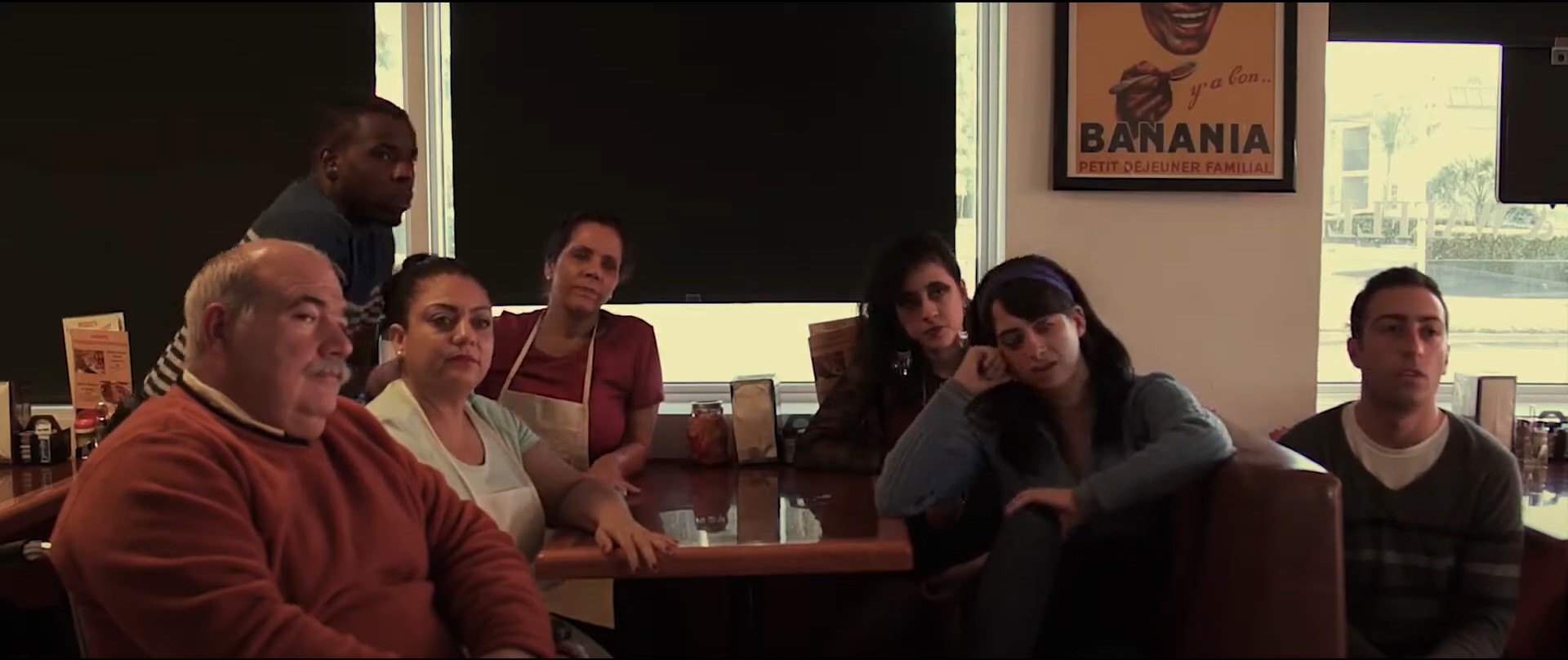
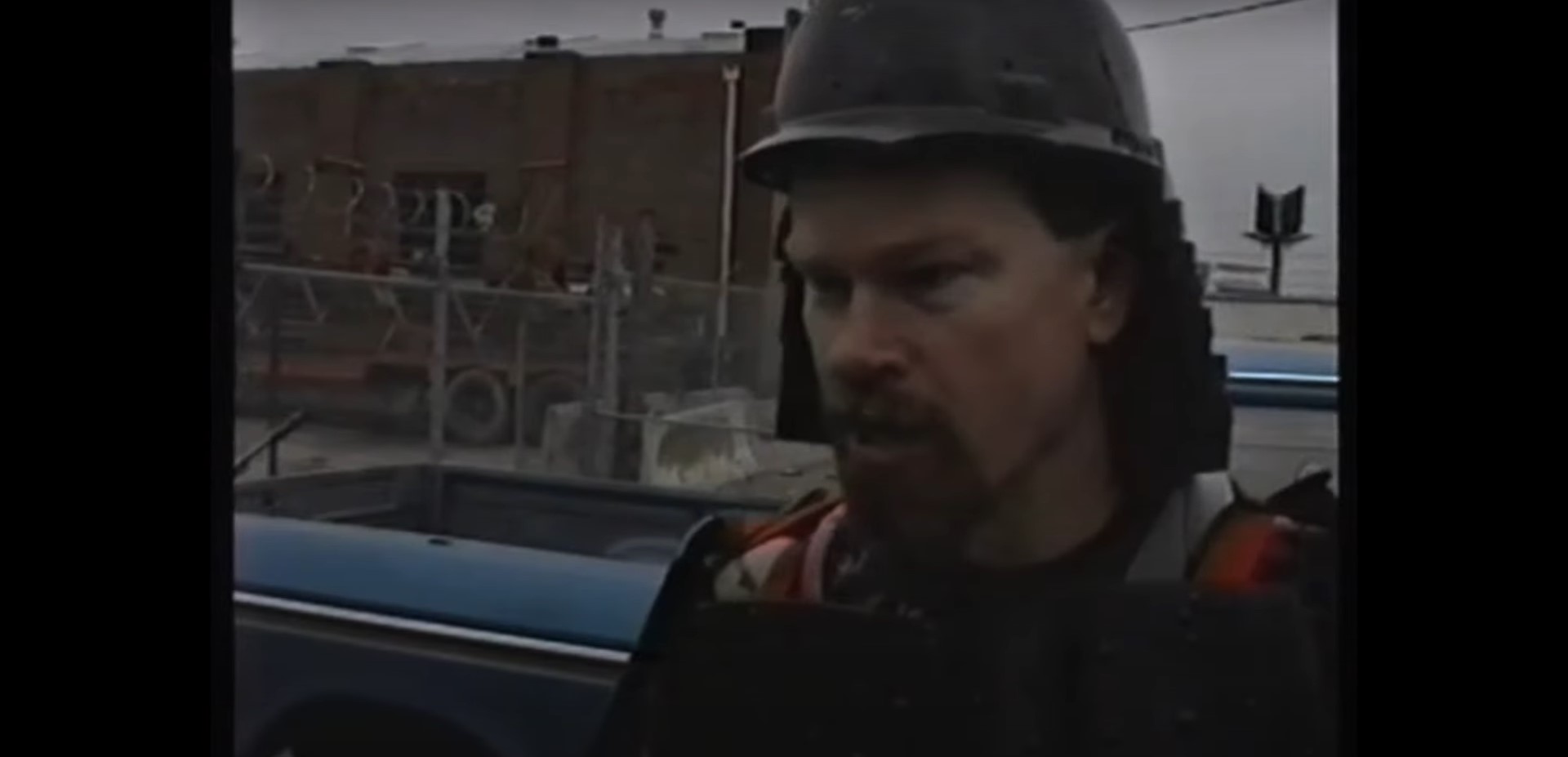
Are we ready for some Thanksgiving leftovers yet?  The time to give thanks to all our family and friends holiday has come and gone and many fans have exhausted through the extremely short list of Thanksgiving themed horror films, such as “Thankskilling,” “Thankskilling 3” and “Blood Rage” to be the most likely few viewed this past holiday week.  Well, have you ever heard of 2020’s “The Last Thanksgiving” from writer-director Erick Lorinc?  If you haven’t, then put back on your watching stretchy pants to gobble up another feast of cranberries and carnage as this slasher is from a group of University of Miami grads shooting on the streets and in the rural fall foliage of Chattanooga, Tennessee and in the Derry’s Family Restaurant in Hollywood, Florida with some of the shots being done over the actual Thanksgiving break for, you know, immersive authentic fall and giving thanks atmospheric quality.  “The Last Thanksgiving” is a Peak Jerry Production and is the first full-length feature film from Lorinc and produced by Annissa Omran with Sydney Gold serve as associate producer.
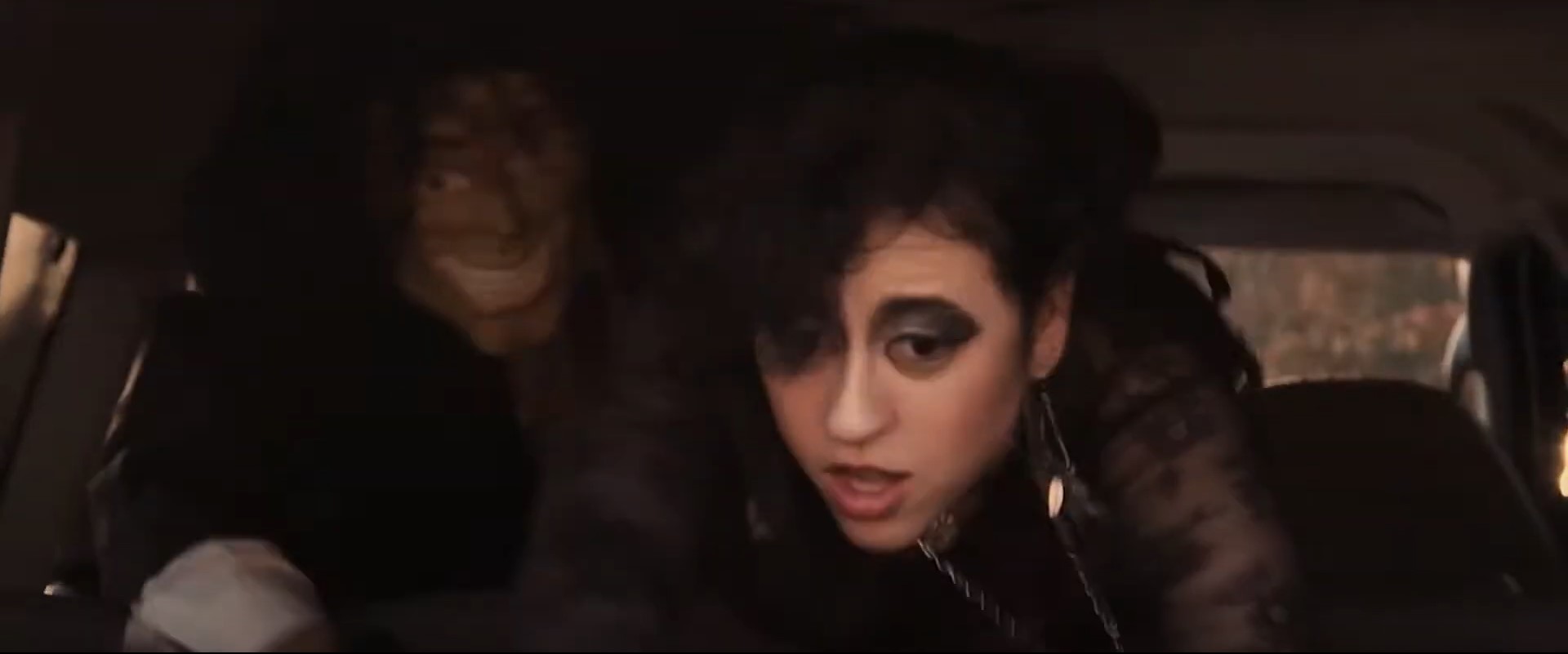
In the role of the snooty, snarky Lisa-Marie is fellow University of Miami grad Samantha Ferrand who plays the not-so-nice version of Halloween’s Laurie Strode with a complete disdain for her responsibly burdening parents and, well, basically any form of adult authority.  Even Lisa-Marie’s softy boss receives talkback and huff and puffs from what Lorinc pens as a self-centered brat.  As Lisa-Marie goes to war against the world, including her gothic waitress counterpart Trudie (Gabriela Spampinato) in a witty top dog positioning back-and-forth at times, she’s goes up against the Brimstone family who have a long-standing cannibalistic Thanksgiving tradition of following their Pilgrim relative’s footsteps, Abigail Brimstone (played dually by Alex Love and Gosta Utarefson).  The Brimstone family tradition has been enacted for over 400 years by each generation and this generation is no different with the commune living of two sisters and two brothers, who also may or may not be sleeping with other.  Yikes! Matthew McClure and Tristan Petashnick become the masterminding main face of the Brimstone clan as brother and sister, Kurt and Cordelia, while Laura Finley and Michael Vitovich come top up as the grunt work muscle as Maggie and as the Leatherface-esque Trip, a tall, quiet, and mask-wearing brother that takes a note from classic slasher icons with walking chase downs and brutal kills. Together, the Brimstone family is not terribly cliche at all and are backed by strong, singular performances that stand out like rightful, lip-smacking wolves against the restaurant sheep trying to survive the holiday on the backs of each other. These particular group of individuals are the perfect side dishes to the smorgasbord of sanguinary grub with a Backstage audition casting of Robert Richards Jr., Brandon Holzer, Madelin Marchant, Tametria Harris, Bobby Eddy, Nicholas Punales, Francisco D Gonzalez, and scream queen icon, Linnea Quigley (“Night of the Demons”) as the one, lonely restaurant patron in the wrong place, at the wrong time.
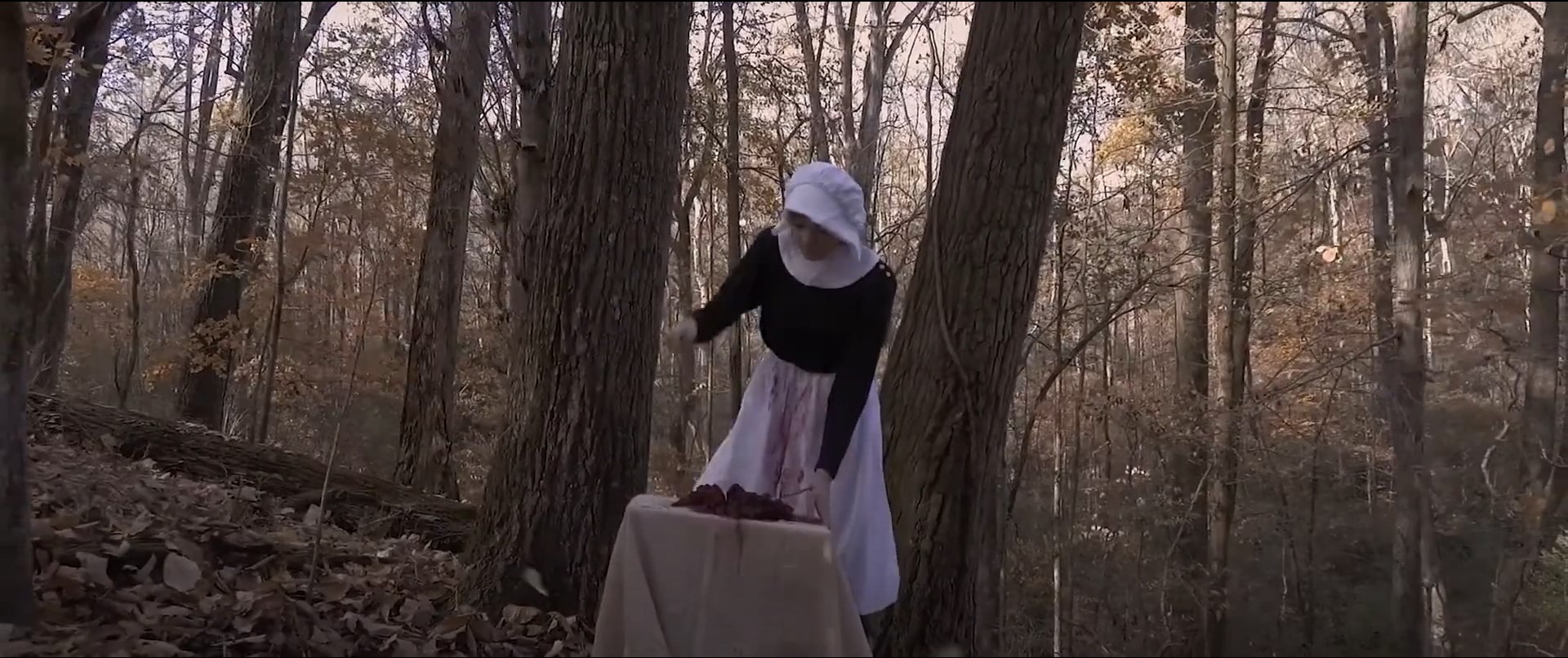
We’ve established that performances are strong, but what about the story?  Does it salivate interest and keep your attention from start to finish?  Is enough Thanksgiving incorporated material live up to the niche theme?  Certainly campy with dark, puritanical humor that stresses the importance giving thanks and being with family and friends on the holiday, “The Last Thanksgiving” unquestionably  expresses itself as a film that fits inside the theme’s parameters while also not taking itself too seriously, which has been routinely par for the course for these types of Turkey Day films.  Lorinc’s story concept stretches the gamut by briefly sending audiences back in time to when Pilgrims had the first Thanksgiving with the local Native American.  With the quasi-flash back story depicting Abigail Brimstone, who was in need of more food for the first feast because the Native Americans would be joining them at the table, chopping and mincing the postmortem remains of a handful of Native Americans to robust her menu, the Brimstone family quickly becomes understood after the first two acts of just chalking them up to your everyday cannibal, but the Lorinc takes the simple and satisfactory explanation, one that’s easily understandable and works as a cause, to a complicated and incongruous supernatural area with a 400-year old Abigail Brimstone still very much alive, and still looking good after four centuries, to procreate with one of each year’s male victims to keep the family craving and carving that human flesh turkey.   Cleaved in half heads, a jawless leftover, and a basement full of acidic gravy should be gobbled up in this traditional holiday horror film, “The Last Thanksgiving!”
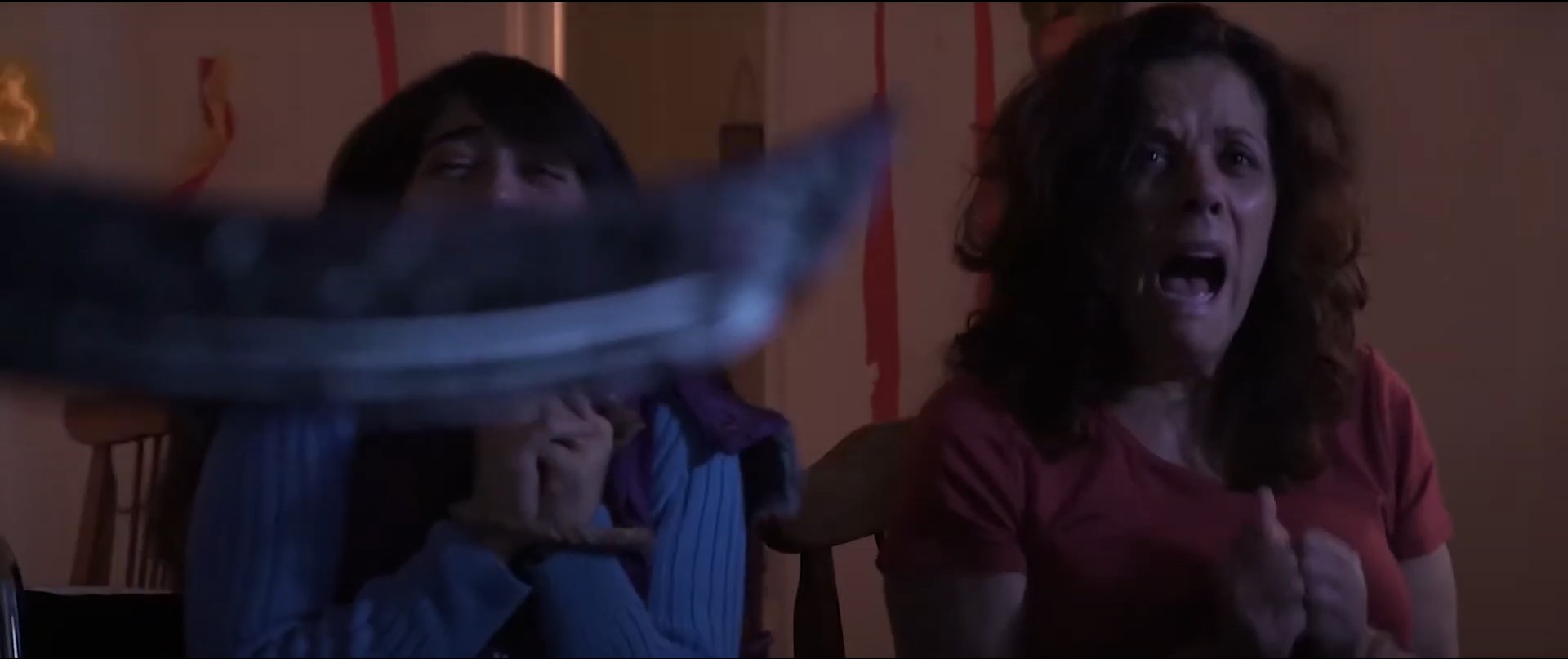
Scream Team Releasing releases “The Last Thanksgiving” on a AVC encoded Blu-ray home video with a 1.77:1 aspect ratio and presented 1080p high definition. For a fall holiday feature, we’re treated to some fall coloring of brown and red of the Chattanooga wooded areas and the detailing in the textures of sweaters, scarfs, and pilgrim hats to bring out the right festive feelings of a fall, but the image grading reins backs a tad that doesn’t showcase the true beauty of fading foliage. For an indie crew working with university equipment, contrast levels appear balanced to enrich the shadows where needed and lit-up appropriate locations helps delineate scenes of trepidation clearly. There were no evident issues with compression on the 50GB Blu-ray pressing. The English language 5.1 surround stereo mix is the sole mix on the release and this is the part of the A/V package where “The Last Thanksgiving” can’t stuff it all into that the big bird cavity. Dialogue is clear but is more pallid to the ears and when decibels reach a certain height, the audio output starts to break down slightly to a crackle. Optional English subtitles are available. Bonus features include an audio commentary, The Long Pilgrimage an in-depth making of featurette with the University of Miami grad cast and crew, “Thanksgiving” 1978 short film which has scenes spliced into the feature film, gag reel, Talking Turkey: Late Night Discussion, auditions, photo gallery, teaser, and official trailer. The blue snapper case has shoddy front cover art that doesn’t provide the best first impression, but the backside has more retro appeal and the cover art is reversible with still image on the inside with the film’s splayed on top. The Scream Teaming Releasing Blu-ray comes region free, unrated, and has a runtime of 70 minutes. “The Last Thanksgiving” is a great addition to the boutique Thanksgiving horror movie table that will certainly be a yearly staple in every family fright night viewing tradition.

Gobble Up and Chow Down on “The Last Thanksgiving” on Blu-ray!

An Experiment Backfiring with EVIL Payback. “Moonchild” reviewed! (Visual Vengeance / Blu-ray)

“Moonchild” now on Blu-ray from Visual Vengeance!

An Inhuman government body of a dystopian future experiments with genetic splicing to create the ultimate weapon, known as Project Moonchild, against the human rebellion. That weapon, Jacob Stryker, is unaware of his newly encoded abilities when he escapes one of their holding labs to rescue his captive son from the very same apathetic regime. Stryker teams up with a group of human rebels and uncover by mistake Stryker’s hidden super solider talent of turning into an unstoppable beast – a werewolf. Hellbent on taking down his son’s brainwashing captives by any means necessary and to do it before an intestinal bomb explodes within 72 hours, Stryker convinces the rebels to assist him and now they have an ace in the pocket as they traverse in search for Stryker’s boy, encountering android and mutant bounty hunters, cannibalistic human survivors, and a surfeit of governmental soldiers hot on his tail, but when the werewolf comes out, Project Moonchild is out to seek and destroy those son-stealing son-a-of-bitches by ripping them to shreds.

Director Todd Sheets has long been considered one of the kings of SOV. The “Zombie Rampage” and “Clownado” Kansas City filmmaker writes and directs “Moonchild,” the 1994 direct-to-video, post-societal, lycanthropy actioner is Sheets’ attempt in splintering himself away from the gore. The American Prince of Gore and the Master of Splatter accomplishes the lessened bloodletting and liquid innards coming outwards werewolf feature with a dystopian rescuer that pits what remains of a separatist human society on a verge of collapse to go on a quest to cure a dividing mutation affliction and to go up against the malign immortals of killers and assassins constructed with nuts and bolts and sawblades on a super independent budget. The ambitious project comes with car chases, a large cast, and a hairy beast that fights for family! Executive producer Greg Petrak returns to Todd Sheets’ side after “Bloodthirsty Cannibal Demons” and is a production of Sheets’ very own Extreme Entertainment, a now 34-year standing product company based out of Kansas City, Missouri. Feel old yet?

Playing the lab rat, the werewolf, and the integral hero, Jacob Stryker, to the story is Auggi Alvarez (“Zombie Bloodbath”) as a widowed father who will stop at nothing to save his son Caleb (Stefan Hilt) in the hands of iron-hearted inhuman leader, Lothos (Harry Rose). Alvarez, like much of the rest of the cast, fall into a monotonal expositional black hole that can make “Moonchild” a slog between the excitement. While fleeing captivity, Stryker runs into Rocky (Julie King, “Zombie Bloodbath 2”), Talon (Dave Miller, “Violent New Breed”), and Athena (Kathleen McSweeney, “Violent New Breed), a band of underground resistant fighters who are desperate enough to overthrow the authoritarian ruling class that’s comprised of henchmen with duct tape masks and are skippered by a mustache wearing an unadorned samurai kabuto helmet – catching a tad resemblance to Mel Brooks’ Lord Helmet of “Space Balls.” If you have noticed already, the cast is an entourage of Todd Sheets regulars, a small niche of actors and actress with close ties to the Master of Splatter and have reoccurring roles in most the director’s early 90s indie gems. That trend continues with Carol Barta (“Prehistoric Bimbos in Armeggedon City”) as the bounty hunter, Medusa. Looking more like your next-door neighbor grandmother, Medusa is viper-tongued assassin with an unforgettable cackle and a throaty super ability that’ll inject nightmares for nights to come. Barta’s performance is one of those cliched it’s so bad, its good acts that you have to see to believe. Cathy Metz, Kyrie King, Rebecca Rose, Jody Rovick, and Mike Hellman round out the cast.

Character names drenched with Greek mythology inspiration and a contemporary take on the werewolf canon, “Moonchild” is an interesting and unorthodox story to say at least. Todd Sheets had obviously perfected the limited capabilities of S-VHS shooting or was confident enough to build in a lengthy car chase into a project that didn’t rely on disgusting audiences with blood and guts, but rather actionable thrills and singular characters of the post-apocalypse with only a smidgen of horror. You see, the werewolf doesn’t make too many appearances on screen, only surfacing from beneath Jacob Stryker’s human skin twice in total. The wolfish transformation is shoddy but for the budget, there is an appreciation for the amazing looking effect as well as the other practical effects throughout the feature. “Moonchild’s” pacing can be concernedly plodding to make sure the exposition covers aspect of Stryker’s intentions, slowing down the film to the point sluggishness. It doesn’t help that the scripted word-for-word, automaton performances are not tonally textured with droning dialogue that can’t captivate and contributes to the fatigue at times. Though “Moonchild” is an evolving project for Sheets with conviction in his ability to produce, there are still some editing continuity blunders that downgrade the overall result. Upward closeup shots of Julie King as she looks down when supposedly holding a rifle on Auggi Alvarez show her hand mock holding a rifle as it comes into the frame and then the next cut is the actress actually holding a rifle. Another scene involving King has her smash in the head of a traitor on a concrete floor and the next shot is of her running down the hallway away from where the body should be but wasn’t. The corpse had vanished. Howlers, pun intended, like these conspicuous examples are what depreciate an already discounted movie, curbing any kind of recognition for Todd Sheets going outside his blood and guts comfort zone.

As one of Visual Vengeance’s SOV cult-horror titles, we come to expect temperamental image and sound quality from the Wild Eye Releasing banner due to the consumer grade S-VHS equipment and the novicey of the filmmakers as, and mostly related to the former, Visual Vengeance warns of prior to the start of every feature so thus far, but the 50GB, MPEG-4 encoded, 2-disc Blu-ray set, that presents the feature in 1080p of the 1.33:1 aspect ratio, is the best technical-looking SOV to date for the company. Hardly any tracking issues, artefact issues, and any tape distortion of any kind and while still lacking premium quality as we all expect today, nothing is taken away from “Moonchild’s” original SD master transfer that is a director supervised. The single soundtrack audio option is an English analogue 1.0 mono mix and the dialogue as well as the score come over nicely despite a less punchy channel output. There’s a steady, feature length electrical interference from start-to-finish that is no surprise and is not terribly audio intrusive. Depth suffers mostly with the type of equipment that doesn’t filter and level out ambient noise, but the range of sound is pleasant with the added clip tracks. English subtitles are option. The bonus features include two new audio commentaries – director Todd Sheets and star Auggi Alverz and Todd Shoots and Visual Vengeance. Other bonus features include the alternate VHS cut, Wolf Moon Rising documentary, archival behind-the-scenes cast and crew interviews featurette, the original VHS trailer, deleted ending, the Todd Sheets’ directed music video Burn the Church by the now defunct Kansas City-based, goth metal band Descension, short film “Sanguinary Desires,” trailer for Todd Sheets “Bonehill Road,” and other Visual Vengeance trailers.” The phyical release comes with a 2nd disc, a bonus audio CD of the movie soundtrack, reversible cover art featuring original VHS cover on the inside, new art on the clear cased Blu-ray snapper, and original art on the cardboard slipcover by The Dude Designs aka Thomas Hodge. Inside the snapper lining are four-page liner notes by Matt Desiderio, folded mini poster of the snapper front cover, and the standard VHS throwback sticker sheet. “Moonchild” on a Visual Vengeance Blu-ray comes unrated, region free, and with a runtime of 87-minutes. Todd Sheets is a maniacal moviemaking machine with “Moonchild” being released a decade after the gorehound began and there’s plenty of admirable spirit and effects in the Kansas City werewolf in dystopia tale, but one can’t shrug off the oversights and the exasperating exposition that goes way off trail the turbulent path of indie filmmaking.

“Moonchild” now on Blu-ray from Visual Vengeance!

The Clap is the Real Evil Here. “Quiet Days in Clichy” reviewed! (Blue Underground / 4K Ultra HD and Blu-ray)

“Quiet Days in Clichy” 4K Ultra HD and Blu-ray Combo Set Available Now!

Joey and Carl are two broke writers living the coquet bachelor life in a small Paris, France apartment where they have a revolving door of transient sexual encounters with various women.  Despite being writer poor and hungry for most of the time, Joey and Carl happily lead a charmed life of meaningless moments.  Doesn’t matter to them how or from who they contracted a sexual transmitted disease.  Doesn’t matter to them how they pay for their carnal escapades.  And, mostly, doesn’t matter to them the age of the women they sleep with as long as it doesn’t cause them trouble.  The woes of everyday life do not stop the roommates from enjoying night clubs, traveling abroad, and the simple, bodily pleasures of French women.

In the same preface vein as Jens Jørgen Thorsen adaptively written-and-directed “Quiet Days in Clichy,” some readers may find the following material offensive, revolting, and not up to the universal moral standard – especially more so in the politically awareness of contemporary times.  Based off the novel of the same title from American writer Henry Miller, who was seen as an intellectual surrealist enlightened by the chauvinistic viewpoints on women and sex, the Danish, 1970-released blue film, “Quiet Days in Clichy,” resembles something of a semi-biographical depiction of Miller’s own personal non-fictional experiences as a proofreader in Paris during the 1930s, but updated to more contemporary times in the 1960s with genre designation that’s more of sex comedy than bio documentary.  The novel, which was banned in the United States for many years, focuses on the frivolous joys of simple pleasures that superseded the life sustaining necessities, such as food or money for food and become something of a blend between Miller’s explicit anecdotes and some wishful fantasy.  Shot on location in the small outer rim Paris neighborhood in Clichy, “Quiet Days in Clichy,” also known in the U.S. as the “Not So Quiet Days” or “Stille dage i Clichy” in the Norse Danish tongue, is produced by comedy producers Klaus Pagh and Henrik Sandberg.

A full skin, hang loose, and complete sexist semblance is no easy task and yet the two principal Dane actors Paul Valjean and Wayne Rodda, as Joey and Carl, are not the best looking in the men gene pool. “Quiet Days in Clichy” marks Valjean and Rodda’s one and only leading roles in their shrimpy career and while their performances paint the characters as apathetic womanizers, they still render a dopey slack-jawed dialogue as if delightful halfwits, a description not terrible too far off from the roles their portraying. The story substantially surrounds around Joey more frequently in what is an uneven dynamic development of the buddy comedy system to undercut Carl nearly completely out of the picture if no half-naked women are in the scene. Perhaps because Paul Valjean, or at least Valjean made up in Joey’s balding hair line and spectacles, looks a lot like the adapted story’s novelist author, Henry Miller. Again, this film is a semi-biographical onset of one man’s intellectual philosophy on sex and nihilism. There’s even a bit of nonchalant pedophilia as Carl takes a dunce young girl, Colette (Elsebeth Reingaard) at the ripe age of 14 off the street and keeps her as a sexual pet who keeps the house tidy in nothing more than a shirt and the way Thorsen depicts the introduction and the proceedings of keeping her around feels rather normalizing and whimsical despite Carl practically shoving her pubescence right in our faces with repetitive noting the illegality of underage exploitation and trouble that comes with it as long as the law doesn’t finds out. Even when the roommates are found out and confronts sans police, Joey and Carl’s punishment is nothing more than a stern warning from Colette’s mother. A plethora of women cross the screen and round out “Quiet Days in Clichy’s” menagerie of lewd and sensual women with roles by Ulla Koppel, Susanne Krage, Avi Sagild, Lisbet Lindquist, and Anne Kehler.

Henry Miller may have been something of a surrealist author, Jens Jørgen Thorsen was also something of a surrealist director that approached the adaptation with the knowledge the content would offend likely most people who find cavalier sex and arrogance to be offense.  “Quiet Days in Clichy” is certainly obscene with wanton waywardness.  Thorsen has a way of telling the lewd and crude story from the philanderer’s perspective that construes a routine day-and-a-life and everyone appears okay with what would usually be a Molotov cocktail exploding self-spiraling madness.  Instead, Thorsen paints a happy-go-lucky portrait of Joey (and Carl too) with aimless ambivalence and does so with frenzied edited scenes that trims out frames and you still get the gist of sequential events by letting your brain connect the dots.  The same cerebral interpretation also takes place during the photograph montage of Joey and Carl’s trip to the small country of Luxembourg in a flurry of images that tell a sequential ordered story of their whirlwind trip filled with seeing the sights, causing some mischief, and, of course, flirting with the local women.  Thorsen also showcases ground level Paris to the fullest with mom-and-pop storefronts, open aired dining, the widened trafficked lanes, and the night club scenes complete with featuring American Jazz saxophonist Ben Webster scoring a subdued hot number while Joey and Carl become handsy and indulge in covert public exhibition with the female patrons at a small-time cabaret club.  Miller’s adapted work is a philosophy of sexual freedom that takes precedent over personal welfare is akin to self-torpedoing with still a starry-eyed and goofy grin expression.

Stylistically, even though this Thorsen sex comedy is labeled a blue film by subgenre the film actually is voided color all around with a black and white cinematography approach by Jesper Høm that looks super slick with a well-preserved transfer in a slight low contrast on the new Blue Underground 2-disc 4K Ultra HD and Blu-ray set. The brand-new restoration on a 66GB, double layer, release comes scanned in 4K 16-bit from recently discovered uncut and uncensored original fine-grain negative that absolutely is very fine indeed! The black and white picture is presented in a European widescreen standard of a 1.66:1 aspect ratio and barely shows signs of age with an anti-wear, which makes me suspect there might have been some cleanup work. There’s clearly some DNR use to smooth out the grain, but this effort also clears up the black and white picture very nicely, resulting in a solid contrast that favors the lower said a tad. The 4K Ultra HD and Blu-ray process mid-to-high 30s Mbps with no pacing issues to the frame rate. Both come with new rescored English 1.0 audio mixes with the 4K Ultra HD sporting a Dolby Vision HDR while the Blu-ray’s DTS-HD Master Audio presents an equally clean file. Both offer quality audio designs that are free from undercutting distortions, such as a cracking, popping, hissing, etc, and are greatly robust with the Dolby Vision eking out a little fuller bodied product. One gripe I have is that Blue Underground doesn’t translate the French-speaking ancillary roles that become lost to conversation if one does not know the tongue, but the English subtitles are free from error and synch up well without any delay or being too quick. French subtitles are also included. Bonus features include new deleted scenes and new theatrical trailer on both discs. The Blu-ray also includes the Songs of Clichy – a 2002 interview with soundtrack composure Country Joe McDonald speaking about one note role of just scoring the film and coming to terms with his unaware sexism, Dirty Blooks, Dirty Movies, Barney Rosset on Henry Miller – an interview with Henry Miller’s editor and publisher that touched upon the mad, chauvinistic genius and perversions of the blacklisted author, Midnight Blue – an archival second interview with Barney Rosset, new poster and still gallery, a new Henry Miller book cover gallery of the title, and new scanned court documents when America seized the film upon entry into the country and the legal fight that ensued to obtain it back. The physical release comes with a not safe for work cardboard slipcover with imprinted frames from scenes while the blacked out 4K and Blu-ray snapper case comes with original artwork of one of the more memorable scenes. The release comes not rated with a runtime of 91 minutes. “Quiet Days in Clichy” lead to more rambunctious nights in the Paris suburb of debauchery and Blue Underground preserves the perverse with a higher quality of lower standards in a beauty of a release.

“Quiet Days in Clichy” 4K Ultra HD and Blu-ray Combo Set Available Now!

EVIL Comes in Pairs. “The Witch: Part 2 – The Other One” reviewed! (Well Go USA / Blu-ray)

“The Witch:  Part 2 – The Other One” – A Whole New Blu-ray Tale of Intensity.

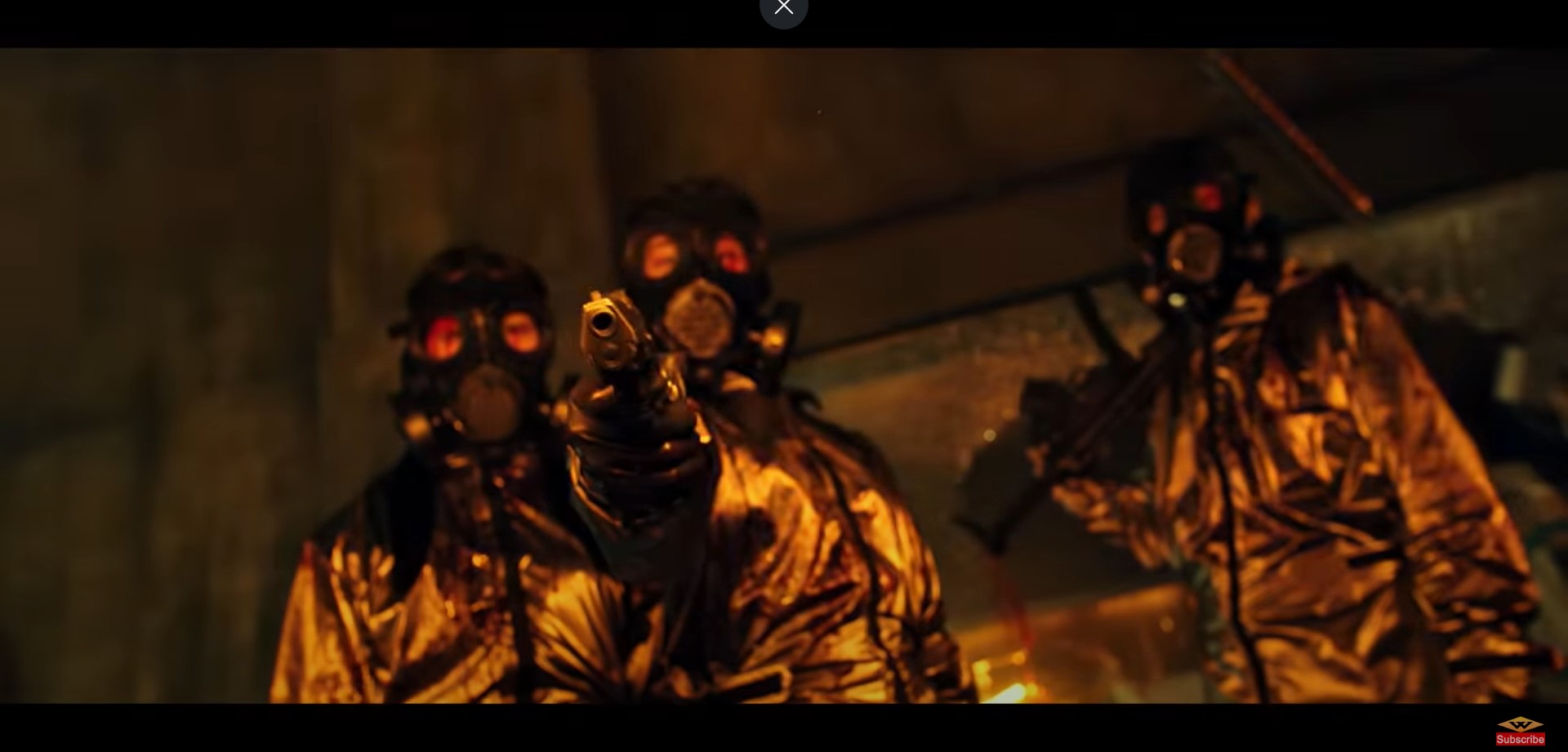
A top-secret lab, known as the Ark 1 of Jeju Island where The Witch project is being conducted, is raided by ruthless mercenaries armed to the teeth with weapons and an enhanced superpowers resulting from The Witch project.  Eradicating every living person in the tundra camouflaged facility, one teenage girl emerges bloody from the carnage and wanders off into a neighboring snow-covered forest.  She’s rescued by Kyung-hee and her brother Dae-gil who inherited the land from their recently killed father.  The siblings are in a contentious situation of their own with a gangster uncle, Yong-du, who will stop at nothing to get his hands on the property, especially when he took care of the previous landowner.  With her Witch powers, the girl helps her kind rescuers to fend off a Yong-du shakedown, but the problems only begin there as the Ark 1 mercenaries are tracking down the girl’s whereabouts to finish what they started and a tactical team, enhanced with Witch powers too, has also been dispatched to eliminate the girl as an unpredictable global threat.  When all forces collide, the Earth will shake in a bloodbath of superpowers. 

A direct, but not an entirely direct sequel to the 2018 high-action Korean thriller “The Witch:  Part I – The Subversion,” writer-director Park Hoon-jung (screenwriter of “I Saw the Devil”) returns with a follows up the long awaited sequel “The Witch:  Part 2 – The Other One” that promises to be just as excitingly unrestrained with more players in the superpower game culminating to an explosive head that plays out like a hard-hitting Guy Richie storyline of intersecting plot threads except without wisecracking Englishmen.  The sequel follows another, and a handful of others in sperate, funneling threads, like the first installment’s principal character Koo Ja-yoon with insurmountable supernatural abilities except now everyone and their brother can “Twilight”-jump and Wolverine-heal, making the field even-steven to a known extent up until the grand finale.  Park returns as producer as well as newcomer Hyun-woo Kim, producer of “I Saw the Devil” and “Snowpiercer,” with Next Entertainment World and Goldmoon Films serving as production companies.

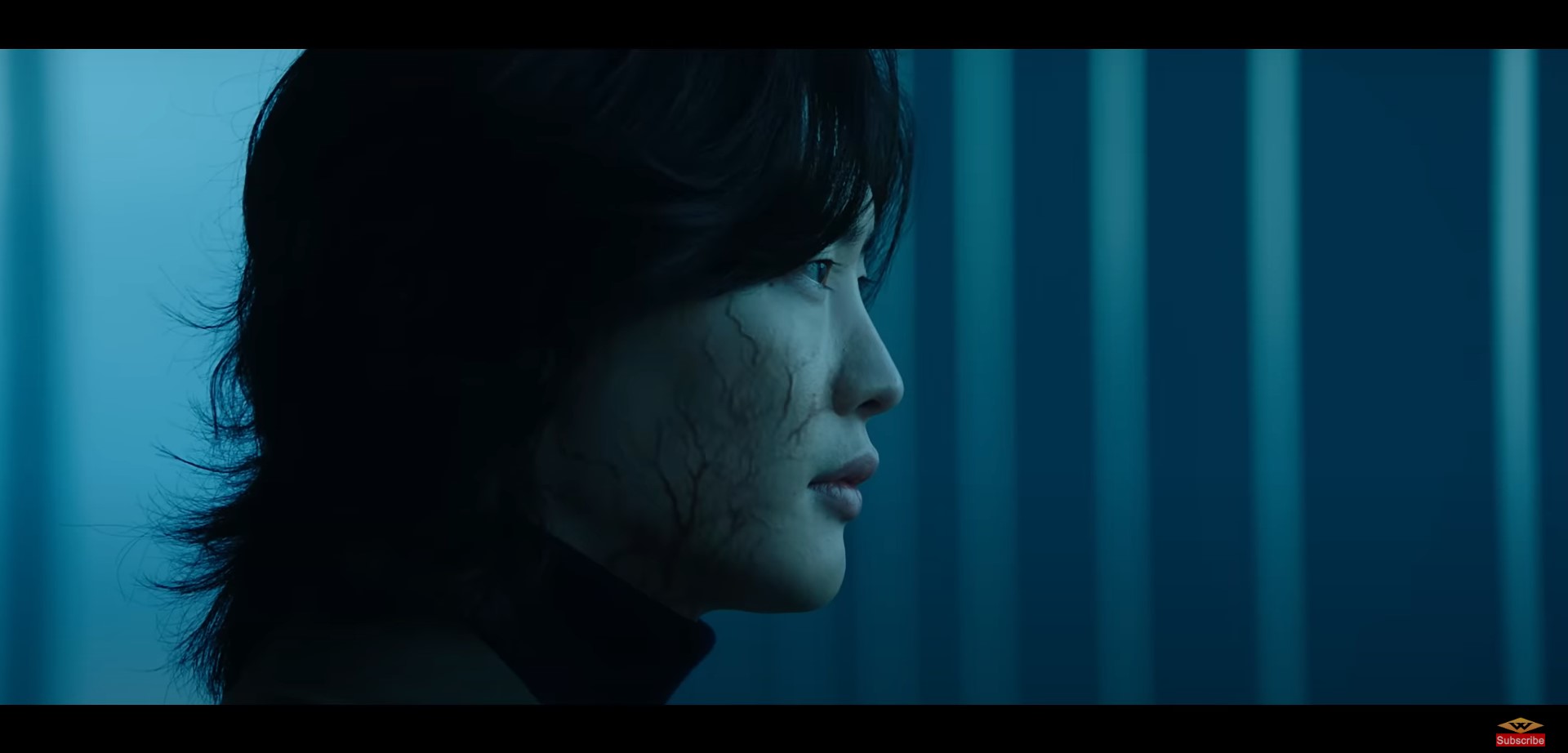
The sequel does not specifically revolve around first film femme fatale Koo Ja-yoon and turns the focus on a new prodigal Witch who has been cooped up in a lab since birth, hence why the film is not a full-fledged direct sequel as the storyline goes into an offshoot that later intersects. The face of the new witch is played by Shin Si-ah who makes her feature film debut.  When not covered in blood, Shin’s mostly reserved performance opens to light-hearted and childlike wonder as her character is experiences everything for the first time outside the Ark 1 lab.  Kyung-hee (Park Eun-bin, “Death Bell 2:  Bloody Camp”) and Dae-gill (Sung Yoo-bin, “Manhole”) take in the girl and become the warm absorption resemblance of family life or a life with romantic interests that can quickly be ripped away at any moment, sending the emotionally teetering girl into battle mode.  However, that sensation of relationships and tenderness hardly translates well on screen.  Perhaps losing some impact in literal translation, the trio’s dynamic retains a goalless fruition of connecting with other people, especially the superhuman powerless ones.  I found more complexities in the two factions seeking the same target – the girl.  Enigmatically opening with the mercenary raid on the secret Ark 1 lab and executing all in their path, we’re not immediately introduced to, and then barely given an introduction at all, is “The Cursed Lesson’s” Chae Won-bin’s mercenary boss lady and her squad of lesser-though of subordinates who all carry this overly murderous confidence with the latter being often measured inside their own group.  The other group is quite the opposite with the official tactical response team deployed by the Witch project head Dr. Baek (Jo Min-soo), a returning character from “The Subversion.”  Compiled as chief agent Jo-hyeon (Seo Eun-soo) and her second-in-command, a South African named Tom (Justin John Harvey). Seo and Harvey have a better act as the exchange is degrading and goofy in a comical manner with Jo as a workaholic lone wolf leader of an elite group of special ops while Tom brown noses his commander with new tech and offers helpful suggestions to which his commander either breaks or doesn’t use the new tech and views him as more of a warmhearted nuisance. Jin Goo completes the principal cast as a high-level gangster boss that would be big time in reality but in “The Witch’s” universe equates to an insignificant goon in a fancy coat. With an entourage of loyal henchmen, Jin Goo rubs elbows with his business smarts to get in bed with a clandestine organization as well as staying alive as long as he can in order to rob property right from under his niece and nephews’ nose. Goo plays the part with sly astonishment as he creates a pompous persona mildly shocked by awesome abilities of a young girl with the strength of 100 men.

What garnered much fascination with the 2018 film was the Korean dark, neo-noir tone intermixed with the uncanny abilities of a mystery person who can’t remember jack about their past. Park Hoon-jung essentially removes the simplified spine of “Part 1” and transplants it as the basis of “Part 2” with the similar added angles of a destroyed lab that supposedly no one survives but one person ultimately does and a pair of benevolent landowners who rescue, nurse, and essentially adopt the amnesiac girl back to 100% percent. “Part 2′” mirrored storyline is then targeted by at least three different angles represented by each bird-dogging group to add elements of change that include a contrast of comedy and austere posturing, the former being refreshingly novel to the two-film series that promises more to come after an open-ended finale. Returning to the sequel is the insane visual effects of “Twilight”-esque rapid movements and epic fight sequences with large explosions, a cold and bloody violent complexion, and high body count and while that’s all good and dandy for surface level popcorn effects, what’s agonizing is the how sped up they are as if every super occurrent was purposely depressed on fast forward by the power of three. If Park and his creative visual supervisors and gurus could have tempered down every other two moments with instead of having thrown cars, and among other things, seemingly skip multiple frames would have had more of a plausibility impact. The mélange complexity of multiple pursuers armed to the teeth and converging onto an unexpected teenage girl shacked up in a humble abode is a great classical spell of barnstorming besiegement that has the same improbability odds of survival as before betting on David versus Goliath until upended unto the aggressors, with all their guns and knives, who now need a prayer and much more against the prodigal youth with a considerably more amount of Witch power.

A fierce force of controlled power, and unforeseen surprises, the long-anticipated sequel, “The Witch: Part 2 – The Other One,” has finally landed post-pandemic. Well Go USA Entertainment, who released the first installment on Blu-ray, has picked up the rights to release the sequel on the high-definition format, presented in a sleek and sharp 16:9 aspect ratio. Virtually no issues with the digital presentation, the Blu-ray’s 1080p heightens every aspect of detail, even to a fault with the wonky visual effects as mentioned earlier. The overall darker lit tone and range can sometimes give off the appearance of softer details but with solid contrasting, the outlining shapes up more so than often and there’s no compression distortion to render an ill-defined texture. The Korean-English Dolby Digital 5.1 mix, also available is a Dolby Digital 7.1 Atmos and a Stereo 2.0, delivers a formidable, comprehensible, and frenzy-favorable mix of balanced action and dialogue. Depth perfectly pitches the focus properly while the range fuses together mostly during the fighting sequences until there’s a deep and punch-packed explosion mushrooming into a ball of crackling fire. No evident issues with dialogue and the English subtitles synch well with no flaws. Bonus content features a glossy and sped-cut behind-the-scenes featurette and the theatrical trailer. Physical features include the original Blu-ray snapper case with a cardboard slipcover featuring the same cliff-note touching cover art as the snapper case. The NTSC Blu-ray come region A hardcoded, is unrated, and has a runtime of 130 minutes. Time flies when you’re engrossed in “The Witch: Part 2 – The Other One’s” take no prisoner thriller of transcendent turbulence.

“The Witch:  Part 2 – The Other One” – A Whole New Blu-ray Tale of Intensity.

The Dark One’s EVIL Sucks the Air Out of You! “Robot Holocaust” reviewed! (Ronin Flix / Blu-ray)

“Robot Holocaust” enslaves Humanity on Blu-ray!

Year 2033 – a robot rebellion turned the once convenient machines into man’s most deadly adversary.  The aftershock of war has left mankind almost extinct and most of the atmosphere uninhabitable with radiation.  The last standing metropolis on what is now known as New Terra has the only breathable environment monopolized by the tyrannical Dark One, a disembodied machine that uses human slave labor to fuel the air producing contraption for the entire city.  A motley band of heroes, led by an outsider from a wasteland tribe who can breathe the toxic air, embark on a perilous journey to the Dark One’s factory lair, evading deadly flesh-eating worms, wasteland mutants, and a ruthless robot subordinates under the command of the Dark One.   Their mission is to rescue a purloined scientist after developing a device that lets people breathe outside the Dark One’s grip of a controlled environment.

The 1980s is a goldmine for post-apocalyptic cinema that has virtually no ambit.  Whether a big Hollywood studio or a rinky-dink production, inhospitable badlands filled with cutthroat survivors and malformed beings unfortunate enough to be left alive to battle it out to the death over the Earth’s last remaining precious resources was (and to an extent, still is) a salivating story prospect with vast barren landscapes, dangers around every corner, an untamed primal violence, and a BDSM-like wardrobe that hits the suppressed kink nerve in all of us.  Tim Kincaid’s “Robot Holocaust” is right smack dab in the middle of the subgenre and plays tune to every crowd-pleasing characteristic.  The 1987 post-apocalypse actioner is written-and-directed by Kincaid who cut his teeth on gay adult films in the late 1970’s and has maintained a healthy dose of homosexual erotic and adult films throughout his career until 2017 under his pseudonym of Joe Gaga.  After complete stag only cheapies “Cellblock #9” and “…in the Name of Leather,” Kincaid received a hankering to dip his directorial toes into sci-fi and horror, beginning with the sexual assaulting alien flick “Breeders” in 1986.  “Robot Holocaust” became the filmmaker’s subsequent feature one year later, shot mostly in the abandoned Brooklyn Navy Yard buildings as well as the undeveloped then Roosevelt Island in New York City.  Presented by Wizard Video (“I Spit on Your Grave”), Tycan Entertaiment and Taryn Productions are the companies behind the film. Taryn Productions is a subsidiary created by Charles Band (“Puppet Master’) and named after his daughter Taryn. Cynthia De Paula produces the film, who she almost exclusively produces every Kincaid sci-fi horror fixation, and the film likely supported by Charles Band in an executive producer role.

“Robot Holocaust” follows the narrative of a ragtag bunch of good-guy survivors journeying to rescue a friend and take down a tyrannical overlord.  While not one role stands as a principal lead, the band of heroes is led by Neo, played by Norris Culf.  Starring in his first lead role following a couple of smalltime gigs in supporting roles in another Taryn Production, “Necropolis,” and in Tim Kincaid’s “Breeders,” Culf receives his big break as a wasteland conqueror able to breathe outside in the radioactive atmosphere.   As a leader, Culf isn’t as charismatic as Keanu Reeves’ Neo nor is he fierce enough to be intimidating; instead, Culf is quite reserved, unpowerful, and lacks coordination to pull off choreographed fight sequences with a believable plausibility.  Nyla, on the hand, is played Jennifer Delora of “Frankenhooker” and “Fright House.”  Delora, an martial arts blackbelt, brought the proper attitude to her fiercely feministic leader of the She Zone women tribe by adding the mean to Nyla’s demeanor.  The other woman of the group is Deeja, Jorn the Scientist’s daughter who terribly reliant on her father, sparking major contrast between her delicacy in daddy issues and Nyla’s hardnosed, man-hating feminism.  Nadine Hartstein and Michael Downend reconnect from their minor roles in “Necropolis” to be the daughter and father team at the core of suicide mission. More ceremonious than being an emotional wreck of being separated during the middle of a robot run world, Harstein and Downend bring little flair as they themselves often are more automaton than the automatons. Joel Von Ornsteiner (“Zombie Death House,” “Slash Dance”) had the most flair as Klyton, a pickpocketing free-thinking droid that looks like a cross between Star Wars’ C3PO and MAC from “Mac and Me.” Ornsteiner never let up or broke the eccentric droid’s light-hearted Robin to Neo’s Batman antics complete with rigid, robotic movements and a ray gun that never seems to work. One of the more painfully pressed roles is Valaria, the Dark One’s flamboyantly dressed second in command. Think “Forbidden Zone”-esque. Angelika Jager performance in cahoots with the Dark One is about as dry as toast and at odds with her own vestigial accent. Jager’s the congenial visual to her counterpart Torque’s effectual exoskeletal mechanical cover who could pass for a T-800 with the teeth replaced by dangling like Lobster antennae. Rick Gianasi, who went on to be Troma’s Sgt. Kabukiman, plays the underestimated and underrated villain, leading the way for other sidelines roles with a cast that rounds out with George Grey, Michael Azzolina, John Blaylock, and Nicholas Reiner.

As mentioned earlier, “Robot Holocaust’s” acting isn’t good.  It borders old-timey melodramatic in a proclamation sense.  There are no in-depth discussions, debates, conversing naturally, or any aspect of the dialogue having a normalcy about it as everything is vigorously proclaimed or is awkward narrated for exposition.  The other half of the problems is in direct result of Kincaid’s poorly written script that can’t capture ordinary conversation, much like those of his pornographic films, I would think. Nor could Kincaid write himself out of the erratic flippancy of some principal characters who woujld go from bad to good then from good to bad in a blink of an eye.  While the communication is about a dull as a butter knife, the costuming is where “Robot Holocaust” balances the scales with 80’s ridiculously appropriate garb of what the ruined future would sport.  A metrosexual mixture of v-neck pelt shirts of mystery animal origin and early WWF professional wrestler spandex turn the men into “Conan the Barbarian” types, to which a few other influencing aspects are pulled from the Schwarzenegger epic fantasy.  The women are equally suited but with more finesse in the way of warrior princess as well as a goddess. With a title like “Robot Holocaust,” the android designs better be spectacular and in all for its time period, Ed Fench’s designs and Valarie McNeill’s fabrications are a mixed bag of good and bad. Klyton derives too heavily from “Star Wars'” inspiration without wowing into something of the tiny production’s own while Torque radiates power and fear with a complete head-to-toe body suit of an acolyte with attitude. Both designs don’t compartmentalize by operating individual body parts, such as moving mouths or even hands for that matter, which would have nailed the robots down for a film called “Robot Holocaust.”

Ronin Flix, under the re-distribution of Scorpion Releasing and MGM, release “Robot Holocaust” on a 1080p high-definition AVC encoded Blu-ray. The hard coded region A North American release is presented in an anamorphic widescreen 1.85:1 aspect ratio from the original 35mm negative. Natural grain, a palatable and diverse color palette, and swelling textures, such as fine details in the skin, scuffed up droids, and a grimy industrial complex provides a zestier interest that parallels the languishing storyline. The English language 5.1 DTS-HD Master Audio is remarkably clean, much like the transfer, with a coextending presence of robust range, depth, and quality. The proclaiming dialogue is crystal clear, hanging on every syllable and syntax, with no issues with hissing, popping, or other flaws. Jager’s accented monologues and conversations are kitsch guilty pleasures to hear her laissez faire style and delivery. Special features include a new interview with Nyla actress Jennifer Delora touching upon little-by-little her experience with cast, crew, and overall project. There’s also the official trailer included. The physical release comes in a regular blue snapper case with one-sided grindhouse artwork of a looming Torque, an explicitly worn skull, and Angelika Jager’s Valaria with her eyes closed and slight smirk. The unrated film runs a brisk 79 minutes. The “Robot Holocaust” is only 11 years away according to the film’s timeline, but director Tim Kincaid’s future can’t help but feel like a vintage hunk of junk by the stale performances and skimpy Tarzan-like duds and getting through the brief runtime proved unfortunately challenging.

“Robot Holocaust” enslaves Humanity on Blu-ray!