Daughters Don’t Cause This Much EVIL! “Son” reviewed! (Acorn Media International / Blu-ray)


After escaping the imprisonment of an abusive ordeal with her father’s cult, the next eight years have been easy for Laurel living with the joy of her son who was born as a result of her abuse.  When her son contracts a mystery ailment that causes open sore rashes and bloody vomit, the doctors are baffled when the surely fatal, undetermined disease makes a rapid retreat and the boy recovers seemingly miraculously.  Days later, the boy again falls more ill and, this time, Laura suspects her previous life in the cult to be behind his suffering.  With clandestine acolytes making the presence known, Laura flees with her son as the two motel jump across the Midwest with no only two detectives on her tail but also the cult looking to reclaim her son with a terrifying and gruesome new gift. 

Back into the creepy kid subgenre field we go with another multiplex single mother and son relationship American-thriller, simply titled “Son,” from Irish-American writer and director of “The Canal,” Ivan Kavanagh.  Spun from the yarn of familiarities that are stitched together with the overprotective mother trope battling the forces of beleaguering evil reigning down on her child, as seen in such films with Jacob Chase’s “Come Play” and Jennifer Kent’s “The Babadook,” Kavanagh deviates from the abstract lines of the mental illness undercurrent that reshapes and plagues centric characters into horrific, supernatural episodes of isolation, grief, and loneliness personified by often terrorizing entities lurking in the dark.  “Son” is an American production formed by intercontinental production companies with the UK’s Elastic Films (“Cub,” “What We Become”) spearheaded by producer Louis Tisné, Dublin based Park Films co-operated by Kavanagh along with AnneMarie Naughton and Ana Habajec, and René Bastian and Linda Moran’s Belladonna Productions (“Funny Games,” “Stake Land”). “Son” is an exclusive release of Shudder and RLJE International.
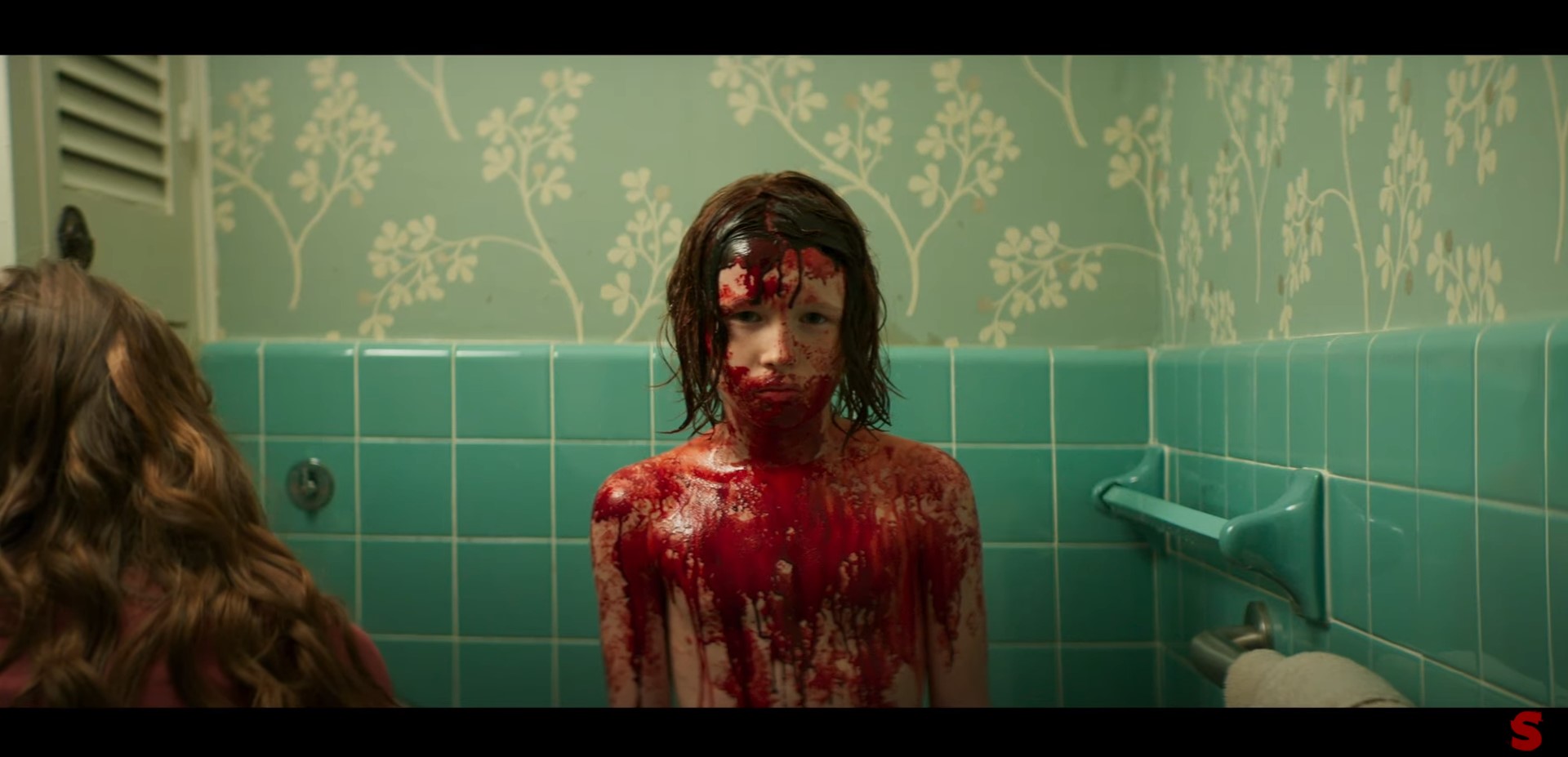
Added to the long history of assorted turmoiled single mothers versus the things that go bump in the night is currently a big name in horror at the moment with being principally casted in the latest three recognized sequels of the “Halloween” franchise.  Andi Matichak steps into the wretched past but ever so optimistic shoes of Kindergarten teacher Laura whose introduced in a prologue of heavy rain and the blood pumping cacophony of an intense chase.  Pregnant and haggardly dirty and barefooted, Laura is being followed by menacing, unknown men before she pulls off to safety just in time to give birth to a child she verbally proclaims no desire for but reluctantly accepts as her own after a bloody, front seat natural delivery, a moment that not only conveys Laura’s compassion but also her strength. Fast forward, Laura and son David (Luke David Blumm, “The King of Staten Island”) living daily normal lives with school, neighbors, and the ins and outs of parenting.  Blumm gives a good run on distress and duress as the titular character that has contracted an illness rapidly reconstructing his mortal soul.  “Killer Joe” and “The Autopsy of Jane Doe’s” Emil Hirsch enacts a sympathetic detective taking an interest in Laura’s case, but Hirsch is mostly silent and stiff, almost like he’s part of the background furniture, for the entirety of the character arc, bringing down, as a counteractive device, much of “Son’s” speedball narrative.  Rounding out “Son’s” cast is Blaine Maye, Cranston Johnson, Kristine Nielsen, Erin Bradley Danger, Adam Stephenson, and David Kallaway.
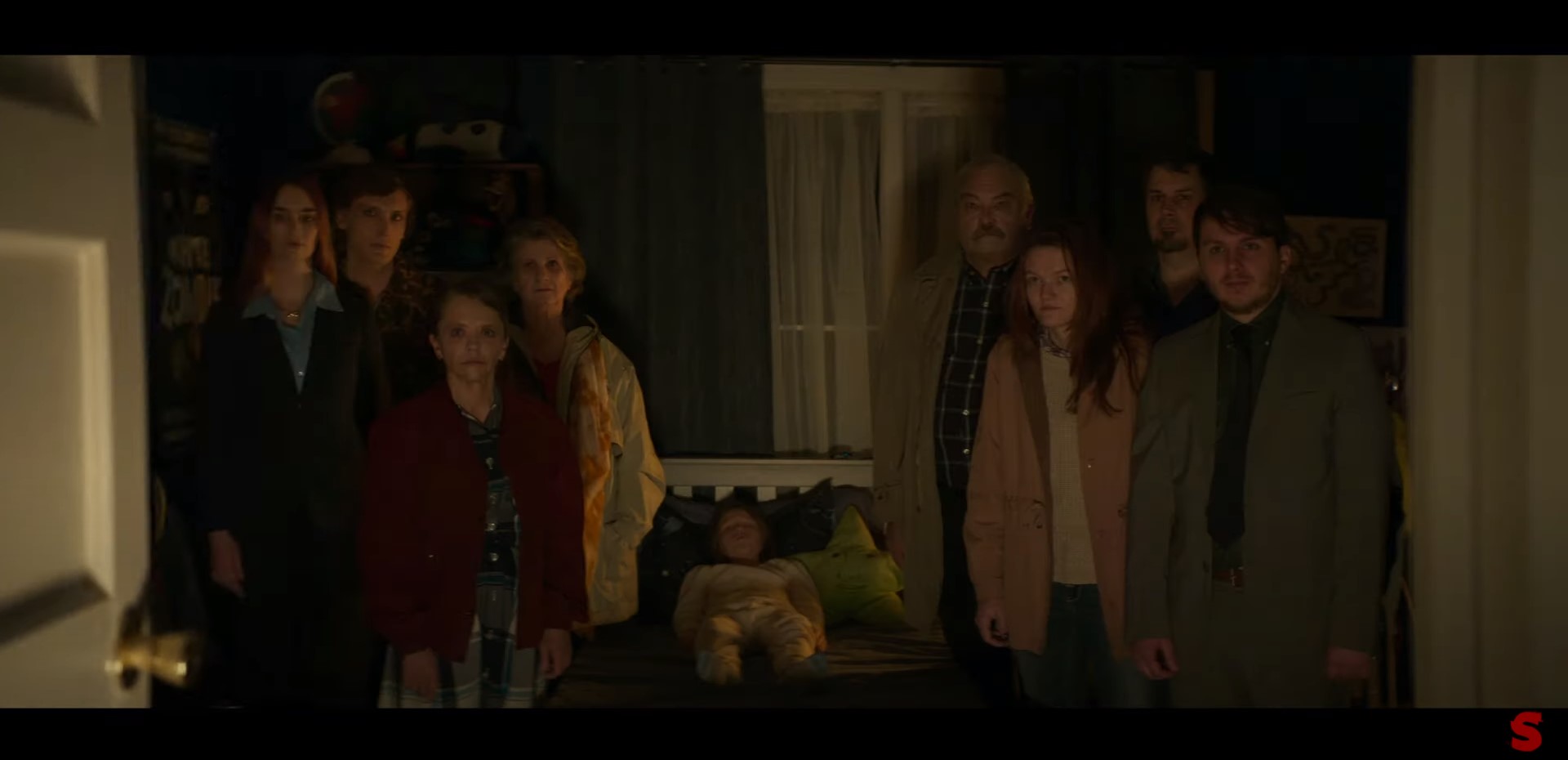
“Son” is surprisingly gory involving intestinal viscera and severed body parts with child actor Luke David Blumm at the center of all the carnage and the story is heartbreakingly sober when a mother, a rape victim, has to make the ultimate sacrifice for the greater good.  Kavanagh subtly massages the thematic quandary of how a rape resulted child can be a perspective schism.  On one hand, the born without sin child stems the mother’s womb, ready to be loved and cared for by instinct to protect our own, whereas the other side, of that coin, more ingrained into the human psyche than we like to admit, is the child is a constant reminder of the past, a figurative reincarnation of a hurtful monster who the victim has to lay eyes on every day for the rest of their life.  Kavanagh instills into Laura that blurred line of trauma while imprisoned by the cult and she couldn’t clearly recollect whether her father or someone, or something, else is David’s biological father.  However, Kavanagh’s script houses too many illogical potholes to warrant foolproof approval, some more egregious than others.  For example, at one point Laura removes her severely ill son from the hospital without authorization because she believes cult members are after him to at which then she arrives back home to gather clothes and supplies to skedaddle out of town.  Yet, there were no police officers or cult members in route or staged at the home which should have been the first place anyone looking for Laura, as Emil Hirsch’s character states over the phone to Laura, would be staked out.  Secondly, the local detectives are able to cross state lines into Mississippi, Kansas, and Alabama without so much as batting an eye lash, presumably stepping over local authority.  Lastly, If evidence of a cult, especially a pedophile cult as one of the detectives suggests, is rearing its ugly head again and coming after a previous victim and her son, the federal government would be much more involved than local PD.  “Son” holds fast in keeping it’s cast close to the chest albeit some severe logical issues.  With that being said, Kavanagh knows how invoke dread and horror with his bleak narrative and stylistic techniques.  Good at horror, poor at story is what Ivan Kavanagh’s “Son” boils down to, leaving behind a lingering middle of the road afterthought in it’s wanton wake.
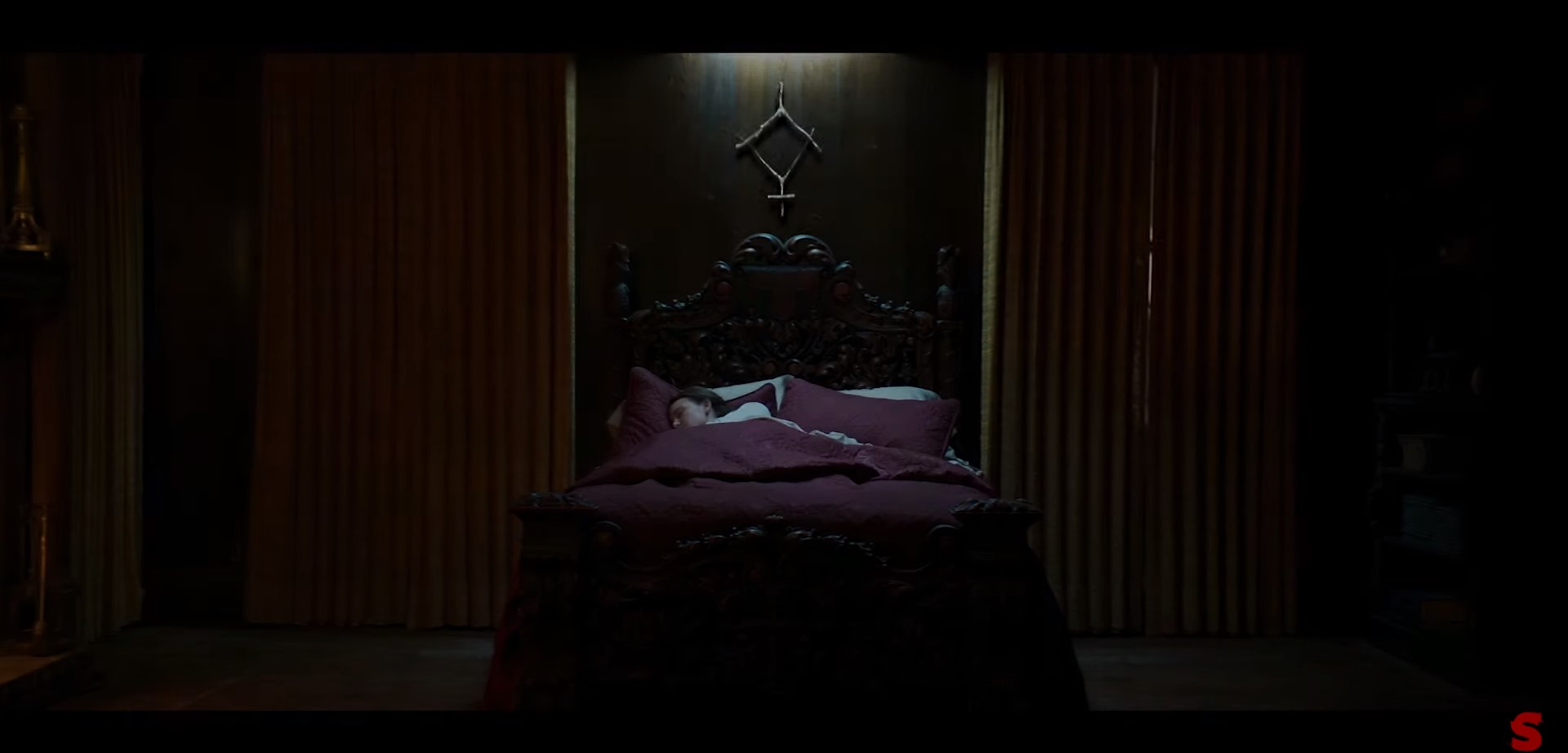
“Son’s” the past catches up with us all story perpetually never becomes tiresome, hitting every stage precisely with intention and full of scares to garner big, soul-freezing reactions. The iciness of “Son” will leave goosebumps, raise hairs, and shiver spines and you can watch it all now on a UK Blu-ray from Acorn Media International. Presented fully hi-def in a widescreen 2.39:1 aspect ratio, the region 2 Blu-ray is PAL encoded and has a runtime of 98 minutes with UK rating for strong gore, violence, language, sexual threat, and child abuse references. When looking over the picture quality, there’s not much to note other than some scenes appear softer than others in a more a director’s style approach to the content of the scene. Much of the blood is inky black with a nice mirror glaze shine, as Paul Hollywood would say, inside from the solemn color-toned to the natural lighting of daytime scenes. The English language Dolby Digital 5.1 surround mix has a robust and fiery soundtrack in Aza Hand’s quite aggressive sophomore composing score. Dialogue is clean and clear without any break in the chain or obstruction as the audio tracks are balanced appropriately through all five channels. Special features include a spliced together snippets from interviews with the cast and crew along with deleted scenes more directly involved exploring Laura’s cult-captive background. To say you would do anything for your child is a complete understatement in Ivan Kavanagh’s “Son,” a top shelf singer full of venom , but as a whole, better stories are out there.

Next Gen to Regain What EVIL Took. “The Walking Dead: World Beyond” reviewed! (Acorn Media International / Blu-ray)

Ten years after the sky fell and the undead walked the Earthed, a new generation of survivors live comfortably behind gated walls at the Nebraska University campus.  Sisters Iris and Hope sometimes counteract each other’s position on campus hardly see eye-to-eye and, especially when dealing with the clandestine Civic Republic Military who has recruited their scientific father to do research in New York, but when secret messages about their father’s safety in potential jeopardy, Iris and Hope come together, along with campus outcasts Elton and Silas, to trek East on foot through the hordes of undead and the dangerous obstacles that separate them from their father.  The first generation to grow up in the apocalypse must learn to survive in the ravaged world of today and battle not only the dead and evad the mighty Civic Republic Military but also confront their individual haunting pasts. 

“The Walking Dead” executive showrunners Scott Gimple, Robert Kirkman, Brian Bockrath, Matthew Negrete and David Alpert envision a vast Walking Dead universe filled with endless storylines searing with undead mayhem on the precipice a human emotional depth charge explosion.  In 2020, a new and limited two-season spinoff series of AMC’s “The Walked Dead” lumbered forward with “The Walking Dead:  World Beyond” that aimed to explore the untapped emotive locomotive with teenagers having grown up naïve of usual adolescent behavior while also learning how to survive the outside world having been safe behind guarded walls most of their young lives living inside a smaller-scale social structure and guidelines like pre-apocalypse.  While “The Walked Dead” focused on the mid-Atlantic, stretching from George to West Virginia, and “Fear of the Walking Dead” went to the West Coast in Cali, down the border to Mexico, and finally landing near the Gulf coast, “World Beyond” takes the Pacific Northwest beginning inside Nebraska then stretching our main character’s journey to New York state, through the upper areas of what’s left of the country, but filming is actually shot in yours truly home state of Virginia surrounding the capital Richmond area.  Based not off the popular graphic novel series by Robert Kirkman, albeit with a few minor connections, “World Beyond” is a production of AMC, Idiot Box, Skybound Entertainment, Circle of Confusion, and Valhalla Entertainment.

A younger, fresher cast of faces grace “The Walking Dead:  World Beyond” with an innocence facade and juvenile decision making that lifts the series into that rite of passage in adolescent-hood where the children of the apocalypse must explore their own needs and desires as if the evolutionary behavior of growing up has never changed.  Only this time, someone’s trying to bite your face off or actually steal everything you possess off your back.  Aliyah Royale and “Unfriended: Dark Web’s” Alexa Mansour play the contrasting adopted sisters Iris and Hope with an underlining bond that’ll blossom sluggishly forward to season one’s conclusion.  Iris has always conformed to safe living behind the campus walls, but takes a page out of Hope’s book of radical ideas to venture out against policy to find their CRM recruited, and possibly distressed, father.  Through the series, I found Royale to be slightly unauthentically preachy in her delivery that never fastens an emotional connection to her saintly-turned-intrepid persona.  Hope has more complexity turmoil tinned up inside of her pulled and worked very delicately by Mansour in becoming the wild card amongst the group.  “Nine Perfect Strangers’s” Hal Cumpston and voice actor Nicolas Cantu join Iris and Hope as the reserved Silas and the ever hopeful pessimistic Elton, searching for a fresh start and answers to their philosophical questions.  Silas and Elton add more dramatic complications than friendly assistance on the journey with personal violent demons resurging out form Silas’s past to the death of Elton’s mother in which Hope hesitant disclosure of her involvement in the killing of his mother back during the first days of apocalypse sets the tension for a good portion of their travels.  As supporting characters, Silas and Elton also provide sub-storylines “The Walking Dead” thrives on along with two more characters, a pair of campus security details in Nico Tortorella (“Scream 4”) and Annet Mahendru (“The Americans”) playing close friends and colleagues Felix and Huck venturing out to rescue the four inexperienced youngsters from a fate far worse than being a gnawed on scrap of undead jerky. Mahendru’s pulled up hair, facial scar, and widely inflated draw is quite a far cry from her dolled up and partial nudity espionage performance in “The Americans,” a performance that makes her nearly unrecognizable, while Tortorella shoulders a lot of personal baggage in self worth and difficult promises to his makeshift family built on friendship – a regular theme throughout not just with Felix but with the youth group searching for answers.  “World Beyond” rounds out the cast with Ted Sutherland (“Fear Street:  Part Two” and “Part Three”), Natalie Gold (“Birdman or (The Unexpected Virtue of Ignorance”)), Joe Holt, Jelani Alladin, and Julia Ormond (“Inland Empire”) as the CRM spearheading a covert operation.

The enormity of the “TWD” universe and with end in sight of the undead not working the Earth would inevitably bring up the question of how young children would grow up and face old world teenager issues.  Their not-so-normal childhood forged when the sky fell, as phrase that use to describe the day the dead risen, has ultimately molded who they are when we meet the characters 10 years after that doomed day, but the series dives into backstories on the regular with flashes back, turning every episode of the 10 episode series into a non-linear segment, something that strays, but is not completely foreign, to the “TWD” universe.  Another aspect that’s different, and is terribly detrimental, is the lack of graphic bloody violence, especially against the living.  “World Beyond” tries very hard to shield the viewers from gruesome dispatching of the undead by offscreen kills to implied deaths and not until the latter half of the season does “World Beyond” begin to ooze out of it’s conservative shell as the story becomes more complicated and into more adult themes from lies and betrayals to violence and loss, a parallel of the passage from childhood to adulthood when reality of the real world hits you in the face.  What does stay true to it’s origins us the same is the overgrown sets, the detailed decay, and same beautiful morbid imagery that really compliments to effort in production value and budget.  My only gripe is that many of the actors look fresh out of the shower with perfect hair and loads of makeup in a scenario that would harried and haggard any individual. The story also connects to it’s more fierce bigger brothers with a broader introduction of the Civic Republic Military whose symbol shows up in “The Walking Dead” when whisking Rick Grimes away in one of their helicopters and also in “Fear of the Walking Dead” in the troops who were the bite impervious suits, sleek black helmets, and the assault rifles with dual piercing bayonets. “World Beyond” builds upon their mysterious nature by giving an wider, longer look into their enigmatic, cavillation building window.

With the series finale, aka season two, in full swing this fall at AMC, Acorn Media International concurrently delivers the first season onto an UK 2-disc Blu-ray. The region 2, PAL encoded, BD50s are presented in a televised widescreen 1.78:1 aspect ratio with a total runtime of 453 minutes. Not discernable issues with the digital image that renders virtually the same veracious tone as the other two “Walking Dead” series with “World Beyond” being a tinge bit more colorful as if the saturation provided more youthful characteristics. There really is some nice imagery happening in certain episodes, such as in episodes “Brave” and “The Blaze of Gory,” that work the dead into being connected with the surrounded elements as if the dead are now the more natural bond with Earth. The English language Dolby Digital 5.1 surround sound audio channels with clarity and equally amongst the five points. Dialogue is clean and unobstructed with a balanced breadth of depth and range amongst the various scenarios of death and deception they stumble into. English subtitles are also optional. Bonus features include A Look at the Series that dives into what “World Beyond” aims to accomplish with a fresh young cast, A Meet the Character segment that, obliviously, dives into the actors going over their character profiles, and the Making of Season 1, split into two parts with one on each disc, with the cast and creators provided a deeper understanding of character headspaces. “World Beyond” is rated 15 for the violence, some language, and some gore. Diluted decimation of the dead with a softer complexion in an overall comparison, “The Walking Dead: World Beyond” is the naïve little brother of two juggernauting series macheting a path of blood and guts for the less traumatic to have a spot in the world. Yet, the sluggish first few episodes clears out for a much more palatable and gripping series that we’ve come to expect from a universe built on rotting corpses and collective violence.

Catch Up on “The Walking Dead: World Beyond” season 1.  Purchase the Blu-ray/DVD here!

The EVIL Next Door Invites the Urban Decay. “Terrified” reviewed (Acorn Media International / Blu-ray)


A young boy is hit and killed by a bus.  A housewife is found hung in her bathroom.  A man has disappeared in his home.  Three incidences, three houses, three souls have one thing in common.  They’re neighbors.  The unusualness surrounding each tragedy grabs the attention of former forensics investigator Jano who’s own experience with the paranormal thrusts an unquenchable desire to examine the supernatural.  In a matter of coincidence, Dr. Mora Albreck, a vocational psychokinetic researcher, follows up on the disappearance of the man who called her countless times for help, but then just vanishes.  Accompanied by Dr. Albreck’s assistant, Dr. Rosentock, and Detective Funes, a weary, on-the-edge officer with a bad heart, the divide themselves to stay the night in each house and experience the paranormal phenomena calling from the beyond, but the entities calling just might terrify them. 

Hailing from Argentina comes the shivering, cross dimensional unknown from writer-director Demián Rugna’s 2017 properly titled, “Terrified.”  Originally known as “Aterrados,” the Buenos Aires filmmaker, who’s helmed hell bound thresholds previously with his introductory feature film, “The Last Gateway,” remains inside the grindhouse and horror bubble with another slit between realities thriller.  This particular bubble bursts with a whirlwind of nebulous outbreak of terror while providing microbe commentary about the potential dangers of Latin America’s water system and a perspective theme that speaks volumes on the issues of duality in what really happened and what the general public is told. Don’t trust your eyes! Nothing is what it seems! That’s the whole premise of “Terrified’s” knee-quivering appall, produced by Fernando Díaz under Machaco Films and the Instituto Nacional de Cine y Artes Audiovisuales (INCAA).

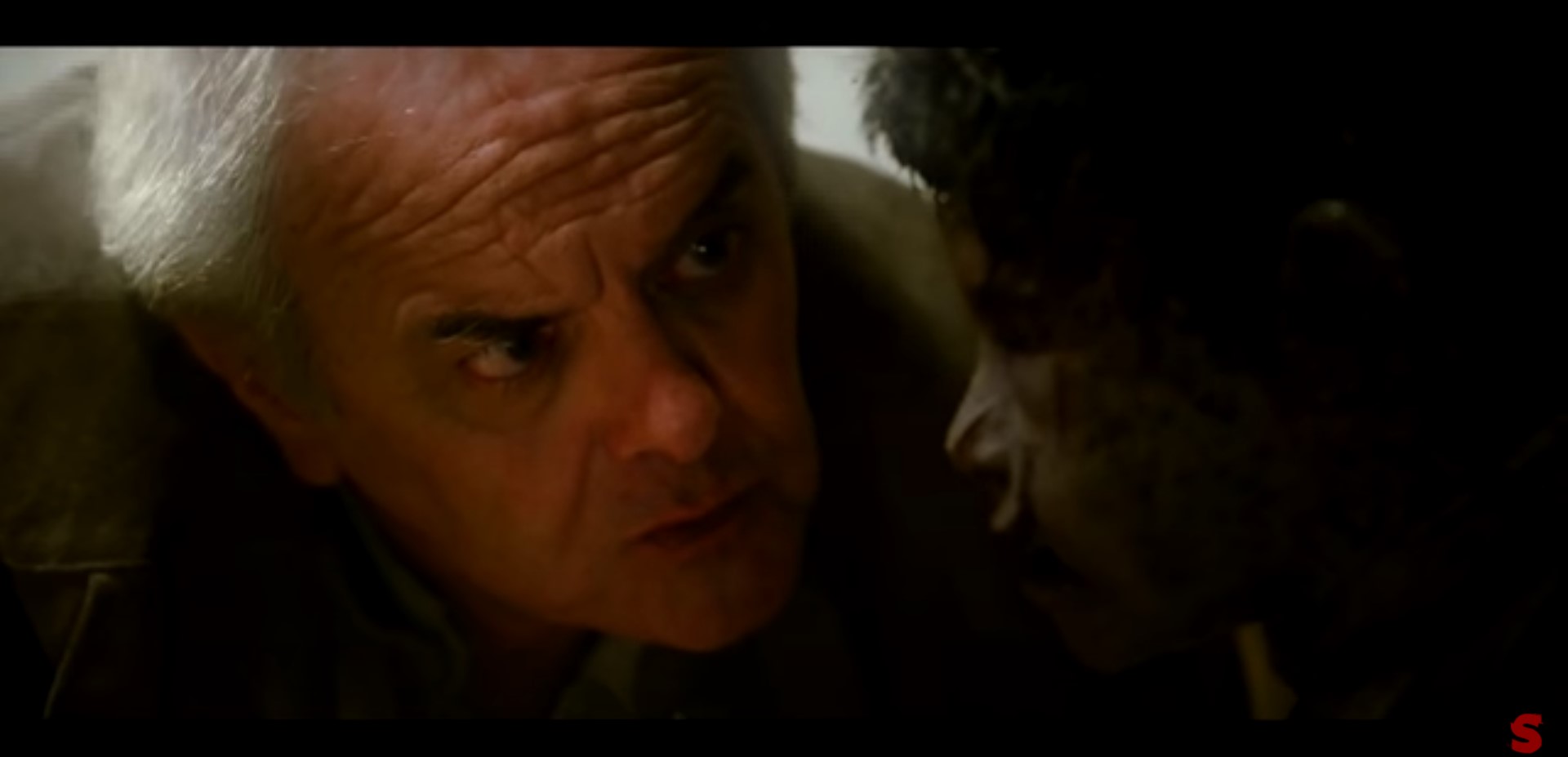
Rugna’s paces “Terrified’s” entropic buildout near the edge of an anthology, ghosting us the one reason for a neighbor’s supernatural experience for the next to eventually bring the heart of the cast together as a motley group of paranormal investigators. Starting with retired forensic specialist Jano who has a morbid curiosity for the unknown that fascinates him more than the abnormal mortifies him with fear. In his first feature length performance outside of television, Norberto Gonzalo understudies the very concept of the character Jano with objective eye for curiosity and knowledge much like any scientist. Jano is invited by Detective Funes, played by another television regular, Maximiliano Ghione, to the investigation of a recently deceased boy’s corpse having returned to his childhood home and is now a rigor mortis statue sitting upright at the dining room table. Though through exposition about their training and partnership over the years, Jano and Funes sit on the opposite sides of the fear spectrum with Funes’s engendered nervousness to the whole uncanny event and mentioning his bad ticker which comes into play later on in the story. Opposite side of the street, in walks into frame Elvira Onetto, an appropriate name for the film at hand. The “Jennifer’s Shadow” actress is Dr. Mora Albreck, renowned paranormal psychologist checking in on a manic patient who recently disappeared. Rugna really appreciates the mindset of the kindred spirits in Jane and Dr. Albreck with their sense of childlike giddiness toward the whole matter while those around them – like Funes or the boy’s mother – shiver with fear or break psychologically. While Jano and Dr. Albreck naturally work their way into the story, Dr. Rosentock is left with being the odd eccentric out. While just as enthusiastic about the phenomena that’s swallowed souls around the neighbor, Rosentock just appears as Dr. Albreck’s assistant who has traveled from a great distance to study…something like what’s happening…so is said in the film. Played by George L. Lewis in his only credited role, Rosentock is as much as self-assured, unafraid, and matter-of-fact as he is a caricature of old Hammer Horror style scientists when dealing with otherworldly entities, imposing a need for a little weight to his story, but, unfortunately, his participation lives and breathes only as participate to Albreck’s project. There are many fine performances around with the ebb and flow of minor characters, played by a talented cast that includes Julieta Vallina, Demián Salomón, Agustín Rittano, and Natalia Señorales.

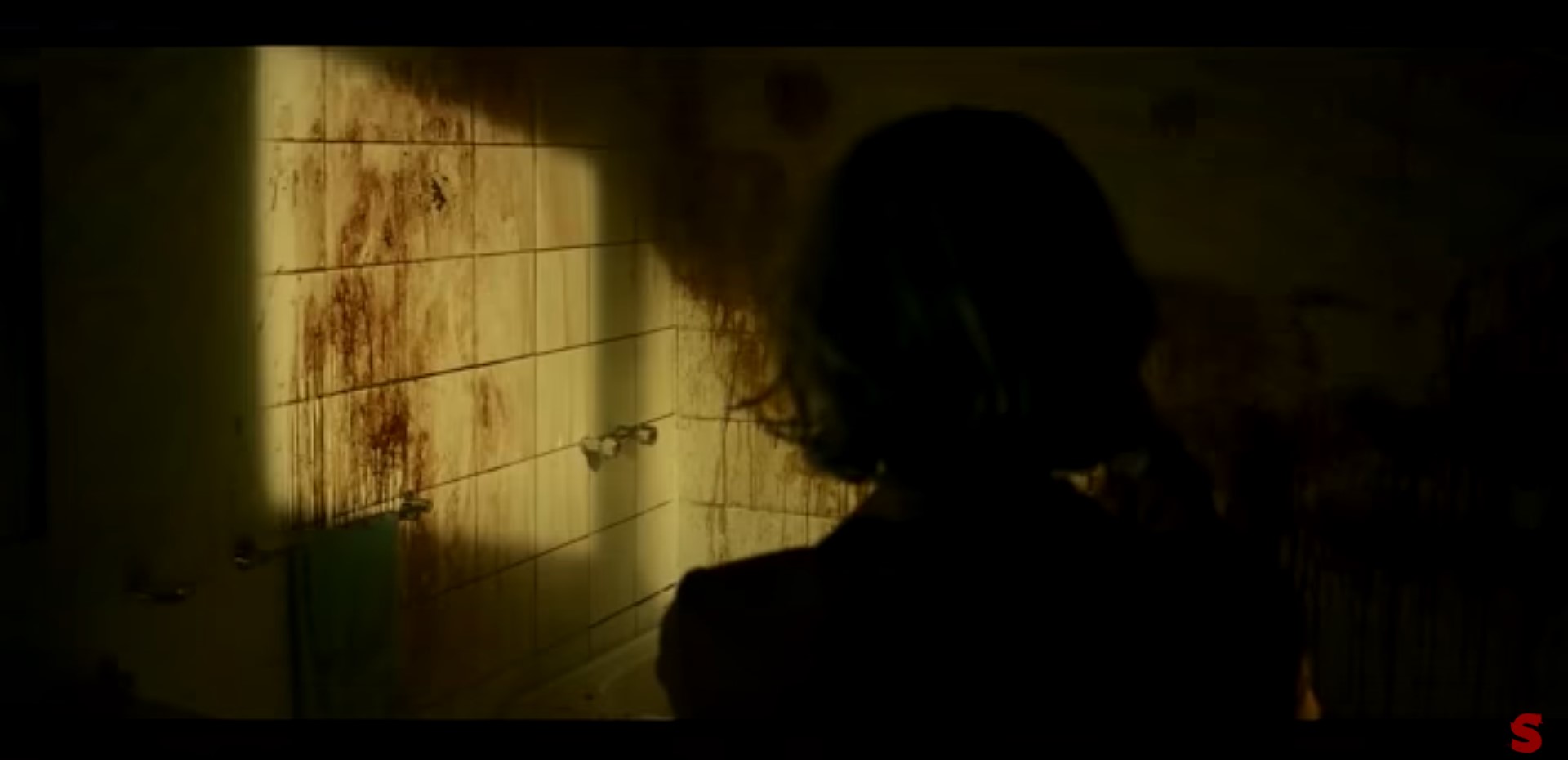
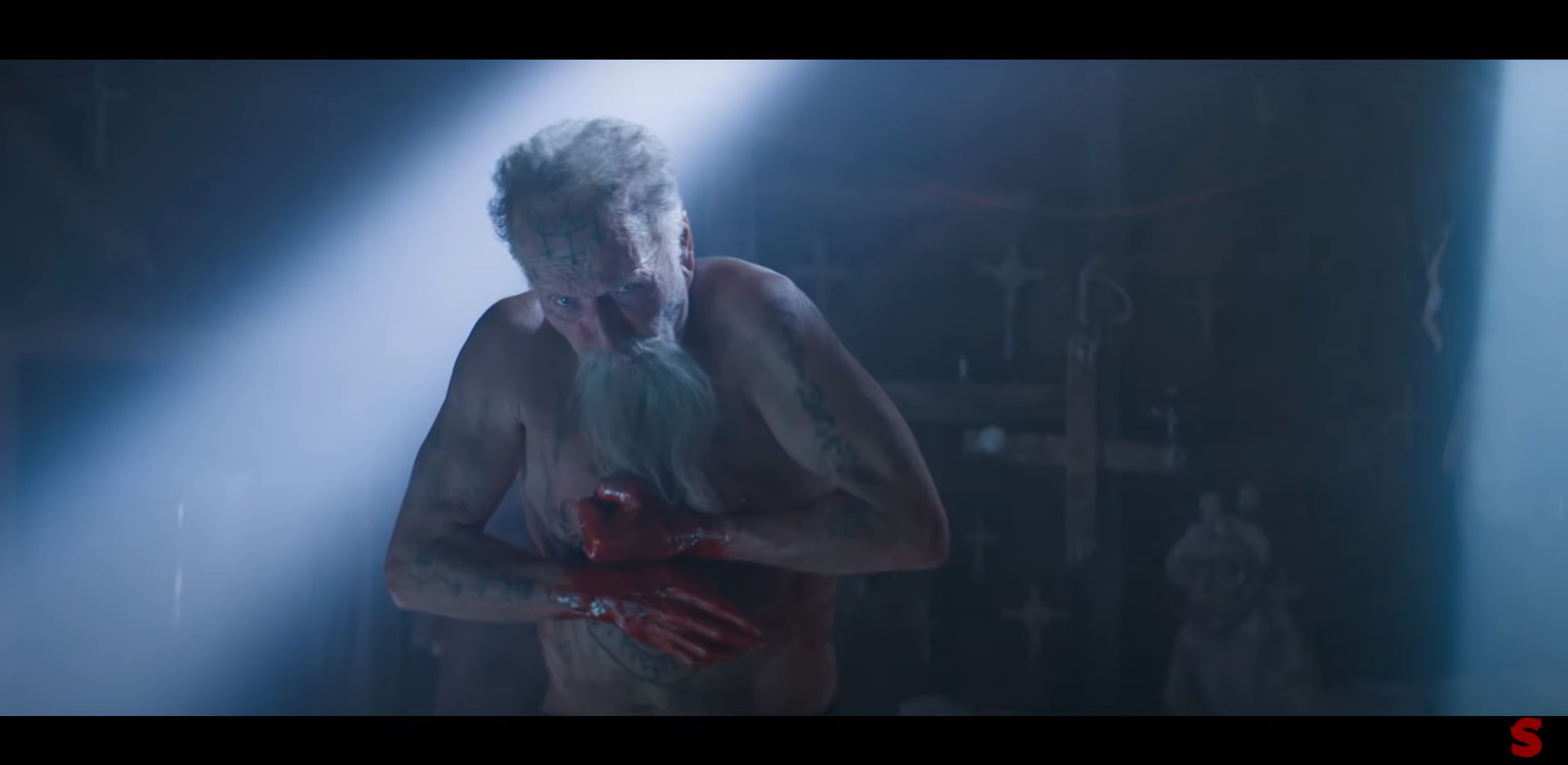
“Terrified” is one of those movies where the silence and the stillness can have a higher affect on the spine-prickles.  Rugna’s gold standard patience establishes a tense tone without the supplementary tumultuous, ear-splitting chaos that usually grinds teeth and curls toes as the sediment of panic begins to settle at the pit of the stomach.  Marcus Berta and Lionel Cornistein’s blend of practical and visual effect are near seamless, but ultimately land the one-two knockout punch of anxiety-riddled scares with tall, crumpled monsters skulking under the bed shadows, glowing eyes peering through wall cracks, and a the stiffly rotten decomposing boy popping into frame in a split second.  Cornistein’s composite designs are not too shabby for the editor and visual effects artist’s first feature rodeo let alone generated a complex olio of otherworld oddities.  In regards to “Terrified’s” themes, in my travels to Central and South America, I’ve been advised to be cautious in drinking the tap water that’s filtered differently compared to the U.S., leaving local microorganisms to swim in the guts of those unaccustomed to them, and Rugna points in that direction by consistently focusing on the water taps, drains, showers, the action of drinking water, and, also, literally spelling it out for us by Dr. Albreck to not drink the water in these spirit plagued houses due to microbes traversing from beyond through the water system.  Dual perspectives becomes important as well.  After the gruesome discovery of the boy corpse sitting at the dining table, Funes needs a rational explanation to report in contrast to the unexplained grisliness, something that makes sense and wouldn’t frighten the daylights out of him, his colleagues, or the general public.  Coincidingly, Rugna creatures also exist on two different planes, sliding between the panes, and not always visible; this is another verbally illustrated facet that unsuitably reaffirms the theme.

“Terrified” scales the expansion of dimensions with bottomless creepiness and shock value, rifting from Shudder’s streaming service and right onto a UK Blu-ray home disc distributed by Acorn Media International.  The region 2, PAL encoded, BD25 disc houses a presentation displayed in a widescreen, 2.35:1 aspect ratio, with a 15 rating for strong horror, bloody images, and language. The 1080p, HD resolution is an indifference concern with the already blemish free digitally shot film, but director of photography, Mariano Suárez, heeds every shot taking Rugna’s perspective theme to heart with lowlight and obscurities as fear-fodder. The Dolby Digital 5.1 surround sound mix flexes a full-bodied, channel defining muscle with clear, prominent dialogue, a diabolical range in sound design, good depth, and an off-key canorous soundtrack because every horror fan eats up an inharmonious and creep tunes. Unfortunately, much like the “Belzebuth” release, “Terrified” comes with no special features other than a menu with the animated trailer of the film. “Terrified” is the chef’s kiss of Latin American horror, an epitome of jaw-clenching terror that’ll have you sleeping with the lights on tonight.

Buy “Terrified” on Blu-ray (Region 2) from Acorn Media International!

A Cop, a Paranormal Investigator, and a Priest Walk Into an EVIL Extermination Plan! “Belzebuth” reviewed!


The joy of a new baby is cut short for Detective Ritter who bares the tragedy of his little boy viciously killed in a massacre of nursey infants by a psychotic nurse before taking her own life.  Five years later, and losing not only his child but also his wife to severe depression, a disheveled Ritter is called in to investigate a mass murder involving a 12 year old boy slaughtering young children in a preschool classroom.  To him, the two events don’t spark similarities, but to a paranormal investigating Catholic priest, Ritter’s tragedy and the events in the classroom are linked by the unorthodox priest’s examination.  All the evidence points to an excommunicated Catholic priest practicing demonology that sends the two men down a path of unholy darkness in a series of murderous catastrophes influenced by the rebirth of the Messiah.

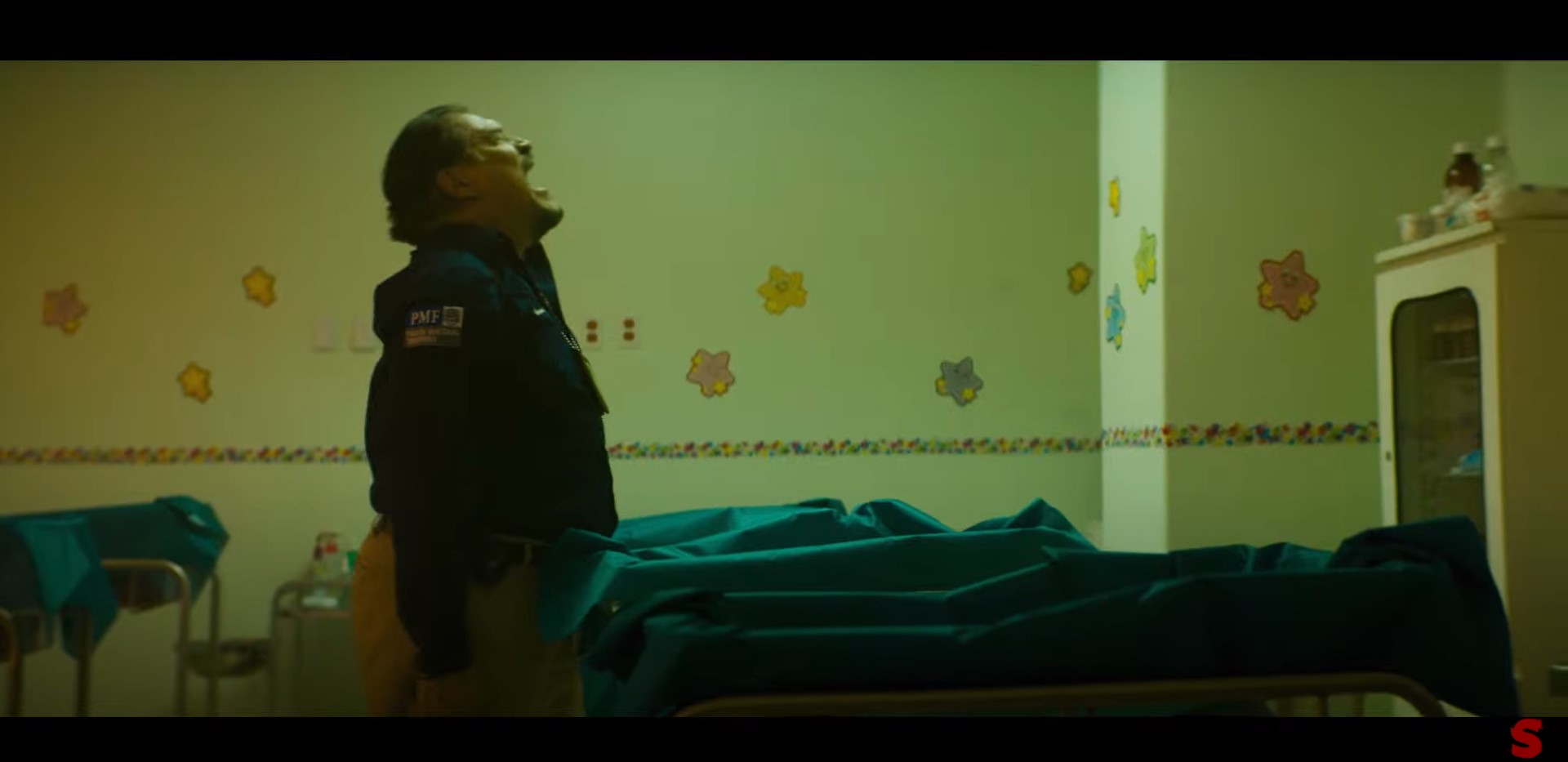
When the first scenes from “Belzebuth” open with a maternity ward nurse stabbing with vigorous force every single infant child in their crib with a scalpel, you know nothing wholesome is sacred and everyone is fair game in what is to be a grim story of infinite barbarity and darkness.  “Belzebuth” falls in the line of fire of Mexico City born writer-director Emilio Portes with an augmented, dark humored social commentary loaded with evil entities and grimace-laden gore.  The “Meet the Head of Juan Pérez” filmmaker cowrites “Belzebuth’s” irrational rational for the unfortunate real world trend of mass murders and touches upon, sensationally, the evolution of Catholicism extremities to battle evil in the world with first time feature length film screenwriter Luis Carlos Fuentes.   The Mexico/American film is produced by Rodrigo Herranz, Michelle Couttolenc, and Jaime Basksht, with Ana Hernandez as executive producer and Pastorela Peliculas in cooperation with patriotic promotion from the Instituto Mexicano de Cinematografia, aka IMCINE, serving as the production companies.

If you Google Mexican actors, the power of artificial intelligence and ignorant manual input couldn’t separate Mexico form any other Latin American country as the powerhouse search engine provided me results like Danny Trejo, John Leguizamo, Jennifer Lopez, Javier Bardem, and Penélope Cruz.  Now, while I respect each and every one of these performers who provide a variety of lush character and emotional erudition to each of their roles, not one of them is born in Mexico.  Some that listed do not even share the same heritage.  But do you know what the most astonishing, most outrageous, and most shameful aspect of my search was this?  The Tepic, Nayarit, Mexico born Joaquín Cosio was not among the top 50 results.  From captivating television with Guillermo del Toro small screen adaptation of vampiric apocalypse of “The Strain” and the intense drug-fueled drama of “Narcos: Mexico” to his Hollywood presence in the star-studded, James Gunn directed “Suicide Squad” to his humbler beginnings that includes Bond, James Bond, in “Quantum of Solace,” Cosio’s a strong and versatile candidate for intense thrillers and “Belzebuth” is right in the actor’s wheelhouse as a downhearted Detective Rigger with a short fuse.  As a supernatural skeptic, Ritter’s forced into confronting his past demons with the demons of the present by tracking down rogue priest Vasilio Canetti (Tobin Bell, “Saw” franchise) with the help of Father Ivan Franco (Tate Ellington, “Sinister 2”) of the Paranormal Forensic Department, which sounds kind of silly because Franco’s squad is an extension of the Church.  Bell brings his delightful deadpan bedside manner as the excommunicated priest in guerilla warfare with a determined, demonic evil trying to massacre as many children as possible to find the reincarnated Messiah in what would be the Third Coming as the Second had come and failed during the Crusades.  Bell is the yin to Cosio’s yang until circumstances rear-end last ditch efforts and all Hell breaks loose in a drug smugglers’ tunnel.  Aida López, José Sefami, Yunuen Pardo, and Liam Villa round out the cast.

If possession-fueled carnage and the antiheroic archetype weaponizing demonology for good tickles all the right places, “Belzebuth” can be the feather tickler of dreams.  Fans of Clive Barker’s “Lord of Illusions,” Peter Hyams’ “End of Days,” and the graphic novel “Constantine” can indulge into Portes’ explicit nihilism and lack of public conviction in religion in the director’s allegoric telling of something really big and really satanical happening right under people’s noses while a small motely crew of conversant peons try to stop a wall of Deviltry.  Portes also consistently touches upon Mexico’s unsystematic corruption, even among Ritter and other protect and serve officers, and the once firm-handed political system of the Institute Revolutionary Party (PRI) as potential cause for all the suffering enacted demon-rooted abscessations.  The mentioning of drug cartels pop up frequently, too, symbolizing the seemingly random acts of violence are just never just random acts, but an perpetrated hit on a human target much like the cartels’ unsavory methods to either take out competition, eliminate obstacles, or to silence whistleblowers.  Portes does a phenomenal job using his film as an allegory in making a political statement but lacks balance in favoring gore over profile with some characters who rather feel written in just for the sake of a broader English audience.  Father Ivan Franco is such character with interesting combinational vocations as a paranormal investigator and a holy man of the cloth.  Yet Franco, who wields a gun and has supercool video and audio recording specs, spearheads a larger suborganization shielded away from the public eye and, unfortunately, the viewer eye that never feels like a cog in the entire “Belzebuth” machine.  Franco and his team of spook-sleuths, who, by the way, vanish completely from his side early into the investigation, supposedly follow and investigate peculiar tragedies connected to misaligned presences leaving spiritual residue on the real world plane, but how his team comes about connecting the dots exclusively to just the first two tragedies, five years separated, is a bit of stretch and a letdown in fabricated continuity and weight behind Franco’s existence to be involved.  Pockets of plot holes pop up here and there on other facets but generally speaking, “Belzebuth” works black magically as a spiritually and culturally vivisecting detective thriller.

The Shudder original 2017 release, “Belzebuth,” scares up onto an UK Blu-ray release from Acorn Media International. The region 2, PAL encoded, single layer BD25 presents the film in a widescreen, 2.35:1 aspect ratio, with a runtime of 109 minutes.  Ramon Orozco’s cinematography flashes with a gorgeous red and blue color palate that fits the iniquitous tone and adds an ethereal, hazy backlighting to only enhance the tone to more sinister levels.  Acorn’s Blu-ray sharpens Orozco’s already byzantine schemes that enriches the details in the skin as well as a the sacred relic artifact-cladded locations that become claustrophobic and entombing.  Even Juan Martínez Espín visual special effects casts a solid effort of barely a smooth surface computer generated phoniness, especially in one crucifying scene of psychological torment.  You’ll know it when you see it.  “Belzebuth’s” powerful Dolby Surround 7.1 audio track is an assault on the eardrums of the best kind with a husky, industrial melodic soundtrack and hefty sound design with accompanying diverse range and proper depth that could be described as literally placing every creak, stab, and cackling laugh sound right into the darkest corners of your ears.    An unfortunate surprise about the Acorn release is that there are no special features aside from the animated menu that is essentially chaotic “Belzebuth’s” trailer plastered with menu options.  Possession films tend to stale at a dime of dozen, but Emilio Portes’s freshly terrifying “Belzebuth” entertains and scares to the very last morsel.

Evil Sows With Others’ Body Fluids! “DIS” review!


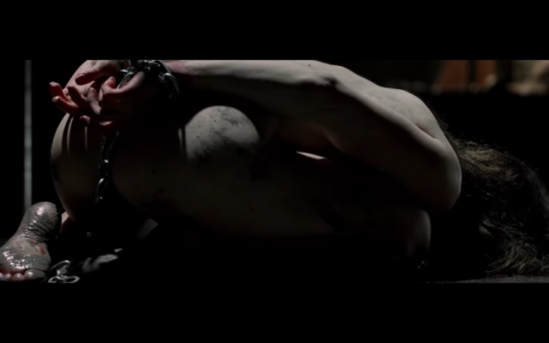
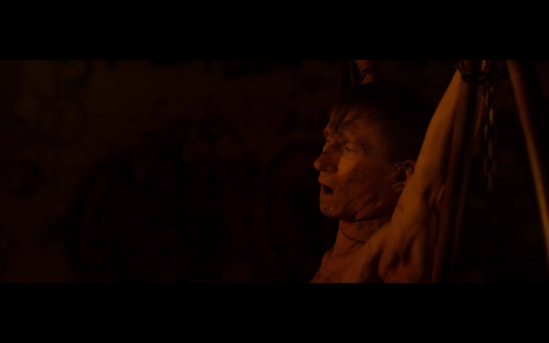
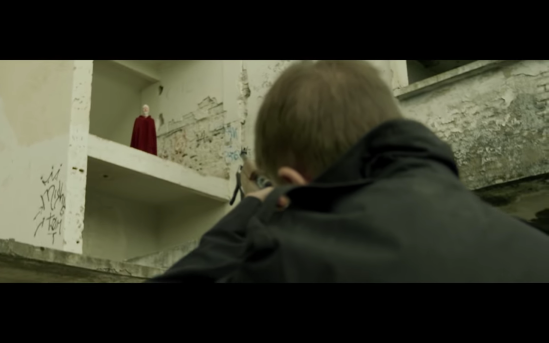
Ariel Konk, A former soldier fleeing from his regrettable past, seeks refuge in an isolate cabin located deep in the forest, adjacent to a lagoon. Struggling to live off the land and coping with loneliness, the soldier marches on, exploring his new, secluded surroundings. His loneliness comes to an end when investigating the ruins of a dilapidating building structure, spotting a masked half naked female and as he pursues her, Ariel witnesses her voluntarily jump from the highest level of the opened air building. Wrought with anguish, Ariel attempts suicide only to be knocked out before he could pull the trigger on his rifle. He wakes up being chained to the wall with a mute, mask figure drugging him and extracting his blood and semen fluids as necessary nutrients for a nearby Mandrake garden. A practice that has been executed many times before Ariel’s arrival.

“DIS” is a bordering arthouse horror film from writer-director Adrian Corona (“Nariz Ioca”). A blend from a horror influenced literary poem and a mythological folkore, Corona crafts a lurid, hyperbolic story that pulls, as Cornoa describes as a prefix of sorts, from Dante Alighieri’s epic journey through hell told in Dante’s Inferno, using the City of Dis that’s described as a lower hell for sinners who’ve committed violent and fraudulent transgressions, and interlocks that inspiration with the archaic lore surrounding the Mandrake plant that involves superstitiously condemning those to hell after reaping the intensely narcotic plant with the human shaped root and that would, also superstitiously, scream when pulled. “DIS” is full of interpretative terror through the 61 minute runtime that’s virtually expressive. Corona provides little dialogue to his script, keeping most of the dialect scribal incased within flashback confines, and let his actors’ raw emotions and visceral eloquence provide the tale that’s peppered with moments of visual shock and cathartic abhorrence.

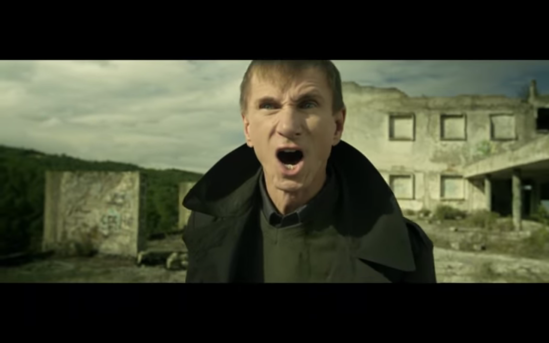
I’ve said it once and I’ll say it again, Bill Oberst Jr. is one hell of an actor. The upcoming Rob Zombie “3 from Hell” actor has become a prominent staple professional in the indie horror film circuit, tackling the bizarre, the inexplicable, and the most difficult of roles with such vigor and passion that his motivation is seemingly inhuman. Right up there with “Deadly Revisions,” “DIS’ tops or equals being one of the best performances of his career, from the perspective of this reviewers’ cache of Bill Oberst Jr films. There’s quite a bit of difficulty catching up to the man who roughly does, whether as a lead or as support, 10 films a year! As Ariel Konk, Oberst captures the essence of pain and anger that saturates the character’s own personal delirium and hell with his past mistake catching up to his self-battered soul. The faceless figure who opposites Ariel feeds off the ex-soldiers repugnant and guilt-riddled past actions in a seemingly perverse mission that’s actually mandated by the suspected demon’s Mandrake lot. The plants are held in a nursery for engendering creatures, but what kind of creatures exactly? Other demons from the seed of murdered vehement people?
Remaining cast include Peter Gonzales Falcon, “Prison Heat’s” Lori Jo Hendrix, Manuel Dominguez, and Anne Voitsekhova.

The casual viewer will inherently disavow the hour spent watching “DIS” due to a number of reasons, whether it’s Ariel wandering the forest for more than half the film, or dialogue is fairly infrequent, or the chaptered sequence of events don’t perfectly describe just what the hell is going, or, just perhaps, the motif of genital masturbation and mutilation is just too much to stomach. Either way, “DIS’s” traction will slip and only a few are willing to get dirty and push the story forward with open mindedness and artistic appreciation. Speaking of artistic appreciation, Rocco Rodriguez’s cinematography is a character upon itself. The top of a Cofre de Perote volcano in Perote, Veracruz, Mexico during principal photography has breathtaking visuals that Rodriguez captures exquisitely and becomes a backdrop against the coarse material. Outside is vivid, bright, full of life, but when in the belly of the rundown structure, the manmade confines are claustrophobic and crummy, infernally ablaze for ritual, much to the akin of Dante’s Inferno. Rodriguez, again, depicts lustrous imagery that assists in telling Corona’s nightmarish story and that’s a skill all can recognize.

MVD Visual and Unearthed Films present Adrian Corona’s enigmatic and surreal “DIS” from 1922 Films onto high definition Blu-ray. The region A release is presented in a widescreen, 1.85:1 aspect ratio, and has the near epitome of perfect with, again, Rocco Rodriguez stunning photography. The lighting really comes to the fold that upheaves the brilliancy in the textures, such as in the building’s illustrious graffiti, and dares to switch to black and white when appropriate. Skin tones are fresh looking and natural in colored scenes. Only a minor aliasing issue around Obsert flared up momentarily, but ceased going forward. The Dolby Digital 5.1 surround sound has forefront dialogue, but not a bit soft, especially with Peter Gonzales, that made following difficult. There was not enough examples of range or depth to necessarily comment as Oberst was essentially alone for much of the film. Bonus features include an explanation introduction by writer-director Adrian Corona, a behind-the-scenes featurette that exhibits three takes of two scenes, a wonky static menu Q&A formatted interview with Bill Oberst Jr., a short film entitled “Portrait,” still gallery, and Unearthed Films trailers. Bill Oberst Jr. is, basically, a one man show knitted into an Adrian Corona allegory of unknown terror through conduits of literary works and medieval folklore, making “DIS” prime real estate for viewers seeking a film as an open book toward abstract gardening.

Like Indie Horror and Want to Support Bloggers! Please Consider Purchasing this title from Amazon by Clicking Here! Thank you!!