When the Artist Becomes the Art, EVIL Takes Over Their Soul. “Stopmotion” reviewed! (Acorn Medial International / Blu-ray)

“Stopmotion” Available on Blu-ray!

Living under her arthritis-enfeebled mother’s tremendous stop motion reputation and browbeaten into being the hands of completing her overbearing mother’s last film, Ella Blake can’t find her own voice in the animated art form.  During one already tension filled morning, Ella’s mother has a stroke and falls into a comatose state.  The unfortunate opportunity opens a door for Ella to complete her mother’s final masterpiece on her own as she moves out from the traumatic memories of her home and into a vacant high-rise apartment to be left in occupied solitude, but when a curious and brash little girl finds her mother’s story mundane and offers an alternative, more grotesque story, one which insidiously fascinates with disturbing themes and grisly creativity, Ella finds herself starting afresh, listening to the yarn of a young girl’s chilling vision, whole slowly cracking under the immense pressure of completing a film worth calling her own. 

With the timesaving, cost-efficient computer-generated imagery, many once popular animation techniques have nearly become a lost art in the recent feature film pool.  Stopmotion is one of those dangerously close to extinction animation styles, which has played a pivotal part in some of the most thrilling and magical films in history, such as, but not limited to, the live-action dominion of Desmond Davis’s “Clash of the Titans,” Sam Raimi’s “Evil Dead” films, and Tim Burton’s “Beetlejuice” to the fully animated features of Henry Celick’s “Caroline,” another Burton film in “A Nightmare Before Christmas,” and Phil Tippett’s “Mad God.”  Stopmotion animator and filmmaker Robert Morgan aims to add his entry to the dwindling, yet sustaining for now, artform with his 2023, debut full-length film “Stopmotion” co-written by Morgan and Robin King (“Mnemophrenia”).  The UK film is produced by Alain de la Mata and Christopher Granier-Deferrere under the French production company Blue Light and is presented by the UK’s British Film Institute, or BFI, with IFC Films and Shudder.

In the tragic lead role of spiraling down through pressurized suffering , trying to surface and take a breath from Ella Blake’s domineering mother’s shadow, is Aisling Franciosi, an Irish actress who also had a principal role in the segmented Dracula tale of “The Last Voyage of the Demeter” released the same year.  As Ella Blake, Franciosi plays into the young woman’s meek and submissive behavior as a subservient daughter to her conceited mother (Stella Gonet, “Spencer”).  All the while on the inside, Blake’s bottled voice contains lethal doses of self-destruction, barring her indefinitely inside the mental boundaries of her psyche, and never surfacing between the already emotional scarring and the grief for mother’s authoritarian parenting as Blake herself becomes very much like the armature puppet she manipulates into position for her film, needing that command structure to follow orders.  That need to be creative is so strong within Blake she fabricates another persona splitting soul into a dissociative disorder that takes the yoke and, ultimately, control over her and her project.  And, in some distressing and grim fairytale type of way, the voice recreates a story that parallels Ella’s life with the Ash Man (effects and prosthetic-cladded actor James Swanton, “Host”) chasing down and manipulating a wax puppet version of Ella in a grotesque mirror dynamic between Ella and her mother.  Tethering Ella ever so barely to reality is flexible boyfriend Tom (Tom York) and his flaunting animation corporate head Polly (Therica Wilson-Read, “Suicide Club”) to what’s in front of her rather to the voice inside of her but their truth is far too combative for Ella to stay fastened to a much strong influencing voice that’s far too close to her.   The upcoming “The Beast Within” actress, Caoilinn Springall, rounds out the cast as the little girl of the apartment building. 
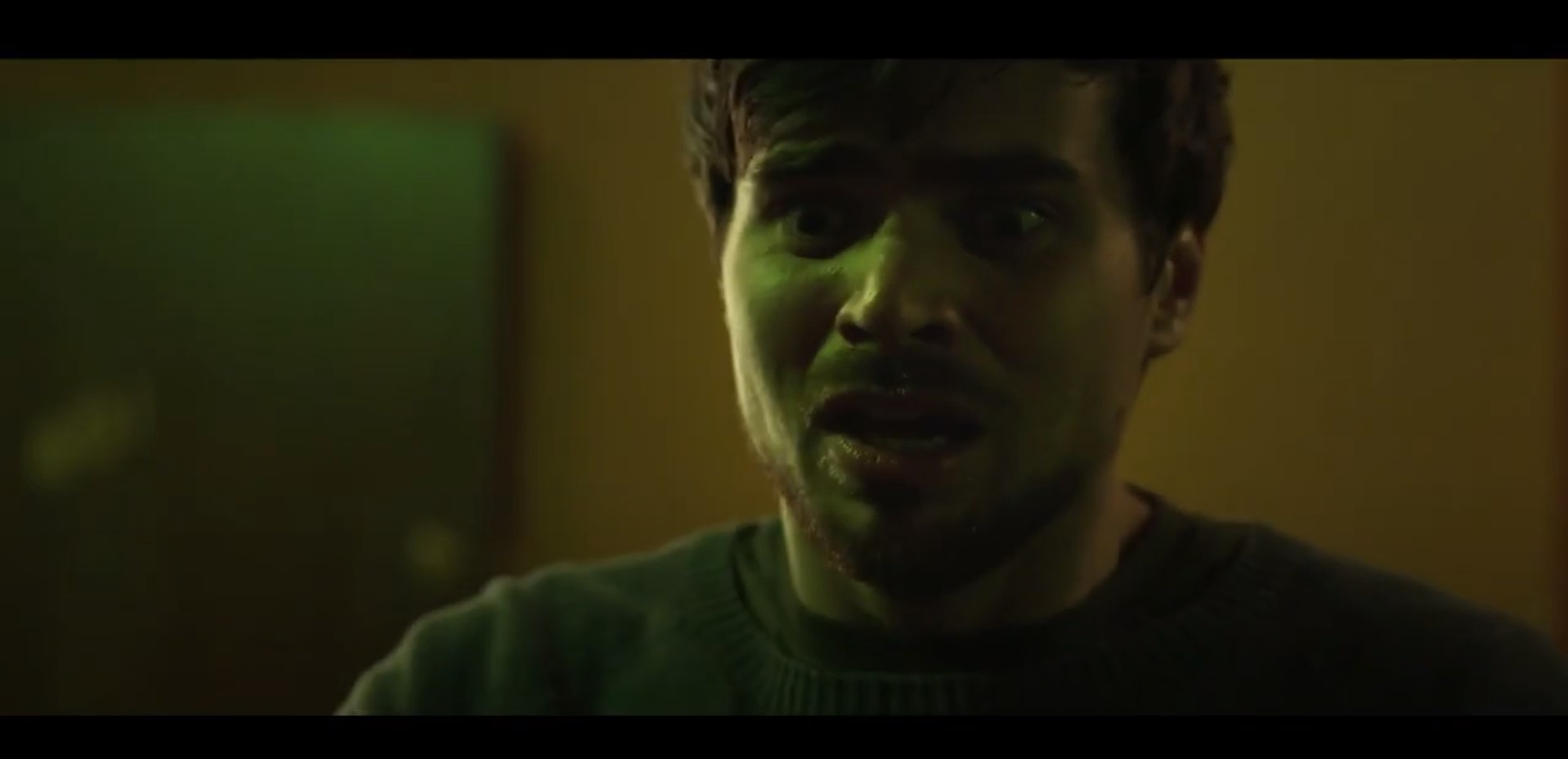
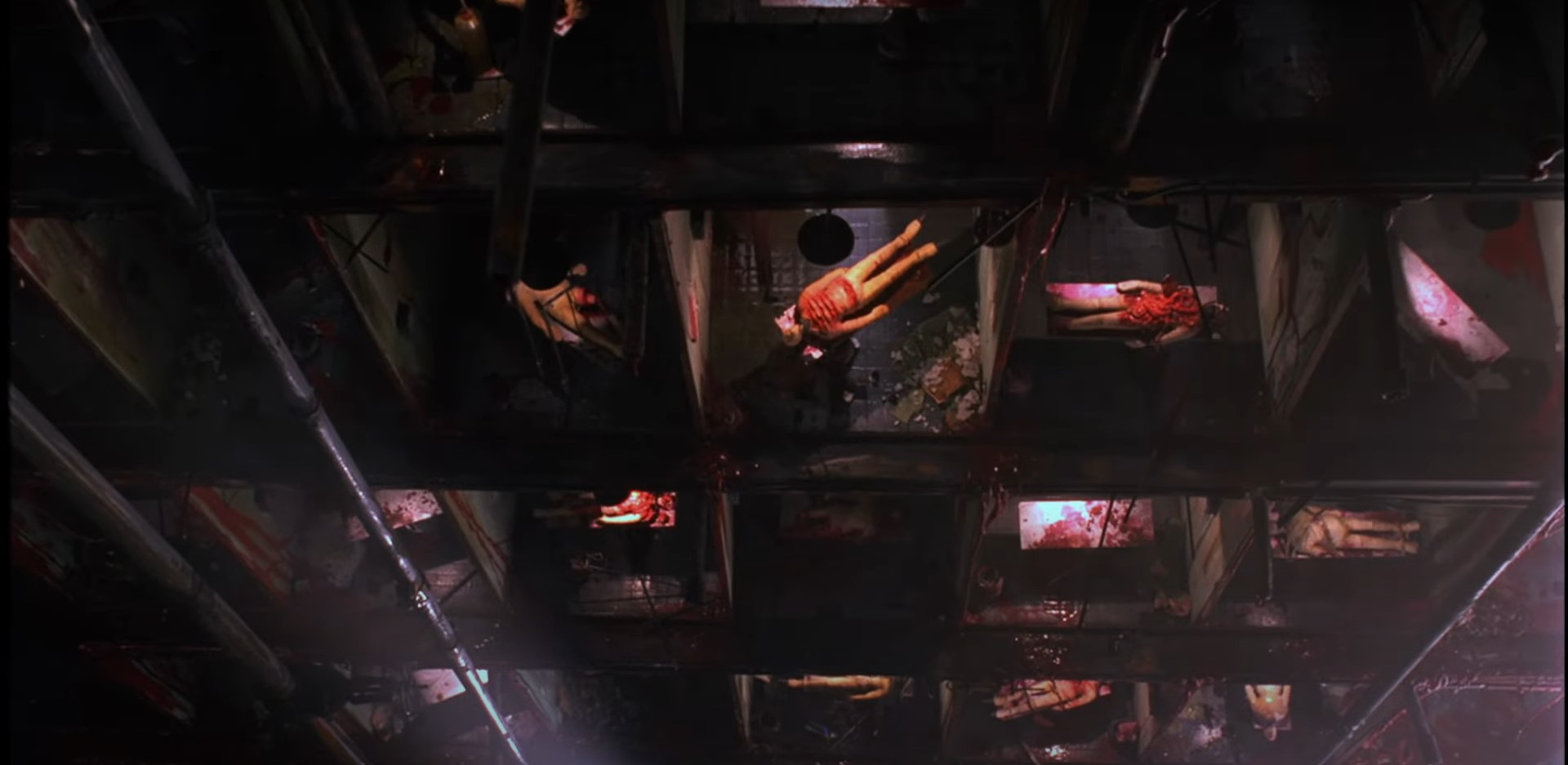
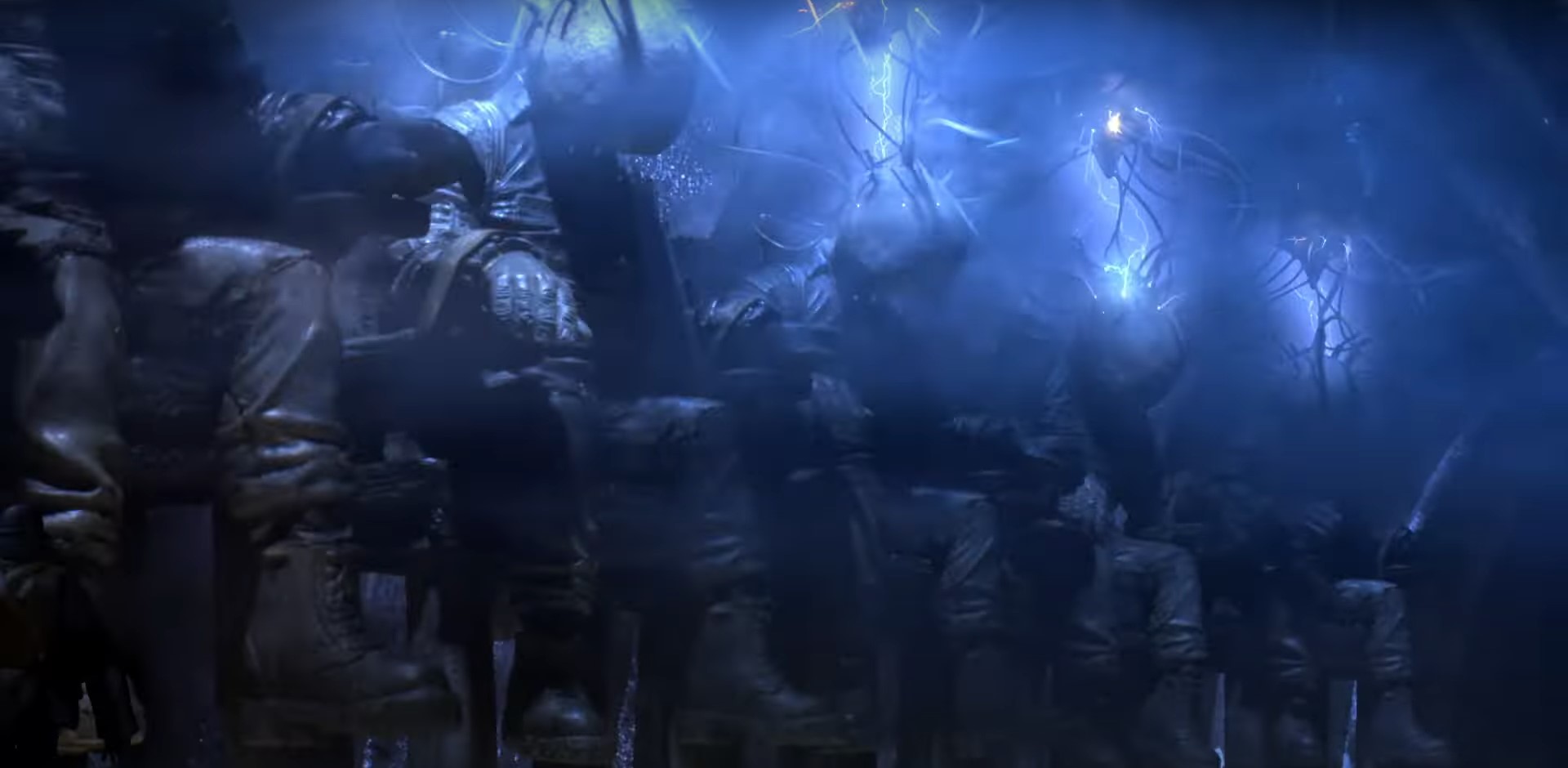
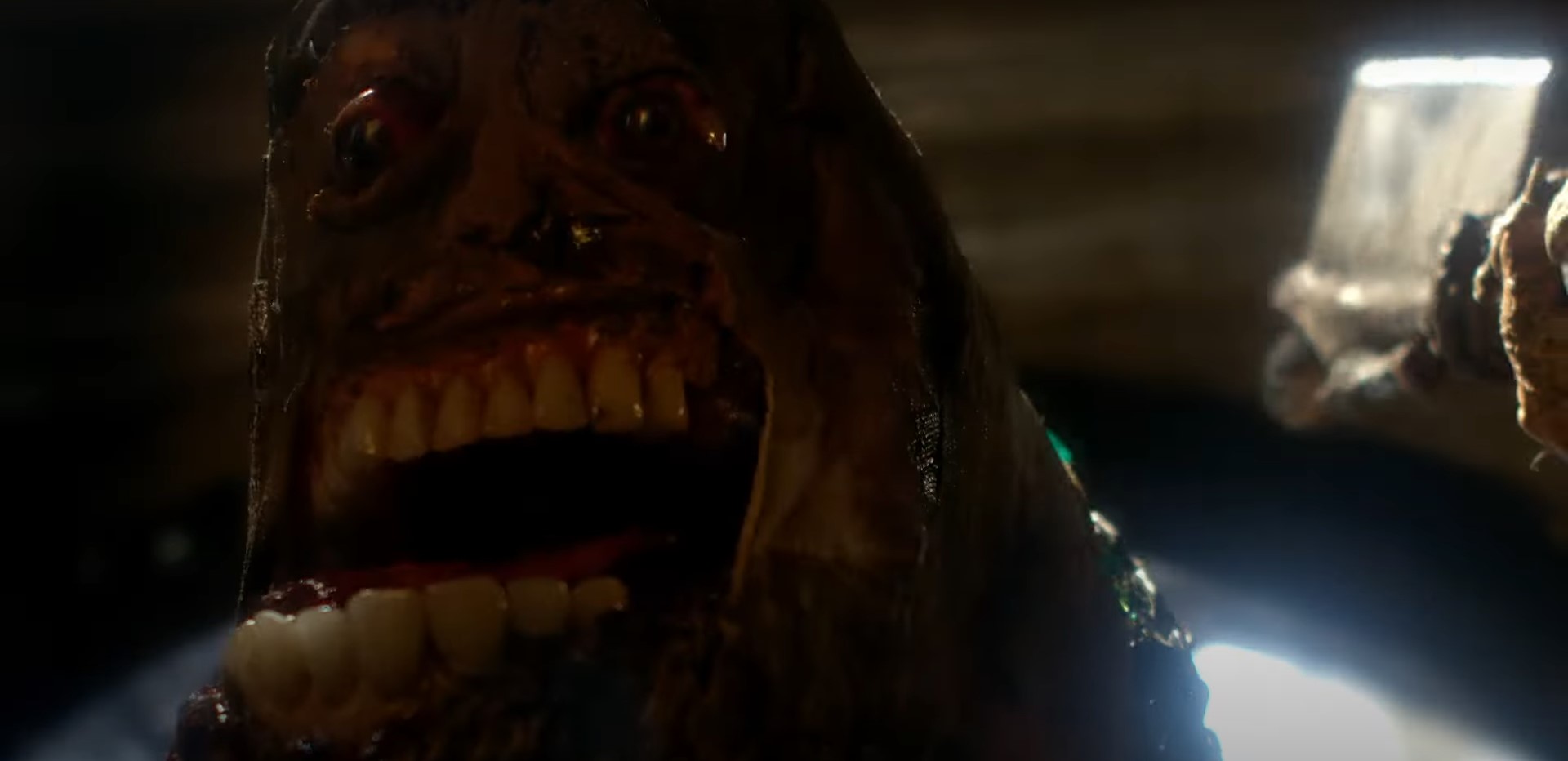
As much as I wanted to seep and soak into “Stopmotion’s” one-frame-at-a-time madness, I couldn’t help but to think I’ve seen this story before.   A sort of déjà vu encircles me and hits me squarely in the gut as I lament over the possibility of feeling the same way I felt before with another film.  Then, it struck me like a bolt of lightning that this storyline shares similarities with the 2021, Prano Bailey-Bond film, “Censor.”  Now, I’m not saying “Stopmotion” is a direct carbon copy but follows a familiar pathway, a movie industry outlier forced by life and submersed under the weight to finishing what the heroines have started only to crack in deep obsession.  On a high level, character impetuses that lead to the same conclusion are in stark contrast and Ella Blake’s descent fathoms family trauma and fixation with trying to be an individual and not just a minor component of a bigger, more impressive, machine that overshadows the necessary cog that makes the whole operate.  Coupled with surreal imagery, otherworldly stopmotion animation, and physical effects that’ll make your skin crawl, or melt like wax, “Stopmotion” enlivens an animator filmmaker’s creativity outside the personifying vocation, blending genres and animations to exact a reality bending mania.  Morgan’s fragmented segues evoke an alternate reality that skips the portions where the audiences’ minds might fill in the gaps.  There is no gap filling, only essential, contextual moments, as if Morgan is the puppeteer to his story by arranging the movements one frame at a time reflect Ella’s poignant reminders and dour moments that mold her.
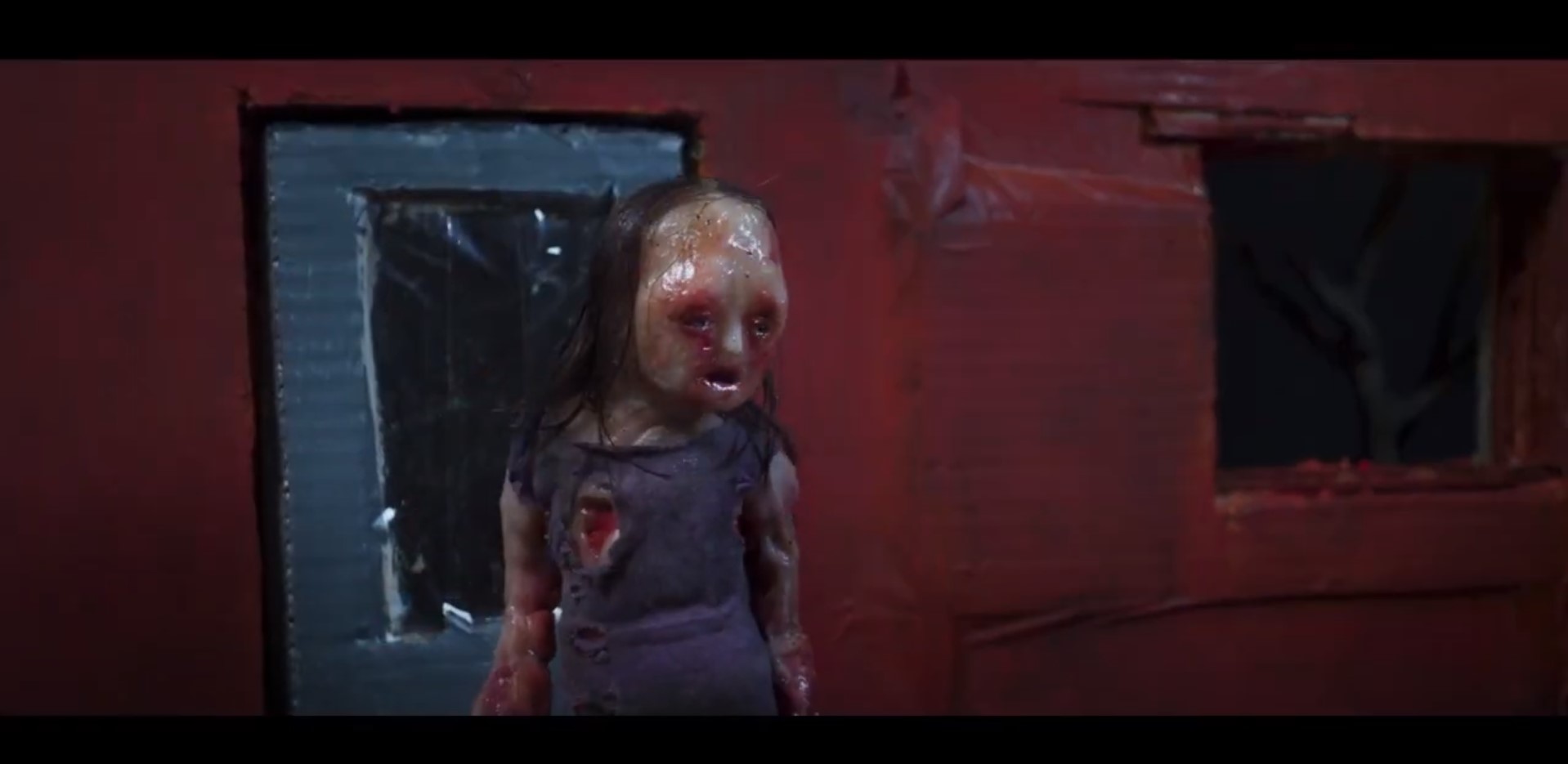
“Stopmotion” animates a living hell.  The Shudder exclusive lands onto a RLJ Entertainment subsidiary UK label, Acorn Media International, Blu-ray release.  The Blu-ray is presented in a widescreen 2.35:1 aspect ratio encoded with AVC, high definition 1080p, on a BD25.  Though in spartanly stark and gritty-glum set dressings, “Stopmotion’s” grading is on the lighter side of saturation diffusion, held mostly to a shade array of reds, greens, browns, and yellows.  There is numerous isolating, low key-lit scenes concentrated on the framed charactered and engulfing them in darkness but with that, there were no notifiable issues with posterization or banding.  Depth, especially in the stop-motion portion of reality, has spatial length and dimensional delineation, a testament to Morgan’s stop motion animator’s background and experience as some examples of the craft often look flat.  The English DTS-HD Master Audio 5.1 offers a lossless fidelity through the broodiness of Lola de la Mata’s compositional vocal and violin score, stringing through the surrealistic switch of cerebral crossfire.  Dialogue creates no challenges with a clear and clean presentation, range of effects heighten in animation’s Foley, and, again, depth creates that an enwreathed sound field through the back and side channels.  English subtitles are optionally available.  Special features include an interview with star Aisling Francosi, interview with writer-director Robert Morgan, and a behind-the-scenes featurette.  The Acorn Media release is rated 18 for Strong Bloody Violence and gore, has a runtime of 94 minutes, and, though not listed, played in region A playback so does seem to have at least dual-regional encoding between A and B.  The tangible Blu-ray comes in a standard Blu-ray case with a creepy, head-nesting puppet artwork.  The interior has standard appeal with just the disc inside, pressed with the same front cover art. 

Last Rites: “Stopmotion” depicts a tragic fall but not from grace in what is a more sad and sullen reality, and the escape is a freshly personified hell of one’s own making. 
“Stopmotion” Available on Blu-ray!

A Stop-Motion EVILscape of Totalitarian Hell! “Mad God” reviewed! (Acorn Media International / Blu-ray)

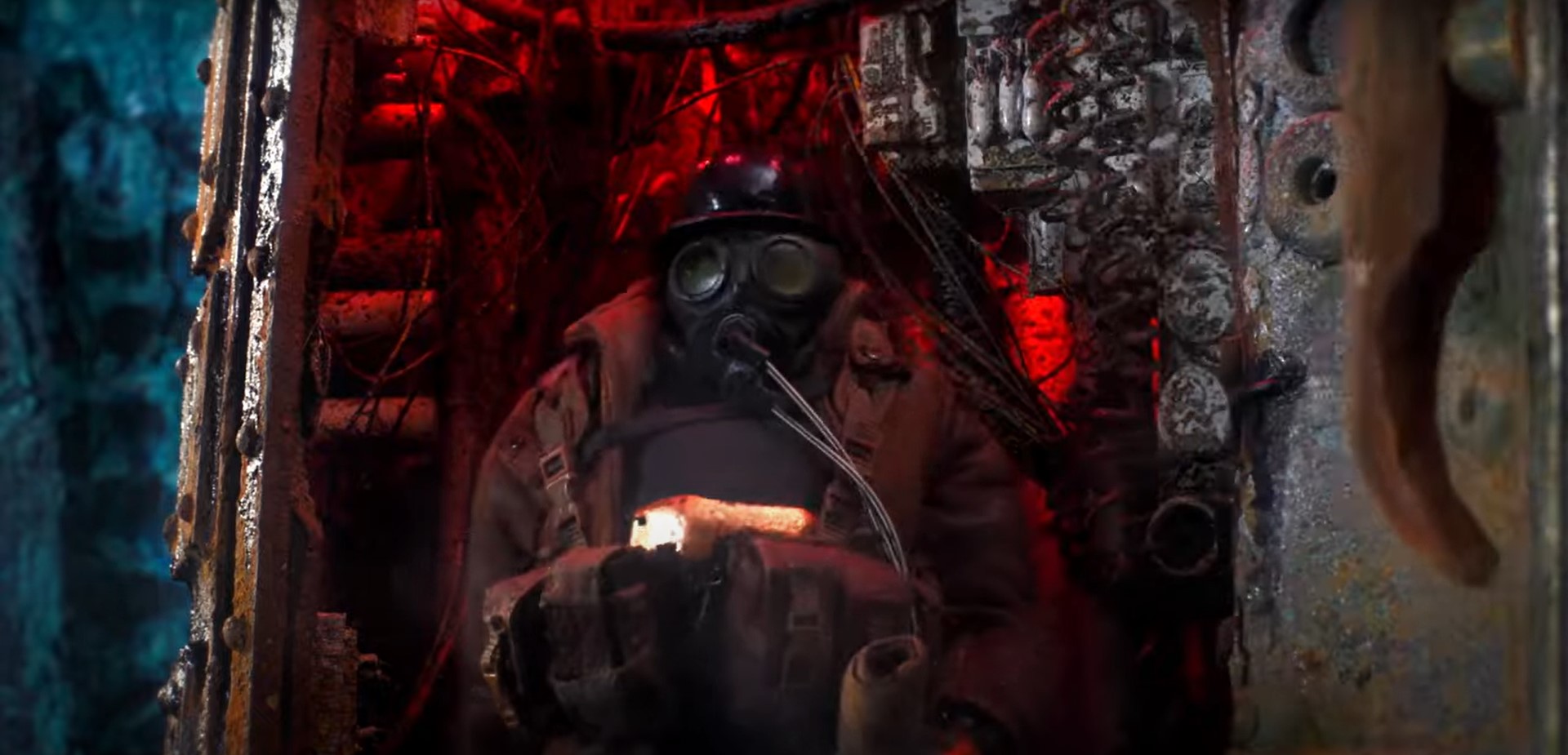
Descending from above into the depths of grotesque terror and suffering, The Assassin steps out of the drop pod with a gas mask, industrial armor, a suitcase, and a crumbling map.  Bearing witness to the surrounding horrors – cruel experimentations, enslaved beasts, tortured manufactured slave laborers, dog-eat-dog atrocities – The Assassin sallies forth, descending deeper into the primordial pit.  The missioned at hand is to set an explosive charge that will eradicate out the ruinous, oppressive filth that aims to corrupt the everything, but there the darkness won’t be so easily wiped away and The Assassin must stay in the shadows and out of sight or else become a tortured fixture in the fray. 

“Mad God?”  More like mad genius!  Phil Tippett’s 34-year, stop-motion, pet-project “Mad God” is the purest Hell I’ve ever seen.  Tippet, famed stop-motion and puppeteer effects artist responsible for the iconic visual effects and stop motion work in fan films such as the original “Star Wars” saga and the “Robocop” franchise as well as cult favorites “Howard the Duck,” “Piranha” and “House II:  The Second Story,” started “Mad God” in 1987 that become more of an ambitious project than originally thought and once the 1993 saw a computer generated effects revolution with a little prehistoric dino-disaster film called “Jurassic Park”, a film Tippett also did work on as dinosaur movement consulting supervisor because of his expertise on the short “Prehistoric Beasts,” the gifted animator had shelved “Mad God” for about 20 years with the though a newer, shiner, computer-driven animation would be the next best thing studios would ardently desire. This two-decade span gave Tippett time to outline objectives and really expand upon ideas of how “Mad God” should look and feel when conveyed. Tippett co-produces the film with Jack Morrissey under Tippett Studios and presented by IFC Midnight and AMC’s Shudder.

Just because “Mad God” is dialogue-less doesn’t make the “Mad God” voiceless. All around, in every scene, is a disturbing commentary or an unhinged metaphor bred mostly out of the animatable inanimate, but there are some live action performances weaved into the mad tapestry of monstrous titans and despot of cruelty. The most clearly discernible face of the lot comes from a director, “Repo Man” and “Sid and Nancy” director Alex Cox to be more exact. Cox plays the long nailed and regime-driven “Last Man,” representing divine leadership of a modest, dieselpunk heaven above a more organic and grotesque hell-type world. Only on screen for perhaps a total of 5-to-10 minutes, Cox grunts and gestures with precision articulation to give off a fair and just ruler impression. Niketa Roman plays the next real person to have some substantial screen time. Less of an actress and more of an animator by trade, with credits including “Blade II,” “Jurassic World,” and “Star Wars: Episode IX – The Rise of Skywalker,” Roman finds an expressive talent in her striking, heavily made-up eyes overtop a surgical mask and gown when whisking away one of the Assassin’s souls to be studied and experimented on by a broodingly ethereal entity. Other micro-performances include minor roles of tortured monkeys, various iron-cladded Assassins, witches, and gnomes from Satish Ratakonda, Harper Gibbons, Arnie Hain, David Laur, Chris Morley, Anthony Ruivivar, Tucker Gibbons, Tom Gibbons, Hans Brekke, and Jake Freytag.

“Mad God’s” possibilities and interpretations are endless. Phil Tippett pulls from a motley of inspiration that includes, but is not limited to the fantastical, sometimes hellish, paintings of Hieronymus Bosch, the wacky, often gonzo animation of Tex Avery, the stop-motion titans of Nathan Juran’s “The 7 Voyages of Sinbad, and Dante’s Inferno. The mind is a deranged and wonderful creator of the macabre and of the aberrant and as a receiving device, the mind can also, if opened up enough, accept such visceral visuals of bowel fluids being jettisoned out by electric shock and into the mouth of an organic machine that manufactures fibrous, lumbering humanoids for slave labor. Like lemmings in a way, these exploited shadows of human beings will succumb under their own demise or at the gnarled and unforgiving hands of their master’s gargoyleish work-whippers. “Mad God’s” eye for detail is greatly disturbing to see cities in monolithic cities and cultures in ruins, the composite depth between foreground and background action in one scene reminds me a lot of older works like “The Neverending Story” or “Clash of the Titans” that create a vast scale with smaller objects, and the playful irony of a nightmare netherworld being commanded over by a baby’s babble doesn’t nearly seem to a stretch from the truth. As the multiple Assassins trek through the chaos and the insanity, an overwhelming sense of life is meaningless scores the landscape as there isn’t an ounce of compassion or empathy to be had or displayed for any of the malformed creatures and wretched humans. A laborer is crushed by a stone – no biggie. A cute and cuddle animal is attacked and whisked away for food storage – all in the day of cruelty. A man is stripped of his armored gear, injected with a mysterious substance, and prepped for exploratory surgery – all for show in front of a live clapping and cheering audience. The only compassion I can make sense is the Assassin’s mission to blow up this God-forsaken world of eternal suffering to restart the heart. Madness grinds bones, fillets spirits, and crushes souls in Phil Tippet’s Godless underworld and can haunt you even while you’re awake.

A surreal stop-motion wonder and excruciation, “Mad God” brings all the horrors of the subconscious mind to the surface with a high-definition, 1080p Blu-ray. The region 2, PAL encoded release from UK distributor Acorn Media International presents Tippet’s tour de force in a widescreen 1.78:1 aspect ratio and the image is purposefully varied to exhibit different strokes of craft as students would assist Tippet with contrastive topographies to carve out an apocalypse-riddled world that’s in a state of a violet retrogression. Tippet and Tippet Studio visual effects artist, Chris Morley, pivot to “Mad God’s” cinematography appearance with brooding, darker tones that illuminate and are erratically sparked with warm neon glows or brilliant voltage streaming through highly conductive bodies. Some earlier scenes from the late 80’s have natural grain from the 35mm stock and then later, more recent scenes have a cleaner, sleeker look with the digital recording. The Dolby Digital 5.1 surround sound mix has an all-embracing range, mostly with sudden and alarming blazons of guttural roars, unnerving baby babble, elongated zaps and shocks, and the indistinct yips and yaps of a mad world, that sustains on a line of being lesser than crisp, which might be contributed to the inexact capture of depth as sometimes all sounds casts like from inside the reverberations of a fishbowl. Descriptive SDH subtitles are available. Bonus features include audio commentary with Phil Tippett and “Pan’s Labyrinth’s” Guillermo del Toro, cast & crew commentary, an interview with Phil Tippett, “Mad God’s” various painter, cartoonist, animator, and psychology inspirations, the making-of “Mad God,” Maya Tippett’s Worse than the Demon – Phil Tippet’s daughter’s 12-minute thesis documentary of her father’s 34-year passion project journey, Academy of Art & “Mad God,” a behind-the-scenes montage, and a behind-the-scenes photo gallery. “Mad God” has a runtime of 84 minutes and is UK certified 18 for strong violence and gore. A motion picture diorama of Phil Tippett’s neoteric psyche, “Mad God” is wrath wrapped in heart and soul, two descriptors not topmost on the surface but are meticulously integrated into every frame of pain, suffering, and despair.

EVIL Presses the Reset Button For Killer Results! “To Your Last Death” reviewed! (Quiver Distribution / Blu-ray)

Miriam DeKalb has just survived a bloodbath inside her tycoon father’s high-rise, walking out shaken, bloodied, and carrying an axe.  When the police detain her in the hospital, construing a case against her for the death of her siblings and father based off her previously unhinged mental state inside a psychiatric institute, Miriam is visited by an otherworldly being known as the Gamemaster.  Miriam is given two choices:  stay at the hospital to be pursued as the murderous villain in her harrowing escape from near death or restart her traumatizing experience to save her siblings in an intergalactic wager by infinite being gamblers eager for amusement, blood, and a clear winner.  Miriam’s foreknowledge of how the events play out should give her an edge in saving her family, but the restart is the Gamemaster’s game with the Gamemaster’s rules as timelines and outcomes are determined limitless. 

“To Your Last Death” is a science fictional brawl of Darwinism in this eviscerating adult animated survival horror from director Jason Axinn.  Originally titled as “The Malevolent” during the crowd-funded Indiegogo campaign, which raised 114% above film’s budget, “To Your Last Death” is Axinn’s first full length feature from a script co-written by Jim Cirile (writer of horror-comedy “Banned”) and is the first credited work of Tanya C. Klein, both who’ve previously collaborated on the superhero short “Liberator” in 2016 starring the original Hulk himself, Lou Ferrigno  With an animated direction similar to that of FX’s “Archer,” Cartoon Network’s “Metalocalypse,” or an even slightly more advanced version of “Space Ghost Coast to Coast,” but, in fact, the hand-drawn, puppetry style animation is the first ever 2-D animated horror under the meticulous art direction of Carl Frank along with lead artists Luca Romano and Vicente Saldivar, who interned on “Metalocalypse,” that keeps in tune with the adult themed animation trend, but levels up the explicit nature that kisses the sordid substance of “Heavy Metal” with strong bloody violence and some nudity.  “To Your Last Death” is the first feature film of Jim Cirile and Tanya C. Klien’s Coverage Ink Films, a subsidiary of the screenplay analysis and development service group, Coverage Ink, and Quiver Distribution (“Becky”) with Cindi Rice, Paige Barnett and Jason Axinn taking on a producer role. 

The voice work is comprised of some of the most distinguishable voices in genre land; voices that carry the unparalleled weight in intensity, tenor, and madness to their darkly depicted illustrated characters.  You can almost feel the veins throbbing out of Ray Wise’s neck when spewing the murderous insanity of warfare kingpin and diabolical businessman, Cyrus DeKalb.  The “Dead End” and “Jeepers Creepers 2” actor’s inhumane avatar, who looks just like him, devises a plan to solidify his company’s legacy by eliminating his four children who, if banding together, can derail his egomaniacal runaway train.  His children are distinct individuals themselves, beginning with the BDS&M buff and death metal rocker, Ethan (Damein C. Haas), a pill-popping wrist cutter, Kelsy (Florence Hartigan “Phoenix Forgotten”), and a mirror-image disappointment and homosexual, Collin (Benjamin Siemon “Thankskilling 3”).  The fourth child, Miriam, is the principle lead.  Voiced with perpetual mixed reactions by Dani Lennon, a regular from the videogame-themed horror comedy and zombie apocalypse television series, “Bite Me,” Miriam’s complexities stem from a web of junctures that lead her to being a control freak amongst her siblings, an obsessive activist against her father, and a certified schizophrenic, but Miriam is also pragmatic with the strongest will to see through and survive her maniacal father’s abhorrence.  While everyone’s voice work is solid, Steve Geiger’s Eastern European accent replicated for the sadistic, warmongering henchman, Jurek, imprints a nightmare man unabashed by his decadent desires.  You wouldn’t think just be reading this review, but Bill Moseley (“Devil’s Rejects”) and William Shatner (“Star Trek” franchise) also have voice roles that are more cameo resembling as Moseley voices a short lived, facially disfigured hired gun and Shatner is the narrating voice in between the void as the Overseer, filling in with cryptic exposition of the Gamemaster’s existence, much like his narrative work on the reboot of the children’s show, “The Clangers.”   Mark Whitten, Bill Mishap, Rom Lommel, Paige Barnnet, Jim Cirile, Tanya C. Klein, Ruairi Douglas, Jason Axinn, and “Deadpool’s” Morena Baccarin as the Gamemaster round out the cast.

The way “To Your Last Death’s” story is structured runs along the same quivering line that’s equal to pure madness and this narrative path of unstoppable carnage is purposefully trekked to dislodge any judgements about what we, the viewer, think we know about the Gamemaster’s macabre game for galactic gambling.  Is the whole “Saw”-like designed bloodbath really a part of Cyrus DeKalb’s hatred and vindictiveness toward his children or is the lucid experience just a figment of Miriam’s break from reality?  Remember, Miriam was depicted to an ex-committed, living with and within the pressures of her father’s ever present, looming shadow. Miriam finds herself repeating moments but blueprinted differently than before or is manipulated by the Gamemaster’s gamer’s high for the adrenaline voyeurs betting on the outcome. The story’s effervescently fluid in pivots, tactics, and style; yet, the constant modify and rebuild was, perhaps, done one or two many times as staleness begins to set in and I eventually find himself anxious for a more linear goal for Miriam and her siblings to be out of limbo, out of being hacked to pieces on the fourth or fifth go-around, and reach the final stage, the final boss, to not be jerked back (or jerked around) to the beginning or midpoint like in unendurable game of chutes and ladders. Soon after that sensation of being uninterested in another rewind, the feeling immediately washes away as the story finally did progress, climax, finish, end, close, and put to sleep a rotunda of violence engendered by cosmic sadists that is “To Your Last Death.”

Like some warped version of “Clash of the Titans,” the insouciant Gods in “To Your Last Death” are not generous or kind in their gamble of human entertainment on this Blu-ray release distributed by Quiver Distribution. The feature is presented in a windscreen 1.78:1 aspect ratio with rich colors through but favor toward scenes splotched of dark red or saturated in full tints of blue. The animation can be a little jagged at times but tolerable and only one scenes stood out compromised with two character stuck still for a few seconds too long and color banding rear its little ugly head on their animated faces. The English Dolby Digital 5.1 surround sound renders equally gratifying that includes a pulsating and terror riddled soundtrack by Rene G. Boscio. Typical with animation, ambience is generally underused as the filmmakers control much of what’s in the frame and the same can be said with this film, but with the much of action stationary inside the building, the confinement fills in the auditory gaps in conjunction with lucrative and well timed effects, such as a ripping roar of gas guzzling chainsaw, the squirting sounds of blood sprays, and even with the lossless details of minor necessities, such as Jurek whistling, to build upon character development. Dialogue is prominent, clear, and syncs okay with the marionette animation. The Blu-ray case is sheathed in a cardboard slipcover, both arranged with the same front and back cover image and layout. The bonus features are lack as the bare bones release only comes with a high definition trailer of the film. “To Your Last Death” is this year’s cinematic graphic novel to knock back and lap up, loaded with transcendent selfish twists and second-chance carnage with dysfunctional family issues spot lit on center stage.


Pre-Order “To Your Last Death” for a October 6th release!

Trek Through Evil and Witness the Three-Eyed Giant! “Triclops” review!

output_bJvM9g
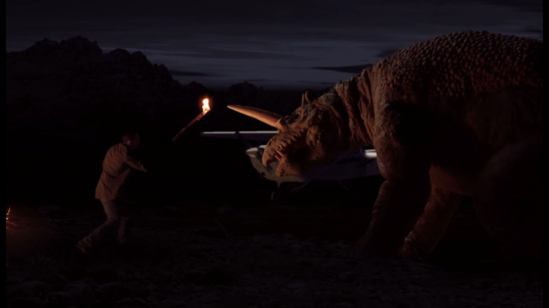
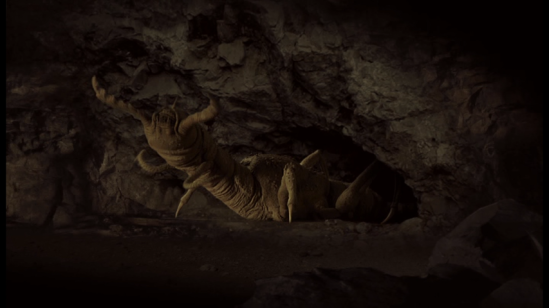
Fighter pilot Captain Glenn Edwards goes missing in the mysterious and off-limits Amarok Crater. After a month of speculation and military red tape, Glenn’s brother, Tom Edwards, and Glenn’s fiance, Samantha, take the high risk of hiring a washed up, drunkard Carlton Denning, a pilot dumb enough to fly under the radar and into the hidden entrance of the forbidden zone to locate Glenn. The trio find themselves in the company Riley, a henchmen for Denning’s unforgiving bookie, who tags along to ensure Denning returns safe and sound to repay his debt. Their crash landing in the middle of Amarok Crater gives them no choice but to search for the lost Glenn, but as their stay prolongs, ancient carnivorous creatures, mutated from the Crater’s radioactive meteorite, emerge from the Crater’s caverns and fissures, including a three-eyed giant hellbent on obtaining a lady friend.
vlcsnap-00003
B-movie director Brett Piper is back with another outrageously entertaining drive-in theater film classically titled “Triclops.” Reusing props from the director’s last film, a monstrous crustacean rampage film titled “Queen Crab,” and casting familiar faces from the movie as well, Piper conjures-to-scribe a lost world, a concocted story of various films inspired by the gilded age marvels of movie magic. Practically funded with the quarter-sized lent in their cobwebbed lined pants pockets, Piper meticulously implements the nearly forgotten practice of blending mattes and composites with the strategic use of small-to-medium sized models in order to form a world based on a mutated genesis.
vlcsnap-00001
“Triclops” resembles 1966’s “One Million Years BC,” sans a stunning Raquel Welch, spliced brilliantly with the mythological appeal of Desmond Davis’s 1981 adventuring odyssey “Clash of the Titans” with a modern setting backdrop. Even though Welch is not in this particular stop-motion journey, a equally exquisite Erin Waterhouse takes center stage as the film’s protagonist Samantha whose on a quest to discover exactly what happened to her fiancé Glenn. Samantha’s determined to get to the crater, find Glenn, and get the hell out of Amarok Crater. What she didn’t plan on was her cohort, Glenn’s brother Tom, undermining her search and possible rescue for his own underlining intentions to become rich and famous off the unexplored and mysterious territory.
vlcsnap-00002
Waterhouse has a range that doesn’t wane, weaving through angst and fear without ever settling on a love interest. Waterhouse opposites Matthew Crawley in his first major role, a dual role, in Tom and Glenn. Did I mention that Tom and Glenn are twins? To round off the adventurous assemblage are Ken Van Sant and Richard Lounello whom are reunited as a team from Brett Piper’s “Queen Crab.” The cast’s dynamic attempts to homage the reactions of the classics; a long moment of shock and bewilderment glazes over the characters’ eyes as they stand in awe of the creatures before them. “Triclops” isn’t a vicious creature feature where a scantily cladded woman runs through the thicket, screaming her lungs out while a snaring beast ferociously tracks her down.
vlcsnap-00005
The script feels a bit loose with much of the dynamic between Glenn, Tom, and Samantha goes awkward into oblivion after many hints to outer-relationship throes. Ken Van Sant’s character, Dennings, portrays the unlikely hero. When we first meet Dennings, he’s a blackout drunk with a sarcastic pie hole who just happens to know how to fly a plane. His dealings with a money shark fizzles as badly as Samantha and Tom’s supposedly fling. Even when Riley, played by Richard Lounllo, tags along to keep an eye on Dennings, the animosity goes into flight and disappears into the lost land of Amarok Crater, or perhaps the ration from the Crater not only evolves the physical appearances, maybe their inner soul mutates into their antagonistic selves.
vlcsnap-00004
“Triclops” can be discovered on DVD-R courteously of Alpha New Cinema and purchasable at Oldies.com. The region free disc contains a runtime of 80 minutes with bonus features including outtakes and bloopers and fantastic commentary track with director Brett Piper, Ken Van Sant, Erin Waterhouse and producer Anthony Polonia that’s pure water cooler comedy as well as an inside the creation of his modern day classic. The DVD-R video aliases a fair amount with some blotchiness in more darker corners of film, but the sepia coloring feels natural due to the sci-fi tribute content and the soundtrack is clear with no pops or hissing in the dialogue, which prominently sets the stage in the forefront. Brett Piper has once again brought cinematic history back to a world filled with millennials with their noses-glued to iPhones screens and Playstation consoles. “Triclops” is a 50-ft tall film on a 5-ft tall budget and worth every penny of admission.