Sooie EVIL Sooie! “Pig Killer” reviewed! (Breaking Glass Pictures & Darkstar Pictures / Blu-ray)

On This Farm There Was a “PIg Killer” now on Blu-ray!

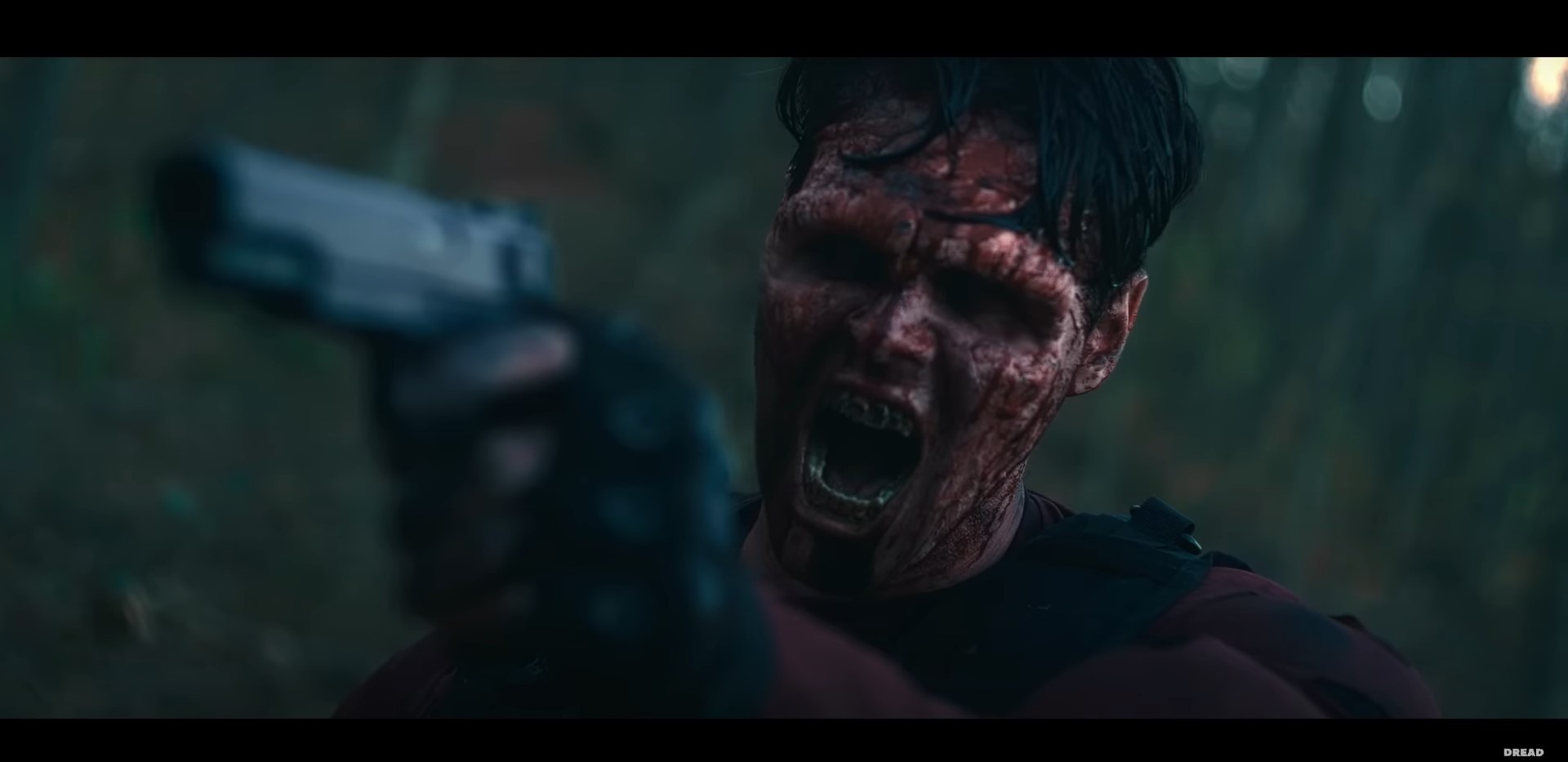
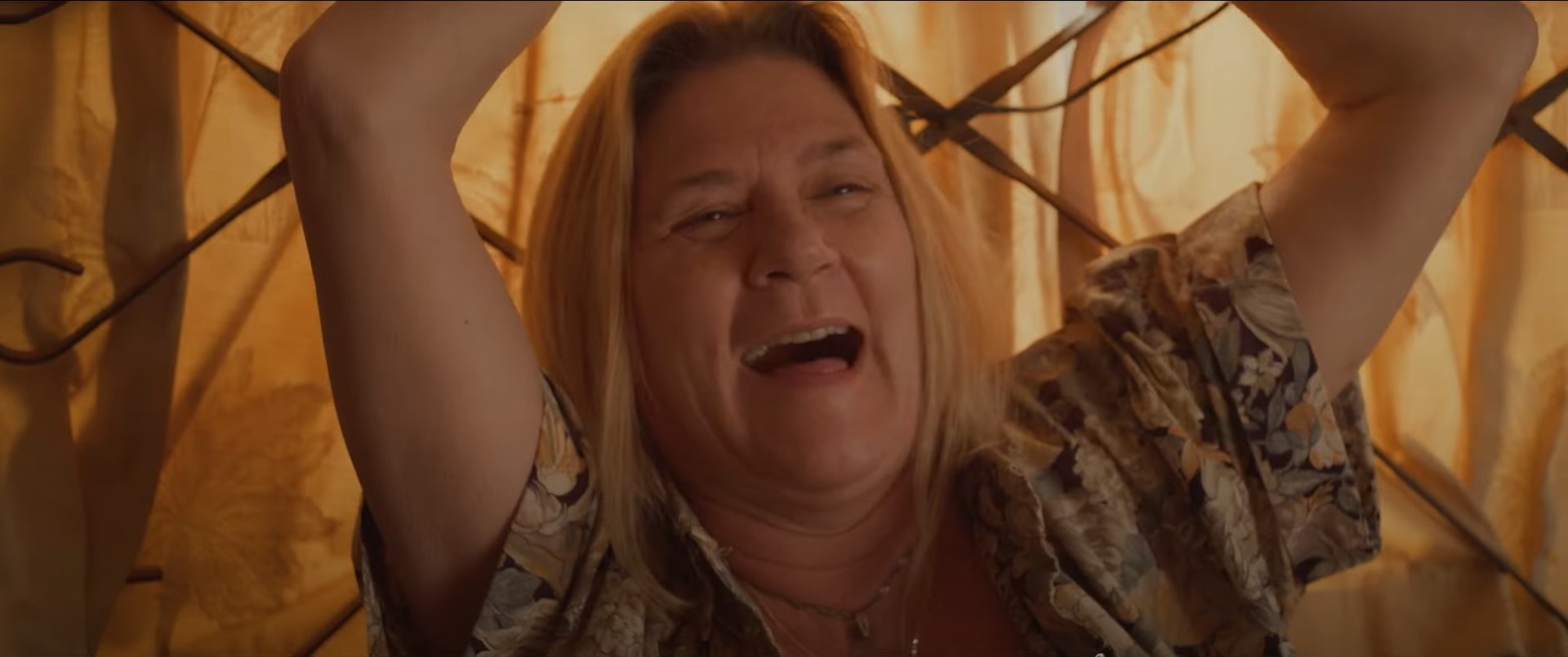
Pig ranching landowner Robert “Willy” Pickton’s compulsions to pick up unprincipled women involved in prostitution and drugs and horrifically rape and murder them in the name of salvation stems from a severely abusive childhood with the father’s physically and mentally tormenting as well as a scornful mother sexually assaulting him.  Willy’s fanatical obsession threatens his drug-fueled, orgy-laden, rock-n-rolling Piggy’s Powwow party, a regular throwdown held at his ranch that has elicited a cease and desist letter from the city, but Willy pushes the party forward despite his brother David and their lawyer’s stern opposition.  Paralleling Willy’s story is Wendy Eastman who almost dies of an accidental drug overdose.  The incident stirs more the already contentious bad blood between her uncompromising stepmother and insecure father that leads to storm out and bump into Willy at a bar with the feeling of destiny bringing them together only to horrifically discover Willy’s unsavory secret the hard way. 

Part one of my reviews on serial killer biopics, headfirst we go into the psychotic world of Robert “Willy” Pickton, a pig former turned one of Canada’s most notorious serial rapists and killers living in Port Coquitlam, British Columbia.  While the extent of his butchery is vague at best and even in some ways evolving over the course of the last two decades, Pickton was able to be the filmic inspiration for the Chad Ferrin brazen biopic “Pig Killer.”  The “Easter Bunny, Kill! Kill!” and “Someone’s Knocking at the Door” director wrote-and-helmed the interpretation of the egregiously presumed methods Pickton executed upon his female victims, mostly drug-addicted sex workers from the Eastside of Vancouver.  Once under the working ttile of “Pork Chop Rod,” Ferrin’s Crappy World Films, Girls and Corpses (of Robert Steven Rhine’s Girls and Corpses Magazine), and the post-production company Laurelwood Pictures served as co-productions with 50-year acting vet Robert Miano (“Malevolence,” “Giallo”) co-producing.

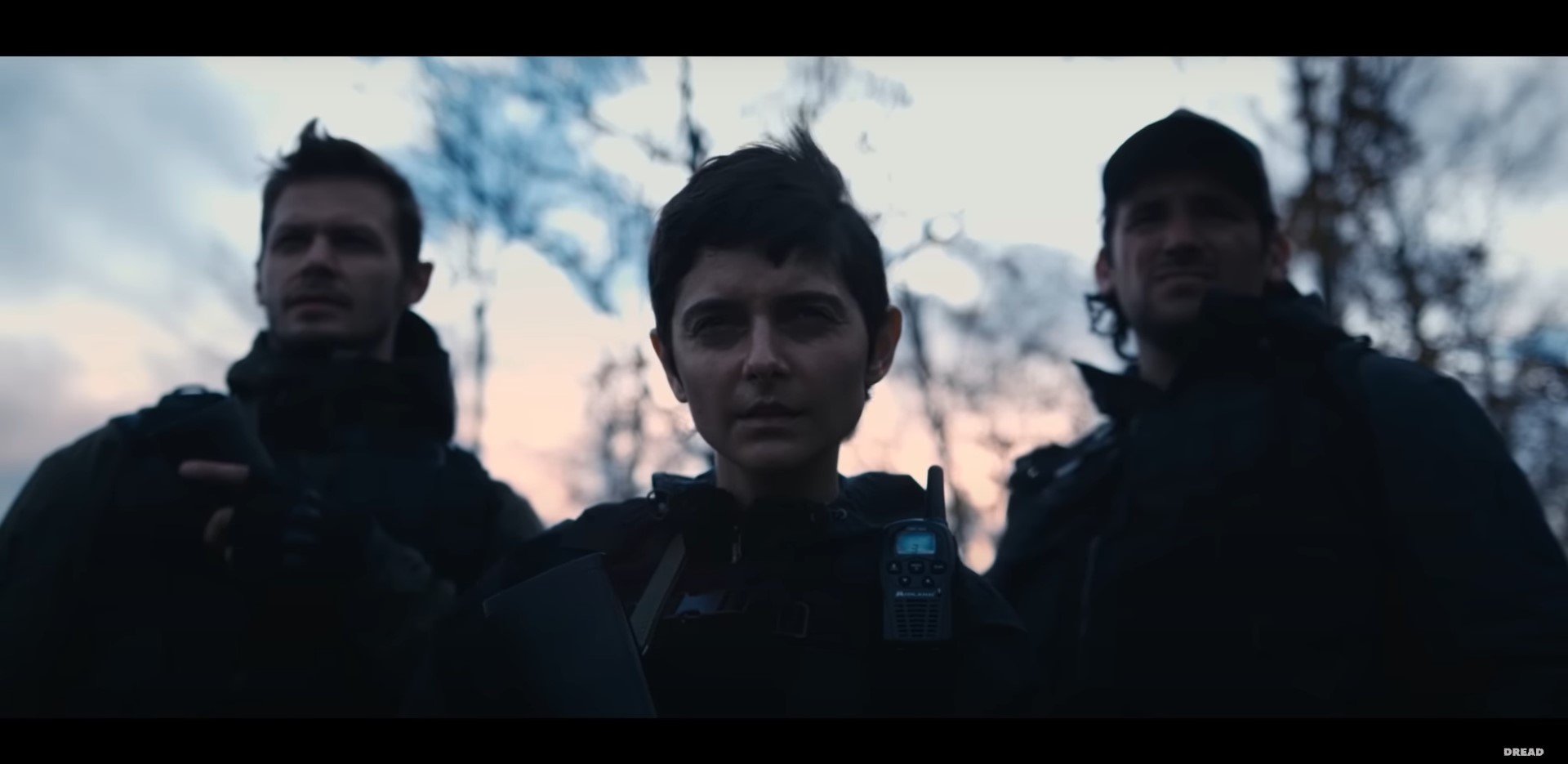
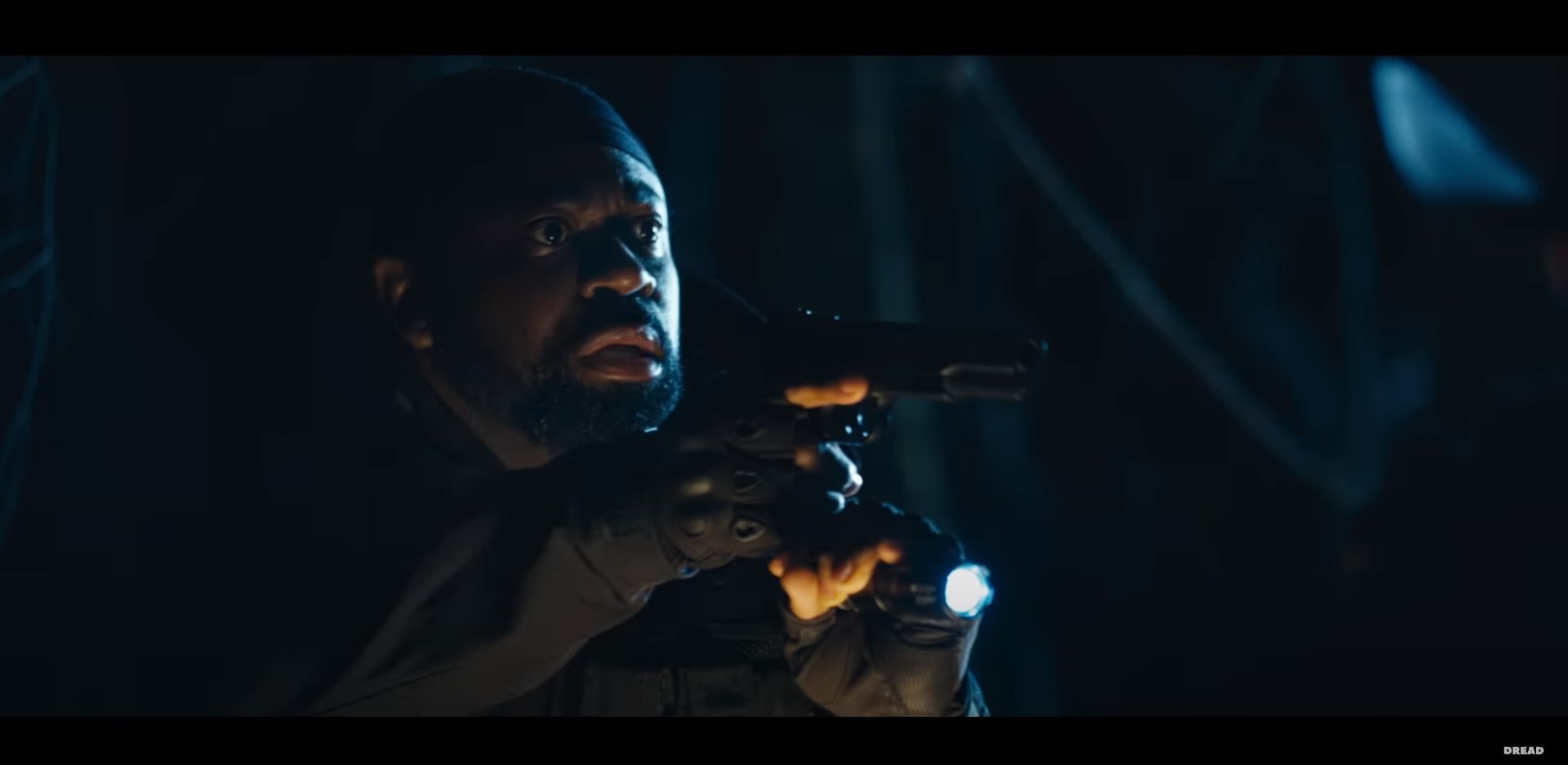
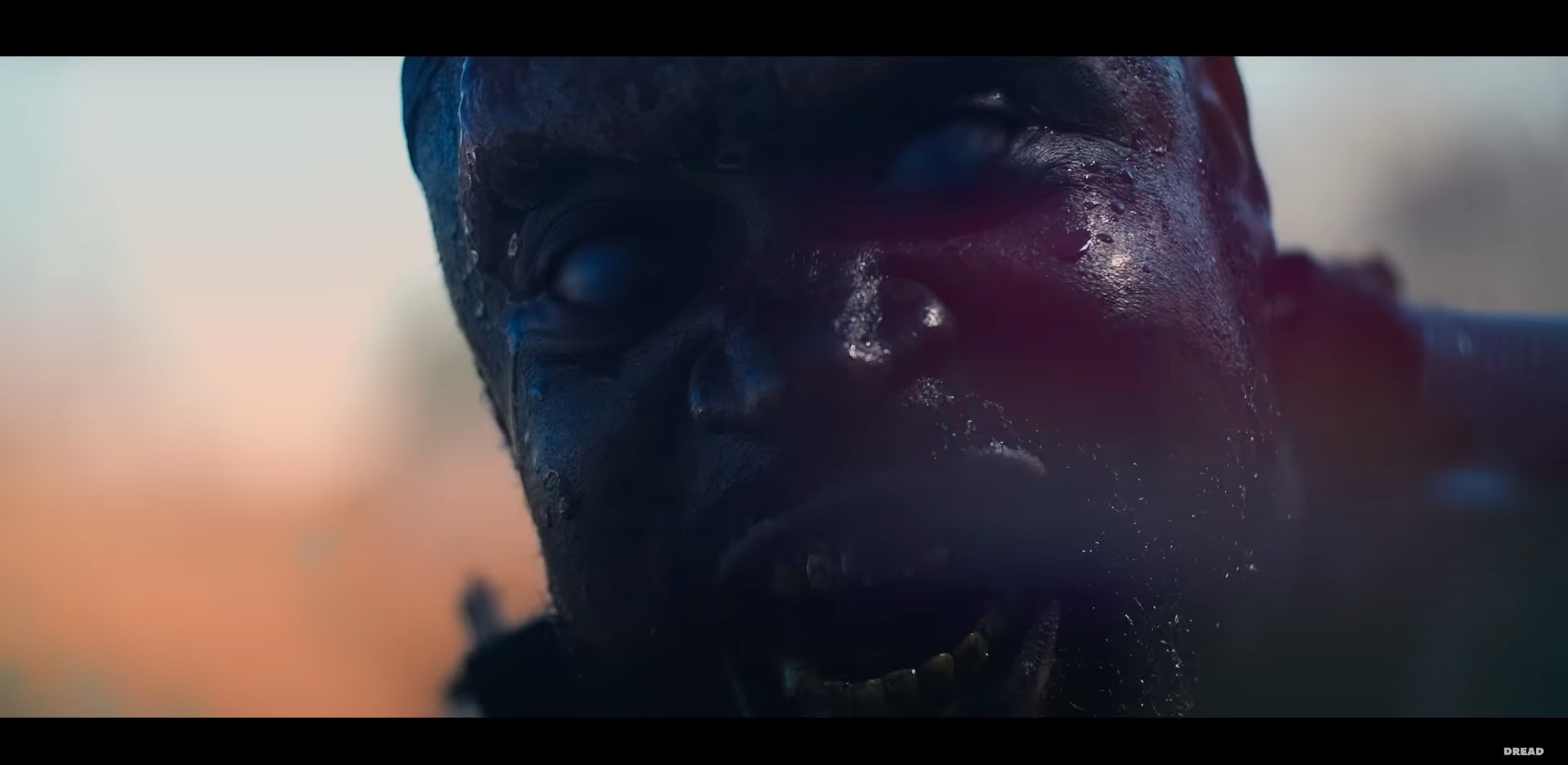
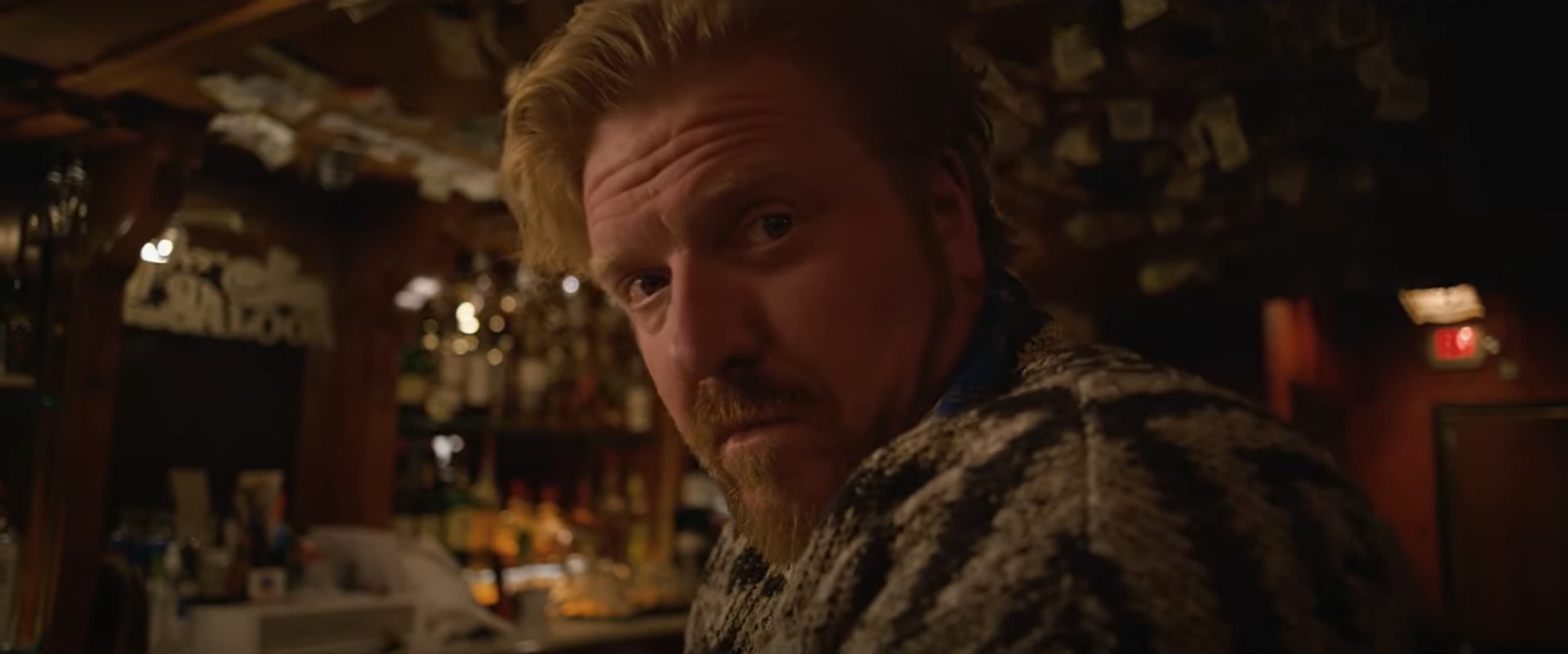
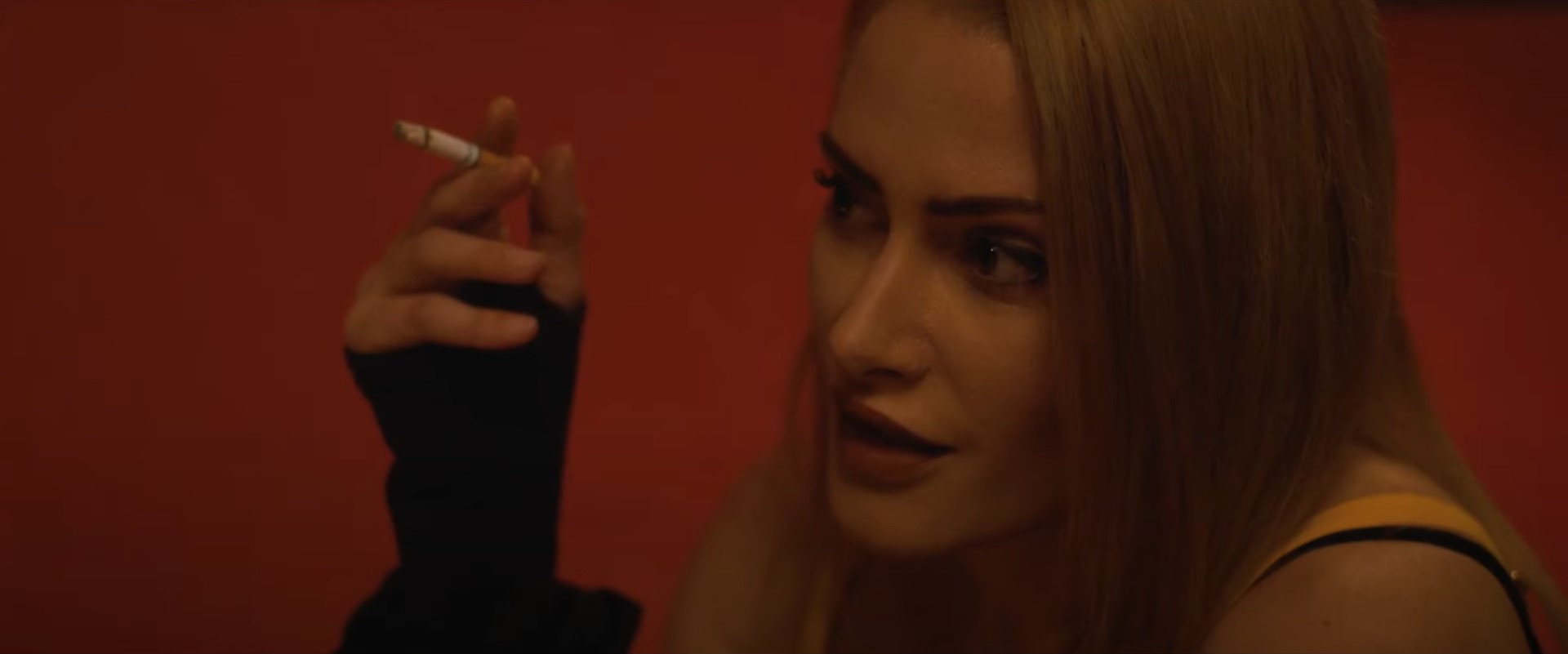
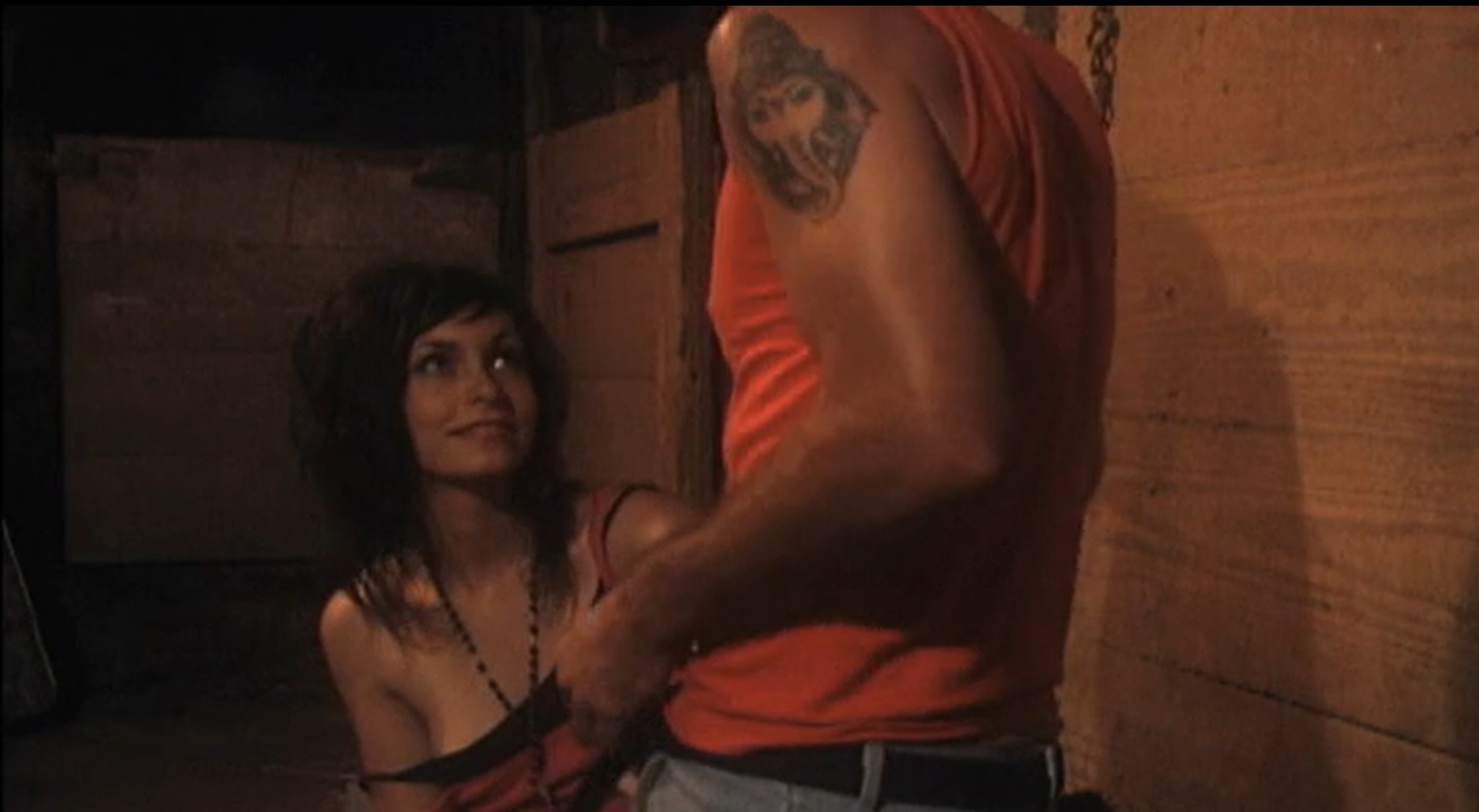
Even though this actor has portrayed serial killers in “Identity,” “The Hitcher II,” and “The Frighteners,” and even a deranged zealot in “Contact,” I would never have imagined in a million years “Starship Troopers” actor Jake Busey would have stepped into the sordid shoes of Willy Pickton in a Chad Ferrin production.  There’s something to be said for Jake Busey’s nerve in moving forward with eccentric and controversial and Willy Pickton is every fiber of those infamy traits and all that is in between.   Disheveled and dirty, maniacal and demented, prosthetic phalluses and dildo revolvers, pig masks and masturbation – Jake Busey doesn’t hold back on an exigent script important to Pickton’s state of mind.  Creepy and apathetic blanked by his deceased mother’s devout spitefulness and her incestuous sexual abuse, Busey secretes these irascible qualities held dormant in Pickton until the sleaze is sated and his patients runs out then it’s time to go hog wild, literally. Lew Temple (“Halloween,” “Devil’s Rejects”) plays Willy’s brother David who also has mother issues, but that avenue is not as profoundly travelled as Willy’s, both men see delusional visions of their mother’s tirades but definitely lopsided in disfavor of Willy and that leaves David left in the dust some to not have his mental faculties inspected.  Their flashback, foul-mouth, and Electral loving mother goes to an unabashed by former adult actress turned low-budget horror scream queen Ginger Lynn Allen (“Murdercise,” “31”) in what her scenes can only be described as uncut and uncomfortable lewdness as she bares it all at the ripe young age of 60 years old.  Another standout performance goes to Kate Patel as the debut actress, who in her own right is an Amazonian goodness buff beyond rebuff in black lace underwear, finds her voice as a young woman named Wendy Eastman in a complicated and dysfunctional household after the death of her mother, at odds with a wicked stepmother, and an insecure father with passive fortitude.  The only obstacle that can be rendered cleanly from her performance is how her character’s written to be drawn to Willy Pickton as because between age gaps and social differences, the two have nothing tangible to drawn them together mutually.  “Pig Killer” rounds out the cast with producer Robert Miano as Wendy Eastman’s father, Michael Paré (“Streets of Fire”) and producer Robert Rhine as Detectives Oppal and Schneer, Silvia Spross (“Parasites”) as Wendy’s disparaging stepmother, Jon Budinoff (“Someone’s Knocking at the Door”) as Wendy’s friend and drug source, Elina Madison (“Caged Lesbos A-Go-Go”) as a druggie sex worker, Bai Ling (“Exorcism at 60,000 Feet”) as also a druggie sex worker, and Kurt Bonzell (“Parasites”) as Willy’s disfigured and throat-cancer suffering friend Pat. 

Sensationalized for cinematic charm, the story behind the “Pig Killer” hits near the bullseye of all major bullet points from the escape of Wendy Eastman (actual person being Wendy Eistetter) and her coinciding her drug addiction to the wild gathers at the Pickton farm known as Piggy’s Powwow (actual title being Piggy Palace Good Times Society) where motorcycle gangs and prostitutes congregated for a drug-fueled good time.  If having viewed a few of Ferrin’s credits before, some of the unrestrained gore and shock will not come at a surprise.  The benumbing unconcern of misanthropy is poignant amongst Ferrin’s soft-pedaling of horror with a whimsical manner within a gritty film that doesn’t feel as gritty as it should be considering the subject and subject material.  Another mitigating moment, one that’s more counterproductive to the Pickton storyline, is the parallel melodramatics of Wendy Eastman that eventually rendezvous with the titular “Pig Killer” and become the rendition of Wendy Eistetter supposed personal backstory and escape from death.  Wendy’s overdose and family issues provide reason for her subsequent run away from home, but the extent of the backstory unnecessarily rivals Willy Pickton’s and the whole destiny meetup enlists some deeper rooted significance that isn’t neatly fleshed out, turning awkwardly impertinent that waters down their entanglement. 

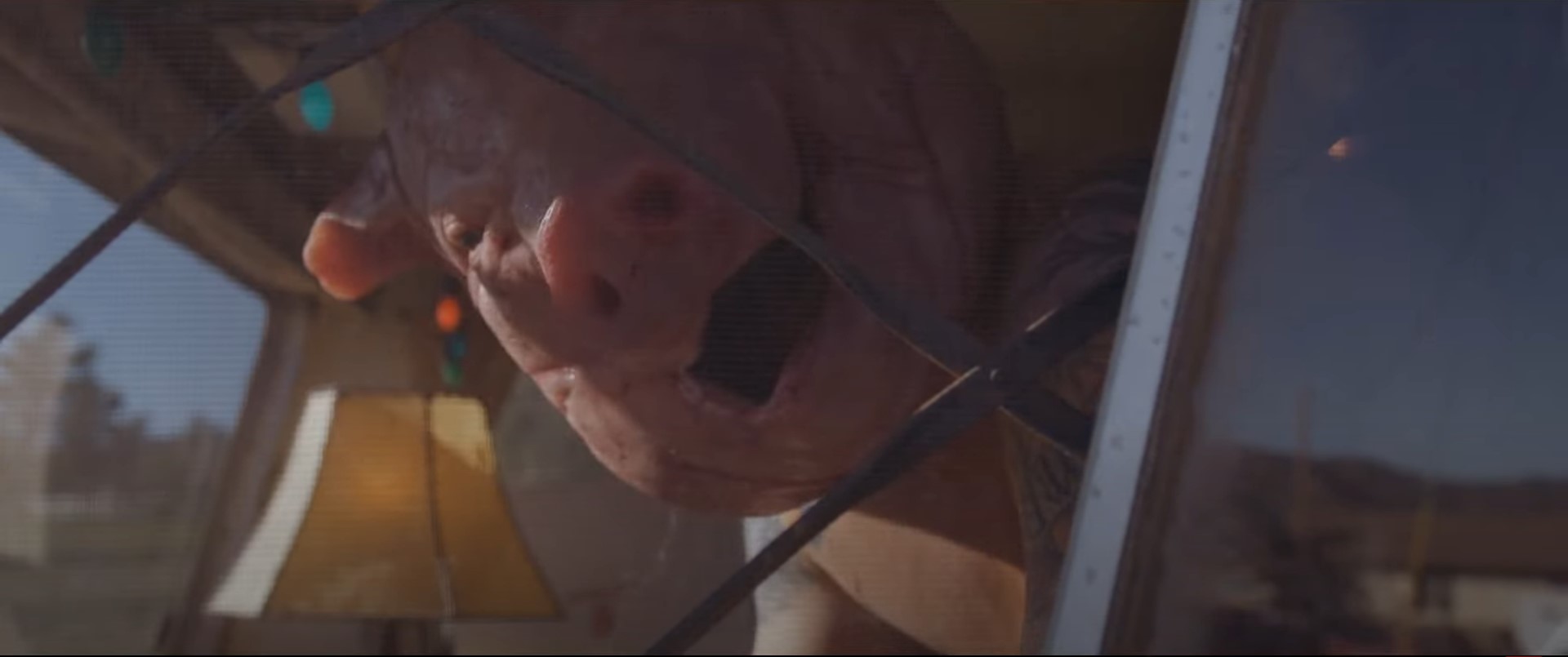
Arriving onto a Breaking Glass Pictures and a Darkstar Pictures collab, “Pig Killer” oinks itself onto an AVC encoded, 1080p, High-definition Blu-ray.  Presented in an anamorphic widescreen 2.39:1 aspect ratio, “Pig Killer” under the warm glow and desert dry eye of cinematographer Jeff Billings (“The Deep Ones”) sundries the shot types in various techniques, such as closeup slow motion to be inside Willy’s moment of divination, to provide Ferrin’s feature with comely appeal even in the vilest of moments. Details are sharp and delineated nicely albeit the quick editing for intensity purposes and to float Willy in and out of psychosis. Coloring is more natural than anything else with a few gels scatter about to spruce up the vibrancy. The lossless English DTS-HD 5.1 master audio renders clear dialogue without any distortions or other audible disturbances; however, the strength of the dialogue favors an infirm conveyance to grasp a few exchanges, especially in the exterior. A maximal Gerard McMahon soundtrack scores the entire biopic from start to finish with a range of 80’s power ballads to 90’s pop rock; the 76-year-old not only scores the project but also has a concert performance role with his band G Tom Mac. Depth and range supplement greatly as sound design cater to the surrounding atmospheres, such as the echo vibrations under the Eastside bridge or the pig-pen oinks and frenzies when feeding bits and pieces of sex workers to his farmyard swine. English SDH is optionally available. Packed with extra content, supplements included are an interview intercut with scenes with Ginger Lynn as well as a few of her clothed adult industry spreads/modeling, a behind-the-scenes footage with Michael Paré, deleted and extended scenes, and Q&A from Cine Excess, the making-of the Pig Mask, a making-of the film entitled Canadian Bacon, an introduction to Spunky the Pig aka Willy’s pig, a screen test of Kate Patel in the role of Willy, which was considered before Jake Busey landed the role, “Pig Killer” auditions, and the trailer. The clear Blu-ray Amaray case sports a dark-and-dirty gilt image of a half-naked Kate Patel and a menacing pig-masked person holding a clever overhead. Reverse side contains a still image of the insides of Willy’s pigsty camper while the disc is pressed with the same menacing pig and clever but more prominent. The collab release has a region A playback, a runtime of 122 minutes, and is not rated. The back cover also lists a 2000 production date, conflicting with the 2023 release states elsewhere, but the 2000 date would be before Willy Pickton’s arrest and so that might be a misprint. Chad Ferrin and Jake Busey jointly tackling the monster that is brutal serial killer Willy Pickton with an inkling of lighter material coursing through its arteries, style secreting through the madness, and, of course, gore, the most important ingredient to the likes of a film entitled “Pig Killer.” 

On This Farm There Was a “PIg Killer” now on Blu-ray!

Be Careful Of Your Friends. They May Be EVIL! “Stabbed in the Face” reviewed! (Wild Eye Releasing / DVD)

“Stabbed in the Face” is now on DVD!

A high school Halloween party becomes the catalytic event for a motley of friends that plan a party in a remote haunted house where the urban legend of the three legged lady had brutally slain her husband and his mistress before her own insanity was gunned down by local authorities.  Simultaneously, a prison escaped murderer roams free around the same area, living a few friends on edge but reassured by the others that nothing will happen.  As the party begins, sex, drugs, and alcohol fuel the night away until one of the girls winds up missing and all that is left is a blood-stained bathroom where she was last seen heading.  Fingers begin pointing at each other as panic and anxiety sets in but as the thought of a deranged escape convict overtakes as best suspect, the others quickly split up to find more of their roll-in-the-hay and pothead friends only to discover the hard way that splitting up is a bad idea when hidden agendas come to light.

A character trope loaded slasher forms the foundational framework and sets up filmmaker Jason Matherne’s 2004 feature with a killer-thriller twist.  With an unambiguous forthcoming of brutality right smack-dab in the middle of the title of “Stabbed in the Face,” Matherne, the low-budget director of the franchised “Goreface Killer,” an if-you-can-believe-it less profane name to the film’s true title of “the Cockfaced Killer,” helms his sophomore gruesome gorescape off a script by fellow “Goreface Killer” writer and collaborator Jared Scallions.  The independent gore-and-shocker set in the late 1980s lands a setting in Louisiana and Mississippi, specifically around the off-beaten trails and areas of New Orleans, under Matherne’s New Orleans-based horror and exploitation yielding Terror Optics Films, under the copyright of CFK (Cockface Killer) Enteratinment, which innately chairs Matherne with the executive producer hat as well as with Jaren Scallions co-executive producing and having a principal role in the story.

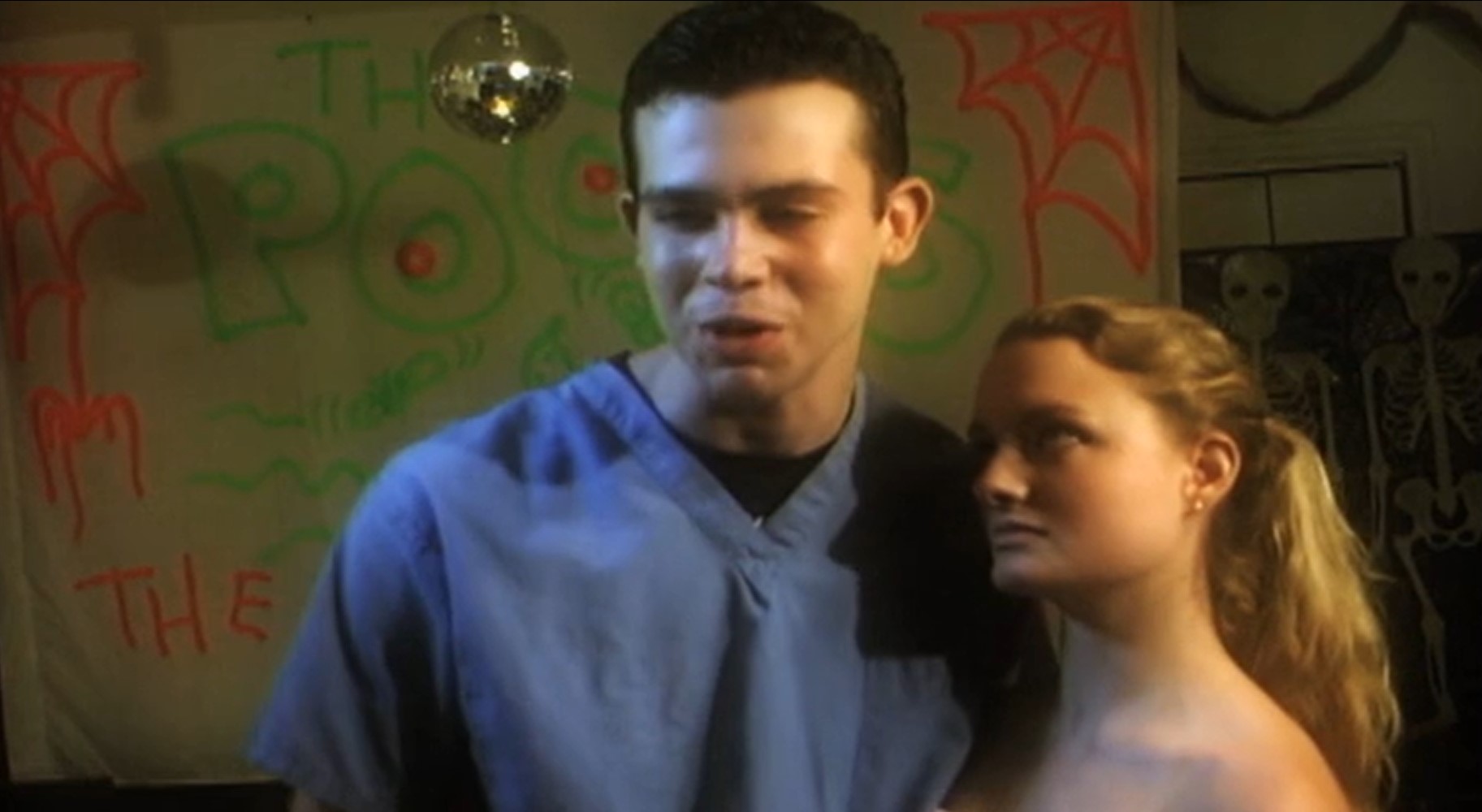
Character clichés clutter the chain of events with your typical pot smokers (Jared Scallions and André Le Blanc), bad boy (Eric Fox), jock (Bill Heintz), nerd (Steve Waltz), slut (Kristen McCrory), bitch (Dana Kieferle) and goody two-shoe virgin (Amanda Kiley).  The gang is all here for the slaughter, initiating formulaic conventionalisms that would make any horror aficionado cringe with an internal “here we go again” snide rippling through their gore-bore heads at the lack of originality and creativeness from another indie production.  Yet, if you stick with the story and pay attention (instead of doom scrolling your phone), Scallion’s script evolves out of being a simplistic carbon-copy primate and into a singular, secerning Homo Sapien with idiosyncrasies because though most characters remain on the routine attribute course, more than one don’t in an an uncommon but rarely explored concept that puts audience theories and callouts to bed before the unsuspecting reveal.  If needing a comparison, think about the “Scream” franchise as those films are really good at playing out the whodunit in complicated pairings with a big surprise at the very end.  In “Stabbed in the Face,” the unmasking is not as potent but the possible advents serpentine the story, some more obvious than others, and each carry a different motivation crashing head-on with each other after a few Matherne measured red herrings to throw off the plot predictable scent as well as building up tropes to the max of their mechanics, such examples would be the overly unchaste Starr who bed hops men without shame or overstating Bruce’s money and smarts with talks of getting into Harvard and his girlfriend is only with him for his family’s wealth.  Scallion slathers principals thick with stenciled overflow and when that bottom drops and all hell breaks loose, the ostensible outcome dissolves like wet paper.  Katheryn Aronson, Samantha M. Capps, Matt Mitkevicious, Bonnie W. Picone, Jerry Paradis, Helen Whiskey, Betsy Fleming, and J.C. Pennington complete the cast.

“Stabbed in the Face” is about as savage as it sounds.  Perhaps not as graphic or intense as the Wild Eye DVD illustrated cover art (we secretly wished it was), kills that amount to the titular act has a mortality rate of only two and those pair of perforations don’t live up to the wonderfully ghastly illustrated cover but, overall, fulfills the promise.  It’s quite evident that Matherne has no qualms about using splatter and sex, two of the biggest keys to a successful slasher, in his punk-scored abjection of lewd-laced murder.  Yet, it would be very remiss of me if I didn’t point out that “Stabbed in the Face’s” blade strikes air at times with the story.  Disconnection between the first couple of scenes and the haunted house party planning and then on completely omits the transpiring moment of the jock’s sister’s murder as scenes progress, passing through the event without as much of a whisper.  She’s just there in a scene and then she’s not and that isn’t explained until after the planning of the haunted house trip when the virgin naively asks while settling into his car about the girl who apparently was hacked to pieces on school grounds two months prior.  The heavy weight of that loss isn’t there for the jock, not even a fleeting moment of sadness or shock, as everything continues as if nothing happened.  The other characters are not struck by the loss either and this sweeps the character’s death under the rug and insignificant to the plot, but does a film entitled “Stabbed in the Face” really care about emotional scarring?  Or is the intention to leave open wounds to fester with more knife strikes, decapitations, and eviscerations?  If I was a magic eight ball, all signs would be point to yes toward the latter as special effects team Jason Bradford, Robert Masters, and Richie Roachclip pull their weight (professionally, not emotionally) creating better than anticipated morbid scenes of murder albeit the one or two obvious CGI blood splatter.

An 80’s teen slasher incarnate, “Stabbed in the Face” glorifies gratuitous sex, drugs, and gore, appropriately curated and displayed by our friends at Wild Eye Releasing on their Raw & Extreme sublabel.  The 78th released title on the sublabel is presented in a blown-up aspect ratio of 1.85:1 widescreen, eliminating the horizontal bars, on a MPEG2 encoded DVD5.  Resolution retains the image tautness with only a handful of scenes cropped and zoomed in even more that reduces pixels to a more granular façade.  Matherne owns the softer presentation with instances of posterization, especially when creating a period piece using stark colored gels and less light for positioning thicker shadow that hazily defines objects, as if lurking in the dark.  The English language Dolby Digital 2.0 stereo track has great dialogue strength that does sound boxy.  I suspect a ADR dub but highly unlikely with the really good synch and might just be more carefully attained specified audio with key boom placement.  Eric Fox’s electron and punk soundtrack parallel “Stabbed in the Face’s” indie-grunge horror with synthesizing tells of inspiration from the 80’s era.  Punk and hillbilly rock bands on the soundtrack include multiple tracks from The Poots, The Projections and The Pallbearers – the three Ps.  The static menu features full-length tracks from the soundtrack overlaying its static menu with the only bonus feature being a “Stabbed in the Face” Featurette, a behind-the-scenes look in raw and polished form at the film’s genesis and production with discussions from cast and crew.  Along with the feature’s own trailer, also included but separate from the bonus features are other Raw & Extreme trailers of “Crimewave,” “Goregasm,” “Whore,” “Video Killer,” “Blood Slaughter Massacre,” “Hotel Inferno,” and “Acid Bath.”  This portion of the menu options does not include a music track.  To turn consumers onto the film, more so the gore fans than popcorn film goers, the ultraviolent cover keeps in accordance with the Raw & Extreme profile.  The cover art is also semi-reversible with magnified bloody image on the inside of the frosted Amaray DVD case.  The disc is printed with the same cover art image, just downsized.  The unrated DVD has a runtime of 81 minutes and is region free.  Just hearing the title can induce the sensation of a sharp edge going through soft flesh and with that phantom impression of pain, “Stabbed in the Face” is horny, bloody, and punk!

“Stabbed in the Face” is now on DVD!

Your Test Will EVILLY Hunt You! “Prey” reviewed! (20th Century Studios / Blu-ray)

The Hunt is On.  “Prey” Available on Blu-ray from 20th Century Studios!

Set in the Northern Great Plains of 1791, a young and fierce Comanche woman, Naru, craves to break conventional gender barriers as a tracker and hunter, separating herself from the assumed woman’s place in her tribe as a gatherer of medicine and food.  Naru tirelessly trains herself in the ways of the warrior and has become better than her male counterparts who often look down on her as an inequal; yet, she continues her pursuit to prove her worth not only to men hunting parties but also her own brother who, with all the love in his heart for her, doubts her abilities to meet and become victor over her tribe’s warrior test of hunting a predator that can hunt you back.  A big-game hunting alien with high-tech arsenal invades the land, tracking down the area’s biggest predators, and conquering them essentially his bare hands.  Naru comes face-to-face with the extraterrestrial predator that threatens her people but her cries of wolf fall on deaf ears until the tribe’s bravest war party is defeated and the nearby shrewish French fur trappers are slaughtered despite their gunpowder weaponry, Naru is all that is left between her people and a high-powered killing machine.

From a year and half after the success of its premier release on Hulu, “Prey,” the prequel to the highly popular “Predator” franchise has finally berthed onto the home video market.  “10 Cloverfield Lane” director Dan Trachtenberg helms what is essentially a primal and back to roots prequel with a screenplay penned by television writer-producer Patrick Aison set nearly 200 years prior to John McTiernan’s 1987 action-packed, science-fictional horror “Predator” starring Arnold Schwarzenegger battling a skull-trophy hunting alien with advanced and otherworldly armaments.  Though included as canon, “Prey” separates itself from the pack, especially from the string of “Alien vs. Predator” crossover and the 2018 Shane Black director “The Predator,” and not just in title alone but the title is certainly very significant with a focus on the developing heroine to become respected and an equal amongst the men of her tribe whereas the rest of the franchise focuses on the rudimentary conflict between the very best-of-the-best of tough man and a highly skilled, kill-efficient creature from another planet.  Original “Predator” screenwriters and brothers Jim and John Thomas return as executive producers alongside Ben Rosenblatt, Marc Toberoff, and Lawrence Gordon (“Predator”) with John Davis (“Predators”), Marty Ewing (“It”), and Comanche-Blackfeet American Indian Jhane Myers producing for production companies Davis Entertainment and Lawrence Gordon Productions with 20th Century Studios continuing its long history of distribution presentation of the game hunter. 

Much of the cast, as well as the crew, consists of people of indigenous people heritage, honoring First Nations with representation and authenticity.  At the very heart of the story, as the face of the principal hero, and as a young woman who unfortunately in this industry is the atypical-appearing action star is Amber Midthunder (“14 Cameras”) as Naru, a skilled hunter-tracker disparaged and scoffed at by most of her tribe for not following traditional suit.  Naru is an outsider thinking outside the box while still maintaining the traditions of her people, such as wanting to participate in the Kuhtaamia, a hunting rite of passage that leads to being a warrior.  Midthunder executes the character free from vanity but maintaining strength, courage, and quick thinking despite some inexperience which is a greatly adorned flaw to have in a grounded main character battling against the odds.  Naru is at odds with her younger brother Taabe, an adored and venerated hunter who wants to believe in his sister but edges more toward conformity or conventional ways.  Dakota Beavers tackles Taabe’s athleticism, showing no hesitation in battling the predator on horseback, while also softening the eyes and feeling compassion for his onscreen sibling handled a raw deal.  While Dane DiLiegro (“Monsters of California”) is no Kevin Peter Hall, the original actor donning the Predator suit in the first two films, the 6’8” former oversees professional basketball player fit into the large shoes of a new kind of a predator, one we haven’t seen on screen before, and giving the powerful alien creature a fresh take without breaking off too much of the character’s franchise stride and still being a monolithic monster of formidability.  “Prey” rounds out the cast with Stormee Kipp, Bennett Taylor, Michelle Thrush (“Parallel Minds”), Nelson Leis (“The Curse of Willow Song”), Mike Paterson (“Crawler”), Tymon Carter, Skye Pelletier, Harlan Blayne Kytwayhat, and Samuel Marty (“Don’t Say Its Name”).

From the very title, “Prey” is the analogous prequel and follow-up “Predator” story that strays away from the rough-and-tough, highly trained killers in harsh combat terrains and settings with overkill tech and firepower that blasts everything to smithereens path.  Instead, Dan Trachtenberg travels back in time, back when more primal and essential courses of survival were relied upon by grit and skill.  Even the predator is not as technologically advanced as his descending successors. Trachtenberg mentions in one interview that this particular predator, with a vastly different shaped head and having more low-tech gear, and I use that in the loosest of terms considering the predator’s technological advancements compared to 18th century man, may be from another hemisphere of his world, but I’d like to think this earlier version is more like earlier man prior to evolution, or else how can we explain the flintlock pistol connection with “Predator 2.”  This canonical link plus Taabe’s bordering cheesy throwback line, if it bleeds, we can kill it, give tribute to the acclaimed two films that paved the path to setup “Prey’s” success to stand on its own two monstrous feet being set not in a hot jungle, an urban heatwave, or in the midst of an alien race’s civil war or long historical combat with another race, but in the serene, idyllically raw landscape of Northwest America and that is faced with a lead hero we’ve never seen before in a Predator film.  Character driven elements provide a substantial arc in Naru’s story, encrusted by challenges, failures, and successes that make the Comanche woman worthy of the hunt. 

From its Hulu premier on July 22nd, 2022 to its at home, physical media release a year and change later on October 3rd, 2023, “Prey” has come home on Blu-ray home video from 20th Century Studios home entertainment.  The AVC encoded, 1080p, BD50 presents the film in a widescreen 2.39:1 that captures the vista survey with breathtaking sharpness in detail in the 4K scanned print, adding that ever-so-delicate crispness to each foliage-laden and mountainous range landscape.  Even the visual effects, such as a plain rabbit running from a wolf, the bear versus predator, or the deadly rattlesnake, had Its near immaculate rendering show every texturized detail albeit very minor clunky movements.  Color and lighting result in natural tones and sources except for the ashen dead timber sequence that reduces the saturation to make the added fog denser and provide an area of casualty when the predator comes to call.  “Prey” has an outstanding five language audio tracks to choose from:  An English DTS-HD 7.1 master audio, an English Dolby digital 2.0 descriptive audio, a Spanish Dolby Digital 5.1, a French Dolby Digital 5.1, and, for the first time ever, a Comanche Dolby Digital 5.1.  From one of the bonus feature’s deleted scenes, Trachtenberg’s voiceover commentary suggests, at one point in time, the dialogue was going to be fully Comanche, and some scenes, such as the deleted one on the Blu-ray, was filmed in the native tongue.  However, English was decided upon for the final product, but the full-bodied English DTS-HD 7.1 track is masterclass with great attention to extracting those detail elements, such as the serrating gore moments, the whizzing and blips of the predator’s gadgets, and the action associated between minor and major scuffles that build to “Prey’s” one-on-one climax.  Depth elements has space between background and foregrounds, channeling nicely through side and back setups, and the range is extensive in those aforesaid moments of detailed instances plus a few LFE moments of explosions and a thunderous ship landing and takeoff.  Dialogue is clean, clear, and prominent between the audio’s varied language blend of mostly English sprinkled with Comanche and French.  What’s missing from “Prey” that’s a staple through all of the “Predator” films is a rendition of Alan Silvestri’s iconic score, but that omission will likely feel more heartfully loss with diehard fans of the franchise.  However, composer Sarah Schachner’s (“Remains”) orchestra composition is of epic storytelling that pulls similar grand dramatics from another similar time period, Native American film, “Last of the Mohicans.”  English SHD, Spanish, and French subtitles are available to the feature only.  Bonus extras include an audio commentary with director Dan Trachtenberg, actress Amber Midthunder, cinematographer Jeff Cutter, and film editor Angela M. Catanzaro, a Making of Prey behind-the-scenes with cast and crew clip interviews and action footage, Prey FYC Panel with cast and crew discussion, and deleted scenes and alternate openings with a Trachtenberg commentary that explains why the scene was shot and left cut on the editing room floor as well as a visual storyboard of Naru and the predator in a chase in the treetops.  20th Centry Studio’s Blu-ray comes in a conventional snapper amaray with a rigid O-slipcover of Naru’s warpainted eyes overtop one of the original first key arts released of the film – predator in the background of the decaying timber forest ready to strike with its large wristblades as a Comanche warrior, presumably Naru, in a defensive crouch with tomahawk in hand.  The amaray’s front cover sports the same image.  Inside there is a NECA advert for a 7” figure of the feral predator with a matte red disc print with the title and the three target dots reflected in mirror.  “Prey” is rated R for strong blood violence, has a runtime of 100 minutes, and is surprisingly region free, a solid additional to anyone’s Predator film collection. Dan Trachtenberg is on to something here, guiding the extolled Predator toward a new, yet familiar path in what has become an exciting new beginning or pivot for the trophy hunting alien race just begging for the big screen one more time.

The Hunt is On.  “Prey” Available on Blu-ray from 20th Century Studios!

Death Penalized EVIL Returns to Wreak Havoc on Young Women. “The Stay Awake” reviewed! (Cheezy Movies / DVD)

Can You Keep Your Eyes Open at “The Stay Awake?”  On DVD now!

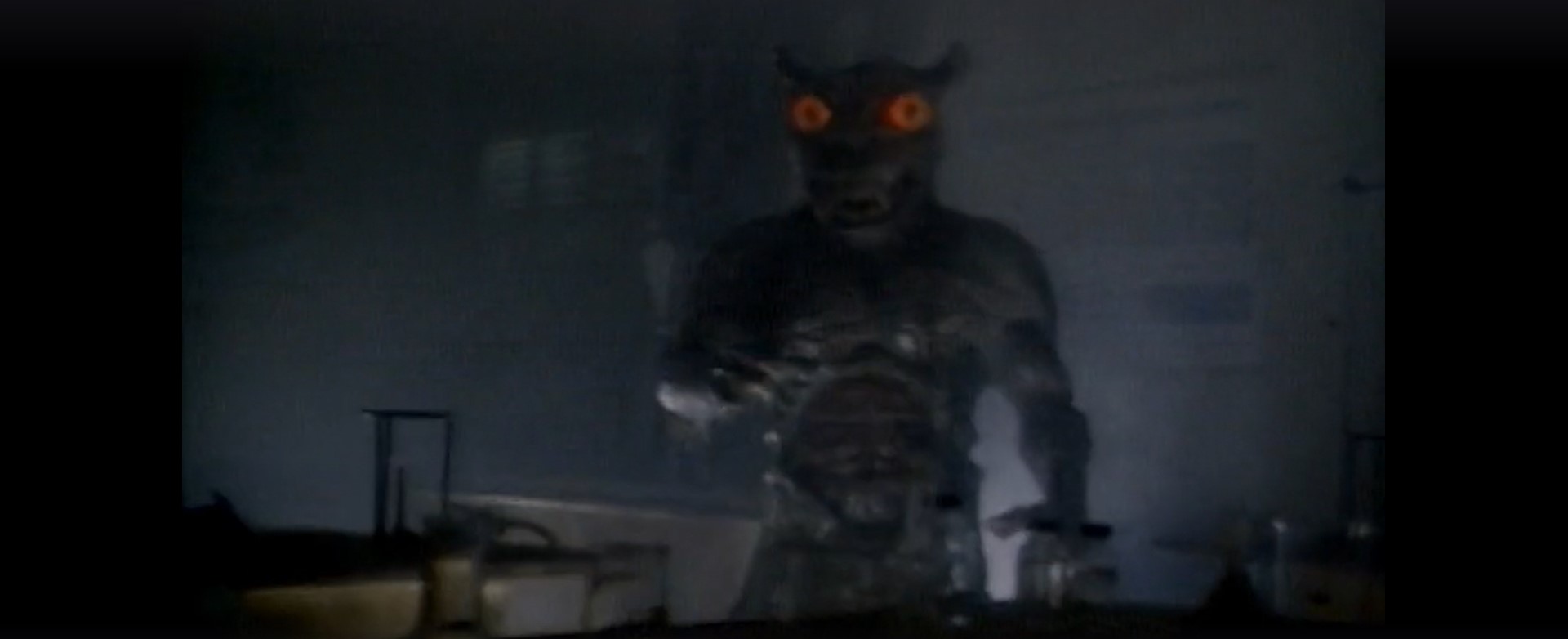
America, 1969. William John Brown brutally slays and sexually assaults 11 women. Before a judge, the serial killer is sentenced to death by gas chamber where his last words proclaim him as the Angel of Darkness sent Earthbound to ravage women. Nearly 20-years later in 1988, the St. Mary’s School for Girls in Europe is holding a stay awake event where a handful of students and one chaperone stay up the entire night as a fundraiser for their school. Dark and nearly vacant, the school basks in an eerie haven for the murderous William John Brown’s returning spirit seeking new souls of the softer sex. Determined to protect the girls at all costs, chaperone Trish Walton will not stop protecting the frightened girls until the entity is destroyed but when the ethereal malevolent spirit takes shape of a monstrous rodent with outstretching attack tentacles and psychokinetic glowing eyes, chances of survival are bleak.

Malevolent forces crossing oceans to death grip the innocent are films that are few and far in between as most transatlantic terror usually stays put, regionalized and localized to keep an authentic aural blend of superstition and history. Director John Bernard attempts to go against the grain with a small crowd of filmmakers who either overcame the parochial provenance and succeeded tenfold or became lost in foreign land narrative and failed miserably.  Bernard and, assumed brother, Johan Bernard co-write “The Stay Awake,” a South African mixed lot of horror elements brewed together into a supernatural schlocker that’s one-half dark and stormy night, gloomy Church Gothicism and one-half final girl survival slasher but equal parts outlandishly overexerted ghost thriller stretching across multiple continents.  “The Stay Awake” is a product of Heyns Film & Television Productions, produced by Thys Heyns of South African action-thriller flicks, as well as produced by Paul Raleigh, the producer of the “From Dusk Till Dawn” and the notable Millennium Films cofounder Avi Lerner, of “American Ninja” and “The Expendables” franchises, in one of his earliest credits from 1988.

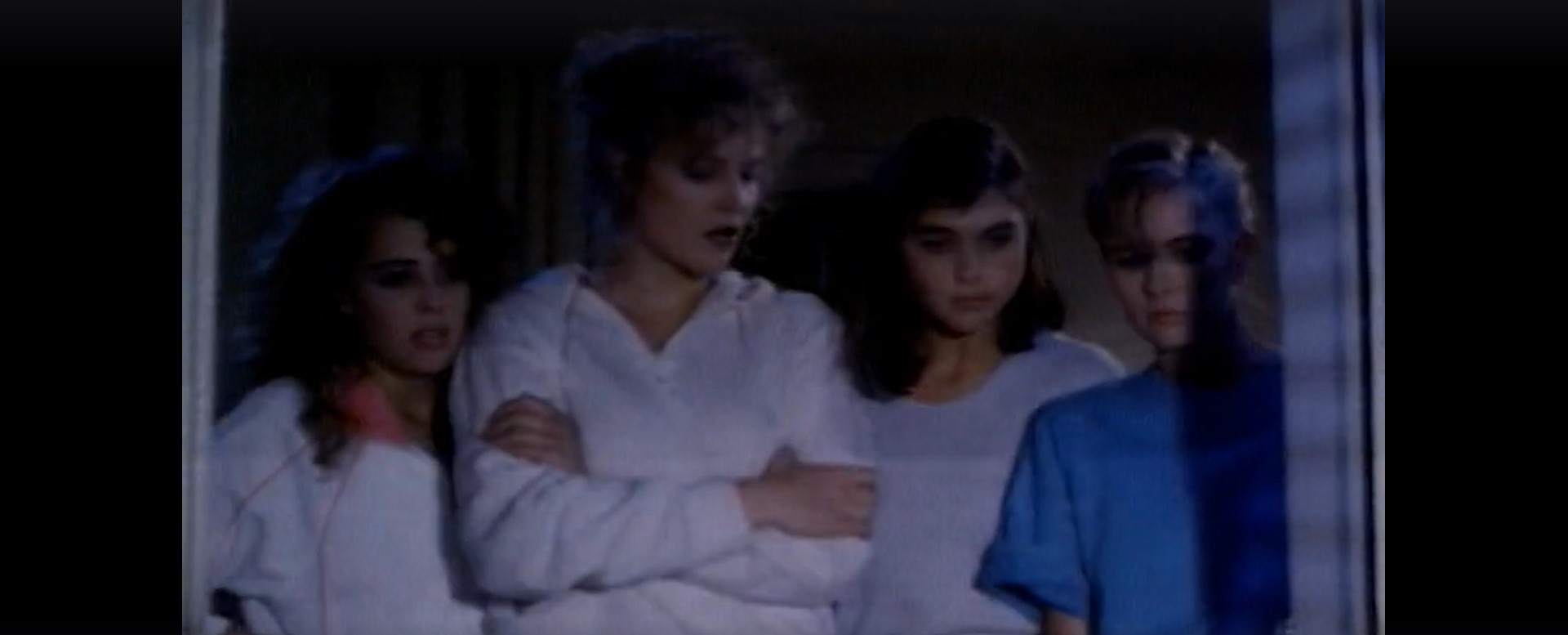
Though the story begins in America and mostly takes place in Europe, the cast is comprised of mostly South Africans trying to pass their accents for British English that is more like a rotating centrifuge of South African sub-accents.  Shirley Jane Harris (“The Most Dangerous Woman Alive”) spearheads the cast of principals with an extremely proclaiming protagonist, delivering lines with flatfeet and flat inflection that makes her one of the more forgettable final girls.  Her foe compares just as bland with a grunting, bodiless entity floating through corridors and hiding behind indoor plants (why would an imperceptible spirit need to hide behind anything at all?) before manifesting into what looks like a giant, big-eyed, and built on steroids rodent that then shows the William John Brown (Lindsay Reardon, “The Masque of the Red Death”) in side profile speaking in omnipresent and menacingly through the beast to taunt his prey.  The script allows just enough the group of young, private school girls to standout cliquishly, contain an ounce of contempt for each other, and underpin some form of individualism to make them retain some interest in their wellbeing.  However, most of the buildup that’s created to antagonize or unify between their personalities ultimately fizzle out into resembling something along the lines of kowtowing sheep or lemmings in more ways than one.  “The Stay Awake” caffeinates with a sizeable cast including Tanay Gordon (“Hellgate”), Jayne Hutton, Michelle Carey, Maxine John (“Howling IV: The Original Nightmare”), Hellie Oeschger, Joanna Rowlands (“Armageddon: The Final Challenge”) as the damsels, Bart Fouche (“Monster Hunter”), Clinton Ephron, Warren Du Preez, and Pierre Jacobs as the imposing boys, and Ken Marshall (“Return of the Family Man”) as the school’s night caretaker.

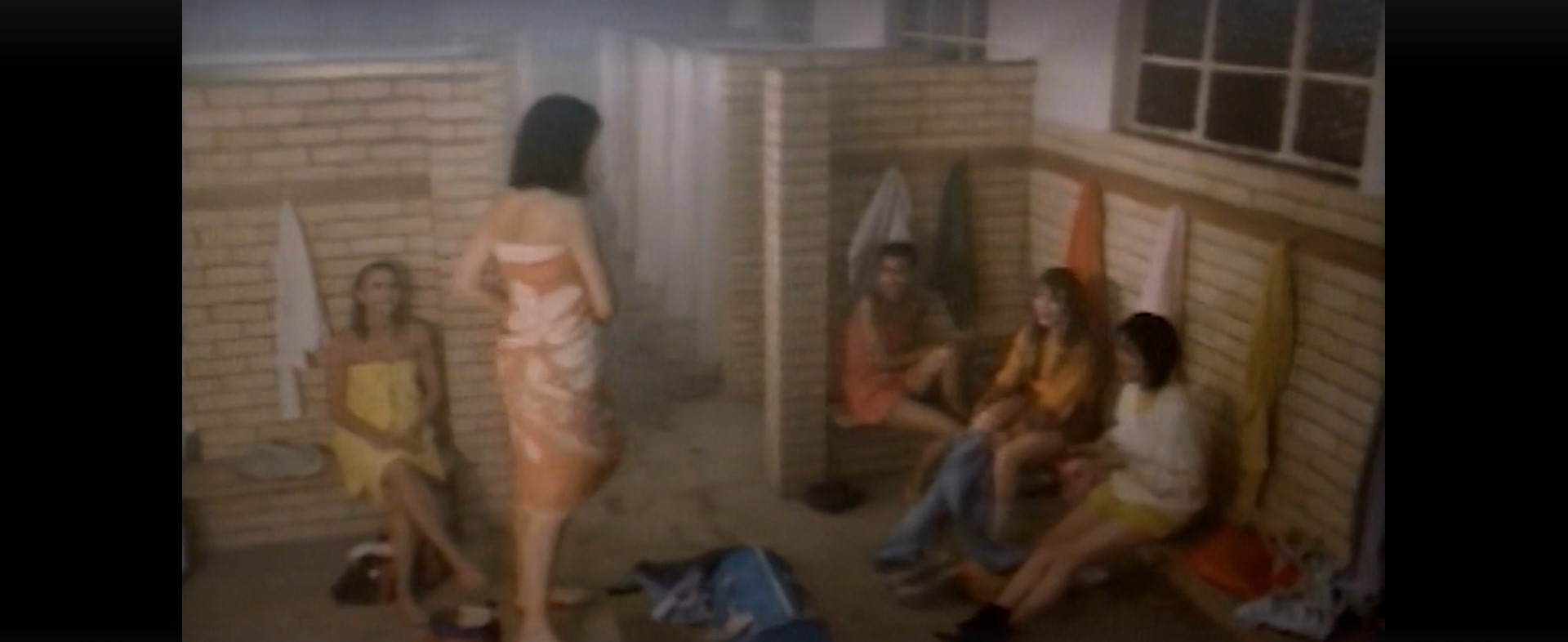
John and Johan Bernard’s logline for “The Stay Awake” likely looked appealing on paper but a full story treatment begs to differ with an inscrutable concept from start-to-finish.  “The Stay Awake” wades in generalities, oversimplifying locations and periods such as “America, 1969” and “Europe, 1988.”  The setup meat in between the disjointed times periods sets up a standard yet effective backstory for the killer, William John Brown, with a Judge’s voiceover of all his brutal transgressions, flashbacks of his victims at the death scene, and a slow walk down the corridor to the gas chamber that clearly denote him as the villain but then accentuates his supernatural supervillainy with a demonic voice screaming his return before the gas engulfs him.  However, why move from America to Europe and why in the span of 19 years does an unexplained possessed version of William John Brown return and select a group of religious school girls while his previous victims look to be a pact of randoms from off the street?  From the start, “The Stay Awake” has little to stay our fictional plausibility.  Couple the perplexation with dry performances, a possibly Hell originated monstrous, burning eyes rat creature, and the gratuitous horror nudity rug being pulled from under our feet as the schoolgirls tease with a shower scene only to be shown showering with towels wrapped around them and what has looked to be a promising possession of perpetual pandemonium  has quickly turned into a deflated disappointment with the only really good thing to come out of the film is the stationary man in a creature suit rat monster built like a bodybuilder.

“The Stay Awake” arrives onto DVD distributed by Cheezy Movies in a direct rip of the standard definitional 480i VHS transfer with a letterbox 1.33:1 aspect ratio.  Don’t expect a detailed transfer in a jittery and smoothed over standard definition that’s covered in a harsh blue tinted lens, but the condition of the interlaced video is surprisingly close to being damage free in a well-cared for print.  However, delph and range is difficult to determine due to the obvious lack of delineation but mostly because of the blue tint, poorly lit scenes, and contrast levels that make this presentation nearly pitch-black unwatchable in corridors, classrooms, and in the room of the like, but darkness is seriously enhanced and meshed together by Bernard stylistic choices of backlighting characters or using soft light to center the focus to offer a darkened horror picture. An English Dolby Digital 2.0 stereo serves as the only audio option which differentiates the soundtrack from the rest of the tracks.  Dialogue mostly separates itself to the top of the audio dogpile but is also well imbedded into the other track fighting to be heard that renders the dialogue dull and flat behind a wall of constant and diffused feedback static.  There’s also hissing at the tail end of sentences and faint crackling throughout.  Subtitles are not available.  The only extras on the static menu are back-to-back, quasi-grindhouse style trailers for two Cheezy Movies distributed titles of the blaxploitation “The Man from Harlem” and a “Dirty-Dozen”-esque “Commandoes.”  The physical aspects include a standard black DVD snapper with a rather enticing original title being sandwich with the demon’s glowing eyes on top and four schoolgirls ready to fight at the bottom.  The disk art is the same image except the four schoolgirls are cropped out and an unfortunate placement on the “The” from the title finds it punched out by the disc center/disc lock to just reveal “Stay Awake.”  The rated-R DVD has a region free playback and a runtime of 85 minutes.  “The Stay Awake” has all the indications of a cheap imitation on an established horror formula and this particular physical release doesn’t help the feature’s cause with an extremely dark and nebulous image to match its narrative.

Can You Keep Your Eyes Open at “The Stay Awake?”  On DVD now!

https://vimeo.com/814964711

Recalled to Nam is a Return Tour of EVIL! “Kill Zone” reviewed! (MVDVisual / Blu-ray)

Enter the “Kill Zone” on a New Blu-ray Home Video!

Combat POWs are captured by enemy forces, imprisoned in an outdoor internment camp.  Tortured for information, the prisoners are held without water in the scorching heat, strung up for hours on posts, beaten to a pulp, and stowed away in a hotbox if they do not cooperate with interrogators.  When Lt. Jason McKenna snaps and loses grip on reality, he breaks free from his confinement and kills four guards during the process when the soldier believes he’s back in Vietnam.  The only problem for McKenna is that the enemy imprisonment was a his own military’s roleplay training exercise for POW-survivalist.  The commanding officer, Colonel Crawford, had pushed McKenna too hard, making the exercise realistic as possible despite the warnings of fellow trainee and McKenna’s friend, Mitchell.  Now, the incensed Colonel is out for blood, covering his tracks with military leadership as he and the gung-ho soldiers seek to put an end to McKenna and it’s up to Mitchell to find his troubled friend first. 

The high-body count film that became the launching point for what would form Action International Pictures, 1985’s “Kill Zone,” an American-made, military actioner written and directed by the late David A. Prior (“Sledgehammer,” “Killer Workout”), opened the production door for a string of both action and horror ventures that spawned cult followings over the decades to come, especially when obscure titles such as “Kill Zone” never made it passed the release of its VHS format – until now.  John Saxon’s “Death House,” “Teenage Exorcist” with scream queen Brinke Stevens, and even the pint-sized creature feature “Elves” are just a few titles that owe “Kill Zone” some ounce of ground working thanks.  Prior cowrote the script with Jack Marino, who also produced the film under the limited formation of Spartan Films, and was shot in and around what is now Prado Regional Park in Chino, California.

Trekking from internment camp to civilization, aka the kill zone, and fighting and fleeing for their very lives from their own crooked military unit are McKenna and Mitchell, played correspondingly by “Killer Workout’s” Fritz Matthews and Ted Prior, younger brother of director David Prior.  Though Matthews has the emotional range of a tree stump, the leading man more or less fits the bill as a tall and stocky soldier protagonist while Mitchell does all the emotive heavy lifting of the pair, reflected in his large and muscular Stallone-sized biceps.  The comrades’ necks fall under the boot of Colonel Crawford from an aging David Campbell (“Scarecrows”) whose ridicule onslaught is dousing and his ruthlessness remains constant but can’t top the baseline he cemented early on into the story, diluting his villainy with not much formidableness, and becomes a feeble opposition.  Colonel Crawford is backed by his equally inadaqute military unit, former fellow trainees that divide themselves into a clique against the diverging outliers McKenna and Mitchell who separate themselves from the apathetic herd thinking either by post-traumatic mental illness or for concrete concern for a life-saving friend.  Either way, the rest of the unit bully their way into Crawford’s good graces albeit the Colonel’s lack of interest in the lives or death of his men in a nationally organized armed force that breathes the creed to keep the peace, but the Colonel’s men are just as complicit to their commanding officer’s callousness when they begin to rough up and snuff civilians in what is the most cold-blooded aspect of “Kill Zone’s” torrent.  Dennis Phun (“Surf Nazis Must Die”), Rick Massery, Richard Brailford, William Zipp (“Mankillers”), Richard Bravo (“Killer Workout”), and Larry Udy fill out the Colonel’s men while Ron Pace, Tom Baldwin, Jack Marino, and Sharon Young round out the civilian contingent.

On the surface, “Kill Zone” has the presentation of a direct-to-video, low-budget rip of “First Blood” but like the Sylvester Stallone John Rambo thriller, commentary undertones rise to the top with an additional few bobbing and freestanding from 1982 film.  Producer Jack Marino admits watching “First Blood” prior to writing the script that obviously become appropriated from the Ted Kotcheff picture in what is an underlining post-traumatic syndrome plagued individual in a dormant stage of the affliction then becomes pried open by aggressive, misapprehending authority with no time for a condition they’re ignorant too.  What follows is a deadly resistance against a barbaric enemy and the starkly different situations both characters John Rambo and Jason McKenna find themselves caught up in parallel their hellacious Nam tour in many synapse-snapping and physically scarring aspects to a point where the line blurs between being back in that Hell in reality and being back in that Hell in the mind.  What “Kill Zone” adds to its own version of the tale is no pedestrian anti-war pushback like we see with Brian Dennehy’s Podunk sheriff and his deputies but rather a shift in commentary toward the military’s once push harder and neglectful treatment on PTSD in what becomes an anti-military production to the extreme.  John Rambo had military sympathizers in Richard Crenna’s Colonel Trautmann but Jason McKenna’s Colonel spat flak with nothing but contempt for what he considers a weak soldier.  While military criticism is large and in charge, what negatively impacts “Kill Zone” is the no flare for technical military behavior or jargon.  The opening combat scene exemplifies the inexactitudes with Mitchell and his team storming through brush and across a river toward an unseen enemy’s stronghold guns blazing like little boys with popguns and mouthy explosions sounds of amateurism splayed all over as he and his team run wildly, hop like a bunny into fire stances, and point rifles with no line of sight.  Prior is able to achieve some nice shots of ammunition exchange with slow profile pans and aerial assaults filmed up from the ground, but there’s too much downplay to take this low-rung action film seriously and to really get a viewer the headspace of “Kill Zone’s” deathtrap montage that warrants more respect than what the rest of the presentation layout provides.

Missing in action from contemporary formats for over three decades, “Kill Zone” finally becomes rescued from inferior definition captivity and arrives onto DVD and Blu-ray (reviewed) courtesy of MVDVisual’s Rewind Collection series.  The Blu-ray is an AVC encoded, 1080p high-definition transfer scanned and restored in 4K from the 35mm interpositive print.  Presented in a widescreen 1.78:1 aspect ratio, the new transfer breathes new life into the lost but not forgotten feature with an enriched color grading and a sharpening of details, especially textures of the foliage and rocky terrains and assorted skin features.  Not entirely impeccable, contrast often teeters in the same frame and there’s an abundance of saturating grain, like large raindrop grain, in nighttime image that wash out details to great extent, but we’re always reeled back in with warm and pleasant color palette that flushes the previous VHS release quality down the core memory exiting drainpipe.  There’s one or two moments of vertical scratches, indelicately faint, and rough editing patches that distort to a blip that may be more problematic and age-related from the interpositive print than the dynamic restoration that was done.  The English language LPCM 2.0 mono track suffers from the low-quality sound recording equipment or placement that renders dialogue soft and nearly unintelligible as volume levels severely spike depending on how much the actors are projecting their voices.  There is some minor, unobtrusive popping throughout the fidelity faithful ambient and dialogue track, the latter, though softly wavering at times, does ultimately prevail to the forefront.  Optional subtitles are available.  Special features include a new audio (and optional video) commentary with producer Jack Marino, moderated by Cereal at Midnight host Heath Holland, a new Making-Of Kill Zone” featurette with clips interview with Jack Marino moderated by “Kill Zone” restoration project producer Steve Latshaw, the Vestron Video VHS version of the feature in standard definition, a photo gallery, and the original theatrical trailer redone with restoration elements.  The action-packed original poster art obtains a renewed look for the Blu-ray’s retro cardboard O-slip that resembles a torn, scuffed, and stickered VHS box art. Underneath the slipcover, the same poster art is on the front of the clear Blu-ray snapper case with latch and on the reverse side a back-the-scenes still images of Ted Prior and costars in character form.  The insert holds a folded mini-poster of the original poster art and the disc is pressed with the ridged gridlines of a VHS shell cassette with insert this side directions at the top.  Pretty neat design that further leans into “Kill Zone” VHS cult following purgatory.  MVD’s 50th release of the Rewind Collection is rated R feature has a runtime of 91 minutes and the Blu-ray is region unlocked for everyone’s viewing pleasure.  No longer destined to live out its shelf life on VHS, the wonderful contributors to obscure movie restoration brings “Kill Zone” back into action with a rejuvenated hi-def release that’ll blow you away. 

Enter the “Kill Zone” on a New Blu-ray Home Video!