EVIL Wants You Tour Your Own Personal Hell! “Trapped Ashes” reviewed! (4K UHD and Blu-ray / Deaf Crocodile)

4K and Blu-ray “Trapped Ashes” from Deaf Crocodile. Available Here!

The VIP package for a historical studio backlot tour gives seven strangers a behind-the-scenes look at how movies were made and the background behind them.   When their cart pulls up to one of the more infamous movie houses for Desmond Hacker’s fright flick Hysteria, the tour group are eager to explore what’s typically off limits for normal, non-VIP tour attractions.  Once inside the backlot house, much of the Hacker’s funhouse tricks and odd designs are although covered in cobwebs are still very functionally practical as the group separates and goes room-by-room to peruse a movie house.  When they all gather in what looks to be the commune dining area, they find themselves unable to locate the way out no matter which unlocked door they choose, which circles them back.  The tour guide mentions Hacker’s movie had similar parallels and that the only way to free themselves would be to tell their own personal horror story.  With nowhere to go and nothing to lose, the stories begin their descent into terror. 
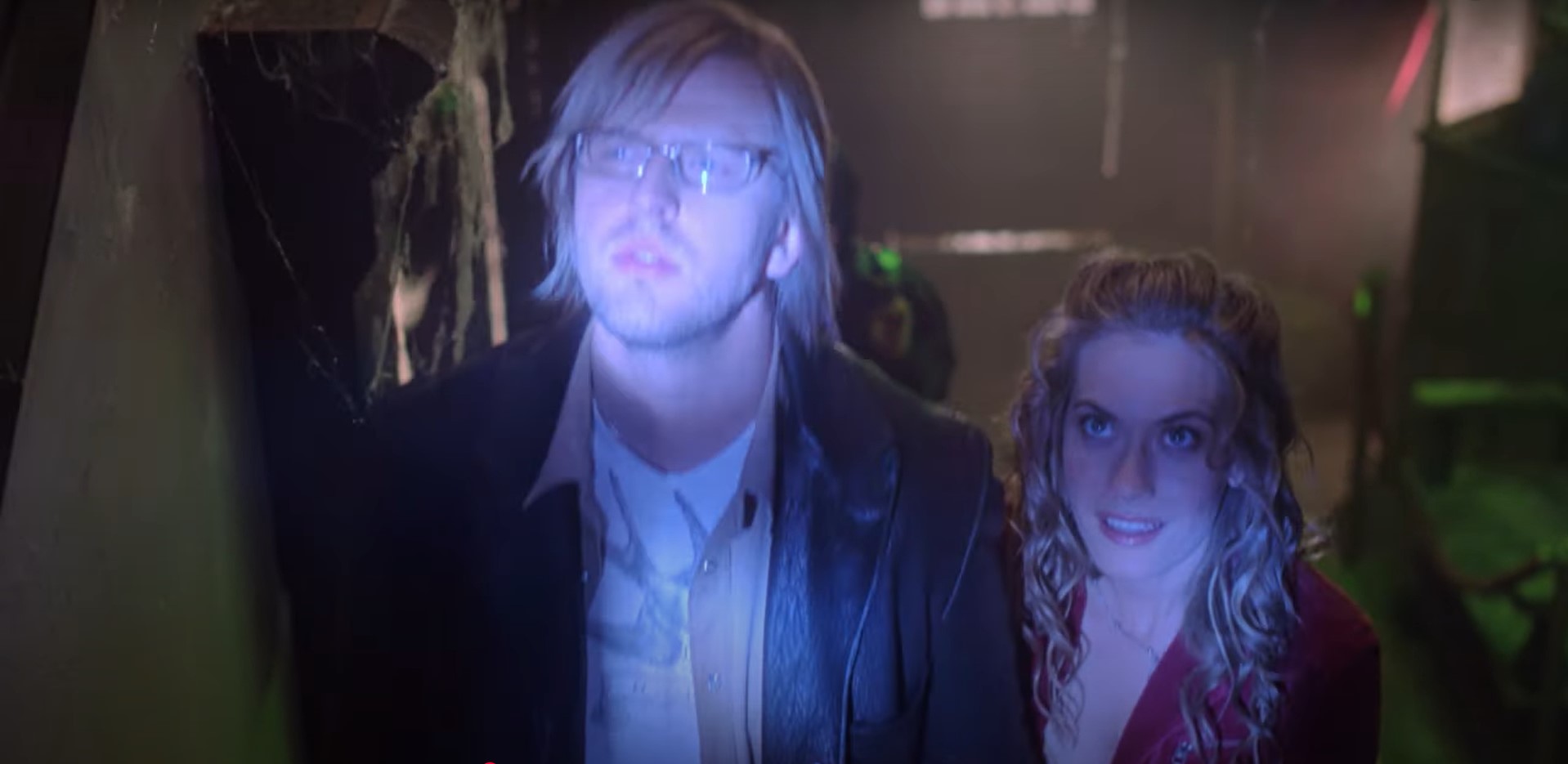
For someone who doesn’t go out of their way to watch horror anthologies, I’ve been on a kick lately with a decent string of short film compilation feature, starting with the latest entry from the popular “V/H/S” franchise, “V/H/S/Beyond.”  Next up takes us back to 2006 with “Trapped Ashes,” a campy horror anthology that not only brought together legendary genre directors, such as “Friday the 13th’s” Sean S. Cunningham, “Gremlins’s” Joe Dante, “The Matrix” visual effects arts John Gaeta, “Silent Night, Deadly Night 3:  Better Watch Out’s” Monte Hellman, and the late director of “Altered States,” Ken Russell, but also brings together aged, yet still legendary, familiar faced actors that have since past that short time between 2006 and 2025   Dennis Bartok wrote the anthology piece and is his brainchild, producing the film.

Those aforesaid actors have a combined nearly centuries (plural!) of experience with careers spanning an average of 50 years each.  Henry Gibson (“The ‘burbs”), John Saxon (“A Nightmare on Elm Street”), and Dick Miller (“Gremlins”) all together in one film.  Granted, Dick Miller’s cameo was so short that all three were only together for a brief scene but the trio alone should bring in genre fans to witness Henry Gibson in a persona he does best, a round faced under stark white hair and with puppy dog eyes that draws one closer to his innocence only to have the rug snatched right from under you when he turns sinisterly dark as the seemingly harmless tour guide.  Saxon also plays true to his conventional character archetype as a wise-cracking tough guy too cool for school; this time, he plays a screenwriter haunted by his own betrayal toward his best friend while being infatuated with a bewitching beautiful woman.  Unlike most horror anthologies, “Trapped Ashes’” individual tales contain mostly the same cast as the wraparound with Saxon, Jayce Bartok (“Founder’s Day”), Lara Harris (“The Dogfighters”), Rachel Veltri (“Pray for Morning”), Michèle-Barbara Pelletier (“Brainscan”), and Scott Lowell as the tour guests with personal hell to tell.  The heterogeneous group convey their supernatural-laced anecdotes that mingle inside the context of their being or life whether body image, marriage, friendships, and childhood, subjective intimacies that shape their excruciating experiences that, if audiences see them on screen for the first time, wouldn’t be clear how deeply burdened or troubled they are at first glance.  Once the story is told, moods and personalities shift, or perhaps seemingly normal habits are made clearer, and this is made possible by the eclectic bunch of actors to carve away their characters’ exterior shells to see who they really portray.  Ryo Ishibashi (“Audition”), Yoshinori Hiruma, Mina E. Mina (“Eastern Promises”), Winston Rekert (“Eternal Evil”), Ken Russell, Tahmoh Penikett (“Trick r’ Treat”), Tygh Runyan (“Disturbing Behavior”), Amelia Cooke (“Species III”), Luke Macfarlane, Deanna Milligan, and Matreya Fedor (“Slither”).
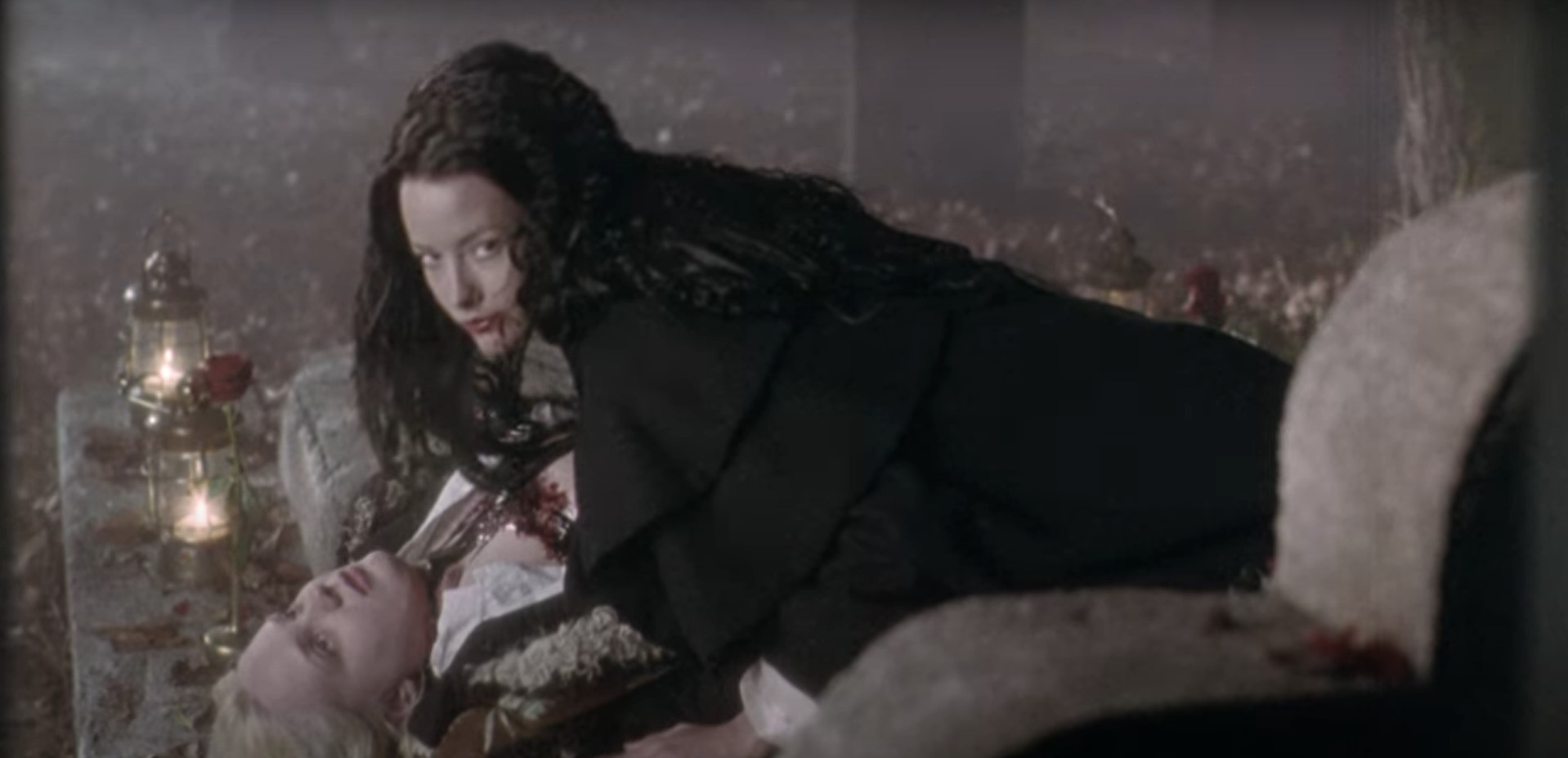
Riffling through the obvious camp “Trapped Ashes” touts very proudly, there are nuggets surrounding the unsavory themes.  Body dysphoria within “The Girl with Golden Breasts” is one of these topics, where an actress feels compelled to enhance her bosom for better, younger roles, and that speaks the relevance ill of the movie industry’s perverse tidings of late as actors and actresses continue to fill, inject, scar, and manipulate themselves into being their unnatural self to satisfy producers, execs, and audience likes and expectations when, in reality, hurts nothing but themselves.  Dissatisfaction marriage, or perhaps better labeled stagnant marriage, leads into invasive third party to sate long neglect passion and in this case, that third party is an ancient Japanese demon named Seishin (Japanese for Spirit) who lures the wife’s sexual appetite down to the pits of the netherworld.  From there, themes love triangles, obsession, cheating, and dysfunctional family structures formulate a pod of personal pate smeared with victimization, the victims being the storytellers stuck in the Desmond Hacker’s Hysteria backlot house.  “Trapped Ashes” isn’t about being victim, it’s more about playing the victim and those playing may not be victims of their own tales at all that adds a morsel of supernaturality to the recipe that changed the course of the idiosyncratic anecdotes that are close to their emotions and mental well-beings as well as proximally physically hazardous. 
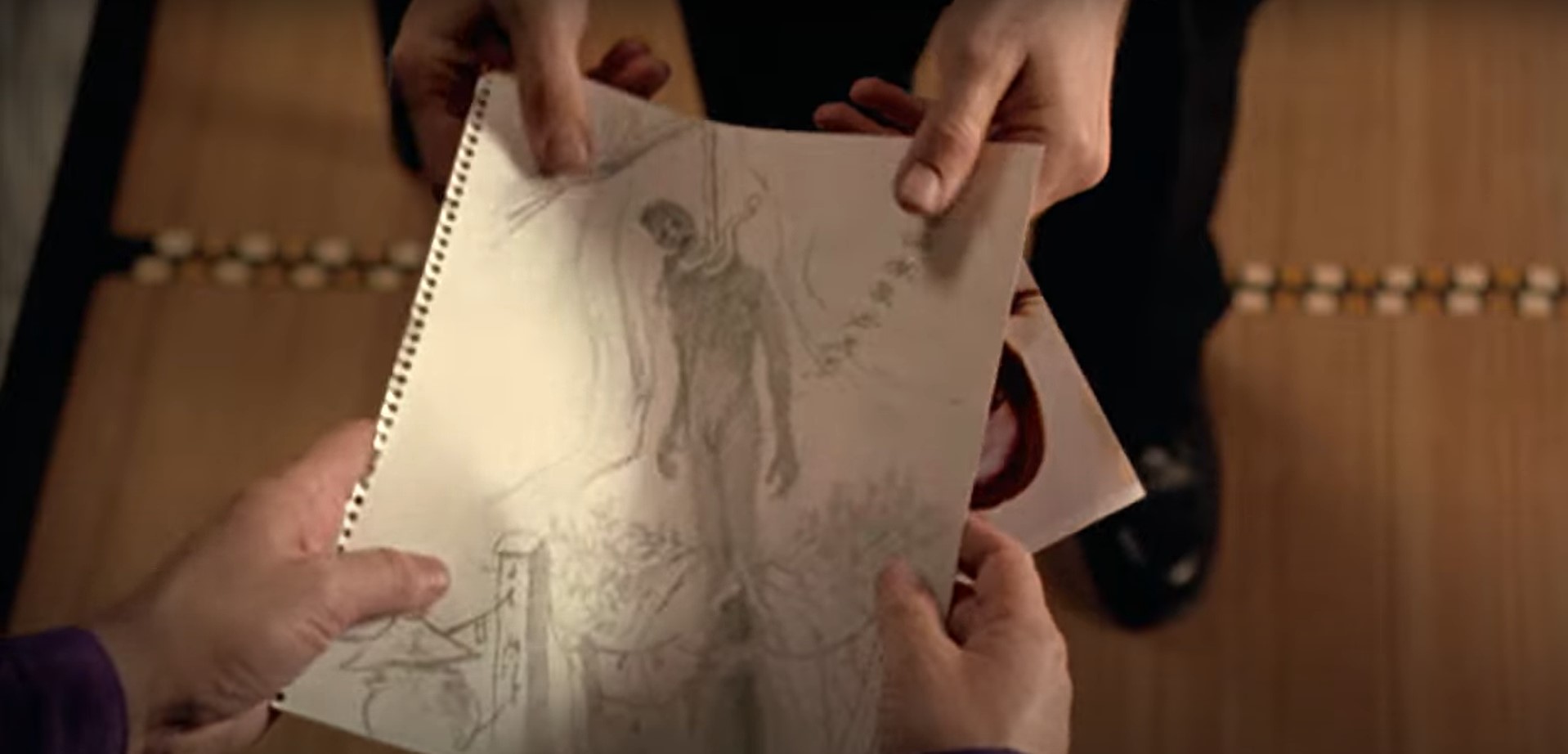
Our first time covering the Dennis Bartok and Craig Rogers founded Deaf Crocodile release and it doesn’t disappointment with a sleek new 2-Disc 4K UHD and Blu-ray of “Trapped Ashes,” scanned and restored in 4K for its Blu-ray debut.  Presented in a widescreen 1.85:1 aspect ratio, the Deaf Crocodile UHD is HVEC encoded, 2160p Dolby Vision, BD66 and the Blu-ray is AVC encoded, 1080p high definition, BD50.  For an early 2000 production, “Trapped Ashes” doesn’t have the digital veneer of early 2000s film besides some visual effects work of the image manipulation drooping effect.  The extra pixels of UHD really brighten and elevate the image to today’s standards to surface the most inconspicuous details lost in standard definition.  Color saturation and skin tones appear natural and organic with no signs of compression issues or imbedded problems with the digital equipment.  Depth has really opened up in areas like the funhouse illusions of the Hysteria house in the wraparound segment and or in “Twin” when reality of the situation is made clear to put the explanation in one single medium-to-medium closeup frame.  Blu-ray copy mimics a lot same UHD accolades with a less fine tune edge around the background.  The English DTS-HD 5.1 surround sound is the only audio option available on both formats.  More than ample, the lossless provides a deepening immersion the deeper you go into stories with balanced side and back channels complimented by an even-keeled LFE to register the bass near the front while whispery events hover around a surrounding backside, such as with Cunningham’s “Jibaku’s” drawing-in hallucination moment of a Japanese painting that instills reverberating echoes and Shepherd tones.  English SDH subtitles are available.  Bonus features include threw new interviews – Dennis Bartok moderates a feature-length, online platform interview with director John Gaeta, cast members Jayce Bartok, Scott Lowell, and Lisi Tribble, producers Yuki Yoshikawa and Yushifumi Hosoya, and cinematographer Zoran Popvic, a second feature-length interview with cast members Tahmoh Penikett and Tygh Runyan and production designer Robb Wilson King, and the last approx. 40-minute interview is with producers Mike Frislev of Nomadic Pictures.  Extras do not stop there with a director’s cut of Monte Hellman’s “Stanley’s Girlfriend,” the original full-length cut of Ken Russell’s “The Girl with the Golden Breasts,” and a 5-part making-of with cast and crew archive interviews, a new visual essay Hollywood Parasite:  Hysteria in Trapped Ashes by journalist and physical media expert Ryan Verrill and film professor Dr. Will Dodson.  This is the so-called standard release compared to its Deluxe Limited Edition companion release, but this release is also pretty deluxe physically.  There’s no limited O-slipcover but the unique, almost 70’s-eseque cover design is appealing yet simple with a reverse side depicting an image of the wrapround characters inside the Hysteria house dining room or commune area.  The UHD and Blu-ray overlap each other in their differentiated locking mechanism on the ride of the clear Amaray case while the left insert portion holds a Deaf Crocodile QR code for access of the transcribed bonus content.  This release has the rated R cut with a runtime of 104 minutes and is region encoded A playback only.

Last Rites: Anthologies can be the antithesis of horror – building and dropping tension, an innate broken narrative, different stylistic choices that disunify the entire film, etc., but if campy enough, if not taken too seriously, if cast John Saxon, Henry Gibson, and Dick Miller, “Trapped Ashes” can find a home in the genre and in our collections with a new and extra-loaded Deaf Crocodile 4K UHD and Blu-ray set.

4K and Blu-ray “Trapped Ashes” from Deaf Crocodile. Available Here!

Your Hopes and Dreams Come Down to Beating an EVIL Fitness Center in a Workout Marathon! “Heavenly Bodies” reviewed! (Fun City Video / Blu-ray)

Move Your Butt to this Fun City Edition of “Heavenly Bodies” on Blu-ray!

Working 9-to-5 has a secretary, Samantha quits her grinding job to pursuit her passion of owning her own dancercise studio.  Leasing a vacant building with her girlfriends, they form Heavenly Bodies to let the craze of group dancing and aerobics take hold of all those interested.  The success of her rapidly flourishing business persuades her to audition to host a regional workout show while at the same time juggling being a single mother and decrypting feelings for a new man in her life.  After winning the audition, Samantha is targeted by fellow finalist and rival aerobicize instructor from a bigger fitness center having felt deserving to be the television host.  With her relationship heading for the rocks and her fitness studio building being bought outright by the larger investor, Samantha insists on an all or nothing dancercise contest against the rival studio heads, challenging her best versus their best in an hours long workout made for the TV world to see.

Dancercise.  A craze I know all too well watching my mother high-knee kick, arm-twirl, and run-in-place to the programs hosted by Jane Fonda and Denise Austin right in the middle of our living room.  “Flashdance,” “Footloose,” and “Dirty Dancing” are just some examples of the dance centric subgenre that swept through the 1980s.  In the middle of that mix is 1984’s “Heavenly Bodies.”  Written-and-directed by Lawrence Dane, an actor, who had more of a horror lining with roles in “Scanners,” “Happy Birthday to Me,” and “Seed of Chucky, who tried his hand being behind the camera, co-wrote also his first script alongside Ron Base.  The Canadian feature was co-produced by Stephen J. Roth and Robert Lantos, both of whom shared a string of erotic dramas early in his career with “Paradise” starring Phoebe Cates and the sex-comedy “Scandale” but the two parted and became more mainstream on their paths with Roth financing “Scrooged” with Bill Murray and “Last Action Hero” with Arnold Schwarzenegger” while Lantos partnered off-and-on with fellow Canadian and body-horror director David Cronenberg on “eXistenZ,” “Eastern Promises,” and “Crimes of the Future.”  “Heavenly Bodies” is a production of Producers Sales Organization, Moviecorp VIII, and is one of the few less erotic features from Playboy Enterprises.  

Leading the casting headline like her character Samantha leading a group in a dancercise routine is Cynthia Dale.  The “My Bloody Valentine” actress with curly shoulder length brown hair, an infectiously joyful smile, and killer dance body is the heart and soul of what makes “Heavenly Bodies” truly worth watching.  Her long take choreographed dances are breathtakingly fun and gracefully executed, full of energy and sizzle with the camerawork angles that move along every part of her kinetic body.  Samantha embodies the strong, independent single mother who do it on her own terms after setting passion aside once for a man, her son’s father, and is determined to not make the same mistake twice nor back down from being intimidated, but her arc is to change, to fall in love again, and to make sacrifices for not only the sake of her dream but to let someone else into her heart by being flexible and compassionate to their needs.  That person ends up being Richard Rebiere (“Happy Birth to Me”) as the football player who falls for Samantha after his team’s instructed to attend her classes to shape up.  The duo is pitted up against an established, powerhouse fitness center managed by Jack Pearson (Walter George Alton, “10”) and his head aerobics instructor Debbie (Laura Henry) to marathon their way to the last person standing in a 8-versus-8 fitness free-for-all, not to forget some scandalous moments of smooching, swindling, and woman abusing in between.  Pam Henry, Cec Linder, and Patricia Idlette, round out the principal cast with a slew of backup dancers working their butts in shape and officiating contests. 

You think Playboy Enterprises, you think erotic, romantic sleaze with dumbed down dialogue, a half-cooked story, and jazzy, yet soulless soundtrack coupled with candle lit moments and insignificant drama a la carte.  That’s not the case here.  Yes, “Heavenly Bodies” has moments of tenderness between dancer Samantha and football star Steve and fleeting glimpses of nudity, but those bare skin moments are more of a garnish than a main course as the story dishes being a dramedy with a killer soundtrack and a solid acting from main street, legitimate actors, and liberal art performers.  Articles on the film accuse it of being a “Flashdance” imitator and I would be so bold to accuse the authors of those articles to have never seen “Flashdance.”  Dancing along to a hot track does not equivalate two features that share no other plot similarities.  “Heavenly Bodies” stands, or rather dances, on its own two peppy feet in its whimsical nature of an aerobics showdown that determines the fate of a single woman, single mother, and single business owner to topple the threatened-felt commercial giant in a desperation attempt to save face and be relevant. 

Fun City Video steps up to release a new, debut high-definition transfer of “Heavenly Bodies” on an AVC encoded, 1080p, BD50.  The film has been out-of-print for over three decades but now there’s a 4K scan and restoration of the original 35mm internegative presented in the widescreen 1.85:1 aspect ratio.  The new transfer is absolutely gorgeous and rejuvenates the dance-craze 80s right before our very eyes.  Hyper facticity of detail has remarkable texture and color, diffused nicely over all aspects of costume from the leg warming socks to the diversity hued headband assortments, and punctuated distinguishably when sweat soaks shirts and skin.  The grain has natural analog appeal with no hints of DNR or other types of video smooth over or manipulation.  Original elements appear mostly damage free with an occasional dust speckle here and there.  The sole English LPCM stereo 2.0 is suitable mix for this originally at home, premium cable title that pumps and spreads layers through a dual channel output.  Dialogue renders cleanly without a confluence of popping or hissing along the audio.  The integrated soundtrack has stepping and staying power, full-bodied to frenzy synthesizing sound and catchy ballads and motivation lyrics.  Faint crackling or interference in the background but nothing worth really concerning over as there are plenty of other elements audio senses with attune to.  English subtitles are optionally available.  Special features under a fluid menu of one of more ramping up dance scenes includes a new Cynthia Dale interview, a new feature-length audio commentary track with Atlanta based film programmer of cult and late-night cinema and podcaster Millie de Chirico and Jeffrey Mixed, aka Jeffrey Nelson, co-creator of the horror media label Scream Factory, and an image gallery.  The clear Amaray case showcases a retro vibe of multiple boxy colored lines underneath a framed, perspiring Cynthia Dale in low side crouch of her promotional shot for the film’s one sheet.  The reversible side has more artistic illustration of the same post with a tagline and Samatha striking anther aerobic pose in opposite.  The white disc is pressed with a two-tone, darker emphasized silhouette of a dancercise group.  A 15-page one-part faux channel guide, one-part essay by Cinema Studies academic Nathan Holmes is a nice touch of 80s nostalgia and historical context on dance movies of the era.  The region free release is rated R and has a 90-minute runtime.

Last Rites: By no means is “Heavenly Bodies” horror or sleazy sexploitation this reviewer usually injects right into his caustic-cinema arteries, but the Lawrence Dance directed, Cynthia Dale danced cult film embodies eighties elegance this guy grew up in. Those with similar nostalgia enthusiasms or those who find room in their hearts for ridiculous-raving, dancercising dramedies can’t miss out on this intense workout wonderment.

Move Your Butt to this Fun City Edition of “Heavenly Bodies” on Blu-ray!

The Body Must Go Through an EVILution to Survive! “Crimes of the Future” reviewed! (Second Sight / 4K-Blu-ray)

“Crimes of the Future” 4K UHD/Blu-ray Set is the New Sex!  

Physical pain no longer resides in the human body, infection has all but been inexplicably eradicated, and new organs spontaneously appear, mutating their bodies and humanity into grotesque performance artist and back alley surgical pleasure seekers.  Saul Tenser and his partner Caprice showcase the new organ oddities with surgical art of removing the organ in front of sensually aroused and curiously stimulated spectators.  When an admirer offers an idea for a show, an autopsy of his recently deceased son he promises will be full of surprises, the artists dig into what could be a spectacular operational observation for shocking advant-garde art, but the deeper they dig the more than realize their own bodies might be evolving to a synthetic-laden environment and there are those working in favor and against what it means to be considered human in the New Vice Unit, at the National Organ Registration Office, and clandestinely, behind-the-scenes of the corporation Lifeform. 

David Cronenberg is known for pushing provocation in style and in substance.  His latest dystopian picture “Crimes of the Future” continues the provoking, controversial trend in his verve of body horror that has collectively corroborated Cronenberg as the face of the biologically integrating subgenre.  Cronenberg writes and directs the quasi remake of his 1970 feature of the same title with modern day effects as well as providing new reconstructive surgery on the story surrounding the man who grows new organs just to have them cut out shortly after.  Cronenberg tackles themes of human physiological evolution in a plastic consumed and destroyed environment and the evolution of performance art as it relates to sex or stimulation while also dipping his toes into the darker side of control with organization entities that either become an obstacle or a complete antagonist of corruption within a commercial corporation sense or a threadbare government agency that attempts to control and police a person’s own body and life.  Shot entirely in Athens, Greece under local production company Argonauts Productions, as one of man of the companies backing the 2022 feature, “Crimes of the Future is also funded by the capital investment company Ingenious Media (“Guns Akimbo”) and the Canadian governmentally funded Téléfilm Canada (“Ginger Snaps”) with Serendipity Point Films, Crave, and Rocket Science to name a select few in the co-productions.

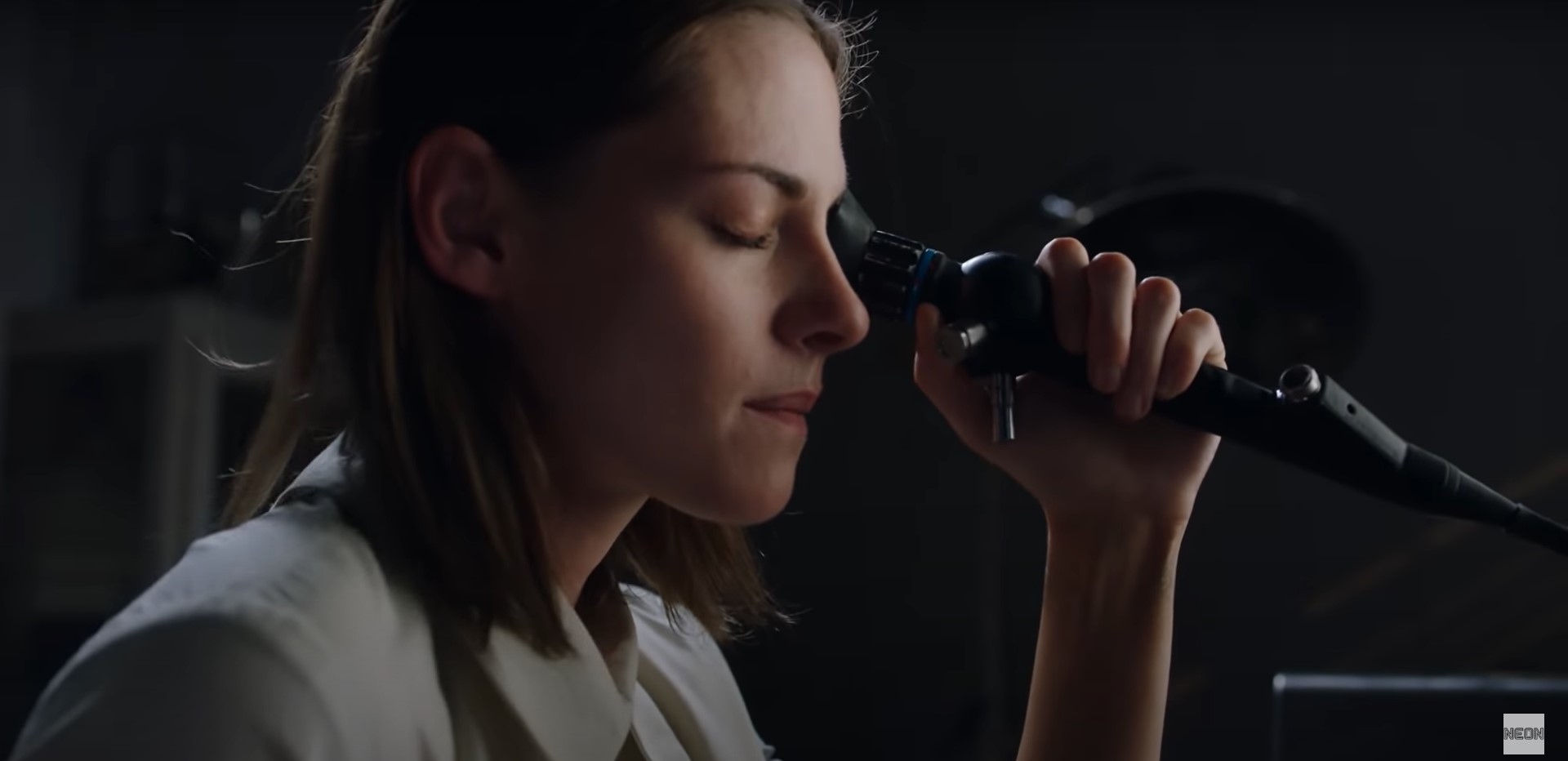
Marking his fourth collaboration with the director, Viggo Mortensen (“Eastern Promises,” “A Dangerous Method”) handles the fame of Saul Tenser, the subject of performance art with a knack for spontaneously growing new organs, or tumors, nearly at will and having them removed during surgical exposition at the hands of his intimate partner Caprice, quizzically seduced by the performance from “Blue is the Warmest Colour” and “Spectre’s” Léa Seydoux. Mortensen plays into Tenser’s will to remain what the institutes define has human only to become conflicted with the investigation into the prospect of rib-splitting a deceased young boy that sends Tenser into what-if territory. Scott Speedman (“The Strangers”) is the cause-driven father of the expired boy and Speedman sustains the character with his usual calm, soft-spoken demeanor which didn’t quite feel passionate enough for a neo-rebel against a society against what he stands for, what he is, and what he thinks everyone should relinquish to – to let the organs grow and flourish. Instead, the New Vice Unit Agent (Welket Bungué), the National Organ Registry’s bureaucrats, the excitable Whippet (Don McKellar, “eXistenZ”) and odd yet attractive Timlin (Kristen Stewart, ‘Underwater”), and an unscrupulous corporation looking to stop the spread of evolution insurgence for capital sustainability. Full of complex characters and neoteric performances, “Crimes of the Future” leaves a lasting impression, makes you stop and think, and indulges in the possibilities of the future with the help of a supporting cast that rounds out with Nadia Litz, Tanaya Beatty, Lihi Kornowski, and Yorgos Pirpassopoulos.

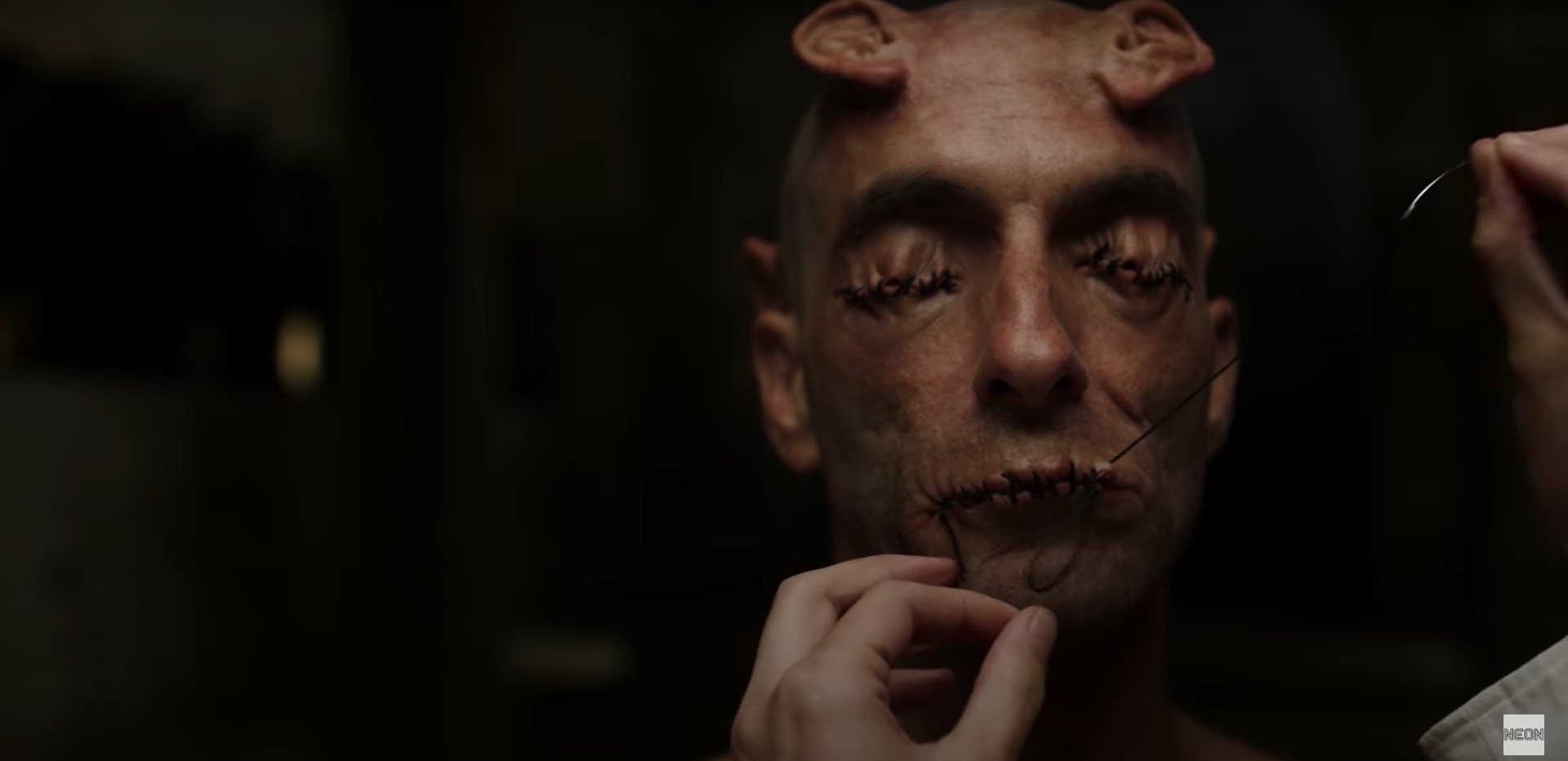
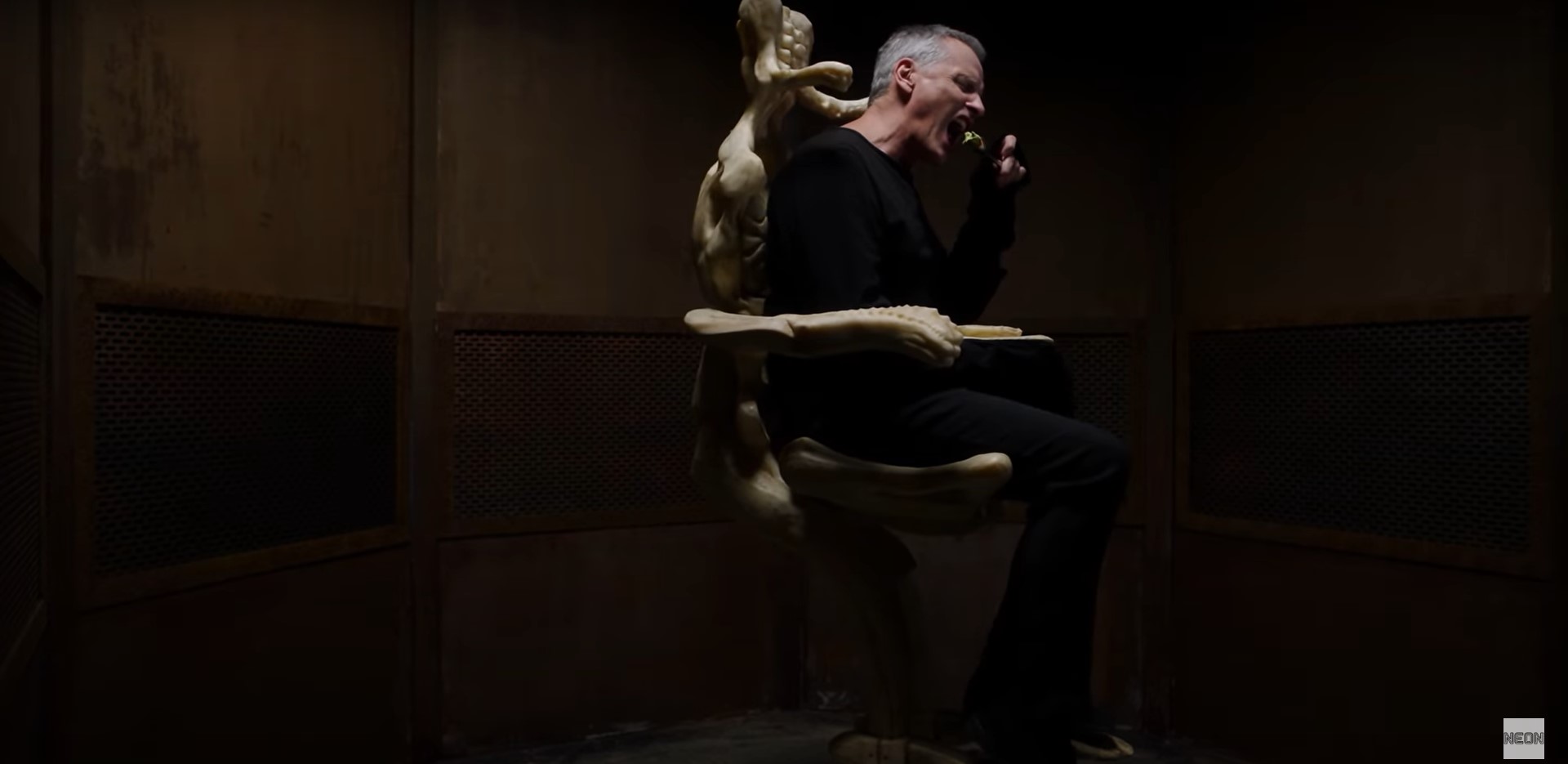
My official opinion about Cronenberg’s “Crimes of the Future” is that many viewers won’t see the multifaceted sides of what the writer-director is trying to convey.  What will be seen is the grunting organic bed that tilts back-and-forth, the fleshy and clunky moving digestive assistance chair that also has low guttural sounds, a dancing man sewn with many human ears, people being sliced open and enjoying it, and a dystopian future where suffering is not a main element.  People will see surface level abnormalities and gore and not understand the layers of a hard-pressed evolution in stagnation by unknown fear and extreme prejudice that runs rampant throughout Cronenberg’s underlying implication of an adaptation and updated normalcy inside a synthetic world.  “Crimes of the Future” is grotesquely beautiful in the depiction of not only how human culture and arts have morbidly progressed by the elimination of pain and by the advancement of technology only to be harshly juxtaposed against the grimy, gritty, and dilapidated habitation where infection feels high risk and imminent, but also in the corruptibility of the human condition that isn’t a naturally biological one like growing spontaneous organs.  Instead, the two bureaucrats of the National Organ Registry are supposed to be hardliners, rule followers, and thorough with their newfangled profession in the everchanging, unexplored future of the human physiology but are seduced by the intimacy of surgery, comparing it to sex with a high addiction rate.  The two agents are constantly breaking government policies and rules in order to be close to the dazzling aciurgy considered artful and alluring like a beauty pageant for the celebration of one’s innards.  Cronenberg also adds the caveat of corporate greed into the folds and flaps of “Crimes of the Future’s” dash of commercial retail that can be fleeting if not paying attention.  The threat of evolution aims to put body mechanism-correcting bed and chairs out of business and so a concealed aim to lobotomize that particular information permanently creeps up onto the narrative in some of the more frightening and gruesome scenes of smothering the risk it can spread like theater fire panic.  “Crimes of the Future” is an eye opening epiphany of everlasting ecological entrapment and the only way to survive is becoming accustomed to the taste of waste in order to be free of it.

If “Crimes of the Future” isn’t already remarkable enough in the wake of David Cronenberg returning to the body horror heir class, Second Sight stuns us with an impressive collector’s set from the UK. The 2-disc 4K UHD and Blu-ray set exhibits the film in a widescreen 1.85:1 with both formats decoding at an average bitrate of 23Mbps. The 4K UHD Dolby Vision comes in a HDR10 2160p while the High-Definition Blu-ray comes in a 1080p. Douglas Koch’s umbrageous urban bathed in greens and yellows and all the colors in between starkly hard lighting against softer details on the visual effects. Most details are lost in the tenebrous and decaying background of age worn and spartan warehouses with little-to-no wide longshots other than the opening of an overturned cruise ship in one of the very few daylight scenes, but the extreme contouring lucidly delineates the shapes around people and objects. Both formats include an English DTS-HD 5.1 Master Audio, providing a coherent and even robust dialogue through much of the Mortensen’s Tenser throaty rasp, Stewart’s Timlin robotic inflections, and Speedman’s Lang soft and breathy speech. “Crimes of the Future” is not volatile and full of action in what’s more a slow noir progression, focusing in on intimacy of dialogue, the proximate ambience, and Howard Shore’s (“Lord of the Rings”) neo-space opera and synth score. English subtitles are available for the hearing impaired. Second Sight puts heart and soul into every release when not only considering A/V but also special features and limited-edition contents. Special features include multiple succinct Second Sight produced interviews with director David Cronenberg and stars Viggo Mortensen, Léa Seydoux, and Kristen Stewart regarding “Crimes of the Future’s” broad vision. An extended interview with Don McKellar dives into his relationship with David Cronenberg from over the years plus his role as the National Organ Registry agent, plus additional crew interviews with producer Robert Lantos, cinematographer Douglas Koch, and editor Christopher Donaldson. Famed film journalist Leigh Singer provides a video essay New Flesh, Future Crimes: The Body and David Cronenberg, a making of featurette, production design materials that go deep into the austere and spartan look of Greece-turned-dystopian future, and a short film “The Death of David Cronenberg by Cronenberg and his daughter, Caitlyn. The physical features are a whole other beast within a rigid slipcase with new artwork by Marko Maney of a pitchy Saul Tenser relaxed in his orchid bed with tentacles while the back reads in stacked words, Body is Reality, glowing inside an old tube television. Both discs are held in an insert jewel amary case with its own Maney artwork of extracted organs in the same color scheme as the slipcase. Alongside the casing, there are 6 collectible art carts, a 120-page color book with production designs, location setups, and new essays by Reyna Cervantes, Tim Coleman, Joel Harley, Rich Johnson, Mikel J. Koven, Phil Nobile Jr., Ian Schultz, and Hannah Strong. “Crimes of the Future” is certified 18 for strong gory images and sex reference and runs 107 minutes on both formats with the Blu-ray locked in B region while the 4K UHD is listed as region free. Plausibly absurd, “Crimes of the Future” imparts far-fetched and dark humored science fiction, but if plants and animals biologically adapt to new or changing environments in order to survive, director David Cronenberg sees the future and renders a concept that, on a second sight thought, may be existentially key.

“Crimes of the Future” 4K UHD/Blu-ray Set is the New Sex!