A Danish family on holiday in Tuscany meets a family from Holland. The two families hit it off enjoying each other’s company on the final days at the getaway villa. Weeks after returning home, a postcard arrives from the Dutch family, inviting the Danish family to stay with them for a weekend at their home. What starts off as the pleasant beginnings of friendship slowly degrades to an unsettling suspicion something is not right with the Holland family. Abel, the Dutch couple’s mute son, is held to a higher standard with uncompromising, punitive measure, the husband and wife’s acute uncouth behavior sets an uncomfortable stage, and their attention toward the Danes’ daughter, Agnes, is unconscionably overstepping parental boundaries. An attempt to call out or even leave the home altogether has been met with disbelief, guilt, and pleads for stay and enjoy under their guise of sincerest apologies soon to be dropped for something far more sinister.
Before James McAvoy grew a beard, got jacked, and attired himself in buffalo plaid for his manly maniac performance in the 2024, usurpative family thriller, “Speak No Evil,” directed by “Eden Lake’s” James Watkins, the Netherlands and Denmark were the original blunt forces behind the sociopathic caprices of those assumed normal and amiable adults. Only released two years ago, the 2022 film that spurred the American remake and the feature’s namesake is directed by the Copenhagen-born Christian Tafdrup (“Parents’) and co-written between Christian and brother, Mads Tafdrup, as one of their numerous collaborations since 2017, beginning with a manipulative tale of a viperous female in “A Horrible Woman.” Profile Pictures (“Holy Spider”), in a co-production association with OAK Motion Pictures, serves as the production companies on the Jacob Jerek, of Profile Pictures, and Trent, of OAK Motion Pictures, produced motion picture shot primarily in the southern portion of Netherlands in the Friesland region.
The Danish father and mother, Bjørn and Louise, are played by Morten Burian and Sidsel Siem Koch and before becoming ingrained into the crux of the story, the couple reflect a complicated complexion all on their own, especially and specifically with the focus toward Bjørn who seems unsatisfied or unhappy with his life as he’s shown staring off in the distance or mentally checking out at the dinner table. The Danish are represented as a couple who are too nice to a fault, unable to say no most of the time, and try to keep to themselves mostly when a problem arises, skirting away without notice in a dust of avoidance. That’s not so much the case with the Holland father and mother, Patrick and Karin, bordering as an equally amiable couple performance by Fedja van Huêt and Karina Smulders. That is until the outer appearance of friendly strangers turns into an uncomfortable nightmare of being caught between a rock and a hard place of how other people live and do things, especially from another culture or country. Patrick and Karin show more passionate displays of anger, sexuality, and bohemianism that wasn’t on display on their shared holiday with the Danes. Then, there are the children. Agnes (Liva Forsberg) is a lovely young daughter perhaps too coddled by her parents, especially by Bjørn who can’t resist saying no in going to find Agnes’s beloved stuff animal when she constantly loses it. Abel (Marius Damslev), on the other hand, is shy and can’ talk due to a tongue malformation, but the overly critical parenting by Patrick and Karin keeps Abel on a silent edge. The Holland family’s outer haul slowly regresses, facades drop, but still the Danes are reeled back in by their own niceties despite all the red flags.
I can’t help but think those comportment particulars are somehow a reflection of the Denmark peoples’ true nature as a statement to their culture and social relations between themselves and, in this case, their neighboring countries. The Tafdrup brothers prelude the script with verbal contrast between the two countries, such as their similarities, but the Tafdrup’s firmly stamp that just because you’re similar doesn’t mean you’re the same. The notion can be applied to anybody of people from groups to individuals living amongst each other in a neighboring fashion and that their differences are being conducted right under your noses. Of course, the script then embellishes more a distributing sensationalism of a spider leading the innocent moth to it’s sticky web by an attractive, orienting glow of light. The analogy is right up Bjørn’s alley as a man who is looking to loosen the chains of parental and marital, perhaps even inherent to his nationality, suppression in a misguided notion that his promises have put a limitation on freedom; he finds himself attracted to Patrick’s freewheeling way of life and wants to emulate that in some sort of way. The psychology behind “Speak No Evil” runs rampant with a paralyzing inability to let wicked do what it wants without confronting it head-on or without fighting it. “Speak No Evil” is a chilling story of the all too familiar Edward Burke phrase, the only thing necessary for the triumph of evil is for good men to do nothing.
“Speak No Evil” arrives onto UK DVD from Acorn Media International co-presented as a Shudder Exclusive and IFC Midnight production. The MPEG 2 encoded, upscaled 1080p, DVD9 is presented with an anamorphic aspect ratio of 2.35:1 that encompasses an array of landscapes from vast fields, rocky dunes, and Tuscany vistas. Contrastingly, director of photography Erik Molberg Hansen goes for an austere, harsh grading with little less light to give everything surface a rough edge from skin to fabric to natural to synthetics. Colors a held at neutral browns, tans, grays, and blacks to accentuate the severity that continues to increase as the story progresses when moving away from holiday in Italy to the morose, rock-strewn dunes in Holland and while details are generally lost in dense nighttime exteriors, the more brightly lit corners excel in isolated spots. The Danish-Holland-English audio comes in only one format, a lossy Dolby Digital 5.1 surround sound mix. Adequate for this type of interpersonal awkwardness, the score and sound design offers a plentiful mix free from compression issues or physical obstacles on the recording in post. “Speak No Evil” is person-on-person violence in the most primal form that leaves the possibility of added effects from violence next to nothing in what is more of a less is more design under a suppressive audio format that’s akin to trying silence a low-talker. Dialogue is clean, clear, and at the bow of all the other layers in the audio boat. What’s interesting about the encoded English subtitles is that they’re only available for the Danish dialogue and not the Netherlanders’, which adds an additional layer of intrigue and suspension as the non-native Dutch speakers with not understand what Patrick or Karin are communicating between each other. The static menu offers no special features option and there is no stinger at the end of the credits. The clear DVD case showcases that austere black and gray look with one of the story’s most engagingly odd scenes involving Abel. The insides are standard edition bare as well with this disc pressed with the same primary image. THE PAL disc is hard coded with region 2 playback, has a runtime of 93 minutes, and is certified 18 for strong violence and injury detail.
Last Rites: The original “Speak No Evil” speaks volumes of the dangers of societal pleasantries that turn a blind eye to caution for the sake of not hurting the feelings of others, but those subconscious hints are a part of the innate, primal early warning system in us all. Once we ignore those insinuations, we might as well dig our own grave.
Misandrist Blue Rita owns a high-end gentlemen’s cabaret. Her renowned nightclub is also a front for espionage activities. With the help of a Bergen, her handling, and her right-hand club manager Gina, she’s fed male targets that are affluent and powerful to kidnap and torture to extract sensitive intelligence information. As a side hustle, a perk that comes with exploiting the naked and chained up men in her underground boxed cells, Blue Rita uses her chemical powers of seduction to sexually torture her captives into withdrawing their bank accounts dry. When new girl Sun is hired in to not only titillate the nightclub client with her erotic Pippi Longstocking performances, the Blue Rita pledger works her first mission to reel in a wealthy, international boxer as the next target but Sun’s own conflictions collide with Rita’s sworn hate for all men, cracking the door open ajar just enough for Interpol and the Russian intelligence agencies to try and undermine Blue Rita’s confrontational spy operations.
What’s renowned most about eurotrash filmmaker Jesus (Jess) Franco is his diverse contributions to the European and American movie-making markets. Though most of his work is regarded as schlocky, beneath the sleaze and sordidness is a carefully calculating psychotronic director. True, Franco may not be famously esteemed as, let’s say Martin Scorsese or Steven Spielberg, but his infamy should not be ignored amongst the present company of similar filmmakers like Tinto Brass or even Roman Polanski. One of the late Franco’s few spy game theme films, “Blue Rita” is a hot house of sleaze and deceit, written by the director. Filmed in Germany with German actors and actresses, the film went under the original title “Das Frauenhaus” translated as “The House of Women,” referring to the Blue Rita’s distaste for men and keeping an all-femme fatale, and mostly nude, workforce for her clandestine affairs. Elite Film is the production company with Erwin C. Deitrich (“Love Letters of a Portuguese Nun,” “Swedish Nympho Slaves”) producing.
Much like Franco’s diverse dips into a variety of subgenres, “Blue Rita’s” cast is also quite an assorted lot in talent from sexploitation, horror, and the XXX industry. The German production also garnered not just homefield advantage with German actors but also lured into the fold some of the French cast cuisine to spice up the affair. Martine Fléty is one of those French foreigners, embodying the lead role of Blue Rita. An adult actress of primarily the 70s, “Blue Rita” became Fléty only titular role but wasn’t her last Jess Franco feature, having continued her X-rated run with the director in “Elles Font Tout,” “I Burn All Over,” and “Claire.” Either half or entirely naked for the entire narrative, Fléty’s comfortability bare-bottom relays power in her performance as an unwavering femme fatale agent that has men begging for sex and begging for their very lives. Back then, the lines blurred between porn and sexploitation, often times melding into European coalescence hitting the same marquee theaters until it’s eventual separation. Esther Moser (“Around the World in 80 Beds,” “Ilsa, The Wicked Warden”), Angela Ritschard (“Jack the Ripper,” “Bangkok Connection”), Vicky Mesmin (“Dancers for Tangier,” “Love Inferno”), Roman Huber (“Girls in the Night Traffic,” “Sex Swedish Girls in a Boarding School”), Olivier Mathot (“Diamonds of Kilimandjaro,” “French Erection”) and Pamela Stanford (“Sexy Sisters,” “Furies sexuelles”) rode, among other things, that fine line between grindhouse gauche and the taboo and certainly do well to incorporate both traits in Franco’s equally indeterminate genre film. German actor and one of the principal leads Eric Falk (“Caged Women,” Secrets of a French Maid”) too dappled between crowds as a tall, dark, and chiseled chin but the actor chiefly sought limelight in sexploitation and as the haughty boxer Janosch Lassard, who karate chops at lightning speed, Falk adds to “Blue Rita’s” sexy-spy thriller. Opposite the titular vixen is “Wicked Women’s” Dagmar Bürger who, like the rest of the cast, have crossed paths in a handful of exploitation exciters. Bürger has perhaps the least built-up character Sun as she’s subtly folded into Blue Rite’s innermost circle without as much as a single ounce of doubt in her character, perhaps due in part to Bergen, Blue Rita’s handler, was once Sun’s direct-to, but Sun becomes the impetus key to everything falling apart at the seams and her role’s framework feels unsatisfactory just as her crumbling infatuation that’s more arbitrary than motivationally centric.
“Blue Rita” doesn’t necessarily broach as a film by Jess Franco whose typical undertakings are coated with sleazy gothic and historical context. The 1979 feature, set around the extraction of international intelligence data by way of chemical approach, not terribly farfetched considering how the CIA once used LSD as a truth serum, is about as sordid and sexually graphic as any Jess Franco film gets but brings about a futuristic air laced with not just super cool spy gadgets and weaponry, to which there are really none to speak of as an example, there lies a more ultramodern verge upon unseen in much of the earlier, Spanish-born director’s work. A futuristic holding pen with a capacity no bigger than an industrial-sized washing machine with a descending spiked barred ceiling, a hyper-aphrodisiac goo that makes men so horny it puts them on the edge of insanity and death, and the sleek, contemporary sex room with translucent furniture and stark white walls all in the routine hustle and bustle of Paris, France. “Blue Rita’s” contrarian patinas add to the film’s colorful charisma of avant-garde stripteases and a black operations nightclub, two of which combined play more into the “Austin Powers” funky 1970s ecosphere rather than in the high-powered espionage world of James Bond, the Roger Moore years.
For the first time on Blu-ray in the North American market, Full Moon Features puts out into the world a fully remastered, high-definition, 2-disc Blu-ray and DVD set. The AVC encoded, 1080p, BD25 entails picture perfect image quality that sharpen “Blue Rita” with greater resolution in comparison to previous DVD versions with full-bodied color, in setting tones and in body tones, and a contour-creating delineation that establishes depth and texture better, presented in a widescreen 1.85:1 aspect ratio. Not flawless mind you with soft spots rearing up every so often in the variety of interior and exterior, organically and inorganically lit scenes but there’s distinct contrast that delivers a recognizing lighting scheme that deepens the shadows in the right places without signs of an inadequate compression, especially on a single layer Blu-ray, and the Full Moon release retains natural grain with no DNR or other image enhancements. The release comes with two audio options, a lossy Dolby Digital 5.1 and a French Dolby Digital 2.0 Stereo, both of which have a horrendously acted burned-in English dub of not the original actors’ voices. Banal dub does take the quality of Franco’s dialogue down a good peg or two, which the original dub track was likely spoken in native German and some French judging by the cast list nationalities and where the bigger distribution market was for the planned; yet, though the dialogue is verbose and ploddingly straightforward to make do, losing some of the depth in the process, the quality is voluminous to ensure no mistake is made in underemphasizing the story’s outline when necessary. Ambience and other design markers hit more than well enough to sell the surroundings and the action to make those qualities palpable. English subtitles are option but not available on the setup; they will have to added in per your setup’s options. The Blu-ray extras come with a rare photo gallery, an archived interview with Chris Alexander with Peter Strickland discussing Franco circa 2013, and a vintage Jess Franco Trailer Reel. The DVD houses a different set of special features, separate from the Blu-ray’s, with Slave in the Women’s House interview with Eric’s Falk plus the DVD also offers Eurocine trailers. Those interested in supplementary content will be forced to pop in both discs to fully abreast of all bonus material. What’s eye-catching about the Full Moon Feature’s release is the erotic front cover on the cardboard O-slipcover, sleekly illustrated for your kink and perversive pleasure. The Blu-ray Amary inside has a NSFW story still of Dagmar Bürger walking down a spiral staircase in the buff. The same Dagmar Bürger image graces the DVD cover while a new illustrated luscious lips are pressed on the Blu-ray disc opposite side. There is no insert or booklet included. The region free release has a runtime of 78 minutes and is not rated.
Last Rites: The late Jess Franco may have a cache full of sleaze in his repertoire, but the director had a sense of panache and intensity that’s sorely underrated outside his fanbase. “Blue Rita” shows Franco’s range, stylistically and genre, and Full Moon’s sultry release is now high-definition gold in the color blue.
A high school Halloween party becomes the catalytic event for a motley of friends that plan a party in a remote haunted house where the urban legend of the three legged lady had brutally slain her husband and his mistress before her own insanity was gunned down by local authorities. Simultaneously, a prison escaped murderer roams free around the same area, living a few friends on edge but reassured by the others that nothing will happen. As the party begins, sex, drugs, and alcohol fuel the night away until one of the girls winds up missing and all that is left is a blood-stained bathroom where she was last seen heading. Fingers begin pointing at each other as panic and anxiety sets in but as the thought of a deranged escape convict overtakes as best suspect, the others quickly split up to find more of their roll-in-the-hay and pothead friends only to discover the hard way that splitting up is a bad idea when hidden agendas come to light.
A character trope loaded slasher forms the foundational framework and sets up filmmaker Jason Matherne’s 2004 feature with a killer-thriller twist. With an unambiguous forthcoming of brutality right smack-dab in the middle of the title of “Stabbed in the Face,” Matherne, the low-budget director of the franchised “Goreface Killer,” an if-you-can-believe-it less profane name to the film’s true title of “the Cockfaced Killer,” helms his sophomore gruesome gorescape off a script by fellow “Goreface Killer” writer and collaborator Jared Scallions. The independent gore-and-shocker set in the late 1980s lands a setting in Louisiana and Mississippi, specifically around the off-beaten trails and areas of New Orleans, under Matherne’s New Orleans-based horror and exploitation yielding Terror Optics Films, under the copyright of CFK (Cockface Killer) Enteratinment, which innately chairs Matherne with the executive producer hat as well as with Jaren Scallions co-executive producing and having a principal role in the story.
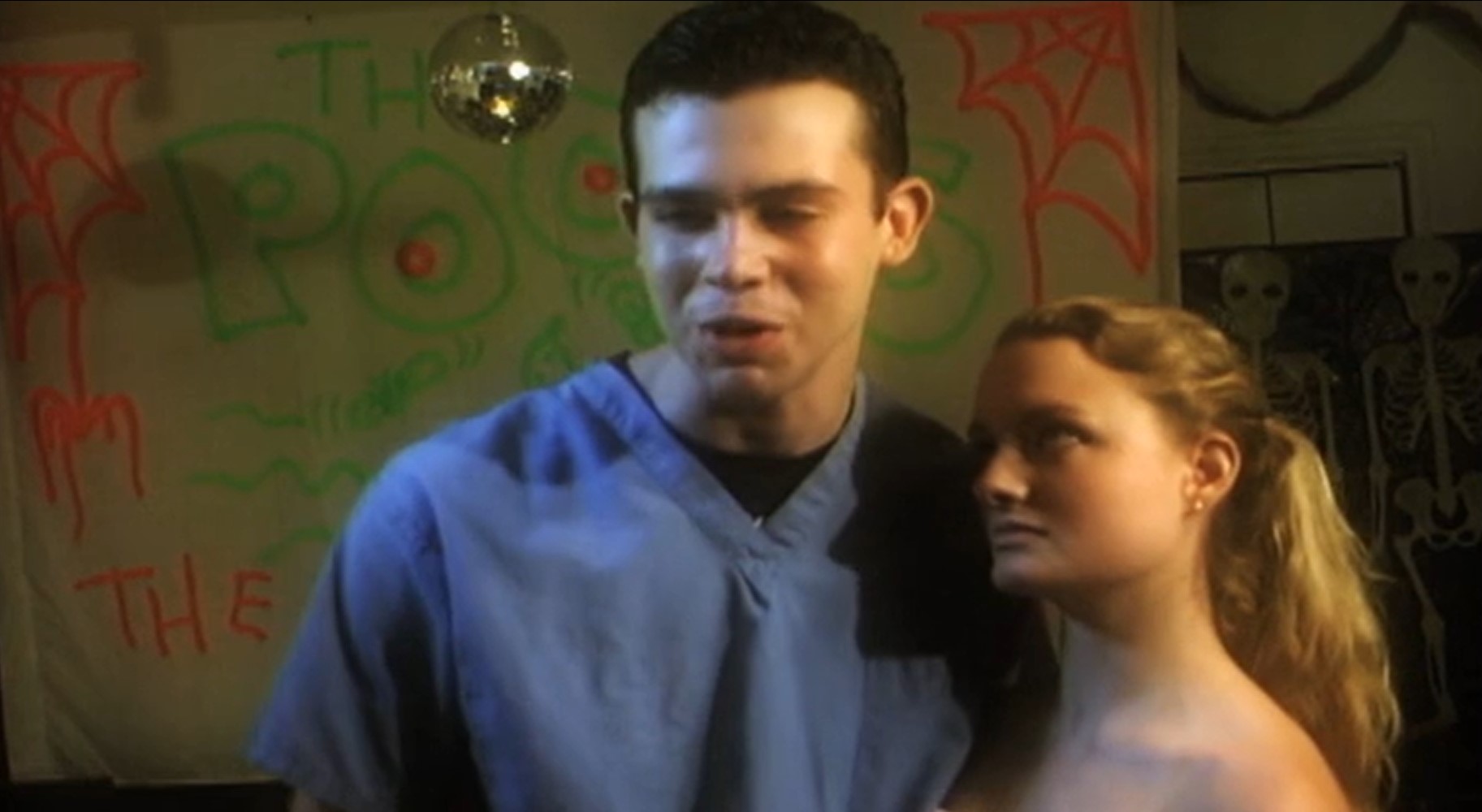
Character clichés clutter the chain of events with your typical pot smokers (Jared Scallions and André Le Blanc), bad boy (Eric Fox), jock (Bill Heintz), nerd (Steve Waltz), slut (Kristen McCrory), bitch (Dana Kieferle) and goody two-shoe virgin (Amanda Kiley). The gang is all here for the slaughter, initiating formulaic conventionalisms that would make any horror aficionado cringe with an internal “here we go again” snide rippling through their gore-bore heads at the lack of originality and creativeness from another indie production. Yet, if you stick with the story and pay attention (instead of doom scrolling your phone), Scallion’s script evolves out of being a simplistic carbon-copy primate and into a singular, secerning Homo Sapien with idiosyncrasies because though most characters remain on the routine attribute course, more than one don’t in an an uncommon but rarely explored concept that puts audience theories and callouts to bed before the unsuspecting reveal. If needing a comparison, think about the “Scream” franchise as those films are really good at playing out the whodunit in complicated pairings with a big surprise at the very end. In “Stabbed in the Face,” the unmasking is not as potent but the possible advents serpentine the story, some more obvious than others, and each carry a different motivation crashing head-on with each other after a few Matherne measured red herrings to throw off the plot predictable scent as well as building up tropes to the max of their mechanics, such examples would be the overly unchaste Starr who bed hops men without shame or overstating Bruce’s money and smarts with talks of getting into Harvard and his girlfriend is only with him for his family’s wealth. Scallion slathers principals thick with stenciled overflow and when that bottom drops and all hell breaks loose, the ostensible outcome dissolves like wet paper. Katheryn Aronson, Samantha M. Capps, Matt Mitkevicious, Bonnie W. Picone, Jerry Paradis, Helen Whiskey, Betsy Fleming, and J.C. Pennington complete the cast.
“Stabbed in the Face” is about as savage as it sounds. Perhaps not as graphic or intense as the Wild Eye DVD illustrated cover art (we secretly wished it was), kills that amount to the titular act has a mortality rate of only two and those pair of perforations don’t live up to the wonderfully ghastly illustrated cover but, overall, fulfills the promise. It’s quite evident that Matherne has no qualms about using splatter and sex, two of the biggest keys to a successful slasher, in his punk-scored abjection of lewd-laced murder. Yet, it would be very remiss of me if I didn’t point out that “Stabbed in the Face’s” blade strikes air at times with the story. Disconnection between the first couple of scenes and the haunted house party planning and then on completely omits the transpiring moment of the jock’s sister’s murder as scenes progress, passing through the event without as much of a whisper. She’s just there in a scene and then she’s not and that isn’t explained until after the planning of the haunted house trip when the virgin naively asks while settling into his car about the girl who apparently was hacked to pieces on school grounds two months prior. The heavy weight of that loss isn’t there for the jock, not even a fleeting moment of sadness or shock, as everything continues as if nothing happened. The other characters are not struck by the loss either and this sweeps the character’s death under the rug and insignificant to the plot, but does a film entitled “Stabbed in the Face” really care about emotional scarring? Or is the intention to leave open wounds to fester with more knife strikes, decapitations, and eviscerations? If I was a magic eight ball, all signs would be point to yes toward the latter as special effects team Jason Bradford, Robert Masters, and Richie Roachclip pull their weight (professionally, not emotionally) creating better than anticipated morbid scenes of murder albeit the one or two obvious CGI blood splatter.
An 80’s teen slasher incarnate, “Stabbed in the Face” glorifies gratuitous sex, drugs, and gore, appropriately curated and displayed by our friends at Wild Eye Releasing on their Raw & Extreme sublabel. The 78th released title on the sublabel is presented in a blown-up aspect ratio of 1.85:1 widescreen, eliminating the horizontal bars, on a MPEG2 encoded DVD5. Resolution retains the image tautness with only a handful of scenes cropped and zoomed in even more that reduces pixels to a more granular façade. Matherne owns the softer presentation with instances of posterization, especially when creating a period piece using stark colored gels and less light for positioning thicker shadow that hazily defines objects, as if lurking in the dark. The English language Dolby Digital 2.0 stereo track has great dialogue strength that does sound boxy. I suspect a ADR dub but highly unlikely with the really good synch and might just be more carefully attained specified audio with key boom placement. Eric Fox’s electron and punk soundtrack parallel “Stabbed in the Face’s” indie-grunge horror with synthesizing tells of inspiration from the 80’s era. Punk and hillbilly rock bands on the soundtrack include multiple tracks from The Poots, The Projections and The Pallbearers – the three Ps. The static menu features full-length tracks from the soundtrack overlaying its static menu with the only bonus feature being a “Stabbed in the Face” Featurette, a behind-the-scenes look in raw and polished form at the film’s genesis and production with discussions from cast and crew. Along with the feature’s own trailer, also included but separate from the bonus features are other Raw & Extreme trailers of “Crimewave,” “Goregasm,” “Whore,” “Video Killer,” “Blood Slaughter Massacre,” “Hotel Inferno,” and “Acid Bath.” This portion of the menu options does not include a music track. To turn consumers onto the film, more so the gore fans than popcorn film goers, the ultraviolent cover keeps in accordance with the Raw & Extreme profile. The cover art is also semi-reversible with magnified bloody image on the inside of the frosted Amaray DVD case. The disc is printed with the same cover art image, just downsized. The unrated DVD has a runtime of 81 minutes and is region free. Just hearing the title can induce the sensation of a sharp edge going through soft flesh and with that phantom impression of pain, “Stabbed in the Face” is horny, bloody, and punk!
Sylvia Kristel. A name that is synonymous to eroticism. Kristel paved the way in mainstreaming seductive romances of softcore exploits, helping to elevate the provocative genre out of the depths of sleaze and into a more exotic trashy novel for the big screen. In her titular role in the “Emmanuelle” franchise coursed an arousing path of sexual freedom, uninhibition, and became the sumptuous and worldly window in private fantasies. Playing the role for nearly two decades didn’t stop Kristel from other high profile and lucrative projects with an array of filmmakers as well as her roles pre-“Emmanuelle” that molded the Netherlands actress into a sexual icon rather than object of male fantasies. Cult Epics acquires four films – “Playing with Fire,” “Pastorale 1943,” “Mysteries,” and “Julia” – that even though didn’t have Kristel set as a principal lead still showcased her range within the constraints of a minor, but certainly not insignificant, performance.
“Playing With Fire”
In a madcap Paris where sex trafficking is something of a sport, a wealthy French banker learns his daughter has been kidnap and threatened to be tricked out or burned alive if the kidnappers’ ransom isn’t paid. Quickly learning that another woman has been mistaken for his daughter, a wave of relief bestows him to be cautious about future attempts on his daughter’s safety. The banker hires a private detective to protect his loveliest of assets, offering to escort her to a local safehouse with the promise of sanctuary, but the P.I. is operating incognito being really one of the leaders of a surreal and lavish brothel who now has the banker’s beautiful daughter in his possession. Or is it her who possesses him?
Unlike any other exploitation-comedy you’ve likely ever seen, the 1975 released “Playing with Fire,” aka “Le jeu avec le feu,” is a wacky deep-dive of surrealistic sex trafficking from French writer-director Alain Robbe-Grillet whose obsession with prostitution rings and other filmic eroticism pursuits extends back within a decade later with “L’Immortelle,” aka “The Immortal One,” and “Successive Slidings of Pleasure.” A French production of Arcadie Productions, Madeleine Films, and Cinecompany, “Playing with Fire” masters the avant-garde art of making light of a grim topic that results in a pull of emotions. Robbe-Grillet draws out the shocking aspects of sex slavery while also encouraging a smirk or a chuckle at the whimsical characters and shooting techniques weaved throughout a burlesque narrative. Robbe-Grillet also plays with the theme of dualities with a number of the principal characters having two or more versions of themselves: Philippe Noriet plays not only the banker father Georges de Saxe but also a voiceless sleaze erotically interacting with the banker’s daughter in a very Freudian concept between father-daughter relations. His daughter, Carolina (Anicée Alvina), disguises herself as the thin-mustached private detective to thwart future any attempt at an abduction and there’s also the identity mishap with the similar looking woman mistakenly kidnapped by the ringleader. Leading us into Jean-Louis Trintignant as the ringleader Franz constantly in a revolving door switch-a-roo façade into the private detective. The presence of duality doesn’t stop being a present throughout, continuing with the banker’s butler who is also a whorehouse patron without affirmation that they’re the one and same person. Before their illegal banishment in the mid-20th century, Brothels were widely dispersed throughout Paris, but not until the Nazi occupation absorbed the houses of ill-repute that seared a bad taste of deviant humiliation and sordid disgust into the mouths’ of the French populace and Robbe-Grillet taps into that once time of unrest by splicing in a pair of isolating scenes of goose-stepping Nazi soldiers with one of the moments garmenting Anicée Alvina in uniform and marching in the ranks, suggesting a more sinister subplot afoot in the storyline. Kristel plays one of the women snatched by Trintignant’s efficiently devious Franz with virtual a voiceless performance in what’s only a symbol of strength and beauty that sets perversion ablaze as she’s taken through the motions of essentially onboarding her into slavery whoredom. “Playing With Fire” can be at times difficult to keep up with the Alice in Wonderland-like surrealism and the character dualism but persists unwaveringly with a multi-faceted narration of deceit, eroticism, and comedy full of perversions and random outbursts akin to satirical skits that make this film unpredictable yet enjoyable to behold.
Pastorale 1943
During the Nazi occupation of the Netherlands, a quaint Dutch farming village lives day-to-day alongside soldiers and German sympathizers known as National Socialists (NSB) to the Nazis, traitors to their fellow Dutch countrymen. When the Nazis learn of and round up all the dissidents and Jewish heritage people living in hiding on an adjacent, ferryboat island, a small band of unorganized resistant fighters determine the local pharmacist, a NSB member, to be the Nazi collaborator responsible for the treacherous leaking of information because his son impregnates an island village girl, teetering toward the fascist movement when mocked by her peers for her involvement with the pharmacist’s son. Inexperienced in the execution of traitors, the bungling resistance fighters learn just how difficult planning a murder can be when their scheme falls apart in a small village where everybody knows everybody.
On this second of four Sylvia Kristel features is the Spieghel Filmproductiemaatschaappij of “Pastorale 1943” which makes more prominent the Nazi regime, is set with a backdrop of a Nazi occupied Netherland town and has a cameo role of young and dashing Rutger Hauer (“Blind Fury,” “The Hitcher”). Netherland writer-director Wim Verstappen, whose had a few titles released previously from Cult Epics, such as “Obsessions” and “Blue Movie,” develops a script out of the World War II drama novel from author Simon Vestdijk with black comedic undertones and a tinge of corrosive sexuality and released the film in 1978. Pastorale, or Pastoral, refers to the typically calm and idyllic country life which the complete opposite in 1943 Netherlands with all of Europe and East Asia engulfed in war; however, this story takes place in its own corner of the world with a mini, damn near microscopic, war waged between the Nazis occupation along with domestic NSB collaborators and the inhabitants resisting against the encroaching fascism that has plagued revenue crops and instilled an authoritarian culture, such as mandating the teaching of the German language to students in Dutch schools. Kristel’s involvement with Verstappen’s “Pastorale 1943” is about as much as her involvement in “Playing With Fire” with a minor role that’s still a keystone piece to the narrative. She plays Miep Algera, a local schoolteacher disparaged by her neighbors and colleagues for having romantic relations with a Nazi officer, but has she really fallen for the officer or is she secretly conducting counterintelligence for the resistance? “Pastorale 1943’s” two-part story plays heavily embroiling and embroidering characters in the first half to the point of instituting a cornerstone character but when the narrative pivots, to the darker side of implied Nazi exterminations and the fumbling through the execution of a rightfully innocent man, Verstappen homes in on Frederik de Groot as the artist Johan Schults whose Germanic surname causes him much strife amongst his Dutch brethren but to prove himself, Schults takes charge, along with an equally green execution squad of resistance politicians, to murder the NSB collaborator, a local pharmacist Poerstamper (Bernard Droog). The Academy Award submitted “Pastorale 1943” can be light and funny then turn quickly on a dime into wartime darkness and director Wim Verstappen’s vision pops with epic World War II fascism atrocities, confined to one part of the world and without the explicit voyeurism of genocide.
“Mysteries”
After the strange suicidal death of a man named Karlson, Johan Nagel arrives to the coastal town where the death occurred. Immediately, Nagel stands out from the supercilious eccentric residents with his mustard yellow suit and fur coat, dispensing small cigars and money to everyone and every service as if they were infinite, and exhibits his own brand of strange behavior, especially with amorous feelings between two women and an unlikely friendship with a dwarf who has accepted his neighbors’ belittling jabs for humorous pleasure. As his behavior declines, Nagel’s presence unravels the coiled, seemingly impenetrable, barriers around his friends, his enemies, and his romantic pursuits that reshape their properties for the better at the dangers of his own sanity and life.
Finally, we’re at a point in the Sylvia Kristel collection where the titular star is in a lead role with this demolition of concrete idiosyncratic personalities melodrama entitled “Mysteries” from Dutch filmmaker Paul de Lussanet, based off a novel “Mysterier” by Knut Hamsun, with Sigma Film Productions as the production company. Kristel plays the steely Dany Kielland who becomes the infatuation of Nagel in an oppositional performance beautifully deranged and conducted by Rutger Hauer. The hot-and-cold and on the brink of frustration relationship between Kielland and Nagel is as resolved as an unfinished breakfast left to waste and void of complete nutrition as both characters digest morsels of desire only to explode in a frenzy of loathsome disgust in an unsavory, brittle dynamic only Hauer and Kristel could produce on screen. The other love interest involved, yet hardly feels as such until the last half hour, is an aged and more humble Martha Gude portrayed by “Last Night in Soho” British actress Rita Tushingham complete with a poor-looking frosty-colored wig. Kielland and Gude represent the two-side of society – rich and poor respectively – stuck mastering a stanch stance of an indeterminate state that Nagel barrels into and knocks down the status quo, like a bowling ball to ten pins, for the better of the coastal town. None of what Nagel does seemingly makes any sense and that’s very true to Hamsun’s novel in the unconventional, and probably unintentional, methods of Nagel’s erratic influence. “Time Bandit’s” David Rappaport debuts in his first feature film as Grogard, an achondroplasia character bulled by most of the town’s residents due to his disorder. Grogard anecdotally tells the story as “Mysteries” narrator, as if reading straight from Hamsun’s novel, the recollection of Nagel’s dichotomic behavior and, at the same time, Nagel also being a mentor, protector, and a friend that pained Grogard to watch his friend whither to death in fit of emotional exhaustion. “Mysteries” borders arthouse cinema, adaptive faithfulness, and pristine melodramatic performance that sound good in theory but not always translate well to the screen, leaving more of a perplexing impression on the whole purpose of rendering Knut Hamsun’s novel into film in the first place.
“Julia”
Every year, Patrick departs his boarding school for a short holiday with his father and relatives at his grandmother’s idyllic lakeside house. While riding the train en route to his grandmother’s, he encounters an older, yet beautiful, blonde woman inside the passenger carriage car and before he can firm up courage to act upon his sexual brimming hormones, the blonde is swept up by an older gentleman right from under his nose. Come to find out, the blonde woman is actually his father’s girlfriend in a completely open relationship when it boils down to sex. Anxious about his own insecure sexual appetite, Patrick finds himself surrounded by the perversions of his family and friends, leaving the young man hesitant and nearly impotent in bedding the woman he actually cares about, a longtime friend Julia who lives next door to his grandmother.
On the heels of “Emmanuelle,” Sylvia Kristel follows up with another licentious freedom film in Sigi Rothemund’s “Julia.” Also known as “Summer Girl” or “Die Nichte der O,” the German production from the Lisa-Film company is the earliest film on the 1970s collection with a release in 1974 and is the only other screenplay on the collection next to “Playing with Fire” that is not adapted from literature. Instead, “Julia” is a wild romp ride of young sexual exploration and the anxieties that accompany it from an outlandish and witty script by Wolfgang Bauer. “Julia” might not be based off a book, but the story is certainly an unapologetically open book about the insignificance of virginity, polyamorous affairs, lesbianism, voyeurism, and the sexual rite of passage into adulthood with the young and naive principal Patrick, or Pauli as credited, played by the late Ekkehardt Belle who passed away in January of this year. Opposite Belle, Sylvia Kristel obviously dons the titular role of Julia. Inexplicably voluptuously different from the other three films on the collection, Kristel radiates a sexual aurora perhaps infected by proxy of its release soon after “Emmanuelle” as Kristel obvious branches out to more sensible dramatic roles rather than the decor of a German sex comedy such as “Julia” that galvanized by its free-for-all eccentric caricatures including an operatic, overweight, and perverse uncle Uncle Alex (Peter Berling, “When Women Were Called Virgins”), a highly aggressive lesbian in Aunt Myriam (Gisela Hahn, “Devil Hunter”), the house maid Silvana who Myrian seduces with whipped cream and has piano-top sex (Christine Glasner), and his polyamorous father Ralph (Jean-Claude Bouillion, “The Sextorvert”) and girlfriend Yvonne (Teri Tordai, “She Lost Her…You Know What”). Comparatively flimsy next to “Emmanuelle” as a sexual journey and coming of age film but “Julia” is a hot-to-trot sex comedy with funny bits as well as sultry naught bits too.
Beautifully curated for the first time ever release in the United States of all four films is Cult Epics’ “Sylvia Kristel: 1970s Collection” on Blu-ray and DVD. The 4-disc, uncut Blu-ray, which was provided for coverage, is region free, limited to 2500 copies, and perfectly packaging to extol praise upon the robust early career of Sylvia Kristel. Presented in European widescreen 1:66:1 (with the exception of “Playing with Fire” which is displayed in an anamorphic 2:35:1), each film is newly scanned in 2K from the original 35mm elements as well as been restored. Transfers for the most part are exquisitely pristine, each harboring their own mise-en-scene mélange, but some are better than others with “Mysteries” sitting at the bottom rung of showing slightly a few more scratches and one-or-two single frame damages that flame up through the reel briefly. “Julia” also has minor scratches, but that’s really the extent of the issues with the image quality on this restored visual released with a rich color palette and textures redefined for a better palpability. Compression issues are virtually non-existent and there are no tinkering enhancements or cropping used to skirt transfer limitations. I am in awe of the audio output of the 1920kps bitrate, transmitting the highest audio quality possible for each release through either DTS-HD Master Audio 2.0 or a LCPM 2.0. Dialogue clarity comes through cleanly with French in “Playing with Fire,” Dutch and German in “Pastorale 1943,” and German in “Julia.” “Mysteries” sounds a bit muddle sometimes due to the consistently background popping interference, but the Dutch language still pulls through strongly and discernibly. Each film comes with optional English subtitles. Special features are aplenty with audio commentaries by Tim Lucas, Jeremy Richey, and Peter W. Verstraten, new and vintage interviews and promotional footage with cast and crew on ‘Playing with Fire,” “Pastorale 1943,” and “Mysteries,” a poster and still gallery on each release, and original theatrical trailers. Outside the disc contents, the collection’s rugged cardboard boxset housing unit consists of a 4-disc snapper case with vintage-still collage cover art, a 40-page illustrated booklet with color pictures and an essay on all four films written by Jeremy Richey, and a cover art poster by Gilles Vranckx. Total runtime is 429 minutes, enough to get your Syliva Kristel fill and then want more…much more. The “Sylvia Kristel: 1970s Collection” lauds the actress’s versatility of performances and ability to work with any director from any country and fans who love “Emmanuelle,” or of just Kristel, will undoubtedly fall in love with this Cult Epics comprehensive look at the Dutch icon’s outermost filmography.
On holiday in a small sawmill town located in Bavarian countryside, artist and photographer Paul Greville seeks to capture the serenity of nature’s bountiful beauty. When he comes across a strange, wild woman with a spider scar on her shoulder, known as the “Spider Goddess” to the townsfolk as a curse individual, his curiosity sends him poking around the quaint, sleepy village that leads him into discovering also a rare and priceless painting thought lost after World War II. The deeper Greville digs into the mysteriously beautiful, unfettered girl and the valuable lost artifact, the more the town begins to resent his nosiness into their hidden agenda of a former Nazi scientist extracting deadly venom from the lethal forest spiders for noxious nerve gas weaponization.
Screenshot from IMDB.com
Better known as “The Legend of Spider Forest,” or “The Spider’s Venom” in the States, director Peter Sykes pulls from the madcap story cache a sticky, wacky web of lies and deceits with the unwinding-arachnid thriller “Venom” that involved mad scientists, creepy-crawly spiders, a half-naked wildling girl, and a plot planned from a World War sore loser shot in the United Kingdom as the backdrop for a Bavarian woodland. Five years before directing Christopher Lee and Denholm Elliott in “To the Devil….a Daughter,” the Australian-born Sykes was outfitting his sophomore UK feature with real, untrained, bird-eating tarantulas to be the basis of his visual terror in a mind baffling labyrinthine screenplay from the filmic exploitation brothers Derek and Donald Ford who, when not selling sex with their erotica celluloid (“Suburban Wives,” “The Swappers”), they were dappling in low-rung independent horror as such with the psychotronic “Venom” which is a co-business affair between Cupid Productions and Action Plus Productions with Michael Pearsons and Kenneth Rowles producing.
Screenshot from IMDB.com
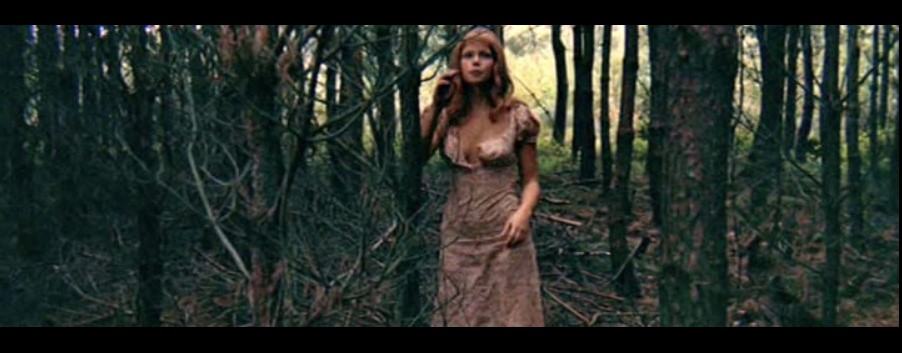
The unlucky sap caught in the village scheming drama is liberal arts enthusiast Paul Greville understood in his thirst for solving the case of the missing medieval art by English actor Simon Brent. The “Love is a Splendid Illusion” Brent, who left acting a few years after “Venom,” finally lands a significant lead man role albeit in a rather stretch of post-war German antics horror that has more twists in the narrative than there are actual spiders. Brent exudes an uncomfortable amount of a curious confidence as he charges through the forest to track down, or rather just happen to run into by chance within the vast area of a mountainous forest, “Erotomania’s” Neda Arneric, a Serbian rugged beauty playing wildling Anna with red-hot hair atop her short frame. We are first introduced to pixie cut Anna during a flashback of a full-frontal skinning dipping frolic in the river with a young, also naked, man and while the unknown man and Anna gaze with an effervescent stars of love in their eyes, the chemistry between Brent and Arneric is about as sparkless as a dud sparkler in a warehouse full of dud fireworks as their characters are too far apart and unalluring to fall for each other at first sight; instead, Brent casts such a demanding go-getter presence with his amateur investigation into the village’s little secret, his murky intentions toward the locally feared Spider Goddess is nothing more than nearly a figment of formulaic structure. We, as the audience, literally attempt to use our own mental will power against them in order to fall in line, or in love. More infatuation buzz surrounds the sawmill boss’s cloak-and-dagger daughter Ellen with “Children of the Damned’s” Sheila Allen as a willing and brazen femme fatale that seduces the hapless artist more than once, especially during one intimate session that restores him back to full health. Although an English production shot in an English forest despite being backdropped in Germany, there is one German actor that gave “Venom” that je ne sais quo toward locale authenticity, beginning with the sawmill boss and self-proclaimed first village resident Huber, played by Gerard Heinz (“Devils in Darkness”) in his last feature length film before his death one year later in 1972. The rest of the cast predominately is English with Derek Newark (“Fragment of Fear”), Terence Soall (“Theatre of Death”), Bette Vivian and one sole Czech actor Gertain Klauber (“Octopussy) giving it all with his very convincing German accent as the village Alps only pub and inn owner Kurt.
Screenshot from IMDB.com
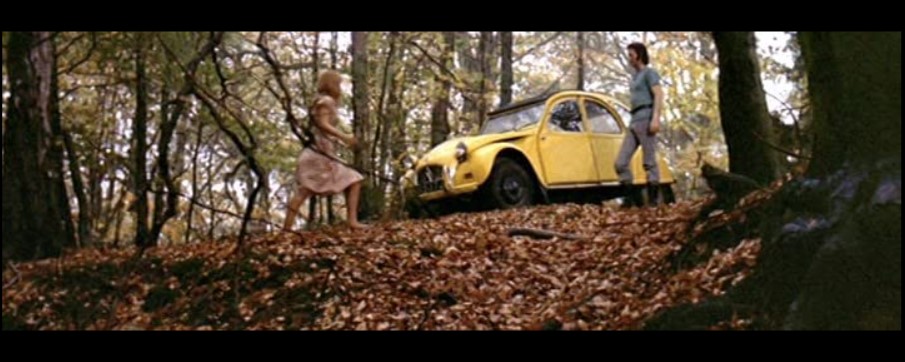
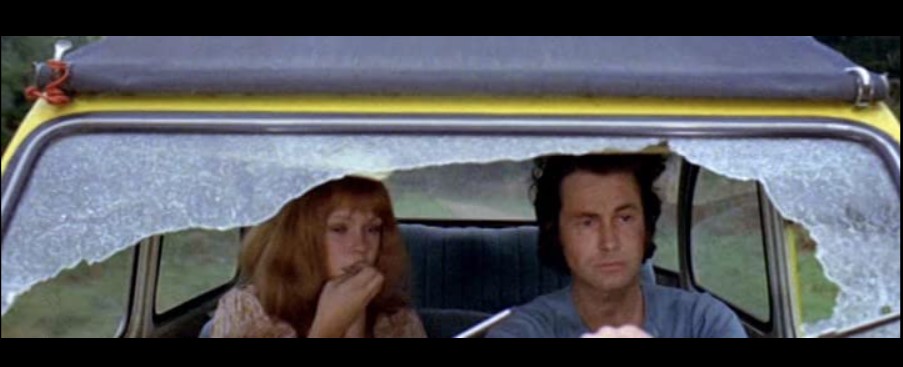
The sting of “Venom’s” unavailing characters is dangerously potent to a near effect of paralyzing the narrative. From Huber’s ireful small talk foreman with his own entourage of blue collar lackies to the mad scientist who doesn’t actually arrive onto the screen until the very last 10 minutes of story, in who is also perhaps the most interesting character garnering deadly spider venom and doing a little crossdressing on the side, “Venom” bears the brunt of unnecessary and disproportionate figures to be an implemented stopgap in managing Simon Brent’s screentime. Sykes teeters away from the majority of Greville’s point of view with little windows outside his perception that drop more diversional obscurity in who Huber and his operatives think Greville really is, why Greville is really there, and how can they handle Greville once he’s become too close to Huber and company’s operations. “Venom” slips unintentionally into the being a low-rent, haphazard Bond film or, better yet, a Scooby-Doo mystery without the Scooby Snacks, but there is ascot fashion. The story implies some exploitation of the mentally instable, using the “Spider Goddess'” strange behavior and her ominous ill-repute to be a warning to outsiders but Sykes conveys the latter allegorically with the destruction of pure, free love by an oppressive governing head, spreading lies about being cursed and deadly, only to find it again in a similar person, a person like Graville seeking to subvert the old wives’ tales and explore his unwaning curiosity no matter the consequences of bodily harm. I just like that Paul Greville drives off-road with a conspicuous bright yellow fiat through the forest shrubby and muck without getting stuck and without blending in.
Screenshot from IMDB.com
The skirmishing climatic finale quickly wraps up loose ends and, at the same time, is an intoxicating delirium of madness and suspense. Twilight Time delivers another Screen restored eldritch mystery onto Blu-ray home video as part of the limited-edition series licensed for a U.S. release from the UK’s Screenbound Pictures and distributed by MVD Visual. Presented in a 1080p, high-definition widescreen 2.35:1 aspect ratio, this is a good-looking transfer with soft, dream-like overtones stemming from a well-preserve original negative with the only drawback being the edge of the 35mm stock occasionally being visible in perhaps a mishandling or misaligning of the film reel that may have also been exposed to light slightly. Other than that, only a few hardly noticeable blemishes are on the image. The English language 2.0 LPCM Dual Mono that separates the dialogue and the ambient/score tracks. You’ll find a robust vocal channel, discerning very nicely from the action, but there’s still quite a bit of hissing and popping on the tail end that denotes more attention needed for better clarity. The film is rated PG but that doesn’t mean much of anything in early 1970’s with Anne Arneric going full-frontal, along with young beau Ray Barron, in emerald green tint as well as other brief flesh scenes from Arneric, arthropod terror, some blood, and the quickest flash edit I’ve ever seen of the lower half of a post-sawed torso. Much like the “Seven Deaths in the Cat’s Eye” release, “Venom” also has zero special features and, as a more tangible replacement, is a 11-page booklet with color and black-and-white stills, various poster art, and an essay by author Mike Finnegan. The Blu-ray cover art is also reversible with a color still on the backside. Don’t expect to contract arachnophobia after watching “Venom” in this high concept, poor execution of cheap boscage thrills.










 It's Bloggin Evil!