
While embarking through Kentucky on a camping road trip, four friends make a pit stop at a Kentuckian scream park called Talon Falls, suggested to them by squirrelly and unusual gas station attendant. As they work their way through a labyrinth of gore and torture, the realization that the local attraction harnesses realistic inflictions of pain hits them squarely in the jaw as they become unwilling participants instilled into the hyper-horrific entertainment that’s recorded onto a snuff tape. In order to not be strapped to a jerry-rigged electrocution chair or be the guinea pig for a sadistic mad doctor with a niche for painful exploratory surgery, they must fight the entire company of Talon Falls’ scream park in order to not be a piece of recorded snuff.
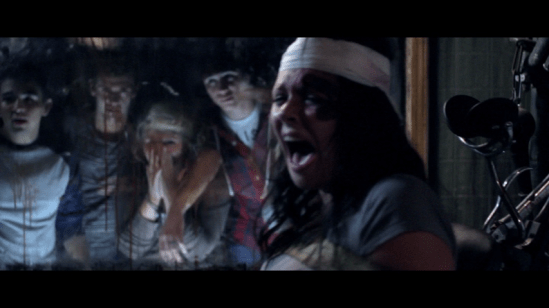
“Talon Falls” is the 2017 torture and survival horror named after and shot on location at the real life scream park located in Melber, Kentucky and written, directed, and co-produced by indie filmmaker Joshua Shreve. Shreve’s story tip-toes around being a familiar narrative that might not seem so different from other works ranging from Nimród Antal “Vacancy” to maybe even Rob Zombie’s murder-world fun-n-games “31,” but if you take a step back and take a long, hard look at “Talon Falls'” gore scenes that don’t just secretly record the assortment of death, but exhibits the ghastly torture for the entire public eye to see. If you’ve been to a Halloween Horror theme park, you know very well the adrenaline pumps, the hearts thump, and the fear tops into a knot in your throat and “Talon Falls” simply adds that what if factor. What if it’s not fake? What if these people being dismembered and vilely tortured are ultimately put to death right before our eyes, like some Captain Spaulding backwoods horror show with a side bucket of his famous fried chicken?

In any case, the four friends, made up of two couples, don’t have one ounce of star power behind their name, but each one of them spearhead the project with enough enthusiasm and gusto that there’s no short fall of trepidation even if the level of fear stalls slightly on overkill at times. Brad Bell, Jordyn Rudolph, Sean Rudolph, and Morgan Wiggins don’t necessary have the on-screen chemistry as friends or couples, even if Sean and Jordyn Rudolph are an offscreen husband and wife, but the palpitating consternation dynamic solidly sells when all hell breaks loose inside the walls of Talon Falls. Between Jordyn Rudolph and Morgan Wiggins, either actress could be a vocal stretching scream queen, especially Wiggins who reaches ranges that could pierce eardrums.

When the spectrum-filled makeup palettes and every single destructive deconstruction prop is laid out at your finger tips, the special effects comes as second nature and to introduce a high level of design detail to the already elaborate set, inside a really monstrous horror park, then “Talon Falls” without a doubt will walk, talk, and look like a top-notch horror film. However, not all aspects are perfect with the Shreve film, produced by Kent Hammond and Todd Ferren, as the story progression with the characters becomes minimized that result in haphazard camaraderie between the friends who are more turnstile acquaintances than lustful lovers or deep-rooted long time friends. Also, characters make hot-headed or stupid-minded questionable decisions when in hot pursuit of an axe-wielding, piggy-masked killer and the scribing of the irresponsible decisions when safely stowed away when being pursued, roots out Shreve’s inexperience in a time of a building block career.

MVDVisual and Lost Empire present “Talon Falls,” the Terror Films and Flashback Pictures production, onto DVD home entertainment in a widescreen 2.35:1 that atheistically gritty in the detail. Even the darker scenes, with well established and positioned shadowing, bring substantial substance to liven up and level up this independent feature from Kentucky. The 5.1 surround sound track has stable range through and through with a caustic toned score to convey terror and a clear and prominent dialogue track that doesn’t muddle through a surplus of ambient tracks. Bonus material include a behind-the-scenes featurette that runs through a randomizer of footage markers and some bloopers. A theatrical trailer is also included. Josh Shreve can only get better from his Sophomore film as a director whose hot off his solid genre entry in “Talon Falls” with the aid of the scream park’s unlimited horror resources and though popping with toe-nail pulling moments, the extremely short runtime of 75 minutes suggests a stiffened premise with undercooked character development that diminish that high production value and bloody effects.
Tag Archives: gore


Sion Sono’s Brings the Evil Back to the Japanese School Girls! “Tag” review!
Life is seemingly pleasant and happy-go-lucky when two fully loaded coach buses of high school girls travel down a forestry passageway toward a lakeside hotel until sudden violence and gore turns Mitsuko’s classmates into minced meat. Overcome with shock and fear, Mitsuko escapes the terror only to find herself in another horrifying scenario. The vicious cycle continues as Mitsuko is thrusted into one chaotic, blood-splattering world after another, quickly losing her identity with each threshold crossing, and with no clue of what’s going on and how she got into this limbo of hell, Mitsuko must stay alive and unearth the truth behind the surreality of her being.

Nothing is more terrifying than being in a heart-pounding situation and not having one single clue why bodies are being sliced in half like corks popping violent out of champagne bottles, why childhood mentors break their professional oath and slaughter students with a ferocity of a mini-gun, or why being chased by a tuxedo-decked out groom with a gnarly pig head is in tow ready to drop kick anything, or anybody, standing in the way. Writer-director Sion Sono manifests that very chaos entrenched world in the 2015 action-horror “Tag” and, once again, the “Suicide Girls” director puts Japanese school girls back into the harrowed ways of gore and death over salted with an existential surrealism based off a novel by Yûsuke Yamada entitled Riaru Onigokko aka Real Game of Tag. Yamada’s story is followed more closely to that of Issei Shibata’s 2008 “The Chasing World” that involves a Government influence and parallel universes, “Tag” serves more as an abstract remake that Sono masters a soft touch of irrational poetry bathed in gore and strung with chaos rectified with a tremendously talented cast of young actresses.

Actresses such as the Vienna born Reina Triendl. Being Japanese doppelgänger to Mary Elizabeth Windstead with soft round eyes and the picturesque of youthfulness, Triendl transcends tranquility and innocence when portraying a content Mitsuko in the midst of many of her classmates boorishly bearing the typical, low-level adolescent anarchy. When Mitsuko’s thrusted into phantasmagorical mayhem, Triendl steps right there with her discombobulated character in an undried eye panicky frenzy whose character then spawns into two other fleshy vessels, a pair of recognizable names of J-Pop fandom in Mariko Shinoda and Erina Mano, when Mitsuko enters another zone in her fictional world. Though different in all aspects of their appearance and in name – Misuko, Kieko, and Izumi, the three women share the same existence and fathom a unbroken entity of character that hacks her way through the brutal truth. The remaining cast, Yuki Sakurai, Aki Hiraoka, and Ami Tomite, sport the high school miniskirt wardrobe and garnish a bubbly-violent J-horror persona very unique to the genre.

“Tag” is a plethora of metaphors and undertones likely to be over-the-head of most audiences, but if paying close enough attention and understanding the subtle rhythmic pattern of Sono’s direction, the gore and the fantastic venues are all part of an intrinsic, underlining message of feminism and sex inequality that’s built inside a “man”-made, video game structure thirty years into the future. Sono points out, in the most graphic and absurd method, how men treat women like objects or playthings. There’s also a message regarding predestination with white pillow feathers being the metaphor for fate and being spontaneous is the key to break that predestined logic and all of this corresponds to how Misuko, the main character, needs to break the mold, to choose her path, and to remember her past in order to free all the women trapped inside a male-driven purgatory of pain, punishment, and pleasure. Supporting Sono’s ability to disclose an epic survival-fantasy horror in such a way comes from multiple production companies, one of them being NBCUniversal Entertainment, providing the cash flow that allows Sono to flesh out the gore, to acquire massive amount of extras, and to scout out and obtain various locations.

Eureka Entertainment presents a dual format, Blu-ray-DVD combo, of “Tag” for the first time in the United Kingdom. However, the disc provided was a feature-only screener and a critique on the video, audio, and bonus material will not be conducted, but in itself, “Tag” is a full throttle encephalon teaser warranting a need for no supplementary content aside from conventional curiosity into what makes Sono’s “Tag” tick. When all pistons are firing, from the visual effects of Satoshi Akabane to “The Walking Dead” familiar score, “Tag” is no child’s game with a heavily symbolic, touch-and-go and bloodied pro-feministic essence that would serve as an abrupt and acute wakeup call to all the Harvey Weinsteins in the world that women are not to be simply playthings and that their gender destiny lies solely with them despite the misconstrued male manipulation.
When Grief Strikes, Evil Gets Insane! “Beyond the Darkness” review!

The fiance of an orphaned villa owner named Frank dies in within their last loving embrace. Struck with immense grief, Frank digs up his fiance’s freshly packed corpse, injects her with embalming fluid, discards her major organs, installs glass eyes into her eye sockets, and processes her to be with him forever as a taxidermal doll laying in the bed next to him. Presumably behind Frank’s fiance’s untimely death is Iris, the family housekeeper who has an unhealthy obsession with Frank and his wealth, and when Frank instability goes beyond the means of all reason, an ill-tempered and mentally paralleled Iris swoops in to be Frank’s comfort, voice of guidance, and abetting culprit to Frank’s crimes as he can’t seem to stop killing young women in order to either replace or protect his adored doll and when a nosey mortician snoops around his residence, turmoil between Frank and Iris boil over in a heap of violence turned into a showdown of ill-fated and gruesome death.

“Beyond the Darkness” is by far beyond sick. Director Joe D’Amato (Aristide Massaccesi), one of Italy’s legendary video nasty filmmakers, reaches far into the darkest crevices of the criminally insane and exhibits every aspect of cold and brutal murder when the small window of opportunity and hope goes horribly wrong. The 1979 film shot in the Bressanone area of Italy exudes breathtaking countryside hills; so serene and peaceful that when Frank’s mind breaks and he crosses into an irreversible dark state, his frigid and murderous emotions make him a monolith that shadows the expansively green landscape. Tack on an equally demented housekeeper with a penchant for diabolical motives and the juxtaposition is no where near being level, creating this idyllic nightmare of taxidermy slaughter, a rancid deterioration of the mind, body, and soul, and a perversive obsession of inhuman replacement.

A baby faced Kieran Canter stars as the orphaned villa owner Frank Wyler who can’t handle one more tragic death of a loved one and Canter provides the blank stare, the outer shell of a spent and lost lover, despite his attractive attributes just like his the inner bones of his villa manor and speaking of juxtapositions, “The Other Hell’s” Franca Stoppi over achieves Iris’s internal and external ugliness. Iris, a seeming fixture of a puritanical matriarch in her dress and stature worn magnificently by Stoppi, uses manipulation and supernatural forces to gain power right under Frank’s already malfunctioning mentality. In the light, Frank and Iris are polar opposites, but they break bread together in the dark, feasting off each other’s malice. “The Beyond’s” Cinzia Monreale dons a dual performance as the corpse of Frank’s fiance and of her living sister. Monreale’s amazing performance in being such a still carcass struck a recall chord in me thinking of Olwen Kelly’s eerie portrayal of a slab table stiff in “The Autopsy of Jane Doe.”

Speaking of autopsies, when Frank begins his taxidermal procedures, surgically slicing down Cinzia Monreale’s freshly demised midsection, the attention to detail rapes the spine with chilling ferocity and though dated within the confines of the practical special effects from nearly forty-years ago, D’Amato’s controversial and unquenchable need for violence doesn’t hold back the gore, the guts, and the glory of chopping a British slag into pieces with a butcher’s knife and tossing her overweight remains into a cast iron tub-cauldron of skin-eating acidity only to have her partial face float up to the surface in a display of how far these vile characters are willing to entertain their pure evil. “Beyond the Darkness” lives up the title with the barbaric nature of the characters who clamp down their teeth and rip out the flesh of their, burn alive joggers in an industrial grade furnace, and store corpses like valuable baseball cards of your favorite major league players. Yes, “Beyond the Darkness’s” gold is worth it’s cinematic weight in gore.

Severin’s 2-disc Blu-ray and CD Soundtrack release of Joe D’Amato’s “Beyond the Darkness” is presented in HD 1080p 1.67:1 aspect ratio. The image quality is strong, unmolested, and rich with a vibrant color palette that gets ickier with every organ removed, every body part dismembered, and every shocking event unraveled. A dubbed English DTS-HD master and an Italian Dolby Digital dual channel mix are quite good, spanning out a brazen fidelity of leveled ranges and the Goblin soundtrack enriches every scene with gothic notes of progressive rock. Check out the CD Soundtrack “Buio Omega” (“Beyond the Darkness”): The Original Motion Picture Soundtrack to get an isolated experience of one of horror’s most fascinating scoring groups known worldwide. Bonus material is aplenty with a retrospect interview on the late Joe D’Amato entitled “The Horro Experience,” an interview with Actress Franca Stoppi entitled “The Omega Woman,” an interview with Cinzia Monreale entitled “Sick Love,” a live performance of “Buio Omega by Goblin, a visit to set locations, and the theatrical trailer. Severin completes a snazzy package and includes an plethora of auxiliary material for this ultra-violent video nasty that’s delivers the uncut and uncensored blood and nudity in a twisted 94 minutes of “Beyond the Darkness.”

“Beyond the Darkness” + Goblin on Blu-ray!

Visions of Evil From a Disturbed Mind. “Lung” review!
An unidentified man, wearing medical scrubs and gloves, wanders through town, encountering hellishly gruesome scenes of death. He wanders barefoot through a ghastly journey that might figuratively expresses his back story of how he came to witness such visions and be relatively undisturbed by the horror they represent. The filthy, gory, and ill-fated moments might also be hallucinations brought upon by a traumatic occurrence that wrenches him out of reality and into grisly purgatory. Either way, the nameless man is a lost soul with no ambition, no emotion, and no direction to guide him through an inner conflict of blood-soaked entombment.

Unearthed Films’ 2-disc collector’s edition of “Lung I” and “Lung II” continues with the distribution company’s legacy of delivering the best underground cinema to the forefront of home entertainment. Phil Stevens, director of positive-reviewed “Flowers,” writes, stars, and directs both feature films about the wandering man in a foggy, distorted haze, but “Lung II” is not a sequel to “Lung I.” Instead, “Lung I” is the softcore version of events whereas “Lung II” is a hardcore redux – think along the lines of “The Evil Dead” and “Evil Dead II” – that’s much more detached from rationality and by collaborating with “American Guinea Pig: Bloodshock’s” Marcus Koch seizing upon the special effects, you can damn well count on “Lung II,” and certainly “Lung I” as well, being bare-faced dark, violent, and twisted. In more a sequential reality, “Lung” is part of the Phil Stevens’ proposed trilogy entitled the Violence of Dawn with “Flowers” leading the horrific charge. This review will focus more on “Lung II.”

Stevens stars as the unnamed lead, waking up lost under a creek bridge, dressed in medical scrubs, and haunted by unspeakable, bloody post-violence mayhem while continuously battling his evil doppelgänger self. Is this just a strange nightmare or a telltale sign of this man’s troubled past? Then, again, Stevens’ impassive take feels more like wandering through one hell of a dream, an endless journey into one’s post-traumatic warped mind rather than spelunking into one of a murderous soul’s, even if one of the moments of trauma could be his wife – or girlfriend – cheating on him and he catches her in the act with ill-fated consequences. Characters also related to the medical profession, such as a psychologist (David Copping) and quick flashes of a nurse (Angela Jane), are a part of this visceral vision quest. Finally, we come to The Exile character. The Exile might sound familiar if you’ve read my review on “Flowers” as he’s the only character, portrayed once again by Bryan W. Lohr Sr., that connects the two films. The Exile continues to mystify us about his presence, an extremely large and intimating brute with a deathly blank stare and a “don’t fuck with me” attitude.

Unlike “Flowers,” Stevens went the devoid of color route, constructing a black and white feature that, like “Flowers, goes without as much as a sentence of dialogue. Actions, expressions, and every sense of the word “art” tell the story. Non-linear editing and brutally realistic scenes of savagery in the confines of special effects exercise and sparks your brain’s neurons to try spitfire pieces together to cement a coherent narrative. Stevens is almost able to re-tap into and revitalize the silent film genre with “Flowers” and “Lung”, and with the help of a vehement brooding score by Mark Kueffner, I believe this type of experimental horror story telling can fascinate just about anyone without a weak stomach.

Unearthed Films and MVDVisual’s 2-disc DVD collector’s set a beautifully monochrome piece of art with roached infested severed heads, a halfway decomposed homeless man, and a pile of refrigerated sexual organs meshed together like something out of Brian Yuzna’s “Society,” but more gnarly. Im interested to see how Paradis, aka Paradis III, comes to conclude the trilogy and see how Unearthed FIlms releases Phil Stevens’ visionary tales. The Borderline Cinema and Extreme Horror Cinema “Lung” is comprised of two discs that entail “Lung I” Feature Film, “Lung II” Feature Film, Directors Commentary, Editors Commentary, Isolated Sound FX Track, Making of Lung 2 (which is very informative and fun to watch underground cinema come to the fold), Mark Kueffner: Lung Composer Featurette, Martin Trafford: Artwork Featurette, “Cats” Short Film, “Descent” Short Film, and Unearthed Trailers. “Lung” will not tickle everybody’s taste; surely sick and part of a niche network of darkly persuaded and humored people will most likely get it, but there’s still very much to appreciate here from director Phil Stevens and his eye for detail and disturbia. This gore and shock is worth a look and worth a chance.

Buy LUNG at Amazon!

Evil Who Kills Together, Doesn’t Necessarily Stay Together. “Capture Kill Release” review!

Fun-loving couple, Jen and Farhang, seem like your average young twosome. Underneath the common surface, they plot a sinister murder of a random stranger. Toying with hardware store supplies and dissecting the knowledge of the human anatomy, Jen and Farhang are well prepped to tackle the abduction, the murder, and the disposal of a human being, but when Jen’s obsessive nature can’t hold back her desire to kill any longer, the couple’s relationship will be harshly tested when a hesitant Farhang is unexpectedly confronted with Jen’s opportunity to kill a kind-hearted dinner guest and decides to pull out from their ghastly thought out preparations that results turning a potential grim bonding experience to a deadly relationship fallout.

“Capture Kill Release” is the 2016 Canadian film from co-directors Nick McAnulty and Brian Altan Stewart. McAnulty also penned the script. The handheld POV thriller has a story that places Jen and Farhang’s union in a familiar, yet deceiving manner, coupling routine relationship quibbles and desires with an unorthodox principles shared amongst them. While acting upon their romantic affair in the archetypes that include one-sided back rubs, jointly frustrating shopping adventures, and an infinite amount of trivial bickering, the dynamic between them feels no different from ours with their interaction with each other in their isolated internal pact being very relatable for audiences with partners or had the experiences with former partners. Enormous, thick tension sets the foundation for “Capture Kill Release” that continuously mounds an already pressurized and emotionally compromised partnership, strained to the brink of chaos that’s hard to dig out from under.

McAnulty and Stewart cast unknown Jennifer Fraser as Jen, much of the cast keep their namesakes with their respective characters, and Fraser, placing aside her remarkable beauty, inarguably locks in Jen’s sociopathic charm. Jen’s manic personality, jumping from conversation piece to conversation piece without smooth transitions and unable to focus without the determination to kill on the mind, contrasts sharply with the more reserved and constant Farhang, a role awarded to Farhang Ghajar who has worked on the directors’ prior film, “Uncle Brian.” Farhang’s conservativeness bares an ugly unconfident image that Jen wholeheartedly exploits, nearly forcing Farhang to go along, or play along, with Jen’s disturbed fantasy. Farhang Ghajar simply plants his character in a shot without much a change between appearance or delivery whereas Fraser frequents and embraces more everyday changes, including even minor ones like her hairstyles that seem to change every scene. Polar opposites, homeless guy Gary and ‘Rich guy’ jerk, round out the significant characters with actors Jon Gates and upcoming “Exorcism of the Dead” star, Rich Piatkowski.
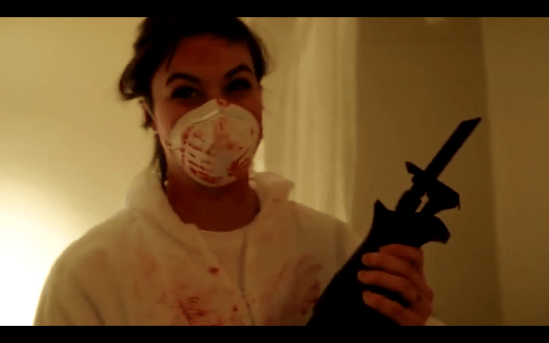
In retrospect, “Capture Kill Release” feels rather depressing. The angst that’s imploding from within the Jen and Farhang bubble touches upon the everyday relationship attributes where couples fight or couples unite in not so extreme measures. Jen shows no empathy or sympathy for anybody with the exception of Farhang, a grappling, fleeting emotion to cling on someone who loves you for you. To further the depression, the recent hike in POV films beats into us the obsession with vanity. The camera, no matter the capacity, is a vain concept and McAnulty and Steward’s thriller spares no expense of arrogance when Jen can’t put down the camera, no matter how much Farhang pleads and persuades her, but If I were an amateur plotter toward killing an absolute stranger, I wouldn’t be a complete novice and record my handy work. This is where McAnulty builds in an unspoken caveat that Jen has a passion for filmmaking, dreaming big of directing, one day, her own feature, a notion that’s explored more during her rooting of her mother’s stored VHS collection from Jen’s childhood. The filmmaking approach to Jen’s obsession loosely bounds the implement of the handheld and feels forced like a last minute decision, especially when genuine home videos of Jennifer Fraser are cut into the story that’s out of place.

Midnight Releasing has released “Capture Release Kill” as a high definition online streaming video feature. I was supplied with a screener and can’t comment on quality or bonus features, but the co-directed film is available on these formats: iTunes, Amazon Instant, Google Play, Vudu, XBox, FlixFling and more. Even with the brief moments in gore, the blood runs extra thick with sickeningly realistic and shocking scenes of butchery. Gory found footage, such as “The House with 100 Eyes” or the more viscerally vigorous “The Butcher,” have been gaining momentum in their popularity with the handheld camera bringing a little authenticity to grisly murders that are on the other side of the spectrum of being a very anti-Hollywood concept that less sensationalized, but devilishly effective, on a budget. Throw in a handful of motivated and talented actors, such as Jennifer Fraser and Farhang Ghajar, in this semi-exploitation gore-thriller and you can strike gold with “Capture Kill Release” that’ll please even the harshest of found footage or handheld camera critics.

 It's Bloggin Evil!