The 90’s Played Videotapes by a Different Set of EVIL Rules. “V/H/S/94” reviewed! (Acorn Media International / Blu-ray)

V/H/S/94 Blu-ray Can be Purchased Here!

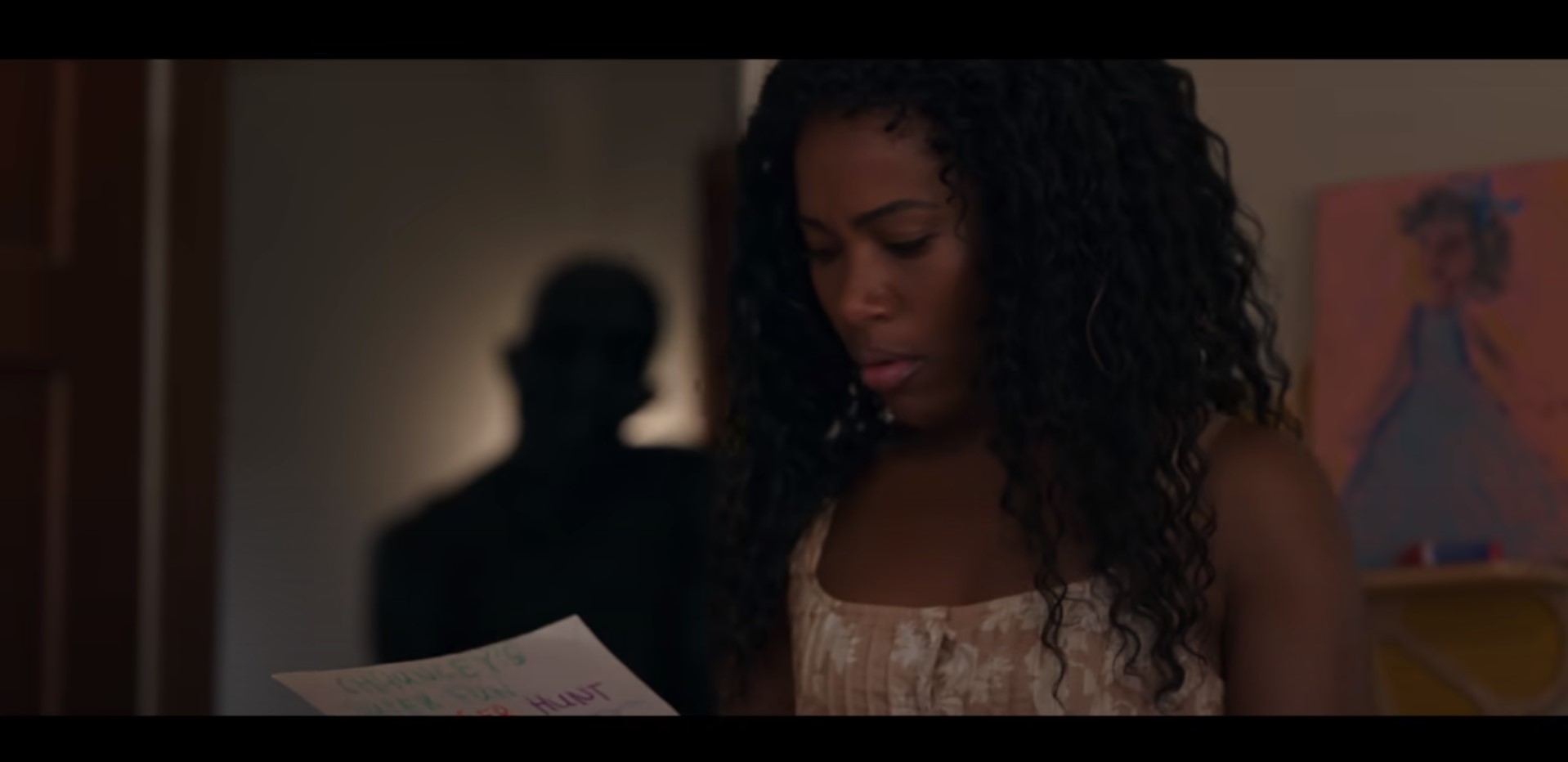
A police S.W.A.T. team raid a large warehouse where suspected drug storage and trafficking is being conducted.  Tagging along a camera man for code of conduct review, what the team discovers inside is more alarming than a stash of street narcotics.  The nearly empty warehouse is filled with gruesomely recorded VHS tapes, snowy television sets in every room, and recently deceased bodies with their eyes plucked from their heads.  As the investigation frantically continues through the labyrinth corridors that turns the capture and arrest mission into a mission of escape, the pre-recorded tapes they come across show vivid, nightmare-fueling horrors, including footage of a sewer-dwelling rat man, a near empty funeral home on a dark-and-story night, inhuman surgeries joining man and machine, and a militia preparing themselves to unleash true evil onto the government establishment.  What the officers see can’t be unseen as analog madness ensues them spurred by the motivations of a deadly cult.

The fourth installment of the David Bruckner and Brad Miska created analog-influenced V/H/S horror anthology.  Known as V/H/S/94, as in 1994 to mark the period of social and cultural influence, six new directors take the short movie helm in a new line of videotape terror.  “Night’s End” director Jennifer Reeder tackles the wraparound story “Holy Hell” that fills in between and shepherds in four frightening tales with “Watcher’s” Chloe Okunols “Storm Drain,” “V/H/S/2’s Simon Barrett’s “The Empty Wake,” “May the Devil Take You’s” Timo Tjahjanto’s “The Subject,” and “Lowlife’s” Ryan Prows’ “Terror.”  “Psycho Gorman” and “Manborg” filmmaker Steven Kostanski also directs a mini-pseudo infomercial entitled “The Veggie Masher.”  Together, the filmmakers for a new lot of under-the-radar talent to showcase an eclectic blend of 90’s set scary stories with Josh Goldboom, Kurtis David harder, and Brad Miska producing, Studio 71, Cinepocalypse Productions, and Hangar 18 Media as the production credits, and Bloody Disgusting and Raven Banner Entertainment presenting the production.

With any type of anthology, a variety of roles are laid out for different scenarios.  From newscasters (Anna Hopkins, “Tin Can”) and cameramen (Anthony Christian Potenza, “Bad Dreams”) to body-transfiguring mad scientists (Budi Ross), to greenhorn funeral home attendants (Kyal Legend), “V/H/S/94 reaches into the far corners of world while also breeding home grown terror right into suburban America.  Each episode develops and nurtures layered characters with fast-setting concrete, quickly building who and what they are in a matter of minutes to which some full-length features have to build in a whole act or in all three acts.  The writing of and the colorful depiction of each character sets the tone for the rest of short and whether the short will be a success hit or not.  An example of this would be in Timo Tjahjanto’s “The Subject” with The Creator, played renationalized and crazy by Budi Ross.  An eccentric acute accent in Ross’s Creator apexes the overall expectation of a mad scientist and in that there is an understanding of what’s coming while there’s still a simultaneous shroud of mystery of how batshit crazy things can really become. The episode that didn’t quite flesh out enough, in character and in story, was the wraparound “Hell Hole” segment that sees a S.W.A.T. team (Kimmy Choi, Nicholette Pearse, Dru Viergever, Thomas Mitchell) and ride-a-long cameraman (Kevin P. Gabel) storm a suspected drug warehouse and find nothing but death and VHS.  Tremendous pandemonium as the team charging into the multi-layered complex is roughly cleaved to not smoothly segue in-and-out with the intercut VHS episodes that also hinder the characters from really being built upon to relate any interest in them.  “Holy Hell’s” climatic reveal has little weight to then stand on without that much needed seething of every detailed bubble that pops in between the short films.  However, the wraparound story doesn’t snuff out the rest of eye-gluing terror you’re witnessing with solid, edge-of-your-seat performances from Donny Alamsyah, Tim Campbell, Brian Paul, Conor Sweeney, Devin Chin-Cheong, Juan Blone Subiantoro, Christian Lloyd, Cameron Kneteman, Steven McCarthy, Brenand McMurtry-Howlett, Slavic Rogozine, and Daniel Willston.

Zombies, cults, body horror, vampires, subterranean creatures, and much more are the selected subgenres that invade insidiously into our visual receptors and straight down to shake and scare stiff our stable core, each one idiosyncratically crafted and tailored by the filmmakers tastes to deliver a unique tale under the guise of those beautiful VHS artefacts.  Whether ran through a VHS recorder or filters are applied, each era-idolized short has a distinct visual approach and feel how the 1990s tape decks presented the goods that can be saturated in horizontal noise strips, tracking lines, and image ghosting.  Granted, and likely subjectively by yours truly, some shorts are better than others with a narrative outline and in special effects.  “Holy Hell” doesn’t let time to breath and let the dust setting to effectively lay in fear and frights because of the constant cacophony of the S.W.A.T. team’s frantic ambling through the complex, seeing each disturbing scene as if breezing through a museum and glimpsing at the exhibits.  I’m fully aware of the short film time crunch Reeder was under but breakneck pacing didn’t have time to elicit any type of reaction or setup a story.  “The Empty Wake,” “The Subject,” and “Terror,” reel in and piece together all the components of their tales and find room to make them thriller and terrifying.  Barrett’s is one of the simplest yet most anxiety-riddled shorts to come out of the V/H/S anthology run, creating a couped up Funeral home atmosphere, the background threat of a tornado out of the story night, and a coffin that goes bump-bump with a sole wake service attendant on the edge of fright for fear of what’s inside trying to get out.  Ryan Prows puts a spin on the whole vampire trope by never mentioning the creature as the living dead bloodsucker held captive by a radical, ring-wing militia under the influence of its power to destroy.  Instead, the creature is just plain and pure evil that, as the militia men find out by the flaws in themselves, can’t be contained.

Acorn Media, the United Kingdom subsidiary label of RLJ Entertainment, releases the Shudder exclusive anthology on Blu-ray home video.  THE AVC encoded, 1080p high-definition, BD50 of “V/H/S/64” goes by the oxymoronic details in the videotape artefacts.  Through various VHS filters and VHS recording deck converter, the widescreen 1.78:1 aspect ratio image is purposefully distorted, worn, and in standard definition to meet the standards of the V/H/S series, providing an anomalous analog outer shell so if you’re expect fine delineation, natural skin tones, or any clear details of any sorts, then the V/H/S franchise is not for you.  For the rest of us, “’94” parades the paltry resolution like gold in a true celebratory style, embracing the chroma spectrum for a maximum retro throwback.  However, the color bands on a couple shorts appear too vibrant, creeping more into digital age with flusher hues rather than tape degraded coloring.  The English and Indian language tracks are ran through a lossless DTS-HD 5.1 surround sound mix that offers punchy kbps decoding filtering through the appropriate side and back channels and right into your ears. The sonic palette has great depth and range in the midst of the crackling and warp-pops of damaged tape. Dialogue is clean, clear, and concise and there’s synched-well, error-free English subtitles for “The Subject.” Bonus features include a behind-the-scenes featurette with the directors speaking about how they were approached and crafted each of their respective shorts, a panel interview at the San Diego Comic Con, deleted and extended scenes, the special effects discussed by Patrick Magee, a quick glimpse at “The Wake’s” visual effects piece to the pie, the full-length Steven Kostanski “Veggie Masher” commercial, behind-the-scenes images, and Hail Raatma!, a special look at the sewer-dwelling creature. There are also two commentaries: a feature-length commentary track with the filmmakers and producers hosted by The Boo Crew and a second commentary track on “The Empty Wake” with writer-director Simon Barrett. There is no mid-credit or after-credit stingers. Sheathed inside a thicker UK Blu-ray casing is the “V/H/S/94” blocky cover art of a face screaming while tape emerges from their mouth and eyes. Inside lies bare with no insert but the disc art is different with a snow-static tube televisions outlining a techno-skull. With PAL encoded playback, the Acorn Media Blu-ray comes region free (tested) despite not proclaiming so on the back cover. The UK certified 18 releases has a runtime of approx. 104 minutes.

Last Rites: If anthologies get your horror rocks off, the “V/H/S” franchise continues to disturb, disgust, and dread with new filmmakers, new stories, and new horrors, but with the same amount of thirst-quenching blood shot on video!

V/H/S/94 Blu-ray Can be Purchased Here!

EVIL Ted Bundy is “The Black Mass” reviewed! (Cleopatra Entertainment / Blu-ray)

“The Black Mass” on Blu-ray Can Be Ordered Here!

Based off a slice of Ted Bundy’s murderous impulse-driven life, the notorious American serial killer’s escapes from the upper West Coast and lands him residence in Tallahassee, Florida in the moderately warm winter of 1978.  As he picks the pockets of those around him, scrounging up what little cash he needs to survive on, Bundy urges grow to kill grow more intense.  He begins to stalk a nearby university sorority house that’s buzzing with potential prey.  As works out a plan to attack, his good looks and impeccable charm make him desirable around women and men alike, offering opportunities that tend to fizzle out before they can begin, and when his need to spill blood agitates him excessively, he starts to creep out those around him by glaring out them and making off-the-cuff shrewd comments.  With his options declining rapidly, Bundy decides to take advantage of the sorority house’s broken backdoor lock and set in motion a night that will forever live in American infamy. 

For her feature length film debut, scream queen actress Devanny Pinn takes on one of the most vile villains ever to walk the Earth in her biographical horror “The Black Mass.”  The “Song of the Shattered” and “Frost” actress and producer brings a headspace perspective to Ted Bundy committed at least 20 confirmed murders between 1974 and 1978.  The true crime thriller named after what one of the victims described Bundy’s attack on her as simply as a black mass before being bludgeoned.  Brandon Slagle (“Song of the Shattered”) and Eric Pereira (“The Locals”) collaborate on penning the script.  Slagle directed Pinn in the 2022 element horror and survival feature “Frost” and now it’s Pinn to take a stab at the director’s chair with a Slagle screenplay, pun intended.  Pinn coproducers her film alongside Michelle Romano (“Night Aboard the Salem”) and Cleopatra Entertainment’s Tim Yasui (“Frost,” “The 27 Club”) under the production banners of Jaguar Motion Pictures (“Dead Sea”) and Roman Media (“Millwood”).

The main focus in the feature is of the titular character, “The Black Mass,” that is Ted Bundy, almost seeing what he sees through his eyes of skulking and morbid fantasy.  Played by British actor Andrew Sykes, the centrically focused character is experienced not directly through his eyes but over his shoulder, peering from behind as if audiences are accomplices to his murderous wake.  Sykes performs well in a nearly voiceless role that does more lurking than talking but Sykes’s worked up frustration clearly surfaces and erupts out of Bundy when strapped for cash and has a tremendous itch that needs to be scratched as his wishy-washy path to do good crumbles from under his footing.  As the main focal point, no other character really comes close to a lead principal.  The sorority girls are introduced in mass and jump from sister-to-sister individually conversating routine and tales of the day-to-day within the college student context with roles from but not limited to Lara Jean Mummert-Sullivan (“2 Jennifer”), Brittney Ayona Clemons (“Twisted Date”), and Alex Paige Fream (“Into the Arms of Danger”).  Yet, Pinn’s storytelling purpose is paradoxical with the whole story flowing through the perspective of Ted Bundy with his prey hanging mostly in the peripheral and not emanating the warm and fuzzies of sympathetic, relatable characters, but at the end of the film, there’s an acknowledging tribute for the victims who we really know nothing about from the narrative, creating an acute pivot from the killer’s personal bubble.  “The Black Mass” rounds out it’s relatively large passing-through cast with Chelsea Gilson, Susan Lanier, Eva Hamilton, Sarah Nicklin, Elisabeth Montanaro, Mikaylee Mina, Jennifer Wenger, Grace Newton, Devanny Pinn, and with cameos from Lew Temple (“The Devil’s Rejects”), Jeremy London (“Alien Opponent”), Lisa Wilcox (“A Nightmare on Elm Street 4:  The Dream Warriors”), Kathleen Kinmont (“Halloween 4:  The Return of Michael Myers”), and schlock movie veteran Mike Ferguson.

“The Black Mass” is the perfect example of style over substance.  While the story is formatted around Bundy’s outlook, there’s not a significant amount of edification for his warped mindset.  Some backstory leaks through his beseeching phone conversations with ex- or current girlfriend Liv, a phone voiceover presumingly based off the real Bundy girlfriend Elizabeth Kendall, that teeters the appearance of his humanity side as he talks about his addictive struggles and trying to walk a straight line, but any kind of sympathy is quickly tabled without an ounce of provision, likely for his inclination to lie for advantage and exploitation’s sake.  Pinn only teases the inexplicable morose and ghastly gears that rotate inside Bundy’s head, spurring a single blood-drenched daydream of a girl pulling off her skin in the shower, and erotically enjoying it immensely.  The scene feels sorely out of place amongst the rest of reality-grounded narrative that resorts to a cut-rate version of Bundy’s devolving surrounding is fleeting patience and feign niceties.  What’s appreciated mostly about “The Black Mass” is Pinn’s ability to work the camera in not revealing too much of a modern-day society by maintaining that closeup distance behind Bundy and only really showing what needs to be seen for a late 70’s biopic.  Costuming, production design, and vernacular are appropriate for the era as well.  Coming back to the proximity around Bundy, there’s a purposefulness in not showing his full face or looking at him from the front that keeps the particulars of his image in an effective, if not slightly scary, enigma albeit the other characters’ brief descriptions of him in conversation do provide a rough picture of him. 

MVD Visual distributes the newest cinematic Bundy biopic from Cleopatra Entertainment. The AVC encoded, high-definition 1080p, BD25, presented in a widescreen 2.39:1, has welcoming veneer, splashed with a 70’s color scheme saturation, and is graded with a middle-of-the-road or slightly darker color palette. Sufficient capacity and compression encoding offers a clean, sleek digital image without artifacts and with the ample attention to minor era details where possible and Noah Luke’s fill and back-lit cinematography when things get really dark, as in sinister, that snappy image presentation is key. The English language options are a lossy Dolby Digital 5.1 and a PCM 2.0 stereo renders a clean, balanced mix between dialogue, ambience, and dialogue with less suppression on the PCM audio if you’re looking for a lossless option. The setting sounds are nicely immersive compared to the limited and concise framing, opening up the world audibly rather than visually. No technical issues with the digital audio on neither front; however, depth and reality checks are missed marks as all the dialogue doesn’t abide by spatial awareness; when the sorority sisters are talking indoors or from afar while Bundy lurks outside the house, or from a distance, spying on them, all the dialogue is unobstructed and too prominently clear for natural conventions. Bonus features include an image slideshow and the feature trailer. Ancillary content includes other trailers for Cleopatra films with “Frost,” “The Ghosts of Monday,” “The Long Dark Trail,” “What the Waters Left Behind: Scars,” and “Lion-Girl.” Released in a traditional Amaray Blu-ray case, “The Black Mass” sports a Dimension-like front cover, dark and full of characters. No insert or tangible content inside and the disc art mirrors the front cover. Cleopatra’s region free Blu-ray comes unrated and has a runtime 82 minutes.

Last Rites: Devanny Pinn quarterbacking her first feature film with an à la mode Ted Bundy portion, an interpretative taste of his absolute madness, doesn’t faze the long-time scream queen actress and producer who takes on the subject head on, but the overall concept does need tweaking in the area of purpose that can be easily conquered with more practice.

“The Black Mass” on Blu-ray Can Be Ordered Here!

A Eurotrash Mosaic of EVIL. “Jailhouse Wardress” reviewed! (MVD Visual / Blu-ray)

“Jailhouse Wardress” now on Blu-ray!

After the fall of the Nazi Reich post-World War II, one of the more cruel SS-Officers, Muller, is dispatched to South America where he establishes a women’s prison camp and appoints a likeminded, lesbian female warden with strict punitive measures if the inmates don’t fall in line and follow the rules or instruction.  While Muller governs the area, disorder courses its way through the camp when a plea letter to the state, describing in detail the horrors inflicted upon the women at the camp, such as torture and private cells for sex with the inmates, is intercepted before leaving the premises.  At the same time, a young, newly processed inmate, who had killed her rapist uncle in self-defense, plans a daring except.  The once well-oil authoritarian sex prison quickly becomes unraveled by unruly prisoners who’ve had enough with the eternal inhumane debauchery and with the exterior assistance of Jewish liberators and assassins, freedom is all but knocking at the door.   

Hot off the heels of Neon Eagle Video’s Blu-ray release of “Kill Butter Kill,” a Taiwanese rape-revenge narrative that’s been jumbled up with re-edits to engender a whole new structure, we dip into another Blu-ray remix, soaring from Asiatic East to the Western Europe with “Jailhouse Wardress,” a Alain W. Steeve hardly directed women-in-prison schlocker pieced together from three earlier Nazisploitation and caged-women exploitation features with barely any new footage used a binding agent to construct a concentrated concentration camp plot.  Steeve, a pseudo-surname for Alain Deruelle, a pornographic director who did helm “Cannibal Terror” under the name Alain Thierry, hodge-podges a new sordid camp exploitation picture out of already near the bottom-of-the-barrel features that sparked very little lewd cheekiness of sleazy Nazi oppression and the perversities of a hard labor with hard bodies in a women’s prison camp.  France’s Eurociné is listed as the production company but unsure if there was any company backing or shooting the new spliced-in footage since Eurociné outfitted the trio of features used to make up more than half of “Jailhouse Wardress;” these films included “Barbed Wire Dolls,” “Last Train for Hitler,” and “Elsa Fraulein SS.”

Unlike “Kill Butterfly Kill,” much of the new material shot for “Jailhouse Wardress” incorporate different actors into already established roles of the component films and with the scenes going back and forth between new and archive footage, keeping up with a fluent narrative is more difficult than said.  For instance, two different actors play Nestor; Germany’s Eric Falk (“Blue Rita”) footage from sparingly used from the “Barbed Wire Dolls” and most of Nestor’s scenes lie with X-rated and softcore French actor Didier Aubriot (“Naked Lovers,” “They Do Everything”) barking the orders and taking what he wants from the freshly instilled and scantily uniformed actresses inside the cages with Pamela Stanford (“Blue Rita”) and Nadine Pascal (“Zombie Lake”).  You can tell their scenes are newer, fresher, with more color emitting from a different film stock and camera combination compared to the brief, desaturated appearing scenes of Eric Falk who never touches the women prisoners in Beni Cardoso (“Scalps”), Lina Romay (“Female Vampire”), and Martine Stedil (“Marquise de Sade”) who bare a lot of undercarriage bush as a gratuitous rite of exploitation culture.  Much is lost not only in a re-dubbed soundtrack of the source films but what’s also lost heavily are the character attributes that left behind from the original films, such as the prison director’s (Monica Swinn, “Love Camp”) brutish lesbian demeanor with “Last Train for Hitler’s” Ingrid Schüler.  This type of devolving reshapes the characters for worst, takes away much of their cruelty and passes it along to predominantly to the newer footage of Teresa and Lola at the naked mercy of the newer Nestor.  “Jailhouse Wardress” fills out the archive and new footage German, French, and English nationals cast with Eugénie Laborde, Bob Asklöf, Michel Charrel, Peggy Markoff, Paul Muller, Sylvie Darty, Ronald Curram, Maria Cavour, and the archive presence of Jess Franco in a normal camera speed slow-motion flashback death scene as Uncle Jess in this particular feature.

“Jailhouse Wardress’s” old, new, or however you wish or feel compelled to describe the mismatched footage ultimately compromises the plot by the cut-and-paste hack job.  A slight attempt can be seen made to align new and old footage for sequence editing but without a seamless grading and more similar costuming, the events never feel in the same space, creating more a schism between the two material footages rather unifying for a common narrative.  Subplots, such as the imposter prison doctor or the Jewish hit on the Governor, are more prominent than the actual foundational plot so there’s a hindrance of uncertainty to what should be the main premise, including the Nazi angle that seems to vanish without much of a fuss, and the brain works in overtime trying to follow one scheme to then have to jump to another without traversing that pivotal straight line that connects the dots, leading to a complete mental shutdown due to exhaustion and confusion.  What doesn’t help matters is the arterial lifeforce, the purposeful exhibition of exploitation, the whole reason why we watch through our subconscious sadistic eyes women become slaves to ruthless perverts, is severely castrated on a couple’s sexploitation scale.  Much of what is shown is solo work; women lying in bed bottomless or are stripped nude for only a few moments of touching or taking by force without much of a fight.    

The ”Jailhouse Wardress” receives the high-definition Blu-ray treatment from our friends at MVD Visual as part of their MVD Classics label.  The AVC encoded, 1080p, BD25 suits the patchwork Alain Deruelle (and Jess Franco in archive footage only) feature.  While the 2K scan looks pretty darn good for a schlocky eurotrash pastiche, the print used is a gut-punch to videophiles hard-pressed on image quality and preservation.  Presented in a more consolidated pixel count of 1.42 aspect ratio, the print, or at least the “Barbed Wire Dolls” was originally in the European aspect ratio of 1.66:1 as you can see the letterboxing during the titles and they eventually expand out, stretching the image.  The print is in rough shape in its spliced up format with its seam-showing different graded parts that creates a back-and-forth inconsistency.  “Barbed Wire Dolls” is shades darker, grittier, and less definable than inserted shoots.  There’s an abundance of print damage too from frame damage to vertical scratches, mostly early into the runtime.  With the inconsistent picture quality, grain never looks healthy as the amount fluctuates and, often times, becomes more an interference of higher contrast exposure in darker portions.  Both audio options are in an uncompressed PCM 2.0 mono format and you listen in with dubbed English or in the combined original and dubbed French.  Not the flawless audio to ever come across but neither is the worst but what’s inlaid is untouched mix that contains all the hissing, crackles, and pops that blight the audio thread.  Yet, dialogue remains intelligible, thanks mainly to the dub work I suppose, but if you don’t mind Pamela Stanford’s sounding like Smeagol than this audio dub is for you.  English subtitles are optionally available and they synch well enough with a couple of grammatical errors.  The theatrical trailer for “Jailhouse Wardress” is the only direct bonus content available with other eurotrash trailers accompanying.  The packaging is quite eye-catching of an illustrated Nazi-patronized burlesque show front cover inside the traditional Blu-ray Amaray case.  The back cover has the more confounding composite artwork with still captures from neither of the films used and stock image marketing that have little or nothing to do with the film itself.  Inside content is barebones with the BD25 disc stamped with the same front cover art.  The Blu-ray comes not rated, region free, and has a merciful 75-minute runtime. 

Last Rites:  Exploitation fans will find “Jailhouse Wardress” lacking that je ne sais quoi.  The interlocking of multiple prints is like unwelcome visible scar tissue, glad it’s there to heal the wound but unsightly to look at.  As for filling in one’s gap in the Naziploitation and Women-in-Prison collection, “Jailhouse Wardress” isn’t a must-have main ingredient for the diehard fans but for an aficionado completist, MVD supplies the goods with a Hi-Def option.

“Jailhouse Wardress” now on Blu-ray!

An Odyssey through the Phantasmagoria EVIL. “Moon Garden” reviewed! (Oscilloscope Laboratories / Blu-ray)

Take a Stroll Through the “Moon Garden” on Blu-ray

Five-year-old Emma is caught in the middle of her beleaguered parent’s marital strife.  When Emma witnesses one particular heated and nasty argument between mom and dad, she flees to escape the anger only to slip and fall down the stairs, hitting her head that puts her into a comatose state.  She awakes lost, confused, and consumed in an industrialized gray zone, loomed over by strange land’s dark gloom and also curious wonderment that both frighten and amuses her.  As Emma looks from the inside out, seeing her parents come together from the struggles to cope and worriment surrounding her comatose body, the young girl is determined to make it back to her parents by trekking through the bizarre land, but a menacing, chattering being feeding off her fear and tears pursues her and she has to rely on the amiable ambivalence of unique strangers that inhabit this world to help her escape the nightmare and return home.

Cut with relatable bleak themes of family dysfunction, Ohio-born filmmaker Ryan Stevens Harris undertakes fantasy rarely seen in this day and age of computer visuals and special effects, probably not since “Labyrinth” or “The Never Ending Story” of the 1980s.  Stevens, chiefly an editor in the movie industry with credits ranging from indies like “What’s Eating Todd?” to big-budget blockbusters like Roland Emmerich’s “Moonfall,” writes and directs “Moon Garden,” a wayfaring grim fairytale with visual ferocity in a practical DIY-fashion and without major studio help.  The 2022 fantasy envelopes elements of difficult navigation surrounding nuclear family problems through the quivery, unguarded eyes and immense imagination of a very young child still developing those rationality and interpretation skills to make it all make sense.  Based off Harris’s proof-of-concept 13-minute short film “Every Dream is a Child with Teeth,” “Moon Garden” is a production of Harris’s Fire Trial Pictures and is self-produced alongside Fire Trail Picture’s co-founded John Michael Elfers and wife, Colleen.

“Moon Garden” is truly a family affair with not just the husband-and-wife collaboration behind the camera but also the couple’s young daughter, Haven Lee Harris, at the forefront as the enchanted young Alice in Wonderland-esque wanderer named Emma.  Haven, who also starred in the “Every Dream is a Child with Teeth” short,” fully embraces Emma’s forming schism between her parents and being engulfed by an intimidating atmosphere that’s often bursting with melancholy and acrimony, a credit to the father-director who can turn the darkness to light by making behind-the-scenes an engagingly fun atmosphere for his impressionable, yet talented, daughter to thrive as an untrained actor in her debut performance.  As Emma travels through the eclectic settings of sewers and steam pipes, dilapidated houses, swampy overgrowth, and towering observatories, she comes across equally eclectic figment inhabitants that help her, a hammering string musician (Phillip E. Walker, “13 Mysteries”), a sullen groom (Timothy Lee DePriest, (“BnB HELL”), a budding mud witch (Angelica Ulloa, “Gnome Alone”), and a lonely Princess (Maria Olsen, “Vile”), but not all seek the wellbeing of Emma as a haunting levitating and sinister pursuer (Morgana Ignis, “Satanic Hispanics”), garbed in inspired militarism and a void where only sharp, chattering teeth makeup it’s face.  Each character is bred out of Emma’s emotional states brought to fruition by her extensive imagination, correlated by her playing with resembling toys before her accident.  Mom and dad are played by Augie Duke (“The Badger Game”) and Brionne Davis (“Mom and Dad”) for the first act and through flasbacks of the second and third.  The parents inadvertently inject sorrow into the heart of their daughter caught in the middle of the martial affliction.  Duke saturates leadenly into the mother’s depression with poignancy and potency, fueled by Davis’s uncompassionate workaholic for the father, and this sparks the tension that requires a forced happy family face around Emma whose brimming at the edge of her imagination for a better existence.  Filling in the cast gaps are Téa Mckay and Emily Meister. 

If Phil Tippett directed a movie from a script by Lewis Carroll, “Moon Garden” would be the outcome.  Pure imagination and creativity ignite a new world to travel down toward the rabbit hole, utilizing a series of practical techniques to show how grotesquely and beautifully grandiose this world can be erected and the odd characters can come alive all without breaking the bank.  With any abstract art, grasping concepts and correlating visual expressions can be difficult but with “Moon Garden” there’s a sense of celebration for movie magic.  Between detailed miniatures, visual compositing, manipulative time and camera techniques, practical special effects, etc., Ryan Stevens Harris promenades the audience through the different levels, stages, and exhibits of what is a carefully curated museum of ingenuous imagination, which sounds like something Willy Wonka would melody about, and does so while tapping into our own fears as not only having once been children ourselves with vivid imaginations looming in ever crevice of our minds but also in us lucky enough to be parents as Harris interposes clips of Emma peering in reverse through the looking glass, into reality, to see her parents reformulating a bond through the muck of grief, worry, and love for their child in what is a parents’ worst nightmare to experience.  “Moon Garden” can be intense and scary at times but certainly could be kid friendly and empowering for little tykes afraid to take on the daunting outside world or the inside of uncertainty. 

Our first venture into an Oscilloscope Laboratories release is anything but paramnesia. “Moon Garden” arrives onto an AVC encoded, high-definition 1080p, 50-gigabyte Blu-ray transferred and processed from the original 35mm print, as Fire Trial Films is a 35mm production company, and presented in a widescreen 2.39:1 aspect ratio. Having scored age-worn film stock, Harris achieves some unusually neat prints that saturate the colors differently than if the stock was in brand new, pristine condition. An ingrained darkness from the stock adds a pinch of otherworldly tincture that accentuate the already overwhelming serrated slumberland atmospherics coupled with a filmy layer of good-clean grain. Primary colors don’t often appear like primary due to the aged film stock but pop in distinct crush, nonetheless. Emma’s unconscious dimensional detour is full of pocket voids, shadowy symmetrical shapes, and dreamy in exact detail on all accounts without being empyrean or wistfully. The English language DTS-HD 5.1 master audio and the film’s original uncompressed stereo 2.0. The lossless surround sound mix options to deliver the identical audio measures in comparison the uncompressed audio while also slinking through the side and back channels for full-bodied immersion into Emma’s tribulating trek back home. Dialogue comes through exceedingly well-enough albeit the multi-faceted improved industrial soundtrack sneaks in staggering oversteps at times. Speaking of the soundtrack, an original score by composer Michael Deragon, the transitional tunes, melodies, discordances, and synths are just a taste of the eclectic, haunting sounds that navigate Emma’s journey and the elegant, melancholic, and even comforting lullabies by Augie Duke as the mother bring a sort of peace and tranquility that resets the intensity and fear of the child in peril. The chattering teeth, though comically inclined to an extent, are especially effective as a looming, omnipresent pursuant. Optional English subtitles are available. Special features on the Blu-ray include a making of “Moon Garden” featurette that lets director Ryan Stevens Harris be giddy-as-school boy proud to show off and explain the how-tos of his masterclass piece of creativity as well as to dote on his sweet daughter Haven, Harris’s 12-minute proof-of-concept short film “Every Dream is a Child with Teeth,” a single deleted scene, and the theatrical trailer. Oscilloscope’s Blu-ray comes in a clear Amaray case with a what looks almost to be an innominate water-colored cover art composition, with gothic overtures, of a few characters with the reverse side bathed in a blue landscape setting that Emma crosses which is shown in the film. The disc art is curiously plain with the Oscilloscope Laboratories logo and the title “Moon Garden” above it. The not rated Blu-ray comes region free and with a 93-minute runtime.

Last Rites: Ever since post-credits, The M Machine’s Moon Song and Promise of a Rose Garden has regained ground in my mind and it’s a very fitting pair of tracks not only for their keyword titles but also for its industrial beats and unconventional sonority structures similar to the cadence of the deep space wandering that is “Moon Garden” as visually the imagery confounds the senses and surrealism takes hold of us as this sweet and innocent little girl confronts alone a world much bigger than anything than we could ever imagine, and only she can pull herself through while the discordant parents can only be a unifying beacon of light and hope. Highly recommended.

Take a Stroll Through the “Moon Garden” on Blu-ray

Sadomasochism and Decapitation Seen by a Child Turns Him into An EVIL Adult! “Nightmare” reviewed! (Severin / 4K UHD – Blu-ray)

Your “Nightmare” Should Be in 4K! Own it Here!

A schizophrenic patient continues to have reoccurring dreams of a young boy chopping the head of a woman in the midst of rough sexual fetishism.  The intense nightmares send him into violent stints, delusional states, and severe seizures.  As a test subject for an experimental behavior drug, the troubled man shows promise of recovery and enough so that he’s released from the mental hospital with continued outpatient therapy sessions.  Not long after his release does he skip his sessions to hightail it from New York City to Daytona Beach, Florida, killing people along the way after decapitating nightmare continues to plague and force him to murder.  In Daytona Beach, single mother of three becomes his obsession as he stalks the youngest boy, a mischievous troublemaker, and even breaks into their house when it’s not occupied , but as the bodies begin to pile up on the hands of his need to kill, the more brazen he becomes to entering while they’re home alone. 

Based loosely on the improprieties of government spy agencies using drugs to bend the minds of home and oversee terrorism to their wills, “Nightmare” sensationalizes the concept for the public sector involving a mental patient, experimental drugs, and exasperating an already instable person’s constitution into a hyperdrive of bloodletting carnage.  The U.S. production is written-and-directed by Italian filmmaker Romano Scavolini who came to America to shop around his scripts having failed to secure financial support in Europe, including, you guessed it, “Nightmare.”  Shot in New York and mostly around the Cocoa Beach Florida, the crime thriller filmmaker flexes his muscle with his first attempt at horror and the outcome is nothing short of unadulterated madness.  Once considered to be titled “Dark Games,” and goes loosely by “Blood Splash” and “Nightmare in the Damaged Brain,” the 1981 film is a feature of Goldmine Productions with John Watkins and Bill Milling (“Silent Madness”) producing.

The man behind the nightmare is George Tatum and the man behind George Tatum is Baird Stafford in one of his only two roles as an actor.  “Nightmare” wouldn’t be as skin-crawlingly shocking if it wasn’t for Stafford’s distressing performance of a man whose psychology is being peeled away and you can see Tatum physically fighting the urge, fighting to stay sane, but losing the battle as the grisly terror replays over and over inside his mind.  Stafford’s asunder of Tatum’s equilibrium has unequivocal transference to the audience.  Parallel Stafford is a child, a young child by the name of C.J. Cooke who essentially played his own version of himself in C.J. Temper, a mischievous prankster that ran babysitters up a wall mad and frightened and frustrated the living daylights out of his mother.  C.J. is part of the family Tatum is hellbent on driving down from New York to Florida to see for a reason that isn’t made clear yet until the shocking reveal.  C.J.’s single parent, a mother desperate for love and affection, is played by Sharon Smith who has become romantically involved with nice guy, and yacht owner, Bob Rosen, with Mik Cribben in the role.  Cribben was actually part of the cast but the original actor for Bob Rosen dropped out and Cribben quickly filled into the role that suited him well enough as a suitable suitor for C.J.’s mother.  “Nightmare” rounds out the cast with Danny Ronan, Scott Praetorius, Christina Keefe, William Kirksey, Tammy Patterson, Kim Patterson, Kathleen Ferguson, Candese Marchese, Tommy Bouvier, and producers John L. Watkins and Bill Milling as drug trial executive and psychologist tracking down Tatum to clean up their mistake. 

“Nightmare” combines excellent U.S. thespianism with an Italian way of suspense and violence glued together by the success of the late Leslie Larraine and team’s special effects albeit the controversial assertion on the film’s posters that Tom Savini (“Dawn of the Dead” ’78, “Friday the 13th, ’80) had been the effects supervisor on the film albeit Savini’s adamant claims of the opposite and denying the credit being false and liable for using his name to draw in audiences.  Savini continues to state his contribution “Nightmare” was limited to best to the action of a decapitating swing of the axe.  Ultimately, the whole ordeal mars Larraine’s due recognition for some of the more up-close and personal gory effects this side of the early 80s.  Scavolini also deserves well-received credit for his narrative vision of Tatum’s psychosexual struggles that drive him to kill.  Robert Megginson’s editing and the re-recording mixing team tackle a form of character plummeting that’s unlike any other from the intercut concatenation of events between Tatum’s horrific, blood-soaked nightmares and his antagonizing, sweat-inducing impulses that propel him without a choice.  The simultaneous parallels between Tatum and young C.J., as Scavolini aims to connect the two against-the-grain personalities as a singular link with back-and-forth subplots, leach the shock out of Sharon Smith’s acme line as mother Susan Temper that uncovers the truth when the chaotic smoke clears.  Why Tatum would drive so far from New York City to Daytona Beach, Florida with reason to stop and make roost on this one particular family fails to form mystery around what’s often crafted to be an arbitrary target with some minute hints that may provide clues to the audience is because even without those inklings, the shooting script defines the rationale right from the beginning thus bringing the viewers out from a shrouded suspenser and into being buckled in just along for the ride. 

Severin Films’ 4K scan of the 35mm internegative compositions the print with various foreign element sources for a comprehensive version of Romano Scavolini’s “Nightmare” on a 4K UHD and Blu-ray 2-dsic set.  The UHD is on a HEVC encoded, ultra high-definition 2160p with a 4K resolution, BD66 and the Blu-ray is housed on an AVC encoded, high-definition 1080p, BD50.  What’s released is a very enriched saturation of the technicolor process that defines and differentiates the innate hues.   Details are more than consistent throughout as we’re able to pinpoint the beads of sweat down Tatum’s face or feel the palpable slick sinew of a decapitated head amongst the examples.  Blood is a deep, glossy red and contrasts strikingly in the more sopping moments despite Savini’s claim that it needed more green dye to better pop for the camera.  A consistent layer of agreeable grain runs throughout from the 35mm film stock, as it should, without any inimical dust, dirt, scratches, flares, or of the like to obstruct viewing or cause lapse in the narrative, as it shouldn’t.  Between the resolution diverse formats, there’s a slightly more grindhouse look to the Blu-ray whereas the HDR10 crisps the image for better vibrancy.  Both formats retain inky blacks without shimmering or banding.  The English language audio tracks are available in two lossless options:  DTS-HD 5.1 and a DTS-HD Stereo 2.0.  The surround mix’s dialogue has resounding infusion, spread through the multi-channels to encompass a multi-directional approach to centralize.  The design is effective as it’s prominent to not understate the vocals but leaves little room for spatial distant to which no matter where characters stand, they are almost audible on the same audio plane.  Jack Eric Williams warping harmonica and twangy guitar, intrinsically integrated with piano notes, a variety of percussion, interjecting funk bass chords, and hints of string instruments, that ebb and swell with great intensity and favorable discordance is a real celebration of Williams’ score on Severin’s latest restorative edition of “Nightmare.”  English subtitles are optionally available.  The Ultra HD release comes the film’s trailers and a pair of audio commentaries as the only accompanying special features; commentary one has features star Baird Stafford and special effects assistant Cleve Hall with Lee Christian and David Decoteau and commentary two features producer William Paul.  The Blu-ray also has the commentaries and trailers plus an extended lot of interviews, such as a feature length (71-minute) Kill Thy Father and Thy Mother interview with director Romano Scavolini (Italian with English subtitles), Dreaming Up A Nightmare interview with cast and crew, a brief interview with Tom Savini discussing his role, or rather his not role, in The Nightmare of Nightmare to which Savini looks a little tired of answer the same question about his inaccurate involvement, an interview with makeup artist Robin Stevens The Stuff that Nightmares Are Made of.  Also included is an open matte peepshow as well as untouched deleted scenes, extending beyond the already newly achieved 99-minute runtime for the film.  “Nightmare” from Severin comes in a standard 4K Amaray case with original poster art used for the front cover.  The discs are separated and tab locked on either side of inner casing and this particular release, the 2-disc set, does not come with any insert or content.  The front cover is reversible with the European title “Nightmares in a Damaged Brain” and a different image composition of the European poster art. The disc has region free playback and is not rated.

Last Rites: “Nightmare” on a new, extended restoration in 4K and Blu-ray is a dream of a release. A nerve-wracking performance in Baird Stafford’s schizo vilifies the very classification of the mentally ill in what is sure to go down in history as one of the most disturbing, and disturbed, characters of the video nasty era.

Your “Nightmare” Should Be in 4K! Own it Here!