Tonight’s Next Guest is EVIL! “Late Night with the Devil!” reviewed! (Second Sight Films / Limited-Edition 4K UHD and Standard Blu-ray)

Check Out the Package on Second Sight’s Latest Limited Edition – “Late Night with the Devil!

In the golden age of late-night television shows, Jack Delroy was one of the hottest late-night comedians and talk show hosts of the early 1970s, only to be beaten out by inches by rival talk show host Johnny Carson every year.  By 1977, Delroy’s viewers and popularity on his show Night Owls was slipping after multiple failed attempts to revive the show’s viewership figures and to hit the number one spot for syndicated station UBL during sweeps week year after year.  That years Halloween episode, during the sweeps week, would promise to be one to be remembered when Delroy brings a medium, a magician-turned-magician promulgator, a paranormal psychologist, and her adopted subject, a young girl who was the last known survival of a Satanic cult.  While the lineup entertains the live audience and those viewers at home throughout the night as well as being excellent for the ratings game, Halloween thins the layer between the real world and the supernatural world and an awry demon summoning goes horribly wrong, caught on the station’s camera, and with Jack Delroy and his guests caught in the middle.

If you’ve never had the pleasure of seeing “100 Bloody Acres,” the 2012, underrated Australian comedy-horror has a fine entertaining balance of black humor, gore, and suspense.  The directors behind the little-known venture, brothers Cameron and Colin Cairnes, may not have moved the needle with their debut feature in Australia, nor globally for that matter, but their latest, a 1970s, found footage, period piece surrounding demonic catastrophe on live television entitled “Late Night with the Devil,” carries with it significance and growth, personally and globally.  Having also written the script, the Cairnes recreate a time period when television use to capture grotesque and jarring images to shock the masses in full, unbridled color through the whimsical lens of a late-night television show.  In a production company opening that seemingly would never end, “Late Night with the Devil” is a conglomerate effort from IFC Films, Shudder, Image Nation Abu Dhabi, Spooky Pictures, Good Fiend Films, AGC Studios, VicScreen, and Future Pictures and produced by Adam White, Steven Schneider (“Trap”), John Mulloy (“Killing Ground”), Mat Govoni, Derek Dauchy (“Watcher”), and Roy Lee (“Barbarian”).

In order for “Late Night with the Devil” to work, the Carines brothers needed a principal lead to understand what it means to be a charismatic and funny host of 1970s late night television.  They found niche trait in “The Last Voyage of the Demeter” and James Gunn’s “Suicide Squad’s” David Dastmalchian who is an adamant man of horror himself from genre scripts, articles, and comic books to being a horror themed host himself as Dr. Fearless hosted by Dark Horse comics.  Dastmalchian plays a different sort of host for the film, a quick-wit, neat as a pin, and handsome Jack Delroy who has lofty goals of elevating his show to the number one spot in the domestic market.  Early success drives Delroy who will do anything to outscore late night king Johnny Carson but when his wife (Georgina Haig, “Road Train”) falls ill and dies early, the ratings battle slows for Delory’s show until his return to try and revive glory with kitschy content.  Halloween 1977, sweeps weeks, proves to be a chance for Delroy and his manager (Josh Quong Tart, “Little Monsters”) to spice things up with phantasmagoric guests in Christou (Fayssal Bazzi), an arrogant former magician turned cynic (Ian Bliss, “The Matrix Reloaded”), and a paranormal psychologist (Laura Gordon, “Saw V”) and her adopted subject Lilly, the debut feature-length film of Ingrid Torelli.  Aside from Chicago-born Dastmalchian, the rest of the Australian production is casted natively and do an impeccable vocal mimicry of an American accent while stunning and convincing in their respective roles, especially for Torelli whose piercing blue eyes, rounded check line, and gently raspy voice gives her an uneasy accompaniment to her off-putting innocence that works to the story’s advantage.  The cast rounds out with key principal Rhys Auteri playing Jack Delroy’s quirky sidekick host Gus McConnell whose story progression trajectory borders the voice of reason ironically enough and without McConnell and Auteri’s spot-on depiction of host announcer and comedic adjutant, there wouldn’t be steady fidelity for those who grew up on late night TV.

Late night TV essence is beautifully captured with mock production set of a 70s television studio, acquired era garbs, costumes, and accessories, and performances that provide a real flavor for programming of that time, and I would know as I would obsessively glue my attention to Johnny Carson reruns at a young age in the 1980s to early 90s.  The Cairnes and director of photography Matthew Temple deploy a studio reproduction of a three-way camera system to unfold the carnage; yet the forementioned behind-the-scenes moments in between live-air tapings feels forced, unnecessary, and artificial to the story with a lack of explanation to who and why these in-betweens are being done.  The black-and-white scenes vary in cameraperson positions from behind the coffee and snack table, behind fake floral, or just right in their face that steals from the live-tape realism.  What then ensues when the demonic light beams from one of the guest’s split open head does redirect attention to the psychokinesis death and destruction and this removes those behind-the-scenes fabrications with a replaced personal, interdimensional Hell for Delroy, shot in a more conventional style outside the confines of found footage under omnipotent means.  Cameron and Colin’s part-documentary, part-found footage, and part-conventional efforts prologue the story with an out, one that sets up connections to link violence on a single character lightning rod with maximum collateral damage, and that lead up of information almost seems trivial but works to the advantage on not only the character’s background but also generates a real spark of juicy, full-circle, nearly imperceptible greed that comes with a cost. 

Second Sight Films knows a good movie when they see one and quickly snatches up the rights to release “Late Night with the Devil” on a limited-edition, dual-format collector’s set.  The UK distributor’s 4K UHD and Standard Blu-ray combo box comes with an HVEC encoded, HDR with Dolby Vision 2160p, BD66  and an AVC encoded, 1080p high-definition, BD50, both formats decoding at a refresh rate around 24 frames per second and presented in the three aspect ratios to reproduce 70’s era television ratios with a 1.33:1 and European ratio 1.66:1 as well as seldomly switching to a 2.39:1 widescreen for more down the rabbit hole sequences.  Much like the variety of aspect ratios, an intentional ebb and flow design between color and black-and-white draws demarcating lines from the colorful live tapings to the monochromic backstage footage after the live cameras stop broadcasting.  To help lift the period piece, three-way studio cameras film within a broadcast simulated fuzzy aberration, interlacing or analog abnormalities, and color reduction used to flatten out the vibrancy some, just enough to be perceptible, until the transcendental camera takes hold and the color because richer, glossier in a moment of unclear clarity.  Textures are often lost in the fuzziness but emerge better out of the backstage footage and the eye-in-the-sky scenes.  The lossless English language DTS-HD Master Audio 5.1 adds an eclectic charge to the mostly grounded television broadcast, rooted by a single set nearly most of the duration.  In frame band elements and instrumentation adds that upbeat and jazzier score denoting late night introductions and commercial breaks.  Vocals are often muffled when viewing the show on a screen and in depth but becomes more robust and clearer when switched to camera angle; this goes hand-in-hand with the dialogue which is clear and acute when needed.  The demonic presence can come off as artificial but still manages to work within the construct.  The range is impressive for a single setting that sees audience’s reactions and loop tracks, the hustle and bustle of backstage when off air, spontaneous combustion, sickening wrangling of bodies, and, naturally of course, a blazing beam of light.  English subtitles are optionally available for the hearing impaired.  With Second Sight’s limited-edition contents, you know you’re getting your money’s worth in exclusives.  Both formats include bonus features, which is surprising considering the UHD takes up a lot of space.  These features include a new audio commentary by film critics Alexandra Heller-Nicholas and Josh Nelson, a new interview with The Cairnes brothers Bringing Their ‘A’ Game, an interview with actor Ian Bliss Mind if I Smoke?, an interview with actress Ingrid Torelli We’re Gonna Make a Horror Movie, an interview with actor Rhys Auteri Extremely Lucky, a video essay entitled Cult Hits by Second Sight content creating regular Zoë “Zobo With A Shotgun” Rose Smith, behind-the-scenes, the making-of the Night Owls brassy band music, the SXSW 2023 Q&A panel with star David Dastmalchian and directors Colin and Cameron Cairnes.  Limited-edition contents come with a rigid, black slipcase of minimalistic but effective artistic work of Jack Delroy and the devil’s pitchfork complete with pentagram on the backside.  Inside the slipcase is a tall, media jewel case to hold both discs on each side, each represented with a story character in front of black backdrop.  A 120-page color book provides new essays by Kat Hughes, James Rose, Rebecca Sayce, Graham Skipper, Juliann Stipids, and Emma Westwood, plus storyboards, costume designs, and a behind-the-scenes gallery.  Lastly, there are six 5 ½’ by 7” character collector cards.  Second Sight’s Blu-ray release is hard encoded region B playback only but the 4K is region free with both formats clocking in with a runtime of 93 minutes and are UK certified 15 for strong horror, violence, gore, and language.

Last Rites: Once again, Second Sight Films clearly has their eyes on the prize and contributes to dishing out the best possible transfers and exclusives when considering physical media. Their latest, “Late Night with the Devil,” is no longer the host but the hosted with a tricked out limited-edition set best watched from under the sheets late at night and thoroughly enjoyed within its special features after the film credits roll.

Check Out the Package on Second Sight’s Latest Limited Edition – “Late Night with the Devil!

When the Artist Becomes the Art, EVIL Takes Over Their Soul. “Stopmotion” reviewed! (Acorn Medial International / Blu-ray)

“Stopmotion” Available on Blu-ray!

Living under her arthritis-enfeebled mother’s tremendous stop motion reputation and browbeaten into being the hands of completing her overbearing mother’s last film, Ella Blake can’t find her own voice in the animated art form.  During one already tension filled morning, Ella’s mother has a stroke and falls into a comatose state.  The unfortunate opportunity opens a door for Ella to complete her mother’s final masterpiece on her own as she moves out from the traumatic memories of her home and into a vacant high-rise apartment to be left in occupied solitude, but when a curious and brash little girl finds her mother’s story mundane and offers an alternative, more grotesque story, one which insidiously fascinates with disturbing themes and grisly creativity, Ella finds herself starting afresh, listening to the yarn of a young girl’s chilling vision, whole slowly cracking under the immense pressure of completing a film worth calling her own. 

With the timesaving, cost-efficient computer-generated imagery, many once popular animation techniques have nearly become a lost art in the recent feature film pool.  Stopmotion is one of those dangerously close to extinction animation styles, which has played a pivotal part in some of the most thrilling and magical films in history, such as, but not limited to, the live-action dominion of Desmond Davis’s “Clash of the Titans,” Sam Raimi’s “Evil Dead” films, and Tim Burton’s “Beetlejuice” to the fully animated features of Henry Celick’s “Caroline,” another Burton film in “A Nightmare Before Christmas,” and Phil Tippett’s “Mad God.”  Stopmotion animator and filmmaker Robert Morgan aims to add his entry to the dwindling, yet sustaining for now, artform with his 2023, debut full-length film “Stopmotion” co-written by Morgan and Robin King (“Mnemophrenia”).  The UK film is produced by Alain de la Mata and Christopher Granier-Deferrere under the French production company Blue Light and is presented by the UK’s British Film Institute, or BFI, with IFC Films and Shudder.

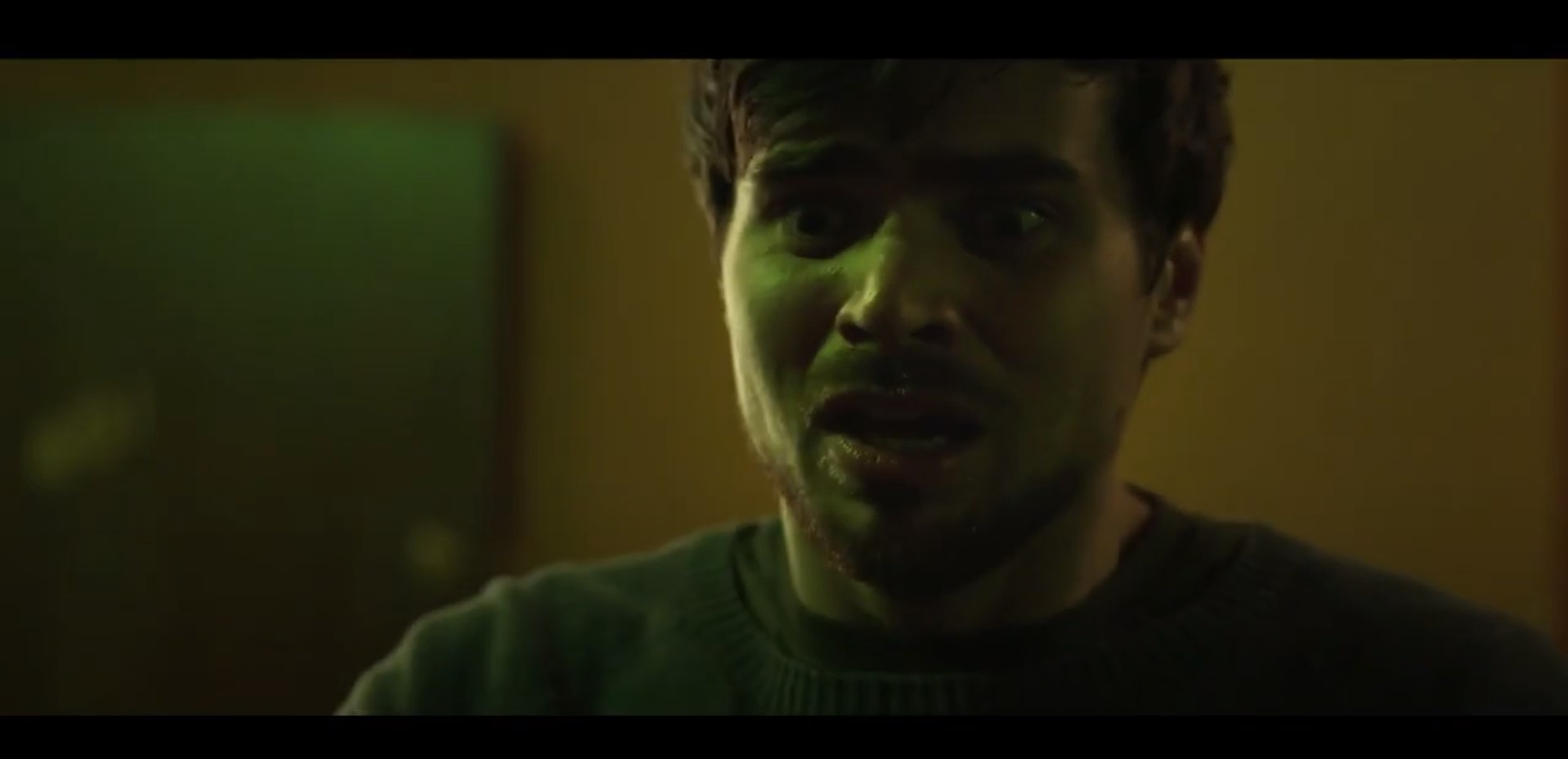
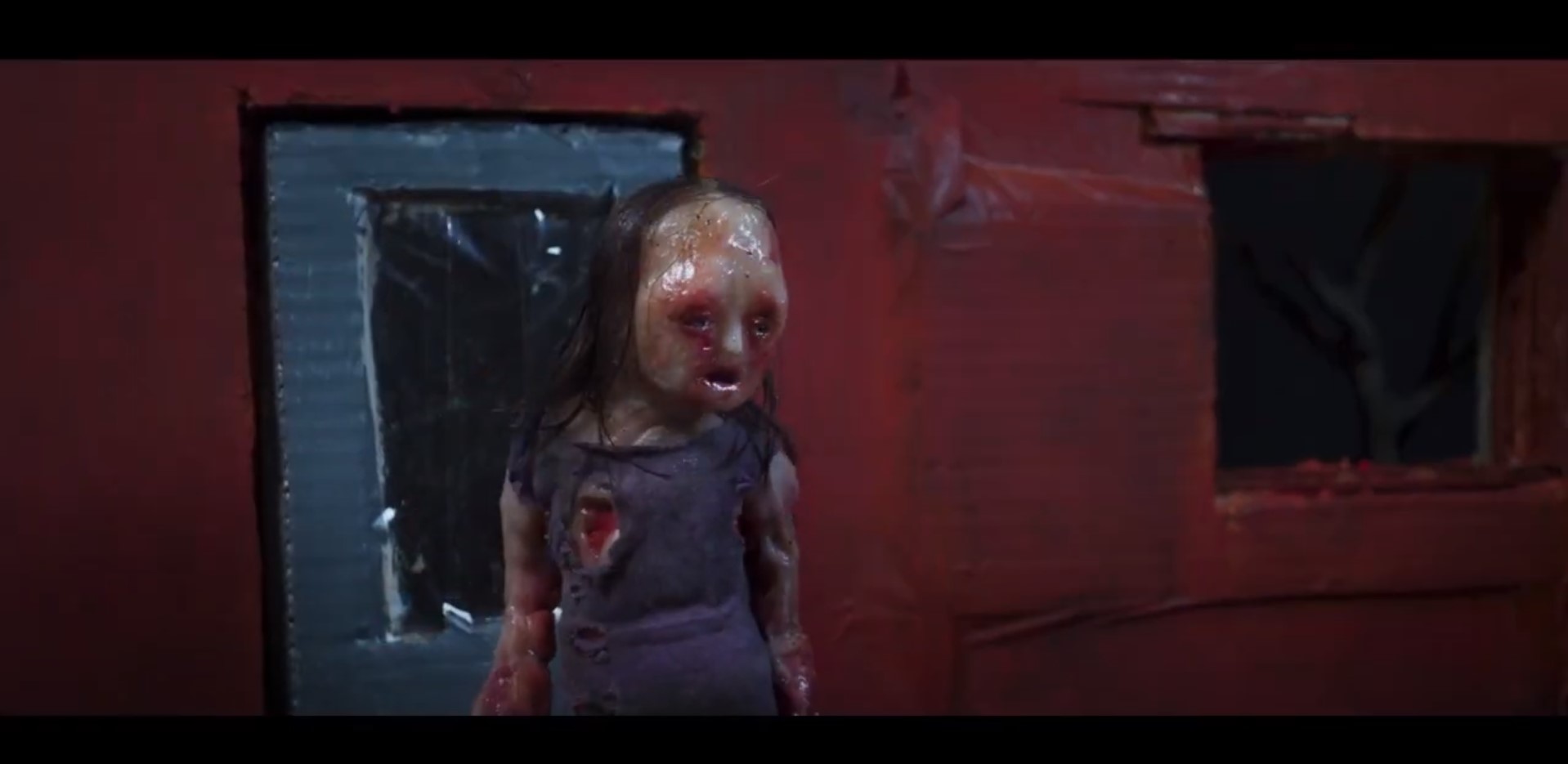
In the tragic lead role of spiraling down through pressurized suffering , trying to surface and take a breath from Ella Blake’s domineering mother’s shadow, is Aisling Franciosi, an Irish actress who also had a principal role in the segmented Dracula tale of “The Last Voyage of the Demeter” released the same year.  As Ella Blake, Franciosi plays into the young woman’s meek and submissive behavior as a subservient daughter to her conceited mother (Stella Gonet, “Spencer”).  All the while on the inside, Blake’s bottled voice contains lethal doses of self-destruction, barring her indefinitely inside the mental boundaries of her psyche, and never surfacing between the already emotional scarring and the grief for mother’s authoritarian parenting as Blake herself becomes very much like the armature puppet she manipulates into position for her film, needing that command structure to follow orders.  That need to be creative is so strong within Blake she fabricates another persona splitting soul into a dissociative disorder that takes the yoke and, ultimately, control over her and her project.  And, in some distressing and grim fairytale type of way, the voice recreates a story that parallels Ella’s life with the Ash Man (effects and prosthetic-cladded actor James Swanton, “Host”) chasing down and manipulating a wax puppet version of Ella in a grotesque mirror dynamic between Ella and her mother.  Tethering Ella ever so barely to reality is flexible boyfriend Tom (Tom York) and his flaunting animation corporate head Polly (Therica Wilson-Read, “Suicide Club”) to what’s in front of her rather to the voice inside of her but their truth is far too combative for Ella to stay fastened to a much strong influencing voice that’s far too close to her.   The upcoming “The Beast Within” actress, Caoilinn Springall, rounds out the cast as the little girl of the apartment building. 

As much as I wanted to seep and soak into “Stopmotion’s” one-frame-at-a-time madness, I couldn’t help but to think I’ve seen this story before.   A sort of déjà vu encircles me and hits me squarely in the gut as I lament over the possibility of feeling the same way I felt before with another film.  Then, it struck me like a bolt of lightning that this storyline shares similarities with the 2021, Prano Bailey-Bond film, “Censor.”  Now, I’m not saying “Stopmotion” is a direct carbon copy but follows a familiar pathway, a movie industry outlier forced by life and submersed under the weight to finishing what the heroines have started only to crack in deep obsession.  On a high level, character impetuses that lead to the same conclusion are in stark contrast and Ella Blake’s descent fathoms family trauma and fixation with trying to be an individual and not just a minor component of a bigger, more impressive, machine that overshadows the necessary cog that makes the whole operate.  Coupled with surreal imagery, otherworldly stopmotion animation, and physical effects that’ll make your skin crawl, or melt like wax, “Stopmotion” enlivens an animator filmmaker’s creativity outside the personifying vocation, blending genres and animations to exact a reality bending mania.  Morgan’s fragmented segues evoke an alternate reality that skips the portions where the audiences’ minds might fill in the gaps.  There is no gap filling, only essential, contextual moments, as if Morgan is the puppeteer to his story by arranging the movements one frame at a time reflect Ella’s poignant reminders and dour moments that mold her.

“Stopmotion” animates a living hell.  The Shudder exclusive lands onto a RLJ Entertainment subsidiary UK label, Acorn Media International, Blu-ray release.  The Blu-ray is presented in a widescreen 2.35:1 aspect ratio encoded with AVC, high definition 1080p, on a BD25.  Though in spartanly stark and gritty-glum set dressings, “Stopmotion’s” grading is on the lighter side of saturation diffusion, held mostly to a shade array of reds, greens, browns, and yellows.  There is numerous isolating, low key-lit scenes concentrated on the framed charactered and engulfing them in darkness but with that, there were no notifiable issues with posterization or banding.  Depth, especially in the stop-motion portion of reality, has spatial length and dimensional delineation, a testament to Morgan’s stop motion animator’s background and experience as some examples of the craft often look flat.  The English DTS-HD Master Audio 5.1 offers a lossless fidelity through the broodiness of Lola de la Mata’s compositional vocal and violin score, stringing through the surrealistic switch of cerebral crossfire.  Dialogue creates no challenges with a clear and clean presentation, range of effects heighten in animation’s Foley, and, again, depth creates that an enwreathed sound field through the back and side channels.  English subtitles are optionally available.  Special features include an interview with star Aisling Francosi, interview with writer-director Robert Morgan, and a behind-the-scenes featurette.  The Acorn Media release is rated 18 for Strong Bloody Violence and gore, has a runtime of 94 minutes, and, though not listed, played in region A playback so does seem to have at least dual-regional encoding between A and B.  The tangible Blu-ray comes in a standard Blu-ray case with a creepy, head-nesting puppet artwork.  The interior has standard appeal with just the disc inside, pressed with the same front cover art. 

Last Rites: “Stopmotion” depicts a tragic fall but not from grace in what is a more sad and sullen reality, and the escape is a freshly personified hell of one’s own making. 

“Stopmotion” Available on Blu-ray!

The Earth is Healing with EVIL Intentions. “The Feast” reviewed (IFC Midnight / Digital Screener)

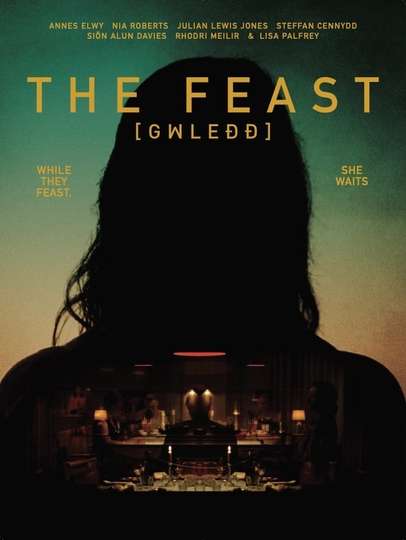
Glenda is frantically planning a dinner party for seven people at her newly constructed, modern rural home in the Welsh countryside. In order to quickly prepare, Glenda hires a young waitress, Cadi, from the local pub-restaurant as a pair of extra hands, but becomes intertwined with Glenda’s eccentric and dysfunctional family and friends who are drug addicts, sexual deviants, narcissists, and greedily apathetic in respecting local Welsh traditions and lands. However, Cadi keeps her own secret, one that’ll will transform the joyous dinner party into a night of deadly retribution for all their sins upon Earth.

For a language once on the brink of extinction and only spoken by less than a million people, probably even more less than that estimate, director Lee Haven Jones’ debut feature film, “The Feast,” reintroduces the language to many of us with revitalizing the Celtic-tradition Welsh tongue by implementing it as the entire dialect for his introductory from the United Kingdom. Jones’ eco-horror clashes archaic Welsh lore and traditions with the newfangled inattentive and neglectful modernism from a script by Roger Williams, a frequent collaborator with Jones on previous credits such as the split-heritage documentary “Galesa” and the short-lived drama series drama series, “Tir,” about foreign invaders intrusively adding financial hardships Welsh landowners. Also known as “Gwledd” on script in Wales, “The Feast” is executively produced by Jones and Williams as well as Gwenllian Gravelle, and Paul Higgins under an amass of production companies in the British Film Institute (with funds stemming from the national lottery), Ffilm Cymru Wales, S4C, Fields Park and, in association with, Great Point Media and Melville Media Limited.

THE FEAST Still 1

A dinner party fit for the scum of society comes to mind as Jones rounds the horn introducing Glenda’s passively confrontational family whom all are on display for having vices unsuitable for polite society. Beginning with her sons, two brothers shamed by their parents into hiding from out of the public eye by whisking them away to their rural abode, are portrayed by actors Steffan Cennydd as the drug addicted and party loafer Guto and Sion Alun Davies as the an intelligent and sterile sociopath with a sordid past involving accusing women. There’s also her husband Gwyn (Julian Lewis Jones, “Elfie Hopkins: Cannibal Hunter”) with a sleazy demeanor and an quenchable thirst for money. The family friend Euros (Rhodri Meilir) lives and breathes squeezing every ouch of worth from the dollar signs he envisions plastered on everything to the point that his pigheadedness will eventually get the better of him. Lastly, there is Glenda (Nia Roberts) herself who is a pursuer of the finer, material things eager to display them proudly no matter the cost of bloodshed. Roger Williams’ characters are written absolutely lush with cancerous class and a vague sense of their surroundings as they stew proudly being one boldly intense personality to the next; however, they become becomes cleaved by the house party help, Cadi, with a shark-circling simplicity by Annes Elwy. Elwy barely has any dialogue as she submerses Cadi, quietly like a submarine silently churning the waters, into the family’s eclectic affairs and studying their every movement with a naïve gaze, but there is nothing naïve about Cadi’s uncomfortable silence that becomes heedlessly unnoticed by, no surprise here, the group of narcissists. “The Feast” rounds out the cast with Lisa Palfrey, the only rational head with surprising little screen time after briefly unveiling a shocking revelation about just exactly who Glenda let in her home.

THE FEAST Still 2

2021 has been the year for under-the-radar, but oh so good, eco-horror.  Among the ranks following this years Ben Wheatley’s “In the Earth” and Jaco Bouwer’s “Gaia” comes the all-things-Welsh cautionary outlier that when pushed too far, when disturbed too much, and when reeking virally infused putrid, a vindictive reaper will come calling.  In this case, that harbinger of death takes the form of a landbound spirit rooted in lore with an insidiously coy wolf in sheep’s clothing mounting a strike with subtle, rancorous fangs by smothering them with their own debaucheries and vices.  “The Feast” will take a couple of viewings to fully digest the complete airy extent of Jones’ lax editing, under the cut and paste thumb of Kevin Jones, that can infrequently blur character timelines and presence in the story, as if plot points were forced into an unsure elucidation to connect the dots.  With a simmering horror on a spoke of unsettling imagery, the editing should have slightly been more binding to tighten gray areas; instead, “The Feast” has an abstract quality third act that not only chops up scenes, but also chops up bodies influentially consumed by the already self-destructing aspects. Some time must pass, a few days maybe, to let “The Feast” penetrate an understanding as it’s one of those flicks, wrapped loosely in cultural folklore or maybe told with the assumption non-Welsh viewers will grasp, the more thought about or written about, the more appreciation the film will disclose way after the credits roll.

THE FEAST Still 3

Funny how gravitating cultural folklore and nature grow an impeccable theme of doom as if shaping mythologies and a life-growing ecosystem equate to nothing more than a foreboding sense that one day mankind will become extinct at their own hand. “The Feast” portions a slice of that ominous pie, topped with Welsh lore and gore, coming to North America theaters and digital on-demand this November 19th, just in time for America’s feasting activities of Thanksgiving. The 93 minute, unrated film will be distributed by IFC Midnight, the sister label to IFC Films, owned and operated by AMC Networks Inc. Bjørn Ståle Bratberg serves as cinematographer who options to start with the fresh-air, blue-sky landscape of the Welsh countryside than slowly guide us, step-by-step into the character delinking from the natural, beautiful world into a more menacing night of harsh darkness and fervent flame to reveal true identities. Bratberg’s dim lighting seemingly imprisons the sordid family in the new and modern home that’s like a prison with a gray brick interior and has a room of relaxation for Glenda that is noted by a guest in resembling a prison cell. The message of revenge resounded loud and clear; “The Feast” lays down coruscating repercussions in reaping the land for one’s own benefit and Lee Haven Jones’ wayward timebomb evokes an upsetting fear and tension for a dinner party finale that is surely to go way-wrong in this different kind of revenge thriller.