Never Tour Mistakenly into an EVIL Murder Bar! “La Petite Mort” reviewed! (Unearthed Films / Blu-ray)

“La Petite Mort” is Orgasmically Gory and on Blu-ray!

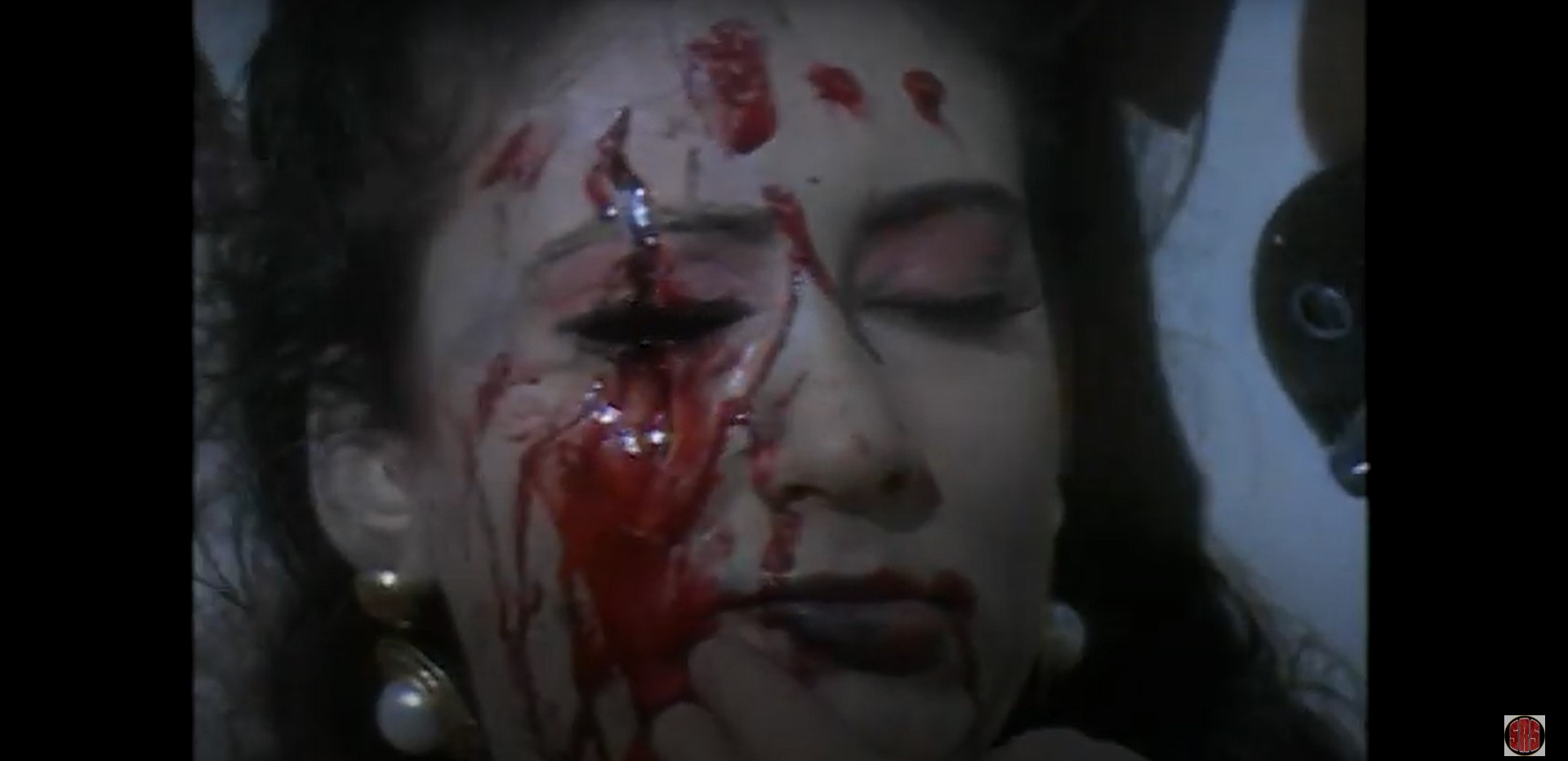
Vacationing to Mallorca should have been a relaxing getaway for Simon, his blind girlfriend Nina, and their longtime friend, Dodo, but their flight layover in Frankfurt leaves down idle town to explore the city that’s only a mere two hours from home. Tension between them begin to bubble to the surface when uncertain emotional steps to take relationships to the next level arise and they become inadvertently scammed by a local grifter. Exhaustion sets in and forces them to take refuge in a local dive bar with a specialty for S&M play. The bar is actually a front for the Maison de la Petite Mort, an underground snuff house owned a sadistic woman named Maman who livestreams kink-murders and sells hapless victims to wealthy businessmen with whimsical and perverse deviancies. The flight to Mallorca will be indefinitely delayed as the three friends are now a part of the bloody basement decor awaiting the horrors before them.

“La Petite Mort,” translated from French as literally the little death, is also known as the post-orgasmic sensation, such as a weakness or loss of conscious, that serves as an analogy to death. The phrase is also the title of the 2009 torture-gore film written-and-directed by the German-born Marcel Walz more than a decade before the formation of his now Neon Noir production company. Walz, who later in his career went on to remake the Herschel Gordon Lewis 1963 film, “Blood Feast,” blossoms as a torture porn filmmaker as Walz’s directorial catalogue contains more blood than a blood bank and often stretches the subgenre range of plot machinations from cannibals to dark web to snuff. Made on a few thousand-dollar budget and shot in a real sex club in Mannheim, Germany, “La Petite Mort” touches upon all three plot devices to create a dungeon of splatter and sadism using elements of an unsolved true crime case of a couple gruesomely murdered in an underground murder house as the narrative base. Before Neon Noir, Walz and filmmaker Michael Effenberger, director of “Tortua,” formed Matador Films that became the company behind “La Petite Mort” with Thomas Buresch (“Unrated: The Movie”) and feature actor and director of photography, Andreas Pape (“Toxic Lullaby”) producing.

Films like “La Petite Mort” is a special breed not because of the torture and gore-porn element, which can be an acquired taste for consumers with dark thoughts, fantasies, and morbid curiosities (I fall into the latter category if you’re wondering), but rather the story caters to no singular principal lead nor does is the focus on an ensemble cast.  “La Petite Mort” transitions from one group, the naïve backpacking travelers, to the S&M snuff-makers in a flip-flop of point of view and storytelling.  All the relationship complexities between the out of concern love from Simon (Andreas Pape) to his even keeled blind girlfriend, Nina (Inés Zahmoul, “La Isla”) as well as the insignificant tiffs and spats between Simon and friend Dodo (Anna Habeck, “Popular”) to see who is in Nina’s favor are quickly swept aside when the trio is trapped and tethered to the S&M spider web of Maman’s Maison de la Petite Mort.  While the three travelers produce a mild interest spun out of frivolous dramatics to the like of the normal human population and very much up played by Walz for that very purpose to produce stark contrast against what’s normal for sadomastic pleasure-seekers, Maman, the orchestrator of pain and profit, is the most earnest of principals with a crone-like presence, played inexorably and ruthless by French punk-goth singer Manoush.  The certified gypsy and former bodybuilder has made a name for herself in a plethora of extreme, Germanic horror pictures over the last decade, but “La Petite Mort” came early in Manoush’s career and is exhibits why she’s so good at horror, especially at the sadism brand.  Maman’s schadenfreude business employs two lesbian dominatrixes, Dominique and Angélique, with strong-stomachs and a healthy bloodthirst.  The beautiful femme fatales serve Maman’s unquestionably, almost mindlessly, that only glimpses into possibilities of how the two women became betrothed to do Maman’s bidding.  Annika Strauss, who’s been in the screen queen business about as long as and has starred alongside with Manoush on a number of films, is also a Marcel Walz regular casted actress who fits and transforms into just about every character under the black sun of ghoulish and macabre material thrown her way.  As Dominique, Strauss is provided more depth to why and how the brunette basket case has come under Maman’s greedy and depraved thumb as the actress shows some slither of concern for the captives while explaining she had no choice just they like them and exhibiting more reserve than her blonde counterpart Angélique (Magdalèna Kalley, “Violent Shit 4”) when the cameras are rolling.  Conversations rooted into provocative thought, sympathy, or reason are often few and far in between the constant pleas for help and the screaming matches of pelting threats.  “La Petite Mort” finalizes the cast with Martin Hentschel (“Zombie Reanimation”), Tanja Karius (“Necronos”), and Thomas Kercmar (“Space Wolf”) as Klaus der Kobold, a Napoleon-sized elitist wealthy enough to buy people’s lives and enjoy seeing them horrifically mutilated.

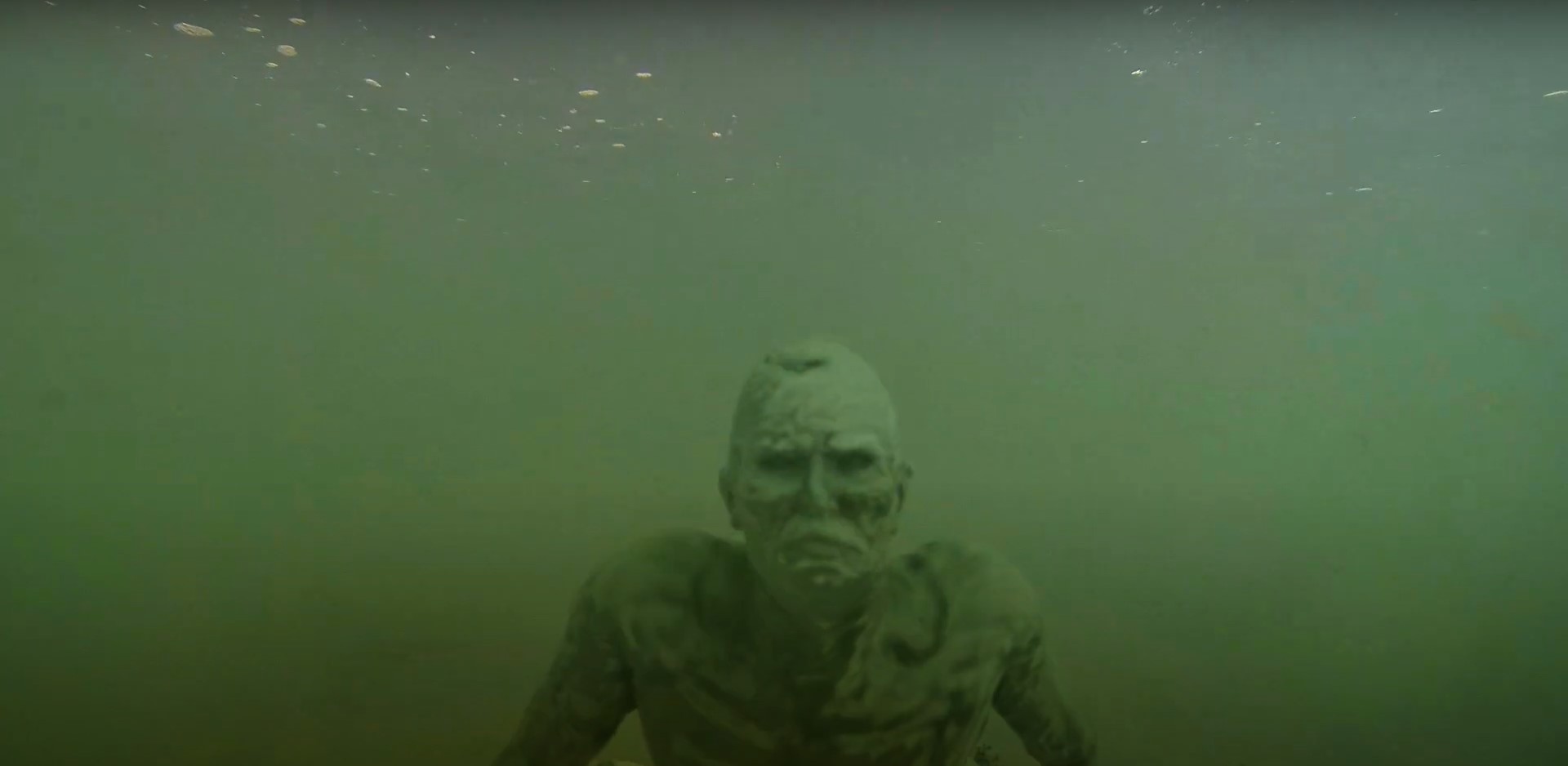
One scene overwhelms the diagnostic side of my brain and that is why Maman is torturing Dodo with needles as Manoush delivers a surprising genuine villainous monologue about sadomasochists being judged by normal people and how her character has a liberated, uninhibited sexuality in a moment that is a powerful argument in favor for sadomasochism to exist without shame.  Thinking about this, I’m not aware of any publicized S&M clubs, especially those that aren’t criticized for being deviant, perverse, and secular.  After that one moment of vulnerability, “La Petite Mort” turns into a choke-down bloodbath with some great and some not-so-great special effects by one of Germany’s gore film greats, Olaf Ittenbach, director and F/X artist of “Premutos:  The Fallen Angel” and “Legion of the Dead.”  Ittenbach brings me to another overwhelming scene, one that churns the contents of your stomach, involving a meat grinder, a hand, and a chalice.   “La Petite Mort” has other notable grisly moments of scalping, castrating, eye-plucking, and disemboweling, all of which are in great gooey-gory detail.  What takes away from the gore scenes is Walz fluttering effect or grindhouse-esque edited framed overlay that, in my wildest guess, is supposed to enhance the extreme acts of violence, torture, and death in conjunction with composer Michael Donner’s industrial rumble and pulsing synth score. Instead, the effect becomes nothing more than a cinematic nuisance, an eyesore that dilutes Ittenbach’s best handywork because that scalping scene is the chef’s kiss of tactual realism. Based on a true story that I can’t seem to find any record of, “La Petite Mort,” for a brief few minutes, becomes a promulgating champion for alternate sexualities and is also a showcase for Olaf Ittenbach to shock and disgust but for what the feature is worth, “La Petite Mort” offers only emptiness in both character conviction and story narrative.

A fitting entry into the shockingly weird and grotesque “Unearthed Films'” independent film catalogue, “La Petite Mort” arrives onto a high definition, 1080p Blu-ray home video. Presented in a 2.35:1 widescreen aspect ratio, Walz bookends his callous-cladded cult film with a yellowish-tan tint while the girth of the story is laced with more gel coloring under no hinderance of tint. Low lighting with low contrast markers, mixed with tropical-warm gel coloring and strobe flashing fabricates the sunless and dank murder basement but any exterior shots, even the bookend act one and act three are rendered with poor resolution for digital recording. Only a single audio track is available with a German LPCM 2.0 with burned-in English subtitles and what’s rendered is likely the best quality to get from the masters from the lossy format. Dialogue is often unrefined, and the levels vary, but for the most part clean and free from obstruction. The track has limited ambience and harps heavily on the gory moments while Michael Donner’s dark industrial score takes the brunt of the overall soundtrack. Subtitle synchronization varies as well with millisecond flashes of translations that are impossible to read or even pause perfectly on, but the translations appear flawless and consolidated from the dialect for easy reading. The Unearthed Films’ bonus content is aplenty with a new commentary and interview with director Marcel Walz. Also included is a feature-length making of “La Petite Mort” with raw handheld camcorder footage, shot by The Bad Boy character in the film, behind-the-scenes footage, and even some 16mm footage that go reel deep into the effects and life of independent filmmakers. An archived interview with special effects artist Olaf Ittenbach, deleted scenes, photo gallery, teaser trailer, official trailer, “La Petite Mort 2” trailer, and the VHS intro that’s essentially a Marcel Walz introduction of the VHS home video release round out the bonus content. The physical attributes are a clear, Blu-ray snapper case with reversible cover art with the inside sleeve containing a more graphic torture not suited for retail shelves. The region A encoded, 77-minute feature is not rated. If invested for the kills, “La Petite Mort” pleases to overindulge the desire and is a solid first torture-porn effort from a then young Marcel Walz who continues to rise in the niche market.

“La Petite Mort” is Orgasmically Gory and on Blu-ray!

EVIL Cabbie Takes Beautiful Women for the Ride of their Lives. “Maniac Driver” reviewed! (ReelGore Releasing / Blu-ray)

Hail down the “Maniac Driver” on Blu-ray!

Taking a taxi should be a reliably safe to get from point A to point B and once you settle the serviceable transaction with payment, you can forget you ever saw that taxi driver again.  But what if that taxi driver follows you home, obsesses over you, and has psychotic plans to take your life as well as his own?  One Tokyo cabbie has those very inclinations toward the beautiful women.  These women intoxicate his severe guilt over a past personal tragedy involving the merciless murder of his wife.  He scours his passenger pool for the perfect beauty to be his closing opus, a gift to society that dealt him the same hand and will take her life as a maniacal masked killer with a blade before he turns the blade on his own neck. 

From the director of “Gun Woman” and “Karate Kill” comes the latest gore-soaked, nudity-laden, psychotronic grindhouse picture from Tokyo filmmaker Kurando Mitsutake.  Labeled as a Japanese giallo film, the writer-director Mitsutake pulls inspiration from one of most influential and prolific Italian giallo filmmakers ever, the late Lucio Fulci, and stylizes his idolizing film with his own proclivity for flair.  The 2020 released film is a thirst trap of the subgenre upon reading the heavily enticing description and its basic but effective cover art of a leather glove and jacket cladded masked maniac holding tightly onto a half-naked woman, almost in an embracing manner rather than a malice one.  Sex and blood sell and “Maniac Driver” doesn’t disappoint but what about the story?  What drives the killer from one woman to the next and does it all make sense?  “Maniac Driver’s” title suggests not, and I believe Kurando Mitsutake felt the same way when writing the script, produced by “After Life” and “Paster Shepherd” producer Mami Akari under the Akari Pictures banner.

Titling the story around the maniac driver binds the film solely to the cab driver, much in the same way William Lustig’s “Maniac” focuses on Joe Spinell’s spiraling madness and scalping mutilations, and we’re pretty much left with the driver’s innermost thoughts, about his process, about his reasons, and about his plans.  Essentially, the maniac driver drives the narrative with a contemplative fare.  Tomoki Kimura has surpassed the challenge with a pendulum crazed performance sought to not only express his derangement but can also infect the viewers with the character’s warped mind.  Kimura keeps his expression stoic and sour in a role that barely requires him to speak as we mostly hear prosy, abstract, and murderous inner thoughts.  In regard to the women the driver stalks and involves himself sleazily with, Kurando Mitsutake goes the JAV actress route and is familiar with as having the alluring Asami star pretty much naked through the entirety of “Gun Woman.”  With adult actresses, Mitsutake receives uninhibited support for the victimized characters the maniac driver fantasizes over and kills as well as Mitsutake’s satirical whims in exploiting the subgenre’s penchant for gratuitous flesh.  Adult starlets from softcore actress Saryû Usui (“Sex Detective Hatenashi”) to the hardcore Ai Sayama (“Date with a Busty Nymph”), Ayumi Kimito (“Love Kimomen”), and SOD (Soft on Demand) Create’s Iori Kogawa (“One Wife + 10 Husbands) add a little titillation with gratuitous exposure, bondage, and fornication to the max. 

“Maniac Driver” paves its own neo-giallo path that swerves away from the traditional calling cards. Instead of a typical Italian murder-mystery, Mitsutake intentionally divulges the killer cab driver with a delusional hunger and fate. All the other hallmarks of a giallo killer are there in a Fulci tribute form with leathery glove hands, a gleaming blade, a masked face, and a killer who makes a duck-like sound that’s far more menacing than comical. “Maniac Driver” also pulls from other inspirations, such as Lustig’s “Maniac” as well as Martin Scorcese’s “Taxi Driver” with Tomoki Kimura channel his best Robert De Niro impression with the iconic You Talkin’ To Me line. Behind the whole ghastly facade and polychromatic style, entrenched is a theme of survival’s guilt that leads the cab driver to the point of no return. Severely injured and helpless to save his wife from a crazed killer, he’s wrought with putting forth into the world exactly what was taken from him in the same fashion, but how the deeper we spiral with and into his derangement, piecing together his mental episodical puzzle might not be so easily pegged. Mitsutake’s seemingly straight forward narrative is a blindsiding blade to the throat when looking in the opposite direction, expecting a different outcome, and when the principal character is kept to his innermost thoughts, viewers are treated with only the maniac’s disenchantment of life. The curveball is more than welcome despite all evidence being in plain view, but with the bizarre fiendishness, schizo-universe, and the T&A, to see clear through it all is impossible, especially when Mitsutake really goes off the rails with the maniac driver’s fantasies that mesh seamlessly with reality. Scenes with Iora Kogawa and Tomoki Kimura are intolerably hazy as the actors engage coquettishly as an exquisite, kimono dressed female passenger and a public transportation service man peering his eyes through the review mirror and this leads to an explicit one-on-one encounter that includes some bondage as well as a Iaido showdown with swords drawn. Through Mitsutake’s various closeups and depth-shots, sprinkled with tight up shots to emphasize body parts and to create an oppressive world, “Maniac Driver” ebbs and flows that sort of satirical, aggrandized chaos to make light of the oversexualization, as skirts hike up while running and exposed chest flop out underneath tightly bound tops, and the sheer madness of a broken mortal man. “Maniac Driver” is an uber giallo of sleaze and psychosis, a steady ride of burning yearning, and is gory where it counts.

To be honest with you, I thought I’d never see a ReelGore Releasing again. When speaking with Cult Epics founder Nico B., who launched the label with producer Steve Aquilina (“Violent Shit: The Movie”) in 2016, I had asked the popular curator of cult cinema whether he would continue with banner that sought to specialize in the release of extreme, violent horror after the releases of the ItsBlogginEvil generally well received “The Orphan Killer” and “The Curse of Doctor Wolfenstein?” The answer I received was a flat out no from Nico B. because, simply, the label didn’t generate enough profit. Well, lo and behold, ReelGore Releasing has been resurrected and the blood is flowing once again with a pair of new titles with “Manic Driver” being one of them. Though Nico B. has confirmed no involvement with the releases, it’s still great to see the label back in action again. “Maniac Driver” is released on a ReelGore Releasing AVC encoded Blu-ray, a BD25, and presents the Mitsutake film in 1080p, high definition and a 2.35:1widescreen aspect ratio. Despite heavily saturating to a blur scenes with brilliant, primary coloring, familiar to the giallo subgenre, the overall details are quite pleasant and palpable. Mitsutake utilizes different lighting and shadowing techniques to create different atmospherics but never seems to inherently kill the textures as they maintain a sharp, tactile presence. The Japanese DTS-HD 5.1 audio track, with forced English subtitles, is vibrant with an 80’s inspired blend of synth and riff-rock. Japanese dialogue is strong, clear, and innately clean with the digital recording, balanced by an error free and aptly timed English subtitles. “Maniac Driver” has a robust, yet sometimes overelaborated, sound design that outputs nicely through the side channels. The killer’s leather glove sounds can be overkill with every scene being loused with the individual stretches of the fabric while the energy-thumping engine combined affixed shots around the tire and grill is a powerful effect of the cab driver’s routine hunting method. The release also comes with French and Spanish subtitles. Bonus features include a making of featurette with interviews with the cast and crew, an audio commentary with director Kurando Mitsutake, photo slideshow, and the trailer. There are no stinger scenes during or after the credits. The physical appearance sheaths the 25GB disc inside a sleek red Blu-ray snapper case with reversible cover art that has two alternate posters on the inside. The film is not rated, region free, and has a run time of just under 75 minutes. “Maniac Driver” is no passenger in the giallo subgenre; the Kurando Mitsutake might be a bundle of homages and inspirations but takes the wheel of the Japanese sexploitive-giallo gas guzzler with deranged brutality.

Hail down the “Maniac Driver” on Blu-ray!

EVIL Surfs the Fresh Powder. “Shredder” reviewed! (Ronin Flix / Blu-ray)

“Shredder” on Blu-ray at Amazon.com

Mount Rocky Summit ski resort has been closed and abandoned for years because of the tragic death of a young skier at the hands of intoxicated snowboarders not following the resort’s rules.  Years later, a group of snowboarders sneak onto the resort property to snow surf the untouched slopes despite the local’s steep warnings of a haunted mountain and an easily influenced sheriff’s waning attempt to remove them from trespassing.  The snowboarding teens should have heeded the ominous warnings as a masked skier dressed all in black begins a massacre on the mountain, brutally killing the ignorant and reckless snowboarders one-by-one for defying the resort and lift safety guidelines and rules.  Before realizing what was happening, accusations and panic set in as trust and survival become key to surviving a total gnarly wipeout. 

“Shredder” – no, I’m not talking about master Oroku Saki aka The Shredder, high leader of the criminal ninja syndicate known as the Foot Clan and main antagonist for the Pizza-loving crimefighters, the Teenage Mutant Ninja Turtles.  The “Shredder” that I’m referring is the unheeded 2001 slasher from writer-director Greg Huson and co-written by Craig Donald Carlson.  “Shredder” is every bit the essence of the late 90’s slasher-dash made in the early 2000s with a pop-punk soundtrack, radical attitudes, and an incorporated extreme sport built-in to stand out amongst the others in the genre with its snowboarder and skier themed horror model.  Filmed in and around the Silver Mountain Ski resort in Kellogg, Idaho and known as Jason Z and Ski Weekend in other parts of the world, “Shredder” comes during a slasher renaissance that began with Wes Craven’s game-changing “Scream” designed to plant the killer in plain sight and keep the audience guessing and analyzing who just might be the masked murderer blazing the bunny slope. Idahoans Rory Veal (“Lover’s Lane”) and Geof Smith (writer of “DeepStar Six”) produce the cult feature distributed direct-to-video by MGM.

Though “Shredder” is a campy horror-comedy, the feature does take itself rather seriously and the actors soak themselves into their stoked, stoner, and sex-driven characters of a variety volitions. Scott Weinger, the voice actor whose claim to fame is being the original voice of Aladdin in Disney’s 1992 animated “Aladdin” and its various sequels and spinoffs, finds himself on the opposite side of the spectrum in a not-so-kid-friendly film about a skier who axes, beheads, hangs, and stabs inappropriate snowboarders to death. Weinger plays the lead principal character as the lead on a leash boyfriend, Cole, with a veil that keeps him from seeing his trollop rich girlfriend Kimberly Van Arx, played by Lindsey McKeon (“Indigenous”). Weinger and McKeon wear their roles well enough to feel Cole’s good guy mold, his hero of character, being cuckolded by Lindsey’s wondering eye and brazen attempts to sleep with the hot European hitchhiker Christophe (Brad Hawkins, “From the Dark”). Kimberly Van Arx isn’t the only lady sex cuckoo for Christophe as Kimberly’s friend Robyn (Holly Towne) slathers on the seduction by hanging out of her clothes for much of the interior scenes. Much of the flirtation and hanky-panky is fairly overboard to the point that even the imbedded amateur cam-recording videographer and virgin Skyler (Billy O’Sullivan but credited as Billy O) becomes involved and handsy with another trespassing skier outside of their group who takes a shine to him instantly. Now, you can’t have an early 2000s slasher film without the token druggie and that role Peter Riggs (“Roulette”) as Kirk, professional snowboarder testing out new boards to dislodge himself as number two snowboarder in the world. Individually, the characters a fine. Together, the cast creates a body of personalities to sympathize and hate and also not bog down what’s really a mediocre-made slasher with decent gore. “Shredder’s” cast rounds out with Juleah Weikel, Candace Moon, Ron Varela, and Seth Reston.

When I say mediocre-made, I mean script sets up characters to die arbitrarily. There’s no means to their ends and the majority of the kills are as quick as a snowboarder finishing a run down the slalom. That’s not to say that “Shredder” doesn’t bring the gore with an opening and an ending that’ll make you lose your head or just become shredded skier meat in a giant snow grinder truck that has entertainable yet questionable visual effects results. What’s admirable about “Shredder” is the production doesn’t skimp out on landscapes and ski equipment to sell the whole winter resort theme. This partly becomes why “Shredder” is a cult horror hit with skiers and snowboarders. Doesn’t hurt that the filmmakers were able to utilize the Silver Mountain Resort complete with ski lift and lots of fresh snow for the spliced in shots of snowboarding runs with character stand-ins. Alongside the postmodern human and the cliched tropes lies the mystery maniac just waiting to be exposed in a coda showdown with the final girl or boy, but the problem with “Shredder’s” obscurity is its very transparent. Designed by force to misdirect our attention to a potential person was poorly crafted and made Cole seem foolish when he struggles to make a case about the killer’s identity with no foundation to stand on. Instead, Huson and Carlson write in a minor role that quickly evolves into the unmasked major player but unlike “Shredder’s” predecessors, such as “Scream” or “Urban Legend,” picking out the killer is made-easy and takes the fun out narrowing out the suspects. There’s plenty to like about “Shredder” – motley crew of characters, solid kill scenes, and Holly Towne checking the nudity box – but the cult worthy film definitely deserved to go direct-to-video as an average archetype of the subgenre.

Hit the sanguinary slopes with “Shredder” now on a 1080p, high-definition Blu-ray from Ronin Flix, Scorpion Releasing, and distributed by MVD Visual. Presented in a widescreen 1.85:1 aspect ratio, the AVC encoded BD25 has softer details that are not amply delineated but are suitable as a lot of light bounces off the snow and washes away some of the depth. Far and near exterior landscapes are breathtakingly immersive in the scale and textures and the interior scenes are kept dark and claustrophobic with only dancing flashlights and fires to light the anxiety mood. I find fascinating that in early 2000s, 35mm celluloid film was still be used here and the transfer appears to have weathered any kind of wear or aging, granted we’re only talking about two decades worth of time passed. There’s light, natural grain with some white speckled moments here and there that don’t affect viewing and no real issues with compression on the lower storage disc that maintains bright color, blacks, and an overall stabilized picture. The Blu-ray comes with a single audio option, an English DTS-HD 2.0 master audio, that manages appropriately an ample amount of output through the dual channels. All tracks are rich and robust with dialogue clear, clean, and audible, a punk rock soundtrack that underscores and supports the exterior snowboarding runs with vitality, and a plentiful range of sound effects that might have been better suited with more defined depth. Optional English subtitles are available. Special features include a brand-new interview with actress Lindsey McKeon that chiefly and briefly goes through her career up until now, a brand-new audio commentary with director Greg Huson, outtakes aka deleted scenes, and the original theatrical trailer. The physical features include the traditional Blu-ray snapper case with illustrated artwork by Devon Whitehead with his trademark style of the main villain looming overhead a chaotic mixture of scene depictions. The 86-minute, region A encoded release is rated R for violence, gore, sexuality, language and some brief drug use. Not a downhill yard sale as one would expect and if you happen to be not a regular mountain adrenaline junkie, director Greg Huson does helm a fairly resilient and agreeable masked slasher with a winter avocational theme.

“Shredder” on Blu-ray at Amazon.com

EVIL vs EVIL vs EVIL vs EVIL vs EVIL etc., “Bigfoot vs Krampus” reviewed! (Ruthless Pictures / DVD)

Merry Kirstmas to all!  “Bigfoot vs Krampus” on DVD!

With Christmas time approaching and the Illuminati forces on the retreat, the Allies are in high spirits. Space rough neck Van Helsing considers taking his relationship with Allied Forces leader Princess Kali to the next level. Unfortunately Satan is set to ruin the moment. From the depths of Hell, the wicked Lord Of Darkness summons the demon spirit of Christmas, Krampus to wreak havoc on the living. Upon hearing the news, the clone of magician Aleister Crawley joins forces with the reptilian form of General Stalin and the Illuminati to mount a Christmas Eve attack on the Allies forcing Van Helsing and Kali to take drastic action. With help from the rowdy space rouge Bigfoot, the Allied Forces bait a syndicate of monsters to help take down the fiendish Krampus and restore peace to the galaxy.

Usually, I write my own storyline synopsis for the physical releases I provide review coverage for as there’s something about firsthand accounts that interpret more clearly and is more detailed in story events than the tagline plot that can be misleading at times, whether be a false marketing ploy to sham potential viewers into watching or goes to the other extreme with a less-than-desirable summary of drab when really the movie is much more magical, but with the 2021 released “Bigfoot vs Krampus,” the bizarre synopsis is worth every word count calorie.  Coming off the heels of a decent bigfoot picture from 1976 (“Creature from Blake Lake”) and playing into the festive Christmas holiday theme with the anti-Santa folklore, I was fingers crossed and impossibly hopeful to be two-for-two in the Sasquatch saga that kills two birds with one stone in doing my duty watching holiday-horror.  Boy was I terribly mistaken.  “Bigfoot vs Krampus” is just a full-length computer-generated cog in the machine of writer-and-director BC Fourteen and is a part of his so-bad-they’re bad versus film lot of an unofficial science fiction, comedic and satirical saga of generally evil in nature icons facing off against one another….in space.  “Bigfoot vs the Illuminati,” “Bigfoot vs Megalodon,” and even “Trumpocalypse Now!” and “Trump vs the Illuminati” really speak the filmmaker’s political stance as well really speak volumes on the filmmaker’s wayward clashes of alternative universes that amalgamates characters from horror, sci-fi, folklore, and video games into battle beyond the stars cratered epic. From executive producer Tony Cliftonson and producer Randall Finings, both involved with “Tickles the Clown, another spinoff in BC Fourteen’s gonzo-galaxy epic, “Bigfoot vs Krampus” is a production and a presentation of indie distributor Ruthless Studios.

“Bigfoot vs Krampus” is total, 100% computer-generated graphics with only voiceovers to bring the highly kinetic, standing-in-place characters to resemble something that looks like life. BC Fourteen doesn’t stray too far from his regular voice talent as many of the same characters reoccur or popup randomly in this galactic gasbag of all talk and little action. When not voicing family friendly films, Marco Guzmán finds himself fouling the language barrier of space as he lends his vocals to the majority of principal leads and supporting char acters, such as the titular hairy primate Bigfoot who in the film sounds like a bastardized, sonorous, and raspy version of Fat Albert. Guzmán also voices another principal lead in Van Helsing, the 16th clone of the original vampire slayer. Known by his friends as V.H., Van Helsing looks less like a doctor with a stake and more like the Master Chief from Halo, never removing his helmet as he spews surefooted cockiness across the galaxy. Guzmán also voices the reptilian form of a reincarnated Joseph Stalin as well as the Egyptian sun God, Ra, who has ambiguous loyalties but can be useful to the allies as an all-seeing eye of the universe. Carli Radar voices humanities last hope and hero, Kali. The allied forces leader is pregnant with V.H.’s baby, a contentious sore point for Van Helsing who felt tricked into providing Kali a progeny, but has to become mankind and the illuminati, stereotypical green Martians with big black eyes and small mouths, last leader when the Illuminati’s Princess is destroyed by Krampus (who is oddly not listed as being voiced in the film’s credits), Satan’s partner in clinching power over the allies. The voice talent rounds out with Nate Trevors, Edson Camacho, Wes Bruff, Leslie Parsons, Simon Daigle, Carl Folds, Robert Forth, and BC Fourteen.

What do Bigfoot, Krampus, Megalodon, Clowns, The Terminator, Dummy Dolls, The Boogie Man, Werewolves, Satan, Anubis, Ra, and Jack Skeleton all have in common? BC Fourteen CGI’d their likeness into his…I don’t even know how to classify the film. I’ve had a run-in with a BC Fourteen film 8 years ago with 2014’s “Werewolf Rising” when the Pittsburgh, Pennsylvania-born filmmaker went under the name BC Furtney and aside from a stellar performance by the always captivating Bill Oberst Jr. and Irena Murphy baring a full moon going snout-to-nips with a werewolf, “Werewolf Rising received a mixed review but was still comprehensible with a start, middle, and an end. Though I stress the comedic and satire, a precaution must be instilled as the unfunny “Bigfoot vs Krampus” drags through the mud a trove of select horror and sci-fi pop icons in carbon copy tiny spaceships, flying around in a muddlesome mess, and rendered completely unnatural in an advanced resemblant version of the Goldsrc engine – you should see Bigfoot run down the ship’s corridors. If “Bigfoot vs Krampus’ were a series of cinematic story intercuts sewn together with gameplay axed entirely, I would believe it, and I’m sure, having spot check a few of the sequels, prequels, and spinoffs of the same caliber, that some animated scenes are recycled. There’s definitely recycling happening in this feature. If the war between the Illumanti-Humans-Bigfoot allied forces and every evildoer under the sun wasn’t thematic enough, the pseudonymous BC Fourteen throws in Van Helsing’s struggle with conscious as the cloned hired mercenary with legendary blood lineage skips town and on his baby’s mama because he does not feel appreciated in a fight that’s technically not his. The director also adds a subplot of Bigfoot checking in with old friend, and apparently cafe barista, Anubis to make sure the Sun Deity Ra isn’t fibbing about Van Helsing’s unexpected demise at the hands of Krampus. Everything does circle back around to an open-ended showdown for that next exposition heavy installment of intergalactic garbage made with no heart, no respect and very little effort.

If the synopsis didn’t frighten you off from watching the film, text pulled word-for-word from the Ruthless Pictures’ DVD back cover, I surely hope this review left you with a bit of common sense prior to watching a cool and kitschy what if versus scenario. The Ruthless Pictures DVD presents the glossy computer graphics in a widescreen 1.78:1 aspect ratio. I will admit the animation provides here-and-there tactile moments, such as battle scuffs on robots or the ridges, grooves, and lighting on Krampus’s curled horns. All the animation looks about the same throughout, leaving a one-note taste that’s hard to wash out, but the at times, the CGI provides that nice ragdoll feel for humanoids Van Helsing and Kali and the lighting/shading does make appear more luxurious. Compression issues include background banding and splotches in darker spaces, but for the majority of the feature, those issues are limited. Though no listed on the DVD’s attributes, my players states “Bigfoot vs Krampus” has a single audio option – a Dolby Digital 2.0. For a science-fiction baster war, the lossy format is a lackluster that doesn’t surprisingly match all the other qualities, pushing out a mediocre 5-6Mbps average. Option English subtitles are available under the static menu. The DVD is a bare bones release with zero bonus content. The DVD is encoded region free and has a runtime of a merciful 70 minutes. Bigfoot films are back in the dumps again for this reviewer as “Bigfoot vs Krampus” is a flurry of insipidity and, the worst part of it all, it doesn’t add anything to the Christmas holiday horror subgenre with the Krampus module built-in for the sake of impersonating a something about as old as it’s folklore, a space invader.

Merry Kirstmas to all!  “Bigfoot vs Krampus” on DVD!

Who Dat? Dat EVIL! “Creature from Black Lake” reviewed! (Synapse / Blu-ray)

“Creature From Black Lake” on Blu-ray is Bigfoot’s Bestfriend

Two University of Chicago students interested in discovering the legendary creature bigfoot take a road trip down to Oil City, Louisiana where there have been multiple reports and sightings of a ape-like man wandering in the Bayou and even an attack on a local trapper, witness by the gruffy drunk, Joe Canton.  Met with stern resistance from the Oil City Sheriff Billy Carter and some reluctance from scared locals in the Bridges family after an mortal encounter with the beast that killed two of their family members, the students dig in and continue their swampy-laden search for bigfoot as well as finding the time to mingle with Louisiana women.  When they discover the mythical beast actually exists, nothing can stop them into catching sight of the creature or maybe even snaring it, not even the Sheriff’s threat of jail time if they don’t high tail it out of town could persuade their mania, but their expedition deep into the swamp and coming in proxmital contact with the aggressive primate outlier may prove to be a fatal mistake rather than a claim to fame. 

Having searched high and low for many years to review just any Bigfoot film that’s above average worthy has been a wearisomely long and arduous task.  A slew of movies dedicated to the big hairy fella have been nothing but a mockery, whether intention or unintentional, of the Sasquatchsploitation horror subgenre.  Instead of being subjugated to the countless, blasphemous modern tales of the mythical monster, I had to travel back in time to 1976 to retrieve what I’ve been searching for in the last decade or so.  The late J.N. Houck Jr’s “Creature from Black Lake” fulfills a great need with very little in its idiosyncratic cast and its obscure visibility of the creature that creates upscale mystery.  The based out of Louisiana “Night of Bloody Horror” and “The Night of the Strangler” director, whose father, owner of The Joy Theaters, already had an established footing not only in the movie business but also in the horror genre when helming a script penned by Jim McCullough Jr. as his first grindhouse treatment blessed by his father, producer Jim McCullough.  McCullough Jr. co-produces the film under the Jim McCullough Productions banner along with William Lewis Ryder Jr. serving as executive producer of the shoot shot on location in Oil City and Shreveport, L.A.

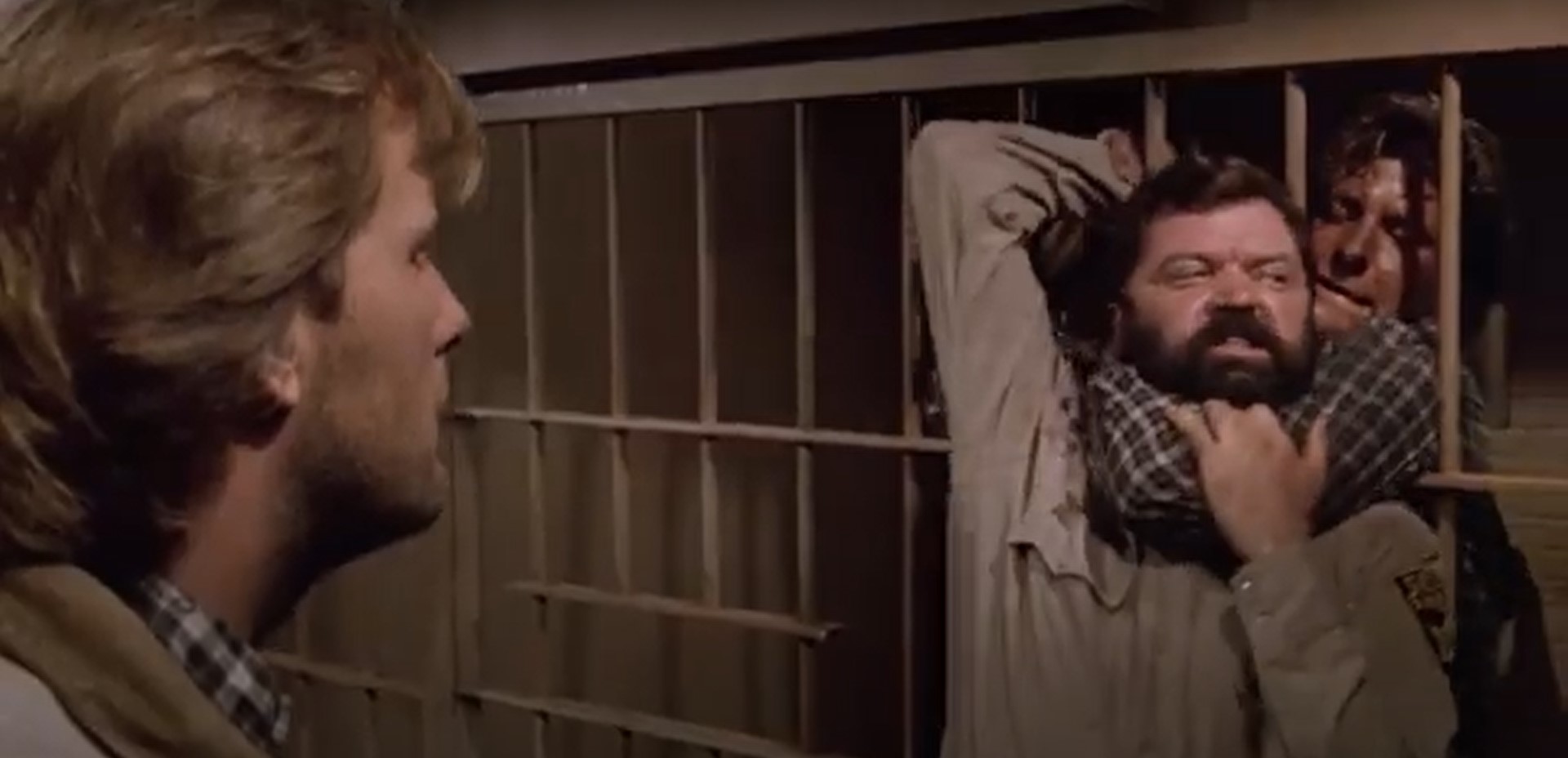
“Creature from Black Lake’s” cast is a distinctive assembly as aforementioned earlier.  Not only do they play their roles well by incorporating localisms where needed but they add a blend of intensity with chunky bits of comedy marbled through a storyline that’s half-anecdotal and half-present action. University of Chicago students Rives (John David Carson, “Empire of the Ants”) and Pahoo (Dennis Fimple, “House of a 1000 Corpses”) set course to Oil City, Louisiana where an indistinct creature is suspected to be in area based of science and suspected fish stories told by local kooks and drunks that turned out to be horribly true. Rives and Pahoo, who in McCullough script is constantly chaffed about his unique name but shrugs and deflects like he’s done it all his life, interview Oil City residents who believed to have bare witnessed firsthand the beast’s atrocities that has taken the lives close to them. These Bayou denizens are enriched by veteran actors with robustly created caricature personalities. Surly voiced with bulging, wild eyes, typecasted western actor Jack Elam had branched out from films like “Gunfight at the O.K. Corral” and “Once Upon a Time in the West” to play a similar grouchy character dwelling in the swamps as a trapper. Elam’s great a feigning an intoxicated mess as you can literally taste the alcohol sweat from his porous skin sheltered by an unkempt beard and a loose fitting crumpled up onesie that’s staple motif for any drunk Cajun or drunk cowpoke, so Elam was fairly comfortable in the role. Dub Taylor is another big old-timey name in the western genre and rarely saw horror as a place to call home. For Taylor, his role as Grandpaw Bridges gave the actor a chance to play an old hayseed complete with a solid effort in Cajun English. Taylor’s lively at times with an animated excitement but can turn somber and stern as soon as his character’s scorned and calls for a more serious tone. Compared to Elam and Taylor, youngsters Carson and Fimple pilfer very little from the veteran’s epic role characteristics but do fine in their own rite with carrying the hunt’s harrowing third act. Bill Thurman (“‘Gator Bait”), Jim McCullough Jr., Cathryn Hartt (“Open House”), Becky Smiser, Michelle Willingham, and Evelyn Hindricks round out “Creature from Black Lake’s” cast.

How could a 1976 bigfoot feature be more surprising and compelling than any modernized version? Well, one of the biggest pros to “Creature from Black Lake’s” success is Jim McCullough Jr.’s script that’s surprisingly well written by the first go-around screenwriter and while I’m not primarily speaking on behalf of the principal leads’ motivation or the slightly lack thereof, there lies more interest in the quick-witted dialogue and the blunt banter to keep Rives and Pahoo from being dullards and to keep the story from being a slog. Another aspect that is sharp as a tack is Dean Cundey’s cinematography that keeps the creature firmly in the shadows, producing that suspenseful and mysterious “Jaws” effect where we actually don’t see the shark until the third act. Cundey, best known for handling the cinematography on titles you might have heard of such as “Jurassic Park,” “Death Becomes Her,” and “Big Trouble in Little China,” made a name for himself first in grindhouse horror and exploitation of the early 1970s.  Cundey keeps the apelike creature shrouded from direct light, lurking mostly in the shadows with only a glimmer quickly streaking across the snarling face and an animalistic outline of its furred body and tall stature.  The full effect of bigfoot is never directly in your face or full in view which can be best at times depending on the look of the creature.  Cundey had partially designed the face of bigfoot and thus covering up perhaps his own shoddy work with how to film the titular antagonist of Black Lake.  Now, Black Lake is an actual lake in Louisiana but is about 100 miles SE of Oil City and Shreveport and likely used a combination of Big Lake and Cross Lake that were near the majority of shooting locations to serve as representation of Black Lake.  Where “Creature from Black Lake” struggles is with the Rives and Pahoo dynamic that barely tether’s to how their friendship, though diverse individually, becomes stronger up the end with a near death experience.  Pahoo’s a Vietnam vet and with his wartime experience, he’s the more on edged character out of the two suggesting an underlining PTSD theme when the creature’s roar and circling of the camp puts Pahoo into an eye-widening internal panic.  Rives is cool as a cucumber and is determined to prove something inexplicable in pushing forth and bagging a big hairy beast.  At times, contention flares up between them but is quickly extinguished with a simple sharing of homemade fireside baked beans to sate Pahoo’s ever ravenous stomach.  Their hot and cold amity and indeterminable mission into the Bayou shapes very unsatisfactory their resulting unbreakable bond that hints at something more than just friendship, as if there is metaphorical points of betrayal and forgiveness that makes their connection scar tissue stronger but are not clearly delineated.

Finally!  A bigfoot feature that works mostly at every angle, is more than just palatable from a story standpoint, and has a formidable bigfoot presence that’s more than just a man in a monkey suit. Synapse Films restores not only “Creature from Black Lake’s” original widescreen 2.35:1 aspect ratio onto a high-definition Blu-ray from the dreadfully cropped VHS and TV versions but also restores the creature feature with a brand new 4K scan from the original 35mm camera negative. The result is phenomenal with a widow’s peak view and the grading is touch of tailored class that freshens the 46-year-old with new vigor. No instantaneous signs of compressions issues on the AVC encoded BD50 with inky black shadows and profiles that are sharp around the edges, never losing sight of image and never losing the quality. The Blu-ray comes with only one audio option – DTS-HD Master Audio 2.0 mono track. Not the best representation but perhaps the best that’ll get, some audio elements succumb to the production limitations, such as the stifled dialogue track early on in the film that leaves exchanges between Rives and Pahoo soft and scarcely perceptible. The dialogue issues alleviate as the story progresses, falling in line into an even keeled dual channel output. “Creature from Black Lake” has ample range between the booming closeup shotgun and rifle shots to the light tinkering of utensils and camping gear. We don’t receive much depth, not even with the creature’s roar as it thunders into much of audio space and overtakes everything else. Newly translated English subtitles are available. Bonus features includes an audio commentary with author/filmmaker Michael Gingold and film historian Chris Polliali, a brand-new featurette with cinematographer Dean Cundey Swamp Stories, the original theatrical trailer, and radio spot. The physical release comes in a blacked-out Blu-ray snapper, Synapse Films’ catalogue insert, and has Ralph McQuarrie illustrated cover art that’s an unmistakable masterstroke of his craft. The region free Blu-ray of “Creature from Black Lake” is rated PG and has a runtime of 95 minutes. If you’re on a quest to quench a midnight movie about bigfoot, journey no further as Synapse Films delivers one of the better, more comical and terrifying, Sasquatch movies of our time and in beautiful high definition!

“Creature From Black Lake” on Blu-ray is Bigfoot’s Bestfriend