
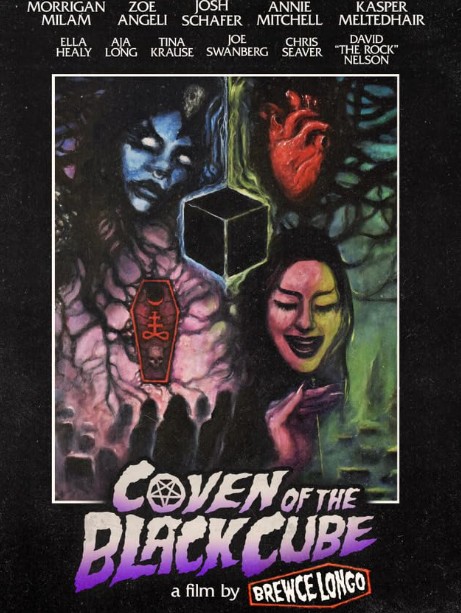
Don’t Take a Drink from “The Coven of the Black Cube!” See On Blu-ray!
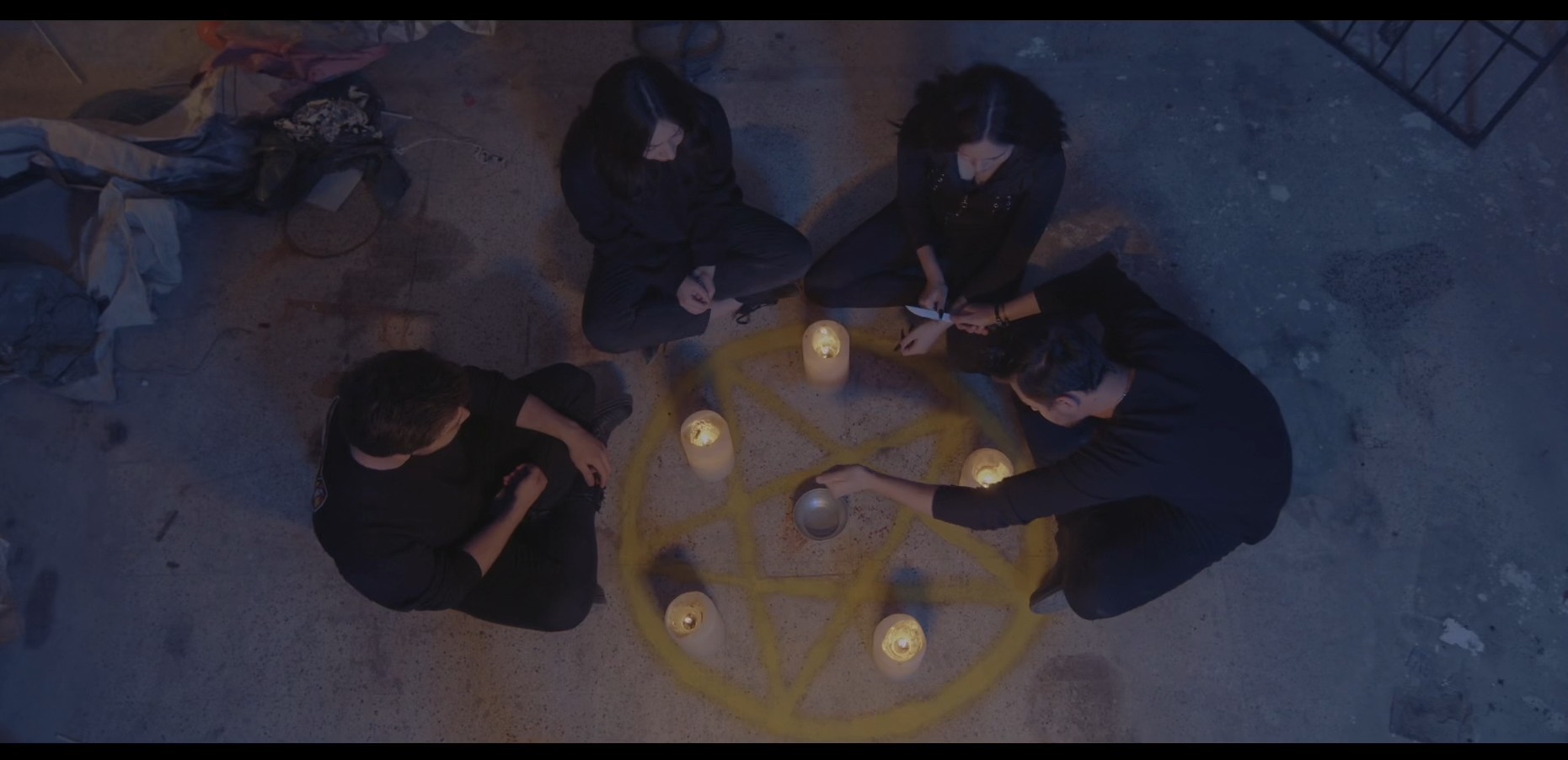
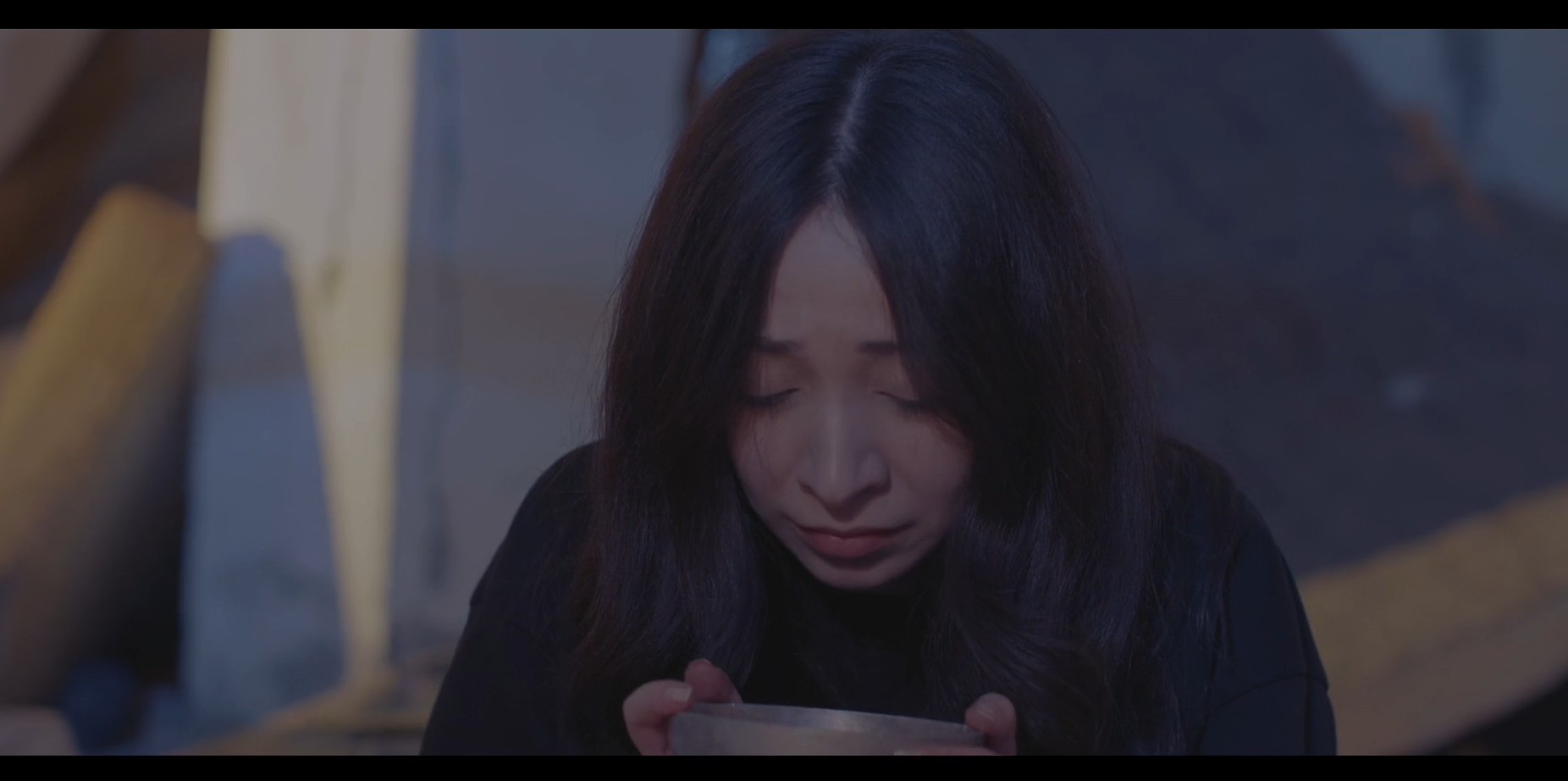
In a romantic tale brewed in turmoil and death metal, Violet’s relationship with girlfriend Gumby has spiraled into rocky territory. Meanwhile, a coven of witches, the coven of the black cube, use a façade storefront to sell their arsenic infused potions to women who patron the store looking for spells, elixirs, or anything they can get their hands on to give them their just desserts. Along with a steep price for the potion, the coven’s intent is to also extract the hearts from the corpses for black ritual purposes. When Violet meets Clover, one of the coven witches, she’s smitten with their newfangled friendship, entrusting Clover enough to naively purchase the potion that only truly works if the other person actually loves them back. Violet’s plan backfires when the potion takes Gumby’s life but in tragedy she finds solace, warmth, and love from Clover as the two find a stronger connection than before. Yet, Clover’s coven doesn’t see their amorousness as conducive and plot against Violet and her inner circle who know a little too much of their murderous plans.
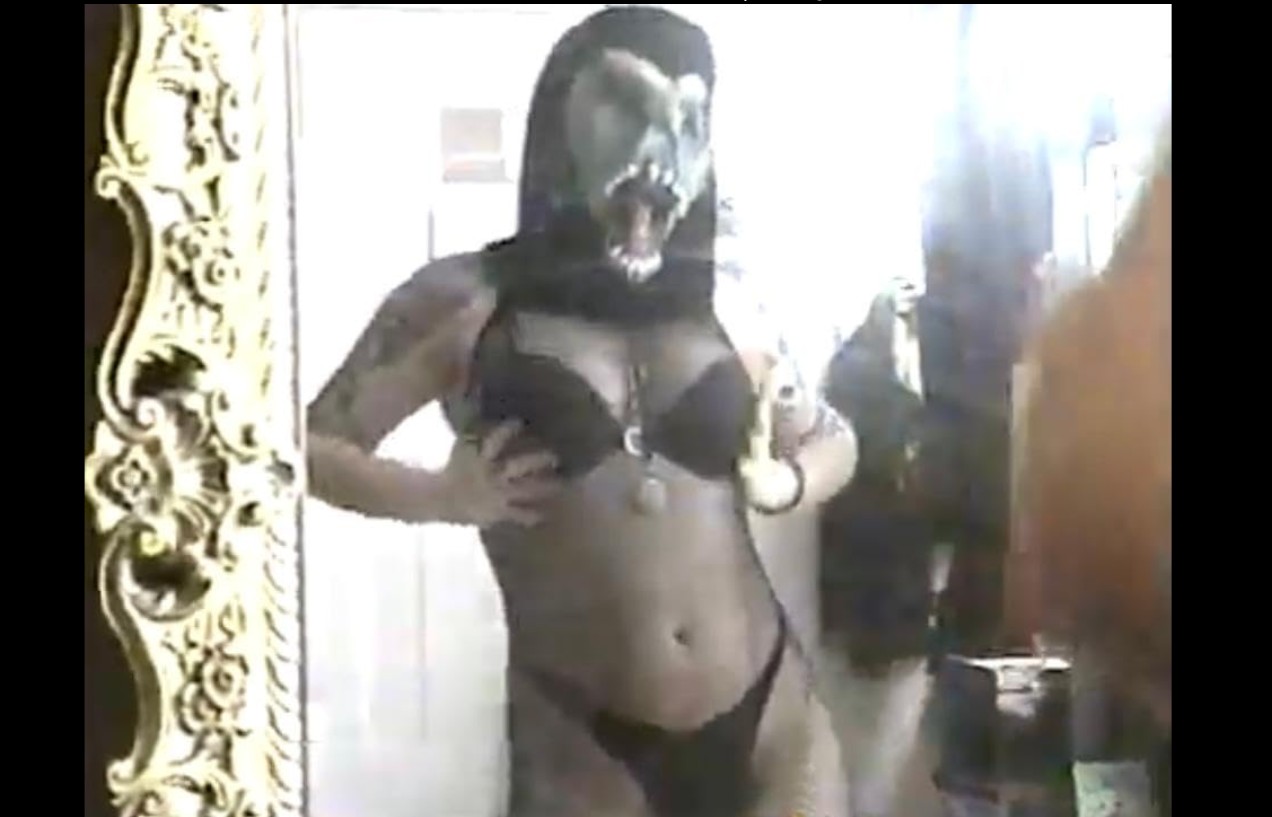
“Coven of the Black Cube” is the 2025 alternative-goth romance horror from Brewce Longo. The 2024 released film is Longo’s third full-length feature film behind “Blood Sick Psychosis” and that timeless – or was it tasteless – holiday classic, “A Corpse for Christmas.” Longo pens the shooting script from a story concept by Longo, the film’s costar Zoe Angeli, and Josh Schafer, a VHS aficionado with producing involvement in the VHS documentary “Adjust Your Tracking” and videotaped themed adult animation film in “The Magnificent Kaaboom!!! VHS.” “Coven of the Black Cube” takes a shine to Schafer’s enthusiasm for the antiquated media format as Longo devises an analog appearance from shooting with a VHS camcorder. Longo and cinematographer Michael DiFrancesco serve as executive producing financiers of the lo-fi and underground horror production with “Busted Babies’” X Menzak and Charles Smith as co-producers.
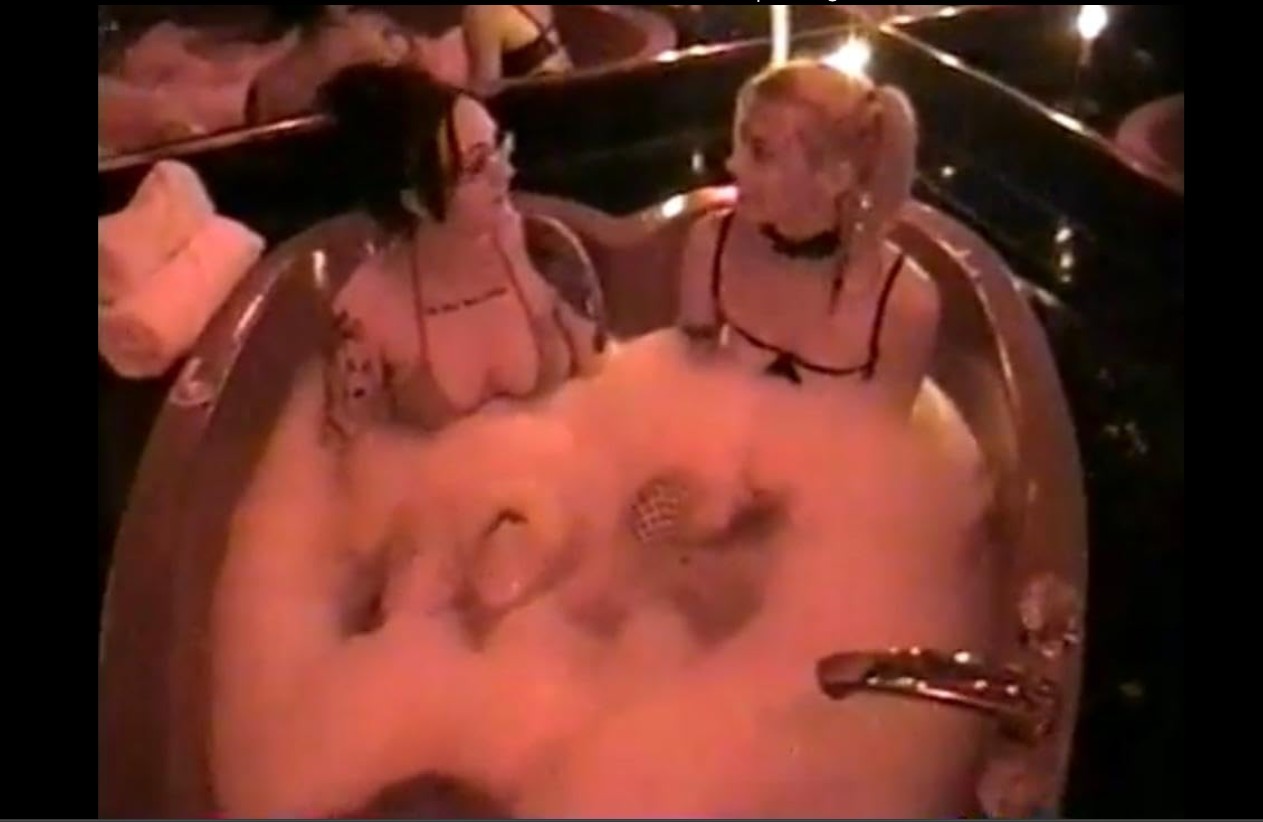
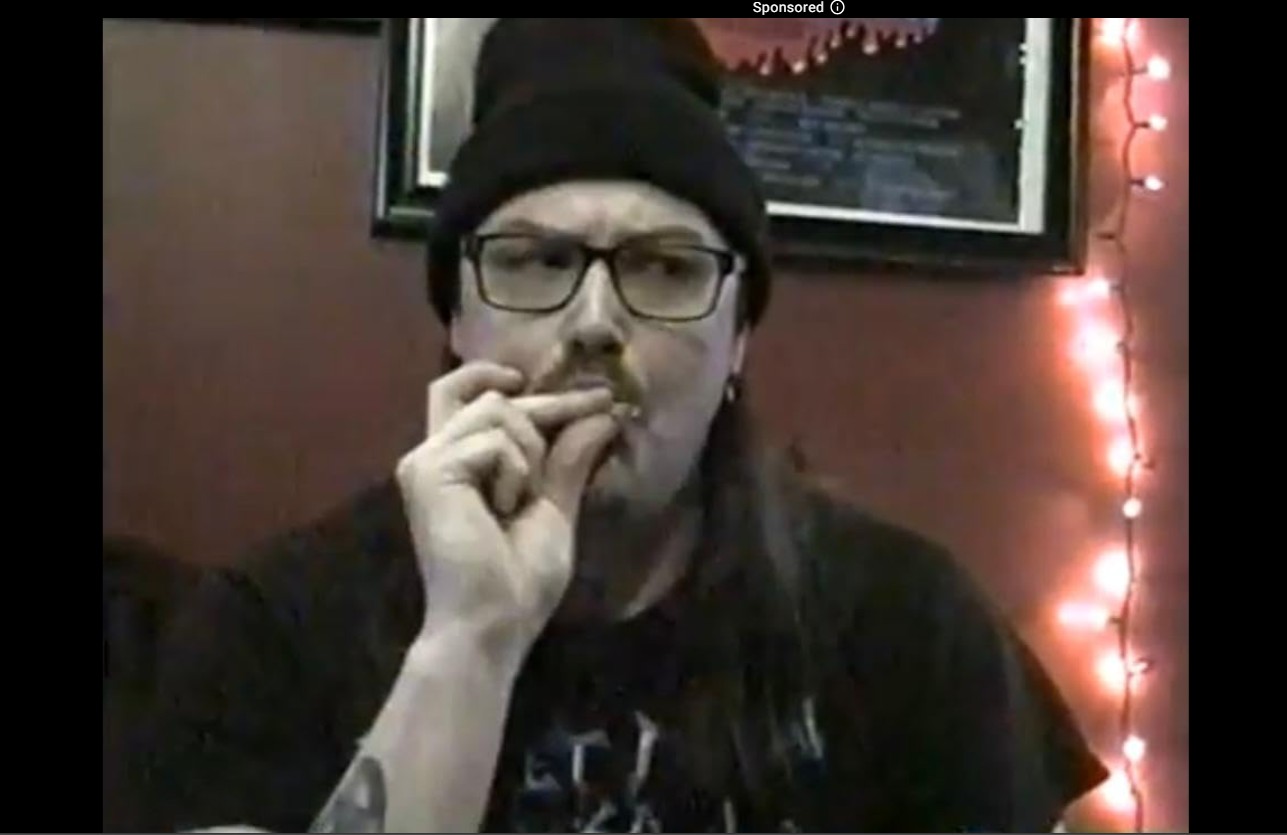
At the dark heart of the story, two women devoid of true love are a piece of a larger pie of characters and while Morrigan Thompson-Milam (“Debbie Does Demons,” “XXX-mas”) and Zoe Angelis (“Flesh Eater X,” “A Corpse for Christmas”) play the characters on opposing sides of the morality scale who find a connection of desire for each other’s comfort and company, there is often a focus on Milo, the laissez faire pot shop, VHS, and pizza-making entrepreneur, and his frustrated wife looking for husband humiliation. Milo’s a long haired, mustached, glass-wearing, dope smoker with a penchant for Carl J Sukenick movies and the finest college combo of cold pizza and warm beer. “Pigshit’s” Josh Schafer cowrites in his character’s love for the underground and obscure horror in a retro-VHS format and instills an uncouth yet gentle behavior for a likeable Milo, but Milo’s is benign to “Coven of the Black Cube’s” theme as well as his wife’s (Annie Mitchell, “A Corpse for Christmas”) distaste for his uncivilized and disinterested spousal conduct. There’s segment has little value other than to be another coven case of trying to get rid of one’s husband and to be not a good friend, but just a floating friend to Violet and Gumby (Kasper Meltedhair, “Darbie’s Scream House”) that supplies them weed from time to time. We’ve seen Angelis before in more X-rated material from extreme indie filmmaker SamHel’s short films “Vania” and “LoveDump” but her role as Clover takes it down a notch by only going full nude for a steamy moment, exposing just enough yet plenty for a lead into sex scene that fades to a black transition just before getting down with Violet. Clover and Violet relate to effectual romance that’s organically not sustainable due to the coven’s strict unwritten policies on privacies with Luna (Aja Long) as the representational face of the coven head who will do what is necessary to keep their practices a secret. The cast fills in with Tina Krause (“Bloodletting”), Joe Swanberg (“You’re Next”), David ‘The Rock’ Nelson (“Blood Sick Psychosis”), and Chris Seaver (“Scrotal Vengeance”).
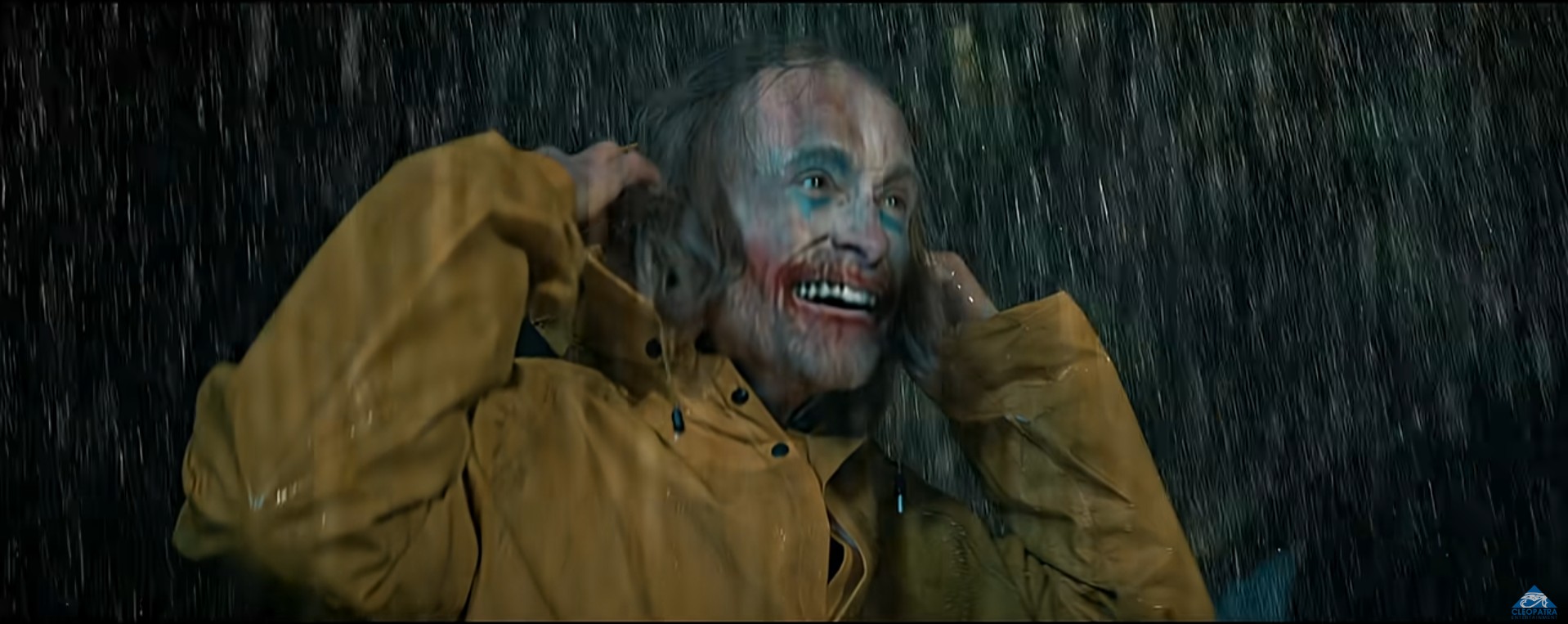
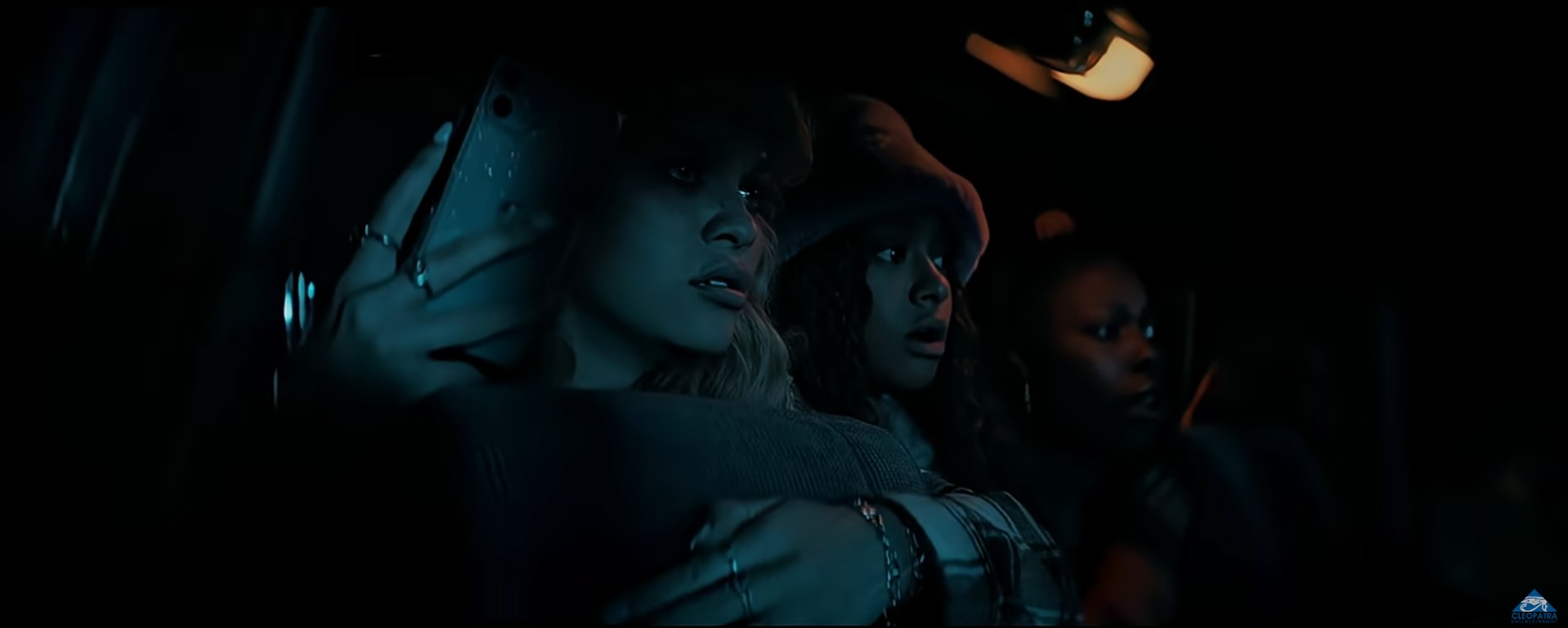
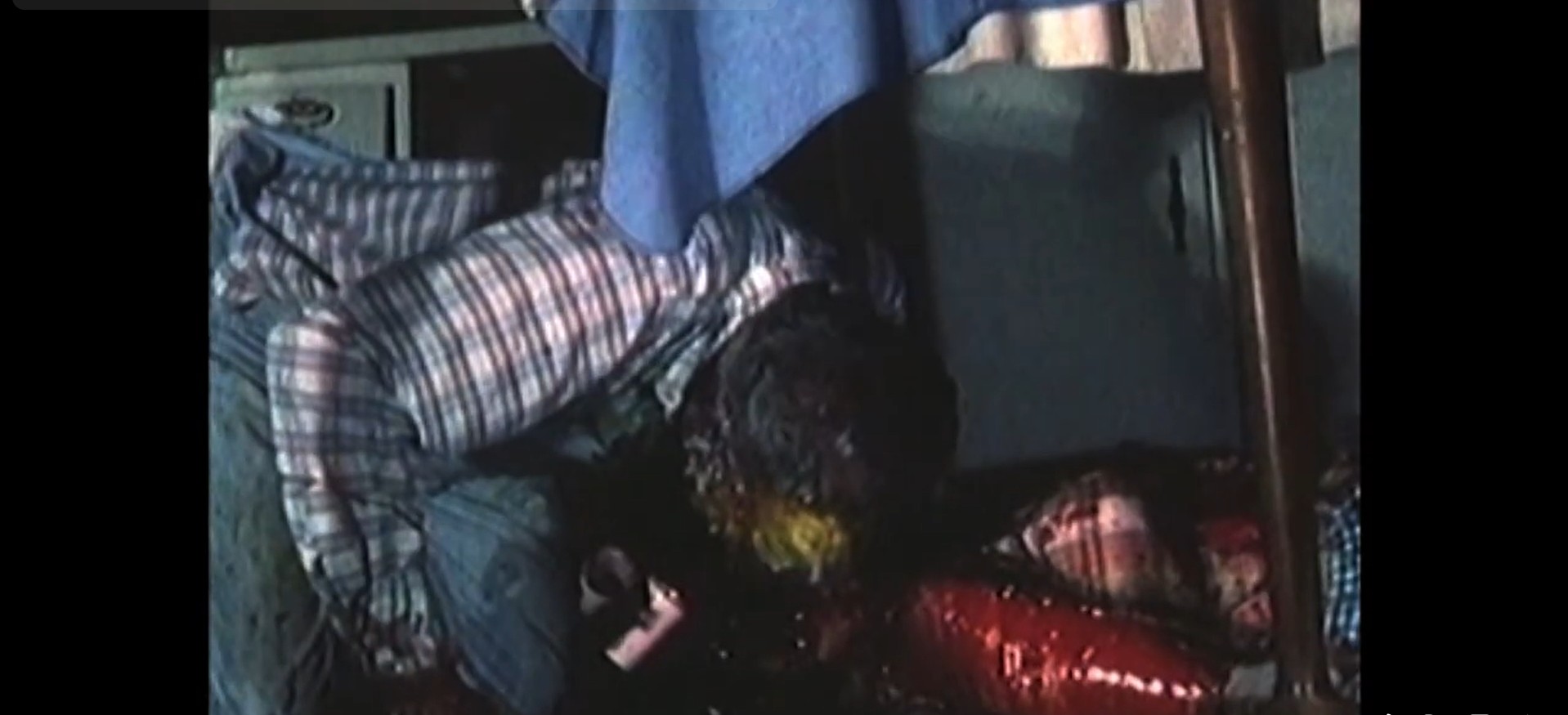
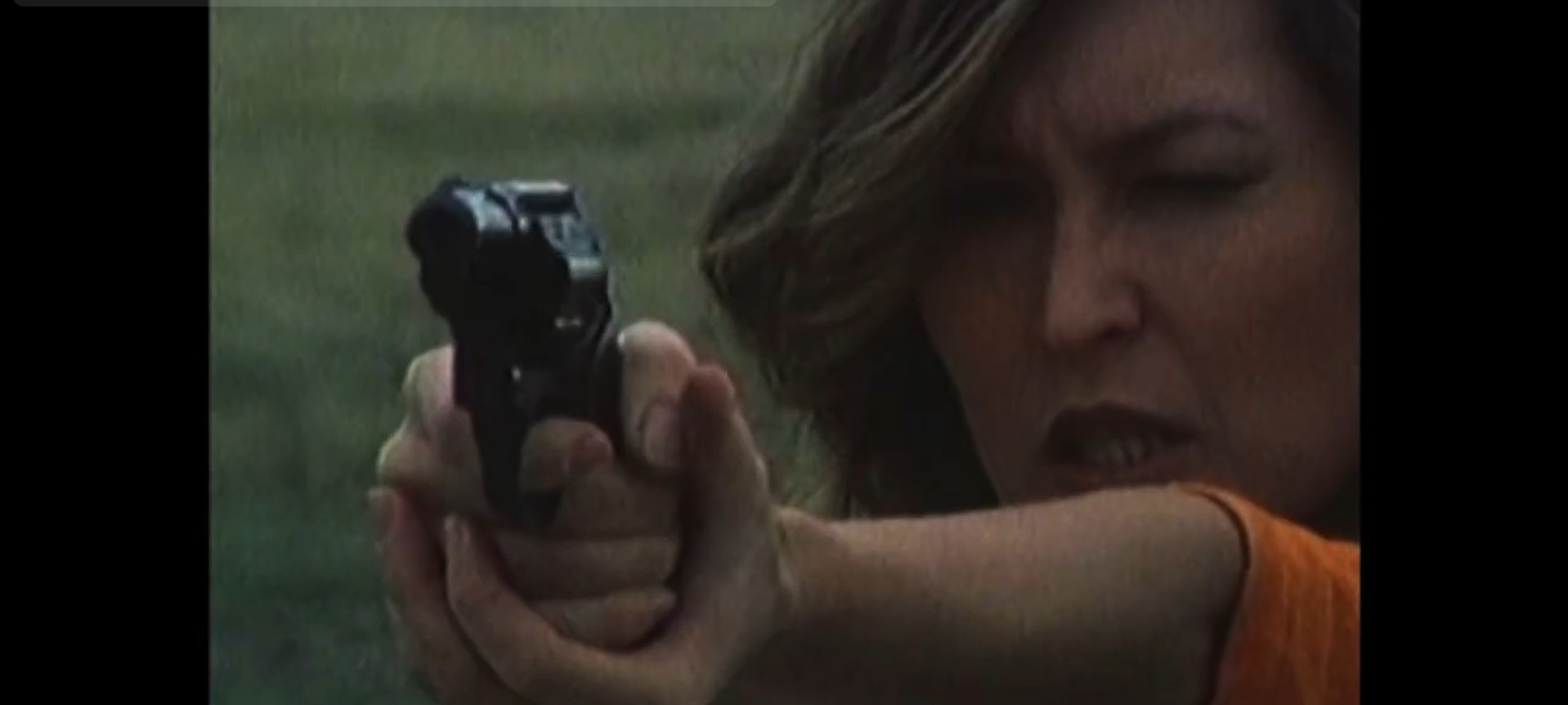
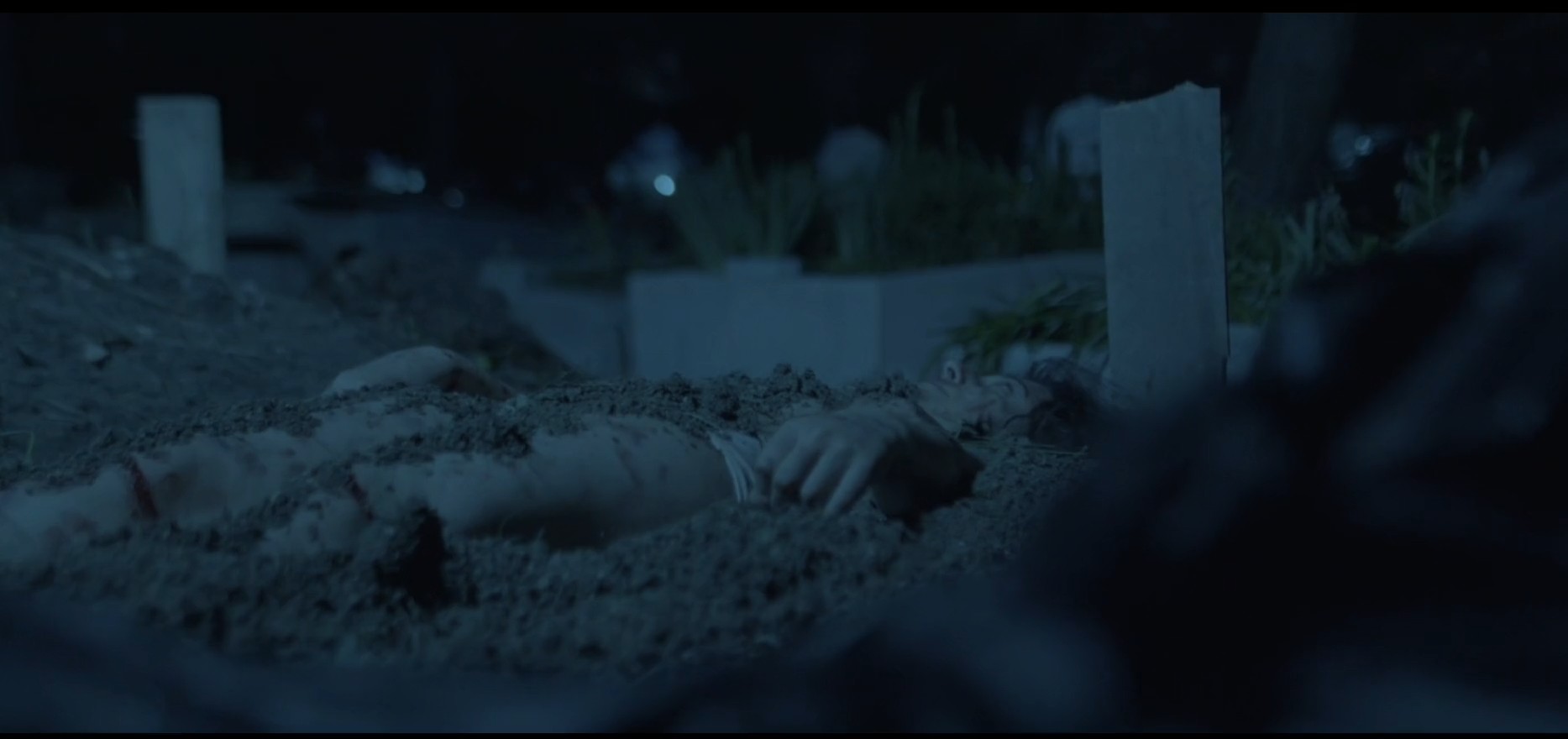
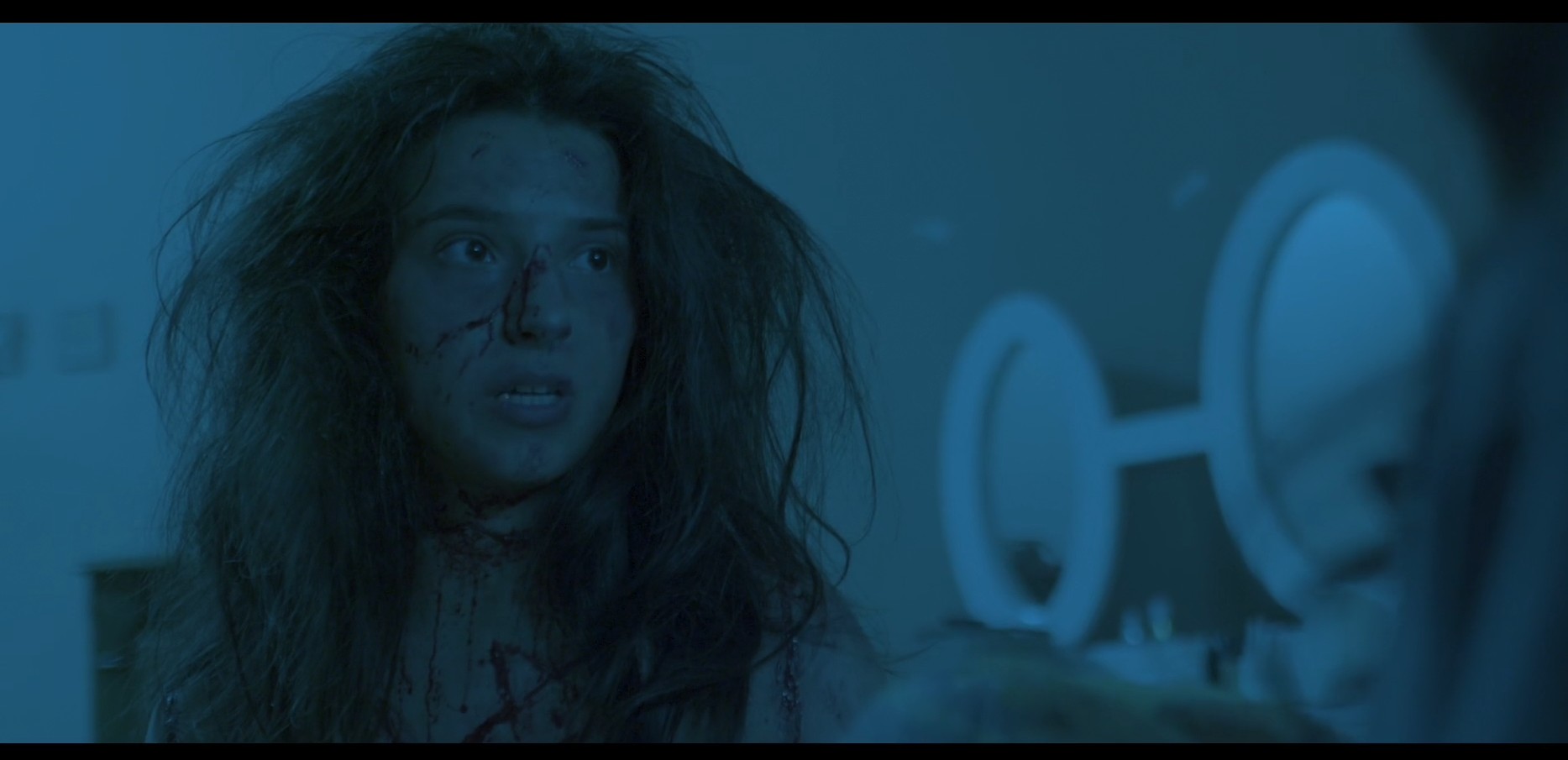
Underneath the darkling foundation and it’s deathrocker-and-hillbilly rock scene, “Coven of the Black Cube” has perfected the notes of being an analog horror in the modern, digital age by actually using era specific filming equipment to achieve a natural aesthetic with tracking lines, interlaced blocking, and a low-bandwidth process with magnetic tape decay resulting in color shifting and bleeding of the warmer tones produces a nostalgic exactness, an infinite times better aged look through proper medium than a digital image could ever try to reproduce through being played back through a VHS recorder or any VHS filter. High praise for a more than accomplished film aesthetic can only push its success so far as the story, a dark-and-grim queer romance, struggles to keep focus with a disjointed narrative, diluting too much of the Violet and Clover rising relationship within the killer-coven context. Sidebar scenes of Milo’s substory, subjecting his wife’s disdain for his change over the course of the marriage and the subsequent consequence of her plot to do harm to him, dissent the story’s core queer love affair tone too much and too heavy-handily while keeping an overtop cloud of wicked witchcraft whirling about between murdering men, selling pernicious beauty products and services, and holding dark rituals involving a coffin, torture of manhood, and ill-effect open-heart surgery. Gore effects are moderately effective, especially with the back alley penile canal probing that’ll have all the men cross their legs in fear but also include disemboweling and heart removals. One item that really digs under the skin, nagging for it to be further explained, is the significance of the black cube. It’s symbol is worshipped but is still an ambiguous cause or idol the coven sees fit to follow; however, a little research suggest Longo’s story pulls inspiration from the occultist and magical religion Cult of the Black Cube that has been segmented over he course of time, one of those segmentations being blood sacrifices in order to harvest souls for possibly Satan and that closely resembles the filmic plot.
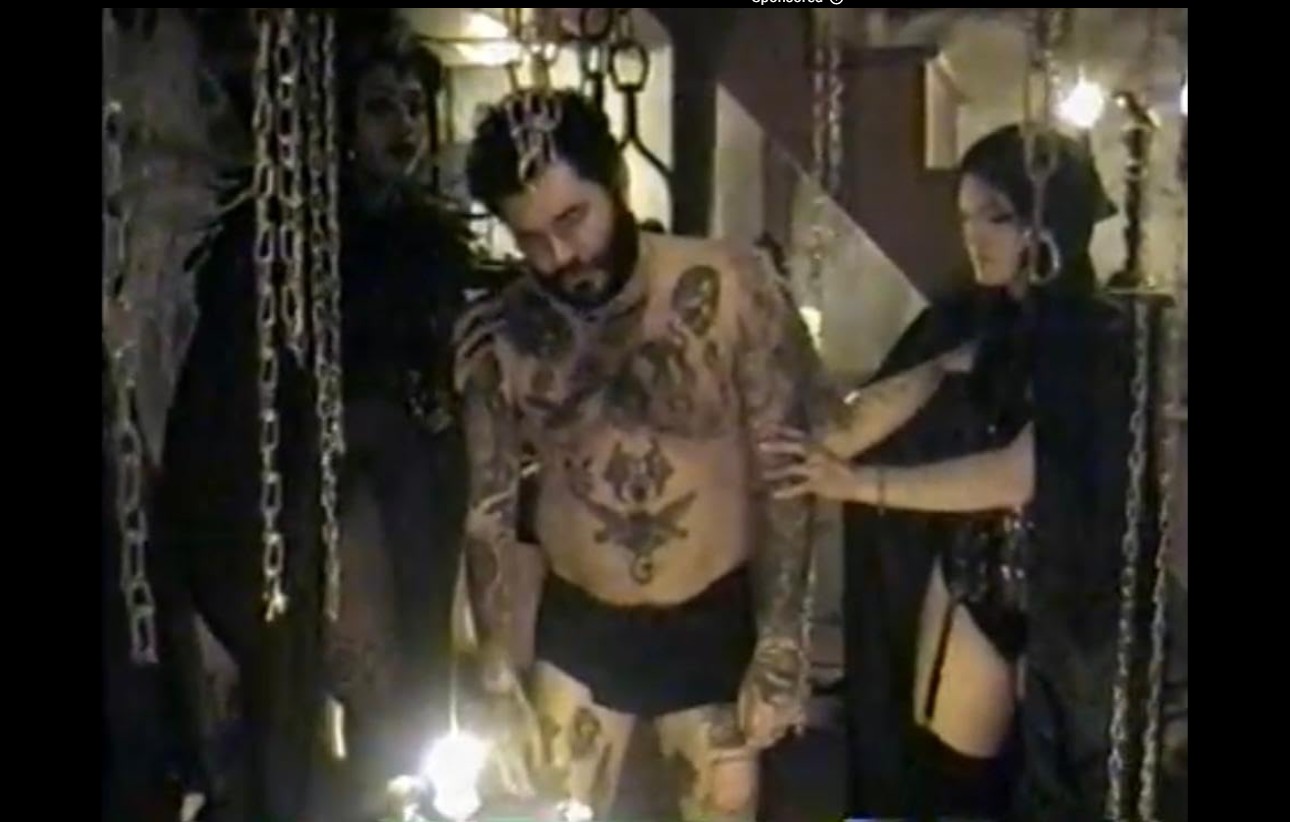
Blood Sick Productions receives the high-definition Blu-ray treatment for “Coven of the Black Cube,” distributed by MVD Visual. Encoded onto a BD25, the AVC encoded, 1080p Blu-ray, presented in a 1.33:1 aspect ratio, is an analog enthusiasts wet dream being shot on magnetic tape rather than digital, creating all sorts of color bleeding, interlacing issues, and fuzzy imaging that can both be an instilling nostalgia of reminiscent low-budget 1980s horror and a videophile’s ultimate night for apex image quality. Longo’s intentions were for the former, a love letter to the VHS era, under the cinematography of Michael DiFrancesco who knew how to correctly light and angle certain shots ot appear vivid, such as in the nightclub scene where Violent and Clover meet eyes, and for the rest of the film use the inherent camcorder’s constraints to let the low resolution and limited color range to take the wheel. The English PCM 2.0 stereo has a stronger mix than expected in contrast to the video quality, filling in the dual output with unrefined and flat but clear and prominently forefront dialogue, nonetheless. A killer metal soundtrack is the film’s pride and joy, dispersed throughout appropriately emotionalizing and accentuating the type of scene, with performances from Sing Slavic, Fishgutzzz, Slasher Dave, ShitFucker, Blank Spell, Xarissa, Sorrow Night, deleter, Heavy Temple, Soft Teeth, and more, a full list is inside on an inserted one-sided sheet in their respective band fonts. Other physical properties of include a harsh pastel and crudely demonic illustration by Paul Barton. Inside with the insert sheet, the disc is pressed with a giant black cube, bordered with archaic rue figures in a bloodred backsplash. Encoded special features include a commentary writer-director Brewce Longo, writer-star Zoe Angeli, writer-star Josh Schafer, and director of photography Michael DiFrancesco, a behind the scenes look, and the trailer. The region free encoded disc has a runtime of 97 minutes and is not rated.
Last Rites: An alternative witchy tale for the alt-scene, “Coven of the Black Cube’s” nostalgia for the analog and the misandrist femme-fatales marks a different kind of cauldron-stirred potion for the black cat and broomstick subgenre but there’s an imbalance of story here that’s difficult to ignore with its wandering path that takes focus away from the significance of the black cube, trading defining substance around the coven’s existence for a quick cementing romance.


 It's Bloggin Evil!