Joe Lewis Takes on the EVILs of the World Church! “Force: Five” reviewed! (MVD Rewind Collection / Blu-ray)

“Force: Five” On a New Blu-ray Collector’s Set!

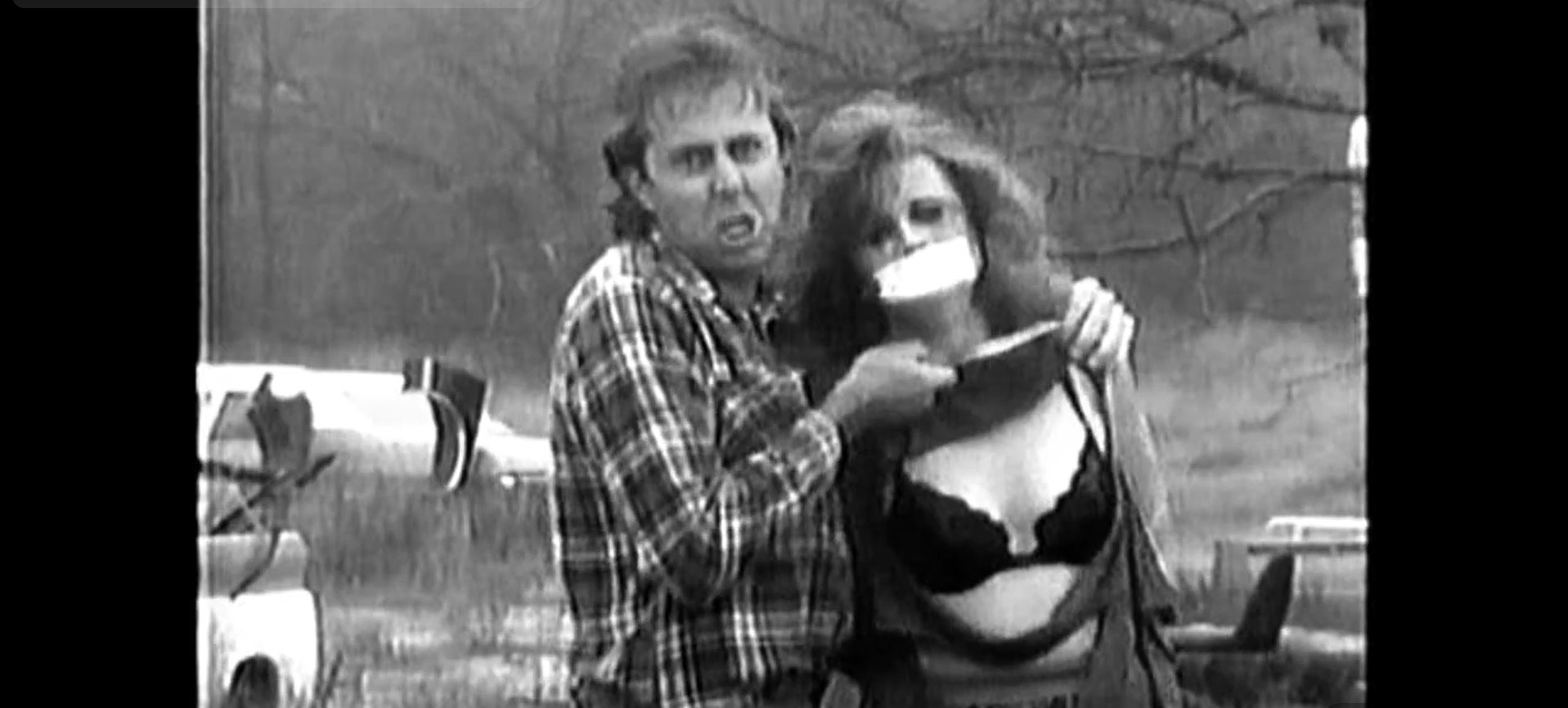
U.S. Government contractor Jim Martin is an expert martial artist, hired as a contracting agent in the field to handle special missions against country threats when they arise.  When Martin is subcontracted by a wealthy man who has ties to U.S. politicians, he’s assigned to rescue the plutocrat’s daughter from the clutches of the World Church, a fronted religious cult promising to its followers a palace of celestial tranquility from an oppressive world but their intentions are to trick the trust funded young adults into signing over their inheritance to support smuggling drugs and guns.  Martin builds a team of hand-to-hand fighting specialist to take down the World Church’s martial arts master Revered Rhee and his large right-hand man, Carl.  Infiltrating with a visiting U.S. Senator, masquerading as his aids, the team also tries to convince the U.S. Senator of the organization’s corruption while searching for their assigned rescue target. 

Joe Lewis, known as the Father of Modern Kickboxing and perhaps one of the leading martial artists out of the U.S. of his time, had his time on the action-packed silverscreen like most popular fighters of his ilk, such as Chuck Norris and Bruce Lee but certainly not as profound in appearance credits.  One of his first films is a martial arts and rescue actioner titled “Force:  Five” that was released just off the heels of the swanky 1970’s where the disco and soul-infused soundtrack and the chopsocky Kung-fu films reigned as one of the supreme sounds and subgenres on the globe’s East and West terrains.  Serial martial arts film director Robert Clouse, famously known for his co-direction on Bruce Lee’s “Game of Death” and notoriously known for his it’s so bad, it’s good “Gymkata,” writes-and-directs the film based on an alternate screenplay from debuting writers Emil Farkas (“Vendetta”) and George Goldsmith (“Children of the Corn”).   “Enter the Dragon” and “Black Belt Jones” producer Fred Weintraub hoped to capitalize on the melding of the aging martial arts and with the rising rescue/POW films that were on the rise and base the idea off of real events, such as People’s Temple and their cult leader Jim Jones that spanned two decades prior to the film’s written foundation and subsequent finished release.  The Italian language disc is pressed with the same sleeve art with the second disc pressed with alternate, dark-toned artwork, also original to the initial film release. 

Having already touched upon the star of the film, one of the best martial arts competitors in the world, having once beat Chuck Norris in an official event, Joe Lewis is surrounded by an entourage of real fighters who dabbled in acting.  Sonny Barnes plays the large muscle Lockjaw, the only black character in the story, and Barnes is trained and became a Sensei in Kenpo Karate, and he wasn’t the only minority listed in the eclectic group with Latino and Native American representation in Spanish-American Benny “The Jet” Urquidez, a skilled black belt Kickboxer with proficiency in a variety of fighting styles.  Lastly, Richard Norton, another major name in martial art features, hails from Australia and implanted his styles of Karate, Brazilian Jiu-Jitsu, and Kickboxing in his work on both sides of the moral fiber with his characters, having played good and bad guys in “The Octagon” opposite Chuck Norris and in “China O’Brien” with Hong Kong superstar Cynthia Rothrock.  Rounding out the “Force:  Five” team is the only female member in Pam Huntington (“They Call Me Bruce”) with no fighting background and another nonfighter in Ron Hayden as the unhinged chopper pilot.  Though Huntington and Hayden’s fight scenes are limited to just a few in contrast to the trained martial artists, even the nontrained eye can tell the actors haven’t spent years learning the craft.  Now, what really nags at the pedantic in those in the audience is the film is titled “Force: Five” but the team listed above consists of six members so there’s ambiguity in if that was an elementary math error on the story’s part or the “Force:  Five” is just the team minus Joe Lewis, that’s not entirely clear, but what is clear is the antagonists with Korean grand master Bong Soo Han (“Kill the Golden Goose”), master of Hapkido, as the duplicitous Reverend Rhee and the very large and blank faced Bob Schott (“Gymkata,” Russ Meyer’s “Up”) taking trust babies fortune to back their drug and gun smuggling operation through an alternative church façade and scheme.  Reverend Rhee is a character that embodies the very essence of a stereotypical chop-socky or evil organization boss with bad lip sync and a flair for the ostentatious death, “Force:  Five’s” being a killer bull goring those in its labyrinth path, a deadly trap that’s a man-eating shark tank-type, James Bond-like thing to have in his possession. 

By today’s standard, “Force:  Five” is extremely formulaic but for 1981 and with the rise of the action rescuer, mostly inspired by the rescuing of POWs in either during or post-Vietnam War, the film’s a treasure trove of classic conventions of the subgenre that’s inundated with different kick and punch techniques and styles that strayed away from the Bruce Lee or Jackie Chan type of kung-fu that’s more an ostentatious showcase of ability rather than practicing in the practical realm but still pays homage to the craft masters.  Yet, these films resembled an espionage structure with an incognito infiltration, extraction, and scheming villainy pool rounded out exactly how we think movies play out in our head, with a swanky soundtrack that integrated the heart of Carl Douglas’s everybody was Kung-Fu Fighting into a clandestine operation conducted by U.S. operation contract agreement with confident, slightly cocky, Jim Martin.  However, “Force:  Five,” unlike other ensemble entrenched soldiers on a mission, came out too clean for comfort with an unscathed extraction and not one team member lost.  There isn’t even any nearly escape death by the edge of a fingernail.  Joe Lewis takes a couple of kicks to the face by Reverend Rhee and a handful of peripheral characters on the side good did take mortal damage at the hands of the bull and the wishbone split of one main contractor at the hands of Carl’s impatience, but none of the actual operators took one for the team and that usually puts a sour taste in the mouth by begging the question, was the mission really that impossible?  It appeared all too easy from the comforts of the couch to see an unarmed team of martial artists stroll into heavily armed compound (recall – they’re selling drugs and guns) and make it out alive without as much of a minuscule ballistic scratch. 

Coming in at number 70 on the catalogue of the Rewind Collections, MVD’s throwback sublabel, “Force:  Five” kicks itself back onto Blu-ray having been out of a print for nearly a decade on Hi-Def.  A slight better presentation with it’s return to the original widescreen aspect ratio of 1.851, the 2K scan evolves the detail levels to an only slightly higher degree when enlarging the pixels without sacrificing quality, producing a cleaner image perhaps from an advanced scanner.  There’s a balanced color diffusion with warmer palette that focuses mostly on greens and browns and there’s no sacrifice of grain but there’s still some dust/dirt speckling and the occasional vertical scratch but nothing too egregious to note viewing disruption.  The original 35mm print has been nicely preserved and now stored on an AVC encoded BD25.  The audio is generally the same as the previous Blu-ray release with an uncompressed English LPCM 2.0 mono that brings the double impact of all audio layers through the dual channel network, relishing in its small triumphs with small, enclosed explosions.  Dialogue has adequate carry over but there are hissing discharge and underlining crackle, but the overall general discourse is coherent in its post-production recording that leaves Master Bong Soo Han unfortunately reminding us of the higher pitched villainous voice of Betty from “Kung Pow:  Enter the Fist.”  Soundtrack doesn’t instill motivation or embark on danger with its standard stock coursing.  Foley hits and kicks are where “Force:  Five” makes its bread and butter with plenty of vehemently overlaid whomps and whacks.  Special features include a number of archival interviews, or more so toward fighting instructions, from a pair of actors, beginning with Joe Lewis in a sit down that really feels tense when he discusses his martial arts training and contests that lead into the movies and ending with Benny “The Jet” Urquidez offering fighting lesson tidbits in a pair of archived video instructions, such as wrapping your knuckles properly to avoid injury.  The original theatrical trailer rounds out the encoded extras.  The Rewind Collection’s physical treatment is unrivaled with a retro O-ring slipcover that doubles as a faux top secret objective folder on the backside and a VHS rental semblance on the front with previously viewed for sale stickers and mock wear of sun bleach and box creases.  The clear Amaray case inside houses a reversible slipcover with a cleaner, saturated image of the slipcover that has the same layout design on the reverse but with a variant character composition design encircled by a black border.  Inserted inside a mini-folded poster of the primary Blu-ray art.  The disc is also pressed with VHS nodule imagery that further it’s retro appeal into videotape.  The region A release has a runtime of 95 minutes and is rated R. 

Last Rites: “Force: Five” is about as skilled as any Chuck Norris or Jean Claude Van Damme film, and just as hokey as well, with an ensemble of experts of the kick and punch craft that go into a cocky show of bulldozing armed and dangerous smugglers with nothing more than their feet, fists, and wits.

“Force: Five” On a New Blu-ray Collector’s Set!

Sometimes Sacrificing for Satan for Favors Does More EVIL Than Good! “Sex Ritual” reviewed! (International Media Network / DVD)

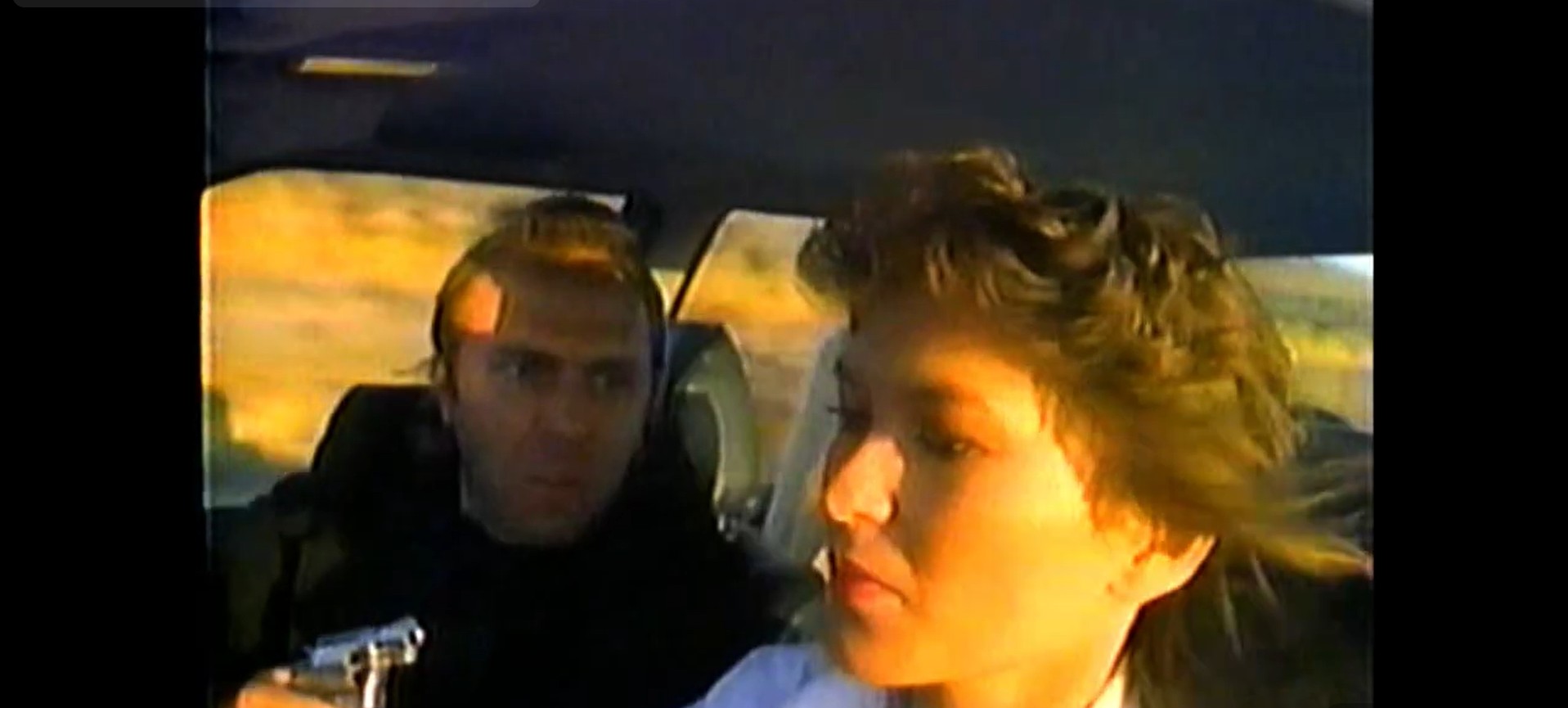
The sudden death of her mother has left Ceren in the hands of a pettish and immoral stepfather.  Smacked around and even possibly raped while unconscious, Ceren becomes reserved while being on defense whenever her stepfather is around.  She ultimately joins a satanist group at the behest of friend Tuna who has ulterior motives of human sacrifice for the 13th of the sacred year where a rare celestial alignment allows Lucifer to grant powers to his disciples in return.  Ceren’s reluctant to be the Satanists’ much needed fourth person for the ritual, involving drinking each other’s blood and eating a helpless kitten, has nearly pushed her to the limit but when a young woman, a promised sinner, is kidnapped, tortured, and murdered on a pentagram and all in the name of Lucifer, Ceren is pushed into immense guilt.  When each of their supernatural powers come to light, Ceren has the ability to resurrect her deceased mother who takes care of Ceren’s immediate problems, such as her abusive stepfather, as well as be a guide to help the falsely accused sinner, the sacrificed young woman, to take revenge on her satanic murderers.

Never in all my horror movie watching existence have I ever seen, or come across, a Turkish horror movie.  Well, there’s a first for everything and Özlem Yesilyurt is the first director to have his horror film from Turkey, entitled “Sex Ritual,” to cross my desk.   Granted, “Sex Ritual” is an eye-catching and provocative title with lots of loaded promises but the conspicuous title is a Westernized conjuring to lure viewers, like me guilty as charged, into an intriguing concept based off title alone.  The real title is “Seytanin Elçiler,” roughly translated as “The Messengers of Satan” a far, far cry from the more outshining “Sex Ritual” title.  The 2023 satanist horror that allures reclusive and repressed individuals into doing horrible things is a scripted story written by Askin Kartal (“Lilith Cinleri,” aka “Lilith’s Demons” and “Zina” aka “Other”).  Mert Ozan Düz (“Zina”) produces the film under his company, Mert Production Media.

The story is casted entirely with Turkish actresses and actors with Yalçin Cemre at the center of the conflict.  Life browbeaten with her mother passing away and she now dwells under the ignoble thumb of an abusive stepfather, Ceren has little-to-no options in life until the opportunity to escape with a new set of friends, friends of the Satanic kind.  Ceren agrees to join at the constant behest of friend Tuna (Atilla Karahan) who has ulterior motives other than to be a good friend to the downtrodden Ceren in a pure case of netherworld summoning exploitation.  Not sure what Ceren was expecting, or perhaps there is some conjecture lost in translation, but when the satanists, which round out with Caner Gölgüoglu and Yagmur Yenice, begin to cut themselves, drink a bowl of their own blood, kill and eat cats, and the event murder with glee satisfaction, a hesitant Certain eventually goes with all of it without much of a stern opposition that makes her just as accountable for all the ritualized death at the groups’ hands.  Yet, the story makes her out to be the duped heroine and the savior of the sacrificed’s spirit, played by Renas Işıklı in life and death as the unfortunate young woman Selin who has her nipples cut off (not shown but implied with edits) during the sacrificial ritual.  Ceren uses her demonic powers for anti-hero good by taking revenge on those who’ve done inherent wrong to others, such as against her stepfather Kazim Arslantas along with Selin, by resurrecting dead mama (Esra Vural) to take exact the revenge. 

Özlem Yesilyurt’s feature can be construed as a very limited budgeted film with only a handful of simple, repeated locations (a scare abode, a vacant warehouse, outside bench), skirted-by special effects, and less-than-effectual emotional and dynamic dialogue between characters to progress a natural story.  Ceren’s stepfather talks a big improper game with threats and innuendos toward Ceren’s youthful beauty, but his actions are rather mild and any physical abuse, other than a handful of open handed slaps, have been crudely implied, barely registering a sexual encounter.  Strobe lights and some clinging-for-dear-life scab prosthetics make up more than most of the special effects efforts coupled by ham-fisted, overexaggerated performances that are more into theatrical play melodramatics rather than embodying a sense of practical realism.  The satanic enthusiasm between Tuna, Berk, and Asli finds refreshing footing with a disturbing appetite to do all the unspeakable rituals just to be granted unnatural powers, ones that prove to be fruitless against Ceren’s revivification of the dead which begs the question of who exactly did the satanist sacrifice for?  You would think if it was actually for Satan himself, he would not have gifted the fourth wishy-washy acolyte Ceren with a formidable ability over his true followers, unless Satan’s a real son of a bitch and likes to see the world burn no matter who bends a knee to him.  The “Sex Ritual” title is pushed to the seams, stretched to sell copies on a provocative promise that isn’t fulfilled as there’s no sex – voluntary, influenced, or forced copulation – to bring about infernal Hell on Earth, or at least in an inner circle of the desperate to be devilish. 

“Sex Ritual” is a conjured up Turkish horror now available in North America on DVD.  The MPEG2 encoded DVD5 comes courtesy of International Media Network, aiming to bring worldwide horror to western audiences.  Presented in a widescreen 1.78:1 aspect ratio, IMN isn’t the pinnacle of transfer quality but the digital picture has a fair amount of inherent success that has already done the preinstalled work but “Sex Ritual” is a release that’s essentially from farm to table with an ungraded picture within the framework of a 720p resolution, possibly upscaled through your player and television setup.  To its advantage, the feature doesn’t have the scenic, action, or special effects range to test the format and that makes the picture look better, cleaner, and with greater emphasis on detail than typical effects boosted horror with a snappier pace to build the intensity and the terror.  “Sex Ritual’s” often slowed down, lingers on scenes, because of the budget limitations and this results in never challenging the compression.  The audio is an uncompressed PCM Stereo 2.0 mixed in the Turkish language with English subtitles that synch and pace just fine with no sign of misspelling or broken sentence structures.  The little devilry ambiance instilled is held at bay, reserved to be only accessorial to the maniacal laughing and victimizing screams, and the dialogue supplied has prominence and strength between a mostly conversating narrative contrived of pressure, abuse, and bullying with little substance in Ceren’s beset angst and a proper farewell to dear old dead mother.  The generic stock soundtrack from Ekrem Düzgünoglu (“Lilith’s Demons”) lacks vitality to be impactful and sounds as it pulled and edited directly from a generated percussion and synthesizer you find free online.  For encoded special features, there is only a chapter selection on the static menu.  The physical DVD comes in a standard Amaray case with a simple, yet bold and captivating sleeve art with a similar relevance to Ceren and the pagan act with “Sex Ritual” hovering over top, a good marketable look for the IMN release.  The 82-minute DVD comes unrated, though not listed, with region free playback. 

Last Rites: Between the poor taste westernized title and the stale progression of the narrative, “Sex Ritual” has no path forward in summoning its darkest qualities for power and glory in this Turkish-made, low-budget, forgettable thriller.

Sex Ritual Trailer (2026) on Vimeo

Never Steal EVIL’s Dead Body and Think to Get Away Scot-Free! “Frightmare” reviewed! (Troma / Tromatic Collector’s Edition)

It’s not a Nightmare. It’s a “Frightmare” on Blu-ray!

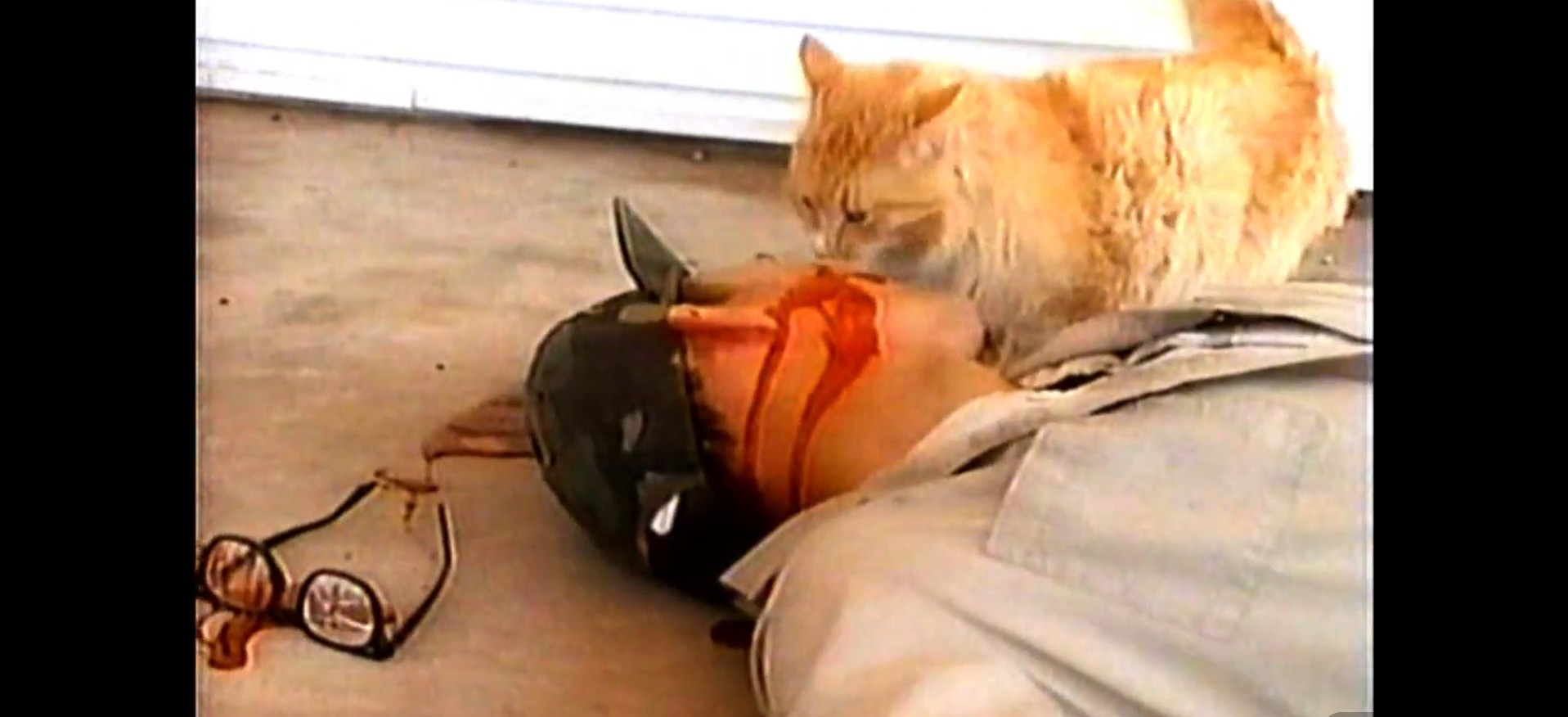
Aging horror icon Conrad Radzoff is on the verge of being forgotten by all except for a few handfuls of diehard fans who gather around a horror society that appreciate classics that are quickly fading from public view.  Arrogant and conceited, Radzoff doesn’t take criticism all too well.  In fact, he kills over it.  After murdering a commercial director and his longtime collaborating director, both of whom loathed his tyrannical, prima donna attitude, Radzoff dies of heart failure shortly after.  The youthful members of the horror society steal his body from Radzoff’s elaborate decorated and booby-trapped mausoleum on a whim and spends the night dining, dancing, and photographing with his lifeless corpse until Radzoff’s wife uses a medium to locate her late husband’s body and inadvertently resurrects him from dead with supernatural psychic powers to pick off his naïve graverobbers one-by-bone in what will be his last great horror performance. 

“Frightmare,” aka “The Horror Star,” is the supernatural slasher that tears into the fabric of being forgotten with a lasting impression, one with deadly consequences for a mischievous teens disrespecting the past in order to live with impunity in the present.  The 1983 picture is written-and-directed by Norman Thaddeus Vane, co-director of “The Black Room” and the Elvira-inspired 1988 film “Midnight.”  Shot mostly in the Los Angeles area, “Frightmare’s” principal photography and wrap was completed during 1981 but the film itself was not released until two years later and is not a remake of and has no connection to the Pete Walker film of the same title years earlier in 1974, which focuses on a seemingly mentally disturbed rehabilitated woman released years after committing deadly crimes.  This more necromancing and resurrecting slasher “Frightmare” is produced by Callie and Patrick Wright and with “Shadow of the Hawk’s” Henry Gellis serving as executive producer under the Screenwriters Production Company. 

“Frightmare” would undoubtedly become director Norman Thaddeus Vane’s first attempt at replicating a horror icon shell that would later inspire him to direct “Midnight” that pulls influences off horror hostesses, such as Elvira or Vampira.  The centralized character, one who’s prim-and-proper snobbish attitude and flair for the theatrical in film and in life, is loosely, in Conrad Radzoff is loosely based off the Vincent Prices and the Christopher Lees of the genre, classically trained method actors astute to the craft.  Radzoff is, however, embellished with a hellish soul, unlike Price or Lee who sustained a rather indifferent or benevolent character.  There’s a lot to take in and enjoy from Ferdy Mayne’s performance as Radzoff.  Mayne’s first role of it’s kind for the actor with its meta intent to be an actor playing a horror actor reawakened as psychic sociopath from the depths of Hell groomed and garbed as a Vincent Price/Christopher Lee-like gothic vampire, in which Mayne was quite trained for having starred in vampiric films such as “The Vampire Lovers” and “The Fearless Vampire Hunters” in the 1970s, and he crushes the performance with profound effect with Vane’s Euro-style slasher that keeps tabs on the killer as he lurks through the property of the horror society, consisting of going from contravening teens to the unfortunate victims played by Luca Bercovici (“Parasite”), Jennifer Starrett (Run, Angel, Run!”), Alan Stock (“Poison Ivy”), Scott Thomason (“Ghoulies”), then Michael Biehn’s now ex-wife Carlene Olson, Donna McDaniel (“Angel”), and one Jeffrey Combs that would be one of his first films pre-“Re-Animator.”   Narratively, this laid out is the core cast of characters but there are peripheral support characters that are introduced and have key moments but are quickly diminished or erased from completing their story arc.  Radzoff’s wife Ette (Barbara Pilavin, “Maniac Cop 3:  Badge of Silence”) barely has five minutes of screentime but provides the undead Radzoff the key, go-ahead directive to kill his body snatchers but after that intense moment where they psychically connect, her scenes are no more other than one moment with a lightly knotted loose end.  Same can about the intensity of Mrs. Rohmer (Nita Talbot, “Puppet Master II”) that it pops clean off after connecting with Radzoff.  Leon Askin (Doctor Death:  Seeker of Souls”), Chuck Mitchell (“Porky’s”), and Peter Kastner (“Steambath”) fill in the cast.

If only one element stood out as “Frightmare’s” most redeeming characteristic, Joel King’s cinematography takes the top spot on the podium with a diffused fog machine backlighting that’s out of this world, angles and movements that complex the simplest and most stationary scenes, and an ingenuity that manifests the magic of a macabre movie also assisted by both of the aforementioned lighting techniques and the camera placements.  “Frightmare’s” also heavily infused with Gothic nuances that pay tribute to the subgenre as well as add to the sinister and oppressive tone of a rapidly enclosing atmosphere of darkness, shadow, and vaulted architecture from Radzoff’s Victorian-era, aristocratic black and white attire to the wood dark-toned and concreated exterior, two-story mansion that becomes the prison to the horror society they can’t escape from, in life with their hobby and in death with Radzoff hunting them through secret passages, dumbwaiters, and its delicately antiquatedly trimmed rooms and hallways.  Blood is accentuated with slow motion and splatter along walls and out of gash wounds with practical effects constructed by “Critters’” Chuck E. Stewart who can build a ghastly looking burned up and smoking body dead on the ground.  “Frightmare” isn’t a narrative that’ll strike fear around every corner but is rather a campy, supernatural slasher with hammed performances and a solid method for one-by-one offing.  The story’s a bit thin with motivations that keep Radzoff’s egocentric boasting about his last performance in death, his deathtrap mausoleum as if the actor knew there would be intruders, and the whole stealing of the corpse that just seemed to be a fruitless, ill-advised whim where there would be no escape from authorities or even the smell of an actively rotting corpse being stowed away in a non-climate controlled attic. 

Troma re-releases the Vinger Syndrome transfer onto their own Blu-ray through a partnership contract where Vinegar Syndrome receives first dibs on the upgraded, high definition 1080p, 2K transfer from the original amera negative with the title holding partner, Troma, releasing their own Blu-ray upon after the agreed term and the VS edition now out of print circulation.  The identical AVC encoded onto a BD50 “Frightmare” is presented on a Tromatic Special Edition set that retains the same quality as the Vinegar Syndrome 2021 release even, carrying over some Vinegar Syndrome special features.  Graded toward a dark tone, Joel King’s diffused backlighting and primary color tint elevates “Frightmare’s” kitschy, campy posture toward saturated spooky atmospherics.  Details are more than generally reproduced with deep absorbing in the smaller aspects of eliciting skin surfaces and object textures, such as the mansion wood-grain aesthetic and cobweb strung attic.  There are darker scenes that have unavoidable crush outside the colorful haze key lighting, but most retain pitchy space in the 1.78:1 aspect ratioed framing.  The English audio mix is a DTS-HD Master Audio Mono mix that also the same as Vinegar Syndrome’s release that has adequate audio propagation and diffusion without the lift of distinct layer and multi-channeling.  All through single channel can collide at times, especially between Jerry Mosely’s (“Bloodtide”) inclusively gothic score and the dialogue, but despite the rough audio patches, the single-conduit tracks are constructively discernible for a better part of the runtime.  English subtitles are available.  Special features are blend between Vinegar Syndrome produced historical commentary with David Del Valle and David DeCoteau, a now historical commentary by The Hysteria Continues podcast hosts, an archived interview with director Normal Thaddeus Vane, and a video interview featurette with director of photography Joel King and Troma exclusive supplementaries that are not entirely related to the feature, those include an old Debbie Rechon and Lloyd Kaufman generic intro from the original DVD version (Rechon and Kaufman a years younger), Lloyd Kaufman gives his personal lesson opinion to aspire indie filmmakers from the set of “Meat for Satan’s Ice Box,” the music video for “INNARDS!,” an artwork gallery, the original theatrical trailer, and the ever included Troma Radiation March.  “Frightmare” receives new Troma sleeve art that covers the macabre more than the usual campy slapstick with a horror flair, slipped inside a Blu-ray Amaray with no extra accoutrements inside or on the reverse side the sleeve.  The 86-minute Troma release is region free and is like the R-rated version, much like the Vinegar Syndrome was, but is unlisted on the backside or on the disc.

Last Rites: A supernatural slasher gothic in tone and crude around the edges, “Frightmare” is one of Troma’s more earnest acquirements into the horror genre that looks now leagues better in high-definition with Joel King’s hazy effervescent lighting, Norman Thaddeous Vane’s looping self-referential narrative, and reliable physical gore.

It’s not a Nightmare. It’s a “Frightmare” on Blu-ray!

Two Cops. Two Girls. One EVIL Crime Boss! “Rosa” reviewed! (88 Films / Limited Edition Blu-ray)

Grab the Limited Edition Blu-ray of “Rosa” from 88 Films!

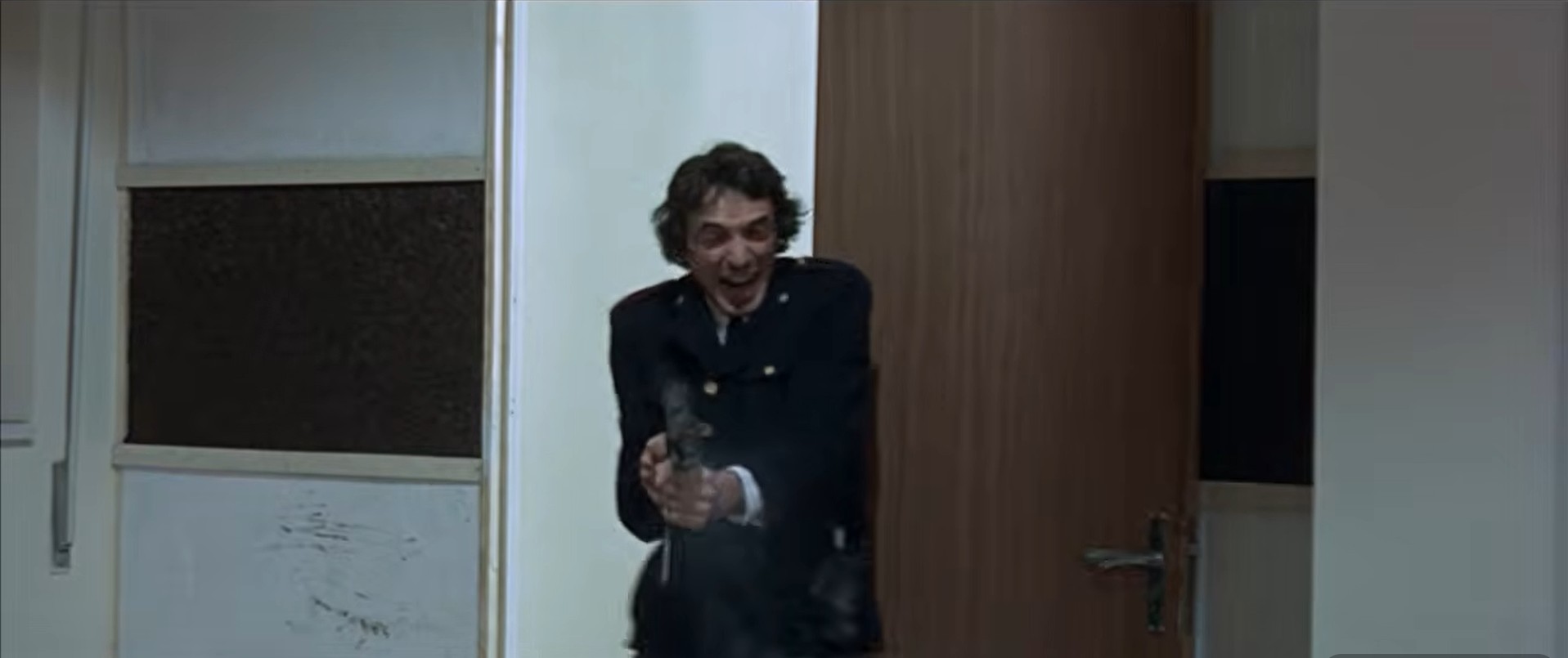
Little Monster and Lui Gung didn’t get along to begin with when Little Monster’s accident put Kung’s sister in the hospital for minor injuries but when the two rookie cops get on the bad side of their direct supervisor, Inspector Tin, they have no choice but to work together under his pleasure to see them suffer.  The two cops are assigned to the case of Li Wei-Feng, a smalltime crook who tries to black male mob boss Wong with incriminating photographs of a deal gone deadly.  They stay on top of and befriend Wei-Feng’s ex-girlfriend Rosa in hopes he’ll show up but the cops find themselves going on more double dates between Kung wooing the model Rosa and Little Monster courting Kung’s sister than actually doing any detective leg work.  Before they know it, they’re assisting Rosa out of her gambling debts with medium level bosses and on hot coals with Boss Wong’s formidable henchmen who will stop at nothing and will kill anyone in their way from obtaining the smoking gun film roll. 

“Rosa” is the 1986, Tung Cho “Joe” Cheung directed buddy cop comedy-action film from Hong Kong,  Cheung has delivered a string of action comedies prior, such as with the a torn Kung Fu novice must jealous mend the rift between his two masters before a war ensues in “The Incredible Kung-Fu Master” in 1978 and the story of a veteran police officer who must work both sides of the law to manage his wife’s gambling addiction is paired with a rookie cop to take down transgresses in “Shadow Ninja,” release in 1980.  “Rosa” is another notch of comedic effort in Cheung’s belt but on a bigger scale with well-known actors, a large cast, incredible stunts, and fast martial arts choreography in a script penned by the “Chungking Express” director Wong Kar-Wai and “Hard Boiled” and “Mr. Vampire” writer Barry Wong.  Wong and Anthony Chow (“The Cat”) produce the film under the Golden Harvest Company and Bo Ho Film Company flags.

“Rosa” uses an ensemble cast more for comedic purposes rather than to instill dramatic action, beginning chief principal Biao Yuen, who we’ve recently reviewed in another new phenomenal physical 88 Films Blu-ray release in “Saga of the Phoenix” and has had roles in “Game of Death,” “Encounter of a Spooky Kind,” and “Picture of a Nymph,” as the endearingly named Little Monster, a go-lucky rookie cop with skilled martial arts moves.  Charming and confidence, Yuen plays the most sensible of protagonists without absorbing a lot of humiliation unlike his costar Lowell Lo who finds himself in a more subordinate role of Lui Gung underneath Little Monster’s suavity by having more overreactions, slapstick, and chasing with his tongue out a lost cause – that being Rosa.  “Inferno Thunderbolt’s” Hsiao-Fen Lu plays that titular role, a gambler addict and model with loan shark debt with ties to a small-time crook that incidentally involve her in a deadlier high-stakes blackmail with a power crime boss, but her importance is depreciated by Yuen and Lo’s buddying comedy and not the driving focus of the plot.  In all, the progression is a group effort rather than encamping around a centralized person.  With that being said, Kara Ying Hung Wai (“The Ghost Story”) often feels like an afterthought, a proverbial fourth wheel, as Gung’s sister Lui Lui whos’ gifted lines and a presence here and there but is mainly only Little Monster’s love interest in corporeal presence only.  Rounding out the good guys is the hapless Inspector Tin (Paul Chun, “To Hell With the Devil”), an arrogant supervisor who doesn’t want to get his hands dirty with police work and recruits Little Monster and Kung as punching bags for wrong him in their individualized opening, mishap run-ins with the inspector, another comedy outlet absorbing Rosa’s unintended entrenched Mob connection.  The Mob and other baddies fill out the cast with Billy Sau Yat Ching, James Tien, Charlie Cho, Fat Chung, Chen Chuan, and Dick Wei. 

As far as “Rosa’s” action is concerned, it is topnotch quality between the wide-variety of stunts, the pinpoint choreography, and the excellently executed martial art fights that disproportionately leaves the narrative as a quintessential chop-socky police story.  I say disproportionately because the action is overly consumed by the comedy that, in itself, has struggles.  The humor physicality lands with precision with big hits taken in accidental error or are made within the context of choreographed fight scenes mostly stemmed by Lowell Lo and Paul Chun as they bumble their way through situations, but the dialogued jokes and other vocal gags are terribly corny that unfortunately dilute the overall mirth-murky pool that it becomes too often cringeworthy to swim in.  The light-hearted and sexualized humor is blended with an endless wooing and an outdo rivalry between the forced partnership that evolves into a fond friendship between Little Monster and Lui Gung, who is often referred to as Big Brother.  Lowell Lo embodies a larger slapstick piece of the pie with his distinguishable friendly face and doughy-eyed demeanor, contrasted against the athletic slender of Biao Yuen who outshines him on the conventional society determined good looks scale with an unassuming martial arts skillset to match.  All the serious and grim nature comes out of the Hong Kong’s criminal element with deadly assassins that use piano wire and large caliber handgun to lacerate jugulars and explode cars full of betrayed crooks.  The third act finale finally puts the pieces together and creates a harmonious brawl that blends action and comedy evenly, even integrating Lui Lui into the fold with an out of the blue ability to hold her own and fight just as fast and furious as Little Monster.  

Another Golden Harvest distributed production garners attention once again on 88 Films, in association with Fortune Star Films, with a definitive Blu-ray set from the UK boutique label making their presence known here in the North American market.  The AVC encoded, 1080p high-definition transfer, onto a BD50 has remarkable presentational quality with a pristine print transferred onto a 2K scan from its original 35mm negative.  The immersive quality shows no sign of destabilizing the matrix, leaving audiences with the immense scope of a cleaner, natural image full of depth and range of saturated and diffused color.  Skin tones appear organic and nitty-gritty with the stubble, sweat, beauty marks, and the subtle contrasts of tones.   88 Films’ flexes their restoration efforts that extends the color palate to suitable measure and each scene, through its superb editing by chop-socky veteran Peter Cheung, segues into the next without missing a color resolution beat.  The film is also presented in original 1.85:1 widescreen aspect ratio.  There are two ADR mono tracks, Cantonese and English.  Cantonese is preferred with the better mouth-to-sound synchronization, but both deliver a really good decoded mono mix despite the singular direction of all the audio but with post-production sound, that can be manipulated to exact timing with the exact sound to create a better disbursed audio design.  There some crackling and hissing in the dialogue but very low-level interference that doesn’t hinder the prominence and really affect the clarity.  The newly translated UK English subtitles are available from Ken Zhang and synch fine with a steady pace and come without typos.  Encoded special features have a new audio commentary by Hong Kong Cinema experts Frank Djeng and F.J. DeSanto, a second new commentary from another Hong Kong Cinema expert David west, an interview with director Tung Cho “Joe” Cheung and assistant director Benz Kong, alternate English opening and closing credit titles, an image gallery, and the original trailer.  The limited-edition set comes with a rigid slipbox sheathed by an O-Ring slipcover with new artwork by Sean Longmore that plays into Rosa’s bosomy running ga. Inside the slipbox is a 40-page color booklet with stills and a pair of essays from Fraser Elliott and Paul Bramhell, a collectible postcard, and the clear Amaray case with the same primary Langmore art on the sleeve that can be reversed for the original Hong Kong poster art.  The booklet and slipbox have more original art as well that speaks the action and slapstick.  The not rated, region A and B encoded release has a runtime of 97 minutes.

Last Rites: Fun, exciting, and moderately droll, “Rosa” might hit-and-miss on the comedy, but what definitely hits is the martial arts action defined in a harmony of perfect scrappy chorography.

Grab the Limited Edition Blu-ray of “Rosa” from 88 Films!

EVIL’s Blonde, Beautiful, and Without Genitalia! “Darbie’s Scream House” reviewed! (Wild Eye Releasing / DVD)

Uh Oh Darbie! “Let’s Go Buy “Darbie Scream House” on DVD!

In Doll Town, Darbie is the most popular doll around.  Blonde, beautiful, and busty, Darbie lives a perfect plastic existence.  When her boyfriend Ben wants to plan a surprise birthday bash for Darbie, Tripper, Darbie’s helpful yet gossipy little sister, interprets Ben’s interactions with Darbie’s friends – Danger Darbie, Ditzy Darbie, and Rodeo Darbie – as infidelity despite no evidence of sexual activity, as well no doll in Doll Town having genitalia, and reports back to Darbie with the unpleasant news.   With her perfect world seemingly crumbling down, Darbie pledges to rid Doll Town of her now ex-best friends by taking a big knife to them in vengeful spite, turning her dream life into a spiral nightmare based off a simple misunderstanding and an obsession with contentment, that drives her insane and no one from her friends to boyfriend Ben, to even her sister Tripper, are safe from her accessorial wrath.  

Former, or current depending on how you look at it, alternative adult content creator turned this next generations cult film scream queen, Jessa Flux (“Murdercise,” “Onlyfangs”) co-writes and co-produces her latest venture “Darbie’s Scream House,” a comedy-horror lampooning of Mattel’s Barbie universe.  Flux’s independent film talents hop aboard a legendary name of the same market in Donald Farmer.  The “Cannibal Hookers,” “An Erotic Vampire in Paris,” and “Hi-8 (Horror Independent 8)” filmmaker co-writes and produces with Flux while helming at the seat of the director’s chair.  Together, Flux and Farmer materialize a plastic doll world full of jealousy, rage, scandalmongering, debauchery, and homicidal tendencies.  Crowdfunded through Indiegogo, the campy horror parody.  The 2026 film is a production of Stratosphere Entertainment. 

Not only collaboratively writing and producing the feature, but Jessa Flux also stars as the titular character Darbie, the buxom queen of Doll Town with an amiable personality up to a point.  That point is when boyfriend Ben comes under the scrutiny of Darbie’s nosy, troublemaking sister, Tripper.  Claude D. Miles has collaborated with Farmer and Flux on a few other projects, such as Donald Farmer’s “Debbie Does Demons” and “Scream Queens Weenie Roast,” and between Flux and Miles, their rapport doesn’t seem forced as it’s flexed to work as comedic love interests in a parody setting.  Ana Xaden, another indie alternative horror actress, also has worked with Farmer, Flux and Miles on “Scream Queens Weenie Roast” from the year prior, turning the trio into a regular entourage for the “Cannibal Hookers” director.  Xaden also busts out along with Flux as the two become elementary with their dialogue, by that I mean their conversations, whether written in the script like this or just the style of acting incurred by spontaneity upon filming, has an artificiality to it with monotonic delivery and exposition.  Funny thing is, you only really see this flat conjecture between Darbie and Tripper, and maybe even a little bit from Ditzy Darbie (Ashleigh Amberlynn, “Night of the Dead Sorority Babes”) but that’s more expected because of her dunce character.  Ben conversing with Beach Blanket Ben (Joe Casterline, “Shark Exorcist 2”  Unholy Waters”), or any other minor male character, has more natural back-and-forth without any fabricated flavoring, and it’s curious to think that maybe “Darbie Dream House” has a layered depth to that nuisance that speaks to the fake talk and gossip associated generally around women and men letting it, generally again, hang all out.  The cast rounds out with Mel Heflin (“Scarlet Rain”) as aggressive lesbian Rodeo Darbie, Fallon Maressa (“Bloodrunners:  Vampire Wine”) as Dream Date Darbie, and Kasper Meltedhair (“Hooker with a Hacksaw”) as a Doll Town reporter with Kimberly Lynn Cole (“Bloodthirst”) listed in the credits but her scenes cut and placed in the special features’ deleted scene. 

This is not one of those This Is Not Barbie:  An XXX Parody type of film but “Darbie Scream House” very much cold have been with it’s dolled up and naked-positive female cast, male characters with bad wigs and depraved names like Sleazy Steve, and a premise around creeping sexual promiscuity.  However, blood axe-wielding aggression, reared by jealousy, fill in the gaps to level up a cheap stag production to a barebones indie horror that doesn’t take itself very seriously in this meta-existences for the chief characters who are playable dolls of a young, imaginative young girl but who are also moving autonomous with their movements and affairs that are not sanctioned by Barbie or Mattel for that matter.  “Darbie” is a different kind of female empowering doll but in the same breath lacks the informed judgement of a jump-to-conclusions partner, insecure and obsessive over people and ideals.  “Darbie Scream House” caters to that what if scenario if Barbie didn’t have mental positivity and broke into sociopathic tendencies?  The core of the story is there but does heavily rely on the gratuitousness of Jessa Flux, Ana Xaden, and Ashleigh Amberlynn to carry it over the finish line, yet the shoddy effects, poor acting, and mishandling of the meta perspective sink this Donald Farmer production like cemented pink platform and rhinestone shoes. 

This is a no playtime, you can be anything Barbie movie with a house in Malibu and driving a pink convertible.  This is “Darbie’s Scream House,” a bizarro, alternative universe mined form the same vein as the classic children’s characters, such as Winnie the Pooh, Mickey Mouse, and The Grinch, turned into monstrous villains of your nightmares.  “Darbie’s Scream House” is right up Wild Eye Releasing’s alley with plenty of against-the-grain filmmaking, attitude, and shlocky satire, now available on a DVD home video that’s an MPEG2 encoded DVD5 with 720p resolution.  Even if you’re player + television combo can upscale the quality, the image quality is limited to the commercial grade equipment with passable delineation and detail that offers immersive detail but gets the job done. Lots of the details are washed away also but the use of blue or pink saturating gels that flood tense moments of Darbie’s life on the downspin and much of the exteriors are ungraded, using natural the deflection of natural light to the best of their ability.  The English PCM Stereo 2.0 carries an unbalanced depth that’s inconsistent on keeping characters dialogue level within the shot.  Those closer to the camera often have strength priority with the second person only a step or two back sounding as if they’re a good ten yards away in the closeup-to-medium marked shots.  The recording mic also can’t sustain sounds beyond its limitations, such as screaming that breaks the reproduction into bits of static and distortion at high peaks.  Special features contain a blooper reel, a deleted scene, and feature and other Wild Eye Releasing trailers with the physical package sporting an embellished, AI generated cover, which I aways appreciate the fluffing-up of an indie film.  In this instance, the art doesn’t stray from the truth per se but aggrandizes the finer details quite a bit; however, the nice touch here is the Barbie font used for the title.   The reverse sleeve image inside the clear Amaray isn’t afraid to be gory with a severed head from the story that has been lightly touched up for effect.  The not rated DVD is region free for all players and has a runtime of 75 minutes, enough to satisfyingly slay. 

Last Rites: Jessa Flux’s “Darbie’s Scream House” skewers Barbie into an unperfect, deranged universe of emotional unstable killer toy dolls but leaves much on the table of possibility and has a hard time gluing together an airtight campy story that’s too reliant on the kink than the gore.

Uh Oh Darbie! “Let’s Go Buy “Darbie Scream House” on DVD!