Don’t Mess with Texas Unless You’re EVIL Going Up Against “Shanghai Joe” reviewed! (Cauldron Films / Blu-ray)

East Doesn’t Just Meet the West, It Kicks It’s Ass in “Shanghai Joe!”

A Chinese immigrant arrives into San Francisco looking to begin a life as an American cowboy.  Met with extreme prejudice, he pushes forward to avoid the Western stereotypes of his race by taking a stagecoach to anywhere Texas in order to become a true-to-form Cowboy.  Mocking monikered Shanghai Joe, even in Texas Joe is met with bigoted resistance in every way and in every exchange with the locals despite his uncanny fighting, intellect, and horse-riding skills that are far superior to his meanspirited rivals who think of him nothing more than a dumb foreigner.  When Joe become inadvertently involved with human traffickers and slave owners of downtrodden Mexicans, Joe aims to set things right against an oppressive and murderous rancher named Spencer who runs the entire region.  Spencer knows his usual hired posse can’t match the supernatural abilities of Joe and hires out the $5,000 bounty to the four most cunning and ruthless killers that will seek Joe’s head as well as possibly commit other atrocities to him for the sole joy of it.
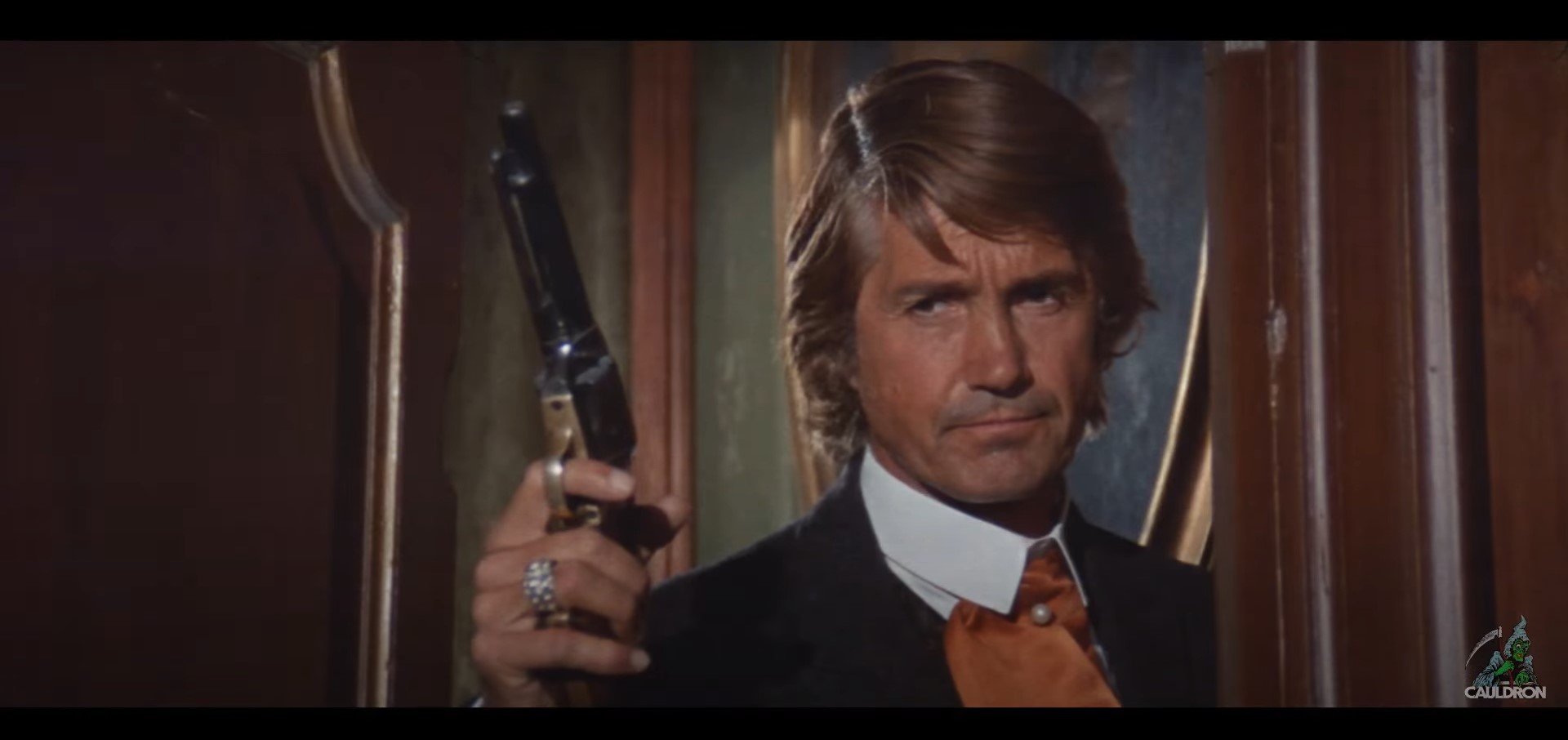
The sun rises on the dawn of the East Meeting the West with “Shanghai Joe” at the center   of subgenre.  The Italian made spaghetti western helmed by “Nightmare Castle” and “Nazi Love Camp 27” director Mario Caiano who exhibits what happens when an unstoppable force hits an immovable object as quick hands and feet of the Asian East combat with the quick gunslinging showdowns of the American West.  Penned by Caiano alongside Carlo Albert Alfieri (“Sodoma’s Ghost”) and Fabrizio Trifone Trecca, credited as T.F. Karter, “Il mio nome è Shangai Joe” or “The Fighting Fists of Shanghai Joe,” as the film is originally entitled in Italian, keeps true to the graphic and vehement violence that ultimately lacked from the U.S. Western and sought to bring a martial arts foreigner into the fold of brute and barbarity as Kung-Fu flicks were up-and-coming with the rise of Bruce Lee and the Italian wanted a piece of that cinematic success without having to spend a fortune of turning sets appear oriental when already built saloons, corals, and spittoons were a plentifully available from previous films.  Producers Renato Angiolini and Robert Bessi serve under the production companies Compagnia Cinematografica Champion (“Torso”) and C.B.A. Produttori e Distributori Associati (“Emergency Squad”).
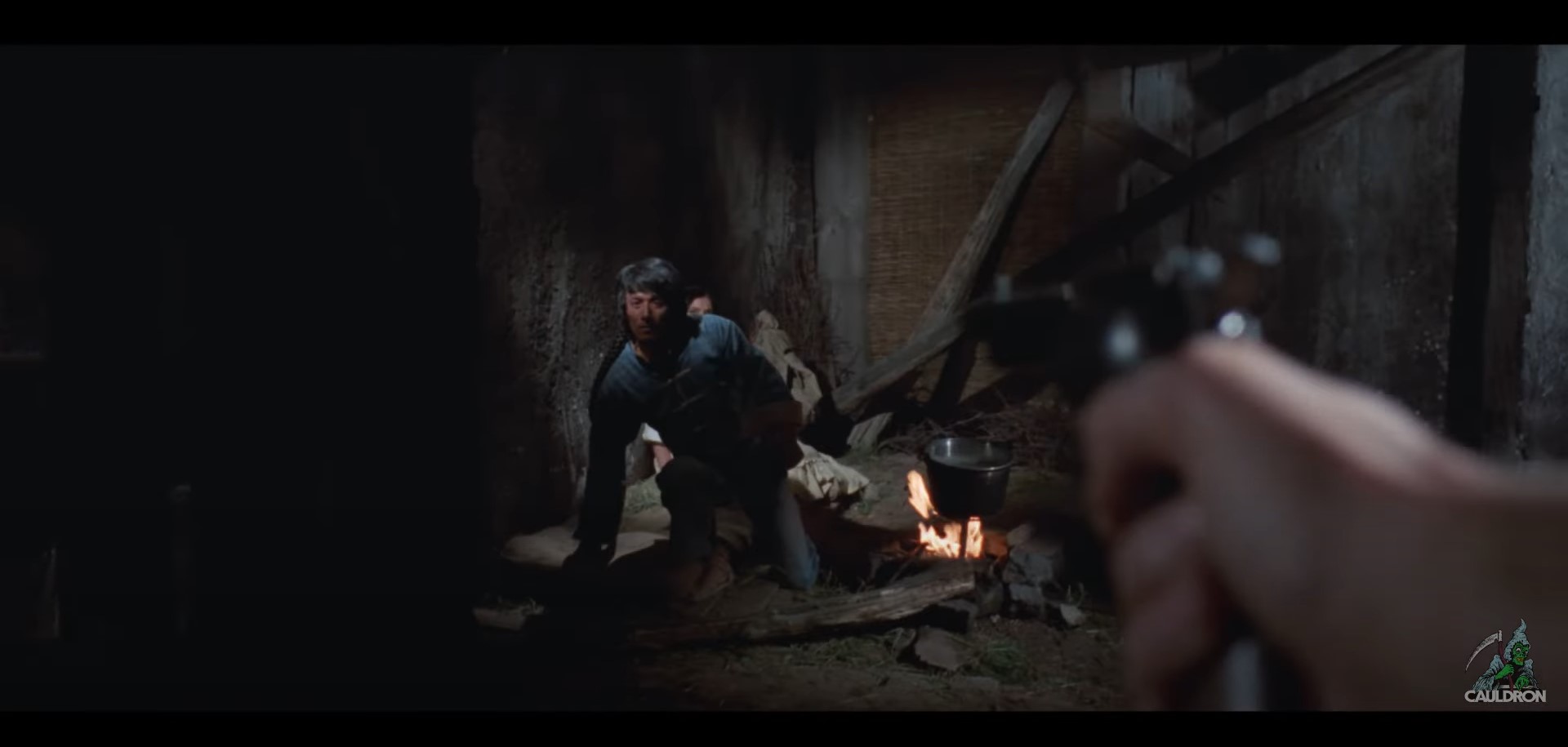
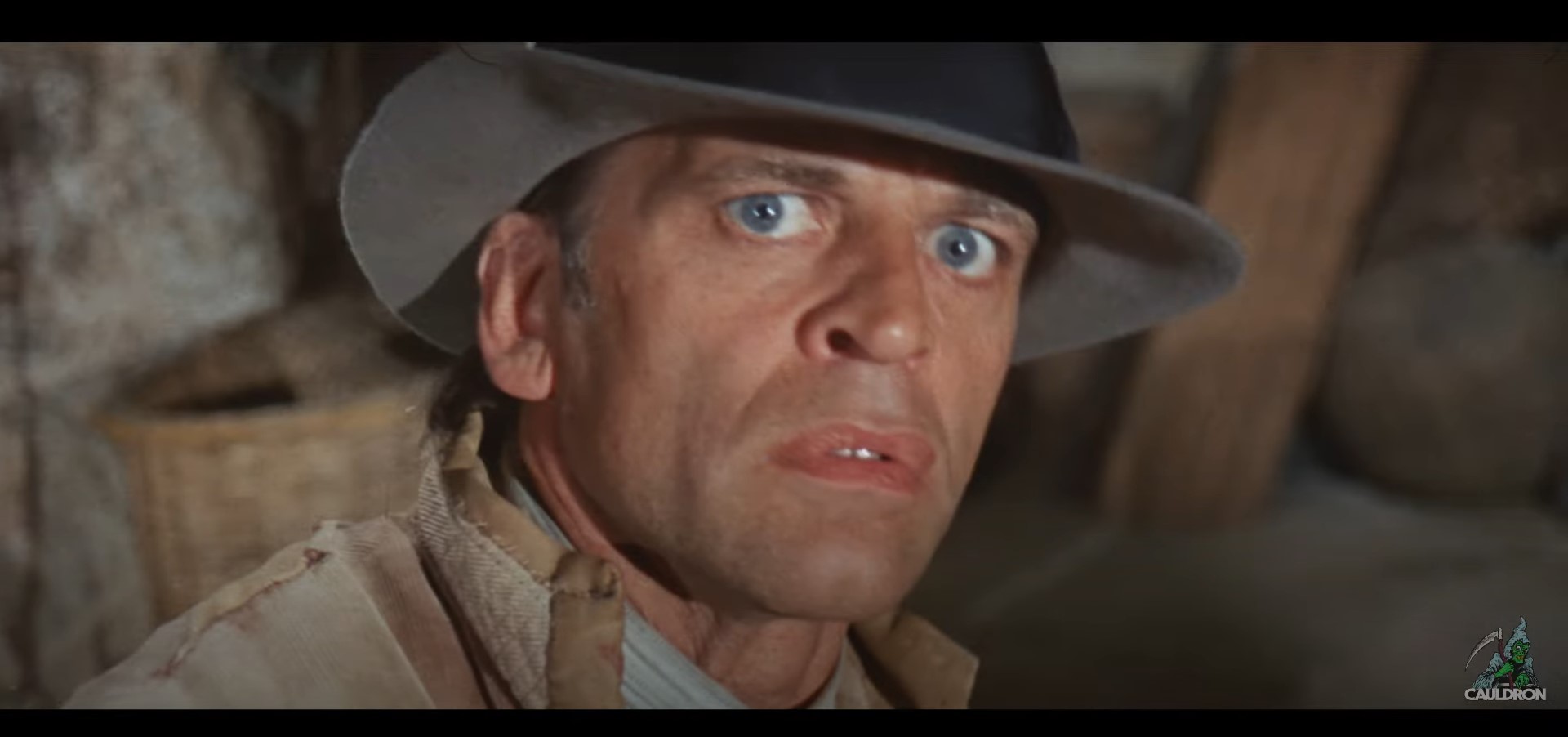
Leave it to the Italians to make a Western set in Texas and to have protagonist Chinese hero be played by a Japanese actor.  Performing under the stage name of Chen Lee, the Aichi, Japan born actor’s real name is Myoshin Hayakawa and he plays the role of Chin Hao, a nomadic Chinese immigrant, taught the rare fighting ways of an ancient martial arts, travels to America in hopes to reside in the American dream.  Lee’s certainly a presence on screen in his quiet and reserve composure but equally as self-assured and as competent to take on the worst-of-the-worst in the exploitative West where law has yet to reach it’s firm grasping hand.  Lee lands fight sequences with fierce finesse, though perhaps not on a Bruce Lee level, but does it so with his own distinct style of chopsocky flair with laws of physics breaking gliding through the air and tremendous accuracy in all areas of throwing weapons, even hyperbolizing his Yo-yo as a coconut splitting, head-cracking weapon.  When not wiggling his way out of impossible no-win situations with smarts and strength and when it comes to the interests of romantics, Chin comes to find solace being twisted into a paired fate with Mexican national Christina, played by Italian actress Carla Romanelli (“Lesbo”), after saving her father from being executed. As if destined to fall in love at first sight, the two outlanders are in each other’s embrace but before anything could be commutated by any sense of the term, head honcho rancher Mr. Spencer (Pierro Lulli, “Django Kill… If You Live, Shoot!”) hires out assassins to relieve him of a troublesome Shanghai Joe. The killers are just as colorful and individualizes as the titular character with quirky personalities and traits that make them indubitably daunting by their mere nicknames: Pedro, the Cannibal (Robert Hundar, “Cut-Throat Nine”), Burying Sam (Gordon Mitchell, “Evil Spawn”), Tricky the Gambler (Giacomo Rossi Stuart, “The Night Evelyn Came Out of Her Grave”), and Scalper Jack (Klaus Kinski, “Nosferatu the Vampyre). The eclectic bunch of Western-horror tropes level out Shanghai Joe’s uncanny abilities with their own big penchants for demise but the actors behind the characters also have bigger personalities, especially Kinski who is only in the film for a few scenes but is second billed in both before and after credits. “Shanghai Joe” fills out the cast with Dante Maggio, Andrea Aureli, George Wang, and another Japanese actor and martial arts master, Katsutoshi Mikuriya, as the showdown villain trained in the same ancient combat arts as Chin but turned his back against the teachings’ moral principles for his own greed.
Plot pointed by a series of bad case scenarios to showcase Shanghai Joe’s superior skillset as not only a fighter, but also an intelligent, almost con-like, mentalist as well as being good at just about everything else, the film is laced with repetitive derogatoriness from all races except white.  “Shanghai Joe’s” indelicacies, coupled with graphic, moderately bloodied violence, adds to the laundry list of idiosyncrasies of this unique old West spectacle.  The Caiano and team’s scripted narrative exacts the epitome of the label the Wild West where the unexplored, uncultured, and uncivilized country gives way to lawlessness and opportunity, especially the latter at the expense of others.  Joe becomes a beacon of moral hope, a foreigner who seeks, by way of a semi forced hand, to correct the system from within using his rare training only as a position of defensiveness or to right a terrible injustice.  Caiano has the eye to make a legitimate Italian spaghetti western that hits all the hallmarks and the director can also fashion a two-prong narrative with a unified purpose that builds up the hero first with a series of outlaw confrontations before immersing him into a rigorous roughhouse recruited by the rotten rancher.  While each face-off spars differently, Caiano letting the actors build upon and have fun in their villainy, the ultimately take the place of the tip of the spear antagonist, rancher Stanley Spencer, who doesn’t get what’s owed him by the roll of the end credits.  The high-flying combat wires, that you can plainly see during the air time fight sequences, and the personal and frame stylistic choices of the actors and Caiano tend to distract viewers from the unfinished business, concluding on a satisfactory note that what we just experienced was felicitously violent, engrossingly entertainable with appealing characters, and just waggish enough to provide levity amongst the harsh racism and the aforesaid brutality. 
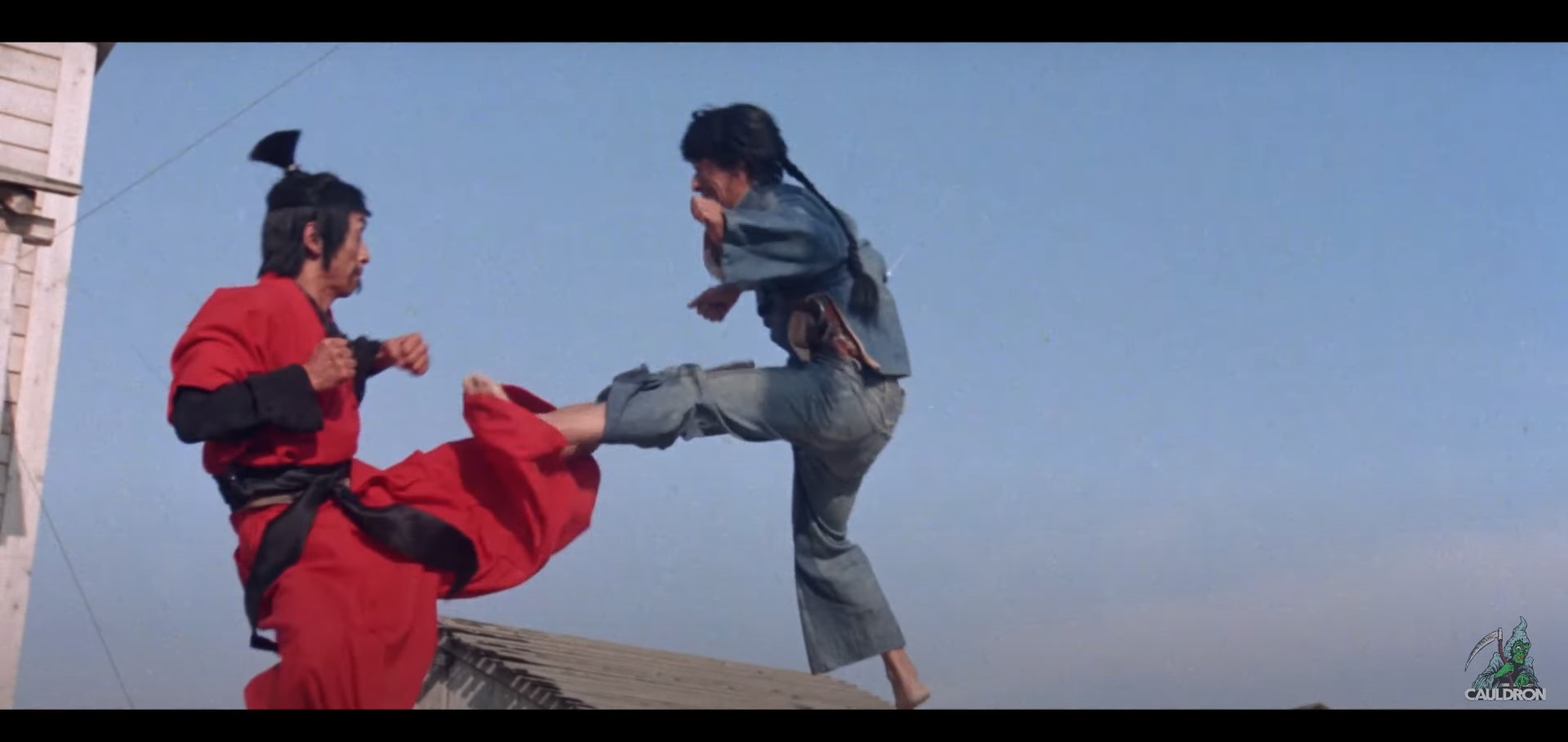
“Shanghai Joe” is a must-have, must-see Italian Western for the subgenre aficionado and, luckily, Cauldron Films delivers the 1973 film onto Blu-ray for the first time ever in North America. The AVC encoded BD50 is presented in high definition, 1080p, with a widescreen aspect ratio of 2.35:1 of a 2K restoration scan from the original 35mm negative. Cauldron Films’ restoration is a labor of love for an atypical western of the obscure nature with a generous tactile intensification to bring the warm dust of the tumbleweed West down upon the anomalist Asian in a blue Tang suit and pants with a conical hat. A few and very faint scratches are the only issues observed that come and go as quickly as they came, but the there’s a nice richness to the coloring, a natural grain, and zero compression issues or unnecessary enhancements detected. The DTS-HD Master Audio 2.0 mono comes in two options – An English dub and an Italian dub. Preferably, I went with the English dub over the Italian despite “Shanghai Joe” being an Italian production. For one, Myoshin Hayakawa spoke English which you can tell by reading his lips so the English track paired better. Secondly, the Italian track is quite orotund to the point of losing some minor ambient detail as well as not feeling to be a part of the whole package team. Slight hissing at times during dialogued scenes but the clarity comes through with the decent dub pronunciations and the chopsocky ài yas are often repeated in the same audio tone and level in every evasive or attack flight by Joe but is not ostentatiously annoying. “Marquis de Sade Justine’s” Bruno Nicolai and his twangy score, channeling his best Ennio Morricone, has great purpose as “Shanghai Joe’s” main theme that rowels up and shapes Joe’s hero role. English and English SDH subtitles are available. The special features include an interview with Master Katsutoshi Mikuriya on how he was approached for the role and the martial artists also discusses the fight sequences in Samurai Spirit, film historian Eric Zaldivar puts together a visual essay with the topic East Meets West: Italian Style, an audio commentary by Mike Hauss from “The Spaghetti Western Digest,” the original trailer, and an image gallery. The physical portions of the release include a translucent Blu-ray snapper with a reversible cover art featuring two stylishly illustrative posters in contrast to the simple disc art of the red “Shanghai Joe” title set upon a black background. The early 70’s feature comes not rated, has a runtime of 98 minutes, and is region A locked. “Shanghai Joe’s” singularity scores high on the limited East meets West subgenre novelty but certainly aces as a versatile Kung-fu period piece with ridiculously good fight scenes, a handful of callously charming characters, and a disparaged hero, who embodies the good in all of us, you can gladly cheer for from beginning to end.

East Doesn’t Just Meet the West, It Kicks It’s Ass in “Shanghai Joe!”

EVIL Just Casually Swims Along in “The Lake” reviewed! (Dread – Epic Pictures / Blu-ray)

Take a Dip in “The Lake” on Blu-ray Home Video!

The small Thailand village of Bueng Kan becomes under siege by a monstrous being from out of the depths of near by lake.  Vicious and stealthy, the unknown creature terrorizes the wetland villagers town by town, killing all those in its rampaging path up an inlet river.  The local police commander and his two topnotch detectives are baffled and have no idea what they’re up against or how to exactly handle the situation but with the help of one of the bitten victims, psychically linked to the creature by its bite, the police and vigilant locals manage to capture the creature before it can wreak more havoc.  Concurrently, Police discover a large egg by the originating lake of first creature sightings and as they inspect it, the much larger mother beast emerges.  The mother searches out her children by using vocal sonar to track down her troubled little one, sending her galloping toward the panicky and crowded town in an unstoppable hunt that could lead to chaos and catastrophe. 

When the first news broke about “The Lake,” there was considerable positive buzz surrounding the big-budgeted, Thailand produced picture for it’s substantial, animatronic creature feature effects.  Yet, I purposefully held back doing any further research into learning more about the film that was released in the latter half of 2022 for reasons that may bias my professional opinion and to not spoil a virginal viewing experience of too much trailer audiovisual that can sometime reveal all the good bits and pieces of a movie.  Retrospectively, I’m starting to think that not absorbing much about the Lee Thongkham’s written-and-directed picture, whether by intentional research or by happenstance, was in due part to its unfavourability amongst global audiences despite the tangibly terrifying and impressive effects.  “The Lake” is produced by Nimit Sattayakul and Nathaporn Siriphakacharath with Dread Central’s production label, Epic Pictures, serving as coproduction company in conglomerate association with Hollywood Thailand, Airspeed Pictures, Five Stars Network, Right Beyond, Creative Motion, and the director’s own Thongkham Films.

“The Lake” is an ensemble cast of well-known Thai and Chinese based actors and actresses brought together to play a variety of characters caught up by a sudden and surprising monster attack.  The cast works well enough to supplement “The Lake’s” overall reactionary state of frantic and heavy browed emotions.  In fact, the performances are terribly melodramatic and only reactionary.  For a Kaiju film, there’s not a lot of chase sequences, monster versus man battling, or even mass destruction; instead, the direction is geared toward the emotional aftermath of experiences, such as watching the monster in terrifying awe, twisted faces of concern over the turmoil, or breaking down in a moment of loss, which graphic death scenes seem very sparse with only a few instances of the humanoid sized beast taking chest bites out of a few village denizens and the only principal character death.  The despairing cast is mostly comprised of Thai actors with a handful of Chinese actors sprinkled in, beginning with Thai leading man Thiraphat Sajakul (“The Maid”) as head inspector James (last names are nonexistent in the cast of characters).  Inspector James not only has to figure out how to outmaneuver the magnitude of the creature pool but also outthink the angsty games of his antagonistic teenage daughter Pam (Supansa Wedkama) who has squared off against him after the death of their mother.  That teeming with bitterness and frustration dynamic barely holds water as the problematic situation is over before it can even began to fester with audiences.  The emotional weight is definitely felt but the emotional worth retains little impact when lake monsters begin to emerge like Russian Matryoshka dolls, or nesting dolls, beginning with the smallest of the set first and working it’s to the larger mother.  “Motel Acacia” and “The Maestro:  A Symphony of Terror” actor Vithaya Pansringarm has a comparatively commanding presence as the Police Commander, but, to be honest, Pansringarm is consistently typecast as law authority throughout his career and has a firm foot on the role’s neck, but one of his subordinator officer is his daughter Fon (Palita Chueasawathee), a fact that we don’t really know until much, much later into the narrative, making the bond essentially not worth knowing, especially since nothing really happens with Fon other than the occasional exposition of events that can be easily interpreted with our own eyes.  Another pairing is wetland farmer Lin (Sushar Manaying) and her drunkard brother Keng (Thanachat Tunyachat, “Yuan ling 2”) who experience the initial attacks of the smaller creature and form a link to it once Keng survives a bite from its tentacle-dangling and squared-shaped jaws.  Like the other two couples, not much of arc is established, even for completion, as the pieces to their character composition feels fragmented and frail to the point of futility.  I was expecting Keng to play up his the drunk indolent and someone who takes for granted his hardworking sister and her daughter that the attack becomes this bonding moment of relationship redemption or salvation, but what unfolds on screen, between the two, harps Keng’s connection with the creature and nothing more.  Wanmai Chatborirak, Su Jack, Zang Jinsheng, and Amorntep Wisetsung round out the supporting cast.

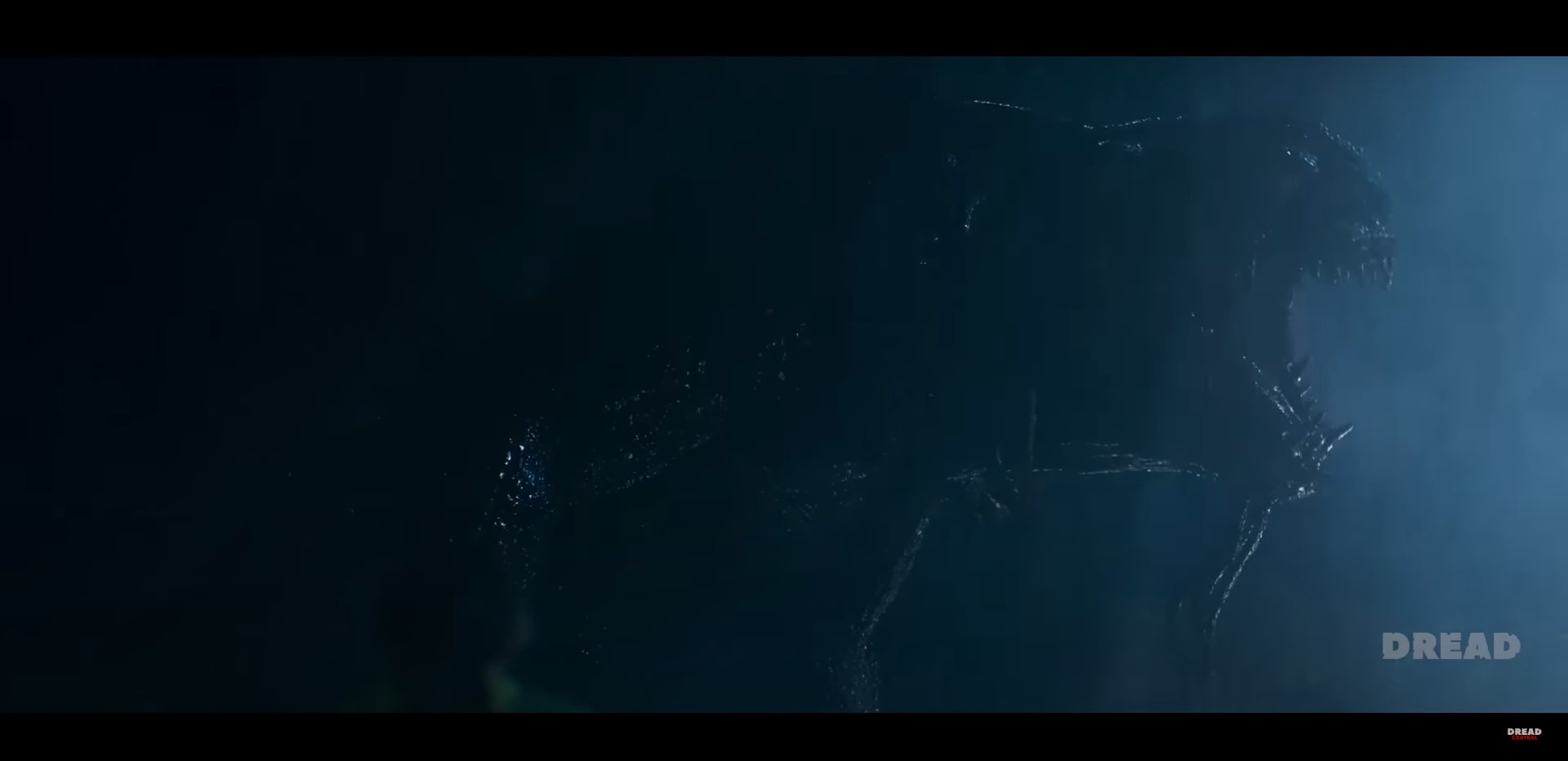
Impressive as “The Lake” may be with the creature effects, using a near seamless blend of phenomenal computer generated imagery and the same animatronic technology as in “Jurassic Park” that brought life back from 65 million years of extinction with the T-Rex, a greater amount of depression mounds over the head of director Lee Thongkham like a black rain cloud.  “The Lake’s” creature derivativity, based off the “Jurassic Park,” “Godzilla,” and maybe even borrowing a trifle sum from “Cloverfield” in what is supposed to be a genetic combination of a crocodile, snake, and catfish(?), never weakens the narrative as audiences will always be curious to experience the larger-than-life animatronic head that miniaturizes the cast effectively.  Gen-pop will continue to gobble up a good-lookin’ monster on any day.  Where “The Lake” fatigues is with a poorly progressing script, flat characters, and misaligned directional continuity.  That latter is big – bigger than the monster itself – when one character with the camera perspective facing the framed character and the framed character begins looking slowly up to his right to eye-point the monster out and the next spliced in scene is facing the then camera perspective character from the right side and he also turns his head right to look at the monster.  They both turn their heads to the right, so which side is the monster on?  The same could be said about the omnipresent, big momma monster whose head is seemingly everything, everywhere all at once – by the sound of it, the creature should have starred in that famous multi-verse movie that won all those Academy Awards.  ‘The Lake” is drenched – excuse the pun – in overused scenes where a foreground man squares off against the blurred background monster as well as scenes of the ginormous, scaly head creeping in from either stage left or stage right to interact with the cast.  The moments lose their usually high and sizeable satisfaction rate with Thongkham’s repetitive saturation to create the first Thai, larger-than-life, monster movie because of his inability to showcase other scenes of Kaiju creature carnage.

“The Lake” arrives onto hi-def Blu-ray home video courtesy of Dread’s exclusive distribution label Epic Pictures.  The AVC encoded, 1080p, single layer Blu-ray is presented in the 1.77:1 widescreen aspect ratio, looking stunning and marvelous with the absent of natural lighting.  Most scenes are dark or overcast with rain, graded with a subtle increase of the cyan hue to reign with a ominous lurking in the dark fist.  The middle depth focus with streaking blur, like being concussed, runs as a shell-shocked induced motif throughout.  Thongkham plays with the blur feature a lot, switching back and forth between foreground and background as well as the centric focused blur with streaking.  Surprising, there are no issues with compression, despite the dark shoots against high and vibrant key lighting and the blur features which is well-sustained on the format disc.  The release comes with four dialogue tracks:  A Thai Dolby Digital 5.1, an English Dub Dolby Digital 5.1, a Thai Dolby Digital 2.0, and an English Dub Dolby Digital 2.0.  For about half the film, many of the scenes are done in the rain which don’t translate with vigor over the Thai 5.1, especially during the downpours.  Instead, “The Lake” is more focused on its epically scored soundtrack by composer Bruno Brugnano who has composed a string of horror of the last decade and half, including “The Coffin,” “She Devil”, and Thongkham’s “The Maid.”  Dialogue renders clean and clear with a fine simultaneous English subtitle, but the translation feels coarsely oversimplified to the point of covering just the basic generalities of plans, actions, and explanations, such as the environmental and global warming changes hinted earlier between the two Chinese scientists, that make the intellect of “The Lake” severely less than substantial.  The translated captions render the characters seemingly inexperienced on the simplest of tasks when I suspect that’s not entirely the case.  Spanish subtitles are also an available option.  Bonus features include a promotional behind-the-scenes advert, the official trailer, the Dread trailer, and a handful of raw deleted scenes that provide a better and extended insight into the ending rather than the wrap-it-up ending we’re left with in the final product. The physical attributes sport the monster in full roar bursting the surface of the lake on the front cover of the traditional Blu-ray snapper while the disc art plants a sandy monstrous footprint with the push lock right in the palm. There is no insert included. The region free release comes not rated and has a runtime of 93 minutes. Sold just on special effects alone, director Lee Thongkham rises the leviathan for Thailand’s movie industry, but “The Lake” is drained of box-office depth in every other element.

Take a Dip in “The Lake” on Blu-ray Home Video!

Bruce Lee Fought EVIL for Justice. Mark Swetland Follows Lee’s Footsteps in “Blood and Steel” reviewed! (SRS Cinema / DVD)

Hiyah! “Blood and Steel” – the Lost Kung-Fu Film now on DVD!  

The brutal murder of his sister and her husband sends Mark Swetland into a vengeful fury.  Behind the heinous act, a drug smuggling organization, using a steel fabricating warehouse and a dojo school as a front, had sent a merciless assassin to take out Mark’s sister after a previous incident with the organization’s personnel that could bring down the whole drug shipment operation.  As Mark investigates for answers and track down those responsible, he’s greeted with hostility and uses his extensive martial arts experience, and a little help from a few of his closest allies, to bring the syndicate down once and for all, but the cruelty conscious conspirators don’t plan to go down without a fight as they kidnap Mark’s girlfriend and hire a mercenary fighter to bring the fight to them on their own terms. 

If you’re a martial arts film connoisseur or just an aficionado of the action-packed genre, here’s an obscure title from 1990 you desperately need to get your hands on, today if at all possible!  “Blood and Steel” is the Bruce Lee dedicated crime and martial arts actioner from producer, writer, and director, Mark Swetland.  Yes, Mark Swetland plays himself, Mark Swetland, as the unstoppable, vengeful vigilante hero in his own production that pits him going solo against a scumbag kingpin and his narcotic import-export empire.  Only recently discovered after being lost for decades, “Blood and Steel” breathes fresh 2023 air with a new DVD release and institutes a brand new, never-before-heard maxim, created by yours truly, of though white men can’t jump, they can certainly Kung-Fu.  Perms, handlebar mustaches, and tight fitting and unappealing fashion grace the screen as nunchakus and hook kicks pave the way for this seriously gratifying choreographed Kung-Fu spectacular to be resurrected from the cache of forgotten films of the cinematic cemetery, shot in and around upstate New York complete with the N.Y. accented, short-a phonological vernacular.

Mark Swetland, proprietor of a safe and vault cracking company in Cheektowage, New York, was once a martial arts instructor.  At the current age of 62, Mark has looked to cracking open safes instead of cracking open heads with his mixed martial art skills but Swetland also once dappled in film, developing his own low-budget Kung-Fu caper, inspired by his martial arts idol, the late and legendary Bruce Lee.   Ponying up much of the funds for what would be “Blood and Steel,” Mark poured every ounce of his soul and craft into the film that displays his range as a fighter as well as getting his chops busted in delivering lines and acting out emotions.  The former was more of his forte with asserting a magnetic presence as both an onscreen fighter and a competent choreographer to have the fight sequences appear realistic and quick against a slew of antagonistic opponents.  As a thespian, Mark often borrows too heavily from Bruce Lee with overzealous fist poses to even echoing Lee’s idiosyncratic short and elongated kiai sounds.    Swetland’s one-on-one scene with fellow martial artist David Bobnik, as the hired hitman Steiner, is well thought out coordination with lighting punch-kick combinations that would rival the best genre films of its time.  Neither Swetland or Bobnik are overly muscularly cut bodybuilders or the zero percent body fat of Bruce Lee’s rail frame as both men are in an ideal, physically fit shape to add to scenes test of time and doesn’t yell amateur hour of wannabe martial artist attempting half-hearted roundhouse kicks for their low budget movie.  “Blood and Steel” round out with a cast that includes Joanne Gargliardo as Mark’s girlfriend, David Male as drug kingpin Mr. Patterson, Elaine Arnone as the slain sister, Diane Zdarksky as the sister’s best friend, Rick Swetland as the sister’s slain husband, and cinematographer Al McCracken has the role of Mark’s best friend and sidekick to the end, Roy. 

Influenced by quintessential Bruce Lee films, “Blood and Steel” is entirely an homage to the exceptional action icon.  Mark Swetland’s film derives elements from “Enter the Dragon” with a plotline of the protagonists’ sister being killed by a drug trafficking enterprise as well as straight down to Mark Swetland’s yellow tracksuit, the same Bruce Lee wears in “Game of Death” with black lines down the arms and legs.  Despite the derivative aspects, Swetland still manages to output an entertaining reel in what has resulted as a passion project that has been stowed away and forgotten only to be unearthed as a transmogrified time capsule of awesomeness.  Swetland, who wore many productional hats, also edited, scored, and did sound design with a fair amount of adequate know-how.  Transitionally between scenes, “Blood and Steel” works to segue into the next scene with various connective images or fade away dissolve without appearing abrupt or muddled.  The additional Foley work, such as the whipping sound of the nunchakus, are done on a synthesizer with an unquestionable audio yield.   “Blood and Steel” has a little bit of everything that is very indicative of a Bruce Lee actioner.  Dirt bike chases that soar from off of a cliff into an exploding heap at the bottom of a ravine, forward and reverse car chases involving a 80’s Corvette Stinger, practical effects from throats being cut to spike cleats becoming lodged into the back of skulls, ridiculous over-the-head, over-the-knee backbreaking fatalities, helicopter entrances over the colossal Niagara Falls, shotgun squib explosions, and much, much more blood-churning excitement can engage the viewer into “Blood and Steel’s” edge of your seat conflict. 

Emerging victorious as a SRS Cinema home video release is the obscure revenge-action thriller “Blood and Steel” on DVD.  Presented in the boxy 1.33:1 aspect ratio, the standard definition 720p resolution, plus the type of camera being used seen in the bonus feature’s outtakes and the impurity characteristics of the image quality, all point to a super 8 shot feature.  Lined left with barely visible sprocket holes and occasionally lined right, a visible magnetic audio strip, often blue in hue, “Blood and Steel” is without a shadow of a doubt a glorified home movie in the right hands of Mark Swetland.  The washed look is a tell sign of no overlay grading, the tri-color emulsion layer remains as the original, natural grading, creating less shadowy contrast but remaining consistent and more-or-less delineated.  The English, single-channel mono track is about as flat as a pancake, if a pancake could make noise.  With hardly any depth, a steady crackling throughout, and depending on the camera mic placement in the shot, some scenes’ dialogue can barely be heard under what sounds like a soft breath or mumble while others are clearly audible and render no issue with understandability. SRS Cinema’s special features include a Fight Analysis with Mark Swetland and David Bobnik going over scene-by-scene, sometimes in slow-motion repeat, their fight sequences and explaining in commentary fashion how the crew set that all it up. Also included are outtakes, the original trailer, the new trailer, and other SRS trailers! The physical DVD sports the original “Blood and Steel” poster plastered inside a standard DVD case of an 80’s retro-rental mockup with color-coded round stickers of the genre action and of the Please be Kind & Rewind phrase. The disc art is a blowup of Mark Swetland from the original poster art. The film runs at a brisk 87 minutes, is region free, and is not rated. “Blood and Steel” has the independent spirit of the dragon, a fierce and fire-breathing martial arts film with fervent laudation for the late Bruce Lee, and is a white knight knockaround and Kung-Fu Flick that is vengeance glorious.

Hiyah! “Blood and Steel” – the Lost Kung-Fu Film now on DVD!  

Down the Path of Darkness is EVIL. “The Long Dark Trail” reviewed! (Cleopatra Entertainment / Blu-ray)

“The Long Dark Trail” on Blu-ray at Amazon.com

Set in the idyllic boondocks of Northwestern Pennsylvania, two young brothers plan to escape the abusive grasp of an alcoholic father in search for a better life.  Without a plan and nowhere to go, they go around the small town to collect money from the odd jobs the brothers worked in preparation for their abscond.  While doing so, they come upon information about their mother, who abandoned them at a younger age, that sparks an desire to track her down in hopes that once she’ll lay eyes on them, she’ll want to rekindle the relationship with her two sons, but the trek deeper into the northern woods would be long and arduous through abandoned aqueducts, pine forests, and numinous burial stones belonging to an inimical cult of women controlled by a sadistic leader.  It is the cult where their mother left them to reside and it is there where they are headed on their haunting journey in hopes for a better life.

Tackling impoverished, ill-treated youth haunted by their past and uncertain about their future, directors Kevin Ignatius and Nick Psinakis write-and-direct “The Long Dark Trail” as a tale of resiliency for two close brothers relying on each other to climb out from a pit of despair.  Ignatius and Psinakis have collaborated previously together as writer-director and cowriter-actor in the misfortunate happenings comedy “My Best Friend’s Famous.”  The 2022 drama-thriller marks the first feature film for the filmmakers who explore coming-of-age through trial by fire, or by the supernatural psychological manipulation of enchanted rocks and by the coarse portents of a blood sacrificing cult.  Shot in Ignatius’s birthplace home of Warren County, PA, the two New York filmmakers shoot the low-budget venture under their independent production company, Four Eighteen Films, in association with El Jean Productions and with associate producers Michael Kraetzer (“The Slaughterhouse Killer”) and Nicholas Onetti (“Francesca”) of Black Mandala presenting the film.

“The Long Dark Trail’s” story follows two brothers played by real-life brothers, Brady and Carter O’Donnell, debuting in their first feature film.  You can tell the brothers don’t have a ton of acting experience as their dialogue is very mechanical and their movements are bit stiff and hesitant, but since the narrative revolves around their characters, antisocially bred by the abusive father’s impropriety, being socially awkward on screen, even between each other despite their off-screen brotherhood, doesn’t necessarily feel far-fetched.   “The Long Dark Trail” isn’t a heavy on the dialogue narrative, leaving much of the plot to unfold with the brothers’ wondering the forest grounds, natural and unnatural visual imagery, and the hypnotic folksy score.  From start to finish, Brady and Carter carry the entire storyline from start-to-finish with intermittent spliced in scenes of hooded cult acolytes doing obscure and violent things in what looks to be the upstairs of a vacant barn or with the earlier scenes of the boys visiting and conversing with a purpose with Mr. Barrow as he rambles on about his veteran war stories while the boys take full advantage of his porch sitting to steal food form his cupboards; a role undertook by Kevin Ignatius’s father, Paul “Doc” Ignatius.  The O’Donnell siblings shepherd much of the trail journey’s harrowing phantasms to the best of their ability but are also not limited to being just reactionary to the spooky woods.  Practical makeup effects and some visual compositions are chartered for divisive inducing dynamics in order to drive a wedge between the brothers’ already contentiousness of wanting to traverse a dark corner of God’s country to see a mother that has already forsaken them once.  Trina Campbell plays the indoctrinated mother now embedded into an outskirt cult led by Paul Psinakis’s version of a cult leader in Zeke.  Psinakis has the maniacal wild eyes and brooding aura demarcating him as a clear cut bad guy with a bunch of vary-in-age women in tow but the cult is not very clearly defined as a whole or with a purpose and when the boys stumble into their isolated camp, near that aforesaid barn full of now chopped up body parts and hunting game skulls, the exposition to follow is not presented and the real sense of danger is only palpable from Zeke and Zeke alone. 

While cast and story struggle to make ends meet with relative clarity, what Ignatius and Psinaki do really well in fashioning for effect is depicting the rural folk horror elements of vast natural landscapes that can turn looming and inescapable.  As a resident of Southeastern Pennsylvania, convenience and concrete genetically makeup my quasi suburban-urban scenery, but I can appreciate the opposite side of the state with greenery up to your neck and beyond, the solitude of a different way of life, and how one could also appreciate how menacingly engulfing that can all feel as well.  We’re also not completely stuck to the forest setting as the directors’ use riverbeds and lakeshores, sprawling grasslands, and the quaint town structures to enlarge the presence of a smaller shoot.  Kevin Ignatius isn’t just the co-director of “The Long Dark Trail,” he’s also the film’s composer, another aspect of highlight, amongst other hat wearing titles.  The catchy and mesmeric folk/bluegrass score is a real tribute to Ignatius’s musical background, having formed a band, Das Tapes, with brother Mark, by adding a layering combination of vocal sounds and banjo strumming.  The latter banjo reminisces a little bit of “Deliverance” but with an elongated cadence integrated into the brothers’ long road tour, becoming a mainstay importance to the overall lingering feel of backwater chills.  Where “The Long Dark Trail” fumbles is at the heart of project – the story.  Never really tying the elements all together, the narrative often feels abstract and unhinged in a series of randomized events between the cursed rocks, vivid hallucinations, the boys’ trauma, the women stuck in a cult of a madman, and the message on blood ties.  Was the father’s verbal and physical abuse the root cause of psychological and family brokenness?  Are the brothers’ bond and endurance being tested on the trial trail toward their last form of hope, their abandoning mother?  “The Long Dark Trail” is in a long, dark well of questions without any return of answers in a conclusion that can’t be roughly swallowed along the course of an exceptionally scored and formidable atmospheric thriller. 

“The Long Dark Trail” path leads to at home Blu-ray release from Cleopatra Entertainment, the film banner of Cleopatra Records, and MVD Visual.  The AVC encoded BD25 provides high-def resolution in 1080p of a widescreen presentation.  The Cleopatra Blu-ray does not list the aspect ratio and IMDB.com lists the film at 2.39:1 which is accurate in accordance to the release.  A combination blend of natural and lowkey lighting doesn’t appear to present too many issues with the format storage.  A few signs of pixilation in deeper negative spaces cease to only a handful of decoded moments stark contrast.  For a digital recorded film that’s churning out an average of 25Mpbs, par for the course for Hi-Def, the details don’t display to the fullest sharp potential but are certainly on the edge of so.  You can get better visuals from the brightly lit of primarily color contrasting scenes for a film that’s remains in natural grading.  Also not listed on the Blu-ray back cover is the audio specifications, but according to my player, the release comes with an English Dolby Digital 5.1 surround sound and an English LPCM stereo. The five-point multi-channel audio mix studs the soundtrack with piquant notes, harmonies, and twanging banjo chords. Dialogue is pleasantly defined through the robust soundtrack and the ambience has a nice range of rustle and depth. I’m quite surprised by this Cleopatra Entertainment release that doesn’t come with a second disc, a CD, of the soundtrack, likely due to the score not produced by the parent record label. English subtitles are optionally available. The bonus features include blooper outtakes and behind the scenes footage, an image slideshow, and the original trailer. The back cover also notes an interview with the director, but what’s on the disc is a featurette surrounding artist R.L. Black’s graphic novel artwork for the film and for the forthcoming comic based off the film. There is no interview with the director. The rest of the bonus material rounds out with Cleopatra Entertainment trailers of “The Ghosts of Monday,” “Frost,” “A Taste of Blood,” “Escape from Area 51,” Baphomet,” and “Scavenger.” The film is housed in a traditional Blu-ray snapper with a rough and ready composite of a skull looking to swallow the bicycling boys on the dark path with a dark lit moon overhead; a missed opportunity in my opinion as there’s a better poster out there for the film, a more graphic poster, of one brother’s bloody head split down the middle and opening for the other’s brothers face to show. The Blu-ray is region free, unrated, and has well-paced runtime of 78-minutes. Likely not to please by or understand by most, “The Long Dark Trail’s” coming-of-age narrative wrangles with what’s most important for a folk horror film of its kind – either to be an apparatus for breathtaking countryside imagery or of trauma that is tense-laden and tearing families to pieces – and unfortunately, the feature couldn’t be both.

“The Long Dark Trail” on Blu-ray at Amazon.com

EVIL is Ready to Administer Your Physikill! “Puppet Master: Doktor Death” reviewed! (Full Moon Features / Blu-ray)

The Doktor Will See You Now. See You in Hell!  Blu-ray Available on Amazon.com!

The sudden death of a World War II veteran leaves the employees and residents of Shady Oak retirement home to mourn his loss to their humble community.  April, new to the Shady Oak employee family and starting her very first day in the wake of resident’s death, is tasked to assist clean out the family-less resident’s leftover belongings.  Along with a couple of other orderlies, April discovers a trunk bound with a chain lock and breaking into it proves to be a creeper endeavor when the contents of the battered chest is a single doll, dressed in a blood-stained doctor’s gown with a hideously grinning skull upon it’s shoulders.  Soon after, the handful of residents and orderlies of Shady Oak are being hunted down and the maniac-looking doll with a scalpel is suspected to be cause of the grim reaper knocking early on the retirement home attendees’ doors.

One-by-one, and slowly and surely over the decades, Full Moon continues its campaign in broadening the “Puppet Master” universe.  For 34 years and an over three dozen films, including same universe and spinoffs, “Puppet Master” has been the porcelain, wood carved, and rubber-molded face of Charles Band’s Full Moon empire.  “Puppet Master’s” legacy continues to live on animating inanimate dolls into malevolent marionettes with their strings cut.  2020 saw the release of the company’s first character standalone with the more popular, if not the poster doll, Blade in “Blade:  The Iron Cross.”  Next, the span of a year between 2021 and 2022, Baby Oopsie from the “Demonic Toys” universe became the subject of a television series compiled until a three-part TV movie released by Full Moon on Blu-ray and DVD in the last six months.  Presently, Full Moon has ventured back to the “Puppet Master” universe with their release of “Doktor Death,” officially titled “Puppet Master:  Doktor Death,” that resurrects the miniature medical murderer last seen from “Retro Puppet Master” in 1999.  Helmed by the director of “The Dead Hate the Living!” and “The Hills Run Red,” Dave Parker chapters in a darker, gorier edge to the “Puppet Master” series that makes Dr. Kevorkian look like Florence Nightengale.  “Puppet Master:  Doktor Death” is a production of William Butler’s Candy Bar Productions, produced by Butler, who directed the “Baby Oopsie” television series/movies, Charles Band, representing Full Moon distributing powers, and alongside Josh Apple, Greg Lightner, and Mikey Stice.

The non-anthropomorphic cast is about as fresh faced as they come with young actors and actresses who likely weren’t even twinkle in their parents’ eyes yet when “Puppet Master” was released.  A new generation, integrated as victims and conspirators, are folded into this new line of a “Puppet Master” offshoot, beginning with Jenny Boswell in her sophomore feature film role as Shady Oaks’ new employee, April.  Having traversed from California to a small town in the middle of nowhere to work a retirement home, April mentions her strange choice of life-changing circumstances was due in part of searching for a lost relative.  This morsel of mystery puts an enigmatic taste swirling around in our mouths, but Boswell plays the statement casually enough to not throw up warning flags in a natural delivery of her character’s new girl innocence and candor with the rest of her Shady Oak counterparts, which include a perverse man-child Flynn (Zach Zebrowski), a pay for promiscuity Jennifer (Emily Sue Bengston, “Smiley Origins”), and all-around nice guy Ryan (Chad Patterson).  Intertwined by their occupational relation are the patients, clients, or residents, if you will, of Shady Oaks that are more of an interesting, eclectic bunch than the genre trope orderlies that become run of the mill victim fodder for Doktor Death.  Rick Montgomery Hr. (“Gore Orphanage”) plays the wealthy old perv with uncontrollable pinch fingers for the female bottom, John Capocci (“Praetorian”) is an unfiltered opinionate and avid golfer, Melissa Moore (“Sorority House Massacre II”) as a painter who whips up portraits embedded in her clairvoyant visions, and Tary Lyn Bergoine as a mute kleptomaniac living in fear off an oxygen tank.  See – much more interesting and with concrete performances to express who they are precisely as individuals.  “Puppet Master:  Doktor Death” fills the cast void with Erin Eva Butcher, Asthon Wolf, wrestler Jesse Guilmette, and Bill D. Russell.

Between “Demonic Toy’s” “Baby Oopsie” and “Puppet Master’s” “Doktor Death” spinoff projects, “Doktor Death” has a tighter story and more effective gore.  Granted, “Doktor Death” only has single under-an-hour film to its name but with completed and out in the world today, “Baby Oopsie” came off the rails as the series progressed with Oopsie’s look appearing different between the opening drive and the two latter parts, the story unhinges itself with the arbitrary introduction of a fembot, and doll kills that dwindled into dullness.  So, if you’re like me and was irked and turned off by “Baby Oopsie” when it was all said and done, you are likely hesitant to jump right into Full Moon’s next departure from the foremost franchise.  Don’t.  “Puppet Master: Doktor Death” may have the same aesthetic veneer but the guts of story are better compacted to keep audiences on track and the “Doktor Death’s” malevolent malpractice renders a far better disturbing slasher.  On the flip side of that coin, most of the deaths happen offscreen.  Out of “Doktor Death’s” personal 8-kill body count, only one is visually graphic within the scene.  I would say two but the character is later found not dead but just severely injured and we’re left unresolved with their life status.  The other deaths are done offscreen and are implied, denoting signs of demise with blood splatter against the wall or glass, a bloodied club repetitively bashing into a victim just out of the frame, or bodies are misappropriated post-mortem, posed in different discoveries of death, one in a very neat, very marionette, way.  The short runtime falls in sync with the nowadays Full Moon line of quick, cheap, and dirty modern movie, but what it also does is provide quick pacing into “Doktor Death’s” acrid atrocities against the elderly and their clueless caregivers and also opens up the potential for a sequel with a revelation, open ended finale that’ll surely see the return of psychotic puppet. 

Dave Parker brings his knowledge of blood-soaked carnage and maniacal macabre to a resurrected retro puppet for “Puppet Master:  Doktor Death!”  The Doktor is in and has arrived on Blu-ray home video from Full Moon Features with an AVC encoded BD25 presented in high-definition 1080p and a widescreen aspect ratio of 1.78:1.  From my last few previous views of Full Moon productions, there hasn’t been a whole lot of effort into creating an atmosphere but this latest entry levels out what’s been missing from contemporary Full Moon Features for some time, a dark and gloomy, evocatively tropey canvas that looks past the mundane sheen of digital recorded image and into another world of terror. In regard to storage format and compression, there was anything to note that stood out with artefact reproach. The Blu-ray comes with two audio options, an English Dolby Digital stereo 2.0 mix and an English Dolby Digital 5.1. Toggling between the two audio format, not a ton of variance between them, if any at all, that has to make you wonder about the credibility of the multi-channel mix. In any case, both formats offer a well-balanced diet of dialogue, ambience, and soundtrack with dialogue in front and prominent. Range is diverse with all the squishiness of Doktor Death’s puppeteering his golems inside an internal organ orchestra. The Full Moon release offers no subtitles for SDH. Bonus features only include a Full Moon Video Zone featurette of Retro Puppet Master with Charles Band, the original trailer, and other Full Moon trailers, including “Retro Puppet Master,” “Puppet Master 3,” “Don’t Let Her In,” “Piranha Women,” “Blade: The Iron Cross,” “Weedies: Halloweed Night,” and “The Resonator.” case physicality includes a traditional Blu-ray snapper with Doktor Death predominantly taking up the entire front cover with trademark maniacal grin, glowing eyes, and double fisting hypodermic instruments – a scalpel and syringe. The Disc art is pressed with the same front image. The film comes region free, uot rated, and has a runtime of 59 minutes, confirmed against IMDB.com’s listing of 75 minutes. So, either IMDB is incorrect, or the film is heavily edited down. “Puppet Master: Doktor Death” not only expands upon the legacy of the franchise but beefs up the ancillary side puppets that didn’t receive enough screen time and with a constructed filmic narrative worthy of Full Moon’s early canon of films, going back to the Doktor is a necessary follow up.

The Doktor Will See You Now. See You in Hell!  Blu-ray Available on Amazon.com!