A Talking Black Lab with EVIL Red Eyes Target Children. “Where the Dead Go to Die” reviewed! (Mountain Oddities Home Video / Blu-ray)

“Where the Dead Go To Die” Now Lives on Blu-ray!

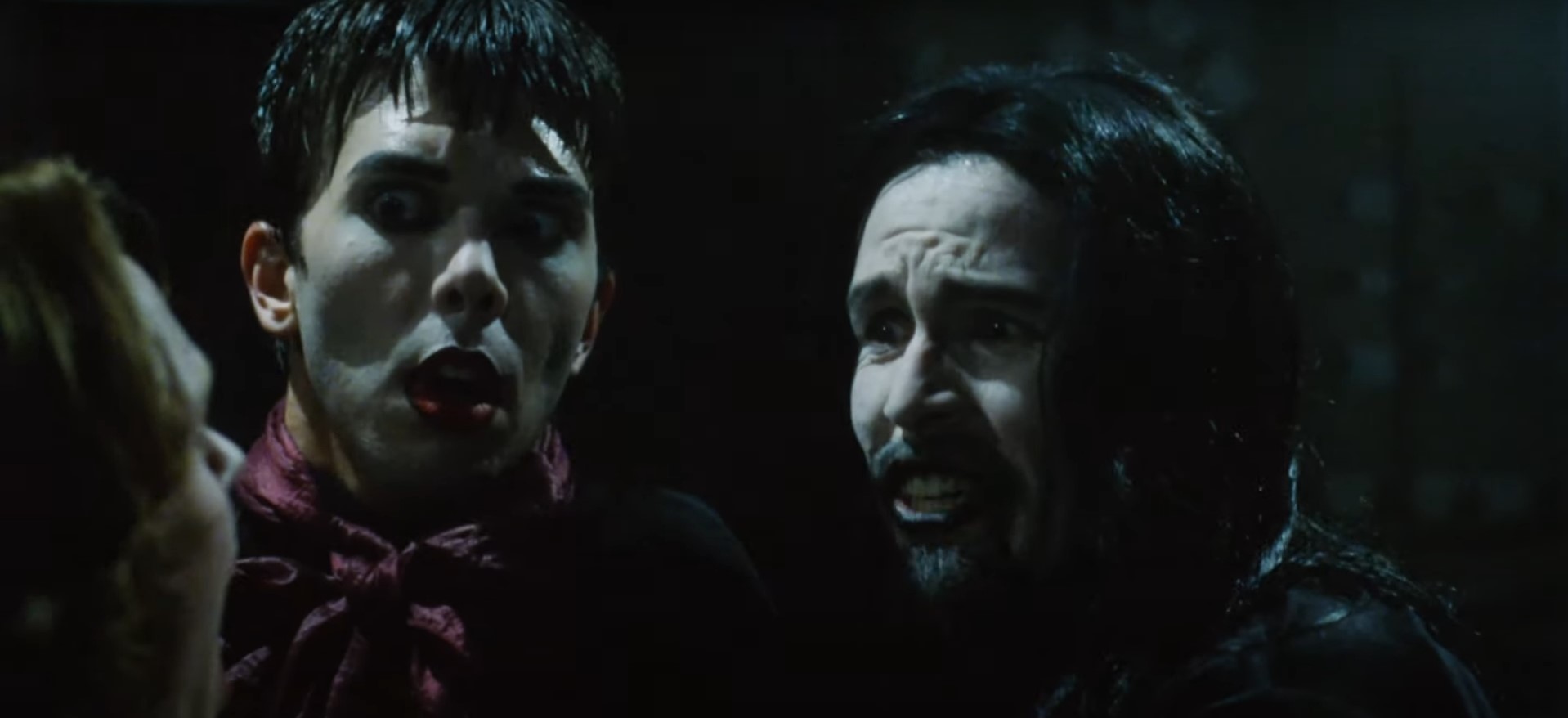
The first story in a disturbing 3-part omnibus tale concerns a little boy named Tommy.  Constantly at each other’s throats, Tommy’s troubled  parents don’t burden him down in their mini bickering wars and abusive verbal tirades where he becomes the passive aggressive fodder for each of them to shell the other with, but when Labby, a talking, red-eye dog proclaiming to be a messenger of God’s word, tells Tommy to kill unborn brother because he’s the antichrist, Tommy’s world is turned upside down when Labby murders both parents and the unborn child in the name of God.  In another story, a man steals liquid memories by killing people and extracting an intoxicating substance from their memory glands to inject them into his own body.  One particular liquid memory of a dying prostitute sends him through a warped nightmare of the underworld, one where he may never return to normal.  The last story focuses on a mask-wearing deformed boy named Ralphie, whose Siamese twin brother’s face protrudes out of the side of his face, and his infatuation with schoolmate and neighbor Sophia.  When trying to impress Sophia by relating to her father, Ralphie learns the father records VHS tapes of Sophia being molested by older men and is coerced to partake in an act Sophia is an unwilling participant.  At the behest of Labby, what Ralphie does next will put a fatal stop to the madness that surrounds him and his soulmate crush. 

In the same clunky spirit of crude early 1990’s computer generated imagery or in the early days of the original Playstation graphics, Jimmy ScreamerClauz’s “Where the Dead Go to Die” fully embraces the ungainly graphics in a 3D world of unimaginable horror where kids and demons intersect with wretched results.  The 2012 omnibus reflects three short narratives from ScreamerClauz and combined into one seriously screwed up tale, orchestrated by deal brokered wit Unearthed Films’s Stephen Biro who was sent two of ScreamerClauz’s short films – “Tainted Milk” and “Liquid Memories” – and challenged, or maybe even championed, ScreamerClauz for a third to build toward, and the eventual release of, a feature length product.  With the challenge accepted, the full-time musician and 3D animation artist succeeded with an unforgettable story that’s pure evil at heart and a surreal kaleidoscope of ghastly phantasmagoria.  ScreamerClauz not only writes, directs, and composes the film he also produces under the Draconian Films and Chainsaw Kiss production companies.  

As it has been already established Jimmy ScreamerClauz wears many hats in his production, we can add another with his voice acting of the demonic, fireball-eyed dog, Labby and along with the director’s voiceover participation, other genre actors and filmmakers are casted to voice one, or possibly more than one, of the crudely animated, disturbingly souled characters.  “Subject 87” director, “Reality Bleed-Through” actor Brandon Slagle tackles a double voiceover with the memory addicted man as well as Sophia’s sleazy abusive father.  As Sophia, the once upon a time softcore horror actress Ruby Larocca (“Witchbabe:  The Erotic Witch Project 3,” “Dr. Jekyll & Mistress Hyde”) has real innocent palpability up against Slagle’s aggressively toned, VHS-recording, and peeping perve that is her in character daddy.  Larocca also voices the mysterious advice-giver with the Lady in the Well and as the dying Hooker in the arms of the serial killer-for-liquid memories Man.  Another multi-voice player in the film and who also had a stint in the sex and violence category is Joey Smack with a string of strangler themed films (“Vampire Strangler,” “The Masked Strangler,” “The Bizarre Case of the Electric Cord Strangler, etc.,”).  Smack extends himself into a child and parent performance as the deformed Ralphie in “The Masks That the Monsters Wears” and Tommy’s dad in “Tainted Milk” that gives provides range albeit the quintessential grown man mimicking a child’s voice unmistakableness in the cracking high voice.  Much like Larocca, there’s something pleasant in seeing names like Linnea Quigley (“Return of the Living Dead,” “Night of the Demons”) and Devanny Pinn (“Nude Nuns with Big Guns,” “Bloodstruck”) be credited to voice because that takes the focus on their physical appearances and gives them a chance to actually be seen, or rather heard, with their dialogue performance.  In this instance, Quigley and Pinn embody the rancid maternity of Sophia and Ralphies’ mothers respectively.  “Where the Dead Go to Die” rounds out the cast with more B-movie actors in Trent Haaga (“Terror Firmer,” “Killjoy 2:  Deliverance from Evil”) as Ralph’s ashamed dad as well as Carlos Bonilla, Victor Bonacore, and Joshua Michael Greene. 

How a filmmaker chooses and utilizes his brand of CGI landscape is how that filmmaker’s film should be judged in the gelling of those areas, in my opinion.  “Where the Dead Go to Die’s” crude 3D animation is the intended result from Jimmy ScreamerClauz’s choice in conveying his short story narrative, but that intention won’t stop audiences and critics from browbeating and disparaging the film.  Yet, if accepting the former viewpoint and watch with understanding eyes through that recognition lens, “Where the Dead Go to Die” is one messed up and horrifying dystopia accentuated by the animation that gives each chapter more weight toward wretchedness and wrongdoing, gelling with tremendous intent to scramble the proverbial innocence with demonic forces and human perversions.  Some of the ideas and concepts swirling around ScreamerClauz’s head and make it into the three tales were just images he thought were visually neat but that speaks loudly on the dark mindset of creativity and many of those images are now temporally seared, scarred permanently into our long-term memory lobes.  Granted, tale transitions and recycling back to their sole connection with each other route into choppy territory at best, creating a windy, bumpy road in braiding the three chapters together under a single umbrella of animation style and storytelling, but “Where the Dead Go to Die” is a poignant and throbbing like touching a raw, exposed nerve through gouged muscle and tissue.  Every inch of surreal, sawtooth imagery is like a knife twisted into our virtuous side because upon closer look at Jimmy ScreamerClauz’s story containing children being hurt is only separated by the mere stylistic choice of cinematography. 

Out from the distribution shadows of Unearthed Films and in the hands of adult animation distributor Mountain Oddities Home Video, also in partnership with MVDVisual, for a new Blu-ray release, one we haven’t seen since Unearthed Films released the DVD and Blu-ray in 2012.  The first of two initial releases from Mountain Oddities Home Video, the Blu-ray comes AVC encoded, 1080p high-definition release, on a BD50 packed with extras.  Being mostly rudimentary 3D animation installed into a complexity of kaleidoscopic imagery, critiquing the quality is beyond our control but the compression is amply successful with no artefacts to note and the colorful saturation and grading levels provide an enriched, amalgamated dough of diabolic devil-bread, presented in a 1.78:1 widescreen aspect ratio that’s more compromised to its now out of print Unearthed Films counterpart from more than decade earlier.  Two English audio options are available:  a DTS-HD 5.1 surround sound and a DTS-HD 2.0.  At home audio recordings outside the sound barrier studio boxes are not as refined, capturing mic interference and hissing as well as the differences in varying audio volumes that don’t match between interacting characters in the same scene, creating that unshared space and gap.  Dialogue is unimpeded and clear and ScreamerClauz’s original gloomy-looming score fuels the deep morosity and malevolent themes.  English subtitles are option available.  Extras include a director’s commentary track with Jimmy ScreamerClauz, deleted scenes, an online video-conference interview with ScreamerClauz hosted by Quality Violent Cinema, behind-the-scenes featurettes of snipped dialogue recordings and interviews, including Linnea Quigley, Youtuber Diamanda Hagan’s video review of ScreamerClauz’s animated shorts “The Scuzzies,” and the director’s short film catalogue with “The Scuzzies” (that includes commentary), “Labby vs Mr. Pickles Rap Battle,” “Clinical Sodomy,” “Affection,” “Mutwa,” “Reality Bleed-Through Remix.”   Mountain Oddities Home Video’s Not Rated release is listed as the uncut version with a 95-minute runtime available with region free playback. 

Last Rites: An adult animation pushing the envelope with taboo themes involving kids and when you mess with kids, the public taste goes sour, but “Where the Dead Go to Die” swirls surrealism with poignant acting and strange fever dreaming amongst the basic, albeit creepy, animation.

“Where the Dead Go To Die” Now Lives on Blu-ray!

Demonic Nuns Want Virgins to Resurrect EVIL! “The Convent” reviewed! (Synapse Films / 4K UHD and Standard Blu-ray)

4K and Blu-ray “The Convent” Demonically Entering Your Soul! Buy It Here!

A woman strides into a convent carrier a can of gasoline and a shotgun during the sacrament of Eucharist between priest and nuns.  After setting the humble nave ablaze, she unloads shotgun shells into all the screaming bodies.  40 years later, a group of Greek life college students look to make their Greek letter mark on the same derelict convent now swarming with urban legends and ghost stories.  When a virginal student is kidnapped by wannabe Satan worshippers, they accidentally open the gate for dormant demons to arise through the corporeal vessels of the dead.  The possessed dead slaughter all in their way to seek another virgin, one that will embody their unholy master until this plane of existence.  The only chance for survival is to track that now woman from four decades ago to finish what she started after 30 years in an insane asylum, to blow away the demonic beasts of Hell!

At the turn of the century in the year of Lord of 2000, a year some Christians believed marked the 2,000th anniversary of the incarnation of Jesus Christ, saw another reincarnation of Hell passing through Catholic sacred ground from the creative culinary of profanity director Mike Mendez.  The one of a handful of creative talents behind the “Satanic Hispanics” anthology film and the native Los Angeleno helmed “The Convent,” his third directorial in horror behind breakout pyscho-hit “Killers” and the male-chauvinist be damned horror-comedy “Bimbo Movie Bash,” from the Chaton Anderson’s debut script full of sacrilegious imagery, glow-in-the-dark veined demons, and the dark comedic charm of early 2000s.  Shot entirely in Los Angeles, the demon-comedy is produced by Anderson and Jed Nolan (“Jurassic Women”) on a microbudget from executive producers Ryan and Roland Carroll of Alpine Pictures (“Dark Honeymoon”), Elliot Metz, and Rene Torres, who served as associate producer on the cult favorite, “Night of the Demons.” 

The collegiate characters are not only surrounded by twitching, carnage-dishing demons under the nuns’ habits but they’re also surrounded by headlining genre greats Adrienne Barbeau (“The Fog,” “Swamp Thing”) and, briefly, Bill Moseley (“The Devil’s Rejects,” “Texas Chainsaw Massacre II”) and gangster rapper, the late Coolio.  Barbeau doesn’t lose a step being the beautiful badass we all know and love from her reign as an 80s-90s scream queen, shotgun barreling down demons left and right as her character’s 40-years-senior self from the Nun-torching and blasting opener, the accused certifiable crazy lady called to action in Christine.  She’s called to once again stop a demonic Catholic kerfuffle she immobilized from spreading four decades back by a new set of naïve, older teenagers looking to get high, get lucky, and get the kicks.  Joanna Canton, who had three seasons in her on “That 70’s Show,” battles back-to-back with Adrienne Barbeau as Clorissa, the lead principal of the trespassing teens.  Canton is joined by story boyfriend Chad (Dax Miller, “Blood Surf”), story friends Biff (Jim Golden), Kaitlin (Renée Graham, “Shriek If You Know What I Did Last Friday the Thirteenth”) and Frijole (Richard Trapp, “Re-Cut”), story little brother and abuse-taking pledger Brant (Liam Kyle Sullivan, “Rideshare”), and story gothic bestie of another life time in Mo (Megahn Perry, “The Perfect Host”) whose been ostracized by mostly Clorissa’s friends and even a little by Clorissa trying to escape a gothic lifestyle for more fit in “normal.”  A dark and spooky night in a rundown convent transforms into a night of terror when Satan Worshippers Sapphira (writer Chaton Anderson, “Wither”), Davina (Allison Dunbar, “Browse”), and Dickie-Boy (“Kelly Mantle, “The Evil Within”) are led by so-called Satanist expert and a poorly 17th century speech replicator Saul (David Gunn, “Killers”).  “The Convent” does have dynamic trope characters, ranging from jock, to druggie, to cheerleader, to goth, and to the nerd, following formulaic footsteps to face forces of ferocious, fanged demons and doing it oh not so well and oh so gloriously bloody.  Casting rounds out with Oakley Stevenson, Larrs Jackson, and Elle Alexander.

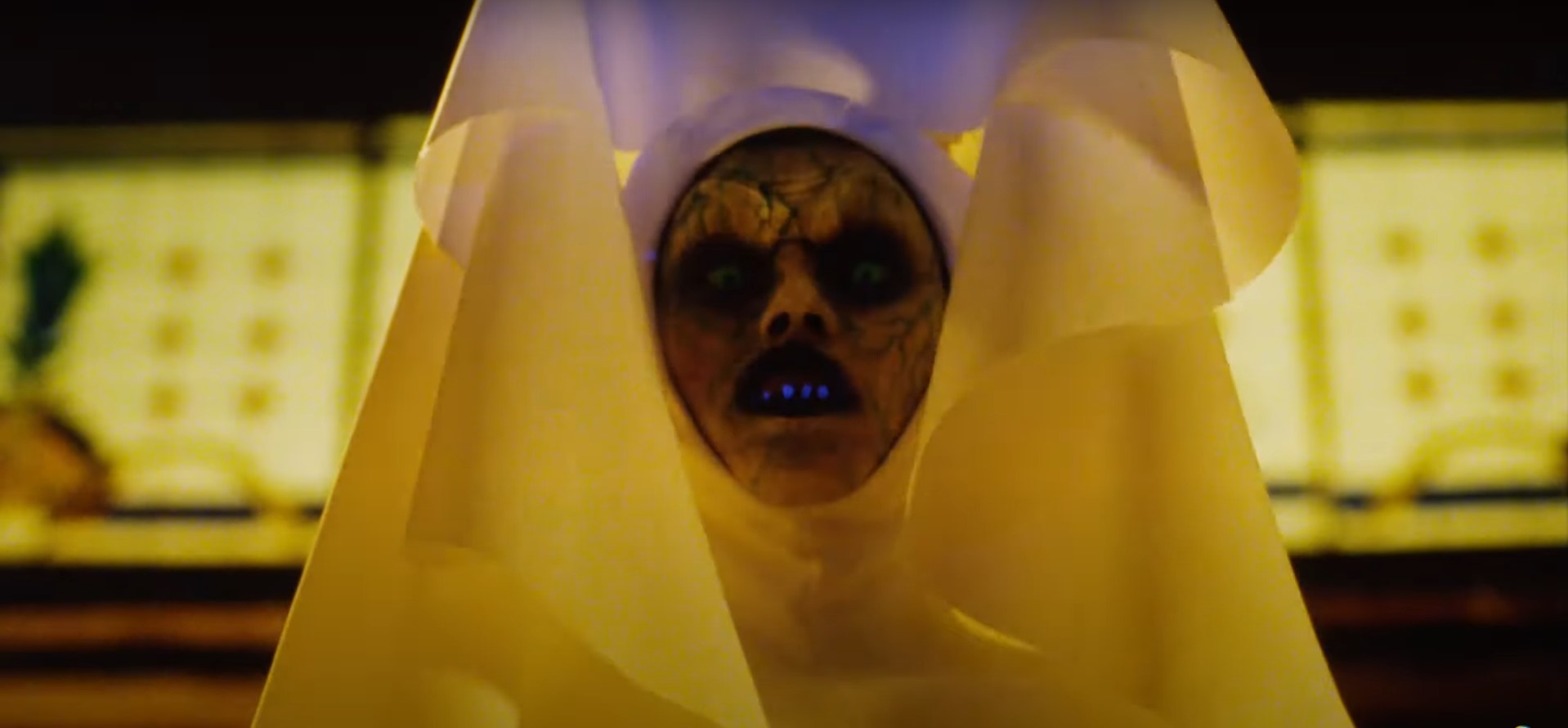
Mendez’s “The Convent” has a real identity crisis issue walking in the familiar territory that closely resembles Kevin Tenney’s “Night of the Demons.”  Hell, I would go as far as stating Mendez’s Y2K-personified horror is a near step-by-step remake of Tenney’s 1988 demon possession carnage in an abandoned structure film.  However, minutia differences, a fall of Catholicism theme, and the addition of a motorcycling, demon-destroying Adriene Barbeau keep similarity nuances at bay and the acquainted plot lively and entertaining with a glow-party, nightclub maquillage on the demons to give them a fascia of techno-effervescence veins.  Mendez also adjusts the demons’ movements to a rapid twitch with increased frames per second and having the actors jerk their movements in a wild array.  Seems a little bizarre at first but the effect grows on you, and you can’t imagine “The Convent” demon without the spasmatic shots, as their glowing eyes set on seek-and-destroy roam from dilapidated hallway to dilapidated hallway, succumbing to the evil spirit’s will after the life force leaves the body.  Themes of an evil Catholic perspective will challenge those with a Christian value upbringing, especially with nuns and priests being gunned down and torched, and more character specific concepts of personal growth in deciding what’s right versus what’s popular run a paced course of dispersed too late to fix what’s already broken. 

As part of the Mike Mendez 4K UHD double bill release from Synapse that includes his individual inaugural film “Killers,” which we will review soon too, “The Convent” comes in a 2-disc, dual format set, making it’s uncensored, U.S. debut remastered in Dolby Vision 4K from the original 35mm internegative elements.  HEVC encoded, 2160p ultra-high definition, BD66 and the AVC encoded, 1080p, BD50 rockets the previously out of print film right past a standard Blu-ray release and into the land of 4K with 2k hitching a ride.  Both formats presented in a widescreen 1.78:1 aspect ratio, the definition and color saturation advancement are a huge leap from previous DVD releases with more delineate means inside a broadly shadowed interior.  Light and shadow have now divided fully and agreeably to shapes are now more obscured or in illumination.  With that being said, details are not knocked out of this part and that’s especially surprising since director Mike Mendez supervised the 4K remastering.  Facial features do appear smoothed out, more so on the standard Blu-ray release.  UHD has a slightly better rooting out skin details and customer texturing which Adrienne Barbeau leather jacket and tight denim jeans, with all the folds, zippers, buckles, and such, seeing the most promise.  The superimposed glow f/x has rich lamination with the emanating pulses creating reflection being done well on character faces and throughout an enclosed room.  The UHD and standard Blu-ray come with an English DTS-HD master audio 5.1 surround sound from the original 16-track master audio.  Uncompressed fidelity is a complete win here for “The Convent” that seizes side and back channels with monstrous grunts and growls, and not to forget to mention the often-neglected spooky house ambience of creaks, cracks, and killer hits to the body.  A broad range helps diffuse distinct layers to the individual channels.  Dialogue renders clean and clear with no pitchiness of hissing or crackling to note.  English subtitles are available on both formats. While the UHD only has eyes for the feature, the Blu-ray has the movie plus Hell-Raising bonus content, including two audio commentaries with a cast and crew commentary with director Mike Mendez, Megahn Perry, and Liam Kyle Sullivan and a Lords of Hell commentary featuring David Gunn and Kelly Mantle in full character of Saul and Dickie-Boy, a behind-the-scenes featurette, a location featurette, a single deleted scene, gore/kill scene outtakes, the original EPK (Electronic Press Kit), a pair of promotional trailers, and a still gallery. The new primary cover art and the reverse cover art inside the black Amaray case is illustrated by Ralf Krause and Samhain1992. A 6-page essay from Corey Danna has cropped color pictures along with release acknowledgements on the backside. The not rated film has a 80-minute runtime and is region free.

Last Rites: Never intended to take itself seriously, “The Convent” has wicked style, makeup, and effects under an early 2000’s feng shui and is balls-to-the-wall nonstop with demonically dark humor laughs and the barbaric blasphemy of a savagely railed faith!

4K and Blu-ray “The Convent” Demonically Entering Your Soul! Buy It Here!

Never Trust a Script Written by an Egotistically EVIL “Scream Queen” reviewed! (Visual Vengeance / Blu-ray)

This Chainsaw’s Made for Cutting! “Scream Queen” on Blu-ray!

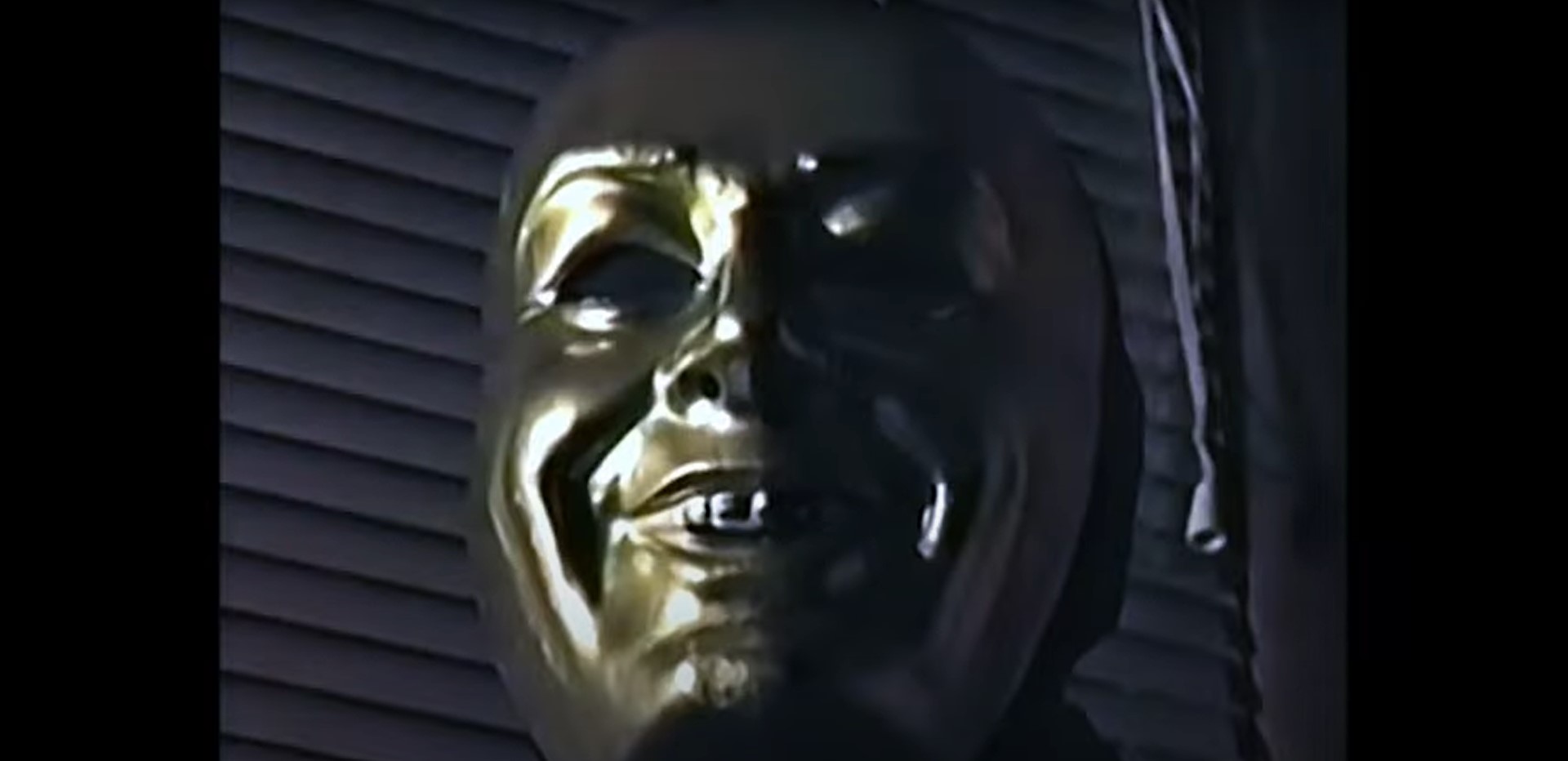
Malicia Tombs, an acclaimed horror actress known for B-movies and bad attitude, bursts into a wreckage of flames when her car sudden explodes after storming off the set of her new movie, “Scream Queen,” in which she wrote and starred as the titular character.  Part of the cast and crew were devastated by the accident that had cut their own career short while others were relieved the egotistical Tombs had perished despite publicly feigning grief over the loss of a genre fan-favorite.  Months later, the small cast and crew receive a mysterious invitation to gather at a creepy mansion butlered by Runyon.  When their host is unveiled as to be a very much alive Malicia Tombs, she offers them a lucrative sum of money to finish the film they’ve started but with a new script.  As the guests read through the new treatment, the cast and crew realize their present moments read just as their being played out in the script, even their deaths. 

If there was ever a single face deserving the representative distinction within an overpopulated categorized scream queen genus, Linnea Quigley would be that green-eyed, blonde-topped, beautiful face with an infectious smile.  Quigley worked with an array of filmmakers, ranging from some of the most renowned cult films of all times amidst reams of horror movies for nearly half a century (yes, we’re feeling old now) to the most independent of the independents films never having really receive the proper exhibition format or audience attention.  To what would be a delight to Quigley’s fanbase, one of those obscure features is Brad Sykes’ “Scream Queen,” a late 90’s filmed, 2002-released, SOV, U.S. slasher written-and-directed by the “Camp Blood” and low-budget filmmaker with Quigley in mind to play the scream queen character Malicia Tombs, now available, officially, on Blu-ray.  “Scream Queen” is the first major project for Brad Sykes in a collaborating effort in not only as a director but also as a co-producer alongside David Sterling of Sterling Entertainment.

“The Return of the Living Dead” and “Night of the Demons” Quigley puts on another memorable and wickedly fiendish performance as the haughty genre scream queen Malicia Tombs who superiority has gone to her head as she embraces her designation to an exact mania, displayed early on when her character’s character attempts to choke-kill another actress despite the numbered scene not being a death scene and Malicia harps on wanting to continue with the resembling act of murder.  As much as Malicia Tombs embraces the killer instinct inside of her, Linnea Quigley very much embraces Malicia Tombs without having to take her top off and despite having less screen time than her costars.  While Quigley fades in and out of the linear story, the narrative progresses with livelihood hardships of the now out-of-work cast and crew who relied heavily on that small film to boost their acting and filmmaking careers.  That crop of characters falls short tipping into their expectations, aspirations, and even their relations to be just slasher fodder for the mysterious maniac roaming the house.  Jenni (Emilie Jo Tisdale,” Escape from Hell”) and Devon (Nova Sheppard) are inferred romantic roommates who sell clothes on the side of the street to make ends meet post failed film but don’t have surmountable direction to either be a full-fledged couple to sympathize or seem terribly concerned about opening their own clothing shop other than what would be a bad decision to reside at the mansion overnight.  Again, no sympathy there either.  The special effects goof Squib (Bryan Cooper churns chuckles relentlessly by relating more to his crafted effects dummy more than people, marking him conclusively comedy relief as well as fated for death that, like in life, no one takes him seriously when he shows up gruesomely mutilated.  The other principal actress across from Tombs is Christine (Nicole West, “Dimension in Fear”), a buxom blonde tired of secretary work succumbing to lead man flirtations in a dark and scary house where every shadowy corner is lodged with threat.  The pair fall into that horror character cliché of have sex, will die, quickly downgrading their pre-professional relationship into nothing more than dark house desire.  Director Eric Orloff (Jarrod Robbins, “Evil Sister 2”), a presumed spin on the Awful Dr. Orloff and perhaps hints at his motives, seems to be stuck in angsty avoidance and melancholy stemmed by what could have been with Scream Queen but that also peters to a gross negligence end of an arc waste.  Rounding out the cast are a couple of special bit parts played by prolific Full Moon Entertainment and overall horror movie screenwriter C. Courtney Joyner (“Puppet Masters III,” “From A Whisper to Scream”) as a televised homicide detective and Kurt Levee in a quasi-return of his character Runnion from “Evil Sister” but alternatively spelled “Runyon” in “Scream Queen.”  

Though obviously and definitely not the first to do this, “Scream Queen” humors metacinema measures built upon horror tropes and spherical plot points that redirects the story back upon itself for a killer effect.  The feature has no issues making and poking fun at itself within a campy context albeit the usually grave apprehensions of a true scary slasher movie that’s less campy of which a scream queen is born – think Jamie Lee Curtis in “Halloween” or Neve Campbell in “Scream.”  Bryan Cooper not only portrayed the foolish effects guy persona but also actually did a lot of the gore gags for the film, achieving very detailed inlaid gore prosthetics for a smalltime picture with an axe embedded into a chest and a mangled face to name a few.  The story itself feels a bit rough and ready as it slips into supernatural obscurity and, as aforementioned, character setups flounder to a stagnation, killing instantly the miniscule arcs that were structured prior to their mansion gathering in what becomes a slapdash of serial offing that wraps up the story post-haste without much cat-and-mouse tension.  With that said, “Scream Queen’s” unpolished plot had once mirrored its fallowed physical release until recently but now witnessing its birth out of twilight has been multitudinous worth the wait. 

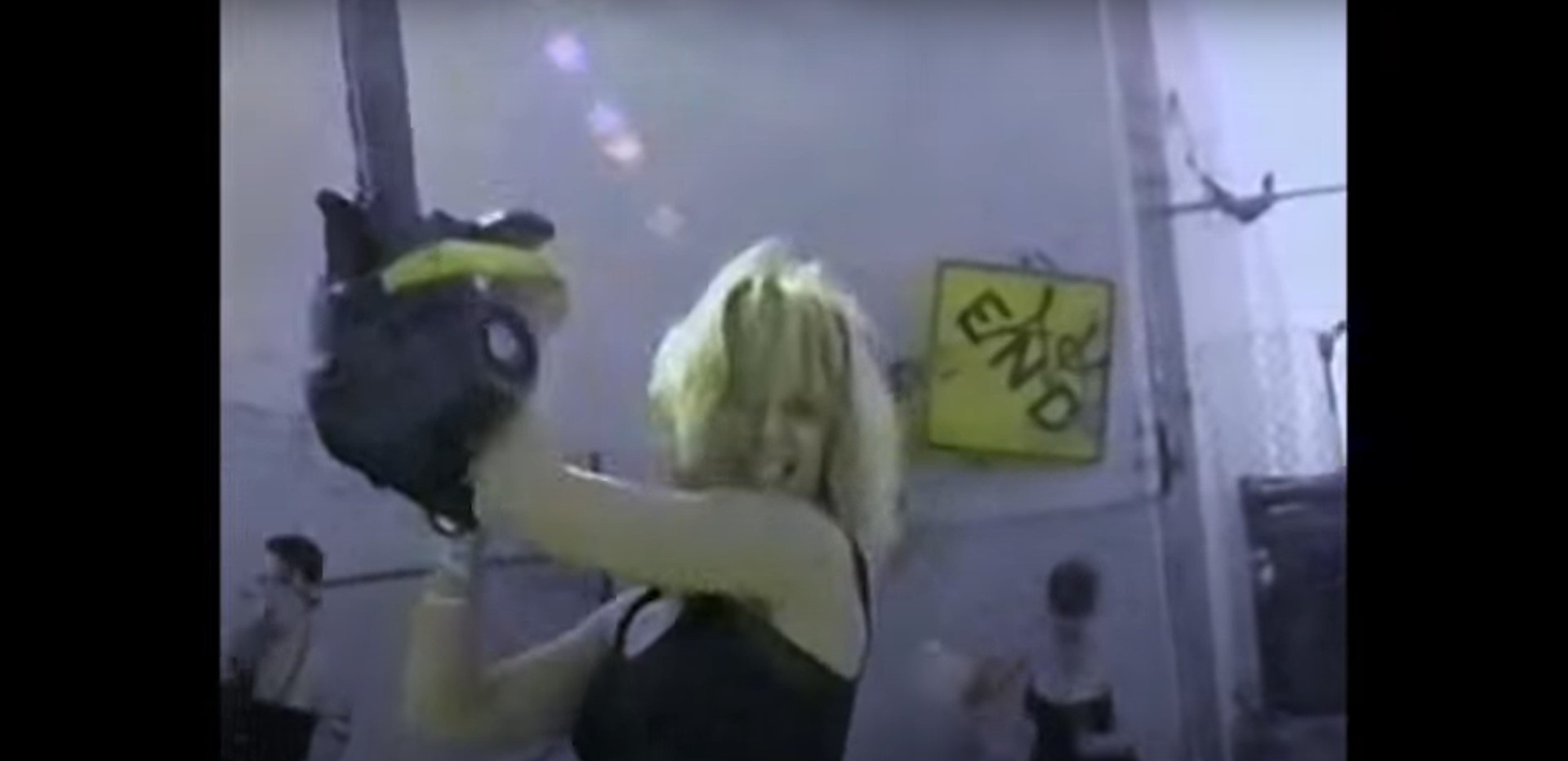
Another of Linnea Quigley’s lost films has been resurrected from the format graveyard by Visual Vengeance with a new Blu-ray release of “Scream Queen.”  The Wild Eye Releasing sublabel release comes with an AVC encoded, high definition interlaced scanned and director approved 1080i transfer from the 480p tape elements on BD50 capacity and comes also with the qualitative joys of a standard definition shot on video experience.  SOV tape upconversion can never completely eradicate the imperfections associated with tape and we also know this going in courtesy of Visual Vengeance’s standard practice of a fair warning before the film, but the overall “Scream Queen” presentation passes as clear content despite some minor tracking blips, 1.33:1 aspect ratio, original lower resolution, and scan line visibility, which is smoothed out nicely by the 1080i conversion. Exteriors and brightly lit scenes take on more shape compared to darker and low-lit areas that become like a void in standard DEF, which also hits the natural grading into a washed-out drab.  The English Dolby Digital 2.0 stereo labors to maintain some form of auricular strength but often nearly goes dark to where certain Linnea Quigley monologues periodically go silent for a few seconds, so the dialogue isn’t entirely clear but when it is, it’s relatively clean. There’s no hardiness pop in the audio track, staying suppressed throughout, and having little-to-no range or depth to the compile contexture. Some electro-interference throughout but nothing to be bothered by considering the grade of the SOV. Optional English subtitles are available. Special features include a commentary with writer-director Brad Sykes, a new behind-the-scenes documentary Once Upon A Time Horrowood that’s mostly Brad Sykes going through the stages of making “Scream Queen” and his recollections of his first big time produced film, a new interview with star Linnea Quigley, a new interview with one of the three various editors Mark Polonia (director of “Splatter Farm”), an original full-length feature producer’s cut of “Scream Queen,” a behind-the-scenes image gallery, Linnea Quigley image gallery, snippets from the original script, original trailer, and other Visual Vengeance distribution trailers. Along with the hearty software special features, hardware physical features include a six-page trifold with behind-the-scenes color photos notes by Weng’s Chop Magazine’s Tony Strauss and beautifully illustrated with dripping blood, a chainsaw, and Linnea Quigley on the front cover, a folded up mini color poster of a scantily-leathered Linnea holding one of the film’s murderous weapons, retro stickers, and your very own Four Star Video plastic rental card. All of this great stuff is stuffed inside a clear Blu-ray Amary case with a pressed disc art of a bloody illustrated Linnea sawing some unknown guy’s face off. The same illustrated graces the front cover in an expanded form and under a different hue. If you don’t like it, which I would be hard-pressed if you don’t, the reverse side contains one of the original cover arts with, again, a scantily-leathered Linnea holding that murderous weapon. The entire package is sheathed inside a rigid O-slipcover with an extended view of that chainsaw scoring with a bloody spray the eyeball from some guy’s face. The 13th Visual Vengeance release comes region free, unrated, and has a runtime of 78-minutes. Lost vintage now found and digitally revived to give us even more Linnea Quigley than we knew we needed with a meta-film shows initiative and fit special effects but swerves off trajectory into a more-of-the-same pathway. 

This Chainsaw’s Made for Cutting! “Scream Queen” on Blu-ray!

This is Not Taylor Swift’s “EVIL” Hit Song. “Cruel Summer” reviewed! (Scream Team Releasing / Blu-ray)

“Cruel Summer” on Blu-ray Home Video!

Heather and Felissa have planned the perfect weekend party for summer kickoff.  The custom invitations are set for their friends to cordially request their attendance for an 80’s themed murder mystery at Heather’s aunt and uncle’s cabin home.  Upon their arrival, the stock up on booze and groceries, fake knives and masks are in hand, and the game is about to begin, but little do they know, the surprises and terror in store for them are not manufactured by the rules of a party game.  A masked serial killer is heading straight for their night of fun and games, killing anyone who steps in his path, including other tourists, locals, and even the law enforcement called in to check on the party noise levels.  When friends suddenly disappear throughout the night, that strange feeling of derealization takes over and worry sets in that something other than being passed out from partying too hard has happened to them and that same fate will soon happen to them. 

Let’s face it.  All horror nowadays is rooted by the inspiration from horror long ago.   Originality has all but faded from the conceptual ideas, script pages, and in what the camera records.  Independent horror filmmaking is basically devotion digitized and the easily accessible equipment has turned every kid, who grew up watching Todd Browning, George A. Romero, and Dario Argento, into splintered, hackneyed versions of their favorite directors.  Most indies either follow similar formulaic narratives and styles or cast and cameo acting icons to draw upon homage or headlined sales, but for Scott Tepperman’s 2021 Indiegogo-funded slasher “Cruel Summer” there lies little effort in either department despite the film’s throwback claim.  The “Nightblade” and “Hell’s Bells” director based in Tallahassee, FL is not opaque with the 80’s obsession he integrates into his COVID production under his cofounded Los Bastardz Productions with Jim O’Rear.

If looking up “Cruel Summer” on IMDB.com or any other online movie database that lists the cast and the associated character names, a trend might pop out at you but might not be evident at first.  Since I personally try to avoid looking up or researching films or watch trailers to sideline any kind of preconceived biases, I began to pick up halfway through the runtime the correlation between all the character names in that they’re nods to renowned horror actors and directors.  Some examples include Ashlyn McCain playing principal lead Heather (as in “A Nightmare on Elm Street’s” Heather Langenkamp), Bridget Linda Froemming plays Felissa (as in “Sleepaway Camp’s” Felissa Rose), Harold McLeod II plays Tobin (as in “Saw’s” Tobin Bell), Will Horton plays Vincent (as in “House on Haunted Hill’s” Vincent Price), and Scott Tepperman plays Gunnar (as in “Texas Chainsaw Massacre’s” Gunnar Hansen.  There’s also references to Barbara Crampton (“Re-Animator”), Doug Bradley (“Hellraiser”), Robert Englund (“A Nightmare on Elm Street”), Tony Todd (“Candyman”), Linnea Quigley (“Night of the Demons”), Katheryn Bigelow (director of “Near Dark”), and William Lustig (director of “Maniac”).  While not an entirely novel idea to use genre names as characters, what’s wholly impressive is this scale of use but the characters themselves more-or-less dawdle without progressing the story or adding much substance.  Once the friends arrive at the house, not much else happens between them and no individual or group character arcs take shape and flesh out, leaving just potential fresh kills for a family of whack jobs with a loose tragic and traumatizing backstory with an incongruitous twist in family relations.  “Cruel Summer’s” cast rounds out with Jimmy Maguire (“Hell’s Bells), Paul Van Scott (“Shark Waters”), Jim O’Rear, H. (Hannah) Marie, R.J. Cecott (“House of Whores”), Keith Bachelor Jr. (“Survival of the Apocalypse”), Kim Casciotti (“I Dared You! Truth or Dare Part 5”), Ashley Casciotti, Abby Graves, and Aria Renee Kenney.

Not to be confused with the popular titular track by the teen enthralling, mega popstar Taylor Swift or the teenage angsty and melodramatic, anthological seasoned series of the same title that once starred Kevin Smith’s daughter Harley Quinn Smith, “Cruel Summer” has loose ties to the other two media consumptions with a rudimentary display of teenage complications that turns full blown slasher in a matter of minutes, ranking the indie horror as bottom shelf goods.  Cruelty lies within the character treatment in an unsatisfactory means to character’s life and/or their demise among a slew of plot holes galore, such as where are Heather’s talked about Aunt and Uncle who own the house?  Why are the killers suddenly interested in the house and the current occupants if they’ve been living next door or in the area all this time?  Is it just happenstance that the killers have imbedded kin in the group of friends travelling to this very house?  My head spins with questions that don’t play out with answers in what is truly a cruel movie that really doesn’t display the ostensible season of Summer with characters in unseasonal jackets, sweats, and flannel and staying in-doors to play in-door games.  Returning to what seems to be an epicenter of importance, the house feels keystone to the merciless slaughter, yet in the same breath, the explanation of executions doesn’t make much sense in the grand scheme of insanity cases, pulling the lynchpin on the narrative structure to have the story collapse on itself by relying on a cock and bull outcome in a slack climax.   

Scream Team Releasing, a distributor who I’ve praised the positive reviewed releases of “Dude Bro Massacre III” and “Rave,” is also home to “Cruel Summer” on Blu-ray home video.  The AVC encoded, high-definition, 1080p resolution BD50 maintains detail composure fairly well with a decoding bitrate average of 30Mbps albeit some fluctuation in the bitrate between exterior lit night scenes and the interior lit scenes.  “Cruel Summer” is more reliant on natural lighting where possible without hyper stylizing with color grading and misfitting CGI blood, resulting in a natural veneer that looks uninspired but adequate for the budget.  There is some minor splotching/banding in darker spots that is the extent of compression issues. The English language Dolby Digital stereo 2.0 mix has difficulty with sealing the rough-and-ready sound design when splicing multiple takes. Dialogue renders over nicely enough but the filtering out of extra elements, such as wind and echoes, that sneak into the recording and though a little background adds a bit of verisimilitude, there’s just too much start and stop audio files and there too intertwined within a varying levels of volume amplitude and varying levels of depth delineation, sometimes muffled or stifled to a softer mix. There are no subtitles available on this release. Bonus features include A Not-So-Cruel Summer featurette with cast and crew interviews, a glimpse behind-the-scenes that goes around scene setups and getting some background on what they’re doing at that time, an audio commentary with director Scott Tepperman going deep into every scene and their backstory with opinions on his cast but eventually Tepperman cuts out near the unveiling climax and he’s just silently watching the film with some snickering or sinus clearings to keep us aware he’s still there, Scott Tepperman, Jim O’Rear, and some of the cast’s Indiegogo crowdfunding campaign fundraiser spiel for a new kind of 80’s slasher, another Indiegogo proof of concept video and pitch, the cast and crew divulge their favorite slasher flick, the grindhouse trailer, and the trailer. The Scream Team Releasing is not rated, runs at a slim 78-minutes, and has region free playback. Don’t sweat over “Cruel Summer” in what is a lukewarm, low-budget slasher with little-to-no curb appeal and the only thing going for the Scott Tepperman feature is the filmmaker’s enthusiasm for 80’s horror which has seemingly been misplaced from the 80’s inspired film itself.

“Cruel Summer” on Blu-ray Home Video!

Sucked Into Hell. Surrounded By EVIL! “Vampires and Other Stereotypes” reviewed! (Visual Vengeance / Blu-ray)

Hell Wants You To Stay for Dinner!  “Vampires and Other Stereotypes” on Blu-ray!

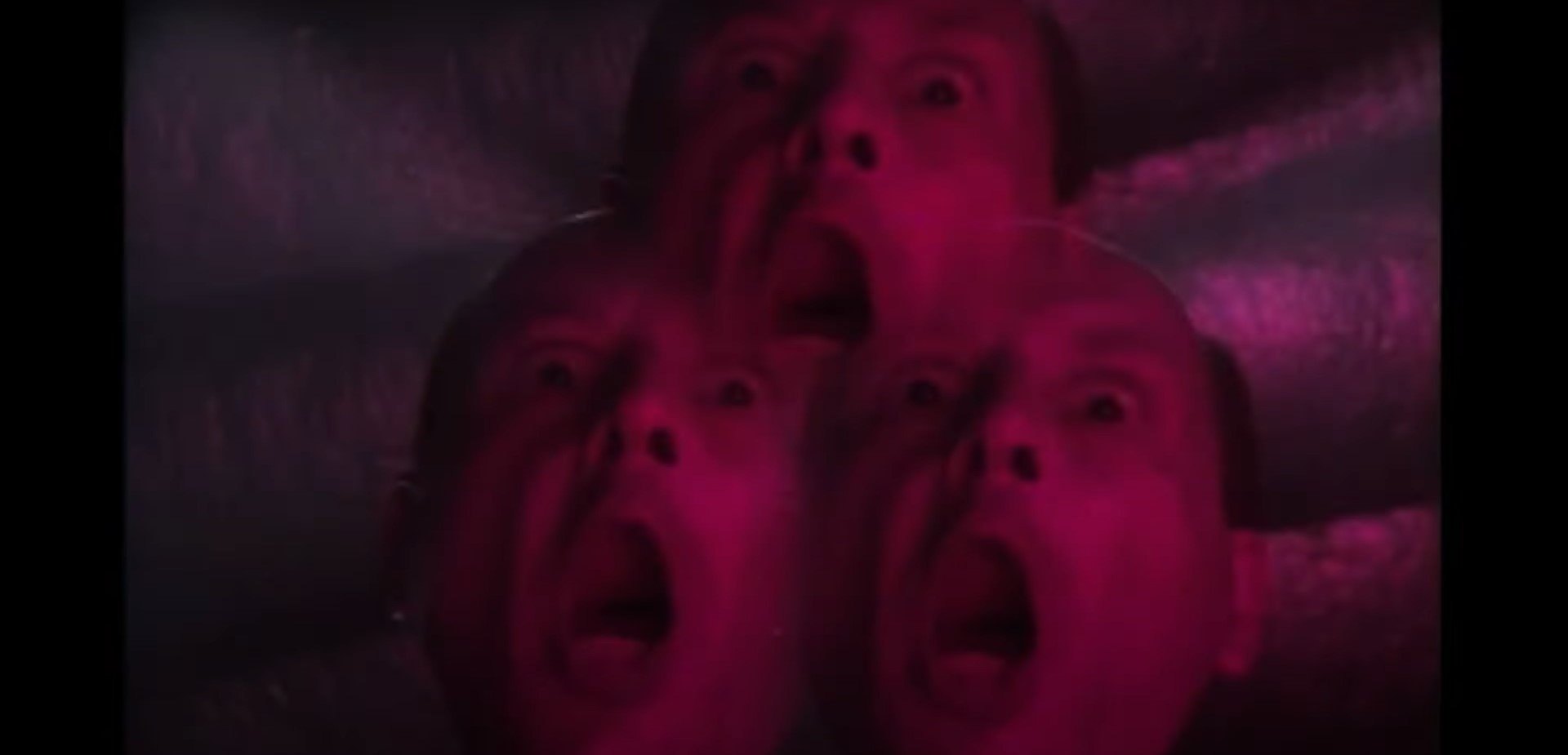
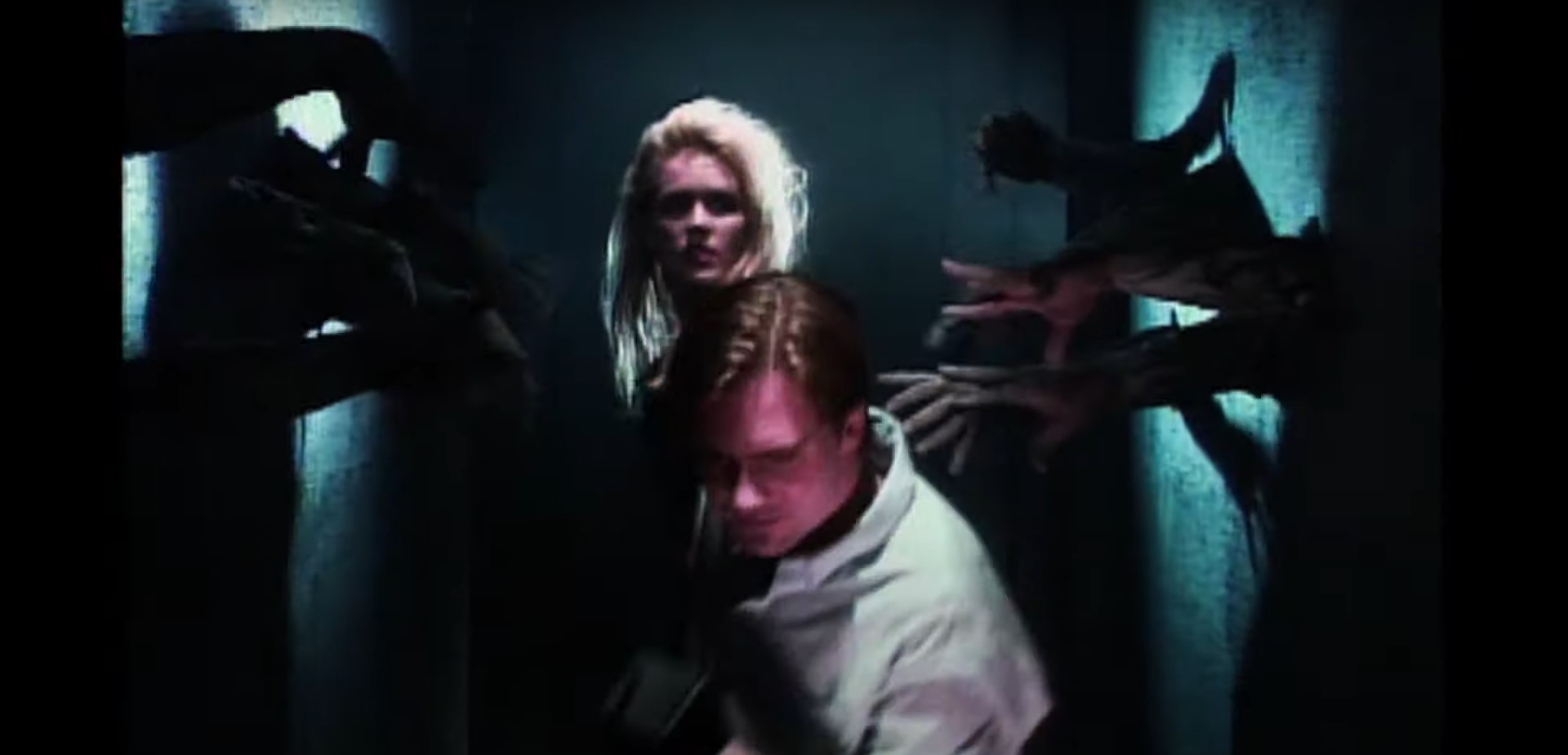
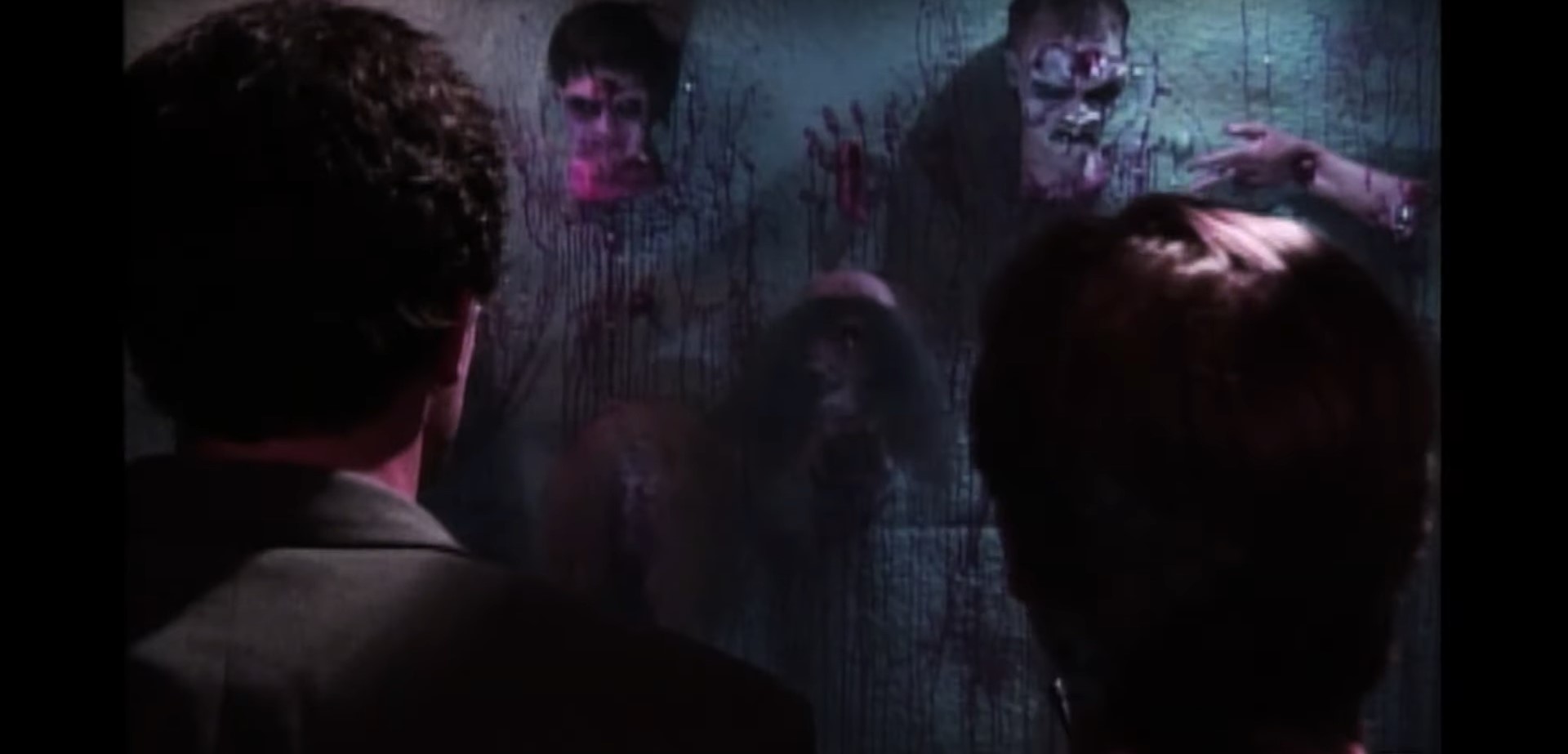
Ivan and his hard-nose partner Harry work between the shadows as protectors of the Earth realm.  The pair of paranormal guardians battle demons attempting to sneak from the Netherworld for more domain and power in the human world.  After thwarting a demon’s reneging plans with a wealthy businessman, they find themselves sucked into a portal to Hell after a group of young partygoers become lost and inadvertently crossover everyone in the abandoned warehouse to the underworld, including the warehouse itself.  Confined to a room with the portal opening, they must band together to survive the night where gnarly demons roam behind every door and are master tricksters with one goal in mind – to breed human women with half-breed demons to procreate more of Hell’s minions.  Its up to Ivan and Harry to see the survivors through until dawn but not everyone is who they seem and when the masks are dropped, real Hell will pounce upon them.  

The northeastern American horror-comedy, “Vampires and Other Stereotypes” is the topsy-turvy and totally-transcendental SOV feature from first-time writer-director Kevin J. Lindenmuth (“Twisted Tales,” “Monsterdocom”).  Shot primarily in Cherry Hill, New Jersey with some exterior city shots of New York City, the film alternatively known as “Hell’s Belles” sought ambitious Hell below Earth undertakings, creating a maze-like dwelling for disfigured dwellers of the demonic kind, and a down-the-rabbit hole story where the head-lopping queen is actually the devil in a leatherjacket playing procreator matchmaker and the Cheshire Cat is a overgrown rat looking to nibble on human flesh rather than cheese.  The rat, as ostentatiously cool as it sound, is simply a slither of one of “Vampires and Other Stereotypes” few themes, which is fear.  Kevin J. Lindenmuth’s production Brimstone Media Productions serves as the studio and Lindenmuth serves as sole producer of his self-funded venture into the vile mouth of the demon world.

“Vampires and Other Stereotypes” follows two difference groups related to the existence of Hell, the demons that inhabit it, and the rogue demons splicing themselves into the human world. One group is the guardians Ivan (Billy White) and Harry (Ed Hubbard) who are very much aware of the esoteric magnitude of the abysmal situation and background while the other group, young Generation X’ers oblivious to the signs of Satan’s underworld seeping into their own. Lead by serial-dater and college girl Kirsten (Wendy Bednarz, “There’s Nothing Out There”) and her two tagalong best friends Linda (Anna Dipace) and Jennifer (Suzanne Scott, “Child of the Sabbat), the ready-to-party trio provide the state of affairs with Kirsten’s nonchalant taste in bad boy boyfriends, believing her courting apathy, treated as an impulse indulgence for the sake of fun, will one day run her out of luck. Enter Erik (Mike McCleery, “Deep Undead”), another misfit miscreant unearthed by Kirsten in her ever unquenching need to be wined, dined, and spoiled by the bottom layers of the dating pool. The two parties clash walking into the epicenter of an open investigation, denoted by an aperture in the middle of the room, where dead, decapitated bodies are strong upside down and Kirsten and her businessman father (Rick Poli, “Blitzkrieg: Escape from Stalag 69) are unexpectedly reunited in an air of something more happening behind the scenes other than Kirsten’s father’s flailing dealings with the demons and Erik’s party-sniffing nose leading them to astray and lost. The rest of the cast comes together with Laura Vale as Rosa the psychic, Monica Batavanis as the wife lost to the dark side, Mike Memphis as the Elvis impersonator, Bean Miller as the Lizard King aka Jim Morrison impersonator, and Sally Narkis as the demon waitress.

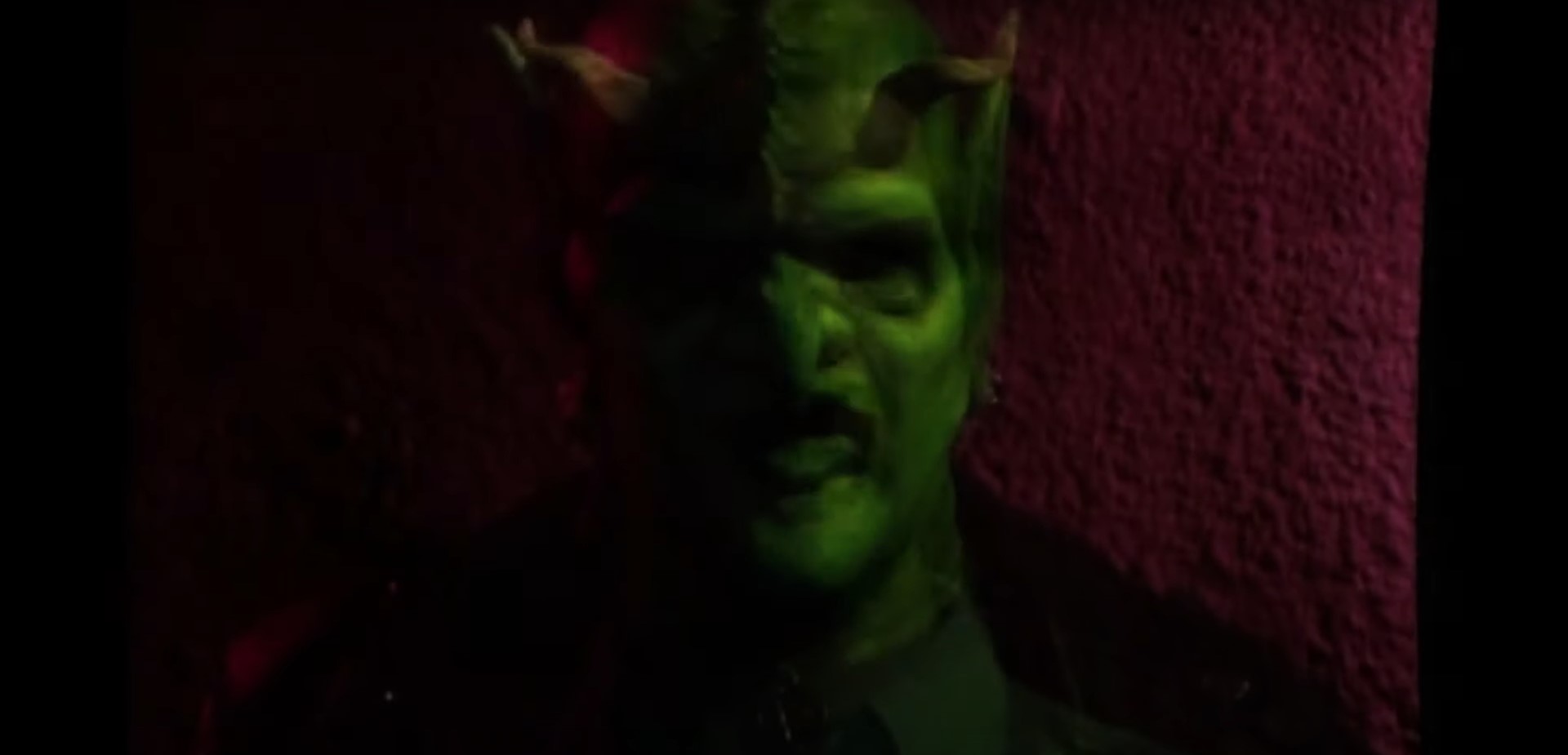
Lindenmuth’s dragged to Hell premise is a neat enough concept to peak the interests of the casual and diehard horror fan. However, the executed result is a whole other animal that tends to claw back, trying to maul away your viewership.  The special effects Scotts – Scott Hart and Scott Sliger – pull off practical prosthetics and latex with some side curb appeal that helps lift up “Vampires and Other Stereotypes” as best as possible, but the effects have a difficult time keeping up with the film’s innate ambitious concept to where much of the story relies on character exposition to fill in the gaps and where I note the exposition has a few cracks and leaks in themselves is in the very first word you see in the title that sets the expectation right off the bat before going far into a narrative that constantly and hurriedly builds upon the demonic construct.  That edifice evolves so high and so quick that the air becomes thin when the very first presence of a vampire insert comes late into the third act.  You nearly forget that the word Vampire was ever in the title.  Where Lindenmuth succeeds in this frenzy of fiends and folly is passively providing verbal cues of one of the character’s monotone-delivered pangs of extreme hunger.  Being a New Yorker and a rather large individual, you believe a NYC pizza or a greasy burger would be in mind here to feed the need but then the gag drops with well-timed revelation albeit the severe tardiness inside the narrative framework that suggests maybe the title should have been reworked or better thought through to really add upon that element of surprise and not sit waiting and waiting until bloodsuckers join the jittery jamboree.  While the demons are jovially wicked, their wily ways are playful to a fault compared to an “Evil Dead” Kandarian demon or a twisted and ugly demon from “Night of the Demons,” a class of demons that craft a special kind of deviance that maniacally fun as they rip you to shreds.  Not to say the “Vampires and other Stereotypes” demons are painfully dull or too good to be terrible, quite the opposite in the variety of severed head yappers or an oversized rodent, but they don’t offer that same fear-inducing merriment of playing with their food before they eat it. 

The 12th release on the Visual Vengeance line of dusted off sidelined SOV horror and cult films with a brand-new Blu-ray release with an AVC encoded, 1080p (note: off the original standard definition master 1-inch tape), BD50 presented in the original pillarbox of a 1.33:1 aspect ratio. Visual Vengeance provides the usual prefatory statement about the using the best possible elements out of consumer grade equipment, but I do think “Vampires and Other Stereotypes” has the best details within the Betacam SP camcorder, which was, at the time, the crème de la crème of videotape, and then have the video run through a millimeter gauge emulator to give it a 16, or even stretched to a 35 mm, appearance at times. Tullio Tedeschi cinematography is soft, light, and dreamy that forsakes stark details but does offer a sheen along the surfaces and textures that size up and adds to depth to the objects, even more so with the film’s hard lighting and deep shadows to provide a diversion away from the cheap sets but also a diversion away from what could be lurking from the horror-set tropes. The English language stereo 2.0 has decent dynamism between the dialogue, ambience, and soundtrack. Dialogue has a voice above the other sublayers, separating its prominence in front of the batty surroundings of a demon-riddled rodeo and against a soundtrack, or lack thereof, that’s repetitively uninspiring to takes away from the spirt of the level Lindenmuth attempts to reach with his debut. Optional subtitles are available. Special features include three new audio commentaries with director Kevin Lindenmuth, actor Mike McCleery and Lindenmuth, and Weng’s Chop Magazine’s Tony Strauss. Also included are new, brief interviews with Lindenmuth on the technical tangents of his film, actress Laura McLauchlin surrounding her role as Rosa and various recollection of principal photography, actor Mike McCleery as bad boy Erik fitting into his skintight, nonbreathable demon mask and having a good time on set overall, Suzanne Turner on playing Jennifer, Sally Narkis in her brief role as demon waitress and her sidetracking fashion career, and plus interviews with makeup effects artist Ralis Kahn, special effects artist Scott Sliger, photographer Sung Pak, and publicist Joe Mauceri with behind-the-scenes image gallery, original trailer, Visual Vengeance trailers, and Lindenmuth early Super 8 films along with commentary by the director. As always, the physical presentation is nothing short of a thing of pure beauty with a rigid slipcover graced with new illustration by Tom “The Dude Designs’ Hodge with a traditionally sized clear Blu-ray amaray case with reversible front cover that includes more new looming demon heads art and the original one-sheet on the reverse side that really relates to the dreaminess of the photography. In the insert pocket is stuffed a color trifold essay from Tony Strauss with behind-the-scene stills, a folded mini poster of the Blu-ray case cover art, and retro VHS stickers. Disc art is pressed with the slipcover art. Region free for the world to see, the Blu=ray is unrated and has a 87 minutes. Nominal and ambitious, “Vampires and Other Stereotypes” fights an uphill battle coming off the heels of an extremely gorified video nasties of the 1980s, but Lindenmuth fulfills with an indiscriminate spread of insanity at every turn with some vivid and vibrant vanward effects to drive this one home to the great people at Visual Vengeance, a boutique distributor of lost, but not forgotten, SOV buried treasure ready to be rediscovered.

Hell Wants You To Stay for Dinner!  “Vampires and Other Stereotypes” on Blu-ray!