Evil Climbs the Cut-Throat Corporate Ladder! “Mayhem” review!


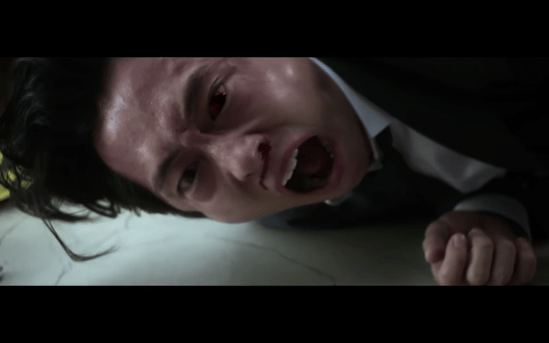
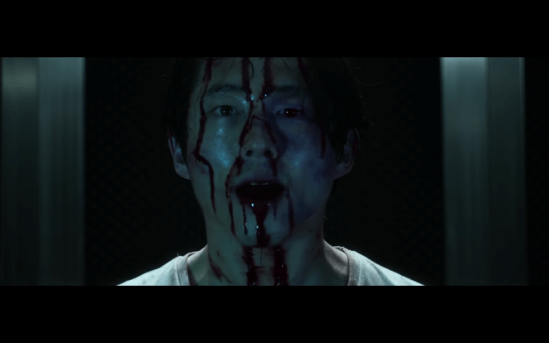
In a world under sieged from a highly contagious virus, known as the ID-7 virus, that blocks the uninhibited and explosive impulses, workaholic Derek Choe attempts to make a footprint at his ruthless, white collar firm, but lands on the receiving end of a frame job that results in a pink slip and being escorted out of the building. Before being able to walk through the exit by security, an ID-7 invasion as quarantined the office and symptoms are seeping to the surface. All hell breaks loose amongst co-workers, exacerbating the already highly caffeinated, extremely strung out, intensely coked up, and amoral aggressive behaviors of a volatile workplace environment, and an infected Choe aims to reach the top floor to violently express to the firm’s board on why they should reconsider his termination, but a drug-fueled, and also infected, boss strives to make that endeavor challenging with the assistance of his lower tiered, corporate suits.

“Mayhem” is a HR nightmare! The Joy Lynch 2017 directed action-horror film is “The Firm” meets “The Raid: Redemption!” Luckily for the viewers, “Mayhem” is a hardcore insight into unlocking all of your deepest, darkest inhibitions to the tun of explicitly telling off your boss with every four letter expletive in the book, giving your rotten colleague a firm piece of your mind, or just knocking everyone’s teeth down their smug throat. Yeah, it’s that kind of movie. Lynch (Wrong Turn 2: Dead End) runs with the first time feature film from screenwriter, Matias Caruso, who designs a virus, called the ID-7, that removes or ceases to function what defines us as human, from compassion to sympathy, in order to frankenstein a demented rendition of Donkey Kong and Caruso’s characters basically all have singular mode – asshole – but that subversive level stems from an infection induced state and the characters, deep down, maintain a slither of their original selves in an extremely dark comedic sense.

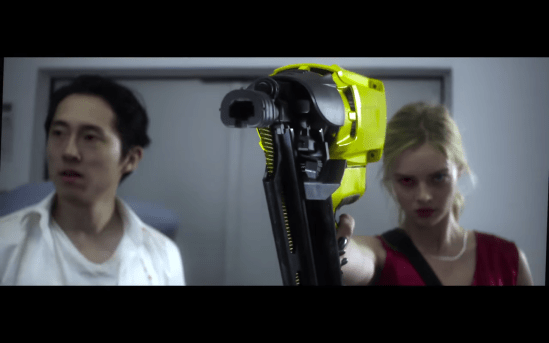
On the coattails of his character’s brutal demise on AMC’s “The Walking Dead,” Steven Yeun remains in an dimension plagued by a different kind of viral infection. Instead of blowing the brains out of walkers, Yeun brilliantly and entertainingly fills the ambitious workaholic shoes of account manager Derek Choe who literally battles his way to the top after being canned by his unscrupulous consulting firm and when the ID-7 overwhelms each and every employee. Choe is a far cry from Glenn on “The Walking Dead,” a pure hearted character with a good moral compass. Yeun’s character’s moral compass is skewed without doubt and double skewed with introduced by the virus. Choe forms an unlikely pact with a desperately disgruntled borrower Melanie Cross fighting against the firm, and the firm’s bank, looming foreclosure and the sassy, blond ass kicker, embraced by “The Babysitter’s” Samara Weaving, can chew gum and kick tail all at the same time. The pair are pitted against the some of the office’s most ruthless suits, such as a sociopathic HR enforcer known as The Reaper (played by “The Walking Dead” vet in Dallas Roberts), a manipulative snake charmer Cara Powell (Caroline Chikezie of “Æon Flux”) and at the top is none of than the big boss played by “Hellraiser: Revelations'” Steven Brand. Not only does “Mayhem” have colorful, well-scribed anchoring characters, but the supporting parts are just as well-quick-e-quipped too with Kerry Fox, Claire Dellamar, André Eriksen, and Mark Frost (“Faust”).

“Mayhem” relishes in the ferocity of that of a Mark Neveldine “Crank” franchise, but lacks a certain coherency untuned to seamlessly sustain the story to the end. Moments of purely poor editing don’t convey the full message intended, leaving much desired when considering the hero and heroine’s plight through the firm’s ruthless hierarchy to the top. These moments don’t make or break the story and are minuscule in portion size but are large enough to thwart going unnoticed. Another annoyance of how the story is told is the off screen violence. With a feature entitled “Mayhem,” by very definition states, “violent or damage disorder, chaos,” one would imagine that any and all violence would be in full display, showcased proudly and exhibited without ambivalence, and the beginning starts off energetic enough with an explosive scene of a conference room brawl involving the attendees in a all out melee, a half naked couple sexing right on the conference table, and ending the scene with a murderous gashing of one’s carotid artery. Narrating why these berserkers are killing and humping each other is Steven Yeun’s Derek Choe, setting up the ID-7 as the uninhibited virus. The violence that pursues goes into a hot or cold state where the latter involves off-screen violence, especially between Chikezie and Clarie Dellamar’s characters in a fight to the death between boss and assistant, but in a heated exchanges that had more girth in the dialogue, their actual bout screens over to Choe and Cross’ blank stare expressions and the determination of who bests who goes into a big question mark status.

RLJ Entertainment releases “Mayhem” onto various formats include a not rated DVD, Blu-ray, and streaming platforms. I am unable to comment or critique on the audio and video qualities of the film as I was provided a streaming link that didn’t include bonus material; instead, I’ll comment on how Lynch and the rest of filmmakers did a remarkable job constructing an ambiguous building structure along with the help of the two Stateside based production companies Royal Viking Entertainment and Circle of Confusion. Though the film was shot in Bulgaria, the location could have been right in downtown of your nearest city and that fairs in “Mayhem’s” success to establish anywhere as a victim to the virus or a workplace go array in the world. The next time you want to take a heavy duty Swingling stapler to you’re supervisor’s noggin for assigning to many TPS reports to you, check out “Mayhem” to instill that visceral courage and audacity to do so all the while being entertained by utter, unadulterated violence and violent thoughts and actions that usually spur underneath the breath of a common office environment.

Full Blown Evil is Only One Snort Away! “Dreaming Purple Neon” review


The last bloodline of a black magic rite has manufactured a highly addictive drug called Purple Neon into pill, powder, and injection form and has distributed it through the pipeline of local dealers amongst an unsuspecting community unaware of Purple Neon’s real and highly potent side effects. The drug transforms the dopers into mindless, blood thirsty slaves and connects the them telepathically to a diabolical underworld queen that’s sought to be risen through the blood and body of a youthful human sacrifice and the very spot, deep inside the hellish maze of a business building, is where a motley crew of drug dealers, estranged lovers, and dentistry employees and patrons are caught dead center in the middle of the hell seekers’ ritual. Armed with only melee weapons and their wits, an unspeakable journey trek to the belly of hell pits them against nightmare creatures and a dastardly queen hellbent on ruling the world.

Since the mid 1980s, Todd Sheets’ expansive B-horror library of schlocky old school horror elements have stayed true and brutal for the last four decades. One of his latest ventures, “Dreaming Purple Neon,” has been described by the writer-director as an ode to the the horror films that once were where the buckets of rampant gore covers like wall-to-wall carpets in every scene, where innovative practical effects made the sizably impossible possible, and where the story is chummed into an ocean of entertainment and fun. “Dreaming Purple Neon” favors a long lost market that rarely exists anymore. “Hi-8 (Horror Independent 8,” in which Sheets wrote and directed a segment, showcases directors who revert back to their analog foundation in horror filmmaking. Sheets is credited alongside “Truth or Dare? A Critical Madness'” Tim Ritter and Donald Farmer, director of “Cannibal Hookers.” Sheets continues his legacy, notching another hole in his belt with an ambitious story soused with formidable, if not a bit extravagant, special gore effects.

At the epicenter of all hell breaking loose is Jeremy Edwards as Dallas whose thrusted into the bane experience inadvertently as he’s trying to reconnect with girlfriend Denise (Eli DeGeer from Ron Bonk “Empire State of the Dead”). A better suited budding duo lies with Ray Ray and Tyrone King, respectively Antoine Steele and Ricky Farr, as a pair of hard nose drug dealers tracking down Catriona (Millie Milan) who stole a kilo of Purple Neon and Tyrone’s custom twin beretta handguns.  So far, an eclectic group of characters have formulated but doesn’t end there with two barely cladded actresses, donning sometimes just horned prosthetics on thier nipples, as demonesses. Jodie Nelles Smith bravely and enthusiastically bares it all with full frontal openness to give birth to her Godless vessel demon and her counterpart, the great queen Abaddon, posts up Dilynn Fawn Harvey’s well endowed assets into a sexy medieval getup suiting her ultimate unholy power. Jack McCord receives the last honorable mention in his role of building landlord and high priestess Cyrus Archer to facilitate the Purple Neon and to summon the demon Abaddon. McCord’s theatrics integrate well into Sheets’ splatter film by not only providing exposition for the entire scenario, but also being that faithful right hand henchman to a backdrop antagonist – think Demagogon to the monstrous upside down world creature in “Stranger Things. Grant Conrad, Nick Randol, Jolene Loftin, Ana Rojas-Plumberg, Daniel Bell, Glen Moore, and Stacy Weible costar.

Now, “Dreaming Purple Neon” won’t win any Oscars. Award potential isn’t in the films’s DNA.   Being in a niche horror genre narrows the frame of potential viewers, but Todd Sheets” didn’t write and director “Dreaming Purple Neon” to win hunks of glorified metal and plastic and even though the performances were outright corny, sappy, sometimes frivolous, and delivered cue-by-cue, there inarguably radiates a labor of dedication and passion for a nearly forgotten splatter genre of this magnitude. Realistically, the special effects are the unanimous winners with the overly large intestines, the spray of viscera, and the stretchy ripped flesh that are mutilated, mangled, and meshed together to engross, and to gross, viewers deep inside to become fired up and excited, or maybe just disgusted, about turning nothing into a sickening something that’s out of this world.   Today’s horror is all about the glossy, the shiny, and the clean without much of the muck usually associated with death, destruction, and mayhem. “Dreaming Purple Neon’s” gets the demonic facts right by not only getting down and dirty with the likes of demon horror which films like “Demons,” “Night of the Demons,” or “Demon Knight” are akin, but also solidifies Todd Sheets as a true filmmaker and friend to the gore film even in today’s modern day apologetic society.

“Extreme Entertainment’s” “Dreaming Purple Neon” lands DVD distribution with MVDVisual and Unearthed Films presented in a widescreen 1.85:1 aspect ratio. Clocking in a 1 hour and 39 minutes, the DVD image quality varies from scene-to-scene, but mostly a washed gray display doesn’t exuberant a color palette, but this overall look goes hand-and-hand with Todd Sheets’ analog style. The 2.0 stereo sound isn’t Earth shattering and to be honest, there wasn’t any expectation for it to be so, but the dual channel is uncharacteristically strong and balanced with clear dialogue to which can be all a testament to Sheets’ long list of experience. Bonus materials include a commentary track with Todd Sheets, a behind-the-scenes, and an Unearthed Films trailer reel. Savage. Unapologetic. Herculean. These terms can all describe the feelings felt when watching Todd Sheets’ “Dreaming Purple Neon” that tells a bizarro “Re-Animator” story chocked full of graphic gore and conveyed with a dry and morbid sense of unsullied humor thats contrasted against today’s spoiled and scorched popcorn and soda pop horror film.

Own a copy of Dreaming Purple Neon!

Undercover. Underwear. Whatever Defeats Evil Sex Trafficking in “Two Female Spies with Flowered Panties” review!

Cecile and Brigitte have served two of their twelve month sentence for inappropriate sexual acts involving prostitution and stripping. International authorities, including an American Senator, remove the two ladies of the night from their incarcerations and have them audition a private and provocative dance routine that will spring them from prison life and place them into a contract for hire that the pair of beauties find difficult to refuse. Cecile and Brigitte use their God-gifted talents to slip undercover as a pair of lesbian dancers in order to spy on Mr. Forbes, the Flamingo club owner on the Canary Islands who moonlights as a sadistic sex trafficker. Forbes kidnaps, rapes, and then, with the help of his wife Irina Forbes, hypnotizes well-known and famous women to be the ever faithful lovers of Mr. Forbes wealthily clients and to stop the egregious trafficker, any smoking gun evidence must be photographed for the international police to make a move on an arrest.

Jess Franco is the maestro of guilty pleasure shlock and the 1980 violently erotic, crime drama “Two Female Spies with Flowered Panties” is no different inventoried with ubersleaze spiced in folly comedy and tense sadism. The sort of mixed bag genre film only writer-director knew, and understood, how to achieve on a minuscule budget level in hastily conditions, but “Two Female Spies with Flowered Panties,” whether designed or by chance, stemmed from the combination of old and new footage, re-edited out of the original title, “Ópalo de fuego: Mercaderes del sexo,” and told a slightly different tale with slightly rearranged character backgrounds and graphic scenes, and featured two different locations that were later labeled Las Palmas of the Canary Islands to tie it all together. Severin has included both versions on a limited edition Blu-ray (“Two Female Spies with Flowered Panties”) and DVD (“Ópalo de fuego: Mercaderes del sexo”) release to experience both versions.

Franco’s long time common law, then legal in 2008, spouse Lina Romay, under pseudonym Candy Coster stars as Cecile in really a non-seductive, non-promiscuous, and only pinched with erotica role. Unlike Romay’s “Bare Breasted Countess” (aka “Female Vampire”) role, Cecile undercuts the erotic tone with more gratuitous comic and threatening nudity. Relishing into a staple of erotica are all of Romay’s supporting cohorts consisting of “Zombie Lake’s” Nadine Pascal, “Women Behind Bars'” Joëlle Le Quément, Susan Hemingway of “Love Letters from a Portuguese Nun.” Interesting enough, Hemingway isn’t credit in either version of the film. Pascal offers playful dilly-dally while practically be nude throughout whereas Quément slips into a deeper carnality with an unhinged relationship with her sex trafficking husband Mr. Forbes while Hemingway just provides a taken-advantaged vessel to plunder her dignity, soul, and body for easy money. Surrounding the gorgeous vixens are ruthless, dirtbag men played by Claude Boisson as the club owning sex trafficker and “Elsa Fräulein SS’s: Olivier Matthot as the sleazy American Senator Connelly. The role with the most opaqueness between the two versions of the film goes to Mel Rodrigo as Milton, the club’s gay artist organizer with an existential crisis and a quick to rebel attitude.

Though charming in its own delectable unchaste ways, Jess Franco deploys a haphazardly glued story inflamed with by chance moments shrouded with psychosexual tendencies. Sexually ostentatious and manic, “Two Female Spies with Flowered Panties” wildly pivots like an out of control sprinkler, spitting lustful filth, jovial comedy, and menacing suspense everywhere while still, by way of only Franco can accomplish, accurately hitting the intended mark of downright Eurotrash entertainment. A shocking, yet hardly noticeable, factor of the director’s is his film withholds any large amounts of blood or gore; in fact, gore is absent and the blood is sparse, especially during the girls-on-girl torture scenes involving bondage, a switchblade near the hind parts, and a cinder-weaponized cigarette, but the element that sparks gritty fortitude in those same said scenes, shot intently with fraught close-ups and well positioned shadows, could culminate a subversive tone that ultimate could convey a scene without words.

Severin’s limited edition 2-disc release of the Eurocine produced “Two Female Spies with Flowered Panties” has rightfully been graced with the Blu-ray treatment. The release also has the Spanish edit version of “Ópalo de fuego: Mercaderes del sexo.” The Blu-ray is a 1080p encoded AVC transfer presented in a near stand definition aspect ratio format from a restored into HD, uncut print. The overall color palette appears fairly washed with only some segments, especially peering out over the water or inside tight quarters, stand out with rich color. Darker scenes are heavily splayed with turquoise that, again, give the washed overlay, but the richness of the shadows with grindhouse print grain is stellar. Franco’s struggle with focusing, as part of technical self embattlement or as part of an against-the-grain auteur, are prominent throughout. The two LCPM 2.0 tracks are dubbed only in English or French and while not tracked in the native Spanish, either track will serve as a palpable substitute despite the English track being transcribed awfully cheesy and the French track with consistent hiss. Bonus material includes “Two Cats in the Canaries: An Interview with Jess Franco” is an undated interview with Franco recalling his love for the Canary Islands and being a genre maverick. There’s also a 1993 interview with long time Franco composer Daniel White conducted by “Cannibal Hookers'” Donald Farmer, a thorough analyst of Franco and “Two Female Spies with Flowered Panties” by Stephen Thrower, location outtakes, and a theatrical trailer. While “Two Female Spies with Flowered Panties” is not the best example of Jess Franco’s credits, the vicious erotic thriller is arguably ambitious and epitomizes the style of the legendary filmmaker with sultry, fringed performances and an unforgettable narrative lined up in a one-two punch package from Severin Films!

Beer, Guns, and A Giant Crocodile! This is One Helluva Evil Ozploitation Film! “Dark Age” review!


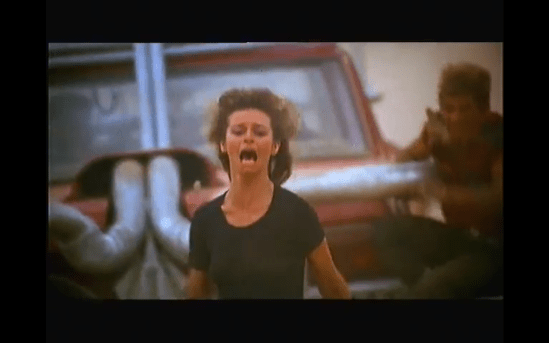
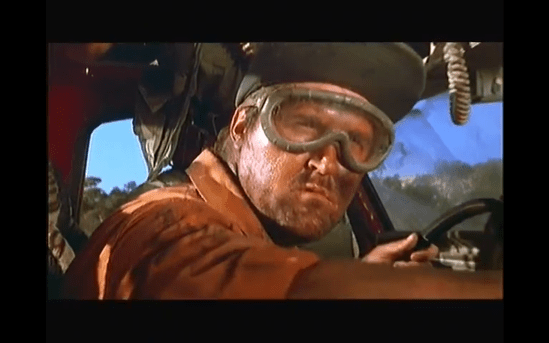
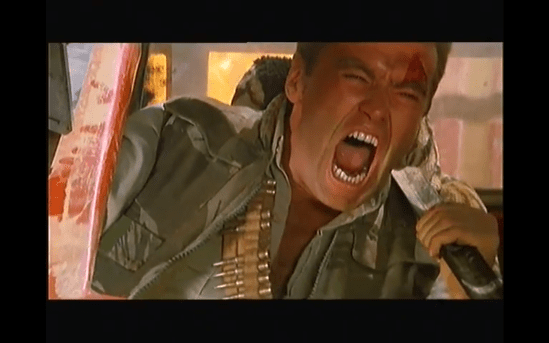
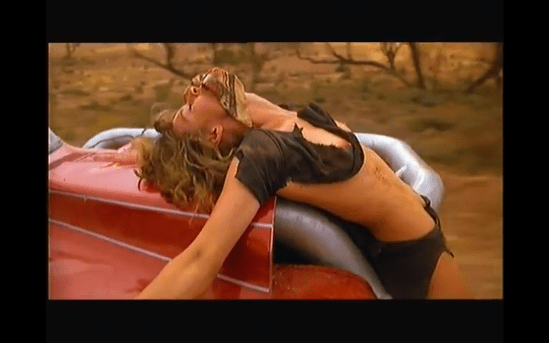
In the Australian outback, a prehistoric and ginormous crocodile has surfaced in the wake of mankind’s gentrification of the wilderness land. Between ambushing crocodile poachers and snatching little Aborigine children from off the river shore, the ancient saltwater hunter has become the hunted as park ranger and crocodile preservation expert Steve Harrison has been assigned to kill the beast, but the local Aborigine tribe holds the killer croc sacred, calling it Numunwari, an ancient, spirit carrying crocodile that has embodied the bones and souls of ancestral aborigine. Together, Harrison and local tribe leader Oondabund must find a way to stop the chaos without terminating the Numunwari while combating drunken poachers and a rattled ranger chief looking to abruptly end public fear. With the enthusiastic help of Harrison’s ex-lover, Cathy Pope, the three devise a dangerous plan to sedate the massive croc and transport it to a secluded habitat before death rears it’s ugly head once again.

Arch Nicholson’s “Dark Age” is the Australian “Jaws” equivalent, introducing a massive crocodile that puts the fear of the murky rivers into the hearts of audiences much like a giant great white shark did for the ocean beaches. “Dark Age” is a raging adventure with a delicate undertone about nature fighting back against an aggressive, occupying force called man, especially the white man, who kills without cause, who plagues without consciousness, and whose power instills a reactionary fear to kill. A single, monstrous crocodile embodies and symbolizes the essence of an entire habitat, chomping through flesh and doing a death roll to make known that nothing can stop nature or as “Jurassic Park’s” Dr. Ian Malcolm so eloquently put it, “Life, uh, finds a way.” Nicholson’s film, from the novel of Grahame Webb novel Numunwari, isn’t solely a man versus nature horror despite marketed as one; instead, “Dark Age” unveils more the cruel side of human nature that’s more Machiavellian than nature running its course.

“Wolf Creek” star John Jarrett, who I better know from “The Odd Angry Shot,” stars as the conflicted park ranger and crocodile preservation expert Steve Harrison. Jarrett’s more convincing a maniac outdoors man than a crocodile conversationalist, but the iconic Aussie convinces us all that being in between two opposing sides is no easy task with this willingness to do what’s right on both sides. Nikki Coghill portrays Steve Harrison’s love interest, Cathy Pope, and Coghill is a dominating female lead by, not only being the only prominent female character, but with her striking ability to overpower Jarrett in scenes and with her also very striking beauty that comes to peak in a fleshy sex scene with Jarrett. The second most recognizable face behind Jarrett is aborigine descendant David Gulpilil. Most Stateside filmgoers may recall Gulpilil’s long locks and distinctive facial features from Crocodile Dundee in a ceremonial Aborigine dance alongside Paul Hogan. In “Dark Age,” Gulpilil plays Adjaral, son of Aborigine tribe leader Oondabund played by Burnham Burnham. “The Howling III” actor acts as a spiritual liaison between the crocodile and the white man world and Burnham Burnham’s childlike presence onscreen makes the actor very memorable and likable. Ray Meagher, Max Phipps, Jeff Ashby, Paul Bertram, and Ron Blanchard co-star.

There have been many installments and versions of crocodile leviathans. In fact, in It’s Bloggin’ Evil’s last review, Sion Sono’s Tag, there’s a dream sequence of a giant crocodile gorily snapping down upon a Japanese schoolgirl with blood spraying everywhere. While the scene is graphic, eye-catching, and notable, the croc was a mockery of reality with disproportionate jowl and a flimsy design that’s more cartoonish than substantially factual. Kuddos to the monster effects and long time visual effects artist Roger Cowland for constructing a frightening behemoth of a crocodile. Though slightly stiff in some scenes, Nicholson camera placement exhibits just enough to warrant a shortage of breath whenever the crocodile goes in for the kill or stalks a prey with the round eyes popping just above the water’s surface. This effect is masterfully executed by the late director who didn’t feel the need to be gratuitously gory with the death scenes that are modest, intense, and sheerly practical.

Yet to be on DVD or Blu-ray in the U.S.A., the good blokes over at Umbrella Entertainment release ultra-rare “Dark Age” for the first time hi-definition on Blu-ray as part of Ozploitation Classic series presented in a 1080p widescreen, 16:9 aspect ratio, format. The image looks clean without any noticeable enhancements, distortions or print damage with only some heavy noise in the darker scenes. The Dolby Digital 2.0 audio track is just as perfect with clarity in the dialogue, a pulsating synthesizing score, and fine fidelity and range. No hissing, popping, or any other noise annoyances were detected. Umbrella unleashes a slew of bonus material includes an audio Commentary with Actor John Jarratt and Executive Producer Antony I. Ginnane, a Bicentenary with Bite: Revisiting “Dark Age”, panel discussion with film historians Lee Gambin, Alexandra Heller-Nicholas, Emma Westwood and Sally Christie, and Uncut Not Quite Hollywood Interviews with John Jarratt and Antony I. Ginnane which are tremendously enlightening about the film’s birth and concluding reactions. There’s also a 1986 documentary entitled Living With Crocodiles with Grahame Webb, author of Numunwari, trailers, and an image gallery. Forget “Rogue.” Forge “Lake Placid” Lets even forget “Dinocroc!” Umbrella Entertainment’s “Dark Age” is the ultimate formidable 90-minute action-horror with trembling induced fear and adrenaline produced thrills accompanied inside a hi-definition release packed to the razor sharp teeth with extras.

A Retelling of an Iconic Evil! “Apostle of Dracula” review!


While at a Spanish night club, Lucy meets a darkly tall and handsome gentleman who takes her back to his luxurious yacht and spends a romantic night with him inside his cabin on the sea. The next morning, Lucy suffers from a terrible case of amnesia, unable to recall where she’s met this mysterious man before or even remember her own past and as she relaxes in her hotel room after a soothing bath, a past life vision of herself entangled with her one night stand, otherwise known as Dracula, establishes her place amongst Dracula’s side as his undead love, but vampire hunters, Doctor Van Helsing and his faithful assistant Seward, are hot on Dracula’s scent toward his brooding castle in order to save Lucy from succumbing to Dracula’s cursed evil forever.

“Apostle of Dracula” is a Spanish retelling of the classic Bram Stoker “Dracula” tale, versed in Edgar Allan Poetry, and is directed and co-written by Emilio Schargorodsky. Also known more in other parts of the world as “Dracula 0.9,” Schargorodsky’s film boldly tiptoes through a minimalistic approach regarding the mythos of the legendary vampire that dabbles in some special effects when required and uncomplicated imagery that still relishes in wondrous imagery. The “Spirits of the Dead” poetic works of American macabre writer Edgar Allan Poe reinforces the Gothically garnished settings and costumes and heightens the gloomy sensationalism in Schargorodsky’s melodramatic horror soap opera that redesigns slightly Dracula’s origins and his infatuating love interest that isn’t Mina Murray.

Instead, Dracula’s focus is resuscitating the undead cursed life into Lucy dreamily and elegantly portrayed by model-actress Nathalie Le Gosles. Le Gosles has ghostly grey eyes that pierce vividly on screen through her Lucy Westerna performance that’s quite different than what audiences might be typically used to in the character. Lucy is the titular character, being the “Apostle of Dracula,” and Dracula (Javier Caffarena) spares no expense or time and effort in making Lucy his forever. Caffarena’s Dracula is very much overshadowed by Le Gosles’s beauty and performance as Caffarena’s acting experience before his freshman film only credits him in on other role in a short film directed by Schargorodsky, but Caffarena’s a busy body on this feature, delving into many facets from cast to crew as also one of the three co-writers and also donning not only the cape and fangs of the vampire but also creating a composing soundtrack, editing the film, and acting as a producer. In all honest, Paul Lapidus stole the show with his role as the most famous vampire hunter that was ever created – Van Helsing. Virtually embracing every facet of his time hopping character, along with the rest of the cast, Lapidus’s steadfast approach toward a more conventional Van Helsing relieves many anxieties of jumbling up Dracula’s mythology. Antonia Del Rio, Francisco Del Rio, Jose Luis Matoso, and Virginia Palomino round out the cast.

Schargorodsky’s indie Gothic Dracula feature is not immaculate; however, because Schargorodsky is an experienced photographer, a silver lining in his filmmaking playbook is his impeccable eye for cinematography. Whether in the framing or capturing the organic beauty of the landscape, Schargorodsky blends a dream with classic styles that had once scared the pants off people by incorporating shadow imagery that pays a dear homage to that of F.W. Murnau’s “Nosferatu” alongside Caffarena’s Dracula shaving his head and extending his fingers to be a lookalike Max Schrek. Captivating as many of the frames might be, the juxtaposition to the story doesn’t hold water as the story hops from one century to another without much regard for exposition. Lucy’s passionate yacht fling with a daylight walking vampire not only raises many vampire mythos questions, but also leads into Lucy displacing much of her memories of herself and her past. She then goes into a trance after returning to her hotel room, envision her great lineage self intertwined with Dracla and that story unfolds for a good portion of the film from the time Lucy’s bit to when Van Helsing and Seward interject at Dracula’s Castle. The story then returns Lucy’s back to present time where she then fights to urge to be a bloodsucker, but can’t stop her desires to be with her undead beau all the while a modern day Van Helsing and Seward, sporting sleek Secret Service-issues shades and wardrobe, seek to protect Lucy at all cost. Lost somewhere in the midst of the story is an important pice of the puzzle that goes unexplained.

Wild Eye Releasing MVDVisual present the 2012 “Apostle of Dracula” onto DVD for the first time in the U.S. The DVD, graced with a cover illustrating an unrelated naked female vampire crotched down and glaring outward, widescreen presentation sports a digitally shot transfer that fairly mediocre throughout despite soft details, faint aliasing, and spotty moments of digital noise during darker scenes. However, the worst technical aspect lies with the dialogue audio track that’s horrendously dubbed in non-optional English in such a flat, monotone voice that all the passion behind the actors is lost. If you watch close in the special features, clips of untainted portions of the film can be caught with the original Spanish track, bringing a whole new life into the scenes. There are no options to play the original language or even optional subtitles. Caffarena’s looming score comes out clean with subtitle details in the LFE emitting from Stereo audio which can be seen discussed on the bonus material about composing the score. Another special features contain a pleasant surprise with a never before scene interview with the late Jess Franco, who looked to be on his death bed, conversing his positive thoughts and praises on Emilio’s film that does have a faint resemblance to Franco’s work consisting of elements, but not limited to, the gothic, dream-like, and slightly sleazy. Bonus material comes full circle with Wild Eye Releasing trailers. Emilio Schargorodsky’s self-funded Dracula film proves any filmmaker can be a auteur without losing focus despite some flaws being on the grand stage of an iconic horror monster and while “Apostle of Dracula” flips the script on Bram Stoker’s telling of one of the greatest villains ever scribed, there’s something to be said for the multiple ways to skin a cat in this and still able to construct a solid story in this European horror.