The Demon Concubine Is After the EVIL Power of Demon Summoning Upon Earth! “Saga of the Phoenix” reviewed! (88 Films / Limited Edition Blu-ray)

Own “Saga of the Phoenix” on Blu-ray from 88 Films!

For 660 years, Ashura, the Holy Virgin of Hell, has used her powers to resurrect demons from the underworld.  With the help of virtuous fighters Lucky Fruit and Peacock from the spirit realm, has renounced her temperamental intentions to use her powers for evil ever again and live beside the mortals under the warmth of sunshine.  When she accidently summons demons on Earth, Ashura is brought before Master Jiku and the Divine Nun to access the damage and reign judgement.  They sentence her to live in cell of the relaxed Buddha for all of eternity, but she persuades them one chance to live amongst the humans for seven days, just enough time to live under and enjoy the only thing she wants, the sun.  The Demon Concubine has a different plan for Ashura.  Seeking her demon resurrection powers, the Demon Concubine aims kill her but with the help of Lucky Fruit, Peacock, and her new human friends, Ashura will battle against the Demon Concubine and her demonic forces. 
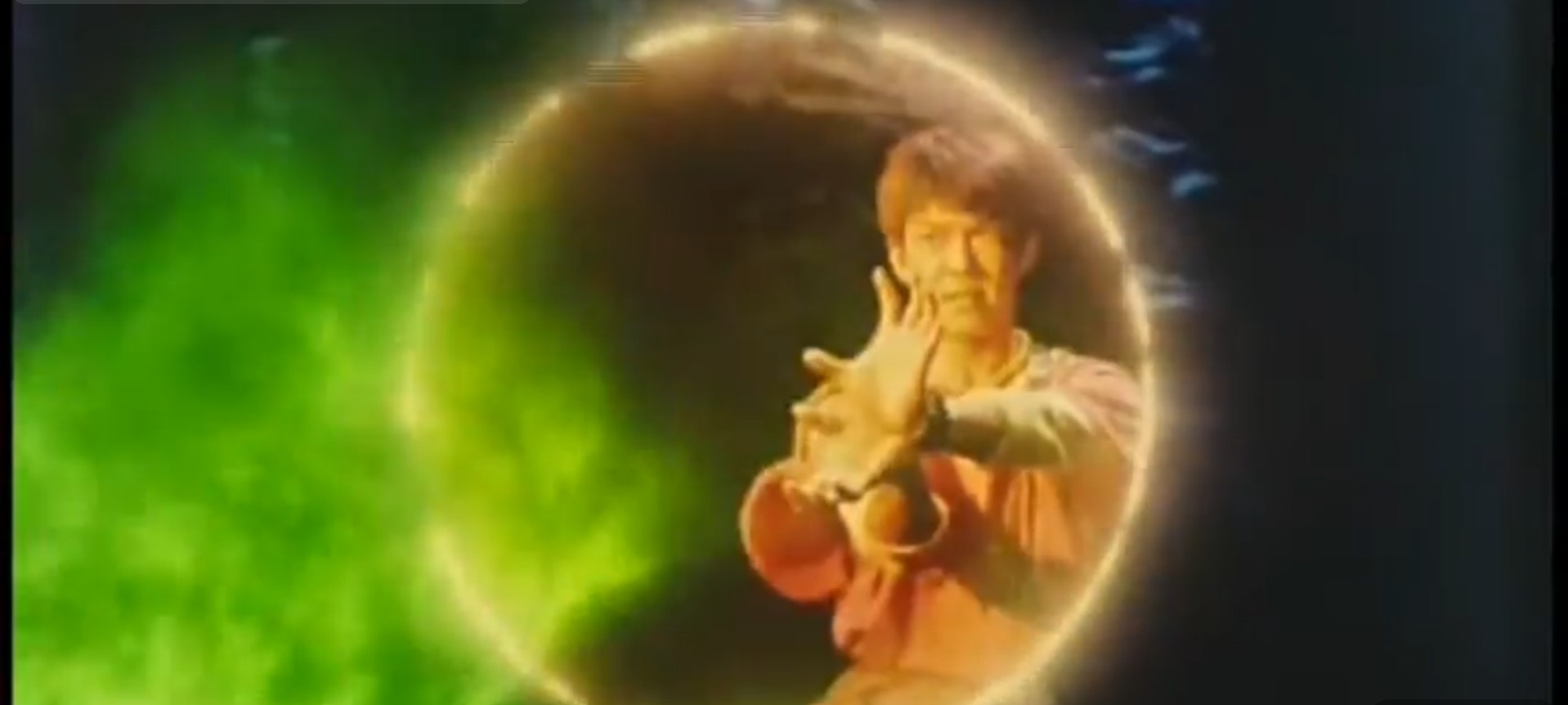
“Saga of the Phoenix” is the Golden Harvest produced, 1989 released sequel following quickly behind the 1988 released “Peacock King.”  Based off the Japanese manga “Peacock King” written by Makoto Ogino from 1985 to 1989, the action-fantasy film was codirected by returning “Peacock King” director Ngai Choi Lam (“Riki-Oh: The Story of Ricky,” “The Cat”), aka Lam Nai-Choi, and newcomer to the series Sze-Yu Lau (“Forced Nightmare,” “My Neighbors are Phantoms!”) with “Game of Death” actor Biao Yuen stepping away from writing the follow-up and be more involved on the acting by returning to one of the main roles from “Peacock King.”  The script is from a confluence of Japanese and Hong Kong screenwriters, initially scripted by Japanese manga adaptation to television screen writer Hirohisa Soda and then adapted by Tsui-Wah Wong, You-Ming Leung (“Once Upon a Time in China”), and Sau-Ling Chan, none of whom were involved in “Peacock King.”  Hong Kong’s cult and genre film product Lam Chua (“Erotic Ghost Story, “A Chinese Torture Chamber Story”) serves as producer on the Golden Harvest and Paragon Films Hong Kong-Japanese coproduction. 
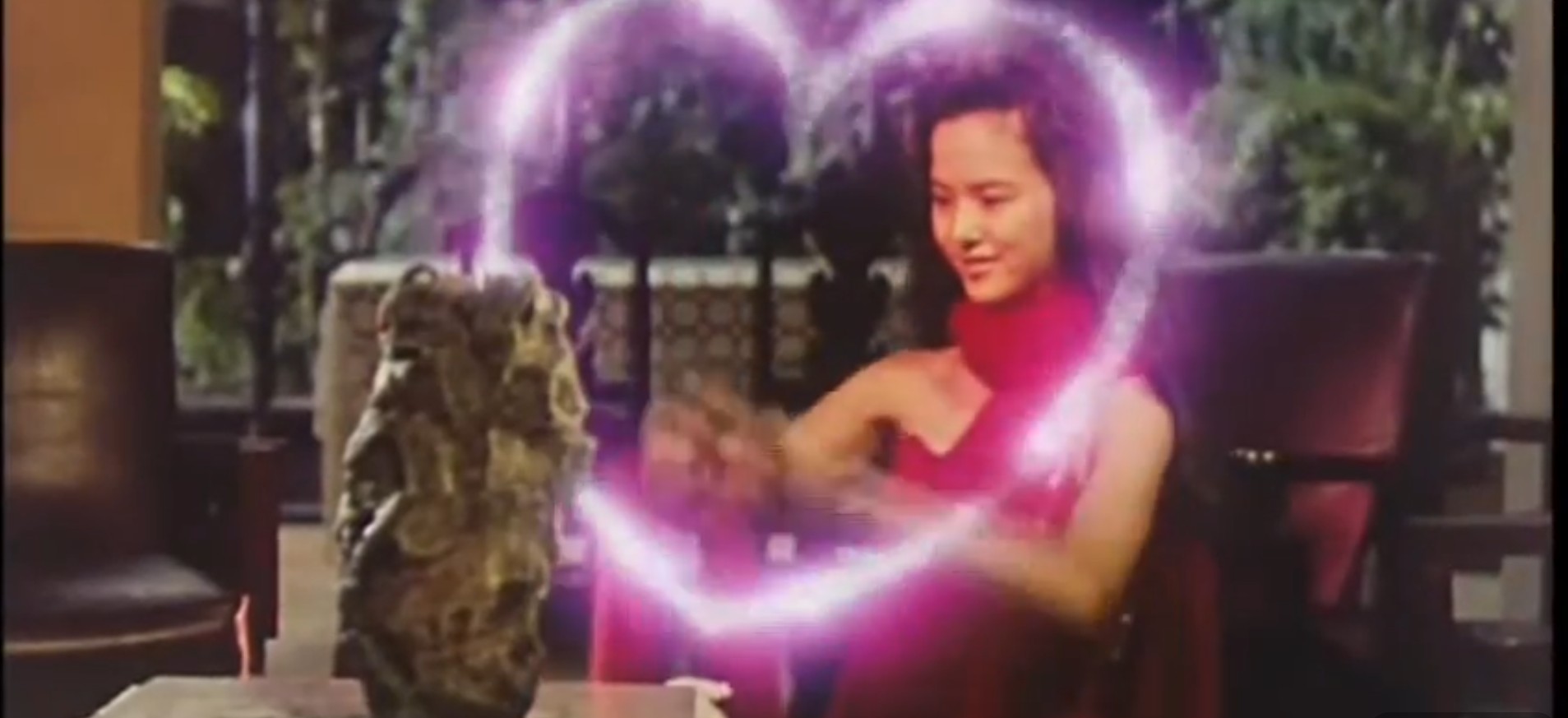
Gloria Yip returns as the Holy Virgin of Hell, Ashura.  Having never seen “Peacock King,” I’m not sure what type of temperament Ashura donned in a role where the character seems like one of the main antagonists according to the synopsis, but for “Saga of the Phoenix,” Ashura is joyful, childlike mischievous, and humble and is the center focus between the forces of good versus evil.  Als returning is Biao Yuen, but not in his screenwriter role.  Yuen, known for starring alongside female martial artist and star Cynthia Rothrock in “Righting Wrongs,” reprising Peacock, a fierce spirit realm guardian who befriends Ashura along with fellow guardian Lucky Fruit, played by Hiroshi Abe (“Godzilla 2000”) who replaced Hiroshi Mikami from the first film.  Much of Yuen is taken out of the story while being in frozen captivity by the Demon Concubine, leaving Abe and Yip to better struggle one-on-one connecting in the human world, facing human problem, and accessing the threat from the Demon World.  Yip’s candid antics exact the innocence of a young child like making snarky faces when corrected or obsessing over trivial things like sunshine, and especially when Ashura befriends a small, gremlin-like troll or creature named Tricky Ghost and holding it like a favorite stuffed toy, and this leaves Abe to be the role model, or the parental guardian if you will, stoic in stance and a reasonable thinker for his character.  It all comes off as silly until Ngai Suet and the Demon Concubine enters the frame.  The “The Ghost Ballroom” actress Suet takes on the evilly empowered role armed with seven demon subjects to do her bidding, such as trying to kidnap Ashura, and Suet runs with the role caked in a pale makeup, high pointy eyebrows that open up her eyes, and shoulder-padded dark dress.  Embroiled in the spirit world clash are two mortal siblings in Chin (Loletta Lee, “Mr. Vampire Saga IV”), who saves unintentionally saves Tricky Ghost, and her mad scientist brother Tan (Shek-Yin Lau, “Resort Massacre”) who finds himself in bitter rivalry with Tricky Ghost’s mischief ways spurring some comic relief into the fantastical brew and they represent the workable relationship between man and godlike individuals.  “Zatoichi” series actor Shintarô Katsu is in the role of Master Jiku, “Carmen 1945’s” Yûko Natori is the Divine Nun, and Noriko Arai (“Death Note”), Megumi Sakita (“Bodyguard Kiba”), and Yukari Tachibana (“The Scissors Massacre”) as the three nun warriors to round out the Hong Kong-Japanese cast.
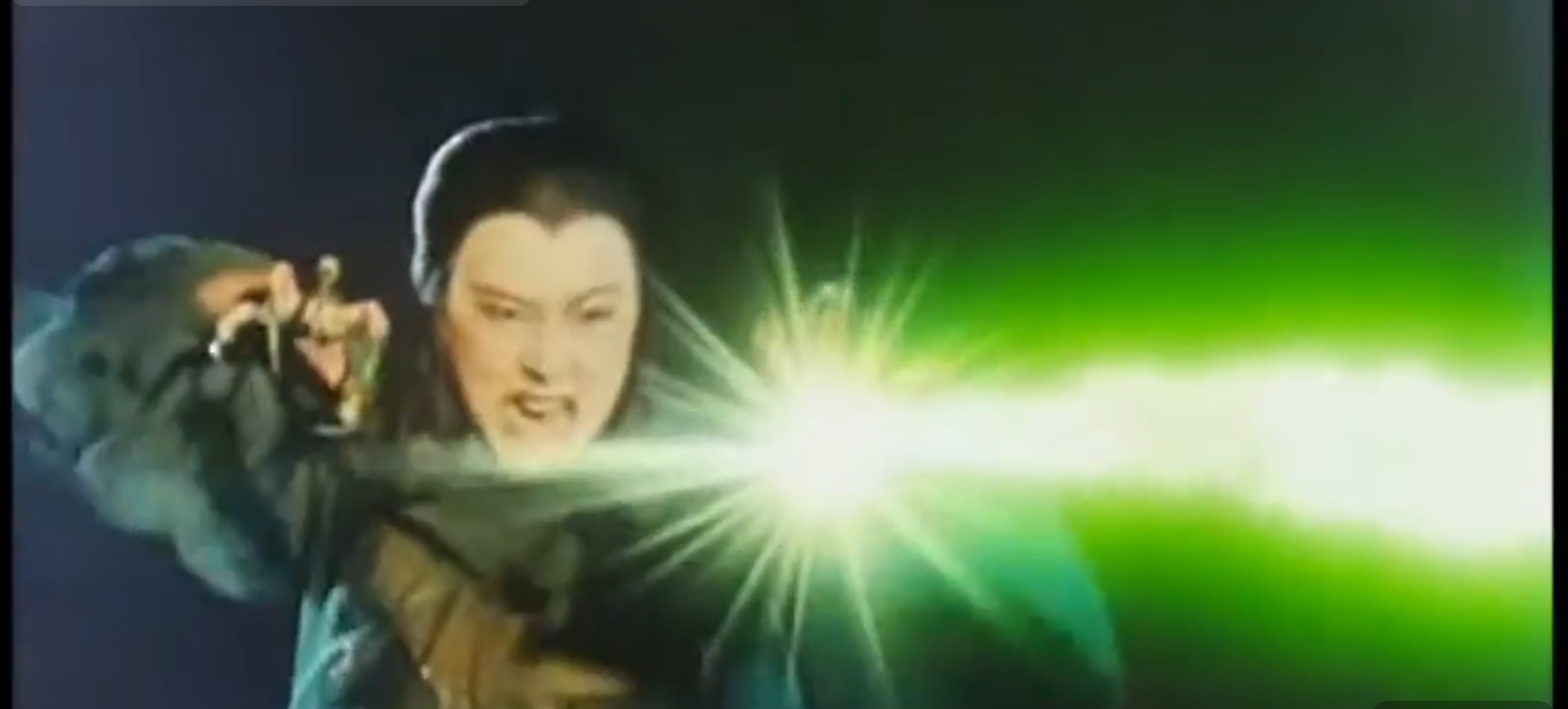
If you’re familiar with director Lam Nai-Choi, then it comes no surprise to you the kind of practical effects juggernaut “Saga of the Phoenix” can become and, in the end, doesn’t disappointment.  Choi often overscales the effort of tangibility, bringing unbelievable imagination and larger than life objects to manifestation without much, if any, assistance from computer generated imagery, and in the late 1980s, that technology wasn’t exactly perfected to what modern cinema sees today with skilled visual artistry and the introduction of artificial intelligence that’s on the verge of possibly shoving itself into the actor pool once the kinks are worked out.  In “Saga of the Phoenix,” the palpable physical presence involved is mostly at the finale third act where good versus evil face off between Ashura, Peacock, and Lucky Fruit and the ravenously aggressive Demon Concubine, the latter transforming like a Power Ranger Megazord into a gray-skeletal winged creature large enough to tower over the heroes and wide enough to swallow them nearly by three times.   Of course, this is not to say there hasn’t been other practical effects along the way which include demons inhabiting dragon statues, high wire acts of characters soaring during fight sequences, and the little mischievous imp, Tricky Monkey, from being a manipulated puppetry that weirdly reminisces Jim Henson’s “Labyrinth.”  The painted optical tricks to render color bolts of energy weaponry are a nice classic touch toward a pop of color as well as creating the inherent superhuman element of the principal players.  For someone going into “Sage of the Phoenix” headfirst without having seen or any knowledge of “Peacock King,” room for the film to standalone is rather thin but not egregiously reliant on the first film.  There’s a bit of recapping at the begging with narrative voiceover and get some clue-ins about the past from the dialogue but there’s still quite a bit unexplained, such as Ashura’s behavior fabled to be a powerful demonic necromancer who has somewhere along the way had a change of heart and we’re not privy to why.  That sense of uncertainly never really goes away through the comedy, action, and laser-firing, high-flying martial arts sinew, that something is innately missing from the story that’s saturated with wuxia themes. 
If looking to increase your bicep’s muscle mass, 88 Film’s limited-edition Blu-ray is weighty with content and it’s only one disc!  The AVC encoded, 1080p high-definition resolution, BD50 is encoded with a cherished updated 2K restored transfer from the original 35mm negative that looks unquestionably majestic on screen.  Vibrant and diffused evenly colors, high decode rate, and flawless textures, there’s nothing to dislike about this release, visually technical.  Deep in the color range and Chi-Kan Kwan’s sundry cinematography that offers vast length shots and a warm neon haze of blue and magenta through tint or gels, with a matted golden peacock rising against the monstrosities of the demon world, “Saga of the Phoenix” resurrects an aesthetic only Lam Nai-Choi could manifest from pure imagination.  The original negative is virtually pristine with no signs of damage or wear to note, nor any compression issues to note.  The uncompressed PCM Cantonese 2.0 mono offers a forward heavy diegetic sound that separate each layer favorably diversified. Clean and clear ADR make for easy discernability, capturing every bit of dialogue despite the post-production mis-synchronous acceptance. Laser action, creature roars, and other detailed measured sounds really give “Sage of the Phoenix” body, depth, and range that makes it an overall A/V highlight amongst its wuxia genre counterparts that tend to omit the smaller particulars of a scene. English subtitles pace just fine and are errorfree in a UK text. Most of the heavy lifting is done by the physical presence of the 88 Films Blu-ray that’s housed in a rigid slipbox and sheathed in a cardboard O-Slip, both containing new arranged illustrated artwork by R.P. “Kung Fu Bob” O’Brien that’s takes the true elements from the film and places them on the cover in a sure-fire canvas of what to expect. The clear Amaray cases also has O’Brien artwork as the primary cover art with the reverse side featuring the original Hong Kong poster art. Along with the O-slipcover, other limited-edition contents include a two-sided collectible art card and a 40-page illustrated book with color pictures and essays from Andrew Heskins (From Panel to Screen) and David West (The Japanese Connection), along with featured Japanese cover art Kujakuoh-Legend of Ashure. If the physical properties were not enough, the encoded content, available on the LE and Standard Edition, will bring this set home as it details with an audio commentary by Hong Kong Cinema Experts Frank Djeng and F.J. DeSanto, alternate footage from the Japanese cut of the film, executive producer Albert Lee discusses the international distribution plan from Golden Harvest Sage of Golden Harvest – The International Connection, an image gallery, and the original trailer. The 88 Films release is unrated, has region A and B playback, and has a runtime of 94 minutes.

Last Rites: Wuxia movies like “Saga of the Phoenix” are no surprise to where John Carpenter found influence for “Big Trouble in Little China” and it’s the director Lam Nai-Choi who didn’t shy away from the difficulties and inauthentic problems of physical effects but the film has its own innate issues with story that downgrade from a saga to just being an epic picture with winged creatures, bright energy blasts, and a lovely Gloria Yip succumbing to age, and status, regression with her Holy Virgin From Hell role.
Own “Saga of the Phoenix” on Blu-ray from 88 Films!

An EVIL Alien Blob Storms Earth in Search for Space Feline! “The Cat” reviewed! (88 Films / Limited Edition Blu-ray)

If you missed the Blu-ray, “The Cat” Standard Edition is Available!

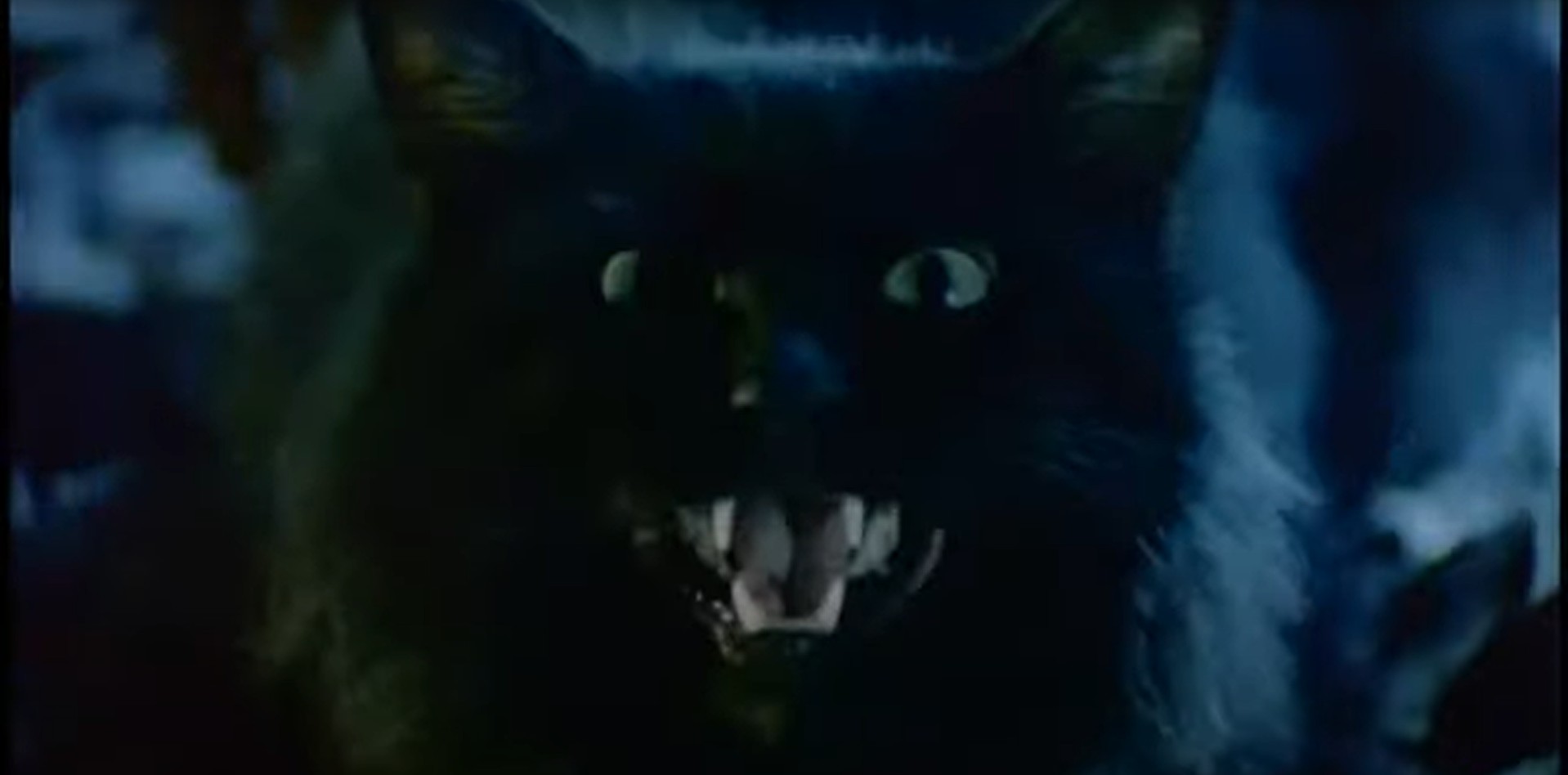
Storytelling author Wisely recounts one of his more fantastical pieces originating from more truth than fiction.  The writer reminisces investigating the mysterious occurrences surrounding a black cat and a young woman involved in a museum heist of an ancient, unknown artifact and, previously, in a strange encountering with Wisely’s friend Li Tung involving strange hammering noises and strewn about cat guts in an adjacent apartment.  Wisely soon discovers he’s bitten off more than he can chew becoming mixed up in extraterrestrial battle between the gentile but fierce fighting space cat and the young woman from another world versus a vicious and imposing orange alien blob that can inhabit dead humans and slip through tight confining spaces, leaving a burn trail of electrified bodies in its wake.  Wisely and his girlfriend, Pai so, decide to help the girl retrieve a second piece of the artifact that be used as a weapon against the relentless alien aggressor before the cat and girl can return to their home planet.

A strange science fiction thriller hailing from Hong Kong, “The Cat,” or “Lo mau,” is the 1991 filmic adaptation of author Ni Kuang’s “Old Cat” from a part of the Wisely adventure series of novels.  Written by frequent collaborating screenwriters Hing-Ka Chan and Gordon Chan (“Cat and Mouse,” “Behind the Yellow Line”) as well as numerous team-ups of Hing-Ka penning Gordon director helmed works (“Beast Cops,” “Thunderbolt”) and directed by “Riki-Oh:  The Story of Ricky” director Ngai Choi Lam, “The Cat’s” bizarrely unraveled as it is unrivaled but evokes a commingling of Hong Kong mysticism, science fiction, horror, and creature personification that’s hard to find not entertaining in its converging Daoism with creature feature movies!  Golden Harvest and Paragon Films, in association with Japan’s Nippon Television Network as a Hong Kong-Japanese alliance, are the companies behind the picture production with Chan Tung Chow (“Riki-Oh:  The Story of Ricky”) and Seiji Okuda (“Pulse”) as producers.

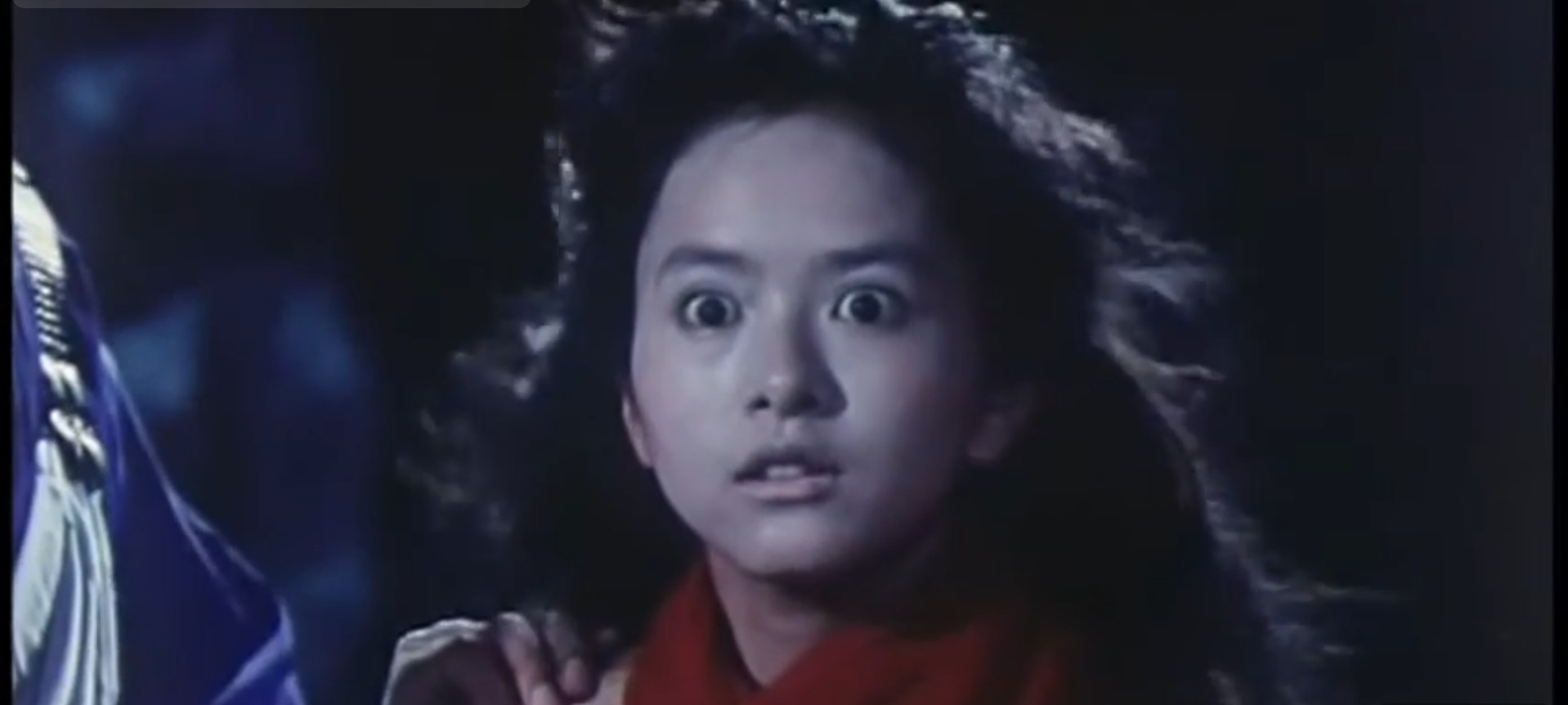
Hong Kong beauty Gloria Yip (“Riki-Oh:  The Story of Ricky,” “The Blue Jean Monster”) took Hong Kong cinema by storm in the early 90s before quietly taking a step back from acting to focus on building a family when newly married in 1995.  Since her divorce, Yip has been active in the last decade and half but to experience her best, early work, “The Cat” is a good start to behold her natural girl-next-door charisma and attractive attributes as an alien inside a human body.  Where she obtains this human form is unknown and her species social status, her name or how she became trapped on Earth is also vague, but Yip’s character can float waltz and is seemingly the caretaker of the Cat, who is a general of sorts in the alien race.  Her alien sidekick, Errol (Siu-Ming Lau, “Shaolin vs Evil Dead:  Ultimate Power,” “A Chinese Ghost Story”), too has an equivocal backstory as they search for weaponry relics and evade the caustic and electrically charged blob monster that threatens their world.  The story falls in more in tune with the three friends buried by the extraterrestrial struggle for survival and dominance with “A Chinse Ghost Story II and III’s” Waise Lee as principal lead character Wisely, a humble story writer living off the riches of girlfriend Pai So (Christine Ng, “Crime Story”), at least based on their dialogue of her owning a big house, playing tennis, and providing.  It’s an oddly laid out relationship that shows no quarrel or being tested when up against alien beings.  Li Tung (Lawrence Lau, “3-D Sex and Zen:  Extreme Ecstasy”) is Wisely’s first friend to encounter the girl and cat as noisy above neighbors but it’s their cop friend, Wang Chieh-Mei (Philip Kwok, “Hard Boiled”) who takes the unfortunate brunt being inhabited by the alien blob and becoming a Rambo-arsenal assassin.  The last piece to “The Cat’s” cast is actually the “Old Cat” author Ni Kuang having a cameo appearance as a warrior dog handler, Processor Yu.

Did I mention already that “The Cat” is beyond bizarre?  The campy story suffers from connective tissue deficiency syndrome, meaning there’s not enough exposition or explanation in the subdued, mild-manner interactions to really bring together and segue the really cool action and creature sequences that involve, but not limited to, pyrotechnics, forced perception effects, stop-motion, blood squibs, prosthetics and makeup, and high-flying wire acts involving not only people but cats and dogs!  The cat versus dog fight is a rough-and-tumble showstopper.  The special effects and choreographic teams of Hong Kong’s special makeup effects artist Chi-Wai Cheung (“Riki-Oh:  The Story of Ricky”) and stunt coordinator Philip Kwok taking their cogs and working into the grand effects design along with Japan’s f/x crew from visual effects artist Takashi Kawabata (“Dark Water”) and special effects Shinji Higuchi (“Gamera, the Guardian of the Universe”) is a masterful amalgamation of two cultures and two styles into one, blending high-flying acrobatics with the strange, bold stop-motion and visual effects that incorporate puppets and molds is optical buffet aimed stimulate and confound.  Nearly experimental in its narrative and effects while bordering being derivative, such as from the 1988 “The Blob” remake, “The Cat’ prowls, growls, and meows as a welcoming hot mess of feline phantasmagoria. 

On a new limited-edition Blu-ray set with exclusive, new artwork by graphic artist Sean Langmore, “The Cat” purrs with a fully-loaded, out of this world high definition release from UK label 88 Films and distributed by MVDVisual in the North American market.  A new 2K restoration of the original 35mm negative is encoded on a AVC encoded BD50 with a 1080p resolution in an aspect ratio of 1.85:1 widescreen.  Image presentation has the stellar glow of regular Hong Kong film stock, a stock that doesn’t dilute the defining particulars but only softens them slight.  The original negative has withstood the test of time and any improper handling providing the restoration effort with a focus-driven goal of grading and detail. The other side of that coin is that all the rubbery and irregular textures are now more in the spotlight instead of being lost in the lower resolution and more opaque video qualities.  Brilliant gel lighting and a comprehensive range of primary reds and blues coupled with an electric orange and blood red of the antagonistic monster seduces contrastingly inside a dark atmosphere with a story mostly told during the nighttime hours.  Remastered with a Cantonese DTS-HD mono track, the compositional track is about as good as it’s going to get but that’s not saying the audio is bad at all.  Clean and clear in ADR dialogue and distinct in the ambience and action, “The Cat’s” remastering is mighty without being punchy with broad-range, consistent audio that doesn’t have any holes poked into it and has an epic, original score by Phillip Chan (“Her Vengeance”).  Newly translated English subtitles are burned onto the only video file feature.  The encoded special features include an audio commentary by Asian film expert Frank Djeng of the NY Asian Film Festivial, a new interview with writer Gordon Chan in Cantonese with an English introduction, the Japanese cut of the film in standard definition, an image gallery, and theatrical trailer.  All of the encoded features will be available on the limited-edition and standard release sets.  Langmore’s artwork graces the LE O-ring slipcover and rigid slipbox with a crazy illustrative arrangement that details how bonkers “The Cat” gets.  Inside the slipbox, a full-bodied colored and detailed booklet with more original Langmore artwork, one sheets, stills, and other contents that include cast and crew acknowledgements, a Paul Bramhall retrospective essay on director Ngai Choi Lam That Cat is Dangerous, a second essay in regard to Nai-Choi’s niche cinematic credits by Matthew Edwards entitled Body Horror, and a special thanks roundup and more acknowledgements in the making of the Blu-ray release.  There’s also a collectible art card stuffed in between the clear Amaray case and the booklet.  The reversible cover art’s secondary slip-shell is of an original poster art, a good alternative to an already overused Langmore illustration that’s on the O-Ring and slipbox.  While not a numbered limited-edition release, news of the set already being or nearly sold out at most retailers is circulating, but there will be a standard edition slated for release late November ICYMI!  The not rated release has a 89-minute runtime and is encoded region A and B for playback.

Last Rites: Ngai Choi Lam’s science fiction, body horror, and creature feature inundated “The Cat” has all the weirdness and practical prosthetics, including deeply bizarre force perception visuals, that’s beyond our galaxy and capacity for understanding, landing with great precision onto a well-deserved, highly anticipated, and must own 88 Films’ limited-edition boxset!

If you missed the Blu-ray, “The Cat” Standard Edition is Available!

Re-Electrifying a Dead Cop to Stop EVIL! “The Blue Jean Monster” reviewed! (88 Films / Blu-ray)

Click Here to Purchase “The Blue Jean Monster” available on Blu-ray!

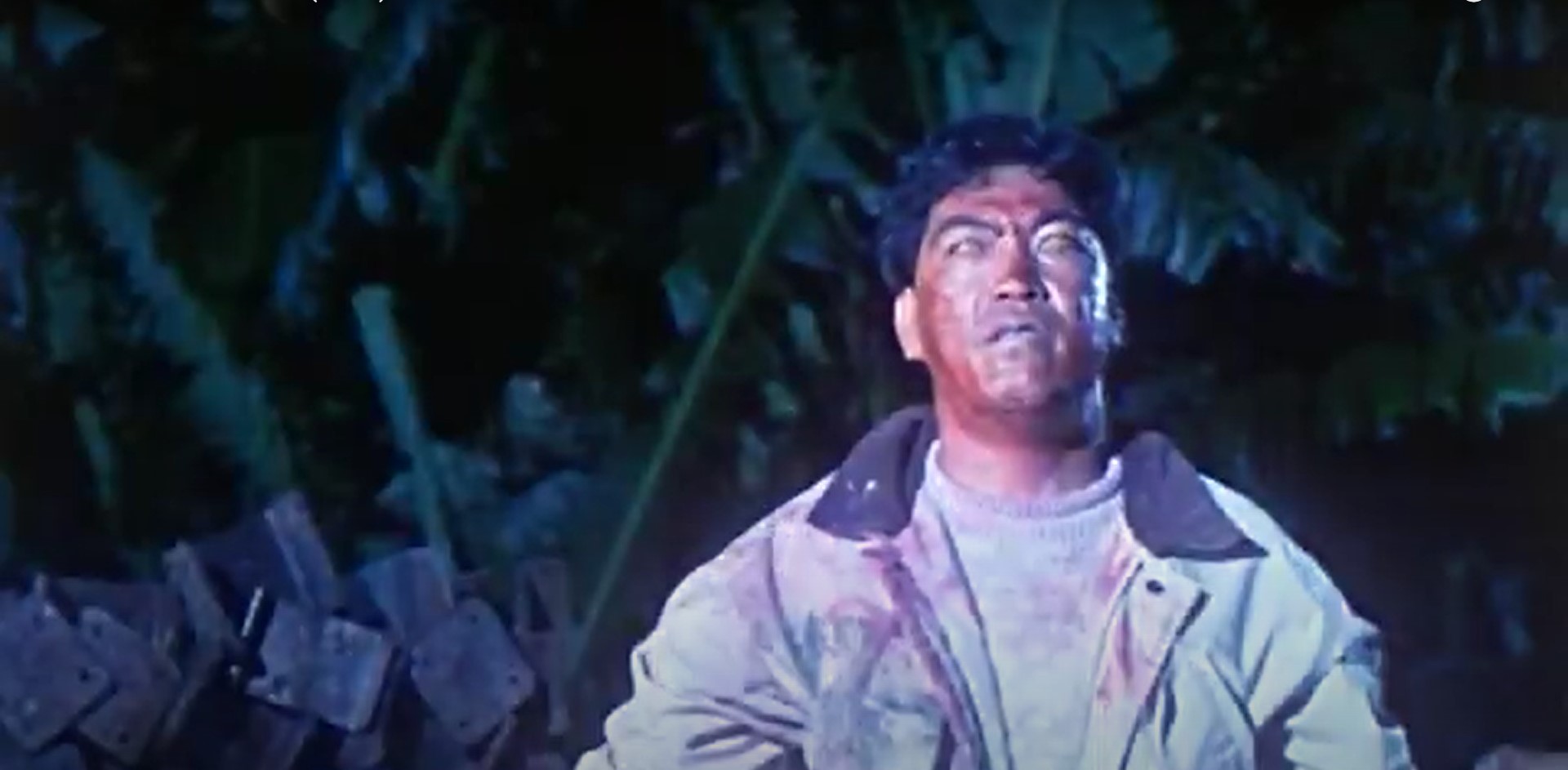
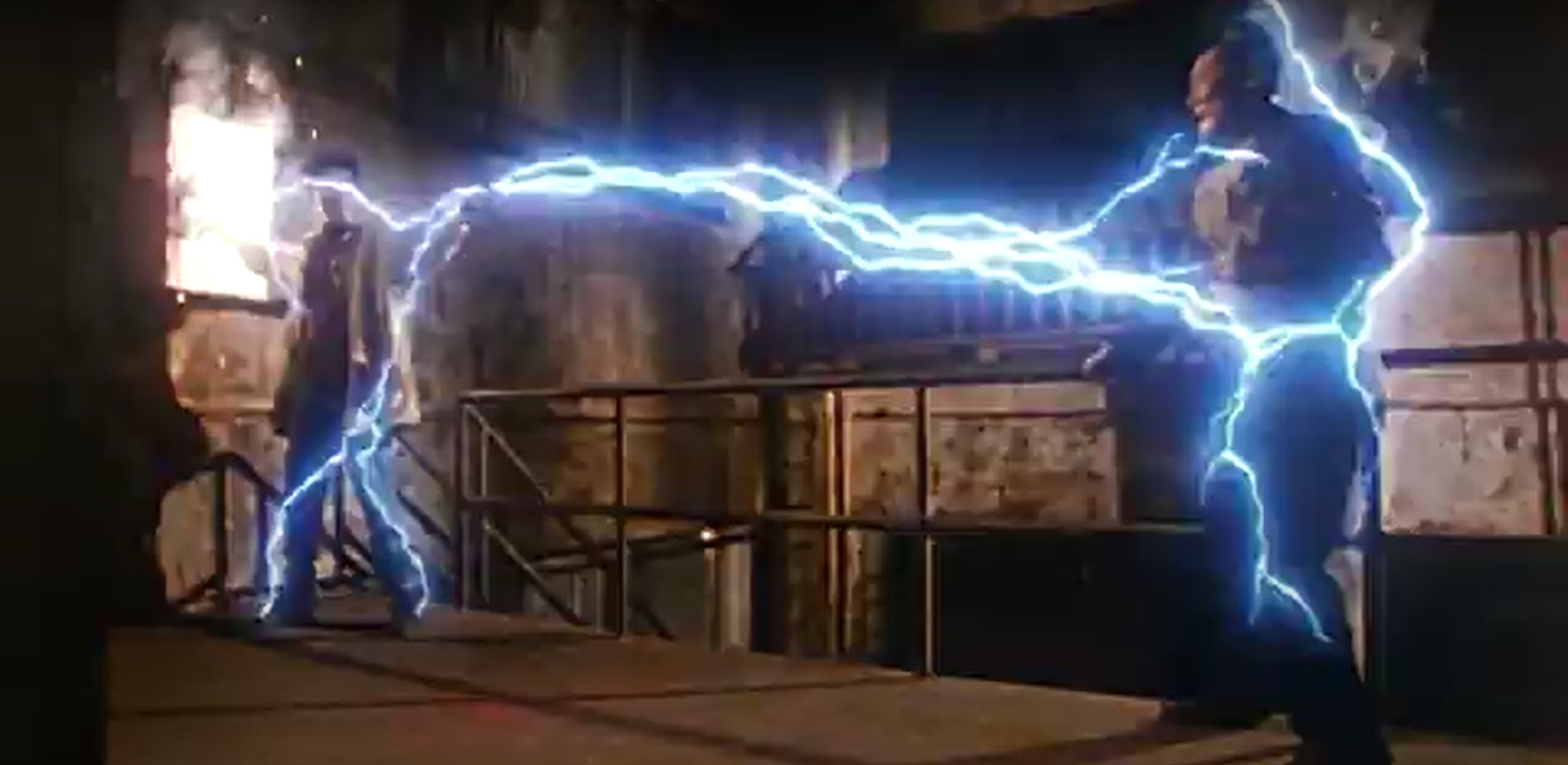
Soon-to-be first-time dad Tsu Hsiang can’t wait to meet his son.  Often times, his cop vocation intrudes on being there for his wife during her pregnancy as his torn between work and family, trying to be a good man in both regards, but when a tip comes through of a suspected bank robbery, Hsiang can’t neglect his duty and pursues the thieves in a high speed and gun-blazing chase that ends in his death as a construction site pile of steel rebar crushes him during the arrest.  His corpse left under the rebar overnight, a storm causes a transformer to fall on top of him and a cat providing a mystical lifeforce.  The electrical currents course through his dead body, reanimating him with the superhuman strength and invulnerable to pain, but with a cost as Tsiang is slowly rotting away, unable to heal or enjoy any of his senses.  Tsiang also has to recharge his body with electrical volts direct to body in order to continue being reanimated.  With time running out, the cop’s two goals are to meet his unborn child and to capture the gang responsible for him becoming an undead monster. 

While “The Blue Jean Monster” is not the eminent representation of comedy-action with elements of science fictional horror to come out of the Hong Kong movie industry, the early 90’s Category III film does rank high marshalling an entertaining “Dead Heat” (1988) interpretation for Eastern audiences.  The sophomore film of director Ivan Lai, aka Kai-Ming Lai, (“Daughter of Darkness,” “The Peeping Tom”) and the last script credit for Kam-Hung Ng emerges as a bucket list imbroglio of the inexplicable mysticisms at play as well as the good die young but win in the end.  The Jonathan Chow (“Haunted Jail House”) produced film is a coproduction of Golden Harvest Films, Diagonal Pictures, and Paragon Films. 

Not just a mindless killing machine resurrected like an electrified phoenix for revenge and murderous rout, Tsu Hsiang’s rebirth out of death arouses complications around fleeting special moments.  Playing exactly his profile of a mid-30-year-old is the late “Her Vengeance” and “The Killer” actor Fui-on Shing as a cop torn between life and death, literally.  Struggling to comprehend what’s happened to him, Tsu Hsiang has no time to explore the root cause; instead, Hsiang instantly moves forward, learning on the fly, his newfound postmortem powers of invulnerability, immense strength, and to be exasperated right into a pale-eyed version of the angry Hulk.  Shing’s duality on levity and fierce cleaves “The Blue Jean Monster” into its well-intended multifaceted of genres with soft buttery ease.  Shing’s square jaw and large frame doesn’t quell the lighter touch he brings an even softer side to Tsu Hsiang with his intake of Power Steering (Wai-Kit Tse, “Mr. Vampire 1992”), a street nickname for a former hooligan took under Hsiang’s wing after killing his father, in a supposed criminal altercation gone awry.  Power Steering best friend Gucci (“Gloria Yip, “Riki-Oh: The Story of Ricky”) becomes the primary target for the gang as she inadvertently becomes a hostage and winds up with the thieves’ hard stolen loot.  The circular, trifold connection between Hsiang, the troublesome young acquaintances, and the gang, helmed by Japanese actor Jun Kunimura (“Audition”) creates double edged complications Hsiang has to juggle and manage while being undead and a soon-to-be father.  Mei-yee Wu, Bei-Dak Lai, and “Mr. Vampire’s” Siu-Fung Wong playing Fui-on Shing’s wife Chu along with “Sex and Zen” star Amy Yip as the lustfully bosomed Death Ray, a gay man conversion therapy seductress, fill out the cast. 

The 1991 film has fast-paced action, politically incorrect humor, and spectacular physical and hand-drawn visual effects.   “The Blue Jean Monster” relied heavily on the skill of the cast and crew to elevate a staggering, fast-and-loose story that barely bridges gaps of its presaged plot holes.  There’s also some fast-and-loose editing slips that expose oversights, such as reused unmasking scene of Jun Kunimura’s head robber and showing five members of a five-member gang huddled behind a flipped van in a scene that was supposed to be sans Kunimura as his character was chasing after Gucci and the money through a construction zone.  Yet, “The Blue Jean Monster” is too enjoyable, too funny, and too drop-dead neat that any and all flaws can be written off as negligible.  Heedless humor encapsulates an antiquated way of thinking that shapes “The Blue Jean Monster” into a time bygone novelty.  When Tsu and Power Steering are suspected gay lovers, as they’re physically intertwined in electrocution to recharge Tsu undeadness, and AIDs becomes the center of the joke, casually tossed in a handful of times even by the brief portrayal of two colorfully sweater-wearing, feminine-displayed men wanting nothing to do with Tsu and Power Steering’s misperceived actions for fear of the deadly virus.  That just epitomizes the slapstick wackiness this not typical but warranted Cat III feature that transfixes with a lot of borderline insensitive satire kneaded into the modish action and special effects of every other Hong Kong film in a saturated market. 

“The Blue Jean Monster” takes over United States and North America courtesy of the UK distributor 88 Films, through MVD Visual from the Fortune Star Media Limited catalogue, with a new AVC encoded, 1080p high definition, Blu-ray.  The BD50 comes top of the line within the limits of the format with a bitrate decoding the original aspect ratioed widescreen 1.85:1 presented and newly restored 2K scanned film an average of at or just under 35Mbps.  Nearly being a non-issue coinciding with a pristine original print, the dual layer disc offers plenty of breathing room to display “The Blue Jean Monster’s’ range of motion, sufferable color palette, painted composite effects, and masterstrokes in lighting a fast-paced pressing without the blight of artefacts.  A few darker scenes are not as rich because of compositional effects but still render significantly with detail under a slightly more penetrating grain.  The overall grain naturally infuses with the 35mm print and translates nicely to a transferred digital scan.   The original, uncompressed Cantonese LPCM 2.0 mono track is the sole offering that, in truth, is all this comical, cosmic caper needs with agreeable action Foley and ambience and some looney absurdity tacked on for good measure.  None of the assortment ever sounds pressed and squished through the single channel suggesting a pretty clean, well-kempt sound design from over the years.  ADR dialogue favors less spatial position but that’s expected with 90’s Hong Kong cinema and is also well-preserved in its fidelity with a clear and damage free recording.  English subtitles are optionally available.  This special edition includes a new interview with assistant director Sam Leong Man Made Monster, the original Hong Kong trailer, and image gallery.  The limited-edition set comes with reflective and glistening slipcase sheathing the same but lusterless composite illustration, artwork created by James Neal.  Inside the green Amaray Blu-ray case, the reverse side of the cover art sports the original Hong Kong one sheet illustration stretching both ends, inferring nearly all the action and characters in the story, along with a doubled-sided cardboard poster of the reversible cover art.  The not rated release comes region locked on A and B and has a runtime of 96 minutes.

Last Rites: If a fan of “Dead Heat,” “The Blue Jean Monster” can prolong the action-caffeinated, narcotized high with supercharged unrest, necropsy humor, and the walking, talking, inexplicable undead in another stellar package and quality release from 88 Films!

Click Here to Purchase “The Blue Jean Monster” available on Blu-ray!