EVIL’s Coaxial Cord Right into Your TV Set! “HeBGB TV” reviewed! (Scream Team Releasing / DVD)

Contact Your Local Cable Provide to Upgrade Your Box for “HeBGB TV” on DVD!

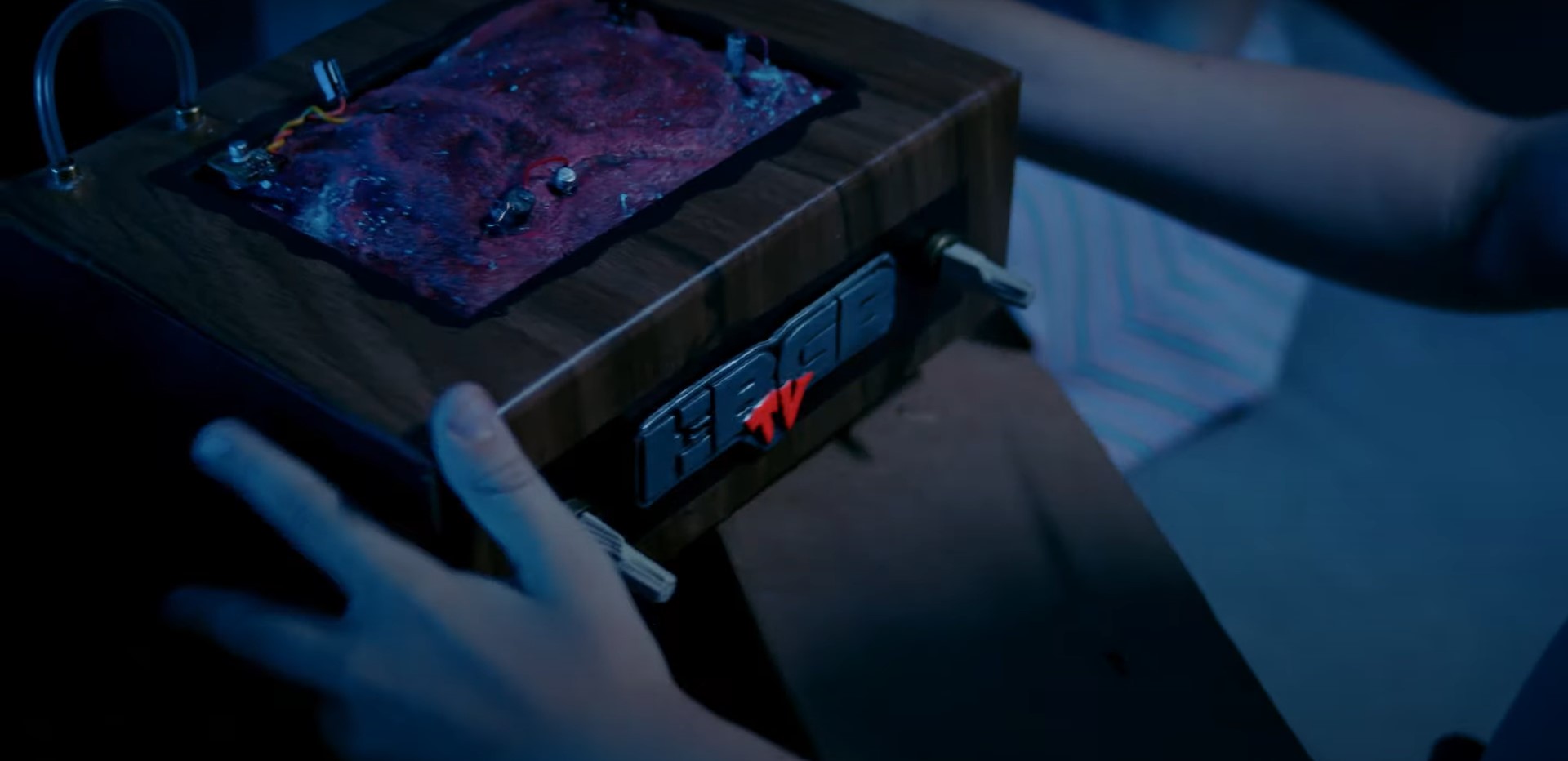
In a world of streaming devices, the cable box era has become nothing but a memory until mysterious HeBGB cable boxes sudden appear on retail shelves and on homeowner doorsteps.  The what looks to be a brain in a box with some wiring quickly self-installs right into the cable jack and manifests a gaudy-dressed tangible host, The Purple Guy, right into your living room.  Promising a guaranteed fun time, The Purple Guy is eager for souls, I mean viewers, to subscribed to the endless commercial content of HeBGB TV, promising nothing but the best entertainment from the other side of the dimension has to offer.  Sordid horror, 90s-inspired carving infomercials, grotesque commercials, monstrous sexy hotlines, demonic feature films, and more provide a source of endless brain-rotting consumerism over the TV broadcast waves.  Eye-glued patrons of senseless horrors become slave to the screens that send their very souls to a machination machine from another world.  Who can stop the evils of doom channel surfing? 
Those who are now in their late 30s, early 40s likely remember how awesome and nearly uninhibited cable television was back in the day.  Money and creative talent were invested in turning the most ordinary retail product into a mini-movie of ostentatiousness, imbued with vividly stark colors and an insanity of pure energy.  Television didn’t coddle, it shaped the very fabric of impressionable children of that era, resulting in imagine and inspiration.  That is what comes to mind when speaking of “HeBGB TV,” a comedy-horror anthology of sorts of shorts written-and-directed by Eric Griffin, Adam Lenhart, and Jake Mcclellan.  The trio’s initial concept, prior to the creation of “HeBGB TV,” was something along the lines of an interactive variety show with short films, standup comedy, and puppetry held in front of a live audience.  When COVID hit in 2020, their idea pivoted toward a movie, eventually a script evolved into a drivable wraparound narrative chalked-full of some of the prefabbed material as well as some other new zany, horror-inspired skits, shorts, and string-pulling puppetries.  Griffin, Lenhart, and Mcclellan produce the feature under their LLC of HeBGB TV productions and PatchTown Films, based right in my regional backyard of Lancaster, PA.

Credited in the film as Knucklehead, Jake Mcclellan may act to the very definition of pseudonym but, in the lack of better words, is the face of “HeBGB TV” by having scores of roles and personalities at his disposable to dress up and become a totally new and grotesquely phantasmagoric character.  Whether be The Purple Guy, PU News’ greasy anchorman, the Blue Monster, or just desperate dieter with a health-hazard late night snacking problem, Mcclellan goes all out with makeup, costuming, and prosthetics in what could be considered a one man drag show and its gorgeously panache and over-the-top but doesn’t stray terribly too far from the outrageous era the horror-comedy emulates.  “HeBGB TV” is full of caricatures of late-night television and oddities of live TV and marketing campaigns, even Eric Griffin and Adam Lenhart get involved in front of camera as a hobo watching a portable antenna TV and as Smokie, the exterminator of potheads with noxious weed, as seen on TV, or rather “HeBGB TV.”  Most of the enthusiasm, and eccentrics, are within film’s faux television programming but the cast of performances flesh out with Ian Sanchez, Curtis Proctor-Artz, Josh Dorsheimer, Zenobia Decoteau, Michael Garland, Mike Madrigall, Ellen Tiberio-Shultz, Kristie Ohlinger, Colleen Madrigall, and Willow and Van Reiner as the kids who The Purple Guy connivingly entertains and Andrew Bowser reprising his most beloved YouTube persona, Onyx the Fortuitous.

Cut from the same cloth as Weird Al’s “UHF, Peter Hyams’s “Stay Tuned,” and Jeff Lieberman’s “Remote Control,” the cable box antics of the 80s-90s TV is quickly fading the analog years into nothing more than static snow of broadcast noise.  However, “HeBGB TV” is the answer, the recollection, and the nostalgia-driven film that delivers better than trying to get a glimpse of the vague outlines of adult actresses in the static noise of premium adult channels.  Directors Griffin, Lenhart, and Mcclellan combine their creative geniuses, incorporate their sentimental love of 90’s media, and integrate their own other interests into a cinematic cannonball of colorful comedy-horror.  While the wraparound stories outside the HeBGB TV box proves able with the inexplicable mass rollout of the brain-in-a-box cable program provider and rotting, killing, and transfiguring viewers into mindless gawkers, overdosed smokers, and malevolent demons, the real star of the feature is flipping through the channels for the go-hard mock-commercials and other putrid programming laced with horror themes and capturing the spirit of television culture of 20-to-30 years ago.  While most of the visual effects reside around the wraparound story, contributing to the alloying of the story, Adam Lenhart’s practical effects more than make up for it a DIY initiative of can-do sculpting, molding, and crafting ingenuity below the embraced realm of unreality.

Don’t touch that dial as Scream Team Releasing delivers cable television like never before with “HeBGB TV” now on DVD! Though the Scream Team Releasing DVD back cover lists the format as a Blu-ray, the data file is actually a MPEG2 encoded, singer-layer DVD5 that has a widescreen 1.78:1 aspect ratio presentation. A combination blend of interlaced and digital video swirl “HeBGB TV” into a time warp of the past and present. The filmmakers captured not only the feel of rambunctious, eccentric, and vividly brilliant 90’s commercials but were also able to capture the look of it too with the interlacing horizontal lines indicative of video frame rates of the time. The wraparound narrative portions are digitally cleaner in juxtaposition, factionalizing present and TV programming with distinction until the culminating plan comes to conclusion. Some of the digital visual effects gags crumble under the practical elements of an analog airing, proving once again that the tangible and practical outstage the digital composition, but the crumbling doesn’t stem from compression issues. The English language Dolby Digital 2.0 mix is a symphony of frenzied chaos, pinpoint advert jingles, and deliciously distasteful horror gags facsimiled perfectly, as if it was plucked straight from the pre-millennium. Dialogue is quick but renders clean and clear in a blend of inset and ADR vocal recording, per the commentary. No issues with depth, range, or any kind of compression side effects. Well scored with a catchy main theme and topnotch sound designed to add to “HeBGB TV’s” romp commercial content. English subtitles are optionally available. Bonus features are aplenty with a retrospective interview with the three directors and short clips going in-depth with behind-the-scenes movie magic, a HeBGB TV video installation guide, a world-premiere pre-show, the first interactive show prior to COVID, and the theatrical trailer in the motion menu option shaped like a retro tube television with right side buttons. Inside the setup option along with the English Subtitle toggle, a directors’ commentary can be selected and played from there. The standard edition encased inside an Amaray comes with faded hues on an illustrated composition cover art of most of the “HeBGB TV’s” wacky pastiches and a disc pressed with the pulsing brain-loaded cable box. The release comes not rated, region free, and has a copasetic runtime of 78 minutes. ”HeBGB TV” is couch potato worthy that syndicates together hilarious travesties and transvestites for timeless television touting, stitched together from previously shot short films, puppetry depravities, and a new sci-fi fiction.
Contact Your Local Cable Provide to Upgrade Your Box for “HeBGB TV” on DVD!

Limited Edition EVIL to the Extreme! “August Underground” reviewed! (Unearthed Films / DVD/Blu-ray Combo)

Limited Edition “August Underground” Ready to be Received! 

A young farm owner invites his quirky, video-taping friend into the soiled and confined basement of his home where he keeps a nude, young woman gagged and rope bound to a chair, previously been tortured, and covered in her own blood and filth.  Both feeling giddy with excitement over their new plaything, the two sociopaths revel inflicting more torment and pain on the woman while her boyfriend’s mutilated and dead corpse is being dismembered in the next room.  When their basement plaything expires after days of neglect, the two joy killers hit the New Jersey and Pennsylvania turnpikes and backroads to continue a merciless killing spree of whomever stands in their path.  Convenient store clerks, hitchhikers, prostitutes, even their tattoo artist and his twin comic book enthusiastic brother are not safe from their chockful of callous carnage and every moment is recorded via videotape for reliving the moment in posterity. 

As far as underground horror goes, Fred Vogel’s “August Underground” is about as extreme and underground as they come and still be recognizable amongst the most casual of horror fandom.  Vogel’s inaugural written-and-directed, pitilessly violent, exploitation begins a direct-to-video trilogy of torture-on-tape with SOV quality, imparting grisly shudders to the unfathomable amount of blank-labeled VHS cassettes through man’s stowage, collecting dust bunnies and remaining unseen over the years to the horrors the magnetic tape just might behold.  What “August Underground” essentially boils down to is a raw day-to-day look of two maniacal serial killers on a free-for-all of a butcher’s market, the shooting locations stretch from the recesses of Vogel’s hometown of Warren, New Jersey and all the way to the surrounding back roads and isolated areas of Pittsburgh, Pennsylvania.  Self-produced by Fred Vogel and co-producer John A. Wisniewski, “August Underground” set inaugural voyage on the blood red sea for Vogel’s Toe Tag Productions in 2001.

There is a severe lack of story for Vogel’s debut and that’s no oversight or a sign of omission of a subconscious creativity.  Most normal, everyday people video-record with the intent on not making a feature-length film but rather to capture memories and store them away for another day.  Vogel strives for that realism here where a plot is, for lack of a better word, pointless for the depicted atrocities where the sole purposes is to exhibit dementedness and insanity.  The same can be said about the cast of nameless characters.  The freeform recording does not spout off introductions or make references to monikers to, again, portray as much as organic conversation or realism as possible to further skewer an already gore and violence skewed imagination into thinking what we’re seeing is authentic and inconclusive of its entertainment purpose.  Fred Vogel, under his so-called porno stage name of Peter Mountain, plays the main principal dressed in arrogance and apathy as he’s recorded in a thumbed selection of runtime filmed by an equally bad-natured, sociopathic friend behind the camera, played by a post-release distancing actor under the pseudonym of Allen Peters.  The two complement each other in a Beavis and Butthead friendship kind of way with Vogel in synch with his character’s bloodlust as well as the burly bulk while camera buddy perversely watches, giggling to his friends’ blood shedding exploits.  Their relationship feels like a lonesome outlet to do harm and senseless killing makes the connection firmer, more enjoyable, in the easiest opportunities of a rural area where bored people do evil just to pass the time.  Vogel sets up a series of scenarios rather than plotting acts of a linear story in what becomes an anthology of anarchy that has us climbing down the manhole of maniacal mischief.  Mania is soaked into every inch of “August Underground” and that fits snug and makes warm the scattered story into a much more coagulated coherency.  “August Underground” rounds out the victims, I mean cast, with AnnMarie Reveruzzi, Erika Risovich, Randi Stubbs, Aaron LaBonte, Ben LaBtone, Victoria Jones, Alexis Iris, Stephen Vogel, Dan Friedman, Casey Eganey, Kyle Dealman, and Andy Lauer.

“August Underground” is ugly, nasty, grimy, sordid, perverse, tasteless, callous, and not shot with technical or detailed perfection.  “August Underground” is also unique, bold, unafraid, successful, gory, realistic, practical, and not shot with technical or detailed perfection that’s actually, in its own way, gorgeous.  “August Underground” is all those things and more with its rough-and-ready, extreme exploitation that will be polarizing amongst horror fans and not be a film for everyone’s taste or collection.  Frankly, there are worse underground and extreme horror films out there in the world, but “August Underground,” through the disgusting trices of dismemberment, force feeding of feces, and vomit inducing snuff, has somehow ,at least in this reviewer’s humble opinion, who like in a Dr. Seuss line, has been here, there, and everywhere within the horror spectrum, slipped through the veil of obscurity, having a foot well positioned in the land of the universal acknowledgement where many genre fans putter around with the same old formulas.  The depth of this story is so shallow that digging any deeper into the themes and the possibilities isn’t necessary with its home-made movie facade of people joyfully torturing and killing people being already horrific enough. 

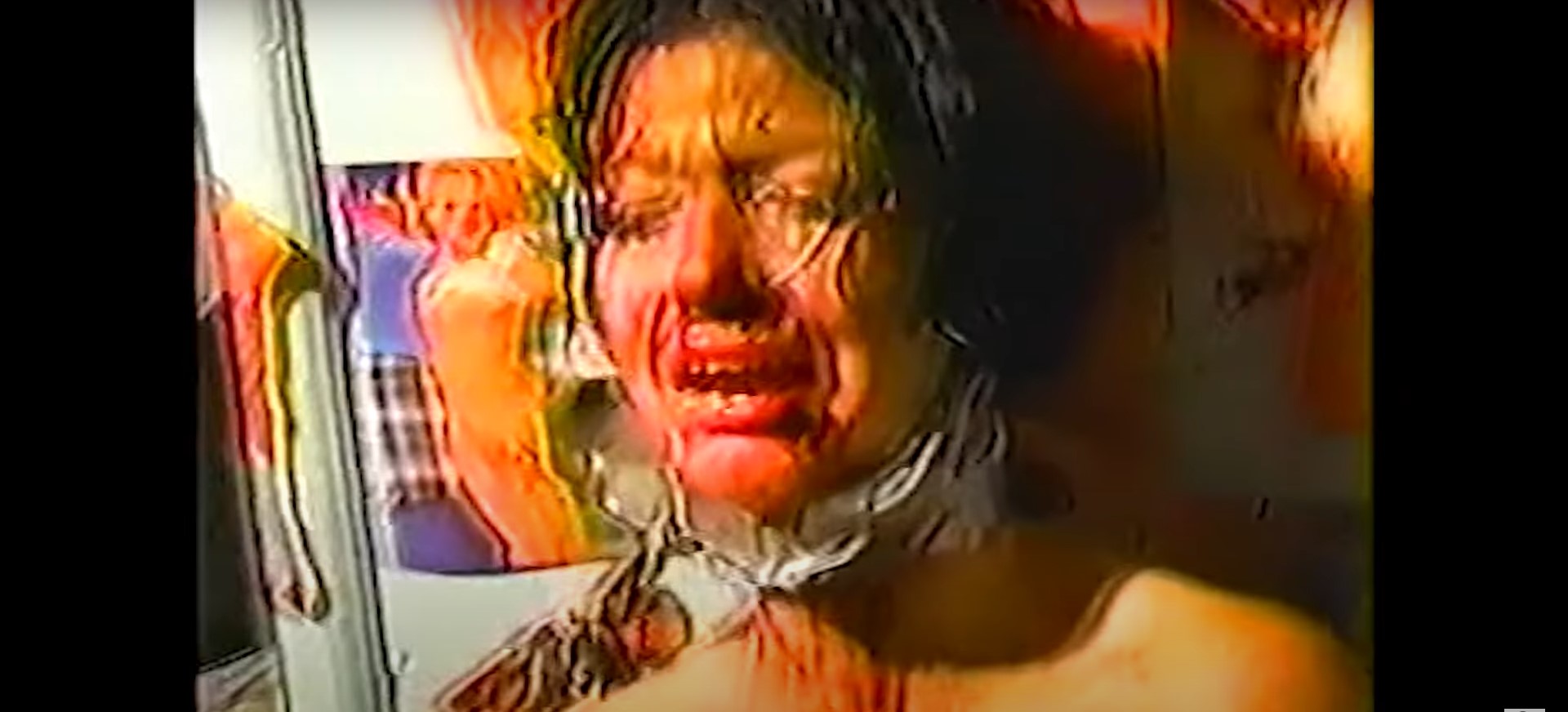
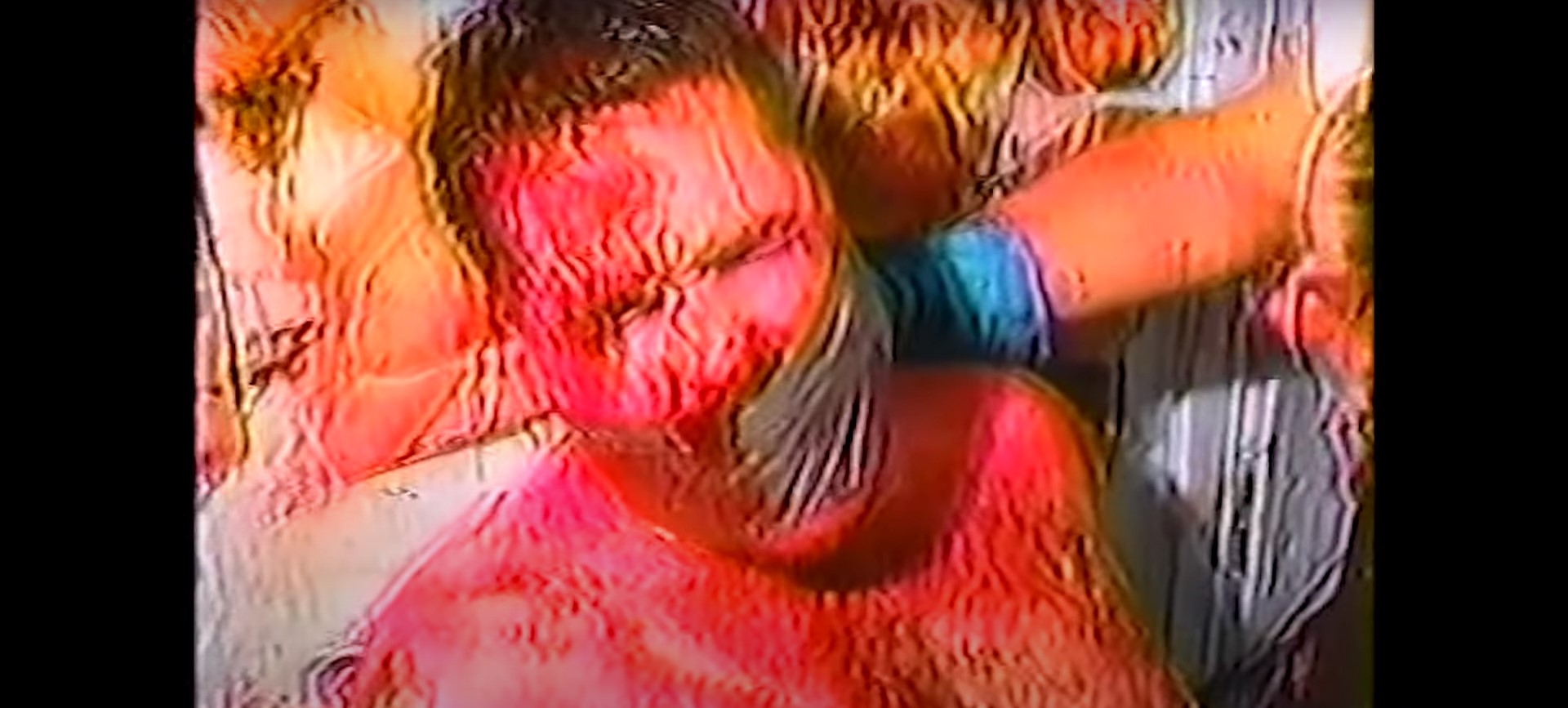
For certain to go out of stock and out of print into physical release obscurity once again, Unearthed Films’ limited-edition collector’s edition of “August Underground” is the 2-disc DVD/Blu-ray combo set to act on right now. The AVC encoded, high definition 1080p, BD50 comes from a MiniDV print, often considered the transitional format from analog and to digital in a tape format with lossy compression. Presented in the original aspect ratio of 1.33:1 aspect ratio, don’t expect image quality to be pristinely detailed and sharp as the MiniDV maxes out at 720p resulting in both, standard and Hi-Def formats, having indistinguishable presentations. Resembling the amateur, at-home movie, scaled down tape quality renders ghosting which shapes and details are bleary and the coloring resembles ember or incandescent with a warm, red-and-yellow layer. What we don’t see much of is a ton of tracking, static, or a ton of noticeable interlace but blacks can be prominently spotty with the horizontal bars. The lossless on-board MiniDV English audio is a PCM 2.0 that doesn’t extend beyond the limits of the camera’s microphone, but the clarity fairs well with clean and commanding dialogue with a natural range between the proximitous cameraman and his killing machine star of a friend in front of the camera. Also, equally interchangeable between the physical formats with what’s made to be a rough recording, discernible differences are minute at best. The Blu-ray and DVD have many of the same special features with the Blu-ray containing a few more frills over its format counterpart with a new Dave Parker interviewing Fred Vogel as well as a separate interview with Vogel and Mike Watt of Rue Morgue Magazine, another new interview with Fred Vogel from Severed Cinema Revisiting Infamy. The formats shared bonus content includes never before seen and new material, such as the original screener version of the film that comes with watermark and a slightly different color grading, a new audio commentary by Fred Vogel and Ultra Violent Magazine’s creator Art Ettinger, a new 10 questions with Fred Vogel answering some of the longstanding queries surrounding the film’s realism achievements and behind-the-scenes permissions and achievements, and a new Toe Tag Masterclass that compares storyboards with the screen version. Archived bonus content include audio commentary with Vogel and actors-producers-brothers Aaron and Ben LaBonte, another commentary track with Fred Vogel alone, an audio commentary by the witty, giggly “Killer,” Hammer to the Head closer look at “August Underground,” on location behind-the scenes, a behind-the-brutality of the film, outsiders’ perspective take in a Too Real for Comfort discussion, an introduction by director Fred Vogel, photo gallery, and trailers. The limited-edition collector’s set comes with a cardboard slipcover with a blurry, interlaced still of Vogel’s character wrapping a forearm around a gagged-girl’s throat while peering into the camera, but it’s the clear snapper case’s front cover that’s more developed with a graphic pencil-graphite illustration of the same slipcover image with more visible mutilated skin and visual weapon of human body destruction. Front cover is also reversible with an interlacing black-and-white image of the main killer. Both discs also sport two different art presses with the Blu-ray mirroring the slipcover image while the DVD has nearly the identical position of killer and victim but with a whole new victim. The region A locked edition has a digestible 70-minute runtime and is, of course, not rated. I would never say Unearthed Films has been diluting their pool of extreme underground gore and guts horror, but their “August Underground” release puts the brazen company back on the mondo-macabre map with definitely a too real for comfort twisted depravity and an au naturel sense of debauchery.

Limited Edition “August Underground” Ready to be Received! 

EVIL Bigfoot is All About the Amputating and Mutilating! “Suburban Sasquatch” reviewed! (Visual Vengeance / Blu-ray)

“Suburban Sasquatch” On Sale Now at Amazon.com!

A mystical, murderous beast of lore has suddenly appeared in the woods of a small Pennsylvanian town.  Hikers, fishermen, urbanites, and even grandmothers are not safe from the carnage dished out by Bigfoot.  Sniffing around crime scenes is eager freelance reporter Rick Harlan to unearth the truth about the recent string of grisly attacks and make a name for himself as a journalist.  Harlan finds himself in the middle of a police coverup, a Native American woman-warrior, and one suburban playground where a phasing in-and-out Sasquatch can make a killing whenever and wherever.  The Native American, Talia, is destined to square off against the evilest anthropoid her tribe has ever faced, one that thirsts for blood and does the unspeakable with the women it abducts.  The story and clash of the century may be Rick and Talia’s last in this brutal man versus beast showdown. 

As an aficionado of the horror genre, I’m on what seems to be an eternal quest to unearth the best (I’ll even settle for just good at this point) Bigfoot/Sasquatch film that really can scare the pants off viewers while providing a good storyline and solid special effects for the hairy big guy. Is that so much to ask?  The next undertaking to flash across our eyes, like a brisk fur of man-beast in the forest thicket, is the classic SOV-shot and shamelessly spooled special effects endeavor that is “Suburban Sasquatch.” The 2004 Dave Wascavage film is the sophomore project for the writer-director, following up from his deadly fungi party comedy-horror, “Fungicide,” with a shot at the title for best-worst, or is it worst-best, Bigfoot movie in the early 2000s. Shot in my old stomping grounds of West Chester, Pennsylvania, the suburban setting is authentically captured in that piece of the Commonwealth state with sprawling neighbors that give wide berth of land between houses and plenty of parks and wooded areas to Sasquatch-suit tramps. Wascavage produces the film himself, while also wearing multiple hats in many other crew roles and creates the feature under the filmmaker’s very own Troubled Moon Films, a production company that prides itself on low-cost video production and storytelling in which Wascavage self-proclaims Z grade movie making results.

“Suburban Sasquatch” is a pendulum swing between character perspectives, disassociating any one character from being a main lead and focusing more on a group of principals that even includes the suburban sasquatch itself.  If focusing on the heroes of the story, or the hero-ish types, then Rick Harlan (Bill Ushler, “Viscera”), Talia (Sue Lynn Sanchez), and the two officers – John Rush (Dave Bonita) and Steve Parker (Juan Fernandez) – would be your best bet as the unorganized protagonists deal with the beastly menace in their own way.  The acting is forced and rigid all around but not entirely at the cast’s culpability.  The script is extremely breathy and scenes last too long by lingering exposition that resulted in the film’s too-lengthy 100-minute runtime, likely drafted as a shorter run film but dialogue was added to flesh out a full-fledged feature.  Even so, performances are blankly vanilla and, to be fair, that’s to be expected inside the low-budget market. Dave Weldon, Rush, Parker, and even director Wascavage himself enact Bigfoot’s posturing and behavior familiar to a mountainous silverback gorilla with wild cupped hands waving overhead and while this seems silly in the obviously cost-efficient makeshift suit packed with unnatural folds of the stomach, a bulging bosom, and a mouth that chews like a latex-fitted gumming grandmother, the trio make the best of Bigfoot’s monstrosity and hirsute lumbering to the point of knowing what you’re getting in a sasquatch for the rest of the film. It’s all about consistency, especially when four actors interpret the movements. Wes Miller, Dallas Quinn, Troy Stephen Sanders, Loretta Wascavage, Edward Wascavage, and David Sitborn, who I thought had the most natural dialogue in the entire story, rounds out “Suburban Sasquatch’s” mania.

Has “Suburban Sasquatch” become the Bigfoot film of my long-awaited dreams? Unfortunately, no. However, what the 2004 inexpensive picture offers is invaluable cabbalism that theorizes one reason why Bigfoot is only briefly caught out of the corner one’s eye, a peripheral phantom, with a phasing feature that allows Bigfoot to go in and out of reality. Like a good b-movie horror writer-director, Wascavage also capitalizes on the creature’s stature by not only arranging a towering comparison against his enemy and food but also by fabricating a big hairy foot, larger than man’s chest, to emphasize more on the beast’s epithet. In order to achieve the height, Wascavage uses easy, practical tricks to jumboize, such as playing with different depths, but Wascavage, in another one of his many hats, also attempts his hand at crude computer generated graphics that stretch beyond the images’ limits to achieve his desired effect. Pixelated and warped without any depth or any amount of smoothness, the cut and paste photoshopped animation is jerry-built “Monty Python” at its worst in a so bad its worth seeing phenomena and certainly priceless for internet memedom, especially when coupled with severed appendages doctored from the local Spirit Halloween flying in all different directions in a Bigfoot’s fit of animalism. A couple of slashing eviscerations, a head-popping decapitation, caricature arrows and tomahawks, attack crows, and a whole lot of thwacks summarize much of the monkey business violence “Suburban Sasquatch” unfurls and while not completely bottom-of-the-barrel terrible, translating better than most SOV post-work, this Bigfoot berserker extends the search for a better entry in the subgenre.

Much like the first three predecessors on the Wild Eye Releasing Visual Vengeance banner, “Suburban Sasquatch” receives a massive, special features loaded Blu-ray upgrade coming in catalogued at number four. Also, like the first three volumes, Visual Vengeance precautions viewers about the source material quality, an array of standard definition master tapes. The region free release is presented unrated in full-frame 1.33:1 aspect ratio and the picture quality fairs better than most SOV releases. While still heavy on the electrical interference with dancing pixels finding difficulty delineating the image, there is less tracking line obstructions and no macroblocking. Details are standard definition quality with softer details, more like smudgy, in the natural color tones and lighting. The English language lossy stereo audio mix has no punch behind unlike Bigfoot who comes out swinging like Rocky Balboa in every human encounter. I would take a wild guess and say the audio is more mono as every aspect from the dialogue to the soundtrack sounds muffled or muted, likely door to poor audio recording equipment and no boom mic, making the actors’ articulation often difficult to hear. Sound effects are the only mix that has any kind of stereo potency with an overboard variation of the impact or ambient sound that adds to “Suburban Sasquatch’s” slipshod satire. Optional English subtitles are available. But if you’re buying the release because you’re interested in the special features, then Visual Vengeance has you covered with a brand new 2021 audio commentary featuring director David Wascavage, a second commentary with Sam Panico of B&S About Movie and Bill Van Ryn of Drive-In Asylum, and a third commentary track, a RiffTrax episode special, that provides hilarious MST3K-like comedy throughout the feature. Other bonus material includes an archival behind the scenes featurette, the designing of the Bigfoot costume, outtakes, the so-called CGI making-of, an interview from David Wascavage, a behind-the-scenes image gallery, the original teaser and theatrical trailer, and other Visual Vengeance trailers. The physical release itself comes with a cardboard slipcover with artwork with new artwork, a reversible Blu-ray cover with the original artwork on the inside, a two-sided insert, retro VHS stickers, and a mini poster. All that is missing, beside the link, is the kitchen sink. To conclude, Visual Vengeance ample format and bonus material enrichment doesn’t take away from the fact that “Suburban Sasquatch” remains the trashiest sasquatchsploitation on SOV ever!

“Suburban Sasquatch” On Sale Now at Amazon.com!

EVIL Suplexes A Group of Campers on the “100 Acres of Hell” reviewed!


Former high profile wrestler Buck Sever finds himself in a world of personal hurt. After a family tragedy and a derailing injury, Sever’s stuck in what’s left of his life with not much reason or motivation to pick himself back up. High school friend Trent Masters organizes a bros weekend on an urban legend infamous game preserve called Foggy Creek for some drinking and hunting, but even his so-called friends exploit his celebrity status to attract women and gain personal benefit. They spot themselves right in the heart of the game preserve said to be notorious for backwoods murders committed in the 1960’s at the hands of local legend Jeb Tucker. Blowing off the mystery shrouding Foggy Creek, the four friends soon find themselves face-to-face with a mask killer with immense strength that equals Sever’s and there’s no stopping his onslaught of spilling weekend warrior blood.

Wrestling is a multi-billion dollar global juggernaut with a fan base like no other and as an industry has seen a steady increase in popularity that spans over decades. The sports iconic wrestlers are idolized by many adoring fans who hold up supportive signage at matches, imitate their trademark finishing moves with friends on makeshift rings, and even sport their merchandise while throwing out their favorite wrestlers’ memorable gestures. The sport has been become so engrained into our culture, movies like Mickey Rourke’s “The Wrestler,” that show the downtrodden life of a has-been wrestler, can be nominated and win major studio awards, such as an Oscar or a Golden Globe, and wrestlers have been seeping into the film industry that’s now at a raging pace where the professional body slammers are some of the highest paid actors, such as the established Dwayne “The Rock” Johnson and John Cena. However, not every wrestler can be a glamourous super-stud in the cinematic universe. That’s the case with “100 Acres of Hell” directed by Hank Leigh Hump and starring 6’8″ Gene Snitsky and Samula “Samu” Anoa’i. Produced and penned by Snitsky, co-written alongside with Ed McKeever (“Bikini Girls Vs.The Surf Wolf”) and Jason Koerner (“Zombie Death Camp”) to enthrall a survival, campsite horror set and shot in the rural backyards of Pennsylvania.

Snitsky, retired from professional wrestling in 2018, turns to acting late in his career with his entry into the indie circuit. He portrays Buck Severs, a gargantuan man in a tragic life slump, whose seems like a harmless, gentle giant with a group of eccentric and callous group of friends that treat him poorly despite their best intentions. Snitsky’s has moments of genuine truth in delivery and body language, especially for crowd performer. Jim Roof plays one of his friends, Bo McKeever, a sordid white liar of a car salesman always looking to score between two legs. I remember Roof from his role as a snuff filmmaker in another film with “100” in the title – “House with 100 Eyes.” Roof’s funny and likable alongside Snitsky, but the other half of the “Bros” weekend pack droll with weak characterizations despite decent performances from Jeff Swanton and Ernest O’Donnell (“Jay and Silent Bob Reboot”). Both their roles fall flat by running out of steam when the potential is at the peak of flowing through their veins and unfortunately fizzle before they can be an pivotal means to an end. Catherine Corcoran (“Terrifier”), Meg Carriero (“Return to Return to Nuke ‘Em High Aka Vol. 2”), Bob Cleary (“Shadows of the Forest”) and Eileen Dietz (“Halloween II” remake) round out of the cast.

“100 Acres of Hell” sounds like a tour de force of forestry fury coupled with two ex-wrestlers and a backwards, backwoods, hillbilly killer without a cause, but that is where the pipe dream ends and an enigmatic reality sets in. The banter between the friends is palatable and, dare I say it, amusing at times and the camping setup, though trope-conventional, is braced with a solid foundation and a good catalytic promise of beer and urban legend to get things moving toward Foggy Creek. Where “100 Acres of Hell” ultimately falters, in a pair of places, is around the second into the third act as characters are quickly whacked from the story like the combat denizens of the second Mortal Kombat film – “Annihilation.” Jeb Tucker literally wipes the floor with the unlucky campers and their guests like an inbred super Shredder. Secondly, Hank Leigh Hump’s directorial debut is coherently challenging, an unbalanced execution, and a character imploding mishap that shapes “100 Acres of Hell’s” latter half into a struggle to comprehension. Hump’s film feels and looks incomplete from this perspective as if the post-production quickly finalize the project with blind haste and willy-nilly attitude.

“100 Acres of Hell” is a Jersey Lights and Screenshot Entertainment production paying homage to the Golden Age of slashers in the 1980’s with a masked killer and a high body count. The home video distributor, Indican Pictures, released the DVD and the digital streaming services this past October. Unfortunately, a screener copy was provided from this review and a full critique of the image and audio quality will not be covered. As far as bonus material, the screener contained a static menu with Indican Pictures’ preview trailers and a chaptered scene selection. Two former WWE wresters battle out of the ring and onto the screen with a retrograde slasher, “100 Acres of Hell,” but can’t pin down a 1-2-3 count for a win. Alternatively, if looking for the summit version of Jeb Tucker’s personal hunting reserve, a digital “100 Acres of Hell” comic from Swampline Comics offers a colorfully pulpy rendition of Tucker’s brutal adventures in slaying and enslaving campers…something the movie could not provide.

Dare to tread of “100 Acres of Hell!”

A Nightclub Owner is One Evil Bloodthirsty Bootlegger! “Bloodrunners” review!

vlcsnap-00012
In 1933, the heart of prohibition-era regulation, a corrupt Southampton, New Jersey police department shakedown the illegal alcohol distilleries and bootleggers, forcing establishments to cough up payment for police protection. Chesterfields, the hip new brass club in the sleepy town, falls into the sights of enforcement officers, an alcoholic with post-war issues, Jack Malone and his partner Sam, who want the club owner, a ruthless black bandleader named Chester, to pay for his establishment’s booze sales and bootlegging, but Chester, and his conspicuously strange henchmen, are more than just bootlegging booze runners. The nightclub is a front for a vampire den that’s draining, bottling, and shipping the blood of Southampton residents and master vampire, Chester, operates the business with his human associate, Victor Renfield. An invasion of bloodsucking gangsters seep into the affairs of not only Jack Malone’s baffled police department, but also into the resident brothel that homes Jack’s longtime beloved lover, Rosie. Only Jack, the deranged town priest, and Willie, a boy caught in the middle, stand in between the corrupt, yet still innocent, souls of Southampton and the terrorizing dark forces that scratch at the town’s door.
vlcsnap-00014
Hybrid genre film “Bloodrunners” blends a spin of classic tale vampirism with early 20th-century gangsters that concocts a bad batch of cinematic bamboozlement. Filmed in West Chester and Marcus Hook, Pennsylvania, director Dan Lantz, who helmed adult film star Alexis Texas in “Bloodlust Zombies,” does construct a marvelous speakeasy, prohibition-era world out of the greater Philadelphia region’s most popular and historical locations. From the period piece costuming to the acquisition of an antique 1921 Ford Model A car, Lantz’s ability to build a story around such facets on pocket-sized finances that help bring 80 years past back to the present can certainly compete with settings of many big-budgeted Hollywood productions. Being a previous recent resident of West Chester, the landscape was convincingly alien to this reviewer. Co-star Michael McFadden co-wrote the script with Lantz and, together, they input a girth of 1920s to 1930s terminology and slang into a script that can’t quite coherently string along a narrative that works under cut and dry filmmaking involving anemic mains characters.
vlcsnap-00017
Alongside McFadden, the “Law & Order: SVU,” or rather from one of my personal favorite films from 1994 entitled “Surviving the Game” co-starring Gary Busey and Rutger Hauer, star Ice-T takes on being a master, bootlegging vampire when he’s not busting heads of pedophiles on the streets of New York City. Ice-T maintains a hip hop persona that doesn’t translate well toward the 1930’s, but the legendary gangsta rapper has kept the hip hop schtick throughout this career and never in a hundred roles, eighty-seven credited roles to be exact, would I imagine Ice-T to break from a moneymaking image. Like his co-star, McFadden comforts himself in familiar roles that pigeonholes his career made up of authoritative figures such as cops or gangsters with examples including being a gangster in Fox’s hit television series, the Batman spinoff “Gotham” and also portraying the notorious real life gangster, Jimmy Hoffa, in the upcoming Tigre Hill film “American Zealot.” Then, there’s Philadelphia native Peter Patrikios. Patrikios’ phenomenal take on the iconic Renfield character is a break in the monotony highlight, reviving Renfield back to a sophisticated right hand man instead of a relapsing bumbling aid for his master’s whims of daylight chores and being more memorable than the “Bloodrunners'” main headliners. Airen DelaMater, Chris James Boylan, Julie Elk, Kerry McGann, Jack Hoffman, John Groody, and Dan McGlaughlin round up “Bloodrunners'” roster.
vlcsnap-00020
When attempting to examine “Bloondrunners'” vampiric special effects, only this descriptive phrase comes to the forefront of my mind: “Bloodrunners” pits vampire gangsters against crooked cops in a “Matrix” styled, slow-motion action-horror. While that sounds rather exciting, selling these particular creatures of the night didn’t enlighten a firm stance that the modern vampire is alive (well, technically undead) and well. Instead, the Dan Lantz and Michael McFadden story stays the routine course that fills the overstuffed and out of control vampire barrel that desperately requires genre damage control from the first moment a scofflaw vamp enters the scene. Vampire action films haven’t been popular since “Blade,” unless adapted to television as in the case of FX’s “The Strain,” and “Bloodrunners” doesn’t fit the bill, boozing in as a blasphemous contemporary day vampire film.
vlcsnap-00015
Paoli, PA based production company Impulse-FX delivers Dan Lantz’s latest schlock horror “Bloodrunners” with Speakeasy Films releasing the film out to the world and landing on retail shelves March 7th. The trailer held promise with vigorous action stamina, but, in the end, just turned out to be a well-edited trailer for an action-horror-thriller that needed a touch of stability in the story. Portions of the story are deemed absolutely unnecessary to motivate the characters or are place mats interjected to connect characters, such as Jack Malone’s encounter with a specific German vampire who just coincidently happens to be one of the henchmen in Ice-T’s vampire gang. The Speakeasy Films dual format 2-disc, Blu-ray and DVD combo, presents the film 1080p widescreen 1.85:1 aspect ratio in which the Blu-ray is on a AVC 26Mps disc. The image was a bit shaky under the compression, fizzing at times, more so during darker scenes, that outlined compression artifacts that remarked upon lighter shades of grey and black. The English Dolby Digital 5.1 track is fine through the 95 minute runtime. Jack Malone’s raspy gangster voice doesn’t become muddled and Ice-T’s epic hip hop swag comes through without even a hitch. The soundtracks fades in and out quite a bit over the LFE, during the “Matrix” slow-motion, that leaves much unbalanced when the soundtrack becomes warranted. Bonus features are nice, including a gag reel, deleted and extended scenes, filmmakers commentary, and an official trailer. In conclusion, “Bloodrunners” teeters on the edge of being a full bodied beverage that never really carbonates into a high-alcoholic contestant in being a good, modern day vampire thriller.

Watch “Bloodrunners” on Amazon Prime!