EVIL Has Now Been Digitized. “August Underground’s Penance” reviewed! (Unearthed Films / Blu-ray)

“August Underground’s Penance” on Blu-ray/DVD Combo Set. Purchase Here!

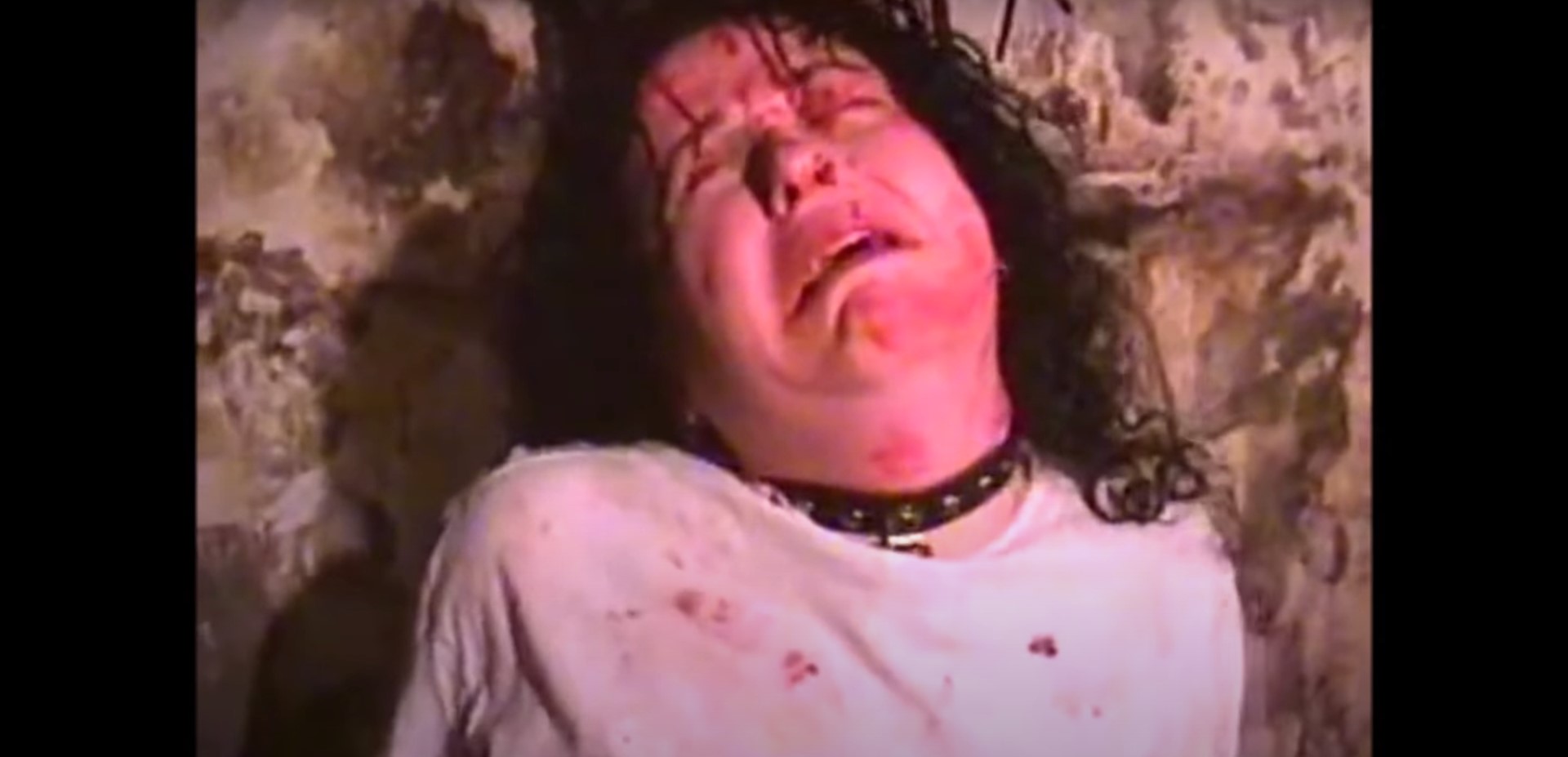
Armed with a digital camcorder and a dark desire to kidnap and brutally torture, rape, and murder random people, deranged serial killers Peter Mountain and his girlfriend Crusty are now a gruesome twosome after the demise of Crusty’s brother Maggot.  The couple’s documentarized carnage continues forward near Pittsburgh where fooling around in metal clubs and on the isolated outskirts of city is balanced out with a healthy dose of basement snuff as body after body after body begins to strain their warped relationship.  What unveils is a descent of their paired destruction as Peter’s rage and undying fascination with female flesh, and internal organs, gaslights Crusty’s simmering and unhinged toxicity.  During the stretch of the Christmas holiday season, the gift of gory packages will be unwrapped and sexualized cookies will be enjoyed before the festive filleting of body parts and December dismemberments trail off into a tale of grim totality. 
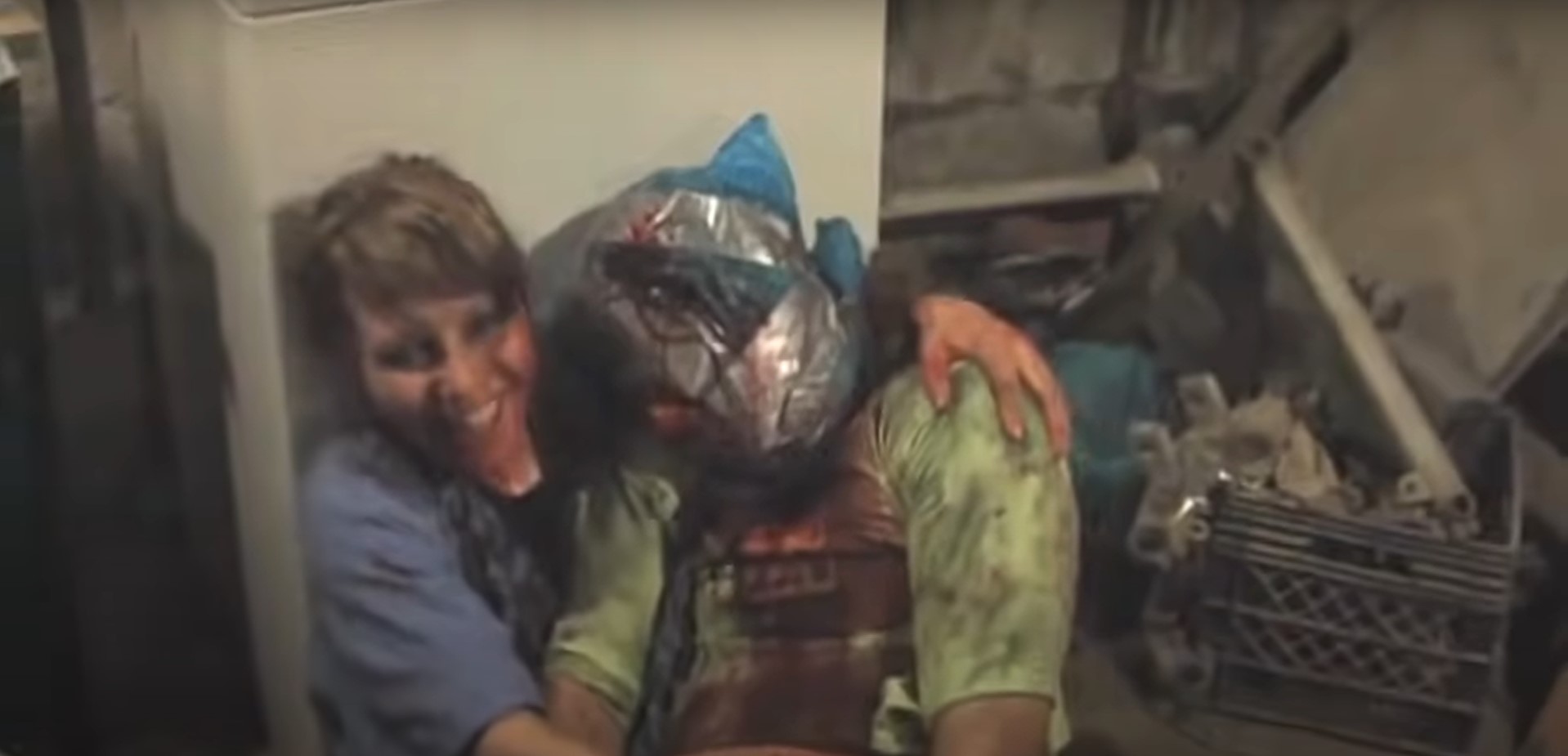
Fred Vogel’s third and final film to shut the book on the story around the atrocious Peter Mountain and his extreme exploitation and degrading of people is back on limited-edition physical media for snuff salivating audiences as “August Underground’s Penance.”  Nothing short of gratuitous ultraviolence, the final chapter of “August Underground” marks another successful viscerally visual installment in a clearly digitized effort, elevating the graphic nature with ooey-gooey detail in a vividly discernible image resolution.  A reuniting four years later between Fred Vogel and his cowriter/costar Cristie Whiles after their collaboration on “August Underground’s Mordum,” the second sequel provides a level of continuity, a very low level at that, not seen between the 2001 series starter and “Mordum.”  Under Vogel’s Toe Tag Pictures banner, the company behind the trilogy, the shock realism filmmaker co-produces the film with wife, Shelby Lyn, and Cristie “Crusty” Whiles and special effects artist Jerami Cruise servce as associate producers. 
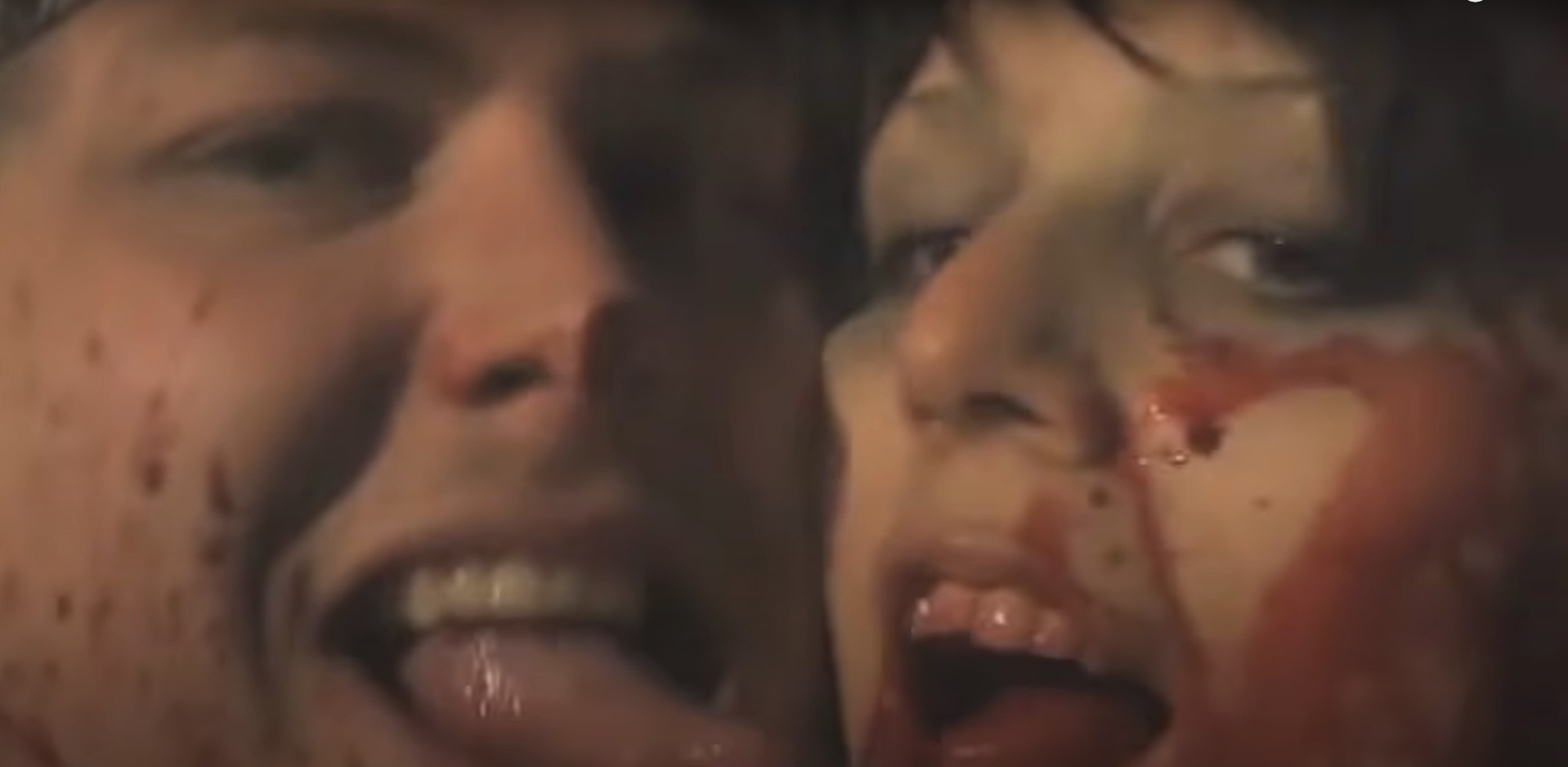
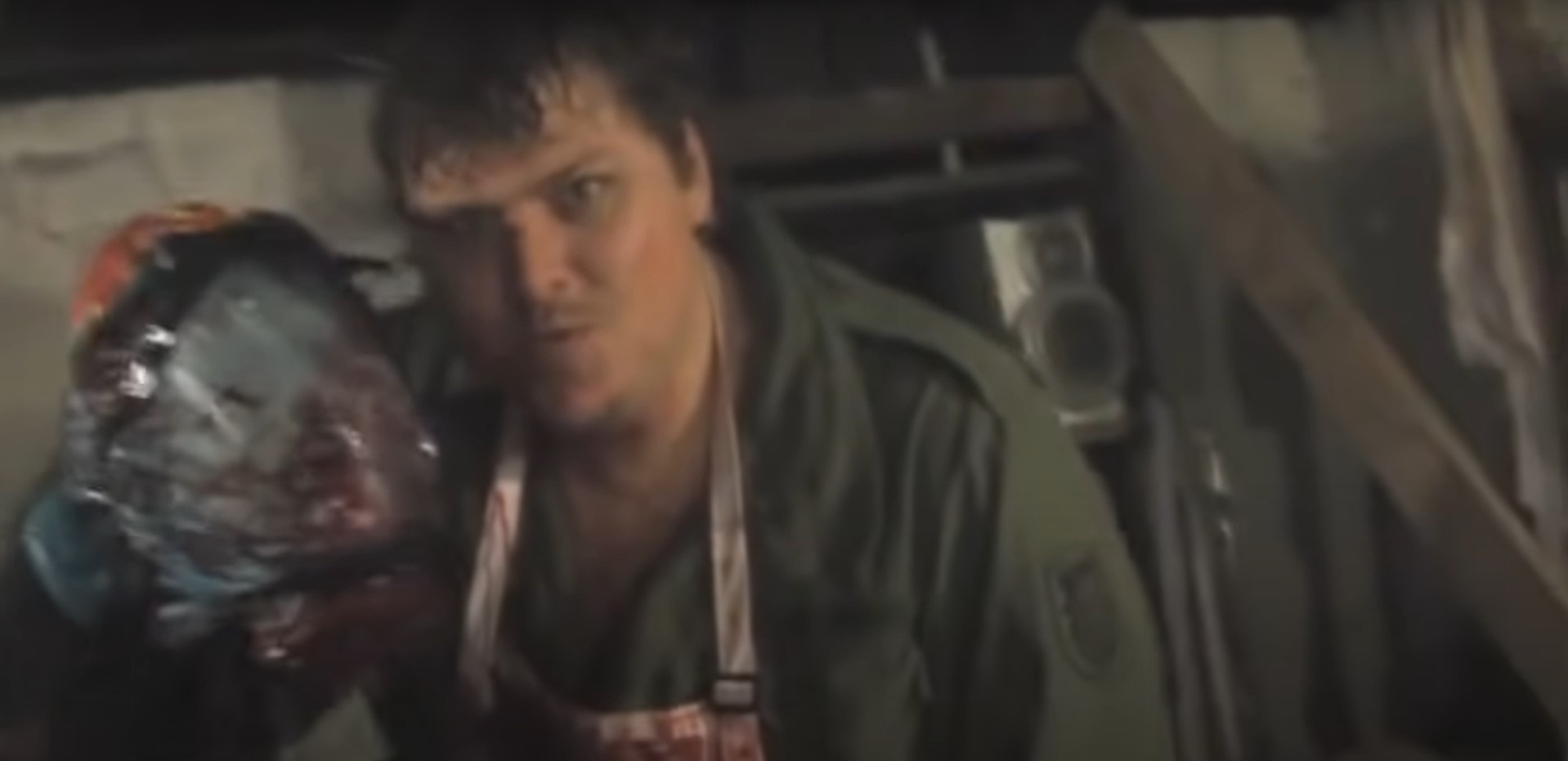
Aforementioned, Peter Vogel and Cristie Whiles lace up yet again for the Peter Mountain and Crusty show of sadism.  Vogel returns as the mania screaming and overall brute Peter Mountain, a juggernauting maverick amongst murderers with no moral principles, a cynical constitution, and a weak-ish stomach that can’t handle his own gutting of bodies as Mountain, like in the first two features, wretches and coughs and nearly loses his lunch in most graphically intense scenes of spilled blood and guts and other appalling perversities.  Whiles’s Crusty is a carbon copy counterpart, a demented love interest under a loveless veneer, but the Crusty character certainly has evolved between “Mordum” and “Penance” as the coquettish amoralities at the beginning devolve shown in an unconventional narrative way with rough-hewn rough cuts that avoid structuring time and guiding in segues.  It also doesn’t help that the two often have screaming matches or are yelling at their lifeless victims to get a better understanding of melting down mutual relationship based on common callousness and, probably, rough sex, just the way they individually like it.  This is how Peter Vogel circumvents a “Mordum” repeat; not that “Mordum” was terrible as it did convey a Mountain, Crusty, and Crusty’s on the suicidal brink brother Maggot breaking down whatever threadbare bond that kept them for killing each other, but “Mordum” departs with uncertainties surrounding the characters in that memorably haunting final sequence.  “Penance” then takes the two remaining nihilists out in the backyard to basically shoots them, figuratively speaking, to put them out of their misery in an artistic way, as if to say, “that’s it.  I’m done.”  Like previous “August Underground” films, killers are centrically focused with not a lot of repeat characters popping in and out (because they’re all being snuffed out by the killers)  but those played victims round with Selby Lyn Vogel, Jeremi Cruise, Anthony Matthews, Rob Steinbruegge, Ed Laughlin, Matt Rizzutto, Autumn Smith, and Trevor Collins.
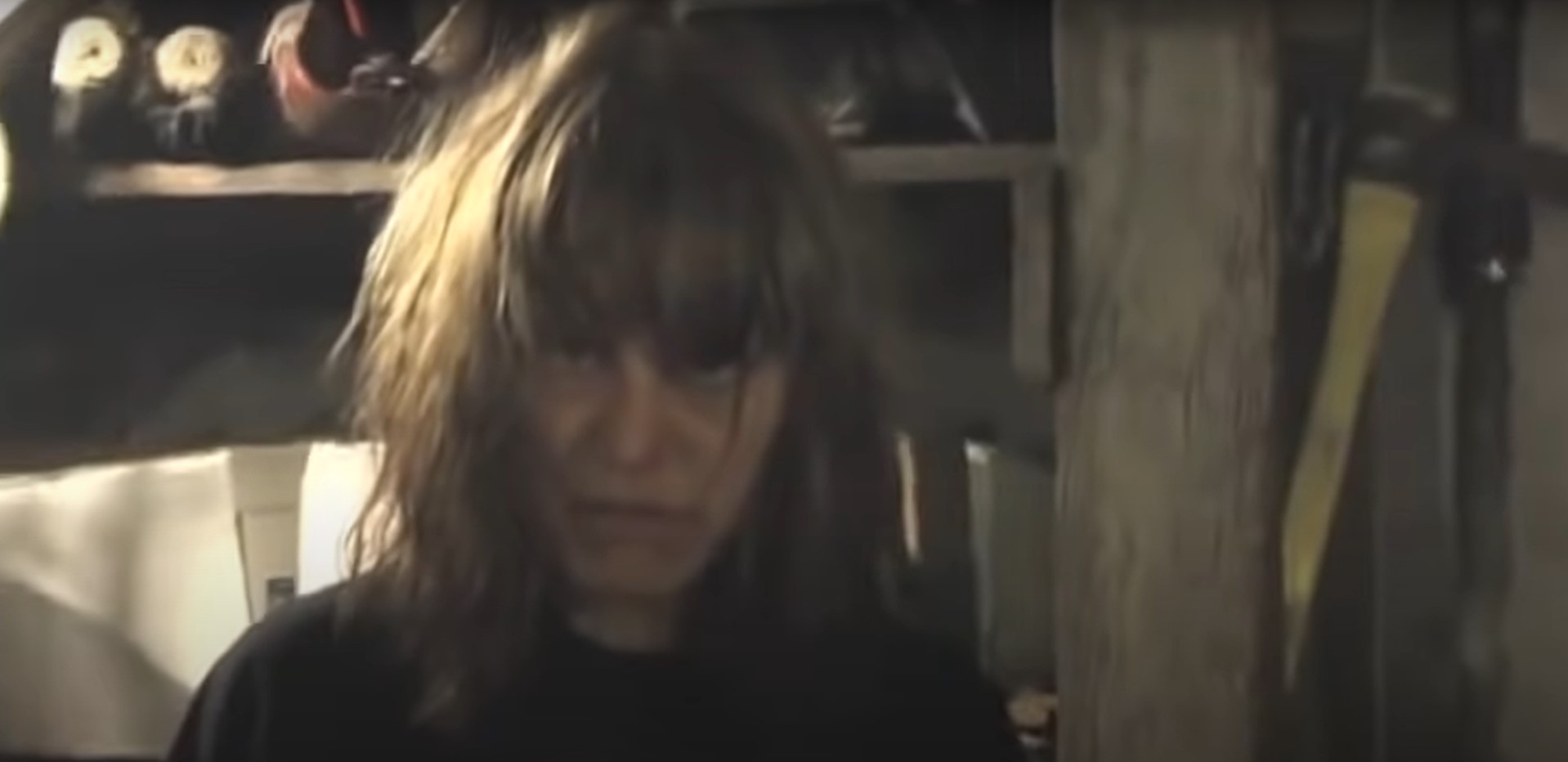
While Vogel and Whiles psychopathic performances will make your skin crawl, the real star of “Penance” spurts onto the floor, oozes from the entrails, and has a nasty crunch sound when being sawed into.  I’m speaking of none other than Jerami Cruise’s nauseating blood, guts, and all the colorful viscera in between practical effects that extinguish any kind of comfortability you might have had going into the scene.  Animal intestines are once again used to for seamless builds.  The lines between what’s real and what’s not has no definition, is smoothed over well into the folds, or is vaguely blurry at worst that when the cutting, gouging, severing, perforating, slicing, or whatever other harmfully human puncturing wound words come into the scene, your mind is your greatest enemy unable to tell the differences in the gruesomeness acts all of which are accentuated by Vogel’s dry heaves.  While the story itself begins to shutdown “August Underground’s” pseudo snuff run, the third entry is as much as a regurgitation of the previous two installments peppered with noticeable yet minor differences that less often than more separate themselves from each other.  One of the biggest, advantageous differences in “Penance” is the move away from the fuzzy standard definition analog tape and into the digital world with a widescreen ratio camcorder that details more of the ghastly dissections and without any modifications to the camera, a cleaner sense of raw realism is better conveyed. 
I remember a time, not too long ago, when the “August Underground” films were nothing more than rumor, urban legends of the physical media world, lost archetypes of extreme horror seemingly nonexistent to the everyday joe, like me, and only those who are close to Vogel and his Toe Tag family or willing to fork over large amount of money for a long out of print and rate copy were the lucky ones to ever experience the trilogy. Yet, now, we’re living in the golden age of physical media, paradoxically smackdab at the height of new age and ever-growing streaming platforms, and Unearthed Films has released all three films onto a 2-disc Blu-ray and DVD limited collector’s set. The Blu-ray is an AVC encoded, 1080p high-definition, 2K scan on a BD50 while the DVD is a MPEG2 encoded, dual-layered, DVD9. Obviously, switch from tape to digital video makes is a tremendous step for image processing and clarity as “Penance” tops the trilogy with a better pixel resolution, a wider angle (1.78:1 aspect ratio), and much less quality degradation than analog. All the nasty bits and pieces are visual described in great realistic detail in what is an ungraded showing of a full-on display not for the weak of stomach. The raw image, even with all it segued pauses in between scenes, punctuates practicality over the conceptual nihilistic serial killer construct. Unearthed Films preserves that through the looking glass, unfiltered video with more than sufficient capacity. The English language uncompressed PCM 2.0 stereo mirrors the same caliber with a home video disharmony of an onboard camera mic that manages well to create distance where needed also while capturing every innate surrounding sound element, such as the whooshing of passing cars, Mountain’s echoed screams in a confined basement, or the overburdening decibels of daunting death metal. There’s a steady amount of low-level interference too that doesn’t hurt the variable levels of dialogue depending on where the principals are and what they’re doing. Between the Blu-ray and DVD, the hi-def format has more capacity for bonus features with most of the new bonus material on the Blu-ray. What’s on both formats are a new audio commentary by special effects artist Jerami Cruise, producer Shelby Lyn Vogel, director Fred Vogel, and Ultra Violent Magazine editor Art Ettinger, a second commentary with Vogel and editor Logan Tallman, a third commentary with the Toe Tag Team, and a fourth commentary with just Fred Vogel. Also included of both formats are a behind-the-scenes documentary Disemboweled and the feature’s very own commentary track, deleted and extended scenes, music video Poppa Pill – “The Murderer is Back,” music video Rue – “The Locust,” original trailer, and new extended photo gallery and teaser outtakes. Exclusively to the Blu-ray is a conversational interview with editor Logan Tallman, going through the nuts and bolts of the most disturbing scene with Peter Vogel, superfan Rob Steinbruegge’s experience and bit role in “Penance,” a new Zoë Rose Smith, creator of “Zobo with a Shotgun” and editor-in-chief of Ghouls Magazine, interview with Peter Vogel, a second new interview with Peter Vogel Voyage to Perdition with Severed Cinema’s Chris Mayo, a discussion roundtable with Peter Vogel, wife Shelby, Logan Tallman, and Ryan Logsdon moderated by Dave Parker, and Unearthed Films’ Stephen Biro’s new interview with Peter Vogel to wrap it up. The physical presence of the release clearly states its homicidal intentions with the thin cardboard O-slipover of Peter Mountain caressing power of his bound and bloodied victim. The clear Blu-ray Amary case displays new, religious art spoofed cover illustration by San Diego artist Paul Naylor; the religious art also continues on the reverse side of the cover with a marred icon of the Virgin Mary being engulfed by the darkness. With the DVD punch-locked at the right and Blu-ray at the left, there’s really no room for an insert to be crammed in but the silver lining there is the pseudo data-cast captures of notable scenes that are the disc pressed art. Unearthed Films’ release is region A locked (region for the DVD is not listed but assumed to be region 1), is not rated, and has a runtime of 81 minutes.

Last Rites: While ever so slightly different from the previous films, “Penance” is more of the same snuff but in its truest, purest form legally allowed on video. Unearthed Films are match made in a human abattoir, like the tacky peanut butter and bloodred jelly. Their collaborated, limited collector’s set release of “August Underground Penance” is nothing short of phenomenal and, if you’re lucky and quick enough, grab all three before they disappear back into obscurity.

“August Underground’s Penance” on Blu-ray/DVD Combo Set. Purchase Here!

The Home Recordings of a Pure EVIL! “August Underground: Mordum” reviewed! (Unearthed Films / Blu-ray/DVD combo)

“August Underground:  Mordum” Limited Collector’s Edition!

Uncompassionately deranged serial torture and murderer Peter Mountain is back.  Along with his maniacal partner Maggot and his depraved sister Crusty, whose also Peter Mountain’s girlfriend, the terrorizing trio videotape their exploits with no shame and with no end from no matter how mundane to no matter how gruesomely vile.  Rage and lust mix together with sociopathy and psychopathy, resulting in a dangerous combination for whomever crosses their path.  Shocking glimpses of their killing spree reflect through the lens of their camcorder, capturing every kidnap, imprisonment, confinement, rape, mutilation, torture, and eventually murder of their sadomasochistic onslaught onto every random, unlucky soul but with every moment of madness captured, their no so friendly friendship verges ever closer toward a volatile collapse when Maggot and his sister Crusty hook up from time-to-time and the perpetually aggressive juggernaut Peter Mountain is on the brink of breaking more beyond his broken mental state.

The return of Peter Mountain marks the return of shock and gore director Peter Vogel with “August Underground:  Mordum,” the 2003 sequel to Vogel’s unnervingly raw depiction of depravity and exploitation in “August Underground” released two years prior.  Not a traditionally subsequent sequel, “Mordum” is a standalone entry with only the presence return of Peter Mountain to connect the two stories together, but “Mordum” initially didn’t start out as a sequel and only morphed into a feature when Vogel was requested to shoot gruing material for the aptly named death/gore metal band Necrophagia and the band’s lead singer, Frank “Killjoy” Pucci, suggested to turn the material in a follow up film of “August Underground” with Killjoy co-wring alongside Toe Tag Picture’s Vogel, Christie Whiles, Michael Todd Schneider and Jerami Cruise.  What emerged felt like an organic chapter in Peter Mountain’s found footage mausoleum of bloodlust mayhem.  Shot in and around the Pittsburg, Pennsylvania area, “Mordum” is a production of Toe Tag Pictures under executive producer Jerami Cruise.

2001’s “August Underground” brought a terribly raw image to the independent cinema fold that house realistic depictions of the utmost evil and perversion.  So much so, a few of the cast members decided to not use their real names.  For Peter Vogel, a follow up film was like another day walking in the park as a proud papa of his villainous protagonist Peter Mountain, an eclipsingly large and laughing feverishly fiend of a man who preys on the cries and screams of his victims.  “Mordum” introduces us to two new actors into the fold with Christie Whiles, who would reprise Mountain’s girlfriend Crusty in the third Entry “Penance,” and Michael Todd Schneider (“I Never Left the White Room”) as Crusty’s brother Maggot.  It’s not exactly made clear if Maggot is a returning character, the hyena chuckling man behind the character played by pseudonym Allen Peters, or not.  In either way, Whiles and Schneider are equally as vicious on screen as Vogel but invite a whole of a hell a lot more nudity, non-simulated genitalia fondling, and induced vomiting to give “Mordum” that extra mile of stomach-churning, eye-adverting discomfort.  As the fluids deluge in scene-after-scene of massacre depictions, the triple threat come across a like-minded individual, played by the person who very much encourage and inspired for the sequel.  The late Frank Pucci, aka Killjoy, the front man for Necrophagia plays an equal with a slaughter shed full of rotting, putrid corpses, beheaded babies with maggots, and prime meat tied and lying in wait for him to butcher as his leisure.  “Mordum” offers up a slew of victims in different abattoir and snuff scenarios, casted with a rising makeup artist in a pre-crew acting role Midian Crosby (with makeup credits including “Halloween Ends,” “Cop Car,” and “Guardians of the Galaxy Vol. 3”) and Elmo Painter in the vomit and viscera evacuation scene, Rick Kundrach and Tim Grubjesik as unfortunate junkies, as well as Chris Shaw, Shelby Lyn Vogel, Allana Sleeth, Dave Brown, Erika Schultz a few pseudonyms in Daisy, M. Kadath, and E. Jay, and with Ultra Violent Magazine editor Art Ettinger.

Similar to the first film, “Mordum” has no plot in it’s a series of found footage flashes in the day in the life of a serial killer.  This approach makes what you’re having to behold for 70-minutes that much more plausible and realistic and what you’re seeing is quintessential gore porn.  “Saw” wasn’t the basis of the coined term.  No, my sanguine licking friends.  Fred Vogel pioneered that course three years earlier with his sick and twisted show of seminal underground.  The only reason why Vogel wasn’t at the top of the gore porn list was because none of his films had mainstream theatrical runs.  However, literally, “Mordum” contains that borderline porn element of exposed and molested nudity, the below the waste naughty parts that don’t see a tone of skin-to-skin action, and there’s certainly enough gore to go around and around and around and around again.  Some of those smaller gore elements were real, such as skin cutting.  Another element that makes “Mordum” effectively morbid is the special effects work by Vogel, Jerami Cruise (who has gone on to do major studio films from his extreme horror indies), and the late Ryan Nicholson (director of “Gutterballs” and who also was a special effects supervisor on a wide scope of studio and indie films) who provided many of the dismembered and grimed up dummy props framed through a standard definition, commercial camcorder for the Necrophagia music video.  If no story arises, one hell of a damn good show must come out of the horrific footage and Peter Vogel and the Toe Tag team achieve diabolical decadence with stomach content-emptying pizzazz.

Unearthed Films and Toe Tag Pictures have teamed up to release limited edition releases of Peter Vogel’s “August Underground” trilogy.  “Mordum” receives the royal physical release treatment with a 2-disc, Blu-ray/DVD, Limited Collector’s Edition.  The Blu-ray is an AVC encoded, 1080p high-definition, BD50 can only be so detailed with a shaky, consumer cam but the image could not look any better, or gruesome.  Presented in a pillarbox framed 1.33:1 aspect ratio, RGB color model leans more toward warmer reds, yellows, and greens so you don’t get an authentic color scheme on objects or skin tones.  Darker scenes render nicely enough despite the MiniDV magnetic tape’s e-interference compression artefacts and some tracking lines onto digital recording that makes the image jittery/jumpy, but all the in-your-face closeups, low-quality picture quality adds to “Mordum’s” rancid-sensing realism.  The English PCM 2.0 audio track has copious clarity for its unrefined, raw built-in mic recording that comes with some crackling and echoing if the decibels rise during screaming or shouting and the built-in can’t handle the received input. Depth is lossy with the range of the recording and range doesn’t factor into play as dialogue pushes through whereas the low-budget constraints leave the action audibility left to the imagination. Subtitles are not available on either format. The limited-edition regurgitation of the sequel warrants a ton of special features in its inauguration to the mainstream masses. Both formats share most of the extras but the Blu-ray features many more. Brief Dave Fogel touchpoints on certain aspects of “Mordum’s” obscure longevity Mordum Lives!, the climax’s most disturbing visuals The Most Disturbing Scene, and an ode to Necrophagia’s front man Remembering Killjoy dive into those specific nuts and bolts of involvement, a new interview with Michael “Maggot” Schneider A Family Affair of Love and Hate which also includes The Ravenous music video from Necrophagia, offering some more cut scene insight, a sit-down interview with between Unearthed Film’s Stephen Biro and Tog Tag’s Jerami Cruise on the gruesome special effects work on a budget of literally what was lying around, Necrophagia’s promotional video of Rue Morgue Disciple, a new Rue Morge Disciple Behind-the-Scenes gallery, deleted and extended scenes that prolong the violence of the most graphic, extreme scenes and add another level of behind-doors sexual deviation to near pornographic heights, the U.S. premiere from 2003, a brand new extensive photo gallery, original animation work, and trailers while the Blu-ray includes these features, also on the hi-def disc is a new interview with Ultra-Violent’s editor Art Ettinger and Allana Bleeth who both have small roles in the film, a new interview with Zobo With A Shotgun’s Zoë Rose Smith interview director Fred Vogel, filmmaker Dave Parker interviews Vogel as well, Severed Cinema interviews Vogel too in Snuff Purgatory, a new mockumentary and its trailer for Sickcess: A Necrophagia, and a Zombie Demo from Flashback Weekend circa 2004. On top of the special feature filth, the physical aspects of the release come in a clear and traditional Blu-ray snapper case housed inside a cardboard slipcover showcasing the infamously disturbing scene. The same scene is also illustrated on the Blu-rays cover art with reverse cover art providing a rough-and-ready composition alternative of the same scene. Both disc arts are pressed with camcorder blurry images of depicted carnage. The region A/Region 1 locked Unearthed Films combo set has a runtime 91 minutes and comes, obviously, not rated. If looking for the original 3 from Hell, Peter Vogel’s “August Underground: Mordum” assembles three monsters to ever savage the screen with their horrible, unspeakable acts of sadism. The unabashed Unearthed Films rightfully doesn’t lubricate our hole of curiosity, sodomizing our prurience with the metallic taste of blood and madness.

“August Underground:  Mordum” Limited Collector’s Edition!

Cannibals’ EVIL Break a Family’s Bond. “Blood for Flesh” reviewed! (SRS Cinema / DVD)


“Blood for Flesh” has a healthy amount of both!

Primitive cannibals sexually violate a brother and sister by a campfire ritual while feasting on entrails.  A family in the throes of hatred and forbidden incest is torn apart between death and mercy.  When these two powerful moments spur friction amongst the family, blood and betrayal runs like an unstoppable torrent.  Animalistic urges take over and neither brother, sister, or father are safe from the cannibals or each other in a landscape of barren and sociopathic madness.  Who will survive and come out on top of the internal upheaval when bloodlust is at its highest?

“Sangre Para la Carne,” or for the single-lingual, English-comprehending audiences, “Blood for Flesh,” is the 2019 ultraviolent and in your face gore-and-shock short-feature film from Mexican director Alex Hernández.  Though completed in 2019, “Blood for Flesh” gains traction into the at-home market three years later, finding distribution on multiple independent physical media distributors as well as video streaming services.  In his debut directorial, which doesn’t list the filmmaker as the screenwriter but is likely the architect of its abstract, Hernández caught the eye of another extreme auteur in “House of the Flesh Mannequins” and “Xpiation” director Domiziano Cristopharo and Italian-based TetroVideo to lift “Blood for Flesh,” fitting right into TetroVideo’s cache of erotic and extreme horror, into production and home video distribution. Shot in the arid depths of Tlaxcala, Mexico, labeled the epicenter in internationally trafficking female sex slaves to the United States, “Blood for Flesh” deluges itself with more unsavoriness, produced by Porfirio Hernández and Rodrigo Tellez Pérez.

To put it simply, “Blood for Flesh” is madness of unchecked immorality and to make something this deranged, Hernández would have needed a likeminded cast small enough to pull off callous scenes of rape, torture, and merciless death as well as aberrant scenes of incest surrounding three members of a truly messed up family. Beginning with the patriarch who is only know as the Father, played by Juan Manuel Martínez, whose subsequently becomes the violently persecuted by his own spawn after groveling at his daughter’s feet in a moment of bawling seeking forgiveness. Bound and gagged, beaten, and hung upside, the Father receives no mercy from his children and there’s no real revelation to why he’s become a subject of torture. Brother (Luis Navarro) and Sister (Erika López) fashion a complex relationship of courtship and collusion. As the Brother notes more than once in a divulging of truth the longing for his sister and his regretful reluctance in continuing the mistreatment of his father, its the Sister who seemingly has the upper hand, the hypnotic spell, over her love stricken brother and as Hernández dives into Sister’s unhinged scenes, especially where she marks her face and body with makeup, we come to realize that Sister just might not be right in the old cabeza. Now, how the cannibals – played by Christian Camara, Daniel Cruz, Enrique Diaz Duran, Aldo Palacios, and Marisela Plaza – fold into the family’s unraveling is a bit of a mystery but I’d like to think their naked savagery represents the rupture and hate between family and the cannibalism is kind of this dog-eat-dog mentality to come out on top by exploiting the other.

No matter which way you slice it, no matter how sharp the blade divides the skin, the muscle, the meat, or the bone, making sense of “Blood for Flesh” will never, ever happen as the almost an hour runtime feature, setup into chapters, is a bundle of biting brutality possibly representing a wide variety of real-world complications. The non-linear structure formulates no sensical path from beginning to end as you’re plopped right into the family’s madness from minute one and though I’m no stranger to undisguised abstract art in indie film, I can usually piece together to symbolic impressions or the weave a clear justification for most scenes in arthouse horror. With “Blood for Flesh,” I’m about as lost as a 5-year-old in a mall whose wander off from his inattentive shopaholic mother perusing the hot deal clothes racks at JCPenney’s the day after Christmas. I watch as Erika López strip away her clothes and her character’s mortality in every scene, I ponder and consider Juan Manuel Martínez’s Father’s compulsive reactions to seek forgiveness as well as to be vindictive toward his off-color and off-their-rocker offspring, and I am beguiled by Luis Navarro’s need to be inside his sister and, yet I feel nowhere near grounded to “Blood for Flesh’s” message if there is even one to be grounded to. Maybe we’re not supposed to connect with such corrosive content in what’s supposed to be just purely unabated shock content to rock the core of typicality. The cannibal scenes seem to be just an object of the director’s fascination with the ugly side of tribal horrors in a stereotyped rendition that depict them as nothing more than basal beasts that take what they want without an out of compassion and my mind continues to lean toward that high degree of barbarism to equate to a family built upon by hate, loathing, and individual interests.

“Blood for Flesh” could have easily fit in the catalogue of other extreme and underground horror labels, but this experimental purge of images and sins has found a home at SRS Cinema on the company’s Nightmare Fuel banner DVD distributed by MVD Visual. The single layer, region free, and unrated DVD is presented in a widescreen 1.85:1 aspect ratio that decompresses content around 5-6 Mbps, hovering around par for the course when considering DVD picture quality. Generally, the cinematography is bleak, like it’s content, with muted coloring or shot in the dark to avoid any colorful hues. Only when stark red filters are used, which is only one or two scenes, is when color unloads in every inch and corner of the frame. There’s some aliasing and banding in certain scenes that cause momentary distortion that make it hard to delineate exactly what you’re looking act – is it an open and bloody slit or gash or is a cheeseburger? That’s always a fun game to play. The Spanish language audio tracks come in two formats – a PCM Stereo 2.0 and a Dolby Digital 2.0. The PCM is, again, muted with a lack of robust quality the Dolby Digital has much more vigor in all the sub-tracks. Unfortunately, the pieced together soundbites lack creativity and are poorly spliced together that continuously drop off in an instant on the backend. The forced English subtitles synch okay and are captioned well. Bonus features include a filmmaker’s commentary track, interviews with the cast that come with awful Spanglish translations, and the film’s trailer. If Domiziano Cristopharo saw something unique in Alex Hernández, I have yet to see it as I’m not sold on the director’s fringe horror film that aims to just be randomize acts of violence for 59 minutes.

“Blood for Flesh” has a healthy amount of both!

The Unspeakable Evil That Drugs Do to Your Body! “Red Krokodil” review!


“Krokodil is a homemade drug. It combines codeine, lighter fluids, gasoline, paint thinner, alcohol, and other ingredients.” This fast growing Russian street drug gnaws along the inner layers of one man’s insides and clawing its way out. Also, the drug deteriorates his mental stability, invigorating extreme hallucinations from his damaged cerebral equilibrium and manifesting faux body images of himself as well as inviting humanoid demons into his tattered reality. The powerful opioid, if fabricated haphazardly, induces prolonged and deathly ill effects, both physical and mental, and as his body has survived in a post-nuclear world, his mind is as much of a ramshackle as the rest of the world is in ruin. As he spirals down, out of control, through the opioid rabbit hole, he becomes only a shell of himself, transforming into the purest toxicity of the drug that creates alligator scale-like sores over portions of his body.

The need to put the definition of Krokodil” first and foremost, in front of the plot summary above, felt necessary. Director Domiziano Christopharo made it essential to do the same prior to the credits of his 2012 film “Red Krokodil.” To the average joe, the very mention of “krokodil” means nothing other than a seemingly skewed, alternate version of the English word crocodile, but the gore and shock director, best known for his debut work “House of Flesh Mannequins,” wanted the background behind the street drug to sink in, to be injected, to be snorted, and to be smoked before audiences continue with their trip through the breakup of the body. Based off a script written by Francesco Scardone, the Italian director had set the stage with his grippingly ghastly tale telling talents toward the dominion of body horror combined with ample psychological manipulation from substance abuse and while Christopharo is no David Cronenberg, the eclectic filmmaker cycles the story through a poetic flow with mostly an off-screen monologue approach that gives glimpses of a degenerative mindset.

Co-producer of the film, Brock Madson, also stars as the withering drug addict. There are hints Madson plays the character named Arthur, but the film only credits the character as simply him, and theoretically, that’s proportionate to the storyline staged as a post-apocalyptic world where it’s just him, ensnared and isolated. The role’s non-verbal role leaves Madson to go full-throttle in physicality with a semi-to-fully nude performance and he maintains an animated disconcerting fear and aloof glee whenever the moods start to swing. For most of the duration, Madson is solo, but a couple of minor characters, fabricated by his addiction, freakishly gloom over him. Viktor Karam, as the Bunny Man, and Valerio Cassa, as the Monster, positions themselves as enduring internal calamities that plague the Madson’s character.

“Red Krokodil” is laced with themes and symbolism, especially in a religious sense with the resurrection of Jesus Christ that parallels the trials and tribulations of the addict, mainly with going through the withdrawals. In order to save himself to be reborn, he must first sacrifice himself and Madson literally dons the crown of thorns and self-inflicts a stake through his feet. However, this self-crucification is all in his head, but when he awakes he’s able to ignore the heavily influential calls of the krokodil. Christapharo had kept the addicts apartment a dull, colorless prison, growing with filth and decay, but once the addict has saved himself, the room brightens, the outside sky has illuminated, and the near-death abuser has a little life left to be jovial, but to keep the grim themed tone against this man’s struggle to live through strife, Christapharo invokes false hope that ultimately becomes the addict’s concreted freedom from it all. The addict’s inner monologue goes through the steps how recovery, rekindling good memories from the past and wanting to not feel himself as it’s painful to feel your own skin be on fire from the corrosive drug, but rather be a personification of the wind, sun, water, or the grass, an element of the film that touches upon how humans mistreat the Earth much like they mistreat their bodies.

Unearthed Films and MVDVisual present “Red Krokodil” on a director’s cut, high definition, 1080p Blu-ray. Sporting a macabre, yet gorgeously illustrated cover, the release also has the same attributes in the image quality presented in a widescreen 1.85:1 aspect ratio. Like most film distributed by Unearthed Films, the grime and the disgusting reign as supreme and “Red Krokodil” has ample muck with bleeding orifices and an unappetizing uncleanliness about it, but the picture quality is clean and detailed with very little electrical interference. Color palettes, when the addict dreams to escape to nature, is a potent reminder that “Red Krokodil” isn’t just transmitting two-toned, gray and black, scale and displays exquisite landscapes. Even the computer generated Chernobyl like waste land of a city going up in an atomic fashion is well done with only a slightly glossy feel. The Dolby Digital 2.0 track broods with the ideal amount of LFE from composer Alexander Cimini that’s not acutely jarring, but still manages to showcase the detriment. Bonus material includes an alternate musical ending, deleted scenes, photo gallery, the CGI test of the nuclear explosion, teaser trailer, two theatrical trailers, and Unearthed Films tailer reels. “Red Krokodil” is a total out of body experience. Overwhelmingly brutal with muscular and mental breakdown, director Domiziano Christapharo’s indie picture of ill-effects of drug abuse has done what “Requiem for a Dream” has done for the mainstream with the matter-of-fact implication that manufactured street drugs are the purest evil that we could voluntarily do to sabotage ourselves.

Buy “Red Krokodil” from Amazon today!

It’s Bloggin’ Evil is Seeking EVIL WRITERS!

Its Bloggin’ Evil needs a few good writers to keep website fresh and up to date with the latest and greatest of horror, thrillers, and exploitation. I’m looking for writers who are 18 or older with some writing experience in a blog atmosphere. I would run this blog all by myself if I could, but at the moment I can’t and need your help!

Please, send me a writing sample at TheEvilBlogger@gmx.com along with your name, age, and your favorite horror movie.

Also, I can’t pay you. I’m sorry. But think of this blog as a great entry level, internship, volunteer service to build up your resume and to fine tune your writing skills. Hell, if I can, I might hook you up with a screener or two. Maybe even an interview with an indie movie director and/or actor. Who knows. If you can currently provide your own material – whether new theatrical movies, retro movies, Op-eds, horror literature, horror gaming, etc – let me know in your submission e-mail as well.