Welcome Proclaimed EVIL Into Your Home! “Video Psycho” reviewed! (SRS Cinema / Blu-ray)

“Video Psycho” on Blu-ray and DVD home video!

On his way back home, Jason picks up a Ryan, a hitchhiker looking for a new start in town, goaled to achieve three things:  a place to call his own, to obtain a job that pays minimum wage, and to find a girlfriend.  Empathetic to Ryan’s new beginnings having gone through himself, Jason invites the hopeful drifter to stay at his shared home with girlfriend Julie and little sister Kylie.  One night drinking between Jason and Ryan, Ryan confesses to killing a man and even delivers video proof with his own recorded snuff film the act.  Disregarding the video and Ryan’s confession immediately as a joke, Jason lets the man stay until another snuff video involving someone Jason knows puts Ryan in the driver’s seat that could set up Jason as the suspect.  Weeks go by and Ryan basically has the run of the house with Kylie and Julie being fed up with his intrusion and Jason’s illogical reasoning for continuing to let him stay.  With Kylie in his romantic sight, Ryan is on his path to achieve his goals. 

A SOV-horror that proves you should never pickup strange hitchhikers and also proves that there are really unsuspecting, trusting, and overall dumb people out there willing to open up themselves, their home, and their family members to complete strangers, even after adamantly admitting to their heinous crimes.  That’s the essential takeaway for Del Kary’s directed, shot-on-video thriller “Video Psycho,” co-written by Kary and Pete Jacelone, a long independent horror producer and writer who began his writing career on the 1997 film and went on to write an abundant of horror you’ve likely never heard of, such as the “Psycho Sisters” series, “The Killer Clown Meets the Candy Man,” and the eyebrow raising “Duck!  The Carbine High Massacre.”  Kary’s career is not as lustrously tarnished with two films in the late 90s, including this one and “Snuff Perversions:  Bizarre Cases of Death,” and not another until last year’s “Cheater, Cheater,” a slasher based off the childish rhyme cheater, cheater pumpkin eater.  Kary solely produces the PsYChO Films production, shot in Yakima, Washington. 

“Video Psycho” embodies that home movie aesthetic that was shot with poor equipment but amongst good friends, and probably a few beers too.  The cast is compromised a bunch of one-and-done actors with Kary’s film being their only credit as the story follows more from the perspective of serial killer Ryan, played by James Paulson.  With a soul patch, poofy dark features, and thick eyebrows that slant down in a malevolence manner, Paulson contains that judgy general appearance of a psychopath and distills apathetic patterns that are nonchalant and blunt.  While Paulson thrives as killer, Jason is the daftest, most gullible person to ever live in the cinematic universe.  Now, I’m not saying actor Adam Kraatz is the blame, performance has nothing to do with the way the character is written by Kary and Jacelone and that’s their own doing, but Jason’s inactivity to do anything or warn anyone is more frightening than the antagonist.  Girlfriend Julie (DeAnna Harrison) and baby sister Kylie (Jennifer Jordan) also can’t understand the man of the house’s submissiveness to a complete stranger who has this power over him.  When they both begin to question his authority and rational when weeks past and this random guy from off the road is still hanging around, Jason reverse psychologizes the two people closest to him which makes us wonder who the real villain is in the story.  The only other characters with substance are Kylie’s boyfriend Rick (Jared Treser), who has little impact being a buffer between sociopath Ryan and his tender beloved Kylie, and video store manager Steve (Art Molina), who does a better buffering job deflecting Ryan’s unwanted and stalkerish advances until Ryan has his way with him.  Outside the principal lot, the rest of the cast fills in with Ryan’s videoed victims, most come in a single montage of analog recorded murder, with Jason Alvord, Chris Valencia, Shannon Dimickl Brandy Jordan, Jack Meikle, Heidi Munson, and Charles Summons.

Lo-fi and dry, “Video Psycho” presents an invariability that ultimately kills any intrigue, tension, and fear.  With the cast being what it is, an adequate of inexperience, the narrative needed a lift to cannon itself beyond the routine of motiveless stranglers who kills for the love of killing.  Kary and Jacelone’s attempted twist for high impact is Ryan showcasing his snuff body of work to newfound friend and host Jason and for Jason to think nothing of it and let the maniac stay with him and his closest loved ones.  At this point, audiences will slap their foreheads so hard aspirin couldn’t handle the amount of pain to follow and attention to the rest of the story will begin to wane as disbelief ad improbability start to set in like a bad side effect of an illicit drug that clearly has said side effects.  Acts two and three barely blip on the developmental and dynamic activity meter between the characters conversations of the Ryan confoundment.  Essentially, they all talk about the inaction of others and give the benefit of doubt rather than taking action themselves to alleviate Ryan’s squatting.  Ryan’s the other character enacting real change during his weeks’ stay by videotaping every count like it’s his last and insidiously inflicting himself creepily toward Kylie.  Kary does output a few notable scenes of unsettlingly imagery, such as Kylie’s haunting dream of Ryan calling her name and getting closer to her bed as she sleeps while in strobe light and with the lo-fi videotape quality, the effect is definitely dream surreal, at least that is what “Video Psycho” has going for it.

SRS Cinema’s newly restored and re-mastered Blu-ray edition is on AVC encoded onto a 25GB BD-R with 1080p high-definition resolution.  Not that the pixel count really matters with “Video Psycho” and it’s lo-fi videotape that’s neutralizes textures and color and comes with its share of interlacing and tracking issues.  To worry about compression problems, to which there is none within the uncomplex file and its size used for the codec, would be a waste of mental and visual space with an image that does delineate objects to differentiate, implies true hue, and does the job of lower grade, SOV-horror with authentic commercial SOV-qualities of home S-VHS camcorders.  SRS Cinema never really cared about being the picture of health when it comes to quality, so this isn’t off brand for their content and schtick but does heavily play more into the little-known obscurity of home-grown thrillers within its full frame 1.33:1 aspect ratio.  The English mono track offers parallel quality to the video with a static and lo-fi quality that won’t have the pithy impact of a robust and all-inclusive surround sound or even stereo.  Kary’s produced in minor key minimalism and dread score is one of the element’s that be elevated. Dialogue’s hit-or-miss with clarity that’s often impeded by the said interference and poor mic placement, or just the intrinsic issues of an on-board mic.  There are no subtitles available.  With poor A/V quality, why release this film on Blu-ray?  The answer is simply because of the wide-ranging special features that include interviews with the actors who play Ryan’s on-screen and video victims, such as Art Molina, Jennifer Jordan, and Adam Kraatz.  There’s also a feature paralleling commentary track, behind-the-scenes rehearsal footage, deleted scenes, alternate takes, and outtakes.  Plus, the official and teaser trailer along with additional SRS Cinema previews.  The company continues to commission some pretty rad artwork and that is also true here with Belgium graphic artist STEMO who electric saturations of purple, red, pink and blue make for a eye-catching and intriguing roadside killer artwork, even if a bit literal with a thumb up hitchhiker holding a video camera on the side of a blood soaked road in the foreground.  The artwork fits snuggly in between the film layer of a standard Blu-ray Amaray and the disc is pressed with the same front cover image.  The 75-minute feature comes not rated and the Blu-ray is available region free.

Last Rites: An unremarkable, home brewed, strangler picture with little to say, “Video Psycho” has unimaginative idiocy with characters and a narrative conclusion that can be seen a mile away, leaving the SRS Cinema’s title worth only to watch because of its catfishing artwork.

“Video Psycho” on Blu-ray and DVD home video!

God Works in Miracles, Man Works in EVILs. “Immaculate” reviewed! (Neon / Blu-ray)

Mary Didn’t Have This Much Trouble. “Immaculate” on Blu-ray!

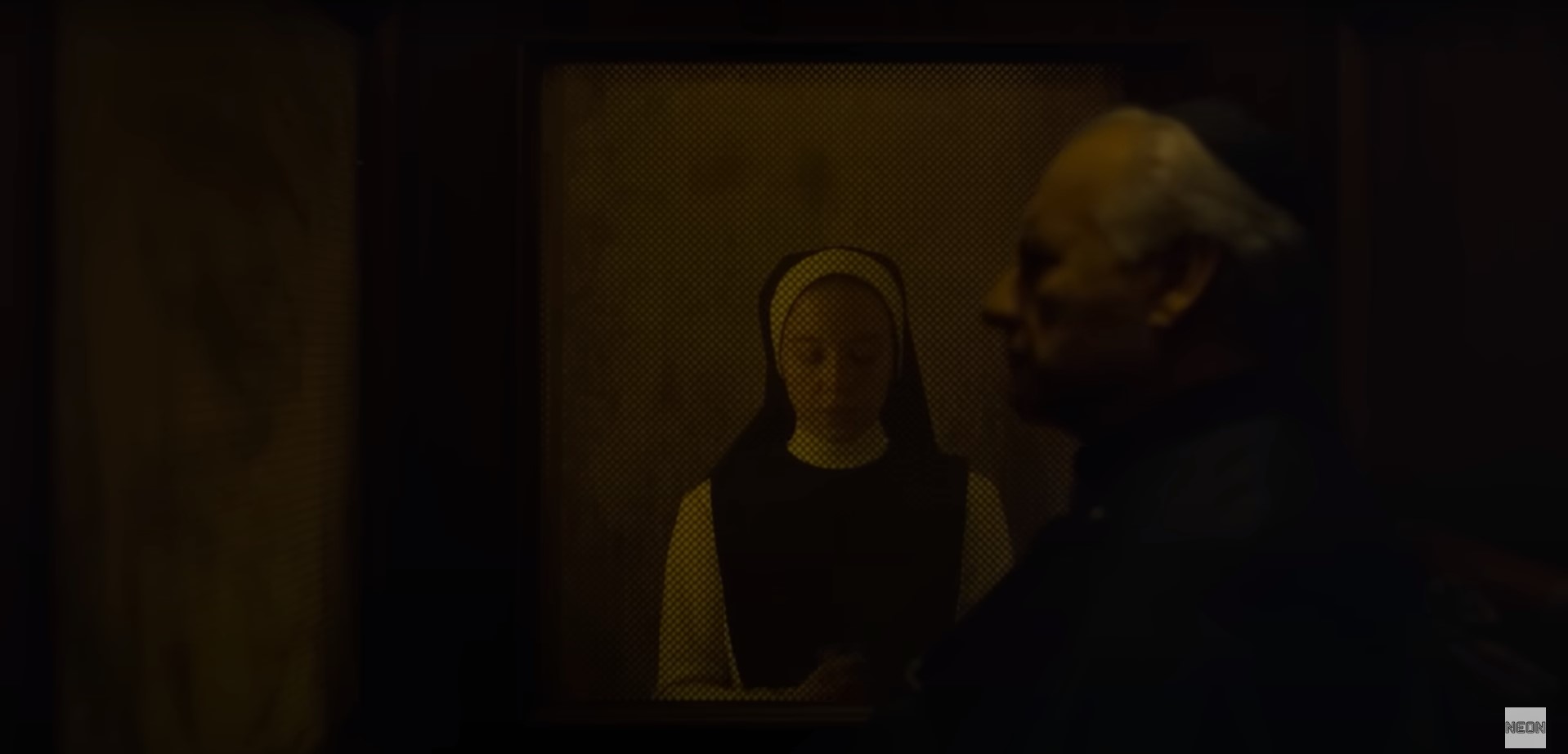
Devout American nun, Sister Cecilia, has been appointed a position in the Italian countryside, a historical convent where terminally ill nuns live in the sisterly comfort of hospice.  Feeling blessed for the opportunity to serve and her faith remaining second to none, the young nun believes she found her true calling and takes her devotional vows in the eyes of God and Jesus Christ, amongst other young nuns in confirmation.   During her training of changing out bedpans and beheading chickens for meals, an uneasiness washes over Cecilia ever since the night of her confirmation reception and being granted to behold one of the stakes that was impaled through the hand of Christ.  As if by miracle, an explanation suddenly and terrifyingly reveals itself not only to her complete shock but the entire convent when she’s discovered to be pregnant through immaculate conception.  As weeks turns to months, Cecilia is forced to focus on baby instead of chores but there’s something dark and malevolent happening behind the convent doors that result in her unable to leave the convent grounds, fellow outspoken nuns disappear, and one sister commits suicide.  The once blessed opportunity has turned into unimaginable terror with no way out. 

Sydney Sweeney is so hot right now.  With her provocative success on HBO’s take of youth and vices in “Euphoria” and a nihilistic teenage daughter in the same premium channel’s series, “The White Lotus, the now 26-year-old Washington state-born actress has also peppered her career with horror films, even at a childish age with her first appearance, a minor role, in a comedy-horror “ZMD:  Zombies of Mass Destruction” and continuing her fresh and new vocation with notable parts directed by notable directors, such as John Carpenter’s “The Ward” and Tibor Takács “Spiders,” that would subsequently offshoot into principal leads of less heeded, moderately successful thrillers when in adulthood with “Along Came the Devil,” “Dead Ant,” and “Nocturne.”  Her latest venture is one she became personally invested in, a modern-day nunsploitation titled “Immaculate,” reteaming Sweeney with her 2021 “The Voyeurs’” writer-director Michael Mohan at the helm of their latest collaborative effort.  Mohan, however, did not write the film with feature film newcomer Andrew Lobel taking the job that would take a decade to fruition once Sweeney, who auditioned for the role when she was 17 years old, made it her passion project to see it come to life  Alongside Sweeney producing is Ben Shafer, Riccardo Neri, Michael Heimler, David Bernard, Jonathan Davino, and Teddy Schwarzman with Neon distributing the Black Bear presentation of the Fifty-Fifty Films and Middle Child Films coproduction. 

Sweeney exacts the very definition of virginal innocence, a small-town girl with a miraculous backstory that nearly cost her her life.  As a sincerely devout Catholic in Sister Cecelia, Sweeney must shape up an intake of naivety that blinds her to the subtle sinisterism amassing around her.  To do that, a medley of personalities must dupe her, sway her, disparage her, and comfort her to keep the character balanced before the blindsiding shock that surprises her with a twisted misconception and exploitation of God theme. Heading up the mix of madness is the convent’s resident priest, Father Sal Tedeschi, played by Spanish actor Álvaro Morte, indoctrinating a warm welcome as a guise for advantageous deceptiveness, but for what, we yet don’t yet know.  The alarming setup pins Cecelia to the convent grounds, surrounded by equally unconscionable characters in an insistent Cardinal Franco Meroa (Giorgio Colangeli), a benignly sweet Mother Superior (Dora Romano), and a disparaging Sister Isabelle (Giulia Heathfield Di Renzi”), and with little options of escape, or even allies within the walls, Cecelia is truly alone against a rogue Catholic sect that seeks to resurrect Christ in an unconventional and unnatural way against Canon law.  Cecelia’s arc fully embraces the change through Sweeney’s rather transfigured understanding of the religious institution Cecelia devotes her life to and, in the same breath, the nun keeps with the organization’s traditional principles of God’s will and not man’s interference and must be the righteous hand of wrath.  “Immaculate’s” cast rounds out with Benedetta Porcaroli, Giampiero Judica, Giuseppe Lo Piccolo, and Simona Tabasco, who has a “White Lotus” connection with Sydney Sweeney.

If you’re like me and avoid most trailers, reviews, or spoilers to try and keep an unbiased opinion, you may be taken aback by “Immaculate’s” gargantuan twist that goes against everything you may know and believe about the Catholic Church’s dogma and principles.  Granted, several non-Catholics likely believe the Church is corrupt and with recent years’ newsworthy scandals, those Church cynics’ fire has had a continuous stream of fueling fodder.  “Immaculate” plays into the fear, pessimism, and beyond reproach suspicion by subverting religion as a false façade and integrates unlikely, go-against-the-grain coupled themes of genetics tampering, bypassing God, murdering in His name, and even exploiting the Catholic hierarchy with slivers of patriarchal governance over a woman’s body.  We get the latter from the very first opening sequence of Cecelia having just arrived in Italy and is brought before two custom officials who remark, in Italian in order for her now to understand, that her religious vocation to be obedience, impoverished, and chaste wastes her youthful beauty. Then again, “Immaculate” is not beautiful; it’s grotesque, perverted, and shocking and at the core, a purity that’s being sullied by deranged power and evil enlightenments.  Cecelia represents a beacon of hope in a maelstrom of immorality. 

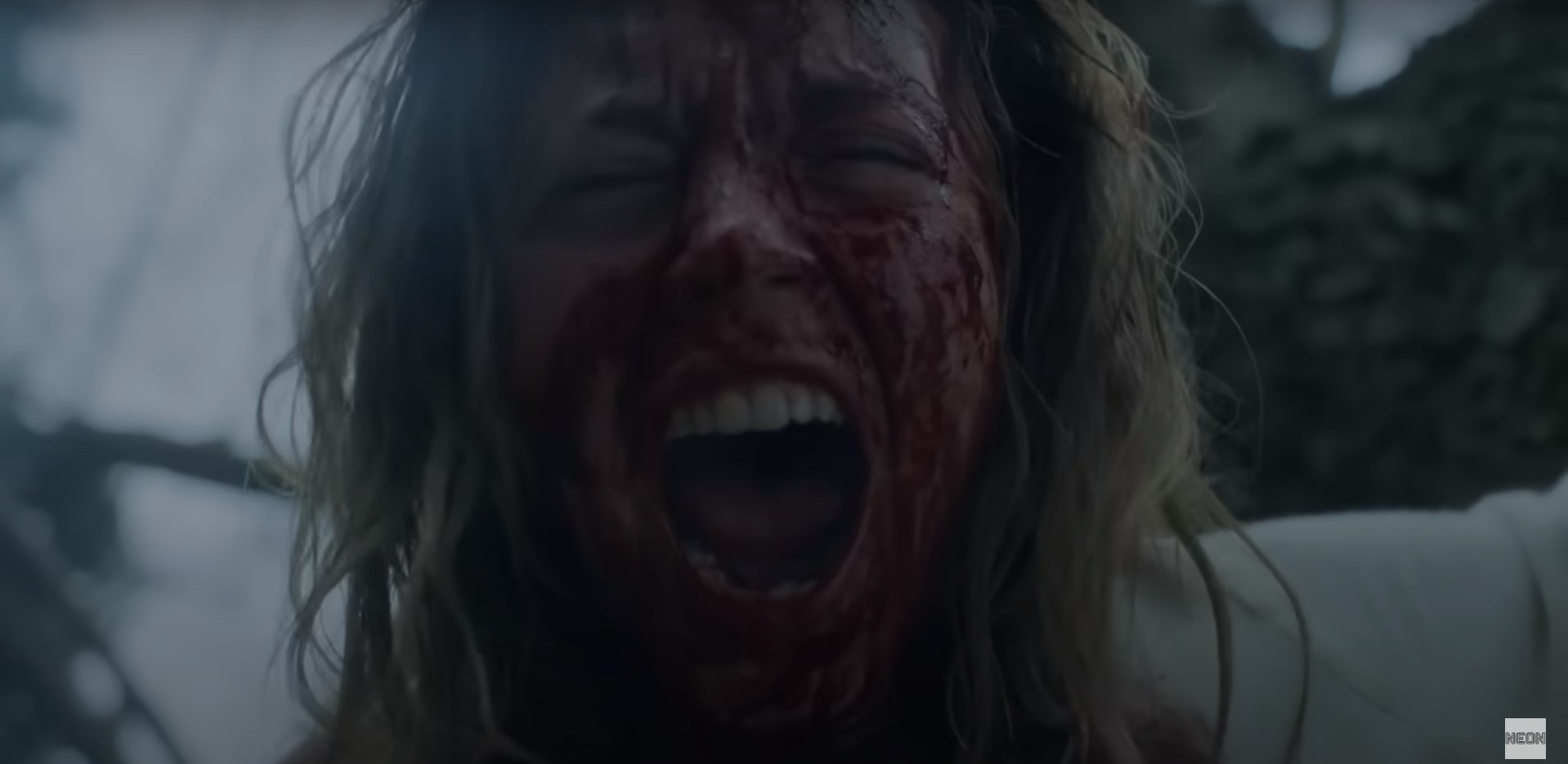
Shudderingly intense and sordidly messed up, “Immaculate” arrives onto a Neon Blu-ray home release.  Presented in a widescreen, Univisium aspect ratio of 2:00:1, the AVC encoded, 1080p high-definition, feature is housed on a single-layered 25 gigabyte disc.  Curious the reason why Neon would choose a lower capacity for such a purposefully soft and dark videographic image that creates a solemn tone inside a harsh appearance of an unpronounced period piece, perhaps set around the 1960s-1970s judging by the wardrobe, suitcases, and other set dressings.  Not also to exclude the premature notions of genetic manipulations that have made giant modernized leaps in the contemporary day-and-age.  Even with emaciated encoded, “Immaculate” looks pretty good around skin tones and textures and not a tone of compression follies to report.  With darker images on lower capacities banding and blocking rear their ugliness but there’s not a tone of that here. Saturation reduction plays into the time period and mood and the specified range of grading is kept to a modestly warm yellow, greens, and reds surfacing above ever so slightly through thick shadows of inkier, key-lit or candle-lit frames and even making a miniscule presence in daylit moments, boarding classical noir on some occasions.  The English-Italian DTS-HD 5.1 Master Audio has lossless appeal that wriggles out clean atmospheric genre cues through the multiple, surrounding channels.  Creaky doors and floors, deep footsteps, cavernous echoing, all play into the ambience track’s gothic timbres.  Conversating dialogue mounts a clear fixed positioning that sharp and clean through Sweeney’s character’s slight Midwestern intonation to the heavily and broad Italian accents from native vernacular to second language English speakers.  A descriptive English 2.0 audio track is also available as well as optional English and Spanish subtitles for the primary track.  One reason “Immaculate” is on a BD25 is because of the only bonus feature available is a feature length commentary track with director Michael Mohan.  The physical side of the Neon release includes a slipcover with the same tones mentioned above with a pious looking Sydney Sweeney in habit and also covered stoically in blood from the collar down.  The backside of the slipcover scarcely has technical information which is pleasant to see the limited real estate being used for something else other than the nuts and bolts that should remain on the Blu-ray’s Amaray case.  Its slightly reminiscent of the way certain boutique labels design their limited slips.  However, what’s not reminiscent of boutique design is the same slipcover front and back image is used for the Blu-ray case too.  Inside is sparse with only the disc with a simple yet effective black background, red titled pressing.  Rated R for Strong and Bloody Violent Content Grisly Images, Nudity, and Some Language, the Neon release has a runtime of 89 minutes and is encoded for region A playback.

Last Rites: “Immaculate” is blessed be the fruit of present-day Nunsploitation themed with power trips that attempt to bypass God and the laws of nature. The finale powerfully depicts and deciphers the principles of one’s firm held faith under God’s will, and perhaps wrath, in its ugliest form.

Mary Didn’t Have This Much Trouble. “Immaculate” on Blu-ray!

Classic Sequel Gets a Lenticularly EVIL! “Halloween II” reviewed! (Via Vision / Limited Edition Blu-ray)

“Halloween II” Limited Edition Blu-ray + 6 Photo Lobby Cards! Order here!

The horrific Halloween night massacre in Haddonfield where a masked escaped mental patient named Michael Myers murdered the close friends of Laurie Strode has not yet ended.  Hurt and in shock after narrowly escape Michael’s relentless pursuit, Laurie is rushed to Haddonfield Memorial Hospital to receive treatment from a skeleton shift while Dr. Loomis, who shot Michael six times, continues his hunt for the hard-to-catch, hard-to-kill killer.  Frantic about the evil inside his former patient, Dr. Loomis will not stop at nothing to track him down with police assistant and try to puzzle together just why Michael had returned to his hometown in the first place.  As Laurie recovers from her injuries and copes with her friends’ deaths, The Shape arrives at the hospital, continuing his emotionless killing spree of hospital staff in order to get to Laurie, and with nowhere to run, Laurie’s only hope is in the hands of a determined Dr. Loomis. 

Picking up where the highly successful independent horror, John Carpenter’s “Halloween,” that changed the slasher genre to what we know it as today, “Halloween II” provides more illumination on The Shape, Laurie, and shuts the door on the significant open-ended and fear-inducing mystery at the finale of Carpenter’s masterpiece.   The 1981 sequel, released three years after the first film, was not helmed by Carpenter whose success skyrocketed post-“Halloween.”  Instead, Carpenter and creative producer Debra Hill agreed to the executive producer title with some creative control in penning the script that would be a what-happens-immediately-next continuation with newcomer Rick Rosenthal sitting in the director’s chair.  The director who would helm later the follow year’s “Bad Boys” with Sean Penn had a goal to retain the same Carpenter stylistic choices to make the sequel seemingly seamless.  Alongside Carpenter and Hill in the melting pot of producers, the more narratively opinionated Moustapha Akkad and Dino De Laurentiis served as executive producers along with Joseph Wolf (“A Nightmare on Elm Street”) and Irwin Yablans (“Tourist Trap”) in what became a coproduction between Universal Studios and Dino De Laurentiis’s production company.

“Halloween” converted the then unknown Jamie Lee Curtis into a couple of things.  She instantly became a household name that at the same time also made Laurie Strode a household icon.  Curtis also became what was a relatively new coined term at the time of a scream queen, propelling her career in the horror genre with “Halloween” subsequent films such as “The Fog,” “Prom Night,” “Terror Train” and, of course, the more recent titular television series “Scream Queens” and the contemporary “Halloween” sequels.  What also emerged post Lee’s performance is the actress was eager for the role and effortless to work with making the 23-year-old daughter of Janet Leigh and Tony Curtis a treat to work with, malleable toward her role, and enthusiastic about returning as Laurie Strode for the sequel.  Curtis falls right back into the role as if filming didn’t stop rolling with Strode in a confounding state of shock and injury from her the relatively short scuffle with Michael Myers until Dr. Loomis intervenes with six gunshots into The Shape at the key and climatic moment, saving Strode from being strangled.  The difference in the sequel is Curtis’s instilled knowledge for her frightened character.  It’s that kind of touch that doesn’t hesitate to react to a force of evil.  Returning as Dr. Loomis, and again as if he never stopped performing as the paranoid and fervent good psychiatric doctor, is the iconic and late Donald Pleasence tracking down his former patient with trench coat sagacity, an understanding that no one else shares except for maybe Myers’ ultimate prey, Laurie Strode.  A new cast of relegated kill fodder magnifies part two’s grislier death count with Lance Guest (“Jaws: The Revenge”), Pamela Susan Shoop (“The One Man Jury”), Leo Rossi (“Maniac Cop 2”), Tawny Moyer (“Looker”), Ana Alicia (“Romero”), Gloria Gifford (“Virgin Paradise’), Hunter Von Leer (“Trancers III”), Cliff Emmich (“Hellhole”), Ford Rainey (“The Cellar”), and Dick Warlock putting on the mask as The Shape with Charles Cyphers and Nancy Stephens returning in their respective roles as Sheriff Brackett and Marion Chambers.

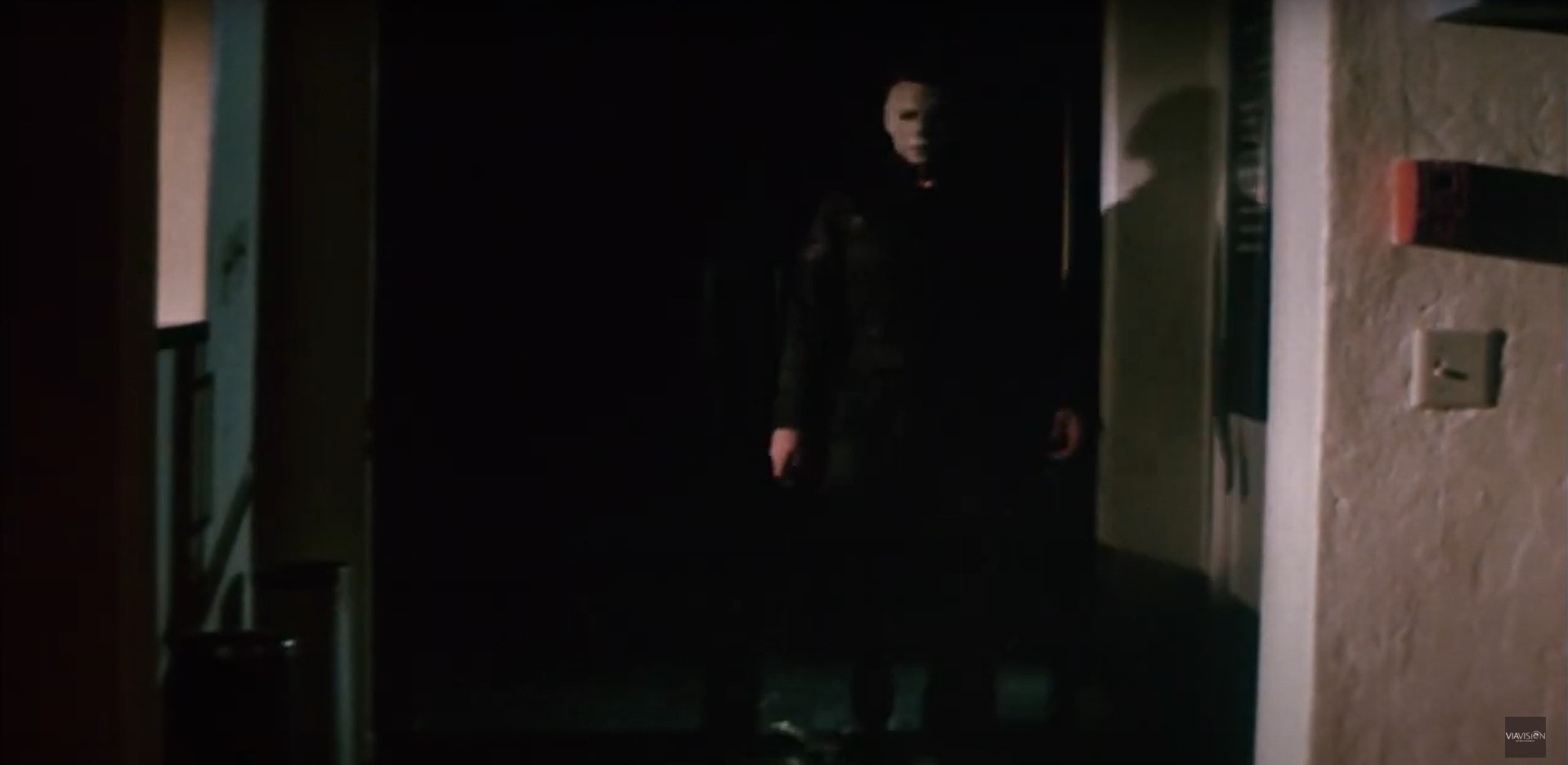
What new can be said about “Halloween II” that hasn’t been already said?  Dichotomously, “Halloween” and its sequel share a single narrative that emanates the same stylistic tone; however, both films couldn’t be more different in their surface level and underlying intentions and that gnaws raggedly on the connective tissue that binds them.  Carpenter’s original embraces the mystery enshrouding Michael Myers motivations with a merciless, yet nearly bloodless, killing spree of horny hopped-up teenagers who wiggle themselves out of responsibility for a little trick-or-treat fun under the sheets or for just being alone in their house.  Myers unneeded and unheeded explanation formed The Shape as evil personified, an incarnate force compelled to return home where the light switch was flipped to an expressionless compassion for human life.  Rosenthal’s part two subverted the unknown by providing Michael reason and that reason being Laurie Strode, anyone else who gets in his way, could foil his plans, or are just in the vicinity of the hunt are eliminated with extreme prejudice, and that leads into the ramped-up gore with large pools of blood and other gratuitous displays of damage to unsuspecting soon-to-be stiffs.  Despite the different strokes, the sequel is not bad by a longshot.  In fact, “Halloween II” is just an extension spiraling in intensity and terror, a product of its time when everyone and their brother had directed gore-ladened slashers during the steep beginnings of the slasher renaissance. 

Though a many number of “Halloween II” video media exists between the current formats, the collaboration of Via Vision and Lionsgate release from Australia is beyond reproach for any kind of transfer print woes, lackluster bonus features, and drab packaging.  The limited edition and numbered 2-Dsic Blu-ray set is a physical media thing of beauty with an AVC encoded, full high-definition 1080p, BD50 on both discs.  Disc one houses the theatrical cut of film, presented in a widescreen 2.35:1 aspect ratio, from pristine print, likely the original negative licensed through Universal Pictures for this very release, with the Via Vision caveat of every effort has been made to produce the highest quality on the back cover.  Not a single reason comes to mind on that statement being false as the Dean Cundey’s cinematography retains an undiluted facsimile of the original “Halloween,” represented here with phenomenally suitable contrast that can presumably hide Micheal Myers in every shadow and create the apprehension in every darkly lit scene with minimal key lighting in various, sometimes neon, shades of red, yellow, and white.  The 35mm film grain has a pleasant consistency of a low-to-medium low visual viscosity that never reaches levels of blotting out picture quality, presenting no issues with zoomed in images or any other touchup enhancements to note for that matter.  Perceptible details sanction The Shape’s tactile and weathered look of a rough night in Haddonfield.  Colorfully warranted scenes, such as the Nurse Alves on a gurney in the middle of a pool of her blood, are robust to display the carnage whereas other, more minimalistic approaches detail just enough for the imagination to take over.  Disc two contains the standard-definition, upscaled to 1080p, television cut of the film, presented in a made-for-TV 1.33:1 aspect ratio, that omits some of the gorier moments, suitable for broadcast viewers.  Audio options include two lossless English language selections with a DTS-HD Master Audio 5.1 and a DTS-HD Master Audio 2.0.  The audio codec distributes punchier ambiences of Myers’s rhythmic breathing through the mask, the jarring alert of a hospital room buzzer, and the impactful moments of Myers slamming his fist-loaded weapon into the skull, back, and….a pillow with the cringe-worthy associated crunch and thud.  No impediments on the dialogue track that’s free of crackling, hissing, and popping and is consistently prominent and mixed well within more chaotic, milieu-mania scenes, such as with the finale with hissing air tanks and scalpel swoops.  Optional English subtitles are available.  Special features are consolidated to the theatrical cut disc only with Shout Factory’s inaugurated 2012 documentaries – The Nightmare Isn’t Over:  The Making of Halloween II and Horror’s Hallowed Grounds:  The Locations of Halloween II – featuring cast and crew interviews with director Dean Cundey, Tommy Lee Wallace, Dick warlock, Leo Rossi, and more as well as visiting locations in a modern time with host Sean Clark, and two commentaries featuring director Rick Rosenthal and Leo Rossi in one and stunt man/The Shape Dick Warlock in the other.  There’s a brand new 2024 commentary with author Dustin McNeill, co-author of Taking Shape:  Developing Halloween from Script to Scream.  The encoded features round out with the alternate ending with more explanation on the fate of a certain left ambiguous character, deleted scenes, a theatrical trailer, TV and radio spots, and a still gallery.  What makes the Via Vision a limited, numbered set is the neat package and physical goodies inside.  The rigid lenticular cardboard sleeve of the skull pumpkin has eyes that follow you at every angle.  Inside is a slightly thicker Blu-ray Amaray casing with reversible cover art displaying notable stills from the feature.  The extra disc, disc 1 likely, is in a clear push-lock, page-turner disc holder.  Six photo lobby cards featuring stills from the movie come alongside the Blu-ray.  Via Vision’s release has a region B playback encoding, a runtime of 93 minutes on both cuts, and rated R.

Last Rites: Michael Myers has been slashing away in the cinema for nearly half a century and “Halloween II” has been a staple entry that, to this day, is a memorable fan-favorite in the grand scheme of most of the franchise’s sequels. Via Vision’s limited edition, lenticular Blu-ray packaging just sweetens the deal with a crystal clear and top-tier quality release worthy in any physical media collection.

“Halloween II” Limited Edition Blu-ray + 6 Photo Lobby Cards! Order here!

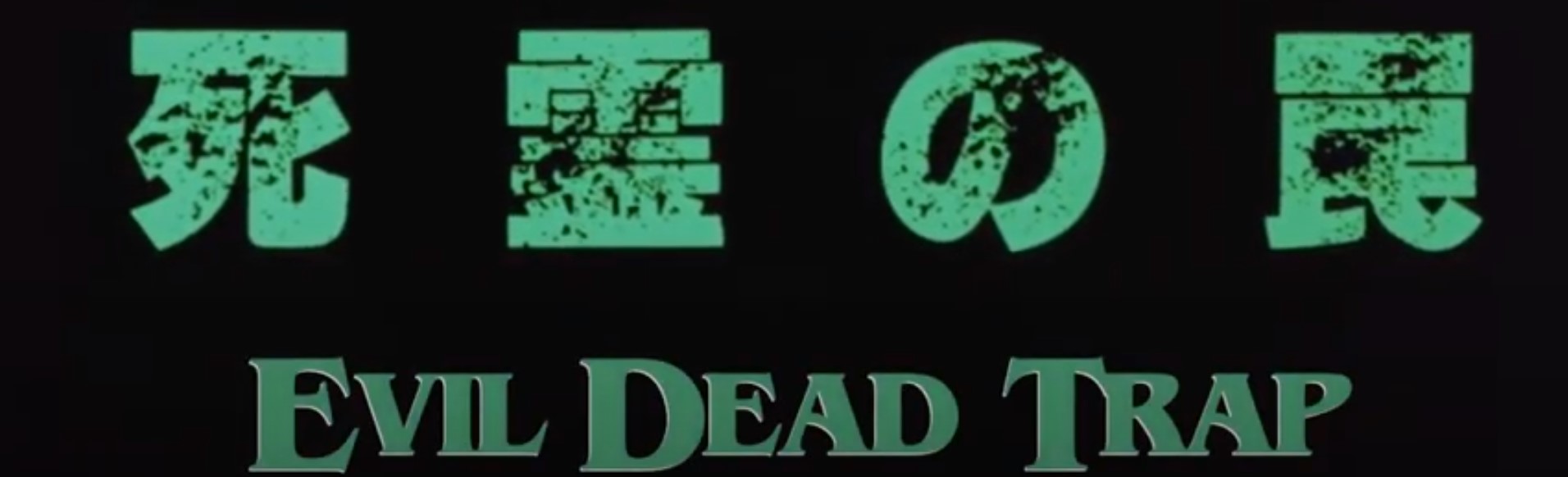
No Sam Raimi. No Bruce Campbell. Just the EVIL! “Evil Dead Trap” reviewed (Unearthed Films / Blu-ray)


Nami, a Japanese late night show host, is seeing her ratings dipping.  Though not in danger of losing her all-female produced show, Nami decides take her team on an investigation of a mysterious snuff tape that was mailed to her specifically.  Left for her is a bread crumb trail of directions to an abandoned military base, Nami and her crew explore the campus’s rundown structure, searching for evidence, a body, a story that they can televise.  Ignoring the dangerous presence around them, they dig deeper into the dilapidating labyrinth where they horrifying discover something waiting for them laid out in a cruel plan of deadly traps with a maniac pulling at all the strings. 

Bred out of a pedigree of pinkusploitations and a nation’s crisis of identity after the Second Great War, “Evil Dead Trap” is a greatly symbolized Japanese machination tale helmed by pink film director Toshiharu Ikeda (“Sex Hunter,” “Angel Guts:  Red Porno”) and penned by an equally historical pink film screenwriter and “Angel Guts” manga series creator Takashi Ishii (“Girl and the Wooden Horse Torture,” “Angel Guts” series).  Also known under its original Japanese title, “Shiryô no wana,” as well as, and my personal favorite, “Tokyo Snuff,” in Spain, “Evil Dead Trap’s” smorgasbord of rape, torture, and gory death naturally shocked viewers upon release and continues to do so as one of J-Horror’s branched out films that segued out from the brutal and depraved pink film inspired context into the new longstanding ghost genre we’ve seen over the last few decades with “Ringu” (“The Ring”) or “Ju-on” (“The Grudge”).  The production company Joy Pack Films, behind the 1980’s obscure Japan films, such as Genji Nakamura’s “Go For Broke” and Banmel Takahashi’s “Wolf,” houses the “Evil Dead Trap” from executive producer Tadao Masumizu.

If you recognize a couple cast members, or maybe just their naked bodies, then there’s something depraved about you!  With all kidding aside, but no seriously, if Rei (Hitomi Kobayashi) or Kondo (Masahiko Abe) look familiar, then you my friend are pink film aficionados as Kobayashi has starred in “Hard Petting” and “Young Girl Story” and Abe was in these pink film hits the “Pink Curtain” trilogy and “Female College Dorm Vs Nursing School Dormitory.”  If these faces didn’t touch you in any kind of sensual way, no worries, leading lady Miyuki Ono brings the star power.  The “Black Rain’s” Ono plays Nami, a go-getter television host/personality with her sights set on ramping up her late night show’s ratings, but also sucked into the posted snuff film’s darkest allure that’s personally calling her into to a precarious story lead.   Nami could also be a homage to one of screenwriter Takashi Ishii’s manga-inspired pink films entitled “Angel Guts: Nami” and the title might not be the only aspect paid honor to with that particular Nami written with a journalistic vocation drawn into and obsessed with a serial rapist’s attacks, making a striking parallel between the two stories that are nearly a decade apart. Eriko Nakagawa and Aya Katsurgagi fill out Nami’s investigating team as Rei and Mako. As a whole, the characters lack personality; Rei and Kondo tickle with relationship woes that are snuffed out before fruition, Rie’s timid innocence barely peaks through, and Nami and Mako’s thicker bond compared to the rest of the team is squashed to smithereens way before being suckled into note worthy tragedy. This late night show team has been reduced to slasher fodder and, honestly, I’m okay with that as we’re only here for the deadly traps. Noboru Mitani, Shinsuke Shimada, and Yûji Honma, as the mystery man looking for his brother, complete “Evil Dead Traps” casting.

“Evil Dead Trap” boasts a melting pot of inspirations, a mishmash of genres, and spins a nation’s split identity variation crowned in aberration. Diversely colorful neon-hazy lighting complimented by a Goblin-esque synth-rock soundtrack from Tomohiko Kira (“Shadow of the Wraith”), Toshiharu Ikeda shadows early Dario Argento inside and outside the popularity of the Italian giallo genre as the “Evil Dead Trap” murder-mystery horrors resemble more of a westernized slasher with a killer concealed behind a mask stalking a fringed, neglected compound in a conspicuous outfit. While the killer dons no hockey mask or snug in a mechanic’s jumpsuit, an equally domicile, yet more calculated, antagonist taunts more brains than brawns, especially with the severity of traps that seemingly float from out of nowhere. The fun is chiefly in the imagination of how the trap designs operate in the void of physics of a slasher fodder film so wipe clean the Jigsaw and the “Saw” films from your mind completely and relax to enjoy the outlandish kill scenes. Some of the kills are imperialistically inspired by Imperial Japan, that is, to blend the wartime nation’s atrocities with how the proud country wants to distance itself from that old-fashion, war-criminal, stoically perverse superstratum layer, but that’s were “Evil Dead Trap” pulls for most of the juicy parts as well as supplementing with Argento lighting, some, believe it or not, “Evil Dead” elements of that menacing presence bulldozing through the spiritual world, and an divergent climatic finale stuck to the narrative body that’s akin to pulling off the head of a doll and replacing it with T-Rex head’s. The uniformity quells under the pressure of how to end Nami’s and her attacker’s coda with pageantry weirdness that’s typical status quo Japanese cinema. Lots of symbolism, little modest explanation.

Get caught in “Evil Dead Trap” now back in print and on Blu-ray courtesy of Unearthed Films, distributed by MVD Visual, as part of the extreme label’s Unearthed Classics spine #5. The Blu-ray is presented in a matted 1.66:1 aspect ratio, a format rarely used in the States but widely used in other countries. Reverting to the 1.66:1 from Synapse’s 1.85:1 crop, Unearthed Films showcases more of the European feel, heightening that colorful vibrancy of the Argento-like schemes. Image quality has peaked on this transfer with natural grain with the 35mm stock, but details are not granularly sharp in an innate flaw of the time’s equipment and lighting. Shinichi Wakasa’s unobscured practical effects heed to the details and don’t necessary suffer the wrath of miniscule soft picture qualities when you’re impaling someone or birthing a slimy evil twin…you’ll see. Add in Ikeda’s wide range of shooting techniques, you’d think you’re watching Hitchcock or Raimi and the focus really lands there with the differently camera movements and techniques. The Japanese language single channel PCM audio fastens against that robust, vigorous quality to make “Evil Dead Trap’s” diverse range and depth that much more audibly striking, but there’s a good amount of silver lining in there being no damage albeit discernable, but not intrusive static to the audio files, dialogue is unobstructed and prominent, and the stellar synth-rock soundtrack nostalgically takes you back to when you first watched “Suspiria” or “Dawn of the Dead.” English subtitles are available but display with a few second delay which can be cumbersome if trying to keep up. Special features includes three commentaries that include director Toshiharu Ikeda and special effects supervisor Shinichi Wakasa, filmmaker Kurando Mitsutake (“Gun Woman”), and James Mudge of easternKicks. Plus, a Trappings of the Dead: Reflecting on the Japanese Cult Classic retrospect analysis from a Japanese film expert, Storyboards, Behind the scenes stills, promotional artwork, trailers, and a cardboard slipcover with phenomenal artwork. Highly recommend this atypical Japanese slasher, “Evil Dead Trap,” now on Blu-ray home video!

Own “Evil Dead Trap” on Blu-ray!

First There Was a Good Guy Doll. Then, There Was a Turkey. Now, EVIL Comes In the Form of a “Killer Piñata” reviewed! (Darkside Releasing / Blu-ray)

A father purchases 3 piñatas for his young child’s birthday party the day before going on a weekend getaway.  His college age eldest child, Lindsay, stays behind to have a night of drinking with her best friends, one of them being her ex-boyfriend who hasn’t figured out that her romantic interests no longer lay with the entire male sex.   With the pink piñata done in at the party and the other Captain American-resembling one bashed to smithereens by Linday’s friend, the surviving donkey piñata, possessed with the bullied and vindictive soul of a piñata factory worker, is fueled by bloodthirsty vengeance and on a campaign of death as one-by-one Lori’s friends fall casualty at the paper macheted hooves of the candy-filled sinister piñata and it’s up to Lindsay and a hook for a hand, old Latina piñata shopkeeper to stop the carnage.

I, personally, never whacked a sweet-treated stuff piñata on a joyous, celebratory occasion in my 37 years of growing up (in retrospect, my childhood didn’t seem very fun) and after watching Stephen Tramontana’s farcical horror-comedy, “Killer Piñata,” the 2015 release, receiving an enhance 2021 Blu-ray director’s cut, has now instilled a crippling fear of the inanimate that secures the fact that I, and probably my kids and my kids’ kids, will never take a baseball to those cute little piñatas ever!  With a penchant for the worst-of-the-worst horror movies and being an acolyte of the Jordan Downey’s brazen killer holiday turkey masterpiece, “ThanksKilling,” Tramontana, along with his entrepreneurial cohorts who started out in the healthcare field and have turned into amateur B-horror filmmakers, helms his crowdfunded sophomore feature, but first donkey piñata bloodbath, and co-wrote alongside fellow screenwriters Nick Weeks and Megan Macmanus who spun a wild fantasy into cinematic reality.  The 8 day shoot around Chicago’s Logan Square employs Tramontana’s investment partners Jennifer Kunkel as producer and Paul Summers as cinematographer, editor, and score artist under their pun of a production banner, Angry Mule.

“Killer Piñata” casts Chicago regional actors who thought starring in a film about a murderous piñata would be a once in a lifetime opportunity as well as a challenge to broaden their craft by working with puppets and, boy, were they right!  Stage actress Eliza-Jane Morris stars as Lindsay, battling not only a party donkey figure but also her sexual preference ignorant ex-boyfriend, Scott (Billy Chengary).  Much as Lindsay in herself is a trope of what is known as the final girl in horror, the script is riddled with trope characters just to make it abundantly clear “Killer Piñata” means funny business. Scott is the clingy, insecure ex who can’t see between his legs why Lindsay is no longer interested. His pal, Chad (Nate Bryan), resides on the opposite side of the spectrum as the confidently shameless, hypersexualized, and vain best friend who is equally matched in being confidently shameless, hypersexualized, and not terribly vain with Lindsay’s bestie, Rosetta (Lindsay Ashcroft). Martin (Daniel Hawkes) rounds out the group of the ill-fated soirée as Rosetta’s much hated bothersome cousin who is perhaps the only character out of the five to feel any morsel of pity for as he’s incessantly bludgeoned by insults, especially by his own Rosetta, and doesn’t have a single clue what’s in store for him. The most seasoned talent on set played a fiesta Latina shopkeeper with a “I Know What You Did Last Summer” hook for a hand; “High on the Hog” and “Asylum of Fear’s” Joette Waters gives an over-the-top Dr. Loomis performance. Cast rounds out with a fair amount of bit roles from Elvis Garcia, Sheila Guerrero-Edmiston, Steven James Price, and Elias Acevedo who all indulge in the nonsense of a superficial inanimate villain horror.

A piñata running rampant in a suburb home with poisonous candy being expelled from it’s paper and cardboard rectum and able to mechanize corpses like in Gundam with a simple transfer of hoof-to-spine energy awards Tramontana and his thinking outside the box team a 9×9 baking dish full of creative brownie points. “Killer Piñata” can also be funny indicative to all by the nonsensical title and if you’re not stiff as a board in the humor department, you’ll find one scene to be unsettling shocking with a lingering piñata blowjob death that’s literally jaw-dropper and a teary eyeful. While the film is by no means an in earnest attempt at a serious plot, continuity mistakes, in scene goofs, minor equipment quality issues, and narrative pacing drag down Tramontana’s quaint pintsize slasher and even drags a little more apathetically with tired jokes, farting gags, and formulaic routines albeit some okay puns and a smirk inducing making weapons montage. Not until around the plot point of the third act is when the death scenes start to hit the fan, briefly hovering up to the “ThanksKilling” gore-and-gags level, splattering the blood splatter here and there while the first two acts barely register on the oh, damn Geiger counter in what’s an interior imbalance of how to set the tone of a killer piñata video diagram.

Only five years after the initial release of “Killer Piñata,” Darkside Releasing proudly releases an enhanced Blu-ray director’s cut of the film that saw an overhaul and rejuvenation on the color grading, a brand new sound mix, and a quicker pacing, which I still think could have been tweaked better.  Presented not rated in a widescreen, 1.85:1 aspect ratio, with a runtime of 84 minutes (originally 87 minutes but trimmed in the new director’s cut for pacing), there is some early on banding in the opening shot’s blue sky over Chicago, but for an indie production on a budget less than 5k, or now maybe more with a facelift in the new release, the coloring has a brighter glow and is not as flat some of the original footage appeared. The anecdotal animation nicely becomes an intermission to the story and a change of pace in the par quality with simple, but well illustrated, sketch animated backstory.  I never knew the original score, but the Paul Summers pulsating electro-club rescore homages the works “Killer Piñata” is inspired by with an upbeat soundtrack mingled with a traditional minor key soundboard.  Special features includes a new audio commentary, a recollection of pre-, post-, and during production in “A Look Back at Killer Piñata,” a reason why we never saw a sequel follow up title “Whatever Happened to Killer Piñata 2?,” the making of featurette with a few key scenes, and bloopers & deleted scenes.  Stay put after the credits for a bonus scene that aims to piece together things for the potential sequel director Stephen Tramontana promises.  The future for “Killer Piñata” is not yet certain and I firmly believe, in what I consider to be the promising next steps for the murderous inorganic party-pooper, is that the genre needs and should receive a crossover of Turkie vs Piñata in a showdown of the possessed puppets or in an egregious alliance to take a good chunk of mankind’s population down a peg!

Take a Whack at the Killer Piñata Director’s Cut on Blu-ray!