EVIL Wants Your Brain Fluid! “Vile” reviewed! (MVD Visual / Blu-ray)

These “Vile” Atrocities are now on Blu-ray!

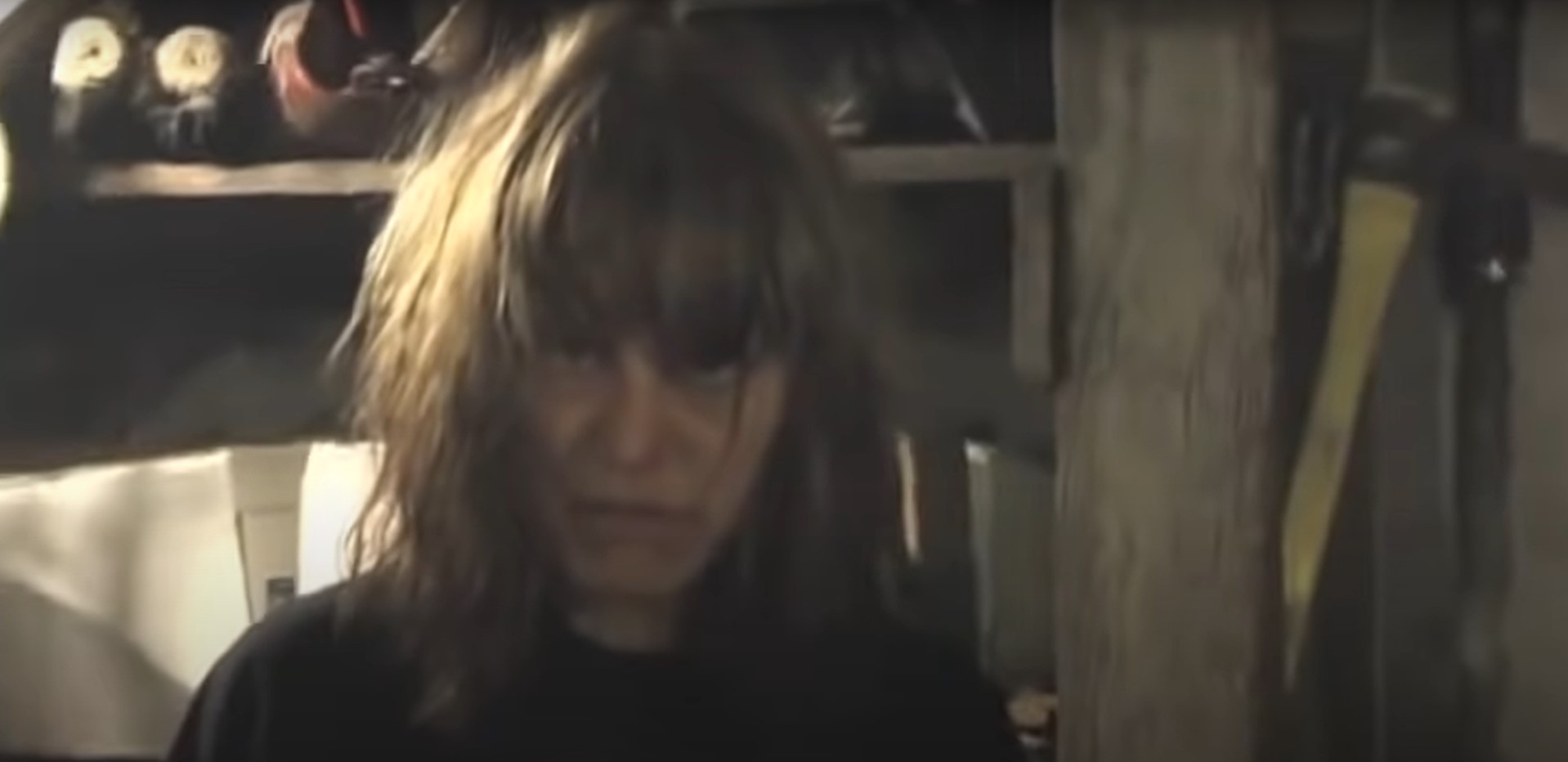
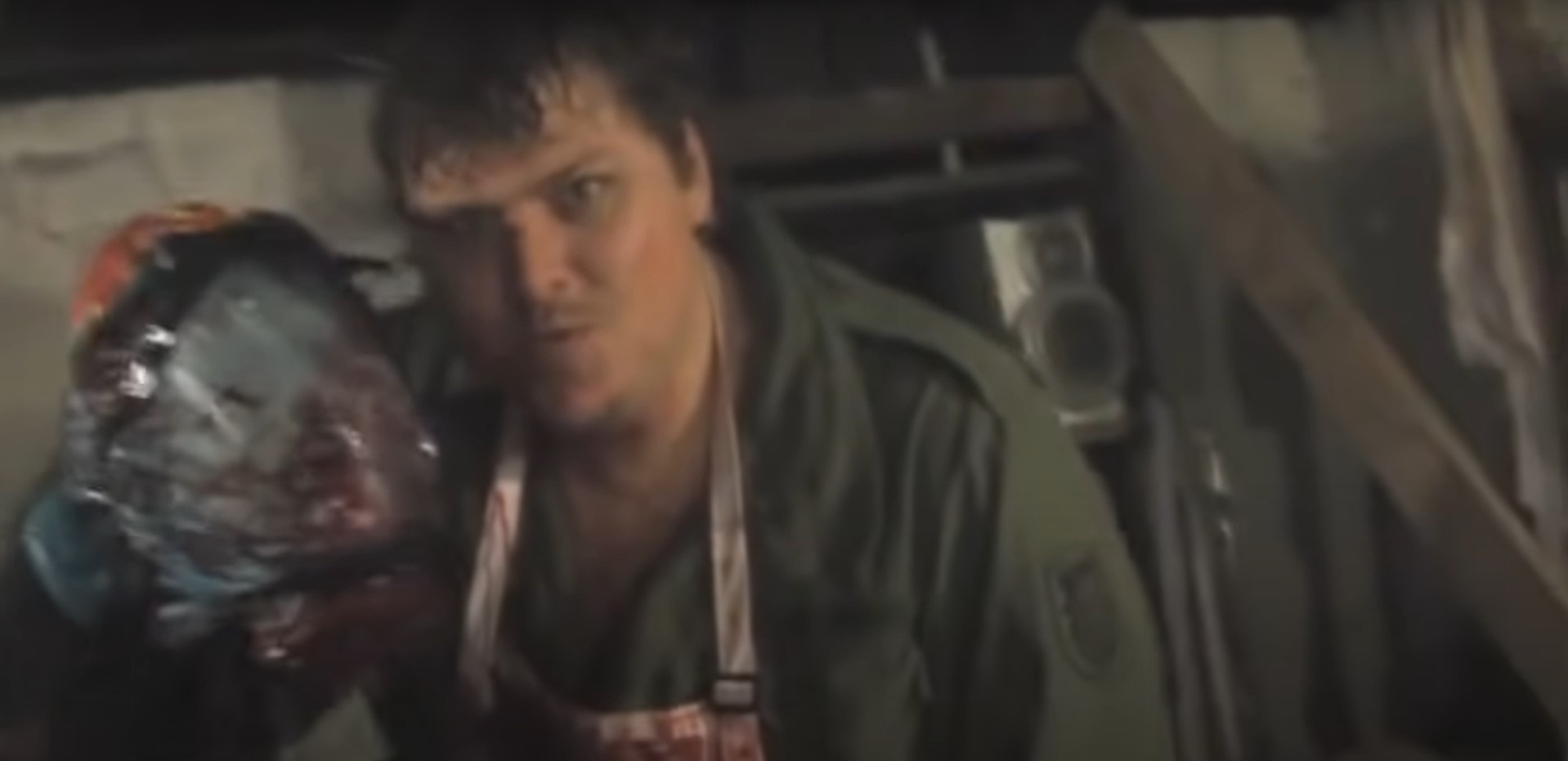
What was supposed to be a relaxing camping trip amongst friends has turned into a torturous nightmare when four friends wake up to find themselves in the company of five strangers in a basement and learn they’ve all been kidnapped for a purpose.  Behind the illicit arrangement is an illegal drug manufacture whose formula is produced from the byproduct of the brain’s fear and pain induced chemicals.  With a 22-hour clock counting down from the first act of violence, the puzzled lot must fill a 100% quota before time runs out in order to be set free from the reinforced house they awoke in and the only way to do that is by hurting each other to fill the vials connected to the backside of their heads.  Framing a plan, a vote proceeds a numerical order of voluntary participation of torture, each contributing a fraction of the pain percentage needed to survive and be free, but egos, fears, and secrets cost them more than a few moments of unbearable pain.   

Before becoming Paramount Network’s golden nugget for creating the more recent acclaimed American television drama with shows like “Yellowstone,” “1883,” “1923,” “Tulsa King,” and “Special Ops:  Lioness,” Taylor Sheridan had first directed a small-time horror movie over ten years ago in 2011.  The title “Vile,” a play on words used to not only describe the cruel atrocities done from one character to another but also alluding to vial containers used to fill up with fear and pain fluid, is the brainchild of scriptwriters Eric Beck and Rob Kowsaluk.  Certainly, a different tone compared to hardnosed westerners and high-profile casted thrillers, Sheridan filmmaking roots from “Vile” mold his next stage directions of cruel character dynamics.  Beck produces the feature with Noël K. Cohan (“Into the Void”), Tina Pavlides (“100,000 Zombie Heads”), and Kelly Andrea Rubin (“Skeeter”) with presumably father Larry Beck footing some of the funding under the LLC of Vile Entertainment in association with Bosque Ranch Productions and Signature Entertainment.

An ensemble cast thrusts strangers into the throes of do-or-die but amongst the cast of characters, a delicate introduction of a core four put forth the wheels in motion of the sick extraction technique all in the name of drugs and profit.  The preliminary meet-and-greet of Nick (Eric Beck), Tayler (April Matson, “Primrose Lane”), Tony (Akeem Smith, “Holla II”), and Kai (Elisha Skorman) sets up love interests, Tayler’s secret pregnancy, Kai’s drug problem, and a playfully semi-morbid game of would you rather that foreshadows another choice pick of torture later the group has to contend with when joined with the other five test subjects – a dark and cryptic Greg (Rob Kirkland), a subtly anxious Julian (Ian Bohen, “5 Souls”), a selfish hothead Tara (Maya Hazen, “Shrooms”), a young and frightened Lisa (Heidi Mueller) and a level-headed Sam (Greg Cipes, “Deep Dark Canyon”). The variety of character provides varying shades of distrust, betrayal, and hope as factions form and convictions are about-faced, jostling those steadfast at first and solidifying principals for those teetering on the edge.  As whole, the cast works well together to provide adequate and satisfying suspicion as well as selling a particular attitude despite a couple of red herrings that are hidden really well within the framework. As individuals, lots of the dialogue pertains to self-explanatory states of the obvious that stick out like a sore thumb of colloquial filler with a story set in one location with the same nine people for approx. an hour long. ”Vile’s” cast rounds out with McKenzie Westmore and the unmistakable Maria Olsen (“I Spit on Your Grave 2: Deja Vu”) in a procedure-nothing televised head. 

As much as I disfavor comparing one film to another outside of sequels, series, or franchises, “Vile’s” voice is lost as an individual. Seven years prior, James Wan and Leigh Whannell began what would become one of the biggest contemporary horror franchises with “Saw,” spanning sequels through two decades, and concluding, thus so far, with this past year’s “Saw X.” What does this have to do with “Vile?” ”Vile” follows much of the same formula Wan and Whannel concocted in the earlier 2000s with a very to-the-manual approach of “Saw’s” collaring of individuals, media announcing a timed-task, and the players of the game have to hurt themselves, or others, in order to be set free. Fundamentally different with “Vile” has more to do pure greed and profit at the expense of those unfortunate to be in the path of profiteers whereas “Saw” forces transgressors into rebirth through pain and suffering. ”Vile” is also not as explicitly graphic with much of the torturous violence done out of sight, off screen, or in a blink of an eye. Nevertheless, the intriguingly staid premise takes the human condition to the limit and steps across the line of no return of committing what is self-destructively necessary to survive. Beck and Kowsaluk tweak the formula by a narrow margin but the manner of how the narrative plays out distances “Vile” to almost unitary means. For example, “Saw” almost always had a dual storyline that eventually converges with a shocking twist-tie conclusion. ”Vile’s” straightforward with a singular storyline that isn’t dichotomized with a parallel storyline, a periodization storyline, or any other type of storyline to be a crutch for the other, leaving audiences in the undivided present that’s an around-the-clock time crunch to live or die by the hands of themselves or at the mercy of others, and with a palpable enough twist that you’ll kick yourself in the chin for not predicting it ahead of time. 

“Vile” comes to Blu-ray from MVD Visual on the company’s Marquee Collection label. The AVC encoded, 1080p High-Definition, BD25 has the film presented in a widescreen 1.78:1 aspect ratio. Limited to a two-tone grading of steely blues and canary yellows, picture quality range has spasmodic bursts of interiority to agreeable presentations. More of the pre-ensnarement night scenes appear granulated by macroblocking, degrading the image to pre-high definition pixelated rate. Bitrate decoding jumps sporadically from mid-teens to mid-30Mbps, most likely due to an unstable data compression transfer. Compression appears better, though not flawless, later in the runtime with tighter contouring and a finer detail on a grungy, dirty, dilapidated house where the main set takes footing. The English Dolby Digital 5.1 and the uncompressed LCPM 2.0 are the available audio options, both of which lack commodious conviction with a suppressed volume. While the dialogue renders sufficiently with discernibility and clarity, much of the eye-averting torture sound design, the milieu audio, and even the rock-hard rock soundtrack retains an undeliberate lo-fi quality. English subtitles are optionally available. Special features include two deleted scenes that expand on more of the earlier character interactions, a behind-the-scene moment of director Taylor Sheridan mopping the kitchen set and singing, and the feature trailer plus other MVD Marquee Collection trailers. Tangible features include a cardboard O-slipcover, first pressings only, vaunting the nastiness to come and, again, appropriates a “Saw” cover with that nastiness of an extracted, bloody tooth in a pair of vice grip, a nod to the “Saw III” poster/home video art. The Amary case has reversible cover art with the original “Vile” artwork on the inside. The unrated, 88-minute MVD Marquee Collection feature has a region free playback. If “Saw” is deluxe imperial crab, then “Vile” is the suitable imitation equivalent with a steady pace of group-wrenching contrition and contempt that forgoes the games for straight up blunt force trauma. 

These “Vile” Atrocities are now on Blu-ray!

Your Train Has Come in on the Platform EVIL! “The Ghost Station” reviewed! (Well Go USA / Blu-ray)

Cho-Cho-Choose “The Ghost Station” on Blu-ray!

The Oksu train station’s past has incur many strange occurrences over the 17-years since it’s construction but more recently has seen a string of bizarre deaths. When a public service worker Woon-won witnesses a man’s death on the rails, he reluctantly informs friend Na-young, a struggler gossip journalist in need of a good, multi-click story after being hit with a lawsuit from her previous writeup and landing in hot water with the editor. As Na-young and Woon-won dig deeper to save Na-young’s begrudging career, they soon discover there’s more to this story than meets the eye as train station commuters and workers begin exhibiting scratches over their arms and neck. Those marked eventually die horribly. Bodies pile up as the story leads Na-young to the past of a razed orphanage and visions of grotesque children become the center of the young journalist’s investigation until her friend Woon-won displays the same marks. Now, they must solve the curse before it’s too late.

Based off the real Oksu Station operated by Seoul Metro in the Seongdong-gu district of South Korea and the short digital manhwa webtoon entitled “The Ghost Station of Oksu” from Horang’s Nightmare, the 2022 movie adaptation “The Ghost Station” waters the short story webtoon and grows a surrounding plot around the only adapted portion of a near empty Oksu platform except for one bench-sitting man and a stumbling lady who appears to be intoxicated.   The South Korean-Japanese co-produced picture is written-and-directed by So-young Lee (“Apt”) and Hiroshi Takahashi, the latter is the Japanese filmmaker behind the popular “Ringu” series which crosses orient borders by being the most important or influential in “The Ghost Station’s” inhabited identical J-horror elements.   Co-productions Mystery Picture and ZOA Films pull the train into “The Ghost Station,” produced by Yoo Jang-Hun and is theatrically distributed globally between Smile Entertainment and Contents Panda.

The webtoon is only a leaping point for the film version.  Not establishing any cited characters in the illustrated horror story, a whole new plot is built around and extended upon the webtoon narrative of the drunk platform woman that ends in a horrific accident for the young gawker on his phone texting ridicule commentary of her inebriation.  Story continues with a gossip Na-Young on the heels of being reprimanded for not receiving consent for her story of labeling her subject a him despite being very convincingly a woman in looks.  Bo-ra Kim plays the tenacious yet conflicted journalist, self-deprecating her career as clickbait material rather than honorable news reporting until the supernatural Oksu Station occurrences shed light on a bigger, corruptible conspiracy.   The “Ghost Mansion” actress sleeps through what should be a cold-clenching tale of sprog spirits and callous coverups that form a mighty-gripped grudge on those unlucky enough traipsing through the station yet doesn’t really affect her directly.  Oppositely, her friend Woon-wan epitomizes exaggerated fright within the performance of Jae Hyun Kim who can express translated fear in breath holding moments but outside of that Kim dons childish whimpering and yelling as if it’s a fad.  Together, the actors cancel out their characters flaws by embodying one investigative team as a public station worker and a journalist uncovering the truth and to save themselves the next victims of vicinity vindictive spirits.  “The Ghost Station’s” richer performances are yoked by stinted deuteragonists that actually drive the story but feel suspended in their integrated impact and relegated to being flashbacks or wedged into one particular location without a ton of exposition or background.  The dictatorial gossip editor (Kim Na-Yoon), the creepy alcoholic mortician (Kang-il Kim, “I Saw the Devil”), and the first victim’s externally anxious, psychosomatic dreaming sister (Shin So-yul, “Pyega”) are colorfully acted, complex in character, and plod the story along intrinsically, yet they’re underutilized hanging around the peripheral with only the sister edging out the other two with a more direct connection to the grudge or curse. 

Without unwrapping “The Ghost Station” before watching the film, the story progresses along without any cause for concern with a supernatural sleuth story of a horrible train accident causing a domino effect of curses.  Deeper into the feature, a water well becomes a focal object, then abnormal faces of ghastly children appear, and the principals are using keywords, like grudge, grudge this, grudge that, and where have we heard of this before?  With Hiroshi Takahashi “Ringu” films dappled intermittently with “Ju-on” insignias that turn the initially promising K-Horror into a full blown J-Horror in repeated attire.  While directors So-young Lee and Hiroshi Takahashi are able to garner a handful of scares through technique, makeup effects, and morose aesthetics and dolor, “The Ghost Station” has a creative deficiency as there are just too many coincidental “Ringu” and “Ju-on” suspense devices to craft an original curse tale despite the positivity just oozing out from the idea of two nations blending their respective horror niches into one project that dissects the integrity of the individual.  Na-young’s ethical dilemma as a tabloid journalist carries weight and is tiptoed around when her editor urges for better clickbait material, Woon-won struggles with self-preservation and a friendship bond, and other minor examples add up to the summation of choice.  Many made bad choices that resulted in an orphanage full of pissed off preadolescents using their spook powers for premeditated parricide.   

Walk down to the platform and wait for your train to come into “The Ghost Station,” servicing now on Blu-ray home video from Well Go USA Entertainment.  The AVC encoded, 1080p High-Definition, BD25 is presented in a widescreen 2.39:1 aspect ratio.  What the release showcases, as far as image quality, is a more than adequate transfer of the substantially tenebrous picture that renders shadows without analogous banding or splotching.  The low-light grading offers a polished appearance with deep, rich shadows to provide a natural ominous atmosphere and partially shroud characters without compromising distinctive detailing.  The Korean language audio options include a DTS-HD Master Audio 5.1 and a Dolby Digital 2.0 Stereo track. A more than viable digital audio recording that clear and comprehensible with formidable sound design for quotidian scare devices that abled to still produce fear, using the back and side channels to flesh out the scare factor in a fine-tuned direction. Dialogue’s renders nicely without any technical or interfering barriers. English subtitles are optionally available, come error free, and pace well with the rapid Korean dialect. Like many of the Well Go USA titles, not a ton of bonus features are inlaid and the same is said with “The Ghost Station” that only holds trailers for other Well Go USA Entertainment films. In a traditional Amary Blu-ray case, the front cover pays homage to the Horang webtoon. Inside, an advert insert is included with other Well Go USA films from the company’s Hi-Yah! collection. The not rated feature has an 80-minute runtime and has a region A playback only. ”The Ghost Station” undertakes a mesh of identity between K-Horror and J-Horror that sought to pull up to the platform as a singular, supernatural, scare package and, in the end, the film pulls in as a train of consumable terror.

Cho-Cho-Choose “The Ghost Station” on Blu-ray!

100-Year Return Brings a Plague of Flesh-Eating EVIL to a Small Town! “Messiah of Evil” reviewed! (Radiance Films / Blu-ray)

The “Messiah of Evil” has Come to Blu-ray Home Video!

Arletty travels up the California coast to a small beach town known as Point Dune.  The reason for her visit is to find her artisan father after a series of bizarre letters came to an abrupt stop.  She arrives at his mural-graffitied home to discover it empty and decides to stay a few days to ask around town about his whereabouts and to be present for his return home.  Her inquiries at art gallery shopkeepers lead to a motel where Thom, a wealthy collector of urban legends and spooky stories, and his two travelling female companions, Laura and Toni, have also sought out Artletty’s father for his bizarre experiences.  As the days pass, Point Dune slowly becomes a literal ghost town that forces Thom and his companions to stay with Arletty and, together, they experience the horrible truth of what’s really happening to the  residents of the west coast community who eagerly await the arrival of the dark stranger. 

Once married filmmakers Willard Huyck and Gloria Katz are the creative minds behind the stories of “Howard the Duck” and “Indiana Jones and the Temple of Doom.”  They also wrote “American Graffiti” in what was to become their link toward working on Steven Spielberg’s Indiana Jones sequel since both “American Graffiti” and “The Temple of Doon” were both produced by the father of “Star Wars,” George Lucas.  Yet, in the midst of “American Graffiti,” the couple also penned and Huyck came into the entrance of directing with the 1974 horror-thriller “Messiah of Evil” that pulled from various themes of mindless consumerism and the rising fears of dangerous and deadly cults in the U.S.  Also known by a variety of titles around the world, including “Dead People,” “Night of the Danmed,” “Messiah of the Evil Dead,” “Revenge of the Screaming Dead,” and “Blood Busters” to name a few, the Californian coast shot film is a production of the International Cine Film Corp and V/M Productions with Gatz producing and Alan Riche (“Deep Blue Sea”) serving as executive producer. 

“Messiah of Evil” slinks into the soul leaving behind dread’s unwashed pull against what we know as conventional horror.  In order to accomplish such a fear-induced feat, a cast must envelope themselves fully in world of weird and irregularities that nestle an uneasiness stemmed not solely from their performances but from how they react to the eccentric environment, to the crumbling small town society, and to ghastly behaviors of normal-looking people.  Like most daughters, Arletty has concerns for her father and seeks to understand the truth behind his unhinged letters.  Marianna Hill (“Schizoid,” “The Baby”) plays the quietly curious at a cat daughter dabbing residents with barely an effort in interrogational questioning of her father’s whereabouts.  Hill floats Arletty through stages of a slow descent into madness that simmers slowly to a boiling point understanding of what’s taking shape around her.  The same happens to Thom, played by Richard Greer (“The Curious Female”), who initially is a fraction of the nonconformity surrounding Point Dune with his obsession toward collecting strange stories and his polyamorous collection of women.  Of character, Greer is resoundingly in control without being dominating with Thom who has wealth and magnetisms but isn’t someone to be beholden to forever as we see with Laura (Anita Ford, “The Big Bird Cage”) who deserts him for his open-door intimacy policy in his pursuit of Arletty and with the childish Toni (Joy Bang, “Night of the Cobra Woman”) in her infinitely naïve opinions surrounding the dull Point Dune.  One actor I wish we had more of but is utilized perfectly as Arletty’s father and a harbinger of what’s coming is Royal Dano (“Ghoulies II,” “Spaced Invaders”) in a non-humorous nor drunken idiot role that seemed to typecast him later in his career.  Dano’s short but sweetly terrifying stretch divulges a man torn between his previous life and a new terror that now occupies him as he interacts with Marianna Hill as concerned and contaminated father holding it all within toward his frightened, confused daughter.  “Messiah of Evil’s” cast rounds out with Elisha Cook Jr (“Rosemary’s Baby”), Bennie Robinson, and Charles Dierkop (“Grotesque”). 

Huyck directs with colorful and verismo synergism that takes the positives of what should be life’s routine pleasures and turns them against us as fantastical and harrowin deadly elements of false securities.  The rolling crashes of Point Dune’s waves takes on a constant cacophony of sinister foreshadowing, a bright and welcoming supermarket becomes a vacant trap in every aisle, the entertaining movie theater darkens with blood on the screen, and an artist’s home, full realistic murals and colors, is an oppressive feast of lifeless eyes.  Point Dune becomes a dead town, literally, as the inhabitants succumb to dark forces from beyond their years, turning primeval in their contemporary three-piece suits and evening blouses.  Huyck and Gatz story pulls inspiration from U.S. history and folklore to mark the 100-year return of spreading evil amongst the land, an evil that resorts to cannibalism by either spellbinding archfiend, an internal infection, or the rise of the undead and not just any mindless, shuffling, flesh-eating zombie but a transmogrified plotter able to move fast and think as a single unit with the touched by evil masse with telltale signs of a single rivel of blood seeping from out of their eye and their insatiable need to consume other people. ”Messiah of Evil” is not overtly graphic like George A. Romero zombies or like the unbridled number of zombie films to follow inspired by Romero’s zombie game-changing wake for the last 60 plus years, separating the flesh-eaters from Romero’s gut-gnashing, pale faced, and slow-walking undead and Huyck and Gatz’s transmitted pestilent receiving horde running fast in their best church shoes with vastly different traits. Huyck and Gatz dip into more eldritch means with the return of a paganistic dark stranger in a pared down explanation without explicitly being definitive who or what the dark stranger (a demon?Antichrist?) is that is driving foreboding signs to a doomsday-disseminating end. ”Messiah of Evil” thrives as the mysterious and strange fulcrum of the beginning of the end told through the point of view of young woman left to tell the world of what’s to come only to be about as believed as much as a man wearing a polka-dotted tutu who has delusions of unicorns dancing the waltz with garden gnomes in his front yard. 

United Kingdom distributor Radiance Films releases a new restoration transfer of “Messiah of Evil” also on their U.S. line. The AVC encoded, 1080p high-definition, BD50 presents a 4K scan of the best-known surviving 35mm print from the Academy Film Archive in a widescreen 2.35:1 aspect ratio. As noted in the release’s inserted booklet, the restoration processes used was the Digital Vision’s Phoenix Finish and DaVinci Resolve was used for color correction, under the supervision of Sebastian del Castillo at the Heavenly Movie Corporation. Audio was also restored with the Izotope RXB. For a surviving print, the original elements look pretty darn good with barely any celluloid hiccup. No vinegar syndrome, not significant tearing, or exposure to name a few issues of possibility. There are a few minor blemishes and missing or damaged frames that seem to provide an unwanted cut but most of “Messiah of Evil’s” film problems stem mostly behind the camera with a rework of the story during the stop-and-go production and conflicts in marketing the film, hence the various title aliases of the film from around the globe. Other detail low points are when the film is bathed in blue and purple gels and tint for to set an apprehensive wander and wonder while retaining more natural grading in its majority throughout. The resorted audio is a lossless English LPCM mono mix. Really focusing on the electronic score of Phillan Bishop (“The Severed Arm”), the low-frequency score sets a perpetual and durable tone of dread out of place in a prosaic small town, much like the Arletty’s father’s work-of-art home that sticks out amongst the mediocrity. In design, dialogue remains robust yet delicate when the scene calls for it, such as Elisha Cook Jr. story of how he was born in what is essentially him, as a vagrant paid for his story, making the only noise in the room. Dialogue in these moments is greatly discernible with negligible electronic interference. Depth layers the permeating isolation of a town gone mad in unison with the range stretching from the distressing design of rolling, crashing, oppressive waves to the scuffles of zombies’ consuls and heels scuffing against asphalt, pavement, and shattering through panes of glass. Radiance provides English subtitles with their release. Bonus features include a new audio commentary by film historian and horror archetype authors Kim Newman and Stephen Thrower, an archived interview with director Willard Huyck, and a new, feature-length documentary showcasing “Messiah of Evil’s” background, themes, production, and influences by various horror scholars, including Kat Ellinger who also voiceovers a visual essay on American Gothic and Female Hysteria, which if I’m being honest, parallelly treads on similarities with Ellinger’s Motherhood & Madness: Mia Farrow and the Female Gothic on Imprint’s “The Haunting of Julia.” Radiance has in the short time poured their heart and soul into their releases and “Messiah of Evil” is no different with a sleek cladded and clear Amara Blu-ray case that’s subtle in showing less but feeling more on the cover art, opposite of the reverse side that houses a classical black and white compositional illustration of characters. Inside the 28th release for the label is a 23-page color booklet insert with the appraisal writings of Bill Ackerman, transfer notes, release credits, and acknowledgements. The disc is pressed red, much like the red moon in the film, with a stark black title. The Radiance release is unrated, region free, and has a runtime of 90 minutes. ”Messiah of Evil” uses cult fears, satanic panic, and the loss of ordinary life to penetrate the spirit by way of slowly eating at it. The crawling, creeping dread meanders, much like Artletty who is seemingly held in place at Point Dune, and we’re glued to the engrossing rate of the terror to come orchestrated by the captivations of a once married couple on a fast track toward success.

The “Messiah of Evil” has Come to Blu-ray Home Video!

Your Mother Sucks EVIL in Hell! “The Exorcist: Believer” reviewed! (Universal Studios / 4K-Blu-ray)

Let the Power of 4K Compel You!  “The Exorcist Believer” from Universal Home Video!

Thirteen years after having to make the tough life-and-death choice between his wife and unborn child, Victor Fielding strives to protect his daughter now teenage daughter Angela, even if that means being a little overprotective.  When Angela persuades her father for an afterschool study date with a friend, Angela’s seizes his moment of letting down his guard with real intentions to sneak into the woods with a different friend, Katherine.  Eager to connect with the late mother she never knew, Angela evokes a simple rite to call upon her mother’s spirit.  Three days later, Angela and Katherine are found in a barn, with no memory of days passed, and returned to their worried parents only to deteriorate with violent behavior, self-abuse, and an altered appearance that can’t be explained by science.  Desperate, Victor is turned toward Chris MacNeil, author of similar experiences that happened to her daughter Regan 50-years ago, to help exorcise an entity that has taken residence in the girls. 

William Friedkin’s “The Exorcist” has been labeled one of if not the scariest movies of all time, according to sources like Rotten Tomatoes, Rolling Stone Magazine, and countless other outlets who run a top-rated lists.  Usually in pensile at the top seed spot, “The Exorcist” has become a terrifying beloved and timeless horror classic amongst genre crossing fans who hide in horror behind a blanket as priests do battle in good versus evil while others may revel in and gawk at the profane possession of a young girl turned into a head-spinning, vomit spewing demon host.  No matter which category fans find themselves in, there’s one singular, common impression, “The Exorcist” could never be dethroned as the scariest movie of all time, even if direct sequel “The Exorcist:  Believer,” helmed by the latest “Halloween” trilogy director David Gordon Green, and marks the return of Ellen Burstyn as Chris MacNeil, contemporarily challenges the 1973 demonic suspenser.  The sequel would be doomed in an instant of it’s trailer, and know what?  It was for the fans had immediately forsaken it, prejudging it without a second thought and a holy exorcism prayer.  Fortunately, prejudging is not in my lexicon database until the credits role.  “The Exorcist:  Believer” is written and executive produced by David Gordon Green, cowritten by “Camp X-Ray” writer-director Peter Sattler, and executive produced Danny McBride (actor of “Pineapple Express” and producer of the latest “Halloween” trilogy), Atilla Salih Yücer, and “M3GAN” producer Mark David Katchur with James G. Robinson and Blum House’s Jason Blum producing.

Much like Linda Blair stepping into Regan’s white gown before becoming vilely sullied by a demon, “Believer” hosts two up-and-coming actresses fresh for being Hell’s marionettes in Lidya Jewett and Olivia O’Neill.  Jewett, with more acting chops experience having had roles in kid friendly and feel good stories of “Wonder” and “Nightbooks,” plays daughter Angela to “Murder on the Orient Express’s” Leslie Odom Jr.’s widowed father Victor, a photographer who had to make a difficult decision after a massive Earthquake on their babymoon trip to ancestral Haiti cost wife Sorenne (Tracey Graves, “Sebastian”) her life but not their child.  The father-daughter combination becomes center story as a daughter trying to understand and know the woman who bore her despite living in reason to her death and a guilt-ridden father serving his existence by helicopter protection of his miracle child.  Angela and Victor’s story becomes intertwined between the past and the upcoming events, shedding light on circumstance that hinges on the subtle cracks of their relationship.  Meanwhile, the whole second possessed, Katherine, is essentially collateral damage.  Played as her debut role, Olivia O’Neill awfully resembles Linda Blair, recreating a Regan anti-transfiguration that has two purposes into the tale – 1) being a second difficult choice for Victor Fielding and 2) a bridging support to connect to Friedkin’s film in it’s 50-year gap alongside the more prominent connection in Ellen Burstyn returning as Regan’s mother Chris MacNeil.  MacNeil’s return gives “Believer” a boost in legitimacy and the potential to put die hard “The Exorcist” fans’ butts back into theatrical seats for the sequel, but the then now 91-year-old actress, who was likely in her late 80s or 90 at the time of principal photography, seemed relatively uninterested.  Now whether that was age related weariness or not is undeterminable, I’m sure it was a factor, but there is no pop in the actress’s step as a mother who previously fought the devil for her daughter’s soul and won.  “Believer” rounds the cast with some throwaway characters who come into the picture offering slim worth despite being pivotal to the story’s universal belief theme with performances from Danny McCarthy, Sugarland country singer Jennifer Nettles (“The Amityville Horror” ’05), Norbert Leo Butz (“New World Order”), E.J. Bonilla (“The House That Jack Built”), Okwui Okpokwasili (“Master”), Rapheal Sbarge (“There’s No Such Things as Vampires”), and “Handmaid Tale’s” Ann Dowd as the former nun-turned-nurse neighbor of the Fielding’s. 

Much of “Believer’s” message is to separate the Catholicism answer in order to separate the sequel as a duplicate of the 1973 production where Catholic priests dig in deep to expel the demon from within.  Writers nix the Catholics by making them not only unwilling participants, afraid of the damage that might incur from an exorcism, but also immediately removing the only willing Catholic to go against the Church in order to do the right thing.  Damned if you do, damned if you don’t.  Instead, “Believer” marks an era of new faith or, rather, new faiths with a sundry of religious convictions unifying to bring the girls back beyond Hell’s reach and dominion.  Pastor of a Georgia Baptist church, excommunicated nun, Earth-centric religious beliefs, and skeptics formulate a bond to save loved ones, creating the perfect bedrock for taut tension with colliding beliefs and, yet there’s none of that disagreement as much of the dissent is turned toward from within the individual who challenges their own convictions in what they see, hear, and experience.  For the most part, the farrago works against the grain of dichotomies who are usually at each other’s throats to one up their own beliefs, Gods, or what have you.  The incongruous mix of faiths easily falls into rough-and-ready kumbaya in what assumed scared beyond the point of a reality-smacking wakeup call that announces the confirmation of Heaven and Hell.  Netherworld hellion can very much be felt akin to Regan, though I believe Pazuzu’s possession of Regan was more violent and obscene in comparison to the diluted Lamashtu having been split into two bodies.  Lidya Jewett and Olivia O’Neill rocked the Christopher Nelson (“Fear Street” trilogy) makeup artistry to distinguish and differentiate themselves from each other but still stay in line with the Regan model and like the Pozuzu demon, we don’t get to see or experience much of Lamashtu other than phasing briefly into that plane of existence within the soul to see the winged, horned, and deformed body cast of the demon through the distorted, blurry sight of a viewing glass.  While practical effects shine with the makeup, prosthetics, cable work, and so forth, praise for the entire body of work is containment by the use of poor, poxy visual effects in an attempt to be bigger than its much older predecessor.

For double the demon, you can get 4-times the sharper image with the new Collector’s Edition of “The Exorcist: Believer” on a Universal Studios 4K UltraHD, Blu-ray, and Digital Code set. The 2-disc set presents the feature in a widescreen 1.85:1 aspect ratio. The 4K UHD is stored on an HEVC encoded BD100 with a HD10/Dolby Vision resolution while the Blu-ray comes AVC encoded, BD50 stored with a 1080p resolution. There’s nothing really to fault with the presentation that sets crystalized moods and tones without a hint of compression complications on either format. Through the lens of Michael Simmonds, the tenebrous tone of the new Halloween trilogy, variegated briefly only by surround bursts of the environment elements, is transplanted to “Believer’s” as in equal in less light austerity. UHD pixels offers slightly contouring and detail but not much to make a tremendous different between image presentation, which both really do the job pulling every surface attribute from the possessed girls’ abraded faces and a mounting demon taking shape. Both formats contain an English Dolby Atmos and Digital Plus 7.1 surround with the Blu-ray also sporting a DVS 2.0 stereo mix. Again, not much to express negatively here with a multifaceted and versatile output that creates the tension but lacks the palpable finesses of the original film by adding more score to the production with a sample nod of Mike Oldfield’s iconic tubular bell theme integrated into a less iconic composition by Amman Abbasi and David Wingo. Sound design ushers in a nice ambience and spatial rhythm while also inducing a couple of sudden low-frequency jump scares. Dialogue is clean and clear with the appropriate intensities in due part. Other non-English options include Spanish and French on the UHD and Blu-ray. English, Spanish, and French subtitles are included and optional. Bonus features, in 1080 HD, includes Making a Believer a behind-scenes-look with cast and crew interviews and raw principal photography footage, Ellen and Linda:Reunited sits down briefly with director David Gordon Green, Ellen Burstyn, and Linda Blair on reuniting the actresses after many years for the first time in scene, Stages of Possession goes through the makeup process and the Lydia Jewett and Olivia O’Neill’s impressions on the possessed makeup and prosthetics, The Opening shot in the Dominican Republic to recreate Haiti where the story begins, Editing an Exorcism has editor Timothy Alverson (“Sinister 2”) speak toward editing the chaos and creating scares in a new “Exorcist” installment, Matters of Faith explores theologies via consulting experts to recreate accurate depiction of different beliefs, and feature-length parallel commentary with co-writer/director David Gordon Green, executive producer Ryan Turek, co-writer Peter Sattler, and special makeup FX designer Christopher Nelson. Stylistically, I really like this sleek multi-format package design of the two deeply possessed girls, sideways on a black and silver and monochrome kissed cover as you don’t get too lost in the coloring and focus on just what we’re all here to see, the demonic destruction, right on the rigid O-slipcover with embossed title in the middle. The 4K Amary case holds the same image arrangement back and front compared to the slipcover. Inside, each format resides on its own side of case real estate with the Blu-ray pressed with simplistic CD-like art while the UDH goes with the same front cover image. In the insert slip is a digital code for your downloading pleasure. With a near 2-hour runtime at one hour and 51-minutes, the release doesn’t list region playback, but I would suspect region one and is rated R for some violent content, disturbing images, language, and sexual references. With the exception of a few moderately eye-twitching jump scares, “The Exorcist: Believer” has been exorcised of the breath-holding terror that exalted William Friedkin’s film. However, what David Gordon Green produces is a different breed of religious cultivating inclusiveness inclined to be more so about the social commentary than being about the rite of excruciating deliverance. 

Let the Power of 4K Compel You!  “The Exorcist Believer” from Universal Home Video!

Be Careful Of Your Friends. They May Be EVIL! “Stabbed in the Face” reviewed! (Wild Eye Releasing / DVD)

“Stabbed in the Face” is now on DVD!

A high school Halloween party becomes the catalytic event for a motley of friends that plan a party in a remote haunted house where the urban legend of the three legged lady had brutally slain her husband and his mistress before her own insanity was gunned down by local authorities.  Simultaneously, a prison escaped murderer roams free around the same area, living a few friends on edge but reassured by the others that nothing will happen.  As the party begins, sex, drugs, and alcohol fuel the night away until one of the girls winds up missing and all that is left is a blood-stained bathroom where she was last seen heading.  Fingers begin pointing at each other as panic and anxiety sets in but as the thought of a deranged escape convict overtakes as best suspect, the others quickly split up to find more of their roll-in-the-hay and pothead friends only to discover the hard way that splitting up is a bad idea when hidden agendas come to light.

A character trope loaded slasher forms the foundational framework and sets up filmmaker Jason Matherne’s 2004 feature with a killer-thriller twist.  With an unambiguous forthcoming of brutality right smack-dab in the middle of the title of “Stabbed in the Face,” Matherne, the low-budget director of the franchised “Goreface Killer,” an if-you-can-believe-it less profane name to the film’s true title of “the Cockfaced Killer,” helms his sophomore gruesome gorescape off a script by fellow “Goreface Killer” writer and collaborator Jared Scallions.  The independent gore-and-shocker set in the late 1980s lands a setting in Louisiana and Mississippi, specifically around the off-beaten trails and areas of New Orleans, under Matherne’s New Orleans-based horror and exploitation yielding Terror Optics Films, under the copyright of CFK (Cockface Killer) Enteratinment, which innately chairs Matherne with the executive producer hat as well as with Jaren Scallions co-executive producing and having a principal role in the story.

Character clichés clutter the chain of events with your typical pot smokers (Jared Scallions and André Le Blanc), bad boy (Eric Fox), jock (Bill Heintz), nerd (Steve Waltz), slut (Kristen McCrory), bitch (Dana Kieferle) and goody two-shoe virgin (Amanda Kiley).  The gang is all here for the slaughter, initiating formulaic conventionalisms that would make any horror aficionado cringe with an internal “here we go again” snide rippling through their gore-bore heads at the lack of originality and creativeness from another indie production.  Yet, if you stick with the story and pay attention (instead of doom scrolling your phone), Scallion’s script evolves out of being a simplistic carbon-copy primate and into a singular, secerning Homo Sapien with idiosyncrasies because though most characters remain on the routine attribute course, more than one don’t in an an uncommon but rarely explored concept that puts audience theories and callouts to bed before the unsuspecting reveal.  If needing a comparison, think about the “Scream” franchise as those films are really good at playing out the whodunit in complicated pairings with a big surprise at the very end.  In “Stabbed in the Face,” the unmasking is not as potent but the possible advents serpentine the story, some more obvious than others, and each carry a different motivation crashing head-on with each other after a few Matherne measured red herrings to throw off the plot predictable scent as well as building up tropes to the max of their mechanics, such examples would be the overly unchaste Starr who bed hops men without shame or overstating Bruce’s money and smarts with talks of getting into Harvard and his girlfriend is only with him for his family’s wealth.  Scallion slathers principals thick with stenciled overflow and when that bottom drops and all hell breaks loose, the ostensible outcome dissolves like wet paper.  Katheryn Aronson, Samantha M. Capps, Matt Mitkevicious, Bonnie W. Picone, Jerry Paradis, Helen Whiskey, Betsy Fleming, and J.C. Pennington complete the cast.

“Stabbed in the Face” is about as savage as it sounds.  Perhaps not as graphic or intense as the Wild Eye DVD illustrated cover art (we secretly wished it was), kills that amount to the titular act has a mortality rate of only two and those pair of perforations don’t live up to the wonderfully ghastly illustrated cover but, overall, fulfills the promise.  It’s quite evident that Matherne has no qualms about using splatter and sex, two of the biggest keys to a successful slasher, in his punk-scored abjection of lewd-laced murder.  Yet, it would be very remiss of me if I didn’t point out that “Stabbed in the Face’s” blade strikes air at times with the story.  Disconnection between the first couple of scenes and the haunted house party planning and then on completely omits the transpiring moment of the jock’s sister’s murder as scenes progress, passing through the event without as much of a whisper.  She’s just there in a scene and then she’s not and that isn’t explained until after the planning of the haunted house trip when the virgin naively asks while settling into his car about the girl who apparently was hacked to pieces on school grounds two months prior.  The heavy weight of that loss isn’t there for the jock, not even a fleeting moment of sadness or shock, as everything continues as if nothing happened.  The other characters are not struck by the loss either and this sweeps the character’s death under the rug and insignificant to the plot, but does a film entitled “Stabbed in the Face” really care about emotional scarring?  Or is the intention to leave open wounds to fester with more knife strikes, decapitations, and eviscerations?  If I was a magic eight ball, all signs would be point to yes toward the latter as special effects team Jason Bradford, Robert Masters, and Richie Roachclip pull their weight (professionally, not emotionally) creating better than anticipated morbid scenes of murder albeit the one or two obvious CGI blood splatter.

An 80’s teen slasher incarnate, “Stabbed in the Face” glorifies gratuitous sex, drugs, and gore, appropriately curated and displayed by our friends at Wild Eye Releasing on their Raw & Extreme sublabel.  The 78th released title on the sublabel is presented in a blown-up aspect ratio of 1.85:1 widescreen, eliminating the horizontal bars, on a MPEG2 encoded DVD5.  Resolution retains the image tautness with only a handful of scenes cropped and zoomed in even more that reduces pixels to a more granular façade.  Matherne owns the softer presentation with instances of posterization, especially when creating a period piece using stark colored gels and less light for positioning thicker shadow that hazily defines objects, as if lurking in the dark.  The English language Dolby Digital 2.0 stereo track has great dialogue strength that does sound boxy.  I suspect a ADR dub but highly unlikely with the really good synch and might just be more carefully attained specified audio with key boom placement.  Eric Fox’s electron and punk soundtrack parallel “Stabbed in the Face’s” indie-grunge horror with synthesizing tells of inspiration from the 80’s era.  Punk and hillbilly rock bands on the soundtrack include multiple tracks from The Poots, The Projections and The Pallbearers – the three Ps.  The static menu features full-length tracks from the soundtrack overlaying its static menu with the only bonus feature being a “Stabbed in the Face” Featurette, a behind-the-scenes look in raw and polished form at the film’s genesis and production with discussions from cast and crew.  Along with the feature’s own trailer, also included but separate from the bonus features are other Raw & Extreme trailers of “Crimewave,” “Goregasm,” “Whore,” “Video Killer,” “Blood Slaughter Massacre,” “Hotel Inferno,” and “Acid Bath.”  This portion of the menu options does not include a music track.  To turn consumers onto the film, more so the gore fans than popcorn film goers, the ultraviolent cover keeps in accordance with the Raw & Extreme profile.  The cover art is also semi-reversible with magnified bloody image on the inside of the frosted Amaray DVD case.  The disc is printed with the same cover art image, just downsized.  The unrated DVD has a runtime of 81 minutes and is region free.  Just hearing the title can induce the sensation of a sharp edge going through soft flesh and with that phantom impression of pain, “Stabbed in the Face” is horny, bloody, and punk!

“Stabbed in the Face” is now on DVD!