Sleep Studies Tap into an EVIL Dimension! “Shadowzone” reviewed! (Full Moon Features / Remastered Blu-ray)

“Shadowzone” Available Now on Blu-ray!

The accidental death of a test subject during a highly immersive REM sleep project deep underground of abandoned nuclear fallout shelter resulted in the dispatch of a NASA investigator, Capt. Hickcock, to determine if the accident was a fluke or project negligence by the scientist staff.  The skeleton crew are eager to assist Capt. Hickcock with whatever he needs to wrap up his investigation and get back to the extreme deep sleep research aimed for NASA deep space pilots, but Hickcock is not so easily persuaded the research adds up, questioning the data that possibly lead to a volunteer’s brain to fatally hemorrhage.  A male and female volunteers rest in deep stasis sleep and while testing the lengths of the project’s capacity on the male subject, to sate Hickcock’s review, they inadvertently open a door to a parallel dimension through the unconscious mind and something has come through.  The facilities radioactive sensory system locks down the entire complex, trapping the captain, scientists, and staff with an unknown, and deadly, creature that will stop at nothing to return home. 

One of the few Full Moon productions to go outside their bread and butter of runt creatures and murderers, “Shadowzone” branches out with parallel dimensions and antagonistic alien creatures with molecular modifying capabilities in one hell of a star-studded, claustrophobic creature feature from the turn of the decade in 1990.  J.S. Cardone (“The Forsaken,” “8MM 2”) writes-and-directs cloistered camp of unseen terror that uses scientific research on REM, rapid eye movement, sleep research as the foundational base for breaking through the barrier of our existent and tap into another’s without cause or concern, until whatever comes out bites them.  Shot in and around the Griffith Park of Los Angeles, “Shadowzone” is produced by the master of dolls and everything small, Charles Band, as well as longtime collaborating producer Debra Dion and Cardone’s wife, Carol Kottenbrook, under the Full Moon Entertainment production company.

For a Full Moon production in the 90’s, “Shadowzone” had some unexpected star power between James Hong, the prolific Hong Kong-American actor who was a household name in the cult realm having been villainous black magician Lo Pan in John Carpenter’s “Big Trouble in Little China” as well as having roles in “Blade Runner,” “Revenge of the Nerds II,” and “Tango & Cash,” and Louise Fletcher, an equally prolific actress and a best actress Academy Award winner for her detestable Nurse Ratchet role in “One Flew Over the Cuckoo’s Nest, a wicked performance that suited Fletcher very well in her career with natural way to express a sarcastic tone.  Hong and Fletcher are not necessarily portraying bad guys in “Shadowzone” but they’re no heroes either as scientists eager to explore the unknown by ripping a hole in the plane of existence and both veterans of the trade give their best in this low run but highly thrilling Full Moon creature feature.  Hong and Fletcher are joined by an eclectically charged cast that while don’t have the recognizable charisma of established names, they each contribute a valued service in the parts portrayed, especially with David Beecroft (“Creepshow 2”) in the protagonist lead of the outsider Captain Hickock, investigating in toward the unknown.  Beecroft plays a suitable military-esque high ranking officer with a semi-relaxed demeanor that goes against the grain of the stereotypical stern and regimented leader you usually see in low-budget horror and sci-fi.  “Shadowzone” fills out the cast with bodies for the interdimensional meatgrinder with performances from Shawn Weatherly (“Amityville 1992:  It’s About Time”), Lu Leonard (“Circuitry Man”), Frederick Flynn (“The Forsaken”), Robbie Rives, Maureen Flaherty (“Bikini Traffic School”) and the always underscored, underrated, and understated horror supporting actor, Miguel A. Núñez Jr. (“Friday the 13th Part V,” “Return of the Living Dead”).

Where does “Shadowzone” fit into the grand Full Moon scheme?  Before the company solidified itself in the mid-1990s with miniature maniacs invading the majority of projects and their respective fast-tracked sequels, Charles Band took chances on other tales of titillating terror from all sides of the complex cinematic prism.  Sci-fi oddities, like “Trancers” and “Robot Jox,” of the legacy company Empire, took footing on beyond dystopian while more classical horror centric productions, like “The Pit and the Pendulum” and “Re-Animator,” provided a wider berth of subgenres under the phantasmagoria.  “Shadowzone” takes a little bit from both the horror and the science fiction tropes, coupling the scientific research of new age technology that rips a hole in the fabric of space and time to introduce an unimaginable, supernatural creature that virtually goes unseen as it morphs into the subconscious fears of the people it hunts down one-by-one.  What audiences will enjoy is the medley of figures this particularly nasty being can warp into when going for the kill.  What audiences will not enjoy is the sorely underutilized creature potential that’s left more to the imagination than to screentime.  All but one kill is off camera and in two of those instances, the creature isn’t even in frame as a burst of blood splatter becomes the demising indicator.  This shortchanging affects “Shadowzone’s” longevity for repeat viewings with no outstanding or satisfying purge of fated characters in an otherwise underground and dark corridor deathtrap of otherworldly proportions.

Full Moon Features continues to toot their own catalogue with remastered, high-definition releases of their older features with “Shadowzone” being one of the latest and greatest to be remastered onto a new Blu-ray.  The AVC encoded, 1080p, single-layer BD25 offers a soft, metallic palette to a harsh subterranean laboratory where shadows run thick, and lighting is keyed on exact spaces and people for effect. I quite enjoy the softness of stark industrial that does not even relieve primary color as this remastered version sees no color correction, but rather color reduction retainment of a sunless, cavernous crypt.  Healthy grain against the details brings more attention to the textures, especially when we do get the see the true form of the being in a bone-chilling scene of its final war cry moment, a scene that will often haunt me because solely of its A/V compositional construction.  The matted visual effects don’t hold true to original first look during its brilliancy dissimilarity when compared to the rest of the film’s cold tone.  The English language LPCM 5.1 and 2.0 disperses through the multiple channels to convey echo location of the front and back while the 2.0 does the job to channel audio layers through with a balance for differential treatment, especially separating Richard Band’s less than jaunty score that’s replaced with more common composition of intensifier notes.  Nothing overtakes the dialogue layer that runs clear and prominent without any hissing or crackling.  English subtitles are optional available.  Other than the original theatrical trailer, the only other special feature is Full Moon feature trailers.  If it’s not a Jess Franco sexploitation special, these remastered releases of originally Full Moon produced titles receive a touched-up version of the VHS cover art and, fortunately, “Shadowzone” already had an eye-catching art, gorgeously illustrated to the point of what to expect.  Like usual, there are no inserts or other tangible bonus materials included.  The disc is pressed with almost a lenticular look of the toothy creature in a scientist coat.  The 63rd title to be released from Empire has a new Blu-ray that comes rated R, has region free playback, and a runtime of 88 minutes.

Last Rites: “Shadowzone” definitely has the feeling of a little film that could, and for a better part it it did with fantastic casting, an isolating atmospheric tomb, and a transmogrifying creature of our personal stress inducers. The Remastered Blu-ray caps off the success with high definition not from this world.

“Shadowzone” Blu-ray is Here to Stay and Is Coming For You!

Limited Edition EVIL to the Extreme! “August Underground” reviewed! (Unearthed Films / DVD/Blu-ray Combo)

Limited Edition “August Underground” Ready to be Received! 

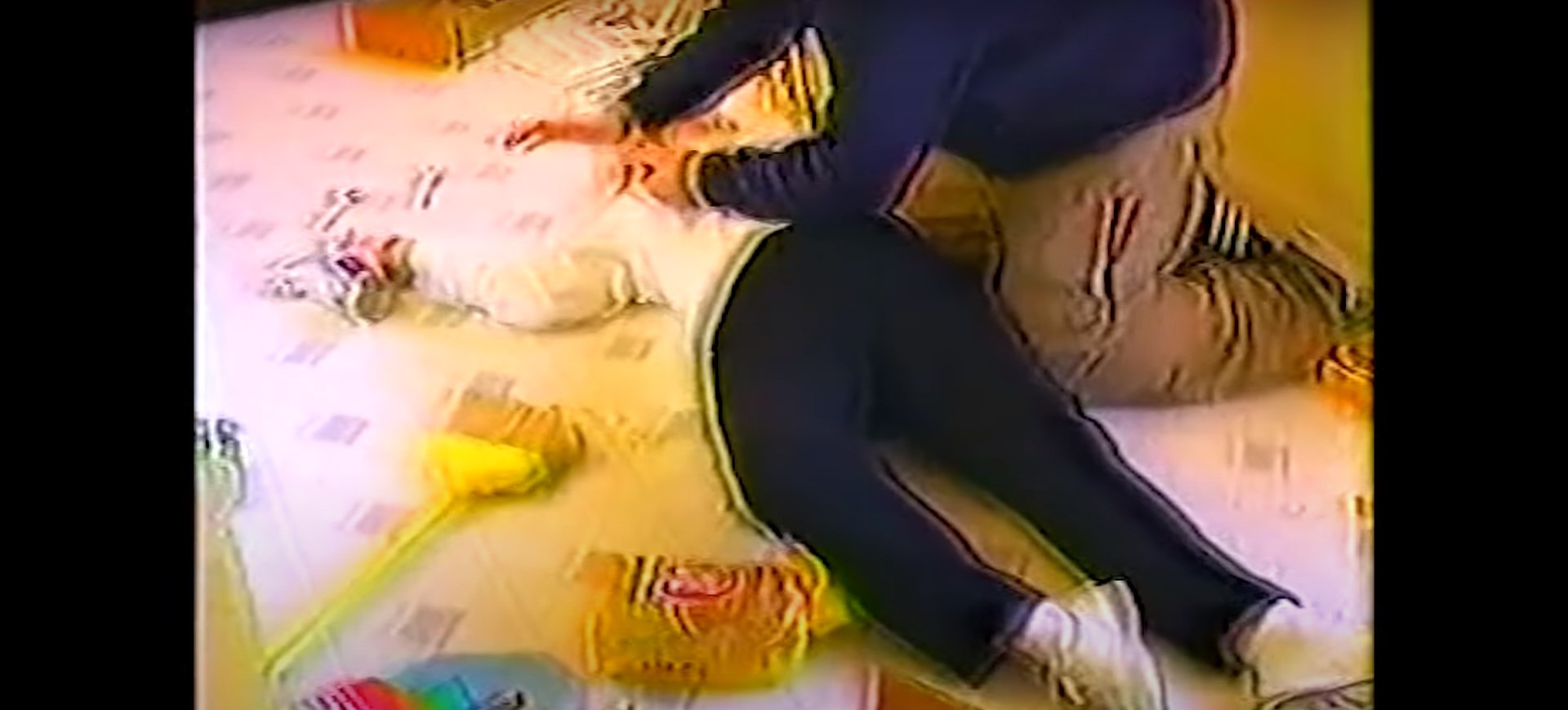
A young farm owner invites his quirky, video-taping friend into the soiled and confined basement of his home where he keeps a nude, young woman gagged and rope bound to a chair, previously been tortured, and covered in her own blood and filth.  Both feeling giddy with excitement over their new plaything, the two sociopaths revel inflicting more torment and pain on the woman while her boyfriend’s mutilated and dead corpse is being dismembered in the next room.  When their basement plaything expires after days of neglect, the two joy killers hit the New Jersey and Pennsylvania turnpikes and backroads to continue a merciless killing spree of whomever stands in their path.  Convenient store clerks, hitchhikers, prostitutes, even their tattoo artist and his twin comic book enthusiastic brother are not safe from their chockful of callous carnage and every moment is recorded via videotape for reliving the moment in posterity. 

As far as underground horror goes, Fred Vogel’s “August Underground” is about as extreme and underground as they come and still be recognizable amongst the most casual of horror fandom.  Vogel’s inaugural written-and-directed, pitilessly violent, exploitation begins a direct-to-video trilogy of torture-on-tape with SOV quality, imparting grisly shudders to the unfathomable amount of blank-labeled VHS cassettes through man’s stowage, collecting dust bunnies and remaining unseen over the years to the horrors the magnetic tape just might behold.  What “August Underground” essentially boils down to is a raw day-to-day look of two maniacal serial killers on a free-for-all of a butcher’s market, the shooting locations stretch from the recesses of Vogel’s hometown of Warren, New Jersey and all the way to the surrounding back roads and isolated areas of Pittsburgh, Pennsylvania.  Self-produced by Fred Vogel and co-producer John A. Wisniewski, “August Underground” set inaugural voyage on the blood red sea for Vogel’s Toe Tag Productions in 2001.

There is a severe lack of story for Vogel’s debut and that’s no oversight or a sign of omission of a subconscious creativity.  Most normal, everyday people video-record with the intent on not making a feature-length film but rather to capture memories and store them away for another day.  Vogel strives for that realism here where a plot is, for lack of a better word, pointless for the depicted atrocities where the sole purposes is to exhibit dementedness and insanity.  The same can be said about the cast of nameless characters.  The freeform recording does not spout off introductions or make references to monikers to, again, portray as much as organic conversation or realism as possible to further skewer an already gore and violence skewed imagination into thinking what we’re seeing is authentic and inconclusive of its entertainment purpose.  Fred Vogel, under his so-called porno stage name of Peter Mountain, plays the main principal dressed in arrogance and apathy as he’s recorded in a thumbed selection of runtime filmed by an equally bad-natured, sociopathic friend behind the camera, played by a post-release distancing actor under the pseudonym of Allen Peters.  The two complement each other in a Beavis and Butthead friendship kind of way with Vogel in synch with his character’s bloodlust as well as the burly bulk while camera buddy perversely watches, giggling to his friends’ blood shedding exploits.  Their relationship feels like a lonesome outlet to do harm and senseless killing makes the connection firmer, more enjoyable, in the easiest opportunities of a rural area where bored people do evil just to pass the time.  Vogel sets up a series of scenarios rather than plotting acts of a linear story in what becomes an anthology of anarchy that has us climbing down the manhole of maniacal mischief.  Mania is soaked into every inch of “August Underground” and that fits snug and makes warm the scattered story into a much more coagulated coherency.  “August Underground” rounds out the victims, I mean cast, with AnnMarie Reveruzzi, Erika Risovich, Randi Stubbs, Aaron LaBonte, Ben LaBtone, Victoria Jones, Alexis Iris, Stephen Vogel, Dan Friedman, Casey Eganey, Kyle Dealman, and Andy Lauer.

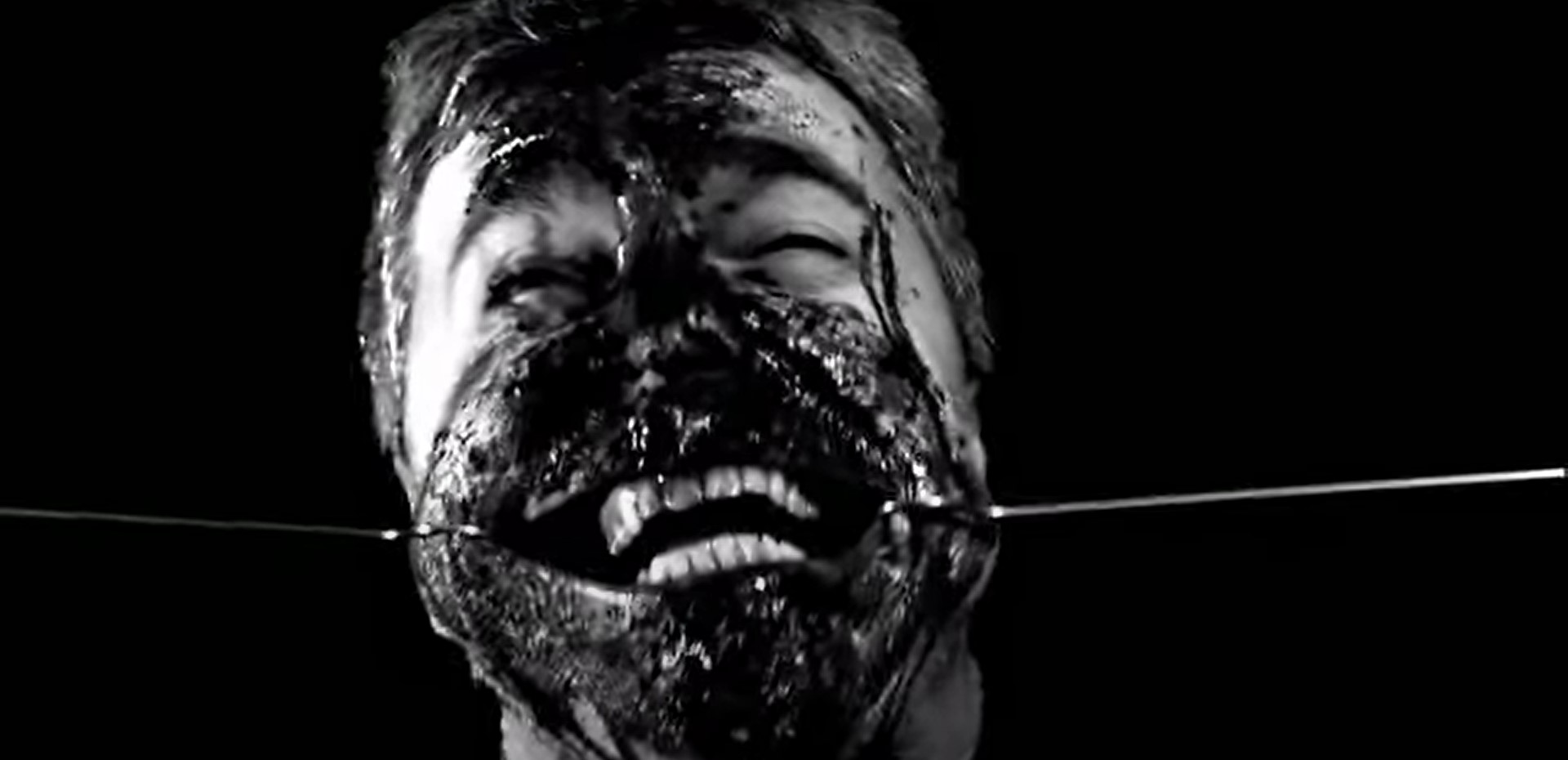
“August Underground” is ugly, nasty, grimy, sordid, perverse, tasteless, callous, and not shot with technical or detailed perfection.  “August Underground” is also unique, bold, unafraid, successful, gory, realistic, practical, and not shot with technical or detailed perfection that’s actually, in its own way, gorgeous.  “August Underground” is all those things and more with its rough-and-ready, extreme exploitation that will be polarizing amongst horror fans and not be a film for everyone’s taste or collection.  Frankly, there are worse underground and extreme horror films out there in the world, but “August Underground,” through the disgusting trices of dismemberment, force feeding of feces, and vomit inducing snuff, has somehow ,at least in this reviewer’s humble opinion, who like in a Dr. Seuss line, has been here, there, and everywhere within the horror spectrum, slipped through the veil of obscurity, having a foot well positioned in the land of the universal acknowledgement where many genre fans putter around with the same old formulas.  The depth of this story is so shallow that digging any deeper into the themes and the possibilities isn’t necessary with its home-made movie facade of people joyfully torturing and killing people being already horrific enough. 

For certain to go out of stock and out of print into physical release obscurity once again, Unearthed Films’ limited-edition collector’s edition of “August Underground” is the 2-disc DVD/Blu-ray combo set to act on right now. The AVC encoded, high definition 1080p, BD50 comes from a MiniDV print, often considered the transitional format from analog and to digital in a tape format with lossy compression. Presented in the original aspect ratio of 1.33:1 aspect ratio, don’t expect image quality to be pristinely detailed and sharp as the MiniDV maxes out at 720p resulting in both, standard and Hi-Def formats, having indistinguishable presentations. Resembling the amateur, at-home movie, scaled down tape quality renders ghosting which shapes and details are bleary and the coloring resembles ember or incandescent with a warm, red-and-yellow layer. What we don’t see much of is a ton of tracking, static, or a ton of noticeable interlace but blacks can be prominently spotty with the horizontal bars. The lossless on-board MiniDV English audio is a PCM 2.0 that doesn’t extend beyond the limits of the camera’s microphone, but the clarity fairs well with clean and commanding dialogue with a natural range between the proximitous cameraman and his killing machine star of a friend in front of the camera. Also, equally interchangeable between the physical formats with what’s made to be a rough recording, discernible differences are minute at best. The Blu-ray and DVD have many of the same special features with the Blu-ray containing a few more frills over its format counterpart with a new Dave Parker interviewing Fred Vogel as well as a separate interview with Vogel and Mike Watt of Rue Morgue Magazine, another new interview with Fred Vogel from Severed Cinema Revisiting Infamy. The formats shared bonus content includes never before seen and new material, such as the original screener version of the film that comes with watermark and a slightly different color grading, a new audio commentary by Fred Vogel and Ultra Violent Magazine’s creator Art Ettinger, a new 10 questions with Fred Vogel answering some of the longstanding queries surrounding the film’s realism achievements and behind-the-scenes permissions and achievements, and a new Toe Tag Masterclass that compares storyboards with the screen version. Archived bonus content include audio commentary with Vogel and actors-producers-brothers Aaron and Ben LaBonte, another commentary track with Fred Vogel alone, an audio commentary by the witty, giggly “Killer,” Hammer to the Head closer look at “August Underground,” on location behind-the scenes, a behind-the-brutality of the film, outsiders’ perspective take in a Too Real for Comfort discussion, an introduction by director Fred Vogel, photo gallery, and trailers. The limited-edition collector’s set comes with a cardboard slipcover with a blurry, interlaced still of Vogel’s character wrapping a forearm around a gagged-girl’s throat while peering into the camera, but it’s the clear snapper case’s front cover that’s more developed with a graphic pencil-graphite illustration of the same slipcover image with more visible mutilated skin and visual weapon of human body destruction. Front cover is also reversible with an interlacing black-and-white image of the main killer. Both discs also sport two different art presses with the Blu-ray mirroring the slipcover image while the DVD has nearly the identical position of killer and victim but with a whole new victim. The region A locked edition has a digestible 70-minute runtime and is, of course, not rated. I would never say Unearthed Films has been diluting their pool of extreme underground gore and guts horror, but their “August Underground” release puts the brazen company back on the mondo-macabre map with definitely a too real for comfort twisted depravity and an au naturel sense of debauchery.

Limited Edition “August Underground” Ready to be Received! 

When Machine and Man Merge, Which EVIL Will Emerge? “Re-Flesh” reviewed! (SRS Cinema / DVD)

“Re-Flesh” DVD Available Now to Replace Your Old Skin!  

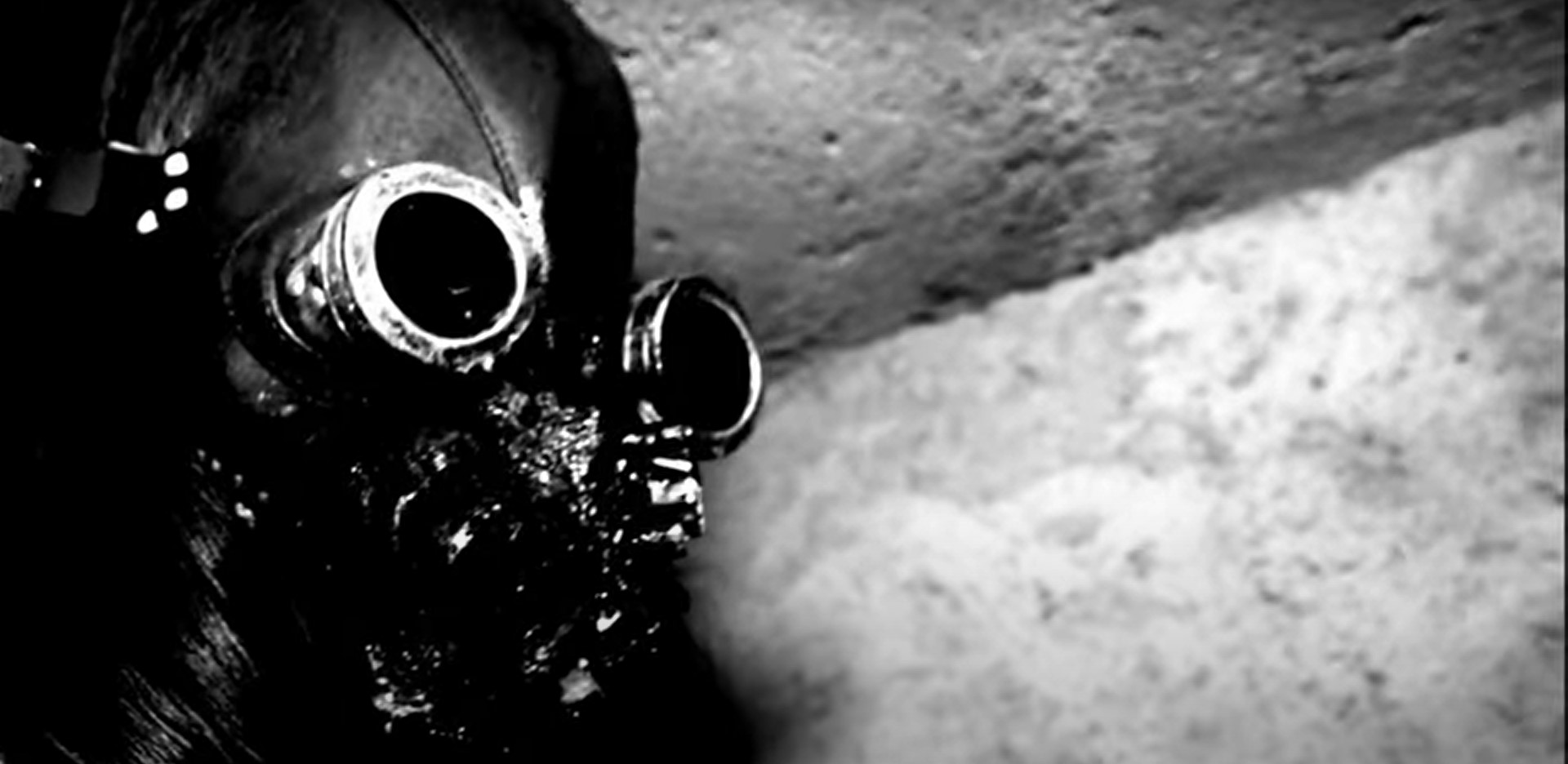
In a dystopian future, machine and man have merged into an asymmetrical symbiosis where machine is preponderantly present to corrupt man’s benevolent humanity.  Such corruption removes compassion at the core level with the use of neurol inhibitors of technological ascendency over mankind in a gruesome, unpleasant fashion.  The exhibited process is exampled with a masked nurse pushing a wheelchair bound masked man down a dank and dark hallway and into a reprocessing room where he’s plugged with a cable attached to his arm.  From there, the man is fitted with a virtual viewfinder displaying five short reprocessing-to-repair files, transmitted before his eyes to incite organic machinery violence that’ll absorb and eradicate years of human psychological evolution.  Slowly through the images and videos of visceral excision does the man morph into an automaton of flesh, blood, and commingled organic cabling and mechanical veins that will render him resolved as biologically re-fleshed.

Japanese splatter punk Body horror inspired “Re-Flesh” becomes “Deep Web XXX” and “Suffering Bible’s” director Davide Pesca’s tribute to the very distinctive denaturalization of the man-machine mix cinematic movement from the unabashed narrative risktakers hailing from land of the rising sun, Japan.  Made popular by the likes of auteurs Shinya Tsukamoto and Shozin Fukui and cult favorites like “Tetsuo:  The Iron Man” and “Tokyo Gore Police,” “Re-Flesh” adds to the niche palate with an unconfined, Italianized take to ambiguate that blurry line between the soul and the soulless as man comes to terms with a terror-inducing technological takeover.  Writer-director Pesca’s underground anthological tale pits the human condition, it’s mortal coil if you will, up against the cold and heartless tech to create coded layers of neova carne, or new flesh.  Pesca and fellow coproducer Massimo Bezzati reteam after “Night of Doom” to collaborate the 2020 released production under their respective indie companies Demented Gore Productions and M.B. Productions.

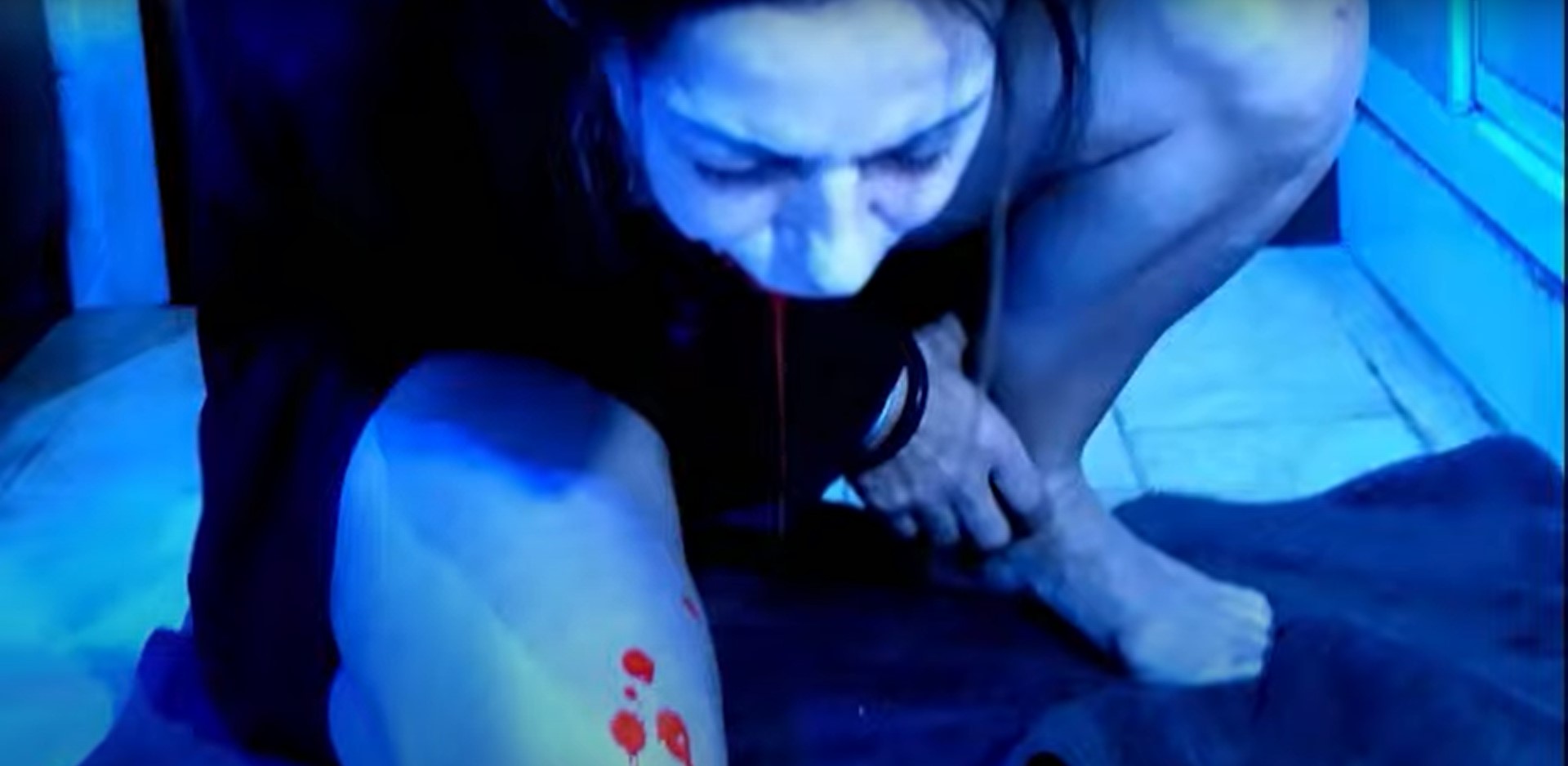
The five-story anthology with the interweaving wraparound of a man being reprogrammed casts a lot of visual performances without the need for dialogue.  Dialogue is reduced to only a pseudo medical television advert or surgical endorsements for a better, prosperous life to eliminate human flaws, advancement in new, and improved, flesh, and can even cure homeless afflictions like drugs and addictions.  Pesca keeps a simplicity about his scenes by keeping sullying dialogue removed to just retain the beauty of body horror and a sonorously cacophonous industrial soundtrack.  Each story’s characters are also fairly simplified.  Without dialogue, individual complexities and depth remain shallow in what is “Re-Flesh’s” sole celebration of horror based cybernetic organisms.  This creates no emotional attachment to any of the characters being violated by fiber optic cables and experimentally operated on with crude animatronic gizmos, but Pesca does implant an imploration of at least one emotional response from his audience through gratuitous nudity on half of the female protagonists going through a rapture and ruination of bodily rape and mutate connected by inhumane sentient cybernetics.  Most of the women protagonists are half-naked women ensnared by the inescapable new world of merged new flesh but the tail end episodes dig a little deeper, perhaps even stretch the theme to the limits of cyberpunk horror, to where women are more than just ravaged victims.  “Re-Flesh” sees skin in the game from Alessandra Pellegatta (“Night of Doom”), Giacomo Clerici, Mery Rubes (“Rage Killers’), Reiko Nagoshi (“Devil Times Two – Quando le Tenebre escono dal Bosco”), Giulia Reine, Paolo Salvadeo, Amira Lucrezia Lamour (Devil Times Two – Quando le Tenebre escono dal Bosco), Alessandro Davoili (“Alice Was My Name”), Ivan Brusa (“7 Days, 7 Girls”), and Marco Cinque.

David Pesca is no stranger to short, gore-laden, underground films having been a featured segment director on a pair of anthologies in the last decade from “A Taste of Phobia” and “After Midnight.”  For “Re-Flesh,” Pesca doesn’t have to share the spotlight in his very own tech-themed, feature length compilation that narrates transmitted computer files as tech insidiously infiltrating our insubstantial innards.  The first three episodes revolve around phones and solitary women become enslaved to the devices with a link of invading their bodies with a foreign object, whether be adopted a virtual, grotesque pet to being the reason for infection that spreads throughout the body like a flesh-eating disease, to being beamed up and constrained for a thorough, if not sexual, examination of one of mother nature’s creatures.  I’m intentionally skipping the review of fourth short and head straight into the terminal episode that is more dystopian splatter punk than the others with an experimental bio-cybernetics company called Neo Vita, or New Life, ridding the world of lowlifes by module implants that turn them into society-controlled puppets.  Yet, all these stories are not terribly straight forward with the rub being the ambitious nature of interpretation and the fact there isn’t a dialogue track for most of the runtime.  Taking a step backwards to the fourth short, I found this particular short doesn’t fit “Re-Flesh’s” theme with a demonic woman damning three inert souls to a black void of pain and death.  Perhaps, a construal could be constructed to lay in code into the technology sequence strand, but the code would be a fractional stretch in comparison to the surrounding system.  As a whole, “Re-Flesh” may side more with gory sanguine than an illuminating story but does depict the scourged with a front row seat in this bloodcurdling network of body horror.

Befitting to be distributed on SRS Cinema’s Nightmare Fuel – Extreme and Unrated sublabel, “Re-Flesh” emerges as a bizarre aghast mix of tentacle erotica and technical dysfunction onto a 480p DVD, presented in a widescreen 1.85:1 aspect ratio.  Technical dysfunction also applies to the image quality.  Though combating some lossy compression issues, the standard definition resolution and budget filming equipment sustain a level of image softness under a desaturated color palette.  Depth and delineation range from hazily outlined to a complete wash out from the frame’s JPEG conversation.  Pesca operates under a wide-stylistic format that incorporates varied black-and-white schemes (a gritty B&W wraparound story compared to a more defined desaturated monochrome for the fourth segment), natural lighting, harsh gel lighting and tint, and green screen for CGI backdrops.  The English dub stereo 2.0 mix will obliterate your sound setup if not careful and without a subwoofer with a booming LFE industrial soundtrack that has produced an inherent crackle and since there is no in-scene dialogue or ambience, all of which is 100% done in ADR, the lower frequencies engulf the other channels that may pop in for phone effects or squishy surgery sounds.  “Re-Flesh” is an Italian film, but the cybernetic implant advert shot, originally spoken in Italian, is dubbed in a burned-in expeditious English dub that is what it is.  Bonus features include a promo and original trailer, a behind-the-scenes featurette entitled Backstage which is a look at some of the gory scene effects the first two segments, the short “Electric Dreams” which is an alternate graded version of the second segment, and other SRS trailers.  The traditional DVD snapper case comes with the illustrated front cover art of the man plugged in under a faux harsh white neon glow with the disc art containing the same art but superimposed with a red hue layer.  There is no insert inside the casing.  The unrated feature has a runtime of 72 minutes, more than enough time for this type of anthology, and has a region free playback.  A kitschy and schlocky graft of “Re-Flesh” will get under your skin, but this anthology quickly grinds gears toward a blue screen of death.      

“Re-Flesh” DVD Available Now to Replace Your Old Skin!  

No Sam Raimi. No Bruce Campbell. Just the EVIL! “Evil Dead Trap” reviewed (Unearthed Films / Blu-ray)


Nami, a Japanese late night show host, is seeing her ratings dipping.  Though not in danger of losing her all-female produced show, Nami decides take her team on an investigation of a mysterious snuff tape that was mailed to her specifically.  Left for her is a bread crumb trail of directions to an abandoned military base, Nami and her crew explore the campus’s rundown structure, searching for evidence, a body, a story that they can televise.  Ignoring the dangerous presence around them, they dig deeper into the dilapidating labyrinth where they horrifying discover something waiting for them laid out in a cruel plan of deadly traps with a maniac pulling at all the strings. 

Bred out of a pedigree of pinkusploitations and a nation’s crisis of identity after the Second Great War, “Evil Dead Trap” is a greatly symbolized Japanese machination tale helmed by pink film director Toshiharu Ikeda (“Sex Hunter,” “Angel Guts:  Red Porno”) and penned by an equally historical pink film screenwriter and “Angel Guts” manga series creator Takashi Ishii (“Girl and the Wooden Horse Torture,” “Angel Guts” series).  Also known under its original Japanese title, “Shiryô no wana,” as well as, and my personal favorite, “Tokyo Snuff,” in Spain, “Evil Dead Trap’s” smorgasbord of rape, torture, and gory death naturally shocked viewers upon release and continues to do so as one of J-Horror’s branched out films that segued out from the brutal and depraved pink film inspired context into the new longstanding ghost genre we’ve seen over the last few decades with “Ringu” (“The Ring”) or “Ju-on” (“The Grudge”).  The production company Joy Pack Films, behind the 1980’s obscure Japan films, such as Genji Nakamura’s “Go For Broke” and Banmel Takahashi’s “Wolf,” houses the “Evil Dead Trap” from executive producer Tadao Masumizu.

If you recognize a couple cast members, or maybe just their naked bodies, then there’s something depraved about you!  With all kidding aside, but no seriously, if Rei (Hitomi Kobayashi) or Kondo (Masahiko Abe) look familiar, then you my friend are pink film aficionados as Kobayashi has starred in “Hard Petting” and “Young Girl Story” and Abe was in these pink film hits the “Pink Curtain” trilogy and “Female College Dorm Vs Nursing School Dormitory.”  If these faces didn’t touch you in any kind of sensual way, no worries, leading lady Miyuki Ono brings the star power.  The “Black Rain’s” Ono plays Nami, a go-getter television host/personality with her sights set on ramping up her late night show’s ratings, but also sucked into the posted snuff film’s darkest allure that’s personally calling her into to a precarious story lead.   Nami could also be a homage to one of screenwriter Takashi Ishii’s manga-inspired pink films entitled “Angel Guts: Nami” and the title might not be the only aspect paid honor to with that particular Nami written with a journalistic vocation drawn into and obsessed with a serial rapist’s attacks, making a striking parallel between the two stories that are nearly a decade apart. Eriko Nakagawa and Aya Katsurgagi fill out Nami’s investigating team as Rei and Mako. As a whole, the characters lack personality; Rei and Kondo tickle with relationship woes that are snuffed out before fruition, Rie’s timid innocence barely peaks through, and Nami and Mako’s thicker bond compared to the rest of the team is squashed to smithereens way before being suckled into note worthy tragedy. This late night show team has been reduced to slasher fodder and, honestly, I’m okay with that as we’re only here for the deadly traps. Noboru Mitani, Shinsuke Shimada, and Yûji Honma, as the mystery man looking for his brother, complete “Evil Dead Traps” casting.

“Evil Dead Trap” boasts a melting pot of inspirations, a mishmash of genres, and spins a nation’s split identity variation crowned in aberration. Diversely colorful neon-hazy lighting complimented by a Goblin-esque synth-rock soundtrack from Tomohiko Kira (“Shadow of the Wraith”), Toshiharu Ikeda shadows early Dario Argento inside and outside the popularity of the Italian giallo genre as the “Evil Dead Trap” murder-mystery horrors resemble more of a westernized slasher with a killer concealed behind a mask stalking a fringed, neglected compound in a conspicuous outfit. While the killer dons no hockey mask or snug in a mechanic’s jumpsuit, an equally domicile, yet more calculated, antagonist taunts more brains than brawns, especially with the severity of traps that seemingly float from out of nowhere. The fun is chiefly in the imagination of how the trap designs operate in the void of physics of a slasher fodder film so wipe clean the Jigsaw and the “Saw” films from your mind completely and relax to enjoy the outlandish kill scenes. Some of the kills are imperialistically inspired by Imperial Japan, that is, to blend the wartime nation’s atrocities with how the proud country wants to distance itself from that old-fashion, war-criminal, stoically perverse superstratum layer, but that’s were “Evil Dead Trap” pulls for most of the juicy parts as well as supplementing with Argento lighting, some, believe it or not, “Evil Dead” elements of that menacing presence bulldozing through the spiritual world, and an divergent climatic finale stuck to the narrative body that’s akin to pulling off the head of a doll and replacing it with T-Rex head’s. The uniformity quells under the pressure of how to end Nami’s and her attacker’s coda with pageantry weirdness that’s typical status quo Japanese cinema. Lots of symbolism, little modest explanation.

Get caught in “Evil Dead Trap” now back in print and on Blu-ray courtesy of Unearthed Films, distributed by MVD Visual, as part of the extreme label’s Unearthed Classics spine #5. The Blu-ray is presented in a matted 1.66:1 aspect ratio, a format rarely used in the States but widely used in other countries. Reverting to the 1.66:1 from Synapse’s 1.85:1 crop, Unearthed Films showcases more of the European feel, heightening that colorful vibrancy of the Argento-like schemes. Image quality has peaked on this transfer with natural grain with the 35mm stock, but details are not granularly sharp in an innate flaw of the time’s equipment and lighting. Shinichi Wakasa’s unobscured practical effects heed to the details and don’t necessary suffer the wrath of miniscule soft picture qualities when you’re impaling someone or birthing a slimy evil twin…you’ll see. Add in Ikeda’s wide range of shooting techniques, you’d think you’re watching Hitchcock or Raimi and the focus really lands there with the differently camera movements and techniques. The Japanese language single channel PCM audio fastens against that robust, vigorous quality to make “Evil Dead Trap’s” diverse range and depth that much more audibly striking, but there’s a good amount of silver lining in there being no damage albeit discernable, but not intrusive static to the audio files, dialogue is unobstructed and prominent, and the stellar synth-rock soundtrack nostalgically takes you back to when you first watched “Suspiria” or “Dawn of the Dead.” English subtitles are available but display with a few second delay which can be cumbersome if trying to keep up. Special features includes three commentaries that include director Toshiharu Ikeda and special effects supervisor Shinichi Wakasa, filmmaker Kurando Mitsutake (“Gun Woman”), and James Mudge of easternKicks. Plus, a Trappings of the Dead: Reflecting on the Japanese Cult Classic retrospect analysis from a Japanese film expert, Storyboards, Behind the scenes stills, promotional artwork, trailers, and a cardboard slipcover with phenomenal artwork. Highly recommend this atypical Japanese slasher, “Evil Dead Trap,” now on Blu-ray home video!

Own “Evil Dead Trap” on Blu-ray!

Spies, Lies, Thighs, and EVIL Guys! “The Dallas Connection” reviewed! (Mill Creek Entertainment / Blu-ray)


Chris Cannon and Mark Austin are back to save the world from a devious organization once again as the two bureau agents are assigned to protect the last world-renowned scientist that developed an International World Arms Removal (I/War) satellite project that could detect terrorists’ weaponry no matter how concealed, but when the other three scientists from around the globe are brutally assassinated, the odds are stacked up against them and the bad guys are always one step ahead of them. Given four computer chips to guard at all times, I/War assigns their best agents to the task of securing hope for the project, called The Dallas Connection, for three days until a specifically timed launch to coordinator with a passing asteroid field that’ll power the satellite for years decades to come, but the well-armed and well-organized crime uses all assets and their power of seduction to gain control over the satellite at all cost.

The L.E.T.H.A.L. ladies series continues with the second buddy-cop picture, “The Dallas Connection,” helmed by Christian Drew Sidaris, son of the erotically charged-action producer and filmmaker, Andy Sidaris that follows up on the first Drew Sidaris prospecting fracas, Enemy Gold. “The Dallas Connection” is the tenth installment of the series, known also as the Triple B series (that’s Boobs, Bombs, and Bullets) that has little-to-nothing linking the entire series cache together aside from being exclusively explosive wrapped with a sensual rouleau of Playmate and Penthouse centerfolds, tightly coiled around the tight and firm half-naked bodies of it’s leading stars. The Sidaris team, under the Malibu Bay Films and Skyhawks Films banners, one again economically ignite a successful B movie that promises 90’s attired, flamboyant action on set at a few familiarly recycled locations in Shreveport, Louisiana and Los Angeles, California, redressed for a not-so different genre or distant premise.

As aforementioned, centerfolds are a staple in any Sidaris, father or son, girls and guns feature and “The Dallas Connection” is no exception, starting off with their main squeeze, good friend, and cult movie icon, Julie Strain, as one of the chief co-antagonist under the nom de guerre, “Black Widow.” Strain is tall, sexy, and a wild villain capable of restraining the violent kick of an AK-47 in thigh high boots and a low-cut open jacket that embodies gun nuts most delectable dreams. The once Penthouse Pet of the Year stays quite reserved compared to her tantamount villainous role in “Enemy Gold” by going topless only in a couple of instances in a death grip roll that involves a lap dance before her prey’s demise, a specified attribute to the beautiful and deadly small spider she spins her call sign from. Black Widow is joined the just as deadly Cobra, fellow Penthouse Pet of the Month February 1993, Julie K. Smith, and Scorpion, the equally as Julie Strain tall, Playboy Playmate of the Month December 1991, Wendy Hamilton. Smith and Hamilton offer up polar features that doesn’t make “The Dallas Connection” a one-type of woman show, but both are voluptuous in their own rite, adding sizzling hot tub sex scenes and long-legged strip shows to accentuate “The Dallas Connection” amongst the B movie fray. “Phantasm II’s” Samantha Phillips becomes the whip cream on top, rounding out Sidaris’ centerfold assembly, as another the third Penthouse Pet of the Month, June 1993. There’s also Bruce Penhall and Mark Barriere, but who cares about these shirtless studs who drag race old Plymouths and jet ski when you four gorgeous women to ogle over? Penhall and Barriere mark their return as Chris Cannon and Mark Austin from Enemy Gold in a buddy-cop adventure loaded with a Dirty Harry Magnum .357 and a M1 Grenade launcher assault rifle. Kaboom! Rounding out the cast is Gerald Okamura (“Big Trouble in Little China”), Roland Marcus, Cassidy Phillips, Ron Browning, Tom Abbott, and Rodrigo Obregon as a satellite scientist.

After finishing “The Dallas Connection,” I wanted to say that I’ve seen this movie before and not because of some misplaced form of déjà vu, but, rather, that I, in fact, HAVE seen this movie before in the precursor film of the L.E.T.H.A.L. ladies series, “Enemy Gold.” The story’s been tweaked slightly to a story with the same framework. Hell, like also mentioned, when you throw in some of the same locations as in “Enemy Gold,” Sidaris’s home with the hot tub and the cabin the woods, and redress the same actors, Julie Strain, Bruce Penhall, Mark Barrier, Rodrigo Obregon, Tom Abbott, and Ron Browning all in the essentially the same roles, “The Dallas Connection” just feels like an extension or a mirror image of that former film, making the story a weary one with nothing really new to spectacle except for three pairs of new, large-and-in charge, breasts in Smith, Hamilton, and Phillips. One difference noticed is that the bureau agents this time around are a lot dafter with skulls thick as a brick and unable to use common logic in the most practical situations. There have been many a time when producer Andy Sidaris commented his films to James Bond, but at least Bond had the smarts to always be on guard; Chris Cannon and Mark Austin do indeed think with their other head that do, in benefit, leave the door open for some saucy hot tub sex that’s perhaps the best simulation from Sidaris reel I’ve seen to date.

Available for the first time on Blu-ray, “The Dallas Connection” will get your rocket launchers off with ton of gunplay and is loaded with beautiful women. The region A, 1080p high definition presentation from a 4K scan restoration has an aspect ratio of 1.78:1 widescreen. The image’s simply gorgeous from the 35mm negative baring a few minor faint scratches that linger only for seconds at a time. There’s quite a bit of noise during the night scenes that almost make the scene look daylit, but skin tones, especially gleaming with water, are remarkably velvety and the textures on clothes and skin looks great for a low budget action. The English language DTS-HD Master Audio dual channel mix medleys appropriately, dialogue is clear and upfront and ambience has proper depth and range. Explosions are powerful coming through the dual channels with a hefty LFE and gunfire can rip just as good as Dutch blasting away at a trophy hunting alien in Predator. Even the sexy lounge soundtrack from Ron Di Iulio is on point despite being a rehash of “Enemy Gold” once again. Hardly any blemishes or distortions coming from the audio track. English SDH subtitles are optional. The bonus features mirror that of “Enemy Gold” as well with Andy Sidaris and Julie Strain doing this awkwardly coy and sugar daddy bit showing off “The Dallas Connection” merchandise and international posters that lead into Andy’s film school where him and his wife, Arlene, go onto commentary on how to shoot scenes and edit them together, using an action and a sexy scene from “Return to Savage Beach” as reference. In the same behind the scenes, there’s an equally bizarre Joe Bob Briggs interview where the legendary MonsterVision and The Last Drive-in Host seems uncomfortable with Andy and star Julie K. Smith about how he persuades to get these beautiful centerfolds to be in his films. Other bonus material includes a commentary on the film itself and theatrical trailer. “The Dallas Connection” is a Texas-size IED with a busty ornate façade, but acts more like a duplication of something we’ve already experienced, making the sophomore feature from Christian Drew Sidaris just a more of the same.

Only $12.99 at Amazon.com! Plus, you purchase a VHS tape! WHAAA!?!