The EVIL Fat Man Delivers a Sack Full of Slaughter in “Christmas Cruelty!” reviewed! (Unearthed Films / Blu-ray)

Oh, Its Starting To Look a lot Like “Christmas Cruelty! on Blu-ray!

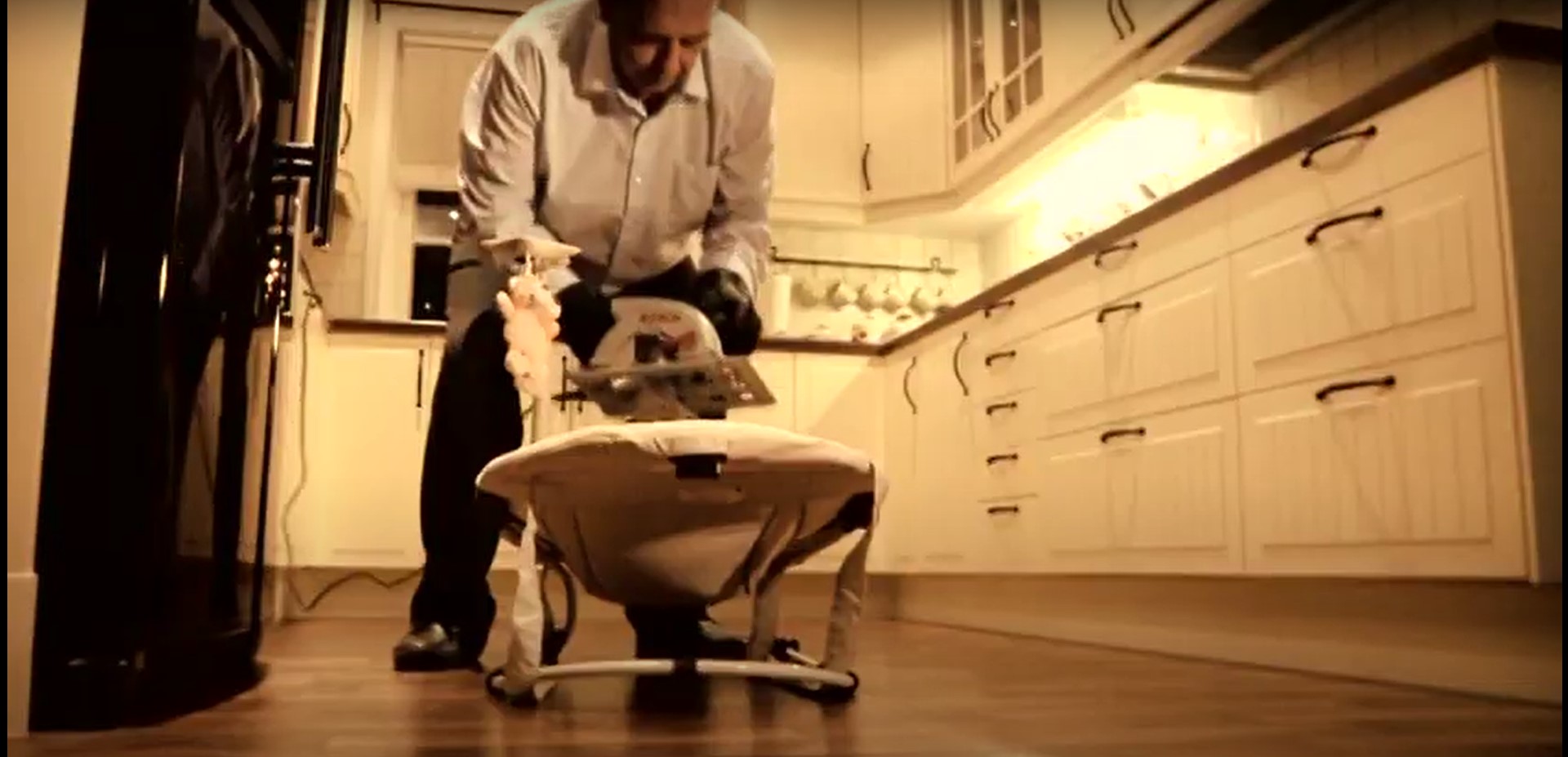
Eline, Per-Ingvar, and Magne are three close and eccentric friends preparing for the jolliest time of year, Christmas. Concocting a unique Christmas spirit of their own with scarring passers dressed as Krampus and brewing an alcohol infused cocktail, the unconventional celebration reflects their individual perspectives on the holiday: a knowledgeable Eline embraces more traditional values, Magne goes against the grain with a loose grasp on the concept of it all, and the lack of mental acuity for wheelchair bound Per-Ingvar leaves him in naive, gullible belief. All the while the friends prep the groundwork for a Christmas party, a homicidal sociopath tracks and records their every movement, habits, and personal attributes and when Christmas comes, the meticulous and brutal serial killer dresses as Santa and infiltrates what turned from being a joyous bash into Santa bashing in heads with a hammer, decapitates party guests, and rip-roars a chainsaw with blood splattering apathy.

It’s that time of year again to ride the Christmas slay down the hills covered with blood-red snow. Santa, usually a sign of pure good and jovial togetherness, is transformed to embody terror and evil across the holiday season. In 2013, Norwegian filmmaker Per-Ingvar “PIT” Tomren (“Bonzai Motherfucker!”) and his co-director Magne Steinsvoll (producer of “Killungard” and “Lyst”) not only star in another Yuletide horror that yields itself to violence and blood but also adds their perspective entry into the vast Scandanavian subgenre of ole’ Saint Nick, or an imposter of the jolly fat guy, going postal in the worst possible way. Tomren and Steinsvioll work into their debut feature film off a script penned by principal co-star Eline Aasheim as well as Janne Iren Holseter, Anita Nyhagen, and directors Tomren and Steinsvoll. Originally entitled “O’Hellige Jul!” in Norwegian, the 2013 released “Christmas Cruelty” is a Stonewall Productions and presented by DC Medias under the producing credits of Magne Steinsvoll, Kim Haldoersen, and Raymond Volle (“Saga”).

Instead of hiring an outside cast for a serial rapist and killer Santa flick, why not just star in the film yourself? In order to get their feet wet in film production as well as learning the rigors of acting, Per-Ingvar Tomren, Magne Steinsvoll, and Eline Aasheim essentially portray themselves as the three friends spending unique quality time together during Christmas. Per-Ingvar works into the script the corporeal truth of this delicate skeletal structure that battles brittle bone disease aka osteogenesis imperfecta. Confined almost entirely to his wheelchair, Tomren curbs his wellbeing for the sake of art as the filmmaker doesn’t exempt himself from the various physical altercation scenes to have a stuntman take the glory. The same kind of sentiment can be said for Eline Aasheim whose character must endure an invasive attack, one that’s deeply uncomfortable and intimate in nature surrounded by a virtually an all-male cast which includes offscreen friendships. Then there’s Magne. If Per-Ingvar and Eline embodied metaphorically everything that is good about the Christmas spirit, Magne was the complete opposite as a complaining, sexist, and indelicate sourpuss living in the moment rather than grasping his own barbed attitude. The malarky between the three friends on screen is perhaps very mirrorlike offscreen as there is a comfortability level with each other performances that keeps the dynamic on the edge of combusting but yet you never feel like a change in their relationship will ever mount, keeping their friendship close, tight, and compact. The outsider, the Serial Santa, is played mid-50’s Norway actor Tormod Lien. I mention Lien’s age because he is older than the other principal characters and that plays into his character’s wisdom as a family man who takes notes on who’s halls he will soon deck. Calm, organized, and deviant, Lien plays into the apathy without a twinkle of empathy and engineers a bloody show of planned homicide with some comedic bits put on by Lien when Serial Santa has to go off script because of interruptions.

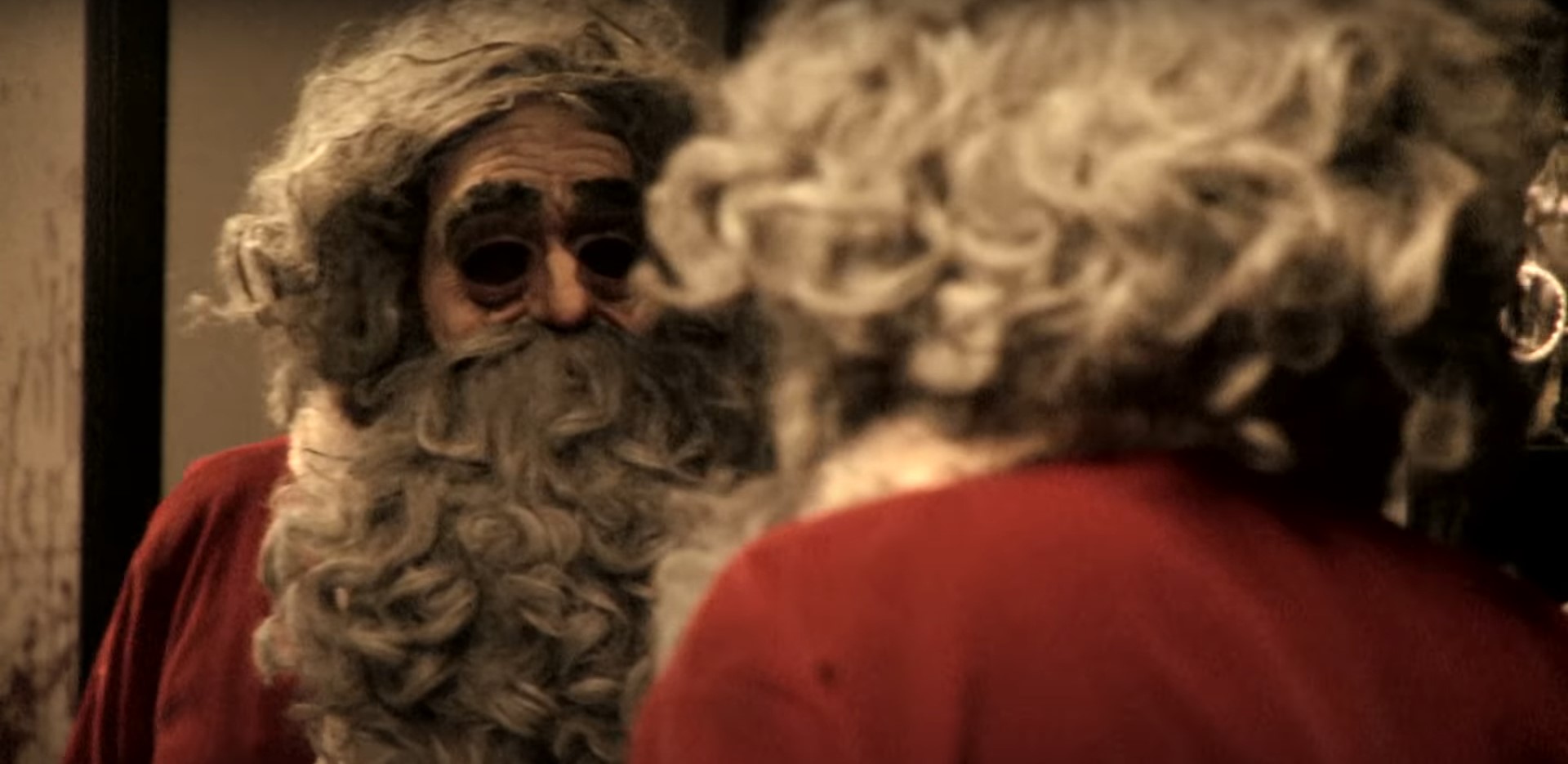
In my mind, there are two types of Christmas horror films: the uncanny universe where Santa, or something related to Santa, such as his toyshop elves or Krampus, world’s lives and breathes in a twisted malevolency while the other type resides in fact with sociopathic and mentally unstable Santa impersonators who go on a merry murdering spree. “Christmas Cruelty!” falls in that latter category with serial killer, dressed as Santa and a grotesque mask, gatecrashes the good protagonists’ party for the nefarious primordial urge to hurt, rape, and kill. Maybe even dabble in a little cannibalism. “Christmas Cruelty!” is a lump of extreme exploitation for next level nihilism. I’ve seen my fair share of messed up movies, but the Tomren and Steinsvoll defiling picture doesn’t even have a millimeter of morality. Without a theme, a message, or a basic point, “Christmas Cruelty!” is hollow atrocity for the sake of shock and slaughter. The principal goods are either too afraid to help each other, too unwilling to help each other, or are too conceited to even take notice that something is amiss. Instead, it’s the Serial-Santa who has his ducks in order, unabashed to simply walk into a room and start his plan of cold-hearted perversion, but before even getting to that moment with deliciously diabolical practical special effects that can produce a gut-wrenching impact, the story goes static with the principal goods chitchatting about history of Christmas, their likes and dislikes of the season, and nursing a hangover from hell. This portion to build character doesn’t actually build character as we’re skirted around victimized trio’s reason for to deserving of our sympathy. Yeah, there’s a person with learning disabilities in a wheelchair and a young woman with an inkling of a moral compass but I find them aimless, sleepwalking through life, and without purpose.

Christmas comes early with the release of “Christmas Cruelty” on Blu-ray home video from our friends at Unearthed Films and MVD Visual. Presented in 1080p with a widescreen 1.78:1 aspect ratio on an AVE encoded BD50, Unearthed Films rendering of the transfer goes without a hitch, but the stylistic choices of Tomren and Steinsvoll are an eyesore with a mustard yellow overlay intended for a grindhouse veneer that also correlates with the large font and embossed opening credits. Much of the details and natural look are lost in the yellow tint. The erratic editing is supposed to reflect Serial Santa’s fragmented mind which idiosyncratically finds footing but can be off-putting to its experimental quality. The Norwegian language DTS-HD 5.1 surround sound mix reflects no issues with depth and range despite having limited need for both and has mostly clear dialogue albeit some obstruction from the soundtrack that is heavily integrated into the sound design and becomes a character in itself with a blend of English-lyrical Christmas themed tunes, instrumental string melodies, acoustic solos by Magne Steinsvoll, generic rock tracks, and folksy jamming that ends with the loud roaring of a chainsaw slicing through body parts. The bonus features include an audio commentary with co-director Per-Ingvar Tomren and producer Raymond Volle, retrospective interviews in How Cruelty Changes Our Lives featurette, blooper outtakes, photo gallery, The Last Rebels hit “Endless Highway,” an interview with Morten Haagensen, “Tradition” short film, Press Conference, a watch-a-long session with Flesh Wound Horror, and teaser trailer. The Unearthed Films menu options were a bit cumbersome to navigate when trying to play the movie as the next screen goes to the three audio options – either two commentaries that run along with the film and the play movie without commentary, but the options are not terribly intuitive and had to go through the options before I was able to play just the movie. The physical release comes in a traditional blue snapper case with the soulless, dead eyes of the Santa mask illustrated with liver sports and aged wrinkles on the front cover. Unearthed Films’ release comes not rated, region A encoded, and has a runtime of 94 minutes. Probably not the perfect holiday gift for the conventional horror filmgoer, “Christmas Cruelty” is difficult to ingest and digest as not only an extreme exploitation film but as a film as whole, but with the callous chunks of coal and the striped blood red candy cane of scrumptious special effects, the Norwegian definitely offers a good stocking stuffer.

Oh, Its Starting To Look a lot Like “Christmas Cruelty! on Blu-ray!

The EVIL Anti-Abortion Film You Never Knew You Wanted. “Evil Dead Trap 2” reviewed! (Unearthed Films / Blu-ray)

Aki is a self-solitude movie theater projectionist who avoids talking to men and to pretty much everyone in general.  Her high school friend, Emi, is the complete opposite, a socialite of sorts, with a previous celebrity career as a singer and a high profile television news reporter.  While Emi thrusts her unusual interests upon encouraging her married boyfriend, who is more than game, to sleep with Aki, the projectionist has a secret of her own in being the culprit of a string of grisly murders involving young women with their ovaries ripped from the inside out.  When these murders occur, Aki is in a feverish, yet reserved state of mind that borders being sexually and dangerous uninhibited and totally blackout deranged.  She discovers mementos of the night before in her home and questions her actions, especially as the kill count grows and Aki’s mind wanders between reality and the supernatural as a mysteriously eerie boy keeps popping up everywhere, even at the crime scenes.  Emi’s dangerous game and her smug prodding of Aki sends her friend down a rabbit hole of a disturbing past. 

If you’ve seen “Evil Dead Trap” then essentially forget everything you knew about the first film as the sequel is not a direct follow-up and concerns a different tale of prenatal byproduct revolving around a common moniker that connects both films.  That name of evil that binds would be Hideki with the sequel titled “Evil Dead Trap 2:  Hideki,” bestowed the subtitle to ensure proper acknowledge.  Another aspect that’s different is the person in the director’s chair as “Akira’s” screenwriter Izô Hashimoto helms the 1992 sequel from a script cowritten between Hashimoto and the then early in career Chiaki Konaka who would go on to pen teleplays for a number of Ultraman series and get his hands colorfully deep within various anime project, such as the Digimon series.  With such anime talent behind one of the more brutally savage renditions to sow the seeds early in the J-horror supernatural genre that incited the widely popular “Ringu” and “Ju-on” franchises less than a decade later, “Evil Dead Trap 2” pelts a supernatural and homicidal esoteric storyline riddles with themes of abortion, guilt, and deriding judgement.  Naokatsu Itô and Mitsuo Fujita produce the Japan Home Video production, the company behind metal-horror “Tetsuo” and the Yakuza-zombie film “Junk.” 

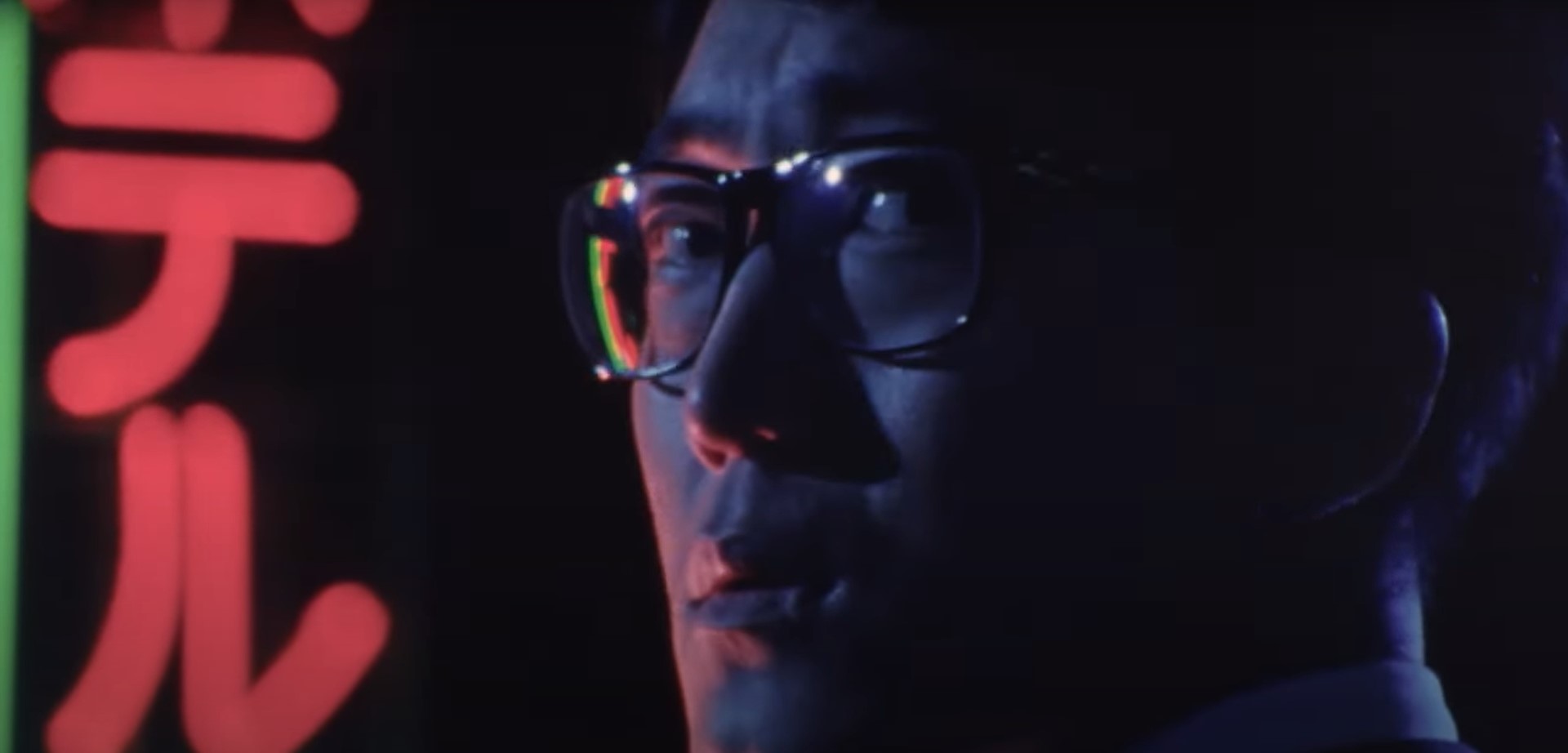
“Evil Dead Trap 2” washes the slate clean with a new cast enveloped into a ghastly chaos the abhorrent an the unnatural.  The story takes on a bold female lead in Shoko Nakajima at the beginning of her career and the fresh faced actress doesn’t also have the typical physique of leading lady.  Nakajima is not only a fascinating and curious choice to be the centerpiece principal but her performance is rock solid with an unsettling, mild-manner manic approach of a night stalker of women opposite her appearance.  Now, whether Hashimoto intended juxtaposition is completely unknown to me, but I find the affect potent nonetheless in unification with Nakajima’s near-subdued and muted act.  On the flipside, there’s “Last Frankenstein’s” Rie Kondoh as Aki’s good friend Emi.  Emi’s a hotshot in her mind fabricated from the television reporter’s brief stint with fame and is cavalier in nature when it comes to her friends and flings.  The contrast between the two is often playfully contentious that never settles on firm ground about how these two become to be friends to begin with, but when their friendship comes to a head in a heated and bizarre one-on-one skirmish with a boxcutter and film sheers, all bets are off and all our conclusions about the two friends are thrown to the wind.  What sets them off is a man, Kurahashi to be exact, a role filled in by Shirô Sano (“Infection”) playing a boyish-behaving philanderer between the two women.  The character of Kurashashi, much the same as Aki and Emi, have his own offshoot piece of the narrative pie with an unsound wife who waits for son to return home – the only problem is, Kurashashi’s wife never had a child.  This is where the 3 characters arcs begin to meld together in a disorder of surrealism between reality and nightmare and those entangled in that web are, for lack of a better phrase, entering a consuming darkness from which they can’t escape, and Hideki is in the middle of it all.  Performances are perfectly unhinged and coy, a variety of personas that make “Evil Dead Trap 2” engaging enough until the end, with a cast list that fills out with Sei Hiraizumi (“Orgasm: Mariko”), Kazue Tasunogae (“Ring 0:  Birthday”), and Shôta Enomoto as the ominous, tangible presence of Hideki.

Comparing the original to the sequel is like comparing worn infested apples to bloody rotten oranges.  The melding of the characters in the third act succumbs to an arthouse avalanche of symbolism, upon symbolism, upon symbolism.  The audience is expected to piece together the chunks of sinew and connect the dots of sibylline secrets of a past contrition. There are strong themes of abortion that persist up into every other few scenes and mostly allude to Aki as the one who gave up a child that has somehow manifested into living, breathing, perceptible and tangible man-child. Aki’s haunted under her fragile, if not delusional, state and while making sense of the manifestations, that hasn’t quite come clear, yet the mental noise leads her to murder when provoked and has her staggering out into the middle of the night to be willingly ravaged by strange men. A logical response to Aki’s action is that internally grieved recluse has snapped, coming unhinged outside the guise of regret as she kills exclusively around a maternity ward that has since closed and is under heavy construction. However, you can’t disregard the supernatural element so easily as Aki visits a miko, a Japanese shaman of sorts, who is senses Aki’s connection to the other side. Multivocal like primordial Hell, Hashimoto works in beautifully shot scenes with brilliant urban lighting that collocates looming, in-your-face figure over the head of the antisocial Aki and shepherds the characters’ darkest secrets to summit before the entity rips them a part in a bloody showcase of madness.

Unearthed Films continues to reverse coagulation and let the blood flow once again with another obscure Japanese gory horror, “Evil Dead Trap 2: Hideki,” onto a new Blu-ray home video coming in at number nine on the spine for company’s Unearthed Classics banner. The release’s image is presented in a widescreen 1.85:1 aspect ratio and retains much of the luminescent coloring of heavy neon-lighting and intended gel filters to play down the story moment’s stitch in questioned reality. Skin textures appear really defined and that also translates into much of the other details as well. No bulky discolorations, splotchiness, or banding stand to say that there were no real compressions with this release albeit having virtually no special features to go along with the single layered feature. The release comes with two audio options, a lossy Japanese LPCM mono and a far more robust LPCM stereo. Both tracks outline a clean and clear passage with no real threats to the audio with only minor white noise in the background. Optional English subtitles provide an error-free experience and pace well with the film. Aforementioned, a lack of bonus features is reduced to only a photo gallery of scene stills and Unearthed trailers, “Evil Dead Trap 2: Hideki” included. “Evil Dead Trap 2: Hideki” challenges each and every one of us to think outside its basket case box and dredge up reason from an addled, abortion-deviled, and serial murdering narrative.

“Evil Dead Trap 2:  Hideki” on Blu-ray Home Video from Unearthed Films!

Taxi Driver by Day, EVIL Serial Killer by Night! “Dr. Lamb” reviewed! (Unearthed Films / Blu-ray)

“Dr. Lamb” is ready to operate.  See him in action on Blu-ray from Unearthed Films and MVD Visual!

Quiet as a boy verbally and physically abused by his stepmother yet laid to experience the adult perversities at the permission of his unconcerned father, Lam Gor-Yu, now as a man, is still quiet and still has unusual interests as an afterhours taxi driver.  Triggered by rainy nights when a torrent of verbal abuse by his female passengers send the usually reserved taxi driver into a homicidal fury, extending his lonely nights into straggling women, returning their bodies to his family homes, and video tapes his exploits within his fascination for amateur medical procedures.  When the police raid his family home after developed disturbing pictures were discovered at the local print shop, Lam’s entire family is hauled into questioning and it’s to Inspector Lee and his team to unearth exactly what transpired to the lifeless bodies seized by a notoriously sociopathic serial killer.

When you think of serial killers globally, Hong Kong isn’t the first place that comes to mind.  In fact, Hong Kong isn’t even a blip on the radar as the Pearl River Delta residence only has two known serial killers attributed to the city.  One of those killers is Lam Kor-wan – aka The Jars Murderer – aka the Rainy Night Butcher – who terrorized the then British territorialized Hong Kong in the early 80s, killing and post-mortem mutilating four young women.  La Kor-wan became the notorious inspirational material for the Danny Lee and Billy Tang (“Run and Kill”) co-directed Dr. Lamb that was released in 1992 and penned by Kam-Fai Law (“The Close Encounters of Vampire).  “The Killer’s” star Lee, who was more Chinese action star than filmmaker, developed the film, reluctantly at first, during the time when Hong Kong’s Category III classification rating was extending from solely high-end erotica and sleaze into extreme horror and thrillers.  Lee served as executive producer with Parkman Wong, who also worked alongside Danny Lee on “The Killer,” under Grand River Films Ltd.

To be portraying one of two Hong Kong’s serial killers feels like an unsurmountable responsibility burdening the actor’s shoulders in order to parallel the motivational intricacies and the mental mindset as accurate as possible knowing that the character can’t just blend into a vast serial killer fold where you can find multiple variations of John Wayne Gacy or Jeffrey Dahmer being grossly rendered for U.S. pop culture exploitation.  Yet, in steps in front of the camera Simon Yam, one of Hong Kong’s prolific action stars in the late 80s to early 90’s now stepping into the shoes of a real-life maniacal persona and relatively close to where all of Lam Kor-wan’s dirty-little-deeds took place.  Simon Yam could very well be the killer himself, that’s how brilliantly Yam’s performance is in what’s certainly a confident display of range in contrast within his acting opus.  Replacing a gun with a scalpel, Lee and Yam dig deep into the character’s psyche with an interpretation of why Lam Kor-wan did what he did and, frankly, Yam just went stoically wild to reach Lam’s staggering levels of crazy as he descends deeper into the retelling of his encounters with each victim. While “Dr Lamb” is a grim tale, there’s a comical side to it with the police force, supervised by Inspector Lee, played by Danny Lee himself in a duality position of cast and crew. More of the comic relief stems from Inspector Lee’s second-in-command, an experienced, yet overweight, cop who lets others handle his workload. Literally named Fat Bing, comedian and “Human Lanterns” actor Kent Cheng continues his whimsical routine in unvarnished subject matter revolving around separate bits and pieces of people’s tissue and organs for twisted pleasures. Collateral damage of Lam’s horrifying late-night exploratory surgery antics on women involve his family as they also become suspects. Lam’s father (Siu-Ming Lau, “A Chinese Ghost Story”) keeps his blinders on while the evidence piles only to be turned when his son’s transgressions include a minor family member does his own flesh and blood then cross a line of no return.

There are always two sides to every story. No, I’m not saying there are two repelling sides to The Rainy Night Butcher’s homicidal havoc. “Dr. Lamb,” as a film, has a dichotomy about it that’s half biographically true and grim while the other half is crime drama peppered with clownery. The combination is odd and equally as frustrating as the black tone of the historical background and the graphic nature of some authentical depicted acts of inhuman urges find their way weaved into the fabric of cavalier cop buffoonery who, on one hand, seem really good and really intense at their job while, on the other hand, lack the gumption for sobering behavior. Even when investigating Lam’s videotape (to which there is no way in Hell Lam videotaped that himself as the camera moves as he’s engrossed with necrophilia and removing body parts), the cops overact the disgust with what looks like chunky tuna being forced out of their mouth along the lines of appearing like vomit. The underplayed theme is anything but funny in its psychological context of misanthropy and misogyny. All of Lam’s scenes of cruelty are told in flashback through his perspective, molded by his undertone hate for women. “Dr. Lamb” is a misogynistic tale bred out of childhood abuse by a woman close to his family and unabashed and unattended by his lenient father’s lack of concern. Three out of the four women Lam taxis-to-taxidermy often verbally and physically assault him and plague his personal space with their awful behavior, setting a dial backwards in his battered brain that reminds him of the time his stepmother slapped him or forced him into a closet for hours. Is “Dr. Lamb” a Freudian lemma that Lam sees his ruthless stepmother in these women and turns on them to humiliate their corporeal existence? That’s a deep dive, but not as deep as “Dr. Lamb” cuts as a visceral experience based off of one of Hong Kong’s notorious serial killers.

Distributing in at number 8 on the spine of the Unearthed Films’ Unearthed Classics banner is “Dr. Lamb” on a new Blu-ray home video. The region A locked, AVC encoded, BD50 is slicked up with a 1080p high-definition upgrade presented in a widescreen 1.78:1 aspect ratio. As one of cinematographer Kin-Fai Mau’s first few pictures, the cool blue and misty has an interesting allure like a hazy bad dream subdued by an infusion of looking through blue glass with a prism of white light filtering through. Perhaps not as detailed as desired, the release does stand above the rest with low-level continuous speck blemishes that are only noticeable if you’re searching for them. Two audio options are available: a Cantonese LPCM 2.0 Mono and a Mandarin LPCM 2.0 Mono. Both tracks do come with well-sync and accurate English subtitles with the only downside is in their quick sojourning. There are a few instances where the subtitles pop up for literally a second as a result of quick nature of the dialect to get to the next set of text. While toggling between the two languages, my audio receptors really took to the Cantonese for a more natural flow and visually for unison between speech and speaking. The Mandarin is certainly more powerful but also too over-the-top as in watching I relate to watching old Japanese with English dub. The special features include an audio commentary by Ultra Violent’s Art Ettinger and Cinema Arcana’s Bruce Holecheck, a background interview about “Dr Lamb’s” genesis with the story producer Gilbert Po Lamb to the Slaughter, an interview with film critic James Mudge on the Golden Era of Cat III Three Times the Fear, a talking point conversation about “Dr Lamb” from film academic Sean Tierney, an Atomic TV interview with star Simon Yam, and trailers. The physical release itself comes with a 6-page, color booklet essay from cinema academic and author Calem Waddell (producer of “The Collingswood Story” and many horror-film related documentaries). A cardboard slipcover with one of the more provocative poster arts. Unearthed Films’ Blu-ray comes unrated with a runtime of 90 minutes. When perusing what to watch one night, be sure to hail down this cab of fact-based macabre driven by “Dr Lamb’s” psychological psychopathy and his pathologic urge for unnecessary medical procedures.

“Dr. Lamb” is ready to operate.  See him in action on Blu-ray from Unearthed Films and MVD Visual!

This EVIL is Why I Don’t Have a Roommate! “2DLK” reviewed! (Unearthed Films / Blu-ray)

“2LDK” Now Leasing a New Life on Blu-ray from Unearthed Films!

Rana and Nozomi couldn’t be more different coming from different backgrounds with antagonizing behaviors.  The two aspiring actresses live in a cozy two-bedroom apartment hosted by the same production company that has them vying for the same lead role in an upcoming feature film.  The role could jumpstart either of their careers and, internally, Rana and Nozomi believe the other isn’t good enough despite their different approaches in as city girl Rana uses her famine ways and laxer attitude to slut her way up to the top while the country-born Nozomi diligently studies the dialogue and the role to impress beyond her days as a parent-encouraged elementary stage actor.  When tensions rise through apartment sharing irksome nuisances and a man’s affections put an even more divisive wedge in the already gaping hole between them, Rana and Nozomi reach a breaking point and a violent melee of at each other’s throats ensues.

From my personal experience, the only roommate I’ve ever had was my wife during our engagement period and I can tell you that living with someone else – someone’s quirks, someone’s habits, and someone’s tastes – can be utterly earthshattering and explosive in what seems like every little pampered or established, taken for granted role you had living without a roommate is acutely upended and tossed into apocalyptic chaos.  Or, at least, that’s how it feels, right?  The sentiment is exactly perfectly and with killer instinct in Yukihiko Tsutsumi’s written-and-directed fight!-fight!-fight! film “2LDK.”  The 2003 Japanese movie helmed by the “12 Suicidal Teens” Tsutsumi co-wrote the script with Yuiki Miura, who of the last six years penned episodes of the recent various “Ultraman” series.  The 8-day shoot left no time to spare, leaving much of the cast and crew to shoot longer, sleepless nights, on “2LDK,” which in Japan shorthand describes the type of apartment – a 2-bedroom apartment with a Living room, Dining room, and Kitchen.  “2DLK” is a production of Micott, Times in, and DUEL Film Partners and is produced by Kazuki Manabe and Susumu Nakazawa.

When the central plot revolves around two aspiring actresses cohabiting a single living space and, literally, fighting over every inch of space, also literal as well as figural, there’s no room for more cast or even extras.  We’re first introduced to Eiko Koike (“Terra Farmers”) as Nozomi, a small province girl, reserved in manner, and extremely methodical to the point of obsessive.  Koike perfectly pitches Nozomi’s quiet but strong behavior, yet still judgmental about a roommate from the total opposite spectrum in Rana.  Played by Maho Nonami (“Scarecrow”), Rana’s a big city Tokyo girl with a jaded history.  Blunt, sleazy, and inconsiderate of apartment-sharing etiquette, Rana knows how to push Nozomi’s buttons – hard and on purpose with a innocent smile.  The story dives into differentiating Nozomi and Rana with an immediate internalizing of trash talking voiced over for the audience to see how Rana thinks Nozomi wearing high school gym clothes is hanging on to her humble origins whereas Nozomi itemizes every piece of Rana’s expensive accessories with a dollar amount.  Tensions slowly build from there and the actresses do a phenomenal slow burn into madness where the pot lid rockets to the sky when irritations hit the boing point summit.  Before you know it, electric-corded chainsaws are being wielded, spray cleaner bottoms are being spritzed into eyeballs, and eggs and toilet lids are being cracked over heads.   

“2LDK” is compact carnage, relatable dark fantasies of every roommate with a grudge against something thought their roomie did incorrectly or inconsiderately over and over again.  Other factors play into the two women’s meltdowns that provided fuel to the flame the burns with them in.  Rana struggles with the indirect suicidal death of a mother and child during her affair with the woman’s husband.  Nozomi bears the burden of forcedly shepherd to be the best whether to her studies or acting.  Not to forget to mention that both are in the running to be handpicked for a feature film role by the production company and there’s a man in the mix as an exploited chip against the other adoring roommate just to stick that knife into the side and twist for a little extra gut-wrenching spite.  Tsutsumi builds the seething hate, the tension, and the momentum that all comes crashing down in a Tsutsumi tsunami of cat fighting violence, weaponizing every inch of that small apartment from their individual bedrooms to the kitchen as a battleground.  Tsutsumi smartly doesn’t make “2LDK” a story about good versus evil as there are hardly any instances where the audiences will feel Rana nor Nozomi are in the wrong and wish their demise by virtuous-righteous other.  The bout is equally matched at their core and in scrappy ability to pick up whatever is lying around as a deadly weapon. 

Unearthed Films brings this one-on-one battle royale to an all-new Blu-ray release in association with Duel Film Partners and distributed by MVD Visual.  The perfectly paced and timed 70-minute film is presented in a widescreen 1.78:1 of AVC encoded 1080p high-definition transfer.  Image appearance is quite similar to another Unearthed Films Blu-ray release in “Tokyo Decadence” with a hefty grain product that be very discernible in blacker/darker areas of the image, suggesting maybe a celluloid film gauge that offer a pleasantly filmic presentation instead of a white-glove and sleekly fabricated digital video.  While colors don’t exactly pop, the texture is there surrounding skin pores and facial imperfections that shine in the details.  Unearthed Films presents two options with a Japanese 5.1 DTS-HD master audio and a 2.0 PCM stereo.  The multi-channel has a tad trouble discerning the inner voice overs between the two woman and never quite isolating their individual dialogues.  Some food for thought in case you decide to not pay attention to the movie and look at your phone as the dialogue courses through.  Some of the action came off with a bit of an echo but the overall soundtrack is robust with a clean and clear dialogue that comes with option English subtitles.  Extras include a commentary with actresses Maho Nnami and Eiko Koike with subtitles, a making of “2DLK,” interviews from the Tokyo International fantastic Film Festival, interviews from the premiere screening, production briefs on the duel between the roomies, a video message for theater audiences, interviews from the screening at Kudan Kaikan, and a photo still gallery.  Duel epitomizes “2LDK” exactly and only the Japanese know how to formulate a 70-minute comedy-action-thriller of two going toe-to-toe to the death.

“2LDK” Now Leasing a New Life on Blu-ray from Unearthed Films!

EVIL Atones with Drugs and Torture! “Xpiation” reviewed! (Unearthed Films / Blu-ray)

Atone for Your Sins By Buying “Xpiation” on Blu-ray from Amazon!

An elegantly dressed woman thrones herself into the middle of a grungy corridor, pointing a video camera toward two unconscious men. One man lies face down on the floor while the other is gagged and bound naked to a chair. When both men awake from their slumber, the man from the floor continuously tortures the man confined the chair by beating him, slicing his face open with a knife, scraping his skin open with steel wool, bludgeoning him with a clothes iron, and hammering his scrotum all the while the mysterious woman videotapes. The woman coddles her delusional torturous goon with powerful narcotics and motherly affection to do her bidding. She also participates in a few pain inflicting activities that adds more insult to injury to the beaten to a pulp and humiliated young man hanging onto his life by a thread.

Italian gore and shock filmmaker Domiziano Cristopharo wanted to emulate the notoriously extreme and underground horror series Guinea Pig that originated in Japan and was westernized for North American audiences with their own version of American panorama of sadism. For Italy, Cristopharo set out to create his own compendium of starkly violent and gory films Cristopharo dubs the Trilogy of Death. All three films dealing with a theme of punitive suffering were produced in 2017, beginning with “Sacrifice” that written by Samuel Marolla and directed by Poison Rouge (“A Taste of Phobia”). “Sacrifice” was actually turn Cristopharo’s aspiration into reality when it was picked up by the American Guinea Pig series. The next film, “Torment,” was cowritten by Cristopharo and Likov Milotoskih and directed by Adam Ford (“XXX Dark Web”) that pulled inspiration from the infamous John Wayne Gacy murders. The third and last segment, “Xpiation, was helmed by Cristopharo himself from an Andrea Cavaletto (“Dark Waves”) script that finally placed Cristopharo personal touch upon the series he fully endorsed as creator and producer under his production company, Enchanted Architect.

The principal cast is tightly coiled around just the three individuals in the isolated corridor of a vacant, graffiti painted building.   Right away, we’re intrigued by the opening scene of a sophisticatedly dressed woman with blond hair draped over her left eye.  She’s sitting in an armchair with her exposed legs to the side.  She has forearm length black gloves, lushes red lipstick, a tightfitting low cut short skirt black dress slightly exposed by her short sleeve steel gray jacket with a matching pin hat with a clear veil over her face, a purse around her left forearm resting on her thigh, and a camera clutched in her right hand for viewing the spectacle before her.  The provocative Italian actress Chiara Pavoni is the sharply eye-catching center figure amongst the rumble she sits and the two disheveled men she videotapes. Having had roles in previous obscure horror, such as “Demonium,” “Bad Brains,” and VelvetMorgue,” Pavoni established herself as an Italian scream queen that suited her more domicile, yet underhandedly authoritative, role as the Lady in “Xpiation” that has since been a springboard for her career working with Cristopharo on a number of future projects.  We see what Cristopharo sees in the mature in age actress:  a commanding presence with range and willingness to absorb extreme content for the sake of art.  As the Lady, Pavoni orchestrates the drug-fueled violence of Simone Tolu’s character, the drug addict.   Tolu’s crazed approach to a hallucinating and aggressive, substance abusive druggie is more childlike that crosses the line into overzealous disability.  The addict is supposed to be under the Lady’s narcotic spell, bewitched by her motherly presence in feeding love to him by way of various powders, pills, and penetrating needles of unknown liquid matter and while that is certainly what’s on screen, Tolu oversteps his swiss-cheese child mind into more of just maniacal horseplay that cheapens the desired effect.  One of the easier performances in the film is from Emanuele Delia who has to sit naked in a chair, bound and gagged, and take Tolu’s manhandling beatings for most of the duration.  Delia has a handful of scenes where he’s engaged with the Lady in flashback and an existential representation finish but neither one of his three-sided role squeezes out a smidgen of dialogue, reducing his inked and pierced body to be a model of crime and punishment, or in this theme, sin and atonement.

Sin and atonement.  “Xpiation” is simply that.  A minor reconstructing toward a more panache play on the word expiation, the act of making right for wrongdoing, to home in on concluding Cristapharo’s Trilogy of Death.  “Xpiation” expresses this message in the form of vengeance in an exploitation playground of brutality where eye-for-an-eye is a steep slide toward grinding a sinner into the rubber mulch of penitence.  Cristpharo directs a straight up torture film that aims to avoid a fanciful apathetic and really divulges itself into humanizing the torturer with flashbacks of far-from-comfortable life.  Multitudes of abuse fester in the Lady’s past until it suppurates outward after one final act of transgression pushes the Lady beyond the point of enough-is-enough and every ounce of anger and hate that’s been bottled up tightly all the years is shook so hard the cap finally explodes into a meticulously premeditated plan for revenge and relief. Non-linear avant garde is Cristpharo’s go-to storytelling weapon, one that provides “Xpiation” with more layers than just surface level brutality as the director spoon feeds the audience with little bits and pieces of the Lady’s background. As he accomplished with his breakout film, “House of Flesh Mannequins,” the filmmaker is a master at commanding the pace, a maestro del ritmo!

You can now own a piece of the trinity or conclude Domiziano Cristopharo’s trilogy of death with a Blu-ray release of the last installment, “Xpiation,” as the director attempts to revive erotic-horror and institute extreme horror in his home country of Italy. Unearthed Films, a leading distributor in gore, arthouse, and horror films, releases an AVC encode full high definition, 1080p, Blu-ray in a standard widescreen 1.85:1 aspect ratio. Distributed by MVD Visual, I tested the Region A release on a Region B setting and was able to play the not rated film in its 73-minute entirety. Image looks consistently good and more gruesome with the closeup mauling of skin. Colors are vivid enough in the blood and in the contrast, through good lighting, of the lady’s aristocratically lush and starkly colored outfits compared to the bleak rubble that surrounds her. Often, during the flashbacks, does the coloring dull or reduce to indicate flashback. The English dubbed PCM 2.0 stereo is where most of the inconsistencies lie with an uneven dialogue track due to the forced English upon English dub, as the actors are basically whispering their lines in English, and “Sick Sock Monsters from Outer Space’s” Antony Cola’s industrial hum and brood soundtrack masks the dialogue to a muddled intelligibility. I wonder why if the plan was to always dub the film in English, why even bother with dense accents? The bonus features include a decent blooper reel that showcases a lot of the dubbed dialogue, an interview with director Domiziano Cristopharo as he goes into the construction and issues of his seeing his trilogy to fruition, a still gallery of the film, and trailers. With “Xpiation,” Cristopharo continues to amaze and impress with small bubble stories that seldomly traipse to new locations, sticking to a confinement and cruelty disposition, and still be able to build interesting, layered characters trounced in pain and dripping with blood.

Atone for Your Sins By Buying “Xpiation” on Blu-ray from Amazon!