As Videogame Adaptations Go, This Ones the EVILEST! “Exit 8” reviewed! (Blu-ray / Visions Home Video)

Keeping to himself and listening to music on a subway car, just like everyone else, a man exits the train car at his stop and learns his ex-girlfriend is pregnant with their child when she unexpectedly calls him.  Undecided how to feel about the news of being a father, he walks up a flight of stairs to exit the subway station only to find himself trapped in a zigzag hallway that loops the same series of advertisement images, directional signs, and a businessman walking intently down the seemingly sterile and ordinary, tiled corridor.  After reading the hallway’s information sign, noting specifically to not ignore any anomalies and providing the direction to take when an anomaly is discovered, the lost man realizes he’s trapped inside some sort of twisted game and must determine if 8 hallways are either anomalous or not to be free and exit.  If he misses an irregularity, he must start from zero again and not every anomaly is as harmless as a sign out of place.  The anomalies can psychological, monstrous, terrifying, and deadly.
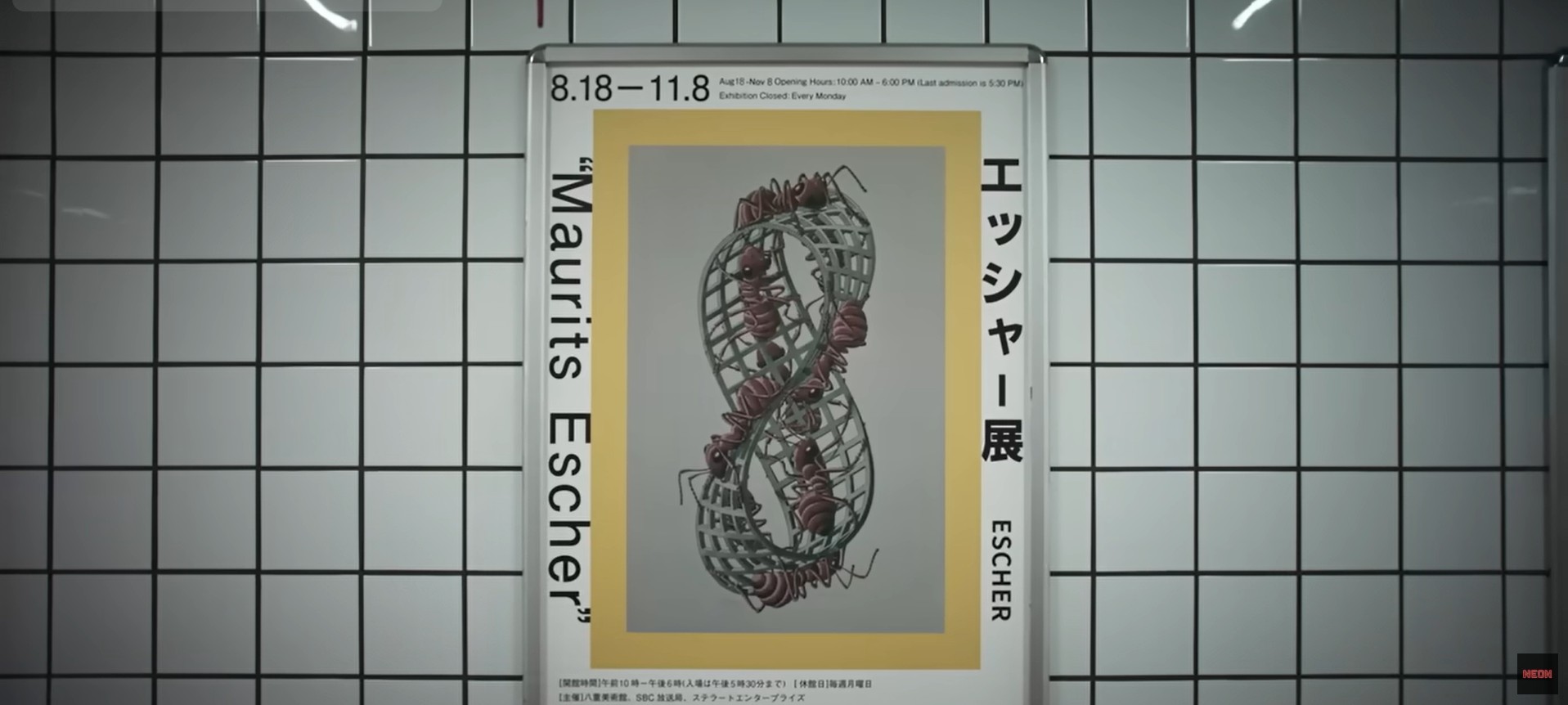
Based off the Japanese horror and psychological video game of the same title, “Exit 8,” the film, also originates out of Japan.  Kotake Create is the indie video game developer behind the “Exit 8” concept and its sequel “The Platform” from 2023 and 2024.  The 2026 film is the sophomore directed film by Genki Kawamura who co-wrote the filmic adaptation “Sai:  Juchang ban” co-writer and director Kentaro Hirase.  Both the video game and movie indulge into the theme of the Noble Eightfold Path, a teaching core of Buddhism that serves a guide from suffering to enlightenment through eight corrected attitudes, such as mindfulness, intention, and effort.  A conglomeration of producers, including Yoshihiro Furusawa, Minami Ichikawa, Taichi Itō, Yuto Sakata, Taichi Ueda, Kenji Yamada, Akito Yamaoto, and director Kawarmura, bring the film to fruition under the Toho Film Corporation and AOI Pro. Inc. and in association with Story Inc. 
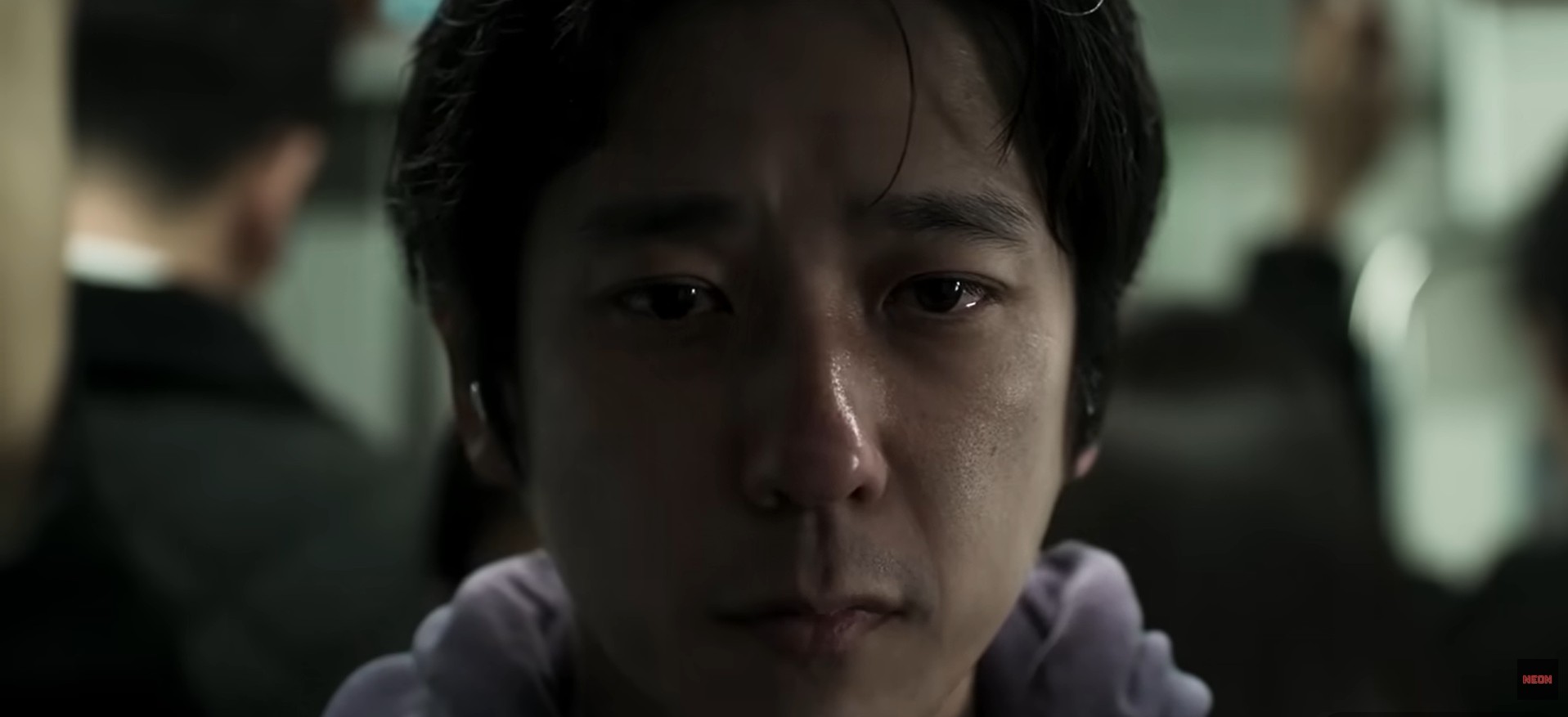
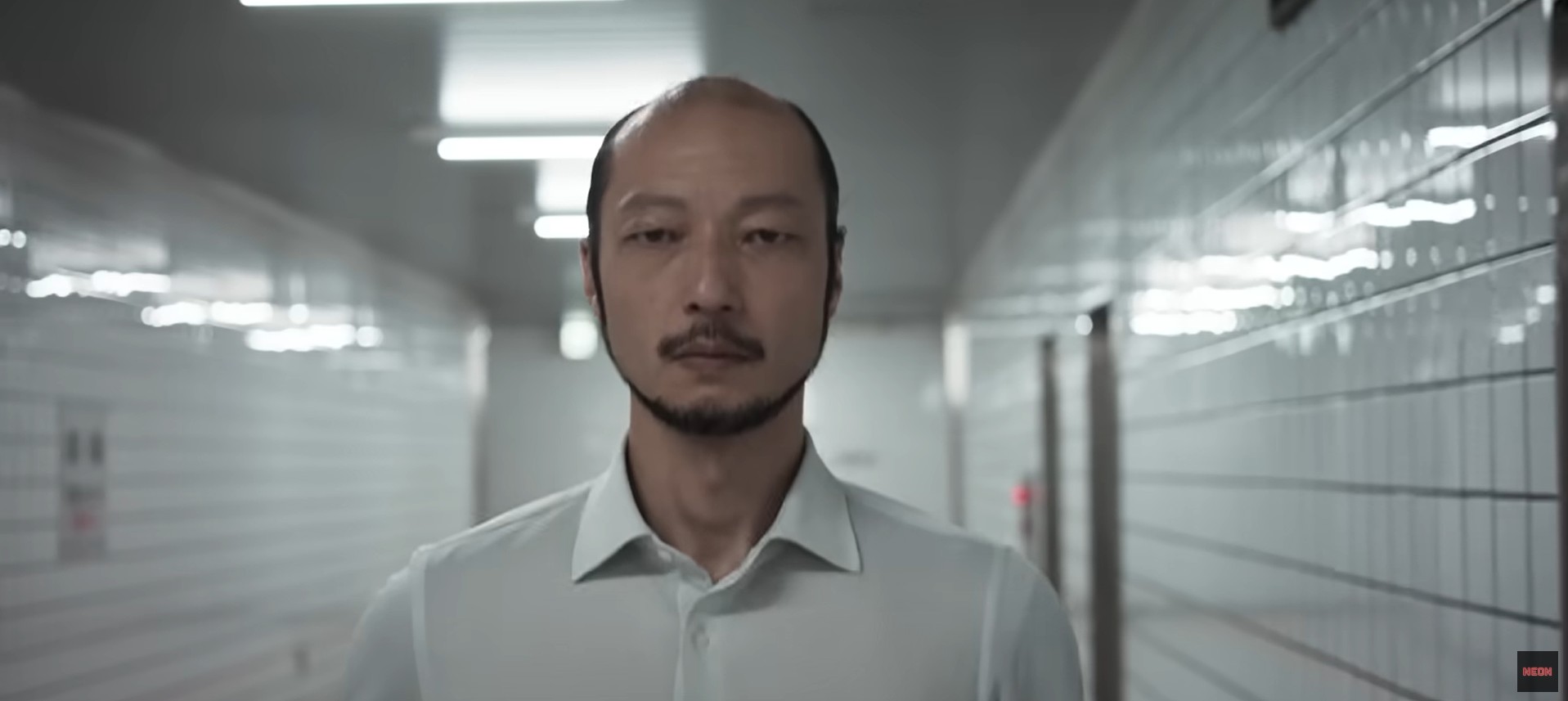
“Exit 8” has a limited cast of key characters, mostly trapped inside the sterile, tiled subway walls, playing real and unreal characters depending on the perspective in turn.  Mostly, the center focus is around a male character only known as The Lost Man, a young man who shrugs off responsibility to his fellow man as well as being undecisive when it comes down to important decisions; we see examples of this on the subway train of a businessman yellow at a mother who’s infant is crying and when his girlfriend phones him to inform him of her pregnancy in which she poises a pivotal question he can’t either fathom, process, or ultimate just decide upon.  “Letters from Iwo Jima” actor Kazunari Ninomiya plays the nameless Lost Man to character arc his way from skirting responsibility to fill him with purpose and round the character out as a person of great attention, detail, and decision.  The only downside to the Lost Man is with how he’s written on the initial experiences of the hallway loop in what’s an obvious disturbance in reality he quietly absorbs without freaking out, even to the point he’s able to quickly red and process the rules of the scenario and understand their purpose.  This, in itself, is an anomaly of human processing and rationality as the average person would be overwhelmed by surreal receptiveness and break down before they could build themselves up.  Ninomiya performance lifts the Lost Man with a more positive performance that sets the emotional rollercoaster back on track and when the audiences to get that break of the character’s mental state, its crippling effect translates and is greatly empathetic.  In the loop, the Lost Man meets the Walking Man (Yamato Kochi) who cycles passes through the anomalous-or-not corridor at an expressionless pace, but we also get his backstory too as he was once real and trapped just like our protagonist.  Another character the Lost Man meets is The Boy (Naru Asanuma), another victim playing the game, and has an eye for detail despite his quiet demeanor.  The Boy also represents the Lost Man’s future being the protector and parent to the boy as they try to escape together through the harsher anomalies.  “Exit 8” rounds out the cast with more minor parts from Kotone Hanase, Hirota Ôtsuka, Tara Nakashima, and Nana Komatsu. 
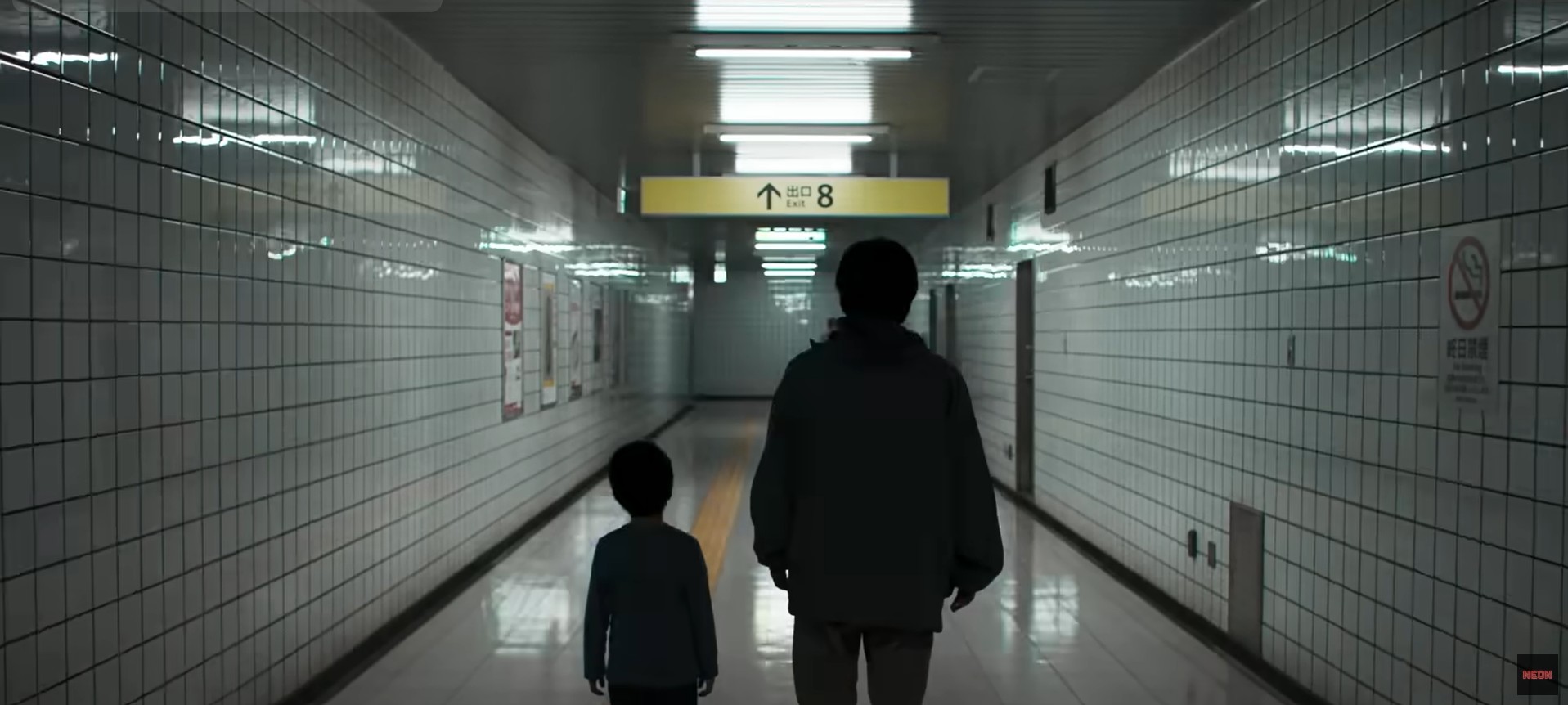
An uncanny and ambiguous horror, providing no explanation for why the man is trapped inside a loop, “Exit 8” serves to be a metaphor for life’s hard decisions, ones that affect fate in the futre.  Paying attention to the small things have the same direct result as paying attention to the much larger, obvious ones despite the being blatant and the threatening anomalies, no matter big or small, can have disastrous consequences.   Kentaro Hirase is an obvious fan of the game by rendering a faithful adaptation of Kotake Create’s creation that walks, talks, and acts just like the mystery horror and existential crises symbolizer.  There’s even a first-person perspective at the beginning of the film that provides more homage to Create’s first-person game.  After that, the switch to omnipresent third person has its own distinct brand of tension and it also achieves grabbing the fearfully fret expressions on the actors faces, that’s if they’re human or otherwise it’s creepier and menacing in the surround sterile environment that can be subtle or flooded with odd occurrences only to go back to normal in a matter of a few steps and one left turn away  Aside from vague purpose of the 8 level loop, there are more creepypasta anomalies that don’t make a lot of sense on its face but share an underlying connection to those cut off from the rest of normalcy in what’s can be considered a subconscious ensnarement of personal strife that has put them in a precarious position with unexplainable and terrifying results.  The acting carries with a repetitiveness about that that is not tired or mundane as the Walking Man walks the same corridor, at the same time, and in the same manner at least ten times in the duration, an exemplary one-note performance by Yamato Kochi to never break the automaton gait and persona no matter how involved the Lost Man gestures or speaks to him.
Visions Home Video’s “Exit 8” Blu-ray is a great addition to anyone’s collection of Japanese modern cinema or overall film library.  With a 1080p high-definition resolution, the AVC encoded BD50, presented in a widescreen 1.85:1 aspect ratio, has natural, run through digital brilliance meaning the walls are sterile white, the color saturation has an innate organic measure through primary grading, and skin tones render like they would off camera but all with the clean look of digital.  There is some noticeable aliasing on the tile that lose some of the definition and blurs as objects move through the scene, effecting in at least a couple of scenes the texturing.  The Japanese DTS-HD 5.1 Master Audio has a kick with a sound design that plays with the perspective of the Lost Man’s environment, providing excellent directional and immersive audio space from the diegetic and non-diegetic muffled and non-muffled sounds from first person perspective with earbuds in to the intensity depth of walking from background to foreground.  Dialogue has strong presence and is clear.  Subtitles are well paced and contain no noticeable grammatical mistakes in the UK English translation.  There may be some key vocabulary differences as anomalies is perhaps more British than the word used in Japan. The English subs come in two options:  SDH and audio descriptive.  The special features include a behind-the-scenes of “Exit 8,” an On the Carpet at Cannes Film Festival featurette, an On the Carpet Busan Film Festival featurette, the UK trailer and the Japanese trailer..  The stark physical presence of “Exit 8” is eye-catching with a mostly golden O-ring, cardboard slipcover with an illustrated figure eight, tiled like the subway corridor with illustrated story characters standing on it.  Sheathed is the clear Scanova case with the same primary image from the slipcover on the sleeve but drops the sheeny gold coloring for more canary yellow.  The reverse side of the sleeve has a creepy image of the Walking Man.    A double-sided, folded mini-poster and art cards of the corridor wall signs are inside the clear case with more yellow themed display pressed on the disc.  The UK 15 certified film lists two different explanations between the slipcover and the clear snaplock case.  The slipcover has strong horror while the clear case has infrequent strong language.  The region B locked region has a runtime of 95 minutes. 

Last Rites: Personal growth is hard. It’s even more difficult when a subway tunnel becomes the ultimate mind-messing and deadly trap to steer you in the right direction. “Exit 8” is a guileful guide of molding moral behavior done with a twisted circumference. This video game adaptation is one of the better ones in a long time!
Earth’s Greatest Threat of Destruction is an EVIL Extraterrestrial Slug! “Slither” reviewed! (Visions Home Video / 2-Disc Steelbook 4K UHD and Blu-ray)

“Slither” Steelbook Can Be Yours! Buy it Here Today!

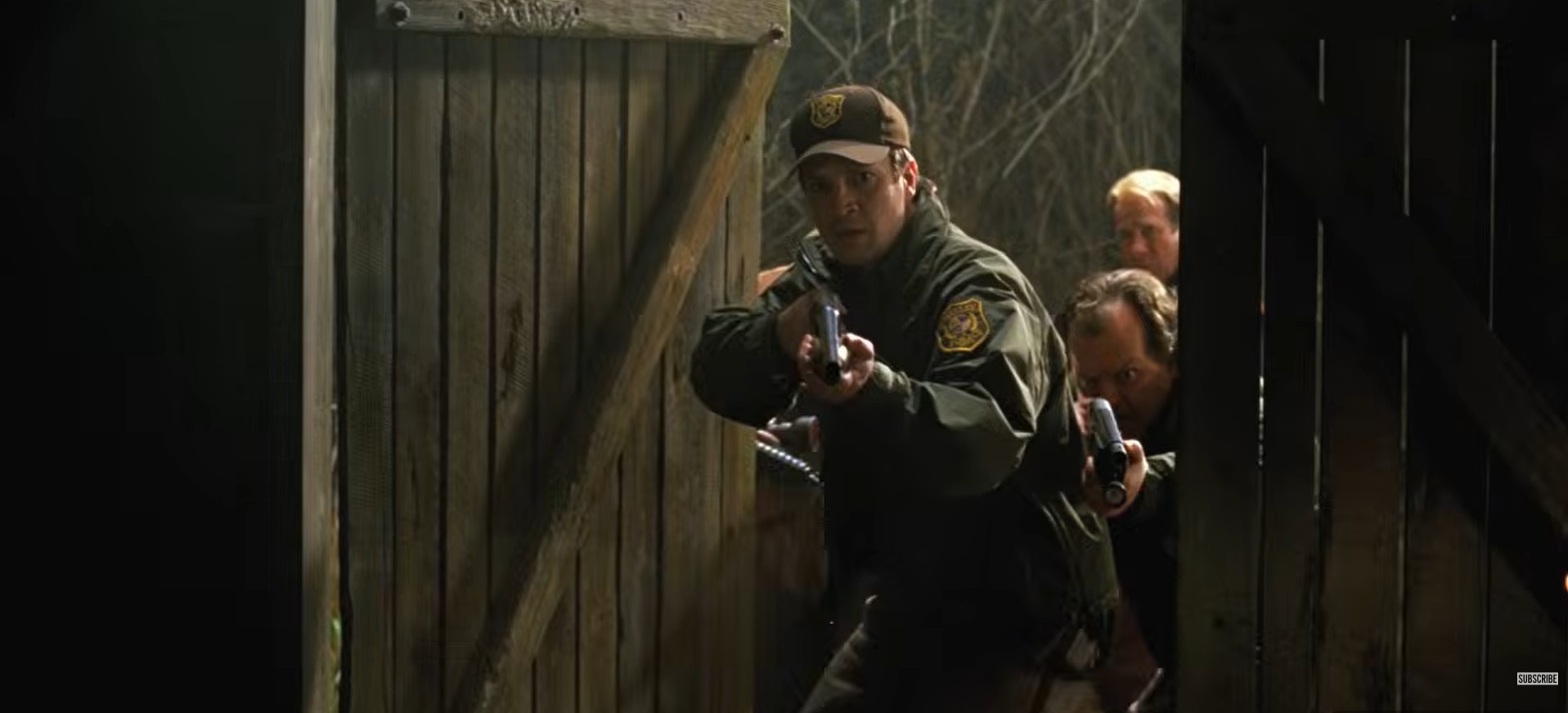
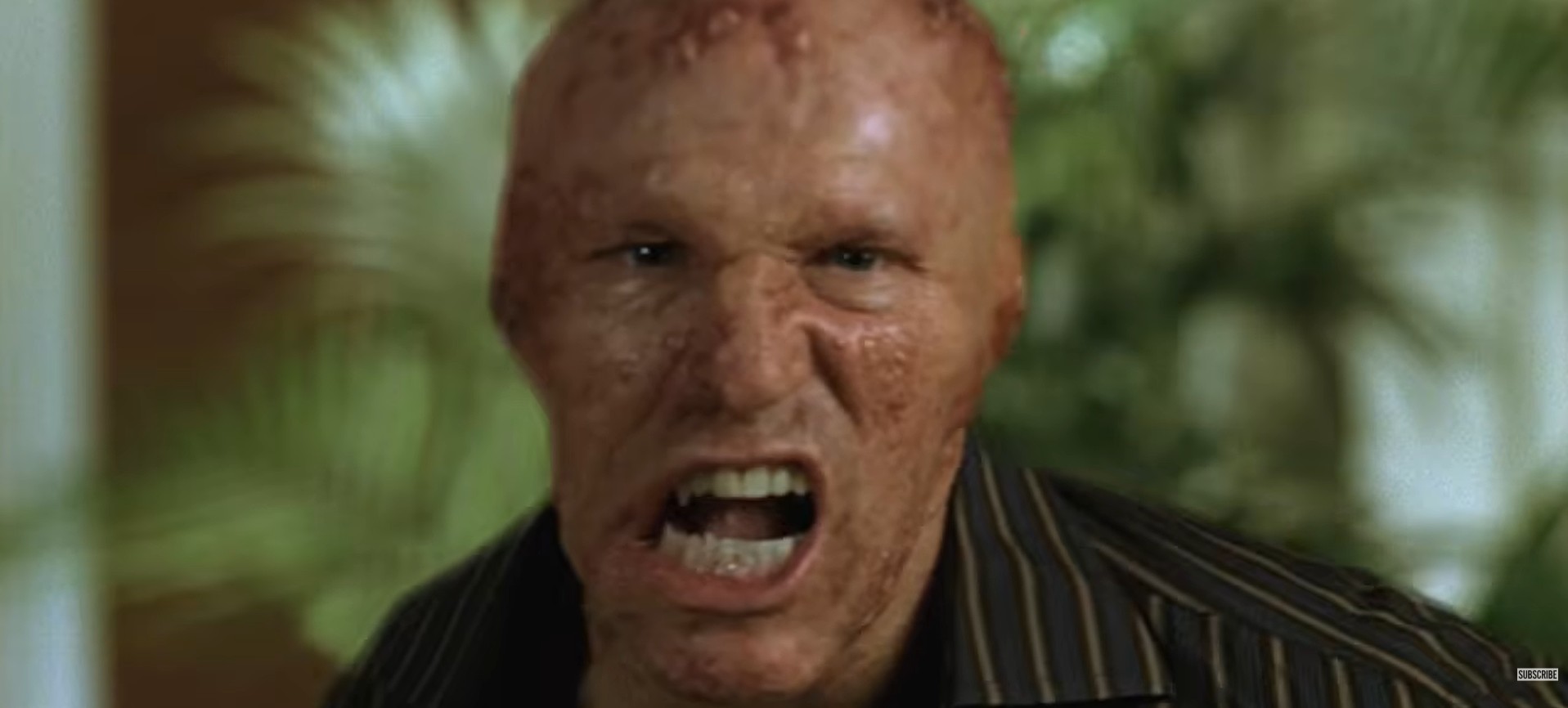
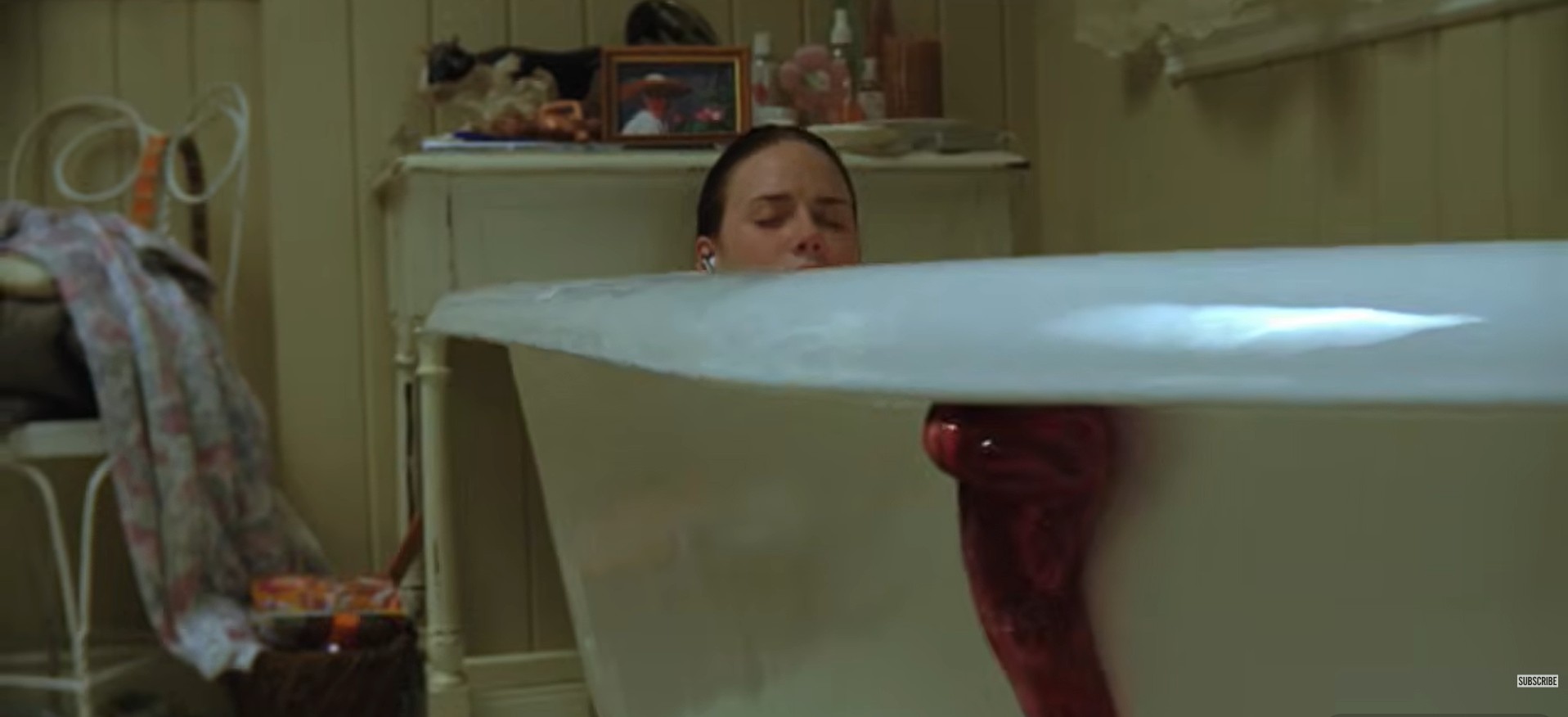
Wheelsy, South Carolina is a small town where the biggest event of the year is the countdown to deer hunting season.  On the eve to the start of the great hunt, an aggressive, parasitic alien entrenches itself inside a human host.  It impregnates a young woman to gestate thousands of its spawn, slug-like creatures that form telepathic link to the host and undertake its bidding.  Newly appointed Sheriff Bill Pardy, alongside his deputies, the eccentric town mayor, and longtime high school crush, Starla Grant, who’s husband was first infected by the invading extraterrestrial creature, must fight through the zombified hordes of alien controlled friends and neighbors townsfolk to stop the source from spreading and taking over the world but with their force numbers dwindling and the alien growing bigger and uglier by the second, Pardy must himself avoid being a host to the meat-hungry creature that has come to plague his small town community.

James Gunn, who has taken the MCU and DCU by storm with his creative involvement directing all of the “Guardians of the Galaxy” films, and upending the David Ayer and Zack Synder-universes with his divergent take on “Suicide Squad, and “Superman,” while also producing the just released “Supergirl,” use to bask in horror with “Slither,” a creature feature that captured the appreciation of 80’s monster movies and body horror with a zombie chaser and plenty of practical, tangible effects.  Gunn wrote and directed the now 20-year-old, 2006 movie filmed in a collective of portions of British Columbia, Canada doubling as a backwater town in South Carolina.  Brightlight pictures and Strike Entertainment produce the Gold Circle films presented movie with Paul Brooks (“White Noise,” “The Fourth Kind”), Eric Newman (“Dawn of the Dead” ’04, “The Thing” ’11), and Jeff Levine (“Shadow of the Vampire,” “ATM”) serving as producers. 

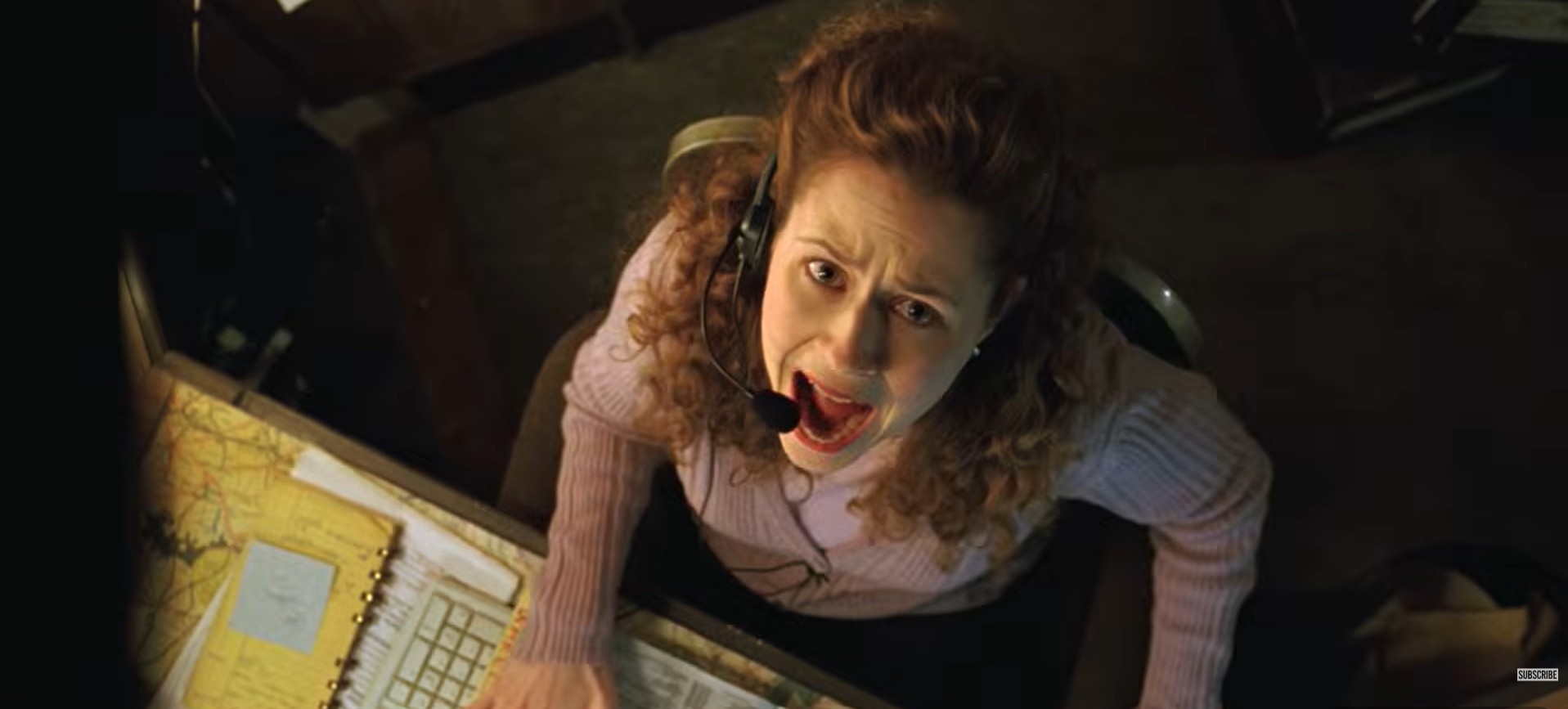
An established cast of talent comprises “Slither’s” eclectic character pool of townies being invaded by an outer space slug with a bad attitude.  “Firefly’s” Nathan Fillion is in the newly appointed Sheriff Bill Pardy and Fillion adds his usual spaceship captain comedic charm and swagger in the more grounded role as he stumbles into a world of slithering extraterrestrials that infest, digest, and gestate inside organic organisms.    Fillion’s hung up projection is for Elizabeth Banks’s Starla Grant, perhaps the most beautiful, and nicest, woman in all of Wheelsy, South Carolina,  The “Uninvited” actress adds pleasantries that are a compliment to Starla Grant but also a detriment as she’s unable to express how she really feels about her much older, well-off husband Grant Grant, played by “Henry:  Portrait of a Serial Killer” Michael Rooker.  Effectively, a love triangle ensues between the three with themes of true happiness, dissolution of a marriage, saving a marriage, love, and heartache coming into play amongst a body transformative horror that exceeds our solar system.  Rooker’s the rich Wheelsy resident who’s very protective of his trophy wife and is starting to feel the pangs of his wife pulling away from his advances but still loves her.  The fourth principal character in this quartet “The Darkling’” Tania Saulnier in what is essentially her debut protagonist role as a teen touched by the shared collective of the slugs and with her insight, provides pivotal information for the survivals to work against.  Each play their respective roles to perfection inside the chaos and mayhem of a more dominant species quickly spreading, even Gregg Henry (“Bodily Harm”) and his jaggedly crude role of town mayor fields a certain level of entertaining value to the frantic fray to keep “Slither” a light-hearted Hard-R creature feature.  The remaining cast includes Brenda Gutierrez (“Stone Cold”), Haig Sutherland (“Halloween:  Resurrection”), Jenna Fisher (“The Office”), and Don Thompson (“Horns”).

“Slither” is one of those seminal movies of the creature feature that could, or more accurately did, being a small fry horror movie that made a positive profit financially and amongst the audiences.  Of course, James Gunn found influence in his favorite horror works and borrowed, to an extent, key elements to spin his own craft that works to stand on its own two feet told mostly by its fine performances of the cast.  The down-to-Earth sci-fi action and gore is palpable and designed well in its composition of practical and computer-generated effects, especially for a mid-2000’s horror.  Gunn’s knack for black comedy works to the advantage of his brand of small-town satire and eccentric characters who can range from being charismatic and likeable to crude and inimitable.  Seeing the influences from John Carpenter’s “The Thing,” George Romero’s “Night of the Living Dead,” and Irvin S. Yeaworth Jr. and Russell S. Doughten Jr.’s “The Blob,” or maybe more so closer to  Chuck Russell’s 1988 remake of “The Blob,” won’t create a rift between the film and audiences as there’s too much to like and laugh about “Slither’s” slimy infiltration and invasion concept without it feeling hackneyed and reaching to strive to be something it’s not in its hark of a classic creature feature and science fiction monster movie.

The first time transferred in 4K, Visions Home Video, a subsidiary label of Vertigo Entertainment, releases “Slither” onto a new 2-disc, steelbook 4K UHD and Blu-ray set.  Disc specs include a 4K UHD HVEC encoded with 2160p resolution on a BD100 and a Hi-Def Blu-ray that’s AVC encoded with 1080p resolution on a BD50, and both films are presented in a widescreen 1.85:1 aspect ratio.  Image quality has been greatly found immersion with an image that pops off of the screen in the 4K option with the additional pixel count.  The Blu-ray holds its own and is also a fine presentation but in UHD, we’re treated to a little extra texture and a little extra clarity from the DolbyVision that can’t be achieved on the standard Blu-ray, especially around night sequences which most of the chaos and action takes place.  This is not to say the Blu-ray is unclear or obstructed as too has plenty of clarity and detail but what it doesn’t have is that deep sensory engagement of picture.  Coloring and grading are equal on both presentations that involve a more organic approach during the date and a bluish grading during night sequences to work in against the lighting.  No issues with the original 35mm elements as it’s kept clean and persevered well last 20 years, contributing to the natural resolution enhancement of the 4K transfer while also maintaining a healty but subtle grain.  The lossless English DTS-HD 5.1 Master Audio has no suppressive issues with fidelity and is just as immersive as the picture quality with distinctive directionals of the back and side channels and a balanced output of stereo, LFE, and central action.  Dialogue has no issues with clarity and is prominent above the audio layering.  The effects, such as slithering slugs sounds and gunfire, offer a good amount of bang for the cinematic budget and the overall main creature sound production eclectically engineered to be funny, in its whipping tentacles with that distinctive whip crack, as it’s scary and gross with its guttural growls and slimy trails.  English SDH subtitles are available for selection.  There’s also an uncompressed Stereo 2.0 audio format available.  Special features include an audio commentary with writer/director James Gunn and actors Nathan Fillion and Michael Rooker, featurettes The Sick Minds and Slimy Days of Slither and Bringing Slither’s Creatures to Life, Gunn discussions The Genesis of Slither in an interview with the writer/director, an interview with director of photography Gregory Middleton We’ve Got Worms, an interview with editor John Axelrad Feed the Fear, an interview with special make-up effects designer Todd Masters Just a Bee Sting, an interview with composer Tyler Bates What’s Gotten Into You, a location and set tour with actor Nathan Fillion, deleted and extended scenes, a blooper reel, and trailers for film.  The Visions Home Video set case comes in a steelbook with metallic luster and an exclusive, and uncredited from what I can tell, illustrated artwork of survivors in the throes of tentacle mayhem.  The backside also includes additional artwork that has the semblance of a veiny, Resident Evil-like giant eyeball.  Both sides are primarily colored in reddish orange with blue slithering in on the front cover.  Inserted inside is a dual-sided mini folded poster with the same front cover artwork plus alternative compositional artwork on the opposite side on its rigid heavyweight construction paperwork.  The 4K UHD is region free while the Blu-ray is region locked B as it’s a UK release.  The 95-minute film is certified 15 for strong gory violence and language.

Last Rites: An early 2000s oldie but a goodie, “Slither” gives a glimpse of James Gunn’s caliber of losers become winners and to not hold back much of the violence, gore, and rough dispositions of uncouth, unsavory, and unsophisticated characters. This new 4K UHD and Blu-ray release from Visions Home Video re-invades “Slither” into our lives, taking over our brains, and becoming part of our physical media collective.

“Slither” Steelbook Can Be Yours! Buy it Here Today!

EVIL Does Not Sit and Rollover. “Good Boy” reviewed! (Visions Home Video / 4K UHD Blu-ray)

“Good Boy” Now Available on 4K UHD Blu-ray from Visions Home Video

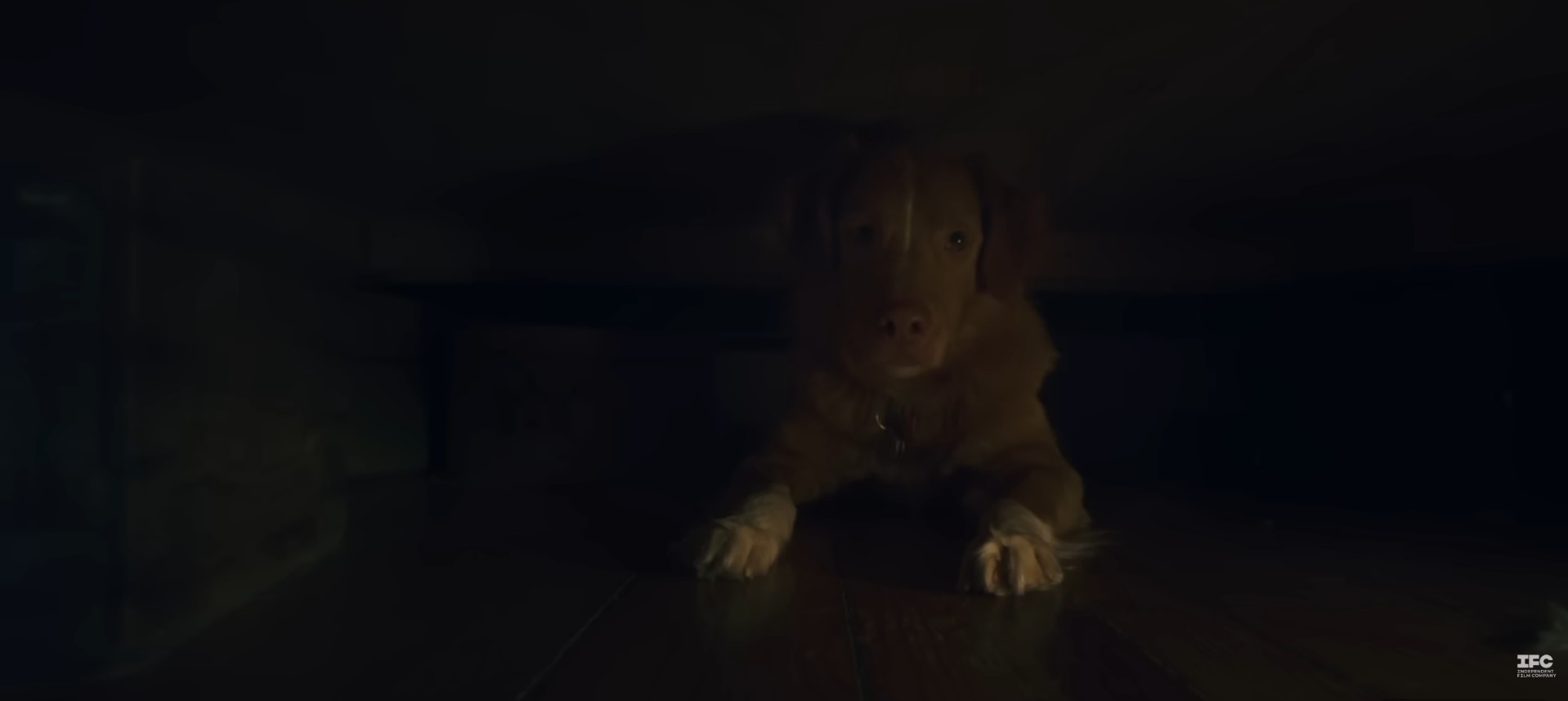
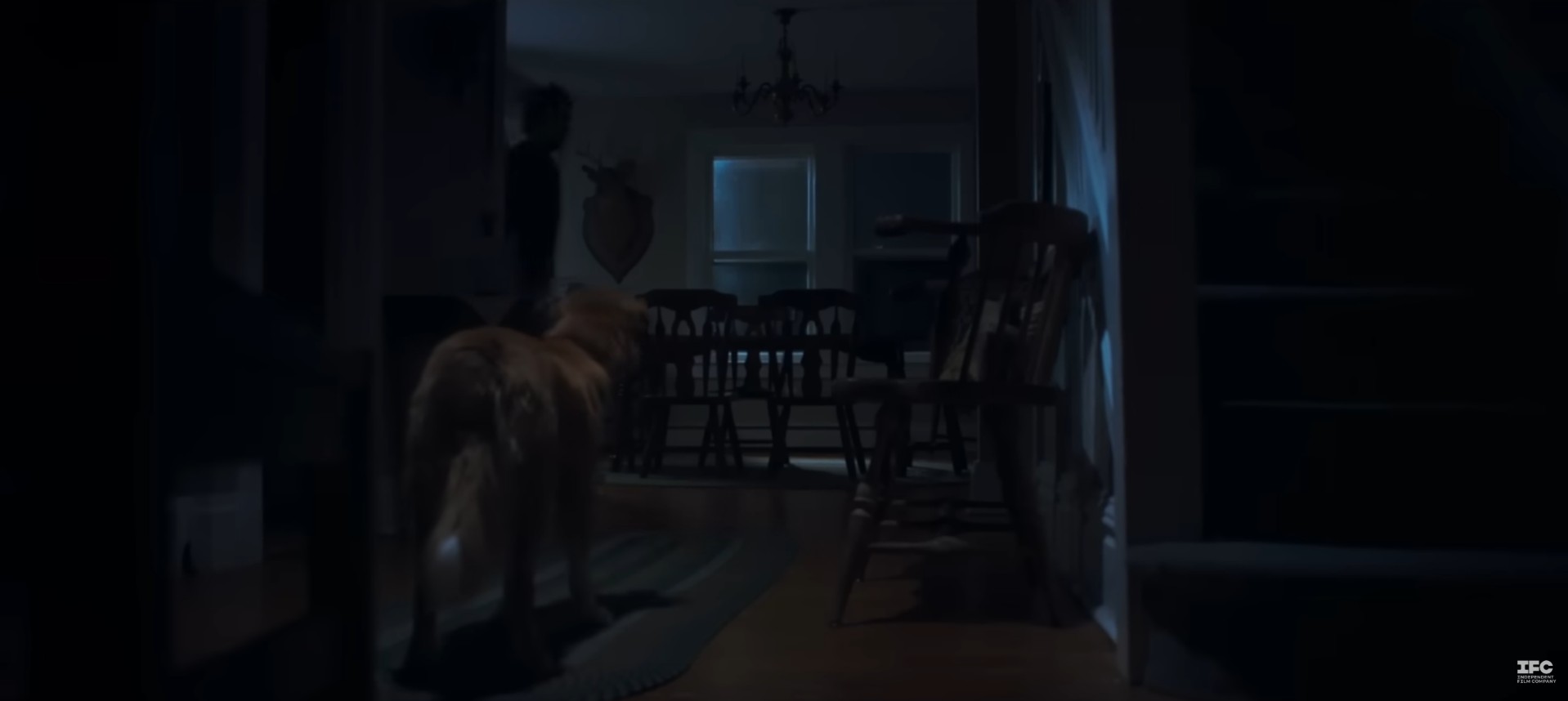
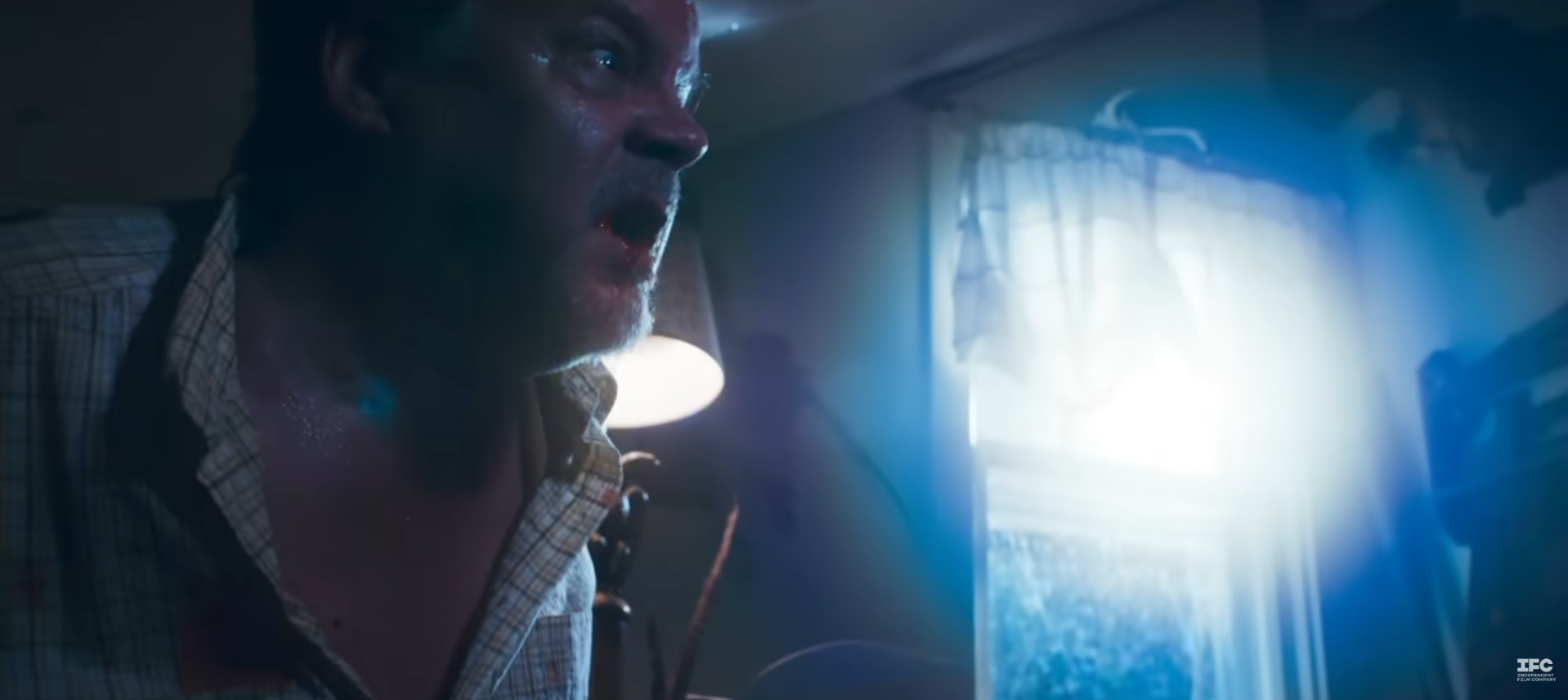
Indy is a good boy, a loyal nova Scotia Tolling Retriever pet and friend to his owner Todd who’s had him since being a puppy.  When Indy senses trouble, a troubling shadowy figure lurking and following his owner, he tries to do all that he can to protect the one he loves the most.  Struggling with a chronic illness, Todd retreats to his grandfather’s isolated cabin deep within the woods for a little rest and relaxation after a medical scare that put him in the hospital.  Indy senses the supernatural force has followed them away from the city and into the rural family home.  As the presence moves about the house, moving closer and closer toward his friend, Todd’s chronic illness becomes increasingly worse, and Indy’s nightmares bend reality as the shadow begins to take a horrifying shape.  Todd’s disease has him nearly incapacitated and unaware of the dangers that surround him, leaving Indy as the last line of defense against the looming dark force that wants to take him.

Pet owners rejoice!  A horror movie with a story from the perspective of its star, a dog.  The 2025 supernatural thriller “Good Boy” has Indy, the then 8-year-old dog’s real name, headlining the film, directed by Indy’s owner Ben Leonberg, horror short filmmaker with such recent credits as “The Fisherman’s Wife” and “Dead Head” from within the last decade.  Leonberg also wrote the script alongside Alex Cannon and took over three years to make due to the complexity of working with untrained animal actors, a task that’s easier said than done, to accomplish Indy’s character narrative from his point of view, and, of course, the rigorous A-to-Zs of creating a feature length film. Leonberg coproduces “Good Boy” with Kari Fischer and Brian Goodheart.  “Good Boy” is a self-referential studio made film with the company name called “What’s Wrong With Your Dog?”

If casting an animal with a hesitation stillness and pensive piercing eyes, Indy is the four-legged fur baby on the short list.  This specific Nova Scotia Tolling Retriever, a breed known for his hunting qualities and retrieval of gunned down carcass and not acting, is an untrained thespian by all means but has a multitude of expressions that work toward the menacing supernatural sense of dread and uneasiness.  When Indy stares into a dark corner, it’s shadows expanding slow across the walls and floors, the stare does convey concern.  When Indy cries and whimpers in apprehension of being left alone or his owner unaccompanied outside the house, those high-pitched cries and frantic movements from window-to-window bring narrative tension to unsafe separation from man and his loyal best friend-protector.  It’s clear that director Ben Leonberg treats his star pup with star focus, providing a dog-level perspective view that incepts and evokes a reaction just like any human character.  This applies even to the interactions with Todd (Shane Jensen) and his swaying, emotional reactions working through his own ebb-and-flow pain of a mysterious illness that plagues him.  Our first scene with Todd has him sitting motionless on the couch, in the dark, and drooling blood from his mouth in an indistinguishable view of his face, a motif amongst all human characters in frame to keep the focus on Indy’s facial Rolodex of emotions.  We never do know what’s wrong with Todd, whether be cancer, organ failure, or perhaps even the supernatural’s malevolent exposure, but it’s made clear he’s on death’s door in more ways than one.  The only human face shown is through the VCR playback of Todd’s grandfather and it’s the unique bone structure of horror friend Larry Fessenden (“Habit,” “Jakob’s Wife”) who often seems to be in, in some way, shape, or form, in a number of Shudder distributed films recently.  Arielle Friedman and Stuart Rudin bring up the small cast rear. 

“Good Boy” is simply not a novel concept.  There have been a few animal centered and perception movies throughout the decades, to name a few we start with “Babe,” the loveable little pig who finds friendship with a barn spider, then there was the tearjerking one with an orphaned bear cub who hitches to an adult male to avoid game hunters in “The Bear,” and, lastly, “Homeward Bound” was an adventurous return home with human voiceovers for two dogs and one cat team.  The element “Good Boy” does differ from those aforesaid examples.  Aside from giving Indy a voice, the non-personified canine is dropped into an intensely atmospheric horror framework that removes the safety net of having opposable thumbs and the misunderstanding between man and animal that makes the tense situation that much more riveting when Indy can’t express to his human the danger that lurks.  There’s a heavy theme of animal sensing danger or something amiss with someone carrying an unseen disease, that disease in “Good Boy” manifests as the shadowy figure that acts like the harbinger of death, or to the dark tune of a grim reaper, lying-in-waiting and eventually reaching for Indy’s human pal, Todd.  In this concept is the tragic downhill of Todd and the heartbreaking care Indy tries to protect and care for his unsuspecting master but in between all of that concern and drive for Indy is a steady fear something isn’t right, looking past Todd’s ailment toward a showier threat that, to an extent, plays like a device of ignorance for Indy, one that truly distracts him for the real danger plaguing Todd that bets the question, do dogs cope with trouble by creating a diversion? 

Visions Home Video, a premium home media label from UK’s Vertigo Releasing, retrieves “Good Boy” for a UK-Ireland 4K UHD Blu-ray release that’s supported on a HEVC encoded, 2160p ultra high-definition, BD100.  Through surreal nightmares, inky darkness, and graded with primarily dark gray and bluish tones, “Good Boy” faces images challenges with an indie production attempting to instill atmospheric fear and subtle bumps in the night.  That challenge is ultimately met its match with DolbyVision that’s able to decode those type, often blocky, negative spaces and darker color scheme in its high dynamic range.  Texturing works to fiber explicate Indy’s golden coat but much of the other details are kept in the dark as Indy’s, with his coloring, is represents almost like a bright spot amongst the color palette, even Todd is obscured in darkness, rain, or mist, but the details that do show do emerge.  Two English audio tracks are encoded with a 5.1 DTS-HD Master Audio and a LPCM 2.0 Stereo.  In regard to the surround mix, back and side channels diffuse the atmosphere non-diegetic sounds to create an immersive environment of a creaky old house pitter-pattered by rain and gusts of wind.  Coupled with the front work dialogue and the forceful jump scare moments creates a cinematic bubble that puts viewers right into the dark and stormy eeriness while sitting in their living room, if the viewer has the appropriate audio setup.  Dialogue is clean, clear, and prominent albeit ambiance tries to nudge it out of the way at times to but unsuccessfully.  Minor instances of depth of Indy, or even the presence, scurrying about the house have leveled balance in what is mostly a still air progression of Indy’s voiceless communication efforts. English is the only available subtitles. Special features include a making-of featurette Making an Indy Film and the theatrical trailer. There are more attractive physical features within Visions Home Video’s black and silver two-toned cardboard O-ring slipcover that leans into the shadow motifs. The same image art is also on the Scanova one-sided sleeve but inside, in the insert, is a double-sided folded mini poster with the same art plus an additional design. There are also four post cards with stills from the feature. The UK 15 certified release has strong horror and bloody images in its brisk 72-minute and region free runtime.

Last Rites: In horror, animals are mostly the perceptive ones, able to see and sense danger that can’t be seen with the human naked eye, and Ben Leonberg captures that phenomena through a fear-induced illness metaphor, one that lies and waits until terminal lucidity knows there’s no escaping the inevitable. Not even man’s best friend can stop it.

“Good Boy” Now Available on 4K UHD Blu-ray from Visions Home Video

Yorgos Lanthimos Early Day EVIL is Not to be Missed! “Dogtooth” reviewed! (Visions Home Video / 4K UHD)

“Dogtooth” Available on 4K UHD Blu-ray from Visions Home Video!

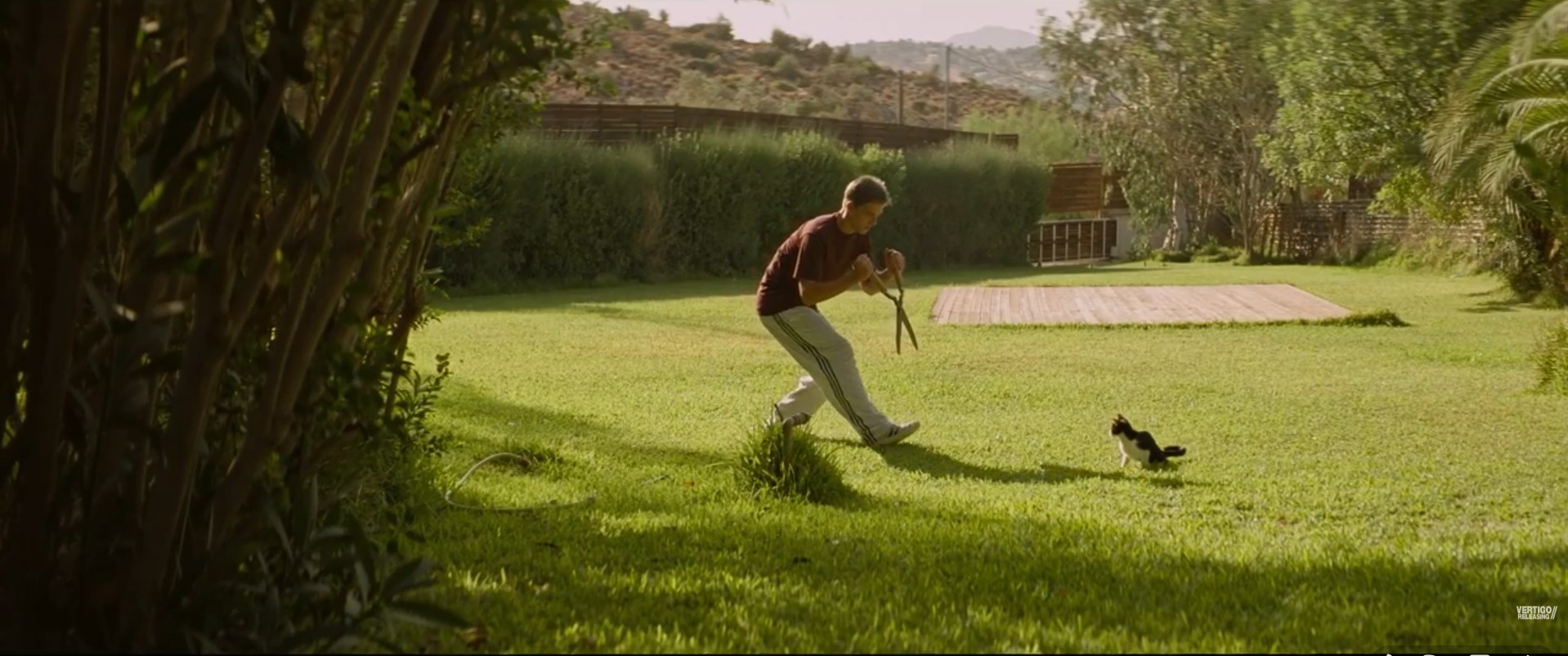
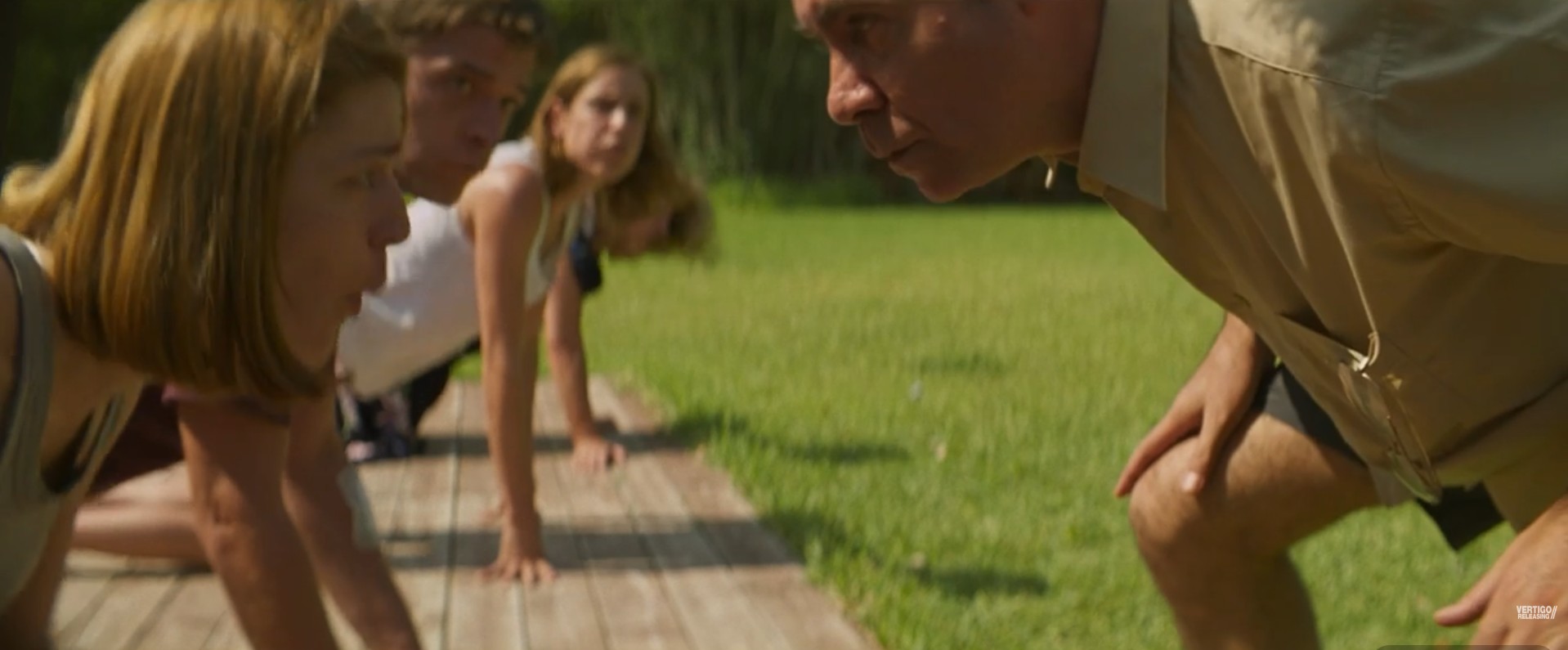
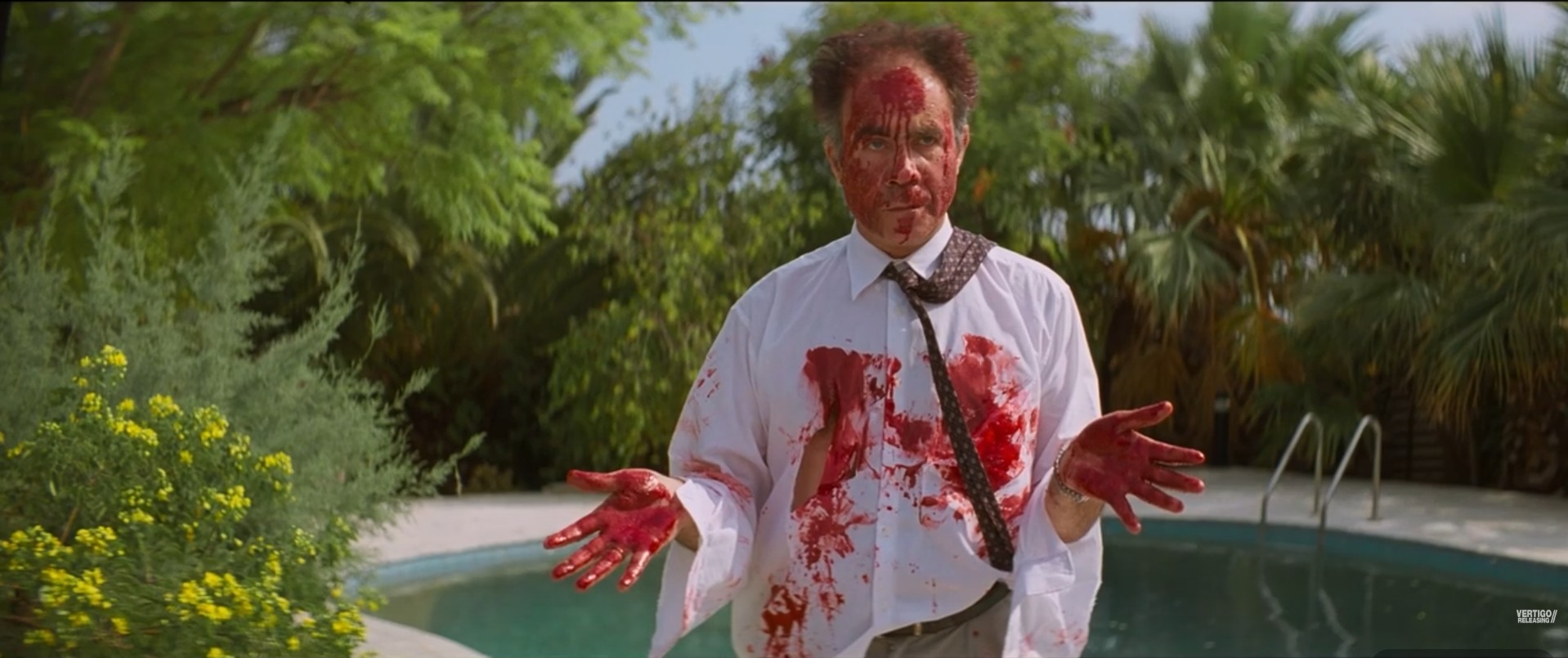
Three adult children remain on home grounds by their manipulative father to protect them from the outside world and keep them suspended in a childlike state.  Educated on a basic level and even educated incorrectly to strategically keep their spongy intellect pure and from asking too many questions about the curiosities beyond the front gate, the children must complete chores and workouts under their father’s regimental thumb, earning tokens to keep them engaged with simple activities and rewards, but the outside can’t be stopped from seeping in with exterior influences raising more questions than the father can keep up with lies, excuses, and fabricated stories.  If he finds his children entertaining an inspiration, his immediate reaction is to manipulatively redirect or even use violence if necessary to put his children back in a stationary line, scaring them of dangers outside the home, such as the killer ferocity of a household cat as it’s curiosity that killed the cat.  Or is it the other way around, did the cat kill the curiosity? 

Way before his 2026 Oscar nominated film “Bugonia,” way before his quicky dark-comedic Frankenstein variation “Poor Things,” way before the shapeshifting deadline of forced relationships in “The Lobster,” offbeat and provocative Greek filmmaker Yorgos Lanthimos directed “Dogtooth,” the 2009 psychological horror-drama that displayed a disturbing power-dynamics of a nuclear family by a manipulative father of three.  Lanthimos co-wrote the script alongside Efthimis Filippou, a regular collaborator with the director from Filippou’s debuting “Dogtooth” script up until 2017 psychological, life invasion thriller “The Killing of a Sacred Deer.”  “Dogtooth,” or “Κυνόδοντας” in the native Greek vernacular, is filmed in the heart of Athens, coproduced between Lanthimos, Yorgos Tsourgiannis, and “Do It Yourself” producer Katerina Kaskanioti, and is a collaborated studio project of Boo Productions, Greek Film Center, and Tsourgiannis’s Horsefly Productions. 

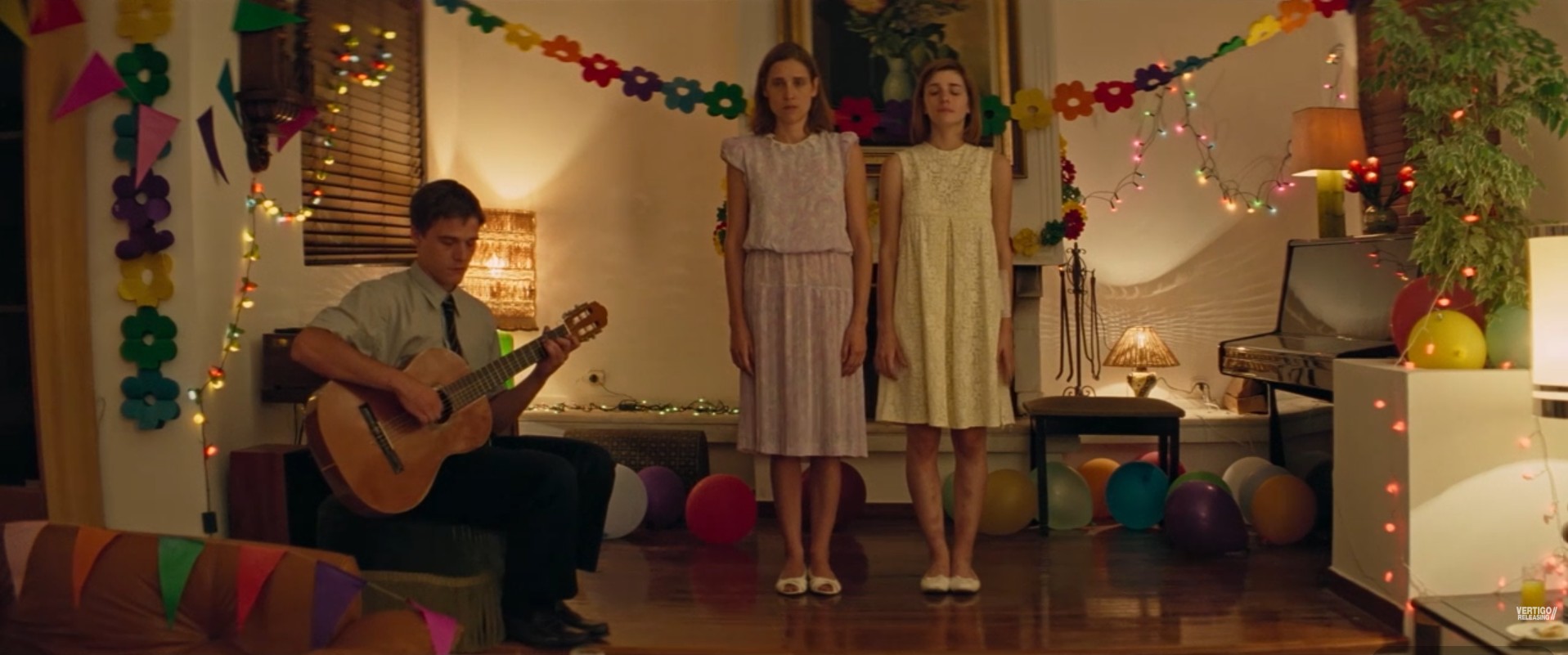
“Dogtooth” consists of a tight cast of six actors between the parents, three kids, and a security guard employed at the father’s manufacturer.  Some would say Christos Stergioglou plays one of the worst manipulating parents on screen of our generation with a calm demeanor and a convincing nature while having a ferocious side of physical punishment against those going against the grain.  With a small cast, those taking the beatings can be his children.  “Singapore Sling’s” Michele Valley is in the mother role, an equal schemer in her abetting of the problematic parenting, but it’s quite unclear whether the Mother is either in on the Father’s paranoic protective plan or whether she too is a victim of his deceit.  While she can be seen deriding her children in seldom words and violence, she too follows Father’s strange ways:  pretending to be a four-legged guard dog like her kids, never leaves the house, succumbs to Father’s sexual habits, etc.  The sex never extends from parent to child, leaving most of Father’s perversities kept intact by Mother and a good old fashion VHS stag tape, but there’s still exploitation done amongst the children.  Treated to his own arranged woman to bed, overseen by his Father, the son’s sexual hormones and desires are made docile by the security guard Christina (Anna Kalaitzidou) from his father’s work and is seen as an act of transactional duty rather than having a presence of affection.  Christos Passalis does embody his character with a young, pre-adolescent boy with tempers, sibling competitiveness, and appropriate reactions to all things that accompany a young boy.  Eventually, after Christina is let go exploiting and influencing the younger daughter with sexual tradeoffs and forbidden contraband, the son is forced to have sex with one of his sisters to maintain the stability of a pure environment.  Angeliki Papoulia and Mary Tsonia are the Older and Younger Daughter with similar appearances and attributes, too exemplifying childlike qualities, that make them also like twins in how they act and how they act with each other with the Eldest naturally, without purposeful intent, trying to break free of her father’s grip in the way children do – in irritational and hurtful ways.  Other than Christian, none of the main principal characters have a name, leaving them to be a representation of any family of any kind out in the world.  Steve Krikris, Sissi Petropoulou, and Alexander Voulgaris round out the film’s supporting parts.

Yorgos Lanthimos takes helicopter parenting to the extreme but in subtle, death-by-a-thousand cuts techniques simply by sheltering in place his entirely family for years and himself teaching his children lessons of his own fabrication.  Taught the world is a dangerous place, where cats are the most feared and deadly animal who killed their exiled “brother”, the children fear what’s beyond their sprawling compound so much they don’t dare cross the gate line.  Vulgar worlds like pussy are defined with innocuous objects, such as lamp light, and lesser provocative vocabulary, in this case zombie, is given the designation to little yellow flowers.  The children’s minds are so brainwashed, their identity is also erased along with their names, mostly busying themselves in the same sterile clothing that evokes no emotion whatsoever.  Lanthimos extends this common place sense of being into the character interactions, whether between family members or the supporting characters, that make the entire tone feel that more unsettling and perfunctory.   The sexual tension is chronic, even between the siblings it’s uncomfortably prevalent, but never malicious on the surface as the acts are kept dutiful and necessary to sustain dominion over the children and perhaps even the wife despite its icky film coating.  The whole idea of the titular dogtooth is a rite of passage from childhood to adulthood, the latter suppressed by the weaponization of sex, education, and threat, for when the permanent adult canine, or dogtooth as Father puts it, falls out is when a child can leave the next and in that is manipulative false hope that one day, the strongest tooth, it’s ability to rip through meat and sinew, will fall out on its own accord, essentially making the children a metaphorical dogtooth that needs forceful extraction from its rigid system of enameled manipulation.

Courtesy of Visions Home Video, a premium home media label from Vertigo Releasing, “Dogtooth” arrives on 4K UHD Blu-ray in the UK-Ireland.  Presented with 2160p in the original aspect ratio of 2.39:1, the HEVC encoded BD100 has a superior encoding compared to previous models and other region 4Ks with a Yorgos Lanthimos approved transfer of the 35mm negative that’s contains and controls the grain that once had issues in previous releases with ill-defining effects on darker sections of the scene, establishing corrected contrast where intended and needed other releases failed to accomplish.  A natural light grading shines through with immersive coloring from the monochromic, or achromatic, outfits to the saturation of greens of the compound estate, a dynamic range of the metadata, DolbyVision.  There’s very minor speckling off some individual cells on the stock but the overall product is the best “Dogtooth” has looked and deserves it.  There are a pair of audio layers available:  a DTS-HD Master Audio 5.1 and a LPCM 2.0 Stereo both in Greek with optional English subtitles.  The monotonic dialogue alleviates many issues associated with these tracks as there are no inflections, tones, forced accents, or any other shaded types of vocal manipulation.  The plainspoken, forth-right conversing creates a naturally prominent layer that’s clean and concentrated above all else.  That’s not the say the soundtrack or the ambience drags or lacks behind though it is slightly less dynamic in its diegetic range.  You won’t be fully immersed with audio hits through side or back channels, but every layer has a stronger and bolder presence than before in previous releases.  Special features include a film in tandem audio commentary with stars Angeliki Papoulia and Christos Passalis, an archived interview with Yorgos Lanthimos from 2009, a 2025 London Film Festival stage interview with more in-depth insights from Lanthimos, three deleted scenes, and two original trailers.  Visions home video release is a vision in itself starting with the beginning layer, a cardboard O-ring slipcover with a somewhat glossy, upscaled image of one of the female children locked behind a bar-cell of bare legs.  The same image is represented as the primary sleeve art inside a Scanova case (no Blu-ray logo at the top).  Inserted inside are four collectible cards of high-quality stills from the film and a double-sided folded mini-poster.  The region free release is UK certified 18 for strong sex and nudity inside the duration of 97 minutes. 

Last Rites: “Dogtooth’s” disturbing fan outs, spreads like an infection of manipulation, but is localized in and around the property that’s become a cage, or an invisible fence, with the latter being more poignant to the storyline with the father having them bark and be on all fours like a dog, a pet symbolism indictive of egocentric power over those one can control from the beginning. The new Visions Home Video 4K UHD release is a new and improved upgrade for any collector’s wall.

“Dogtooth” Available on 4K UHD Blu-ray from Visions Home Video!