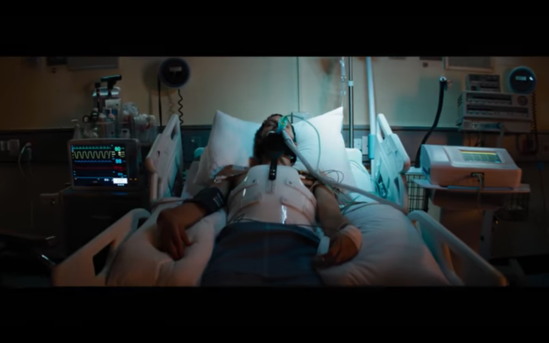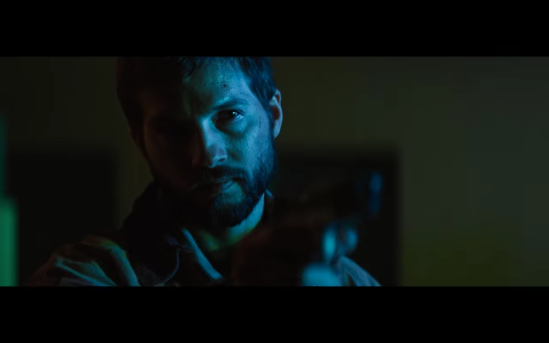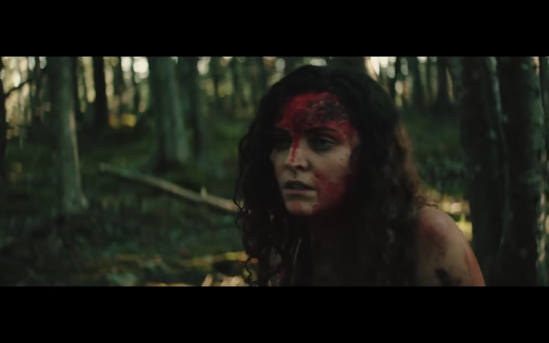
Over the span of 12 years from the 1970’s to the 1980’s, wannabe architect Jack is an accomplished engineer living in serene of the Pacific Northwest and with a lack of empathy and an internal repository of compulsive and narcissistic traits, Jack is able to be a highly successful and intelligent serial killer who seeks mastering his craft as highly artistic and divine. Over the same period of time while butchering nearly countless people, including his own family, Jack obsessive compulsive disorder not only assists his longevity of his creative expression, but also dwindles down another social expected goal of designing and engineering his own home isolated at the edge of a lake. As the body count rises, Jack compulsive restrictions loosen and he begins taking greater and greater risks of being caught. Jack narrates his voyage of viscera and macabre to a literary listener in a back-and-forth to explain and justify his murderous methods and craft.

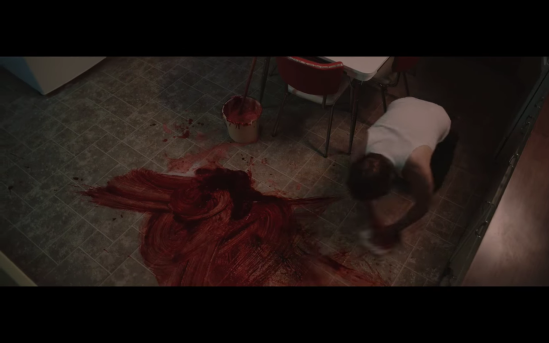
Unlike anything you’ve ever seen before, auteur writer-director Lars Von Trier (“Antichrist” and Nymphomaniac Vol. 1 and 2″) crafts his very own artistic expression delineation with the 2018 “The House That Jack Built,” a two and half hour venture into the deconstruction of a serial killer’s personality traits as well as the flourishing experience of murder through years of repetitive brush stroke practice and self-preservation knowledge done in a self-portrait form. Graphically violent and supercharged with coarse and visually stimulating visual effects and editing, all the hallmarks of a Von Trier film, “The House That Jack Built” blends an abundance of fine arts with religion and mythology that develops into a soaring renaissance piece of art in the modern times and would inspire the most closeted psychopath to revel themselves in a heap of aesthetic and picturesque horror.

As if Matt Dillion isn’t already an entertaining and diverse actor, the “Wild Things” and “Crash” star excavates a vile and dumb luck Jack from deep within, crafting the character as so smart, he’s sometimes stupid, but with each murder subsequently gone scot-free, the confidence builds, the trade becomes tangible, and the narcism washes over ever so slightly. Dillion arcs Jack so well that the character no longer becomes the villain but an anti-hero of sorts as rooting for the slaughtering of innocents becomes a painful necessity rather than an empty desire. The titular character converses with a mysterious companion named Vergel in a way as if Jack was anecdotally telling his own biopic. Vergel symbols multiple conceptual and tangible beings, from Jack’s moral conscious to Vergil, the Augustan period Roman poet, Vergel, or Verge as Jack simple calls him, crudely interviews and thoroughly analyzes Jack’s so-called art. Verge’s off-screen presence is heartily brought to life by Bruno Ganz, an actor who once portrayed Adolf Hitler in 2004’s Academy Award nominated film, “Downfall.” Ganz takes an expected backseat to the title carrying Jack, but doesn’t succumb to being underneath’s Jack’s critical and narcissistic viewpoints, making Verge a level playing field character alongside Jack. Ganz, who passed earlier this year, is equally masterful under a relatively underwhelming role paired with pure evil and while the contrast’s magnitude should be starkly poignant, Jack and Verge are equals in the eye of the viewers and that’s how powerful Lars Von Trier’s filmmaking can really be. Jack’s chaptering stories include co-stars such as “Kill Bill’s” Uma Thurman, Siobhan Fallon Hogan (“Men in Black”), Sofie Gråbøl (“Nightwatch”), Riley Keough (“It Comes At Night”), Jeremy Davies (“Ravenous”), and David Bailie of “Pirates of the Caribbean” franchise.

In my experience with film from Lars Von Trier is that those who patron his films have polarizing affections; you either love his work or you absolutely loath his style of film. My experience consists of only one, yes one, of projects and that being “Antichrist,” and while I was not entirely enthralled with the film’s sexual themes, “The House That Jack Built” provided a plethora of philosophies to pick apart and to continue to digest even way after viewing. For those who might forego themes, philosophies, and theologies, many will bore themselves through the filmmaker’s American serial killer thriller for over two hours long, clocking in a 153 minutes, and finding themselves disoriented in a segmented tale that’s chaptered by five incidents and an epilogue over a 12 year span. Others will bang their hands over Trier’s use of repeat scenes, purposefully rolling them slow and in a calm disposition, allowing Jack to deliberate how and why he does what he does in his discussions with Verge, but these soft touches are nice pillow talk touches to the main, punchy action of Jack’s self imposed duresses under his murdering moniker, Mr. Sophistication, that palpably places the narcissistic cherry on top of misanthropic persona. The devil in the details are punchy themselves and a keystone to Trier’s overall narrative to explore the impulses of a killer’s mind. “The House That Jack Built” is a great accompaniment to shows like “Mindhunter” on Netflix or other films like “Silence of the Lambs” where serial killers vocalizes intricacies of their niche trade is very fascinating for morbid loving sympathizers.

Umbrella Entertainment releases “The House That Jack Built” onto Blu-ray home video. The full HD, 1080p, region B, uncut disc is presented in a widescreen, 2.35:1 aspect ratio, and is fully operational in all sense of the phrase with a generous color palate lacing through more natural lighting than assumed there would be in comparison to “Antichrist,” but the raw tone by Manuel Alberto Claro debases the stylized techniques of “Antichrist’s” Anthony Dod Mantle to virtually a hardline and graphic depiction of reality in the 1970’s. The English language 5.1 DTS-HD Master Audio is respectfully verbose and robust. Trier’s loquacious exposition is actually great exposition of the crystal clear kind and the director shows off his depth and range, splicing edits together like a madman that still convey the overall theme without disregarding audio accounts. While technically sound, the Umbrella release comes regretfully with no bonus features. Brilliant, musing, and intense, “The House That Jack Built” is a Lars Von Trier legacy film breathed with unadulterated violence and sharp with superb writing potent that’s potent on every level. Trier just gets better and better with every film and look forward to his next project!
Author Archives: Steven Lewis
A Child’s Toy Masks a Hidden EVIL! “Kaleidoscope” reviewed!

Just released from prison after 15 years and living alone in a high capacity apartment building, Carl is anxious to finally go onto a date after a long time of solitude. Mild-mannered and quiet, he manages to strike up a date with an uncultivated young woman named Abby who takes a strange, if not alluring, interest in Carl’s humble lifestyle, but when his estranged mother, Aileen, arrives back into his life, Carl’s seemingly perfect date comes crashing down into millions of pieces and old feelings of hate and urges for substance return to a warping fold. The lust and youthfulness he feels for Abby is replaced with fear and anger as reality bends on the verge of breaking as the past and present collide to an unfathomable finale.

The first thought that pops up about director Rupert Jones’ 2016 film, “Kaleidoscope,” is to instantly relate this film to the Dutch sex wave film, Wim Verstappen’s “Blue Movie,” because of a major structural similarity that’s important to both films, is essentially an inanimate character, and is a looming presence despite the “Blue Movie” being an erotic film and “Kaleidoscope” a suspenseful psychological thriller. Both movies feature a monolithic motel-esque apartment building complex in which both house the feature character, a former inmate, and the complex becomes part of the story where as Michael in “Blue Movie” runs his pornographic business and Carl interacts with the building as an obstacle to hurdle or a contributing factor to his problem. “Kaleidoscope” marks Rupert Jones’ sophomore feature directorial and his debut as the credited writer that lightly placed notes of hinting at a Roman Polanski picture.

Toby Jones is sorely an underrated actor. The versatile supporting English actor has been underused since non-fictional performance of Truman Capote in “Infamous” that was crudely undermined by the late Seymour Hoffman’s titular role in “Capote” of nearly the same year more than a decade ago. However, Jones maintains a presence both in Hollywood and the indie circuit with the latter honing in on a film about a man with severe mother issues and Jones nails a browbeaten and tortured soul performance perfectly. The mother issues come courtesy of “Hot Fuzz’s” Anne Reid as a intrusive and sickly, yet superior matriarch to Carl’s whimpering passiveness. Reid’s somehow manages to pull off being manipulative and sweet in one single persona and bespoke the relationship between mother and son with the mixing water and oil. In the middle of Carl and his mother’s love-hate dynamic is a third person of an unequivocally different persona, making a trifecta of clashing personalties. Abby, played by Sinead Matthews (“A Serial Killer’s Guide to Life”), brings a little jovial pleasantry to a dark cerebral tale. Rounding out the cast is Karl Johnson, Joseph Kloska, and Cecilia Noble.

So how does a child’s toy factor into Carl’s descent into madness? The cylinder device creates optical illusions, usually in a colorful spectrum and mirroring pattern that refract when spun in a circular motion and looking at a light source to illuminate the effect. The experience is fantastical and Carl, browbeaten by not only the criminal system, but also by his family, uses it as a means of escape, an allegorical path of avoiding darkness in his life and a way to advert the melancholy that is his existence. Even his date with Abby is a gloomily skewed as she has ulterior motives to further push Carl to a metaphorical breaking point. Yet, he’s at peace with his assumed childhood toy in the handful of scenes he’s using it which recalls the image of his father; a joyful moment that’s ironically the sore point of most of his tribulations. The Kaleidoscope could also symbolize seamless duality as Carl has difficult establishing what’s real and grasping the hardline of time. Rupert Jones subverts linear and conventional storytelling magnificently to not only put Carl in a twisted world, but also throwing the viewer into chaos along with him.

Sparky Pictures and IFC Midnight presents Rupert Jones’ psychological asphyxiation thriller and Stigma Films production of “Kaleidoscope” onto UK region 2, PAL DVD home video. The DVD image is presented in a widescreen, 1.78:1 aspect ratio, on a DVD9 and the digital quality, like always, is a unfathomable well of picturesque with crisply defined shades of black combined with some variant lighting techniques to tell Carl’s current mood. “Kaleidoscope” touches more on the natural skin and coloring, but does use some dry yellow tinting and some visual effects to embark on the once penitentiary patron’s mental break journey. The English language Dolby Digital 5.1 surround sound audio mix has multi-channel sensitivity utilizing all channels to jar the senses even more and to, seemingly, weaponize Mike Prestwood Smith’s chaotic score to take the state even further. Dialogue has supremacy and clarity. Bonus features includes a standard array of extras in the cast and crew commentary, trailer, photo gallery, and storyboards. “Kaleidoscope,” like in the toy’s changing patterns, shatters hope only to rejoin it back together to then shatters it again in Rupert Jones’ heated and confrontational tale of mirthless character and taxing parental abuse affecting one soul’s chances of normalcy and redemption into society even in the face of societal kickbacks.
An EVIL Beast’s Carnivorous Addiction! “The Hidden” reviewed!

A sewer dwelling beast attacks and kills a cocaine fueled junkie. Now hooked on the drug and pained with addiction, the beast needs more cocaine. Every exchange meet up by the sewer entrances become a deadly encounter and as dealers and customers start to disappear, winding up dead, a drug cartel kingpin mourns the loss of his business. On the opposite side of the spectrum, the junkie’s older brother is also suffering a loss. Spiraling down a path of grief, he must find his brother’s killer at any cost, even if that means breaking up with the love of his life. A vindictive brother and a savvy drug dealer must team up to hunt the beast that stalks the sewers, looking for it’s next high, and put an end to a reign of terror.

Australia. Early 1990’s. Nathan Hill wrote and directed a crime thriller SOV, shot on a Video8 handheld, that just happened to have a bloodthirsty beast roaming the sewer system who unwittingly becomes addicted to cocaine after munching on a junkie. The 1993 film was entitled, “The Hidden,” which is not to be confused with the late 1980’s science fiction-horror, “The Hidden,” with “Twin Peaks'” Kyle MacLachlan. Hill’s film, also considered a sci-fi venture, had a minuscule, barely functioning budget and in a sense of unawareness, the filmmaker didn’t quite realize that a film, already popularizing the title, had the exact same moniker. In any case, Hill’s “The Hidden” has a premise far from the already established indulging in a vindictive creature feature with an internal turmoiled drug cartel subplot.

“The Hidden” comes to no surprise that the cast is constructed of no-named actors and actresses. Simon Mosley debuts as Michael Wilcott, a grief stricken brother looking for vigilantism vengeance. Mosley doesn’t have an acting bone in his body as he punches doors and pushes pushers around as if on command and carries a monotone, automaton performance throughout. He’s only rivaled by Daniel Rankin from another Nathan Hill directorial, 2011’s “Seance” (aka “6:66: Seance Hour: if that makes any more sense). Rankin’s a tall, muscular drink of water in comparison to Mosley and has a bit more acting chops that not only contemplates the hits he’s taking on his drug gig as dealer Guy Taylor, but also pulls a little more weight as a compassionate individual who takes a homeless boy as his surrogate father. As Mosley and Taylor team to battle the beast, the unlikely duo also have another foe to hurdle in the obstinate Steve, a junkie with a hard on for being bad, a role fit for the blonde haired and severely acned Chris Robbie. Paul Mosley, Chris Goodman, John Goodman, and Narelle Sinclair, as Michael Wilcott’s girlfriend, co-star.

Now while “The Hidden” has rough SOV quality, that’s is nowhere near the issue with Nathan Hill’s debut feature. Nick Goodman’s script spits out varying story tracks that never really shape subplots into being an unquenchable and flaccid tangent. For example, Guy Taylor’s adopted son, Carl. With the exception of a brief flashback of Guy and Steve working out together and coming across the boy. The scene’s brief but affective substance lies with setting up Guy to be a big softy on the inside and making Steve a complete jerk, yet keeps the relationship between Guy and Carl disjointed and ingenuous. There’s also the little (as in little of) mentioning of the special effects. No special effects technician is credited and it shows as the beast is absent in nearly the entire 77 minute runtime with the exception of the Predator first person infrared vision and it’s not until the climatic finale does “The Hidden” come visible and it’s a big whomp-whomp.

Nathan Hill Productions, under his NHProduction company, presents “The Hidden” distributed by SRS Home Video and MVDVisual onto DVD home video that’s encased in nostalgic, VHS cover art with a “Please Be Kind and Rewind” cherry sticker on top. The Video8 SOV image is quite washed and unstable in the 4:3 aspect ratio as if the color has been zapped right out, even after being re-animated, reduxed, and remastered. The limitations of the Video8 camcorder hinder the single channel audio, leaving the range and depth something to wonder rather than experience. Along with the anemic audio and video presentations, the bonus features doesn’t stray far as only the trailer and bonus trailers are included. “The Hidden” is unglamorous under the eye-catching cover art and more attuned to being an investigative thriller than a creature feature and a recommendation wouldn’t be hard-pressed for anything stellar.
An Interpretation of Charlie’s EVIL in “Manson Family Movies” reviewed!

Charles Milles Manson was a notorious criminal and cult leader living a commune lifestyle in the peace and love era of the 1960’s. The Mason Family was his communal cult following that squatted in the outskirts of Californian desserts and self indulged in hallucinogens. Radicalized and dangerous, Manson exploited their unwavering loyalty to his radicalizing behavior of a hippie way of life. Filmmaker John Aes-Nihil, a collector and lionizer of all things Charles Manson, shoots a recreation of the daily activities of Mason’s cult members, filmed at infamous Manson locations that gave a taste of commune life while also providing shuddering atmospheric insights of kill spots. To Aes-Nihil, Charles Manson lived and breathed through interpretation of their, so called, home movies.

Filmed between 1974 to 1979, three years after Charles Manson was convicted of first degree murder, director John Aes-Nihil filmed his rather homage-life rendition of what he calls the “Manson Family Movies.” Not released until 1984, Aes-Nihil also brings legend to fruition of a rumor that Manson and his followers filmed much of their daily rituals and societal deviancies, giving “Manson Family Movies” more stigma to the already controversial obsession the filmmaker already made mania in such a short turnaround from Manson’s conviction finale. “Manson Family Movies” is also a silent film, a rarity for a late 70’s, early 80’s that was just in an industrial transitional point of visual special effects and larger than life performances; yet Aes-Nihil’s remains silent and crudely finesses his interpretative documentary with stage play performances and badly scrawled title cards that instill an engrossing affect of internal sliminess toward the already visceral nature.

The cast consists of many unknown faces who have come and gone even before “Manson Family Movies” was first viewed by the public. Their involvement begs the question of their pride for subject matter involving the brutal stabbing murder of a pregnant woman with the senseless and, almost, toying deaths of couple as their listed names are more than likely pseudonyms, credited as if themselves were a part of a hippie commune with names like Rick the Precious Dove as Charles Manson, Krista Meth (Crystal Meth?), Porn Michael, Miss Sheila Star, and Sister Audress just to name some of the more eye-catching credits. As aforesaid, performances are choreographed indiscriminately that much of the violence goes by the waist side, but as characters go, more than most look the part with the exception of some transvestism as some actors and actresses don multiple roles in the bottom of the money barrel feature. Other dime actors included Katie Lazarus, Knarly Dana, Mr. Jacquetta, Judy, Ms Mule, Danny, Lori, Miss Head, Ms Brad, Moka, Chucky, Rusty, King Mama, and The Cosmic Ray. Seriously…

Not much is first-rate about the “Manson Family Movies” aside from a couple of exceptions: 1) Cult Epics amazing two-disc re-release that’ll be covered later and 2) the fact that Aes-Nihil constructed home like movies using what looks like 8mm negative film complete with deterioration and defects, providing a desensitizing and demoralizing halo around the heavy material. “Manson Family Movies” won’t be many audiences cup of historical tea and many folks will probably point out that this is only an interpretation of events, but was the raid on “Pearl Harbor” accurately depicted by Jerry Bruckheimer or did James Cameron give every minute detail correct in “Titanic?” I think not. Not to compare apples to oranges to blue berries, but as base observation, Aes-Nihil did what any director would have more than likely done with an influential historical moment, a little embellished reenactment no different from the stud Hollywood filmmakers.

Cult Epics’ re-release of the “Manson Family Movies” is now presented in a region free, two-disc set complete with a slip illustrated with the same composited Charlie Manson head cover art by Brian Viveros and the same disc art by Charles Manson himself from the 2005 release. The film is presented in a 4:3 aspect ratio with the black bars on either side of the frame and, as previously mentioned, the image clarity is marked by scratches, flares, and dirt. Surely, for visual stimulation. Billed a silent film, the dual channel mix of the redux and remastered score is resoundingly poignant and strangely vibrant with Charlie Manson and his Manson Family recorded music as the soundtrack. Plus, there are actually less aesthetically audio tracks from Sloppy Titty Freaks, Beyond Joy and Evil, Glen Meadmore, and some sampling of the Beatles from, you guessed it, Helter Skelter. Special features include John Aes-Nihil commentary track, outtakes with director’s commentary, last interviews with Charles Manson, the original LADP crime and morgue photos, and the second disc contains Sharon Tate’s home movies without an audio track. After watching “Manson Family Movies,” John Aes-Nihil comes to suspicion as perhaps one of Charlie’s commune followers as he depicts a chilling look into the past, through a window of ghastly sovereignty over impressionable young people, and champions a real home movie approach that makes the entire package, along with a invigoratingly haunting score, a black gem.
Sanities Dissolve in a Concoction of EVIL! “Ladyworld” reviewed!

When a catastrophic ecological event traps eight teenage girls celebrating a birthday inside a house, they find themselves at the mercy of limited resources and with no adult supervision. With every window and door inescapably blocked, being trapped isn’t the only obstacle that looms over their adolescent minds when factions begin to form between sane and insanity as their cache of already scarce food and water quickly dwindle. Before her eventual disappearance, the birthday girl spoke of seeing a man attacking her right before the destructive shaking that left them befuddled. The remaining girls quickly line their thoughts in various ways from either spiraling out of control and embarking on a psyche control measure to deal with the haunting information or accepting the information and use it as a fear inducer for power. One-by-one, fears are exploited and minds are broken down to their most hostile and primal qualities that rapidly become an epidemic to those still in the realm of reality.

To preface director Amanda Kramer’s “Ladyworld,” there’s little background exposition or visual representation to really set the stage of psychological deterioration. The 2018 thriller can be said to be a modern, all-female take on the William Golding 1954 novel, “Lord of the Flies.” Produced by Pfaff and Pfaff Productions as well as A Love and Death production film, “Ladyworld” is essentially female centric and comes close to being true to form to its title in front and behind the camera with the debut feature directorial from Amanda Kramer. The script was also co-penned by Kramer and Benjamin Shearn. “Ladyworld” is credited as a festival circuit novelty with institutions such as the TIFF New Wave, BFI London, and Fantastic Fest, but “Ladyworld” is also novel in another way as in a doppelganger representation of Amanda Kramer herself as a filmmaker who sincerely believes in art house expressionism.

While all the actresses involved, portraying eight teenage girls, are spectacular in their own rite or as a pack, one particular actress stands out above the rest in name alone and more recently because of her debut in a popular science-fiction-horror Netflix series set in the 1980’s. Yup, “Stranger Things’” Maya Hawke, daughter of Ethan Hawke and Uma Thurman, has a co-starring role that elicits the use of her usually charmingly raspy voice into a gasp of unnerving bellows amongst her colorfully expressive mental deprivations. Yet, Hawke’s role, though equally headlined, seems more supportive against musician and television actress Ariela Barer and “Quija: Origin of Evil” actress Annalise Basso as the two teenage girls that consistently butt heads to jockey for leadership. The tension created between Barer and Basso is plumed unanticipated friction and is about as wild as any unpredictable scenario can muster. The last prominent character, the introduced unstable Dolly, has familiar parallels Ryan Simpkins’ Fangoria Chainsaw Award nominated performance in the also predominated all-female film, “Anguish,” from 2015. Simpkins trades in supernatural crazy for disastrous crazy as a teenage girl with a penchant for adding ten years her junior. Together, alternate and combative personalities fluctuate the proceedings, marking “Ladywold” unpredictable from not only Amanda Kramer’s broad-minded expression stance but also in solitary performances manage to flow as one. Rounding out the cast is Odessa Adlon, Tatsumi Romano, and Zora Casebere.

“Ladyworld” is an interesting experimental film and, unfortunately in this opinion, that’s about as far as this film might top in a market filled with visual pops, depth performances, and something new and shiny at every angle and turn. “Ladyworld” comes off a bit monotone to the preceptors in a flat line of congealed, unwavering tension from start to finish, despite coming to a head. Structurally, Kramer frames their environmental entrapment with just enough to make their plight more feasible without having to visually showcase it; the assumption, in one interpretation, is a Californian earthquake that resulted in a landslide that blocks all the windows and doors with hundreds, if not thousands, of pounds of pressure against the opening. Though this is only one interpretation of events, Kramer is very good at cascading the effect into being much more dire by reminding us that no sires can be heard, cell service has ceased, and all hope is lost within the limited space their held. That kind of compelling of the unknown and cerebral warping uncertainty is quite alluring, but that gripping element is not found equally invasive throughout.

MVDVisual and Cleopatra Entertainment has positive womenism vibes with Amanda Kramer’s “Ladyworld” being released onto DVD home video. The 94 minute presentation is in a widescreen, 16:9 aspect ratio format that leans conveying more to a bland and flat coloring scheme. Essentially faded, no pops of primary hues are implemented as if to devoid all hope from a helplessness scenario. Details are a bit fuzzy too resulting from an aliasing issue or jaggies around the outer edges of things. Usually with Cleopatra Entertainment releases, lossy audio tracks have been rearing their ugly heads which would cause many questions marks with reviewers familiar with Cleopatra Entertainment as its a sublabel to Cleopatra Records – a Los Angeles-based independent record label, but with “Ladyworld,” the English dual channel audio tracks is rather robust with accompanying range and depth. However, the Callie Ryan experimental acapella instrumental can be nails on a chalk board that, again, sets a gloomy tone that consistently punches you in every perceivable sensory organ. Bonus features are slim, including an image slideshow and the theatrical and teaser trailer. “Ladyworld” has niche appeal, but Amanda Kramer and crew really put themselves out into the cinema-verse with style and performance to ultimately deliver a surreal and frightening tapestry of the unhinged and underdeveloped teenage psyche.