Weak Meekness Leads to One’s Own EVIL Destruction. “Catacombs” reviewed! (Imprint / Blu-ray)

Own Your Copy of Imprint’s “Catacombs” on Blu-ray!

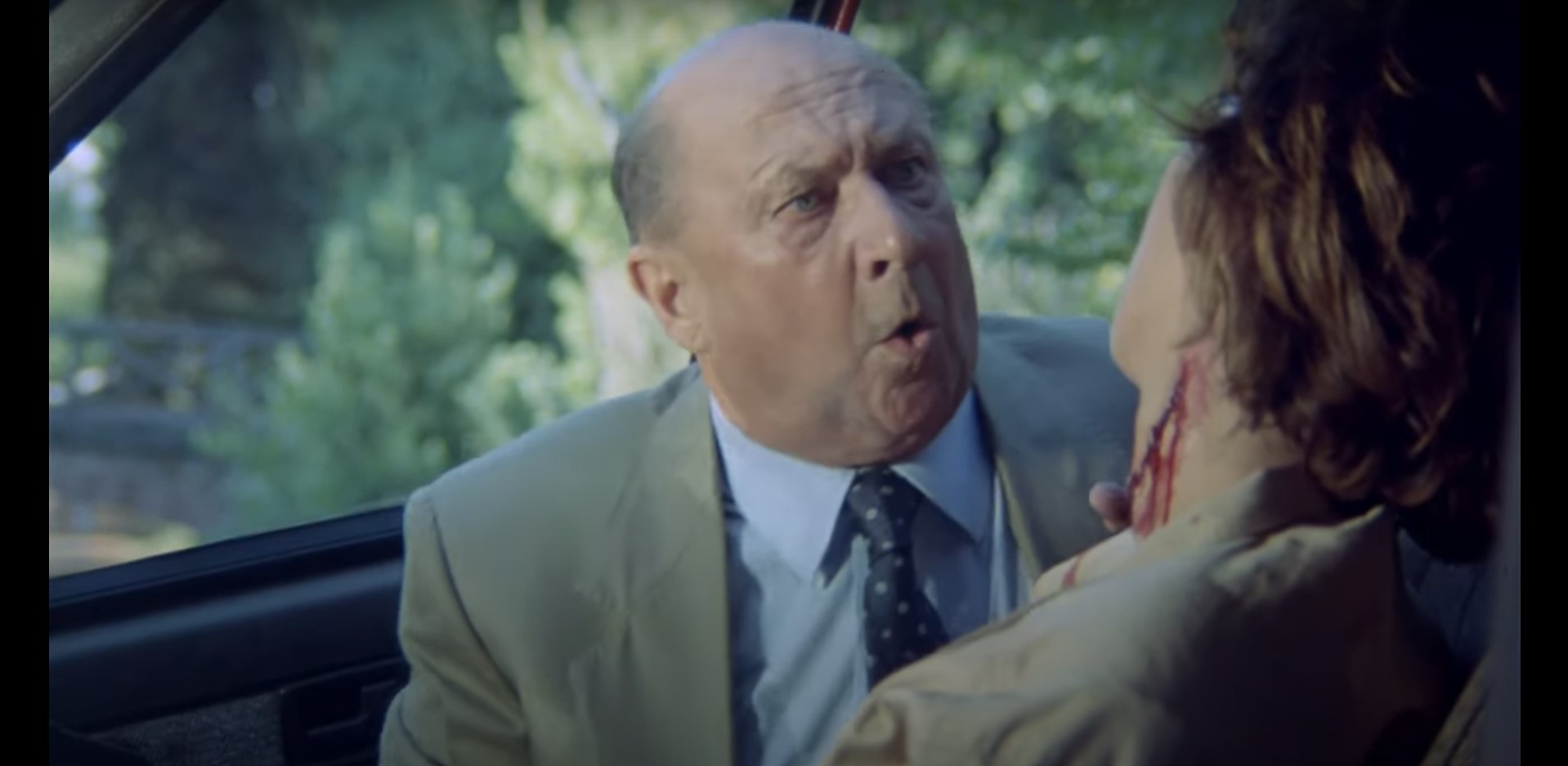
Ellen Garth, a strong willed and wealthy but physically afflicted businesswoman devotes her all her love to an enervated doormat of a husband, Raymond.  When Ellen’s beautiful young niece, Alice, returns to London from Paris after a year abroad, Raymond is smitten by her flirtations for older men and strikes up an affair behind his very perceptive and sly wife’s back who catches them in each other’s embrace.  Tired of being a slave to his wife’s controlling behavior and wanting to be free to court Alice, Raymond kills Ellen and buries her in the potting shed behind their honeymoon house in a plot conceived with Ellen’s right-hand secretary and former con, Dick Corbett.  Believing he’s free of her and having been willed her fortune to share with Alice, Raymond suddenly suspects, after a series of strange events, that he’s being haunted by Ellen’s ghost, or even worse, the undead Ellen herself. 

Black and while horror from half a century or more ago always leaves a lasting impression that terror and suspense can be created by virtually story and acting alone instead of a heavily reliance of special effects and visceral coloring, such as with gore or grotesqueness of the unfathomable creature.  The British film “Catacombs,” or otherwise known as “The Woman Who Wouldn’t Die” in America, is one of those fear manufacturing films generated by pure acting talent and the managing cleverness behind the camera.  The 1965 film is directed by “The Oblong Box” and “Scream and Scream Again” director Gordon Hessler with American screenwriter Daniel Mainwaring (“Invasion of the Body Snatchers”) penning the script based off an American novelist Jay Bennett’s novel of the same UK title.  Shepperton Studios served as house of operations for the Parsons-McCallum production under Neil McCallum and Jack Parsons and distributed by the BLF, British Lion Films.

There’s no such thing as wasted parts or throwaway performances in Hessler’s murderous-revenge haunt with precision-acute actors and actresses chin deep in their characters’ cruelty, callousness, conformity, and control.  Twists and tension-riddle rods help elevate this nearly 60-year-old film to refrain from aging poorly.  Gary Merrill, former husband of silverscreen actress Bette Davis and star of “All About Eve,” plays the meek husband Raymond wed into money but at the cost of his manhood.  Merrill plays convincingly into Raymond’s submissive, passive nature under the more dominant but fair and kind mogul lady Ellen Garth, a hip-afflicted women that doesn’t feel the ailment impede her wealth or attitude in life by way of British actress Georgina Cookson.  In the mix is Ellen and Raymond’s parentless niece Alice who has returned from her studies in Paris seemingly transfigured from a chubby child to a beautiful lady.  Jane Merrow, who co-headlines “Catacombs” with Merrill, finds her stride as the elder-entangling Alice secretly at-odds with her aunt by seducing Raymond behind her back.  Rounding out the principal foursome is Neil McCallum (“Dr. Terror’s House of Horrors’) as Ellen Garth’s sneaky secretary Dick Corbett who has a façade of a hard worker, but Corbett can’t keep up with boss’s demanding energy and is itching to subvert her.  When the story’s peak turning point hits, the expectation of character change recedes back to status quo as if Ellen’s death changed nothing other than open the door of opportunity for Raymond and Alice to connect without concern.  Yet, that inkling of shame, guilt, and fear, mixed under a plot of deception and murder, has the reverse effect of a now burdenless happiness, producing a very little capricious life-change, especially in Raymond who is still as amiable as ever.  “Catacombs’” fills out the intimate cast with Rachel Thomas and Frederick Piper.

The actual use of catacombs, or subterranean burial grounds, has little do in the film other than in its infinitesimal moment of being a key piece of evidence toward something amiss, a tell for foreboding or already doomed health, and serves as one playful, paralleling reason to Ellen’s resurrection, though not reflected in plain sight as playful or parallel by Hessler.  What’s intended the most is building the mysterious dread around Ellen Garth’s return in a semi-gloss gothic polish aimed to crack Raymond and Alice’s psyche in half.  Hessler breeds tension after tension to engulf the characters in an unrelaxing state of disgrace and distrust and what makes the matters worse for Raymond and unscrupulous company is while Ellen Garth may have held all the cards being an authoritative woman of status and wealth, she showed loyalty, humility, and adored her family, friends, and lover despite their flaws and circumstances.  That unjustifiable murder stings audiences the most, a straight shot to the sympathetic heart that creates a need to see those responsible punished by Ellen’s earth-soiled, grave-escaping, dead-cold hands with edge of your seat anticipation.  Is Ellen Supernaturally haunting her killers or is the guilt driving them mad? 

The only way to find out in glorious high-definition is to pick up a copy of Imprint Film’s definitive Blu-ray version of “Catacombs” on an AVC encoded, 1080p, BD50 presented in a 1.66:1 European aspect ratio. The black and white picture receives a 4K scan from the original nitrate negative for its worldwide Blu-ray debt and though not much to mention in regard to colorization and black levels, the monochrome remains sharp at all times in a pristine negative that sees no damage. Usually, black and white can issue fuzziness, heavy grain, and ghosting during spliced cell overlap but this print, or rather this scanned print, looks amazingly fresh, holding patterns and transitioning seamless to the highest of restorative care. The English language is a mix between American and British English encoded with an uncompressed LPCM 2.0 mono, rendering a dialogue centric audio with composter Carlo Martelli brass band that’s minor keys taut tension to swell during the height of suspense. Dialogue is clean and clear with very minimal crackling; there’s no wispy or hissing detected. Although the mono feed vectors flatly, the range surrounding “Catacombs” is vast and timed to tackle distinction between the audio idiosyncrasies. Optional English subtitles are available. Special features include an exclusive feature-length audio commentary with authors Jonathan Rigby (“English Gothic: Classic Horror Cinema 1897-2015”) and Kevin Lyons, a new interview with co-star Jane Merrow on her experiences in “Catacombs” Merrow & Merrill, new interview with continuity supervisor Renee Glynne and sound designer Colin Miller The Glynne-Miller Story, a new interview with composer Carlo Martelli Martelli & Martell, and with a still gallery ending the bonus material. Housed in a Hammer blood red cardboard slipcase designed with a rendition of the original poster, the Imprint release is it’s 317th title. The clear Blu-ray Amaray case is even more colorful with a giallo-colored title and back cover, overtop a frightened scene with stars Merrow and Merrill. The reverse side of the cover has more of the psychotronic photo of Ellen Garth (Georgina Cookson) staring blankly into a pocket mirror to submit herself under a trance. The BD is pressed with the same red coloring and half-woman, half-death figure as the slipcase with no inserts included. One thing I will say on the negative side of the package is that the Amaray case is a bit difficult to extract from the slipcase; you kind of have to shimmy and shake it out enough to pull the case out. The 90-minute feature is unrated and did play on our region free player without having to setup flip to the desired region for playback.

Last Rites: Gorgeously macabre yet classic packaging, Imprint’s Blu-ray release of “Catacombs” is must-own Machiavellian umbra of greed and foul play, a timeless tale yarned to yield a megaton of shadow-lurking, supernatural suspense.

Own Your Copy of Imprint’s “Catacombs” on Blu-ray!

The Itsy-Bitsy EVIL Crawled Down Your Throat and Ate Your Insides! “Sting” reviewed! (Well Go USA Entertainment / Blu-ray)

“Sting” Is Available for Pre-Order for a Blu-ray July 30th Release!

A rebellious, preteen girl wading through the stepfather muck of new family dynamics befriends a small spider she discovers while snooping around a neighbor’s room in her apartment building.  The unique, small spider can mimic her every vocal sound, quickly captivating the girl’s interest as she seeks solace from her upended life, and the spider is constantly hungry being sequestered to a jar as the girl’s newfound pet.  The more she feeds the spider she’s named Sting the bigger it grows in a short period of time.  During the night, Sting unconfines itself and roams the airducts, immobilizing apartment residing animals and people alike with a potent paralyzing bite, to then web-encase them in the ducts and feast upon her captured prizes while still alive.  When Sting threatens the girl’s family, she must put her angsty squabbles and feelings aside and take the fight to her once beloved pet that has now become a giant, flesh-eating, arachnid.

There hasn’t been this much fun in a giant spider movie since “Eight Legged Freaks!”  “Sting” is a 2024, Australian creature feature from “Wyrmwood” franchise director Kiah Roache-Turner who pours portions of his own experiences in life into the script, metamorphosing “Sting” from being not only just a monstrous amount of arachnophobia but also a personally purging of multitude of fears rolled up into one web-slinging scary movie.  The story is set inside a slum apartment building in New York City at the centric mercy of a Northeastern blizzard; however, “Sting” is actually shot on a production stage in Sydney, in the New South Wales province of Australia, that has taken on the doubling duty for The Big apple.  “Sting” is a coproduction between Align Films, Pictures in Paradise, and See Pictures with “Wyrmwood:  Road of the Dead’s” Michael Potin, Jaimie Hilton, and “Daybreakers’” Chris Brown producing.

The cast is comprised of mostly Australian actors modulating their voices to the American accent and doing a rather impeccable job at it with only a slight slip of a slower drawl.  The principal nuclear family opens in the middle of new dad throes, the building’s handyman Ethan (Ryan Corr, “Wolf Creek 2”) struggling to not only meet the demands on his slumlord boss / stern aunt by marriage named Gunter (Robyn Nevin, “The Matrix Reloaded”) but also navigate a path toward a better, more-to-his-liking job while also reaching through and connecting with his defiant stepdaughter Charlotte (Alyla Browne, “Furiosa:  A Mad Max Saga”).  Sting, the spider, runs through the apartment tenants that include a depressed and alcoholic widower (Silvia Colloca, “Van Helsing”), a monotone marine biology grad student (Danny Kim), and even a spirited exterminator (the only American in the film in Jermaine Fowler, “The Blackening”) who holsters a nail gun for NYC protection as well as vermin gas bombs on his utility belt.  All-in-all, diversity is rich if not slightly stereotyped, but Roache-Turner does a really good job at telling their backstories through the camera shots and without the need for much expositional dialogue, such as the unsaid death of the widower’s family but enough visuals and grief expressions do formulate what happened.  Components of backstory life heighten the tension, or even share awkward moments, collectively between neighbors and family members that lead to presumptions and to, eventually, an explosion of distrust and anger that makes the perfect screener to blind them what’s really creepily-crawlingly around.  Noni Hazlehurst and Penelope Mitchell (“Hellboy” ’19) conclude the casting as immigrant mother with Alzheimer’s and her first-generation daughter married to Ethan and trying to also navigate a precarious life out from under her slumlord aunt’s grasp.

“Sting” is one of those movies that reminds horror fans why the genre is great and beloved.  Titular spider named after the “Lord of the Ring’s” sword that injured Shelob, the giant spider, in “Return of the King” and a definitive “Alien” inspired film, complete with a viciously blood-thirsty extraterrestrial bug that suspends prey with webbing and a badass female heroine, “Sting” masters the giant spider effect by mostly using practical means.  That’s right, a giant spider puppet, manned by eight puppeteers, checks most of the computer-imagery at the door and enters with confidence from master of effects Sir Richard Taylor and his team from Wētā Workshop, who has help build effects for the recent “Mortal Kombat,” Ti West’s “MaXXXine” films, and has had a helping hand in the MCU.  Skulking on ceilings, stealthily silking down, locomoting with smooth, natural movements as the spider, approximately the size of large black Labrador, has manipulated properties to lurk and hunt to visually feed the need and scare the phobia right into your once comforted being.  The story’s struggling family and honesty-is-the-best-policy themes ground “Sting’s” rabid arachnida with relatable turmoils, especially from a parenting and child point of views and anyone who has had children or parents, like the majority of us do, will understand preteen problems.  Ultimately, Sting represents childish hidden secrets, something they can control of their own volition, and a rebellious cause that’s ironically not good for them, turns uncontrollable, and is an obvious problem, akin to doing drugs for an extended period.  Sting might not be a line of cocaine or a hypodermic needled filled with narcotic poison, but space spider does have toxicity that courses a paralyzing agent conveyed by a single bite. 

Spiders are the demonized sharks of the land and continue to string webs of fear inside audiences.  Well Go USA Entertainment Blu-ray of “Sting” proves spiders still secrete a damn good monster movie that’s one part “Aliens” and one part “Charlotte’s Web” with an AVC encoded, 1080p high-definition, BD25 release presented in a 1.85:1 aspect ratio.  For a Well GO USA product, “Sting” is one of their better compressed discs that I’ve seen, retaining unexpurgated blacks and fling out glistening, texture palpable details throughout, and there were a plenty of black and low-lit areas to what afflicts most of the label’s releases, a potentially image sidelining obstacle. Coloring is a tad soft but moderately sound when juxtaposed against an enormously, slick gun-metal toned spider. The English DTS-HD 5.1 Master Audio surround sound mix renders with strength, a solid, multi-channel testing sound design when the spider creates a clatter in the airducts for back, side, and front localization. Depth appropriate is fine as well as a wide range of audio action onomatopoeia. No issues or obstacles obstructing the clean and clear dialogue, layered in the forefront and level weaved into the action where needed. English subtitles, as well as English SDH and French subtitles, are optionally available. Typically, we do not usually receive in-depth special features from Well Go USA due in part of his long history with Eastern films where bonus content seems nearly nonexistent. For “Sting,” there’s a substantial behind-the-scenes featurette taking a long look on the Roache-Turner’s concept and inspiration, the Creation of the Monster sizes up how the special effects were completed by Sir Richard Taylor’s company, interviews with the cast and crew on making the film, and the theatrical trailer. Encased inside a conventional Blu-ray Amaray, Sting has, in my opinion, a very effective, genuinely creepy poster of a spider walking across the floor next to a body, graded in a blue hue and working deep with the shadow angle for potency. Well Go USA surprises again with the fun disc pressed art of a toon-ish illustration that doesn’t seemingly fit the rest of the package marketing but becomes clear from the storyline. An advert for the company’s other newer releases, “The Flying Swordsman,” “Your Lucky Day,” and “A Creature Was Stirring,” is adjacently tucked in. “Sting” has a well-paced 91-minute runtime, is region A encoded for playback, and is rated R for violent content, bloody images, and language.

Last Rites: No doubt about it. “Sting” is fang-tastic! A modern spidersploitation film that flexes hard, built upon the strong backs of some great pop culture and science-fiction horror moments as an endearing tribute.

“Sting” Is Available for Pre-Order for a Blu-ray July 30th Release!

One Out of 7 Most Freaky, if not EVIL, Places on the Planet! “Gonjiam: Haunted Asylum” reviewed! (Second Sight / Limited Edition Blu-ray)

Become Engulfed by the “Gonjiam: Haunted Asylum” on Second Sight’s LE Blu-ray!

Horror Times, a web series dedicated to horror and hits, travels to the Gwangju providence for their next big event, a special episode aimed to rake in 1 million views worldwide as they explore the supposedly haunted, deserted, and derelict Gonjiam psychiatric asylum after midnight on its anniversary date of its closing.  Already buzzing with historical disappearances of those curious and brave enough to investigate the dilapidated corridors and rooms, Horror Times brings in four guests to join his three-man crew to record every second of what CNN labels one of the seven freakiest places on the planet.  Setup with wall-mounted motion activated cameras, harnessed with individual GoPros, and given a multi-layered script to follow on each of Gonjiam’s four floors, all is going as planned broadcasting live the strange atmospherics that slowly see climbing views from the director’s camped base outside the structure, pulling some fabricated strings to not only heighten his viewer pool but also get genuine frightened reactions from his guest team, but when the team and the cameras unexplainable paranormal occurrences, how far will a director go to reach his milestone goal.

Based off the actual CNN listicle of the top 7 freakiest places on the planet, “Gonjiam:  Haunted Asylum” was a real brick-and-mortar edifice committed to the committedly insane and one of the most suspected haunted places in South Korea until it’s demolishment shortly after the 2018 film’s release.  “Epitaph” writer-director Jung Bum-shik joins the ranks of the South Korean supernatural spookies, accompanying notable entries such as “The Tale of Two Sisters,” “Phone,” and “Cinderella.”  Cowritten by Sang-min Park, Gonjiam:  Haunted Asylum” refreshens the ramshackle mental institutionalized horror subgenre with a dash of social media influence and found footage that entangles grudging ghosts with cyber terror.  Historical thriller and drama producer Won-guk Kim spearheads the project under Hive Media productions and distributed globally by Showbox Films. 

Like a cable-aired, modern-day version of “Ghost Hunters” or “Kindred Spirits,” the vessel Horror Times exploits people’s spirituality beliefs by mingling the exploration of urban legends with gimmicky ploys to keep eyes glued to the show, run up viewership, and earn the root of all evil, money.  The Mystery Incorporated meddling kids might not have a talking Great Dane, but the Gonjiam ghost hunters are a dynamically doomed blend of greed and curiosity, helmed by their captain Ha-joon (Wi Ha-joon, Squid Game) and his on-the-ground, string-pulling marionettes Seung-wook (Lee Seung-wook) and Je-yoon (Yoo Je-Yoon) to conjure up not spirits but pranks under the guise of Gonjiam ghosts.  The unsuspecting portion of the team react as expected, believing the unexplainable as genuine articles of a haunted asylum, until the jokes bleed into the reality of the structure’s incensed force.  Other than Charlotte (Mun Ye-won), a Korean American who travels to Gonjiam to add the location to her lists of CNN’s freakiest places on the planet, there isn’t another mise-en-place character.  Perhaps the others’ backstories are lost in translation but Sung-hoon (Park Sung-hoon, “Hail to Hell”), Ji-hyun (Park Ji-hyun, “The Divine Fury”), and Ah-yeon (Oh Ah-yeon) lose sympathy points for just being there for the sake of being there.  If you haven’t caught on already, the characters and actors name match to add to the faux realism of found footage. 

Veritably surrounded by the actual notoriety of the former Gonjiam psychiatric hospital, the story adds to the established frightening folklore of the rundown building and though the filmmakers were not allowed to shoot inside or on the grounds of the restricted abandoned building, Gonjiam blueprints were used to reconstruction the grimy, trash-laden hallways and various rooms inside a high school.  The effect works like charm used to teleport audiences, along with the help of social media GoPros, selfie sticks, and the like, right into the crumbling ruins; you can almost smell the mold and stank of beyond putrid chemicals and filth.  Yoon Byung-Ho’s cinematography plays with the signal disruption touch, often deploying randomized and intentional interference to convey signal disruptions or, perhaps even, the foreshadowing with the wraithy wrath of spirits; yet “Gonjiam” never truly feels like a found footage film due to its radical differences in video media being implemented and there’s often the unexplainable, no camera-in-use angle that dilutes the subgenre medium.  “Gonjiam” falls into this unquantifiable realm of storytelling that’s hard to digest.  The chaos that ensures in the third act is more palpable, geared toward developing a heavily reliant, hard and fast tension and trembling fear without needing bloodshed for the crowd-pleasing shock factor.

Second Sight sees through the dense barrage of found footage films and spots the pearl amongst the muck with “Gonjiam:  Haunted Asylum,” curating a limited edition, big box, Blu-ray release.  The AVC encoded, 1080p high-definition, BD50, presented in a widescreen 1.85:1 aspect ratio, nears 24 FPS and has flawless technical recording in its digital capturing.  Blacks are dense and rich to create that unknown void apprehension, the neglected belongings of a forlorn hospital have palpable consistency that’s grimy and rusty, and skin textures appropriate lose definition but maintain quality to the extent of equipment limits with GoPros, cell phones, and camcorders in low and hazy key lighting, onboard camera lighting, and some night vision for authentic found footage grip.  There’s not much in the way of diverse color for what is a graded tone of tenebrous obscurity throughout.  I’ve already touched upon Byung-Ho’s purposeful transmissive trouble that impresses more of an annoyance than an integrated factor of fear.  The Korean DTS-HD Master Audio 5.1 delivers on the need-to-hear atmospherics that shudders in echoes and the frantic churn of survival.  What there is not a ton of, and gratefully kept to a minimum, was the eerie wails of the dead as their moments are kept mostly visual in a virtually scoreless runtime that focuses on the surrounding milieu rather than building tension artificially through minor key notes.  Dialogue comes through clearly and clean, especially when muzzled by video camera audio band transmissions.  English subtitles are translated well and synch fine enough with the rapid procession.  Special features include an feature-length audio commentary by Mary Beth McAndrews (Dread Central editor-in-chief) and Terry Mesnard (Gayly Dreadful editor-in-chief), UK’s Zoë Rose Smith’s Fear the Unknown visual-essay on the Gonjiam’s origin, history, and what makes the Korean film scary, and archived featurettes with interviews, including with director Jung Bum-shik amongst various crew, that explore the rumored beginnings of Gonjiam’s notoriety that fuels the production into recreating Gonjiam nearly identically, live recordings of the film’s sheer eeriness told through the images captured by the camera harnesses and phone footage, the new faces of fear that circles around the cast and behind-the-scenes table reads, The Sanctum of Horror that aims to explore the connection between the actual freaky locations and their cinematized yarn to create a legacy of folklore for the now demolished Gonjiam hospital, The Truth of the Ghostlore explores Gonjiam’s history and urban myth and how that forms the ghosts in the film, Korean press conference film launch, and the film’s trailers.  As much as we love Second Sight’s authored special features, which from films of the East are rarely produce, there also plenty to be excited about with the physical attributes of the limited edition set, including a rigid and thick sleeve box with a Luke Headland designed Gonjiam building in red and black.  The inside contents include a 6 collector’s art cards in the same red and black color scheme, a 70-page book with new essays from Sarah Appleton (“The J-Horror Virus”), James Marsh (“Wisconsin Death Trip”), film critic Meagan Navarro, and horror content creator Amber T, and finished off with the film itself, encased in a green-colored Amaray with the same front cover artwork as the rigid slip box.  There are no inserts, and the disc is pressed simply with the title, English and Korean, splashed in red on a black background.  The LE set is hardcoded with a region B playback, has a runtime of 94 minutes, and is UK certified 15 for Strong Supernatural Threat and Language.

Last Rites: “Gonjiam: Haunted Asylum” is not just another shaky cam of paranormal activity. The film incorporates a component of reality, embellishing more on top an already suspected haunted building by giving the story teeth, and released with cultural purpose that binds fact and fiction with a terrorizing outcome of some really pissed off spirits.

Become Engulfed by the “Gonjiam: Haunted Asylum” on Second Sight’s LE Blu-ray!

When the Artist Becomes the Art, EVIL Takes Over Their Soul. “Stopmotion” reviewed! (Acorn Medial International / Blu-ray)

“Stopmotion” Available on Blu-ray!

Living under her arthritis-enfeebled mother’s tremendous stop motion reputation and browbeaten into being the hands of completing her overbearing mother’s last film, Ella Blake can’t find her own voice in the animated art form.  During one already tension filled morning, Ella’s mother has a stroke and falls into a comatose state.  The unfortunate opportunity opens a door for Ella to complete her mother’s final masterpiece on her own as she moves out from the traumatic memories of her home and into a vacant high-rise apartment to be left in occupied solitude, but when a curious and brash little girl finds her mother’s story mundane and offers an alternative, more grotesque story, one which insidiously fascinates with disturbing themes and grisly creativity, Ella finds herself starting afresh, listening to the yarn of a young girl’s chilling vision, whole slowly cracking under the immense pressure of completing a film worth calling her own. 

With the timesaving, cost-efficient computer-generated imagery, many once popular animation techniques have nearly become a lost art in the recent feature film pool.  Stopmotion is one of those dangerously close to extinction animation styles, which has played a pivotal part in some of the most thrilling and magical films in history, such as, but not limited to, the live-action dominion of Desmond Davis’s “Clash of the Titans,” Sam Raimi’s “Evil Dead” films, and Tim Burton’s “Beetlejuice” to the fully animated features of Henry Celick’s “Caroline,” another Burton film in “A Nightmare Before Christmas,” and Phil Tippett’s “Mad God.”  Stopmotion animator and filmmaker Robert Morgan aims to add his entry to the dwindling, yet sustaining for now, artform with his 2023, debut full-length film “Stopmotion” co-written by Morgan and Robin King (“Mnemophrenia”).  The UK film is produced by Alain de la Mata and Christopher Granier-Deferrere under the French production company Blue Light and is presented by the UK’s British Film Institute, or BFI, with IFC Films and Shudder.

In the tragic lead role of spiraling down through pressurized suffering , trying to surface and take a breath from Ella Blake’s domineering mother’s shadow, is Aisling Franciosi, an Irish actress who also had a principal role in the segmented Dracula tale of “The Last Voyage of the Demeter” released the same year.  As Ella Blake, Franciosi plays into the young woman’s meek and submissive behavior as a subservient daughter to her conceited mother (Stella Gonet, “Spencer”).  All the while on the inside, Blake’s bottled voice contains lethal doses of self-destruction, barring her indefinitely inside the mental boundaries of her psyche, and never surfacing between the already emotional scarring and the grief for mother’s authoritarian parenting as Blake herself becomes very much like the armature puppet she manipulates into position for her film, needing that command structure to follow orders.  That need to be creative is so strong within Blake she fabricates another persona splitting soul into a dissociative disorder that takes the yoke and, ultimately, control over her and her project.  And, in some distressing and grim fairytale type of way, the voice recreates a story that parallels Ella’s life with the Ash Man (effects and prosthetic-cladded actor James Swanton, “Host”) chasing down and manipulating a wax puppet version of Ella in a grotesque mirror dynamic between Ella and her mother.  Tethering Ella ever so barely to reality is flexible boyfriend Tom (Tom York) and his flaunting animation corporate head Polly (Therica Wilson-Read, “Suicide Club”) to what’s in front of her rather to the voice inside of her but their truth is far too combative for Ella to stay fastened to a much strong influencing voice that’s far too close to her.   The upcoming “The Beast Within” actress, Caoilinn Springall, rounds out the cast as the little girl of the apartment building. 

As much as I wanted to seep and soak into “Stopmotion’s” one-frame-at-a-time madness, I couldn’t help but to think I’ve seen this story before.   A sort of déjà vu encircles me and hits me squarely in the gut as I lament over the possibility of feeling the same way I felt before with another film.  Then, it struck me like a bolt of lightning that this storyline shares similarities with the 2021, Prano Bailey-Bond film, “Censor.”  Now, I’m not saying “Stopmotion” is a direct carbon copy but follows a familiar pathway, a movie industry outlier forced by life and submersed under the weight to finishing what the heroines have started only to crack in deep obsession.  On a high level, character impetuses that lead to the same conclusion are in stark contrast and Ella Blake’s descent fathoms family trauma and fixation with trying to be an individual and not just a minor component of a bigger, more impressive, machine that overshadows the necessary cog that makes the whole operate.  Coupled with surreal imagery, otherworldly stopmotion animation, and physical effects that’ll make your skin crawl, or melt like wax, “Stopmotion” enlivens an animator filmmaker’s creativity outside the personifying vocation, blending genres and animations to exact a reality bending mania.  Morgan’s fragmented segues evoke an alternate reality that skips the portions where the audiences’ minds might fill in the gaps.  There is no gap filling, only essential, contextual moments, as if Morgan is the puppeteer to his story by arranging the movements one frame at a time reflect Ella’s poignant reminders and dour moments that mold her.

“Stopmotion” animates a living hell.  The Shudder exclusive lands onto a RLJ Entertainment subsidiary UK label, Acorn Media International, Blu-ray release.  The Blu-ray is presented in a widescreen 2.35:1 aspect ratio encoded with AVC, high definition 1080p, on a BD25.  Though in spartanly stark and gritty-glum set dressings, “Stopmotion’s” grading is on the lighter side of saturation diffusion, held mostly to a shade array of reds, greens, browns, and yellows.  There is numerous isolating, low key-lit scenes concentrated on the framed charactered and engulfing them in darkness but with that, there were no notifiable issues with posterization or banding.  Depth, especially in the stop-motion portion of reality, has spatial length and dimensional delineation, a testament to Morgan’s stop motion animator’s background and experience as some examples of the craft often look flat.  The English DTS-HD Master Audio 5.1 offers a lossless fidelity through the broodiness of Lola de la Mata’s compositional vocal and violin score, stringing through the surrealistic switch of cerebral crossfire.  Dialogue creates no challenges with a clear and clean presentation, range of effects heighten in animation’s Foley, and, again, depth creates that an enwreathed sound field through the back and side channels.  English subtitles are optionally available.  Special features include an interview with star Aisling Francosi, interview with writer-director Robert Morgan, and a behind-the-scenes featurette.  The Acorn Media release is rated 18 for Strong Bloody Violence and gore, has a runtime of 94 minutes, and, though not listed, played in region A playback so does seem to have at least dual-regional encoding between A and B.  The tangible Blu-ray comes in a standard Blu-ray case with a creepy, head-nesting puppet artwork.  The interior has standard appeal with just the disc inside, pressed with the same front cover art. 

Last Rites: “Stopmotion” depicts a tragic fall but not from grace in what is a more sad and sullen reality, and the escape is a freshly personified hell of one’s own making. 

“Stopmotion” Available on Blu-ray!

Awesome Boy and Bludgeon Man Fight EVIL at “Slaughter Beach” reviewed! (SRS Cinema / DVD)

July 4th Is Here! Time to hit “Slaughter Beach” on DVD!

Ralph and Barry are best buds.  They’re best buds freeloading off Barry’s father’s shore house during the height of Slaughter Beach’s Summer season.  When Barry’s father becomes annoyed by his adult son and friend’s loafing, his ultimatum to them is to get a job or get out, but the touristy destination of Slaughter Beach has nearly become all but a ghost town as businesses and tourism shut down or come to a slow crawl after a string of mysterious disappearances along the beaches and boardwalk.  Barry’s idea to become vigilante crime fighters, under the hero names of Awesome Boy and Bludgeon Man of the duo’s moniker The FenderBenders and hoping to resurrect the once booming vacationing hotspot back to its full former glory, reels in a boatload of trouble when a salty, horseshoe crab fisherman behind the disappearances casts his deadly fishhook line toward the wannabe crime fighters to make chum out of them and anyone else who crosses his path. 

“Slaughter Beach” is the buddy horror-comedy and slasher set on the American Eastern shorelines of not the actual Slaughter Beach of Sussex County Delaware but actually shot 25 miles north in the more populated Rehoboth beach.  The 2022 released, Daniel C. Davis written-and-director feature is “The Scarecrow’s Curse” and “X Knight Escape from Warp Hell” actor’s third film in a decade span.  The Delaware-born, Wilmington University graduate continues his grow his independent filmmaking career in his home state and the surrounding metropolitan, tri-state area.  His latest directorial lands him on the Eastern beaches of Delaware with filming done mostly at night during the tourism offseason, allowing more wiggle room for shooting, less hassle from onlookers, and a better chance at snagging shooting locations that would be, perhaps, heavily trafficked during peak months.  “Slaughter Beach” runs under Davis and Brett Taylor’s production company, Clockout Films, and is produced by the two filmmakers alongside Jim Cannatelli (“Yester-Years”).

“Slaughter Beach” is amazingly well dialogued in the comedy context for a low-budget, independent feature and without the principal leads, the hapless and hero-lite buddies, of Jon McKoy, who I still recall his similar performance in “Easter Sunday,” and Ethan Han, in his debut feature film role, “Slaughter Beach” would have flop hard like a fish out of water, gasping for a watery breath.  Between McKoy and Han, Ralph and Barry’s antics are contrived out of dunce energy with good intentions that slow churns infectious wit to character likeability.  Their crude innocence faces impossible trials when against a foe that tests their trying not-very-hard heroic vigilantism on the shore’s boardwalk.  Jim Cannatelli, yes, producer Jim Cannatelli, dons the Sou’Wester hat and chest waders for the crazed Fish Man Sam’s crusade on hooking Lilith, the mythical and monstrous horseshoe crab, with his special human bait from wielding a weaponized line and lure and fishhook to gut and chum his victims.  In an appearance very similar to The Fisherman in “I Know What You Did Last Summer,” Cannatelli’s twist hits the old seadog stereotype complete with nautical vernacular and is a fine comic book antagonist to the campy, counterpart sideshow that is Ralph and Barry.  However, the standoff between good versus evil is held to the very end with Fish Man Sam angling boardwalk and beach patrons to their deaths, that’s closer to shooting fish in a barrel with support bit parts performances from mostly Davis casting regulars, such as Amy Lynn Patton, Michelle Qenzel, Keith Crosby, Shawn Shillingford, Heather Street, Kiyneeanay Dykes, and Ethan Han’s actual father, Oscar Aguilar, playing Barry’s dad.

There’s no shortage of zaniness, slapstick, or waggishness in Davis’s “Slaughter Beach.”  Same goes with the horror façade that’s well framed around the comedic core.  “Slaughter Beach’s” terror won’t be a trepidant of tension or knock off your tacklebox with fright, but Davis shows obvious signs of paying attention to the what-works in horror motifs with the crafting of looming angles, danger-building and coherent editing and score, and a villain that might be a caricaturable and an exaggeration vocally but appears damn right creepy in the background as the obscured and shadowing lurking fisherman.  A gory practical effects décor by Trauma Queen FX special makeup and effects artist, Isabelle Isel, elevates the feature’s victim pool to an anticipation level amongst the audience to see what Fish Man Sam has in store next for his ice chest full of horrors.  While visually alarming and usually frightening in nature, the villainous veneer and gore-soaked effects are not excluded from the comedy tone with the fishing themed gallows humor that’s about as ridiculously funny as it sounds.  What isn’t as fleshed out as hoped was Fish Man Sam’s obsessive and radical pursuit of bagging the giant horseshoe crab he’s bestowed as Lilith.  Its an important motivation factor that drives the deranged angler left to swim upstream and doesn’t elaborate and relay Ralph and Barry’s foe sympathetically as a man on a mission.

The Clockout Films production has been picked up by the longstanding zero-budget genre label, SRS Cinema, for the at home DVD release.  “Slaughter Beach” is MPEG-2 encoded onto a single-layer DVD5 with a 720p resolution and is ungraded.  With nearly zip on the hue saturation and stick with a lower resolution, “Slaughter Beach” is able to compress adequately, suppressing any major artefact issues to lesser posterization, and keeping a soft, yet relatively clean image that doesn’t focus on stylistic highlights but rather draws all the attention onto the buddy heroes and the gore.  Lighting is retained by the array of brightly lit Boardwalk bulbs, some specialized muted-colored uplighting for a slightly retro feel, and natural lighting, reducing much of the beachy backdrop to a black void that centers the characters without much depth to delineate within the widescreen 1.85:1 aspect ratio.  The English LPCM 2.0 stereo track musters enough strength from the blemish-free boom recording.  No crackling, hissing, or any other kind of distortions on the dialogue or LFE layers, suggesting that care was put into the audio, and it rightfully shows a coherent and competent mix with alternative-punk-ska tracks from The Jasons, Station, and Skatune Network.  Dialogue clear, clean, and prominent.  There are no optional subtitles available.  Special features include a feature length commentary with a roundtable, ride along discussions with director Daniel C. Davis, stars Ethan Han and Jon McKoy, producer and principal Jim Cannatelli, and director of photography Brett Taylor.  Also included is a raw footage gag reel and SRS trailers, one of which is for “Slaughter Beach.”  The extremely detailed and aesthetically illustrated cover art gives the physical DVD a lucrative eyeful but the release do not credit the artist, nor do I see a signature hidden inside the tonal shades. The region free SRS DVD has a runtime of 80 minutes and is not rated.

Last Rites: “Slaughter Beach” is more than a head in the sand thriller; the Daniel C. Davis horror-comedy paces to deliver timely laughs as well as casting flesh-ripping, barbed lures that easily hooks us for more giggles and gore.

July 4th Is Here! Time to hit “Slaughter Beach” on DVD!