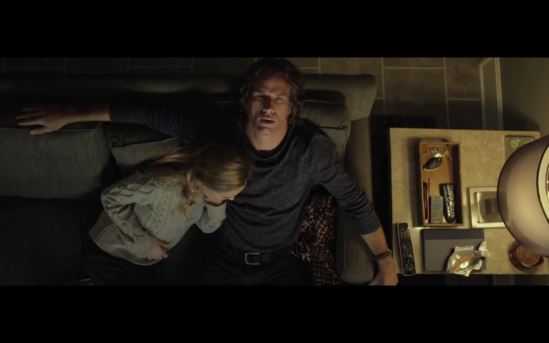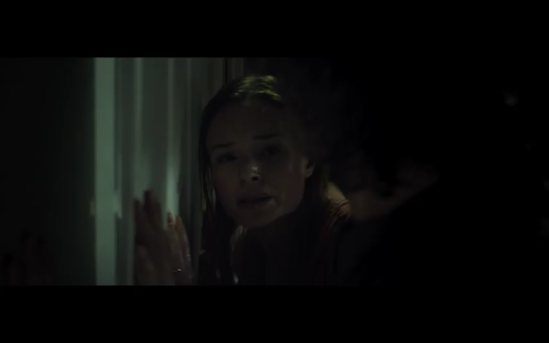
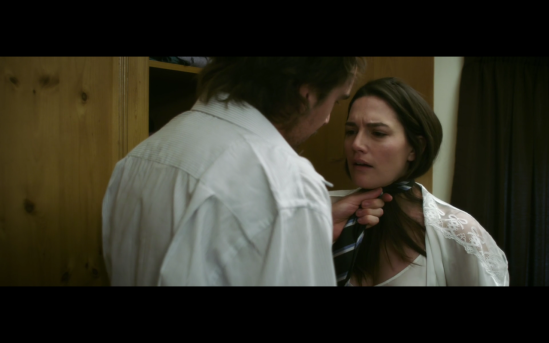
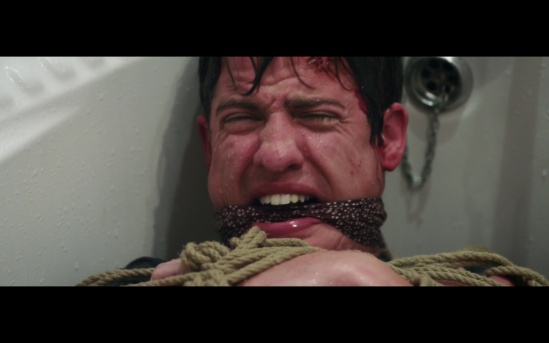
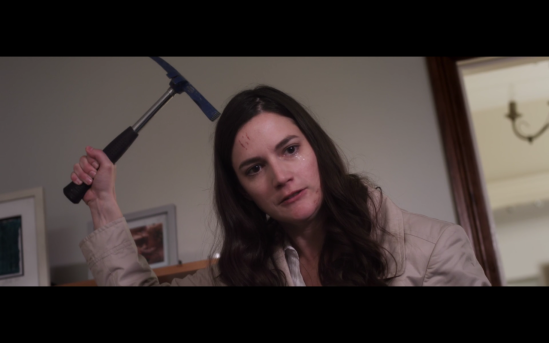
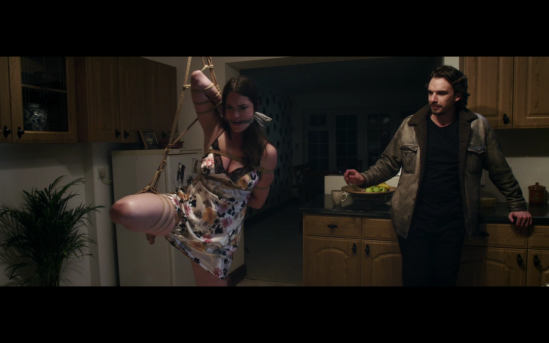
Friday night, A stranger breaks into the home of Tom and Alison. After tying up and torturing Tom, leaving him in the bathtub, he reveals a weekend long scheme that involves convincing Alison to genuinely want him by Monday morning. The stranger’s psychological game slowly breaks down Alison’s perception of her relationship with her husband through consequential threats toward a battered Tom, survival obedience, relationship morals, and untapped desires while Alison desperately attempts to squeeze away her captor’s maniacal grasp any way possible. With Alison’s husband undergoing continuous abuse throughout the weekend, the stranger persistently exhibits various versions of being the perfect husband to appease Alison’s preference in a partner, a striking contrast that begins the spiraling doubts about Tom and the life to which she’s submitting to with him.
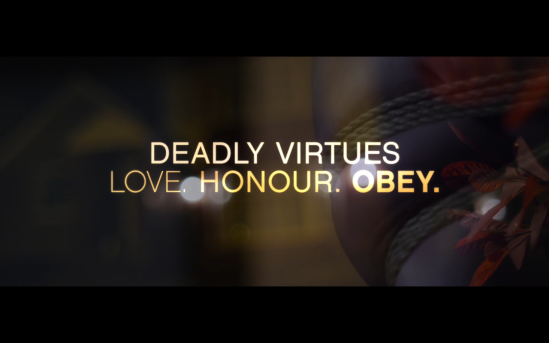
The director who gave audiences a reason to believe in their zany childhood imaginary friend in “Drop Dead Fred” and who drove viewers through the depths of Satan’s domain on the epic retrieval of love journey that was “Highway to Hell” has resurfaced. Director Ate de Jong’s 2014 film has found a home for his British exploitation thriller eloquently entitled “Deadly Virtues: Love.Honour.Obey.” at the Philadelphian based home entertainment distributor Artsploitation Films. An intense eye-opening experience that makes couples’ therapy a cut rate rekindling process, the “Deadly Virtues” story comes from the talented, yet relatively unknown, drafter Mark Rogers whose characters contribute a fierce and engaging potency.
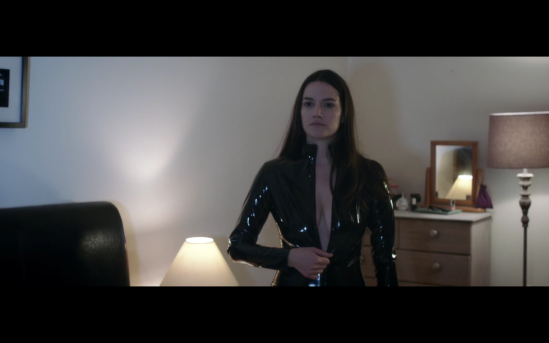
Characters can be written from head to toe with gargantuan electricity, but it takes the actors and actress portraying the characters to actually flip their switches on, vividly toggling their characters to shine. Edward Akrout’s puts forth a dangerously sophisticated Stranger excellently defining the term acting. Every unique touch of the binding rope used on Tom and Alison, every calculated sinister action taken against Tom, and every apt expression emits just enough information to state the Stranger’s purpose without spoiling the character’s mysterious motivations. Akrout is joined by American actress Megan Maczko with a selfless performance that pits her character Alison in a cat-and-game mouse against the Akrout’s Stranger. There are bits of unwanted sexual activity and nudity and role playing BDSM that might mistakenly place Jong’s film in the incorrect genre; instead, Akrout, Maczko, and, even Matt Barber as Tom, acutely pivots the subject matter, even with the provocative nude and bound woman graced film poster.
Not all is copacetic with “Deadly Virtues.” Some of the pacing slows down a bit where the motivation feels arguably aimless as Alison quickly becomes content and comfortable with a man who just softly raided their home and violently turned their lives upside down. Also, as a matter of character, Tom needed fine sprucing from being painfully forceful with how the character critically needed to know, to ultimately compute, trivial information at the most inappropriate moments. The story itself might have forced Tom’s inadequacies and insecurity issues to completely tell the story within the total 97 minute runtime, but in the end, the finale loses that little something something to put the final nail into an already furbished piece of work by director Ate de Jong.
Artsploitation Films’ latest release, “Deadly Virtues: Love.Honour.Obey,” surfaces deep rooted marital issues in an extreme, hostile manner, bringing to the forefront the versus struggle of adapting or fighting back, and also touches upon the beauty of the overlooked. The film’s poster, which I already remarked upon having some minor nudity, accentuates a woman’s other pleasant bodily features including the small of her back, her long neck, and her protruding deltas which Akourt’s portrayal of the Stranger similarly remarks briefly upon when more pigheaded men not noticing, or appreciating, other, less obvious, parts of women. I’m sure for most viewers, gazing at Megan Maczko strung up and suspended in an inviting position can stimulate a lot of interest. “Deadly Virtues” is currently only exclusively available in United States via VOD formats, such as Amazon, Vimeo, and GooglePlay, courtesy of Artsploitation Films.
Category Archives: Chilly Thrilly
Welcome to the Family. Resident Evil 7: Biohazard Review
I want you all to try to go back to 1996. You just got your Playstation and you picked up the newest game called Resident Evil. You know nothing about it and when you start playing you have a wave of emotions hit you. You feel fear, excitement, and anxiety; but yet you keep playing. You were just introduced to the world of Survival Horror. Now it’s 2017 and we are now into seventh main installment of the Resident Evil franchise and sort of a moment of truth for Capcom. Last few years have been rough for Resident Evil so lets see how the latest installment stands.
Resident Evil 7: Biohazard is a survival horror video game developed and published by Capcom. It is the seventh main installment in the Resident Evil series and was released on the Playstation 4, Xbox One, and PC.

The game takes place in the fictional town of Dulvey, Louisiana. You play as Ethan Winters who goes searching for his wife 3 years after her disappearance. The only information you have of her location is at the Baker estate, this is where your nightmare begins.
There is no denying that the RE engine is amazing. Resident Evil 7 passes with flying colors when it comes to visuals, the game is absolutely gorgeous. Realistic graphics with so much attention to detail really makes the atmosphere. Paired up with its excellent sound design which really puts you on edge, hearing random foot steps and loud bangs some where in the house can quickly make you stop what you’re doing and check behind you. Unlike older Resident Evil games, there really isn’t much background music. The only time i’ll hear music is either in the save rooms or during cut scenes, which is fine. No music really does build the tension and makes you listen to your environment.

The most controversial aspect of the game is its change to game play. Resident Evil 7 now puts the player in first person view, which this isn’t the first time they’ve experimented with this. Resident Evil: Survivor being the first one that was in first person, so I was quite interested when they said they were trying it again. As a big Resident Evil fan I can tell the skeptical fans that the first person view works. Resident Evil now feels even more immersive with it. The game still has its slow and sluggish movement, puzzle solving, save rooms , and combat just like the previous titles and the first person view fits perfectly. I haven’t played the game in VR because I’m broke but I have heard that game is even better with it, so now I guess I’ll have start saving up for one.

I feel I have to talk more about combat since I still see people complain how the game is like other non combat horror games, like Amnesia or Outlast. The combat feels just like an older Resident Evil, except Resident Evil 5 and 6. Thank god Capcom abandon the combat from the previous two and went right back to how Resident Evil 1 through 3 combat worked. Ammo and healing items are extremely scarce and you must manage your inventory to survive in certain situations. Enemies will move unpredictably and you must control your shots and keep your distance if you want to take down your foe. When it comes to difficulty, the game on normal is pretty easy, some parts can be a little challenging but if you’re careful and know where to go, then the game is a breeze.
Now Resident Evil 7 isn’t a long game. It took me about 7 to 8 hours to beat on normal difficulty my first time. It can easily be finished faster when you know where to go and what to do, There have been people who finished it in under 2 hours. But if you’re like me and like to explore then it will take you a while to finish. The story is where this game made me fall in love with it. This is by far my favorite Resident Evil story. The team they have behind this game is solid, the director behind the Revelation games is directing it and the writer behind the F.E.A.R 2 expansions made this a memorable experience and I hope Capcom keeps this team for future installments. Everything about the story is great, every character was interesting, and every location was awesome. The story to Resident Evil 7 is definitely more competent compared to the previous games.
As much as I love Resident Evil 7, I do have some minor gripes with the game. First one isn’t a big deal but I was a bit disappointed. Resident Evil has a tradition, when a player presses start on the main menu, they will hear a loud, deep voice reading the title of the game. Example:
Like I said this isn’t a big deal or a turn off for me but I was a bit bummed they broke tradition. Another gripe I had was the lack of variety with enemies. Before you always fought zombies, mutant dogs, and big hulking monsters. But now the only enemy you fight besides the Baker family are the ”Molded” which look very similar to Resident Evil 4 ”Regeneradors”. Yes these enemies are creepy and hard to take down but after a while you just get tired of fighting them and want something else. Hopefully in Resident Evil 8 we get a bigger cast of monsters.

In conclusion, Resident Evil 7: Biohazard is a great game. I’m so happy that Capcom put the brakes on the franchise and went back to how it originally was. Unlike other companies that have completely abandon their horror franchises. I’m glad that I stuck with Capcom all these years and going through many disappointments to finally see my favorite horror series come back on top. Resident Evil veterans would love this and for new people I highly recommend it. It is a great starting point for newcomers to get invested into world of survival horror.
My final score for Resident Evil 7: Biohazard is a 9/10
Mysterious Evil Destroys Small Village Families. “The Wailing” review!
In a small South Korean village, tight-knit families practically know one another in the quaint middle-class community. When mysteriously deadly destructions from inside local families and strange stories of animal carcass devouring creatures in the woods surface, local police sergeant Jong-Goo begins an investigation to connect a pattern of violence and superstition and at the center of it all is a suspicious and reclusive Japanese traveller. Bound by the law and an overall lack of courage, Jong-Goo proceeds to investigate with extreme caution, but when his young daughter, Hyo-jin, becomes subjected to the same symptoms that overtook destroyed families from within, the desperate father sets aside rules and regulations and uses threats and force when visiting the Japanese Stranger, whose rumored to be an evil spirit that’s plaguing the small village with terror and death.

By far, “The Wailing” sets the precedent on folklore horror. Acclaimed writer-director Hong-jin Na lands a harrowingly ambitious, well-constructed film right into the lap of horror fans with “The Wailing,” known also as “Goksung” in the film’s country of South Korea. South Korean filmmakers have once reestablished proof that foreign films can be as masterful, as bold, and as elegant when compared to any other film from major studio productions. Hollywood has started to come around by remaking one of South Korea’s most notorious films, the vengeful thriller “Oldboy,” and seeks to remake recent international hits in “Train to Buscan” and “I Saw the Devil.” Lets also touch upon that top Hollywood actors are beginning to branch out to South Korean films. “Captain America” star Chris Evans had obtained a starring role in Joon-ho Bong’s “Snowpiercer” alongside co-stars Ed Harris and the late British actor Sir John Hurt. “The Wailing” will reach similar popularity being one of 2016’s most original horror movies and one of the more unique visions of terror to clutch the heart of my all time favorite’s list.

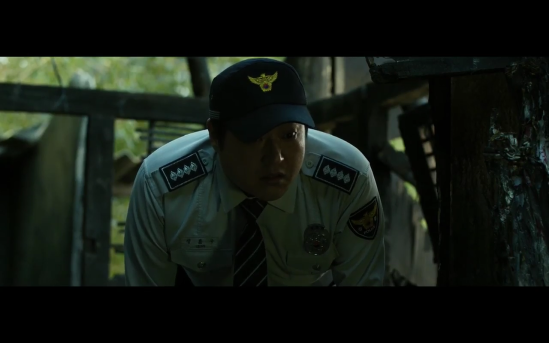
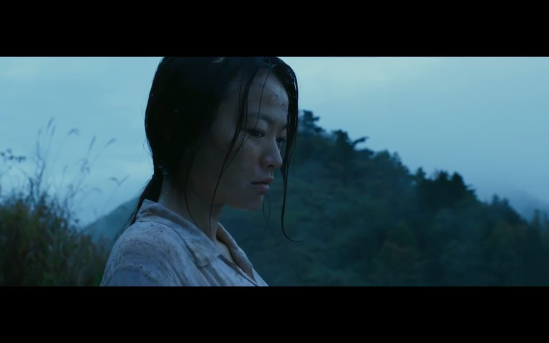
Do-won Kwak stars as Sergeant Jong-Goo, a officer who avoids trouble at all costs and has no motivation to be on time for anything. Kwak, basically, plays the fool character, comically going through the routine of investigating brutal murders complete with stabbings, burnings, and hangings despite his Captain’s constant chastising and seizes every opportunity to act dumb and look stupid, but once the story starts to focus “The Wailing” as nothing more than an offbeat black-comedy, Hong-ja Na devilishly about-faces with a severe turn of events that’s a mixed bag of genres. Kwak no longer plays the lead role of comic relief; instead, a more self-confident Sergeant Jong-Goo takes control of the investigation as the deeper he finds himself involved in the dark plague that’s ravaging his village. He hunts down the Japanese Stranger, the debut South Korean film for long time Japanese actor Jun Kunimura (“Kill Bill,” Takashi Miike’s “Audition”) with a zen like aurora that’s enormously haunting to behold and captivating when his presence is lurking amongst the scene. Though Kunimura’s demeanor contrasts with other actors, he’s very much in tune with the dynamic, but it’s the maniacally, foul-mouth ravings of Hyo-jin, played by Hwan-hee Kim, that stand out and are the most distraught during her possession state that could give “The Exorcist” a run for it’s money and is a visceral vice grip to the soul that has to be experienced. Woo-hee Chun and Jung-min Hwang round out the cast in their respective and memorable co-starring roles as a peculiar no named woman and a flashy shaman.

“The Wailing” incorporates various folklore stemming from cultures all over the world including the Koreas, China, Japan, and even from China’s bordering neighbor Nepal and meshes them with religious practices of Buddhism to even the far corners that the Catholic faith possesses. The luxuriant green South Korean mountain backdrop sets an isolated, ominous cloud over a beautiful and serene archaic village, an awe-inspiring juxtaposition created by cinematographer Kyung-pyo Hong that coincides with the complete dread piercing through the heart of the story; a perspective vastly opposite to Hong’s works in the previously mentioned “Snowpiercer” that’s set in the tight confines of a class dividing bullet train. “The Wailing” bundles together mythos with visionary concepts and landscapes in an epic mystery-thriller that’s unforgettable; it will cling to you, like a evil-dwelling spirit, well after the film is over.

20th Century Fox, in association with Ivanhoe Pictures and Side Mirror, produce Hong-jin Na’s top horror contender “The Wailing” with Well Go USA and Kaleidoscope Home Entertainment distributing on DVD and Blu-ray. Unfortunately, I was provided with a DVD-R screener and can’t specifically comment on specifications and image or audio quality. Accompanying the screener were two bonus features: a behind-the-scenes featurette and the beginning tale of “The Wailing” featurette. Both were fairly informative that gives insight on Hong-jin Na’s mindset and how the director’s ambitious story in a malignant tale of comedy, horror, and mysterious involving demons, shamans, and, quite possibly, the devil himself. “The Wailing” significantly captivates, sucking you into the darkness with an uncanny amount of pull with a story too terrifyingly original to avert and too thick with vigorous characters in a plot twist too harrowing to forget.
A Child’s Dreams Can Conjure Evil! “Before I Wake” review!

Grieving parents, Jessie and Mark, aim to heal the deep wounds of the tragic and accidental death of their young son by fostering an orphan boy named Cody. After the mysterious death of Cody’s mother and having been through two concerning foster parents prior to Jessie and Mark, Cody strives to be the most sweet and loving child to his new and pleasant foster parents, but Cody has a dark secret that keeps him up at night. When Cody falls into a dream state, his subconscious imagination manifests his awe-inspiring dreams and even his worst nightmares that become deadly with the presence of the malicious Cranker Man, a dream shadow who can pluck anyone into disappearance that happens to be near the slumbering boy.

“Before I Wake” director Mike Flanagan labors over all that is supernatural, churning out more than his fair share of specter-centered storied films including “Absentia,” “Occulus,” and the more favorable sequel to “Ouija,” entitled simply enough “Ouija: Origin of Evil,” that was produced alongside “Before I Wake” in 2016. Flanagan’s knack for suspenseful tall-tale horror doesn’t pigeonhole the Salem, Massachusetts born director into producing the same terrorizing story over-and-over and while “Before I Wake” has undoubtedly a few heart-pounding horror elements, fantasy more than so strong arms the genre into a branding submission. If I may be so bold by comparing “Before I Wake” to Guillermo del Toro’s “Pan Labyrinth” might be committing, perhaps, blogger career suicide, but the draw to resemblances can’t go ignored with what “Before I Wake’s” Cody creates from his overly stimulated dreams is much more familiar to what “Pan Labyrinth’s” Olivia character imagines when she escapes the horrors of a war bred sadistic maniac, if even only in a diluted version of events.

“Superman Returns” actress Kate Bosworth headlines with co-star Thomas Jane (“The Mist,” “Deep Blue Sea”) as the unwitting foster parents who are forcing themselves back into the parenting game. I specifically was not coming to terms with Bosworth’s performance as Jessie; her facial expressions and body language, along with her tone and line deliveries, were too lifeless with rigidity and repetitiveness. So much so that I compared Bosworth to Suzanne Cryer’s impassive Laurie Beam character from HBO’s “Silicon Valley.” Unless the inexplicable amount of grieving has voided her of all emotion, like the Borg drone from “Star Trek: The Next Generation,” the role of Jessie is written with a variety of mood driven circumstances that start with her insomnia, to her willingness to not leave their home, to being carelessly exploitive with Cody. Being a fan of Thomas Jane since 2004’s “The Punisher,” I might be a bit biased, but Jane had more range with the ability to switch back-and-forth between mixed attitudes and sentiments, making the dynamic between Jane and Bosworth clunky and awkward. To round off the trio of main actors, you might recognize the pint sized actor playing Cody as Jacob Tremblay from the 2015 Oscar Winning Brie Larson film “Room” portraying an innocently pitiful dreamer with an unquenchable thirst to be loved.

The Flanagan and Jeff Howard co-authored storybook script, intentionally or not, borrows heavily from psychoanalyst Sigmund Frued’s dream interpretation theory that wishful fulfillments are more common in children. Previous day activity, or day residue, has influential properties on a child’s dream, much like with Cody in this story, and Cody’s dreams are written to be an exaggerated fruition, fulfilling his desires and illuminating his emotions to the brightest or the darkest extent. Like many other films that involve the misunderstanding of children, adults Jessie and Mark blindly understand all the possibilities of Cody’s uncontrollable gift, exploiting Cody’s powers for their own greed. I did find that I love Jane’s Mark character as he tries to show Jessie the errors of her reasoning as he’s a bit of a kid himself, living vicariously through Cody with the video games and with the pizzas as if husbands, or men in general, are actually children at heart. Cody’s gift becomes a power struggle with Mark caught in the middle and the consequences of this struggle result in being the catalyst to unify Jessie and Cody as a strong bond between Mother and Son. Men totally receive the shaft in this picture where both dominant adult male figures are reduced to a forgotten or humbling state, left behind because mother knows best when it was really mother who dismantles the situation.

“Before I Wake” is a boogeyman fable of sleepless nights that independent Canadian distributor Mongrel Media presents on Blu-ray for the first time anywhere in North America on a home entertainment platform come January 10th. The film has been in a distribution limbo since U.S. theatrical distributor Relatively Media filed for bankruptcy, but, luckily for fans of the supernatural genre, Mongrel Media obtained home video rights. I was provided an online screener link, forcing my hand to not comment on the specs of the Blu-ray audio or image quality nor touch upon the bonus material, but what I can state is that the spin on the dream killer won’t stop here with “Before I wake.” Dreams, like conceptions of outer space, are vast with unlimited, unconstrained content that surrealist director Mike Flanagan has only partially tapped into by exploring the dangerously innocent perceptions fabricated from a child’s abstract mind.
Can’t Spell Devil Without Evil. “The Devil Lives Here” review!

Every nine months, the vengeful spirit of an atrocity dealing plantation slave owner, known as the Honey Baron, seeps from a cursed slumber to reclaim his once profitable Brazilian manor home. Also, every nine months, caretakers of the manor home resurrect Bento, the once voodoo practicing slave to the malicious Honey Baron, to fortify the longstanding damnation. Until four friends gather to invoke the myth in jest, lightly treading over the forsaken manor home, and getting themselves unwittingly involved in the releasing of Hell on Earth. Caught in the middle between the Honey Baron and Bento, there’s nowhere to escape, nowhere to hide, and noway to distant themselves from an ancient wickedness.

Directors Dante Vescio and Rodrigo Gasparini’s “The Devil Lives Here” is sorely what the horror community needs and desires, an original vision of spine-tingling Brazilian folklore horror. It’s a damn good story that’s engrossingly rich with captivating characters, virtuous and villainous, simultaneously breeding a delectable devil in São Paulo actor Ivo Müller. From the opening scenes of Müller’s sadist applications upon a humble whimpering slave to the highly climactic and unforgettable shocking end, Vescio and Gasparini details every inch of reel with patience, organization, realism, and a sense of admiration for one of a kind antecedent horror films and concocts a molotov cocktail spiced with numerous Brazilian folklore.

Folklore envelopes “The Devil Lives Here.” Ivo Müller portrays a blend of two distinctive mythological beings, the Anhangüera and an Encantado. Anhangüera, basically, is a version of the devil while Encantado paints a more vivid image of the Honey Baron as a man, whose so ruthlessly evil, that he becomes ensnared in limbo by voodoo, in this case the voodoo of African slaves during the colonial era, and lives a vain life for his atrocities. On the other end of the spectrum, Bento, once a young slave boy, seeks to endure the curse, reestablishing it’s constraints around the Honey Baron’s Anhangüera ways. Bento resembles more closely to the story of Negrinho, a slave boy fatally punished for his loose bindings on responsibilities to his master. Negrinho died on an anthill, in which ants later feasted on his flesh, and returns to help others. In the 2015 film, ants and bees are clear motif before Bento’s horrible demise and Bento also returns from the grave like an original African or Caribbean dirty working zombie, the kind of mindless zombie before George A. Romero took the undead head to new flesh eating heights. “The Devil Lives Here” embellishes upon each lore to up the ante and deliver a shock to the system.

Alongside Ivo Müller is a young, but a formidable cast. Pedro Carvalho, Mariana Cortines, Diego Goullart, and Clara Verdier have performance that are simply enjoyable to absorb and are just wonderful being the unexpected catalyst. With a slight twist in one of the four’s well-kept motivations, the brilliancy of Rafael Baliú’s script, based off the story by co-writers Guilherme Aranha and M.M. Izidoro, comes to a head by not following the conventional tropes of hapless pranksters unwittingly hitting the bees nest. Instead, the characters are grossly flawed by one of their own; however, I did hope there was a little more exposition toward Mariana Cortines’ Alexandra clairvoyant ability between the world of the living and the spirit realm as I thought the relevancy was too important to leave open. Pedro Caetano and Felipe Frazão master their roles of being caretaker descendants to Bento. Caetano and Frazão tackle multiple personas with a well armed cache of emotional ranges that split their dutiful commonality and define their positions amongst the story. The cast couldn’t have worked well enough any better making “The Devil Lives Here” a film adorned with God-mode proportions.

Artsploitation Films has become a prominent label in providing provocative and outstanding domestic and global cinema and “The Devil Lives Here” only solidifies their true power amongst other home entertainment distributors. The film is presented in a widescreen 1.85:1 aspect ratio with slight blotchiness in darker tones, but the image is still very sharp with a filter blanket of a warm yellowish glaze. The stereo 2.0 audio with optional English and English SDH subtitles is fine coming through the dual channels. The subtitles are a bit quick, but so is the portuguese language. The DVD cover art is nightmarishly inviting, just like the film itself. “The Devil Lives Here” will completely suck you into the original narrative and curse you with screen glued eyeballs to deliver an inspired and indigenous film that shouldn’t be missed by any horror fan.