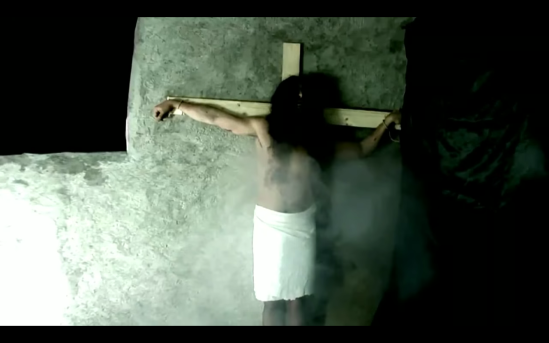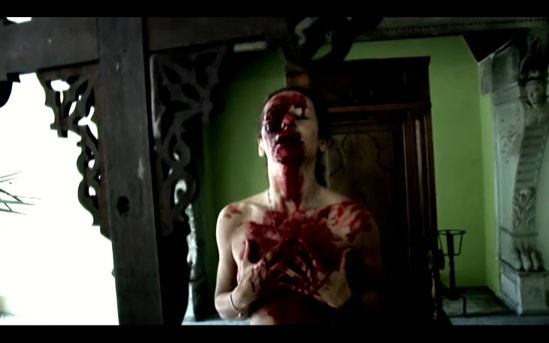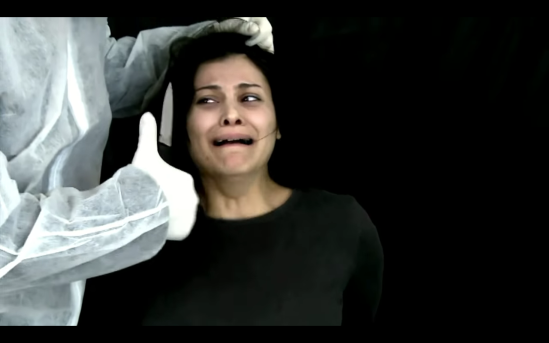
Three peoples’ lives become coiled around the unfortunate state of death with each experiencing individual variations of the concept. The recently released convicted felon, Ed Kunkle, faces reality on the brink of insanity as his past demons vilify his temperament in the direction of total carnage. Befriended by Kunkle is Eve Adams, a single mother who struggles to cope with her infant son’s untimely murder that happened right under her watch. Assigned to the Adams Boy’s case is detective Bodie Jameson who struggles with own malevolent urges brought upon by the unsurmountable cases of grisly homicides that come cross his desk while he also tracks down a child killer. Their differences connect them, looking into their future to rediscover the past that molded their disheveled lives into fateful affairs with death.

Over the course of three years between 2007 to 2010, auteur filmmaker Joaquin Montalvan directed and assembled a gritty glimpse into the grubby windows of condemned souls with the 2010 released “Hole,” produced by his own independent production company, Sledgehammer Films, and co-written with his longtime collaborator and wife in life, Eunice Font. “Hole” is Montalvan’s third horror feature following 2002’s beleaguered with loneliness thriller “Adagio” and psychological horror, “Mobius,” which was released the year prior in 2009, plus also behind a string of documentaries. Montalvan’s an optically surreal storyteller basking in a rich and unorthodox story and color palette that revives originality bobbing in an heaving ocean of lemming horror.

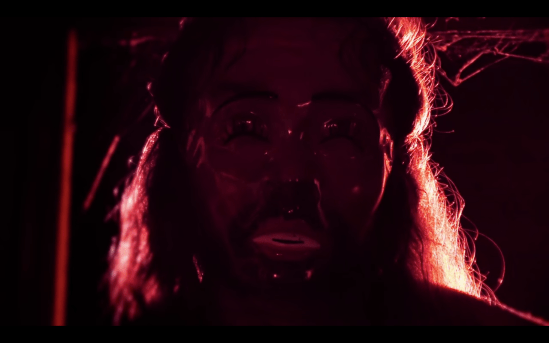
“Hole” is comprised of showcasing three stories from three tormented lives. One of those lives, the mentally unfit Ed Kunkel, gorges on being the centric force that thrives the other two into a descendant hell. The late Paul E. Respass tunes into Kunkel’s manic polarity as a person who can be extremely mild mannered and pleasant then explode with caustic abrasiveness and ugly torture. Respass’s shoulder length, wavy hair, graying goatee, and iron contoured face gives him a Charles Manson appearance that goes good with crazy. Behind closed doors Repass’s Kunkle breaks with sanity slaughtering his mother lookalikes as a result of mommy issues, but when conversing with Eve Adams, Kunkle’s maintains an upright keeled temper. Teem Lucas, who like Respass has worked with Montalvan previous, subdues the abnormal imbalance with a normal person’s reactionary response to loss and heartache when Eve Adams copes with the murder of her young child. In the middle these two extremities, detective Bodie Jameson’s work seeps into his psyche, fluctuating between irrational and rational thoughts. Another actor in Montalvan’s corral, Jim Barile, who looks more like a 70’s hippie than a detective, has the hardest performance of them all of slipping into a terrifying unknown mindset while maintaining status quo in work and romantic relationships. Barile’s role isn’t well recieved, flying mainly under the radar with an underperformed and pointless conclusion to detective Jameson right and wrong affliction. Charlotte Bjornbak (“Camera Obscura”), Katherine Norland (“Cannibal Corpse Killers”), Alina Bolshakova (“Dead End Falls”), Dennis Haggard (“Cannibal Corpse Killers), Theresa Holly (“Legend of the Hillbilly Butcher”), Micki Quance, Gavin Graham, and Char Frost (“Someone’s Knocking at the Door”) co-star.

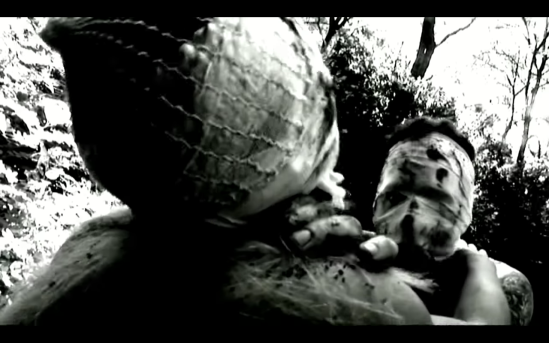
Right away, a strong sense of resemblance washed over me when viewing “Hole.” The lead actor, Paul Respass, and the overall texture felt already acquainted with my visual cortex nerves. My suspicions were justified and my sanity was cleared as I have seen “Hole” before in a later film entitled “Legend of the Hillbilly Butcher,” another Joaquin Montalvan flick featuring Respass as a delusional manic. Yet, “Hole” is one of those films that after the credits role, hasty judgements should be chewed on, reflected upon, and recollected for a second analysis. Hell, you might as well just re-watch it all over. The thing with Montalvan is is that his brand has trademark cognizance on such a level that even if “Hole,” released in 2010, and “Legend of the Hillbilly Butcher,” released in 2014, instinctually ride the same wave, they ultimately compare as individual projects with a distinct personality and artistic flair. For instance, “Legend of the Hillbilly Butcher” denotes more of an homage to early exploitation films and “Hole” puts more stake into societal system failures, even if borrowing from the likes of Ed Gein with the killer wearing a flesh mask and sewing up a fleshy garment. Both films hark about mental illness, but one glorifies the act for the sheer sake of carnage fun and the other considers it a collateral damaging symptom of a broken justice structure. Another difference to note is “Hole’s” three-way non-linear narrative that moves like the Wonkavator from “Charlie and the Chocolate Factory” in every way imaginable and can be daunting to keep up.

Out of the depths of obscurity comes “Hole” distributed on DVD home video by MVDVisual and Wild Eye Releasing under the Raw and Extreme banner. Presented in a widescreen, 1.78:1 aspect ratio, Montalvan and his D.P. R.T. Norland, brightly bedazzling with every shade of matte box and some slow motion, play the field utilizing various techniques to tap into Ed Kunkle’s disorienting madness. Using backdrops like the ghost town of Bodie and the spiritual sanctuary (or bohemian commune) of Salvation Mountain, Montalvan’s able to cast an aberrant vision out inside an independent means. There are some points of posterization, details are softer than desired, and blacks lose composition with blocky noise so there are some drawbacks to the encoding. The English language dual channel audio mix pairs about the same as the video with spliced competing facets that tend to offer come-and-go range and depth. Scream queen moments go into feedback mode during Ed Kunkle’s kill mode, losing the ideal quality via unsound mic placement. Dialoge is okay being on the softer side with some background noise being flowing in and out between the audio edits, emitting a static effect around the dialogue and then cut out when not the actors are not speaking. The bonus features are aplenty and informative with a Montalvan commentary track, an extensive mack of documentary that fine combs every pore of the film that includes interviews with cast and crew, Ed’s Journal segment conversing about the backstory on Ed Kunkle’s perverse family and killed friends portraits and souvenirs, as well as trailers. Bloodhounds will want more from Ed Kunkle’s shed of horrors, but what director Joaquin Montalvan has fashioned threads madness with a neglected mental heath system while polishing a a shiny three prong, moviegoer narrative with blood, body parts, and butchery.
Category Archives: Death
Danzig’s EVIL Stank All Over This One! “Verotika” reviewed! (Blu-ray, DVD, CD / Cleopatra Entertainment)

Three sordid, macabre tales straight from the controversial pages of Glenn Danzig’s Verotik comic line that slips into the surreal lurid dimension of obscure stories of a subconscious half-human, half-spider manifestation with a sexual appetite and a morbid desire to break the necks of women of the night, of a disfigured and mysteriously alluring stripper who seeks out beautiful women nightly to crudely remove their faces with a knife and overlay their once perfect skin on top of her face as she adds them to her collection of facial distinctions, and, lastly, of a bloodthirsty medieval countess known to her subjects for exquisite beauty and grace emanated by the blood baths of her virginal female subjects.

Legendary metal musician and songwriter Glenn Danzig has been a symbolic (Anti-)God that inspired other metal bands and fans over for more than 40 years, birthing perhaps the original, and still more popular, horror-goth punk bands to ever set the black lit stage, the Misfits in the late 1970’s. Outside his illustrious musical career, Danzig owns Verotik, a comic book publisher, that’s a portmanteau derived from “violent” and “erotic,” geared toward adult-themed material and inspired by his fascination with horror. In comes “Verotika,” a three short film anthological horror feature penned by Danzig and is his director debut while in collaboration with powerhouse musical recording label, Cleopatra Records, under their cinema label, Cleopatra Entertainment. Co-producing alongside Danzig is James Cullen Bressack, whose heavily been the created force behind the affectional indie found footage horror “2 Jennifer” and “From Jennifer” films, and Bressack associating collaborator, Jarrett Furst.

Keeping with the “Verotika’s” motif of scantily cladded women and the elements of horror, each story is driven by a female lead portrayed by actress who’ve established themselves with a scream queen presence, have enter the entertainment industry by way of X-rated programming, or are fresh faced with the presumptive hypothesis that the role secured was for their voluptuous assets. Ashley Wisdom is one of those endowed actresses that fit the latter category. The Instagram model and fling of Glenn Danzig becomes a shoe in for the lead of Dajette in the first segment, “The Albino Spider of Dajette.” Wisdom’s cringing faux French accent and rigid manner doesn’t wholly dilute from her bustier attributes that include prosthetic eyeballs for nipples – all part of Dajette’s character – and fairs better than Scotch Hopkins’s (“2 Jennifer”) absurd Albino Spider of grim free verse prospects inside a stiff, stingy mockery of a humoresque spider. Optimistically, the episodes only go up from her with the following tale ”Change of Face” that follows mystery girl, “12/12/12’s” Rachel Alig, hunting down and slashing off the faces of beautiful women for her collection. Alig is a palpable psychopath amongst a sea of overzealous, conventional orchestrated character types that sells a noir, or hints at a giallo, loom that sensualizes as well as sexualizes a salacious one-person schismatic view of beauty. However, the grand finale saves the best for last with Verotik’s more diabolical and foundational brutal transgressors, Drukija: The Countessa of Blood. Without so much of a setup or without expositional bookends that dive into backstory, conflict blossoming, or even resolution, Drukija’s a voyeuristic chronicle that exhibits the day in a life of a abhorrent ruler soaked in virgin blood with Australian actress Alice Tate fulfilling Drukija’s iron spike studded crown. Numerous scenes linger with Tate just bathing in blood or checking her sangre-moisturized skin in a three-way mirror to just extenuate the picking and choosing of daughtered victims, gleaming of deity-hood inside the eye’s of her maniacal maiden hand, and, in her spare time, amasses decapitated heads of the slaughtered young women as keepsakes. Yet, Kayden Kross dignifies that porn stars can get into the silver screen market, well, at least in Danzig’s irregular one. The director and starlet filmmaker hosts an outer edge story as the witchy-gowned and demonically unholy Morella who introduces each segment in between. Sean Kenan (“My Trip Back to the Dark Side”), Natalia Borowsky, Emma Gradin, with special cameo appearances by Caroline Williams (“Texas Chainsaw Massacre II”), Courtney Stodden, and a number of women from the porn circuit like Kross, such as Bobbi Dylan, Katrina Jade, Emma Hix, Aalyiha Hadid, and Veronica Ricci.

I’m all for the forging of industry realms when comic meet the big screen with adaptation and love Verotik’s edgy eroticism and hyper-violence mantra, but “Verotika’s” pulpy irregular narrative meter coursed a perplexing devolved sojourn through our visual cortex, leading us pleading for a bigger, better version of Danzig’s auteur dreamscapes. Verotik’s a fire and brimstone optical narrative from the illustrated pages that speak volumes of profligate and vivid avant-garde characters and unlimited violence that tremendously lose that tailor-made authenticity when translated to the screen. Danzig’s free-form script works with music symbiotically; for together, the strums and riffs glue together disassociating dialogue to a unison of harmonics, even if Danzig’s prefers harsher rock melodies. For the musician’s first dance with directing, Danzig deserves props creating a gory, pulpy, and colorful piece of his subsequent profession. Yet, there’s always room for improvement in his technique, such as Danzig’s fascination with the zoom feature on the camera. The edit cut is almost too rough for swallow with no segue equilibrium between shots that result in some obvious cue acting and I’m usually a fan of Vincent Guaustini’s work, but his Albino Spider suit, in which the other four arms out of the three sets were fastened together, rolled back years of good effects work.

True to form, Cleopatra Entertainment offers a staggering release for Glenn Danzig’s “Verotika” in a triple-format Blu-ray/DVD/CD release distributed by MVDVisual. For this review, the Blu-ray was covered and the transfer is released in a widescreen, 2.35:1 aspect ratio, shot on an Arri Alexa anamorphic lens camera. The enormity of color schemes offers a wide variety of tints, especially in “The Albino Spider of Dajette,” but revert to more a natural tone for “Change of Face” and “Drukija: Countess of Blood” with stable details inside and outside the black. Slightly hazy (or maybe just smokey?) at times, but the 1080 does too good of a job to see all the nonexistent pores on the ripped off faces in “Change of Face.” The English language Dolby Digital 5.1 surround sound audio mix that, again, has a lossy quality from Cleopatra Entertainment, a sub-label of a major music recording company. The surround faintly register ambient audiophiles inside the channels whereas Danzig’s rock solid and eclectic soundtrack offers more, just a notch more, LFE oomph quality to boost into all areas. The CD renders around the same lossy quality. Bonus features include a trailer, a slideshow, and, of course, the compact disc featuring a new track from Danzig and also features tracks by Ministry, Pink Velvet, Studio 69, and Switchblade Symphony. Like a bizarro “Red Shoes Diaries'” episode, “Verotika” bares no shortage of nudity that’s interlocked with well-nigh arbitrary violence spread-eagled in a gnarled cinema anthology of surreality that lied festering inside Glenn Danzig’s head.
EVIL’s a Face-Off to the Death! “Guns Akimbo” reviewed! (Saban Films / Screener)

Miles, a thirtysomething video game developer, remains stuck in an unfulfilling and lonely existence where being an internet troll gives him his only taste of dominance over those who normally succeed above him in all other life aspects. When he pokes and prods a popular and sadistic underground death match known as Schism, the virally trending sensation sweeping the internet nation comes knocking at his apartment door to officially install him into the next melee bout. With guns crudely surgically bolted to both hands, Miles, whose used to running from just about everything, now has to nut up against Schism’s most prolific killer, Nix, and save his kidnapped ex-girlfriend from the deviants behind the game.

Social commentary runs amok in this grisly balls to the wall, gunplay stimulating action-comedy, “Guns Akimbo,” from the New Zealander, “Deathgasm” writer-director Jason Lei Howden. Trading in doom metal horror for a crass bullet ruckus, Howden barrels down with an on fleek supercharged story like a runaway freight train or a 6,000 round per minute minigun, shredding through a high body count like in a high occupancy round of a first person shooter. Under the production wing of Occupant Entertainment and distributed by Saban Films, who released films such as “The Girl with All the Gifts” and Rob Zombie’s “31” and “3 From Hell”, “Guns Akimbo’s” edgy dystopian air gangling along nerdy humor scraps “Robocop” utilitarian veneer for a fresh coat of millennial trivialities, fleshing out, in a ream of firepower, relevant societal topics and facing their adversarial shades head on in a barrage of blood soaked bullets.

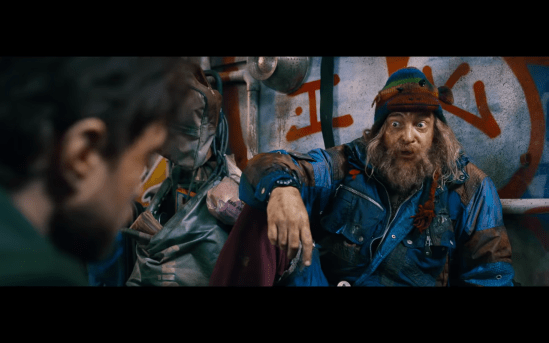
Spearheading “Guns Akimbo” is Daniel Radcliffe, who seemingly continues to distance himself from the world of wizardry of “Harry Potter” and focusing his current career on off-Hollywood and chic films that has gained Radcliffe a cult following alongside his cache of wizards and witches fandom. Feeling content stagnant, Miles lounges comfortably in the power of being a keyboard warrior and Radcliffe leads the non-exuberant charge until pushes comes to guns bolted to my and someone is trying to kill me-shove. Opposite Radcliffe is Samara Weaving as a brashly confident and hard-hitting character of familiar skin that’s similar to her Melanie Cross role in Joe Lynch’s “Mayhem.” Instead of being a mild-mannered woman infected to be a savage, floor-clearing combat artist, Weaving bares no dissuasion embodying another uncaged killer becoming the nitty-gritty, tattooed, and uncouth Nix, hard-nosed with violent tendencies stemmed by the fiery murder of her family. Together, Weaving and Radcliffe make engaging adversaries and friendlies who both end up on working on themselves while working with each other in a do-or-die game. Ned Dennehy plays the creator of Schism and overall bad guy Riktor. The Irish actor, who recently had a role in Nicholas Cage’s “Mandy,” finds himself just as tatted up as Nix, waving a nihilistic-revolutionist banner like its something to be proud of, but despite Dennehy’s best efforts in alleviating his cynical nature with a few sarcastic quips, Riktor comes off as bland and unfulfilled as a story’s aortic villain; instead, I found myself more curious about his fascinating short-lived henchmen played by Mark Rowley as a Zangief Street Fighter doppelganger, Racheal Ofori shelling out with double barrels, and Set Sjöstrand as a gimp mask wearing Fuckface. The international cast rounds out with Natasha Liu Bordizzo (“Hotel Mumbai”), a once in a lifetime hilarious homeless man act by funny man Rhys Darby, Grant Bowler, and Edwin Wright (“Turbo Kid”).

“Guns Akimbo” could have been pulled straight from the crimson flashy illustrated pages of a popular graphic novel and, most definitely, would have worked as one too, soon to come for sure, but as a feature film is concerned, as fun as Howden drapers it with explosions, expletives, and executions, “Guns Akimbo” ultimately shakes at the knees with acute breakneck, 24-hour speed that clocks in at a 95 minute runtime. While that’s the standard runtime of choice for movies, average around 90 to 100 minutes, consequences from flying through backstories (Miles, Schism, Riktor, Nix) in a blink of an eye at the story’s expense to hastily push for gun blazing glory puts all the pressure on the viewer to keep up. The story’s non-linear moments also factor into being an onerous barrier for audiences which are shiplapped together egregiously just for the sake of going against the atypical plot structure design and interspersed with flash backs and wishful thinking near death pipe dreams all jam and crammed packed into the sardine can that is the very eye-candy combat of “Guns Akimbo.” Yet, enough time was mustered for symbolism where Miles finds himself ensnared in the sticky negativity that is the social media sludge, fueled by the sadistic voyeurs enjoying the show in a violence-porn tapestry. From troll to titan, Miles rises as the unlikely gladiator presence in Schism, pushing him toward being a viral sensation from which he can’t escape despite the lack of enthusiasm to anything related to Schism and his skyrocketing social media status. The whole showdown thrusts him into controlling his own life whether he likes it or not, a kick in the ass for a lack of a better phrase, to get him motivated.

Come February 28th, Saban Films’ “Gun Akimbo,” produced by Occupant Films’ Joe Neurauter, Felipe Marino, and New Zealand film producer Tom Hern, will go full blown trigger happy into select theaters, on demand, and on digital. Since this movie is yet to be officially released, is a screener, and doesn’t have a home video release just quite yet, there will be no audio and video critique portion of this review nor were there bonus material. There have been many great dual wielding action heros in our lifetime, including John Weston from “Equilibrium,” Selene from “Underworld,” and even that Counter-Strike terrorist avatar with the option to wield Dual Berettas. Now, we have Miles from “Guns Akimbo,” an immense ball of New Zealand vitality, un-tapered exploitation, and twofold in gun fun.
The Dead Don’t Stay Dead in EVIL Burial Grounds! “Pet Sematary Two” reviewed! (Scream Factory / Blu-ray)

After the accidental and traumatizing death of his beautiful actress mother, happening right before his eyes, Jeff Matthews and his veterinarian father move from Los Angeles to his mother’s quaint hometown of Ludlow, Maine to start over. The father and son are met with small town hostility from an arrogant, abusive Sheriff and the high school bully, but the ease of settling into their new surroundings with a new veterinarian business going well and Jeff gaining friendship with the Sheriff’s stepson, Drew, provides some inkling of comfort after their loss. When the Sheriff’s hot-headed temper murders Drew’s dog, the disconsolate Drew, along with Jeff, buries his beloved best friend in a sacred Indian burial ground with a smidgen of hope of the dog’s return, as the town’s urban legends suggest, but the dog becomes the first to return in a series of deaths and catastrophic returns that stagger to a family reuniting climax Jeff and his father won’t ever forget.

With Stephen King removing his name and separating himself from the overall project, the sequel to the 1989 “Pet Sematary” raised a few eye brows from the general public, and I’m sure some anxious investors, of how just would a non-adapted sequel to one of Stephen King popular novels would pan out come release. “Pet Sematary Two,” released three years after first film, would follow the predeceasing story a few years later with an entirely new cast of characters while still evoking the presence of the first film to linger about with director Mary Lambert to return to the director’s chair and helm a script by a relatively unknown writer, Richard Outten. Yet, Lambert’s return didn’t necessary equate to the reimplementing a broody, ominous, darkness facade as the well versed music video and television director flipped the script on a film she might not have any control over albeit financial backers did. Instead, “Pet Sematary Two” garnishes a scoffing rock’n’roll polarity that’s a raiper-like obverse approach of merriment morbidity doused with flammable fun and demented delight.

Hot off the presses of his first major role as a young John Connor fighting man-killing machines from the future in “Terminator 2: Judgement Day,” Edward Furlong stars as the scathingly broody Jeff Matthews. While Jeff Matthews isn’t as punk, off the street, as the delinquent turned hero John Connor, Furlong is about to turn Jeff back into being a kid with real life problems such as bullying, father-son quarrels, and dealing with the death of a parent. That screeching cry, those sunken eyes, and that bad boy attitude from “T2: Judgement Day” convinced thousands of young teenage girls that Edward Furlong was a desired heartthrob and “Pet Sematary Two” continued to showcase those attributes even further. However, in my humble opinion, Clancy Brown is the real heartthrob of the sequel with his over-the-top performance in the abrasive Sheriff Gus. The New England twang instantly sells Gus’s malignancy and crimson temper without even lifting one ill-fitting moral finger. From another King adaptation in “Shawshank Redemption” to being a bug hunter Commander Zim in “Starship Troopers,” Brown’s distinguishable deep and resonating voice, square jaw, and tall with broad shoulders has made the veteran actor the picture of law enforcement and military type and while “Pet Sematary Two” played into that typecast, Brown, who didn’t want to venture into horror, saw the laughter in the darkness and came out on top with a stellar exaggerated and unforgettable Sheriff Gus as a full blown undead maniac. Furlong and Brown stands out immensely over the rest but the remainder of the roles are just a grand with performances from “Revenge of the Nerds'” Anthony Edwards, Jared Rushton, Darlene Fluegel (“Freeway”), Jason McGuire, and Sarah Trigger.

“Pet Sematary Two” might have been profane against all that is (un)holy from the Stephen King’s novel and Lambert’s first film, but truth be told, the sequel is a whole lot of fun, a shell of the name worth watching, and provides substantial brutality with gory leftovers including skinning stark white rabbits, shredding the face off a young punk with the back wheel of a motocross bike, and an electrocution that ends with a head eruption. The Steven Johnson effects had range and bite, but unfortunately, the full brunt of the “Videodrome” and “Night of the Demons” effects artist’s work was perhaps not entirely showcased with some hard cuts to obtain a R rating, even unfortunately keeping the age-old rating with the new collector’s edition from Scream Factory that’s also the feature’s Blu-ray debut. Lambert certainly wanted the sequel to bask in a different kind of darkness that’s more comedic than gloomy and the schism between the two gulfs compares like a night and day, but the core principles of what makes “Pet Sematary” “Pet Sematary” remains faithfully intact. In hindsight, the sequel should have been labeled something else other than “Pet Sematary.”

Back from the physical media graveyard comes Paramount Pictures’ “Pet Sematary Two” onto a full 1080p, High Definition, collector’s edition Blu-ray from Scream Factory, hitting retailers February 25th. The release sports a new 4K scan of the original 35mm camera negative and presented in the original aspect ratio, 1.85:1 widescreen. The fact the source material remains unblemished becomes a plus that renders the newly scanned transfer with complementary darker shades of Autumn foliage and outerwear, delineating the burial ground and town nicely, and offering a range over hues that amplifying the perilous circumstances ahead. Still leaving some natural grain, the scan chisels through the softer portions and really does offer some nice details toward facial finishes, even in the dog’s mangy and matted blood stained fur. A few select poor edit choices, such as slow motion techniques, counteract against the detail naturally by disrupting the frames per second and causing a bit of a smoother finish than desired. If the English language 5.1 DTS-HD Master Audio could be described as one thing, that would be a menagerie of ambient gratification. The crinkling of leaves and the subtle cries of wildlife really set the primal and augury atmosphere. Dialogue clearly comes through and Mark Governor’s score shutters as a gothic western, an oddity for sure, mixed with wolf howls and Native American percussions, that fits the in the film’s black argyle pattern. All new special features accompany the single disc release, sheathed in an Laz Marquez illustrated cardboard cover, including a new audio commentary by director Mary Lambert, new interviews with Edward Furlong, Clancy Brown, Jason McGuire, special effectors advisor Steven Johnson, and composer Mark Governor, and a standard edition theatrical trailer. While not a fully uncut, “Pet Sematary Two” for the first time on Blu-ray is paramount to the genre the feature serves, swerving far from the antecedent, and evolving into a promising guilty pleasure.
Death Fears No EVIL in Takashi Miike’s “First Love” reviewed! (Well Go USA / Blu-ray)

Orphaned boxer Leo grows up to be an up-and-coming star in the sport. After losing a match by TKO from a soft punch, Leo is diagnosed with an inoperable brain tumor that sends himself into despair. In another part of town, the established yakuza and the imported Chinese mafia boil toward an inevitable war over turf and drugs. When Kase, a junior enforcer, betrays his yakuza family, scheming with a crooked cop to steal drugs for profitable gain, the tide turns blood red as the yakuza naively blames the Chinese. Caught in the middle is a drug addicted prostitute named Monica, a slave to the yakuza for her father’s past mishaps, who is kept locked away in a small apartment overseen by a yakuza lackeys, romantic couple Yasu and Julie, that also use the apartment to control drug flow. When Kase plan to raid the apartment and steal the drugs goes array, Yasu winds up dead and Monica escapes, running into Leo who has nothing left to live for except to protect Monica. A distraught-induced psychotic Julie, the deadly yakuza, the Chinese Mafia, a double-crosser and his crooked cop partner, a delusional girl of the night, and one apathetic boxer clash in a single night’s ultraviolet web.

Extreme Japanese auteur Takashi Miike fastens a lively tongue-and-cheek and supremely savage crime thriller in his latest mad yakuza film, amiably entitled, “First Love,” also known “Hatsukoi.” “First Love” is anything but friendly and pleasant as the street of Tokyo run red with blood or else the 2019 released film wouldn’t be a Takashi Miike trademark special. Penned by Miike’s long time collaborator, Masa Nakamura, the filmmaker’s affection for horror eludes this title that hones more toward the unpleasantries of clan betrayals, snarky criminal shenanigans, and, of course, a flavor for mega violence that become a maelstrom angrily surrounding a demoralized boxer and the victimized forced-into-prostitution young woman he aims to selfishly protect while in his mental clout regarding his mortality. Produced by OLM, Inc production company headquartered in Tokyo takes a step away from manga with “First Love,” a step that has been evolved over the last few years, but may have contributed to some of the illustrated content that seemingly has infiltrated into the third act with an initial explosiveness in the beginning portions of a car chase scene.

Cast as Leo Katsuragi, the boxer, is Masataka Kubota, a familiar face from another Miike film, “13 Assassins,” and most recently from the heavily Japanese cultured specter feature, ‘Tokyo Ghoul.” Leo’s lighter weight physique and fresh face has Masataka look the part of a promising fighter whose positioned for fame early into the story, but that framework comes to a screeching halt when he’s destined for a tumorous death. When Leo is coupled with Monica, a drug addicted forced in prostitution plagued with crippling hallucinations side effects, the repressed Leo finds himself sheltering someone with more burden on her shoulders than upon his own. Monica’s portrayed by Sakurako Konishi in what’s essentially her first major role and being paired as a scared, lonely, and crazy character coupled with a stoic vet in Masataka makes for an easy dynamic. Shôta Sometani’s chin deep in trouble Kase goes without saying that Sometani’s unfathomable range and charisma adds an aloof comic relief along with Kase’s dishonest detective slipped covertly into by “Ichi the Killer” himself, Nao Ohmori and pursued by a retribution spirited girlfriend, Julie, of her slain yakuza boyfriend; a role spearheaded with such energy and gusto from Rebecca Eri Rabone, credited solely as Becky, who has a slight Cynthia Rothrock vibe. “First Love” is no slave to boorish performances from Takahiro Miura (“Shin Godzilla”), Cheng-Kuo Yen, Sansei Shiomi, and Mami Fujioka.

“First Love” emerges as a smart and fun battle royal of decimation in the anarchist criterion. One would think a prolific director such as Takashi Miike would wear out his welcome with tired and stale filmic bread, crumbling with every soggy rinse and repeat. That’s not the case with “First Love.” Why is it entitled “First Love” anyway, you ask? The question’s open for viewer interpretation, much like most of Miike’s suggestive elegant style, and presents an illuminating unexplored journey in itself. A ventured guess would be that Leo and Monica have never experienced the feeling previously in either content or a labored life with Leo being an impassive athlete and Monica an escort since high school. The corollary of bumping into each other by chance results in the unorthodox dismantling of two rival criminal organizations, baring then an age-old theme of love conquers all and renders the mystics of destiny fueled from from within all the way easter egging sexual taboos inside his brazen, sometimes insane, transgression storyline. Either way, Takashi Miike helms a tremendous brutal-comedy that brands him as being the Martin Scorsese of Japanese filmmaking.

Blades, guns, and a fresh score on Rotten Tomatoes, “First Love” has mainstream aptitude with a carnage driven crime syndicate finesse and is now available on a two-disc, dual format Blu-ray and DVD release from Well Go USA Entertainment. Encased in a slipcover, the not rated feature is presented in full HD, 1080p, and in a widescreen, 16:9 aspect ratio. This review will focus it’s review on the Blu-ray quality. Much of Miike’s style is neo-noir basking in very grounded color palette that’s occasionally adorned by the neon brights of Tokyo. Often does Miike composite in his work and “First Love” is no exception with a brief manga nearly a rallying ending; the illustration is super sharp, a visual pop of blue and white, and, obviously, clean. Ultra-fine details add to a prizing fatalism and even the tasteful gore, on a granular level, passes the screen test. Some scenes appear sleeker than others inside a dark scope coded with darker shades of green and yellow, but the overall result smothers any kind of inconsistency. The Japanese and Chinese 5.1 DTS-HD Master Audio tracks savor every last audiophile morsel. The clear dialogue renders nicely, big effects and action sequences offer a wide range, and the depth covers more than enough ground surrounded by hustle and bustle of the urban element. Kôji Endô’s enchantingly lethal score will immerse you right into the mix and provide a slick culture twist upon classical composition. The English subtitles are well paced and mostly accurate as I did catch one grammatical mistake. Incased inside a slight embossed titled cardboard slipcover, the release also offers a teaser and a theatrical run trailer. Cynical on the surface and romantically submersible to the core, “First Love” is a Takashi Miike instant favorite of amusing antagonism and shorn almost completely of genial garments.