White Space Men are the EVIL Captains of the Zombie-inducing Slave Trade and Intergalactic Fast-Food Industry! “Race War: The Remake” reviewed! (Wild Eye Releasing: Raw & Extreme / DVD)

Get Caught Up in the Middle of a “Race War: The Rmeake” on DVD

Drug dealer Baking Soda is feeling the peddling pangs of dropped traffic for his crystal pure PCP.  With no one buying his smack, he and his friend G.E.D. reside back home to drink with their close fish-headed friend Kreech and sleep off the day’s failure to try again tomorrow.  Their persistence to sell puts them on the radar of a white supremacy group vending a new drug on the street, the cause for Baking Soda’s drop in sales, but their product isn’t just going to get users high, it will turn them into flesh-eating zombie slaves.  When G.E.D. is kidnapped by the group, Baking Soda and Krrech have to run through the list of suspects – Jews, Hispanics, Chinese, and others – for the source of his sale woes and to rescue his friend, guns blazing if necessary or if unnecessary, but there may be more extraterrestrial motives that haven’t yet been unearthed. 

“Race War: The Remake” is a 2012 politically incorrect, ultra-offensive spoof comedy and blaxploitation horror from writer-director Tom Martino.  A Tom Savini school graduate, te special effects artist Martino (“Dead of Knight,” “Return to Nuke ‘Em High Volume 1,” “Doll Factory”) takes helm in the director’s chair for his debut in indie feature productions with one of the wildest, crudest, and tactlessly funny comedy-horrors I’ve seen since Troma’s “The Taint.”  Set in and around Houston, Texas and the greater surrounding area with guerrilla filming in locations such as the Houston Space Center and shooting with permission at the Darke Institute’s Phobia Haunted House, “Race War:  The Remake” doesn’t have an originating film despite the title in what is considered a spoof sequel – think of examples “Dude Bro Massacre III” and it’s standalone release or the non-existent second sequel between  “Thankskilling” and “Thankskilling III.”  Martino produces his own work under his outside of Houston-based company DWN Productions that doubles in making horror theme masks, busts, and props.

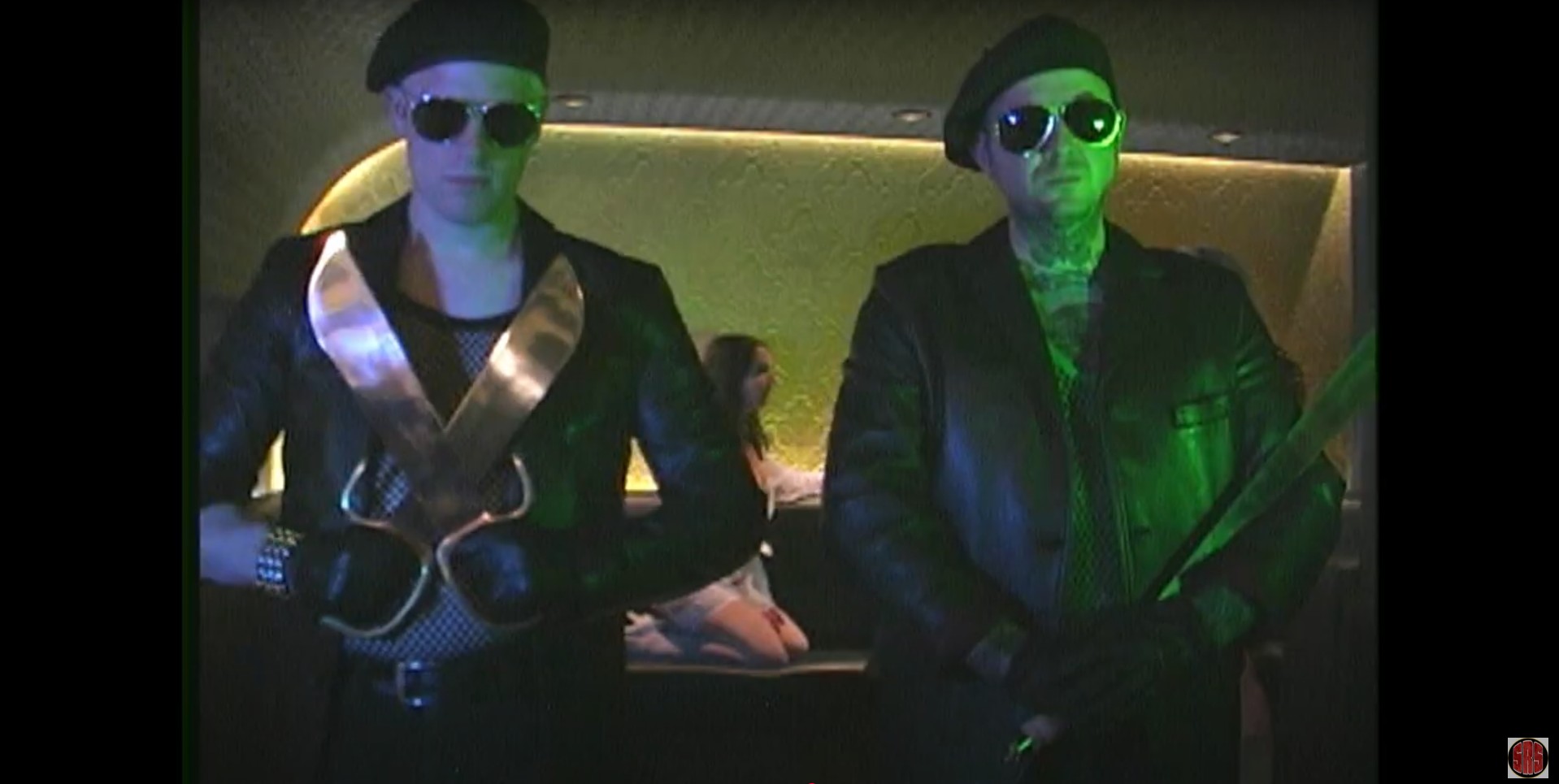
Thick-skinned actors comfortable with the narrative’s uncomfortable themes begin with Howard Calvert and Jamelle Kent as Baking Soda and G.E.D.  Calbert and Kent have become regulars in the Tom Martino catalogue of cast members for his more recent films and their humble beginnings in “Race War:  The Remake” proved their longevity to stay with the director, who is white, who wrote extensive race, gender, sexuality, and fart jokes in the context of a comedy-horror with cringy stereotypes and genuine tributes.  Calvert and Kent have great comedic timing to pull off all the zany editing, sound bites, and practical effects distaste Martino has flaming axe tosses at them to achieve his vision.  The two are joined by Danny McCarty, who would become another regular and be the visual effects supervisor for the film, dressed head-to-toe in loose-fitting urban attire to match the theme of Calvert and Kent’s black A-shirt and do-rags but his hands and face are masked to become the Creature from the Black Lagoon, aka Kreech.  Martino’s “Race War:  The Remake” isn’t just about the terrestrial races but intergalactic ones as well and we soon see that later on with the intentions of neo-Nazi white drug suppliers, led by Matt Rogers’ vulgarity in the horseshoe mustached Tex.  There are various other encountered gross stereotypes in the trio’s urban quest, such as a large nosed, greedy Jewish lawyer, Mexican luchador bodyguards, and a Pai Mei-esque Shifu speaking gibberish har har sounds and listing off popular Americanized Chinese dishes in attempt to be derogatorily funny.  With a film titled as “Race Wars:  The Remake,” the cast is mostly white and black actors poking uncouth fun with a big unconcerned and insensitive stick with Corey Fuller, Kerryn Ledet, Sam Rivas, and Coady Allen listed in the cast.

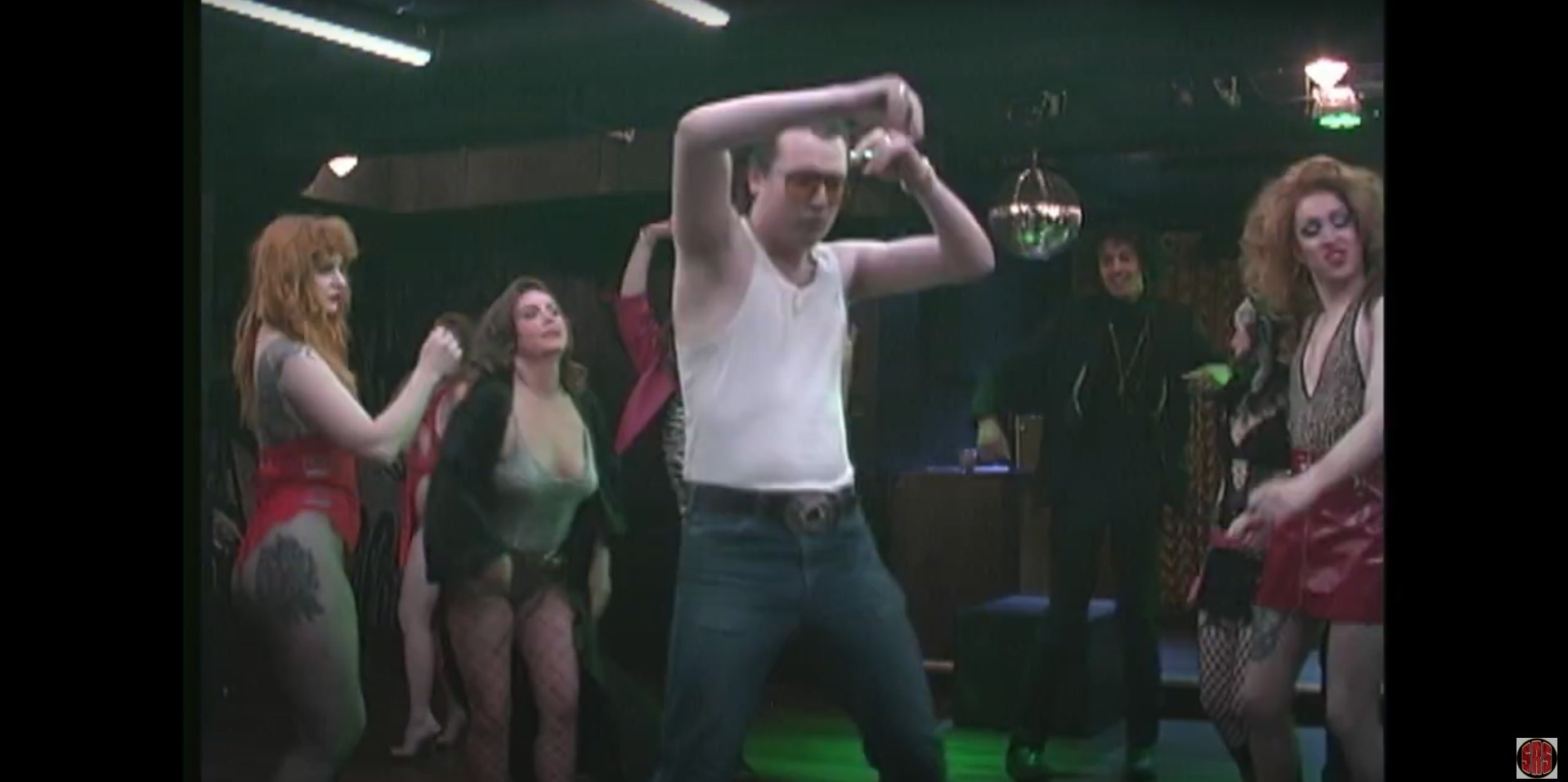
“Race Wars:  The Remake” isn’t funny, it’s stupid funny!  Having grown up in the 1980-2000s, consciously I might add, Martino’s politically incorrect and his brand of juvenile humor resonates with me, reminding me how cinema has become numb to the spoof humor.  Granted, Martino’s humor is over the top cutting, gross, and full of jest bigotry, traits that would trigger many in today’s sensitive awareness, and while cringy after a tasteless joke may result, there’ll likely be some a side of the mouth chuckle to go along with it.  On the opposite side of the spectrum, Martino tributes to references of certain popular culture icons, though slightly bastardizing some for laughs.  From Peter Jackson’s “Bad Taste,” to “Creature from the Black Lagoon,” to even “Mortal Kombat,” “Race Wars: The Remake” integrates the best parts of each these staples of pop culture and that gives his film a leg up on other offensive spoofs of the same crass caliber.  Th one negative story structure item to  highlight is the act one narrative takes a while to work the gears and get going as it attempts to setup the 40oz-drinking chumminess of Baking Soda, G.E.D., and Kreech but lags to a stagnant stall for hot second while still surround with the here-and-there gags, themed with G.E.D. homosexual tendencies and Baking Soda’s drug peddling woes on and off the streets, but once the antics pickup, there’s no stopping Martino and his filmic entourage from raining down an assault of insults. 

If you’re easily offended or put off by off-color race comedy, then Wild Eye Releasing’s “Race War:  The Remake” DVD is not for you!  For me, and those like me, unaffected by the type of uncouth spoof, Tom Martino’s debut is for you!  The Raw & Extreme sublabel’s DVD is MPEG2 encoded, 720p resolution, on a DVD5.  Presented in widescreen 1.78:1 aspect ratio, there is a breadth of visual presentation not confined within’ pillar and letterboxing but is stretched vertically that affects the already par level resolution.  Guerilla filmmaking also involves no production lighting and natural lighting is more than used here in Martino’s run around the Houston area, but one thing good about Martino’s naturally lit cinematography is its neutral set, avoiding under and overexposure.  The lesser used interiors have some tint lighting and key lighting to avoid total flat, dark outcomes but give the image a haze of hue, especially inside Baking Soda’s living room scene in the first act that sees a thin layer of red and green.  The English PCM Stereo has inconsistencies in volume.  Some scenes discern quieter than others because of the guerilla filmmaking constraints as well as just using commercial recording equipment.  However, the dialogue does land well enough for the jokes to hit and overlayed sound effects greatly lift the sound design where needed, such as with the Mortal Kombat video game sequence or with the array-spray of gunshots throughout and soundboard gag effects.  There are no subtitles with this release.  Included in the special features is Tom Martino director’s commentary, a gag/blooper reel, a behind-the-scenes reel of the gory moments, and Wild Eye Releasing trailers that include “Race War:  The Remake.”    The clear, ECO-Light Amaray DVD case houses stellar covert art illustration work by Belgium graphic artist, Stemo, with the inlaid narrative intensity and characters in collage.  The reverse side includes a gory still from one of the scenes.  The disc is pressed with the same front cover image but there are no other physical materials.  The unrated DVD runs for 95 minutes and is region free.

Last Rites:  Wild Eye Releasing re-unleashes another outrageous title on their Raw & Extreme label and the Tom Martino film is every ounce of the sentiment in it’s indie underground hokum of gore, racism, homosexuality, and aliens! 

Get Caught Up in the Middle of a “Race War: The Rmeake” on DVD

Business and Pleasured are Ruined by EVIL’s Obsession! “Tulpa: Demon of Desire” reviewed! (MVDVisual / DVD)

“Tulpa: Demon of Desire” Now on DVD!

Lisa Boeri is a career-driven businesswoman successful in locking down deals and achieving financial gains in a fast-paced, no-holds barred global market as she slaves away from dawn to dusk at the office, but when the sun goes down, Lisa releases the stresses of occupational hazards and her thirst for carnal desires at an exclusive, hidden-away nightclub where sexual fantasies range from BDSM to orgies while esoteric mystic and club owner Kiran trains her to release her Tulpa, an inner being of sensual self-exploration and freedom, through ecstasy elevating drugs.  When Lisa comes across printed news reports of her club sexual partners being brutally murdered by a serial killer, she must warn Kiran and her last partner before another body makes the press but Kiran isn’t too keen on making public private identifying information that goes against club rules and Lisa must do whatever it takes to investigate who and why would want to murder her intimate encounters. 

“Tulpa:  Demon of Desire” is a contemporary giallo from “Shadow” and “The Well” director Federico Zampaglione attempting his hand at the sordid Italian genre that has come to cult infamy over the past few decades with a regained revival and following on physical media.  Zampaglione co-wrote the script with father, Domenico Zampaglione, and Giacomo Gensini, the writing collective’s second collaboration behind the 2009 thriller “Shadow.”  Also known in Italian as “Tulpa:  perdizioni mortali,” the 2012 erotic giallo is a glow up of the everyday modern giallo that doesn’t try as hard as other productions that lean strictly toward being an homage to notable films and directors, “Nightmare Symphony” comes to mind as a compliment to Lucio Fulci’s “Cat in the Brain,” aka “Nightmare Concern” with a fairly identical storyline, rather than be self-serving toward its own identity within the subgenre context.  The producer behind Tinto Brass’s “Cheeky” and Zampaglione’s “Shadow,” Massimo Ferrero, returns to produce “Tulpa:  Demon of Desure” under his studio company Blu Cinematografica and IDF, Italian Dreams Factory.

At the center of a murder’s relentless focus is conservative promiscuous lead character, Lisa Boeri, played by Claudia Gerini who has had roles in Mel Gibson’s “Passion of the Christ” and Chad Stanhelski’s “John Wick:  Chapter 2” as well as reteaming with Zampaglione for his last film “The Well.”  Gerini’s versatility proves its worth in “Tulpa” as Boeri’s required to be business professional and quick witted and then is contrasted against her carnal rendezvous that’s no longer has in control of herself.  There’s a freedom from the business shackles that takes place but when her night world comes crashing down in a heap of bodies, Boeri finds herself unable to focus on anything else other than the lives of her anonymous sleeping partners.  Club owner Kiran (Nuot Arquint, “Shadow”) is a bit of an odd bohemian duck with his psychosomatic holistic spirituality and the biochemical, psychedelic drugs he pours into his clients’ drinks.  The rest of the Italian cast are a series of rotating characters that, unfortunately, don’t flesh out enough to warrant when becoming intertwined into a killer’s web with to note Ivan Franek (“T.M.A.”) as the last sex-partner to be a killer’s crosshairs and Boeri has to save, Frederica Vincenti as Beori’s envious coworker out for her colleague’s scandal, and Michela Cescon (“I Am the Abyss”) as Boeri’s best friend outside of work and play as well as Pierpaolo Lovino, Michele Placido (“The Pyjama Girl Case”), Giorgia Sinicorni (“Canepazzo”), and Piero Maggio (“The Vatican Exorcisms”) rounding out the rest of supporting company.

Zampaglione’s giallo attempt is coursed with suspense with a masked, gloved killer targeting a beautifully flawed woman complicated by her own sexual exploration and reach inside a world that’s viewed as taboo as it is tantalizing with sexual delight.  The director fashions Boeri’s alternative and secretive lifestyle as a self-harming vice, much the same way as illegal drugs or excessive alcohol, done in the shadows and hidden from friends and family.  There’s a moment in the midst of Boeri’s desperation search for her last partner’s name where an adversarial colleague learns of her sex club nightlife and aims to expose her, turning her private venture public through means of blackmail.  Eventually, more than one type of obsession over Boeri comes into play and the bodies pile up because of the unhealthy nature of the meddlesome and malevolent.  Though taut when tension bred from a killer whose maniacal plan involves and extends to a torturous and gruesome end against those hovering in Beori personal bubble, a couple of key catalysts are not cleared very well.  One of the individual obsessions over Boeri falters right at the end with a quick cut that doesn’t allow breathing room for comprehension of what went down and, perhaps one of the more complexing and important outliers that strays off the narrative from off the straight and narrow, a supernatural sign of power, perhaps the Tulpa force in practice, that gives the story a taste of Lucio Fulci giallo, such as “The Psychic.”  Yet this revelation of an ability receives lukewarm reception that cases the story’s drive into a wait-a-minute of mystical puzzlement. 

“Tulpa:  Demon of Desire” arrives onto DVD from MVDVisual in association with Danse Macabre and Jinja Films.  The upscaled from 720 to 1080p MPEG-2 encoded DVD9 is presented in a widescreen 1.78:1 aspect ratio.  Bathed in warmer tones of yellow, green, and red that often blend into a confluence of orange, Guiseep Maio’s noir dark veneer engages a sordid world of sophisticated sleaze and maniacal murder, creating a side-by-side dualism of Boeri’s day-and-night lifestyles.  Details are soft for this upscaled DVD as if the format slightly shimmers to keep focus on textures and delineations, the vibrant gel coloring for eliciting illicit behaviors doesn’t help either, but the release manages to produce a discernible image without the strain of compression issues and still convey Zampaglione’s visual aesthetic of a darker, viscus blood, heated shades of fervor, and a higher contrast to intensify shadows.  The English and Italian PCM 5.1 Surround Sound mix caters to the score and dialogue layers rather than creating worlds with ambience audio.  Though the dialogue is not listed as Italian on the DVD backside, there is a sizeable chunk of the dialogue in Italian with English subtitles, but the feature is mostly in a heavily accented English language.  The overall dialogue is clean without interference other than the accents and is prominently positioned, but still integrated in, amongst the other layers with a timed Francesco Zampaglione (last name incorrectly misspelled on the DVD back cover with missing the I in Zampaglione) and Andrea Moscianese exotically haunting score that works to not overpower the dialogue and plays into the sex-club and giallo themes  English subtitles appear to have no flaws and are paced well.  For a side note, I would suggest using the English subtitles to get through the Italian accents that can be challenging at times with certain actors.  Special features include a “Tulpa” behind-the-scenes featurette that interviews cast and crew, the official trailer, and two trailers for two other Federico Zampaglione productions – “Shadow” and “The Wall.”   The MVDVisual DVD release is a perfect example of less is more with a black background with a contrasting silver and intrinsically cracking Venetian mask and white logo with a blood-tipped spear.  The standard, region free, rated R release comes with no other physical or encoded attributes in its 84-minute runtime.

Last Rites: Honestly, a kill-focus blood overtakes the slim waist of sex in what’s supposed to be a blend of both motifs as the title suggests in”Tulpa: Demon of Desire,” but this modern-day giallo from those who did the niche subgenre the best, the Italians, is still worth viewing calories.

“Tulpa: Demon of Desire” Now on DVD!

Luther the Berserk has EVIL Plans in the Bayou! “The Naked Witch” reviewed! (VCI / Blu-ray)

A string of horrific murders of beautiful women becomes the study of a six-person team of paranormal researchers who head down to the Louisiana swamplands surrounded by notorious superstition and urban legend for once being the home of witchcraft.  One of the researches, Tasia, is a sensitive, a highly psychic receptive woman and student of team leader, Dr. Hayes, to sense the area’s extrasensory waves thought to be behind the murders, especially the ones of a satanic ritualized nature.  On the isolated island, encircled by swamp and gators, a powerful Satan acolyte known as Luther the Berserk seeks to spellbound Tasia to complete his coven of witches and evokes the help of Jessie, a haggard crone with the ability of mind control over those with sensitive abilities.  One-by-one, the researchers are being picked off for the blood ritual and it’s up to the survivors to stop Luther before it’s too late.

A bold psychotronic of the 1960s, “The Naked Witch” has a tingly macabre aura about it that’s not swinging, swanky, nor is it groovy.  Also known primarily as “The Witchmaker,” there’s a thick circumference of dread and darkness surrounding the William O. Brown written-and-directed picture.  Brown’s sophomore film behind the 1965 “One Way Whaine” comedy about Hawaiian babes and bank robbers is a stark 180 degrees four years later that showcased the filmmaker’s range from laughs to terror on the cusp of the early days of the Satanic scare.    “The Naked Witch” has also been reissued as “Witchkill,” The Witchmaster,” and “The Legend of Witch Hollow” and while Brown’s film goes by many monikers, one thing is for certain is the film was shot partially on location in the mucky swamps of Louisiana during exterior locations whie the remaining interiors were in a Los Angeles studio.  The U.S.A. made film was produced by Brown with L.Q. Jones serving as executive producer and released independently under LQ/JAF Productions.

Personally, horror films like “The Naked Witch” that were produced through the 1950s and into the 1960s always share mixed feeling that can only be described as from “the content is revolutionary for Americana horror post-World War II cinema” to “the stiff, exposition acting just doesn’t work with the grim nature of the ahead of its time story,” and as Marty McFly once said back in 1955, “I guess you guys aren’t ready for that yet.”  There’s nothing inherently bad about “The Night Witch’s” acting other than the lack of emotional weight from the troupe needed to lift up and be on the same level as the story that includes hanging half-naked women upside, slitting their throats, and drinking their blood out of chalices in a coven on satanic confluence.  “Revenge is my Destiny’s” John Lodge is the exception that goes against the stagey type of stilted acting grain as lead satanist apostle Luther the Berserk, flashing devil hand gestures and acting like a wild man in his ravaging role that’s ambitiously true to character and subtly perverse in blood and in lust. The same passion portrayal of character is not extended the principal leads of “Green Acres’” Alvy Moore and “Deep Space’s” Anthony Eisley playing a pair of opposing scientists – Moore as the more supernaturally open-minded Dr. Ralph Hayes and Eisley has the rigid in rationality Dr. Victor Gordon.  Their conflict of beliefs creates another subplot satellite that abides by superstition and lore as well as the division it produces, a decent representation of the overall contrarianism inside people as a group, then you have Tasia, a medium struggling with her powers being pulled in two different directions.  The European heritage and Canadian born blonde knockout Thordis Brandt steps out of the saucy side role and into one of her more prominent performances as the Sensitive who is manipulated by Luther’s unholy powers over the coven.   The coven and researcher cast rounds out with Shelby Grant, Tony Benson, Robyn Millan, Burt Mustin, Warrene Ott, Helene Winston, Carolyn Rhodimer, Larry Vincent, Patricia Wymer, Del Kaye, Diane Webber, Valya Garanda, Gwen Lipscomb, Nancy Crawford, and Sue Bernard. 

“The Naked Witch” is not as graphic as one would assume with such a scandalous, provocative title.  Again, you must remember, the film is originally titled “The Witchmaker.”  Yet, for a 1960’s horror, William O. Brown’s satanic sorcery picture is too advanced for the era’s mostly puritanical audience.  I’d even go as far as saying “The Naked Witch” borders the line between the foggy and gloomy atmospherics and set productions of Gothic Hammer and the ever-close-to-the-edge designed no nudity or graphic death coverups of an early Russ Meyer production sans the zany cartoon sounds and the rapid-fire editing.  An abundant of dread hangs in the air of starched collars and secretary skirts that conjures more than just the Devil’s presence in the bayou but a heavy dealt hand of a no-win situation full of desperation and death.  The story itself evolves from the brutal, ritualistic killings of strung up and stripped naked young, beautiful women to a more focused objective of converting Sensitive Tasia into a full-fledged witch that completes Luther’s coven and resurrects his master for a diabolical Hell on Earth.   The broader strokes of “The Naked Witch’s” narrative places the fate in the hands of a group of students and naïve ignoramuses playing catchup to what’s really happening under their noses.  Of course, alarm bells never go off and panic never really sets in for the group of survivors after each death in what is more like an aw-shucks and move on reaction.  Granted the team is stuck on the island for a few days with no way to call for help but that doesn’t mean being not proactive or being crippled by fear doesn’t have a place amongst them and in the story, especially missing opportunities within the researchers to turn on each other by way of Luther’s manipulating witch, Jesse, who herself has her own drastic motivation with a blood ritual that make her young again. 

“The Naked Witch” is fairly cladded with atmosphere and ghoulish intentions instead of the mentioned nudity but the new VCI 2-Disc Format Blu-ray and DVD release provides the bare essentials with a restored 35mm archival print into 4K-UHD scan.  Presented in a widescreen 2.35:1 aspect ratio, the grading is rich and overall image and details look pleasing with depth in most scenes and grain is era appropriate appeasing.  Skin tones shade a little more toward orange but maintain within spec but on the higher end of a RGB.  The print has sustained some damaged with a slew of scratches, dust and dirt, and cell burns peppered throughout and can be a nuisance but nothing terribly critical to warrant narrative loss or a complete loss of viewing pleasure.  The English Dolby Digital Mono track offers little to try and immerse viewers into the swampy bayou and that’s a real shame since visual elements are detailed.  There’s minor background noise is palpable but not distinct to warrant attention.  Dialogue and the Bolivian born and “The Town that Dreaded Sundown’s” Jaime Mendoza-Nava’s gypsy-esque and minor key brass and percussion score are the heavy hitters in this presentation.  Dialogue has insignificant hissing and crackling but as a whole, the track comes over clean enough to firm pass well over grade.  Option subtitles are available.  The only encoded bonuses are a 2024 commentary track by film enthusiast and artist Robert Kelly and a poster gallery that include not just “The Naked Witch” but other 60’s horror pictures.  VCI’s standard Blu-ray incasement has one-sided still picture and illustrated compositional artwork that roughly produces the madness incarnated with the DVD on right and the Blu-ray on the left inside, individual pressed with images from the front cover.  The region free disc has a runtime of 99 minutes and the film is rated R.

Last Rites: “The Naked Witch” has no skin in the game in its necromancy ways but finds the fog of dread easy to become lost in with interesting characters and a ghoulish witch and ritual vise gripping it on both ends on a verge of being something more.

“The Naked Witch” on Dual Format DVD/Blu-ray from VCI!

Milan Has All the Best Short Film EVIL! “Drag Me To Fest” reviewed! (Rustblade / DVD)

Hurry! Grab the Limited Edition Copy of “Drag Me to Fest” Before Its Gone!

An outpatient nurse is requested by an old woman leaving by her lonesome.  Always forgetting and troubling eccentric, the humble nurse finds he’s in way over his head with a clearly unstable, possibly delusion woman, until the truth of her hidden secret unveils a web of horror.  A young couple looking to help a lonely farmer find themselves erecting a sheep fence as well as maintaining the upkeep of a strange rock formation known as a Tursemorkel that emits ooze out of black orifices and soon find the psychological and physiological energy from the Tursemorkel is more than they can withstand.  An elderly couple, tucked away inside their roadside camper trailer, whips up a finger-licking meaty stew made from all natural, locally sourced ingredients as they watch the nightly news’ top story of a missing person.  A man answers the doorbell and finds a package on his step, scratching and crawling out is a festering corpse eager to play with him.  A priest with an obsessive bug collection has him turnaround when a recently caught rare beetle toys with his mind.  Dafne, a young woman lost in another state of mind, is in the presence and in the arms of her own, personal demon. 

These bloodcurdling tales are the latest batch of horror shorts from the annual Milan, Italy hosted Drag Me to Fest.  The festival brings together Italy and international filmmakers to submit their unique brand of terror.  The 2024 lineup were submitted to the Milan collection in 2023, hit the festival the following year, and has now been compiled onto a home video release for North American audiences to enjoy and cower in teeth chattering fear under its namesake title, “Drag Me to Fest,” from Italian distributor Rustblade Records in association with MVD Visual, a subsidiary of MVD Entertainment Group.  Norway’s “Vevkjerring,” or “The Weaving” by Øyvind Willumsen and “Tistlebu” by Matthew Valentine kick off the anthology followed by Italian filmmaker’s Riccardo Suriano’s “Long Pig”, Julie Gun’s “Dafne is Gone,” and Jacopo Vismara’s “Il Coleottero” and finally rounding out with Japanese director Nori Uchida’s “For What the Doorbell Tolls,” all of which are self-produced.

Three countries, six distinct films, and all packed into the unusual side of ambiguously horrifying elements contained inside six short films.  Each character is curated to fit inside the narrative design, no matter how outrageous or avant grade the message is.  Willumsen’s “The Weaver” is a more straight forward, common structured horror of building up tension in an already uncomfortable situation of a friendly, living assisted male nurse Henrik (Fredrik Hovdegård) knocking on the doorstep of a haggard and kooky old croon named Gudrun, played devilishly and disgustingly by Isa Belle.  The next four episodes become a bit vaguer in their intentions of madness, purgatory, survival, and obsession that intends to either harm or transfigure into something beyond the dimensional standard.  “Tistlebu” aims to transfigure as a young city couple (Sascha Slengesol Balgobin and Sjur Vatne Brean) look to connect with nature and their curiosity, coupled by intrusive misuse and sexuality, toward an earthy pillar of energy inside a widow’s (Oda Schjoll) barn enraptures them into something more primordial, literally connecting them to an omnipresent natural world that’s much bigger than their insignificant need.  Uchida provides his own one-of-a-kind performance based immensely off Sam Raimi’s “Evil Dead” by playing not only the hero but also the decaying plaything that arrives at the hero’s doorstep in one’s mirrored rotting of loneliness.  “Il Coleottero’s” Don Antonio (Mimmo Chianese) has a crisis of faith that become sidetracked by his diligent hobby of entomology when his prized find, a rare beetle, suddenly disappears from his collection.  Chianese finds the balance between being a disenchanted priest and an anxious man hunting for the beetle that got away and that will eventually destroy him.  Julie Gun’s “Dafne is Gone” is more operatically finessed with interpretive dance between Dafne (Giulia Gonella) and a demon (Jason Marek Isleib) that’s completely absent of dialogue, stagecraft visualized, and characteristically naked to showcase Dafne’s descent into the Demon’s spellbinding movements.

The collected and presented works are not the highest dollar productions but do encase a prosthetic practicality as seen in Willumsen’s “The Weaver” with a shedding of an exterior layer into a more grotesque freak of nature while Uchida takes the tribute route using filleted flesh and milky contacts, along with LFE tones and grading, modulated vocals, to accomplish his own version of “Evil Dead” without the presence of Ashley Williams.  The others are not as cut and dry with their infinite interpretational insights that likely will speak more on a personal level than a glossy buttered popcorn one that requires little effort to absorb.  “Tistlebu” and “Dafne is Gone” entrench themselves in their respective unknown and modern art by providing very little in the one thing they both have in common, a shared sense of unsettlement.  There’s also an undertone of sexualism as if it equates to the very beast that entrances, which in these shorts is the Tursemorkel, which is a large surface growth that emits an allurement of safety and gratification, and, in comparison, to the demon, perhaps her own visceral demon, that frolics to breach Dafne’s temptation, drawing her closer to his own colorfully neon netherworld in a production of warmly dark euphemism.  “Il Coleottero” is perhaps the best understated undercurrent between the skepticism that plagues man and his faith.  Shot mostly naturally, tension is built on Father Antonio continuous deviations from his religious duties, distracted in his homilies and divine surroundings, by the mere fact of a lost beetle, a beetle, similar to the appearance of a Stag Beetle, that toys with him.  One could assume the beetle represents a test from God to challenge the priest’s diversification balancing his faith between realism against spirituality, to quote biologist J.B.S. Haldane, and I paraphrase, if the creator had made life, it must have been inordinate fondness for beetles because of their profound species diversity.

“Drag Me to Fest” has now hit DVD home video for the first time in its 3rd annual run with a limited edition to 500 copies courtesy of Rustblade Records, routed through the North American distribution channels of MVD Entertainment Group under their MVDVisual label.  The region free release, presented in a widescreen 1.78:1 aspect ratio, is encoded onto a MPEG2, upscaled 1080p, DVD5 with palatable average of image quality in its varying degrees of filming equipment, lighting, and technical know-how to get the intended look without suffering cinematography faux pas.  Compression wise can be a different story but, generally, “Drag Me to Fest” has an adequate presentation albeit a less-than-desirable color saturation, especially Gun’s “Dafne is Gone” that implements warm neon primary coloring in a high contrast, hard light emulsion.  Skin and pattern textures vary from short-to-short, but the delineation is there to not blend depth nor create solid, smoothed out surfaces.  Valentine’s “Tislebu” relies heavily on the rolling hills and greenery farmscape to enact its character qualities for an Earthy or terrestrial mystery important to the sentient and engrossing formation.  The Italian, Japanese, and Norwegian language Dolby Digital 2.0 Stereo offers a passable mix that doesn’t elevate the atmospherics or construct tension to the max but neither does it flounder or lay waste to the support of the shorts.  There’s not a profound amount of leveled depth or creative sound design to fabricate space as much of the dialogue and environment resides in the foreground, and the dialogue does render over clean and clearly with forced errorfree English subtitles, but the focus is primarily on moving the story in a matter of minutes for some of the shorts, leaving narrative devices, such as characters and the effects, to drive the story and its tension.  The DVD is a barebones released that does not come with any encoded extra content, but the slim, trifold jewel case does depict a grouping of cherry-picked ideas from the shorts in a green bath illustration from graphic artist Gonz and has individual taglines and color stills for each short.  The 92-minute anthology is unrated. 

Last Rites: Abroad anthology with a goal to highlight and amplify short filmmaker voices, “Drag Me to Fest” finishes up from the main screen and extends to home video for the first time! Rustblade and MVDVisual illuminate the cinema obscure for the general public and we’re all the richer for it!

Hurry! Grab the Limited Edition Copy of “Drag Me to Fest” Before Its Gone!

Piloting Toward a Path of Mob Hired EVIL! “Flight Risk” reviewed! (Lionsgate / Blu-ray – DVD – Digital)

“Flight Risk” Blu-ray Takes Off and Is Now Availablle to Own!

After tracking down and arresting a criminal kingpin’s accountant in an Alaskan hotel, U.S. Marshall Madolyn agrees to a plea deal with the accountant in exchange for his incriminating testimony that would lock away the mob boss for years, but before prosecution can get underway, the U.S. Marshall must get her witness to New York City.  Charactering a Cessna 208 light aircraft to escort them out of Alaska, the more-than-eccentric rustic pilot is more tirelessly inquisitive than charismatically charming toward the Marshall about having a suspect chained to the seat in the rear of his plane while also gabbing about casual, byway pleasantries and his rural, for-hire lifestyle as a pilot.  Little do Madolyn and the accountant know is that their pilot is a sadist assassin hired by mob boss and by the time they reach cruising altitude, Madolyn finds herself confined with a relentless killer and without the knowhow to fly a plane herself.  

Not since 2016 has “Lethal Weapon” and “Mad Max” actor Mel Gibson directed a film, that film being the World War II action-drama, “Hacksaw Ridge.”  Gibson returns to being behind-the-camera in 2025 with his latest venture, an aerial, hitman thriller “Flight Risk” from a contained debut big picture script by Jared Rosenberg.  “Flight Risk” strays from the normal course of being an epic feature that usually draws the cinematic eye of Gibson with being a smaller production, an intimate cast, and isolated mostly on a deconstructed light aircraft in front of what is essentially a floor-to-ceiling, 180-degree IMAX screen simulator to depict coursing through the snow-topped mountains of the Alaska Range.  Gibson produces the story along with Bruce Davey, John Fox, and John Davis in a Lionsgate presented combined company production from Davis Entertainment, Icon Productions, Media Capital Technologies, Hammerstone Pictures, and Blue Rider Pictures.

Three onscreen principals and a handful of voiceover work is all there is to “Flight Risk’s” casting with many of the scenes “high” above ground inside the tight confines of a personal aircraft to intensify the close-quartered combat with the unspoken caveat of nowhere to run, nowhere to hide thousands of feet up in the clouds.  Actress Michelle Dockery, known for her role as Lady Mary Crawley in the dynamic upstairs, downstairs period drama series “Downton Abbey,” exchanges her glittering ballroom gowns and British accent for a sidearm Glock and a flat American-beurocratic accent as U.S. Marshall Madolyn with a complicated backstory that places her back into the field after being assigned desk duty when a witness dies in her custody.  Dockery is all business and no pleasure with a retaining wall that holds all her emotions in so she can focus on the important opportunity to be back into the field.  Audiences will be thrusted right the middle of the opportunity and experience her unpleasant history being unraveled exposition as she begins to empathize and sympathize with her current witness, Winston, a skilled accountant with a harmless, passive proclivity played by with the sarcastic reflex of a frightened squirrel in Topher Grace (“Predators,” “Spider-Man 3”).  Madolyn and Winston slowly, simmering bond, merging into a fight or flight friendship out of from being an authoritative escort and detainee, is forged by fire when Mark Wahlberg’s receding hairline, eccentrically crazy, sadistic rapist of a hitman pilot attempts to restrain Madolyn and divert Winstown for his own personal pleasure on the behalf of the Mob Boss instruction.  Likely Wahlberg’s most depraved role since 1996’s “Fear,” the “Transformers” and “Daddy’s Home” actor puts forth less of his muscular tone and good looks by stepping into a balding, gum-chewing wild eye maniac, relentlessly bloodthirsty with the gift of grotesque gab, in a cat-and-mouse tit-for-tat game for the plane yoke and control.  A voice cast rounds out the rest that push the story in deception and direction with Leah Remini (“Old School”) and Paul Ben-Victor (“Body Parts”) as Madolyn’s colleagues who may or may not be corrupt and Maaz Ali (“Anxious”) as your friendly and flirtatious pilot instructor. 

An absolute different kind of project for director Mel Gibson that’s not historical, period, or epic as he takes off into unknown territory and elevating as a director who can remove himself from the bigger picture for a smaller one.  “Flight Risk” is a prime example of what Hollywood should be putting into production rather than squandering millions on grand flops but limited the budget that, in turns, limits the star power and conceding the story to saturate with substance rather than with ostentatious effects.  “Flight Risk” proved to be a modest profiting film on what is now considered a meager budget of $25 million, but a profit is a profit, and the thriller is highly entertaining and engrossing with solid performance supporting a step-by-step, linear story arc.  Granted, the film isn’t completely without flaws.  While Johnny Derango (“Fatman”) can capture the correct angles in the plane’s small, confined space and gratifying the depth with the visual screen through the plane windows, these aspects are negatively counterbalanced by visual effects that stunt the aesthetics with cheap-looking knockoffs of exteriors at the beginning and end of the film.  Fortunately, these scenes are scarce and does continue the yard forward without looking back as girth of Mark Wahlberg, Michelle Dockery, and Topher Grace vie for their moment in the spotlight with their character’s idiosyncrasies. 

The Lionsgate presented “Flight Risk” takes cue from the locomotive folktale being the little film that could, replacing the small train for a small plane and chugging, climbing up the Alaska mountain of nonstop thrills.  The new combo format Blu-ray, DVD, and Digital set from the company evokes many ways to enjoy the latest, and humblest, Mel Gibson picture.  The Blu-ray is AVC encoded, 1080p high-definition, BD50 while the DVD is MPEG2 encoded, upscaled to 1080p, on a DVD9.  In covering the Blu-ray, the picture is near perfect without compression issues faulter a landscape of whites, blues, and the spotted greeneries in between that make up the Alaska geography on the big 180’ volume screen for pseudo flight. The matte visual mixed with the angle of the cameras work to the location’s authenticity and the camera angles solidify that the illusion while the pixel range sharpens any loose ends that might occur in presentation.  Coloring and breadth of saturation diffuse fine with an organic look except for the VFX that stands out like a sore thumb.  English Dolby Atmos creates an immersive audible impression, splicing through the channels that reflect more in the back channels of Mark Wahlberg’s frantic, and sordid, diatribes from the plane’s cargo tail.  Exteriors are not as explosive around the plane as expected with the Dolby’s loss of fidelity but, to the advantage of the story, the engine him and the turbulence has an agreeable depth muffle to it in the surrounding channels and into the frontloaded dialogue, which is intelligible and without unintended equipment interference.  Also included are French and Spanish Dolby Digital 5.1 tracks and an English descriptive audio.  English, Spanish and French subtitles are optional.  Risk Management:  Making flight Risk is the standard fare behind-the-scenes cast-and-crew interviews with some raw behind-the-camera shots surrounding the genesis of “Flight Risk” and the how certain aspects of the film, such as cinematography and Mark Wahlberg’s devilish persona, are achieved.  The theatrical trailer rounds out the encoded special features.  Personally, I was not impressed with the cover art that’s on the Amaray and the cardboard O-slip with a sheen coating that puts Wahlberg front-and-center of a misleading campaign of the ruthless killer looking oddly unflappable while zipping fighter jet theatrics are composited over his midsection; the whole illustration just doesn’t speak the “Flight Risk’s” disposition.  Nothing else to note tangibly other than the 4K digital code insert in its usual slot.  Rated R for violence and language, Lionsgate Blu-ray is region A encoded and has a textbook runtime of 91-minutes.

Last Rites: “Flight Risk” cruises at a palatable attitude of flight dynamics, aerial assassinations, and the rehabilitation of broken character in Mel Gibson’s smaller, but mighty, latest feature.

“Flight Risk” Blu-ray Takes Off and Is Now Availablle to Own!