Adolescence isn’t Innocence. Adolescence is Evil! “We” reviewed! (Artsploitation Films / Blu-ray)


Four teenage boys and four teenage girls decide one summer to live free, without inhibition, and to make as much money as possible. Discovering an abandoned caravan in the middle of nowhere, they set up their home away from home where doing what they want, and who they want, becomes a way of life. Sexual freedom and adolescent independency quickly leads the friends down a path of miscreant wandering and sordid pornography and prostitution. When one of the teens accidently dies, four accounts of what happened are told aloud to the court and with each version, the truth becomes indistinct amongst the slander, exploitative sex work, and their anarchist ways that surround a seemingly corrupt politician.

Debased youth bored with the common fabrics of society stitch their own downfall into extreme moral degeneration in Rene Eller’s 2018 dramatic-thriller from the Netherlands entitled “We.” Also known as “Wij” in the Belgium tongue, Eller tackles the cinematic adaptation of an Elvis Peeters’ novel of the same name from 2009 with not only directing a compelling and frightening image of idle hand youth, but the filmmaker’s also credited as penning the non-linear script told in four chapters that highlight four out of the eight teens’ versions of events and how that fateful summer not only saw their ethics become shattered, but also their close-knit friendships. Eller also co-produces the film, working alongside production companies Pragma Pictures and New Amsterdam Film Company.

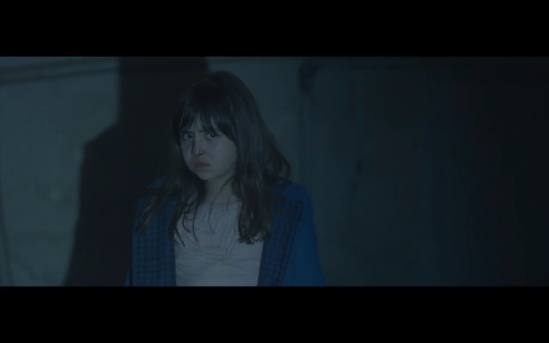
“We” consists of a young cast, in age and in experience, bred from the Netherlands and though virtually credit-less, powerful performances from the lot all around that touch not only the venereal stimulators, but also reaches the twisted knot inside the gut of how being human equals being depraved. The four chapters begin with Simone, a young man smitten by the Femke (Salomé van Grunsven) who becomes a catalyst for the trial, played by an Anton Yelchin lookalike, Tijmen Govaerts. Govaerts gleams in Simon’s adolescent jubilee of love, sex, and carefree attitude. His story is followed by Maxime Jacobs’ Ruth, a 16-year-old who can’t seem to step beyond the line into total reckless abandonment, Yet, Ruth’s game for risky her own body to gain approval from her friends and for her shadowed love for Simon. Jacobs gapped teeth act as imperfect perfection upon her slumping figure sheathed in plaid, screaming purity inside her outcast shell, but Jacobs proves she can be more naughty in her character than that of her co-stars. Liesl’s third chapter paints a more grotesque picture of her friends summer. Pauline Casteleyn acts in the role of Liesl, an aspiring artist with that tough inner and outer shell Ruth aspires to but ultimately lacks. Casteleyn can cast a deadpan stare with the best of them that offers more of a chilling vibe off of Liesl, but neither of these roles could outwit, out-dominate Thomas. Aimé Claeys concludes the fourth chapter as the ringleader of the friends, or, more accurate, as the pimp and the kingpin. Thomas’ manipulate hand fosters questions about his past left purposefully open for a subjective opinion on whether his actions were that of his own boredom or being pushed to his limit by external forces. “We” rounds out with Friso van der Werf, Folkert Verdoorn, Laura Drosopoulos, Lieselot Siddiki, Gaia Sofia Cozijn, and Tom Van Bauwel.

Let me start off by saying that when the teens’ entrepreneur pornography ambitions comes to fruition, these reviewers’ eyes widened at the surprising site of explicit penetrations and fellatios; however, the unexpected hardcore isn’t the act of our already very naked actors who probably stood out for stand-ins as the story leads the friends to think of using masks for anonymity and all explicit scenes of sex involve masked performers or implied scenes are angled just right from the cruel and smart tactics of Rene Eller and cinematographer Maxime Desmet. “We’s” unreserved sexual boot up the censorship’s tight behind is this junkie’s drug of choice that gets the blood pumping in all the right places; yet, “We” garnishes a heavy topical subject serrated with generational and societal gaps of corrosive virtue and speaks in volumes of what entitlement entails for a body of minors spoiled by the very community that either nurtured or tormented them and then, finally, turn on them all, parental or not, with harsh repudiation. As a sincere compliment to director Rene Eller, “We” belongs in the maladjusted family tree that also bears the rotten teenage fruit of Larry Clarks’ “Kids” and Catherine Hardwicke’s “Thirteen” and harks back to the Golden Age of Dutch Cinema with the Dutch Sex Wave from the 1970’s which produced controversial erotica with “Blue Movie” and “My Nights with Susan, Sandra, Olga and Julie” from Scorpio Films. “We” has a friendly look and feel of a 70’s film despite modern devices, making the resemblance to the Golden Age that much striking.

From the Netherlands’ festival circuit comes the highly engrossing, explicit drama “We,” distributed stateside by the Philadelphia based Artsploitation Films onto an unrated director’s edition Blu-ray home video release. Presented on BD-25 in full HD and in a widescreen, 2.65:1 aspect ratio, impressive textures flourish every inch of skin of the actors and in the panning ariel shots, which are, at times, hard to obtain. Despite some early on aliasing during the opening scene and a bit of warm washed coloring that doesn’t pop with a colorful hue range, I’ve still become satisfied with the end result that sells the illusion of Summer (you can see the hot breath during some outdoor scenes), the immense use of natural lightening, and the skin tones announce a fresh feel for the flesh aplenty. The Dutch language DTS-HD Master Audio mix holds nothing to ill speak of with a rendered clear dialogue, ample range and depth, and subtitles that sync fine with clear delineation and no mistakes. Other than a static menu, the only other bonus on this feature is the explicit reversible Blu-ray cover that displays the bare ass(ets) of half the cast from one particular scene. There’s also the PG cover that you’ll see below to not offend any sensitive souls. Coinciding with being a great story, “We” is also an important film of human callousness hidden within the prospect of free love, an age-old infiltration and exploitation concept captured by Rene Eller’s subversive eye and Elvis Peeters sage mind.

“We” Available for Artsploitation Films!


The Dead Don’t Stay Dead in EVIL Burial Grounds! “Pet Sematary Two” reviewed! (Scream Factory / Blu-ray)


After the accidental and traumatizing death of his beautiful actress mother, happening right before his eyes, Jeff Matthews and his veterinarian father move from Los Angeles to his mother’s quaint hometown of Ludlow, Maine to start over. The father and son are met with small town hostility from an arrogant, abusive Sheriff and the high school bully, but the ease of settling into their new surroundings with a new veterinarian business going well and Jeff gaining friendship with the Sheriff’s stepson, Drew, provides some inkling of comfort after their loss. When the Sheriff’s hot-headed temper murders Drew’s dog, the disconsolate Drew, along with Jeff, buries his beloved best friend in a sacred Indian burial ground with a smidgen of hope of the dog’s return, as the town’s urban legends suggest, but the dog becomes the first to return in a series of deaths and catastrophic returns that stagger to a family reuniting climax Jeff and his father won’t ever forget.

With Stephen King removing his name and separating himself from the overall project, the sequel to the 1989 “Pet Sematary” raised a few eye brows from the general public, and I’m sure some anxious investors, of how just would a non-adapted sequel to one of Stephen King popular novels would pan out come release. “Pet Sematary Two,” released three years after first film, would follow the predeceasing story a few years later with an entirely new cast of characters while still evoking the presence of the first film to linger about with director Mary Lambert to return to the director’s chair and helm a script by a relatively unknown writer, Richard Outten. Yet, Lambert’s return didn’t necessary equate to the reimplementing a broody, ominous, darkness facade as the well versed music video and television director flipped the script on a film she might not have any control over albeit financial backers did. Instead, “Pet Sematary Two” garnishes a scoffing rock’n’roll polarity that’s a raiper-like obverse approach of merriment morbidity doused with flammable fun and demented delight.

Hot off the presses of his first major role as a young John Connor fighting man-killing machines from the future in “Terminator 2: Judgement Day,” Edward Furlong stars as the scathingly broody Jeff Matthews. While Jeff Matthews isn’t as punk, off the street, as the delinquent turned hero John Connor, Furlong is about to turn Jeff back into being a kid with real life problems such as bullying, father-son quarrels, and dealing with the death of a parent. That screeching cry, those sunken eyes, and that bad boy attitude from “T2: Judgement Day” convinced thousands of young teenage girls that Edward Furlong was a desired heartthrob and “Pet Sematary Two” continued to showcase those attributes even further. However, in my humble opinion, Clancy Brown is the real heartthrob of the sequel with his over-the-top performance in the abrasive Sheriff Gus. The New England twang instantly sells Gus’s malignancy and crimson temper without even lifting one ill-fitting moral finger. From another King adaptation in “Shawshank Redemption” to being a bug hunter Commander Zim in “Starship Troopers,” Brown’s distinguishable deep and resonating voice, square jaw, and tall with broad shoulders has made the veteran actor the picture of law enforcement and military type and while “Pet Sematary Two” played into that typecast, Brown, who didn’t want to venture into horror, saw the laughter in the darkness and came out on top with a stellar exaggerated and unforgettable Sheriff Gus as a full blown undead maniac. Furlong and Brown stands out immensely over the rest but the remainder of the roles are just a grand with performances from “Revenge of the Nerds'” Anthony Edwards, Jared Rushton, Darlene Fluegel (“Freeway”), Jason McGuire, and Sarah Trigger.

“Pet Sematary Two” might have been profane against all that is (un)holy from the Stephen King’s novel and Lambert’s first film, but truth be told, the sequel is a whole lot of fun, a shell of the name worth watching, and provides substantial brutality with gory leftovers including skinning stark white rabbits, shredding the face off a young punk with the back wheel of a motocross bike, and an electrocution that ends with a head eruption. The Steven Johnson effects had range and bite, but unfortunately, the full brunt of the “Videodrome” and “Night of the Demons” effects artist’s work was perhaps not entirely showcased with some hard cuts to obtain a R rating, even unfortunately keeping the age-old rating with the new collector’s edition from Scream Factory that’s also the feature’s Blu-ray debut. Lambert certainly wanted the sequel to bask in a different kind of darkness that’s more comedic than gloomy and the schism between the two gulfs compares like a night and day, but the core principles of what makes “Pet Sematary” “Pet Sematary” remains faithfully intact. In hindsight, the sequel should have been labeled something else other than “Pet Sematary.”

Back from the physical media graveyard comes Paramount Pictures’ “Pet Sematary Two” onto a full 1080p, High Definition, collector’s edition Blu-ray from Scream Factory, hitting retailers February 25th. The release sports a new 4K scan of the original 35mm camera negative and presented in the original aspect ratio, 1.85:1 widescreen. The fact the source material remains unblemished becomes a plus that renders the newly scanned transfer with complementary darker shades of Autumn foliage and outerwear, delineating the burial ground and town nicely, and offering a range over hues that amplifying the perilous circumstances ahead. Still leaving some natural grain, the scan chisels through the softer portions and really does offer some nice details toward facial finishes, even in the dog’s mangy and matted blood stained fur. A few select poor edit choices, such as slow motion techniques, counteract against the detail naturally by disrupting the frames per second and causing a bit of a smoother finish than desired. If the English language 5.1 DTS-HD Master Audio could be described as one thing, that would be a menagerie of ambient gratification. The crinkling of leaves and the subtle cries of wildlife really set the primal and augury atmosphere. Dialogue clearly comes through and Mark Governor’s score shutters as a gothic western, an oddity for sure, mixed with wolf howls and Native American percussions, that fits the in the film’s black argyle pattern. All new special features accompany the single disc release, sheathed in an Laz Marquez illustrated cardboard cover, including a new audio commentary by director Mary Lambert, new interviews with Edward Furlong, Clancy Brown, Jason McGuire, special effectors advisor Steven Johnson, and composer Mark Governor, and a standard edition theatrical trailer. While not a fully uncut, “Pet Sematary Two” for the first time on Blu-ray is paramount to the genre the feature serves, swerving far from the antecedent, and evolving into a promising guilty pleasure.

Zowie Wowie! Check Out Pet Sematary Two on Blu-ray come Feb. 25th!

Death Fears No EVIL in Takashi Miike’s “First Love” reviewed! (Well Go USA / Blu-ray)


Orphaned boxer Leo grows up to be an up-and-coming star in the sport. After losing a match by TKO from a soft punch, Leo is diagnosed with an inoperable brain tumor that sends himself into despair. In another part of town, the established yakuza and the imported Chinese mafia boil toward an inevitable war over turf and drugs. When Kase, a junior enforcer, betrays his yakuza family, scheming with a crooked cop to steal drugs for profitable gain, the tide turns blood red as the yakuza naively blames the Chinese. Caught in the middle is a drug addicted prostitute named Monica, a slave to the yakuza for her father’s past mishaps, who is kept locked away in a small apartment overseen by a yakuza lackeys, romantic couple Yasu and Julie, that also use the apartment to control drug flow. When Kase plan to raid the apartment and steal the drugs goes array, Yasu winds up dead and Monica escapes, running into Leo who has nothing left to live for except to protect Monica. A distraught-induced psychotic Julie, the deadly yakuza, the Chinese Mafia, a double-crosser and his crooked cop partner, a delusional girl of the night, and one apathetic boxer clash in a single night’s ultraviolet web.

Extreme Japanese auteur Takashi Miike fastens a lively tongue-and-cheek and supremely savage crime thriller in his latest mad yakuza film, amiably entitled, “First Love,” also known “Hatsukoi.” “First Love” is anything but friendly and pleasant as the street of Tokyo run red with blood or else the 2019 released film wouldn’t be a Takashi Miike trademark special. Penned by Miike’s long time collaborator, Masa Nakamura, the filmmaker’s affection for horror eludes this title that hones more toward the unpleasantries of clan betrayals, snarky criminal shenanigans, and, of course, a flavor for mega violence that become a maelstrom angrily surrounding a demoralized boxer and the victimized forced-into-prostitution young woman he aims to selfishly protect while in his mental clout regarding his mortality. Produced by OLM, Inc production company headquartered in Tokyo takes a step away from manga with “First Love,” a step that has been evolved over the last few years, but may have contributed to some of the illustrated content that seemingly has infiltrated into the third act with an initial explosiveness in the beginning portions of a car chase scene.

Cast as Leo Katsuragi, the boxer, is Masataka Kubota, a familiar face from another Miike film, “13 Assassins,” and most recently from the heavily Japanese cultured specter feature, ‘Tokyo Ghoul.” Leo’s lighter weight physique and fresh face has Masataka look the part of a promising fighter whose positioned for fame early into the story, but that framework comes to a screeching halt when he’s destined for a tumorous death. When Leo is coupled with Monica, a drug addicted forced in prostitution plagued with crippling hallucinations side effects, the repressed Leo finds himself sheltering someone with more burden on her shoulders than upon his own. Monica’s portrayed by Sakurako Konishi in what’s essentially her first major role and being paired as a scared, lonely, and crazy character coupled with a stoic vet in Masataka makes for an easy dynamic. Shôta Sometani’s chin deep in trouble Kase goes without saying that Sometani’s unfathomable range and charisma adds an aloof comic relief along with Kase’s dishonest detective slipped covertly into by “Ichi the Killer” himself, Nao Ohmori and pursued by a retribution spirited girlfriend, Julie, of her slain yakuza boyfriend; a role spearheaded with such energy and gusto from Rebecca Eri Rabone, credited solely as Becky, who has a slight Cynthia Rothrock vibe. “First Love” is no slave to boorish performances from Takahiro Miura (“Shin Godzilla”), Cheng-Kuo Yen, Sansei Shiomi, and Mami Fujioka.

“First Love” emerges as a smart and fun battle royal of decimation in the anarchist criterion. One would think a prolific director such as Takashi Miike would wear out his welcome with tired and stale filmic bread, crumbling with every soggy rinse and repeat. That’s not the case with “First Love.” Why is it entitled “First Love” anyway, you ask? The question’s open for viewer interpretation, much like most of Miike’s suggestive elegant style, and presents an illuminating unexplored journey in itself. A ventured guess would be that Leo and Monica have never experienced the feeling previously in either content or a labored life with Leo being an impassive athlete and Monica an escort since high school. The corollary of bumping into each other by chance results in the unorthodox dismantling of two rival criminal organizations, baring then an age-old theme of love conquers all and renders the mystics of destiny fueled from from within all the way easter egging sexual taboos inside his brazen, sometimes insane, transgression storyline. Either way, Takashi Miike helms a tremendous brutal-comedy that brands him as being the Martin Scorsese of Japanese filmmaking.

Blades, guns, and a fresh score on Rotten Tomatoes, “First Love” has mainstream aptitude with a carnage driven crime syndicate finesse and is now available on a two-disc, dual format Blu-ray and DVD release from Well Go USA Entertainment. Encased in a slipcover, the not rated feature is presented in full HD, 1080p, and in a widescreen, 16:9 aspect ratio. This review will focus it’s review on the Blu-ray quality. Much of Miike’s style is neo-noir basking in very grounded color palette that’s occasionally adorned by the neon brights of Tokyo. Often does Miike composite in his work and “First Love” is no exception with a brief manga nearly a rallying ending; the illustration is super sharp, a visual pop of blue and white, and, obviously, clean. Ultra-fine details add to a prizing fatalism and even the tasteful gore, on a granular level, passes the screen test. Some scenes appear sleeker than others inside a dark scope coded with darker shades of green and yellow, but the overall result smothers any kind of inconsistency. The Japanese and Chinese 5.1 DTS-HD Master Audio tracks savor every last audiophile morsel. The clear dialogue renders nicely, big effects and action sequences offer a wide range, and the depth covers more than enough ground surrounded by hustle and bustle of the urban element. Kôji Endô’s enchantingly lethal score will immerse you right into the mix and provide a slick culture twist upon classical composition. The English subtitles are well paced and mostly accurate as I did catch one grammatical mistake. Incased inside a slight embossed titled cardboard slipcover, the release also offers a teaser and a theatrical run trailer. Cynical on the surface and romantically submersible to the core, “First Love” is a Takashi Miike instant favorite of amusing antagonism and shorn almost completely of genial garments.

Own Takashi Miike’s “First Love” on Blu-ray+DVD combo set!

Evil Aliens, Zombies, Vampires, Cannibals, and a Nun with Guns! “Savage Creatures” reviewed! (ITN Distribution / DVD)


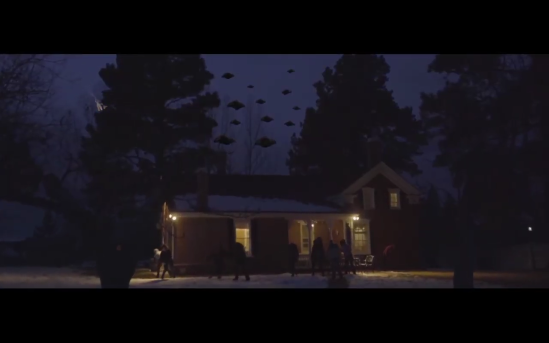
On God-fearing land, two young women drifters are shown compassion and hospitality by a religiously devout mother and son offering hot food, a shower, and a bed for the night. Their seemingly infallible generosity turns to violent deviancy as concealed motives of their cannibalism catches the women off guard that inevitably places the unsuspecting women literally on the chopping block, but the drifters are no ordinary, helpless prey but rather ancient vampires, wandering from one small town to the next, struggling to exist. Just when the bloodsuckers think the ordeal is over, a worldwide invasion of soul-sucking aliens aim to cleanse Earth of all inhabitants, turning those attacked by the beings into flesh-hungry crazies. Trapped inside the cannibals’ house, the vampires must save their human food source from completely being eradicated by an aggressive alien race with a conduit to possibly the Holy Father himself.

Talk about a full monty horror movie that has nearly everything but the kitchen sink! “Savage Creatures” is the 2020 released ambitious action-horror written and directed by Richard Lowry (“President Evil”) that serves up a platter of creativity ingenuity on a micro-budget while still outputting savagery, creatures, and an entertaining good time from start to finish. Lowry embodies inspired resourcefulness that reminisces the economically efficient horror credits of long time indie filmmaking entrepreneur Brett Piper (“Queen Crab”) and though serving as the filmmaker with many hats, composer, editor, director of photography, and visual effects, he also incorporates his own pleasurable schlocky devices as he shoots in the rocky rural regions of Pine Valley, Utah complete with isolated roads and mountainous views. The epically scaled “Savage Creatures” is a creature feature accomplished feat, try saying that ten times fast!

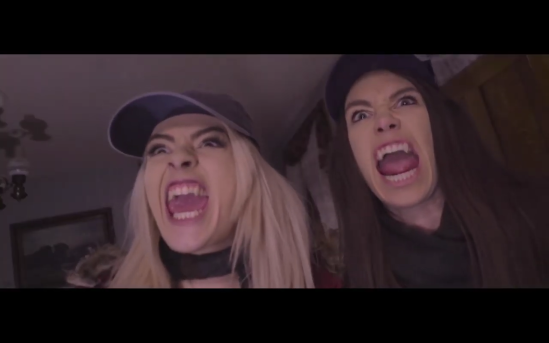
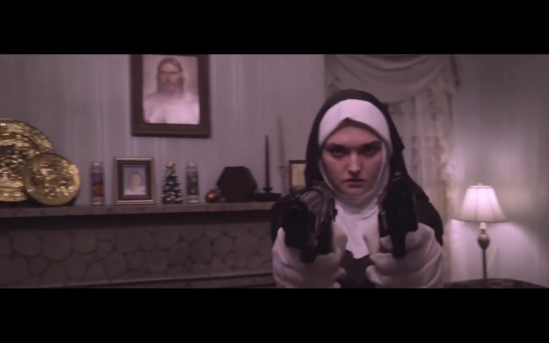
The two vampiric drifters, Rose and Ursula, serve as the story’s centralized characters played by Kelly Brook and Victoria Steadman respectively. Both actresses have worked with Lowry previously on his 2018 Armageddon-esque action-comedy, “Apocalypse Rising,” and familiar with his budgetary style, able to alleviate the pangs of severe funding limitations with some fundamentally respectable performances. Rose and Ursula are not only lovers, but lovers with a cavalier premise on life stemmed from the centuries of human evolving groundwork, shedding a light on questions that should be asked and pondered on in every day modern vampire story. The dynamic between Brook and Steadman strike the nerve sincerely with causal conversation, pressing upon their inevitable doom in between blowing off zombies heads and fragging flying aliens with crossbows as if they’re exacting some self-decompression through violence. Though Brook and Steadman are good and stable throughout, vet actor Greg Travis lands a the lauded performance of Father Cooper, a fanatical Irish priest on the run from the zombie horde. The “Humanoids from the Deep” and “Mortuary” actor goes full blown dogmatic with his theory of God being fed up with humanity and pulls off the extremely righteous and holy neurotic priest as an overboard affable character whose has to trust a couple of godless feminist vampires during apocalyptic mayhem. Rounding out the cast is Ryan Quinn Adams (“Before the Dark”), Cean Okada (“Bubba Ho-Tep”), and Kannon Smith as Sister Gigi, a mute nun with guns.

From the very beginning, “Savage Creatures” maintains a fiendish tempo of anti-heros and butchery. Even the soundtrack, though a relentless boor of stock action selection, plainly works to “Savage Creatures'” advantage one scene after another inside the scope of the sharp, periphery sublet moments to keep up with the breakneck pace. Lowdry’s sees little-to-no expositional sagging in the middle or on the bookends and diverts away from any hankering for a character story or background to fluff up worth-wild characters. With the exception of Rose and Ursula, who complain like boomers conversing upon reminiscing about the past on how easy times once were centuries ago to get away with murder before technology became an inconvenience, much of the cannibals, the priests and nun, and even the flying devil ay like aliens backstories don’t bubble to the surface. While typically these off the cuff details usually roll my eyes back into my skull to scour my brain for the minor moments in which I might have mistakenly missed something about a character backstory or just produce a hefty sigh of longing for more personal information on why this character does what they do, I found “Savage Creatures” uniquely isn’t symptomizing a distress of forgoing persona tell-all; instead, plays uncharacteristically to the obverse tune of an entertaining racket of head splitting, limb chopping, and with a hint of rampant gun akimbo.

Buyer beware! Don’t trust the cretinous DVD cover from ITN Distribution of appears to be Julian Sands from “Warlock” raging angrily with milky white eyes and standing over Cthulhu tentacles surrounding him in the foreground and silhouettes of bats are hovering over in front of a savior-esque crown moon in the background. Instead, trust your gut (or this review!) and see “Savage Creatures” on DVD home video presented in an anamorphic widescreen, 2.35:1 aspect ratio. Pine Valley, Utah never looked so picturesque in a clean transfer. The natural colors feel a bit faded and not as sharp that perhaps assists in blended Lowdry’s composited effects and practical creature design. The cabin night sequence has some noticeable banding, but isn’t a game changer. The English language Dolby Digital audio track is par for the course, running clean and clear dialogue, and satisfying a range of sounds. Depth’s tricky with Lowdry’s compositions that don’t hem neatly, especially when Rose and Ursula crossbow down aliens from a distance, the same cry of pain is utilized for each darted creatures, and the running stock soundtrack flutters in front and behind the gun play at times. DVD bonus material include a director commentary, behind-the-scenes with the actresses and crew, and a VFX breakdown, which I thought was neat to see how Lowdry layered his effects on a budget. Not listed as a bonus feature is the gag reel during the end credits. “Savage Creatures” enters 2020 as an all out brawl designed as a battle royal but with little bankroll; yet, director Richard Lowdry beats the odds, pinning out a win as the scathed champion of his latest apocalyptic caper!

“Savage Creatures” battle it out on DVD!

War Brings All Sorts of EVIL. “Under the Shadow” reviewed! (Second Sight / Blu-ray)


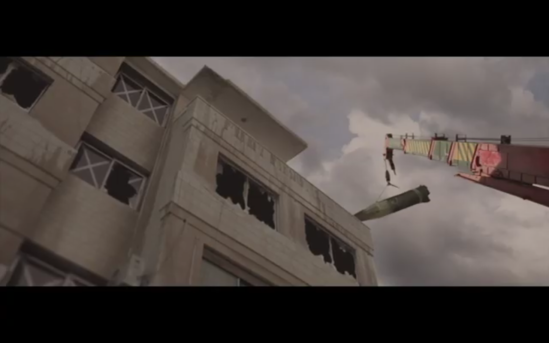
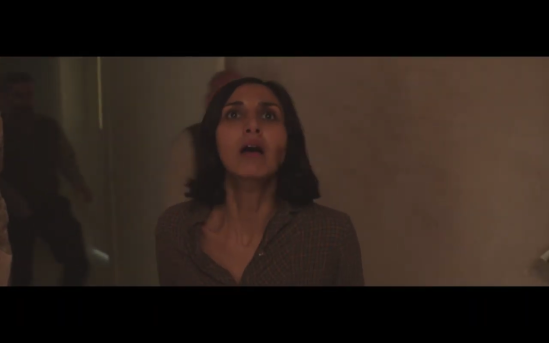
Set in conflict of the Iran-Iraq war, the young and educated Shideh living in war-frightened Tehran becomes forced to succumb to patriarchal dogma after participating in a revolution against Iran’s standing principals. Her husband’s conscription sends his medical experience to the battle front while she settles into her role as a stay at-home mother to their young daughter and despite pleas from her husband, the stubborn Shideh will not vacate her apartment building home even when the threat of an Iraqi attack is imminent. When a dud ballistic missile crashes into the apartment about them, nearly breaking through their ceiling, the fear of a sinister presence circulates amongst the tenants that drives them one-by-one from the building with the prospect of an Iraqi attack to further motivate as a logical decider. An unsuperstitious Shideh remains until her daughter’s imagery whims and unwavering fever begin to form a more terrorizing atmosphere that even has her questioning the shadowy company of evil.

Not many horror films scare nowadays. “Under the Shadow” is not one of those films. The debut feature film of writer-director Babak Anvari posses a rare commodity of grueling fear set inside an already tense backdrop of the 1980’s Iran-Iraqi war. Anvari, the Tehran born Iranian nationality who was engulfed religiously in the culture, borrowed and rendered his from his family’s stories of supernatural pre-Islamic demons whisking through the wind toward those swimming in sorrow and fear; those demons were also labeled djinns. As a child born in the 80’s, Anvari had to rely and family to obtain a sense of the anxious air suffocating those taut by potential missle strikes as well as political and social punitive measures going against the grain. The UK based independent production company, Wigwam Films, financed the BAFTA winner for an Outstanding Debut by a British Writer, Director or Producer as well as receiving other nomination nods in other categories, serving as one of young production company’s shining stars early in the tenure.

Wrought by the explosive squabbles of two sovereign nations and incepted with archaic folklore, Shideh’s bound and torn between reality and the prospect of superstition, a role dutifully played by another Iranian born, Narges Rashidi, whose family moved to Berlin and she studied acting, scoring a minor role in the motion picture adaptation of the science fiction television series, “Aeon Flux,” and in the 2009 comedy-horror “Must Love Death.” Rashidi courts Sheideh approvingly with sincere strife over how women serving beneath men in 1980’s Iran as well as struggling to overcome that internal conflict as the mirror image of herself, meaning her daughter, when a phantom prowler is afoot. Portraying Shideah’s daughter, Dorsa, and the frequent link between the Djinn’s world and her own is Avin Manshadi in her debut performance. Manshadi’s round cheeks and doughy eyes set upon a physique stilling lingering some ounces of baby fat has little range, but most creepy kids and in creepy kid horror films rarely do. Rashidi and Manshadi fend well for themselves as the sole two characters cornered by war and Shideh’s personal vendetta against her country, her husband, and even her daughter to prove she isn’t useless as the motif lets on. “Under the Shadow” rounds out with Bobby Naderi (“Bright”), Aram Ghasemy, Soussan Farroknia, Behi Djanati Atai, and Ray Haratian (“A Girl Walks Home Alone At Night”).

“Under the Shadow” finds itself in a subgenre nearly all it’s own as the variety of djinn-horror anemically pops up every so often as an unpopular and uncoiled viper, unlike the antagonist powerhouses of zombies and ghosts that’ve reigned supreme over the last two decades, and though Anvari’s film shares little with Robert Kurtzman’s demonic djinn of 1997’s “Wishmaster,” “Under the Shadow” has more in common with the late Tobe Hooper’s last film, entitled simply Djinn, before his death. Both are built on the substructure of an Arabic/Muslin mythology, set on an apartment building locale, and exhibit the malevolency side of the djinn, but Babak Anvari accomplishes a great feat on his very first attempt – a stiffly frightening air of a phenomenally harrowing horror story. Anvari patiently stacks blocks of tension, one on top of another, without a hint of quivering throughout the acts and what’s more astonishing is that all the acts deliver different notes prosed to detail that secures a simmering, shivering plot. To praise Anvari more, the young filmmaker leaves nothing to chance by closing with an open ending for the mind to assemble information and interpret the events; a classic directorial tool used by some of the greats.

Shuttering in the dark has never been so delectable with “Under the Shadow” inside a packed, limited edition Blu-ray from Second Sight Films. The LE runs with only 2000 copies sheathed inside a rigid slipcover with covert art by science fiction artist, Christopher Shy. Global horror aficionados will rejoice to learn that the UK BD disc is region free and presented in a widescreen, 2.39:1 aspect ratio, that’ll be available February 10th. Unfortunately, Second Sight Films provided a DVD-R Blu-ray screener so I’m unable to speak upon the video and audio aside from what’s already been stated. I will say the subtitles were accurate and timely paced. There were special features on the disc, including segmented interviews with director Babak Anvari, lead actress Narges Rashidi, producers Lucan Toh and Oliver Roskill, cinematographer Kit Fraser along with an audio commentary Babak Anvari and Jamie Graham and Anvari’s short film “Two and Two.” Press release also mentioned the release includes a soft cover book with new essays from Jon Towlson and Daniel Bird plus behind-the-scenes photos and concept illustrations and a poster featuring new artwork. “Under the Shadow” must be watched in the dark, alone, and with the volume up, maximizing the crawling chill down the spine and raising all the micro hairs on every square inch of skin.